
 Ask ChatGPT


 The High Performance Podcast
2 Nov 2026 · 1h 22m · 27 chapters
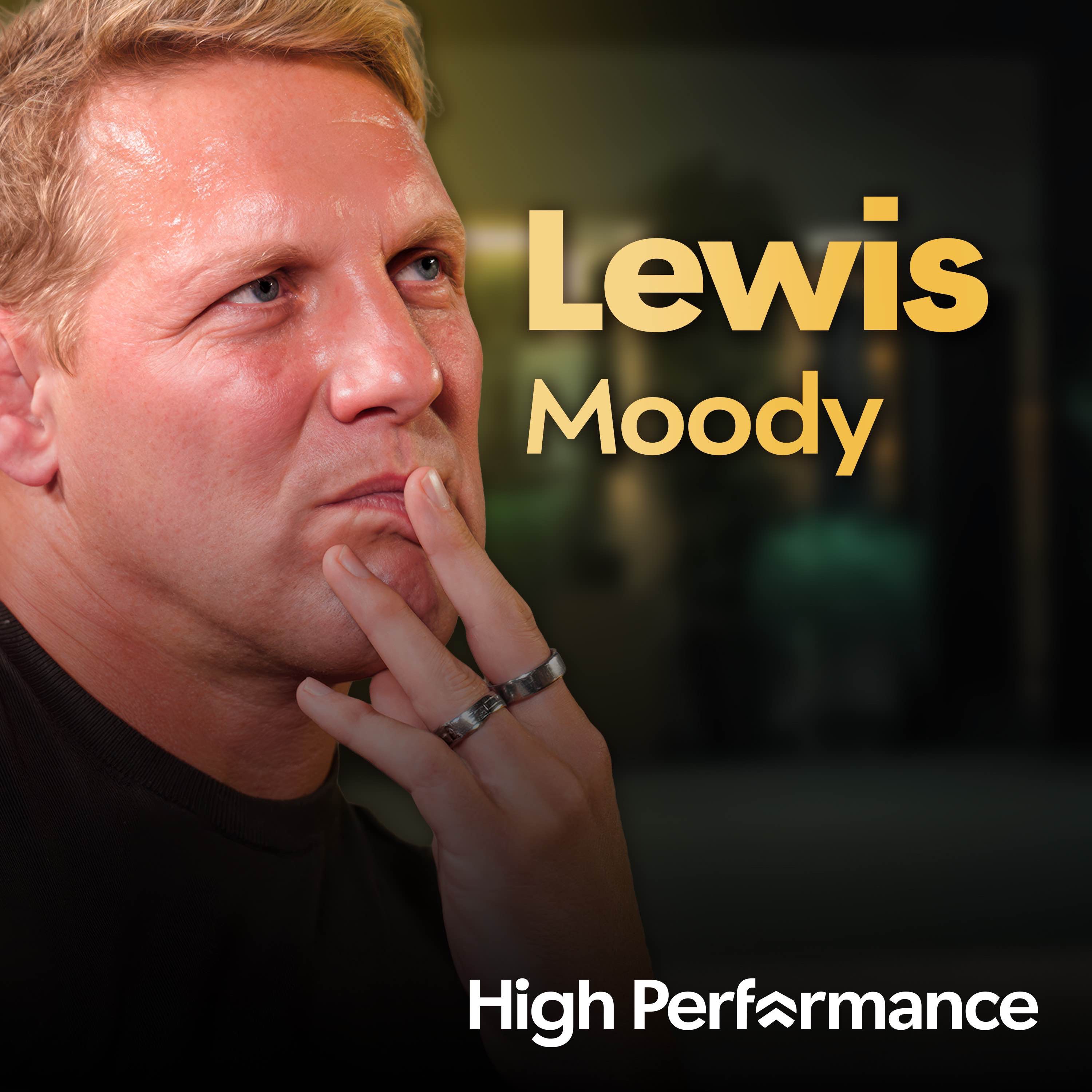
Lewis Moody (former England rugby player) discusses his ALS/motor neurone disease diagnosis—how he noticed symptoms, the uncertainty before confirmation, how he told his wife and sons, and how he’s chosen to live with focus, hope, and preparation for the future. He also covers resilience shaped by childhood illness (whooping cough with coma and tracheostomy), mental health challenges involving intrusive thoughts, and how he trains differently now (avoiding heavy exertion; using yoga/breathwork/strengthening).
Lewis Moody is a retired professional rugby player. His wife, Annie, is central to the story as his partner during diagnosis and appointments. The episode also references other public figures (Doddy/Rob and Kenny Logan) and a neurologist (Martin Turner), but they are not guests in the transcript.
The “unknown” period before diagnosis was the hardest; once he had information, it felt like release. Telling kids early and simply helps them process. Hope comes from clarity, prioritizing what matters, and using his platform to support MND research and community. He can’t “out-train” ALS; extreme exertion may be harmful, so he adjusts training.
Cornwall holiday as the worst uncertainty window; Dylan (18) processed slowly and later wanted “everything,” while Ethan had an emotional overload then sought details. He describes whooping cough at age four leading to oxygen tents, coma, and a tracheostomy. He recounts years of intrusive “worst case” thoughts and how therapy helped via concepts like “pure O”/acceptance.
Written by AI. May contain mistakes.
Lewis shares his experiences leading up to his MND diagnosis and its impact.
“Thank you for choosing to come and have this conversation with us.”
Lewis discusses the challenges of sharing his diagnosis with his family.
“But that was the hardest window of time in the whole diagnosis.”
Learn how Lewis Moody navigated the difficult conversation of his diagnosis with his family and the resilience it cultivated.
“So Dills plays football, so he's doing well.”
Explore how Lewis Moody's childhood adversities shaped his resilience and positive outlook on life.
“The value in what you say is really powerful.”
Learn about the challenges and mindset strategies for living with MND.
“but inevitably you will find a way around it, right?”
Explore the experiences of dealing with intrusive thoughts during childhood.
“But the things that I can't, so my mindset has to be that there's a couple of studies that say extreme exertion may have a significant role to play with MND.”
Understand the struggle of mental health and the importance of sharing experiences.
“It was like all of a sudden I became scared of dying, which meant I then became scared of killing myself.”
Discuss the importance of seeking help and how intrusive thoughts can feel real.
“You think, why would my brain even consider that that's a thing to do?”
Learn about the long-term process of overcoming mental health struggles and the stigma surrounding it.
“If they were real, you wouldn't be worried about them.”
Discussing the feelings of isolation that come with mental health challenges and the importance of sharing experiences.
“Men particularly, because we don't talk, right?”
Exploring the average time men take to seek help for mental health issues and discussing personal experiences with vulnerability.
“But yeah, I just think you were brought up in a space, especially in the rugby environment as well.”
Reflecting on the journey of coping with a diagnosis and the importance of professional support in managing emotions.
“And I remember thinking to myself, he is so upbeat.”
Discussing the experience of sadness related to illness and the importance of allowing oneself to feel those emotions.
“It was like, the advice she gave me was just like, it's okay.”
Examining how illness influences relationships and the desire to prioritize meaningful experiences over a traditional bucket list.
“When you talk about this disease, I don't see now as the hard bit.”
Understanding the importance of open discussions about mortality in relationships and the emotional challenges that arise.
“I think your relationship, though, is important as much for the fact that when it's difficult for you, it's going to be difficult for her.”
Sharing personal reflections on the loss of a parent and concerns about how memories of loved ones are retained.
“It doesn't mean that, you know, we still don't fall out over stuff.”
Discussing the harsh realities of witnessing a loved one's death and the emotional aftermath of such experiences.
“The reality is they probably will remember me as I will be.”
Discussion on the personal experience of witnessing a loved one's passing and the importance of discussing death.
“I'm really glad me and mum were both there.”
Lewis shares stories about his father's absence during key rugby moments and his presence during challenging times.
“But there was a story in your book I wanted to ask on a more positive line, which is your dad not coming down to see you in 2003 when you've just become world champion, sending your mum down instead.”
Exploration of Lewis's emotional reactions during his career and the impact of those reactions on his gameplay.
“And actually a big moment in your life because as you write in the book, it made you seek therapy.”
Lewis discusses the challenges of transitioning out of rugby and the personal impact of his MND diagnosis.
“So for the remaining six years, it was a really interesting learning curve.”
Reflections on the pressures of public speaking and the decision to step away from after-dinner speaking engagements.
“I was like, I've never chased celebrity, but I think because of the way that ended for me even more so, I had nothing to do with it.”
Lewis Moody discusses the challenges he faced in public speaking and reconciling with his career's end.
“and of the professionalism with which you applied to your trade and how much I enjoyed doing what I did as well.”
Moody shares his non-negotiable behaviors, advice from his father, and insights on making impactful decisions.
“These are sponsored by our great partner Vitality, the life and health insurer, who love to nudge people towards healthier lifestyle choices and good habits.”
Moody shares a moving poem that encapsulates the essence of human experience and existence.
“You've been selected for the opportunity of human incarnation.”
The hosts reflect on insights gained from Moody's journey and the lessons about living fully.
“I think Lewis is a person because obviously everyone knew Mad Dog Moody and flying into tackles.”
Explore how optimism and hope can affect our outlook in challenging situations.
“I was also really pleased with how well he looked.”

Get the gist, explore an idea or ask about something said.
 Claude
On The High Performance Podcast, what are the key points of this episode?
Searching your listeningAutomatic transcript. May contain errors.
0:00Before we get started, let me tell you, you can now listen to high performance ad free. Start your free trial now on Apple, Spotify, or head to our website so you can listen to our episodes uninterrupted.
0:30track returns all automatically. Everything your operation needs, all in one place. Upgrade your shipping operations to stress-proof your biggest sales days and capture every bit of potential revenue. Go to ShipStation.com and use code AUDIO and get 30 days free. This is a paid partnership with Apple Card. The coolest flex at brunch these days is not the Bloody Mary with the bottomless gold flake caviar topping. It's not whipping out your wallet to pay. It's not having a wallet at all. Jack's been an Apple Card user since 2019. That's the same year he tossed his wallet in the trash because Apple Card holders earn 2 % daily cash back on purchases made using Apple Pay.
1:03It's the only credit card designed for the iPhone. I tap to pay with Apple Card at the grocery store, at the gas station, at restaurants. And yes, I use it at my second home, the farmer's market. Jack tapping to pay with his Apple Card with Apple Pay is his favorite thing to do. And the pleasant vibration and chime sound means I just got 2 % daily cash back on my latest purchase. Apply in the wallet app on your iPhone today. Subject to credit approval, Apple Card issued by Goldman
1:33What if the real question isn't where you're going, but the adventures you experience along the way? It's time to set your sights higher on peaks still to be climbed, rivers still to be crossed, and greater dreams to pursue. It's time to embrace the impossible with Defender. A family of vehicles built around capability, durability, tested on some of the most difficult terrain, Defender defines tough luxury. And I should know I've driven one for the past three years. I have the Defender 130, but from the compact confidence of the Defender 90 to the versatility of the 110 through to mine, the Defender 130 with seating for up to eight, there's endless potential.
2:08You feel in the details as well, the rugged body design, the robust materials, all working together so you can head out with confidence. And inside, ClearSight technology helps you see the world around you in a new way, while the PV Pro keeps your navigation routes and playlists flowing seamlessly as you go. And with up to 89 cubic feet of cargo space, there's room for everything you need on your journey. Explore the full Defender lineup at Land RoverUSA.com.
2:34I've got something to tell you. It's not going to be easy to hear. I can't rule out motor neurones disease. knowing that as a parent you've brought this disappointment and sadness to... Yeah, telling your kids is hard. You found it harder to make peace with the way that your rugby career finished than with your MND diagnosis. Yeah. And that's a remarkable admission. Can you explain it?
3:04Well, Lewis, welcome to High Performance. Thank you. Pleasure to be here, chaps. Thank you for choosing to come and have this conversation with us. We want to talk about things that I don't think you've really spoken about much publicly over the years. The battles you had as a child that you write about very moving in the book. The truth behind Mad Dog, which was your nickname back in the rugby days, but also the conversations with your family that have changed so many things. We'll see that the overarching theme of the book is your MND diagnosis. Can we go to that moment when you're doing your workouts at home?
3:34and it was a shoulder pressure you were doing when you first noticed something was going on. Yeah, absolutely right. So I had four shoulder reconstructions on my left side when I was playing and, you know, from various different reasons, tackling and just getting in the wrong position. So my right side was always my strong side, for a better term. And about two and a half years ago, just started to notice that the sort of strength was dipping and it wasn't quite equal. So this side, the left side was always weaker, as I said, and then for some reason it was getting a little bit less strong on the right-hand side and I'd be tweaking the weights and I just sort of, I ignored it for the best part of nine, ten months until I saw a physio and thought, look, something's not right here.
4:19So he was like, right, we'll go see, I know exactly who you need to see, we'll go see a nerve shoulder specialist in Bath. I was very lucky in the sense that the guy that I saw, he knew straight away that something wasn't right but he thought it would be rugby related. We'll go get MRI if that, you know, that should tell me straight away whether there's nerve damage around the shoulder that is just something we can operate on and get sorted. They didn't worry you? If you put the symptoms that I had into chat GPT or anything like that, then it comes back with a host of things, but motor neurones disease is one of them.
4:57And my wife had done that. And yeah, so Annie had got, Annie had seen that. I don't think she told me at that time. It's quite difficult to remember timelines. So I had fasciculations, which are probably the first sign, which are like muscle twitches, those little muscles. And you might see them now sometimes when I'm sat here, just in the arms and the shoulders. And it varies dependent on day, fatigue, hydration, all that type of stuff. But I had that quite aggressively when I first started. I don't think I ever took it seriously until you have this conversation with a specialist. And he actually called.
5:30So instead of bringing me in for a meeting, he called me up and he was just like, you know, and you just know something's not right. He didn't tell me anything on this call, but he is good as told me. He basically said, look, there's no nerve damage. I've run all your symptoms through our neurologist. And I just want to make sure on this phone call we leave nothing left unsaid. and that was it I was like you know when you hear that it's like okay what do you mean so he's you know he's asking me to ask the difficult question is what I felt and you know so I so I did ask I said well what's the worst case scenario he's like well I can't rule out motor neurones disease and that's the first and I just I was sat in like we sat here I just sat in the office at home on the sofa I was just like fuck it was the first time it looked properly although it had been there in the background you know annie had researched it and so she was aware i don't think either of i just don't think we'd really really considered it and annie didn't know that i was having this call at the time so i just sat on the sofa just i was numb yeah i was numb i didn't really know what to do with it and i could sort of i could sort of palm it off but he said right what we have to do now is we'll go see the we'll go see the neurologist you're booked in those two tests are booked in anyway so you do that um i think it was a couple of days later we actually went on holiday to cornwall on holiday tell the family anything at this point no so annie yes kids know but i didn't really know how to tell annie either because because it still wasn't confirmed at this point it was just again it was another possibility and so i was really unsure how to share that information because i didn't want to worry her unnecessarily but i i did i did obviously i i did I did tell her.
7:22I can't remember exactly what I said now. But so that week away in Cornwall was, that was actually the worst part of this whole experience with M &D is the unknown, the uncertainty. Just, you know, it creates so many negative thoughts, right? You know, your mind just goes all over the shop and what will you do? How will we cope? How long will it be? What time have I got left? You know, if it's worst case, blah, blah, blah, all that type of stuff. How do you tell the kids? So Cornwall was a, yeah, Cornwall was a tough break. But that was the hardest window of time in the whole diagnosis. It was the not knowing.
7:58That was brutal. And there's a really interesting distinction you make in the book. You spoke about when you did eventually get the diagnosis. It came as a release rather than a relief. What's the difference? Yeah. I just think it provided information. You know, we haven't got information about something. Yeah. The best example I can give is with my son. So telling my son is a little bit like me finding out. So I told Dylan, and Dylan took it quietly, and he's a slow processor. He'd actually picked up on a conversation I had with my mom just before. So I'd gone around to mom to tell her first.
8:38And my phone somehow must have just pocket-called Dylan, and he caught the end of a conversation, and all he heard was, how are we going to tell the kids? And so in some ways, weirdly, it sort of prepared him for what was to come. So as he came in, he was like smirking and smiling. Is he the oldest of your children? So Dylan is the oldest, yeah, so Dylan was 18. So we shared the information with him. You know, he processed it slowly. He cried, you know, we hugged. But telling Ethan was, you know, it was totally different. So he had a, you know, it was a totally emotional overload. You know, it was a complete, you know, meltdown response.
9:19You know, didn't even really know what motor neurone's disease was. Just he could tell by what I was telling him that it wasn't good news. And, you know, I think that time was definitely the hardest for me. It still triggers, you know, emotionally for me now is a hard one to think about. But telling him, as soon as I told him, once that emotion had passed, he was like, I need to know everything. He was like, tell me everything. so in that point he's you know he needs information he wants to know and then when you start sharing more information actually it made it easier for him so he could process it okay it doesn't mean you're going to die immediately you know it's a life-limiting condition okay there's lots of doubts and uncertainty around it but the more information i gave him the more comfortable he became which was really interesting for me and i suppose you know in the same when when i was told when you sit down and you find out you've got motor neurones disease, actually, okay, now I've got the information.
10:14I can go find out more about it. There's something we can do. We can look into drugs. We can look into trials. We can look into all sorts of stuff. Prior to that, you can't do anything because you don't know what's wrong. Do you think that in that holiday to Cornwall kind of you did know?
10:30In a weird way, I think I probably always knew. yeah I think I knew I don't know why even from the very first symptoms just something wasn't right you know I haven't been an athlete for so long and or I have you know 14 years retired now but I still still keep myself fit your mindset is still so you know attuned to your body and you're just used to it I just knew there was something strange and it wasn't quite you know because I hadn't caught the shoulder I hadn't done something that triggered it and the fasciculations, you know, it just all felt weird. So I think I knew there was something wrong.
11:15And when you got the diagnosis, were you with Annie? Did she come with you for those appointments? Yeah, she did, man. That was tough. Yeah, that was tough. I don't think there's any easy way to deliver that news, is it, if you're a doctor or whatever. No. But the doctor found that hard as well, you know. Yeah. But yeah, so for Annie it was not a relief. for Annie it was you know confirmation of the worst possible case and again you know we didn't have any information at this time other than the diagnosis so in the we asked I asked for a second opinion basically not you know because in trust the surgeon I just felt like good practice to me It's like, get another opinion.
12:00And the bath specialist immediately referred me to a neurological specialist, and that was Martin Turner. And as soon as I sat down with him, which was only a couple of weeks later, he confirmed the diagnosis, but he's been working in the space for 25 years, maybe longer. And all of a sudden, he started giving you information like, look, everyone's journey is different with this. You will always inevitably see the worst case scenario, which is the end of progression, right? Which is where people get to when, you know, you're nonverbal quadriplegic essentially and you're sat in a wheelchair and barely able to function.
12:39So, but still fully with it mentally. But, you know, that is not now. So, you know, he also said you're unlikely to be unwell. Like you'll probably always feel fine in the sense of illness. It's just a disease in the sense that your muscles will gradually stop working. And, you know, mentally that's probably quite, that's probably it is the hardest thing to observe as someone that's acutely aware of how their body works to be consistently looking in the mirror. You know, you get up in the morning, do your hair, you know, do a workout, check how the pump's looking, you know. And just try not to get absorbed in the constant sort of, diagnostic scanning of your own physical what about like you mentioned that example about going to see your mom and then having to talk to your boys as well how do you how have you learned to deliver that bad news as well as you possibly can i suppose i've always i've i've always been of the thought processes that you just you do it straight away you know I don't want to dwell on it um they would have known something was up but even even when we're in Cornwall they would have sent something right you just do um so I didn't see any point in delaying it so literally as soon as we found out I just said to Annie I'm I'm gonna tell the boys as soon as we get back and and we probably talked about it in the car can't really remember it as a bit of a haze as you can imagine um but just walked in I sat down with Dills, you know, he knew it was serious, so he said, I've got something to tell you, it's not going to be easy to hear, and that was it, I just told him, and, you know, it would have been a big hit, it was a big hit to him, you know, it's, yeah, fuck, it's horrible, telling your kids that, it's horrible, the response that Ethan, you know, knowing that as a parent you've brought this disappointment and sadness to, yeah, telling your kids is hard, you know, it's, yeah, you don't ever want to feel like that, but as soon as you've told them, you can then move forward and we can all start learning a little bit more about the disease, learning the realities of it, and I think now the kids have seen that, I For Dylan it was hard because he had a year.
15:08So Dills plays football, so he's doing well. He's into his second professional season. But last year was a toll on him, man, because at the start of the year they had a goalkeeping crisis, so he's bumped up to the first team for a couple of months as a 16-year-old. That's a big deal. And then he goes from that into my diagnosis, which, you know, the opposite side of it, comes back to playing. done slow processes everything so in the back of his mind so it wasn't surprising february glandular fever you know so he then had to do with that it was just it was a lot last year was a lot but kids are unbelievably resilient you know i think this i think for me the key is just to be honest and just share the information as soon as you have it in a way you know that that feels as appropriate i suppose as possible you know just keep it simple and get to the point i think there's also something else that we should really talk about which is that in life we look at bad things as bad things and good things as good things and we forget that actually sometimes in the bad there can be a lot of good yeah sometimes even in the good there can be some bad so there is some good in this and i think before we go into the rest of your story and if people are listening to this thinking where does this guy's resilience come from well we're going to explain where some of this incredible resilience comes from from your childhood from your upbringing from the things you went through as a player but i also think it would not it would do a disservice to your diagnosis to not talk about the good that's come from this so when you think about that where does your mind take you well it's really simple you know when uh we talked about a diagnosis and that being a relief and and it and and it was because in the weeks after it just helped it helps you become really clear like no other time in my life you know other than when i was playing probably the clarity around having one purpose going out every week to win a rugby match, really simple, you know, drives everything else that you do.
17:06And in the same way this has, all of a sudden you've got a clear focus, you know, you know that the length of your life has changed, you now are completely uncertain about how long it may be, so therefore you become completely focused on the things that you want to do. And that certainty and that focus has just been really uplifting in a strange sense, you know, people might find that weird to hear but it just really it allowed me to prioritize everything that was that was important you know and sift out all the nonsense you know the things that you're doing because you thought it was the right thing to do you know saying yes to too many things um you know so from a charity point of view I was clear that I wanted to use my platform as quickly as possible to have as big an impact as possible so that was sharing my story I've just always been a sharer I just always think it's the most useful way of using my platform.
17:58I like helping people. So if me sharing the story can benefit others, then so be it. And that's exactly what I want to do. And I suppose then the positives or the good that comes out of it is understanding how you then can make a difference, which we're actually still figuring out, right? But aligning with My Name's Doddy, you know, ever since I had a chat with Kenny Logan, who's a former, you know, adversary of mine, I suppose, for Scotland and Wasps on the rugby pitch. He called me up and he was a good mate at Doddy Wears. And he called me up and said, mate, look, I've been through this with Doddy, whatever you need, I'm here to help.
18:36And I said, look, mate, this is really weird, but I just feel like I've been handed this baton from Doddy, from Rob, from you, from all these guys that have gone before. You know, I am now in a, use the word lightly, but fortunate position is that there's hope in the space of M &D when Doddy and Houston, those guys were diagnosed, there wasn't any hope. And I sort of, I sit here in that hope because of the incredible work those guys did, the time and the effort and the energy that they put into it. So I feel like it's, you know, it's only right that I, you know, you're almost like coming off the bench, right?
19:10I'm coming off the M &D bench to take the bat on off the, no one wants to do that, I don't want this disease, but, you know, I'm in it, so, you know, why not be in it completely? And so I just chatted with Kenny and said, mate yeah look whatever it needs we're going to make a difference in this and uh you know for as long as we can and for as long as i can um so it's a weird thing but it gives you a lot of clarity a lot of focus specifically around family around work you know the questions you ask yourself if you i don't know if you guys have ever had experience with you know trauma illness you know i'm sure we've all been through it right and you often ask ourselves how how will we deal with it when we're in that situation and none of us know can't know because we've not been in it and and when you're in it it just is just simpler it is for me anyway it just I've always been a simple bloke I like to simplify things so when you're given a diagnosis what are you going to use your time to do I always thought what would I do I worked as a coach since well for the last seven years working with different business people and would I continue to do that actually I get as much joy doing that as, well, as I say, I hope that people I'm working with get.
20:19But because I get joy out of it, why would I not do it? So I might do slightly less of it. So I continue to work, I continue to live as normal, but just with a clearer focus on sort of daily actions. So what are the things with this new clarity? And this is a real superpower, by the way, because the reality is we're all walking around with a terminal diagnosis, right? We're all walking around not knowing how long we're going to live. You know, no one has that information. but because we don't have what you've had, which is a diagnosis, we have this kind of myth that everything's going to go on forever, so we'll do the stuff that doesn't make us particularly happy because one day we'll do the stuff that makes us happy and then lo and behold, if you've ever read the book, The Regrets of the Dying, you realise that people don't end up doing the stuff that really matters.
21:01So there is something in this about what have you cut out from your life or what are the things that you no longer entertain that you might have entertained before? I suppose it's just the nonsense or the noise that's unnecessary. so um sometimes the you know the people yeah you know not that you need to clean people out but you know there are often people in our lives that you know steal our time unnecessarily for you know for selfish gain rather than for you know collaborative um so you become quite focused on the people you want to spend time with the loved ones you want to be with um you become I'm quite focused on how you want to spend that time as well.
21:42You know, so when you look at your week, I was awful at saying yes to everything because I was just like, well, if I've got time to do it, why wouldn't I do it? So, you know, that ability to say no to things. We'll be right back after a quick word from our partners.
22:03500 orders a month was manageable. 5 ,000 is madness. Embrace intelligent order fulfillment with ShipStation, the only platform combining order management, warehouse workflows, inventory, returns, and analytics in one place. What used to take five separate tools, ShipStation does in one. Automate fulfillment and rate shopping to ship up to 15 times more with up to 90 % savings. Go to ShipStation.com and use code AUDIO to try ShipStation free for 60 days. This is a paid partnership with Apple Card. The coolest flex at brunch these days is not the Bloody Mary with the bottomless gold flake caviar topping.
22:40It's not whipping out your wallet to pay. It's not having a wallet at all. Jack's been an Apple Card user since 2019. That's the same year he tossed his wallet in the trash. Because Apple Card holders earn 2 % daily cash back on purchases made using Apple Pay. It's the only credit card designed for the iPhone. I tap to pay with Apple Card at the grocery store, at the gas station, at restaurants. And yes, I use it at my second home, the farmer's market. Jack tapping to pay with his Apple Card with Apple Pay is his favorite thing to do. And the pleasant vibration and chime sound means I just got 2 % daily cash back on my latest purchase.
23:12Apply in the wallet app on your iPhone today. Subject to credit approval. Apple Card issued by Goldman Sachs Bank USA, Salt Lake City Branch. Terms and more at applecard.com.
23:25The value in what you say is really powerful. and actually when you read your book, Fronting Up, you actually realise that there's so many moments in your life which of course they're negative moments in isolation, but then actually they're quite serenity, but it's in other ways. So a really good example would be if you could share with us the story of when you had whooping cough as a kid, which wasn't just a simple case of whooping cough that got better, it was something much more serious. But again, that forges a resilience in a young person that maybe others wouldn't have. Yeah, well, I'd say, yeah, I mean, when I was, I think I was around four, developed whooping cough and was strapped into the car with mum and dad.
24:04They took me to the hospital. The doctor said, you know, I don't think there's much we can do at the minute. Just go home, monitor, see how you get on. It got worse. So I went back into hospital and was put on these all sorts of oxygen tents. And I've got the only memory, you know, the proper memory I have of it is mum and dad sort of reading books through this oxygen mist so that I couldn't actually see them, but I could just hear their voices. And And eventually, I'd obviously then gone into a coma at some stage, and mum and dad went home for the evening and got a phone call to say that you need to get in now, we're not sure you'll make it through the night.
24:42So imagine that as a parent. I'm thinking of it now, how horrible that is. You'd always prefer it to be you, the parent, rather than the child. So mum still cries about it now when she tells me the story. But, you know, in terms of I made it through, I ended up having a tracheostomy to open up a windpipe scar, which I still have to this day. You know, you talk about resilience and adversity and all that sort. So I just think in my life, I've, you know, I feel like I've just had a lot of opportunities to develop resilience. I wasn't born resilient. You know, I didn't have a tough upbringing. You know, mum and dad were incredibly hardworking, really loving parents, really kind.
25:24um supportive and you know they they worked hard for what they had but i had a fantastic upbringing you know i didn't come from poverty or desolation and having traumatic challenges i just from a young age was was faced with the opportunity to overcome adverse situations and you know i wouldn't have really realized it at the age of four but that was that was one thing i suppose that was given to me as a young man that you choose to overcome or you don't really choose, you just are. So I just think as the years have gone on and people look at how you deal with this now, I choose to live a positive and hopeful life.
26:02I just don't see the point in being any other way, right? There's no, I just sit back and get miserable and sit in my house and woe is me. I've never been like that. Life has presented opportunities for me to prove that I can overcome them and that is whether I realised it or not at the time, certainly not when I was four years old obviously, but as you're going through school and you're dealing with mental health, you're dealing with all the other aspects of social interaction and the challenges of school, as you're going into the male environment in rugby, as you're dealing with your own health issues, being a professional, being dropped, injury, illness, multiple different things, describing them as adversity sounds too extreme because it's just a part of your job and your role, but I was just presented with tons of opportunities to prove that I could overcome things.
26:50And my mind never, ever took me to a place of where you won't get through this. There was one moment where I thought in my career, okay, I've had enough of dealing with injuries, and I just, I'm going to call it a day. And my wife gave me some, you know, talk about surrounding yourself with good people. I called her, I said, I've had enough. I'm 28, this is like my fifth operation in God knows how many years. I just, I can't stomach the idea of another rehab. She's like, look, I can't remember exactly the word she said. Whenever I said it, Annie corrects me and tells me what she said. But basically she told me to stop being so stupid.
27:25And I'd just overcome a million and one other things in my career. I would be out for like four weeks. Don't be so stupid. And it was, you know, somebody would need that open-handed slap in the face to remind you that there's no point feeling sorry for yourself. And there's just something about that. And I can't tell you why other than my brain has always allowed me just to see that it's not necessarily an opportunity, but I have been presented with opportunities, but it's something to overcome. It's not a barrier. It's not a wall. It's just something to get around, and it doesn't make it easy or fun, but inevitably you will find a way around it, right?
28:03The hardest thing with this is that there's no finding a way around it. It's very different, right? success with coping with motor neuroneus disease is very different. I suppose success is living positively, having a positive impact. It's remaining hopeful in the science and the individuals and the people that have been there before and in the impact that you can have, whilst knowing that there's still only one, actually it's not true, two drugs that are available for people living with motor neuroneus disease, one which has a 10 % impact on life expectancy, so weeks, months rather than years, and the other which is Tefercen, which is the first sort of breakthrough drug in 25 years, which came out a year or two ago but only impacts 3 % of people living with MND.
28:52So you're talking a tiny percentage. And are they available to you? No, so I don't have the genetic form of MND, which is what Tefercen is for, so I have the general form of ALS. And in terms of finding hope with it, can you other things you can do like obviously focus on diet like you can't out exercise MND yeah but you can I'm trying but I was going to say I bet you but I bet you've got the kind of brain where you're like right well I'm going to lift so many weights and pump so much through this right arm do you know what you have to have it builds faster than yeah but you have to literally have the opposite approach is what I've learned is I can't out train it you know no matter how much training I do I can't out train it you know it will get worse it will progressively get worse until you know some drugs come around that, you know, slow symptom progression.
29:41But the things that I can't, so my mindset has to be that there's a couple of studies that say extreme exertion may have a significant role to play with MND. Positive or negative? Negative. Oh, right. Yeah. So there's a link there. And with MND, you get fatigued much quicker. so you know my old school mad dog you know just run into it and let's fucking take it on and yeah we're out bench press it and everything it just doesn't work like that so I have to be you know so yoga breath work you know strengthening the sort of the inner workings of the body so that when breathing becomes challenging you've you've got you know a system that's already sort of prepared for that um keeping everything that is not hit by symptoms at the minute as healthy and as physical as it can be whilst not overexerting so you get fatigued and then potentially negatively impact the muscles if i go too hard now i feel it neurally it's quite difficult to explain but if you get like sciatica or something like that it's maybe like a simpler version of that and you feel it in like your your arms so if i go too heavy get a little bit excited you know you feel the neural distress that i've caused it's like a pain or no no it's but you just it's like a sense it's really difficult to describe and when i was happening i was like what is what is happening and then i did it a couple of times and i recognized that it was off the back of doing training similar things i was like okay so i don't know the science behind it but i know i know it has an impact so i don't do that anymore.
31:14When you mentioned there about the positive mindset, my mind goes back to one of the most challenging chapters in your book when you speak about that period between eight and 15 and you were dealing with some quite intrusive and difficult thoughts. Would you tell us a little bit around how you learned to address that? Yeah, it's really interesting. You know, it was such a weird experience because I remember, I remember the first time it happened, I was watching a TV program and off the back of it, out of nowhere, I think had that sort of fear of dying, like a lot of kids go through, you know, those sort of sleepless nights when you suddenly learn that death is the normality of human existence, sadly, right?
31:57And something just flicked in my brain. It was like all of a sudden I became scared of dying, which meant I then became scared of killing myself. It was a really strange sort of leap to, but that's basically what happened in my head. And then spent years, I don't know whether it has anything to do with being an only child and often having to spend time figuring out how to do things on your own and therefore your thoughts are allowed to run away with themselves. So yeah, I just spent years battling really intrusive thoughts around killing myself. And to say that I came up with some groundbreaking system of overcoming it, I really didn't, other than I didn't want to do that and I therefore had to figure out a way of just getting through every day and I suppose any way I figured it out was just distracting myself as often as possible and when I was in school it tended to disappear, tended to rear its head most frequently when I was at home or on my own away from people and I hated the thought that it would come back in, you know, you go to bed sleeping about waking up thinking about it in the morning, that sort of stress and I just I just battled through it there's no real sort of science behind it I've got no um I would love to say that there was a way that I overcame it so that people that were going through something similar could I just I a I did I really didn't want to do it and I just had to consistently figure out how to sort of cope with it daily and the best way that I found of coping with it was was was distracting my brain by going and playing sport by going for a run by finding mates by finding something else and as soon as i was distracted it was like it was okay and then when i was back on my own again i was like oh fuck i'm back in this place i don't want to be in this place um were you ever able to tell anyone uh very few people actually uh i think the first time my parents heard about it was when i wrote um autobiography when i retired yeah um but yeah so I there was a there was a girl that I was I was friendly with when I was about 14 or 15 who I opened up to um called Hazel and that was incredibly supportive actually at the time as soon as you as soon as you start talking about it it becomes freeing it becomes normalizing you can chat to people about them experiencing the things um and that is a good you know that's a good reminder actually is the same with ulcerative colitis and it's the same with mnd the more you talk about it the easier it becomes you know i spent years not talking about my colitis and adding pressure to myself and then finally when you spoke about it was like a massive release um and i think it was probably the same could be applied to you know to the intrusive thoughts i had as a child it was actually you know all of a sudden when you felt comfortable i went through that classic male thing and maybe it's not just male maybe it's human of where you're seeing it as a weakness not being able to handle your own mental state as a weakness um and therefore sharing it would be just sort of laughed at joked at would be seen as something negative but as soon as you share it with someone that's prepared to listen you've realized that i see often a lot of people going through similar sorts of things that was that was definitely a release a relief from the from the stress of it i read those chapters with real interest because i had the same thing okay but later in life yeah i told you about this before i was i was 21 just got a job on kids tv and i was like you everything was totally normal like i'd never i was mentally rock solid i remember walking down a tube to go to paris with my then girlfriend who's now my wife and this thought came in my head what if I just pushed her down the escalator?
35:48And then that's such a scary thought. You think, why would my brain even consider that that's a thing to do? And that was the beginning of imagining worst case scenario, 24 hours a day, seven days a week, for probably two or three years. Wow. And it was less about myself. It was about me doing something ridiculous, driving my car under a lorry if it was coming towards me. I was on telly at the time. I was on kids' TV saying something ridiculous, swearing, saying the worst possible thing you can imagine saying on kids' TV, harming other people, harming myself. Whatever I saw came in my head, you could do this.
36:27And I don't know whether it was the same for you, but fuck, it's overwhelming, isn't it? Exactly. The overwhelm and the exhaustion is on another level. You feel totally fatigued, right? Every morning, I imagine. You wake up. You would have been the same. You wake up out. You get out of bed exhausted and you go to bed scared. I don't know whether you were the same, but I would lie there and the nights were the worst you'd wake up and it always would feel real did you get like the night sweats like you'd just I was wet with sweat from panic at night I have to admit I don't remember you know night sweats but I remember exactly the feelings that you are describing it is literally you know the thought of going to bed is terrifying it's scary because you know because you're thinking I don't want to wake up with this in the morning you're hoping you're hoping that you don't how did you find a way of overcoming it?
37:13yeah so it was a it was a combination of things actually that helped me I mean and I went on for a good couple of years and people were like you're losing a lot of weight are you eating like are you okay but you can't tell people because you would have no doubt had the same feeling like it feels so real doesn't it it doesn't feel like an intrusive thought that's tricking you yeah it feels like a genuine thing that's basically inevitable yeah right so I was like do I hire a security guard to live with me 24-7 to make sure I don't do anything ridiculous do I cut my own hands off so therefore I can't actually like all these like you're in a really weird place and this was in the early 2000s when and this is later than you had it right we were a similar age so you had it as a kid but there was still no one you could just you could just go and see someone and I actually ended up calling an 0898 like therapy number in the back of the newspaper because I didn't know what else to do and this guy was on the other side of the phone he's like listen this is like for a guy especially this is existential thoughts, they're not real.
38:14If they were real, you wouldn't be worried about them. People who are going to genuinely do bad things to themselves or others, don't worry about them. They do them, right? So calm down. That was really helpful. Then that allowed me to say to Harriet, I've had all these ridiculous thoughts. She was like, you're the nicest guy I've ever met. You're not going to do anything ridiculous. That was an amazing moment where you go, oh my goodness, if that's what she genuinely thinks, that's helpful. And then that led to me going and seeing a therapist who explained this thing called pure O which is like a form of OCD which is worth reading about just for your own knowledge and it's really about intrusive thoughts and her advice was and we've had this conversation on the podcast since with Johanna Conta the former tennis player she talked about if your resistance to something is really high then whatever the thing is then the pain's going to be really high so if you're if you have something going on that's a 10 and your resistance is a 10 well 10 times 10 is 100 yeah but if your resistance to something is a zero it doesn't matter what the thing is if you have zero resistance then it's a zero so she said to me accept the thoughts that aren't real yeah and once you accept them they'll go and I don't know how yours if indeed it has gone now completely but it would go for a chunk of time then come back briefly and I go oh shit here we go again yeah Is that ring a bell?
39:37Yeah, 100%. And you're in that fear state again, aren't you? Like, no, I don't want to go through this all over again. And what you said about the acceptance massively rings true with me. We did, this was after I'd sort of, I felt like I'd overcome all those feelings from a teenage block. But they probably can, if they started when I was eight, they probably finished when I was about 16, 17. Long time, mate. Yeah, long time. Nearly 10 years of living with that. But they'd come and go, come and go, come and go, like you're describing. so it wasn't constant. But there would have been a period where it was like dominating.
40:09So from 8 to 11, it was just constant. It actually coincided with us moving and all sorts of things. But that acceptance of it. And also the psychologist, and I forget his name, it might have been Steve Peters, I think he came in and spoke to the World Cup group at one stage and he was talking about, someone who was just talking about any of that negative noise, that how your brain works and talks to itself. it's almost like naming it as a as a separate entity it's not you that's not a part of you it's just something that's happening and you can accept it and talk to it almost talk to it as a separate entity and i tried that for a while and that was quite interesting but i i suppose it lent into that acceptance that it's happening so it's okay rather than okay fuck i've got to do everything i can not to to move away from it yeah and but isn't sharing like whether it's a therapist a partner I told a friend and he actually then said I have exactly the same thoughts yeah it's so helpful there will be people listening to this who are either going through it yeah or they have a friend or a child that's going through it this hopefully it's valuable for them to hear two grown aging men yeah being really honest about it yeah but I wondered whether it was one of the hardest parts of the book to write because I don't know struggling physically and struggling mentally this still feels like there's a difference to me yeah Yeah, I still find it hard to talk about.
41:33I still find it hard to talk about because it feels... I think mental health is banded about so often that it's almost like become... It almost feels less important. It's almost like everyone's got something to go through. So when I'm talking about my stuff, I'm like, well, I always think people have been through so much worse. It's just something you had to overcome. So talking about it is always difficult. but you said something there which was something about being alone I always felt like I was the only person that was dealing with it as in like it was only me and as soon as you speak about it you realise and you recognise obviously that others are but even now when you talk like this to someone else that's had it you get that sense of relief don't you think you're like it's like nice yeah I'm not in this I'm not in this on my own no I'm not mental but I still don't like talking about it because of the stigma I'm mental I still get this feeling that people are going maybe that mental do you know what I mean and it's like feels a bit icky you feel like yes yeah yeah yeah it was just weird it shouldn't feel like that should it but I think maybe because well maybe you you spoke about it sooner I know you said you went for a few years it took me really long time so what's 8 to 14 it took me that long I was trying to do the maths quickly don't ever do maths live on a podcast yeah yeah yeah yeah so yeah three maths GCSEs briefly though there is something about I don't know what the exact stat is there's something about men and how long it takes them to seek help when they're struggling with their mental health.
42:58I think it is something like 10 years. Oh, really? Yeah, as an average amount of time. Men particularly, because we don't talk, right? Yeah. And especially of our generation. I say our generation, I'm presuming we're a similar age. I'm loving you.
43:14But yeah, I just think you were brought up in a space, especially in the rugby environment as well. You just didn't share your weaknesses. Jake and I were recently chatting with Sir Chris Hoy and we were talking about his cancer diagnosis where he described the hardest period is that middle of the night when that inner voice, those intrusive thoughts, become louder and there's nobody there to intercept them. And Chris spoke to us, didn't he, about he thinks about his children and leaving them behind and the consequences. And he says he's worked with Steve Peters, who reminds him, just root yourself back where you are.
43:51You're in a bed. The kids are sleeping next door. and he said that's been incredibly helpful in allowing him to feel this overwhelm of grief and sadness before we can move on. Have you had similar experiences? Yes, maybe not as consistently or as aggressively as you're describing, Chris may be having it. I decided to see a psychologist as part of coping with a diagnosis. Because there was sadness that, you know, extreme sadness that comes with this, you know. And actually talking about Chris, I remember seeing his BBC interview about his diagnosis. And I remember thinking to myself, he is so upbeat.
44:38He's so positive. You know, you've been confronted with that terrible diagnosis, yet you still remember. And, you know, he was incredibly inspirational and motivating for me in how I've approached this as well. and again from the god how would how's he doing that yeah how's he doing that and and bizarrely i found that you know it's not it doesn't take enormous strength or courage or bravery it just comes down to the choices right you see chris has chosen to live his life in in a positive and you know upbeat and and it just i suppose that's i've chosen to do exactly the same in it but it's only because you provide with the opportunity to do so that you ever know what you'll be like.
45:24And there is sadness. I have sat there thinking, Dylan said to me the other day, he said to Annie actually, he said, would Dad be here for my wedding?
45:38What if I have kids? Would Dad be there to have kids? And you don't have an answer for that. And that is sad. That makes me feel really sad. and I know it makes him feel sad as well so but chatting to a psychologist I shared this with her and again it was one of those things and I didn't necessarily want to share I was like okay I'm doing all right I'm feeling positive I'm strong but I've got this sadness that keeps creeping back in and I just shared it with her I said I said I do feel real sadness from time to time with this I feel physically strong, I feel okay, I feel positive, I feel upbeat, but at the time I've got really sad.
46:20And she was like, that's okay. It was like, the advice she gave me was just like, it's okay. Going back to what you were saying earlier, you can sit with that and just know that it's okay to be sad for a while. And at a certain point, you can choose to step away from it. you know you don't want to dwell in it all day weeks but but it's okay to sit with it and back to your point about you know the amount of um the defensive sort of nature if you react with if you react strongly with it you you will struggle so just sitting with it and being okay with it has meant I found it much easier I think to cope now and the sadness is is less um But I do wake up during the night.
47:08My sleep is erratic, I suppose. But I don't have any truly depressing, negative thoughts anymore. Not at the moment, anyway. When you talk about this disease, I don't see now as the hard bit. I feel like I'm really lucky at the minute. The hard bit's to come. And that will be hard. And, you know, now is about preparing yourself. It's about enjoying life as much as you can. And it's about preparing yourself for that hard time. I have no idea how I'm going to cope with that. I don't, but I know I will, but it'll be hard. And so often when you go through what you're going through, people look at what it takes away from you or the challenges that it brings you.
48:00I'm interested in what it's done in a positive light for your relationship with Annie, who sounds incredible. She'll hate me to say this, but I've always hated the idea of a bucket list. And ever since diagnosis, everyone's been like, right, what's your bucket list? What are we going to do? I was like, fuck off with the bucket list. I'm not dead. I don't know. It's something just about the, it's just, it feels like it's that connection with death, which I know is there anyway, right? it's like so she came up with this thing it was like the bucket list you know it's like fuck it would do anyway which which i definitely should definitely liked and it was about you know it's about looking at life differently and what's on it what's on the bucket list um places to visit um actually do you know what the bucket list isn't that isn't that big i think because i'm an awful planner i think that's probably the first thing i said when i came in I was a terrible at admin.
48:58I'm an awful planner. I know I'd like to go to Japan. I'd really like to go to Russia, but I didn't know that was going to happen anytime soon, sadly. I'd avoid that. Yeah, yeah, yeah. I might say, yeah, St. Petersburg, Iceland. There's some places that I want to see, but what I've realized more than anything else is that I'm really spontaneous, and it's like what I need is time to be able to suddenly do the things that we really want to do together. And so creating that in our diary is like, So sifting out, coming back to the priorities, it's like making sure there's time in the diary to do the things you want to do when you want to do them, which is not easy, but it's becoming a priority.
49:34I think your relationship, though, is important as much for the fact that when it's difficult for you, it's going to be difficult for her. Yeah, yeah. And I wonder whether that's also something that you have already spoken about. Yeah, we've spoken often and about everything. And it's hard to talk about stuff, right? but you know and I say this about our relationship and me and Annie is like we are simple people I mean in the best possible sense it's like we you know crave huge things you know we just we enjoy a simple life you know simple pleasures and we talk about things when it's not going so well she is unbelievably supportive as you can imagine but yeah we have to talk about we have to talk about all the eventualities.
50:24The hardest conversation, the one that I struggle with the most at the minute, is the thought of me not being there and someone else being there in my place. And that's a difficult one. And that's probably the toughest mental one at the minute that I'm working with. And the more we talk about that, the better it becomes. I can share my thinking and frustrations and ultimately know that none of it matters. whether I'm here or not, you know, when I'm not here, I'm just not here. And that's as simple as it gets, you know. So whilst we are here, you know, we will laugh, we will live, we will love, and we will just have a great time.
51:07And we are seeking to do that as often as possible. It doesn't mean that, you know, we still don't fall out over stuff. But there's a bit in the book, and it made me cry when you said that you'd asked Annie the hardest question a husband can ask when I'm lying in a bed, non-verbal, when I'm unable to move, how do we still have a relationship? Why would you want to stay? Now, you don't answer in the book, but what did she say? Well, she said she'd be there no matter what. And, yeah, I forgot I talked about that. You know, that was a horrible conversation to have. You know, all these conversations, oh, I don't let you know.
51:49but they're good to have they're really good to have otherwise I sit in my own thoughts doubting and not knowing what she's thinking and when we talk about it she can't know how she's going to cope with it because we're not there and we're not in it we can we can assume how we're going to cope but I know she'll be there for me I know it'll be difficult and I was having a conversation with mum the other day about dad, so dad passed away in COVID, and I was just talking about, I was hoping she'd give me an answer that I wanted to hear, so dad had Alzheimer's, so the last five years of his life were challenging, you know, so it was a very different person, mum's having to be a full-time carer, and I said to mum, you know, do you remember, do you remember how dad was, she was like, I find it really hard to remember how dad was, I was like, fuck, I don't want to hear that.
52:48Because obviously in my head I'm thinking, are the kids going to remember me how I am now or are they going to remember me how I am to be? And I suppose the reality is I don't have anything to say with that. I have no say over that. The reality is they probably will remember me as I will be. And it will be, depending on how long I'm in that space for, will be even harder to remember the real me. but that makes the bit where you write about your dad's passing like quite moving in the book because you because you don't spare any details about the brutality and how horrible it was what was how hard was that to write and what was your reason for wanting to detail that i think i wanted to convey i think i you know i haven't told the kids about it i've got pictures of lying there holding dad's hand in bed, you know, so he was in bed for a couple of days, and I'd never experienced death, obviously grandparents had died, but I'd not seen it, I'd not experienced it, and I always wanted to be there for dad, because he always said when his mum and dad passed, he wasn't there, so he'd just left to go get some clothes, we'd gone home, and his dad died abroad actually, so I wanted to be there but you know you're just not prepared for it we don't talk about death enough and you know we see in movies we talk about people passing peacefully and you know I hope that you know that is the more common occurrence but you know for me it didn't feel peaceful you know I was grateful when he passed and that you know he did then see him at peace but the build up to it you know this thing called the death rattle I hope you don't mind us talking about it but so as you're in the process of dying you know the bodily fluids and everything cause this sort of gurgling in the chest basically and I didn't I didn't know what that was so I'm going to see in the nurses you know what's going on you know he's got black black stuff coming out of his corner of his mouth out of his nose and I hope mum doesn't mind me speaking about this I'll make sure I check in with her before she listens.
54:56But yeah, it wasn't peaceful. It was horrible. That's what it felt. It felt horrible. And I was really grateful when it was over. And coming back to the conversation with Annie, it was like, I've said to her at some stage, you're going to be grateful when I'm gone. That's not a fucking nice thing to talk about, is it? It's horrible. But I suppose that's just the reality, right? We don't get to choose how we leave. we get to choose what we do at the time we have. And it's as simple as that, you know, but it was really interesting. Interesting. It feels like the wrong word, you know, experiencing dad's passing.
55:34It was massively sad and overwhelming in every sense. I remember wailing, like probably wailing, you know, you see, you know, you see people from different walks of life as groups wailing you know as women wailing i was like i don't understand that you know what has happened but actually that's their that's them dealing with grief you know i remember a couple of days after and dad passed just sitting on the floor and it just literally like it was like something escaped from me it was just wailed like i couldn't uncontrollably and you know actually that was a really good release and a way of processing and i think we just we We don't talk about it enough, do we, in this country, death.
56:18And it's not easy. And I'm grateful I was there. I'm really glad me and mum were both there. Mum was actually partially asleep as dad finally passed, which I was grateful for as well because I didn't see it was an easy thing. You know, your body goes cold. You sense the spirit, for want of a better word, leaving the body. But I'm still grateful I was there. But it's a tough thing to witness. and then you bring it full circle knowing that at some stage, you know, that's going to be me, my kids are going to have to go through that. So I hope that by sharing this and by sharing it in the book that it allows people to be maybe more prepared, maybe to find it easier, or at least start talking about it a bit more.
57:04Yeah, yeah, yeah. But there was a story in your book I wanted to ask on a more positive line, which is your dad not coming down to see you in 2003 when you've just become world champion, sending your mum down instead. But being there at your darkest moment as an England player. You're getting sent off, you mean? Yeah. Yeah, so I never got to the bottom of why he didn't come down. Mum said he was looking after the bags for the wives. My son's just won the Rugby World Cup. I won't go and see him. I'm looking after the bags. He's a very... Good lad. don't worry I'll keep everything safe he was a very proud man I don't think he would have wanted me to see his emotions like he never shared his emotions freely mum does you know from a personality point of view me and mum are probably much more similar from a you know attitude and you know directness probably that more from dad but but yeah I was always interested as to why he never came down but he didn't But he did when I got sent off at Twickenham.
58:11So I became the first to have all the horrible, horrible players that have played over the generations. I became the first Englishman ever to be sent off at Twickenham in 2005. And it was basically for scrapping with Alessandra Tuolangi, who was opposition on the day, but my teammate at the club, so Leicester. and yeah I'm not a great fighter I'm very enthusiastic On that day you were I think it was about 30 punches Yeah I got a lot of shots off and I was raging about it still as I was coming off do you remember when Eric Cantona came off and went into the crowd as I was walking off so me and Alex both got sent off I was still raging because of the sort of the fairness, the unfairness of it all.
59:05So he'd taken Mark out in the air, and I'd gone over to separate them, and then he'd punched Mark in the face, and that was it, the red mist came down. And as I was walking off, Samo Satiti, who's the opposite number, he threw seven punches, literally every single one of them landed right on the end of my nose. And as I come out of this melee, there's blood everywhere. And as we're walking off, he's walking up the pitch. So I'm off the pitch on the other side of the white line. He's on it, just walking up, giving me a load of stick. And in my head, I'm like, I'm going to have to go back on. I'm going to have to go back on and fill him in.
59:35Not that I filled in Alex. I tried. I tried, you know. And as I was thinking that, there's a guy called Dave Redding, who I think is now the head of what's rugby. And he was a strength and conditioning coach. He came over and just put his arm around me. And it just sort of distracted me enough. And I walked down the tunnel. It's the only time mum or dad ever came down out of the stands into the tunnel. I'm not quite sure how dad got into the tunnel, in all fairness. But it was right at the end of the game. And yeah, he came down just to check on me. I think he asked me what happened there, basically.
1:00:13I was like, I honestly don't know. I honestly got very angry. But yeah, it was a lovely moment because he wasn't one for sort of, you know, diving into things like that. He would be happy sat in the back. But he obviously knew that was a big moment. in my career that he needed to be there for. And I'm glad he was. We just sat and chatted in the corner of the tunnel for a little bit. And actually a big moment in your life because as you write in the book, it made you seek therapy. It made you ask some hard questions of why you reacted in that way. And you found some answers which probably have been really valuable to you actually since.
1:00:51A hundred percent. It's understanding I'm an emotional being and understanding your emotional responses to things. I thought it was always great that I responded so emotionally and could lean into that sort of, you know, sport allows you to be the most extreme version of whatever party is you want to be. And for me, it was that sort of energy and anger and impact and it allowed me to really lean into that emotion. It was like a sort of fuel when I played. And it was only when I got sent off that suddenly really, and people kept going, generally people kept coming up and going, do you think you've got an anger management problem?
1:01:26I was like, are you joking? It's like, you've got an hanging. It's like, fuck, you've got an hanging. You're going to get fooled in yourself in a minute. Don't accuse me of being aggressive. I'll knock you out. That was exactly how it went. And I think after enough people saying it, I was like, okay, maybe they've got a point here. Maybe I do need to do something. And I'd never seen it. I'd never seen it myself at all. And then I sat down. There's a guy called Edwards, Jamie Edwards. And I sat down with him. we just went through stuff and it was like you know do you realise why you get so frustrated on that pitch?
1:02:00I was like well I don't think I do get that frustrated well there's a couple of incidents and we just highlight these moments in your career I was like okay fair point and why do you think that's happening? I don't know anyway basically when you boiled it all down it was learning that the injuries the frustrations, the challenges the obstacles that had to overcome it all created a great degree of frustration internally that was then you know being let out or because it wasn't being addressed was being let out in a physical response on the pitch when i saw you know what i thought was an injustice or something like that so sitting down with him and you know learning how to prepare for that emotional because you know when you become the first person to be set up for at twickenham for england everyone's going to be after you in the next game yeah he's got you know he's he's an easy target he's you know he's got a trigger so he just you know he helped me develop a couple of little techniques to to overcome it and again they were sort of for want of a better term a distraction you know just taking yourself out at the moment you know so if you felt that if you if you're aware enough and notice that red mist descending acknowledge it and then take yourself away from it in whatever media so for me it was looking at the referee that was the distraction because if I look at him I connect that with the decision so what's going to happen next so the referee will then make that choice so but also it took me away from, you know, if I sit there looking at Alessandra or I just get more and more rage, it's a little bit like road rage.
1:03:28It's like if you get out of the car or you wind down the window, you know it's only going to escalate. It's not going to get any better. So, yeah, I mean that was a pivotal moment in my career. I think me and Martin Johnson, I think, hold the most number of yellow cards received by a Leicester Tiger forward. He had a lot more red cards than me. but after that intervention I had none. So for the remaining six years, it was a really interesting learning curve. Stay with us because Lewis is going to explain why walking away from rugby was harder than being given an MND diagnosis. We're going to take a very quick break but you don't have to because you can sign up for this podcast ad-free on Spotify, on Apple or the High Performance website.
1:04:16I love watching you play. I mean, for me, you're the epitome of what a rugby player should be, right? An amazing career, huge achievements, won the Rugby World Cup, did so many brilliant things on the rugby field. So people will find this interesting when you write in the book that you found it harder to make peace with the way that your rugby career finished and with your MND diagnosis. Yeah. And that's a remarkable admission. Yeah. Can you explain it? I just think there was so many factors that you envisage the end of your career. And, you know, when you are, whatever you do, you put your heart and soul into it.
1:04:56Well, I put my heart and soul into my playing career. And for it to end in the manner that it did, it was just, I could never come to terms with it because I couldn't, I have come to terms with it. It took me a long time to come to terms with it because it was so out of my control. Yeah. and yeah it just felt like an attack I think at the time how do you remember? well so there was a number of things if I just play it out so I was released by Leicester who had been out from a boy you know and you know naively I'm like you know I'd love to stay out there I'll play my whole career at Leicester and I walked into the office one day I was like Lewis I'm sorry we're not going to renew your contract I was like fucking I had just been made England captain like two weeks before I was thinking things were going pretty well but they deemed that I was surplus to requirements and you know if you look back you take the emotion out of it it was probably a good business decision I had numerous injuries after that when I went to Bath I was away for a World Cup but that was a huge frustration for me you know leaving that place again maybe it was something out of my control I didn't make the choice we then went away with England we had the World Cup in 2011 had all the fallout of that I was captain during that campaign and the fallout from it felt very personal, I think, to me at the time.
1:06:17It took a lot to overcome that. I was a player that played. The way that I played the game was that if I felt I could put my body in harm's way for the benefit of my team, then I would do so because that was all about the team. So after 2011, I felt like it felt personal and that was really difficult to receive and to hear from media and teammates and then I was able to move through that just about, so retired from internationals still frustrated with the way that I'd left Leicester then pretty much immediately six months later with their fallout from the World Cup I then go back to Bath, I'm like I'm just going to play out my remaining years at Bath it's going to be lovely you're not going to have to worry about international rugby I just focus on Bath and living there we love it you know it's a great city and focus on helping them do well and literally the next game back I dived to tap tackle Clarsens who was the Worcester fullback missed it I just landed awkwardly on my shoulder and it was the same one that I'd had all the operations on I just knew, I knew in that moment I was done.
1:07:34And I was fighting all the, in my head I was fighting, okay, I've got to prove that, you know, I've got to prove that, okay, no matter what, I've got to do it for my team, I've got to prove all these things wrong. End up getting knocked out on numerous occasions and, you know, having six months later, having spent ages trying to get back from rehab, having to call it, having to retire. and it was, yeah, I think you just, there's no fairytale ending, is there, in sport? You know, some people are lucky to have that, some people are, but there isn't. You have your career. How it ends, you don't always get to choose and I'm comfortable with that now, but the time, man, it was, yeah, it was tough.
1:08:14You know, it's the, that's probably also why, you know, in retirement, I stepped away from all media, you know, the celebrity stuff that gets thrown your way, you know, Strictly Come Dancing, dancing on ice, SES, everything that gets thrown at me. I was like, I've never chased celebrity, but I think because of the way that ended for me even more so, I had nothing to do with it. I didn't want my family to be in it. Yeah, so, yeah, it was a real learning curve. You know, we're talking 15, 14, 14 years ago. And it's still, you know, it's still there in the back of my mind, but it doesn't impact my enjoyment of my career.
1:08:57It's just another one of those opportunities, right? It was hard at the time, and for Annie it was probably even harder because I was a miserable twat, I imagine, during that period. And the kids were young, so we probably weren't sleeping that well either. So she's an absolute saint for sticking by me. I think any sports people or anyone that has that transition, those immediate years and months after, are tough. Was it connected, the bit that I've heard you say, that for a while you did the after-dinner circuit? Yeah. And then after a year you made a decision to stop doing it? Yeah. Was that, like if you'd explain the reason why you stopped and explain whether it was connected?
1:09:40Yeah, I just, I didn't enjoy it anymore. I don't mind telling a silly story. But often when you go to these events, people want to hear the stupid stories, right? they want to hear the stuff that you've done that's silly and I've done plenty of stupid stuff to talk about. So we'd share lots of those stories and I just got to the point where I felt like it was almost making a mockery of your own career and of the professionalism with which you applied to your trade and how much I enjoyed doing what I did as well. And so I do, you know, I also, you know, also, public speaking, as resilient as you can be in certain walks of life, you know public speaking i can be totally lacking resilience in other aspects right you know i find you know i do public speak but i find it difficult i've always found it very stressful um and and i think those two things combined were just it was just easy to go do you know what i feel like making a mockery in my career yeah it it creates great stress in my life i'm not going to do that and and i just stepped away from it you know i do still do the odd event but I won't do after dinner speaking anymore.
1:10:50But it really stood out to me because it was almost like a level of maturity to go, I'm not prepared to laugh at what I did, I'm proud of it. And did that help you in that eventually learning to reconcile the end of your career and the way it had happened? That's a good question. I think as time passes, they all say time's a little, don't they? But I just think as time passes, you recognise that decisions are made have your control it's not malice it's just stuff that happens you know business decisions whatever it is they're just it's just stuff that happens you know the the newspaper articles that are there one minute are gone the next um people's decisions and opinions change you know people also paid for their opinions you know so they can often have strong ones um and i think you know there was a degree of growing up that i had to do when i retired you know sport more than anything i think keeps you stuck in that childlike state, doesn't it?
1:11:48It's brilliant in one respect, but awful in another because it hampers your growth and your development. But yeah, the honest answer, it was probably all just a part of trying to figure out what was going on and who I was post-playing and the things that drove me and what was important. And that took a long time, I think probably until 2019, and I'm still learning, but I think until 2019, until I had some real clarity around what I wanted to do and where I wanted to apply my time. It's a good decision, I think. I'm always amazed by these after dinner speakers from rugby and football and cricket and everything else.
1:12:27It's like what, you've all had amazing elite careers and you just want to stand on stage and talk about getting pissed and fighting. I know, yeah. It's really weird, isn't it? We can all learn so much from you lot. Yeah. And everyone just wants to go, oh, when was the most embarrassing thing you've ever done? I know. It's a part of entertainment, I think, isn't it? I think when you're put on stage, there's something about entertainment and if people aren't responding, So if there's silence in the audience, that's true. People assume if people are laughing, it's been a good after-dinner speech.
1:12:52And it actually takes time to get used to that. When I started doing talks about high performance, it was very weird initially. Because people are making notes, basically. You're really that disinterested, you're all on your phone. That's now a sign that it's going well. But it's another example of the fact that you found clarity in your life. And I think you've been forced in some ways to find clarity quick. and there's a real value in that. We're going to finish with some quickfire questions if you would indulge us. Do it. These are sponsored by our great partner Vitality, the life and health insurer, who love to nudge people towards healthier lifestyle choices and good habits.
1:13:27So let's find out about a few of your habits and lifestyle choices. I love that you are sweating almost as much as I feel like I'm sweating. But then I'm looking at you going, you've both got two layers on. It's hot in here. You just radiate temperature. That's what it is. You can feel the energy. What are the three non-negotiable... I feel something. Not that close. Okay. What are the three non-negotiable behaviours that you think are most important in life? Accountability, authenticity, and humour. Nice. The greatest piece of advice you've ever received and why? So my dad used to have an expression.
1:14:03He said, just keep on rowing. And I never really understood it until I sort of got into my 20s and it was just a case of, it doesn't matter what's put in front of you, just keep going you know you'll figure out a way it doesn't matter if you have to change path or do something different so there was there was something simple and like i said before i'm a simple bloke so something really simple in that just just keep on rowing you know you'll be hit by failure disappointment form happiness opportunity you know just just keep on rowing what's your biggest strength i think it can also be my biggest weakness but my my biggest strength is my positivity and my ability to make quick decisions and explain your biggest weakness is that you know my positivity and my ability to make quick decisions means that i can often go down places that i i don't want to go with very little you know so i've not done the research i've not got the so i'll take us off i often need someone like my wife to go that's a really good idea but have you thought about the so yeah so it can be you know in important situations it can be really useful um but it can also be a bit of a nightmare because it means i i don't always get into the detail and find the information before i make a big decision what's one change you've made to maximize your impact in life i think just being really clear as to why i say no to things being really comfortable as to why I say no to things I think it's really personal for me that one is because I found it way too easy in my life to say yes to everyone and then thinking I was doing the right thing but knowing I'd sort of probably let them down along the way so then you become a bit flaky and there was definitely a period in my life where I was very flaky and there was a recognition that I was just saying yes to everything because it was easier and actually it's much better to be clear at the start and say no and allow people to then make their own decisions.
1:15:59So yeah, it's probably something like that. What's one goal that you haven't set out loud yet? I suppose if I relate that to what I'm doing now, it's to find, or it's to have a big enough impact in this space and disease that drugs become available that have a serious impact on reducing the progression of MND. And I've been really clear on that since diagnosis. And in my own mind, I don't think that's something I've ever expressed because I don't want to be... There's always hope. I don't want to be too hopeful. I don't want to over-egg it. But that is what I'd like to achieve. Amazing. And finally, what would you leave people thinking about as one golden rule for living their own high-performance life?
1:16:52I honestly believe that everyone can be high performing. Anyone and everyone. High performance just for me comes down to choices and a mindset. It's like how you choose to turn up in every moment, every minute, every day. But that doesn't mean that. I think high performance, I think I heard an episode with Mara Toji, was it he talked about high performance, elite performance. Not everyone can be elite performing because you've got to marry you know skill set with profession and then all the other bits but high performance for me how you choose to turn up in every moment I suppose would be as simple as that Amazing, you can find out more about Vitality by visiting vitality.co.uk the life and health insurer that use behaviour change programmes to incentivise healthy lifestyle choices Thank you so much for answering those short questions, thank you so much for this conversation sorry I made them long answers to very short questions no you did brilliantly listen before we finish there's um knowing that we were talking to each other today um there's a there was a poem that I saw and when I knew we were talking I I thought I I really want to find it and I found it on the train on the way down have you heard it it's called Instructions Before Visiting Earth by James McRae no go on have you heard it no do you want to hear it I think I think after the conversation we've had I think it will make a lot of sense Instructions Before Visiting Earth In the event that you wake up and find your soul separated from a source and manifest into material form, don't panic.
1:18:20Your condition is only temporary. You've been selected for the opportunity of human incarnation. This 3D simulation is designed to break up the monotony of eternity by giving you a fully immersive experience and a distinct ego identity. Your body will serve as your physical avatar as you navigate a dense and dramatic reality. There will be many distractions causing you to forget your true nature and origin. You'll experience a range of emotions from joy to loneliness to despair. But remember, no matter what trials and trauma you encounter, your soul remains perfectly safe. At times, you may feel lost or afraid.
1:18:58This is totally normal. If you ever need guidance, simply slow down your busy mind and bring your awareness to the quiet place inside yourself. On this planet, nothing is permanent. People and things will come and go. you will fall in love and form sentimental attachments only to lose everything that you hold dear so cling to nothing too tightly even yourself and when it's time to let go let go with grace for nothing is owned it's all only borrowed as you walk among the people on the planet try to be a good guest tread lightly remember you're only visiting don't make a mess listen more than you speak give more than you take don't keep your soft heart locked inside a glass cage protected from wear and tear.
1:19:42You'll never make it out alive and time passes quickly. So come back with some battle scars and some good stories to tell. That's lovely. I really love that. It reminds me of, is it? Dylan Thomas does the Don't Go Quietly Into The Night. Yeah. Burn, rage, rage against the dying of the light. It connects with me to that. Thank you, brother. Yeah, thanks for sharing that as well. Damien. Jake. well um it's a funny emotion when you have a conversation like that with someone because you're 50 emotionally drained and 50 inspired to go and just really make the most of every minute of your life it's a strange feeling in the room isn't it yeah definitely i feel like more humbled i think you know the you know you meet somebody that's carrying an incredible weight but doing it with grace and elegance and making a difference i think when you like when you sit in the company with somebody like that, it's, yeah, it does, it drains you, but also does inspire you.
1:20:45I mean, what was your big takeaway? I think Lewis is a person because obviously everyone knew Mad Dog Moody and flying into tackles. We spoke about it, those 30 punches on a club teammate in the middle of an England game. Just like he was the guy that would get his head in there, wouldn't he? And just lead from the front. And then when he starts talking, And he has this like emotional, deep, slow, like when we finished the record, Will I produce was like great voice for Radio 4. And he's like, yeah, this is my radio. And I sort of like, it's not just his voice that was kind of gentle and soothing.
1:21:21His entire personality, he radiates a calmness and like a warmth, which I was maybe not expecting. You know, I was expecting a sportsman with a sort of hard exterior that pushed himself to the limit and is now dealing with a new challenge. It wasn't like that at all. It was like a really lovely, emotional, emotive conversation. What about you? The conversations with his children and his wife sort of really impacted me on it. And from a personal point of view, the description of being there with his dad's last few moments, I found that really quite moving. From your own experience? Well, some of it from my own experience, but when I'd read Lawrence's book, my first instinct was to ask why he was sharing something.
1:22:17Lewis's book? You said Lawrence's book? Oh, sorry, sorry. But when I read Lewis's book, my first question was almost to wonder why he was sharing such sort of graphic detail. But on reflection of meeting him, I wonder whether he's preparing his own wife and his own children and his loved ones for where this journey will eventually end. He did reference that a few times, didn't he? And said, like, my family have got to go through this. I think there's also a real value for all of us, right? That Lewis has had a diagnosis, right? And this doesn't take away from that and it doesn't sort of dismiss the fact that he's had that terrible terminal news.
1:22:57But like I said in the interview, all of us have that same diagnosis, right? We don't have his diagnosis, but it ends for all of us. and I think if there's a lesson to be learned from what Lewis was saying it's to try and live with that clarity and with that freedom of thought before you're in the position that Lewis is in you know we should all be having a fuck it list having a naughty list having a bucket list having emotional conversations doing all the things that we want to do leaving no stone unturned thinking about you know what are the things I want to do today saying no to the people you don't want to be around saying no to the work you don't want to do walking away from things like the after dinner speaking, which wasn't serving him.
1:23:37Those options are available to all of us. Yeah, yeah. Not just the people who have a diagnosis of MND or another illness. Does that make sense? Yeah, it does, yeah. It's almost like, you know, whilst he's facing his own death, he's teaching us how to live. And I think he was a perfect messenger to deliver some of those powerful words. Yeah. I was also really pleased with how well he looked. how strong he looked the fact that he said you know it's been a slow progress over the last two or three years therefore it's likely to remain a slow progress that was pleasing yeah yeah I mean I think the final point was you know we referenced recently that we were lucky enough to spend some time with Chris Hoyer and I think Chris was talking about that he was initially given a four year diagnosis but then when he went and spoke to other medical professionals he went well there are people that have been living with a condition for 19 years as well and he chose, I'll take the 19 rather than just focus on the 4.
1:24:35I think the role of optimism and hope that, again, we're seeing in this conversation is really important, even in our darkest moments, try and find the best. 100%. Thanks a lot, mate. It was a pleasure to share that conversation with you. Thanks, mate. You too. And I hope that you got a lot from that. Please, if you can talk about it, if you can share it, if you can tell people about Lewis's conversation, it means that more people can hear his message and I think it's such an important message so please search for Lewis Moody online find out what you can do to support the MND community and share this conversation with just someone that you think will benefit from it and of course you can also go into the High Performance archives and have a look at all of the other moving emotional conversations that we've had for the last seven years thank you so much for continuing to support the show and watching what we do and I'll see you again soon for another episode of High Performance but now remain humble, curious, and empathetic.
1:25:31See you next time.
1:26:11This is a paid partnership with Apple Card. The coolest flex at brunch these days is not the Bloody Mary with the bottomless gold flake caviar topping. It's not whipping out your wallet to pay. It's not having a wallet at all. Jack's been an Apple Card user since 2019. That's the same year he tossed his wallet in the trash. because Apple Card holders earn 2 % daily cash back on purchases made using Apple Pay. It's the only credit card designed for the iPhone. I tap to pay with Apple Card at the grocery store, at the gas station, at restaurants. And yes, I use it at my second home, the farmer's market.
1:26:41Jack tapping to pay with his Apple Card with Apple Pay is his favorite thing to do. And the pleasant vibration and chime sound means I just got 2 % daily cash back on my latest purchase. Apply in the wallet app on your iPhone today. Subject to credit approval, Apple Card issued by Goldman Sachs Bank USA, Salt Lake City branch. Terms and more at applecard.com. Thank you so much for enjoying today's episode of High Performance. Just a reminder, you can also sign up for our ad-free service at Apple, Spotify, or on the High Performance website.
“Just keep on rowing.” It’s the simple advice Lewis Moody’s father gave him, and a philosophy that has stayed with him through some of life’s hardest moments. Now living with a terminal MND diagnosis, those words have taken on a new meaning.
The former England rugby captain explains how he’s approaching the uncertainty ahead, why he’s determined to use his experience to make a difference for others, and how his perspective on adversity has changed. For Lewis, positivity isn’t about pretending things are easy. It’s about choosing how you respond when they aren’t.
This is a different perspective on what it means to keep moving forward when the path ahead is unknown.
Fronting Up by Lewis Moody is published by Headline in Hardback and Ebook on the 5th November available to buy online and in store: https://linktr.ee/LewisMoody
GoHenry 👉 Build smart money habits that last a lifetime at https://www.gohenry.com/uk/ with 1 month free to get started!
Vitality 👉 We've partnered with Vitality because our philosophies align perfectly: healthy habits build high performance and can lead to a healthier, longer life. Find out more about health and life insurance with Vitality: https://highpfrmc.com/vitality-hpp-au
Hosted on Acast. See acast.com/privacy for more information.


