
 Ask ChatGPT


 The High Performance Podcast
5 Oct 2026 · 1h 18m · 26 chapters
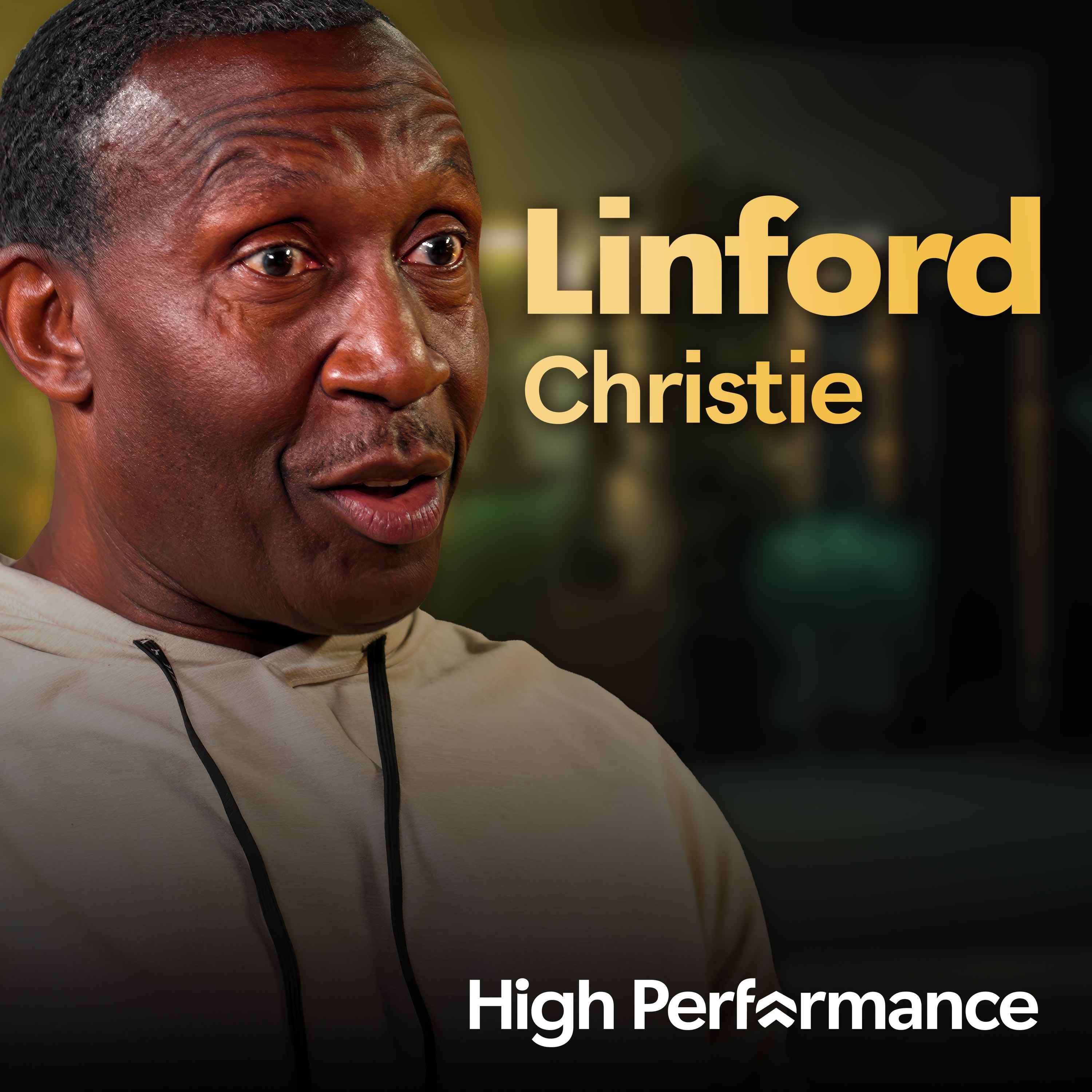
Linford Christie discusses the mental side of elite sprinting—hiding emotion, reading opponents, “core room” mind games, staying relaxed, and using nerves/adrenaline—plus his career turning points (1984, 1991, 1992 Olympic gold) and why he believes self-worth shouldn’t be only achievements. He also addresses his views on sports psychology and coaching, emphasizing lived experience and trust with athletes.
Linford Christie is a British Olympic 100m gold medalist and former world-class sprinter. The host(s) are not fully identified in the transcript; they interview him on High Performance and reference a coach/psychology angle.
Athletes must block visible emotion because opponents “read” fear/tells. The race is “won or lost” in the call room/core room. Olympic gold felt like relief/“job done,” not euphoria. He doesn’t rely on luck; he relies on training and belief. He’s skeptical of sports psychologists prescribing behavior, preferring coaches who ask questions and use lived experience.
1991 World Champs—he cried after finishing fourth, then rebuilt focus. 1992—he used “blinkers”/finish-line focus after Carl Lewis tightened him. He describes Andre Cason running 9.92 in warm-up and how Ron’s words helped him win. He recounts a “robot” sprinter (Stefan Brinkman) training face-relaxation with a grape between teeth. He mentions his Olympic gold medal being dented and his “3A Standard” amateur badge.
Written by AI. May contain mistakes.
Linford discusses the importance of controlling emotions as an athlete.
“It's a pleasure for us to have you with us.”
Exploring Linford's experiences with defeat and the lessons learned.
“So it's just one of these things when you go through things and you get beat a couple of times and everything else and you're thinking, yeah, I've got to reinvent myself.”
Linford delves into the mental aspects of sprinting and competition.
“I did not work, you know, hard, give up all, you know, my social life and all the sacrifices that we made to take part.”
Insight into the mental strategies used by athletes before competition.
“You know, my thing is, up until then, I was just relying on running fast and winning.”
Linford describes the atmosphere in the core room before races.
“And I just go in there and I just sit back and close my eyes and they're making noise.”
Discussion on maintaining focus and blocking out distractions during races.
“And one day, you know, one of the moments, Dennis Mitchell, he comes over and he, you know, swag and say, yeah, I'm ready, I'm getting it on.”
Linford talks about how nerves and adrenaline influence performance.
“And all of the stuff that you've described so far is a lot of external stuff.”
Linford discusses the physiological effects of nerves and adrenaline before a race.
“And if I don't have all that feeling, I know I'm not going to run well.”
Linford reflects on his journey to embrace anxiety and how it influences performance.
“So like, what was, what was the key moment when you realized that I don't need to fight this or repel it?”
Linford shares strategies for managing personal problems while coaching athletes.
“you know, for 12 hours and you wake up and you're running to sleep for 20 minutes.”
Linford discusses his approach to dealing with personal challenges privately.
“You know, confess your sins only to God.”
The discussion highlights the importance of lived experience in coaching and sports psychology.
“Well, I'll tell you what, let's break this down a bit further because you are a psychologist and you work with loads of sporting teams.”
Linford emphasizes the need for common sense and respect in coaching practices.
“And so when a female athlete comes to you and says, my period started today, you've never had a period.”
Linford Christie shares his evolution from athlete to coach and the respect required for the role.
“You can't, so you've got to show respect.”
Discussion about the psychological pressures athletes face, and the importance of mental strength.
“You know, for me, like I said, I believe in myself 100%.”
Linford discusses the reality of competition and the qualities that differentiate champions.
“It's not, you know, we're not all equal.”
Linford reflects on his journey from fourth place to Olympic champion, focusing on preparation and mindset.
“And so it doesn't matter what you do and everything else.”
Exploring the emotions Linford felt after winning the Olympics, and the pressures that come with fame.
“But again, you see, the thing is that for me, a lot of athletes, and this is, you know, going back into the mind thing, they get to Olympic Games and they think, this is the Olympic Games.”
Discussion on the importance of not tying self-worth to athletic achievements and finding happiness beyond sports.
“Was there a fear of you now climbing high enough that you feel you're exposed?”
Exploring the relationship between self-worth and achievements, especially in athletics.
“And I see so, and it's not just athletes, I see so many people saying to themselves, I'm just going to delay my happiness until I achieve something great and then I'll know I'll be happy.”
Linford Christie shares the emotional journey of his retirement from athletics.
“Well, I mean, you're a long time retired.”
Linford discusses achieving peace and happiness after his athletic career.
“You know, am I just going to be there and there and there trying to prove, trying to prove?”
Linford reflects on the importance of kindness and making memories.
“You know, I wake up in the morning, seriously, and I am blessed because I have no aches and pains.”
Linford discusses the importance of personal connections over accolades.
“You know, because that's a metal object and everything else.”
Linford shares his thoughts on loyalty, advice, strengths, and goals.
“And, you know, for me, it keeps me happy.”
The hosts reflect on Linford's insights and the importance of mental strength in sports.
“I think that is an insight into actually the psychological strength that Linford Christie had, but also a strength that he needed because, you know, he did miss the 1984 Olympics.”

Get the gist, explore an idea or ask about something said.
 Claude
On The High Performance Podcast, what are the key points of this episode?
Searching your listeningAutomatic transcript. May contain errors.
0:03I own the track. I am the only person that people come out to watch. Britain's Linford Christie won the Olympic 100m gold medal tonight to claim the title of the fastest man on earth. You were the best in the world. You were an Olympic champion. What did you feel? I feel that if I show too much emotions, then you're going to work me out and then you're going to know how to be. and when I'm on the track, I'm a different person.
0:33Okay, Linford, welcome to High Performance. Thank you. It's a pleasure for us to have you with us. We want to start with someone that your daughter Brianna said. She said you like to portray yourself as someone who is not affected by anything and that you find it difficult to see the good in what you've achieved. For us, that is an extraordinary thing to hear from an Olympic champion, a world champion, one of the world's greatest ever athletes. So what we want to do, if you're happy with this, is to understand what you had to build inside you to become the man and what it costs to build that. Is that okay?
1:06That's fine. I mean, you know, for me, one of these things is, you know, you can't show weakness or emotions at times, you know. And so as an athlete, you know, you read people. And you've got to, you know, I've got to know what you're thinking. And there's more to winning than just running fast, you know. So I've got to know your mind. I've got to know what you think on certain days and how you're going to react and everything else. And so I feel that if I show too much emotions, then you're going to work me out and then you're going to know how to beat me. Well, you look palpably uncomfortable then when Jake read that introduction to you.
1:42I'm trying to give him my secret. Yeah. You know, but that's what, I mean, it is virtually that's what it is. You know, it's not that I don't feel all these things, but you have to, you know, hide it. And I was saying to Sue on the way here, he was talking about certain things and i was saying we're gladiators and it's between us and the lion and the lion and the lion ain't thinking the same way as that they want to survive the same way so if i show you know fear and everything animals read all those sort of things and it's just like athletes athletes read you and so you have to you know block all that out and not not show it so when did you first realize that allowing other people to see your emotions could be detrimental to your performance gosh i don't even know if i realize you know sometimes they say experience make it for the man yeah and i think sometimes you know in order to be something you have to go through something and so we make mistakes in life but if we learn from it it becomes an experience and so and if you don't it stays a mistake so you know my thing is i just want to have as many experiences as possible and a few mistakes.
2:53So it's just one of these things when you go through things and you get beat a couple of times and everything else and you're thinking, yeah, I've got to reinvent myself. What do I need to do to make me better than, you know, the next guy? And that's what you've got to do. So when was that? Was that after 1984 when things didn't go your way? Gosh, I mean, I think most probably 1984 was one of those things. But, you know, there's a couple of times even after that, You know, I sit down in races and I lose. I lose a race which I, you know, never thought I should. You know, one day, I mean, I lost the race and I sat down and I cried.
3:29I sat in the corner and I cried. I said, this will never, ever happen again. What happened after the tears had dried up? Well, I decided I was never going to lose like that again. I decided, you know, I thought I was good. And maybe I really wasn't as good as I thought I was, you know. and it's these things. And so you go back. It's like, for example, I went to, I think it was the 91 World Champs. And I thought I was doing really well until, gosh, Carl Lewis came on my shoulder. He went past me. Leroy Burrow came past me and Dennis Mitchell, you know, and I'm thinking maybe this is how good I was going to be.
4:11And, you know, I ran the fourth fastest time ever. And I was fourth. and you know the only guy who's happy is the guy who wins you know regardless second place things they know they're happy but they're not you know anyone who's happy with you know with being second you know then you're never going to win you know and that's what it is and so you know to quote you know baron kabatten he said that it's not the winning but the taking part that's not me I did not work, you know, hard, give up all, you know, my social life and all the sacrifices that we made to take part. And so, you know, finishing fourth, I had to, you know, think, gosh, what am I going to do to make me be better?
4:58And, you know, straight after that, I thought, yeah, I'm going to retire. you know and because you know every time i ran you know beyond my expectation i assume and so therefore it's only you know ron and you know people send me letters and everything else and give it one more go but you were going to walk away in 91 i was going to yeah i was ready to retire because i thought for fastest man ever you know maybe this is what it was going to be But what I'm interested in, though, is you've still run faster than you've ever done. You don't get to control what Carl Lewis, Leroy Burrell, or the other guys do.
5:36You've still run your fastest. That's what you think. You know, my thing is, up until then, I was just relying on running fast and winning. There's more to it than that. It's a lot of psychology. Tell us that. It is a lot of psychology. and so therefore you learn you know you learn that people you know what people thinking i mean if you think uh gosh i'm trying to think 93 world champs andre casein flying absolutely flying and every time we ran through the heats he'd run a little bit quicker than i did all the time and so I'm thinking god what am I gonna do and so I I ran my semi-finals and I was in the warm-up area where Ron rather than my coach and then it came over the tunnel because you can hear everything it goes on you know Andre Cason just run nine whatever he was yeah I think yeah he ran nine nine two which was my PB at the time and I'm thinking god what am I gonna do and Ron looked at me and he go i said ron did you hear that and he goes we're bloody worried about he goes what's your pb i said 992 he goes well he's only done it once you've got to do it again you know what it feels like you know and it's just that little words you know he said you know get out there and so i went out there and i won you know and so it's all these things it's how you're doing and you know so even you know before that i'm at a meet and i'm running down one way and andre is running up the other way and we're in the same lane and he's running towards me and i'm running towards him or just in the warm-up in a warm-up and so i am running fast and i know he's running fast i'm thinking i'm not going to move you know and so we just kept running and i kept picking up and as soon as before we clash he moved that away and i think i've got you brilliant yeah and so these are all the you know little things that you know you know when i talk about the psychology it's a lot of psychology so they put us all in one room like this all the people you're competing against and they call it a core room so just before you go out to the track and compete everybody is together and so people this is where the mind games begin and the race is won or lost in the core room and it's how you deal with the core room and you get out of it describe it to us so I mean when you're sitting down and they put you on chairs and everything else and, you know, Andre and all the guys were there, Dennis Mitchell and all those guys, a lot of the Americans, they're just making noise and whooping, whoop, whoop, you know.
8:19And I just go in there and I just sit back and close my eyes and they're making noise. And one day, you know, one of the moments, Dennis Mitchell, he comes over and he, you know, swag and say, yeah, I'm ready, I'm getting it on. And I said, Dennis, get out of my face. I said, you're going to get beat twice, once in here and once out there. And, you know, and that was it. You know, I just went back and just relaxed and let them do their thing. Because you've got to be confident. If you show any kind of emotion at all, they'll read that and they'll know weaknesses. They'll know, seriously, we can read.
8:53I can't emphasize enough. We read what you're supposed to. Be able to read your opponent like a book. So what are the tells then? When you're looking at an opponent, what are the tells that you know, I've got you? If I look in your eyes and you put your head down, or you keep blinking all the time, I know. And would you do that? Would you make eye contact with everyone? Oh, yes. I mean, I walk, when I'm on a track, I'm a different person than I am in everyday life. Yeah. I own the track. I am the only person that people come out to watch. I don't care whose name they're calling out. The only name I know and I can hear is Linford.
9:29You know, and so this is me. I own the track. And I walk out and, you know, I know what's going to go on. And so they normally put you in lanes. you know if you're in lane one they put in you know your first and it goes down to eight and i'm never if i'm in eight i'm never going out on the track in eight because once i come through the race starts and then i'm you know i'm running i'm walking past people i'm saying yeah i'm going to pass you pass you by the time sorry by the time we get out to the track i mean i'm in the front and they'll say i'll christy get back and i'm nope i'm not getting back because i am not entering out there in eight.
10:07So you'd be the first to walk out? First to walk out. So it's all the things, these are all the things that you have to, you know, and I'm saying belief, you know, I have never been in a race I never thought I could win. And you were famous for like that tunnel vision as well, like you did, like there was, like as if you had blinkers on. That happened after 91. Tell us. You know, because I said when Carl, you know, I'm in the race and Carl, I thought I was doing really well, I thought I was up there and as soon as, you know, Carl came on my shoulder, he went tight. I just go tight and you start to fight.
10:38And the other idea of being a good sprinter, you've got to stay relaxed and it's got to be what they call channel aggression. And so I just went tight. And after the race, when I decided that I would give it one more year, then I felt I had to find a way that I can keep my focus, that I can, when people come up on my shoulder, you know, I can stop them, you know, stop myself from going tight. So I did think about the blinkers. I thought about the blinkers. I thought about all these things. And I was at a track one day and I realized that if I can stare and focus, I can block everything out in my peripherals.
11:24And so I said, Ron, you know, this, you know, I did this and I felt, you know, different. I felt like I can do this. And, you know, of course, then we, he said, then, you know, try it a few times. I tried it a few times in training and I tried it in a couple of competitions. And I thought, yeah, this, and it works. And so this is the reason. So when I run, I am, all I'm seeing is straight. I'm not seeing. What would you lock onto? The finish line. Oh, beyond the finish line. Well, you've got to run one meter further than you need to run. Are you looking at the floor beyond there or have you found like a person or a chair or like a...
12:01No, you haven't got no time for that. You haven't got the time for the floor for people. You know, for me, I'm just looking, you know, the easiest thing is keep your eye on the price. Straightforward. So I'm just going to run, you know, 101 metres and that's what it is. And all of the stuff that you've described so far is a lot of external stuff. It's the way you're moving. It's walking out first. It's sitting quietly in the core room before you walk out. That's all the external stuff. What's going on inside? Nothing. you know, people always ask me, what do you think about when you're on the line?
12:32Nothing. You know, Ron said, the quicker you finish, the quicker you can go home. But when you're out there, the only thing, you haven't got the time to think, it's too late. There's nothing you're going to do out there that's going to make any difference. You know, every man has a plan to get punched in the face. And so that's what it is. So when you're out there on the track, this is your punch in the face thing. So everything goes out the window. How are you thinking of nothing? Because surely you're going, oh, he's fast, and last time this happened, and the crowd are a bit louder, and it's a bit windy.
13:04I don't hear nothing. There's nothing at all. You know, you're talking about, you're thinking about guys. We do what I do, which is a process of elimination. So, you know, they'll do, like, the first four, and I go out and I look at all my opponents, and I think, okay, I'm going to qualify, because there's not four guys here that can run faster than me. And I do things like that. it's like people say good luck i don't need luck you know luck is for people who don't train hard you know and if i need luck it's most probably that i don't get injured because you have no control over that but apart from that i know what i've done i know the training i'm happy with myself i don't need luck i get that on the starting line take us back into that weight room when you're closing your eyes and just blocking everything out what are you saying to yourself than in that moment nerves is a bitch right if i can say that you know nerves is one of these things that gets you because you're out there seriously sometimes you're so nervous you do this you know you're trying to sit down or your legs are shaking you'll go to the toilet and you come back and as soon as you come back you want to go again and then you'll go again after a while you're not peeing anything at all and these are all the things and as soon as you get on the line and they say, tracksuit off, you want to go pee again?
14:23Because it's just a nerve. So it's adrenaline and everything else. And if I don't have all that feeling, I know I'm not going to run well. You know, I need adrenaline. The adrenaline and the nerves and everything is to tell you that something great is expected of you or you expect something great, you know, of yourself. And so you need all those kind of things. You need, you just, these things that you need. You need to, you know, you need your heart to beat and you'll sit there, you know, or even stand in line, you start to yawn because the adrenaline everything gets you and you feel like you want to fall asleep, right?
15:00You know, so this is all these things and, you know, it's like when you're warming up before a final, you do a certain amount of run and my body will tell me, you know, I try to run and I think, God, I can't even make it. I can't even run 20 meters because my body is telling me, you've done enough i'm shutting off you know let's get to the race and so these are all the things where you know you've got to know your body you've got to know everything that you know about yourselves that it's going to help you to run so you would welcome those feelings of anxiety love it love it i love the nerves i really love the nerves and everything else but again you got to hide it we'll be right back after a quick word from our partners
15:47Business is booming. Is your fulfillment ready for peak season? Switch to ShipStation now and handle more volume with confidence when it counts. ShipStation connects Shopify, Amazon, TikTok Shop, and over 200 more integrations with one platform that does it all. You can manage orders, sync inventory, track returns all automatically. Everything your operation needs all in one place. Right now, qualified shippers get a real dedicated person to get you set up and switched over for free. So when peak season hits, you're ready to go. Switch today at shipstation.com code audio.
16:21But you've also had to learn that. So like, what was, what was the key moment when you realized that I don't need to fight this or repel it? I need to let it in. You know, I don't even know if I, if I had one of those moments, you know, but you know, for me, I read everything they say about my opponents or everything my opponents say, because I want to get to know them. And I need to know what they say to beat them. And so before, I mean, I used to just run and share aggression because I thought that's how it was. I thought, you know, you just muscle everything. And I read there was a guy I ran against in the Europeans called Stefan Brinkman, a German guy.
16:58And they called him the robot. And they asked him, you know, why is it that when you're running, it looks like you're not trying at all? And he said, this is what my coach told me to do. My coach told me that whatever the face shows, the body reflects it so if your face is tight then you're going to be tight and then valry balls off he said again he he trained with a grape between his teeth which helps to keep his face relaxed and so all then you know so when you're a trick when i'm training i think oh maybe you know i can try this i can try that and you know so it's all these things you just it's just trial and error and you learn to work out you know what's good for you you ask people questions and other athletes' questions, the ones that you like and you feel you can trust, but you still have to work it out for yourself.
17:45You can't just take what everyone says is gospel. Then you work things out and you try it out. And I talk to Ron a lot in training, and then that's where we get to it. So how would you stay relaxed, then? What was your technique of staying relaxed under pressure? I sleep. I'm the world's number one sleeper. I can sleep for, you know, I can sleep for a country. Even the night before a major final? Well, that's the struggle. That's the only struggle because, you know, you go to sleep, you know, the night before a final, you go to sleep and you think you're sleeping, you know, for 12 hours and you wake up and you're running to sleep for 20 minutes.
18:22And you're trying to force yourself. And one of the things I learned is that you'd never go to bed and force the sleep. You go to bed when you're tired and then you get to sleep. And, you know, you're up at five. Sometimes, you know, you're up at five o 'clock in the morning. Yeah. Because you have to get ready. You know, you've got to get your kit together. You've got to get to breakfast. You've got to, you know, come back and, you know, get on the coach and everything else. So, you know, you can't eat because that's a struggle. You know, when the adrenaline's low and everything, you just can't eat.
18:55You struggle. And so you just, you know, get a bit of toast and whatever you feel like. you must probably take one or two bites, you know, and I always have a hot drink. That's me. I just go have my hot drink and, you know, you just got to get out there. So you just, I think over the years, and seriously, I mean, if you think, although it's been different, I, you know, I've been running since I was like seven, eight years old. And so, you know, and I continue well into my 30s. So you learn things along the way. You pick things up and you, I mean, like I said, I mean, I get on well with most people, most of the athletes.
19:30And so I talked to them. I talked to Alan Wells. I talked to Aisy Crawford. You know, I talked to Bozoff. I talked to all these people because I'm trying to pick their brains to see, you know, what I can take from them to make me better. So what we said at the beginning then, which was that Brianna, your daughter, said you don't feel anything. That's actually not true. You're feeling an awful lot. Feeling a lot. But, you know, I don't show up. I mean, it's even like, you know, if you have problems, everyone has problems. Yeah. And, you know, when I have my problems, I can't bring it to the track when I'm coaching even now because it's not fair on the athletes.
20:08And I can't bring my problems, you know, onto my kids because it's not fair on them. You know, so whilst, you know, you're going through a situation, you're on the face of things. You have to be, you know, relaxed. You've got to be smiling and everything else because, you know, otherwise it's just unfair. and if I ever brought my problem to the track one day, then it dictates the mood of everybody. Because I'm always, you know, I'm this crazy guy always making jokes and laughing and everything else. And if I ever come to the track, sometimes you don't really want to smile. And they're like, I'm willing for it.
20:44You know, and so therefore you realize that. So you have to hide it and smile. So where have you learned to take your problems? Oh, I deal with my problems. I deal with my problem myself, you know. Always. I don't say take it to the Lord in prayer. I'm just one of these people. Yeah, I deal with my problems. I think it's better that way. You know, confess your sins only to God. You tell the priest he's going to tell somebody. I don't care. We're human beings. We always do that. So therefore, if I deal with my problem myself and whatever, I'm not going to tell them myself. And so that's what you learn over a period of time.
21:21That's what you do. But is there not a cost to that, though? because we talk all the time now about the first thing you do if you're struggling mentally is to speak to people. If you've got doubts, share it with someone. If you don't know the answer, someone else will, so speak to them. We always talk about people that internalise everything. That anxiety or that pain has to go somewhere. I don't think I've turned that bad. No, you haven't. Exactly. So you're almost saying actually it works for you just to keep it inside. It is. You know, for me, I mean, you know, even when we touch on like psychology, I don't believe in, you know, I'm not a person for a sports psychologist and all these people, you know, because he who feels it knows it.
22:01And it's not for, you know, if Jake kicks me and I'm screaming, you can't say, oh, you're making too much noise because you don't know how hard he kicked me. And that's just me. And so therefore a lot of these people are telling you how to be. This is how you've got to be. They've never been through anything. They've never been through your experience. So are they going to tell me how to feel? You know, and so a lot of the thing is I can deal with it myself. And I, you know, I find out, I mean, back in the days, you know, my grandmother was a person that I would talk to, you know, because, you know, the matriarch, she could talk and she would give me really good advice.
22:35But after, you know, after my grandma passed, you know, I deal with it myself. And I think, you know, it's better that way and I think it helps. Well, I'll tell you what, let's break this down a bit further because you are a psychologist and you work with loads of sporting teams. So I think we should talk about this a bit further. It's Linford's lived experience, so it's not for anyone to come along and disagree with you. I think your perspective is really valuable. I'm interested in it. But what I'm interested in is, though, you've also spoken here about the strength of your relationship with Ron.
23:05Ron Rodden, the brilliant coach that guided you through this. Before we talk about that, because we can do Ron Rodden in one step, but I just don't want to miss this moment where, like, this idea of you would have definitely worked with athletes who have said, I don't need a sports psychologist. Yeah, of course. And not long after, you've managed to get them to open up and you've transformed the way they perform. So I think this is a fascinating... Well, I think there's a challenge back to you, Linford, to say that the old Rigo Sacchi, the Italian football coach, had never played football. And when that was levelled at him, he said, well, you don't need to have been a horse to be a jockey.
23:43And I challenge to say that if you haven't been an elite athlete or you've not necessarily experienced the highs that you have doesn't mean that you're incapable of being able to empathize or to offer a perspective that might give you something beyond your own thinking. But, you know, I think being an athlete or being, you know, a sports person and then being a coach, I've got a massive advantage because I've lived it. And I think that is, you know, you can do all the other things and you can get to 90%. But in order to go to the other 10%, that's lived experience. Yeah. And I think, you know, when I speak to, you know, rest his soul, Brooks Johnson, who was a great American coach, he used to say to me that the advantage, you know, he used John Smith because I think John Smith was one of his prodigies.
24:34The advantage you and people like John Smith has over normal coaches is that you've been there. So if my athlete came to me and said, oh, my hamstring sore, i will know nine times out of ten why he's an hamstring sore yeah and i'll know what work you know back off or do this and if you're not and i've seen so many coaches who athletes come to them you know on the team and come to them and say oh you know blah blah blah and because it's written on paper they think you have to do that session this is the session you have to do but whereas you know my experience would be you know back off well well let me ask you though because you gave the example earlier that you coach female athletes.
25:15And so when a female athlete comes to you and says, my period started today, you've never had a period. So how can you, how can you help? I've got girlfriends. But to use your own argument, you haven't lived that experience. So how can you advise a female athlete? Well, I mean, that is a very, very good question. But you see, I think, again, experience. I've got daughters. I know more about my daughters when things are happening than their moms. Sure, yeah. And so for me, I use that experience. And I use that experience by talking to my daughter and listening to my, I've got four sisters. A world of women.
25:58Oh, I'm surrounded, trust me. And so therefore, that's the experience I use. But that is a little bit different from sport. you know i think it's a little bit different and i think you know and when you're out there on in the arena you can only advise and it's the same i suppose the same thing because i can only advise so much yeah and i can only cover the basics but you know i think you know sports psychologists they just you know they say they just want to talk and you can't you see this is where we go back to the emotion yeah i can't be out there telling you the time i'm telling you my my emotion is less time I've got to go out there to be able to perform you know and so if I came to you and said oh you know I got high hamstring tendinopathy and you've never had it you've never known are you going to tell me what about if they say the things that are not physical but are more mental are you how what do you advise in that situation you know I mean oh you know so I was having the same conversation with my agent on this and I think when you're at grassroot level you you can do all this kind of you can talk about this when you act an elite level you need to know what's good for you and what's not you need to know all these things and if you got to look around your surrounding the people you are around what's the best guys are doing i mean for years i didn't eat pasta because i'm thinking gosh who are the fastest people in the well it was the jamaicans you know the americans they weren't eating pasta so why am i eating pasta you know pasta you know all the other people in fact they were not as fast and so this is just it's just the way you know i did things and so sometimes athletes don't use the common sense and the answer lies within you yeah we just got to know and so when you know when soon i was talking there are so many people pick up a book one day and say i'm a coach never coach to anything but they got a whistle they got stop watching their coach and then they got athletes will go to them and then when it's not going wrong yeah do your research you know and it took me years for me to say i was a coach why because that was total disrespect I felt for all the people who had gone before, the Tom McNabs, the Ron Rodden, the Charles Taylors, people who were doing it, for me to pick up a book one day and say, yeah, I'm a coach.
28:33You can't, so you've got to show respect. I was an advisor, and I got to learn my apprenticeship before I can become a coach. You see, and so this is the problem we have. You know, people, they're coming to the coach overnight, and there's so many people say, I'm an athlete. It's a wide word. word isn't it athlete when you say you're an athlete it covers so much thing but you're not and it's the same thing like you know for a sports psychologist to tell me when i go through that tunnel how to be it's impossible that's the scariest shit in the world when you come out that call room and you go through that tunnel and you walk on that track and there's a hundred thousand people cheering nobody can tell you that yeah and i've known athletes who run they turn around and they run back you know into the changing room team management have to go and get them because this is how they are and so therefore it's it's an experience that you have to have it sounds to me like you've experienced somebody telling you what to do and in my experience the best coaches whether it's psychologists whether it's the runs and the and the technical coaches they're not telling you how to do that they're asking you the question for you to tell them how you should behave at that moment i've yet to meet an elite coach in any domain that instructs you exactly what to do they'd ask you the right question that allows you to find the answer so and i think that's what and is that what sports psychologists do the best ones are asking the right questions not you have two people who have similar situation you will tell them both the same thing why but why would you because then because then that infers that you wouldn't try to what you said to me about and i asked about your team of athletes and you go it's about trust so i've got to know the person and i've got to know your story and who you are and your background so why would you give the same advice to some same situation and they get out there they tell you coach i mean psychologist sorry i got this problem when i go out there i'm just so nervous and everything else like that you then would use some i mean it's cross they got this cross contamination there somewhere along the line you know and so for me i don't need to need that and every time when i speak you know i never really you know the psychology thing but when i listen and i hear athletes some athletes just want to offload They just wanted someone to listen to them and everything else.
31:08And so to me, I don't need that. You know, for me, like I said, I believe in myself 100%. I get out there on that line and I think there's nobody better than me. If I lose, why did I lose? Not because the others were better than me, because on the day my best wasn't good enough. And so it's like having a lucky charm. So if one day you're not there, how are they going to manage? If I have a lucky sock and then I get on the track and I leave my lucky sock at home, what do I do? There are incredibly talented athletes that don't have the belief you had. And then I think they're the ones that maybe need.
31:49It's not for them. You don't think so? No. So even if you can just like, even if you've got all the physical attributes that a sprinter requires and you're dominating and dominating and dominating at youth level. but when you're in front of 10 ,000 people, it crumbles. It's not for them. We're gladiators. I keep saying, as you go back, that it's between me and that lion. It's not, you know, we're not all equal. And, you know, the biggest, you know, if I go back into physical, I think the biggest mistake a lot of sports people make, they try to make themselves perfect. So they go in that gym and they want the left leg to be as strong as the right leg.
32:30it doesn't work because when you ride a bicycle when one leg is down on the pedal the other has come up so it's got to be relaxed and if everything was 100 you're not going to move you need sometimes something to be a little bit weaker so then you can get so you can and that's how i and that's how i see it you know so therefore so yeah for me i i think the approach We can't all be the same. We can't all be champions. We can all try to be. And no matter what, if you get champions, no matter what, and everything being equal, the one who wins will have something extra. Do you understand? You put them all in the round room and, you know, the one who's going to win will find that corner.
33:16And that's what it is. We can't all be the same. And we've got to all stop trying to be equal. In life, we're not the same. You've got the CEO, you've got this, blah, blah, blah. And it's unfortunate. This is the order of life. You know? And so it doesn't matter what you do and everything else. Someone always is going to be better than you. Fascinating. Take us back to 91 then, right? Because you're not all equal. You've come fourth in the World Championships. You've decided I'm going to retire. And then you go, no, I'm going to give it one more go. so you're not accepting the natural order of things that tokyo presented to you so tell us what you do between making that decision to give it one more year and then crossing the finish line in first place in the in barcelona right for me i ran there i was the fourth fastest man in the world who gave a shit you know even my mom didn't even know i was you know nobody cares you know And people will give you this thing where they will say fourth is the worst place to finish.
34:24That's bullshit. Last. And not even making the team at all is worse. So they give you this, you know, again, they give you this false sense of, oh, fourth is the first place. No. The only guy that's really happy out there is the guy who wins the gold. If I'm a sponsor, I'm only looking at the guy who wins. You know, I want to be associated with the winner. Everyone else will get the drakes as it boils down. so between 91 and 92 you know again I because people first of all it was just people around me when they wrote letters and you know the British public and said oh we bought our ticket you know selfishly oh we bought our tickets for for Barcelona you know we don't we want you to go out there you know we want to come and see you run everything else so this is the reason why you know i decided and so i sat there and i thought did i do everything i could possibly have done to have won that race and then no because i got a piece of paper out lying down the middle the strength and weaknesses and so i you know worked out and that's what i say you work on your strength but you work on your weakness but you don't neglect your strength what was on your weaknesses at that point my start my start was not great and also you know i was going you know i was going through you know breakup you know right with my girlfriend at the time and so and that impacted you physically oh well mentally which then impacted you physically well no physically i was in great shape and so you need this in order i'm serious you need to be mentally strong to win there's a guys in in the race there's one who say i'm the best am i really and there's a guy who say i'm the best and i know i'm the best so when i step out on that track seriously i am a different person you know and you can get away with murder when i'm you know in everyday life but when i'm on that track i'm not gonna get away with anything because this is where you know this is my place and so therefore I don't care what you know you think so which guy were you in 91 I thought yeah I'm in great shape am I really you know you know physically yes you needed a sports psychologist Linford's going to kick off with you in a minute.
36:53Ignore him, Linford. We've established Linford's view on this. Let him explain. He must be outside cringing there. Shut the fuck up. He's cringing every evening. You carry on then for what? So you're having doubts in 91. Well, you know, it's not that, you know, I don't even know if it was doubts. But I just knew I was not in the best shape I can. You know, mentally, I was in that place, you know. And so therefore, this is the reason why I could have gone away. There was weaknesses. This is the reason why I could have gone away. We went away. And then I went to Australia. We worked on my start.
37:31We worked on all the thingies. And, you know, I knew, first of all, that I can run past people, but they can't run past me. So if I can get out before you, you've got no hope. And so that's what we did. We just went back and, you know, keep going. We went back to the drawing board. we worked on the start we worked on all this and then you know came back you know better and stronger than ever this brings us though to one of the most interesting parts of your story and again going back to your daughter talking about you know feeling and not feeling things you crossed the line in 92 you had that failure in 84 you had to struggle in 91 you'd finally done the thing you dreamed of all your life you were the best in the world you were olympic champion as you dipped for the finish line and crossed it what did you feel that was the biggest anticlimax of my life you know it was one of them because i you know i read evelyn ashford you know she was a great american sprinter olympic champion she said when she crossed the line and won the olympics she had this feeling of euphoria right and so oh where's the feeling you know i'm supposed to be taking going up in this is supposed to be enlightenment you know this is going to be this feeling there was no feeling i mean the only thing that you know got me i realized that you've moved off the back page onto the front page this is your life is this is the way your life is going to change being a brit yeah more than anything else and so that was the feeling I had.
39:09But again, you see, the thing is that for me, a lot of athletes, and this is, you know, going back into the mind thing, they get to Olympic Games and they think, this is the Olympic Games. This is what, you know, then they go tight and they put pressure on themselves. For me, the Olympic Games was just another race. When you finish and you win, then you say, yeah, this is Olympic Games. And this is what, you know, so it's a different, so I can run and relax. And Olympic Games also, it wasn't for me. Olympic Games were for Queen, country my coach my training partner these are you know partners this this was the olympics was for them because it meant it meant that much you know every coach wants to coach an olympic champion and every you know athlete you know partner training partners wherever they want to you know be associated and so that you know the olympic games was was that you know the world championship then was for me because but can i ask you something for them because you didn't actually say an emotion you went i knew i'd gone from the back page to the front page and that was the emotion what was the emotion you felt of knowing you were now on the front pages there was i mean it's all i you know it was all over it's a it's the achievement i think you know it's few that's one of those yeah it's one of those release it's it's relief i mean 10 years I've been training you know and so you know 10 years plus everyone's been saying oh you know you want to be should be Olympic champion Olympic champ if you're not an Olympic champion you're not this you're not that you know and so therefore for me it was you know at least I've done I've done that so you've done that but what was the feeling you had that was associated with you've now got an increased public profile that you're now the front page story it's you know like i said the word from my mind is shit what have you done right because you know your life changing it's life changing yeah it doesn't necessarily mean it's life changing because financially or whatever it's life changing because now you know household name yeah exactly and so my dad will tell me the higher the monkey climb the more his backside is exposed and that's exactly what it is.
41:22So was there a fear? What? Was there a fear of you now climbing high enough that you feel you're exposed? Yeah, because, you know, sometimes back on then you can hide a little bit, you know, back pages, but now you kind of, you know, you then become, you know, like, you know, hustle name, so then you're on the front page. I think this idea of having relief is really intriguing because there'll be so many young athletes emerging now and you'll be working with a lot of them and so much of their self-worth will be wrapped up in, what if I just become British champion? Then as soon as they do that, what if I just become European?
41:57Well, if I just win a Commonwealth, if I just win an Olympic medal. I think it's really important we talk about this for a moment, that all of our self-worth can't be wrapped up in the achievements because if our self-worth is wrapped up in the achievements and then you achieve the greatest thing you can possibly do on the track and you feel pretty much nothing, right, then where does that leave us? And I see so, and it's not just athletes, I see so many people saying to themselves, I'm just going to delay my happiness until I achieve something great and then I'll know I'll be happy. No, it wasn't that I wasn't happy, don't get it wrong, it wasn't that I wasn't happy because, you know, again, off the track, I can separate the two.
42:32Off the track, you know, I had my mates and everything, I was hanging out, I was happy. But when you get on the track, it's a different thing because this is my job, this is what I've trained for all these years to do. You know, and this is Ron... So it's just job done? Yeah, Ron comes out. rain sleet snow no matter what it is and he comes out there and he stands there you know i mean being a coach now and i realize so you stand there and it's cold it's raining yeah you're out there blowing a whistle watching other people you know and so this is the thing that's different about you know being a yeah i suppose being you know crossing that line so it was all it's a relief and the relief was you know or whatever it was for them these are all the people that i you know i did this for more than myself was there also this emotion of feeling that you'd shown people because i think that you were unfairly persecuted for your age for the color of your skin for the fact you struggled in 84 like i think that you got more shit than you deserved throughout your athlete athletics career i wonder whether when you cross the line it was a bit of there you go My good friend, Chris Eubanks, he said to me, when all these media people and all these people are saying things about you, don't take it personal.
43:50You know? Did you ever? Of course I did. You know, of course I took it personal. But the thing is, like, if you give up, they've won. And then they'll turn and say, oh, you know, we only did it to spur you on. No, you didn't. And if I'd stopped, then that means they would have won. And this is the thing I chose to do. I chose to run. and I wanted to give it my best shot, give it all I got. And so if you are not the Olympic champion, people won't think you're giving it your best shot. You know, and that's what it is. You know, we're all out there for accolades and recognition. That's what we're doing it for.
44:32And so therefore, this is the ultimate. There's something very interesting that you brought with you, because if you're doing this for accolades and recognition, One would imagine if you walk into Linford Christie's house, the first thing on the wall is the Olympic gold medal and then all the way down the corridor and then there's the Linford Christie room and maybe above your bed, you've got like a picture of yourself crossing the line in Barcelona. We ask you to bring in your medals and this is how they turn up. I mean, as lovely as this Jamaican training bag is, Linford, it wasn't quite what I was expecting.
45:04So, I mean, they are just... Just, I mean, they are literally like this. They are like that, yes. Why? You know, you don't want to believe in, you know, sometimes people get carried away and believe in their own hype. Yeah, yeah. And, you know, and I think that's a big mistake a lot of people make. You know, I've got mates, you walk in the house and the video comes on automatically and you can see all that. You know, but for me, I did what I had to do. you know and that was it I didn't want to be caught up in my especially now I'm coaching I can't even I mean you know what that medal is which one's that one it's got a dent in it that's the Olympic one that is an Olympic gold medal with a dent in and I can't even untangle it from a national standard junior grade triple A badge I mean you know I'll tell you something that was brilliant that badge means so much to me because there was you know So you'd run 3A Standard, what was they call it, yeah?
46:06Amateur Athletic Association, when we were amateurs. And you would buy one of these badge and you would sew it onto your singlet or your shorts or whatever, you know, to show, oh, yeah, yeah, you know, I've got a 3A Standard badge. And that's what it was. You know, so this was sort of like one of the first, when you say it's junior, grade three. I don't even know if grade one was better or whatever it was, you know. But for me, this just meant something. But you see, again, you're never sure where you're going, but you know where you're coming from. And I always believe, seriously, if you're not, if you don't know your history, you're lost.
46:39So you've got to know, and I, you know, honestly, most of these youngsters are running that. They don't know the people that's gone on before them. Right. You know, I've been coaching athletes and they say, oh, we didn't know you were Olympic champion. Oh, we didn't know. Is that real? Honestly. British sprinters? Yes. And they say, oh, you know, I mean, you know, gosh, in 88, we won silver in the relay. You know, it's like, oh, we didn't know you did that. Because you never talk about it. But again, you know, I've got to put great on his name. The great Daley Thompson, you see, and this is where things have changed because everyone's on social media.
47:16The great Daley Thompson said to me one day, when you have to tell people what you've done, you've done nothing. And so, and I do believe that. But nowadays everyone's, they're all on the internet telling you what they've done. They're telling you when they're injured. they're telling their opponents what their training program is and they wonder why they can't win too much too much information out there and so that's just me so i don't you know i coach you know i don't want to be one of these coaches say in my days yeah in my days you know back in the days you know when you know we picked up rocks and ran with it and all that kind of stuff i don't want to be one of those people and i don't want to believe my own hype the only thing i do every And again, when the guys are not, you know, and girls are not doing what they should do and they take you for granted.
48:02I said, OK, if you don't want to learn, it's your business. I said, but if I sit in your home in my cupboard, you'd be dazzled by what's in there. So I'm just trying to use that. But, you know, I don't really talk about what I've done because I'm not in there. And my medals, you know, seriously, I am so. Sue Ray and I'll tell you the truth this is the first time I don't know in how many years this has actually come out no seriously last time I last time before when I saw it I gave it to Sue's daughter Mamie she's my goddaughter and I gave her this when she was a kid that's good I mean she's 22 now I gave it to her when she was at primary school most probably for show and tell and I've not seen it since I mean you can see you know whatever it is that's the best show and tell she's winning that one my god my god father won the Olympics so so this is this is what I you know for me I don't you know I don't really do all that and so you know my kids will say you know people say put up in a no yeah yeah you know because I you know also I want a normal house you know I'll show my my kids one time I said listen you know just see where your bike come from and they sat down there for a little while and they go can't we fast forward it you know if we fast forward it when you win quickly and then we can go and play his station that humbles your ego right there doesn't it don't want to watch their dad winning a gold medal but I think there's also something important about these are not your identity if these were all over your house and if you took them into training and showed them to every athlete you work with then you're saying well all I am is an Olympic champion you're so much more than that well I mean I'd like to think so but you know I don't even know if my athletes had seen this because Because, you know, I don't need it.
49:47You know, like you say, it doesn't define the person I am. They say once you're an Olympic champion, you're always an Olympic champion. So you never say, you never introduce yourself, say, let's pass. But I still stick to what they tell me. If you have to tell people what you've done, you've done nothing. And so, you know, I don't even. What do we have here? I'll swap you the medal for the suit. And it's not real gold either, trust me. What? It's not real. That's all sentimental value. You understand me? That doesn't, you know, and the pharaoh's taught us one thing, you can't take it with you.
50:19I'm fascinated by these suits, because I think this is an example, though, of you finding an edge everywhere you look. Ah, yes, indeed. And, you know, I'll tell you what, I can't even fit in this nowadays. If this is one of my, you know, my Lycra suits and everything else. And, you know, two things. I mean, number one, the story behind all this, first of all, is that Alan Wells, just before, you know, I think it was after AFC come off games and one of those things, you know he didn't didn't run but he ran one of the races after and he cut one of the tights down and he said it helped his muscle yeah and so my thing is like i had huge hamstrings and when you run you know you're wearing those little booty shorts as they call them now you you know daisy duke things and you're running and my hamstring is just moving around and so you stand more chance of pulling your hamstring right and so when he said this is what he did i thought oh good grief Yeah, maybe I should try that.
51:13And then Andy Norman, the rest is sold, he said to me, there's eight people in the race. What are you going to do to make the man in the hill bring his wife, his dog, and two kids down to watch you? You know? So even if you don't win, you need to do something that people remember you by. And so then, you know, I used the idea. There's a lady called Denny V. He was a speed skater. She used to make her own sort of thing. I mean, I think they were the first people to make this kind of thing. And so I got her to make me some of these. And I started running it. And I'll tell you the funny thing. So I'm at the three-eighths final one at Crystal Palace.
51:58And an athlete said to me, oh, how could you wear that? And after I won, a couple of days later, I saw, you know, a race later, I saw him wearing one. And I said, oh, how could you wear that? I mean, this one I love, by the way. I mean, that's a proper 90s luminous race suit. Oh, I've had the whole works. You know, seriously, I've had the... I remember the skeleton one you bought. I had the skeleton one, I had the newspaper one, I had the James Bond one. Yeah. I mean, I got the one, James Bond one, it was so funny because I thought he was supposed to wear the bow tie of James Bond and people thought I was a waiter.
52:33You know, but it's just... People you just come to see, what's he wearing next? And I wonder if that had an impact on your opponents as well. Oh, yes. I mean, I raced against a guy called Bruno Mary Rose, a French guy. And when I wore the Skeleton one, he said, I couldn't concentrate on my race. I mean, not that I wasn't going to beat you anyway. He said, I couldn't concentrate on my race. I was laughing so much because I was just looking at, you know, what you're wearing. And so, yeah, I mean, it's something that now, you know, it's different. We're entertainers. Yeah. But I think back in my days, we were just too much, you know, too serious to really think that we were entertainers.
53:16So we were more serious. You know, I'm so glad we didn't have social media and all these things on because, you know, most probably I wouldn't be the athlete I am today because I'd be on it. You know, and like I said, people, athletes now, they, a lot of them are famous not for being achievers. they're famous for being on the internet because you can get a shoe contract yeah by followers you know so you've got a shoe contract and you're rubbish damien and i were talking a while back about this sort of psychological idea that everyone now like they imagine their success so much they think about it so much right that when it they almost get the they get the sensation that they've done it so you want to write a book do you remember we spoke about this it's like this idea that you people procrastinate and think about writing a book so much that they've already had the thrill from writing the book there's this argument now that young people get the thrill of achievement without the achievement so i've got a million followers like it really matters and therefore it almost dampens the desire to get up at four o 'clock in the morning go deep into the night train in the middle of winter because they've got they've kind of i've done it i've got a million followers and i think that's the hunger was there for you all the time right until 92 all the time because we, or I was, and, you know, imagine we were about achieving, you know, substance.
54:39We didn't want to tell our opponents what we'd done or what our training was like and everything. And, you know, my agent gets upset with me all the time because he's saying, you don't post. And I'm thinking, what have I got to post about to tell people? What have I got in my life that I want to tell people? and once it's on there you'll never get rid of it and it's the same thing anything you say will be taken down and using evidence i you know i want a life and this is you know back to the thing where i don't you walk into my house you will not know that i ran because you know you see we've got maybe about 100 period of years you would never know i was an athlete because i have nothing in my house to tell you that i was an athlete because again you want to get away from that yeah you know when i was you know having something to prove then yeah you know i was an athlete 24 7 but now no it's like people always say i don't even want to do the vet circuits and you know they got the masters as they call it why if i can't be the best in the world what's the point we'll be right back after a quick word from our partners today's episode is brought to you by olympic hospitality the olympic games are coming to los angeles in 2028 this is a once in a generation event that you will not want to miss and it's more than a ticket it's a story you share with your family and friends and the ultimate way to get closer to the action is with an olympic hospitality package.
56:14Ticket-inclusive packages offer a range of prime seating and lounge access options, venue-dependent priority entry, food and beverage selections from LA's diverse dining scene, and elevated service and continuous support, making your day at the Olympic Games one to remember for a lifetime. Get ahead of the curve with an LA28 hospitality package. Discover more at hospitality.la28.org forward slash high performance. Business is booming. Is your fulfillment ready for peak season? Switch to ShipStation now and handle more volume with confidence when it counts. ShipStation connects Shopify, Amazon, TikTok Shop, and over 200 more integrations with one platform that does it all.
56:56You can manage orders, sync inventory, track returns all automatically. Everything your operation needs all in one place. Right now, qualified shippers get a real dedicated person to get you set up and switched over for free. So when peak season hits, you're ready to go. Switch today at ShipStation.com, code audio.
57:17What was it like after you retired? Well, I mean, you're a long time retired. But tell us about your decision. We were talking off camera before. Tell us about that and then Jake's question. Well, I mean, the way I retired, I was at World Champs in 97, I think it was, And I woke up. I was due to compete. I woke up in the morning and I thought, you know what? I'm not enjoying this anymore.
57:43And I rang, you know, my agent. I rang a friend of mine and I had a little cry because then, you know, it's the end of an era. And that was it. You know, I just decided, no, I'm, you know. And I think it's, even though, you know, it was intense, all the training and everything else, I lost the love. And I think, you know, the more you enjoy what you do, the harder you work. The harder you work, the better you get. And so once I lost that love, you know, that was it for me. And did it happen immediately or was it a slow dawning that the love had gone? I just woke up in the morning and said, no, I don't love this anymore.
58:30I didn't want to go out there and do all this. And so that was it. So what did you cry about then? Well, I mean, you know, the thing is like, for me, everybody knows, or they should know that retirement is going to come to us all. And sometimes you have to have a little bit of preparation. People say, well, when you start thinking about retirement, then you really are retired. And I knew it was going to come. and you know for me i i think i just got to the stage where i got fed up i've been beaten down all the time you know beaten down this and that and you know it wasn't it just wasn't fun anymore beaten down by opponents no no i just think you know gosh you know the media and all these kind of you know people but you see also the worst part of it was when you i think when you're an you have to believe like i was saying you know you have to believe in yourself so much and so they kept saying i'm too old i'm too old i'm the best in europe you know you know it's still in my face you know i'm best in europe but i'm still considered as being too old and so when you're a little bit younger you can come you can think okay i lost this race not because i'm too old but you know yeah this didn't go right but then when you you know you lose one or two or maybe three and then you start to think maybe I am too old you know you're someone in an armour and they tap that same spot all the time eventually it's going to pierce it and to me that's what it was I just did not really need all that and so yeah I just wanted to have some normal life I wanted to go clubbing again hang out with my mates you know play football which I'm shit now but you know I wanted to do all these things you know and so you can't.
1:00:18It's very interesting that part of the reason for wanting to retire was that sort of constant media, attention, media, criticism, everyone with their eyes on you. And you knew the minute you crossed the line in Barcelona that was coming because you said like that changed everything. You went from the back to the front pages. Retiring didn't remove you from the front pages because it was two years later the Nandrolone investigation was opened. Indeed, three years later. Three years later. what do we what do people still not understand about what went on for you in that time you know i mean gosh you know the funny thing about it you know even go back and this is when i suppose you need good people around you yeah because my family never asked me did you do it blah blah blah none of that and i always say your friends don't need an explanations and your enemy will never believe you and so this is one of these things you know one of these moments i think and And I never, you know, I don't care enough about what people want to think.
1:01:16You know, the most important thing to me is I can sleep. And if my door knocks, I owe nobody nothing. If my door knocks and I don't want to get up and open it, I don't have to. Yeah. You know, and so this is for me. My, I've got inner peace. And that's, to me, that's more important than anything else. And where does that inner peace come from? What gives you that? Well, I don't know. You know, the thing is, as an athlete, I think, or as a sports person, we're always trying to prove something to ourselves and to people. That, you know, I want to prove I can score the most goal. I want to prove that, you know, I can win the Ballon d 'Or, whatever it is.
1:02:00I want to prove that I'm in Olympic, you know. And so you always try, you know, this is what you do. But now, you know, once I retired fully, i don't have to approve anything to anybody and i can't go back and change things and you've got to accept and understand yet now regardless of whatever it is people will come and run faster than you and so what can you do it's not that you know the days when someone come run fast and break my record i think okay yeah i'm going to go train i don't come back and do it you can't do it so it's acceptance yeah and you and you know honestly you know i am so at peace with myself now that it doesn't matter you know it really doesn't matter you know what people want to think what people want to say when you say though like you you knew you were innocent so it didn't matter you still spent a huge amount of your own personal wealth i did to clear your name so it did matter that people knew you were a clean athlete right what i mean but up to a point you see the problem is you know for me i was fighting a losing battle and this is the thing after a while you get to the stage where you're thinking, am I going to be what they say, penny wise and pound foolish?
1:03:11You know, am I just going to be there and there and there trying to prove, trying to prove? And you're never going to be able to. And so part of the reason was, you know, they kept saying to me, oh, you come to Monte Carlo and prove this and prove that and do this. And I was like, fuck off. You know, I don't need to. If you believe me, you do. And I go and I spend all this money going there. And in the end, I mean, some of the other people, you know, they have Federation paying for them and this and that you know i was spending my own money and it's stupid and so me i just got i think you know to hell with it if you want to believe you know you believe if you don't want to believe you don't believe and like i said at the end i can sleep and the people who mean you know mean more to me or the most to me you know didn't need me to explain anything about it i just think for someone who was your career was all about control it was like let's control my performance let's control my training try and control the result this was this must have been a challenging period for you mentally because you couldn't control what was happening like it was and it was we both remember it was in the news every like it must have been relentless for you of course but you see the thing is like and this is you know when i don't know if it's maturity or experience this is what we all go back to this you got to realize there's certain things you You cannot control.
1:04:30You cannot control. I'm on that track. I can control to an extent what I can do. I can't control how fast the other people are going to run. And it's the same thing. I can't control it. And so therefore you're trying to control what you can't. You know, we all, you know, we're all going to die. We can't control it. So you just got to, you got to live. You don't get up every day and think, God, you know, I can die today. I can't live my life. No. you know you live each day like it's your last day so you enjoy it to the fullness and that's what it was for me but like when you were competing in an era where like the ben johnsons were being busted and you were seeing other athletes you were competing against and you know that you're racing clean against these guys that are taking performance and hands and drugs how did you reconcile that like was it just that belief that i'm still going to prove them better than you You got it in one.
1:05:23Right. I'll show you. I'm a good psychologist. There you go. You got me. You got me. Oh, here we go. Today, we've changed Linsert's mind on sports psychologists. He's available for hire. That was me, though, yes. Because you see, the thing is, I got this thing where if they want to take it, it's up to them. Yeah, yeah. I'm going to beat you. And then you've got to take more. Right. And then one day you're going to die. That's your business. Brilliant. You know, I can't control what you do. but I think too many people are too obsessed with saying oh yeah this one's doing this one's taking this one no I ain't got no I what you do I can't control yeah and if you're going through the tests and everything else and you're passing and they say what can I do about it yeah and so therefore my thing is I can only control me and so I don't care what you're taking you could be six million dollar man you're gonna get whooped and that's how i got you know you can't be and again you know you can't be thinking about it because i want you on the start line thinking god son this one's doing this no you can't be doing that you just got to run and focus on yourself and yourself only we started this conversation by talking about your daughter saying nothing affects you i think if we've realized anything in the last hour it's that you're as human as anyone else Of course, of course things affect you.
1:06:37I'm just better at hiding it. So who is Linford Christie today then? Linford Christie in his 60s, Linford Christie who doesn't need to compete, Linford Christie who doesn't need to wear a mask anymore. Like if I was to say, Linford, who are you today? What would you say? Happy. That's just me. I am happy today. You know, I wake up in the morning, seriously, and I am blessed because I have no aches and pains. you know i've seen some of my you know ex-aff you know people i compete my ex-competitors and everything else and they're walking some of some of them some of them in chair they got sticks and everything else like that i wake up in the morning i can tell you i have no aches and pains at all thank god i have nothing you know i wake up i'm blessed i am honestly blessed i can i still run the stairs if I if I you know feel like going into the gym and do a little bit I can do a little bit you know you know those little things that people have on their desk where you have the little hanging balls and you drop one then if you take one it knocks one if you take yeah it's a reminder for me all the time that life is about getting back what you put in so if you just put one ball of joy out there you'll get one back if you put all of them in you'll get all of them back and I think that's an important message actually here because let me tell the story very briefly that the best part of almost 15 years ago, I sent you an unsolicited message on Twitter, didn't I?
1:08:02You didn't know me. We hadn't met. I said, my wife grew up idolizing you. It's her 30th birthday party in a few weeks. Would you mind sending me a video or something? Linford replies, I'll come to the party. And I thought, yeah, you're Linford Christie. You say that, but you don't. And then one evening, we're at an event in West London in Chiswick. And the lady running the bar where we're having Harriet's party comes to me and goes, Linford Christie's at the deal. And I said, sorry. And you had turned up on a random Thursday evening in Chiswick to come to the birthday party of my wife, who you'd never met.
1:08:42And there was a beautiful moment where I did a speech about, I sort of did a speech like Harriet is like Linford Christie because in the way that he blossomed as he got older, she's also blossomed as she's got older. And then Linford walks out with the birthday cake and it is like an amazing evening. I've always wondered why you said yes to that and how important kindness is in your life. You know, for me, it is right. You say what you give out is what you get back. And, you know, for me, I will sign autographs for people. I'll take a selfie. I'll do something because it doesn't cost me anything.
1:09:16Yeah. You know, and sometimes even if it costs, you know. But that costed you time. It cost you anything. Well, it is. But, you know, you remember this. Yeah. You know, how many years ago you remember? So it doesn't matter. You know, I got a letter years ago from a lady. I mean, she was, you know, I think she's passing, I rest her soul. She was in an hospice. And the last thing, you know, one of her last wishes was to meet me. And I went up to the hospital, I met her. You know, I went along with my old training partner, Wendy. and you know you're not just here to run fast and do all this sometimes you're here to be a human being yeah and this is one of the things that you know i suppose it's the ultimate so you've done all your achievement everything else and now you're your whole soul name you can make people happy and so for me and you know it's moments like this yeah you know so it's it means more to me than even than an Olympic gold medal.
1:10:21You know, because that's a metal object and everything else. Memories, you know, memories are made of these things, you know. And so for me, regardless of whatever it is, you know, you may remember this and hopefully your myth has remembered it. Oh, absolutely. Right? And so therefore, you know, and so people remember these things and people remember little acts of kindness. And so I think this is one of the things that's missing now. And I think it's missing from our sport too, because we used to run around after you win a race and you do a lap of honour. You high-fived the crowd and the crowd got involved.
1:10:50And so that's why they came out in droves. And sometimes I look back at pictures and you see the smiles on these people's faces and everything else. And it's better than winning the race. It's so much better because you have caused some sort of emotion with people. And someone asked me, you know, what is it like when you're on the podium? And I say exactly the same thing. whether you like me or hate me or you come out support me or not when i stand on that podium and they play god save the queen you stand up and you show respect to my country's anthem what greater how many people what greater feelings how many people yeah can do that and so therefore you know you you have to you're there to do these things and you're there also to be a human being and make people smile.
1:11:43So people will go away and they'll remember this for the rest of their life. They may not remember or even know that you won an Olympic medal, but they say, my mom, my dad said, this is what my granny, whatever, because it's got to be granny now. But they say, this is what happened. And so for me, it creates longevity, you know, and that's what it is. Some of the, you know, most people, when they finish, they're gone. And so people still think I'm still going to compete. So I'm trying to think maybe I look that young. You look bloody good. You know, but it's just one, you know, so it's the impression you leave on people.
1:12:24So what do you want people to remember you as then? Oh, gosh. You know, I was, I suppose, you know, I'm just an everyday guy. I went out there and for me, we're talking about immigration, one of these big things now. And I always say I'm as British as the king or the queen. And so therefore, I'm trying to show, for me, so people look back and they think, I came here as an immigrant. What do they call it immigrant? At age seven. And I got there and I did what I could and I love my country. I was born in Jamaica and I'm still Jamaican, but I love Britain. Britain gave me the opportunity and if you give me a chance then you can give the next person a chance you know I used to walk down the road before I became an athlete and little old ladies will bang their pocket and hold on to their handbag when they see you know and they see a black guy come past and now they say oh take my bag for me you know so this is what it is you know I drive down the road seriously and I see people you know little people at bus stops and it's raining I get to say how far are you going do you?
1:13:31yeah jump in I drop you where you know wherever you want to go But I think, you know, to me, I'm a human being, and I would like to think when I do these things, if my relatives or anyone else out there, that people do the same for them. And that's what I do. So if you want to remember me for that, then that's fine. Being a good man. Well, ish. Yeah. I'm as good as I can be. You can say that. You can say that. I'm as good as I can be. And, you know, for me, it keeps me happy. Yeah. And that's all that matters. Love that. Right, we're going to finish now with some quick fire questions, Linford.
1:14:06These are brought to you by our partner Vitality. The Life and Health Insurer are proven to help you live up to five years longer through rewarding healthy living. What are the three non-negotiable behaviours, the three most important behaviours in life, do you think? I think loyalty. You've got to be loyal to people around you. Honesty, I think that's one of the things. I call my book To Be Honest With You because I think I'm being honest and humility. What's the greatest piece of advice you've ever received and why? My grandmother told me, you know, when Ron and Andy Norman wrote me a letter to say if you change your lifestyle a little bit, you could be really good.
1:14:48You know, she said to me, you never want to go through life saying, if only, you know, try. If you failed, at least you've tried. And I've met so many people along the line who are like that, you know. They say, oh, yeah, when I was young, I could have been this. You know, I used to beat you. It's not what you used to do is what you're doing. Now that matters. And so, therefore, if you're going to do something, do it, you know, to the best of your ability. What's your biggest strength? My mind, you know, I think my mind is, you know, I'm good at hiding things. I mean, I've established that. I've established that.
1:15:25But it helped me at a time. And, you know, I think, you know, my kids would say I'm a teddy bear, you know. I, you know, give good hugs. Yeah, that's my strength. And your greatest weakness. I'm a weepy, you know. Yeah, I'm one of these weepy. No, I, you know, yeah, I'm a weepy, weepy. I, you know, I get very, I suppose, I don't even know if it's because since I've stopped running. But now, yeah, I can, I cry at movies and everything else like that. Yeah, yeah, yeah. I can do those things. Tell us one habit that has been a game changer for you. I now learn to observe more. you know i think i learned to observe more i learned to sit and watch and you know observe a little bit more than i used to what advice would you give to a young limford uh regret nothing you know understand that we all make mistakes and if you learn from your mistakes it becomes an experience so you will have as few mistakes as possible but there's no experiences because that's what experience makes the man yeah what is one goal that you still want to achieve that you haven't yet said out loud i i don't you know i think i've done it honestly i you know i don't think about these things and you know for me and people always say you don't you regret nothing and whatever but i think it's greedy if i if i regret anything because it would upset the equilibrium of everything wouldn't it you know all the balance were gone so you've got to take the rough and smooth because that's what makes that's what makes you who you are so no i i don't think about things i want to achieve anymore i just want to be a good person you know and that's it really and finally linford what does high performance mean to you high performance is it's i suppose being the best at whatever you choose to be you know not you know not being second or third or whatever you know for me it's being the best brilliant um you can find out more about living along with vitality at vitality.co.uk the life and health insurer that uses a behavior change program to incentivize healthy lifestyle choices linford from personal experience i can tell people what a kind man you are and i think having had this conversation we can now understand what a deep thoughtful driven talented and principled person you are sometimes too much thank you so much for coming on you're welcome jake well what a fascinating conversation with linford christie sadly my co-host has had to very quickly shoot off in fact he left the room about as quickly as linford christie sprinted in his peak which is impressive for damien um but actually there's so many things that i want to pick up from that i mean this idea that linford said we're like gladiators like it's like the gladiator against the lion and then when i said to him what about someone who's amazingly talented but doesn't believe they can win and linford's like it's not for them.
1:18:21I think that is an insight into actually the psychological strength that Linford Christie had, but also a strength that he needed because, you know, he did miss the 1984 Olympics. He did nearly retire in 1991. He did feel very little joy after crossing the line in 1992. He did then have to break down in tears and retire a few years later and then get investigated for banned substances. Like all the way through Linford Christie's story is a reminder that without really great mental strength, there is no physical abilities. And I think too often for too many years, we've overlooked the importance of that when it comes to an athlete's life.
1:18:57But when he sits here and says, I couldn't be happier, I think that is a reason for all of us to go, do you know what? That's absolutely fantastic. Because I think he did everything he wanted to do as an athlete, but the ability to retire and have a smile on your face as a coach is great. And what about when Damien and Linfield were kind of breaking down the role of the sports psychologist. Again, I love these kinds of conversations because it's a reminder that some people have a really fixed idea about what it takes to be successful. And then someone like Linford comes in and sits in the chair and says, I don't really believe that sports psychologists are very effective.
1:19:29Not many people who are coaches at the elite level and have competed at the elite level will ever talk like that. An amazing conversation. Of course, in the high performance back catalogue, there are so many cracking conversations with amazing athletes, breaking down their mindsets, their behaviors, their successes and their failures. So check out all of those. Please send this conversation on to someone. But one of the biggest things that you can do is just hit us a message on YouTube. If you've watched it on there, send us a message on Spotify or Apple, please rate and review the podcast. It means we can keep growing.
1:20:00It means we can reach more people than ever before. We can keep on building this community of high performers and you are absolutely one of those. So thank you very much for listening. Remain humble, curious and empathetic and we'll see you next time
1:20:40your operation needs all in one place. Right now, qualified shippers get a real dedicated person to get you set up and switched over for free. So when peak season hits, you're ready to go. Switch today at ShipStation.com Code Audio.


