
 Ask ChatGPT


 The High Performance Podcast
9 May 2025 · 1h 4m
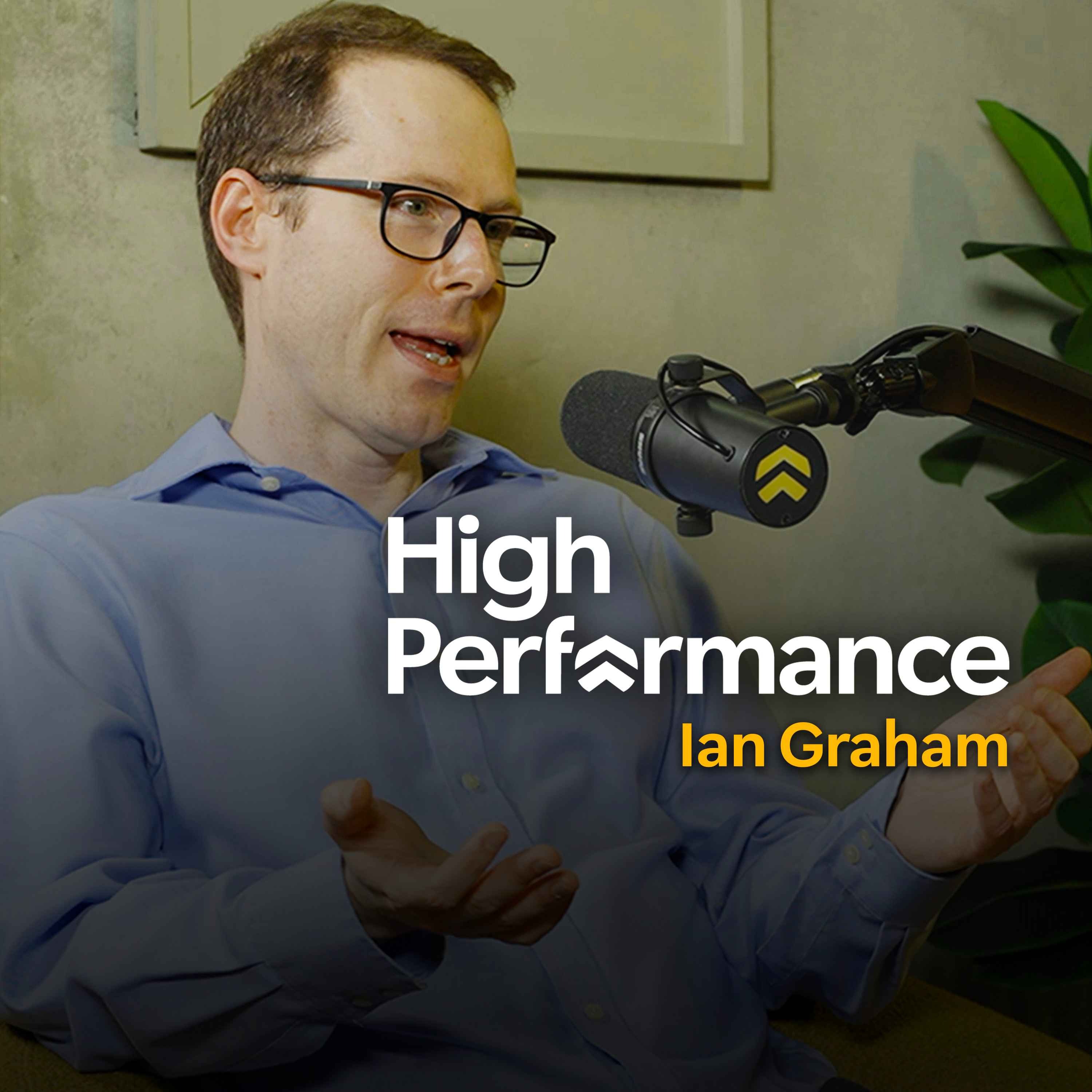
In this episode, Dr. Ian Graham, the former Director of Research at Liverpool FC, discusses the transformative impact of data analytics on the club's recruitment strategy, particularly under manager Jurgen Klopp. The conversation touches on groundbreaking player signings, internal resistance to data-driven methods, and the future implications of AI in football.
Written by AI. May contain mistakes.

Get the gist, explore an idea or ask about something said.
 Claude
On The High Performance Podcast, what are the key points of this episode?
Searching your listeningAutomatic transcript. May contain errors.
0:28Watch it early on the High Performance App. today have the same set of tools at their disposal that a Premier League club does, AI will help them do that. That is the voice of Dr Ian Graham, the man who pioneered the use of data analytics, helping transform Liverpool Football Club from perennial challengers to Champions League and Premier League winners. As Liverpool's Director of Research from 2012 to 2023, Ian helped build the Premier League's first in-house analytics department, developing groundbreaking metrics and playing a crucial role in signing the likes of star players Mo Salah, Sadio Mane, Virgil van Dijk and so many more.
1:06Today Ian opens up about explaining how other clubs were blinkered in the view of Mo Salah but how Jurgen Klopp had a very different view on him. It was also interesting when he explained the challenges of Brendan Rodgers not fully trusting data and I'd encourage you to keep listening if you want to know what the future of AI and football is going to look like. Ian also told us about the biggest mistakes in his time at Liverpool why certain signings didn't work out the lessons he learned from those and how the Liverpool hierarchy were convinced to sign Virgil van Dijk and in the process break the world record transfer fee Look, before we dive in please follow this show on Apple or Spotify by just clicking the follow button which takes no time at all it helps us grow the show attract big names and you'll then be the very first to know when a new episode goes live So please hit follow.
1:56It really helps us out. But right now, let's dig into a crucial turning point in the transformation of Liverpool Football Club, from also-rans to title winners, with data analytics specialist, Dr Ian Graham.
2:14Ian, welcome to the show. My pleasure to be here. So would you take us then to a moment where maybe Jurgen Klopp had a certain player in mind? you looked at the data and actually recommended a different player and how how that process worked from you looking at the raw data compiling things going to Jürgen and then eventually convincing this this man who you know to the outside world is the leader of that football club so it kind of rests on his shoulders right how did you convince him to go with your decision not his yeah I think it's important to say it's our decision so as I talk about in the book um data is only ever one part of the story with a player.
2:53Video tells you still today, even with the much greater depth of data we've got, video tells you things that you can't see in the data. Like what, for example? So tracking data is where you see the trajectories of all 22 players on the pitch, but it's just one point per player. So you don't know if they're back to goal, facing goal. You don't know if they're making a kicking action. You don't know if they're lying on the ground. And so from the data, you say, well, why didn't he cover that run? It's like, well, he was lying on the floor. He'd just been fouled. The data doesn't see some of those things.
3:25You can infer it from the data. And data is getting, you know, the next generation of tracking data does tell you all that stuff. You know, body language, things that coaches find important that I pay no importance to as a data scientist. Yeah, all the soft, it's wrong to call it soft, but Jürgen had this no arseholes policy and so finding out what's this person like before deciding to spend a large amount of money on them. Were there players you would have recommended that he then investigated and actually he decided that culturally they wouldn't fit? We had a website with a list of players on it and I always suggest not doing this but you can rank them from best to worst and then just look down the list.
4:11So look at the best young players and think it's typically on loan from Chelsea, on loan from Manchester City, and you keep going down the list, like this guy in the Spanish second division looks amazing. I've never heard of this guy, so you have a little look on the video as well. Say to the scouting department, what about this guy? Yeah, we know him well, terrible habits, very unprofessional, he's just not going to succeed at a club. That's not to say people can't change, but there's kind of like a hidden risk. It's interesting. So that's why a player of that quality would be in that league and not being used, because other people have also seen perhaps the same trend.
4:44Yeah, yeah, maybe so. So anyway, back to the question of a player Jürgen wanted. You thought maybe there was a better option based on the data and then eventually that was... Yeah, the famous one was Mo Salah, of course. It's very easy to talk about this player today. And it was summer 2017. And again, full credit to Jürgen and it kind of shows what sort of a leader he is. We were always backroom staff and never said anything. He was front of house. And had he wanted to take full credit for Mo's signing, we wouldn't have said anything. We'd just be happy that the player succeeded. But the sort of person Jürgen is, he did give credit where he didn't have to.
5:26And so his preference was Julian Brandt, who was an attacking midfielder at Leverkusen. Hindsight bias is a terrible thing. So people have said to me, oh, you compare Brandt and Mo today. There's miles between the two. But at the time, they were among the best young forwards in Europe, not so much between them. Mo just fit our style much better. We did rate him higher and he played in the right role, so that sort of wide forward role. Brandt could play there. He's more of an attacking midfielder. Jürgen being German, knew that market really well, had his own network in Germany, giving really positive reports about Brandt.
6:07and we kind of agreed. It was like, yeah, he's a great player, but if you look at the price point, it's higher, the performance is lower, and the ceiling for Mo was also higher. So what in the data showed you the ceiling for Mo was higher? Players go through an ageing curve, so start playing in your late teens, early 20s, performances typically aren't the highest level. Those performances improve with experience of playing against top-level opposition. typically till you're about 27 centre-back skew older wingers skew a bit younger and then the performance sort of slowly declines and Mo was just on a trajectory that said okay it was a good case scenario he could be one of the best players in the world so I think we rated him above Premier League average at the age of 24 when he was playing in Italy and you just sort of list who are the under 24 wide forwards who are above average and not already playing for a Champions League club.
7:10And it was Mo. That was it. It's quite unusual for that to happen. And then the price point was low for two reasons. Roma were in financial distress. So that market knowledge was really important. That's my colleagues at the club. Our analysis didn't say Roma are in financial distress. And the other factor was he failed at Chelsea. so when we signed Mo I remember saying to my boss I can't believe that why aren't Arsenal and Chelsea well obviously not Chelsea why aren't Arsenal and Man United in for him and I don't know if it's true or not but his idea was Mo had been tarred with this brush of failure at Chelsea if you look at it he was behind Ed and Hazard in the pecking order of course you're not going to start as a 21 year old if Hazard's first choice Mourinho was the manager the renew likes or the experienced players those two things kind of explained why he didn't play at Chelsea
8:13the market's uncertain revenues tied and hiring on hold that's why results driven companies are using Upwork to keep work moving go to Upwork.com today and start hiring proven freelance talent fast no bulky overhead no rigid long term contracts just the right expert right when you need them Work smarter and faster with Upwork. Go to Upwork.com now and find your freelance expert. That's U-P-W-O-R-K dot com. Post a job for free and get started today. If you're a maintenance supervisor at a manufacturing facility and your machinery isn't working right, Grainger knows you need to understand what's wrong as soon as possible.
8:52So when a conveyor motor falters, Grainger offers diagnostic tools like calibration kits and multimeters to help you identify and fix the problem. With Grainger, you can be confident you have everything you need to keep your facility running smoothly. Call 1-800-GRAINGER, clickgrainger.com or just stop by. Grainger, for the ones who get it done.
9:17This episode is brought to you by Opera Air, the first browser with mindfulness at its core. Now, most of us spend hours every day online, but how often do we pause to take care of ourselves whilst we're doing it? And that's where Opera Air comes in. It's a lightweight, fast, secure browser built not just for productivity, but for your well-being. With Opera Air, mindfulness is built right in. You'll find free breathing exercises, guided meditations, and soundscapes with ambient sounds, lo-fi music, and binaural beats, all designed to help you focus, relax, and even spark creativity while you browse.
9:54but those sort of broad brush dismissals of players must be common within football so i'm interested in how do you push somebody to dig that bit deeper and think about some of those perspectives you've just offered yeah it's it's a challenge and quite often people don't dig deeper if they did it would have been more difficult for us to sign mo and i think that's where data helps is it gives you an objective history to compare about it's like okay he's failed at Chelsea but this is the list of players that had similar performances to him at a similar age and a similar amount of experience they're all hits or they're 90 % hits so you really it gives you something to weigh that Chelsea failure against and also yeah just even digging into the Chelsea failure is something I think I don't know, I think other people didn't do.
10:48I think the sort of, I think not just in football but in life doing something different sets you up to fail and so the way to not fail and the way to sort of get your next job in football is kind of to do the same thing as everyone else is doing Nobody gets sacked for and signing Mo was something you could get sacked for if it didn't work out. Like we knew in Liverpool with the owners we had and with Jürgen as the leader that gives you that safety to make those braver decisions. But a lot of clubs, I completely understand why you'd be reticent to sign Mo. And did Jurgen ever ask the question about Mo's struggles at Chelsea?
11:29No, that was the great thing about him not being a Premier League manager. He didn't have this fixation of they failed in the Premier League or you have to have proven it in the Premier League before you can come to my club. A lot of our signings didn't have Premier League experience before they came to the club. And, you know, Premier League experience reduces the risk, increases the chance of success. It's a much, there's much less variance in the performance, but that comes at price. And so our question was, is that extra price worth paying? 40 % premium. Same player, Premier League experience or no Premier League experience.
12:08Would you take us into the room where the conversation was had about Mosala, the data you presented, and the reaction particularly from Jürgen, who was until that point still thinking that Brandt is the guy? the data never made it into the presentation because that's not jürgen's style of thinking or style of learning so he he's aware of uh what we do and the fact that data analysis is a big contribution to which names are on the short list so typically what would happen is um you know a 20 or 30 minute video reel of the players on the short list um and who'd be in this meeting? So that would be the sporting director, Jürgen, maybe the head of recruitment or the chief scout.
12:56I was very rarely in those meetings. I hate to say I wasn't in the Mo meeting, for example. But the data would have informed the sort of clips that were shown, strengths and weaknesses and so on. But those clips would come with a voiceover to say, Jürgen, you don't know this player in detail, so let me explain to you who this player is and why we think he's a good sign and who would do that voiceover? that would be Michael Edwards who is the sporting director and my boss you know over the clips it was like this is the role he plays for Roma he'd be a slightly different role for Liverpool but you can see how the things he does at Roma would translate very easily to Liverpool this is his history this is who he is as a player Jürgen's someone who loves a story of adversity so the fact that Mo had failed that was a positive to Jürgen when it would be a negative to lots of managers.
13:50And it's like, you know, he's gone to do this in Italy after a terrible experience at Chelsea. So you can paint that failure in a positive way to say, you know, he's got some grittiness and some determination to succeed. And the same would happen for Brandt. And we were positive on Brandt. It would be a good signing, just not the ideal signing. and Jürgen had the final decision. So Jürgen saw players in a similar way to data. So it was rare we'd have big disagreements on who's a good player or not and a similar way to scouting. So usually only good things could come from that conversation. If we'd have signed Brandt, I think it would have been a good signing for Liverpool, just not a great signing, but we wouldn't have been sort of incredibly, and we'd have been unhappy at missing out on Mo, but it was like this is not a mistake for the club this is good signing for the club and really it's down to Jürgen like we sort of paint an honest picture of these players this one was a case where Mo was clearly the number one and this is our honest picture that he's number one it also helped it was the second transfer window because that first transfer window had been successful signed Mane, Wijnaldum there was one other, Matip of course that came to the club So having been through that process once, Jürgen trusted what he was seeing, that it wasn't, you know, selected highlights to try and put a false view.
15:20We weren't putting a false negative view on Brandt. We weren't putting a false positive view on Mo. So that helped. He already had some trust and said, you know, again, the leadership to say, you know what, I was wrong. You've convinced me, let's do it. So you narrow it down now. You're looking at Mo Salah. you've got Jurgen Klopp on board with it. Where does the sort of psychological profiling then take place where you'd go, understanding how that failure from Chelsea was processed and what sort of character he was in adversity, where would that happen? Yeah, there's not so much science and data behind that, but we had staff in the scouting department and also Michael would pay a lot of attention to that psychological side because you're going to put a lot of weight on character, like the makeup of personalities in the squad.
16:16He liked fighters. I was going to say he liked winners. He didn't like winners. He liked fighters that would sort of give their all to win, whether they won or lost, be secondary to the attitudes that you bring. And that comes from using your network. Sometimes, you know, you know someone who knows the player, but it's all very it's not systematic and it's not data driven. I'm reminded as you talk about some of these character traits that one of Alex Ferguson's great demands of his players was he said I want players that are courageous and his definition is the guy that's demanding the ball when we're getting beat 1-0 rather than the guy that wants it only when we're 3-0 up and coasting so there must be some data that would give you evidence of courage for example.
17:04Yeah so I mean a good example of that so you know involvement if your involvement is low that kind of says you're not on the ball now there might be if you're on a low possession team you need to adjust for these things and do a rigorous analysis of it um so not being involved very much you know you could sort of say that's not the sort of player we want um the courageous point is something that the analysis this can point to. So I talk in the book about pass completion percentages. And if you make an easy pass back to the goalkeeper, your completion percentage is going to be high. And again, Jürgen liked the risk-taking players, might have a much lower pass completion percentage.
17:46If you're trying a difficult pass that's going to break a line or going to create a chance, of course it's going to be less likely to succeed. the question is are you outperforming if you're making those passes six times out of ten whereas our current player only makes them five times out of ten your six out of ten is better than my ten out of ten which is all back to the goalkeeper that speaks somewhat to bravery on the ball you're not going to draw me on tying it directly to psychology but it all paints a picture Yeah of course but there was a really interesting phrase you used there about the support you had from above and with Jürgen, you said, I had a degree of safety.
18:27And I was thinking of a friend of mine that works within an elite club who would sometimes offer a counter point of view. And I remember once he told me that he was asked by the coach that he did it with her, remind me how many caps you've won for your country. So it immediately shut down ever challenging or disagreeing with that particular individual. I'm interested in the psychological safety that was obviously there for you to be able to come and make suggestions or offer a different perspective without feeling that you were going to be ridiculed or shut down. Would you explain a little bit around those conditions, how they were created and why they were so important?
19:06It comes from the top. It has to come from the top. And in those early days when the club wasn't doing very well, there was a conflict between the manager and the new things that we were trying to do. so there certainly wasn't a psychological safety when it came to talking to the manager but we knew from above that we were always given the feedback don't worry, we know this is a long term process we believe in what you're doing and I think even though the things that happened and the signings that we made at the club were not great for various reasons in those early years the owners could see the names that we were putting forward and our preferences for transfers.
19:50And after two or three years, this list of names looks quite good. And that gives the owners some belief that, you know, we have something to add to the process. So in the era where Brendan was the manager, what was your sort of lived experience then? You would come with the suggestion of a player and the data that you believe backed it up. What would happen then? The managers, sorry, the owner's idea was a good one, which was the manager's got a lot to bring to the conversation as well and the manager has to be convinced about the quality of the player. So in the early days, we did bring players like Aspas, for example, who went back to Spain and ended up having a great career in Spain but brought players that the manager wasn't convinced by.
20:35Like you, for example. Well, Iago Aspas would be a great one. So many players. so long ago. Balotelli would be, so Balotelli was an interesting one because he was an unusual case of the data being brilliant on Balotelli. It's like, how is this player available for any fee, let alone the fee that Milan wanted? To be fair to Brendan, he wasn't anti the Balotelli signing. The problem was, because we'd argued so much and spent so long trying to get to an agreement on a forwards to sign, it was too late. There was no one left in the market except for Balotelli. and so I think Brendan wasn't necessarily against the signing but also there was a ready-made excuse if he fails it's like, oh well, it's Balotelli, what did you expect?
21:24which isn't very fair on the player I think that was the problem with this compromise approach was we tried it for three years and there was just never any movement What do you mean the compromise approach? Just explain that for people who are... So the idea of the transfer committee was the manager comes with his preferred players So you were part of a transfer committee at that time, right? So you got the manager's view, the data's view, the finance and owner's view, and then the traditional scouting view as well. That's how we worked with Jürgen. Nothing changed behind the scenes. And if the owner's idea was like wisdom of the crowds, if everyone thinks this is a good idea, the chance of failure is much lower than...
22:06But would you all sit together and debate this individual from all those different perspectives? Yeah, I was lucky enough that I think it was only one of those meetings I actually sat in in person. I was like, you know what, I can't sit in any more of these meetings. It was just stupid and negative. It was like we'd just get nowhere. There was no, the idea of a committee is you sit down and compromise. There's no compromise from the manager's side and that kind of hardened the other side as well. So it was just arguments with no progress. And that was because the manager had specific players in mind and didn't believe the data that you were bringing him that would say this person is a good alternative.
22:49Yeah. What happened was if Brendan liked a player that we also liked, then that was great. We'd just sign that player. I think in Brendan's defence, if you're not convinced, you're the front of house, you have to sort of play the player. You have to understand who they are. And if you're not convinced, it's hard. But I think he could never trust in the process that we put in place. So he could only trust his own eyes and his view, not the extra information that was being brought. So Benteke was his favourite forward and we failed to sign Diego Costa because of this argument that went on of, you know, if we're going to sign a forward, it has to be Benteke.
23:35He's the player that will move Liverpool forward. what a frustrating period actually for you because you've got all this data that you've like people are paying money for this data right you're spending hours of your life collating this data and then it's just ending up in a cul-de-sac yes yeah frustrating the outcome is frustrating but we believe in the process so a colleague of mine who recently left the club um we had a conversation a few weeks ago and um we agreed you know the best time at the club it didn't seem it at the time, the best time was when things were going wrong because it brought everyone together.
24:10And we were kind of trying to convince each other. We're like, this process does work, doesn't it? Because the outcome, you know, occasionally you have to look at the results and the results were bad. I mean, I remember the conversations at the time thinking, yeah, we think we're onto something. If we can just sort of get the results, get the actual final point of the decision made properly, then we're onto something here. One of the great signings in the last few years is obviously Alisson. I saw an interview with Aaron Ramsdale recently saying Alisson and Edison changed the game for goalkeeping.
24:41So I remember when Liverpool first signed him. And you remember in the first few games, he tried a Cruyff turn in a match. And I was watching it thinking, who have they bought that's brave enough to do that? I'd love to talk about the process of finding Alisson. Whether it was the manager saying, I want this kind of a goalkeeper that's doing what goalkeepers have never done before. or whether the data was telling you that the direction of the game is going to turn a goalkeeper into your fifth defender or your sort of 11th outfield player. And also what you thought of that Cruyff turn early in his time at Liverpool.
25:14Yeah, I think I was probably thinking, please don't try another Cruyff turn. But, you know, that's the player that you get. And, you know, I'd prefer Alisson with a Cruyff turn to another goalkeeper who maybe doesn't do a Cruyff turn. I think the number one aim for a goalkeeper is to keep the ball out of the net. He wears his special equipment gloves. He's allowed to touch the ball. That's a big part of the game. And our previous signing, Carrius had sort of suffered, made some mistakes in the Champions League final. It was very hard for him to get back from that. And also we understood that, so it would have been January before Alisson was signed.
26:00We had one of the best attacks in Europe, but we did not have one of the best defences in Europe. It was maybe top 20 in Europe, something like that. And so to take the team to the next level, it's going to be very, very hard and expensive to go from number three to number one in attack. But much easier to go from number 20 to top 10 or top five in defence. and Virgil arriving in the January was a big part of that and Alisson completed it. So here was a world-class goalkeeper. There were two options, him or Oblak, who was at Atletico at the time, still is. And what was the difference between the two?
26:40They were among, I think they were two of the top five shot stoppers in the world. So you're getting a world-class shot stopper with either of them. We rated Oblak a little bit better for shot stopping. But then Atletico played a very defensive game. The sorts of chances that he was having to save were less similar to a team that played more openly. Like Roma were an open team when we signed Alisson from them. And so the question is, you know, the most important thing, they're both world class. They're both a huge upgrade on our current goalkeepers. So the next question is, well, what else do they do?
27:17and playing out from the back with Jurgen with Pep as well. That becomes a more and more important thing and Alisson had proven he could do it. A similar sort of thing with Mignolet signing him from Sunderland. He'd been a brilliant shot stopper at Sunderland. Started off really good at Liverpool for his first season or so. But similarly with Sunderland, he'd never been tested with the ball at his feet in the way that he was at Liverpool. so yeah his footwork was the reason it was Alisson the other reason of course is when you look at analysing performance it's not just about performance it's about how much that costs so you always want to get the biggest bang for your buck and that's not to say Liverpool were cheap but if you're going to spend a pound I want to spend that pound in the most effective way possible and again poor old Roma in summer 2017 we'd signed Mo because they were in financial difficulties.
28:18Atletico weren't in financial difficulties. Roma were. Guess what? The price is a lot lower from Roma than it is from Atletico. And all of the things that you've said there, great shot stop, are good with their feet, the club were in distress. People who are not data analysts could tell you that, right? So what were the data points that you were using with Alisson to kind of back up what the human mind or the human eyes were seeing? Yes, so I mean expected goals is quite a common concept in the Premier League at least There's a flavour of expected goals that takes the trajectory of the ball into account So you can see how difficult that save should have been So you can ask questions like what was Alisson's positioning?
29:03Was he in the best position to stop the shot? and then given his positioning, what's the chance that we'd assign to him stopping this shot given its trajectory and given the number of defenders between him and the ball and a lot of other data that you can use to measure these things. So the data kind of tells you if he's making, not just making saves, but making saves that are hard saves to make. Yeah, it's the goalkeeper's equivalent of the pass back to the goalkeeper. but if you tap the ball at me and I catch it, that's a shot on target that was saved by me, but you probably shouldn't pay too much attention because I just had to stand still.
29:44And would any of this data be used with the players once they'd signed to say, we think you can improve in this area or we think this is a development opportunity? Yeah, in the early days, it was hard because it was event data, and event data just tells you who's on the ball, what they're doing, what happens next. So like I'm in the center circle, I pass it to you, you're on the edge of the box, you take a shot that's saved. And with that style of data, there's too much unseen in that data. So when you say, oh, you passed it backwards in this situation, you said like, yeah, I had a defender right behind me, it was pass it back or lose the ball.
30:21So it waited until tracking data became available where you could see what all the off-ball players were doing. And even at that stage, there are things it doesn't see. you have to be very careful in the messaging back to the players. So typically, the messaging came back via video analysis. So it's like our data is saying in this game, we allowed a lot of dangerous space defensively and our analysis says it's because of these players' positionings. So that would go to the video analysis so they could check against that. And also the coach might say, you know what, that was our game plan. We're going to allow the chances to try and drag them onto us to create a counterattack.
31:01So, you know, maybe the players were doing what they were told to do. The most interesting stuff we did with the players was via the psychologist. It was always this, even at the top of your game, you can sort of mistake performance for outcome. And I was surprised that players suffer from this because when you're at the top of the game, you must intuitively understand your performance, but you still need some feedback on it. And it was always the case of, you know, one of our forwards had scored a lot of goals one season and wasn't scoring at the same rate the next season what am i doing wrong part of it was his finishing had been incredible in that first season and no one repeats that level of finishing performance the data says you know you can't continue converting at 50 more than we're estimating you should so that was part of it but then we had a look at where are you receiving the ball how many times you're receiving it what are you doing in those situations he was passing it a bit more but we thought that was a good thing for the team not necessarily a bad thing for the team he was receiving the ball more per 90 minutes in more dangerous situations under a little bit more pressure and the answer was you know you're playing as well or better than last season ball doesn't always go in the net just keep doing what you're doing um and uh with one of um one of our assist top assist makers let's say uh again that number of assists had gone down and like assist is a bit of a stupid stat anyway because it's not really under your control if i'm passing to mo he's gonna finish it if you're passing to me i'm not gonna finish it you know and it was exactly the same story it's like you're creating more chances per 90 minutes this season than you were last season the forwards just aren't finishing them off but we don't think that's anything to do with the quality of the chance you're creating it's just just finishing or things will turn you were able to give the players actually through the data again some psychological safety because the you know the people who were doing the job that I used to do talking about football one of my frustrations was that we were very much scoreline analysts yeah you know if a team wins on a penalty shootout we praise them to high heaven and talk about how, and I remember doing it with Man United when they won in the Europa League.
33:22Wonderful performance, what a great season. I remember covering another team who lost on penalties in a final and said they need a rebuild. And you're thinking, it's on the kick of a penalty that the media are deciding if a team or a manager or a club is a success or a failure. And you have to go so much deeper with those players because they'll see that and be impacted by that, I guess. And, you know, there'll be managers that have lost their jobs because of poor results. Absolutely. Whose team have played brilliantly and the data is saying, they're playing the best they've ever played. Yeah, reversion to the mean is a manager killer and it also kind of helps the new guy because I've lost five in a row.
34:00I probably could have got a win and two draws in those five games. The team's exactly the same, performs at the same level. The new manager does get a win and two draws and the scoreboard journalism says, wow, he's really turned it around. there's a famous paper that sort of looks at the clubs that sacked their manager performances went down and then went back up again and they found an equivalent set of clubs who'd had the same level of bad results but hadn't sacked their manager and their results went back up in exactly the same way So there's no data actually that backs up this idea of a new manager bounce if you're struggling if you sack your manager you get better results There is a new manager bounce and you do get better results but it's nothing to do with the new manager that's what it comes down to it's because your results were lower than your performances in the games leading up to the sacking and your results just sort of came back in line with the performances in the games where the new manager takes charge we had this at Liverpool of I think Jürgen's first Jürgen's first season we rated ourselves as a very good team kind of given up on the league because we were still in the Europa League that was our best route into the Champions League for next season but in 16, 17 it would have been, we were struggling to get to fourth place and our analysis was saying we're like the second or third best team in the country already and we're young and we're going to get better but we were like fifth, fourth, fifth, fourth and even the owners, even people in the club didn't quite believe it and the data's never perfect but you sort of, you know, here are the teams in the past that we've said.
35:42The data always gives you the past to compare against. To say all the teams we said were as good as we are today, they all were really good teams over the next two or three years. So even we didn't really believe it in-house sometimes. The data helped to say the results just weren't in line with those performances. And also talking about like scoreboard journalism, in that season, I think we needed 76 points to finish fourth. so part of us struggling to finish fourth was the rest of the big six we're having an amazing season that doesn't normally happen so we were kind of like looking worse than we should so say like 76 is usually enough for third comfortably and we're having to get that just to sneak forth I remember Klopp not winning the Premier League with what 97 points and 92 points 97 and 92 yeah and Slott has just won it with he can get to 92 or 93 but he's won it already having got how many points have they over Liverpool got?
36:3984, something like that. It's like, but that's the, he's won it with 84, Klopp didn't win it with 97. And that's, again, such an important thing to take into account because I remember people going, this Jurgen Klopp guy's come over with this Gaggen press and this heavy metal football. It's not fucking working. And actually the data was telling you it was. And I guess that was actually very important for Jurgen to know, but also for Fenway to know that actually don't listen to the people telling you that this manager maybe isn't working. The data tells us a different story. Yeah, absolutely. You know, it's like control the things you can control.
37:15You can't control Pep and Manchester City building the best team of all time with the resources that they had. And, you know, they did a brilliant job there, but with a level of resources we didn't have. So we couldn't control that, but it allowed us to concentrate on what we could control, which was, you know, we built a great team, I wish we'd won more, of course. I want to talk to you about Virgil van Dijk because, you know, I believe Fenway Sports Group have done an incredible job at Liverpool. Actually, if people have read your book, there are so many plaudits and praises from you to them.
37:51I mean, you know, the fact that in the early days with Brendan Rodgers, where he didn't quite see eye to eye with the stats department, it would have been an easy decision for them to stop spending the money, right? Sack you all, shut it down, and work in a much more linear way. but they also want value for money right they're smart investors so when you go to them and you say we've seen a defender his name is Virgil van Dijk he's going to be the most defender most expensive defender that anyone has ever bought on the planet I imagine as an owner that's when they go well hold on hold on right now we really need to be convinced so I'd love to know the inside story of how Virgil van Dijk became a world record transfer for Liverpool?
38:32Yeah, he's now been surpassed by a couple of most expensive ones, but it was definitely not in the Fenway playbook to break the world transfer record for van Dijk. And then six months later, we broke the goalkeeper transfer record before Chelsea smashed it, signing Kepa a few weeks later. so yeah going back to that 17-18 season who had like the classic Liverpool forward line of Salah, Firmino, Mane and he had Coutinho pulling the strings in midfield like the player I absolutely love the creative force of the team he was a player that took too many shots from distance from my liking but we can forgive him forgive him that and yeah I think I mentioned earlier on we rated ourselves as top five attack in the world, top 20 defense in the world.
39:25Those four players didn't start together very often because against a big team that is a very attack-loaded team, even for a manager with an adventurous style like Jürgen was. And so it was clear we knew the next thing to do was rebuild the defense. And we were lucky in some ways. I say lucky. I say took advantage of an opportunity that might not have arisen. PSG signed Neymar from Barcelona and Barcelona didn't think they were going to do that because he had a stupid release clause so Barcelona desperate to sign a player so that world record Van Dijk fee was paid for by Coutinho going to Barcelona so it was effectively a swap of a world class attacker but we already had three others at the club we were in quite a good position in attack swap that one world-class attacker for two world-class defenders, Van Dijk and Alisson.
40:23And that's a bit cool because I'm sure the data would have said you can't get rid of Coutinho, he pulls the strings in the team. Is that right? Yes, but there's this concept in football as in many areas of life of diminishing returns. And so for every extra attacker you put on who wants to take a shot, you know, if you say Coutinho takes five shots a game, Katina takes three shots a game Mo takes three shots a game you put them on the pitch together you're not getting six, you're getting like five or five and a half because they take shots from each other so because our attack was so loaded there was a diminishing returns it was hard for us to put, well I didn't have to do it thankfully, it was hard for Jürgen to put all four players out on the pitch at the same time whereas you know it was the opposite of diminishing returns great defender even that is so interesting because you see teams struggling to win a game in the 93rd minute and they put two more strikers on they suddenly got seven attacking players on the pitch the pundits and the commentators go well they might score now they've got seven what an attacking team it is but of course it's not like that is it?
41:31it's not like four times more attacking than it was 20 minutes ago yeah so someone needs to someone needs to load the bullets for the strikers to fire the gun in the old phrase sorry carry on So the question becomes, here's this opportunity. We wanted to strengthen the defence anyway, and Fenway would have spent to strengthen that defence. But now a whole sort of supermarket of options opens up to us that might not have. Fenway were always very happy to invest in the team. Any transfer profits that were made, happy to invest that back in the team. And here was a large amount of money. And it's literally because at the time, you know, One of the biggest advantages of having Jürgen at the club was players loved him.
42:14They loved his football. They wanted to play for him. So convincing a player of the idea of coming to Liverpool, it was easy when Jürgen was in charge. You see this guy with the big smile, that's why you're going to come to Liverpool, right? And it was literally like, you know, who do you want? That being said, it's still hard to take players from other big Champions League teams. They don't want to sell to a competitor. wages are typically a lot higher than non-Champions League teams. Virgil helped that he'd played brilliantly against Liverpool in the past. He was the best under-27 defender outside a Champions League team.
42:53I think you put the Champions League teams in, he drops to number two or number three. How is this guy not already playing for a top Champions League team? Why do you think that was the case? He took a long time to come to the boil, so he was probably underrated a little bit. Celtic and at Celtic it's hard to measure defenders you don't have to defend you just got the ball for 90 minutes and so you only really see games against Rangers games in Europe where Celtic are now huge underdogs and so you're not really seeing the set of things he has to do in the Premier League I spoke before about the Premier League premium if he was in a big German club or a big Spanish club or you know a medium-sized German or Spanish club we'd have seen the sort of things he challenges yes to face in the premier league a lot more so southampton you know great recruitment from them but his seasons at southampton really gave the evidence to show he's a great defender playing above southampton's level um so he was 26 when we signed him and so yeah a late developer really i think even is uh the previous season at southampton and we thought he was really good.
44:03It was quite funny that Fenway, there was an informal ban on signing players over the age of 24. You look at a lot of our good signings, Mo was 24, Sadio was 24, Firmino was 24, Robertson was 23 or 24, Matip was 24. And why was that the case? So, yeah, that came from the top. The smart people that run the group. If you look at performance, and we spoke earlier about the ageing curve, you get increasing performance to the age of 27, then it plateaus. It doesn't really decline very much. It's kind of like the minutes that decline more than the performance. So if the players can stay fit, they're going to keep producing for you into their 30s.
44:49And then there's also a transfer fee. So the idea is younger players command lower transfer fees. we sign them before their peak players we can develop them to their peak and then take the maximum credit or the maximum amount of performance from the players if they're signed when they're 24 or younger there's a chance after two years like happened with Coutinho that a big club comes in with a transfer offer and that gives you the sort of luxury of saying you can take a transfer profit on this player or continue to get performance on the pitch out of the player, whichever is the most important thing to the club at the time.
45:31So you look at 2018 and transfer profit for reinvestment was the most important thing. You look at, you know, I did the previous, I helped with the previous Mo renegotiation to take him through to the age of 33. And at that point, the correct decision for Liverpool was just to maximise the amount of performance you get out of Mo. If you sign a 24-year-old, you've got the luxury of, you know, either option. and if you sign a 27-year-old, you're not going to take a transfer profit. If you sign a 21-year-old, you have to be more patient with that player as they improve with the team. So you were having to convince them then with Virgil to break the world record at the time, and that he was over 24.
46:13So how did that come about? And was there ever a chance that you don't sign Virgil because of his age? Yeah, I remember one of the owners saying, I don't know why are we looking at under 27? that's a really weird thing to do in our defence well why were we looking at under 27 because we really wanted Virgil but in our defence centre-back skews old so centre-backs continue top ones continue producing into their mid-30s I was impressed at how long Thiago Silva kept going at Chelsea you know he was always a brilliant player but I was thinking oh come on surely not another season out of him so centre-backs skew older and because of that you can say 26 in centre-back years, a bit like dog years, 26 is 24 in forward years.
47:01We're going to get plenty of years out of him. There were 24-year-olds on the market that were for a lower transfer fee, maybe higher wages. So always look at the all-in cost. Journalists concentrate on the transfer fee, but it doesn't matter how you spend the money. It's the all-in cost. So that combination, the high transfer fee, The widgets were high as well, but maybe not as high as a player coming from a current Champions League team. If you're still overpaying for wireless, it's time to say yes to saying no. At Mint Mobile, their favourite word is no. No contracts, no monthly bills, no overages, no hidden fees, no BS.
47:41I made the switch because I was tired of those ridiculous bills and sneaky charges from my old provider. With Mint, I'm paying$15 a month and getting the same high-speed data, unlimited talk and text, and coverage on the nation's largest 5G network. Honestly, the quality is just as good, if not better than what I had before. And the best part? You don't need a new phone. You can keep your current one, bring your number, and all your contacts. I use Mint Mobile, and you should too. Ready to say yes to saying no? Make the switch at mintmobile.com.hpp. That's mintmobile.com.hpp. Upfront payment of$45 required, equivalent to$15 a month.
48:18Limited time new customer offer for first three months only. Speeds may slow up a 35 gig on unlimited plan. Taxes and fees extra. See Mint Mobile for details.
48:44the right expert right when you need them. Work smarter and faster with Upwork. Go to Upwork.com now and find your freelance expert. That's U-P-W-O-R-K.com. Post a job for free and get started today. If you're a custodial supervisor at a local high school, you know that cleanliness is key and that the best place to get cleaning supplies is from Grainger. Grainger helps you stay fully stocked on the products you trust, from paper towels and disinfectants to floor scrubbers. Plus, you can rely on Grainger for easy reordering, so you never run out of what you need. Call 1-800-GRAINGER, click grainger.com, or just stop by.
49:23Grainger, for the ones who get it done.
49:33I'm interested that you were involved in the last negotiation of Mo signing up until the age of, what was it? So it was 31 to 33, I think. So given the high-profile discussions that have been taking place this season, where he's now 33, I know you weren't there at the club, but I'm interested in what are the kind of questions you'd be firing back into the decision-makers to help them make a more informed decision? The parameters will have changed, but I'm going to guess that the decision-making process was going to be very similar to what it was in the previous renewal. and the question I was asked, again, it's about Mo's a world-class player today but we're going to pay for him for two more years and we the club care about that second year as much as we care about the first year.
50:25So what does that look like in terms of performance? Because of the position Mo plays and because winger or wide forward tends to skew a bit younger, I was convinced the answer was going to be don't renew his contract, spend the money elsewhere the two problems with that were as a world-class performer you cannot replace his level of performance so if you're going to spend that money elsewhere you're going to have to accept that next season, the season after you're going to have someone not as good as he is today playing in that position even if they're going to get better in the future and then the piece that was a surprise to me I looked at Mo's cohort, his peer group, and I was really surprised to see the top end forwards, the really top end forwards who've got a history of robustness and availability playing 3 ,000 minutes a season.
51:20The vast majority of them kept on going for another two seasons. So if you look at Mo's peer group, I can't remember all of the names, but the ones that I do remember were Ronaldo, kept going for years. Benzema kept going for years Lewandowski kept going for years I was like huh I didn't expect that to happen that's why you've always got to look at the data and I remember doing this analysis and sending the email off saying like I really didn't expect to find this but I'm kind of saying it's not a bad idea to extend him I'd been sort of indoctrinated into this young players develop them young players develop them but in that special case it was it wasn't a you know this is a 100 % you have to do this it was a this is not a bad business decision it's not a bad sporting decision to to extend we've spoken about so many highlights and decisions that turned out really well and we have to tell the truth about stats right that they're not like they're fallible right that they're not always correct would you be willing to take us into a time where you saw a player you recommended a play everything said this player is going to work and actually the truth is that life isn't as simple as that uh yeah um Balotelli we already spoke about um the the strange thing with Balotelli was all of this kind of baggage that comes with him he didn't really misbehave at Liverpool um he was just not really trusted not given the opportunity I don't want to sort of say it's all the manager's fault or all Balotelli's fault he just didn't get the opportunity didn't produce at Liverpool in the same way he produced at other clubs he didn't get on the pitch in the same way that Moulding getting on the pitch at Chelsea funnily enough looking back at it I mean I'm happy to talk about failure and this is not an excuse but if you look at that expected goals to actual goals it was Mario's unluckiest season by far he's got like one league goal I think he was worth three or four in 700 minutes and then he left Liverpool and went back to finishing at the rate he has over his career.
53:29I think the other one is Naby Keita. So I'll hold my hand up. I was his biggest fan. I was, you know, people talk about the Mo signing and the Virgil signing as we have. I was way, way more excited about signing Naby Keita than either Mo or Virgil. Yeah, I'd never seen anything like him from a data point of view. I always look at the data first because that's my speciality. I'd prefer a video analyst to look at the video because that's their speciality. But I do watch players on video. So this guy looks so outstanding that it's rare that I'll sort of just see a player pop up in the data and then immediately start watching the video.
54:10And it's like scouts are going to love this player as well. A lot of the players that pop up in the data, they've got something. You know, Matip was a great player in the data, but he wasn't the most elegant. He's not like a nice footballer to watch. Naby really was super skillful, played as a destroying midfielder in Austria, stepped up to Bundesliga, played attacking midfielder in Bundesliga, still Leipzig's best ever season. He played across two positions, stepped up Austria to Bundesliga and every aspect of his game, winning the ball back, covering space, every pass was a through ball. I think I watched one of the pre-season games.
54:53He just sort of was putting it on a plate for Sturridge every time. I was like, this guy's going to be brilliant. Was there a data point as well, that when you also went to the data, you went, oh, wow, okay, the data is also telling me. Yeah, so you've been among the best players as a defensive mid, and then next season, change position, and you're among the best players again. Rare to see that. So, yeah, those line breaking passes from midfield. I was thinking like our forward line is going to love playing with this player. Had someone at the club said, take a look at Naby Keita? Or had you kind of seen him delve and then gone, oh, I'm now going to recommend this player?
55:32He was, I think he was a data first sign-in. That's one of the reasons I was so excited about him. It really was like, we all agreed on Mo and knew about Mo. The data agreed, but I'm not going to say, if it wasn't for the data, we wouldn't. It helped the sign-in a lot, but it wasn't absolutely driven by it. I remember I kept on going on to Michael, my boss. Naby, Keita, I'd never seen anything like him. If you're serious about theatre and football, Naby's the player. And yeah, we signed him. And when he played for us, he was really, really good. He was almost the level I expected him to be. And I expected him to be like top 10 in the world player.
56:09But he never played that many minutes for us. Why was that? Injury problems is number one. But I think one of the issues was he didn't quite fit the team in a way. I don't know if Jürgen realised before we signed him. So he played this defensive role but then moved into a more attacking role. I think naturally he's more of a creator. He risks the ball every time. And our midfield, you know, the much maligned Henderson and Milner midfield, they were the players they were for a reason which was Jürgen demanded attacking width from the full backs so as a midfielder you had to cover, you had a defensive job to do and Naby could do that job but for whatever reason wasn't really interested with that starting role I think he played well and I think he did enough to keep his place in the team But there was some sort of mismatch there that I hadn't fully appreciated.
57:16And injuries played their part. So he hasn't succeeded after leaving Liverpool. And I think that is due to a build-up of... He didn't have an injury history before coming to Liverpool. But yeah, that's really spoiled his career. So Arnaud Slott is now the Liverpool boss. did you do work while you were there on who would be the perfect subsequent manager after Jurgen Klopp and why? Yeah we started to build manager recruitment analysis and that was kind of my last big project at the club and then the people that took over from me would have finished off that project I'm sure before the slot signing.
57:55Managers is hard because the correlation between manager and results is not as strong as with players so with players i'm happy to say what players done so you know the data footprints that players left so far in their career if there's been a couple of seasons of top level football and we've analyzed the data in a good way that's going to be that's going to be a good prediction of what they're going to do for the next year or two of their career and whether they're going to be a good sign in for us because that past player performance repeats what you've done in the past is predictive of what will happen in the future.
58:34With managers, the correlation's a lot lower because there's a lot of important things at a club that the manager's not in control of. They can't control the wage bill. They can't control who's currently at the club when they turn up. Quite often they can't control which players get bought and sold. Certainly in Germany that's the case. so manager recruitment analysis is way way harder than player recruitment analysis because the past doesn't help you predict the future in the same way so you have to look at other things so style of play is an important thing and when i started the work our style of play is our squad is built for jürgen's style of play and so an important factor if you want to have the minimum sort of disturbance from changing manager a manager who plays a somewhat similar style 4-3-3 attacking counter pressing it doesn't have to be absolutely the same style as slot and the detailed tactics don't have to be the same but you know is the squad basically built for how the new manager wants to play the second question is you want to control for wage bill and you want to control for talent so when you look at a player's past sorry look at a manager's past performances
1:00:01you want to ask the question of how much of that's due to the manager and how much of it is due to the talent that he had at his disposal and was he in a good place relative to the other managers in the league or a bad place relative to the managers in the league so we look at the wage bill of the club look at the net transfer spending of the club look at you know our player analysis of did Do we think these players were good or not before the manager arrived? So like this season, for example, you could look at Kieran McKenna at Ipswich and Ruben Amri at Manchester United. And then the next thing you'd have to look at is look at the wages that Man United are paying compared to the wages that Ipswich are paying.
1:00:39And suddenly two managers who are two or three places apart in the Premier League probably don't just swap places, but there's probably a huge divide as well. So that's how that would work. Yeah, absolutely. And that style thing is kind of, I don't know, it's overrated in my opinion because people think about Jürgen and they think about Pep Guardiola, managers who've got the privilege to impose their style on a team. And most managers aren't those two. Most teams aren't Manchester City and Liverpool. So I think pragmatism is very underrated quality in managers. and so for lots of teams I'd say you know look at the teams he's managed in the past you say well sometimes he's used three at the back sometimes he's used four at the back means he doesn't have a philosophy he doesn't know his own mind I'd say well look at the squads that he's got would you play three at the back with this squad I certainly wouldn't so Amorim's got some criticism for playing this 3-4-3 style in a squad that absolutely does not fit not set up for that 3-4-3 style but in his defence he said you know this is my way of playing this is what I'm going to do I wasn't in the interview presumably in the interview he says I come to Manchester United I'm going to play 3-4-3 and presumably there was some sort of discussion of are you sure that works with our squad well you know 3-4-3 is my way and so it's the club decision if the managers come in saying I'm going to be that's true to my philosophy Jürgen was always great at tweaking his system for the talent he had at his disposal.
1:02:18One of our only concerns with Jürgen was he always played 4-2-3-1 at Dortmund, Lewandowski centre-forward. It's like, well, we had Sturridge, but he's not the sort of lone centre-forward in the same style as Lewandowski as we had. Firmino, who could play there. He did play there in a first season of Jürgen, scored 10 goals in the league, but it's not his best position. And Jürgen's response wasn't, I need a proper centre-forward. where that ball was played, 4-2-3-1. He changed formation, invented the Firmino role. And, you know, that pragmatism, if Jürgen can be a pragmatist, come on, everyone else can be a bit of a pragmatist.
1:02:55So what did you shortly say about Arna Slott? In that Jürgen template, so what did we say about Jürgen? One of the youngest squads in the league, winning the league with a super young squad, no talent in the squad, selling players, selling his best players. Dortmund and Feyenoord operate in a very similar way, style of play similar to Jürgen as well. So in terms of a template of pretty much as close to, as you can get as getting the Dortmund version of Jürgen was the Feyenoord version of Slott. It was more of a leap because Bundesliga and Dortmund and winning the Bundesliga, that is a higher level than Holland, but everything else matched.
1:03:39I'd like to talk about the future of this world. The advent of AI and the growth of AI has been incredible. What single area are you most excited about when it comes to football data analysis and looking forward? One thing to say about AI is AI is just very complicated data analysis. You take some data and the AI will analyse it in ways more complicated than humans can understand. But today, football clubs are really bad at simple data analysis. so I'd say from a football club point of view get the basics done first before we worry about AI that being said AI is already used when it comes to football data mostly with football data collection so computer vision algorithms that tracking data that we get that shows where all the players are it's not people noting down where the players are it's an AI algorithm that watches the game and tells you exactly where the players were.
1:04:43Advances in those algorithms give you things like semi-automated, offside. They tell you the position of all of the players' limbs, which direction they're looking, are they making a kicking motion, that sort of thing. Without AI algorithms, that data collection doesn't happen. I think it gets to the stage where the real benefit for clubs is going to be the democratisation of data more than this amazing algorithm tells me the next Messi to sign. It'd be more that clubs that can't afford to today have the same set of tools at their disposal that a Premier League club does. AI will help them do that.
1:05:21So just with a camera phone, a few camera phones, you can record the game, translate that into the same quality of data or a similar quality of data that Premier League clubs get today. you know national league clubs don't have that quality of data because they can't afford to put all the cameras up in the gantry they probably don't have a gantry but yeah the algorithms help with that simple stuff and if you were writing your book how to win the premier league 2.0 in 2028 2030 what do you think the world of data analysis and football would look like then I think we'd have a much better handle on that game-to-game analysis, a much closer feedback loop with the coaches and the video analysts.
1:06:14In the book, I talk a lot about recruitment because that's where I spent most of my time. And one of the reasons why it's the first place where data is used at clubs is you've got a large amount of data in thousands and thousands of minutes. but you need that because the data is imperfect you need to see a lot because you know in any individual situation you might not quite be seeing the right thing so with with the new data that's made available by ai algorithms you can see the exact circumstances so i think being able to say some something about individual feedback player performances in a game the coach's plan in the game have a discussion with a coach to say what is your game plan measure how well that was implemented in a game that's currently beyond where clubs are at in five years time i think um the more forward-thinking clubs would be there interesting thank you so much for your time my pleasure a huge thanks to dr graham for sharing his story and insights if you want to go even deeper into the world of the data revolution in football his new book how to win the premier League is out now.
1:07:23Don't forget to subscribe to High Performance wherever you listen so you never miss an episode. You can also watch our content on the High Performance app, which really is the very best place to enjoy these episodes. Till next time.
1:07:57If you're a maintenance supervisor at a manufacturing facility and your machinery isn't working right, Grainger knows you need to understand what's wrong as soon as possible. So when a conveyor motor falters, Grainger offers diagnostic tools like calibration kits and multimeters to help you identify and fix the problem. With Grainger, you can be confident you have everything you need to keep your facility running smoothly. Call 1-800-GRAINGER, click grainger.com, or just stop by. Grainger, for the ones who get it done. At Capella University, learning online doesn't mean learning alone. You'll get support from people who care about your success, like your enrollment specialist who gets to know you and the goals you'd like to achieve.
1:08:41You'll also get a designated academic coach who's with you throughout your entire program. Plus, career coaches are available to help you navigate your professional goals. A different future is closer than you think with Capella University. Learn more at capella.edu. Dr. India Woods here. As a veterinarian, I demand a lot of my scrubs on the job. That's why I show up in FIGS. FIGS are made for the sometimes crazy situations I find myself in. It doesn't matter if I have to squat, sit, bend, or even chase after one of my patients. Figs moves with me and keeps me comfortable in the highest pressure situations.
1:09:17Figs gives me one less thing to worry about. Get 15 % off your first order by visiting wearfigs.com and use code FIGSRX at checkout. That's wearfigs.com, code FIGSRX.
In this episode, we go inside Liverpool FC’s data revolution with Dr. Ian Graham, the mastermind behind the club’s groundbreaking use of analytics. Ian reveals how his data-driven insights helped reshape recruitment strategy, most notably identifying Mohamed Salah as a top-tier winger long before he became a global star.
He also shares how analytics backed Jurgen Klopp’s appointment, supported pivotal transfer decisions like signing Sadio Mane, and overcame internal resistance to modern methods. From Barcelona comebacks to balancing scouting with stats, this is a rare look at the numbers behind Liverpool's rise to the top.
Ian's book 'How to Win the Premier League: The Inside Story of Football’s Data Revolution' is out now.
🚨 Partners
Heights 👉 Get 20% off your subscription by using Code: HP20 here: https://hppod.co/20heights
HP Foundation 👉Do you want to kick-start an evolution that will change the lives of millions of children? Find out more about the High Performance Foundation: https://hppod.co/foundation
HP Corporate Events 👉Click here to book High Performance Events: https://hppod.co/corporate-events
Explore offers and discounts through our other partners:
https://hppod.co/partners
Hosted on Acast. See acast.com/privacy for more information.


