
 Ask ChatGPT


 The High Performance Podcast
30 Jun 2025 · 1h 13m
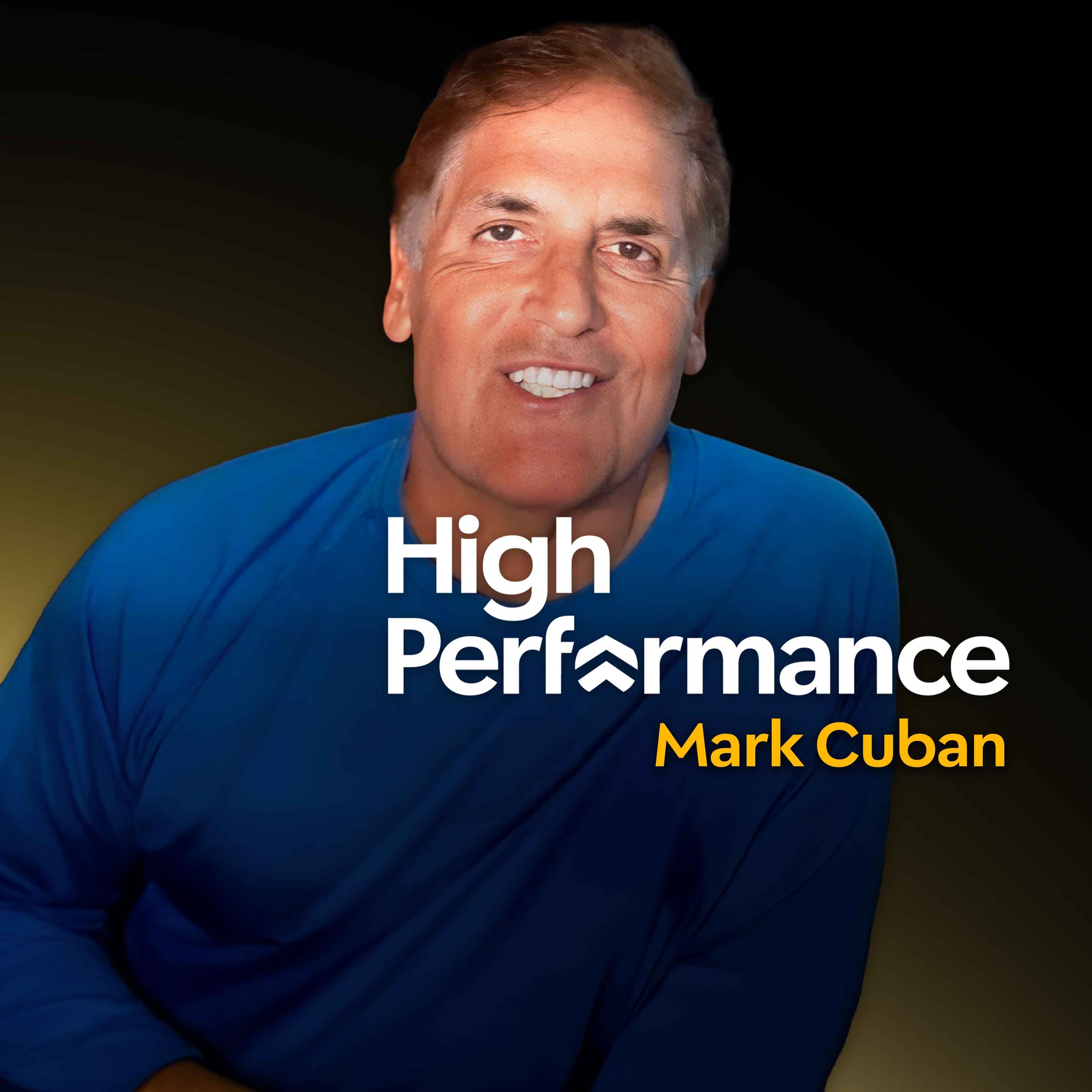
Hosts: Jake Humphrey & Damian Hughes
Mark Cuban
Mark Cuban shares insights on leadership, team culture, and the importance of adopting AI in today's business landscape. He discusses his experiences in transforming the Dallas Mavericks and offers advice for young entrepreneurs.
Written by AI. May contain mistakes.

Get the gist, explore an idea or ask about something said.
 Claude
On The High Performance Podcast, what are the key points of this episode?
Searching your listeningAutomatic transcript. May contain errors.
0:28Watch it early on the High Performance App. the best lesson he taught me because there's never enough of it and you can't get it back. It's not something you can buy. It's not something you can own. That is the voice of Mark Cuban, billionaire, entrepreneur, investor and star of Shark Tank. Mark made his fortune building and selling a tech company in the early days of the internet. But I love this. He then lived his dream, which we all want to do right, by buying an NBA team and turning them from a joke into champions. He's made billions, but what drives him now isn't money. It's the most precious resource of all, time.
1:05In this conversation, you're going to hear how Mark thinks about curiosity, competition, and using AI to level the playing field, not just in business, but in healthcare. He opens up to Jake and I around the lessons that shaped him from being fired in his early career to learning how to lead with compassion and not ego. And finally, it tells us why he believes Donald Trump is not a high performer. Oh, and by the way, there's no filter in this conversation. This is a man who speaks honestly about failure, the myth of work-life balance, and why being nice might actually be the most underrated skill in business today.
1:40I actually love it when someone comes on the show who has not just achieved everything they wanted to, but they're at an age where they just tell you exactly how they see it. And that's what you'll get today. as we welcome American businessman and billionaire Mark Cuban to High Performance.
2:01Mark, first of all, welcome to High Performance. Thanks for joining us. Thanks for having me. I'm excited to do this. So you said the world's first trillionaires will be created by the AI industry. What makes you believe that? Because the industry is changing so rapidly. The technology is changing so quickly. somebody who come up with a new way to utilize it in a way we never thought about before. I mean, all this stuff is just changing every single day. And just like we saw from the early days of PCs, early days of networks, early days of internet, early days of mobile phones, early days of 5G, there's always something bigger and better that's created by an innovative of entrepreneur, but AI just dwarfs all that.
2:46We haven't seen the best or the craziest of what it's going to be able to do. And not only do I think it'll create a trillionaire, but it could be just one dude in a basement. That's how crazy it could be. Wow. And you know what? I'm becoming a bit obsessed with AI. And every time I talk to people about it, all they do is say to me, oh, well, it's not as good as the human brain. It still makes mistakes. They're kind of almost, They're still not daring to believe how incredible it could be. Yeah, I mean, it's just the very beginning, right? You know, we're still in the preseason as people just figure the whole thing out.
3:20But as it becomes more advanced, and I'm not saying we're going to get the Terminator, right? I'm not saying, you know, all of a sudden there's going to be, you know, robots that are smaller, smarter than people like the movie AI. but we'll find ways to make our lives better, more interesting, do work better, more effectively so that we all want this thing. I mean, remember the early days of PCs, people are like, I don't need that. I've been doing it the right way forever. Then we had the internet and there were people like, what's this internet thing? Why do we need it? Then it was smartphones.
3:57It was like take pictures with my phone you know snapchat what the hell was that we'll find something that's equivalent for ai and then five years after we were using it people like how did it will be how did i live without it and people will make a lot of money if you can come up with that idea so take us into your world then what are you using ai for on a day-to-day oh my goodness everything it's insane how much I'm using it right now. Like I wrote software a long time ago and I haven't kept up with my skills. And so I downloaded this application, Replit, R-E-P-L-I-T. And you just type in, okay, here's the application I want to write.
4:38I want to be able to compare pharmacy costs between my company and these other companies. And every time the price changes, send me alerts. and I just typed that in and within a few minutes, it had the first pass of the software and then I just ran it multiple times and gave it new ideas and things I wanted and it wrote the software for me. Now, it's not perfect software and an advanced programmer could do a better job, but it was crazy. For the Mavs and for other businesses, we're using all the new text-to-video stuff where you can just say, you know, show me a guy carrying in a rugby ball that drop kicks it into a basketball basket.
5:23And it'll give you, you know, 10 seconds of that in, you know, a minute. Just being able to be creative, whether it's from a business, a programming, a video, I'm trying to find new ways there. I had this thing called AFib and I had an ablation. And so I had to track all the shit I was doing, you know, the drugs I was taking. And in the past, you know, you might of downloaded an app and mark things down in the time. I just told, you know, I went to chat GPT and I was like, I need you to track all this stuff for me. I'm going to tell you when I take my medicine and when I do my workout and I want you to record it all.
6:01And if there's something there that I write down that you think is not right, or I should be concerned about, let me know. And damn, if it doesn't do it now, you've got to be careful, like talking to anybody else. You know, it's like talking to a friend who you think knows a lot about something. You still got to be careful and talk to an expert. But being able to do the process and just being having things identified that I might not have known to look for was insane. Just insane. I mean, you know, now they've got the way that, you know, it's kind of like Siri for ChatGPT on an Android phone where I can just talk to it.
6:41and you get caught up talking to it like it's a person. I mean, I can just go on all the shit I'm trying with AI. And I'm not here to tell you that it's gonna replace everybody's job. It won't. But the things that you do and the things that you like to do, if you're creative, innovative, whatever it may be, or you're just bored. You know, it might end up being the best alternative to boredom. Just, you know, okay, chat, GPT, create a game that does this, this, and this that we can play together so I won't be bored. sitting on my couch. It's incredible. And what's the balance mark of still trusting your gut over trusting the raw data?
7:20You know, when you trust your gut, you're trusting your experience. And with the large language models, you know, the chat GPTs, perplexities, Geminis and everything, you get to feed it information that effectively are things that you know and you understand your gut. And so there's times when I don't think the answer is what it should be or I think it's wrong. And I'll say, I don't think you're right. I need you to show me the evidence of how you got to this decision. And it's no different than talking to a friend or a work colleague and just calling bullshit, right? No, I don't think you're right.
7:59I think you're wrong. Show me why you think this is right. So I guess the answer is even though it's artificial intelligence, it doesn't necessarily mean it's always going to be right now or forever. And so you've got to question it. And whether you use your intuition or just recognize that you see something's wrong, asking your AI to prove it, should be part of your process. I remember seeing a quote from you a while back and I'm paraphrasing here. You said something like, whenever I see someone doing something the way it's always been done or saying I'm doing it the way it's supposed to be done.
8:36That's a red flag for me. Oh, absolutely. I think the quote was, when you see somebody, when you see a thousand people doing the same thing, why would you want to be the thousands and first? We don't need another kind of Uber. We don't need another DoorDash. It's the people who come up with the new idea and have the guts to go out and turn it into a business that changed the world. And it doesn't have to be like something way out and crazy. You know, Steve Jobs has this line or had this line that I always remember. He said, everything's a remix. And basically what that means is as you learn new things, you just keep on adding new ideas to what you've learned.
9:19And one day that leads to a business concept or a business you can start or something you want to change in your life. And I think, you know, whether it's AI or any other tool, that's going to become more applicable and easier for people.
9:56Work smarter and faster with Upwork. Go to Upwork.com now and find your freelance expert. That's U-P-W-O-R-K dot com. Post a job for free and get started today. If you're a maintenance supervisor at a manufacturing facility and your machinery isn't working right, Grainger knows you need to understand what's wrong as soon as possible. So when a conveyor motor falters, Grainger offers diagnostic tools like calibration kits and multimeters to help you identify and fix the problem. With Grainger, you can be confident you have everything you need to keep your facility running smoothly. Call 1-800-GRAINGER, clickgrainger.com or just stop by.
10:33Grainger, for the ones who get it done.
10:40This episode is brought to you by Opera Air, the first browser with mindfulness at its core. Now, most of us spend hours every day online, but how often do we pause to take care of ourselves whilst we're doing it? And that's where Opera Air comes in. It's a lightweight, fast, secure browser built not just for productivity, but for your well-being. With Opera Air, mindfulness is built right in. You'll find free breathing exercises, guided meditations, and soundscapes with ambient sounds, lo-fi music, and binaural beats, all designed to help you focus, relax, and even spark creativity while you browse.
11:17So what would you say makes an idea great then, Mark? People liking it, you know? We all have millions of ideas and 99.99 % of them are junk. But, you know, I think the process, particularly if you want it to lead to starting a business, the process is pretty much the same for everybody. You know, you get this idea, you know, you could be, you know, having drinks with your friends, you could be, you know, just sitting around, you know, thinking whatever it may be, but you get the idea and you go to your friends and you go, you know, I have this idea of what do you think? and that's the first pass.
11:51If they say, oh, well, I like the idea, then typically what happens is you go to Google or ChatGPT or Gemini now, and now you can say, and this is, you know, I'm now just thinking about this in real time. You finally can start to say, okay, well, my friends like this idea. And in the past, you would go to Google and just keep on asking her questions to see if anybody had done it before. Now you can go to ChatGPT and just say, hey, has anybody tried this idea before? And if so, show me who and what and how it works. And if Chats, UPT or Gemini come back and say, nope, we can't find anybody who's done it.
12:29It's like, okay, maybe this is a unique, good idea. And then you go back to the AI and you say, write me a business plan. And then you just keep on iterating it over and over and over again, which means, You know, since these apps are free for the most part to try, any kid, any age, 10, 12, 15, 20, 30, 80, 90, can use these tools now to do things that you might have needed a business education for before. You might have gone to university and taken business. Now you've got your own little tutor. You've got a professor in your phone that can guide you through starting it. Now, that doesn't mean the business is going to be successful.
13:15You still have to get customers. You still have to find ways to get them to pay you money for your product or service. And you've got to figure out how to build these things. But in the past, that barrier to entry might have been your expertise. You know, I can't tell you how many times, whether it was on Shark Tank or wherever, where people have asked me, you know, what do I do next? And I might not have time to give them answers, or they might not have access to somebody to give them answers. But now using AI, you can do these things. AI is a great equalizer. You know, whether it's you, me, somebody off the street, or Peter Jones, you know, it's going to give us all the, for the most part, a similar answer.
14:05So you get access to expertise you've never had before. And that's going to help a lot of people do a lot of really cool things. Now, you mentioned different technologies earlier, Mark, whether it was a telephone or whether it was when we first started getting access to the internet. And it's often said that the first two stages of mass changes, people ridicule it and then they oppose it. What would you like to say to their AI naysayers? You have no say in the matter. It's just, you know, like you mentioned, you know, I've been in the technology business a long time. When I first started selling PCs in the 80s, people were like, I don't need that shit.
14:46Then I started connecting them together. And that's how I built my first company by connecting PCs together. And I would hear, well, you know, I just need to carry a floppy disk from one PC to the next. Fast forward to the start of the internet. I can't tell you how many times when we started AudioNet in 1995, which was the first commercial streaming company, people thought I was an idiot. They were like, Mark, if I want to watch something, I'll turn on the television. If I want to listen to something, I'll turn on the radio or buy a CD for my CD player. I'm like, no, you don't understand. They're like, you're an idiot.
15:27But I believed in it enough that I was like, I'm going for it. Either it'll be huge or I'm an idiot. And so you're right. Most people condemn things when they first happen because, you know, if you're not an entrepreneur and you're not looking for new, innovative things, you want your life to just be the way you want it. But then when you see other people using it and you realize the value, that's when people come around. So for people who maybe are not an entrepreneur, they're not a business person, maybe they're a housewife or a dad, or maybe they're 14 years old and still at school and they're listening to this.
16:04What's the first thing that you would love them to do using AI right now? How do they begin this journey if they've never been involved? Ask your questions. Download Gemini from Google. Download ChatGPT. Just one of those two. And just ask your questions about anything. But don't assume the answers are right. and when you find something that you don't agree with, tell the AI you don't agree with it. By trying it and testing it, school kids are already using AI no matter what. I don't care whether it's the UK or America or anywhere in the world, they are using it as ways to get ahead in school and write papers, whatever it may be.
16:47But for the housewives, the dad who is not into technology, um whoever it may be just try it i mean you will be stunned but you have to realize that it's not actually thinking ai doesn't and won't think it's not actually smart but what it can do is find information and package it in a way that people can understand that will save you a lot of time. It can, like my wife, my wife was like, fit AI, pooey, you know, why would I do it? You know, I've got my shit together. And I was like, baby, just try it for recipes. You want it to be under, you can ask your questions. You want it to be under X calories.
17:33You want it to have, you know, this amount of magnesium or whatever, find me a recipe that tastes good or, you know, tell me the ingredients that I should get. And she was like, oh my God, it can find anything. That's what it is. It's just like knowing somebody that has the world's best memory and who can package things together in a way that you can understand. And just by playing with it, you will be stunned. And then you can do things like tracking things or just, like I said, I had this ablation and I wanted to see, okay, search all the research, not just some of it, all the research. And I'm typing this in and tell me whether or not I can take melatonin with this drug I have to take.
18:21And it first came back and said, yes. But then I said, I want to see the research. And there was one research paper that said, here's where you have to be careful. And it applied to me. And so just having access to that will be an incredible benefit. Now still talk to your doctor, but just being able to ask you questions all day, any day about anything is incredible. Mark, tell us what you think of Donald Trump's approach to AI. He's already revoked Joe Biden's October 2023 AI order. I think he talks a lot about a hands-off, innovation-first approach. What do you think of President Trump's approach to AI?
19:03Um, that's a great question. Um, there's two ways to approach AI, I think, from a government perspective. One is to try to manage and regulate the creation. And the other option is to regulate and manage the output. And I think it's impossible to regulate the creation of it because you can just take a PC. Any kid can take a PC and download open source versions and create their own version and there's nothing anybody can do about it. And if they do something that's bad, you ain't going to stop it. But you can find the outputs and where they're being used and try to regulate them. I'm trying to think of a good analogy.
19:50You can't stop people from buying Bitcoin or using Bitcoin, But if they try to buy something illegal, you can focus on that or try to do something illegal with that. AI is the same way. And as far as how we're managing it, I don't think they've made a decision yet on which approach to take. I think that's still up in the air, but we'll see. And I'm pretty sure because, you know, I watched the people that are supposed to be in charge of AI for the U.S. government, and they haven't said anything about it. Can I ask you about Donald Trump, Mark? I can ask you, he's obviously a great salesman in the White House who can sell himself and his policies impressively.
20:27But do you feel a good salesman makes a good president? Well, I think a good salesman could be a good president. I don't think they're mutually exclusive. I think the sales ability can get you elected, but you still got to be, you know, a good president to be a good president. And that takes a whole lot more. You know, there's things he's done that I agree with and a lot of things he's done that I don't agree with. and we are where we are. You know, it's unfortunate. I guess the law of unintended consequences, you saw what happened in Australia. You saw what happened in Canada. I don't know the impact it's having on the UK, but I'm sure, you know, what the impact he's having on your politics is different today than it was the day he was elected.
21:13This podcast is called High Performance. Do you think Donald Trump is a high performer? No. Why not? In my mind, to be a high performer, you have to be curious. You have to always be learning. You have to be strategic in how you take information and figure out not only what's in it for you or the country, but how you're going to intersect with other countries, other stakeholders, if you will, other populations. And I just don't think that plays to a strength. Mark, did you see the comments this weekend attributed to Warren Buffett, who described America as a cathedral with a casino attached to it?
21:56And he warned against the danger of the casino taking over the cathedral. I'd be interested in your views on that. Money is a great motivator, but it also gives you proximity to power. And when that power and money loses compassion, then it can create problems. And I think that's what we're looking at. I think we're on the precipice of that being a problem. I don't know that we're all the way there. You can't just be transactional. No matter what nation you are, no matter who you are, you've got to understand the short term and the long term. And I think we've lost focus. Things like trade balances.
22:40Trade balances are part of the equation, but they're not the only variable that makes for good or bad. Deficits are a bigger part of the equation, but it's not the only variable. So I think what Warren was saying is you have to understand and find an equilibrium where you have to keep the cathedral as being humble and in service of mankind. And the casino, in order to grow the casino along with the population, you will take risks, but you've got to keep an eye on people who are the card sharks and the card counters. And that's still not a positive. And when you find them, you got to expel them.
23:23So, you know, I think that's what he was referring to. And I think he's right. I don't know that there's an easy way to explain it, though. You're a hugely successful businessman, Mark, but you're straight away talking about compassion at the heart of being the American president, not talking about business and deals being at the heart of being the American president. What is the risk, do you think, of having a president that doesn't seem to show compassion for others? I mean, it's only been a few months. We're finding out. You know, it's the fuck around and find out presidency. And so we don't know yet.
23:58And it's hard to predict. You know, he's not predictable. He's done a bunch of things he said he would do that a lot of people, and to a certain extent, not completely, but including me, agree with. You know, dealing with immigration, that's a global problem. You guys face that every day in the UK and across Europe. It's a problem. He fixed that problem. Dealing with deportations and how do you, you know, the result of over-immigration. I don't think he's doing it the right way, but he's doing it and he promised he would do it. You know, dealing with crypto, dealing with our SEC, right, how they enforce regulations.
24:38I think he's doing it the right way. So there are things that you can point to and say, you know what, we needed him to do this and he's doing just what he promised. And that's not a bad thing. But, you know, there's everything else. And while those things are important, you know, dealing with people and understanding, like working with Elon for Doge, there's nothing wrong with cutting, you know, and cuts are what was needed because there was too much spending. But cutting it all at once and indiscriminately so that, you know, small towns are impacted more and will suffer more. Tariffs, you know, doing it on a non-strategic basis so that the whole world could, you know, be brought to its knees economically.
25:24So I think, you know, I'm not trying to sound mealy-mouthed and talk around it, but I'm just trying to be brutally honest. There were things that you can't argue with that he did correctly. But there are a lot of things that I think could have greater global impact, like tariffs, that he's doing incorrectly. And would you describe Elon Musk, who's been so central to the White House, as a high performer? Yeah, I would, for sure. But it doesn't make him a high performer at everything. You know, obviously, his success financially and for his business, it speaks for itself. And you can't do all those things multiple times and not be a high performer.
26:04But it doesn't mean everything you learned in your business life applies to government or a country or globally. And I think that's where he lost the plot, that by doing Doge like he did Twitter or like he's done at Tesla, where his approach is cut, cut, cut, cut, cut. You know you're going to make mistakes. Bring back the 10 percent that are in the mistake lake and everything will be OK. That doesn't work in government. That doesn't work when people's livelihoods aren't just responsible to you. It's one thing, you can go get another job potentially, but when you cut and destabilize communities, that is a different problem.
26:46And I think now he's come to the realization that maybe he didn't do it the exact right way. So, I mean, and look, I'm not trying to say this is exclusively Elon. We all, including me, have a way that, I have a way that I approach technology, a way that I approach business. and it's not always right. I've had businesses fail. I've had people quit on me because they didn't like the way I was doing it. You know, you live and you learn, but when it was my business and people decided to work at my company, they knew exactly what the potential for gain or what the potential for loss was. Somebody who's just, you know, living their life in the countryside, in a small town, and all of a sudden the museum that they worked at is cut because of doge, that's a different thing.
27:35You know, they didn't want to be part of Elon's puzzle. And so I think, you know, it works for him in his business life. It didn't work for him in his government life. I'd love to talk to you, Mark, about the importance of compassion, because I think sometimes, particularly in business, it's something that we overlook. You know, people think business is all about the bottom line. It's about the turnover. It's about the EBIT. It's about the profit. It's about the exit. would you have had the incredible success you've had in business without the ability to connect emotionally to the people that you're in business with?
28:06And what's the secret to doing that? You know, it's learning the hard way. I remember my first business, Micro Solutions, just being a yeller. And I wrote this little book, How to Win at the Sport of Business. And I even had chapters in there saying it's okay to yell. But I think what I missed, and I would have been more effective if I was nicer. Nice makes you more profitable. People want to deal with people who are nice. I think the days are long gone of the tyrant business person that will just step on anybody to get where they want to go. I don't think that works anymore. Back in the day, if you did something stupid and you were mean to somebody, they quit and maybe told this other company they went to work for that Mark is a jerk.
28:53Now they post it on social media and the world knows you're a jerk. And so I think there's different benefit analysis. And I say this because I just think being nice, being compassionate is good for business. You can't just step on everybody because people will find out and they won't want to do business with you. And plus, people who work for you, when you care for them, when you connect to them, when you align your goals of the company to their personal goals, they work harder. They'll stick around. And when you let them share in the upside by giving them stock in the company, they're going to do more for you.
29:35They're going to help you more. They're going to make me smarter. They're going to complement my skills better. They're going to create less stress for everybody. And so, I mean, being compassionate, being nice, I think is a core business competency for anybody in business. If you were to write the book now, Winning at the Sport of Business, Mark, what would chapter one be today? Be curious. Yeah, because so much is changing. I mean, we started this conversation off with AI, and you and I know pretty much the same amount about AI because it's changing so rapidly. And so I would tell people, don't be afraid, be curious.
30:13Get in there and play with it. Learn as much as you can. I used to always have this attitude. And to this day, when it comes to technology, there are two people. There are the people who created it and everybody else. And I was tied with everybody else and how much I knew about it once it was released. And so in my mind, if I put in the effort, I could get ahead of everybody else and just be behind the creators. And I think by being curious, you find things that you get really excited about and that you want to spend time with. And when you do that, you can learn a lot and try different things.
30:51And when you find something that you love to do, people don't quit things that they love to do. But the start to all that is being curious. So that would be my first chapter. So can you give us an example of where curiosity has really paid off for you then? Oh, everywhere. There's nothing that I've done that didn't start with curiosity. I mean, being a kid and loving to read, trying new jobs, being fired from a job, everything that I've ever done started with me just reading something and saying, well, this is crazy, but let's try it this way and maybe that's an opportunity for me. And that's what I try to tell my kids.
31:32They don't listen, they're teenagers, but at least I'll tell them so they know at some point that, you know, the greatest skill you can have is being curious and loving to learn. I think your life story, Mark, is inspirational and fascinating in equal measure. What is left of the boy who sold bin bags door to door for the man who's sitting in front of us today? Oh, man, everything. I mean, the only thing that's different in my mind are the wrinkles, you know, and the grays. So do you still feel like that kid? Oh, yeah, for sure. Like, this is going to sound bizarro, but I always get these offers to accept awards.
32:07We want to award you with this, this, this, and this. You know, we want to give you a lifetime achievement award. And I'm like, fuck that, I'm just getting started. I don't want, you know, I don't want to be like, oh yeah, let's wind it down. Warren Buffett just retired at 95. Someone asked me for a quote on Warren Buffett and you know what my quote was? It was just this morning. It's like, and I know Warren, I've had, you know, not best friends, but I've gone to Dairy Queen and had ice cream with him. And what I said is my quote for Warren was, I can't wait to see what he does next. And he's 95 years old.
32:43And that's where I want to be. I want to be that guy at 95, talking shit, coming up with ideas and telling some 20-year-old, I'm going to bust their ass, you know, in a business that I'm starting. So how do we all cultivate a mindset like that? What are the kind of daily behaviors that you do, if you like, that keep you coming back for more, that keep you sitting here in front of us, Mark? You know, I'm sure you won't mind me saying you're 66 years old. You are talking like a 26-year-old. Like, how do you have this mindset? I'm competitive as fuck, right? You know, I played rugby for 15 years.
33:20You guys can relate to that. I did sports as much as I could until my body broke down. But business is the ultimate sport. That's why I named that book, How to Compete at the Sport of Business, because it is a sport. And it doesn't matter how tall you are, how fast you are, how big you are. If you can use your brain and leverage it to create new opportunities, it doesn't matter how old you are. And I just like that competition. It used to be when I started, I was always the youngest when I walked in the room. And I was like, this is so cool. I've got all these old guys here. Now I'm the oldest.
33:57And I'm like, this is so cool. You know, I've got all these young people here and I'm going to kick their ass. That's fun to me. And that's, you know, that's always going to drive me. That'll never end. So is it about competing or is it about winning for you? It's about competing. And, you know, when I compete, I want to win. You know, it's like there's certain sports I won't play. Like I don't golf. I golfed one time in my life in 1989. and I was the guy who, you know, was ready to break his clubs over his knees and throw his clubs and all that shit because I'm so competitive and I sucked. And it was like, I'm gonna have to put in a lot of time to get good at this.
34:35I'm not going to do it. I love to compete to win. If I'm gonna start a business, it's to be the best business in that category. Like we have costplusdrugs.com that we started, it launched in 2022, just over three years ago. I mean, I was in my 60s and here we are. We're changing the healthcare industry in the United States. Whatever I do next, I'll try to do it the same way. Mark, I'd really love to talk to you about two things really, about hard work and about luck. Because I sit here as someone who owns a few businesses, I host a podcast. I only can dream of being as successful as you one day.
35:12But sometimes I feel like I'm lying to people when they send me a message on Instagram or reach out on LinkedIn or talk to me in the street. And they say, look, I really want to be successful. I'm driven. and I just want to make it happen. And I kind of find myself glibly going, well, you know, keep working hard and you never know or just keep plugging away. But the truth is I know hundreds of people that work even harder than me, you know, maybe even harder than you and it just hasn't happened for them. So how do we give true and honest advice to young people starting out on their journeys about luck, about hard work?
35:42It's a hard thing. Yeah, I mean, luck is more about timing. Are you guys rugby guys at all? Yeah. When I started in college, in the lineouts, there were no lifts, right? You had to jump. And so I could jump. And so I could be the second guy in the lineup, or I could be the fourth guy in the lineup. And I played a lot more and started A squad because, you know, I could jump and get the ball, and I was strong enough. I could break through the line. Then, I don't even know the date, when they changed it to the lifts in the lineup, I probably wouldn't have played. So that was luck. That was total luck that I was born at the right time.
36:20When I started AudioNet and it turned into Broadcast.com, we went public right at the very exact time that the internet stock market was going nuts and the bubble was in place. I probably wouldn't be a billionaire if the timing for our company wasn't the exact right time. That doesn't mean we wouldn't have been successful. We would have been. Doesn't mean I wouldn't have been wealthy. I already was. But to be a billionaire, for sure, you've got to be lucky. And I don't care what anybody says. Timing matters. You know, for smaller businesses, it's more effort and maybe some luck in terms of, hey, you know somebody or you learned how to use AI better or, you know, somebody down the street made the exact product that you were looking to sell.
37:07That's luck. But, you know, like they say, you know, luck is when preparation meets opportunity. That still applies. if you don't put in the work, if you don't, you know, put in the effort to learn and to always iterate and make yourself smarter and make your business better, then it doesn't matter how lucky you'll be. Can I talk to you then about how luck kind of sits with your mindset? Because you can work hard, you can be lucky, you can be in the right place at the right time. But I think without that mindset of optimism, without believing that great things are going to come your way, often they don't.
37:41What's your, what's the secret to your mindset? you know, if shit doesn't pan out, you've just got to make a decision. Sometimes it won't. I mean, I've had things fail and it was like, it's just not going to work. And you just, you just keep on banging and banging and banging. And, you know, I've run out of money. I've gotten fired from jobs. I thought I had something special with a company and it just blew up. I'll go back to learning and iterating, if you're learning and iterating and you're getting smarter, it should be self-evident why something will or will not work. And when it becomes self-evident, it won't work.
38:24You know, you just got to lick your wounds and move on to the next thing. There's no shame in failing. I say it all the time. People don't understand or know my failures. It really doesn't matter how many times I failed. I only had to be right one time. You know, you can fail as many times as you want, but if you're right one time, then everybody's going to tell you how lucky you are. And that's okay, you know, because people don't remember other people's failures. If you're still overpaying for wireless, it's time to say yes to saying no. At Mint Mobile, their favorite word is no. No contracts, no monthly bills, no overages, no hidden fees, no BS.
39:03I made the switch because I was tired of those ridiculous bills and sneaky charges from my old provider. With Mint, I'm paying$15 a month and getting the same high-speed data, unlimited talk and text, and coverage on the nation's largest 5G network. Honestly, the quality is just as good, if not better than what I had before. And the best part, you don't need a new phone. You can keep your current one, bring your number, and all your contacts. I use Mint Mobile, and you should too. Ready to say yes to saying no? Make the switch at mintmobile.com slash HPP. That's mintmobile.com slash HPP. Upfront payment of$45 required, equivalent to$15 a month.
39:39Limited time new customer offer for first three months only. Speeds may slow up a 35 gig on unlimited plan. Taxes and fees extra. See Mint Mobile for details.
40:06the right expert right when you need them. Work smarter and faster with Upwork. Go to Upwork.com now and find your freelance expert. That's U-P-W-O-R-K dot com. Post a job for free and get started today. If you're a custodial supervisor at a local high school, you know that cleanliness is key and that the best place to get cleaning supplies is from Grainger. Grainger helps you stay fully stocked on the products you trust, from paper towels and disinfectants to floor scrubbers. Plus, you can rely on Grainger for easy reordering, so you never run out of what you need. Call 1-800-GRAINGER, click grainger.com, or just stop by.
40:45Grainger, for the ones who get it done.
40:52Hi, I'm Ollie Patrick, part of the High Performance family. Join us on our podcast, The Energy Equation, where we think all things energy, how to use it, how to manage it, how to unlock it. Find us wherever you get your podcasts. I love that bit you said there, Mark, about the iteration, the willingness to lean in and explore your efforts. Would you tell us a little bit more about how you go about doing that to the most effective way possible? In a business context, you talk to your customers, you talk to your prospects. In a personal context, you do the work. It's no different than how sports have changed.
41:29The science applied to rugby, basketball, whatever the sport has changed dramatically. I mean, you see people who are faster, bigger, stronger. And all those things came from somebody asking the question, how do I get better? And then trying really hard to find the answer. Is it technique? Business has its own technique. Where are you learning? How are you learning? Going back to our AI conversation, AI changes technique inside a business. AI will change process inside a business. So I'm always looking, how can I improve my process? How can I ask questions of stakeholders, whoever they may be, real or virtual, so that if I'm running into inhibitors, if I'm running into roadblocks, how can I get past them?
42:22And so for me, it's just always pushing a limit and seeing, okay, can I go further? And in a positive way, not to the detriment of somebody else. It's not like, okay, I'm going to take advantage of this person or I'm going to be ruthless and step on them. I don't like to do business that way. I won't do business that way. It's more, why is this person competing better than me? Why is their business doing better than me? What is it that I can do to get past them to understand better? And then just trying new things all the time. And again, I'll go back to AI. Today, when those things happen, I can go to ChatGPT and Gemini each and separately say, you know, this is what this other company is doing.
43:11What would you suggest? Or give me five ideas or 10 ideas that I can use to try to compete better as an athlete, as a business person, as a parent, you know, whatever it may be. I mean, I've asked AI for better dad jokes for my kids. And what did it come back with? Did you hear about the two antennas that got married? Go on. The wedding was okay, but the reception was incredible. Oh, great. I never thought we'd get dad jokes on a conversation with you, Mark, but I'm loving it all the same. I want to talk about how you get your team to live up to your standards, to go the direction you want them to go.
43:50I'm sure you've read the book, Radical Candor. We were joined on the podcast by Adam Garan, who spoke to us about being a disagreeable giver. So tell your team how high you expect them to perform and then tell them that's where they have to be. What is the secret to getting the very best out of the people around you, setting standards and holding people accountable to them? Yeah, it's hiring great people who complement my skillset. You know, at this point, I'm not in the micromanage, Let me manage this small team and build them up in the company. It's more, let me hire people that are smarter than me, complement my skill set, and align people's interests.
44:29And to me, that's the most important thing. Can you align the interests of your managers and your employees with the interests of the company? And let them know that as we succeed, you succeed. And also allow them to share in that financial success. I have stock, you get stock. Or if I can't give you stock, you get bonuses based off of our performance. And the ultimate rule of thumb is if you create stress, you're not going to work for me very long. I want people who are looking to reduce my stress and looking to reduce the stress of people around them. But I'll recognize who you are as an individual.
45:08I won't try to change you because people have different skill sets. Like I always try to work with people who are very anal. You know, if you tell them ABC, they get ABC perfect because I'm typically a mess. You know, I'm trying to think of the next thing and do the next thing. I'm not very detail oriented. So I try to partner with people who are. If you find somebody who's ABC and perfect at it, recognize they're an ABC person. Some people, if you tell them to do ABC, more like me, you know, they're thinking about DEF. and you've got to recognize that if I want this person to work with me, this is going to be the person who thinks of the next thing.
45:46But they may not understand that, you know, GHI even exists. And so you've got to understand the skill sets of the people that you're hiring and how they complement me and the management team and how we all can get them to align so that it's all in our best interest. And then always make sure they realize if there's a payout in the end, if I sell the company or whatever it may be, that they share in that payout and that they recognize that where there's upside for one, there's upside for all. I think that's one of the great failings of entrepreneurs and CEOs. They try to hold on and retain everything.
46:25And I think that's hugely a mistake. No matter how big or small the company, you've got to share the rewards. You've got to let everybody own part of the company. And what about working hard, Mark? How important is it to lead by example when it comes to that characteristic? Working hard means different things for different people. You know, if you're a working person and you're getting up and you've got to be at work at 7 a.m. and you're doing something physical, that has one meaning and you have to respect that. If you're in an office, like I said, you may be an ABC person and working hard is just making sure you don't make mistakes.
47:04And so, you know, for me, in terms of setting an example, I try to be accessible and as accessible as quickly as possible. I do almost everything via email, just like you guys sent me an email, you know, and when somebody wants to send me an email, I'm going to respond as quickly as possible if they work for me. you know i'm gonna put them ahead of everybody else and get right back to them and you know if it's two in the morning and i'm getting up to take a pee because i'm 66 years old and i got a p in the morning then you know i'm checking my email and i'm responding and they're thinking i'm working at two in the morning and so i try to be as responsive as possible um to everybody and when you do that i think people will respect that and and respond accordingly i love your phrase, you need to work like someone else is working 24 hours a day to take your job.
47:58And there's so much conversation now about work-life balance, about protecting ourselves mentally and physically. Is there such a thing as too much work, do you think? Yeah, there's always some too much everything. You can't kill yourself, but you have to understand your goal. Why are you doing what you're doing? If it's just a job, hey, I want to make enough money to pay my bills and get home at five o 'clock and play with my kids. If that is your goal, then go home at five o 'clock and make that your goal and make it, if it's your company, so that you can achieve that. If you're working for somebody else, make sure everybody understands that's your goal.
48:36And that's fine. But if your goal is to be wealthy, like, you know, I didn't grow up wealthy. I used to drive around and look at the big houses, you know, and dream about, you know, someday owning one and living in one. I used to dream of retiring by the age of 35 so I can go around and party like a rock star because I wanted to own my time. My parents, they didn't own their time. They had to work on somebody else's schedule. And so when I talk about working like somebody is working 24 hours a day to take it away from you, that's what I mean. I mean, you have to set your goal. And if you want your goal to be that you want to be wealthy, you want to live in the big house, you want to be able to retire, then you ain't going to have no fucking work-like balance because somebody is working.
49:22You know, I talked before about, I don't care how old I am. I'm still looking to compete. If you're going home at six and I'm staying and working as long as it takes, I'm going to kick your ass. And you have to recognize that if your mission is to not have your ass kicked in your business and to be, you know, extremely financially successful, if that's how you define success, then you are not going to have work-life balance. And you have to work like someone's trying to take it all away from you. But you have to decide what your goal is and work backwards from that. So what's your goal today then, Mark?
50:00To work like someone's trying to take it all away from me? That's what I do with CostPlusDrugs.com. I mean, my goal today is to change the healthcare industry in the United States. It's a mess. Nobody comes to the United States or in the United States says, you know what, the way we handle the financial side of the healthcare industry is perfect. Let's not change a thing. Everybody thinks it's a mess. And so I'm trying to fix that mess. We started costplusdrugs.com and we brought transparency. We reduced the cost of medications dramatically for the entire country. Big companies,$100 billion companies had to change how they did business because of our little company that just really rolled out three years ago.
50:47I want to keep on doing that. I want to extend it from pharmacy to all of healthcare and make it so that healthcare is a right in this country and everybody can afford what they need when they need it. And I think I'll get there, but that's what's driving me because I'm competing with these hundred, not just billion dollar companies, but some of the biggest hundred plus billion dollar companies in the country. And they're not going to just let me take it away from them. I often see when I go on Instagram or LinkedIn, or I look at career advice online, I see everyone saying, just follow your passion, guys, follow your passion.
51:23How do you feel about that advice, Mark? Not a fan. If I followed my passion, you know, I'd still be trying to play baseball or basketball. You know, it's not about passion, is where you put your time. As we go through life, you know, we go to school, we find different things. We're going to be passionate about things. You know, everybody dreams about their future. And you find these things that you dream about that you'd love to do. I would have loved to play basketball. I would have loved to made the Eagles as a rugby player. But there was no way that was happening. I was passionate about it.
51:57It wasn't going to happen. But when it came to business, I realized that I loved it. I loved learning. I was curious about every single thing I could find. And then all of a sudden I got into technology almost accidentally because that was the only place I can get a job. And I was like, oh shit, you know, let me teach myself programming. I like it. I mean, I can tell you stories about sitting with a box of ribs at my place and writing software programs and barbecue sauce getting everywhere and then looking up and it had been 24 hours that I'd been programming. It was just so intense, but I loved every minute of it.
52:43And to this day, I'll just be reading and learning more and more and more about healthcare. And every time I find a nugget, then every time I find a nugget, I'll use it to my advantage. But the point being that, you know, I found something that not only was I passionate about, but more importantly, I was willing to put as much time as it took to be great at it. And like I said, nobody quits anything they're good at and definitely doesn't quit anything they're great at. Right. That makes sense. Because I feel like you sound really passionate about changing the healthcare industry. It sounds to me like you're really passionate about the way that you used to write software.
53:21You're certainly passionate about AI. You're passionate about business in the States. but the reason why you don't like the phrase follow your passion is because really your phrase would be marry your passion with intense hard work and a desire to be successful, right? Passion alone is not enough. Is that what you're saying? It depends how old you are, right? Your passions as a kid, and when I say kid in your 20s, may not be the same passions that you're going to find as you grow out of school. Whether it's music, athleticism, writing poetry, taking philosophy and university, whatever it is. And I get your point of marrying time and passion, but I truly believe that the number one thing, once you graduate from school, if you go to school is, you know, you spent four years in college, let's say paying to learn.
54:11And once you get out of school, try as many different jobs as you can. You're getting paid to learn. And when you're getting paid to learn, if you go to a job and it sucks and it's just not you and you don't see a path, go to the next job and then go to the next job. It's not like it was when I was a kid. And if you didn't spend five years or you wanted to work there 50 years and get a gold watch, it's not like that at all. Everybody's basically a free agent all the time. And, you know, it's okay to bounce around till you find something that clicks for you. But to your point, if you can be passionate about that, you can then marry your time because it It takes time to get good at something.
54:53The amount of passion you have doesn't make you better, doesn't make you a better programmer. It doesn't make you a better rugby player. It doesn't make you a better business person. How you spend your time does. How curious you are, how much you learn, how much you're willing to learn. That is what makes you better at the things you love to do. And that's why I always say, don't follow your passions, follow your time. So when you were bouncing around yourself between those jobs in your early years, Mark, what was the biggest lesson that you learned that you could pass on to us and our audience?
55:29Just because I was a good salesperson doesn't mean I wouldn't get fired. You know, I got fired from a job at Your Business Software, my first real job in Dallas, because I didn't listen to the boss, because I thought if I went and picked up a check, that would have earned me a commission and earned themselves the company needed, that that would have been okay. He fired me on the spot. I think those lessons come from all angles, but you have to realize that, and I had to learn that I had to find my fit. And I hadn't really thought about it this way before, but I wasn't the ABC guy. I was somebody looking for D-E-F-G-H-I-K.
56:16JK, I had to realize that I was not going to be a good employee no matter where I worked. I was going to be a lousy employee because I was more concerned about where I was going next and what I was going to learn and think of next. And that just didn't fit. And I think people have to try to recognize who, just be self-aware and try to recognize who you are as a person and where your best fit is and what your own goals are. Like I said, if you want to work nine to five, so be it. Nothing wrong with that at all. But you have to be honest with yourself. You're not going to start the next huge company and make a zillion dollars.
56:57Can I talk to you about setting goals and achieving them? I mean, I sit here very ambious of you because I've always wanted to own my own football club. I'd love to buy Norwich City. I'm not sure it's ever going to happen. But you did buy the club you loved the Dallas Mavericks. What was the secret to setting that target and then making it happen? I got rich. There we go. That's what I'm going to say. That's the riddle I have to solve. You know, I was at a game with my then girlfriend, now wife, and it was the first game of the season. And you know, whether it's, you know, football or basketball, first game of the season, everybody is hype.
57:36Everybody's all excited. and there was no energy in the arena. And I was thinking to myself, I could do better than this. And I was like, well, let's try it and see what happens and go for it. And so that's what I did. And a month later, I owned the team. Wow. Did you not have any doubts, fears, imposter syndrome about knowing whether you actually would be able to make things better? No, because the team had been voted the worst professional sports franchise of the 90s. So I had only one direction to go and that was up. and everybody from the players to the fans was looking for anybody new because the guy who owned it before me wasn't a basketball fan.
58:15He bought it for real estate reasons. And so I knew I only had one direction to go and I committed to it. I let everybody, all the players know that we were committed to winning and either you were along for the ride and you were going to do what you needed to do to get better and to be a high performer or we'll just part as friends. And I was fortunate. You talk about luck. I had one of the best players. Actually, I had two of the best players of all time, MVP winners and Steve Nash and Dirk Nowitzki and great players like Michael Finley, Sean Bradley and others. And they had just been misused.
58:49And actually, you know, they were young and they looked at the team as just being a job as opposed to, you know, a path to a championship. And that's really the attitude that I changed. But I was lucky that I I had these Hall of Fame players right there, you know, on our team already. What did you learn from those Hall of Fame players? You know, it was amazing. I learned, again, how to be nice and how to be nice to fans. Like, it's kind of a shock, you know, it was a shock to me anyways when, you know, people were asking for my autograph and I'd go someplace and there'd be 20 cameras and media was always asking me questions or criticizing me for that matter.
59:30And talking to those guys who had grown up as star athletes, they set an example for me on how to treat fans, how to understand NBA players, the grind of being a professional athlete, and to respect the athletes for what they've been able to accomplish. They were, you know, there's 450 roster NBA players at that time. And you were one of 450 out of the millions playing worldwide. And to get there takes a lot. And I mean, they really taught me to respect that. And I think that led to me being a whole lot more respectful of everybody. Mark, can you share with us some of the lessons that you learned on how to improve the team's culture and by definition, their performance?
1:00:20It was easy because they had been so cheap beforehand, but things like staying at a nice hotel. I remember the first meeting I had with the players and, you know, the travel grind, particularly back then of the NBA, you could have a game in Salt Lake City, Utah or Denver, drive an hour to the airport, get to Oakland, California at three in the morning. And you really haven't had a chance to eat anything yet. and the players were like, we got to go find a 7-Eleven at three o 'clock in the morning in Oakland, California. And we weren't staying at a nice hotel in a nice neighborhood. You know, do you want us doing that?
1:01:02And, you know, it was an obvious and easy response. We upgraded the hotels. We brought food to the games and to the hotels. We made sure that there was 24-hour room service wherever we went. We made it so that, you know, they stayed on beds that were big enough for them so they could sleep. Just things that seemed to be common sense. Another thing I did that really changed the NBA, when I got to the Mavs, we literally spent more money on computer training than we did on skill development for the Mavs, for the players. And so I went and had some of our former players, we had 15 people in the roster, we got 15 former players to work with each and every one of them on skill development so that they had somebody there who had been in the NBA and because we had a young team could work with them and show them the ropes and show them things that worked for them in game, in preparation, how to be better at preparing for a game, how to watch film, whatever it may be.
1:02:05And when I got there, the Mavs were nine and 23. We finished out the season 31 and 19, didn't make the playoffs my first half year. But after that, we won 50 some games for the next 10 years, made it to the finals and lost in 2006 and won in 2011. I totally understand your desire to buy the Mavs because you supported them. I understand a lot less people's desire to get involved in sports teams thousands of miles away. You know, we've now got half the Premier League owned by American investors. We've got 24 English football clubs with American investors. What do you think that's about? That's a great question.
1:02:46No one's ever asked me that. It's a great question, and maybe I'll piss some people off. It's about money. It's about money for a big chunk. Like, I've got a friend that used to work for the Mavs, Bob, that owns a team in Spain. And he bought the team in a third league, it was, C.D. Catalan, maybe, just to prove a point that his approach to team building works. And he's been very successful by all accounts. He had one approach, but there are a lot of people who see it as an underutilized investment. They took an entrepreneurial attitude and looked at the Premier League teams and other teams across Europe and the world and said, I can leverage the fan base.
1:03:29I can create more revenue. And I'm not opposed to investing that revenue into the team to perform better, but I think it's primarily money. So there's three reasons. Money, fame, and trying to prove a point. And I think in terms of performance on the field. And I think the lower leagues, it's about trying to prove a point. Like Ryan Reynolds and the things they've done with Wrexham. Like Bob Herlebis and what he's done at City Catalan. And I'm just speaking from the outside looking in. I don't know these folks. I've been asked pretty much to buy or invest in every English Premier League team. I'm just not a soccer guy.
1:04:11And I wouldn't do it simply because I didn't have the emotional capital to be able to do it right. It's the same reason I didn't buy a WNBA team in Dallas, because I didn't have the emotional capital to be able to commit to it the way I think fans want an owner to commit. And I'm not trying to downplay Americans who invest in those teams and say they don't want to win. but I think they look at it first and foremost as a portfolio item in their investment portfolios with the hope to win even if they find themselves investing a ton of money to try to improve performance stadiums etc I really think that's that's why can I just talk to you about what I think is a masterstroke deal that you pulled off when you sold 73 percent of the Mavs but you still kept control of the basketball operation, which obviously is the part of the team and that deal that you're so passionate about and love so much.
1:05:12I think it's an amazing deal to pull off, to sell it, to make the money, but to retain the control. What's the art of a good deal? Well, two things there. I was supposed to have control of basketball. It didn't work out that way very quickly. I kind of got pushed aside and that was really my, I wouldn't say it's my choice. I didn't like it, but because we were winning and on our way to the finals, I didn't want to disrupt it. And so the out of the deal maybe wasn't as perfect as you'd think it was since I didn't get what I expected. But at the same time, I got what I needed. And that what I needed was the ability to step away at some point and not focus on all these ancillary things, more on the economic side than the basketball side.
1:06:00you know, to compete in the NBA these days. And it's, I'm sure it's the same with the Premier League. You know, it's not only about the game itself and selling tickets. It's building the new arena or stadium. It's building all the real estate around the stadium or arena. And I just didn't know shit about that. And I didn't want to be in a position where I was looking at spending a billion dollars or more on something I really didn't know very much about and that I wasn't excited to learn about. And so, you know, giving that was one thing. And then the second thing was my kids, you know, when it happened were 13, 16 and 19 when I sold the interest in the Mavs.
1:06:48And I don't want to put them in a position where they would get the criticisms that I got, you know, or all the shit that, you know, I had to take in social media and just, you know, the meanness of fans. I mean, you know, I'm sure that happens over there as well, where fans get upset and it was my choice to buy the Mavs. It wasn't necessarily their choice to be in a position or forced to be in a position to run the Mavs if I wasn't able to. And then there was estate issues, the way the estate tax work and stuff like that, that impacted it as well. And so it was more a personal financial decision than an emotional decision.
1:07:29And it wasn't as good a deal as I got because I put too much of an emphasis on the emotional side, but it was the deal that I needed, if that makes sense, because I was more concerned about these external things. And look, the bottom line, I negotiate from a different perspective today than I did before, because my next dollar is not going to change my life, particularly now. And it's not going to change my kids' life, and it's not going to change their kids' lives. But quality of life is critical to me and more critical for my kids. And like any parent, you never know if you're going to get it right, and you don't know until after the fact whether you made the decisions your kids like and how they respond, but it's what I thought was the right thing to do.
1:08:17And so I'll go forward with it. But generally, you know, the art of the deal, if you will, is I try to put myself in the shoes of the people I'm dealing with and look to find out what their wins are, you know, what puts them in a better position and then look to see if giving them what they need allows me to not only get what I need, but also to to be happy about what I got. And that's typically the way I look at deals. And I think, you know, that's part of the problem in the global economy right now. People, you know, are, you know, in our case with the U.S., we're using tariffs and we're saying we have to win.
1:08:55We don't care if you get what you need. At least that's the way it's looked so far. I think, you know, in the U.K., the same types of things happen across the world. The same types of things happen. I think you've got to put people in a position when you negotiate with them, they walk out, they feel like they got what they needed. I got what I needed. So there's, you know, there's no retrading, there's no going back on it. And everybody speaks favorably about everybody. You know, so you're ready to go for the next deal. Mark, before we let you go, and thanks for this fascinating conversation, some quickfire questions.
1:09:30So the first one, the three non-negotiable behaviors that matter the most to you. I mean, in terms of interpersonal compassion, being nice, I guess you can put those two together, being respectful um is two and then being helpful if you could go back to one moment of your life what would it be and why you want to be younger right shit hurts now i've played rugby for a long time i got replacement hips i got fingers that go in the wrong directions i got herniated discs And so I'd go back before then. But other than that, no, you know, I mean, I'd love to be 40 years younger, but I wouldn't I wouldn't do it.
1:10:16It's everybody else's turn. It's my kids turn. And I want to see what's best for them. and I think my experiences will help them. And where I can have an impact on the world, if I can, I'm not a narcissist to think that I can, you know, I'm smart, I can change things other people can't. But if I can, you know, it'll come because of the experiences I have. If you could give teenage Mark just starting out one piece of advice, what would you tell him? Don't fuck it up. What's the single best piece of advice you've ever received and why? My dad had so many good ways of approaching things. You know, things like he always valued time more than anything else.
1:10:59And I think that drove me. You know, when I graduated from college, he gave me a watch. And I wore that watch every single day I worked. And then when I sold Micro Solutions, my first company, I took that watch off and promised myself, I'd never wear a watch again, because that meant I had to work to other people's time. And now I wear an iWatch for non-clock reasons. But I think valuing time was the best lesson he taught me, because there's never enough of it. And you can't get it back. It's not something you can buy. It's not something you can own. What a lovely answer. And Mark, the final question, the thing you'd like to leave ringing in people's ears who've listened to this conversation the golden rule if you like to living a high performance life i don't think there's one golden rule i think it's you know what wake up every morning with a smile on your face and find a way to find joy if you do that because look i mean i was broke sleeping on the floor, but I never was miserable.
1:12:17I got fired, lost shit, lost most of our money, but I never was miserable. I could always find a reason to smile. And that to me was a real lesson that I carried forward. Damon John on Shark Tank calls it the power of broke. When you're broke and you got nothing, you only got one direction you can go. And if you recognize that path and are positive about it, then you're going to live a good life. Because, you know, people always also ask me, you know, can money buy you happiness? And it's like, it's such a cliche, but the reality is if you are miserable when you were broke, there's a good chance you're going to be miserable when you're rich.
1:13:06if you are happy and enjoyed your life when you were broke despite the obstacles you're going to be really really really happy when you make money brilliant mark the end of a great conversation thank you so much for your time this is great guys i really appreciate it
1:13:28Damien. Jake. 66 years old, an absolute high achiever, full of opinions, full of experience, and I think he shared some really interesting and useful wisdom for people in that conversation. Go on, like what? What did you take away? Well, look, the biggest thing is AI. I still find everywhere I go, I talk to people about it. And for some reason, instead of them going, yeah, I'm really excited, and I'm putting all my effort into understanding it, they always say, well, it's not perfect yet. or well, you know, it still makes mistakes. Yeah, no one's saying AI is perfect. But honestly, if you don't get on the AI train immediately, right now, look at all the apps that can help you in your everyday life, then you'll be left behind.
1:14:05And it's simple things like you can now program an agent, right? And you can tell the agent that you want it not just to sort out recipes for you to eat at home, meals for you to eat at home, but it will do the shopping for you and get the shopping delivered. And it operates on its own accord. so it just works in the background. So if you now think of the things that take up the most amount of time in your life, there's a strong chance that AI can solve those, right? And that doesn't mean it's going to put people out of work or make human beings useless. It means we can get back to doing the stuff that we love.
1:14:35We can get back to being passionate, being creative, being resourceful, being explorers, you know, doing the stuff that really lights us up rather than the mundane stuff that we spend so much of our time doing. Yeah, that's true. I've heard it said before that there's three cycles of innovation that it's the three I's of innovation. You can be an innovator, you can be an imitator, or you can be an idiot. And I think for us, it's about being in those first two camps, either innovating or imitating what you see in others. And the problem is AI will make you an idiot if you're not on that train because other people will be so far ahead.
1:15:09Do you know what I mean? Yeah, yeah. That's what they often say, that don't leave it too late to be in that third camp. What did you think of him? I loved his message around compassion. You know, even when he was speaking about taking over the Mavericks, about going in there with compassion and curiosity, rather than coming in assuming that you have the answers, leaning into people, being curious about their background, their story. I think a guy that's made all that money and been successful commercially, to put that as such a central pillar of his success, I think that's something that any of us can get better at.
1:15:43He's also a big Donald Trump fan. Yep. Thanks a lot, mate. Thank you. Huge thanks to Mark for joining us and sharing today's wisdom. I mean, that is a playbook in how you can make your mark on this world. And if you took something from the episode, please follow us or hit subscribe to High Performance on Spotify or on Apple. And even better, I'd love you just to share this episode with someone that you think might just need to hear Mark's words of wisdom. Also, if you want early access and exclusive extras like a masterclass with Jessica Ennis-Hill, download the High Performance app from the App Store and we'll see you next time.
1:16:41If you're a custodial supervisor at a local high school, you know that cleanliness is key and that the best place to get cleaning supplies is from Grainger. Grainger helps you stay fully stocked on the products you trust, from paper towels and disinfectants to floor scrubbers. Plus, you can rely on Grainger for easy reordering so you never run out of what you need. Call 1-800-GRAINGER, click grainger.com, or just stop by. Grainger, for the ones who get it done. How many times have you wished you could be in two places at once? with Wix you practically can Wix's website builder is packed with powerful AI tools to make running your business online easier build a full site just by talking with AI get an AI agent to manage your sales and marketing or work like a 10 person team even if it's just you so you don't need superpowers to get everything done you just need Wix try it out for yourself at Wix.com at Capella University learning online doesn't mean learning alone you'll get support from people who care about your success like your enrollment specialist who gets to know you and the goals you'd like to achieve you'll also get a designated academic coach who's with you throughout your entire program plus career coaches are available to help you navigate your professional goals a different future is closer than you think with capella university learn more at capella.edu
Mark Cuban is a billionaire entrepreneur, Shark Tank investor, and the outspoken former owner of the Dallas Mavericks.
In this episode, he shares how transforming the Mavericks wasn’t just about stats, it was about building a culture. From upgrading hotels to investing in skill development, Cuban shows how leadership and empathy can shape winning teams.
He also dives into the AI revolution, offering sharp advice for young people and entrepreneurs ready to take advantage of the biggest tech shift in generations.
This episode is packed with practical insight, real talk, and a fresh look at success from someone who’s seen it all.
🚨 Partners
AG1 👉 Join Jake and top performers using AG1. Click the link and get an offer worth £68: https://hppod.co/ag1
HP Foundation 👉Do you want to kick-start an evolution that will change the lives of millions of children? Find out more about the High Performance Foundation: https://hppod.co/foundation
HP Corporate Events 👉Click here to book High Performance Events: https://hppod.co/corporate-events
Explore offers and discounts through our other partners:
https://hppod.co/partners
Hosted on Acast. See acast.com/privacy for more information.


