
 Ask ChatGPT


 The High Performance Podcast
20 Mar 2026 · 46m · 24 chapters
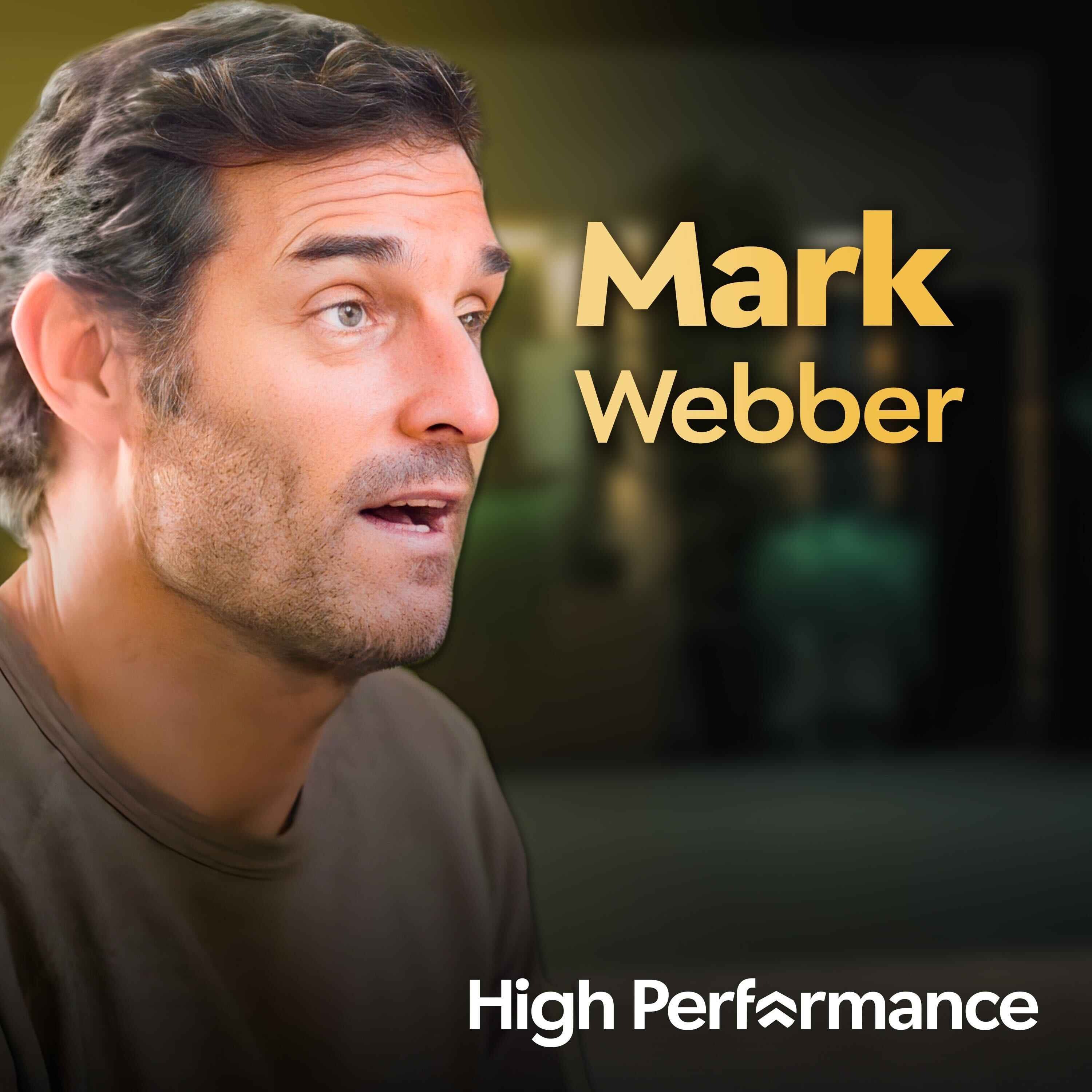
In this episode, hosts Jake Humphrey and Damian Hughes engage in a candid conversation with Mark Webber, a renowned Formula One driver who achieved significant success despite facing numerous challenges. The discussion revolves around Webber's experiences at Red Bull, his rivalry with teammate Sebastian Vettel, and the dynamics of being a high-stakes athlete in a competitive environment.
Written by AI. May contain mistakes.
Mark shares insights on the pressure and politics within Red Bull Racing.
“When I went to Red Bull Racing then was the orientation around goals is very clear.”
Mark talks about the political landscape of Formula One and personal experiences with team dynamics.
“You're hunting that first win in Formula One.”
Mark reflects on how he navigated relationships in a high-stakes environment.
Mark discusses the unique culture at Red Bull and its impact on performance.
“So would you give us an example of a specific time where you'd said something that in hindsight, you were sorry you'd said it and how did you repair it?”
Mark reflects on the pressure of leading a team and their expectations.
“And that was where the spring and the step come from because we're like, okay, well, and that was the recruitment.”
Mark emphasizes the importance of communication and feedback in racing.
“You know, like there's obviously, you know, often, of course, they're all in relationships and you know that there's a lot of trust and buying at home on them working those sort of hours.”
Learn about the intense pressure and communication dynamics in F1 teams.
Discover the importance of transparency and effective communication in any field.
“the correct lines of of communication through to then so would you just give total honesty even if it was a painful thing for someone to hear because that's kind of what you have to do Yes.”
Understand the significance of self-awareness and being present in the moment.
“So, and for me, the best advice that I gave, I think that, I think being true to yourself is important.”
Explore the challenges of being teammates and competitors in F1.
“I think, you know, people can take baggage on for the future and really, oh, what's going to happen next November?”
Learn how to handle internal team politics and biases in high-stakes environments.
“But I think that in the team, keeping the glue, the operation together was certainly extremely challenging.”
Gain insights on maintaining mental strength amidst workplace challenges.
“If I show any signs of – you could argue there were signs of weakness, but in terms of it was – some of it got out into the media, obviously, at the time.”
Understand how team decisions can affect individual drivers' performance.
“How many cards do you have at the table to negotiate to change whatever you're not happy about?”
Learn the importance of patience and long-term thinking in a competitive career.
Learn how professional athletes maintain perspective and navigate career challenges.
“You've got to be a bit clever and say, look, this is fighting for victories.”
Understand the significance of honesty and communication in team settings.
“There was a brilliant moment where you wrote a letter to the team, didn't you?”
Gain insights into the challenges faced during a racing career and the importance of resilience.
“and probably didn't get the answer that I wanted.”
Learn how facing adversity can lead to personal growth and fulfillment.
“We're not, you know, this is not lawn bowls, mate.”
Explore different perspectives on wealth and true fulfillment in life.
“You just know that you can relate to it, but there's absolutely no way in the world that you could ever do it.”
Discover how to manage relationships when personal and professional lives intersect.
“and deal with all those sponsors as a young driver to get into F1.”
Mark discusses balancing his roles as a husband and manager with Anne.
“There's been some testing moments around the commercial situation and the private stuff in terms of just, I mean, stuff that she's encouraging you to do.”
Mark reflects on his career, performance, and the lessons learned over time.
“Was that important to you, just to have a very small unit of people you really trust?”
Mark answers quickfire questions, sharing his core values and thoughts on legacy.
“You know, I think, you know, driving 2010, like those cars for there, when I was absolutely at the peak of my career, that was a beautiful moment.”
The hosts discuss Mark's insights and his journey in Formula 1.
“And you know how I talk about my parents giving us the two important things in life, roots and wings?”

Get the gist, explore an idea or ask about something said.
 Claude
On The High Performance Podcast, what are the key points of this episode?
Searching your listeningAutomatic transcript. May contain errors.
0:02When you're getting right to the end of a championship, you start to see shadows, you start to see, you know, is he with me or is he not with me? You know, is she with me or what, you know, where are their loyalties really? How good did it feel though when you said not bad for a number two driver? It was good, yeah, of course, yeah. Well, I had a one to say it the day before, but, you know, I had to wait another day until I won. This is not lawn bowls, mate, not anything against people out there playing lawn bowls, but there was a lot at stake. And of course, with a lot at stake, there's going to be feathers ruffled every now and again.
0:30What does it actually feel like to be the best in the world and still feel like you're being treated as second best? Well, today's guest is Mark Webber, nine-time Formula One Grand Prix winner. He got 42 podiums in his career. He became the world endurance champion. Without question, one of the nicest guys that I met in my time working in Formula One. And as a guy, he is one of the most respected racing drivers of his generation. But you know what makes his story extraordinary? It isn't the trophies. It's how he got them. He had a teammate in Sebastian Vettel, who he believed the team favoured at every turn, whether that's engines being turned down, new front wings being handed to the other car, a championship slipping away in the final races of the season.
1:12You know, it got so bad that Mark did something almost unheard of in Formula One. Wrote a private letter directly to the man who ran the entire operation, Dietrich Mateschitz. In this conversation, Mark opens up about all of it. What it took to stay in the fight, how he turned the anger into fuel, why he ended up winning nine Grand Prix in a car some people didn't even want him to drive, and what it really felt like to, in his words, be a number two driver. This is one of my favorite conversations on the show, as we welcome to high performance, Mr. Ozzy Gurrit himself, the brilliant Mark Webber.
1:51When I went to Red Bull Racing then was the orientation around goals is very clear. We're here to win. if you want to be in this program this is what we're going to do and we want to go on we're going to win world championships and then when you you hire the best in the world in key departments then your recruiting becomes very very and very easy but then or easier but then you have to deliver my god you have to deliver you know because it's like we've got everything sorted out and obviously the boss of red ball detrick punishes he did it's like you know there's no excuses now we have got the adrian newys we've got you know the the best people in all the positions We've got the fastest pit stops in the world, which took time.
2:28That took a lot of time. But we are, Red Bull racing still to this day, are intimidating in the pit lane. Not many teams want to take them on in the pit lane, and that takes 1 ,000 pit stops practice a year probably at the factory. And those guys want to be on that car at that time because they want the pressure and the accountability of making sure that pit stop goes smooth. And that sound, again, it's the big little things. It's 1.8 seconds or two seconds. But if you get it wrong, you know, it's not a great moment until the grandkids. So you've arrived at Red Bull. You've had your time at Williams.
3:03You're hunting that first win in Formula One. You're hungry for it. You've had to go through all sorts of battles to get to Formula One in the first place. And then you realize that it's not as pure as just driving a car and that it gets political and you're a pawn in the game. I mean, I remember one of the team bosses in my first year in Formula One saying, do you want to come and meet the light bulb and i said how do you mean and he goes well that's the driver as soon as he goes out we'll screw another one in yeah and that and it's a very interesting position then to be in isn't it because when you're a driver in for me when you're everything and nothing you're right at the center of it but they can just remove you and there is someone else there's a queue of them oh yeah waiting to do it do you remember when you first became aware of that side of formula i guess it probably was at red bull that the political element of being a formula on driver came to the fore?
3:53Yeah. I think middle of the field, there is some politics, but when you're at the front going for Grand Prix victories and World Championships, it does become a little bit more prevalent in terms of what's at stake in terms of some of the politics around that. And that could be good for you as well, like equipment and engines and rules. So Red Bull or any team, you've got two teams. So you could say, well, that's political because you've got two teams on the field and they've got more votes. and you know so it's like i would benefit from that um and when it come to you know some of your press positions or your statements it's like mate don't go down that alley because we're doing something else further down the road which would be assistance to everything else so you you're to navigate your way through all of those things whether it's stuff that gets in the public or stuff that were you equipped for that for that side of the job well you got to learn fast mate yeah and obviously i wasn't overly pc um so that was sometimes probably wasn't great for me um in that sport I could have been probably a little bit more smoother on basically keeping people happier longer or you know putting more effort into the relationships that I found a bit shallow it's like well this is just not it's not my type of people and I'm not going to put the relationship in there and that was something I probably could have been better at but I still to this day feel happy with that's how I handle it because that's what type of guy I am there's a lot at stake here and and and you you sort of find out that yeah we're right at the arrowhead of this juggernaut of a business it is huge and yeah you are not a light bulb but you are nearly nearly a light bulb mate so when you do things like um did you say good job we're not designing planes or something about the rebel earlier we don't design helicopters yeah because because it kept breaking down and you were basically insinuating if this was a helicopter that broke down it would be a serious problem yeah how did that kind of thing get dealt with internally with race and drivers adrenaline obviously it's it's it's it's very very high obviously when driving the cars and there's a lot of things that we say of course in the heat of the moment which you like you know and there's the list goes on all of us guys that had long careers that you could pull out a you know a catalog of punchy statements on the radio which you probably might not have foreseen being the best thing to say at that time but you put so much in and you can see that other teams in this case for example if other teams are super reliable and and and and again back to that word consistent then you've got this a car that is incredibly unreliable and not dangerous but you know parts failing and things like it's like well yeah you know and because i know a little bit about aviation it's like well you know how do we get it right in aviation but in this stuff we can't because obviously these are virtually prototyped cars anyway and there's a lot more risk in design and concept of course but um yeah so there has been absolutely several moments where i've been hard on staff or you've called someone out and sometimes it can be irreparable sometimes the relationships it can be really cutting and and it might not have gone down well um but you get you You could get called in on something like that and just say, look, you know, that's obviously – that one line has affected 300 people and that wasn't clever.
6:46You know, so then you've got to get retracted. Because, of course, when you're in the car, as I say, you say things which, you know, you get the frustration levels. But it's from a desire to win though, isn't it? That's the – Of course. And you have this flash moment of whether it's a, you know, 50-50 tackle, you know, whether it's, you know, we see it in football, don't we? You know, guys just have this rash decision, just rush of blood. And in our turn, we can't do that. we can't move anymore. We're strapped into that car. The only thing we can talk, we can just shout something at random, which we often do.
7:25If you've used Babbel, you would. Babbel's conversation-based technique teaches you useful words and phrases to get you speaking quickly about the things you actually talk about in the real world. With lessons handcrafted by over 200 language experts and voiced by real native speakers, Babbel is like having a private tutor in your pocket. Start speaking with Babbel today. Get up to 55 % off your Babbel subscription right now at babbel.com slash acast. Spelled B-A-B-B-E-L dot com slash acast. Rules and restrictions may apply. What's up? It's Sean Linda from Two Black Guys of Good Credit. If managed supply runs is still on your to-do list, Here's your sign to upgrade.
8:08Walmart Business has the tech, tools, and services that make it ridiculously easy to stock up for your office or team. Think scheduled deliveries, multi-user accounts, and even IT setup. Bonus, with a Walmart Business Plus membership, you get free shipping, spend analytics, and 2 % rewards. Join the smart way to shop at business.walmart.com. Terms apply. Dell PCs with Intel Inside are built for the moments that matter, for the moments you plan. and the ones you don't. They're built for the busy days that turn into all-night study sessions, the moment you're working from a cafe and realize that every outlet's taken, the times you're deep in your flow and the absolute last thing you need is an auto-update throwing off your momentum.
8:50Well, that's why Dell builds tech that adapts to the way that you actually work. Built with a long-lasting battery so you're not scrambling for the closest outlet and built-in intelligence that makes updates around your schedule, not in the middle of it. They don't build tech for tech's sake. They build it for you. Find technology built for the way you work at dell.com forward slash XPS. Built for you.
9:17Jake Humphrey: So would you give us an example of a specific time where you'd said something that in hindsight, you were sorry you'd said it and how did you repair it? Yeah, it would have been definitely at a mechanic or something around, you know, pit stops or you're personally calling someone out for being massively subpar. And you can be hastily in that after a race and you can go and find them and you can call them out and obviously and then, of course, you get to it and you work out that there's always a little bit of a background to why that was a subpar performance or something happened for them on that day for that to have happened.
9:55So, of course, you cool down. there is a cooling down period and you and you and you know but as long as it's you know not a repeated you know yeah you can live with you know if it's if it's got it's a one-off you know and you're just like yeah sometimes it's the other way you know you go in there like saying guys you give an encouragement you know if someone actually has a weird weirdly abnormal mistake or something you're like this is that's unlike him or unlike her that's really strange and then it's like you know and then you would go to them and i would see that as an opportunity to absolutely give encouragement that you know if the consistency has been phenomenal and you have this little wobble go there and say look got your back all good we have the form cards phenomenal all good you know because again why because they're they're so they've got so much pride in their work you know and for them to have a wobble is it hurts them you know and they're the characters you want there's something magical though from the outside looking in at the red bull culture like we were all quite jealous of it because it looked like everyone was having a party it was brilliant all the time i know and we can probably talk about them there are some elements of it that are not fantastic but there was something that they did that was totally different to the rest of the whole formula one paddock and i just wonder what what it was like being involved in that culture of the whole red bull brand and how much that was kind of inspiring for you to see someone like dietrich matterships is a great example look what he's built that empire that he's created at red bull for you to see that and to feel your part of it i think the freshness mate the freshness was great um i think there was one year i mean this is probably going to be horrendous misquote but there was something around the amount of tens of thousands of hours that were done extra hours in one year unpaid so people didn't get paid for that work but they were just they just loved their work and they loved going to work and they loved you know because we were the underdogs initially as you know mate and we wanted to you know ruffle some feathers and that was the attitude within the team we are going to ultimately at some point we're going to beat all these guys, Ferrari, all these huge names.
11:53And that was where the spring and the step come from because we're like, okay, well, and that was the recruitment. And that was like, you know, this is the goal and these are the individuals we want. And the mean line of the age was pretty low, I think in terms of, you know, so the trust and then in building that belief with inside those young individuals was great. But you're right, mate, from the top, you know, Dietrich would come to one race a year probably um so not many um but i think just you know under the you know for example like jonathan wheatley who's the team manager doing all the pit stops and sort of you know he's you know the standards with inside the car preparation and sometimes i'd come back my wife's a manchester united fan so we go at old traffic and we're driving home and i'd you know super late and i'd get some takeaway pizzas 30 takeaway pizzas or 20 takeaway pizzas in january and february is when i race they're getting the cars ready for the new season i'd go in and to have at the time probably one of the one of one of not the but one of the highest paid members of staff are coming with the peaches and just said that mate i didn't see it like wasn't like you know i'm better than them these guys are the absolute warriors of our team they're they're one o 'clock in the morning preparing these cars go in and just they come alive you know it's just it was just brilliant for me and i left there and answered you could hardly sleep coming back saying that they're up there preparing these cars with meticulous passion and enthusiasm and the buying from home too, mate.
13:18You know, like there's obviously, you know, often, of course, they're all in relationships and you know that there's a lot of trust and buying at home on them working those sort of hours. So that was extremely enjoyable, something I've never really, well, have sort of experienced since, but when you get that level of trust inside a team, it's fantastic.
13:39Jake Humphrey: again so when you go in and you see these guys sort of working in their three small hours and did it add to the weight of responsibility that you had as the arrowhead of the team or did it inspire you yeah it was it was i mean i know this is a line that's been using from other sports people but you know the pressure is the privilege obviously it's sort of like you know when you turn up and you know you're walking to the garage so you've i've seen the journey this car's gone on and the deadlines and the hours that's gone into it and you and you roll down the pit lane for the first time and and this is god knows how many pieces are in an f1 car i'm not even trying to guess how many thousands of pieces but this the the timeline of all these things arriving at the same time pretty much within a day to then for us to drive the next day and they're all waiting they're hanging on every word they're just waiting for what you want to say about it and what can we do to improve it they're already you know frothing just like what can we do to improve you know he's going to have some feedback it's not going to be perfect out of the box what can we improve how's the seat how's the seat belts how's the aerodynamics what are the brakes like what's the electronics like you know what we got here what's your view like where's the little windscreen what's the steering you got all and it's just like a flood of information you got these people coming in to try and make your job better because obviously if you're more comfortable and you can give a better performance of course it's a reflection of their efforts and what did that period teach you about communication so the people listen to this that are not in formula one but actually it makes no odds what sport or business you're in getting the answers to those questions is what every business wants to be faster and better and you're involved in other businesses now so what were your lessons in strong powerful communication from the formula one years yeah i think obviously transparency has as fast and as quick as it can be to have the correct lines of of communication through to then so would you just give total honesty even if it was a painful thing for someone to hear because that's kind of what you have to do Yes.
15:30I mean, yes, if you can. I mean, there might be a way to soften the blow to try and give the encouragement or, you know, not, you know, clip their wings too hard and demotivate them. But you're finding that the right way to communicate through the right channels because obviously, again, it can get, you know, stories can change through big companies. It's like all these, you know, and it can be interpreted in different ways. So, you've got to be really mindful of that, I think. but I think yeah I think having that ability to to to get into the right channels and know it's going to be spreading to the right individuals in the right in the right way and that of again is and a culture is not the trust of the people underneath I'm not saying you know god I'm not the boss but you're saying as a driver because I can take it personal of course you know if you are attacking a part of the business whether it's in the you mentioned email whether it's marketing or whether it's, you know, budget control or whether it's whatever it is, social media, whatever, if someone has a negative opinion on how the trajectory looks, then, of course, that individual naturally can often take it as a bit of an uppercut.
16:34But if you take it as it's a two-way street here, you know, please, let's, both of us, what can I do to make your job easier? You know, how can I continue to strive forward? And I think that's, transparency is important. is important. Deal with it quickly. I mean, you don't let things fester. Gut feel is always pretty big. Gut feel is massive. I think that that's one of my biggest lessons is gut feel has generally been pretty right.
17:00Jake Humphrey: So what is the best piece of feedback that you've ever given and received that's made the biggest difference to? You never know who's watching. There's always someone watching that you might not know is watching or watching your attitude or how you behave that can have an influence or you can influence them or it's the positive effect on your attitude day to day because you're always sort of like when I was racing but this individual said you're sort of now, you're always on show in a way and you've got to really respect that and make sure that you are respectful of how you are behaving because people will draw conclusions pretty quickly so you're in control of all of those things.
17:44So, and for me, the best advice that I gave, I think that, I think being true to yourself is important. I think you can, you know, it's very easy now with, you know, with all this social media stuff and, you know, this, you know, shallow settings that we can have and the delusional fact of where you think you are mentally or what you're up to. the accountability and control in yourself is important and you've got to take ownership and really where you can surround yourself with people that are on your journey and have that belief in you and yes, put you in deep order every now and again because you need to be put out of our comfort zone.
18:19If you just want to cruise around I know you've had Ian Thorpe on here but if Thorpe just cruised around in the shallow end his whole life Ian wouldn't have the career that he had. So I think that being happy to take the deeper waters when you can with the right people around you and stay present. I think staying present is important. I think, you know, people can take baggage on for the future and really, oh, what's going to happen next November? I'm not sure. Well, maybe give 100 % today, you know, you're a good chance it's going to be okay. What's the challenge though when you're living in the present is all of the stuff surrounding a Formula One driver in the team.
18:53I mean, Redwood was a brilliant period for you. That's where all your wins came. You were at the absolute top of your game and there was great stuff there. the challenge was your teammate sebastian vettel can you take us inside what it's like to be in the same team everyone's pulling in the same direction but you are absolutely the most direct competitor of the person who's in the team alongside you and just how you deal with that because it's the weirdest thing yeah it's kind of almost unique to formula one isn't it yeah horrible jake actually because i think it's better to have a competitor in another team than obviously if you both of you are firing pretty well um and it was uncharted waters for red bulls the first time you know we'd ever been through it yes individuals had been you know in terms of we had you know obviously phenomenal individuals in the team that had seen this play out in other teams but it's the first time that we had to deal with it in our own team and the first time for me and the first time for Sebastian so both as drivers we hadn't we're both going for our first world title in 2010 so really really challenging from a managing perspective because you get divide fight within the organization.
19:55It's just really hard for them to contribute evenly across both sides. And keep in mind, we had just two small characters like Lewis Hamilton and Alonzo also in the fight. So they weren't, you know, easy to handle either. So managing the individuals on what you saw their team and our team, you know, it shouldn't be like that. But as you're saying, it becomes like that. And when you're getting right to the end of a championship, you start to see shadows. You start to see, you know, is he with me or is he not with me? You know, is she with me or what, you know, what's, where are their loyalties really?
20:27You know, it really comes down to - You talk about other members of the team. Yeah, that's right. Yeah, yeah. Other members. Are they really, are they neutral? Are they really neutral or is it a bit of a bias? Because personally, mate, it's just human fact that we have biases. We have favorites. That's how we are. You know, we just do gravitate to one or the other in some way. So the challenging thing, obviously, it was said was obviously, you know, he was funded by Red Bull from an early age and I wasn't. I was an old dog that was helping the team out at a point where it was like maybe was I a little bit inconvenient to fighting for that world title?
20:59This wasn't really what the playbook was supposed to look like. So that's the crash course on that in terms of how I went deep into the championship. We took it to the last race, as you know. But I think that in the team, keeping the glue, the operation together was certainly extremely challenging. and I think there was a lot of lessons from that and there was some blowback. There were some people that left, people that weren't happy with somehow the things were handled and tensions went very, very high. I think for people that are listening to this that are not Formula One aficionados, right, let's just make it clear the sort of things that were going on.
21:37I mean, a member of the engine department told you that when you're behind Sebastian, the engines get turned down, right, so you can't have a crack at him. You only communicate really with your own engineer on the pit wall. Kyron it was who worked with you and you ended up talking in code so that if it was a message from the team you knew it wasn't that's true isn't it you knew it wasn't a message from Kyron yeah in other words if it was like a team order he didn't want to be the one yeah to deliver that message Sebastian had what he believed was a cracked chassis or in fact the team apparently had told him it was a cracked chassis right to make him feel better at being beaten by you yeah you then took on the cracked chassis and won the British Grand Prix with it a new wing came to the team and there was one wing and two drivers and he was given the wing.
22:19Yeah. Yeah. When all these things happen again and again and again, I know people listen to this in their own workplace or in their own relationships with people. They feel they're in a kind of a similar position maybe to you. What were the mental tools that you came up with to deal with this? Yeah. Massive, massive. And how hard was it, I guess? Yeah, really hard. And that sounds like, oh, poor Mark. You've rattled a lot of stuff off there, mate. But obviously it's the fine. it's really really fine margin to think you know is was there as much in that as i thought or was there you know but ultimately you just sort of feel there could be a little bit of a tide here that you're so you're slightly going against a couple of knots you know like if there's zero knots over there and you've got a couple of knots of stream against you like this is just a little bit harder than it needs to be and like i said i didn't have the you know the most talent in the world but i feel that that there was parts of that those things that you mentioned like every now and again i just thought that is that really correct i'm not sure you're having self-doubt then as well yeah you're just like and then that's energy because you're just like you know do you have to do a bit of admin in the background and sort of you know mop up a bit of stuff and say is this right is how it is and you know so that's that's challenging what mental tools do you use i think that you know i i i turned it into fuel where i could for the fire and sort of saying i've just I just have to continue to do whatever I can to work with the tools I've got to keep swinging hard.
23:46I've got to just keep going. If I show any signs of – you could argue there were signs of weakness, but in terms of it was – some of it got out into the media, obviously, at the time. What, for weakness from you? No, in terms of not bad for number two driver or for the wing stuff. So there were some explosions in terms of a bit of a crack at the team. um but ultimately how good did it feel though when you said not bad for a number two driver did it feel good yeah of course yeah well i had one to say it the day before but you know i had to wait another day until i won but um it was yeah it was did you feel like that well two driver yeah i was i mean that first part of 10 i just felt there was lots of things that were just like you know i had led the championship and i'm just like this is how is this you know give us a sniff you know instead of you know you know there was a gearbox penalty in canada after i won monaco and it's like this gearbox penalty okay this is interesting and then at the end of that race i caught sebastian i couldn't fight him you know it's like well i had the penalty and now i want to pass him it's like no we've got to call the race off so anyway there was you know mate spilled milk all that whatever but it's just at that point you just feel a thing you know to answer your question in a corporate setting if you feel like you're and there can be of course there can be naturally there can be politics in the corporate so we know that you know if you feel you're giving the same effort and the same sort of performance and there's someone else that's got some other different lane that they're operating in and sort of seem to be you know steaming through different sort of challenges you're dealing with i think that ultimately you will know when enough is enough is this is this is this correct again back to the gut feel i was always on single year contracts at you know which is you know again that wasn't common knowledge for for a long time but until sort of at the end but it was just like again that was it is what it was you know and we had a car at the front we both were good for each other so in employment effect are you good for each other you serve a purpose in that corporate setting.
25:31How many cards do you have at the table to negotiate to change whatever you're not happy about? What can you do to influence, to make yourself a little bit happy, to perform better in that role? Now, is it financial? Is it best working hours or whatever it is, or you want to report to someone different? You've obviously got to start to tick those off and pick them off tactically, what you feel is best for you, but your gut feel is generally pretty close in my opinion and patience you got to be patient about you know hastily calls I mean I could have really trashed my own career several times but I just needed to be a deep breath patience and what was the lowest low point for you I think losing the championship in 10 was really hard I think that was um yeah in Abu Dhabi at you know and I think well it was probably Singapore Monza time where they were just keeping said back in the game and we could have probably Brazil we could have shut it off even a bit earlier because we kept Fernando we're prepared to take the risk to probably lose it to Fernando and Lewis or lose it to Fernando than have both of us have a smaller chance instead of me having a bigger chance to do it but that was like well yeah that's right you mean they would rather have Fernando have won a race than you no the title the title like yeah slim chance for Seb staying in it then probably we're gonna knock it on the head and allowing the two of you to race yeah you'd have a real crack at it yeah yeah so and that was brazil i had a water pressure problem whatever at the end of the race like okay whatever so it was i mean it was what it was but it's it's still obviously a talking point and and it was it was a it was a fascinating time in the team's learning curve but can i go back to that where
27:09Jake Humphrey: you said i could have trashed my career several times but i took a deep breath i'm really intrigued by that because it must have felt like easy to have spoke about your grievances or i think the short fuse factor mate is a problem so that the short fuse uh and knowing you've got a big team of people behind you and and most of them actually have your best interests at heart um but you just once it's out in the public environment you know it it can be hard for you to pull it back in and and patch that up so of course the people around me have been good at that in terms of making sure that look you've this is the big picture here long game um and loyalty you know and look at the end of that i'm still with red bull now like the brand itself has been brilliant the oration operations were certainly challenging for us and in the end um you know as jake said what did you learn to get better at it so what sort of tips did you or techniques did you employ to get better at holding your tongue and and gaining greater perspective yeah i think just what sort of type rope you're on as a professional i think that you you you realize that there's some big gaps you know and and you're still relatively young and you just feel i think you're in such a bubble when you're when you're a professional athlete that there's still going to be infinite opportunities you know after that right it's not the case you've got to like anything you've got to continue to work hard at any other opportunities whether it's in your career or post your post your career you got to really graft and find because there's a lot of seriously good good operators out there and doing some really good stuff and they're applying themselves brilliantly.
28:36You've got to be a bit clever and say, look, this is fighting for victories. Ultimately, the team environment is still something that I enjoyed. You know, it was still, you know, we had our flashpoints, but it was still something you like, you know, be careful. Don't bloody think it's always greener somewhere else because it's very, very easy to be, you know, thinking it is and, you know, you arrive at this new destination. It's like, well, yeah, that house looks a bit different. It looks nice on the outside, but there's freaking no furniture. I don't know about you, but I really love keeping my money where I can actually see it.
29:08Unfortunately, traditional big wireless companies seem to like hanging on to my money for me. For years, I was overpaying for wireless simply because it's what I used to do. I didn't really question the high monthly bill, the extra fees, or those free perks that somehow end up costing me. Eventually, I realized it didn't make sense, so I switched to Mint Mobile. Mint exists so that you can save money on your phone bill. Plan Start for just 15 bucks a month. You get high-speed data and unlimited talk and text on the nation's largest 5G network. Honestly, the wireless service is just as good as the traditional big carriers.
29:42You can keep your own phone and your number, activate with eSIM in minutes, and start saving right away. So if you like your money, Mint Mobile is for you. Shop plans at mintmobile.com slash HPP. That's mintmobile.com slash HPP. upfront payment of$45 for three months five gigabyte plan required equivalent to$15 a month new customer offer for first three months only then full price plan options available taxes and fees extra see Mint Mobile for details this episode is brought to you in association with Claude.ai now if there's one thing that I'm proud of here on High Performance it's that our conversations are real they're honest, they're impactful you can trust them but that doesn't mean that we can't use AI and I've actually really enjoyed creating a template for an interview and then asking AI some pretty complex questions like how can I hone this?
30:29How can I make it better? How can the things that I want to talk about be even more impactful? Because I think that AI isn't just about making your workflow more seamless or more easy. It's also about increasing the amount of impact that you have in the world. And Claude is the AI for minds that don't stop at good enough. It's the collaborator that actually understands your entire workflow and thinks with you. Whether you're debugging code at midnight or strategizing your next business move, Claude extends your thinking to tackle the problems that matter. I also love the fact that Claude can do some really deep research for me.
31:00I'm talking about research for guests on this show that would have taken hours, maybe even days, can be done in seconds. And also, Cowork brings Claude Codes agentic power to your desktop. There's no terminal required, so anyone can use and have Claude do real work. Point it to a folder on your computer or add connectors like Google Drive and Gmail. Describe what you need, and it just handles the rest, like organizing files, building spreadsheets, drafting reports or scattered notes. Queue up tasks and come back to finished work. Are you ready to tackle bigger problems? Get started with Claude today at claude.ai slash performance.
31:34That's claude.ai slash performance. Oh, and check out Claude Pro, which includes access to all the features mentioned in today's episode. Claude.ai slash performance. Parles-tu français? Hablas espagnol? Parli italiano? If you've used Babbel, you would. Babbel's conversation-based technique teaches you useful words and phrases to get you speaking quickly about the things you actually talk about in the real world. With lessons handcrafted by over 200 language experts and voiced by real native speakers, Babbel is like having a private tutor in your pocket. Start speaking with Babbel today. Get up to 55 % off your Babbel subscription right now at babbel.com slash acast.
32:17spelled B-A-B-B-E-L dot com slash ACAST. Rules and restrictions may apply.
32:30There was a brilliant moment where you wrote a letter to the team, didn't you? Depends who brilliant is brilliant for who. All right, interesting. A fascinating moment. How was that received? Very good from Dietrich, but horrible at Milton Keynes, yeah. Why would that be though? Because obviously it wasn't a public letter. it wasn't shared with 400 members of staff yeah it was just given directly to the people where it almost felt like that was you one guy so straight to one person yeah to the boss who paid my bills yeah why would that be badly received do you know what i mean by that damien because it's like all you want is honesty and you want accountability and you want openness and you want truth from the people you employ i can totally understand if it was you'd held it up in the pit lane and said hey world's media come and listen to this letter wasn't an open letter i can get that but they were private letters to be badly received.
33:15It's interesting, isn't it? Yeah, I just think it probably put a bit of heat on people that were operationally sort of running the team at the time and just Dietrich wanted answers. Well, I wanted answers. So what was the context of the last month? It was just some of the, again, the operations of how, I suppose, the team was run at the time and there was some challenging moments, again, within inter-team rivalry and I just took it upon myself to write a letter to Dietrich, who's obviously the boss of all of us. He is the boss. And it was one letter that went to Austria. And he, of course, filtered it back down into senior management.
33:54And they felt undermined maybe that you'd gone right to the top? Yeah. Well, I'd also played those cards earlier and probably didn't get the answer that I wanted. So I obviously went to the main man. And what were you wanting to achieve there? I suppose, mate, I just wanted to have him understand. like it made me feel better that like is this is this you know can you get better answers than i can is that possible is there other agendas here you know i just need more answers around certain topics and and he did as well in some ways you know because people listening to this well hang on he's the boss he should be across everything this is a guy that's across you know red bull's a big organization and the racing component was was yes a huge facet of the business but it was one facet and he's not day-to-day inside the team so obviously other people you know running that so So he was just bringing the image of question to say, do we need to understand this a bit more?
34:39And that didn't go down well, obviously, with senior management whatsoever. But when you look at your career, the best you drove and the best results at the moment you were at your peak was this period where you had your back against the wall and you felt like a number two driver and you felt like there wasn't equality or fairness. And I think this is a really good reminder for people who are listening to this that what isn't easy for you can still be good for you. And I think maybe you disagree with this. I think looking at it from the outside, it was good for you to have your back against the wall as painful as it was at times.
35:11Yeah. Yeah. I think you're right, mate. I think I did enjoy the odds against me, but I think there was times where I felt like it was - Too much. Yeah. Sometimes like, oh, I got to shoulder this a bit more. Okay. That's nearly too much. And of course it was all on me. It was no one else could actually shoulder that in terms of some of the things I had to deal with. But look, mate, we know this is not a Red Bull slagging. It's just talking about, you know, cultures, employment, a member of a team, one member of a huge team. And I'm a better man for, you know, having driven in Formula One, having driven for Red Bull, all the scenarios.
35:49I believe I enjoy a good relationship with everyone to this day. I think it was good for you, you know. Absolutely. It almost drew the best out of you. Yeah, and absolutely. And it's not like the end of the day. We're not, you know, this is not lawn bowls, mate. Not anything against people out there play lawn bowls. But there was a lot at stake. And, of course, with a lot at stake, there's going to be feathers ruffled every now and again, you know. And I was just had to be part of that. And, you know, people, you know, again, mechanics or engineers or people, they're still to this day, some of those guys carry that, which is great, which is a good thing because that's how much it meant to all of us, you know.
36:22And the fine margins are top flight sport. So, you know, sometimes I'm out walking the dogs and I go, well, you know, look, you come from Queanbeyan, no sponsorship really whatsoever. had some good little support here and there on the way for some key individuals which is pivotal flukes and results when i really needed them um i was the wrong size for f1 i was always nine kilos overweight because i couldn't lose any more weight i was too tall and all these things it's like well ultimately mate you know you actually did do okay you know it's fine to look back but you're always human nature is you always want more because i mean when i won the first race that's it everyone else had a good day there was no attrition it was a fair victory off pole brilliant absolutely stoked that's it brilliant and then monday you're like wouldn't two be good yeah two human nature yeah yeah and valentina rossi sent me one when i did win my second race he goes fantastic two's a double a one yeah that's human nature we always want more so and where are you up with it now mentally very good mate stoked very good you know more around the people i worked with the journey i went on whether it's with travel whether it's the the professional people i worked with mate would never ever have happened if I didn't compete at that level.
37:30So I've been absolutely stoked with my career and perspective I think has also been good. You know, we've lost some mates in the, you know, racing, which has been tragic, you know, so you get this real, you know, the business side of it. Yeah, the HR side of it. It's actually a very good sport in that sense in terms of what it gave me and it continues, you know, you still go around and people still love this and oh, we love watching your race, whether it's Brazil or Spain. And that's nice because it's not about, it's a reflection of the sport. It's not a reflection of me as an individual. It's a reflection of actually car racing is still, people still love watching these gladiators or these, what they've perceived as gladiators, things that they can't do.
38:10That's what sport should be. I love watching tennis. I love watching football. I love watching sports. And that's the best of the best. You just know that you can relate to it, but there's absolutely no way in the world that you could ever do it. and that's what my skill in the end was honed through working with phenomenal people i'm blessed
38:27Jake Humphrey: for that there was a lovely phrase like my favorite phrase when i was reading about your career mark was a quote from a bbc journalist that said the best thing about you was that despite all the glamour and the glitz of formula one and the career that you've had that you remain completely unaffected by it you're still the boy from queanbeyan yeah from queanbeyan how did you keep your feet on the ground then the upbringing i suppose i think that um i don't know rural australia is you know it's it's you know i'm not gonna throw other other people under the bus here but i think i was just fortunate where i grew up look i have got choices in my life now don't get me wrong i i can i can do things differently to to what i if i didn't race in formula one but i don't take that as you know i i try to be i just do what i do and people say that's that's nice you seem to operate on gut feel quite a lot of the time yeah yeah whatever if you're on a flight and someone wants a photo or autograph, you've got no idea what they're going through.
39:20No idea. And it's just nice if you can, it takes five seconds and it's just, if you can stay relatively, you know, look, I love the simple things in life, mate. I love riding my motorbike now. I love my dogs and I don't need much at all to make me happy, which is great. I love a little log fire and, you know, a couple of mates, we'll have a couple of whiskeys and we're just like, I try to keep life pretty uncomplicated. I'm not that complicated because I had complications in terms As a professional, you've got to put a lot into it. And that was not easy for relationships. It was not easy for family.
39:49It was not easy for that. And people talk about sacrifices. It's a word that I hate. I made all these sacrifices. Well, for me, it was all upside. People say, oh, you did so well with all these sacrifices. Oh, it's bullshit. Because you've got to step up. And this is, for me, it was all like, this is all upside. Every single thing, if I nail this, it's not a sacrifice. It was just something that needed to be done. But also, it's about living a really interesting life. You didn't have to raise sponsorship and deal with all those sponsors as a young driver to get into F1. You got to. You didn't have to deal with all the politics, Williams and Red Bull and in the overall Formula 1 world.
40:33You got to do that. You didn't have to go toe-to-toe with a world champion. You got to. It's about realizing that among all the challenges that exist in life, and we can all look at everything in our lives as a challenge or look at all as an opportunity. Yeah. That's right, mate. You know, possibilities, not problems in terms of, you know, finding the way to be positive. You know, there's always, as you say, there's currents and little headwinds that come along. That's life. Look, what is wealthy? Is wealthy money or wealthy with family or wealth? Like, well, how is wealth measured? But people that have a tremendous amount of finance behind them, you know, there's a lot out there that aren't overly happy with their life, you know, because there's whatever it is.
41:10they've had baggage from the past or wrong decisions or now it's, you know, perceptions or, you know, and there's a lot of cracking individuals that have kicked a lot of goals and they're still true to themselves, which is awesome. So, you're right, mate, having that, just the fullness, the life, the ups and downs, seeing the little uppercuts, getting back up and that makes you feel, you know, feel good and giving back a bit, mate, like that makes me feel, you know, I've done some stuff in Australia which I'm proud of and whether it's building some units for some kids with leukemia that are rural based can't have their siblings and families support them because they're from rural areas and having the units close by to the clinics makes you feel mega are we banging the drums about it no but that that is something where you you feel they're just a little snippet of makes me feel good and how happy are you the recreational component of my life's very important I love sometimes even being on my own I'll go on the motorbike for 10 days and just hit the Alps and or Scotland or whatever you know that makes me feel I enjoy that the planning and you know I think there's some power in yeah being happy with yourself and just going out and do those things alone so but obviously Annie and I we we do some great things together and and yeah
42:19Jake Humphrey: it's enjoyable so can I ask you about Anne I mean apart from being a class act because she's a United fan the bit I'm interested in is that she's been both your manager and your wife yeah and I'm interested in how you manage those two relationships. Dangerous combo, yeah. There's been some testing moments around the commercial situation and the private stuff in terms of just, I mean, stuff that she's encouraging you to do. And of course, you know, I mean, we rarely argue, very rarely do we argue, but sometimes it's around, not now, because obviously my days are over in terms of most of the decisions we make now are fun and we're getting to things with our eyes wide open.
42:55We enjoy doing that. But like before it was like, for example, like the Australian Grand Prix all these you know requests coming in and she's obviously the bad cop to the team and sort of you know and I don't want to do this and don't want to do that and it's like well you need to you know and then it's like and all of a sudden you know flares up and it's like you know you're having arguments about you know the professional side and how you know the brand you know what she's been so good on in terms of understanding that and the longevity you know after my career of sort of having a good vision and perspective on how that should look that's been brilliant but But, you know, we're now, crikey, 1996 or something.
43:28So it's been a while being together. And, yeah, no, she's been brilliant. She doesn't take much shit. But, yeah, it's brilliant. And being a good little duo, lean, mean, machine, in terms of our team has been very small for our whole career. Was that important to you, just to have a very small unit of people you really trust? Yeah, I think so. And also didn't just overcomplicate things. So we didn't need, you know, I mean, now there's obviously all these experts in life and experts in terms of, yeah, in terms of, you know, with social media and all. Thankfully, that wasn't around in my time and agencies and all the rest of it.
43:59But, and you need them. Look, okay, there's this space for some of that, of course. But, you know, we kept it pretty simple, mate. And it wasn't, again, it wasn't rocket science, mate. I just drove around circles for a living, you know. And I worked with, as I say, the best people and some of the biggest brands in the world. And I wanted to over-deliver for those people as best I could. You know, as I say, I always did what I, I gave the best performance of myself every single time I tried to work in that environment. And even small things like, bless her, like, you know, when the simulators come online here in the UK, you know, the simulator, we did huge hours in those.
44:33And it was like sometimes like, you know, packing a lunchbox. It was like, you know, off to school pretty much, you know, a big day of work. And it's like even down to those little things, it's like, yeah, she was brilliant with that stuff. Brilliant. We've reached the point in our interview where we do our quickfire questions at the end. before we get to them though do you reflect on everything we've discussed that whole career and think you gave it the absolute maximum every time yeah look i think that again back to that oh do you want more uh what could we have done better you're you're more knowledgeable now in in many ways ignorance is bliss you know naivety is bliss because then you've got the enthusiasm if you said at the end of your career you're gonna have to do what you're gonna have to do to get like probably not you know it's gonna be you know if you don't know what's coming you just gotta it it makes you have that lust for what's down the road.
45:16But I think the experience curve against the sort of naivety curve and you're sort of like, you know, if I had more, you know, the old head on shoulder. Would you change anything then if you could go back or do not operate like that? I think just again, probably more into the details, like I was into the details, but I think sometimes I used to put a bit of a test on myself to say, I'll work that out, not on the fly, but I like to sort of have that instinct and dealing with things, not in a reckless way at all and being ridiculous with it. But could I have been more details maybe but you know there was a lot of tools around to get into some of that stuff at the time could i've done more with that but it's only now you see how much they do but at the time it was in its infancy so you know should i thought more about using different tools and challenge that segment more to help my performance could have done but you know here's what it was mate right then quick fire questions
46:12what are the three non-negotiable behaviors that you and the people around you have to buy into
46:17Jake Humphrey: time keeping yeah consistency and enthusiasm what advice would you give a teenage mark just starting out be truthful to the mirror if you could go back to any point in your life where would you go and why? Crikey, Jake, that's brutal, mate. You know, I think, you know, driving 2010, like those cars for there, when I was absolutely at the peak of my career, that was a beautiful moment. How important is legacy to you, Mark? Not overly important. I think people can look at what you've achieved, but I think that, you know, people will find their own way. There's a lot more important people than whatever my legacy will ever be, so they can look at those legacies instead of mine.
46:59This is kind of the final message, really, people that have listened to this. what would you leave them with as your one golden rule to living a high performance life surround yourself with people that continue to get more out of you it doesn't matter what you've achieved there's always someone out there i think that can squeeze a bit more out of you and you can always do more than you think you can perfect mark thank you very much for your time no worries
47:23damien jake it was an interesting chat with mark wasn't it um obviously i was working on formula one when he was in that real era where things were pretty um heated between him and sebastian vettel and to sit there now and hear him talk about it in um in retrospect i just get the impression that it was definitely really difficult for him probably really difficult for quite a few years but he almost as we said to each other as we left he feels like he's found some freedom
47:52Jake Humphrey: doesn't it yeah i think if it's possible to have a lifestyle envy of anyone i think it was definitely the sense of freedom, the liberation that he's got of being happy with what he's done, but not resting on his laurels, being in the moment, the now as he said. And you know how I talk about my parents giving us the two important things in life, roots and wings? Yeah. I think the fact that his mum and dad gave him those roots to Queanbeyan is really important to him, because it feels like that is a mad world to go into, and to be on a really public stage, and to be up against it at the time when you're also at your very best is so difficult and I do sense that it was a reminder of where he came from that almost kept him sane through that period and I think that's probably a really healthy thing for all of us just to have in our heads like the journey we've been on rather than getting someone thinking right what's next what's next it is a really important reminder of hold on let's just remember how far I've come and you know like when you talk about values you get people that and we've seen them and we won't name them they'll come on the podcast and they'll say a certain thing but you'll see a different behavior from them either before or after the recording but the reality is we turn up with Mark who wants a cup of tea come on in he's lit a fire for us you know that he's a genuine person and even the way that he kind of talks like he doesn't even pretend to have all the answers whereas some people are obsessed with having to have the answers all the time whereas I think with him it's just like this is what I experienced this is what I feel about it if it's helpful for some people listening to your podcast great if it isn't sorry totally honest and just it's all out there isn't it there's no side to him yeah and I think that's where the that freedom that liberation comes from that there's nothing he's hiding he's just a man completely at peace with himself and that's where the envy the lifestyle envy comes from and it's probably a hard one actually for him to to think about but I do honestly believe that the fact that he felt that Sebastian Vettel was getting a different service to him and the fact that the media of the world weren't seeing a true story and the fact that he had challenges with the management of the team he was racing for I do honestly think that all of that actually got the best out of him and I feel that if if he wasn't in that situation I wonder whether he would have he would have fought as hard and then been as successful well there's lots of people that we've interviewed that are better as as challengers rather than being the champions being the champion affords you a comfort a luxury a lifestyle whereas when you're the challenger you're striving for it your back's against the wall and I think there's some people that do respond to that and Mark would definitely fit in that category he's a good honest Aussie right?
50:25Jake Humphrey: yeah brilliant bloke I hope you love that as much as I did I mean I love the fact that Mark pretty much came from as he said nowhere a small town in Australia and made it to the very top of one of the most technically and physically demanding sports on the planet and I think what stays with me most is that image of him turning up at the Red Bull factory at one in the morning with 30 pizzas for the mechanics who worked through the night. He understood teamship. He understood culture. He understood exactly where the performance was really coming from. And it was the people around him. It was the culture he was building.
50:57It was the trust that he had earned. And if they got you fired up, why not share it with someone that you think needs to hear it? Or maybe you can delve into the high performance archives for so many more Formula One conversations. Until next time, take care of yourself.
51:16Thank you.
51:43about the things you actually talk about in the real world. With lessons handcrafted by over 200 language experts and voiced by real native speakers, Babbel is like having a private tutor in your pocket. Start speaking with Babbel today. Get up to 55 % off your Babbel subscription right now at babbel.com slash acast. Spelled b-a-b-b-e-l dot com slash acast. Rules and restrictions may apply.
Mark Webber came from a small town in rural Australia with no money, no connections, and a body the wrong size for a Formula One car. He made it to the very top anyway, achieving nine Grand Prix wins, 42 podiums and World Endurance Champion - becoming one of the most respected drivers of his generation.
We re-visit this conversation with Mark, where he opens up about the years at Red Bull when he believed his own team was favouring Sebastian Vettel at every turn. Engines allegedly turned down when he was catching his teammate. A new front wing arriving at the track and going to the other car. A World Championship slipping away in the final race of the season. It got so bad that Mark did something almost unheard of in Formula One — he wrote a private letter directly to the man who owned the entire operation.
Our partners for this episode:
Heights 👉 Get 20% off your subscription by using Code: HP20 here: https://highpfrmc.com/hpp_heights_au3
Visit Seattle 👉 Start planning your perfect summer of football by searching Visit Seattle on social media, or discover more at: https://highpfrmc.com/hpp-visitseattle-au
Hosted on Acast. See acast.com/privacy for more information.


