
 Ask ChatGPT



Host: Jake Humphrey and Damian Hughes
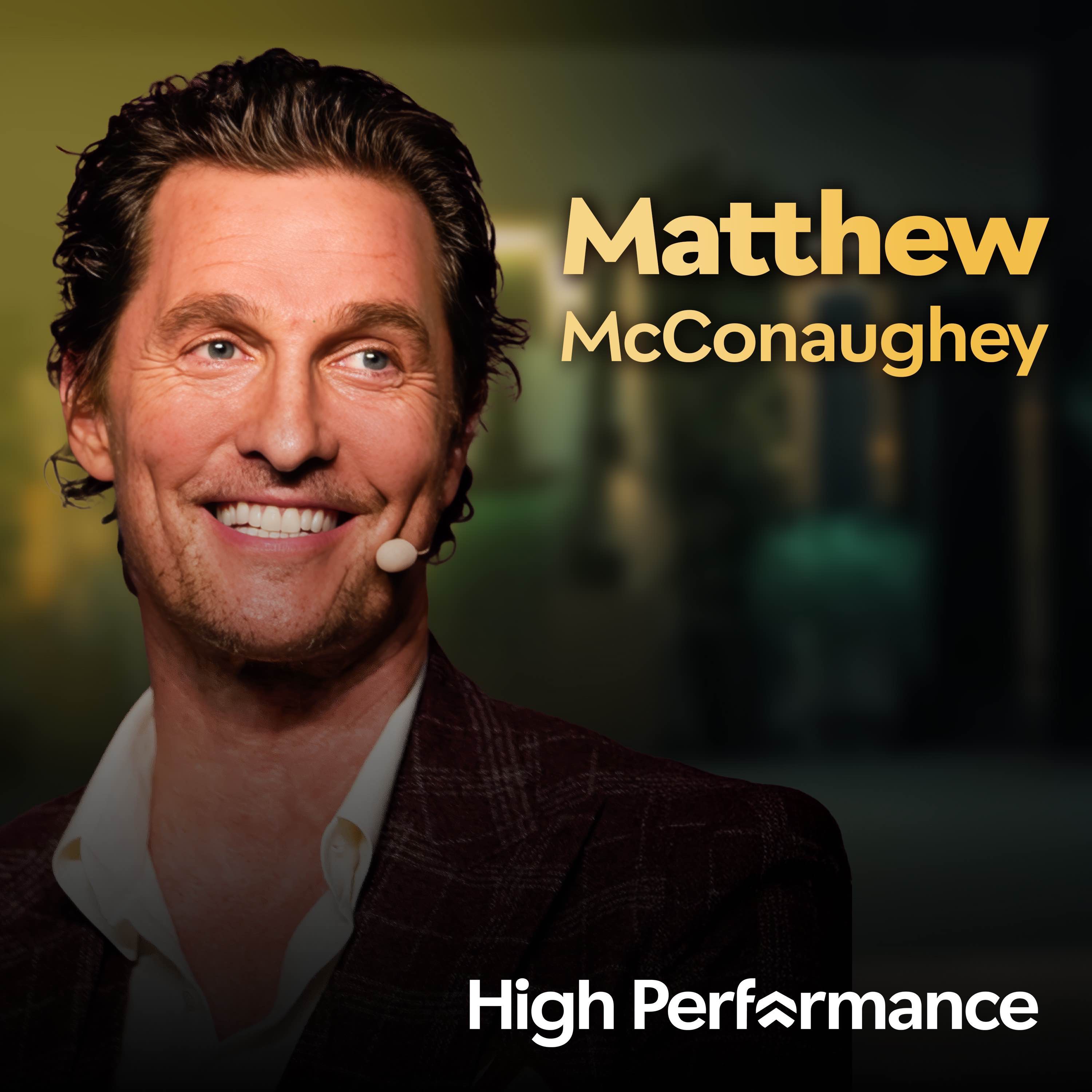
Matthew McConaughey, Oscar-winning actor and author
In this enlightening episode, Matthew McConaughey discusses his philosophical approach to life, emphasizing that life is an ongoing process rather than a destination. He shares insights on self-awareness, discipline, and the importance of making small, deliberate decisions every day to achieve high performance.
Written by AI. May contain mistakes.
Matthew McConaughey discusses the significance of the daily decisions we make over seeking big moments of success.
“High performance is not about a big ta-da moment where suddenly everything makes sense.”
McConaughey explains how to identify and eliminate elements in life that do not align with your true self.
“What's the reverb, what they give out and what comes back?”
He emphasizes the balance between innate talent and the willingness to work hard toward goals.
“But start eliminating those things that don't seem to give us residuals.”
Matthew shares his personal story about choosing a career in acting over law, emphasizing the importance of experiential learning.
“This is a really interesting one for our listeners that might find themselves, say, stuck in a job that they know doesn't excite them, but they have a level of competence at it and it brings in the bills.”
He discusses how to evaluate fear and commitment when deciding on projects in his acting career.
“You're not going to have to be at school as long.”
Matthew talks about the importance of daily reflections and gratitude practices for self-assessment.
“I'm trusting I'll come up the other side with an identity for a character.”
He elaborates on how maintaining a diary has helped him process his life experiences and maintain his well-being.
“But I do do a little check-in with the day and a little projection into let's look at what we got tomorrow.”
Learn how reflecting on past successes can help regain focus.
“Because when you do get off frequency again later in life, you might want to have something to look back at.”
Discover how Matthew McConaughey's acting journey evolved from instinct to preparation.
“That when you're successful, there's lots of clues left behind for it.”
Understand the importance of recognizing life's obstacles to learn and grow.
“There's another way of saying that, you know, and I don't mean that political terms.”
Explore how to cultivate trust in relationships and identify true intentions.
“I've always said this, give me the asshole over the dork.”
Learn the significance of striving for daily improvement and self-reflection.
“And so I like talking about people with big ideas.”
Explore the idea that life is a continuous journey without a final destination.
“But at the same time, what do I find when I get to the headline?”
Matthew reflects on the feelings and lessons learned upon winning an Oscar.
“I was like, you intended to do something, to tell such a truth on a man by embodying him through this character, that other people saw themselves in that man and saw themselves in me as that man.”
Discussion on the importance of overcoming self-imposed limitations and striving for more.
“So that was a pinnacle in my career as an actor.”
Matthew shares insights on how love came to him when he stopped actively searching.
“We have these limitations that we put on ourselves that are really not our right to put on ourselves.”
Matthew discusses the creativity and reflection that comes from taking road trips.
“Well, as soon as I did that, guess who showed up?”
Sharing insights on parenting and the balance between guidance and independence.
“You know, they kind of are who they are.”
Matthew talks about raising children in affluence while instilling resilience and gratitude.
“I go, well, remember how you'd wake up in the morning and I'd already be at work and I'd be gone all day and then get back home at night.”
Matthew McConaughey discusses the significance of legacy and its impact on his choices.
“is more of a like, no, it's the art of doing what you're fashioned to do in a way that it's got reciprocity to it.”
Exploring how intentional living and self-reflection shape McConaughey's success.
“And what I think is brilliant is that there will be people listening to this going, well, of course he's happy and of course he's successful and of course he's done well because he's Matthew McConaughey.”
Reflections on the key takeaways from the conversation with McConaughey.
“but the process that he put into pursuing that acting career when he chose to move away from a career in the law is the same one that he does now when he decides he's going to take on a film.”
Discussing the concept of 'yet' and how it affects our perception of happiness.
“There are certain things that have not left me, actually.”

Get the gist, explore an idea or ask about something said.
 Claude
On The High Performance Podcast, what are the key points of this episode?
Searching your listeningAutomatic transcript. May contain errors.
0:29I think we're all chasing yet. he sounds like a philosopher. What does he say to us? Life is a verb, not a moment where you finally arrive and say, I made it. It's actually about the process. It's always about the process. And that's the big message on this episode from Matthew, because he has built an extraordinary life by understanding this truth. High performance is not about a big ta-da moment where suddenly everything makes sense. High performance is about the tiny decisions that you and I make every single day. I think there's probably a limited chance that you want to change your whole life, right?
1:03But there is also a pretty strong chance there are certain parts of your life you've always wanted to change and somehow you haven't managed to. The truth is that changing those lie in the tiny, almost imperceptible changes that you need to make to the way that you live every day. And that's exactly what Matthew does. He commits to his initial choice and then he doesn't negotiate with himself. He checks in with the thing that he's decided to do every single day. He writes the headline at the beginning, but then he lives the story that takes him to that headline. This is a conversation about self-awareness, about discipline, about living deliberately, about exploring why commitment gives you clarity.
1:41Matthew also shares the big decision-making process that he has when it comes to work and why he actually believes that our roofs are man-made. We're actually capable of so much more than we allow ourselves to believe in. this podcast was recorded remotely i was in norwich where i live damian was in manchester where he lives in the uk matthew was at home in the united states and actually a little secret for you my wife um for the first and last time the only time she's ever snuck into where i'm recording and sat on the floor watching me interview someone at one point she just looks at me and mouths this is mad and i agree it is mad to have matthew mcconaughey joining us for a conversation one of the great actors of his time and as you're about to hear a man who is so much more than just an actor we start the episode with matthew explaining why figuring out who you are might actually be an awful lot easier than you think as we welcome to high performance matthew mcconaughey
2:43i hope i'm not being condescending to say that i think everybody is on some level is extremely interested in the introspection and investigation of who are they individually and who are they in this world and how do they dance? What's the reverb, what they give out and what comes back? What's the supply and demand of the life we live every day and the relationship with the world? So then you break down the world, our careers, our time, families. It's hard to know who you are and what you want to do. So first, take that pressure off yourself and start with process of elimination. Being like, dang it, I'm not getting what I want.
3:21I don't know who I am. I don't know if I'm on the right track. All right, forget that. That's a big question, Andrew. Let's just eliminate the things in our life that we know don't feed our true selves. Who are those people, those places, those habits that we keep going? I keep having a hangover every time I'm with them. I'm not getting residuals from that relationship. I always like it on the come, but I don't like it on the go. You know, I like the approach thing I'm going to make. I keep going to that place. Damn, why do I every morning I wake up and I have a worse hangover in that bar, but I had the same drinks than I had in the other bar?
3:55Same drink. Maybe it's the people. Maybe it's the conversation. Maybe it's the smoke in the air. I don't know. But start eliminating those things that don't seem to give us residuals. Think about it as ROI, return on investment. So if you eliminate enough of the things that we aren't and don't feed us, our process of elimination, mathematically, we will end up with better chance of things that we are that do feed us in front of us. Well, now, if we get to that spot, I think it's about saying or asking ourselves, what do I have an innate ability to do? What am I naturally gifted at? Parlayed with, and what am I willing to bust my backside work ethic wise to be good at?
4:35So biology and giddy up. You know what I mean? and if we can match those two, then I think we have a better chance of succeeding at least on a level that the proverbial Monday morning and Monday feels constructive. It doesn't mean we all become rich and famous. If we all only did what we loved, unemployment would be through the roof. So I'm not talking about do what you love. No, no, you can learn to really enjoy doing something that you may not love, but you can enjoy the feeling of being good at doing something well and you do something well, you like to do it more. But if you can marry, if we can marry innate ability with giddy up, with work ethic, with I'm gonna educate myself for that or I'm gonna work towards that and I'm willing to outwork somebody else next to me, my competition, whatever, that's something that I have an innate ability for.
5:22I think that's the honey hole because a lot of us chase things. Look, I'm five, 11, three quarters. Got 33 inch waist, 32 inch legs. My waist is longer. I wasn't gonna be an NBA basketball player. no matter how many places or camps I would have gone to, or no matter how hard I worked. I didn't have the innate ability. I may have had the giddy up, but if you ain't got the innate ability, don't go play the giddy up on the thing that you're like, that's not going to happen, bro. You know what I mean? This is a really interesting one for our listeners that might find themselves, say, stuck in a job that they know doesn't excite them, but they have a level of competence at it and it brings in the bills.
5:59And you were on a similar path in terms of pursuing your law degree and you were looking to pursue that route. What were the kind of questions that you were asking yourself that gave you the courage to walk away and pursue the risk of a career in Hollywood? Well, I was a sophomore in college at this time. And the only thing I had ever thought I wanted to be or had talked about with my family or was expected he was a lawyer. And I was right on with that. Thought I could have gone on and been a decent lawyer and would have been excited about that. But around my sophomore year, I started not sleeping well with the idea that, wait a minute, two more years here and then I'm going to law school for four years.
6:37Then get out and get a job. I'm going to be 30 before I actually get in there. And I was like, I'm not sure I want to spend my entire twenties learning a craft. I want to be like, I just want to try to put my mark in here somewhere or just go find out. I need something more experiential. I need to, You know, I mean, it's got to get my hands in the clay and something. And I had been writing at the time and shared some short stories with a friend of mine who told me he thought they were pretty good. And then he came to me and said, well, the short stories are good. But also, you know, you've got good character.
7:06Think about in front of the camera. And I was like, you know, it was just too avant garde of the thought to be an actor. But I did. I was able to say, yes, the storytelling business. So my dad. Where I thought he was going to go, you want to do what? I mean, I was raised blue collar. You work your way up the ladder. The idea of going into the arts as a career. I thought he was going to go, son, you do that shit on Saturday afternoon as a hobby if you want, but you need to get a job that pays and blah, blah, blah, blah, blah. Well, he didn't. What he actually told me was, is that what you, once I said, that's what I want to do.
7:38He goes, well, don't half ass it. so in that line he not only gave me approval he gave me a kick in the backside a launch pad a rocket fuel more than privilege he gave me freedom and accountability and responsibility to go try and make it happen but it's the fact that i wasn't sleeping well and i was willing to take the risk to say well you also have an innate ability here to be to tell stories and get into let's take our a chance. You're not going to have to be at school as long. I remember thinking, Hollywood doesn't give a damn about your GPA. They want to see something. You know what I mean?
8:15They want to see a product, a piece of content. So that was like, well, you can start trying to make content immediately, even while you're here in school. Try to. They're not looking at your ID to say, oh, we can't take that great piece of content because you're still in college. They'll take it from anybody five-year-old you know what i mean so and he was a risk that i was wanting to take but i felt i did have the innate ability to do it a lot of people will look for the path of least resistance they will always look for a reason not to take the risk whether it's children leaving college whatever what's your advice to those people on every project film i do i go through a process of this one i'm looking for a character or a story that i'm like whoa, I don't know what I'm going to do with this, but geez, I can't wait.
9:05Right? Now that's a good fear of I'm going to dive in. I'm trusting I'll come up the other side with an identity for a character. And I will, as an architect, constructed hopefully a character that I can feel is true and I can be honored for portraying. But there's other times I'm scared because I'm going like, I'm not sure about this director, man. I'm not sure that actually the financiers really want to make the movie I want to make. I think they may have been just telling me they wanted to make the movie that I see in the script because they just want me to say, yeah, the job. Now that's a fear that I want to go.
9:40It'd still be a risk to take it, but maybe the pedigree around me is not right. So that's a fear that tells me, uh-uh, uh-uh, uh-uh, that's a good reason to back off of it. So what I'll do is say, I'll get a script character. I really want to do it. And I'll start off my yeses and my no's. Right. And then I'll go tomorrow. Doing it. Starts and starts in January. Doing it. Get ready. So we're going to be over in Mauritius for four months and we're going and there we go. And I got to do it. And I sit in that in that state of mind, fully convinced. Yes. For 10 days. and I didn't measure myself for that 10 days.
10:21Well, how many times did you start seeing the world through the eyes of this character, jotting down notes? You're already getting creatively turned on. What did two other opportunities come up in January that you already immediately said, nope, not doing it because I'm doing this other thing. That's a good reason to usually say, yes, let's do it. But alternatively, 10 days go by and I woke up in the middle of the night three times going, oh, I'm not sure about so-and-so in this movie. I'm not sure about that. That's something to listen to as well. Maybe that's the reason not to. So then after 10 days, I go, now I'm going to live 10 days.
10:57No, I'm not doing it. Miller, not doing it. Call off the trip. We're not going away. Now I measure that 10 days. Now what wakes me up at night? Did I wake up at night going, whew, think you dodged a bullet there, buddy. Good move. Or did I wake up at night going, I have to play that character in this movie. I have to. No, I can't believe I let that go. And then leads to a good reason to maybe go, let's do it. So to measure, to commit to yes to something, see how you feel. See what bubbles up. To commit to no, see what bubbles up. But convince yourself that it's happening. It's not foolproof, but it helps a lot on measurement of whether to take the risk or not.
11:46so do you check in with yourself often every night maybe and i try to through the day i mean i don't have a you know a scheduled ritual right you know i i check in we as a family check in with gratitude before meals and then i check in you know with myself through the day and then at the end of the day i like to go back and try and do a little inventory of how was my day why am I having trouble remembering what I had for breakfast? Why am I having trouble remembering? Well, that means you need to slow down and actually go back and think so you can have some demarcations between the events. Because we get busy, they all start piling up each other.
12:20And I'm good in autopilot. I'm really good when I'm running. I'm like, line them up. I'll remember what the hell I did next year. You know what I mean? I'm good in that mode, but I like it better when I'm like, at the end of the day, okay, demarcation. How'd we do today? We knew we had a big week. Monday. Yep. Good. Nailed that one. Okay. Put that aside. What do we got now? A little small projection. What do we got tomorrow? What time does day get started? We've got, okay, we start with that. Yeah, I got that break. I mean, we can have lunch. And then I'll come back. First part of the day is about green light.
12:50Second part is about MOC. Then I got the kid. Yep. Okay. Three different mode. Yep. Got it. Then that helps me go to sleep. But I do do a little check-in with the day and a little projection into let's look at what we got tomorrow. So where does the diary keeping fit in with that then, Matthew? Because that really intrigued me that you've kept a diary for so long. Is that not part of your way of processing events and making sense of the world around you? Well, sure it is. I mean, what do we usually go to a diary for? A journal. Especially when we go there when we're lost, when we're having trouble, when we're trying to figure shit out and we're confused.
13:26And that's what I originally went to it for. You know, why did so-and-so break up with me? Why do I got pimples on my face? You know, that kind of stuff. It's a 14-year-old kid. And then I remember reminding myself in my early 20s, I was in a time in my life where I was rolling. I mean, my relationships were good. I had cash in my pocket. I had a four handicap in golf. I had a girlfriend. I was making grades. Mom and dad were happy. I was rolling. Well, those are the times you don't really go write in your diary, right? Because you're like going, I found it. I'll never lose it, which we all know is false because you will lose it.
14:03And you will get in a rut again. You will be on your own frequency. You will get off frequency again. There is no ta-da moment. I remember going, you better write. You better keep writing. now while you're rolling. Because when you do get off frequency again later in life, you might want to have something to look back at. And I did, and that practice helped me in times when I was in a rut to go back and go, we had this year here where you were catching green lights in life, I mean, not relationships, job, sleep, self-respect, self-confidence. And I look back and I was like, well, who were you hanging out with?
14:40Where were you going? How much sleep are you getting? What were you eating? What were you drinking? What were you doing first thing to start the day off? What was your, you know, where are you going to church? Whatever those may be. And they helped me recalibrate and go, well, let's pick some of those habits up that we kind of thought we could take for granted here for a while. And they helped me get back on the rails a little bit. So one of the phrases that Jake and I use frequently on this podcast, Matthew, is success leaves clues. That when you're successful, there's lots of clues left behind for it.
15:06And that sounds like what you've done over your career. Yes. and what's the world tell us to do dissect your failure no dissect the success too at least because you're gonna need it and there is a science to satisfaction it was a really interesting two anecdotes in uh in the book that intrigue does was that one was the liberation when you first played the role in dazed and confused that you almost just played the character and then you tell the story about when you tried to do that same approach and you didn't read the script so again that's a really interesting way that you learn from failure and success so how do you get that balance now matt that was a time look i fell into my first acting role there were three lines written i worked for three weeks i knew my man wooderson so i would just throw me in the situation and like somebody say something.
16:02I just be my man. Well, then I get out to Hollywood and I went through a patch of about a year where I was wasn't getting jobs. I was too tight and I was talking to people about acting lessons and stuff. So I started to think about this thing that I had a natural ability to do. And as we all know, when you start to learn a craft that you may have an innate ability for, there's a transition to move it from the intellectual into the soul and the language and the body, you know, and that can be an awkward transition, kind of thinking about stuff where you are just kind of doing it. You're learning the math of what you, of your poetry.
16:36And that there's, it's, it's a good bridge to cross, but while you're on the bridge, it can be a little wobbly. And it was for me. So I get this bright idea that I'm like, I'm not getting any jobs. I'm, I'm, I'm, I'm, I'm, I'm auditioning, but I feel like every time I leave the audition, I'm like, ah, you left a little bit in the tank. You could have done more. You didn't take a risk. I'm like, you know what? I got offered this blind offer on this job. One day work, no audition, nothing. Come on. I said, I'll take the job. And then I get this idea. I go, you know what? I know what it is. I got to go back to how I did in my very first film when there was no scripted lines where I just knew my man and I did what my man would do and said what he would do.
17:15I've been overthinking this acting thing too much. So you know what? I'm not even going to read the script. Give me the log line of who my guy is. What is his obstacle? What do I need? And what do I need to overcome? That's got to happen in the scene, no matter what. And I'll just be my man. I'm not even going to read the scene. Right idea. And right before we're about to yell action to do this scene, which I have never read or known nothing about, the PA comes by, production assistant, Mr. McConnor, you got some sides. It's a miniature version of the script of scenes that day. and evidently I was feeling a little insecure because I said yeah let me have a peek of those right before we're about to go on action and I get them and I decide in my head I remember thinking well I'll have a look at the dialogue because if it's written well it's obviously what my man would say and if it's not written well I'll just say and do what I would do anyway and throw it away four-page monologue by my guy in Spanish
18:19oh man and i remember saying can i get 12 minutes because i thought in my head that that was enough time to not be too inconsiderate to the crew but also enough time to learn a four-page monologue in spanish because hey i took spanish for one semester in the 11th grade i love it oh man there's sweat started and i was so embarrassed that from then on i said no no no you prepare to the hilt so you can have the freedom go don't get get over that bridge of learning like learn it so much where you're over it where you don't have to think about it so the next thing i come up for a time to kill i'm offered a small role well i not only read the script i read the book back cover to cover and i and i'm confident enough to go in there and tell the director no i don't think i need this role i think i need the lead but that's an important point isn't it that it's almost doing the work liberates you so again when you tell about that that when you went for the for the lead of in a time to kill you read it mechanically and then the director said to you now read it as you would do and liberated is that true conservative or liberal little late.
19:30There's another way of saying that, you know, and I don't mean that political terms. I mean, what are the rules of the game here? What are all my options? What are all my play calls? What's the playbook? Let me study it all. Get it down so well that when it's time to go in the proverbial game of life, when we're in between action and cut of whatever our job is, we've thrown the playbook away. Come on, let's play. Because I'm not thinking about it because I prepared enough for it. It's not up here anymore. It's in here and down here in my loins and legs. Let's go. It is so good to hear this, Matthew, because it reminds us of another theme we talk about often on this podcast, which is have an idea of where you want to go, but be flexible about how you get there.
20:11Unexpected red lights. And you've just given us some great stories relating to some red lights, but they send you down a path you weren't expecting and green lights come your way. And that's exactly what's happened here. The negatives creating the positives. Look, you got to have the dark to appreciate the light. You got to, I mean, at the end of the end, you got to, I mean, we don't like the yellow and red lights in our life, but damn, if most of the time they aren't something we need. So then goes back to your earlier question. Do we recognize what the lesson we got from them? Because yeah, all red lights and lights do suck if we don't actually realize what we were supposed to learn.
20:51And if we don't realize what we're supposed to learn in the crisis or hardships of life or things we don't get that we wanted, what do we do? Stuck on this little merry-go-round of nothing but green lights, running out of gas because life's for nothing but entertainment? Well, that sounds like a bunch of, you know what I mean? Where's the evolution? Where's the ascension? Or as I tell my mom, who's taught us this great trait of being resilient, right? So resilient, in fact, that we're taught to get up, dust yourself off. Get up, dust yourself off. Karen, get up, dust yourself off. And I remember going to when I was 22 years old, I was like, mom, this theory of your years has been very valuable for me and I would not be the man I am right now unless I would have this resilience you taught but I said it seems to have a loophole she goes what I go if you're so resilient and you just get up and dust yourself off and carry on every single time you become a repeat offender of of the thing you kept doing screwing up meaning like if you if you step and step and shit and every time you step and shit you pop up and scrape it off and keep running and you come around the track again, you step in shit again.
21:52So the loophole is I think I'm going to not just scrape the shit off my boots right now and keep running. I'm actually going to turn around and go, why do I keep stepping in that pile of shit? So next time I come around the bend, I can go around it. I can hop over it or, you know, find another path. So create a yellow light or red light to go. That's the time where you go, why am I stepping in that shit? That's the self-imposed red or yellow light. or you say when we talk about taking risk to realize what the lesson is the self-imposed yellow and red light to go wait a minute let me take pause here what am i supposed to learn from this and if you do that that yellow and red then becomes green how do you bring people into your world that that facilitate that ability to learn lessons i wade into relationships slowly i come in with full trust until you give me a reason to not trust you fully which i've been told that most people don't do that and I didn't know that but I weighed into I measure people not all you know starts off by what they say that's usually the obvious what they say and do then you start you get to know someone I start to read try to read what is it they didn't say what was in the quiet times what was in between the pauses you know because we're all you know actors to some extent in our own life we portray different things to get what we want and you know I got no problem with that and hell I do it too.
23:18I've always said this, give me the asshole over the dork. Well, at least you know where the asshole stands, right? The dork's trying to be everything to everybody, which means he's about nothing. So just the asshole, at least you can go, I don't like that guy, but man, at least I know where he stands. You know what I mean? I can try, give me that guy. You know what I mean? So it's the dorks I don't like and, and, and people that maybe try to get into my life that maybe have an alternative, uh, ambition or do not really have their best intents for me, or maybe aren't willing to get to know me well enough to actually promote the best of me, which I think we all know that.
23:54I think that's my definition of what a good friend does. He knows you and he helps promote more of the best of you. That's what my wife's got a real talent of doing for me. And that doesn't mean she always says yes to me. And she disagrees and she's like, no, I think this one, you're swinging out of bounds here. I know you're into new ideas, Matthew, but this one, you're out of bounds or whatever that is, a career choice or something. And I don't have a huge circle of close friends. I have a lot of acquaintances, but I don't have – I have a group of men that I'm very good friends with that I call a fraternity of men that we are all investigating ourselves.
24:29How can we be better men? How can we be better fathers? How can we be better husbands? How can we also understand that we've got to work and we've got to create? Man's got to create. So man has to have work. I mean, I have to have something that would go, you know, we have a different sense of accomplishment. And I know I need a sense of accomplishment. I don't want to be obsessed by it, but I'm like, I do need to accomplish, to have my own feelings of significance. And so I like talking about people with big ideas. And again, that long view, we were going back, what are we really doing here, man?
25:04What's really going on? We break this down. And I'll tell you who's super fun to have these conversations with, fellow countryman Guy Ritchie. That guy never talked about the weather. He's great too. All right. So you believe in God. Let's talk about it. Oh, and it's like he likes to go big quick. But I have a certain group of friends that we talk, you know, we talk, try to talk about the big things, existential questions. What is it all about? What really matters? What doesn't? Given your background or coming from that blue collar background that you've described about your father and your mother and where you grew up, those seem like untypical types of questions that would be asked for somebody uh in that environment so how would you encourage our listeners to start asking those questions and feel comfortable that the benefits of asking them are going to be worth it yeah because i you know we didn't we were not an introspective family growing up my mom and we didn't we're not a well-read family we weren't allowed to watch tv my mom would put kick us outside of mexico play outside before we could read a book um but i don't know where that i don't know where why i started questioning those things early but look on a very simple level let's go back to what we were talking about earlier that everybody that is going like well you know for whatever reason i don't i'm not purchasing what you're talking about mcconaughey or maybe i don't understand it or maybe i don't want to understand it or maybe they're going yeah you're in a privileged position to It's a choice for 10 days, yes, and 10 days, no.
26:35I got to make the decision right now and I got three hours, whatever that may be. What each of us can do is go, do we want to be our more true self tomorrow? Do we believe that life can have a bit of an ascension of evolution? I believe it can or what the hell is time for, right? I mean, can we, do we want to be a little bit better, a little bit more true? All right, we ain't got to solve it all right now. But if we can look in the mirror and say, hey, I'm going to be a little more fair today. I'm actually going to be a little more respectful of the work my wife's been doing. Geez, I've been doing the work, but I got it.
27:11You know what? She's really been taking care of this thing over here, whether it be the kids or her own job. I need to be more respectful of that. I've been kind of riding over that, taking that part for granted. I'm going to give that a little more respect, or I'm going to be a little, yeah, I'm going to have a better sense of humor. It's a good one to start with. I'm going to get some of the things I'm getting a little bit ticked off about. I'm going to laugh, actually, instead of snapping. or I'm going to giggle. It'll be a little thing. It can be a good thing for yourself. All these, I think, are.
27:36Just pick out a little something that you can say you're going to get a little bit better at each day. And that is really as good as it gets. I think we got to get this thing out of our mind. We're obsessed with results, man. We got this idea. And look, I love chasing results. I'm a big fan. I write the headline first and then try to live the story towards it many times and have pulled it off. But at the same time, what do I find when I get to the headline? Oh, the story still continues. It wasn't. We have no ta-da moment where we go, ah, I did it. Now I finally arrived. That moment never comes.
28:15Once you think you get there, it opens up another 40 lanes in your highway and places to go. It doesn't get thinner in many ways. The direction, you may get further down the line, so your direction may be more clear, but it doesn't get, there's not fewer options. So if we can just ask ourselves if we can be a little bit better, can I be a little bit better at this? I want to be a little bit better at this small, small increment. And if we can just keep doing that, commit to the chase, stay in the race of trying to be more better, a little more true to ourselves. Hop out of ourselves from time to time, a week ahead of us.
28:48How's that decision going to look to me next Friday? How's it going to look next month, next year? See how far away you can come, how much, Because everyone's got a different threshold for how far out they can reject themselves. If you want to tell somebody to go out a year, that's too far for a lot of people. Whoa, whoa, whoa, whoa, whoa. Some people you can say they can go off to the eulogy and say, yeah, that's where I want to look back from. But as far as you can get ahead of yourself, just have a little objective look back and go, what am I going to think about this decision tomorrow? I'm going to go fit.
29:14You can do that, man. Everyone can do that. You can do that. That's as good as it gets. I think we're all chasing yet. and if we realize that we never are going to arrive that's the point there is no yet it's always yet and then if we can go ah life's a verb it's the process shit that's as good as it gets all right i'm in so when you stepped up on that stage and received the oscar then because i think that's a really powerful message that you're giving that there's no ta-da moment so when you're winning what is regarded as the ultimate accolade in your industry what were you feeling i was feeling first validation from my peers all right second i remember going like you performed your craft your art mad to you to such an extent that it translated to people and your peers who are great at what they do, and they deemed you to have done the most excellent job at this of anyone in the whole year.
30:22Boy, that's finite translation. Boy, those times. I was like, you intended to do something, to tell such a truth on a man by embodying him through this character, that other people saw themselves in that man and saw themselves in me as that man. Other people saw humanity to an extent that was so precise that they went, yes, that's great work. That's craftsmanship. Yes. So that was a pinnacle in my career as an actor. Did it give me confidence? Sure. Did it make me go, see, you were right to hold out for that two years of not working when you were just doing rom-coms. You were right to prepare so hard to come in and be the master of your man and stand up for your man and tell people he's mine i'm not asking permission he's mine i own him i know oh i'm glad you had that confidence to to do that and believe that matthew at that time because look it translated once again i went the deeper i went to the eye the more it became relatable to the we you know it reminds me of a really nice quote in your book where you talk about reaching beyond your grasp.
31:32You said have immortal finish lines and turn your red lights green because a roof is a man-made thing. I love that one. You know the story of Icarus, right? Flying too close to the sun, and his son go up the wax wings, and you're going to get too close to the sun, their wings, wax, holding their wings melt. I think we suffer from the opposite. When we think in our mind, oh, we can get too close to the sun, oh, this is too much, This is the peak of my ability. Man, it ain't even close to melting. You know what I mean? I think our roots are so much more immortal. And when we put our roots and our limitations on ourselves, we mortally do those to ourselves.
32:14You know, to say we're tapping into the 11th percent of ourselves, we have so much further to go than we allow ourselves to believe. We have these limitations that we put on ourselves that are really not our right to put on ourselves. Where the hell do we get off? It's an arrogant thing. Let's invert it. I think it's arrogant to actually say, no, no, no, that's as good. That's as much as I can do. That's as good as I can be. That's as true as I can be. What? Dude, wait, what are you talking about? You know, we think it's like the fourth quarter or the end of the second half and the pitch. You're like, dude, the game just started.
32:50Don't be so flattered with yourself. You know what I mean? It's like, oh, you thought while you were sitting there, you're already looking at the jumbotron like this guess what everyone else is running past you while you're admiring your work no raise the freaking roof man you know in the reach beyond the grasp of when do we get tight so matthew would you tell our listeners then how do you dream how do you set these big aspirations for yourself i don't really i don't know how i don't you know i don't know how much it is that i chase a result it seems to me that it's a dance between the two Sometimes I said earlier, as I said earlier, write the headline, set the goal up, go chasing, write the story towards it.
33:31But other times, and I think just as much or maybe more, I just take a risk that I feel like, oh, this could be valuable and I'm willing to pay the cost of whatever the consequences are. And I'm going to learn to fly after I've jumped off the cliff. So I know my successes have been a balance of those two. meeting the woman for me, Camilla. I found she came to me when I quit looking for her. I had this written down. I want to find that woman for me. And then she's out there. I'm going looking for her. Shit, once I'm looking at every red light and then the produce section and the checkout counter and every party, I said, stop that.
34:11Once I shook hands with going, you can be an 88-year-old bachelor. And it's okay. hey, quit trying to make something different happen. Well, as soon as I did that, guess who showed up? Love it. Is there something else I want to pick up on in your book? Take a road trip. Why is that so important? Look, my favorite seat for thought has always been behind the wheel of whatever truck I'm driving. Something about performing this very simple motor skill is your foot's on the pedal. You haven't thought about your foot being on the pedal, but you're maintaining a certain speed. Your hand's on the wheel.
34:47You haven't really thought about staying in the lane, but you're in the lane. The motor skill opens up imagination. And I think it's like just having that little simple motor skill that you don't have to think about doing that opens up a creative side. And it's in motion. I like to be in motion. Even now, I usually don't sit down. When I'm doing calls, I like to walk. But a road trip to slowly snake across a continent or a nation, see new sites, to not be obsessed with I got to be there by, to the transient nature of, hey, I got an inch I want to pull off over here. Check this out. That's where I met so many interesting people.
35:32That's where I got into some wild scenarios that were, you know, some are in the book, some are not. um it's where i wandered you know across places like that place in montana at night when i came across that lodge wow which was a beautiful heartbreaking story but yeah i don't know i just always like exploring and and and a road trip you know i learn more about my home when i take a road trip and leave it talking of your home you said you've got a group of guys and you talk about how to be the best parents the best dads you can be what have you learned in that space this is uh it's something we discuss often on this podcast the power of parenting well the only thing i ever knew i wanted to be was a father but like any father learns right away is being a father is a whole lot about a whole lot more than just making a baby you know otherhood is a verb i mean it starts after you made the baby and so what's the first thing i noticed i think every parent notices oh it's more DNA than I thought.
36:37You know, they kind of are who they are. Okay. I really thought it was an environment. No, they are who they are. And I can shepherd them. I can nudge them. I can put the things in front of them that turn them on, that they love. And I can remove things in front of them that harm them. But, ooh, I don't want to remove everything in front of them that harms them because they need to learn. So, well, let me remove the, you know, I call it the, like, how high is the tree limb? Kids aren't afraid of heights until they fall. So they're out there on the tree limb and you're like, oh, gee, you're not pretty high, buddy.
37:09If you fall from this one, we might be going to the emergency room. Well, you know, you kind of go, well, if you fall from this one, you're going to get bumped and bruised. And at least it's on the grass down there. I'll let you take your chances. Then you get to a certain height. You're like, whoa, buddy, if you fall from there, my heart's skipping a beat right now. I need to say, hey, come on back over here. Check this out. I want to remove that harm you know that harm that could really harm but not remove enough that they're not going to learn that life is a rodeo you got to negotiate to their return and it's on you you know let them get an argument on a playground go at it work it out bullies are all over the world man deal with it oh you don't want to okay you don't want to get in a fight I got a son who's a pastor great not asking you to but you're smarter than that kid so outwit him how does your financial success affect your mindset with your kids in terms of developing resilience for them because they're kids that will always have a parachute aren't they great question and it's something that that my wife and i talk about often because our kids are born into an affluence that neither one of us were and i don't want them to be falsely modest about that affluence i don't want them to be ashamed of that affluent but i also don't want them to be soft because of that affluence so what we try to do is say you know like like kid at school the other day tells my son yeah i bet you i bet you live in a big house because your dad's rich and famous i said what'd you say to him he goes i said well yeah we do have a nice house i go did you bow your head he goes yeah i lowered my head a little bit like you keep your head high you're not being arrogant but you tell him yes we do live in big house my dad happens to be rich famous because he's really good at what he does and he works really hard at it and that work he's put in has helped get us that house so i said don't you lower your eyes on that also don't ever look down on somebody if they got a smaller house or don't it's not about that it's about owning our influence but saying again because the work a great lesson came when i won that uh trophy for academy award best actor kids go what's the trophy for i said you remember a year and a half ago when papa was working and you got real skinny and you said he looked like a giraffe because his neck associate.
39:27He's like, yeah. I go, well, remember how you'd wake up in the morning and I'd already be at work and I'd be gone all day and then get back home at night. I go, the work that I was doing each day in that month and a half, my peers deemed to be excellent and gave me a trophy for what I did a year and a half ago. They gave me a trophy for it today. So that idea of delayed gratification, I saw it click. My son goes, oh, so you can do something now and be rewarded for tomorrow? I was like, bingo. Yes. Yes, you can. And so they have a lot of affluence. I still want them to be kind. They got to have their manners.
40:03They're so conscientious. I want to be autonomous and self thinkers at the same time. I don't like poorly behaved kids and we don't allow that. And what do you value? We got the house, but don't think that this is just what you get. Do you understand why we have this nice house? Do you understand that? So we try to remind them, hopefully we're doing a good enough job at anywhere we go in the world to go to different schools or orphanages and trying to help out just to see, hey, this thing now, everybody's got it. So respect this. Do not take this for granted. And again, always going back to it's because of the work you do, what kind of work you do.
40:46And if you do really good work and you could, If you can supply something that's in demand in life and you could supply a good product, whatever that product is, an actual product or yourself, then you can possibly make a living out of it. Brilliant. Look, Matthew, we've reached the end of our conversation and we always finish with our guests on this podcast with some quickfire questions. Your three non-negotiable behaviors that the people around you have to buy into. don't lie don't say hate don't say can't non-negotiable what advice would you give a teenage matthew just starting out i love that you're always thinking about the future thinking about getting older but trust it that's coming anyway enjoy being 15 those pimples will be gone are you happy am i happy i got a lot of joy i find joy in doing things that i feel like i'm fashioned to do happiness is to me is a bit of one of those result oriented destinations that i think we kind of falsely pursue as a place when joy something about joy is more of a verb for me joy is more of a like, no, it's the art of doing what you're fashioned to do in a way that it's got reciprocity to it.
42:10You can find joy in the doing. More so, I find more joy in the doing than I do in the having done. How important is legacy to you? It's getting more and more important. They say, what kind of shadow do you want to leave? What kind of light do you want to leave? What are those solar powered, eternal green lights that we want to leave, not only in this life, but after we're gone, you know, our foundation, I'm going to hand that over to my children, and then they run the foundation after we're gone. Trying to build things now and make choices to do things that I go, oh, that's going to live on. That's something you want to pass in.
42:45You can keep that garden. You can continue to tend. You can hand it down to other gardeners, proverbial gardeners of that thing to tend it after you are gone, and they will want to, and can it build? Maybe it doesn't fade off after you fade away. Maybe it encompasses more. Maybe its roots go wider and deeper. And so that's some things I consider, the choices I make today, which are considering legacy. And finally, your one golden rule to leave our listeners with for living a high-performance life. Well, look, the easiest one is this. Just keep living, all right? The alternative sucks. And I will say, on golden rules, though, it's another one my mother's big on the golden rule do unto others you would have them do unto you bound a loop on that too mom not everybody wants to do what you want to do
43:42listen thank you so much for your time matthew sitting and talking to you it strikes me that you're someone who's realized that every single action in your life has a consequence you talk about leaving crumbs not leaving crumbs and i think as soon as we all realize that instead of thinking of the big thing that's five miles down the road focus on the tiny thing in front of us because that is the thing that will have a consequence for the next step and the step after that and it's um it's an absolute pleasure to sit and talk to you step at a time with the big picture in mind yeah enjoy talking to you man damien jake well look we're we're recording this late in the evening in the uk matthew is back home in the states you can feel the energy though transmitting from the United States to the United Kingdom, can't you?
44:30Yeah, definitely. I sometimes call it the Gandhi rule on this because Gandhi said that complete harmony comes from when your words, your thoughts and your actions are all aligned and he's translated common sense into common practice behaviours and that's with his thoughts, his words and just the way he lives his life. And what I think is brilliant is that there will be people listening to this going, well, of course he's happy and of course he's successful and of course he's done well because he's Matthew McConaughey. But he's only Matthew McConaughey, the actor who we all know, because of those decisions that he's made.
45:01Like he clearly takes absolute responsibility for his parenting, for his career, for his relationship with his wife, for approaching things in the right way. He thinks about everything. There's no element of just floating through, is there? It's a really good point you make, Jake, that I think we get blinded by the outcomes that he's an Oscar winning actor. but the process that he put into pursuing that acting career when he chose to move away from a career in the law is the same one that he does now when he decides he's going to take on a film. It's that idea of weighing up, taking time to reflect on whether he's going to be happy, whether he's going to enjoy it, and then committing completely to it was something that he's been doing long before fame, fortune and prestige ever found him.
45:48Well, I really enjoyed it. It was an absolute pleasure to sit and chat to him alongside you as ever. Thanks again, man. No, thank you, mate. It was a proper privilege, that one. I've thoroughly enjoyed it. What a conversation. So I thought about that conversation so much. There are certain things that have not left me, actually. I mean, here's advice on finding yourself. That idea of stop trying and just start with the process of elimination. Instead, eliminate the relationships that leave you with a hangover. Eliminate the places that drain you. You eliminate the habits that don't give you improvements.
46:21I think, you know, when you look at a beautiful sculpture, right, that beautiful sculpture is not from someone adding, it's from someone taking away. And actually a process of elimination, doing it mathematically and methodically in your life and putting what feeds your soul at the center of what you do, I think is so important. But what stuck with me the most? This idea that I have tried to tell everyone I've met since that conversation that we are all chasing yet. Yet, I'm going to be happy. Yet, I'm going to be happy. and that happiness never arrives. What did Johnny Wilkinson tell us on this podcast?
46:51He won the Rugby World Cup for his country and was happy for 30 seconds. So please accept there is no yet. There is no moment of arrival. There is no ta-da moment. You're not going to be set free from your life. So therefore, what is high performance? It's about enjoying the life that you're living at the moment. It's about making sure that every single day you find a bit of purpose, you find a bit of joy, you find a bit of flow, you find a bit of connection. It's those small things that mean you will keep going. If you enjoyed the conversation, please hit subscribe. It makes such a huge difference to us.
47:23And if there's someone in your life that you think could benefit from hearing what Matthew had to say, just ping them the episode. It might change everything for them. And we'll see you next time for another episode of High Performance.
Oscar-winning actor and author Matthew McConaughey joins us to share his deeply philosophical approach to life, work, and the pursuit of satisfaction.
We return to our chat with Matthew where he challenges the idea that we should be 'chasing yet,' arguing instead that life is a verb - a continuous process rather than a final destination where we suddenly 'arrive'. He discusses his process of elimination for finding one's true self, explaining why removing things that don't feed your soul is the fastest way to discover what does.
Key takeaways include:
This is a conversation about discipline, self-awareness, and commitment. About checking in with yourself daily. About writing the headline first, then living the story toward it. About understanding that high performance isn't one big ta-da moment - it's the tiny decisions we make every single day.
Our partners:
Surfshark 👉 Go to https://surfshark.com/highperformance or use code HIGHPERFORMANCE at checkout to get 4 extra months of Surfshark VPN!
Visit Seattle 👉 Start planning your perfect summer of football by searching Visit Seattle on social media, or discover more at: https://highpfrmc.com/visitseattle-ut-au
Hosted on Acast. See acast.com/privacy for more information.


