
 Ask ChatGPT


 The High Performance Podcast
24 Aug 2026 · 1h 13m · 32 chapters
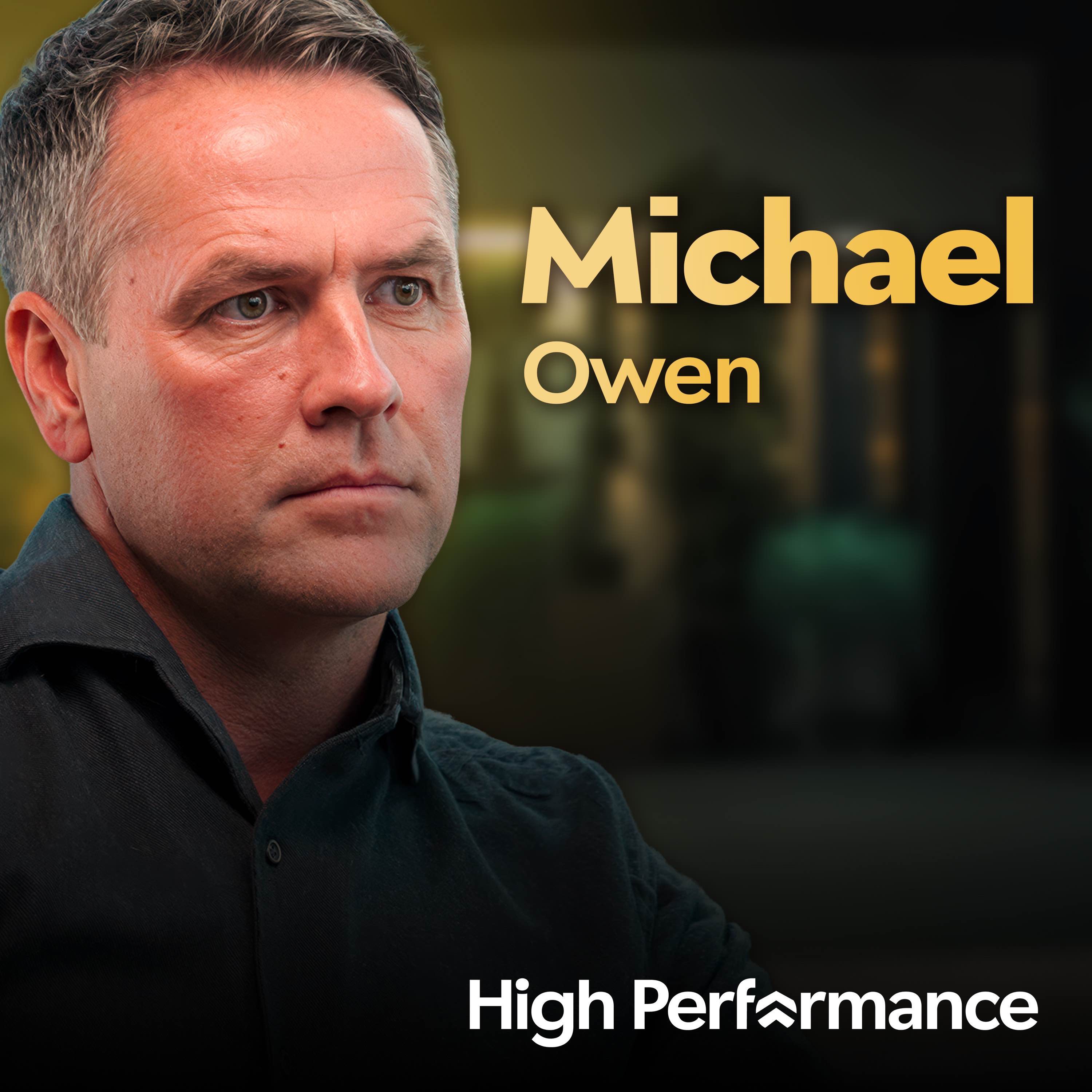
Michael Owen discusses how elite football mentality is built and how it breaks under injury and changing identity, including his “shit filter” for setbacks, the “apple core” mindset story, and his post-retirement mental strain during a divorce.
Michael Owen is a former world-class striker (Ballon d’Or at 22; retired from playing at 33), who played for Liverpool, Real Madrid, and Manchester United, won multiple Premier League Golden Boots and major trophies, and later became a broadcaster and runs Manor House Stables. He also co-created an Amazon documentary/Prime series about his life. The host is tied to Whisper Group (co-founder) and produced the Amazon documentary with Owen.
Self-belief can be “delusion” but only works when paired with real ability and trusted reassurance (his dad and Liverpool youth officer Steve Highway). Chasing perfection is dangerous; instead, process mistakes via a “shit filter” and turn negatives into positives. Injuries caused a mental collapse: he felt embarrassed, believed he was no longer the player, and described late-career football as “a job” and “a slow death.” He denies claims he sat out Newcastle relegation matches to protect his contract, citing a groin tear and rehab limits.
approval nods from dad/Steve Highway; throwing an apple core into a bin as a “little win” despite ridicule; Johnny Wilkinson’s “start again” perfection drills; Liverpool headlines about missing chances; therapy during divorce where he felt “unloved” and lost purpose after retiring.
Written by AI. May contain mistakes.
Learn about Michael Owen's rise as a footballer and his significant achievements.
“For a generation you were one of the best strikers, not just in England, but in the entire world.”
Explore Michael's early career and the mindset that fueled his success.
“I was telling someone you were on today and they said, why wasn't Michael on like week one when you were working together, I think you just said no for the last seven years.”
Discuss the importance of supportive figures in Michael's career.
“And even though I've sort of ridden that wave and I've been there and seen it and done it in my profession, I still have questions in my own mind in terms of how.”
Delve into Michael's apple core anecdote as a metaphor for his mindset.
“So I still ask myself that question all the time.”
Analyze the dangers of striving for perfection in sports and life.
“And it kind of got a bit derided and people were like, oh, Michael Owen was so brave.”
Understand how Michael copes with challenges and maintains a winning mindset.
“So you would think that somebody would like, hang on, just what is he saying here?”
Explore Michael Owen's childhood mindset and the small victories that shaped him.
“little wins all the time, whether it's playing in a little game against your sister and the fireplace is the goal and you miss and you smash a lovely ornament.”
Learn how Michael Owen processed losses and handled blame in team sports.
“So how did you learn to process getting beat or not meeting the standard that you expected?”
Discover how Michael's perspective on opportunities shaped his self-belief and performance.
“Like, would it happen in the dressing room?”
Understand the roles of Michael's parents in shaping his career and mentality.
“I can see how when you're playing football and you're scoring goals and you're in control, I can see that it's hard for things to penetrate that.”
Learn about the significance of family in Michael's personal and professional life.
“Yeah, a little bit let him down or just that he's not.”
Michael discusses how his family influenced his career and personal life.
“I feel as if my, I couldn't have done it without either of them.”
Michael reflects on his journey from youth football to becoming a celebrated striker.
“And I think one of the nicest things of your story is how close you all remain.”
Michael opens up about the mental challenges he faced due to injuries during his career.
“Like, my brain obviously can blame my body.”
He discusses the challenge of adapting his game as physical abilities declined.
“And who can blame if they love football?”
Michael shares how injuries affected his identity as a top footballer and the feelings of embarrassment.
“Do you remember the first time that you felt different on a football field?”
He explores the emotional toll of realizing he couldn't perform at his previous level.
“I felt like, oh, don't be looking at me.”
Michael discusses his feelings about wanting to retire despite pressure from family and expectations.
“a little bit embarrassed, a little bit depressed, even though I wasn't suffering from depression, you know, a little bit of everything really.”
He recounts an experience with an injury and the misconceptions surrounding his decisions on the pitch.
“to be able to understand how I felt when I wasn't that.”
Michael Owen discusses his experiences with injury and the mental hurdles during rehabilitation.
“I know where I am and I know if I push a day to earth I know where I am and of course I'm willing to like risk my body.”
Owen shares his emotions and reflections on his last game as a footballer.
“What are the emotions you remember of the final time you ran out as a footballer?”
Michael discusses the transition from playing football to working in broadcasting and the challenges faced.
“He'd come into work bouncing, enjoying himself, like the banter was flying around.”
Owen opens up about his personal struggles during his transition period, including therapy and relationship dynamics.
“whereby you've got to, you know, 33 years of my life, nothing else.”
Owen reflects on the challenges of co-commentary and dealing with criticism from the public.
“There was something else going on though as well at this time, which I actually hated because you started as co-commentator.”
Michael Owen discusses how he's perceived vs. his real self.
“it sounds like throughout your career you've worn a mask, a professional mask of you don't get too high or too low.”
Owen compares pressures of football and business ownership.
“How close is that to the pressure of being a footballer, do you think?”
Owen reflects on the importance of scoring goals and life after football.
“I remember being in the studio with you and two other players.”
Owen reflects on the importance of scoring goals and life after football.
“that's proven to help you live up to five years longer by nudging you towards healthier lifestyle choices.”
Discussion around Owen's career and impact on football history.
“And you go to the pub and you drink too much.”
Discussion about Michael Owen's impact and misunderstood persona.
“You know, often Seb will say to me, I don't know, some striker will have a great season in the Premier League.”
Exploring the authenticity of the upcoming documentary on Owen.
Hosts encourage audience interaction and reflect on the conversation.
“he's offered people are going to make their own decisions Correct because we all see life through our own prism of prejudged decisions.”

Get the gist, explore an idea or ask about something said.
 Claude
On The High Performance Podcast, what are the key points of this episode?
Searching your listeningAutomatic transcript. May contain errors.
0:03For a generation you were one of the best strikers, not just in England, but in the entire world. You can't try to be too perfect. It can get you to the top, but it can also be pretty damn dangerous. I wanted to just stop playing football. I hated it. From a strong mindset to a weak one, it was still fiercely competitive. that has to become a realisation at some point that, hang on, you can't kid yourself, you can't pretend, you can't be totally delusional. If you think you're going to win a Ballon d 'Or again or you think you're going to win a Golden Boot again, that ain't happening.
0:46Michael, welcome to the show. Thanks, mate. I was telling someone you were on today and they said, why wasn't Michael on like week one when you were working together, I think you just said no for the last seven years. It's nice to say. Do we want to go there straight away? Yeah. I said that to you. Did you? Yeah. What, in the early days? Well, I remember you doing about 25 of them. And you were like... Well, me and you've got a strange relationship. We've got a good relationship, but we just contain each other and it's absolutely fine. But I was deadly serious. I think he thought I was messing.
1:19But after about 20 of your guests, and I was like, love that podcast, want to go on that. I mean, think the brain, the power of this and that. And I saw Johnny Wilkinson. I was like, oh my God, that is so cool what he's talking about. And 21, 22, 23. And I was like, I'm not going to name names. I thought, he's even having him on now. And I told you, I said, you can off. Yeah, you did, yeah. Because I'm never going on it. I'm never going on it now. If I'm not in your top 25, then you can do one. And the only reason you're now here is because we've produced an Amazon documentary together. Yeah, because you've forced me to.
2:03Well, we're going to talk about your Amazon documentary in great detail. Just for full clarity for people, it was produced by Whisper Group, which I'm the co-founder of. But we're also going to talk about the thing that I've always wanted to get into with you, which is about the mentality. Because at 18, we all know this, you announce yourself to the world with that amazing goal against Argentina. By the age of 21, you'd won the Ballon d 'Or. You won two Premier League Golden Boots, an FA Cup, three League Cups, a UEFA Cup, a Premier League title. You scored 40 goals for England. You played for Liverpool, Real Madrid, Manchester United, among others, on your CV.
2:36For a generation, you were one of the best strikers, not just in England, but in the entire world. You now run Manor House Stables, one of the top stables in the country. You've got four children. You've got a very famous daughter. your son James, who features in the Amazon documentary, is clinically blind. Your marriage nearly ended, which I had no idea about until I read your book after you stopped playing, or that's what was intimated in that book. And now we have a new Amazon Prime series following your life. I think those are the things you've done. What we're really interested here on High Performance about is how you've done it.
3:10So before we talk about what your world looks like right now I want to sort of rewind to 10 year old Michael Owen um and at 10 from what you said to me and the things that I've read about you you didn't just think you were going to be one of the best footballers in the world it feels like you were certain you were going to be one of the best footballers in the world I'm just so fascinated by where your level of self-belief came from at that young age yeah I am too to be honest because the the brain the power of the brain, the mentality of people, not just sportsmen, fascinates me as well. And even though I've sort of ridden that wave and I've been there and seen it and done it in my profession, I still have questions in my own mind in terms of how.
3:58I try to piece together some of the things that my parents said to me and my brothers and sisters that you know the the atmosphere and and you know just just the dimensions and whatever of the house and what you know who was the boss and what happened and what why did I feel this way and um and then I look at it and just think well if you're given a bit of a natural talent then surely it's almost chicken and egg can you have that amazing self-belief and confidence without having any ability and i think not you can't be you can't just pretend to yourself all the time that you're brilliant and you keep getting rings run around you all the time but can you actually have an amount of ability and just be so bloody minded and so confident and such self-belief that almost you're deluded and that you can be better than you actually are.
5:02And then you actually are that good. And then you're delusional. It takes you another and you are that good. It's almost, and I've seen a lot of footballers that have got very, very little ability, but they are the strongest minded people in the world. And they've got to the very, very top. So I still ask myself that question all the time. And I'm not entirely convinced either way.
5:26Jake Humphrey: I mean, it's interesting. There's a guy called Albert Banjoa, who is a psychologist who said to be good at something and to have the confidence. There's a number of different factors. Some of it is you need the results. Some of it is you need to convince yourself that delusion. And some of it is you need to be reassured by somebody that you trust. we all need that in our lives somebody and it it couldn't be your school teacher it can be your you know your football coach it can be your parent it can be somebody but it's often one of those types of people and i had two people in my life that if they weren't watching me listen i love scoring goals i love playing but the little details the ones that made a difference the first touch, the concentration, they're never giving the ball away.
6:14It used to hurt me if I give the ball away. I wouldn't sleep that night if I give a ball away. And it was my dad and Steve Highway. Steve Highway was the youth development officer at Liverpool. And his approval, his little nod, his little wink, his little just made me melt thinking I've made somebody that I really respect happy. And my dad was exactly the same. My dad would stand behind the goal every single game, every game all the rest of the mums and dads would be on the side my dad would stand behind the goal I was kicking in and every single touch I had during that game I would look at my dad for a nod of approval afterwards that fulfilment in my blood when I saw him just give me a little nod and if I did something bad he wouldn't he'd never shout at me but he'd just you know he wouldn't nod or he wouldn't and I'd be like give me the ball quick I need to impress him again So I think you do need a couple of people in your life that almost are those people that keep you disciplined in many ways, keep you focused and striving for perfection.
7:22and yeah. Your new documentary starts with a pretty funny clip of you flying the helicopter famously with the dryest delivery ever seen. And then it moves on to the story about throwing the apple core, which I want to talk about because I remember us having this conversation about you saying when I was young, I was so single-minded and you told me this apple core story. And I remember thinking when you come on High Performance, we're going to talk about it. You said it on another podcast, right? And it kind of got a bit derided and people were like, oh, Michael Owen was so brave. if you dare to throw an apple call.
7:53But for me, that's people deliberately misrepresenting or looking for a kind of comedy angle, right? On something that's actually very genuine. So let's have a proper conversation about this that hopefully doesn't get taken out of context, right? Because it obviously stayed with you, that feeling that you would have in your bedroom when you were sitting there eating an apple and throwing it at the bin, right? What was so significant about the mindset you had at that age that all these years later you still refer to it? well there's a few things that that i would do but that was just sort of an example of it and of course you're right you know people ridicule it and i can laugh at myself i think hopefully you know everybody listens to this we'll we'll watch our documentary as well and they'll see probably the one thing that will shine out is that i can laugh at myself and i demand that out my family as well my kids and whatever we're all you know we don't take ourselves too seriously but it does miss the point though they totally miss the point it's not the actual story they're just listening to a story and taking the pee out of me that's fine but just think about it like I've been to the top of my profession do you know what I mean I've done it I don't need to like I've proven to anybody in the hardest sport of all where everybody plays I'm not playing darts here or temping bowling where you know a couple of hundred thousand people I've done it in the game that everybody wants to do it.
9:20It's the hardest of all. We'll be right back after a quick word from our partners.
9:28Jake Humphrey: We have the tech to get food delivered in 15 minutes, but we all have horror stories about buying tickets. The GameTime app gives fans the advantage. Get amazing tickets in just a few taps. Fees are included, so what you see is what you pay. and the GameTime guarantee means authentic tickets at the best price every time. Take the guesswork out of buying tickets to concerts, sports, comedy, and more with GameTime. Download the GameTime app and create an account for$20 off your first purchase. Terms apply.
10:02So you would think that somebody would like, hang on, just what is he saying here? But obviously not everybody's like that. when anybody said if anyone comes on this podcast i'm like hanging on every word and sort of almost pressing pause right okay how what's he mean by that and trying to think of it trying to get an edge myself trying to learn off somebody that's that's been there i mean as i said to you earlier when i watched the johnny wilkinson one i was like and i worked a little bit with johnny i'm fascinated by his mentality because it is totally the opposite to mine but i've seen others that are exactly like him and I think it's a real dangerous mentality he's got it can get you to the top but it can also be pretty damn dangerous in my opinion in what way you can't you can't try to be too perfect when I was at Newcastle he used to come in we had a big indoor facility and I think he was coming back from injury at the time or he was just putting in extra practice he used to come to our indoor facility and we got quite friendly and he would put like 20 balls across the halfway line right on the edge right on the byline and then every three or four meters bump bump bump bump 20 and he'd kick the first one and he kicked the second one and kicked it and the fourth one would miss he'd go and collect them all and start again two minutes it gets to 14 miss the fifth start again now to some people they think well that's like striving perfection and it's blow up.
11:30But what happens if you're there all day? What happens if, you know, I love practice and I love all that. I get it. But David James used to be the same, our goalkeeper. He used to get people crossing the ball on the Friday at every different point, about 20 of them, and come and take it at the highest point. And if he dropped one, right, start again. You can be there all day. If you can't let something go in life, if I'm in a warm-up at Anfield, you know, 50 ,000 people there, and the ball comes to me in the warm-up, and it bounces off my shin, and I've got the mentality, oh no, I've made, that's it for, you know, I'm going to be bad today.
12:07You've got to be able to have a, I call it a shit filter. You've got to be able to have something that, bad thing can happen, and I could say to myself, well, that's my bad touch out the way, I'm going to be the best player on the pitch today. But if I had a great first touch in the warm-up, I'd be like, my touch is on fire, I'm going to be the best player in the pitch today. I could turn anything into positive, whereas there's a lot of negativity in trying to be perfect. You know, there's a lot of, you know, something goes wrong and it's like, oh, start again, start again. And it can't be good.
12:38You could be there for hours and hours and hours. So I don't know, you know, searching for perfection is like, it's incredible. It can possibly nearly get you to perfection, but it could all, I mean, that would drive me wild, drive me insane if I think like that. But I'm fascinated by it. And I'm not saying that you can't learn from it. anyway we digress the apple core the apple yeah anything like my mum had some lovely ornaments in our house that passed down from my nan who sadly passed away and we I'd play with any little football in our in our lounge I didn't think about you know missing the target and smashing them my mum's ornament that passed down from my bloody nan it's like it was the same thing you know and again but what happens the next time for people to laugh at and go, oh, you didn't.
13:27But why is that so significant? What is it about the mindset rather than the action that is so significant there when it comes to you finding your own high performance? I knew that my mum didn't want me to mess up our nice, you know, wallpaper. I knew that my mum didn't want me to break all her ornaments. Our house was just a total mess. Holes in the walls, holes in the doors, stains all over. because I don't know. I'm doing things that I'm not supposed to be doing, but I'm that like wanting to achieve little things, little wins all the time, whether it's playing in a little game against your sister and the fireplace is the goal and you miss and you smash a lovely ornament.
14:12It's like, oh my God, mum's going to kill us. But it was worth doing to play football, to score a goal in the fireplace. It was worth doing to try to nail the apple core into the bin and get a bollocking off. It was just worth doing those little, the feeling of being able to score a goal into the fire or throw a ball. So it's more that those things represented your mindset at that time. Absolutely. And that's what I was trying to say. And if I asked you to describe your mindset at that age, how would you describe it in your words?
14:42Daring, single-minded, just nothing, constantly after a challenge, like anything. As I say, I mentioned an apple corn, whatever, I've just, but anything that represented winning or dad, watch this, watch, watch me, dad, watch me. You know, um, what's the word when you're always looking for approval off your, off your dad. I wouldn't be bothered if my younger sister saw me. My dad's watching. Oh my God. And my mum's here. She could ball at me and he's going to give me a little nod if it goes in. Oh God, I'll do it. Do you know what I mean? And it went in. It's like, oh, my dad would be great shot.
15:19Great shot, Mike. And that approval, searching for that approval and that confidence and that self-belief, it built over years. No one can just tell you, have some self-belief, mate. In fact, you're a brilliant footballer. You're so good. You're so good. You can't just say that. This is built all the time. My dad, another little example. My dad, on a Tuesday, piece of steak. We had no money. No money at all. Piece of steak on a Tuesday. My brothers, I've got two brothers, two sisters. They're all beans on toast. We had no money. but I had a piece of stuff on a Tuesday because Michael's going to be a footballer we need to build him up he's like that you know he's going to be a footballer we've got to now that wasn't seen from the rest of them it's like oh that's favourite it was just a given that Michael's like that we need to build him up he's obviously showing so much Jake it's these tiny things I was trying to say about Apple Corps about whatever and I've given you three examples it's it's growing up in in an environment where like because as i say the first question was how why what well like where do you get this self and i'm trying to think of it myself you know as i say is it talent is it this is it a combination is it you know what we what we spoke about right at the outset so when i look back and i'm asked like i have just been asked where did you get this from where did you get this mentality these are the little things that i think built a bit of character into me a bit of daring a bit of challenge a bit of winning and losing or and you lose you get a bollocking whatever it might be i think that these built my character in a certain way and of course that develops and doubles and triples and and i i think that goes a long way to you know to to building the character i had but can we explore the shit filter that you say you
17:12Jake Humphrey: because some of these challenges that you were taking on, whether they were the Apple Corps or whether it was on the sports field, you are going to lose as well. So how did you learn to process getting beat or not meeting the standard that you expected?
17:30I know lots of people will say, you know, certain things that you can have, let's say blame would be seen as a negative. well if you're in a team sport it's quite easy to blame everyone and exonerate yourself from anything and I don't think when you're trying to build a real strong man I don't think blame is the worst thing what is the alternative? you think it's you? I mean if I thought when every time Liverpool went out and we got beat if I thought it was all my fault I would be petrified to come back onto playing ever again if ever like I get into the car and say, God, dad, how bad's our right back?
18:12How bad's our left winger? How bad's our... I'm making all these runs and they don't see it or whatever. It's like, if we get B, I am absolutely exonerating myself from everything. I played well. And of course, I didn't all the time and I missed chances and I hit the post when I should have scored and all these things. But I'm not going to sit there and say, oh, woe me, you know, like I need to get back on the practice field and because, you know, I'm letting my team... Bollocks. Now, if I'm in an individual sport, there's only so many times you can start thinking, oh, I was unlucky there. That ball just went over the line or whatever.
18:47But I think in a team sport, I think to build your own self-belief and things, then I think, you know, yes, things went wrong. Yes, a lot of the time you can get beat, but sometimes you can get beat and still play well. sometimes you can score a couple of goals and lose 3-2 and you still think well I played well sometimes everybody played poorly and you sort of think well do you know what my teammates weren't at it today type of thing you know I'm not scared to admit it and I'm not scared to admit that it probably was my fault a lot of the time that we got B because I didn't finish a chance but that's not to say that's the right way of building a right mentality for the next time
19:25Jake Humphrey: So what happened like when you come home and you say like you're in the car and you might be with your dad and he might be blaming the right back for not putting the ball through to you. When would that stop? Like, would it happen in the dressing room? Would you articulate the same feelings in the dressing room or was it more in private with the people you trusted? Oh yeah, no, I would never. Yeah, no, it was purely my dad. Right. Yeah, and myself. Oh no, I would never go into the dressing room and blame anyone. If anything, then sometimes you would say, sorry lads, missed a few chances today, but you know I would never say it's your fault that we lost no I was quite quiet focused type of person in the dressing room but no like secretly I would like anything when you do any anything when you come off the off the pitch it takes you half a day a day to process it all to get it into your mind to say right okay you come to your conclusions and then it's shelved somewhere in the back of your mind and then right okay three days later we're playing again and it's sort of gone then and you're focusing on the next one but for those first while i'm processing it then i can't ever remember me having thoughts of oh my word you know it's all my fault um you know because as i say you'd never be able to but you must have still been tough on yourself in those early days for self-improvement standards yes definitely you have high standards and if you miss a chance that everybody else would have been delighted to you know hit the target but if you miss then it's you know you're disappointed with yourself but it's not one of those where you sit down and give yourself a good ticking off you know it's like I'd normally score that one I know no one expected me to score in my mind I would normally score that one but so fine I'll score the next one and I could always like the funniest thing is at Liverpool I when I first got into the team it was you know I was the main man and if we drew nil nil the headlight or if we won one or whatever the headlines would always be you know owing cost liverpool missing 10 chances let's say and i'd buy the papers the next day and i'd like go around to my mum and dad's and say look at this dad like who is this journalist he thinks i played badly yesterday and i mean i missed 10 chances and should have scored eight goals or something let's say but in my mind it was like nobody on this planet would have got those 10 chances.
21:54My time and my runs yesterday was amazing. I beat like four players to get that chance that he's referring to. Who else would have got that chance? Do you know what I mean? And that's the way I was. I was totally, any negative was a positive. I got 10 chances. Forget the outcome. The last 20 years will tell you, I will score more than I miss. So the outcome is just, it's a by-product. The next time I get 10, I will score eight type of thing. So that was my mentor. And I just, I was baffled by how somebody can think that you played poorly just because you missed a few chances, even though you could have done unbelievably well to get into those positions.
22:38This rock solid self-belief that you talk about, I can see how when you're playing football and you're scoring goals and you're in control, I can see that it's hard for things to penetrate that. What about when it came to a different kind of skill you need as a footballer though? Like the time you would have first walked into the Liverpool dressing room or the first time you're on the training ground against like established Liverpool first team players or even when you go and you sign for Real Madrid and you have to walk out of the Bernabeu and do keep you uppies or walk into that dressing room for the first time.
23:07Where's your mentality in those moments? respectful brought up hopefully in the right way and you know would always look up and think oh my word Robbie Fowley you know his posters were on my wall you know Steve McManamon I used to just couldn't believe how good he was when I used to go to Anfield and watch him every you know these players were absolute heroes but I had just you know broken every record at every level. Then I went into the reserves and the reserves back in those days was like Owen, Carragher, David Thompson, Stephen Gerrard and seven first team players. Like the reserves was reserve team football, not like kids football now.
23:53And in the reserves, I literally played 10 games and was scoring dozens of goals against like with and against these. But so there was, and then I was training with them. So there was no doubt in my mind that yes, they're heroes and they always were, but I'm like, I'm as, yeah, exactly.
24:13Jake Humphrey: And when did you stop looking to your dad, daughter, Steve Highway then when you get in for that validation? Exactly. When you get into the first team, you know, you've almost surpassed Steve Highway, obviously being an academy manager. You're now looking at your manager, you're thinking, I want to impress the manager. But always my dad as well. Always my dad. Even to this day, you know, we go to the pub a couple of times a week. you know and and i always come away from it thinking not did i impress him today but i'd be mortified if i said something out of turn or whatever and i thought that my dad was going home thinking mike was a bit disrespectful today or michael's said something or or whatever i swear too much when my dad hates swearing and i swear too much you know i always say oh no i swore again in front of him today and it bothers me okay it bothers me that i might have not let him down Yeah, a little bit let him down or just that he's not.
25:08And my mum the same, actually. Depends where you are in life, isn't it? When I'm on the football pitch, then there's only certain people that I want. When you're at home or when you go to the pool or when you're with your family or whatever, you have certain things that you want to do and say and how you want to make them feel in many ways. So, yeah, so my dad still carries that sort of aura and somebody that I still want to impress, even though I can't do it on the football pitch, still want to do it in other ways now.
25:39Jake Humphrey: Because I wanted to ask you about your mum, because in your retirement statement, you wrote a line that your mum has always taken the brunt of my frustrations yet continues to keep our family so tight-knit, a trait that's formed the foundations of my own success. and I know you often speak about your dad being a influential figure but I don't hear so much about your mum until I read that would you tell us a bit more about her role yeah so my dad was um my dad never shouted at me at all ever um yeah I was petrified of upset it was an unbelievable balance he he created um but my mum was very much the worker of the family two jobs never got to probably you know watch me as much as my dad my dad if i was just doing a cross-country running pe my dad would have bunked off work and i'd have just been jogging along and then i see my dad's car like a couple of hundred parked up in the and he'd be and i'd be like fourth i'd be like oh my god my dad's just seen he's here he's here he's watching me so then by the time he was at his next checkpoint i'd be like making sure i'm winning by then um so he was very whereas my mum was just she didn't have time to do any of that work work work keep the family afloat and she would be the disciplinarian um and so but she would do absolutely yeah absolutely everything for us so I probably mentioned my dad because you know as I say he was the one that I always wanted to impress but I'd say my mum was the one that and still is the boss I mean she's she's the ground rules she's everything everyone thinks she's an unbelievable woman like everybody i've i've got manor house stables now i've got 130 horses with 130 horses comes hundreds and hundreds of clients to a person every single person comes up to me and just said your mom is like unbelievable like they've never seen anything like it she's a matriarch she's she gets around she remembers is everyone's name.
27:46She's just, she's hard. You know, people are sort of a little bit wary, but then when you speak to her, she's so soft and welcoming and kind. And she's just an incredible person, like incredible. But as you say, over the years, I feel as if my, I couldn't have done it without either of them. But the, the, the, trying to impress my dad was the thing that I always thought just kept me sort of, kept me going. Still to come, Michael explains to us how injuries changed the way he saw football. We'll be right back after a quick word from our partners. And I think one of the nicest things of your story is how close you all remain.
28:28You all still live in the same place. You get together. I remember when I came to your house for New Year's Eve one time and you were saying, oh yeah, we're getting together for Sunday lunch. We meet, the whole family gets together every week for Sunday lunch. And I wonder what role your family played in the sort of next phase in your career. So you had this incredible youth career. It then moved into the Liverpool first team, scoring goals for England. You were like the most celebrated and greatest striker. I remember actually when we were working together at BT, it used to annoy Steve McManaman so much.
28:54If a young striker would like come through into the Premier League and people would start comparing them to Michael Owen. Steve was like, are you freaking joking me? He's played nine games in the Premier League and scored four goals and people are asking if it's the new Michael Owen. Like at that point, he'd been the Ballon d 'Or winner, scored for England, 30 goal seasons for Liverpool, single-handedly won FA Cup finals but then came the let's call it the second phase of your career where injuries started to take their toll I saw a quote from you once saying you were better at 17 than at 28 and I'd love to understand the impact on this rock solid mentality this guy who even when things were bad he could find the good in it the guy who was always the best in class was always the best standards when your body started to not do what it used to be able to do I'm so fascinated by what that kind of private turmoil would have been like inside your own head.
29:44Yeah, and that's what it was. It was turmoil. Like, my brain obviously can blame my body. You know, I used to think to myself, you know, I was at, you just used a 28, let's say, and I would be playing against players and all of a sudden they were taking the ball off me or matching me for speed or out-strengthen. I can't explain how, you know, that's just not in my brain. That's not how I'm tuned. You know, I go onto the pitch and believe that I'm faster and better and I will run past you and that's just not an argument. I'm just going to do it. Do you know what I mean? It's just like that's just always happened.
30:27When I push the ball past you and you sort of get there first and out-strength me and run faster than me, that's not that doesn't that in my brain that doesn't happen so how you then compute it as you say is just it sends you it sends you doolally it's like and I wanted to just stop playing football I hated it do you know what I mean and I've said it a million times like and people get all upset thinking oh yeah you were playing you were taking your wages and you were you know playing for great teams of course but you've no idea how somebody's brain works in front when you're playing in front of all these millions of people and when you've done this type of thing all you like and now you're powerless compared to the old days it's like it can't in my brain it just doesn't work now I would I wouldn't love it at all but I admire people that they get worse they regress like we all do in life let's say at football and they can go down and play for lesser teams and maybe go down a division and just keep enjoying it.
31:35And who can blame if they love football? Who am I to say, what are you doing? It's not for me. It ain't for me. I'm sorry. Lovely that you lot do it, that other people can do it. And some people think like me and they just can't, you know, I want to get out at the top. But my top was like when I was 19, 20 or 24 or something. And I was going at 26. I could physically feel myself like, oh, my God, I'm half the player. Now to have that longer career afterwards, hating it's a strong word, but just like constant frustration that you can't. And at some stage you've got to accept in your brain, Michael, you can't do that anymore.
32:19You're not as good as you were. You're simply not as good. So you're going to have to change your game and just be as, you know, or try to be still influential on a game without doing all the things that were your USB back in the day. You know, I can no longer run. So, right, what can I do? I'm going to have to link play. I'm still a really good finisher. So link play, get in the box, hope the ball drops. And I would still score important goals. And I still had a career. I was still playing for Man United when I was 30. You know, still did well, but not in my brain well. Do you remember the first time that you felt different on a football field?
32:58yeah I think coming back from when I came back from Real Madrid I went to Newcastle for the first six months I was still a top player you know those first six months at Newcastle I was flying scored a load of goals me and Alan Shearer it was great and then I broke my foot on New Year's Eve and I was in a pot for you know three four months and then I rushed back to get into the World Cup and I was so deconditioned and my knee goes. So I'd only played like, you know, missed six months of football, play three or four games and then out for a year with my knee. So basically I was out for a year and a half.
33:40And coming back from that, don't get me wrong, I came back fit and strong and powerful and whatever. But I knew coming back from that that I was a different player. My pace was going. I feel it going. That's scary. depressing did you get depressed do you think no I don't think so like I would use different words what would you say like if I say oh yes depressing doing that I don't mean I'm like depressed I just use it as a word so how would you describe how you felt embarrassed that would be one of the words jogging out onto that pitch and thinking that 50 ,000 people in this stadium him and a dad is with his son or daughter saying, Mike, what a player he is.
34:30He's quick. He's this and that. He ain't anymore, mate. I felt like, oh, don't be looking at me. Don't be watching me. I'm not going to offer you. I'm not going to give you what you used to, you know what I mean? I mean, that's a kid, that mindset that kid had. But still the same, no, but don't get, don't think it's now it's like gone from a weak to a strong, you know, from a strong mindset to a weak one, it was still fiercely competitive. But there has to become a realisation at some point that, hang on, you can't kid yourself. You can't pretend. You can't be totally delusional. You can be a little bit.
35:10But if you think you're going to win a Ballon d 'Or again, or you think you're going to win a Golden Boot again, that ain't happening. You're not playing for the teams now. You're not starting every game at Manchester. You're not, you know, there is, like you're just now kidding yourself so you've sort of got to realign your and that's not a nice thing to do when you settle in for second or third best it's just not in my mindset that's
35:34Jake Humphrey: incredibly powerful word to be embarrassed by something like so how did you cope with that like what was the change of behavior that that would have forced that would have forced in you uh inevitably you would be you know you'd be frustrated you'd be you know you you're realigning your goals now and they're not what you what you want and i offered to retire six months before i did i went to the chairman at stoke and said listen and this is just blowing my brains i can't you know i just i'm giving away money i'm saving you a load of money but just please just let me out my contract and just let me retire i wanted to retire you know it's probably secretly not i I don't know whether I wanted to retire.
36:18I wasn't enjoying it like I, like it wasn't, it was a job. It was a, it was a, it was a job. That's what it was. And when did you first feel like that? When I was at Newcastle, when I come back from those injuries and I just realised I wasn't, you know, I lost my place in the England team. You know, all these things are just like, and you're playing against players. They're just, you're just like, oh my God, how are you better than me now? Can't even get in the team. Like you're keeping me out of the team. and I don't want to be disrespectful. I would never name that or whatever, but yeah, it's just, I just couldn't.
36:52It's just like, it's just a slow death. It's a slow death in many ways. And I don't know what words I would use, a little bit embarrassed, a little bit depressed, even though I wasn't suffering from depression, you know, a little bit of everything really. It's just, as I say, it's just a slow, hurry up until you get to 32. Then I can, at least I can retire and people can say, oh, well done. That's, you know, But if I said to my mum when I was like 30, mum, I'm desperate to retire, and she was like, you do not even think of it. You've got still loads to offer you. And they believed in me massively, but they didn't know how I'm feeling.
37:27Were you in pain during games? No, never in pain, but just really vulnerable to injury.
37:32Jake Humphrey: So what kept you going then? Because it sounds pretty miserable. So why didn't you walk away? Was it because of lack of options? Well, you're just young, aren't you? What are you going to do? you're 29, 30, 31. It's like, and I still loved football and loved the players and, you know, going in and whatever. And it was, you know, you'd have some great moments. And that's the thing. I would have, I was still capable of moments. Right. You know, I played for Manchester United back end of my career. I scored a hat trick in the, you know, in the Champions League. I scored a goal in the cup final when we won 2-1.
38:10I scored the goal against City in the last kick of the game, Fergie time. You were probably in the stands cheering all of those goals. You know, like I had, you could throw me on and I would, you give me a chance, I wasn't missing. You know, I could still do it. So I could still have a moment and a moment would keep me going for another month or something. You know what I mean? Be like, yes, you can still do it. And then you'd get injured, you'd be out for a few weeks. So don't get me wrong. It wasn't like the most depressing, saddest moments of my life, But you've just got to understand where I was to be able to understand how I felt when I wasn't that.
38:48It's 99 % of footballers' dreams to be playing for the teams that I played for, and especially at the end of my career, how can I be so, not disrespectful, but so greedy to think that I deserve more at that age? But that's a mindset that it's a winning mindset. You know, if you look at Ronaldo or whatever, you think he would accept playing now going to Stoke like I did. I mean, it just doesn't happen to those people that have got that mentality. Don't get me, like my mentality got me where I was. I'm 5 '8". I'm, you know, 11 and a half stone playing weight less, a lot more now, a bit like you.
39:41You know, I could finish, I was cool in front of goal, I had speed, okay, but my mentality was what made me get to where I got to. you know I've I've I know for a fact that my mentality is is as strong as as anybody's in the game of football now my physical attributes would be weaker um than a lot of people but you know it was my mentality that got me to the top and that's what that's why it was painful because of that mentality afterwards well I was going to ask you like that bit where you said
40:18Jake Humphrey: about at Newcastle, it became a job. And when I was doing some research, Michael, there's an incident I wanted to ask you about from a physio called Paul Ferris, who talks about you sitting out the last two games of Newcastle's relegation fight because you were out of contracts and worried about injury. Now, I know you've spoken and said that that wasn't an accurate representation of the conversation, but I'm interested in what was your response when you were asked? Well, how could I go? It's the biggest lie I've ever heard. I mean, I was injured and I had a tear in my groin and it was a long tear.
40:56We had scans. I mean, the scans were all there for anyone to see in black and white. And we were coming to the last game of the season and we needed to win away at Villa. And Alan Shearer and Paul Ferris were very, very close. And I hadn't trained. I hadn't played for, you know, weeks or days or whatever it was. But the injury was, you know, I still, in any normal time, I would have still been out for another two, three, four weeks or something. It was a significant tear to my groin. And Alan said to me, you know, last game of the season, could do with your playing. I'm like I'm like literally you know this is not a kid that's like 17 that doesn't know his body this is a 20 whatever 8 year old that absolutely has had a million muscle injuries I know to the T better than any physio how long I'm going to be out as soon as I pull up that's like yeah that's a 21 day and the whole process I know where I am and I know if I push a day to earth I know where I am and of course I'm willing to like risk my body.
42:09If it was pain, pain injection, no problem. It's a joint or whatever. You can get away with it. It's fine. But muscles are so debilitating. You just can't do anything with it really. And I said, and he was like, we want you to play. So of course I was like, I want to play. Let's go and do a fitness test. Let's go and see it. So I start going half pace, get up to about 60%. It's starting to knit together. It's just like a scab. It's just like you pull the scab off too early, it's going to bleed again. Do you know what I mean? My scab wasn't ready to fall off naturally. It wasn't healed. And I could feel it.
42:42When I was going 70%, I was like, ooh, it's tugging. That's going to tear again or tear worse. Like, no point moving to 80%. I'm just, that's where I am in my rehab. I'm still weeks away. So he said, right, okay, let's go and see the manager. And we walked straight into the gaffer, into Alan's office and went, and I told him exactly what it was. Fine at 50, fine at 60%. At 70, it was giving me a right tug. It, you know, it could have. And he's like, well, are you prepared to risk it? And I'm like, yeah, like I'll risk it. But I know my body, like genuinely I'll, within five minutes, as soon as I go on any form of sprint, I'm dead.
43:29You're using a sub after five minutes. I said, if I were you, I'll start if you want. But if I were you, I'd put me on the bench. If we're drawing nil-nil, 1-1 or whatever, 10 minutes to go, I'll loiter around the box. Hopefully a ball will drop and I'll finish it. That's what I would do if I was you. And that is exactly how the story unfolds. How he said, Alan, for that matter, or the physio, and they're together at the hip anyway, how any of them said that I didn't want to risk myself because I was on a boss. Mate, I've pulled 50 muscles in my time. It'll take three weeks to heal. I'm off for two months.
44:11It's fine. I'll do it again now if you want me to. I've played in the biggest of games. I would never shit out of any game. I don't care whether it's for... You look at my record. You look at every big game. You look at every derby I played and every cup final I played in. I scored in every single game. There's not one that I didn't, apart from the UEFA Cup final. We won it. It was the only game, only big game I didn't score in. The furthest we went with England was a quarterfinal in the World Cup. I scored against Brazil. Furthest we went with England, the European Cup, against Portugal. I scored against Portugal and the penalty.
44:49Argentine, penalty. Put me under pressure and I get better. I don't need to answer, you know, like saying, oh, I shit out of a gay. I've never shit out of anything in my life. Nothing. let alone a football game so bigger games the better so it's like and to say that oh I was protecting myself it's like oh come on man I came on by the way he did as I said I came on you know with five ten minutes to go so it's like it's not like I refused I did it it's just the most ridiculous accusation ever right and when when you played your final game was it in some ways a relief? Was it a sadness? What are the emotions you remember of the final time you ran out as a footballer?
45:37Yeah, both. Yeah. Relief, definitely. I mean, I played a game, the Stoke experience, and I love Stoke, such a cool little club, and the fans were so nice. I mean, I hardly played, yet the fans were so nice to me. I really, really wish I'd sort of done better there. But I remember not playing at all. you know just being on the bench crouchy and john walters you know we were a physical team and i probably shouldn't have played to be honest the way we played i was you know not going to win any headers am i um so i get it but then after about six months of hardly playing coming on the odd time and just you know you i remember it was an fa cup game so the manager changed all the players rested all the players and i was playing and there'll be a moment if you ask most players There'll be a moment in your life when it's like, oh my God.
46:28And I almost was not dizzy on the pitch, but I lost all my bearings. The ball would come to me and I'd take a touch. And it was just like, because I hadn't played for so long, it's like I'd just forgotten how to play. And that was when, it was Crystal Palace away in the cup. And that was when the next day I went and saw the chairman and said, let me out my contract. It'll save you money. I cannot, I just can't do this anymore. and he refused and everything else. So I went to the end of the season and it was all fine. But at that moment, I thought, I ain't football anymore. I can't do it. So away at Southampton was my last game.
47:05And so it was relief. And then we come to what I consider a really fascinating part of your life, which was when you stopped playing football and moved into broadcasting. It's when we first met. And in fact, the Amazon documentary, which we'll talk about in a moment, actually stems solely from this period of you and I getting to know each other. because I saw this fun guy who had a great career, always had a smile on his face. He'd come into work bouncing, enjoying himself, like the banter was flying around. You know, my jokes are way funnier than yours, but you, you know, laughed at them. And I sometimes laughed at yours.
47:38Pity him, don't we? And then I suddenly read that behind the scenes, you're going to therapy. You used the phrase, I was staring into the abyss of a divorce, that you were really sort of struggling mentally. And I saw none of this when we were working together. and this was exactly the time. Yeah, but I'm still like, a bomb could go off in my house or whatever. I see the good in everything. I was like, yeah, me and my missus were having a tough time. It was me that was having a tough time, really. You know, I'd retired and you, you know, you look at the stats, you look at how many footballers divorced in the first year after this, like massive.
48:13And, you know, no longer wanted, no longer needed, no longer loved. These are all the emotions you feel. No one sings your name. No one asks for your autograph anymore. You know, you're not going into training anymore and feeling like special in any way. You're sitting there and you're eating and you're drinking and you, you know, and you watch what I do. You go on and do a bit of TV. And it's great when you're there and you meet the lads for a couple of hours. But do you know what I mean? You feel as if you lose your purpose for a little while. And don't get me wrong. I wasn't like a, for the heck, I know loads of people have literally gone off the rails.
48:44But it is a, it's a little fact finding period of time whereby you've got to, you know, 33 years of my life, nothing else. Yeah. You know, nothing else. And all of a sudden it's like, wake up and it's like, oh God, what are we doing now? Now that happens to people when they're 65 normally, but they're ready to retire. You're not ready to really retire at 33. I was in a way for the reasons we spoke, but not from like actually having a purpose of waking up and going somewhere and doing a day's work. so it was a challenging period and I would take it out on you know other things I would never sort of have a go at my missus directly but you know I knew what would hurt her um you know I brought up a certain subject or something so it just got a little bit you know I didn't yeah I it took me a little I needed to find out in a way why I'm doing this what what's happening and why I'm doing To explain your behaviour, you mean?
49:43Yeah. And don't get me wrong, I never did anything wrong as such. But you were angry, like you felt... Yeah, I felt probably unloved, I guess, possibly. You know, my missus obviously has her life while I'm playing football and travelling and this and that and the other, and sort of, you know, she probably fit round me in a way. And all of a sudden now it's like, I need you. I'm like, I want to spend time now and things like that. But her life was her life and, you know, and she had the kids and everything else. It was like, what about me? That's how I felt at the time. What did you think of therapy?
50:24Did it work for you? Well, it was her idea, I think. Was it joint therapy or solo? Solo, but we saw the same guy, but he'd sort of have an hour with her and then an hour with me. And what did it do for you? it made me realize what i was in i was going around the houses bringing things up that were sort of that i knew mattered to her i didn't have the courage to sort of just go straight and say right well you know not happy about this this and that or whatever and i would sort of have a go at that and have a go at that and have a go at that that i knew would upset her or annoy her constantly Every, you know, every three weeks I bring up the, you know, here we go again, bringing up that again, oh, your type of thing.
51:08But I didn't know any other way to sort of get my point across. And how did the therapist help? He made me see that you're attacking something that you know that means a lot to her instead of just confronting the issue. There was something else going on though as well at this time, which I actually hated because you started as co-commentator. didn't you at BT? Yeah. That was your first job. I mean, that is the, by the way, like co-commentary is the hardest job in football. We've all found that out. Because if you're being a public... I wish someone had told me before. You've got time to think about what you're saying.
51:43Often if it's not live, you can think about it again. You're working from a script. You plan what you're going to discuss beforehand. You can go through, hey, I'll ask you this. You say that. You look so clever. And people can see you and they can warm to you if you're in front of the camera. You smile your face and it's like they can sort of... See your personality. Michael gets thrown in co-commentator which no thinking time you only hear the voice you don't see the face and the crit mate the criticism was off the scale which i think is also a hard thing for you because you were such a loved footballer like such a loved england player and then you were having to deal with all of this criticism what what was that period like i think the the general feedback that i got was that my content what i was actually saying was very good it's just i didn't have any like hot you know it was just monotone and my voice is a crap one anyway but then i was never you know going up and down with you know and so i think it was quite hard in a way because you know when you think you're doing a good job and you think like every big decision you'd call it before the replay or whatever and i was always encouraged to do that you can always say oh do you know what on second glimpse there i i actually don't blame the referee for doing this i thought it too it's not a penalty it's a dot or whatever you can always correct it but they always encourage you to you know to go with your gut and say it and blah blah and i was nailing all the i was like i really thought the content of my my commentary was really good but i just had no but with all due respect mate as well if i was commentating on west ham against bolton like do you think that I'm that arsed about that game.
53:23Genuinely. And that was my problem. It's like, I should have been going, I'm West Ham, I've scored, and it's unbelievable here, upton parking, blah, blah, blah. But it's like, it's a game between the 12th and the 14th in the league. And I'm like, that's not what you respect. I've been playing like, when games do matter. So for me to get high would have been acting.
53:47So it's a very hard combination to try to find the right person that knows his stuff, that can educate the listener, that's got a great voice, that's so enthusiastic about it, but that's been there and seen it because that then gives credibility, but then needs to be really, really enthusiastic about it as well. Now, but I did enjoy it because I had a pride in my work and I wanted it to be really good, but for some reason... I'll tell you the reason is because you were such a big name and such a big signing. and so when people wrote about you um people clicked on the headline or bought the paper so therefore when that happens people do it again like you saw how much criticism i got working for bt sport all the time david brent dan and partridge all that it was all because when someone wrote it like became a trendy thing to have a go at me and so when someone like it was a safe thing to do if you were to have a go i don't know gabby logan or mark chapman or you know mark pugatch you're not real are people gonna like that or not if you ever go at Jake Humphrey as a football presenter, you know people all laugh at it and find it funny.
54:51So therefore it's a safe thing for a journalist to do. And I think that's why I got so much of it. And I think the same for you. I think it became like, no one was going to say that was the wrong thing to do. But the reason why I felt it was so wrong, because I loved and still do like spending time with you, like your company is absolutely hilarious. So I was seeing one guy and thinking, you've completely missed the mark, which is why I then, and I think I did badger you quite a bit to try and do a documentary about your life, right? Like, just open the door and let people see this. All the stuff we've spoken about, this amazing mindset, this incredible achievement, this guy who conquered the world, the last English player to win the Ballon d 'Or, but this guy who then just got eaten alive by injuries and had to deal with that in silence, now had to walk away from the game and had to cope with, you know, the things we've just discussed, like the personal challenges and then the criticism.
55:39I was like, it's time to see the real you. And now the world gets to see the real you. They will. And I've watched the documentary in full. I'm lucky enough to have done that. And I really wish I hadn't got you to do it because, my God, finally they see the real you. I know.
55:55Jake Humphrey: Well, can I ask you, Michael, because just going back to that co-commentary experience, that to me, when I'm listening to it, it sounds like throughout your career you've worn a mask, a professional mask of you don't get too high or too low. And that allows you to move on to the next chance. And you've done that professionally. and then it sounds like you were doing that in the commentary. I'm not going to get too excited about West Ham versus Bolton. I'm not going to get too low about it. And then you've described it also in your relationship of, I'm not going to get into an explosive row. I'm going to go around the houses and make a few subtle digs at you.
56:30Jake Humphrey: And yet this documentary almost obliges you to take that mask off and show the real you. What's that experience been like? I've loved it. I've really enjoyed doing the documentary. I think all of my mates, whenever I see Rio, whenever I see Cara, whenever I see Steve and Joe, all my mates all sort of laugh, but they all think that I, not con the public, that's a wrong thing to say, but they all can't believe how the public view me. like nobody and that like I've been in the public eye for 30 years now since I made my debut and they none of them can believe my image put it that way and I don't know I don't know whether I was schooled in this by my agent but I know where it came from when I when I go to the World Cup and I'm 18 and obviously Bex gets sent off and he's he's the he's now the devil you know everyone wants to have a go at him and I score a goal and this fresh-faced young kid and whatever, and they all think I'm going to conquer the world, and I've got this whiter than white, and now I'm perceived as an angel because you've got these two.
57:41Now, my agent obviously played on that, and every single commercial deal he would get me, it'd be me doing Walker's crisp was Gary Lineker. Gary Lineker's the bad guy. I'm the one that evades a bomb dropping on me or whatever and get the crisp at the end with a smiley face. Whatever it was, it was whiter than white. It was nice, clean brands. it was this and that don't do an interview with them make sure when you're doing an interview you don't say this or you do say so i was sort of honed in this and i don't think that's ever left me and in fact i'm not even sure whether that's made me just keep going i don't know because i don't try to do it but when i'm at home or when i'm at the pub or when i'm with my mates or when i'm with jake like i would think that most people would say who's the who's the person that's getting up to all the tricks?
58:31Who's the one that's getting most pissed? People would say to me, of all the footballers you work with, who's the funniest with the most wicked sense of humour? And I would say Michael. And every time they go, you're fucking joking me. Michael Owen? Now listen, people might watch this documentary and think, no, you really are a miserable, boring prick. Absolutely. And if that's the case, then everybody's got me right. But I'm telling you, like everybody laughs at me and thinking you're still conning the world mate you're still like there's still you know whatever and i'm like not that i'd do anything bloody stupid i'm not like you know joy riding around the or you know whatever but i do think that people have got me wrong and even my kids are like dad everyone thinks you're boring it's like it's like i'm they always have though it's fine it's just they always have and they're just like because let's say we have people around for barbecues and parties and whatever and I'm on the table and I'm like running the show in terms of like I just love being centre of attention I love doing all the games I love doing all the challenges and drinking the shots and you know just being just that type of person yet nobody sees me as that and I think this documentary well it has to I mean people have been living in my house for over a year Are you happy for like quite a few memes to come out of this documentary because it is a very memeable documentary is it yeah yeah it's memeable isn't it guys those that have seen it there's going to be some yeah yeah i think so but it's funny i tell you what i like about it is that there's this beautiful mix and people will see of you like you have a great like banterous relationship with jemma your daughter like you're so similar it's ridiculous and she obviously like takes no prisoners and just cuts him down every five minutes but then you've got a much more tender relationship with james but similar to your dad you also expect a lot of him like i think he looks at you for the reassurance that you looked for from your dad it's lovely to see you and louise getting on so well but the big thing for me is the high stakes of manor house stables i mean i think you say in the doc what is this you're like financially into manor house for millions right yeah and if you have a bad year it costs you directly in your pocket yeah and throughout the documentary you you'll see the pressure.
1:00:50How close is that to the pressure of being a footballer, do you think? It's a very, I couldn't compare, some people say like, what do you prefer, scoring a goal or seeing your horse win? It's like, scoring a goal, there is no better feeling. Like I'm searching and searching and searching. There is no better feeling. So, and the pressure, I never saw, I never felt pressure in a game, in football. I just don't understand it. And I know I understand why people ask it, but I don't, you know, it's just not a thing. You know, I can guarantee you that when Ronaldo is about to play or Messi is about to play in the World Cup final, I can guarantee you he goes to sleep at night and has a good eight hours sleep.
1:01:34He is not thinking, oh my word, I've got, you know, there's a few million people watching me tomorrow and I've, you know, the pressure's on me, all eyes are on me. Everyone thinks I'm the best player in the world and oh my, I don't know if I can cope. It just doesn't happen. If you're very good at something, you're just, you know, Tiger Woods is not absolutely shitting himself when he's teeing off on the fourth hole at August. But are you now shitting yourself with turnover, cash flow, staffing levels? Exactly. Now, this is a very different pressure. This is now 50 employees. You know, I employ 50 people.
1:02:06This is my, a lot of my wealth that I've risked into this business. This is our life now. you know we've built a life around this place this is my baby this is you know as soon as i put this mic away and get i'm looking and i'm speaking to the train and the staff and then this and that and what's happening sponsorships and horses and what's the results i mean we've probably had two runners since we've been on here and i'm desperate to look at my phone um this is my like i love it i'm going to wake up in the morning and i'll be on the side of the gallops at six o 'clock and I'll be running through all the financials with the guys.
1:02:44And it's like everything to me now, everything. And I love it. But it's a totally different pressure. When you were in a difficult, dark place after retiring, I remember being in the studio with you and two other players. And it was one of the saddest conversations I've ever heard because you said to them both, do you think that you've had the best day of your life? And I think it was Rio and Owen Hargreaves. And they were like, I think we're close I mean playing for England playing for Man U winning Champions Leagues winning major trophies and you went I absolutely think the best day of my life I've already lived and I remember listening to this I wasn't part of it I was busy as usual preparing working hard and I thought fuck yeah no that is a that is a hell of a statement do you still believe that or are you in a different place now no I still believe it like this like man of house is everything to me i just love it but there is nothing like scoring a goal you know a big goal fa cup final winner two goals in the last five minutes to snatch the title off arse like that is what i was put on this planet for that's what my brain is honed to being a goal scorer is on the big occasions.
1:04:10That's what I'm made for. Now, this now is going to occupy the rest of my life and keep me so happy forever, hopefully. But in terms of sheer one day, what I was, you know, it was all built for those days when I scored for England, when I scored for Liverpool, when I scored for Manchester, you know, all those big games. So if you said to me, 10, you can have 10 big days, I reckon I've probably lived at least nine of them, maybe 10 of them. Or yeah, I won't ever get them. If I win the Derby, that could drop into the top 10, but there's nothing like scoring a big goal, mate. All right, time for some quick fire questions to finish our conversation, brought to you by our partner Vitality, the life and health insurer that's proven to help you live up to five years longer by nudging you towards healthier lifestyle choices.
1:05:01So here are our quick fire questions. three non-negotiables that are most important to you loyalty one strike and you're out self-belief family nice
1:05:12Jake Humphrey: that's nice what's the greatest piece of advice you've ever received and why always following the goalkeeper give me an extra 10 goals in my career except for your dad or Steve my dad what role has health played in your success well that's an interesting one because I'm blessed that I've still got both parents. Health is incredibly, incredibly important to me. And if I can have an extra five years by listening to this, then I'll have it, please. There you go. Ensure yourself with vitality and you will. There you go. What's your biggest strength? Mentality. What's your greatest weakness? Chocolate.
1:05:56We weren't expecting that, were you? No. Phased you? Yeah.
1:06:00Jake Humphrey: so what's one habit Michael that you've changed that's changed everything for you so the habit of getting up every day my job being you know one that almost take cares of your health and your happiness all the rest of it you're almost lucky as a footballer because that that's what you do so it almost goes hand in hand but I definitely have got into a bad habit now of not taking care of myself you know I get up and I just want to be at the side of the yard then I get home and I can't be arsed going to the gym. And you go to the pub and you drink too much. I need to shape myself a bit probably from a health point of view.
1:06:35And I'm fine. I go see the doctor and things like that all the time. But it's probably a bad habit as opposed to a habit that shaped myself. I need to kick myself into gear. And the final quick thought for people listening to this conversation, what does high performance mean to you? Elite level, anything really. you know just I can watch anything listen to anything if it's if it's at the elite level whether it's let's say skiing or singing or acting or whatever if it's done well I'm fascinated by it and I could listen to it all day and to be fair you've had a fair few of those on this podcast we have indeed and now you've lowered yourself to my level it was time uh look thank you so much for joining us um just uh to say that you can find out more about living longer with vitality at vitality.co.uk, the life and health insurer that have a shared value business model.
1:07:29It's good for you. You get to live longer. Good for society. People are healthier and good for the insurer because members claim less. But Michael, I'm sorry we made you wait seven years to come on High Performance. I hope it was worth the wait. People can find Meet the Owens available right now on Amazon Prime. And I'm so pleased we had this chance to sit down together because honestly, I see you as a friend first, a boss second, probably an entertainer third. My very own little David Brent that lives in my pocket. Well done, mate. Nice to have you with us. Thank you so much for joining us. Yeah, I knew.
1:08:04Thank you, mate. Michael Owen, everybody.
1:08:12Damien. Jake. Well, I thought that was a really revealing conversation with someone who has been famous in this country, you know for 30 plus years and there was a moment during the conversation where i thought i don't want this to be all like negative like i don't want too much of it to be about the injuries and then the sort of issues after he retired but i do think it's important sometimes to to talk about the mental strength that someone shows when actually the very very best years of their life were between the ages of 17 and 23 yeah and you know that's a long time ago now for michael and he's had to process a lot of that and I think there's so many learnings for all of us from the
1:08:48Jake Humphrey: things that he's had to process yeah definitely like I know you've spoken of him really highly over the years when when we've been sort of talking about Michael and hoping that he'd come on but there was two occasions there where I thought he came alive you know one was when he was talking about those early days of his career when he was on that mission to get to the top of the football world and he obviously did and you could see the energy and then it's it on that experience at newcastle sort of when he went from calling to just doing it as a job and how depressed he felt i sensed it was a similar sort of energy that was coming from him now he's talking about this next stage of his life with manor house stables he's on a mission that gives him that excitement and it was nice to see the impact it had physically on him the way that he lit up when he spoke about that experience is it the first time you've met him yes how did he compare to what you were expecting um a lot better like and really well when i say a lot better that's pejorative i think that idea of being quite bland quite boring quite monotone um quite like laser focused or selfish in other ways you can get all these stereotypes and if you prejudiced against him you'd say he's a guy that blamed others he's a guy that was in his own language of fraud he was a guy that sort of stole a living for years based on what he said if you don't like him whereas when you meet him and you go he's a decent man that's made himself incredibly vulnerable looks after his family you know you can almost take any angle you want and you can either make it negative or you can actually see the best out of it and having met him i'd definitely come to the conclusion i've seen the best out of him i also think that we don't celebrate him enough or we've forgotten just how amazing he was.
1:10:31You know, often Seb will say to me, I don't know, some striker will have a great season in the Premier League. You know, Seb said, is Erling Haaland the greatest player to ever play in the Premier League as a striker? Like, my boy's 10. He doesn't remember back more than three years. So his whole life is Erling Haaland. And I had to sit down and show him videos and say, this is what Michael Owen was doing at 18 years of age. He won the Ballon d 'Or in his early 20s. Like, it's not even comparable, what's being done. Eventually, you know, Erling Haaland will have better stats, more trophies, more goals in the Premier League because Michael was a firework, right?
1:11:05He just went, but then a firework dies very quickly. And that's exactly what happened to his career. But I think one day I like to think we will realise just how talented he was, just how strange that bubble would have been in of constant success and actually how painful it would have been that that melted away. And I think we really got into that with him today. and I hope that you know this new Amazon documentary which comes out soon will finally give people a chance to actually get to know the real Michael Owen
1:11:32Jake Humphrey: and you like you've been involved in the documentary and you've known Michael for a long time is it an accurate portrayal of the real person yeah 100 % and again you know people can find like I said it's going to be memeable people can find areas to take the mickey out of him like there's a whole scene where he's like getting excited about how much he loves Derry Lee on toast right and you can easily say oh that's Michael Owen being boring but it's just like he's a normal guy and he's funny and he's like he's caring and he's loving and I think he's a great guy and I'm very proud to know him Well that goes back to the point of saying that you could take what he said here about you know a hated work I was almost stealing a living or you could say oh yeah I was great at blaming others when I got in the car you can take that out of context and go that's a sign of like a shallow character or you can listen to the wider context and go actually that's really invaluable the insight he's offered people are going to make their own decisions Correct because we all see life through our own prism of prejudged decisions.
1:12:27Mate, thank you so much. Thank you, mate. I thought it was great. And I really hope you enjoyed it as well. A conversation with a proper footballing legend. Of course, you can take a look at the High Performance Archives and you can see so many more of those. If you loved the conversation and you didn't know any of this about Michael Owen, please like, please subscribe. You know, almost everyone that enjoys this podcast doesn't subscribe. It makes such a difference to us. If you can just become one of our followers, it means that we can dedicate ourselves to what we love most of all, which is getting amazing people in these deeply uncomfy chairs and having conversations with them about how they can find their own version of high performance.
1:13:00So please send this conversation to a friend of yours. If you think they will find it of value, please like, please subscribe, please keep coming back for more. Remain humble, curious, and empathetic. We'll see you for another episode next time of High Performance.
1:13:24Thumbtack presents Uncertainty Strikes.
1:13:27Jake Humphrey: I was surrounded. The aisle and the options were closing in. There were paint rollers, satin and matte finish, angle brushes and natural bristles. There were too many choices. What if I never got my living room painted? What if I couldn't figure out what type of paint to use? What if I just used Thumbtack? I can hire a top-rated pro that knows everything about interior paint, easily compare prices and read reviews. Thumbtack knows homes. Download the app today. The new Red Bull Dragonberry Energizer is now at McDonald's. Made with freeze-dried dragon fruit and made to lock in. The all-new Energizer, now at McDonald's.
Ballon d'Or winner Michael Owen became one of the world's best footballers by developing an extraordinary ability to turn doubt, mistakes, and setbacks into self-belief. He joins Jake and Damian to reveal how that mindset was built, and why it eventually became one of his greatest challenges.
Michael reflects on the injuries that took away the explosive pace that defined him, and the painful eight-year gap between the player he believed he was and what his body could still deliver. He also opens up about retiring at 33, losing his sense of purpose, the strain it placed on his marriage, and how he eventually found a new competitive outlet beyond football.
This is an honest exploration of self-belief, identity, and what happens when the mindset that drives success becomes difficult to switch off.
Meet the Owens, a six-part docuseries in the UK and Ireland, is available on Prime Video from the 28th August.
AG1 👉 head to http://drinkag1.com/highperformance and get a free Morning Person Hat to help start your AG1 daily habit - plus a free D3 and K2, and five travel packs
Go Henry 👉 Grow their skills and their money at gohenry.com/highperformance with £5 FREE to get started!
Hosted on Acast. See acast.com/privacy for more information.


