
 Ask ChatGPT


 The High Performance Podcast
3 Nov 2025 · 1h 37m
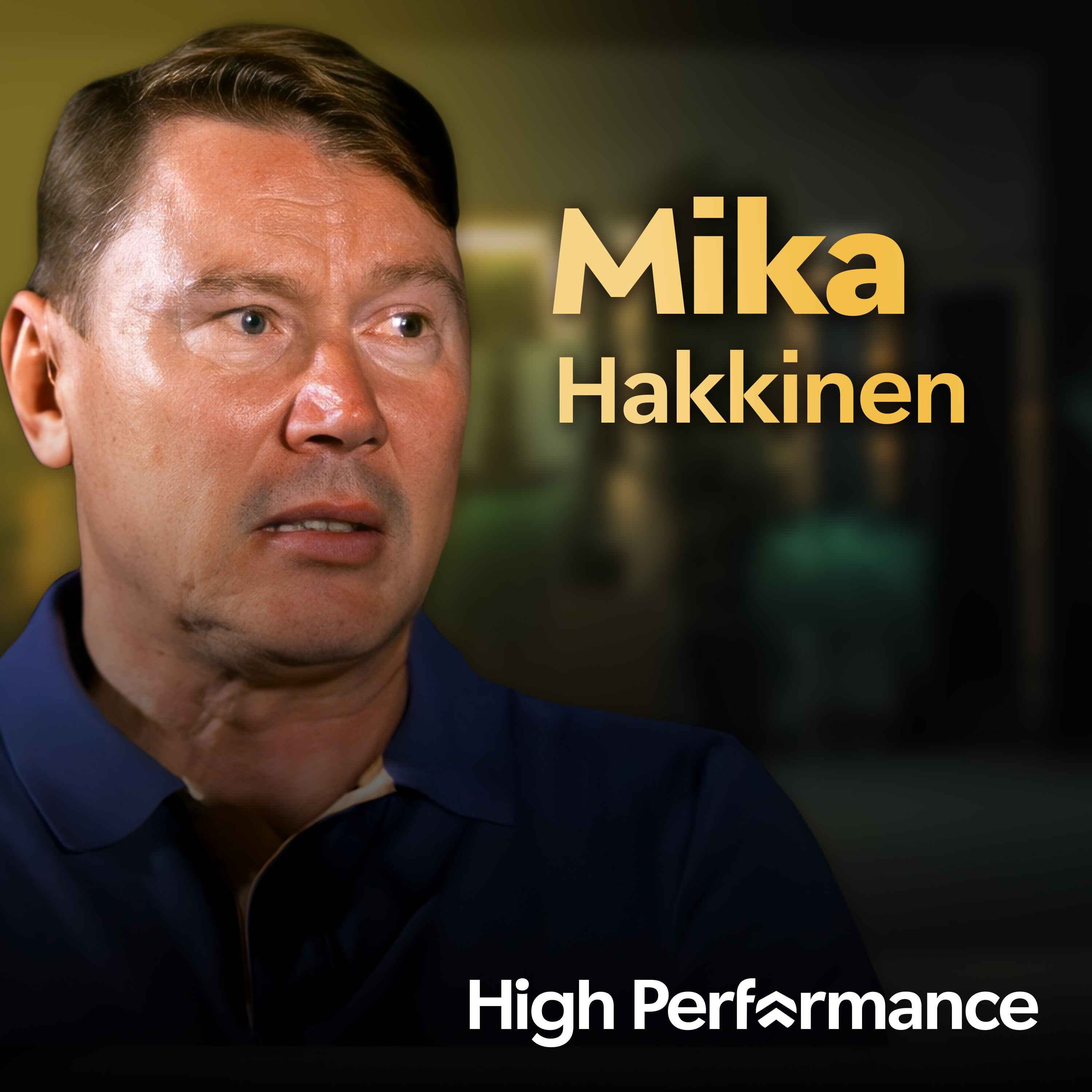
The High Performance Podcast, hosted by Jake Humphrey and Damian Hughes, features conversations with exceptional guests from various fields, revealing insights into high performance and personal development. The episode with Mika Häkkinen delves into the mindset, discipline, and experiences of the two-time Formula One World Champion.
Written by AI. May contain mistakes.

Get the gist, explore an idea or ask about something said.
 Claude
On The High Performance Podcast, what are the key points of this episode?
Searching your listeningAutomatic transcript. May contain errors.
0:01When I did the test with Formula 1 car, I felt like this is my life. This is what I love. This is what I can do well. Only thing that I realized, I was not able to move my hands. I just felt a massive pain and then, shh, good night. Good night, yeah. I went through to Aruz, keep your foot down. I felt every part of the car was just like ready to explode. I was fantastic to see the Ferrari in my mirrors. That is the voice of Mika Hakkinen, the Flying Finn, two-time Formula One world champion, been one of the quickest drivers the sport has ever seen and one of few men who truly went head to head with Michael Schumacher in his prime and also experienced close-up racing with Ayrton Senna.
0:46This is a man who also rarely does podcasts. He's done very few interviews but today he shares everything with us from lying in a hospital bed with a cracked skull after a near-fatal 1995 crash to standing on the top step of the podium and eventually becoming world champion. This is the story of how his life-threatening accident completely redefined his approach to high performance and life itself. So we will talk today about that devastating crash in Adelaide, overcoming the feeling of losing confidence during a seven-year drought before his first Formula One victory, the infamous first race where he out-qualified the great Ayrton Senna and told the legend himself that he had the balls.
1:25He also opens up about the psychological warfare with teammate David Coulthard. That is so interesting. And also why Michael Schumacher's mind games never worked on Mickey Hacken. This is Formula One at its most honest, at its rawest, in an era when I believe the sport was in its racing peak. He opens up about fear, pressure, the relentless pursuit of perfection, and the true cost of high performance. Because if there's one thing that we've learned after almost six years of these conversations, it's that becoming the best in the world does not come for free. So today you'll also hear Mika talk about when enough is enough and having the courage to walk away on your own terms.
2:04As we welcome to High Performance, the brilliant double Formula One world champion, Mika Hakkinen.
2:14Well Mika, welcome to High Performance. Thank you so much. Thank you. I want to start by Rewinding the clock, 30 years, if I may, to Adelaide 1995. And a moment that I think probably changed the way that you saw the world, which was your crash in the Australian Grand Prix. How much did that change your view of life, that crash? Going to that Grand Prix in Adelaide in 1995, it is such a strong motion. It was such a strong memory that way. for me it's quite easy to go back to that time. All the preparation to go into the Grand Prix, knowing that way it is a last Grand Prix of the season. And that particular year, we had quite a lot of problems with the car.
3:03We didn't really get the result what we wanted to have. So what the driver normally feels like, he feels quite happy that way you are finishing the season. Going to the last Grand Prix, knowing that way the team is already preparing the car in a design for the next year. So you go there with the full professional attitude. You go there to kick some butt and maximizing your performance. And when I went that year to Adelaide team, of course, McLaren was fantastic. Everything organized. And doing all the practicing and heading to qualification, of course, like I said, you're professional. So you're focusing, maximizing the performance of the car, maximizing your personal performance to get the best possible result.
3:51Even you know that way you're not going to get the pole position. And that's really frustrating to go to qualification. You try to beat a top 10. If you can get higher, it's a lucky shot. I had a bad Saturday. That day when my rear tire lost the air, it inflated, so it lost the air. And it just happened in a very special part of the track, because it was super fast right-hand corner, and you had to get that corner perfectly, because after that is a long straight. So if you get that corner perfectly, you will get the good speed in an exit. so then you're going to reach the very high top speed in your car and it helps you to get the better lap time.
4:39So of course, maximum concentration coming to that corner and just when I turn in, the rear tire lost the air and Formula 1, the right height is very low. It's maybe 15 to 20 millimeters. So when the tire loses the air, cars start touching the ground and what happens then you lose the control of the steering. So when I turn in, I lost the back end of the car and the car started sliding. So young guy, okay, little problem here. But in the exit of the corner, there was a huge curb, a huge curb. And when the car hit that curb, it launched the car in the air. So that means the car is not slowing down, it's flying in the air and the car started spinning.
5:30So when the car starts spinning like that, you don't know exactly when you're going to hit the barrier. You know you're going to hit the barrier, but you don't know when. And the car just turned the front towards the barrier just that fraction second. So I didn't have time to really do my muscles maximum and hold my neck hardest as possible because that time we did not have a Hans system supporting your head. so because of the bang the head moved so hard that way I cracked my skull and the moment when everything stopped I was still awake but only thing what I realized I was not able to move the hands I was not able to move the legs and I recognized that this is that way I'm in a shit I'm in a big trouble.
6:25So I just thought myself, just calm down, Mika, just wait when they come to help you. And then fortunately, luckily, in that particular corner, all the emergency team was located, so they came immediately to help me because I couldn't breathe, so they had to make a tiny hole. Why couldn't you breathe? Well, I couldn't breathe because all the blood start, you know, because you crack your skull, so the blood is coming and you kind of breathe. Again, you kind of move all your organs and stop working. So they had to put like a thing, I don't know in English, you know, when they... Tracheostomy. Yeah, so that way they give you artificially air in your lungs and in your brain.
7:09So that's it. Then they put me to hospital, of course. Well, hospital is just five minutes from that particular corner. Again, lucky. So then I was one or two days in a coma and it was a really tough moment. Then when you wake up and you see all the pipes, lines in your body and of course you don't feel pain because they give you so much all kind of medication. Of course, you know that when doctors are coming to tell you what situation you are in, it makes you realize like, wow, lucky I can move my legs and hands. then the whole horrible journey starts because when you get the bang in your head and the damage in your head all your sensors which control your body is located in your brain basically.
8:13So it's a huge procedure when they start testing all your reactions your nerves because the other side of my face was paralyzed because of that. so it was just a week after week's testing that way all the things are working normally like they should. So it was a horrible journey. Australian doctors were fantastic. Doctors, the nurses, the hospital care, how they were looking after me was incredible. It was painful. I was very fortunate that McLaren team was protecting me extremely well. My management team, Keka Rosberg, his management team was taking really care of me extremely well. Of course, my family came there.
9:05They were, of course, supporting me. So it was incredible, you know, because you're just so hopeless, lying in bed and in pain, constant pain. So do you remember the whole crash or were you knocked out at some point? I remember the moment when I hit the wall and I remember when I was not able to move. And that moment when I was not able to move, I said, just make a now, just relax. Just don't try to do anything. I realized that way something serious has happened. And do you remember the doctors coming over and performing the... Yeah, I remember that. That time I passed out. Did they knock you out before they did the operation on your flight?
9:44No. I just felt a massive pain and then good night. Good night, yeah. When I did start motor racing and, you know, I knew the risks. You know, you know the risks that way accidents will happen. Before that year, I had many accidents if there were technical problems and you're losing the control of the car and you can see metal barrier coming towards you and you're going straight through that metal barrier and you know that way, this is going to hurt. You are like thinking, I'm going to die. Well, you don't think you're going to die, but you know that this is going to hurt. This is going to be painful.
10:33And did that crash change the way you saw life or the way you saw the world, do you think? 100 % yes, of course. Because the whole world stops for you. Everything stops. Nothing is important except your health. And all your dreams, all your important, what you think, that things were important, not any more important. It's all about your health, your well-being, what mattered. One sense it makes you to listen more carefully what people are saying. you know and and uh you are young formula one driver you know your ego and everything and and you think you know a lot you know your young age and your experience already what i got at that time but but that moment teach me to listen more carefully what people say uh take a little bit more time the things would like to be a little bit more precise.
11:39One sense it makes you stronger. You cannot give up, you know. I think it makes me stronger in a way that when I decided to come back to racing and I felt good driving the Formula One car again after my accident, some reason makes me stronger. I think I went over that fear, you know, because when I was in Monaco, when I was after all these hospitals in Australia, hospitals in England, and being in Monaco, sitting in the terrace and looking beautiful in Monaco, I was thinking like, there's no way I can just stay home and not continue racing. Did you think about stopping? Because obviously the year before your crash, you'd lost Senna and Ratzenberger in a crash.
12:30Now you'd had this big accident. Did you consider quitting? I don't think I allowed myself too much to think about because the motor racing even didn't come to my mind. But of course, you know, when I was, after nearly a couple of months, started getting better, you start living a normal life. The doctors, of course, told me, Mika, you're not allowed to go jogging yet. You're not allowed to lift heavy weights, you know, so you have to really start easy. naturally you are you you don't love yourself the soonest when i did the test with formula one car i felt like this is this is my life this is this is what i love this is what i can do well and i felt really strong about that so i and that feeling was really important great you know i it's no way i could sit in a sofa and say i don't want to race anymore and i want to sit in a sofa and just watch the EastEnders rest of my life, you know.
13:34That was no life for you. You had to get back out there. I had to get back to action, yeah. What was it like the first time you raced the car again in a Grand Prix? Well, because the Australian Grand Prix was the last Grand Prix, so it was three and a half, March, April, four months after my accident, three, four months after my accident, back in a race again. And that was the time when the whole program started again. And it was quite stressful, you know, going to the paddock. Because people knew what has happened to me, of course. And many of the people remember me, how did I look last Grand Prix in Adelaide.
14:25So suddenly when I come into Baddock for the first Grand Prix in 1996, I lost a lot of weight. They cut my hair, so my beautiful floppy hair, a little bit different style. So it was uncomfortable for me to... Because automatically you think like what people think about me. You look a little bit different, you lost a lot of weight. and people wonder can he can this guy you know can he do it can he race anymore one of the really interesting parts of your story is that even when you were a junior racing driver things didn't come easy you know you didn't just win the championships immediately win the races immediately there was there were setbacks there were accidents there were disappointments and i wonder actually whether that your your upbringing as a young racing driver was actually quite important in that moment that You hadn't had an accident as severe, but you had experienced setbacks in your career already.
15:25Many. I mean, of course, many. I mean, even the very first time when I went out, I think I was six years old, when I sat in a go-kart in Finland, and my father started this little go-kart, and I was exciting little kid and going out from the pitch going the very first turn and there was a huge, again, this huge kerb and of course when I turned in with this go-kart I hit this kerb so hard that the whole go-kart flipped upside down I'm lying under this go-kart six years old little boy and I can see upside down and my mother and father running flat out probably thinking that oh, our little boy is dead now.
16:14So then I'm climbing out of the go-kart and standing up and my father said to me, he said, look Mika, you know, when you go he said, show me, you see that little curb over there? I said, yeah, I can see, you know. So when you go around this curb leave the little cap. Don't touch it. Just leave the little cap. You know, so I learned immediately my lesson and it was very interesting because it's one of those incredible memories in my life because, again, it was a shock for me. It was a shock to see the parents' reaction. So I thought, I said, I have done something really not correct now. So when my father explained this little tiny detail, I remember even when you come straight line, you know, come absolutely flat off the goal cut.
17:10You're looking at that simple little curb inside. I said, I'm going to leave a little gap on that curb. You know, I'm not going to touch it. I'm not going to leave it cap like this. I'm not going to touch it. Just be very close. You know, so it has stuck in the memory. And all these incidents and accidents have meaning to your career. Some of them are your personal mistakes. Some of them are technical failures. They make you maybe a little bit stronger. They make you wiser. But at the same time, again, the story is that we are young. You are a young guy. You know, you have so huge confidence and you are not scared until the big accident happens.
17:55and then it makes you think, you know, what is this life all about? Is this worth it? I think one of the really interesting parts of your story is the fact that it took you seven years to win in Formula 1. And on my way here, I did a bit of relaxed audience research. I said to people, name me the top 10 Formula 1 drivers of all time. These are people that know the sport. And everyone, bar one person, had you in the top 10, right? Oh, cool. Thank you. Double world champion, Lorded is one of the most talented drivers of all time. So I don't know why it took you seven years to win your first race.
18:33What was going on there? Yeah, I don't know either. It was definitely far too long. It has logical reasons, of course. Again, young driver, 91, joining the Formula 1, directly from the category from F3 to Formula 1. Going to Formula 1 thinking like, this is it. I'm going to go for it. I'm going to win a world championship. That's why I'm going there. And then you start realizing that Formula 1, you need a great talent. You need a great experience. You need a great car. You need a great team. All the aspects have to be absolutely perfect to be able to win races or get in more positions or win a world championship.
19:20So when I joined the Team Lotus for racing for 1991, we had a team which financially wasn't very strong. The budget was not great. The car in that what we are using that year, 1991, was still the old chassis from the year 1990. With that particular chassis who was racing with the Team Lotus was Martin Donelli. and he had a huge accident in Heres when he hit the wall and the whole chassis went in two pieces. He flew out of the car, luckily survived. So we were using the same chassis in 91. So what the Team Lotus has to do, they have to strengthen this chassis a lot, put more carbon fiber in certain different areas to make the chassis stronger, so it doesn't break if there is a similar type of accident.
20:18But what happened was that the weight of the car increases. So I think in 1991 our car was maybe, maybe a saturated a little bit, maybe 50 kilos overweight. Wow. 10 kilos of the extra weight in Formula 1 car can be maybe 2 tenths of a second. So if you have 50 kilos extra, you know that way you have no chance to compete against the teams who have the weight of the car absolutely on the edge. At that time, I think the cars were like 600 kilos, so very light. So again, 1991, huge challenge just to understand Formula One in general. You know, young guy traveling globally around the world and being a big circus of Formula One, of course, all the media work, working with a lot of different people, and at the same time recognizing that this car is not good enough.
21:25I am good. I know I'm a talented, great driver, but this car is not good enough. And more I start researching inside the team what's going on, I recognize this is going to be a tough year. So it was tough year. So no results, no victories. I think we scored a couple of points that year, but not even close or chance to win any races. And continuing 92 with Team Lotus, high hopes because we got the new designer, Murphy, who designed Lotus 107. It was quite a spectacular, great looking car, but we didn't get the start of the season. I think we got it halfway through the season. and that car gave us opportunity to start scoring points regularly.
22:17So that's what happened. You know, we start going really quite competitive, finishing fourth, fifth, sixth, and that time only six cars got the points in a Grand Prix. So it was a great result for the team, but no victories. So then, because I was doing a pretty good job, end of the 92 the big team started sending not emails faxes that time so the papers started coming out of the machine like this team this team would like me to race for them and how many teams were after you then? I think five teams where could you have gone? McLaren obviously was one of them McLaren I think there was there was there was very good teams very good fantastic teams and financially extremely great opportunities and and I I was in Austria with my manager Keke Rosberg.
23:10And we were looking at this. What a challenge. It was a beautiful situation. You know, the teams want you to race for them, including McLaren. And Keke was asking me that Mika, where do you want to go? And again, young not so experienced driver. You know, it was not so easy to say like looking those dollars or whatever, you know, so I was thinking more. I was thinking more that way. It is, you know, if I want to win, I have to look back to history. And when I look at the history of the McLaren, looking at all these drivers, Alain Prost, Ayrton, Emerson, James Hunt, I mean, all these great drivers, including Keha Berger, who's raced with McLaren.
24:01This, you know, history is so great with this team. This must be the right choice. even if it wasn't financially the best. So then, here we go, McLaren 93. And they decided to become a test driver, opposed to go racing first when we signed a contract. But there was a clause in the contract that McLaren had a huge conversation with Arton Senna if he's going to continue with McLaren in 93. And if he decides to continue with McLaren, I become a test driver. And I was pretty sure Arto is not going to continue, but he did. So here we are, test driver, except the last three Grand Prix's, because at that time Ron Dennis, who was running a show that time McLaren, and he said that Mika, one of the owners of McLaren, He said to me, he said, don't worry, you're going to race end of the year.
25:03Don't worry. I said, okay, I trust you. So I was testing a lot that year, of course, developing a car. And then Michael Andretti, who was racing McLaren with Ayrton Senna, was crashing a lot. So the relationship just didn't work. So Michael Andretti didn't race for three last Grand Prixs. So it gave me the opportunity to be a teammate for Ayrton for last three Grand Prixs. So, first race what I did with McLaren, I crashed. So, of course, no chance for victory when I crash. But I outqualified Senna in a qualification. That was a great thing. Did you? I did. You outqualified Senna in your first race?
25:44In my first Grand Prix, yeah. So, that was incredible. How did he take that? Not very well. The time difference of Arton Senna in a qualification was only maybe half a tenth of the second. so absolutely hardly anything and I knew the difference is coming in a very first turn in Estoril track in Portugal it's a very fast it's an extremely fast right hand corner where you enter the corner and you touch the brake pedal just tiny bit come down the gear and just foot down again you know super fast but I was using left foot braking and Ayrton was usually right for breaking. So when he has to come off the throttle, like go on a brake pedal and go back on a throttle, that's where he lost that half a tenth.
26:38So he came to ask me, of course, after the qualifications, Mika, how did you do it? And of course I didn't tell him. What did you say? Of course I didn't tell him. But I said something very naughty for him. Little bit joking there. The Finnish sense of humor. He didn't take it so well. What did you say? No, I don't want to say it because, you know, it's so naughty. Come on. We're all grown-ups. I said, the balls. Oh, did you? You said I had the balls. So he didn't take it so well. I bet he wouldn't like that. No, he went really, he got really upset. I said, you know, he said, how many pole positions you had and how many world championships and how many race victories?
27:21I said, I was nothing. But, you know, look, you know, it was just a joke, you know. he didn't speak to me for a couple of weeks, and he was really pissed off. That is funny. But that's a sign of just how ultra-competitive he was. I mean, he would hate a kid, in his eyes, coming into a team. Oh, yeah, absolutely. And after that, then we start communicating, of course, again, and he put his act together. He really put his professionalism, maximum experience together, and then last two Grand Prix, is what I did with him. He just went flat out. I didn't have no chance. I was close to him in time, but his experience was so powerful.
28:03That way I did, I had no chance. And that opened my eyes big way. That way I have so much things to learn. What did you see him do then in those last couple of races where you saw something and thought, okay, that is, that's amazing. Well, I mean, to focus, you could see his body language, his time, what he was spending with his engineer, working on every detail, spying everything maximum what I was doing. He put everything on a maximum. When he was driving outside of the car in every aspect and the details, and I don't think they told me everything what they were doing. Even we had data, it was telling a lot, but the data was that time not that powerful what it is, example, today.
28:53So then, here we are, seven years, no victory. And this time goes very quick. But seventh year, naturally, I was a very fit young man. And again, we are talking about midway through the season, 97. I was in my, I think it was 97, yeah, I was in my hotel room. And I called my friend. I said, do you know a good doctor? and my friend said actually I do I do know a very good doctor and he introduced me to a trauma surgeon doctor called Aki Hintza I did explain to him that way I have a problem I'm not winning you know I've been seven years now Formula One and I'm not winning and all those seven years every time in the morning when I go to the bathroom I look in the mirror I said Miko, you are fantastic.
29:51But after seventh year, you start losing confidence. You start losing confidence. I said, hold on a second, something is wrong here. You think you're doing auto exercise correctly. You are eating your morning porridge and you are testing a lot. You're working well with the team, but I'm not winning. This starts getting really, really tough and really hard to continue in believing yourself. So I explained to Dr. Aki Hintz that way, look, I'm not winning. And of course, clever man, Aki Hintsa, started wondering, what's wrong with this guy? Do you have a problem somewhere? Oh, I'm fine. So what's the problem then?
30:33And I could not explain. But more we have in a conversation, more we start having a chat. He realized that way. When I do travel globally around the world all the time and doing testing and living a hectic life sometimes i wonder and thinking that how is my mother how's my father how's my sister how's my girlfriend and and okay i understand so you want me to start taking care of you guys i said absolutely this this could be a great thing and and he asked me said how long time you want to work with me and i said the rest of my life So he recognized like, okay, this guy is serious. So he really wants to win.
31:19He thinks, so he started taking care of us, you know, every time. And his help was very interesting because he had a network with all the top doctors, professors around the world, giving him advices if I have a problem. So he put the science a lot behind to making me to be a better racing driver. And also when I knew that my family is in good hands, I relaxed. And that year I won my first Grand Prix. So it took a long time. It took seven years. So there's many little things, of course, which are affecting.
32:06Can we talk a bit about the Hinster method? Because I remember when I first started in Formula One in 2009, he was still at McLaren at that time. Yeah. And I loved talking to Aki because until I spoke to him, I thought the way to be a race-winning Formula One driver is to be later on the brakes, more gentle with the steering wheel, faster on the throttle, and more aggressive in a corner against someone else. And I remember when I had a conversation with him, I realized actually to win a Grand Prix is none of those things because every driver on the grid is late on the brakes, early on the throttle, aggressive against their rival.
32:45Aki got into your mind, right? And changed that. What did he say that changed your mental approach to Formula 1 that you think helped you to win the race for the first time? When you are a racing driver and you are on a certain level, you have many different boxes which need to work perfectly in your operation to be able to drive without any kind of pressure, any kind of stress. So all the driving, what you do there, is automatic. You know, all the overtaking, all the braking, they're all automatic. You don't have to even think too much, to be honest, because you're so professional, you're so experienced.
33:28But there's many boxes where you cannot influence. And the areas where you cannot influence, you need the best of the best in the world. And the Aki was one of those areas, because I had an accident in 1995. I understood the importance of the health, you know, and it's not only about you. It's also your closest people who is important for you. You want them to be good and healthy. So his approach was making you holistically calm. So your friends are in good place. Absolutely. Your family were in a good place. Absolutely. And once everything outside of the car is in a better place, what's inside the car becomes better.
34:09Absolutely. you know it's a little it's a tiny little details so again when you are talking about gaining your lap time one tenth of the second when the track is let's say four miles or five kilometers long that one tenth of the second is extremely tiny you know it's so little but it's something a little bit in one corner comes something in your mind and you you're turning a tiny bit too early or a tiny bit too late, you lose that one tenth of a second. So that's why all the aspects of the sports person has to be absolutely highest level. That's why Aki Hintsa was able to build this kind of, like you mentioned, holistic program to understanding how to balance a human being in a level that way you can focus your life, you can focus your goal of your life.
35:07I was so lucky, first of all to be in a McLaren team and working with the Ron Dennis because they gave me a lot of time to develop. They knew I was bloody quick, but they knew that I have a lot of things to learn. I was very fortunate. I don't want to move too fast in other subjects, but that's why I'm looking like a Formula One these days. The rookies, when they come into Formula One, they have such incredible pressure in their shoulders. You know, I had a chance to test a lot in real life, Formula One, develop myself and make mistakes. And now the rookies, they have to go straight in a race weekend.
35:51And it's incredible what they have to do. If you watch a Formula One race, and I don't know, Oscar Piastri misses pole by a tenth of a second. The only thing we talk about is the driving. No one says, well, maybe he's feeling the pressure as a young guy on the brink of a world title and maybe that slowed him down by a tenth of a second because maybe he suddenly had a realization of the stakes in one of the corners. No one talks like that today about Formula 1. We don't humanize the sport very much, even now. Yeah, that is 100 % true, is it? Formula 1 racing is extremely tiring. It requires incredible energy from your brain, from your body.
36:32And you have to stay healthy all the time. we all all we know that we at least once a year we get in the flu you cannot avoid that you know it's a part of this life journey you know sometimes we just don't feel good so why have we ended up in a place where we we now have more knowledge about the human brain than ever before we have more knowledge about performance than ever before but Formula One is a world where Jack Doohan can do three or four races and be thrown out of the team Liam Lawson can do just two or three races in Red Bull and be removed and demoted back to the next team. It feels like the expectation levels for Formula One drivers are greater than ever before.
37:15And it doesn't seem to serve them or the teams very well. This is the world. This is the life. That's why it's great we are talking about the hints of performance. If the driver has a chance to take the highest performance team to develop you in terms of your mind, your body, is a best investment what you can do. Because when you are 20 years old, 21 years old, you have to be ready in every aspect. That way you get the right energy in the right moment. That way you can take all the pressure. You know, and I'm not saying that way. The current drivers are not there in that level. I'm just saying that the drivers are younger and younger in a much more responsible position in motor racing.
38:10And the amount of driving or testing they are able to get is absolutely minimum. So I was losing seven years in Formula One until I figured it out. I figured I need help. You know, of course I was training. I have many different sport coach people training me in those years, starting in basically 92. So I was there already. But it was more than that. It was more than that what's happening here. You can train the muscle quite strong, you know, or the six-pack. But up here what's happening, you need a very special program and an extremely science-run program and a huge experience of people, the best of the best, who can help you to balance your concentration, your mind.
39:08That way you can do in the highest pressure what you have. You can still stay consistent and balanced. So what percent of your success on track was physical and what percent was mental? Oh, wow, that's difficult. I mean, of course, you have to be the fitter than anybody other driver. You know, that's your goal. And mentally, you just need inner confidence. That way you really believe yourself. You are the best of this world. Fast, fastest driver in the world. You know, you need that. You need that. Otherwise, you don't survive. But what is this balance? What is the percentage? So the athletes that we've spoken to have generally said 80 % mental, 20 % physical.
39:53Yeah, maybe.
39:57let's talk a bit about Ron Dennis because 97 the win finally comes in hereth and I've got a great quote from Ron he says here in our efforts not to interfere with the world championship we reversed the first pit stop sequence so David stopped first which disadvantaged Mika so I instructed David to then reverse the order again what was going on there what was Ron doing in that moment 97 a leading race in Silverstone, engine explodes. I'm leading a Grand Prix in Newbury, engine explodes. So I was in many positions that year when the engine is exploding. I think David, my teammate, won already, maybe two races already.
40:45I think David Coulthard always thinks that Ron Dennis was favoring me. It's not correct, of course. Are you sure? I'm just saying because if David is listening to this, I want to wind him up. I don't know. It's crazy what happened, my opinion, because if you look now what's happening, what McLaurin, what's happening, their drivers are changing their position in the race because the team made a mistake. We had agreements with David, for example, that when we're starting a season, when our car is so, so fast. You know, our car was like one second quicker than any other competitor's car. So we are sitting in the first and second on the starting grid for the race.
41:39And we had a problem that when we did the winter testing, the car was not able to do more than 20 laps. Then it broke down. but the car was so quick so we made a deal for example we have done the deals with Ron Dennis with the teammate David Goldhart that the driver who is first in the first corner is allowed to win the race because because we we could not drive flat out all the time because we would go full gas and start fighting against each other for sure the car would explode it would have not finished the Grand Prix so the real fight was to the first corner and if you were leading then yeah so I was actually leading once in that first corner so I was thinking like this is going to be a nice Grand Prix just short shift the gear brake bit earlier because David is not going to overtake me because we had a deal so then what happened after 15, 20 laps in Melbourne, turning to second last corner, and second last corner, there's just a pit entrance.
42:59So just when I turn in, somebody came to radio, and I thought, come to change tires. So I quickly made a quick decision, because if I missed that entry, I would have to go a whole lap. So I decided to go in, but it wasn't the message of tires. It was something else. So of course the team is not ready. All the mechanics are looking like this and I'm going like this. So I had to drive through the pit lane and join back to the race. But of course, who is leading? It's my teammate, David Goldhard. But we had a deal. So the team is calling the radio to David to slow down and let me overtake. And what did David say?
43:42Oh, he wasn't very happy. He wasn't very happy, but we had a deal. And would you have done the same thing for him? Of course, yes, of course. Would you? No, of course I would. If there's agreement, it's a gentleman deal. So what did you think then in Jerez when they pitted David first? Oh, I thought you forgot to. I thought you forgot to, Jerez. I tried to talk everything else. Come on, I want to know. Because this feels like, you mentioned what a great boss Ron was for you. this feels like he is mentally protecting you at this point, putting you into second place to then allow you to get the win towards the end.
44:18Is that fair? I really don't know. I really don't know. Like you read Ron's quote there. Of course, because I won the race, I think it was a good decision. But I don't know then, after all, who is favoring who and did the run this and that. I think I really don't know. I don't know what to say for that. And you and David are good friends now. You've just done a tour around the UK talking about your time together. Was there a period where the relationship was difficult because David felt that you were getting treated better than him? The relation with David was difficult in day one. You know? Why?
45:04I had even difficulties to understand because he had such a strong Scottish accent, you know? And you also have a rather strong. I call it normal. Me being a team, 93, 94, 95, massive accident. The team was finally having an engine deal that way we are. We can start developing a car every year consistently. And then I'm having a massive accident. So that's it. I have to start building my own physical condition. and McLaren is signing young Scottish driver, who used to be a two, three, two years test driver for Williams. So very fit, very confident young man. I knew this was going to be a challenge.
45:57This was going to be really, really difficult challenge, because I knew I wasn't in my peak, because my condition, and I knew David is absolutely flat out. So I didn't know what to even say. I think David likes to talk, which is good. He likes to build the trust with the people to understand who the people are. Otherwise you don't know how to trust. And I didn't talk so much. I don't think he liked that a lot. Because it was a little psychological war. David is a great team player and I think that time I was just a little bit arrogant. Because I've been in a team quite a long time and I know my recovery time, I was still in a recovery time.
46:51So I think the relationship didn't start in the right way. But then step by step we start understanding each other better. We started spending more time together and chatting more. And again, if we talk about now today, we had a fantastic relation. And a huge respect each other. The success, what David has done, success, what I have done. I think we created incredible teamwork inside the McLaren team. Because we are different character people. It's fantastic. So we did a tour in England. It was a mega experience. What kind of mind games were going on in the team between the two of you? When you say it was a kind of a psychological war, what did that look like in terms of behaviors?
47:44It's a bit everything. It's a body language. It's where you look somebody's eyes, where you communicate about driving data. So how would you look at him? I've got to answer that kind of question. But it's just crazy. We both live in Monaco. Let's say in 1996, we are going to factory in England, walking to have a meeting after the Grand Prix. Let's say Sunday we fly back home. so we go to meeting on Monday to discuss about weekend, how we can improve and all this so I leave in from my home with the limousine to airport David is leaving with his limousine to airport he takes his private plane flies to London I come with my private plane, London, landing taking limousine and going to the office walking in McLaren facing each other, sitting there in a chair talking about the Grand Prix with the engineers and same thing afternoon we fly back never together so it tells already something like these guys are nuts what the hell they're doing so competition your ego is so high you know it's terrible but that's why you know when if you have a great management they can really give you the right advices that way this is a team It's a teamwork.
49:24Guys, you need to work in a team. You have to work together to give the right information. Work with the team members in a team to motivate everybody, including the fans, including the media. It's very different now, though, isn't it? I see social media pictures of all the drivers on planes together, arms around each other, sharing a beer, having a drink. it does happen now though it didn't happen then yeah it happens now I think it's brilliant it happens now but I'm pretty sure there's a little fire hurricane inside these drivers inside the body they know that only one can win what will be going on at the moment do you think in your old team in McLaren between Lando Norris and Oscar Piastri it's no question about it you know there's a less and less races left in a calendar if you look at the incident what happened in singapore puts the tension very high doesn't matter how you look at it if the other car was a bit for front of the other car going in a corner you know you touched yeah and when teammates are touching it has always some meaning.
50:42I think the drivers can normally they can avoid touching unless something weird happens. Do you think Lando could have avoided that touch? I don't think so. Because he was on a curb. It's a street circuit. Oscar don't want to go too wide because there's marbles he's very slippery so he wants to stay on a good side of the track. So of course Because now going towards the end of the season, Zac Brown, Andrea, they had to really incredible, they had to work so closely with drivers that they find a beautiful harmony towards the end of the season. This is racing. And one of these drivers, they can win a championship.
51:31It's a nightmare. It's an absolutely horrible situation in such a team. But, you know, I don't mean negatively. I just mean it is what it is. This is like a human test from everybody, you know, how they're able to manage the harmony that way. Okay. There has to be these agreements, what the drivers and the management have to do. You know, nobody don't just walk past each other like this. they always stop and they discuss how we can do it better. They want to serve. They have great partners, McLaren. I think more than 70 partners. They've been supporting McLaren really well. They have great team members, the mechanics, engineers, marketing designers.
52:19It's a beautiful team. You want this season to end up in a perfect way. And that's why I think Lando is already quite experienced about Formula 1. Oscar is getting there. They will find ways to ending up the season in a good way. I hope so, because I think the two interesting things at play is that, well, there's a few things. Neither have ever been a Formula 1 world champion. Neither have ever been fighting their teammate for the world title in the same team. And there's a change of regulations next season, so they will have no idea whether next year the car's going to be fast or slow. So both will feel like, this might be the only chance in my whole career to be a Formula One world champion.
53:04And that doesn't come around often, as you know, which just heightens the tension in that team. Exactly. Again, coming back to my time, to history when I was racing with David Coulthard with McLaren in 98, was the year when Adrian Newey designed our car. MP430 McLaren. I was in a factory in the wintertime looking when they were building this car and designing. I was looking like, wow, what are details, what are incredible aerodynamic details, how they were designing the car. And of course it looked great, but I didn't know is this car going to be so fast. But very first day when I played the first test with the car, already going out of the car, I was going to pit lane.
53:55I was holding a steering. I said, what's going on here? I took my hands off the steering, everything was so stable, you know, and the going off course to free turn one, he turned in, I mean, it was just like a rocket, he was turning in the corner. But same time, the rear had incredible grip. So when the driver experiencing that feeling, what happens is, automatically put your foot down. Normally when you're caught up to pit lane, and if you don't have a good car, you can see the steering is moving a little bit all the time. You already had to fight on a pit lane. And when you go to turn one, if the car is not brilliant, it can still turn in quite nicely.
54:39But what happens is you lose the back end of the car, so you cannot go to power. So this car in 98 was just incredible. So I knew straight away that we're going to win and this could be the only year when I can win a world championship. so I had to maximize everything so I had Aki Hintsa I had the best management I had the best team you know I was perfectly experienced with Formula 1 so only problem was to David Gouldhard so we had this kind of year that one of us is going to be the number one I think the best power what you're able to create in a season like that when you have a car where you can win and a competitive teammate it's just be consistent you know, be consistent all the time every free practice every qualification every race just flat out keep your foot down you know just be consistent and because the season is so tiring you know so that driver who starts a little bit losing performance or start making mistakes, then you start scoring more points than your teammate.
56:01And then you've got to be a winner in the end. So, again, talking about Oskar and Lando and Oskar, Oskar, Lando, this is the time of the year when this huge pressure and these mistakes start becoming part of your end of the season. For the first time in the last few races, we've seen Oscar not getting the same results or making some mistakes like in Azerbaijan. Yeah. He wouldn't be doing that in the first race of the season, would he? No. It's the sign of the pressure. And technical failures, things like that, they are still part of the journey. I think Lando had one technical issue. Oscar hasn't had yet.
56:42What did you think of the pit stop moment where Lando had a bad pit stop and they asked Oscar to allow him through? These are the team decisions what they do. Sometimes they don't look right. Sometimes they don't for the fans they don't look right. But teams have their agreements and deals with the drivers. Like I had with David. It's painful. But not for me that time. Like a team, you know, when they go to Grand Prix or they go to the Sunday race, they have thousands of thousands of different calculations and options that what about if this happens? What about if this happens? So they have ready answer for all this.
57:30What about if something happens in a pit stop like this? What are we going to do? So they don't think about pitfalls. Hmm, what shall we do now? What was the... Ten laps is gone already. You've got to do that. What was the highest pressure moment for you in that 98 season? there was many nerve-tracking situations absolutely i mean the pressure was just incredible i think one of the well of course because in my time in 98 the championship was decided in the last grand prix of the year so you're fighting all the way through the year you are in the lead and then suddenly in this case the michael schumacher was getting closer with Ferrari with the points.
58:16And we're heading for the last Grand Prix where he was only, I think, two points behind or something. And he's starting the pole position in last Grand Prix and I start in second. So the pressure is just like, okay, you can handle it. You know, calm down. What were you saying to yourself on the grid for that final race of 98 with Michael in front of you? Well, I knew that way, you know, I'm going to make an incredible start. I knew that. So I knew that when the light goes off, I'm going to kick some ass. I knew I'm going to fly to the first corner. You know, that's what I was focusing. But then Michael had an issue with the car.
58:58They didn't activate the first start. They canceled the first start because there was something happening back at the grid. Just to make you even more nervous. Exactly. Exactly. And of course, then we go to the second and the team is telling me the radio, be careful with brakes, don't heat them too much, temperatures, be careful with the clutch. Otherwise the temperatures go too high. My water temperature was already 110. And I knew that if I had to wait too long time on start finish line on the grid, it's going to go up to 130 and it's going to explode. But it was Michael's car. it failed. Michael's car overheated.
59:46He had a problem with the clutch or something. So the second start was also cancelled. What was amazing already when the first start was cancelled McLaren mechanics I mean they are running flat out with the cooling systems putting covers and all this and I'm looking Michael was in public. I'm looking where is his mechanics? my mechanics are already taking care of cooling everything nobody's helping him so i said this is fantastic because the heat is just enormous what's happening inside in inside in a body work and everywhere you know you need to have immediately cooling so in a second start his car failed you know this pressure is just incredible so what can reduce your pressure of course is your management team and the team, McLaren team, they can give you the confidence.
1:00:44And I think, you know, when I came to like in the last Grand Prix in 98, in Suzuka, the Grand Prix when I won the world championship, and before that weekend, McLaren just told me that we have upgraded this, we have done that, you will have more horsepower. You know, I think they lied to me. I think the car was exactly the same. Just giving me more confidence. And how did you feel as you crossed the line as world champion? Now, of course, it was just emotionally, just unbelievable feeling. Did you cry? Yeah, of course. Of course. It was just, you know, all those years, the accidents included, and all those years of losing and then able to finalize the year 98, crossing a line and being not only the race winner, but also world champion.
1:01:45It's just like, what? You know, I did it. You know, it's just, it's an incredible feeling. Just a mega. Also what was a huge pressure on me was the Monaco Grand Prix in 98 also. That was incredible. Again, our car was flying, was quaking. and David is very good on street circuits and I knew that Monaco, you need to get the pole position to be able to win a race. You start in P2, you already can say you nearly lost the race, you know, able to get the pole position. That was okay. It was quite a hard work, but it was okay. But then when we started the race, I got the lead and David was behind me all the time.
1:02:32And I knew that way. If we're going to go like this all the way to the end of the race, it's going to be crazy. Between these barriers, the Monaco race track, and going nearly a qualifying lap every lap, because if I slow down a little bit, David's going to go for it. He's going to overtake me. And he was very good on street tracks. So I was pushing every corner flat out, and it was only one second different, maybe less. And I thought, there's no way I'm going to do nearly two hours like this. Sooner or later, I'm going to hit the wall. You know, physically, it's not possible. And David is coming like a robot behind all the time.
1:03:16And I don't know, was it lap 15? I come out of the tunnel, Monaco track coming out of the tunnel. Coming to break and I look in the mirrors, and I see huge smoke coming out of David's car. And his engine broke. and I was like yeah no I wasn't like that but of course relieved because I knew that if he would push me all the way to the race I would get the heart attack what did David say to you after you won the title in 98? David was happy of course he was happy I think David was happy the season is over because it was super tough so many million crazy things happened that year David was genuinely happy about the success what we did.
1:04:05David, he really understands teamwork. He understood that way. I would not win without him. I would not win without McLaren. The great partners and everybody. So he understood this teamwork. So he was happy. But when I won 99 second time, I don't think he was happy that time. The world champion was decided in the last Grand Prix again in Suzuka and again I'm in B2. But I just made a mega start and was able to get the lead and winning a world championship. And David realized that you know this is starting to get in his nerves basically. You know me winning second time and I start feeling already quite exhausted you know i said to david in 99 in susuka i said to him after races is your turn now to win in year 2000 you're gonna know win it i cannot anymore i said too much you know the pressure is too much and i think for us it was quite an incredible time with mclaren because because we really did incredible amount of testing with the McLaren car.
1:05:24We did a lot of marketing work, we did a lot of testing and of course racing. So we were quite exhausted, both me and... Mentally exhausted. And mentally also. Quite a few other teams, they had test drivers doing development for the tyres, because we did also development for the tyres. so that means you do three race distances per day just testing tires and tires and going round and round and you cannot just go round the lap just cruising you have to maximize everything so it's really exhausting so it was tough tough to do that and we did express ourselves of course from tennis that you know we need somebody to help and to test drive and that way we are quite exhausted but Ron just said that's what you're paid for that was Ron's way wasn't it how did you find Ron Dennis as a leader I think he was of course he was a great leader absolutely mega organized was demanding a lot of success, a lot of results and hard work from everybody.
1:06:51It was very, very hard personality. What respect? I think it was just work. You don't look at the clock, how many hours you work. Because if you know if you work one hour less than others, they're going to go ahead of you. Innovations, it doesn't matter what it is. McLaren has to be the leader. it has to be the best in every aspect. It was great. I think it worked fine in those years. People in our generation, it was okay. If somebody says, go to work, well, we went to work. Could he manage like that in the modern era, do you think? I think life is different now. The generation is different. I think they require more time to talk, to explain.
1:07:39You just cannot say to somebody, go to work. No, you have to really, you have to communicate with people differently. You have to explain to people differently. And I think that's one of the power also McLaren has, talking about Andreas or Zach Brown, how they're capable to, able to do this great communication with the members of McLaren. It's just fascinating. is motivating. It's all about motivating people, making them understanding what's going on, to feeling part of the journey, you know, and I think it's great to see that. In time when I was raising McLaren, it's not, you're just part of the McLaren, but you need to be part of the success of the group of people, not with part of the McLaren, you know.
1:08:33So, people, man. And we can't talk about your success without talking about Michael Schumacher. Because in so many ways, beating Michael Schumacher is what framed your career. I read a rumor that after you won in 1998, he came to your motorhome and congratulated you on the world title. Is that true? Yeah, I mean, absolutely. I mean, of course, after race, it was a great fight in 1998. Michael knew that way the car started the year, wasn't there, but he saw that way they're getting closer and closer. So he knew there's going to be next year. so absolutely after the Grand Prix in Suzuka there used to be huge complex the hotel in Suzuka then inside of this complex of the hotel there was little log houses what they call log houses I don't know why but anyway log houses and inside those log houses were karaoke rooms right because Japan they like to karaoke so of course all the all the drivers and mechanics going to sing karaoke and have beers and have fun.
1:09:41So I knew Michael already from childhood, since we were 13 years old from the karting. When he has a chance to win, he won't give up. When he realizes that when Victor is gone and it's been one fair and square, he's very straightforward and he's happy and gratulates you. and happy about it. But in a way that the game is not over yet. Do you remember what he said to you after the 98 win?
1:10:20Now when you look, I've been singing karaoke, you know. After a few years. Of course, of course. Everybody having fun, you know. I'm winning a world championship. Oh my God, your head is so incredibly spinning. You cannot believe it. So he would congratulate you on what you've done, but he would remind you that next year you'll be up against him again. I knew that, you know, he's such a fighter, you know. I knew that when we come out of that last Grand Prix and the long cabin, I knew that way he's not going home and start relaxing a couple of months and then goes to the first Grand Prix. No, he goes back in a factory, he goes to Fiorano, because Ferrari had a test track and they can drive there whatever they want.
1:11:11And I knew that was a huge disadvantage for them, because we didn't have a test track where we can drive wherever we want. So they were testing there all the time, developing everything, and it really pissed me off. you know we were able to go to Silverstone start at 10 o 'clock at 12 o 'clock suddenly lunchtime at 1 o 'clock we continue at 5 o 'clock is closed and it's raining you know no they're testing the sunny Fiorano from morning 8 o 'clock they can start they can stop at 8 o 'clock in the evening continue testing and if the Michael gets tired or teammate gets tired they put the test driver in the car continue program the gearboxes the softwares everything so they were constantly able to do that and I don't think it was is it fair or not?
1:12:03It was just what it was. So I knew that Michael lost and they knew they weren't good enough but they knew that way what they were doing in their program they will get there. And would he ever try and mind the games on you over a Grand Prix weekend? Who? Michael. No. He tried but it doesn't work. No, it just doesn't work. It doesn't make no difference. Really. What sort of things would he try that wouldn't impact you? I don't particularly remember. Because he was famous for psychologically trying to beat his opponents, right? Yeah. But it didn't work with you? No, I think he tried a lot of different ways and this and that.
1:12:49And maybe it was a little bit of his sense of humor. But it didn't matter to me. I was so confident with the McLaren team and with my management, with myself. He's not going to change anything. Let's wait when we put the crash helmet on, then we stop talking. I saw a lovely quote. He said, Mika Hakkinen was the best opponent I ever had. 100 % rivals on track, 100 % respect off it. Let's say it this way. We had our moments in motor racing when I had a crash with him in Macau, for example, with Formula 3 in 1990. I won the first heat, he was second. Those two heats, and those two heats are calculated.
1:13:45And overall, time is the winner of the total race. So I won the first heat, Michael was behind me a couple of seconds. he got the second heat he got the lead I was behind him inside in a couple seconds so I know I'm going to win I just follow him to do all the way to end and Macau is an unbelievable racetrack it's like 7 kilometers street track you know racing with the F3 car so so last lap he just made an incredibly silly mistake in one high speed corner which gave me the opportunity to just easily overtake him so easily I come in behind him like that and learn to overtake and he goes he looks in the mirror turns a little bit he's tearing I touch his rear tyre and I'm off so I could go absolutely bananas and berserk about that but I thought what is going to change it's going to change anything it's not going to change nothing Michael was very hard racing driver He was, you know, I think he had a lot of, quite a few problems with many other drivers, with Damon Hill, Jack Villeneuve, David Coulthard.
1:15:04He was a very hard racer, sometimes not fair. And every time there was a huge discussion after and this and that. And I thought, I'm going to change this guy. I'm going to change his philosophy, his mentality, how he's racing. It doesn't matter how I talk to his management, his team or for the media, for anybody, it's not going to change nothing. I just focus on my own job. And I think that's where a lot of respect came. That way we didn't start verbally fighting publicly, claiming each other and, you know, we thought, let's fight on a track. Let's leave the bullshit out of this, you know. I think that those were the things a little bit, maybe what influenced his attitude towards me.
1:15:53And after that Macau incident, of course, I understood that way what kind of philosophy he has in his racing. So every time when we raced, we played little tricks, but we never did touch. I think it's so interesting because I think what derailed a lot of drivers against Michael Schumacher was they were so concerned about what he was going to do, they stopped thinking about what they were going to do. And it sounds to me like you were so good at allowing him to be himself. You would do your thing and see who came out on top. Was he your greatest ever opponent, do you think? Yeah, there was, of course, there was so many different drivers.
1:16:32Incredible mega drivers, including Ayrton, of course. Fantastic drivers. Also from the lower categories, below the Formula 1. And in the Formula 1, If I looked over the total picture of Michael, of in a car and outside of the car, he was just incredible racing driver. Great personality. How he was able to motivate the team to give the commitment of his life. You know, he has his football sport. He had his family. He has motor racing, but it was very extreme, you know. I was also flat out. But I always thought a little bit that there's also life outside of the motor racing. Motor racing is not everything, you know.
1:17:28Even it's a great sport, of course. But it's not everything. But Michael was, he was just giving everything. Was there, or is there one memory that you've got of him driving where you watched him do something behind the wheel of a car and just thought to yourself? Wow, okay. I followed him many times, studying his lines, why he's doing this, why he's using steering, understanding all this, but nothing too special, in my opinion. I think I was a little bit better. Do you think you were a bit better than him? Oh, absolutely, of course. But he was physically very strong with the car. Right. Physically very strong, how he was able to use the tires, the tires and the suspension, the loading a car, using just physical power to drive the car.
1:18:21And then his talent included and how he was thinking, how to balance in a car. The car control, what he had, was amazing. And we started this conversation talking about how your accident changed the way you saw the world. Did the accident that he had on the ski slopes back in 2013 change the way that you think about life as well? Yeah, I remember that day. I remember that day. Again, I just couldn't believe it. I mean, all that hard work, all that success, like everything is in the right place and it's time to now enjoy your life. Two things, what do you want to do? go to business world or whatever.
1:19:12Tell your stories, you know, experiences, what he has experienced winning the world championship so many times. Or do nothing. The whole world is open, you know, or just be with the family. And then when I heard that happening, of course I was shocked when I heard it is a head injury. Being myself in a head injury in 95, I knew that way shit, you know, if you stay with too long time without oxygen, that's definitely a bad thing. Of course, it depends how in skiing, what kind of crash helmet you have. It's not exactly a level of Formula One. So I knew that way if you hit your head, it is going to be bad.
1:20:00It was just sad, Of course, thinking about the family of Michael, you know, all this time what is ahead of you. You know, like I said, the motor racing and this racing career is a very short time of your life. You know, first when you're a young kid, you think about the school, things like, takes forever, suddenly it's over. Then comes the next step, your work life, you know. Motor racing, your racing career can be very short. So then the real life starts actually. Then the real life starts. And Michael just when his real life starts after motor racing, things like that happening. So you try to say yourself, this is not fair what's happening.
1:20:48And again, you know, what I have learned from the motor racing, because I did so much testing in different racetracks. and every time when I went out for the last run of the day, let's say there's a four days testing, starting in the morning, finish late after the early evening, and when you go out to the last run, you're completely finito, naked, tired. You know the car also is quite worn out, so when you go in a corner, obviously maximum, some reason you say, don't do that. it's a final run of the day you are tired something can happen so if you lose the back end a little bit and you're tired you gotta catch the rear end or something so go a bit slower so I think the skiing is also a sport that way if you get tired or something things can happen I don't know what to say I was just shocked it's just terrifying you know I think to think about children it's absolutely terrifying fine.
1:21:54I don't know how they can, it's so tough to handle it for sure. Yeah, absolutely. And then we're kind of denied the opportunity to hear Michael talk in this kind of way that you're talking, reflecting on his career, which I think is also a great shame, isn't it? Absolutely. Before we wrap up, I need to talk to you about one of the greatest things I've ever seen in my life on the television which was your overtake oh yeah michael schumacher in spa involving ricardo zonta so all i really want to know from you is how how much did you plan or think about what was about to happen or did it happen in such a split second moment that it was kind of an instinctive thing from you to use zonta as the kind of the shield if you like so how the whole race started beginning you know i got the lead from the beginning of the race the track was there was just a dry racing line and all the all the rest was a bit wet slick tires you know spa racetrack beautiful track coming like the fifth last corner or something and going and turning in nicely be careful because i knew i'm leading race and in the exit i touched the curb this red and wide curbs a little bit too much with the rear tire and my cars are spinning off the track on a grass but luckily not hitting a wall engine is running and i can see michael smiling in his face and that's it you know back to first gear going back to the track and the distance for michael was quite i don't know how many seconds but it was quite a lot so i knew i have a fast car i knew i could catch him so i just went for it you know start taking risks a little bit every corner like in a qualifying lab just going for it and going and i knew that they are going to catch him very fourth end of the end of the race so i knew it's going to be one hour flat out going try to catch him and we had a different settings in a car because the track condition was what it was a little bit wet and dry michael decided to take a tiny bit higher downforce why higher down force because the circuit was a bit slippery so the higher downforce gives you a little bit better grip in all the twisty parts of the track and i decided to have a little bit lower downforce that way i'm very fast on a straight line because i knew the track will dry up towards the end and of course the track started drying up what's the end and I start catching Michael on a straight line like crazy but because he was so quick in a twisty part I have no chance to overtake him I only chance to overtake him after the corner called Aroos which is really incredible corner in that track in Spa it's like a really deep hill and then you're coming to the long straight remember the name of the straight what it was?
1:24:59Kimmel exactly so that's straight it's a really long straight and again i have a low downforce michael has a bit higher downforce so i can just keep him foot down catch him like crazy you know i thought this gonna be easy to overtake him every time i try to overtake he put me on the grass and i had like 300 kilometers per hour i tried that about maybe three times every time he was doing that as this nuts and this is not fair i mean this is dangerous i'm going 300 kilometers per hour if i touch him in the rear tire i cannot fly in the air or we're gonna go both off so less and less less laps to go and i thought i need to win god damn it i thought we take this guy so it's a roose corner it is deep uphill is in a qualification you have fresh tires new tires you have a low fuel in a car so in a qualification you can go just flat out full gas through that corner and it is just incredible g-forces and feeling when you go through that corner but normally you cannot do that in a race so I thought myself that way if I need to overtake him I have to do it like in a qualification and of course the tires are worn out the whole car was just tired So I went through to Aruz, keeping foot down, and I felt every part of the car was just like ready to explode.
1:26:33So when I came top of Aruz, I was like relieved that I managed to go through. So then I had such a mega speed. I started catching Michael, but then suddenly I saw distance. I saw this Brazilian driver, Ricardo Sonda, and he had a technical problem or something. and normally if you have a technical problem you drive a little bit on the right hand side of the track or on the left hand side of the track but this guy was driving in the middle of the track so i'm thinking oh my god this is opportunity the problem was because i was catching michael so quickly that if the michael will see which side i will overtake ricardo sonda he will come front of me.
1:27:18So I had to wait longest. I was counting all the time. Michael, if you don't move soon, you know, we're going to crash or something. So he decided to go on the left-hand side. And why on the left-hand side? Because the track was completely dry, that side. And the next corner turns right. So logical to go on the left. So of course, I'm going to go from the right-hand side. And the track was a bit wet. So I really had to come aggressively towards Michael to get on dry line. So I managed to overtake him. And I tell you what, it was fantastic to see the Ferrari in my mirror, as I tell you. You know, I have a big smile on my face.
1:28:01It was a great overtaking, I have to say myself. Was it your greatest ever? Oh, definitely greatest ever overtaking. And I'm sure Ricardo Sonder, I'm sure he has to, after the race, to change his underpants, I tell you. Definitely. And I did tell to Michael after that particular Grand Prix, I had a chat with him and I told him that Michael really cannot push me on the gravel, on the grass, that speed, man, so many times. And he just looked at me and said, Mika, this is racing. So he was a special character in that. So I accepted that because he was like that. I don't want to change it. But it was a great overtaking.
1:28:45so many people need to be dragged away from the thing that they love right but you didn't you you made the decision to walk away from formula one when you still had speed and you still had the ability to win races and and dominate the sport why did you make the decision to walk away when you did it's never easy decision of course to decide to retire from the sport what you've been doing all your life you know since five six years old you've been doing water racing and then you're 33 years old and then you decided, okay, it's over, finito. The reason for that was that, again, losing for seven years, it hurts.
1:29:26Having a big accident when you crack your skull, it hurts. Understanding that way, the health is the most important what human can have. And then comes the point that, why did I go to Formula One? What I wanted to achieve, I wanted to achieve the world championship, the winning of a world championship. So I did it, and I did it twice. So then it comes to winning in 99, and then comes to year 2000. Quite a few technical issues with the car. Suspension failures, hitting a wall, tasting the blood in the mouth, has to go to hospital to check out. 2001, a little bit similar things happening again. you start thinking like, okay, Mika, you came to Formula One to get your goal of winning a world championship.
1:30:18I'm pushing my luck a bit too much now. Because I thought if I'm going to have a big accident, maybe I don't come back anymore. So I thought there's much more in your life what you can do and enjoy your life. You know, this is not everything. So you got your goal, you got your result, you know, get out of here. So I decided to do that. It was a hard decision, of course, because we could have still a great future with McLaren together. Did they try and convince you to carry on? Did they want you to carry on? Of course, they don't. Of course, in all the aspects. We had made a great relation with all the team members, with the partners, with the marketing programs, the racing developments.
1:31:04All these were important factors. But you know, once you start thinking about, I want to retire, it's better to retire. It's one thing thinking about it while you're still racing. It's another thing when you stop racing and suddenly you don't have your purpose anymore, which is the thing that's been your purpose since you were a small boy. Did you struggle with that after racing? Were there any mental health challenges or a lack of a sense of purpose after you stopped racing? It's very, very tough. It's not easy. You know, the time when you decide I'm going to retire, oh yes, I can chill out, you know.
1:31:42But it's really tough. Motor racing is a teamwork. It is challenging constantly yourself to be better and better racing driver. All the physical efforts, what you have to do, the psychological efforts are suddenly not there. Yeah, yeah. So it's difficult. It's not easy. You need to have the right people who you are working with, communicating with. So it takes time, you know. And I think maybe it's silly to say, but in life we have time. I was very fortunate situation, achieving what I did in Formula One. That gave me the opportunity to look what I'm going to do now with the rest of my life. I have, of course, many things, opportunities and businesses.
1:32:42But businesses are something that you need to have a good team. It just doesn't happen like this. Your fame, your money, all this. there's a lot of people who want to take that away. So you need to be very careful how you're guiding your life and who's advising your life for the future. And it takes time, but it's okay. I'm a happy bunny now. And how long would you say you were searching for or you were struggling for after you retired? Oh, that's a difficult one. That's a difficult one. I don't know how many, but it can take years. It can take years, but it doesn't mean that when you're depressed or something.
1:33:30The sport is the biggest element. Hints of performance, again, you can always keep your performance, your fitness in a level that way you stay healthy in your mind. So there are many different ways. But business is a fascinating aspect these days what I'm motivated a lot, the teamwork, be a brand ambassador for McLaren, be a brand ambassador for Formula One, meeting incredible people and to be part of the business and finding great innovations. I think the world is now ready for a lot of different things. I love it. And look, we've spoken about, you know, drivers who you lost in your career, a driver in the shape of Michael who is still with us, but sadly isn't the man that he once was.
1:34:19I think for you to understand that your happiness and your health are the two most important barometers to live by is the most important thing. Absolutely. And I've loved delving into these amazing moments in your career. Final question. After everything you've done, the highs, the lows, the challenges, the setbacks, the successes, if you were to describe high performance in a sentence, what do you believe high performance is? It's a science, high performance. It's a science. And I've been very fortunate to be part of that journey when Formula One started bringing the science for the human high performance.
1:35:02Now it's incredible how the drivers can reach this performance, high performance traveling around the world. I think the science is the only way what can generate and the teamwork and motivation. Very good. Mika, thank you so much. Thank you. Good to talk to you, man. Thank you so much to Mika for such an in-depth conversation from that accident in Adelaide to his journey to becoming a two-time Formula One world champion. I think the thing that really sticks with me and I'm recording this part of the episode a few weeks after I went to Monaco and interviewed Mika, is his ability to understand that when we're seeking high performance, everything has to be in balance.
1:35:51And I see so many people having an opinion of others without knowing what's actually going on in their heads. And like Mika said, you know, if there was an issue with his parents or if his wife wasn't happy or if there's something in his personal life that wasn't perfect, it impacted him on track. And I think so often we don't look at elite sports people or elite anyone with that view we think they have to be perfect and look I really hope this episode resonated with you as it did with me whether it was Mika talking about resilience mental health the courage to walk away from the things that define us I would love you to share this with somebody it makes such a difference to us if you can just do two things share this episode with somebody and please hit follow or subscribe wherever you're listening and don't forget if you want more Formula One greats we've got episodes with Fernando Alonso Christian Horner Jenson Button Toto Wolff Susie Wolff David Coulthard my good friend Lando Norris and many more in the pipeline as well please hit subscribe please also head to the High Performance app where you can hear these episodes before anyone else but most of all thank you for continuing to trust High Performance in your millions and I'll see you again soon for another episode
1:37:05Thank you.
Two-time Formula One World Champion Mika Häkkinen reflects on the mindset, discipline, and calmness that defined his legendary career, and his unforgettable rivalry with Michael Schumacher.
He opens up about the “Finnish Ice Man” mentality that helped him stay composed under pressure, the near-fatal crash that reshaped his outlook on life, and the decision to retire at his peak with clarity and purpose. Mika also shares lessons from McLaren’s golden era on leadership, teamwork, and the psychology of high performance.
This episode offers a rare glimpse into the wisdom of a true champion, proof that greatness is built not just on speed, but on composure, humility, and knowing when to step back.
🚨 Partners
Vestaire 👉 Buy and sell preloved menswear now: https://highpfrmc.com/vestiaire-mens-yt
Hive👉 Take control of your home energy - smart, simple, and built for you. Find out more here: https://highpfrmc.com/hive-au-hpp
Simba👉 Jake believes better performance starts with better sleep. Discover Simba, start your 200-night trial today now: https://highpfrmc.com/hpp-simba-au
FORA 👉 Claim a free day pass at any Fora workspace and find the perfect home for your business here: https://highpfrmc.com/fora-free-yt
HP Foundation 👉Do you want to kick-start an evolution that will change the lives of millions of children? Find out more about the High Performance Foundation: https://hppod.co/foundation
HP Corporate Events 👉Click here to book High Performance Events: https://hppod.co/corporate-events
Explore offers and discounts through our other partners:
https://hppod.co/partners
Hosted on Acast. See acast.com/privacy for more information.


