
 Ask ChatGPT


 The High Performance Podcast
6 Mar 2026 · 50m · 22 chapters
Hosts: Jake Humphrey and Damian Hughes
The podcast aims to uncover the secrets behind high performance through conversations with remarkable guests from various fields. It focuses on non-negotiable behaviors that lead to success and personal growth.
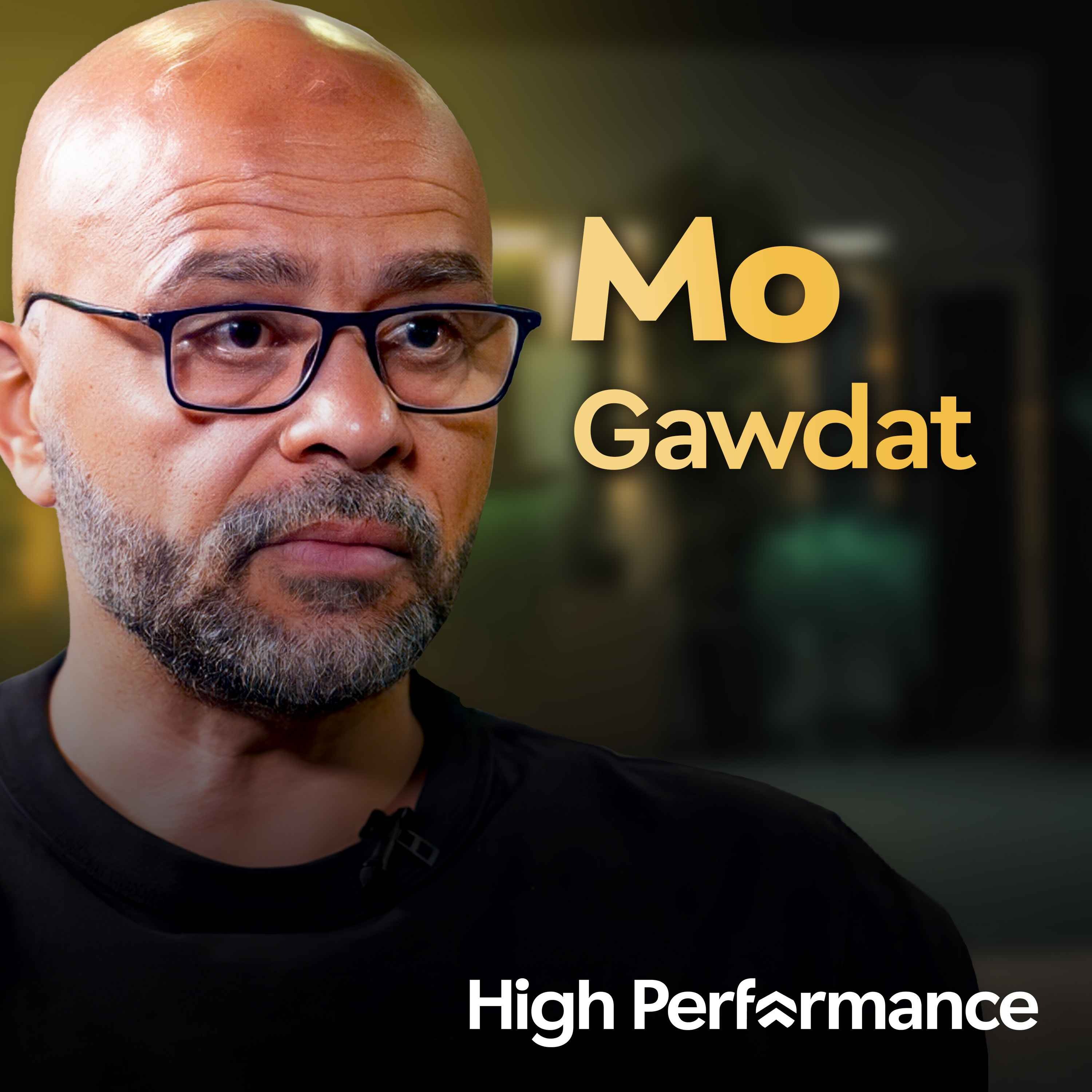
Mo Gawdat, former Chief Business Officer at Google X
Mo discusses the profound impact of his son Ali's tragic death on his understanding of happiness and his mission to spread joy.
Written by AI. May contain mistakes.
Mo discusses how the death of his son Ali profoundly changed his perspective on life and happiness.
“So listen in carefully as we welcome to High Performance, Mo Gowrat.”
Exploration of the difference between true happiness and the pursuit of dopamine-driven pleasures.
“And so my logical side, of course, did the right things.”
Mo challenges the belief that success leads to happiness, emphasizing a shift in mindset.
“Losing a child is probably the, it's the hardest experience ever.”
Discussion on why happiness should be viewed as a duty for optimal performance and survival.
“So it's interestingly the other way around.”
Learn how to approach life's challenges with a calm and wise mindset.
“It's your duty to find that calm and peaceful contentment as you navigate life, right?”
Discover how emotional responses can be managed within 90 seconds.
“to the second that you took an action and those are, you didn't, but those hormones were flushed out of your body is 90 seconds.”
Implement a flow chart method to navigate unhappiness and find acceptance.
“I need to be someone that lives what I preach, right?”
Learn the importance of focusing on personal growth before impacting the world.
“write what he taught me about happiness, share it with the world.”
Understand the distinction between a journey and a quest in life.
“And then they'll have you wrap the first one.”
Explore the realizations and lessons learned about being a present father.
“And I'm interested in what sort of father you were when you think about just looking under your feet rather than at the target.”
Mo reflects on a pivotal moment seeing his daughter upset, sparking a commitment to change.
“And I could see with my own eyes, with my own eyes, I could see my daughter's heartbreak.”
The discussion shifts to the importance of maintaining a playful spirit in adulthood.
“What I love, though, is that at six years old, he genuinely believes his dad can build a water slide while he's at school from our house to the beach 40 miles away.”
Mo shares insights about achieving flow in life and its link to high performance.
“Total flow is to blend with the game of life, is to literally let life tell you in microsecond intervals, take a little left, go this way, do that.”
Mo discusses the principles of achieving flow and the concept of personal spirituality.
“If you tell me our objective of today is to do an hour of conversation and I focus on the hour, then my performance sucks for 50 minutes and then the last 10 minutes are okay, right?”
Exploring key insights from spiritual guides and the importance of personal spirituality.
“And we're probably more distracted every day, Jake, than we are actually focusing.”
Mo emphasizes the importance of optimism and gaining perspective in life.
“It's a great saying, you've survived 100 % of your worst days.”
Discover how perspective shapes our understanding of life and happiness.
“simply because this is research at Stanford University, simply because your brain is a survival machine.”
Hear a personal story that illustrates the danger of limited perspectives.
“And then we had a meeting and we agreed on a few things and I felt that he treated me unfairly.”
Explore the importance of living in the moment rather than chasing legacy.
“And it's so shocking when you actually stop and say, could I be blind?”
Learn how viewing life as a game can alter your approach to challenges.
Understand the significance of being present and the fleeting nature of emotions.
“And it was wonderful in every possible way.”
Reflect on actionable wisdom from Mo Gawdat's life and insights.
“If not, can I just accept it and still move forward anyway?”

Get the gist, explore an idea or ask about something said.
 Claude
On The High Performance Podcast, what are the key points of this episode?
Searching your listeningAutomatic transcript. May contain errors.
0:02Mo Gawdat: I don't know what to tell you, Jake. I have seen everything. I've seen everything. I've seen every pleasure, every joy, every pain, every suffering, every test. I've seen so much. And so after a while, you somehow look at all of it and you go like, yeah, should I spend a minute of my life chasing one more of these? And the funny thing is when you stop chasing, everything falls in place.
0:30Damian Hughes: What if everything you've been told until this point in your life about happiness is wrong, and that it's not a destination, it's actually a default? Our guest today is Mo Gaudatz, an engineer by training. He rose to become chief business officer of Google X, the moonshot factory tasked with solving the world's biggest problems. He sold millions of books, reached hundreds of millions of people, and by any conventional measure, this is a guy who's already won. but it was actually the worst moment of his life that changed everything for him. It was the death of his beloved son Ali, a preventable surgical mistake and his 21-year-old son was gone in just four hours.
1:10Damian Hughes: That trauma would be the catalyst for his life's real work. In this conversation Mo Gaudat challenges how you think about performance, how you deal with success with anger, what it actually means to live well and we're going to drop you straight into the heart of the conversation. I promise you, you don't want to miss a second of this one. So listen in carefully as we welcome to High Performance, Mo Gowrat.
1:36Mo Gawdat: I'm a very logical person, but I'm also reasonably high on EQ. And, you know, I've attempted in my life over the years to shift from the hyper-masculine approach to life that took us through, you know, that took me very far to being chief business officer of Google X or whatever, to also internalizing my own being, my own feelings and emotions. The experience of losing Ali, Ali was everything. Ali was my son, but was also my teacher. He was also my coach. He was also my best friend. And he was truly one of a kind. I mean, I feel that his loss is a loss to the world, not just for me. But then he left our world because of a preventable surgical mistake that, you know, was fixable.
2:30Mo Gawdat: But they did five of them in a row and they fixed three of them wrong. And so in four hours, my wonderful, handsome, wise son left our world. Now, you can take this through logic, and you can take this through emotions. You can take it literally to hit the ground either way, or you can take it to try and make things better. Okay. And I think what happened at the time, which I think was a very, maybe, you know, I don't want to call it serendipitous, but maybe the universe wanted it this way. A series of events highlighted to me very quickly that I needed to be at the fifth stage of grief. So normally we struggle with grief through five stages and the last one of them is called acceptance, which for some of us takes weeks or months and for some of us takes a lifetime to accept that this is what life has given you and that you cannot reverse it.
3:31And there is a finality to death that just cripples you as an executive
3:37Mo Gawdat: who's known to run everything and make sure that everything happens exactly as you want it to happen. This is what I was paid for my whole life, you know, to make sure that everything's under control. But then you lose a loved one and you suddenly realize that you have zero control. Like that is nothing within your life is really the stuff that really matters is not really within your control. And so my logical side, of course, did the right things. You know, I reported the case so that the, you know, Ministry of Health did the right things and, you know, the hospital was alerted or penalized the right way so that this mistake doesn't happen again.
4:17Mo Gawdat: I comforted my family. I took care of them and so on and so forth. These are the logical steps that you need to do. It's the emotional, I think, that really, really got me to be with you today. So I describe death as a way to disconnect from space time, if you want. and that basically allows you to be everywhere all the time the minute i heard this as a business executive all that happened in my head was i heard a quota a target okay my my master my son my my best friend and my coach is giving me a target he's saying make me everywhere and part of everyone and I just heard myself saying, okay, Habibi, consider it done.
5:02Mo Gawdat: At the time, I ran Google for eight, nine years. I knew how to reach billions. This was my skill. I said, done. And I basically started in my mind to accept immediately that he's gone and he's not coming back and that the only way I can keep him part of our world is to take the essence of what he taught me about happiness, about wisdom, and just share it with the world so that in my mathematical calculation, you know, seven years later through six degrees of separation, he's everywhere and part of everyone.
5:43Jake Humphrey: What's up? It's Sean Linda from Two Black Guys of Good Credit. If managed supply runs is still on your to-do list, here's your science upgrade. Walmart business has the tech, tools, and services that make it ridiculously easy to stock up for your office or team. Think scheduled deliveries, multi-user accounts, and even IT setup. Bonus, with a Walmart Business Plus membership, you get free shipping, spend analytics, and 2 % rewards. Join the smart way to shop at business.walmart.com. Terms apply. If you work in university maintenance, Grainger considers you an MVP because your playbook ensures your arena is always ready for tip-off and Grainger is your trusted partner.
6:23Jake Humphrey: Offering the products you need, all in one place. From HVAC and plumbing supplies, to lighting and more. And all delivered, with plenty of time left on the clock. So your team always gets the win. Call 1-800-GRAINGER, visit grainger.com, or just stop by. Grainger, for the ones who get it done.
6:48Damian Hughes: this constant chase for thinking that the big house or the new car or the hyper masculine world is what's going to give us happiness are you chasing something you think will give you happiness is this is the story we're discussing today and the conversation on this podcast do you feel it's helping you to process and grieve?
7:09Mo Gawdat: I'm chasing nothing at all. I know, I know that's the worst thing I can say on a high performance podcast. I'm chasing nothing at all. I'm performing really well at the tasks that come at hand. But I'm chasing nothing at all. There is such an interesting side. And it's not just because of losing Ali. Of course, losing a loved one puts things in perspective, right? Losing a child is probably the, it's the hardest experience ever. And also I think it puts everything in perspective more than anything I could think of. But that's not the issue. The issue is that I've been so successful. There was a point and I am ashamed to say it.
7:48Mo Gawdat: I swear I'm not bragging. There was a point where I had 16 cars in my garage, right? And you know, you can only drive one. I lived in a nine-bedroom place. You can only sleep in one bed. The reality is, and somehow, you know, when you go along, you know, along the Maslow's hierarchy of needs, you realize that what makes you happy becomes less and less of an ingredient for your happiness the more you've experienced it. You know, interestingly, most of what we were told makes us happy. I differentiate heavily between happiness, which is serotonin in your blood, you know, calm and peaceful contentment when you're okay with life as it is, and excitement and elation and fun and pleasure and all of those other replacements that are dopamine in your blood.
8:42Mo Gawdat: Dopamine basically is a reward, jolt of reward in your blood. Basically, your body saying, oh my God, that feels amazing. I want more of it. Now, when you differentiate between the two, you see that dopamine is addictive. So the more of it you have in your life, the more you down-regulate for it, you don't feel it anymore. And so, yeah, you get the first car and you think that you're the king of the world. And yeah, the second car is not really that big of a deal. And the third is like a disappointment. And the fourth is like, what am I doing with my life? But then you continue, right? We're all deluded in that way.
9:22Mo Gawdat: And I think what happens in reality after, maybe not just because of the loss of Ali, but perhaps because of age and because, I don't know what to tell you, Jake, I have seen everything. I've seen everything. I've seen every pleasure, every joy, every pain, every suffering, every test. I've seen so much. And so after a while, you somehow look at all of it and you go like, yeah. So do I want one more of these? I mean, should I spend a minute of my life chasing one more of these? And the funny thing is when you stop chasing, everything falls in place.
10:00Damian Hughes: And you are now trying to help by spreading a message about happiness. Before we talk about happiness and how we can all find it and why we don't have enough of it and why it is this kind of ethereal thing that we're all trying to grasp hold of, I want to ask you why happiness? because what was it that Ali told his sister again before he passed away? He said, I felt... Everywhere and part of everyone. I was everywhere and I was part of everyone. There's lots of different things that could have been everywhere and part of everyone. But happiness is the thing that is now being spread everywhere and part of everyone.
10:35Damian Hughes: When you think back to Ali as a young boy and even as a teenager, why happiness? Why was that the message? We had a very wrong message delivered to us by our parents and our teachers.
10:50Mo Gawdat: Our parents and our teachers told us, work really hard for a very long time, make a lot of money, buy a lot of things, and then you'll find happiness. And half of the promise worked, right? You work really hard for a long time, you buy a lot of things and make a lot of money. But that doesn't necessarily mean you become happy. You know of so many people that are swimming in money, that are famous and rich, and that are committing suicide. The truth is, we were told that we're supposed to be successful as a prerequisite to happiness. The reality is that if you're happy doing what you're doing, you're likely going to be very successful at it.
11:29Mo Gawdat: So it's interestingly the other way around. Best football players in the world, my fellow countryman Mo Salah, loves to play football. If you had forced him to become a mathematician, he would have been mediocre at it at best. Right. If you'd forced me to play football, good luck with that. So the idea is, can we actually reverse that? Now, people will say, oh, come on, you know, toughen up. What happiness? Like work, hard work is what gets us somewhere. No, it depends on how you define happiness. If happiness is to go surfing, you know, and on the coast of Australia, then you have the wrong definition.
12:05Mo Gawdat: Happiness, in my view, is a calm and peaceful contentment when you're okay with life as it is. Best quality of an entrepreneur ever is to be okay with the challenges that you're going to meet. You start a business and the first thing that happens is the business goes wrong and you have to pivot. And unless you're okay with the reality that, yes, force majeure will happen, yes, things will go unlike what you expect them. Otherwise, why would you be the one that created the amazing breakthrough? true when you're okay that way when you're peaceful and calm and contented you succeed more now what does that mean it interestingly means that happiness is a lot like health if you get a tiny bit of a sore throat you stop you go like okay no no no no hold on i need vitamin c i need to drink warm liquids i need some you know and so on because you know instinctively that without your health, you're not in the optimum form of you to succeed in life, to survive and succeed in life.
13:08Mo Gawdat: Tons of studies will tell you that without your happiness, you're likely not going to go very far. Why? Because you're going to be wasting lots of your brain cycles, you know, thinking about what's stressing you or making you unhappy. You're going to be grumpy and all of your colleagues and customers will hate you and not want to work with you. you're going to not have a wonderful mate in your life because you're upsetting everyone and no one wants to live with you and so you're going to be even grumpier you're going to and so on you're going to report more sick leaves you'll always be disgruntled with the job that you have so you don't want to give anything to it and so on and so forth people who are happy are between 12 and 37 percent more productive at anything that they do so when you really think about it this way happiness, your default state when you were born as a child, is also your optimum mode of survival and performance.
13:59Mo Gawdat: And if you see it that way, then suddenly your happiness doesn't become a privilege. It's your duty. It's your duty to find that calm and peaceful contentment as you navigate life, right? So that when challenges come your way, you simply look at them calmly, wisely, and do the right thing. If you're unhappy and constantly complaining and constantly, you know, disgruntled with life, you're wasting too much effort.
14:27Jake Humphrey: So take us into that pause and that moment of choice.
14:31Mo Gawdat: Yeah.
14:32Jake Humphrey: And give us, and for our listeners especially, what are some of the hacks into that moment that allow us to then access?
14:40Mo Gawdat: Biggest hack I've ever was, I was ever told was when I hosted my best, One of my dear, dear friends, Jill Balty-Taylor, if you know her, the neuroscientist, you absolutely have to get her over here. She's brilliant. And she basically studied our behavior when we are negative. And she says, from the second you are triggered on the negative side, so say an event makes you angry, to the second that you're filled with stress hormones, to the second that you took an action and those are, you didn't, but those hormones were flushed out of your body is 90 seconds. That's it. You cannot be angry for more than 90 seconds.
15:21Jake Humphrey: Wow, okay.
15:22Mo Gawdat: But then what happens is you run the thought in your head again and you renew your 90 seconds. And then you run it again unconsciously and you renew your 90 seconds. While in reality, what you get after those 90 seconds is a buffer where you can stop and say, I lost my phone, right? You get a mix, a cocktail of weird emotions, right? One is how stupid am I? You know, I hate those guys that took it. You know, what will I do with the photos? I wish I had, you can have a cocktail of those emotions. And if you actually observe, you get those emotions and then there is that tiny buffer, right? And that tiny buffer allows you to go and say, now what am I going to do?
16:12Mo Gawdat: I can be angry at the world, or I can go buy another phone, or I can go, you know, cancel my SIM, or I can, you know, go to my computer and block the phone, right? And once you get into that buffer, suddenly you move in the right direction. Now, I basically put that buffer in a flow chart. And it's a very, very simple way for me, because I always say, if I were to teach the world happiness, I'm not qualified. I try my best, but I'm not like the big, you know, teachers. I need to be the Olympic champion of the sport. I need to be someone that lives what I preach, right? And so I basically measure how quickly I bounce back to happiness from unhappiness.
16:59Mo Gawdat: We all feel unhappy every now and then because events miss our expectations. It's a survival mechanism, right? But how quickly can you take an event that missed your expectations and then bounce back to, I can deal with this? For me, on average, it's seven seconds. Other than a few times a year where it might be an hour or a day, but regularly the little things that upset us all the time, they lost seven seconds, okay? And seven seconds because I go through a flow chart. and the flow chart is very straightforward is it true can i do something about it can i accept it and do something despite its presence and it's really not that intelligent when you when you think back about it so go for is it true is it true 90 of the things that make us unhappy are not even true like your boyfriend or girlfriend says something hurtful on friday your brain is telling you he or she doesn't love you anymore that's not true that's your brain's magical work on making a scenario that can win the oscar right the truth is he or she said something hurtful you want to get to the point of they don't love me anymore there is a lot more analysis that needs to be done around that okay and most of the time if you actually just ask the question is it true most of the time you know you find that it isn't so you go to the second if it if it is not true drop it if it is true you go to the second and the second is very straightforward you know can i do something about it.
18:22Mo Gawdat: Can I do something about it? It's the answer to high performance all the time. It's the right way to handle a problem. So can I do something about it is simply do it. If there is something you can do about it, do it. Don't sit in the corner and cry like a baby. It's not going to fix anything. You're not six years old anymore, right? So if there is something you can do about it, do it. The Jedi Master level of happiness, however, is if there isn't something you can do about it. Losing Ali, you can't do anything about it. He's gone. There's nothing you can do to bring him back. And that is what I, this is, you know, basically what I call committed acceptance.
18:57Mo Gawdat: Committed acceptance is to say, not the best scenario life. I would have preferred if you'd had taken us in another scenario, but I have to acknowledge that this has happened. And so if it has happened, can I accept it? Accept it as a reality, the new baseline of my life and do something despite its presence to make my life better. or the life of others better. Can I, you know, do I want to sit in a corner and hit my head against the wall because Ali left? Yes, I do. But how, what difference will that make to life? What makes a difference to life is I sit down in a corner, write what he taught me about happiness, share it with the world.
19:33Mo Gawdat: So he's remembered and the world is a little happier.
19:36Damian Hughes: What was the single most important thing relating to happiness that Ali taught you?
19:41Mo Gawdat: Ali taught me so many things. I think the biggest one that completely flipped me upside down was, I remember I'm a very, very high performing executive most of my years. And then I went to Google, became head of emerging markets, vice president of emerging markets. So I started half of Google's operations globally. And then I went to Google X, which is this moonshot factory that's building innovations. You know, I was chief business officer with the objective of really solving big problems that affect a billion people or more. So I'm in that TED Talk mentality. You know, most of my life, I'm like, okay, we're going to do something amazing.
20:20Mo Gawdat: And that's going to change the world. And it's going to be worthy of 18 minutes on stage. And then, you know, we'll set the next thing. And he comes and sits next to me and says, Papa, I have to tell you something. He was 16, I think at the time. Papa, I have to tell you something, but it's going to upset you. It's like, I learned, I swear to you, this boy was so wise. When he said, I want to tell you something, I listened. Okay? So I said, no, no, Habibi, tell me. What do you have in mind? He said, but you're going to be upset. No, just please tell me. He said, Papa, you're never going to fix the world.
20:54Mo Gawdat: I was like, why, Ali? Why don't you have that spark? You know, why are you not dreaming of the TED Talk? Sort of in my head. And he said, Papa, the world will always have people that are suffering. The truth is you're never going to fix it. You're never going to fix it. You may impact it a little bit. If you learn to first fix your little world, damn you, Ali. That was totally the opposite of what I did in my life. He basically said, look, if you fix your little world, life will trust you enough to make your little world a little bigger. If you fix that, it will be a little bigger and a little bigger.
21:35Mo Gawdat: So if you really wanna change the world, you fix yourself. And if you fix yourself, we will trust you, diplomatically saying, we don't yet, okay? And then you'll change us, me, my sister, and my mother. And then if you do that well, then maybe your department at work and then maybe your company and then maybe your country, right? As long as you keep doing it right. And he directed me to a documentary on Netflix, gyro something, the sushi maker. Basically, when you're a sushi chef, first, they start you off fanning the rice. For years and years, you fan the rice, okay? Until you really fan the rice really well, then they'll have you wash the dishes or something else.
22:21Mo Gawdat: And then they'll have you wrap the first one. Years and years later, when you consistently did the right thing, you become the master chef, right? And that's the game. The game of life is we want those shortcuts, but those shortcuts for so many of us that got them end up with a disaster because you positioned yourself in a place that was bigger than where you are. Consistent long-term high performance cannot stand missing blocks on the way.
22:50Damian Hughes: So how do we not miss the blocks? And how do we start by doing the small things that are not particularly sexy or exciting, but...
22:58Mo Gawdat: Look under your feet, not at the target. That's the way not to miss a block. So the idea is I know on my next startup that if I did the right things, the startup will shine. Right? But if I start my next business focusing on the startup shining, I don't get all of the blocks ticked on the way. Right? What I need to do is I need to say, this is where we're heading. And these are the blocks I need to step on. At least that's how I see it now. I will look at those blocks and do them to the best of my abilities until they're as perfect as they can be. And I will stop every day and reflect if those next three blocks are still my next three blocks.
23:44Mo Gawdat: By the way, most of us don't realize this. Most of us don't realize that life is a quest. It's not a journey. Okay. The difference between a journey and a quest is a journey is a trip that you've done before. You know the path. I'm going to go here and then I'm going to turn left and then I'm going to right. Most of our life is a quest. We've not done that before. You take a couple of steps and it's almost a quest in deep fog. You take a couple of steps forward and then you stop and you reflect and you say, is this really still the right direction or maybe should I go left a little bit? And then you take one step to the left and stop and assess and say, should I continue?
24:21Mo Gawdat: So that's how life is when it comes to our relationships. First, you fall in love with someone and then you go like, hold on, hold on, that's not the right thing. And then you go a little bit to the right and say, no, I want a taller one. And then, oh, no, no, hold on. Taller is like a little too much for me. I need one that is smarter. And you just keep going through that quest until eventually you say, aha, now I know, right? Now I found out how to tread that journey. and then you go fall in love with the right person that fits you and then go along that journey ticking those boxes one by one and then end up in the right place right and applies to everything to your business to your you know to to your finances to your happiness i'm intrigued about
25:06Jake Humphrey: how that same thing applies to your family because you're describing like the like the wisdom that Ali was sharing with you at 16 years of age is breathtaking. And I'm interested in what sort of father you were when you think about just looking under your feet rather than at the target.
25:28Mo Gawdat: I did some good things and some horrible things. I was very, very, very, very driven, very driven. Again, in that little voice in your head, that's the opening introduction. the minute Ali came into the world I became a different person and I'm I don't know how to say this diplomat I'm not really into kids, I don't like kids I mean I love my kids, I don't hate the other ones but if you keep them at a bit of a distance, I'm more comfortable kids and little puppies, very cute but not mine, right? So, you know if you're a dog lover, I apologize but anyway, that's how I feel but the minute I saw Ali I promise you something in me shifted And my entire being shifted into no longer the one that was focused on me, but a father that meant to put everything I can into making sure that this little pruney creature never needs anything.
26:23Mo Gawdat: okay and like all of us once i put myself on that path i ran a sprint for years and years and years and years and years never stopping to review the context until actually they were maybe seven eight or so i was just running like a maniac making so much money that they don't need okay but still running because they will never need anything in their life right and and and the challenge for me was I actually realized that what they actually needed was me to be there. Beyond the point where you can provide, what they actually needed was for me to be there. What they actually needed was for me to not to snap.
27:04Jake Humphrey: What made you realize that?
27:06Mo Gawdat: Habib T. A. and my daughter. Remember early 30s, I was an executive at Microsoft, reasonably senior. I was a very, very serious trader in the stock market at the time the tools were not very sophisticated and I was very mathematical and I was a developer so I wrote my own code to actually create my own development you know trading strategy and I sort of printed money on demand and everything was going you know well but I was totally stressed totally grumpy and Saturday morning I'm looking at something reading an email or reviewing a stock performance or whatever, Aya walks in and she's jumping up and down from excitement.
27:47Mo Gawdat: You know, we're going to go to this place and we're going to do this and then we're going to do that. And can we go have ice cream afterwards? And I'm like, can we please be serious for a minute? She was five. She was five. What was I talking about? Okay. And I could see with my own eyes, with my own eyes, I could see my daughter's heartbreak. Okay. It was so clear. See, she suddenly, from that elation, she looked down and burst crying and ran away. Okay? And I just suddenly realized I don't like me that way. I really don't like that person. Okay? And I made it my commitment that from that moment on, I'm going to change.
28:30Mo Gawdat: Took me 12 years to master it. Right? Four and a half years to even begin to see results. That's why I made it my number one choice to stop being that grumpy, annoying, rich bastard, sorry to say, and become a human that actually prioritizes things properly.
28:48Damian Hughes: It's a great story. And there's a great lesson as well in life there that when do we stop being the ones that are excited about ice cream? My kid the other day went to school and he said to me, he said, I'd love you. He said, Dad, I'd love a water slide. I said, I'll tell you what then, while you're at school, I'll build you a water slide and it'll take you to the beach. He's six years old. And when he came home, he ran around the side of the house. I thought, where's he going? And he came back, crestfallen. Where's the water slide? What I love, though, is that at six years old, he genuinely believes his dad can build a water slide while he's at school from our house to the beach 40 miles away.
29:25Damian Hughes: It's a shame that we lose that in life, isn't it? And we no longer believe that anything can be possible. There's a real joy in that, you know.
29:32Mo Gawdat: Playfulness, remember, is on the feminine side, and our hyper-masculine world deprioritizes that. But some of the wisest masters I have learned from or became friends with will tell you that the absolute best path through life, the most efficient, high-performance path through life, is to play. And I know this sounds really weird. So I am a very, very serious video gamer, very serious. Like I don't, if you, I never say my gamer's name in public because I'm the one that killed you yesterday. So it's as simple as that, right? And the way I play, I promise you, is the highest performance I have ever achieved in life is the ability to tune into a game and move from the analytical, strategic, clever player to total flow.
30:31Mo Gawdat: Total flow is to blend with the game of life, is to literally let life tell you in microsecond intervals, take a little left, go this way, do that. And believe it or not, that is the skill. If you've ever worked with very senior business leaders or very senior coaches, or they no longer analyze. They're in flow. They're completely, they're part of the flow of the game. As life ticks along, they're able to see and respond, not see and analyze and work and push.
31:10Damian Hughes: You know, I felt I was ready for the advent of AI, but even I have been amazed by how quickly it's become part of the everyday for us here at High Performance, whether it's finding data and information that Damien and myself need at our fingertips whilst we're interviewing a guest so that we can put specific questions to them, or maybe it's the social media clips created, edited, and released by AI that millions of you enjoy every month from high performance, all the way down to me creating spreadsheets so that I can share my thoughts about how we're doing on the show with the rest of the team.
31:42Damian Hughes: And if you're thinking about using AI for deeper challenges, not just quick fixes, Claude is the AI for minds that don't stop at good enough. It's the collaborator that I find actually understands your entire workflow and thinks with you. Whether you're debugging code at midnight or strategizing your next business move, Claude extends your thinking to tackle the problems that matter. You know, we've reached the point now where we're constantly asking questions of AI for new shows that we should be creating for you from high performance based solely on data. Are you ready to tackle bigger problems?
32:12Damian Hughes: Get started with Claude today at claude.ai slash performance. That's claude.ai slash performance. Oh, and check out Claude Pro, which includes access to all of the features mentioned in today's episode. Claude.ai slash performance. I don't know about you, but I really love keeping my money where I can actually see it. Unfortunately, traditional big wireless companies seem to like hanging on to my money for me. For years, I was overpaying for wireless simply because it's what I used to do. I didn't really question the high monthly bill, the extra fees, or those free perks that somehow end up costing me.
32:48Damian Hughes: Eventually, I realized it didn't make sense, so I switched to Mint Mobile. Mint exists so that you can save money on your phone bill. Plans start for just 15 bucks a month. You get high-speed data and unlimited talk and text on the nation's largest 5G network. Honestly, the wireless service is just as good as the traditional big carriers. you can keep your own phone and your number, activate with eSIM in minutes, and start saving right away. So if you like your money, Mint Mobile is for you. Shop plans at mintmobile.com slash HPP. That's mintmobile.com slash HPP. Upfront payment of$45 for three months.
33:25Damian Hughes: Five gigabyte plan required, equivalent to$15 a month. New customer offer for first three months only, then full price plan options available. Taxes and fees extra. See Mint Mobile for details.
33:36Jake Humphrey: Hi friends, Sean Linda from Two Black Guys with Good Credit here. Whether you're running a non-profit, a school, or a small business, Walmart Business is here to support your mission. They make it easy to order what you need, from tech and cleaning supplies to everyday essentials, all at low prices and with helpful tools like spend, tracking, and tax-exempt purchasing for eligible organizations. Because when your operations are smooth, your impact can be bigger. Visit business.walmart.com to get started.
34:08Jake Humphrey: and we've had some amazing guests on this podcast that have described that that state of flow that
34:15Mo Gawdat: state of grace how do you get there actually in my next book i i realized what i was researching it that flow is the only state where you get dopamine and serotonin at the same time in your body so you're very excited but you're very calm at the same time and and interestingly surprisingly, what happens is, first of all, you have to let go of the long-term objective. You have to be here now, okay? If you tell me our objective of today is to do an hour of conversation and I focus on the hour, then my performance sucks for 50 minutes and then the last 10 minutes are okay, right? I need to focus on minute by minute as I go along, focus on every question rather than the last question, if you know what I mean.
34:59Mo Gawdat: So the first approach to flow is stop focusing on the result, focus on the performance. That's number one. Number two is you only flow when the task is slightly more difficult than your skills, but not difficult enough to distract you and not easy enough for you to lose interest or not focus on it entirely. So if you're able to play a song at a certain speed, then flow is to just, to flow you just have to take the speed up a tiny bit, okay? And then now you're really, not really struggling, but you're challenged if you want. And then the third is you focus on the components, each component of the task.
35:43Mo Gawdat: Not, you know, so basically you're perfecting every strum on your guitar, not the entire solo. You're just looking at every strum individually and saying, if I get that strum right, then I'll focus on the next one and then on the next one. So being in the present moment completely. And to be able to do that, you have to remove all distractions. So these are my four rules. Again, part of my work in that little voice in your head is to say your four rules are you have to do that. And once you remove distractions and your task is challenging you a little bit and you're focusing on bit by bit of it, not on the final end destination, you get into flow.
36:23Mo Gawdat: And by the way, flow seems to have been reserved in life to athletes and pianists and so on who are at the top level of execution. Not true at all. You can flow when you're playing with your daughter. You can flow when you're talking to your son. Right. It's basically that idea of I'm going to do a little better than last time. And I'm going to focus on every single word, every single action rather than the big picture. And I'm going to switch off my phone, switch off all other distractions so that I'm completely in that space. And distractions in the modern world is another whole conversation.
36:55Mo Gawdat: Oh, absolutely. And we're probably more distracted every day, Jake, than we are actually focusing. It's quite interesting how we shifted. I hosted Nir Eyal. You absolutely should host him here. wrote a book called Indistractable. He basically would describe to you how all of the distractions we have in our life are not the result of desires, but they are actually the results of pains and discomforts that you reach out to your phone constantly because you're uncomfortable. You know, you feel a discomfort that you don't know what's happening or that you may miss something out. You know, you're constantly looking at Instagram to see if you got a like because you feel the discomfort of, do they like me?
37:38Mo Gawdat: You know, all of those things are driven by discomforts, not by actual desires. And because we have so much on our minds now, the discomforts are more prominent than actual comforts in life.
37:52Damian Hughes: Can I just take you back to something you mentioned about learnings and leaders and things that you've picked up from people? What is the single most important piece of learning from a spiritual guide that you have picked up in your life that is something that you would regularly come back to?
38:10Mo Gawdat: My favorite piece of learning was to learn how to learn. When I finished uni, one of the most profound decisions I ever made was I'm going to invest an hour a day in my brain. And so I consistently, most days in my life would spend an hour either reading a book or watching a documentary, or, you know, doing something useful on YouTube or whatever. And you'll be blown away. You know, if Malcolm Gladwell's theory of 10 ,000 hours is true, I've done 10 ,000 hours more of learning than my peers who didn't do that when they stopped university. And that really flips everything upside down. When you think about it, you know, over the years, it just keeps adding up.
38:53Mo Gawdat: On the spiritual side, I would say, maybe the freshest on my mind is I'm working, my following book in November is called Unstressable. And I'm working with a wonderful British young lady, Alice Law, who is a stress management expert. And Alice and I were working on a chapter called Spiritually Stressed today, with the context of helping people understand that spirituality is actually not what religion told you at all, that most of us have abandoned our right to spirituality. And I say right to spirituality, because those who claimed the spirituality brand misbehaved. And so interestingly, we were driving to the point that while the scientific method is concerned with everything that's physical, with analyzing everything that's physical, if you want to analyze anything that's beyond physical, the philosophy you use for that is spirituality.
39:49Mo Gawdat: And I use philosophy because it's not science. You cannot prove what's not physical. I think the most interesting part of this conversation in the chapter is that spirituality is very personal, which most people didn't understand because the typical approach to spirituality is we're going to follow a cult or a religion or a guru or someone is going to tell us to unify around one approach to it, when in reality, there could be 7.3 billion approaches to spirituality. It's your own personal spirituality. As long as you choose to say, I think there are things that I cannot measure with the scientific method that do exist, and I need to ponder those.
40:31Mo Gawdat: Things like love, for example. We all have felt love, but we've never managed to measure it with a lavometer in physics or in science, right? So once you realize that there are things that are not physical, that do exist consciousness, love, or maybe the existence of a oneness between us or a soul or something else. You don't have to agree or disagree, but you have to ponder those. And when you ponder them, because there are so many of them, you'd end up in a configuration that's your own. You know, if you ask me what spirituality do I, you know, do I believe in, I believe in what Mo believes in.
41:10Mo Gawdat: It doesn't have to align to, you know christianity or islam or whatever it just it's the result of my own investigation
41:17Damian Hughes: my own exploration if you want i'd love you to teach us the kind of messages that we need to get better at regarding the following the first one is how do we get better at being more optimistic
41:30Mo Gawdat: uh your uh your worst nightmares have never happened just remember that okay remember that you're still here with a beautiful electronic device in your hand, watching a podcast that's recorded on a very fascinating piece of technology. Life is okay.
41:48Jake Humphrey: It's a great saying, you've survived 100 % of your worst days. Exactly, right?
41:53Mo Gawdat: Finding highlights. Finding highlights. Six to seven of every 10 thoughts in the adult brain are negative. simply because this is research at Stanford University, simply because your brain is a survival machine. Your brain is supposed to find what's wrong because what's wrong is more important for your survival. If a tiger shows up in this room, my brain has no benefit whatsoever to say, look at the beautiful patterns, right? It has every benefit to say, shit, we're gonna die, right? It does that with everything. The reality, however, if you're into math and facts is that 99.9 % of life is positive.
42:34Mo Gawdat: When you see it that way, you realize that 99.9 % of life is okay, right? And so if you're not seeing the highlights, you're lying to yourself. And what good does it give you to actually analyze life based on the wrong information? The correct information is that 99.9 % of life is okay.
42:54Damian Hughes: And the last one I wanted you to talk to us about is gaining perspective. But I guess the two are linked, actually. oh it's just so so fresh on my mind i don't know if i should share this one of my best friends
43:07Mo Gawdat: a gentleman called saham saham is a real um he has chivalry he's a good man helped me so much when ali uh left our world but we also did a lot of business together and uh back in 2018 life was very stressful for me the book was out and i was rushing around and so on and anyway somehow i told Saham, maybe I should get out of the business parts of things, you know, and reconcile our businesses for now. And then we had a meeting and we agreed on a few things and I felt that he treated me unfairly. Okay. And so when that happened, I simply sort of felt bad about it and maybe was less in touch with Saham.
43:52Mo Gawdat: Until a couple of months ago, I called him and I said, come on, man, we're good friends. Let's leave our heart feelings behind and just meet. Sat in front of him and he said, what happened? And I said, it's okay, Moisaham, let's forget it. And he was like, no, I can't forget it. It hurts me so much. I was like, what are you talking about? And he said, well, when we had that business meeting, you wrote me a check to reconcile our business for a significant sum of money, the check bounced. Okay. And I never got that amount of money. I called you and you ignored me. And then I sent you a message on WhatsApp.
44:36Mo Gawdat: You didn't answer. I sent you a message on Facebook. You didn't even open it. And then both my father and my mother died with two weeks apart and you never called me. And I can tell you the rest of the story. But in my mind, the perspective of the situation was, Sam was unfair to me when we reconciled the business. When in reality, I was an asshole, almost bordering on criminal to give him a check that bounces when we're reconciling our business. And that's probably the biggest reason why we do bad in life. Nobody wakes up in the morning and says, hey, I'm going going to hurt someone today or I'm going to do something horrible that makes everyone dislike me.
45:21Mo Gawdat: Right? Everyone is informed by a perspective, okay, by a vantage point, if you want, that is so limited because none of us knows everything. And then we build our entire stories in our heads on top of that. And those stories destroy us, destroy our best friendships, destroy our, you know, our relationships, our love, you know, and romantic relationships, they destroy everything. And I wonder, I mean, this story with Sam's probably was very shocking for me because I'm not like that. But so many of us go through this on daily basis. My boss is this, the government is that, you know, the NHS is that or whatever, I don't know.
46:05Mo Gawdat: And it's so shocking when you actually stop and say, could I be blind? Maybe I'm not seeing the full picture. What is it that I'm missing? What excuses do the others have? What is their story? Empathy once again at the fore. Absolutely.
46:22Damian Hughes: Let's move on to our quickfire questions, Mo. Yeah.
46:28Damian Hughes: Your three non-negotiables for life.
46:32Mo Gawdat: Honesty, love, and doing good.
46:35Jake Humphrey: If you could go back to one moment of your life, what would it be and why?
46:39Mo Gawdat: Oh, I'd go back to the moment he left and hug him one more time.
46:44Damian Hughes: How important is legacy to you?
46:47Mo Gawdat: Nothing. As a matter of fact, it's distracting. What legacy? I'll be dead. I don't care. Seriously. Why do people think about that?
46:56Damian Hughes: Do you, to take it away from quickfire then, legacy means nothing to you, but is there an element of you that sees the work you're doing now as the legacy of Ali?
47:05Mo Gawdat: No, no, the work I started was the legacy of Ali. So 10 million happy was for Ali. One billion happy is for the rest of us. I don't know how to say this, but if you're chasing legacy, you're driven by your ego. And you're driven by your ego even before you die, even after you die. How stupid is that? I know sounds really weird, but isn't what matters the legacy of this minute? isn't this what matters like I'm going to do this minute right and then the next minute has its own
47:39Jake Humphrey: legacy what advice would you give to a teenage Mo just starting out I say life is a video game
47:46Mo Gawdat: absolutely is a video game and so you know when I played with Ali Ali was much better than I was when he was alive I think I would beat him now but when he was alive he was so much better than me and I was very strategic I would actually go and try to finish the game Ali would try to play the game very different he would go to the difficult parts of the game where there are explosions and smoke and I would ask him why why would you go there and he says this is where all the fun is this is where you learn you develop and you become a better gamer right think about that if life was an a game it's an infinite game it's not about winning it's not about the destination it's about the gameplay okay it's about enjoying every minute of the game and have you learn to do that in life to chase nobody ever learns to do that fully but i think the most the most perfect example i had and i had the honor of spending an hour and a half with him is the his holiness the dalai lama where truly you he comes across as one of the wisest men on earth but also the biggest kid you can ever meet and it's such a wonderful combination because we were really talking about very deep topic and important projects and we were laughing our heads off and just all over the place.
49:00Mo Gawdat: And it was wonderful in every possible way.
49:02Jake Humphrey: And finally, your one golden rule for listeners to live a high-performance life.
49:07Mo Gawdat: Choose what it is that you want to perform. If you perform adequately at something that matters, it's much better than performing brilliantly at something that doesn't. Wonderful. Thank you so much. Thanks for having me. It's been wonderful.
49:24Damian Hughes: Damien. Jake. What a bright man. Amazing, wasn't it?
49:27Jake Humphrey: that was a real eye-opener.
49:29Damian Hughes: I'm a very simple guy. And sometimes I found myself really happy. It was quite hard. You might've noticed a few of my questions, the question wasn't quite ready because I'm still processing the answer he's just given to the previous question. And, you know, I think it's a good reminder that sometimes it is good to go deep, like to go really deep and just to go a bit extra with things rather than just float through on the surface like I want to listen now to that conversation two three four times over because I know that every time I listen to it I will get something more from it yeah what I was intrigued
50:02Jake Humphrey: about was that you know he was a guy that's been phenomenally successful in his life and then he's had the almost the unimaginable trauma of losing his son to preventable mistakes that were made and I think what he's offering us is the quest that he's been on he made that distinction between a quest and a journey to understand the importance of happiness and I think what he was sharing with us was invaluable that that flow chart for example of asking is it true then can I do anything about it and then what can I do with this presence in my life was an incredible just a three-step process that any of us can adopt at any stage.
50:41Damian Hughes: I really liked it when he was talking about that as well when when he was kind of saying that you know you've got the facts like the thing everything else is kind of added on, made up, your interpretation, your opinion of what else might be there. And it's like, actually, how often do I spend my days taking into consideration things that actually don't exist? Yeah, shitloads. All the time. I'm all the time thinking about things that don't exist. You know, does it mean this? Does it mean that? Did they actually want to tell me this? Or everything has double meaning or deeper meaning or has some kind of other element that isn't actually there when I consider it.
51:18Damian Hughes: And maybe like I'm overthinking things because I've been taught that I need to look into it and really sort of investigate things that people are saying or what's going on. Because you think that's a strength or a superpower, but actually sometimes it can be the one thing that derails you maybe.
51:33Jake Humphrey: Yeah. It's the Occam's razor that the simplest solution is actually the one that we miss out on. I think another thing that stood out for me, I'd be interested in your view on it, Jake, is that 90 second rule about how you can only hold anger in your system for 90 seconds.
51:50Damian Hughes: And then you rethink it again and reprocess it. Yeah, I absolutely think that's right. And I think that's a good learning curve, actually, for everyone that listens to this podcast. You only hold anger for 90 seconds. Johnny Wilkinson won the Rugby World Cup and felt joy for 30 seconds. You know, everything is fleeting. Everything passes. So actually, all you can do is be in the moment. Like, it really doesn't matter what happened 30 seconds ago we're in 30 seconds time i liked it when he when we spoke about legacy and he said the legacy is this moment like right now this is this moment right now you me and the people listening to this podcast will never get it back so just enjoy this moment who knows what happens in five minutes one of us might not be around anymore but right now this is it this is the moment and i think that is
52:30Jake Humphrey: a powerful way to live your life yeah and again i think it's a real challenge to this idea of the traditional view of high performance that we constantly strive in for the next thing and the next thing whereas sometimes high performance is just being happy in this moment where we are
52:45Damian Hughes: lovely way to finish thanks Damo thanks mate I can't tell you how much I love that conversation a man who has genuinely seen everything and walked away from all of it with just one conclusion nothing moves the needle on what actually matters what struck me most today was the simplicity of his framework when life knocks you sideways, you've got to ask yourself, is it actually true? Can I do something about it? If not, can I just accept it and still move forward anyway? And this isn't about being passive with your life. It's about probably understanding that the hardest, most courageous thing any of us can do is just accept what's happening to us.
53:22Damian Hughes: I'd love you to read a bit more about the concept of amor fatty. It's incredible. And you know, Moaz had to live at the sharpest possible end of life. His mission, make a billion people happy. It sounds enormous, but the way that he describes it, it starts in this very moment it starts with you from listening to me talking right now choosing life to be different and if this one conversation resonated with you please share it with just one person that you feel needs to hear the wisdom of mo please hit follow for more conversations like this from high performance and we'll see you next time thanks for listening
54:15Jake Humphrey: If you work in university maintenance, Grainger considers you an MVP because your playbook ensures your arena is always ready for tip-off and Grainger is your trusted partner. Offering the products you need all in one place from HVAC and plumbing supplies to lighting and more and all delivered with plenty of time left on the clock so your team always gets the win. Call 1-800-GRANGER, visit grainger.com, or just stop by. Grainger, for the ones who get it done.
Mo Gawdat rose to become Chief Business Officer of Google X, the moonshot factory tasked with solving the world's biggest problems. He had 16 cars in his garage, a nine-bedroom house, and by every conventional measure, had won. And then, in four hours, a preventable surgical mistake took his 21-year-old son Ali. What happened next changed everything.
In this episode, Mo shares the promise he made to Ali, to make him "everywhere and part of everyone", and how that mission became the foundation of his life's real work: making a billion people happy.
This is not a conversation about toxic positivity or blind optimism. It's a masterclass in what happiness actually is (and isn't), why it's your duty — not your reward — and the practical tools Mo uses to bounce back from pain in under seven seconds.
You'll hear Mo on: the 90-second anger rule that will change how you handle every difficult moment; his three-question flowchart for navigating anything life throws at you; why success doesn't lead to happiness — but happiness almost always leads to success; what his son Ali taught him about fixing the world by fixing yourself first; and why the most high-performance path through life is learning to play.
Whether you're chasing the next milestone or questioning whether the chase is even worth it — this one will stay with you.
Our partners in this episode:
EXCLUSIVE NordVPN Deal 👉 https://nordvpn.com/highperformance Try it risk-free now with a 30-day money-back guarantee
Visit Seattle 👉 Start planning your perfect summer of football by searching Visit Seattle on social media, or discover more at: https://highpfrmc.com/hpp-visitseattle-au
Hosted on Acast. See acast.com/privacy for more information.


