
 Ask ChatGPT


 The High Performance Podcast
26 Sep 2024 · 1h
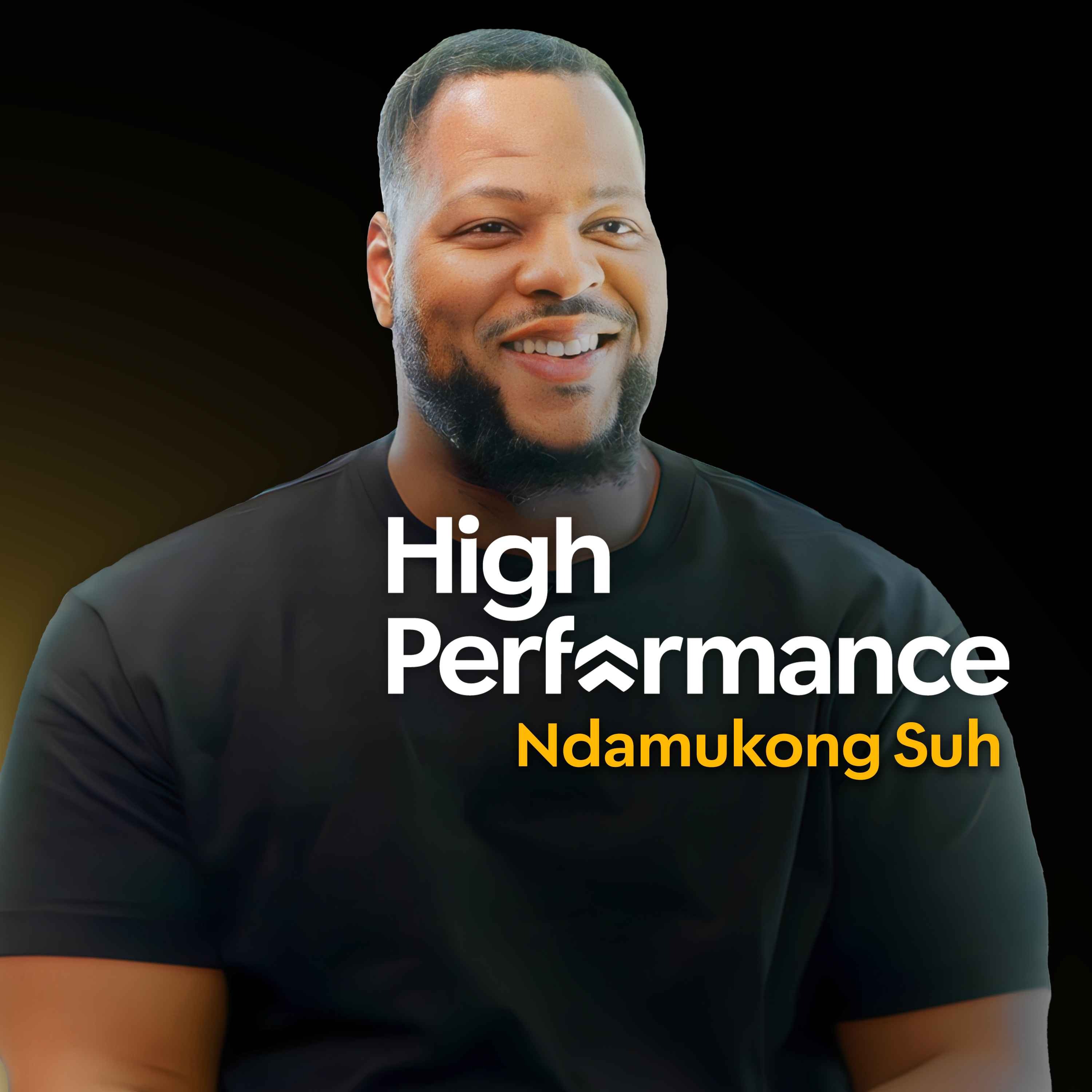
In this episode, hosts Jake Humphrey and Damian Hughes have an in-depth conversation with Ndamukong Su, a renowned NFL defensive tackle known for his power, discipline, and leadership. The discussion encompasses Suh's career in football, his personal growth, and his transition into entrepreneurship.
Written by AI. May contain mistakes.

Get the gist, explore an idea or ask about something said.
 Claude
On The High Performance Podcast, what are the key points of this episode?
Searching your listeningAutomatic transcript. May contain errors.
0:28Watch it early on the High Performance App. legacy. Keep that consistently for 13, 14, 15 years is not an easy task. That was the voice of NFL legend and Super Bowl winner, Andamakun Su, who joins us on this episode of High Performance, the show that explores the stories and ideas of some of the most extraordinary people in the world. I'm Jake Humphrey, and like so many of you, I'm simply someone who's just fascinated by becoming a better version of myself. And I'm Damien Hughes, an expert in the world of high performance. I've been lucky enough to work with the England national football team, the Scotland rugby team, and a range of professional sports teams right across the world, as well as with leading business people to help them understand how to get the best out of themselves and others.
1:13In this podcast, we discuss both how people achieve great things and the why that drives them. And that's why we welcome Andomik and Sue to the conversation. The man is a dominant force, right, in the world of American football. At one point, you'll love this, Damien, the highest paid defensive player in the league when he signed a$114 million contract with the Miami Dolphins. The thing is, though, like, that's ridiculous. But everything about the NFL is ridiculous. I loved watching quarterback. Yeah, on Netflix. Oh, so interesting. And when you see people taking big hits, you go, hmm, that looks quite a big hit.
1:50Then Tomah Kanzu walks in the room, and I'm six foot four, and I feel short. I remember your eyes popping out of your head. You're like, look at the size of this guy. I felt like Roger Moore facing Jaws in the James Bond films. Very good. Always good to get a 1970s movie reference into the intro to high performance. But it's true. It kind of, it was suddenly like, look at the size of this guy. But it's also the mindset that he has that got him to the top of the game, which I think was really interesting. Yeah. I mean, I remember asking him where the origins of the name Andomicon came from. And he said it was translated as House of Spears, which symbolise strength and protection, which is a pretty fitting name for a player famous for his aggressive style of play on the football field.
2:32But I actually thought he was a real gentle giant in many ways. I love these stories talking about playing alongside Tom Brady when discussing how they won the Super Bowl and the lessons he'd learnt from being part of a high-performing team. His text messages he got off Michael Jordan before that Super Bowl final. I also liked how he's taken the lessons from sport far beyond that into his field of life as a businessman and also as a philanthropist as well. But also the fact that he's flawed. You know, so often we put people on a pedestal on this show. You know, we're inviting someone to a show called High Performance and he talks about the discipline issues.
3:08He talks about taking the most fines that we've ever seen in the NFL. You know, it's a very honest conversation with someone who's made plenty of mistakes along the way. And I guess really that's the message. You know, this show is not about flawless, perfect people. It's about people who achieve high performance and they then share with you that it's not always from the inside what it seems from the outside and that's very much the case with Andomik and Sue who asked us to refer to him as Sue during this conversation so should we do it? Let's definitely do it and welcome Sue to High Performance.
3:43Well Sue welcome to the show. Thank you. If we were to start then with what you think is the defining thing that gave you not just a successful career but a long successful career what do you think that magic ingredient is discipline pure discipline if you don't have discipline it goes into everything in life but especially if you want to be the best and be a high performer you got to have discipline which goes into everything that you're doing methodical focus determination what you need to do to prepare for gains prepare for workouts everything in between so creating a plan you can have the best plan but if you're not disciplined to it what's the point of having the plan let's start then with this conversation about discipline let's delve into a few areas of discipline right i say playing football yeah what does discipline look like for you in that world discipline for me in that is one training i think if you don't have a plan and a focus of what your training looks like and i think to be the best in season you have to have the amazing off seasons and that's year after year and being able to refine that each and every year so i think with the team that i have and i create my philosophy and my thought process of being disciplined and focused and having the best thing from a guy named Keith D 'Amelio, which is my performance director who's been with me for 15 years now, 14, 15 years now.
5:03And his methodical focus in the way that we put things together and being able to explain the why we're doing something, because I'm a big why person. If you can't tell me why, like, why am I doing this? And I'm not going to do it, especially with like why are we in the office for eight hours like i know we have to play to sometimes the lowest denominator of our team but at the end of the day like i can learn a lot faster i can learn the playbook in two hours for that week or for that day i can practice for two hours that's four hours why do i need to be in there for 10 hours so uh giving the why and being able to understand those different particular pieces i think is most important and can you give us an example of discipline that separates you from somebody that hasn't had such a stellar career?
5:46I think everybody is different, but I would say for myself, I'm an early riser. I like to get up five, six in the morning, get my training in, get my work done, and then have the rest of the day to be able to focus on anything else that I want to do. So for example, this morning, woke up at six, got my workout in, and now I'm here. So I have the entire rest of the day to do what I want to do. But the discipline to be able to do that week after week, month after month, and be able to keep that consistently for 13, 14, 15 years is not an easy task. And there's days you wake up where you don't even want to do it, but you're still doing it because one, you want to compete against yourself versus always looking at the other person.
6:30So I think that's where people struggle. They're looking to always compete against somebody else, but you need to compete against yourself and this discipline conversation is going to be very interesting for you over the next few months because we can't sit here with someone who was a second overall pick in the 2010 nfl draft super bowl winner five times pro bowl yeah and you've just said to us maybe it's not over yet yeah you sit here as a free agent at the moment so what would you be doing from a discipline perspective to get back into the game well i've gone through a bunch of different stuff over the last couple months, and I'm back in the lab with my guy Keith, among some other guys that I'm mentoring and teaching in the same space of creating a discipline for their own self to make it look like what's best for them.
7:14So my model is early in the morning, early riser. That doesn't always have to be the case for everybody else. I think as you continue to grow for me to answer your question directly, I'm still in the gym, five, six o 'clock in the morning and getting my workouts in. It looks a little bit different. I'm not going, I guess, as hard as I'm saying I'm preparing for the next season because, one, I'm not going to camp. I've told every single team they've known that since last year. I refuse to go to camp. The grueling grind of camp is just not what I need for my body to be successful. I think the best example of that was in 2022 and 2023 when I played for Philly.
7:57I went through halfway through the season and got to the Super Bowl and had an opportunity to win. And the ability to not go through camp, come in fresh and be able to pick up the playbook in a week to be able to play on it. Well, I really came in on a Thursday, played in a Saturday game. Granted, the playbook was condensed a little bit for me, but that following week when we played the next game, which had been week nine, it's ready to go. So I can step in. There's only so many ways you can play three technique. There's only so many ways you can play as a defensive end or defensive tackle. And so I know those things and I've had the experience of doing it for 10 plus years.
8:39I can roll right into it.
8:46The market's uncertain. Revenue's tied and hiring on hold. That's why results driven companies are using Upwork to keep work moving. Go to Upwork.com today and start hiring proven freelance talent fast. No bulky overhead. No rigid long-term contracts. Just the right expert right when you need them. Work smarter and faster with Upwork. Go to Upwork.com now and find your freelance expert. That's U-P-W-O-R-K.com. Post a job for free and get started today. Come to DSW for the shoes, stay for the fun. Because let's be honest, if shoe shopping isn't fun, are you even doing it right? So go ahead, try something new.
9:25Try something different, good different. Try something that feels like you, you know, the real you. And then definitely brag about it later. Because at DSW, you've got unlimited freedom to play. With sneakers, boots, and everything in between for every style, mood, and occasion, you'll definitely find shoes that get you at prices that get your budget. DSW, let us surprise you.
9:49This episode is brought to you by Opera Air, the first browser with mindfulness at its core. Now, most of us spend hours every day online, but how often do we pause to take care of ourselves whilst we're doing it? And that's where Opera Air comes in. It's a lightweight, fast, secure browser built not just for productivity, but for your well-being. With Opera Air, mindfulness is built right in. You'll find free breathing exercises, guided meditations, and soundscapes with ambient sounds, lo-fi music, and binaural beats, all designed to help you focus, relax, and even spark creativity while you browse.
10:27But do you not feel that, like, I appreciate the grueling nature of those camps can take its toll, but is that not where the chemistry, the friendships, the relationships that are going to see you through to be successful have forged? So I agree to disagree with you on that standpoint. I think there's opportunities for that to grow and create those relationships in the long term. But no one team is ever the same in any particular year, let alone any season. Because guys get injured and you have guys that are coming up off a practice squad from other teams. There's trades. There's multitude. So look at me as just a guy that just got traded middle of the season or earlier in the season.
11:09Look at me as a guy that was replacing an injured player. So I'm now brought into that form. And I've been fortunate enough, like a lot of guys know me in the league. So, for example, you look at Philly, all the leaders on that team knew who I were. And their GM said, hey, we would love for you to come in, but we want our captains, our leaders to say, hey, we approve of this guy. And they're like, oh, we all know you guys. And the main guy that was there was Darius Slay. We played together in Detroit for two, three years. He was my young pup at that time. Now he's older and a tenured guy. He was like, yeah, he's going to come in and fit in perfectly with us.
11:46And it was. So what do you tell us about that? Because that's a really fascinating insight into the locker room of how you go in and establish yourself in a team environment where you've got leaders that are only too happy to embrace you. Why do you think that's the case beyond your talent on the field? What is it you bring to a dressing room? Well, I think it's the talent on the field that makes it easy because they respect you. They've seen what you've been able to do in the past, and then they come in and see the work ethic. They see you're adding value, which has always been my biggest thing.
12:17I want to be able to add value. And then two, I'm not coming in to say I need to be a leader. I lead in the way that I play, in the way that I add value and help other guys around them. So I think a lot of people might have been saying, hey, Fletcher Cox in Philly is a lead defensive tackle. He's been there for 10-plus years. How are you two going to mesh? And then also looking at a perspective, I've always been a starter. So now I'm going to be in a backup role. Is that going to be an issue? Well, you have those conversations and say, well, in that system, everybody plays basically 50-50 of snaps.
12:48So we have 60 snaps in a game. I'm playing 30. Fletcher's playing 30. Me not starting, as long as we're winning games, I could care less at the end of the day. Being a starter, yes, it's nice to have that and have that tag that you're a starter. But at the end of the day, our goal is to go and win a championship. And so I can relinquish my ego, my pride from saying I'm not a starter, but I'm a contributor in helping this team get to the ultimate goal. And let's talk then about the player that someone might get if they decide to sign you for the next season. I remember seeing your coach at the Bucks coming out and saying, everyone told me, why do I want Ndamukong Su in my team?
13:26He's a problem. He'll cause issues. He'll have bad discipline. He said, I'm telling you now, he's the most professional guy I've had in my locker room. so do you feel that a your reputation precedes you from some of the things that happened in the past and b i'd love you for our audience to set the record straight and tell us like who really are you well my definitely my my reputation precedes me uh and i think the one thing i've always told people is that i'm not an open book so at the end of the day you have to get to know me you have to take a few minutes or an hour or whatever it may be to sit down with me and just have a normal conversation, I think you'll understand a small glimpse of who I am.
14:08And very open, I have an opportunity, open in the sense of having a conversation, but I am an introvert. So at the same time, you have to peel back the layers. And I think a lot of people have always seen the 2011 incident, they've seen me, the comments from other coaches that don't know me, haven't spent time with me, haven't been around me for a long period of time. And that is what gets out in the media because it's negative. Also, at the same time, that's what sells papers. It sells all the different things. One thing I actually learned, I think it was back in 2011, 12 timeframe. I don't know if you remember famous quarterback from Florida, lefty Tim Tebow.
14:50He was considered the God, was playing in Denver. I was considered the villain. And then you had the pretty boys of Tom Brady and I think it was also Peyton Manning of the League. And so the narrative, and I remember there was an article that was put out. You have the God in Tim Tebow, the pretty boy in Tom Brady, the face of the Leagues of Peyton Manning, and then me as a villain. So that's what my narrative was always been, but people never knew me outside of that article. But of course, the narrative did also come from some of the actions on the field, right? I read that in your first four seasons in the league, you took more fines than 10 of the teams had got all players combined.
15:35Like we're talking a quarter of a million dollars for on-field violations. How, like, you can reflect now, like it's 10 years really since all of that went on. What was happening there? What was that all about? Honestly, I think it's a form of I wouldn't say targeting, but I look at it as a perspective of guys and girls outside of the game didn't understand like I am a generational talent to some extent. And I'm paying homage to the guys that have come before me. The warm saps, the Reggie whites, physical, down hard, no blue collar football, no nonsense blue collar football. and I can run at a fast speed and I can hit at a fast speed.
16:17And they were seeing hits that weren't the normal. And then also we're in a time period of the game. I was talking to one of my close friends last night, Lawrence Jackson, who played together here. He played here at USC and then also played together in Detroit. We were in a time period where we're shifting, the NFL is shifting the player safety rules and all these different particular pieces. So I'm in the mix of playing hard-nosed football on the defensive side of the ball and making noise, but then we're shifting and trying to have more places, concussions, all these different particular pieces.
16:51So I think I get hit in the mix where me hitting Jay Cutler in the back of his jersey as hard as I can and him going forward, that's not a penalty. But it's being considered a penalty because there's heightened awareness of you can't hit quarterbacks in certain areas. Now the target for a quarterback, if you're hitting them, is waist to upper chest. Anywhere else is illegal. So that wasn't the rules in the 90s and early 2000s. But 2010 started to switch that mold. But as somebody that prides yourself on walking into a dressing room and adding value, when you were being punished for these violations, what were your teammates saying to you afterwards?
17:35what's uh really honestly nothing it was more a pat on the back like we want we're trying to change the culture here in detroit because it was a losing culture and myself kyle vandenbosch cory williams uh cliff averill at that time lawrence jackson at that time that those defenses were so used to just being rolled over being oh and 16 two and two and 14 and we flipped the script in 2010, not as well as we had hoped, 6-10, than getting to the playoffs in my second year and being a dominant defense. And then in 2014, when I was my last year there, we were the best defense in the league in setting records.
18:16So I think it was changing the tide and mentality. And sometimes you have to take, you have to roll with the punches and take some bad hits or whatever it is, or take some fines or whatever it is to change that culture. And I think that was part of it. So tell us about changing the culture because what you achieved at Detroit was significant, like you say, going into a losing team and getting them to the playoffs in a two-year period. Would you share for our listeners some of the insights on the most effective ways that you led that turnaround? I think the best way that I led it, in my opinion, because I wasn't the only person, I think Calvin Johnson was a big part of that.
18:52I think Kyle Vandenbosch, I think Jonah Blake, Dominic Raiola, one of the lead offensive linemen, were all a part of that piece. And it was, one, getting the front office doing a great job of getting guys out of the locker room that were just collecting checks and saying, hey, I'm coming to Detroit, collect my check and move on and go from that standpoint. Having a want to to win and a focus to win and then having a core group of guys that are leading that charge offensively and defensively. And so, with that being the case and me being a young guy, the only way I best knew how to do that was to play as hard and as fast as I could.
19:29because then guys will start to follow me behind me and they will start to bring other generational talent behind me there's a handful of young talented players that were coming ziggy ansa being one of those guys that were coming behind me um and i'm trying to find figure remember the guy's name uh defensive tackle that can't nick fairley who's the other guy right right after i got drafted i looked at that next draft nick fairly being drafted so a lot of people were saying hey why is he being drafted they just drafted sue well you're adding more generational of talent that can come in there and change the culture and the focus for this defense and the team overall.
20:04But how did you deal with the guys that were just collecting paychecks? So somebody that's playing hard and fast, that must have been difficult to see people that weren't as committed. Well, we had really good coaches. And Jim Schwartz, being there for four of my five years in Detroit, said those guys are no longer playing. and same thing with Chris Kosturg who's got the great defensive line right now in the 49ers he's like if you're not playing this type of brand of football and running to the ball and doing what I'm asking from this perspective and building this this type of culture and this expectation you will not touch this football field and so those guys fell to the wayside and in this time when you were getting this criticism for really being what we would describe as a cultural architect like you were trying to lead that team to success and you were doing it in the way that you knew best.
20:53Were you frustrated and upset by the criticism you were getting? I wouldn't say I was upset about it. I just didn't understand it. And not understanding it creates a form of indecision and understanding of how you approach things with the media and sometimes with coaches, sometimes with players and whatnot. And so really what I did is I said, all right, if you're going to treat me in such an ill manner and from a standpoint of saying, hey, you're this evil person, you're not doing great, you're a bad person, you're a dirty person, all these different things. Again, I went back to my core self, being an introvert.
21:35And so I said, you know what, Mita, I'm done with you. I'm not having any conversation with you. I'm gonna do my bare minimum. I didn't go as bad as March on Lynch where I avoided them at all costs. I did my bare minimum, understanding what that was. And then I actually really dove into business and all these other business ventures that I aspirations I had outside of sports. And so going to spend time with mentors, going to spend time with other business folks that I've looked up to over the years and wanted to learn from and kind of separated. So I always had my core focus of football and understanding what I needed to get done there.
22:09And again, doing the bare minimum when it came to media, but I did everything else to the utmost levels. but then I decided to spend all my other time and divulge and kind of separate myself and not give people the access that they wanted to. And there was a period where you were arguably the most controversial and the most criticized player in the NFL, right? At the same time, you broke the record for the highest paid defensive player in the history of the sport. Yep. So was there ever a moment where with all this incredible scrutiny you were under, it affected the way you were playing? Were you ever in a match about to do something and thought, oh, this is going to get me some bad criticism.
22:49No. I think that's the hard-headed piece in me, is being able to kind of look through all the fog and troubles and all the different things that people want to say who I am because in my core self and having my tight-knit family and my wife of now, who was my good friend at that particular point and became my girlfriend when we moved here in L.A. and then obviously my wife now, like just having those strong people to around me to say hey like just continue to be true to yourself because you could only say one thing which was oh he's a bad player on the football field in between the white lines you could never say that outside of the white lines or outside of you don't see me in car accidents you don't see me creating issues and violence domestic all these different particular pieces you don't see those issues with me creating things outside so you can't say that that's my character at the end of the day you can say i'm a hard-nosed football player and I'd play blue collar football.
23:44But again, that's how I was brought up in the game and that's how I wanted to play and that's how I found creative ways to stay within that core self. Can you tell us about that period though when you were the highest paid player? Because when we were looking at the stats around NFL players and the amount of them that end up squandering their wealth in the years after they're playing, I think the figure was 78 % will find themselves bankrupt within two years after they've finished. It's mind-boggling. And I'm interested in that period when you were at the apex of your earning power as a player.
24:22The instincts of people that gravitate towards you, that want to tell you what you want to hear rather than what you need to hear, or they want to be seen with you in the right places, must be incredibly difficult to see your way through. And I'm interested in the lessons that you learned at that time that our listeners could understand. Yeah, no, it was definitely an interesting time. Especially me, one, leaving Detroit and going to Miami of all places, being one of the highest paid, if not the highest paid defensive players in the league at that time. But I always stay true to my family, my parents.
24:55Even to this day, my parents still have their thumb on me. 37 years old, my mom telling me, you got to do this, you got to do that. And I think that's what has always kept me grounded. So I never really got into a place where I had to worry about who's around, who's not around. Because as soon as somebody said that, that was close-knit to my core of my family, I took a look at it. And I said, yeah, they're just there for a few minutes. And then I'm moving on from that standpoint. Or there was just a quick conversation or whatever it may be. It's never been something that was super long-term. And you're able to identify that.
25:32And I always do something at the end of every single season. And usually January, May, and I go on vacation to go see one of my best friends who was playing basketball overseas. And I kind of do an audit of everything in my life that was going on. Cool. Tell us more about that. And it was really just being able to say, hey, like, these are all the people that I'm doing business with. These are people that are in my life that I'm working on and doing things with. These are my friends and my family. And obviously, I don't necessarily have to worry about my friends and family too much. And obviously, unless I'm doing something, but I'm doing an audit through those different particular pieces every single year.
26:03and I'm saying like who's adding value, who's not adding value, like how do we work together and doing it for us and I've always been that way for some reason. There's a clip that I want to play, Sue, that I thought was, thanks, that was really valuable. Not just because it talks about the value that you brought to a team, but it's someone talking about you who I think we can talk to you about the value that they brought to the team that you're involved in as well. So let me just get this up. Anybody disrespect you, disrespect you that you said it's done you guys remember indomitian sue indomitian was one of the biggest fastest most explosive athletes the league has ever seen and the dolphins signed them i would always try to butter the d lineman up because i didn't want them trying to hit me any harder than they already were trying to hit me so every opportunity i could get i would try to be like you're a great player man like stay out of my backfield so indomitian one time we were playing in Miami.
27:01I let go of the ball and then this heavy ass arm would come in and just boom. The second drive of the game and we were driving the ball and boom, he hit me again. So I slapped them on the butt. And I go, dude, stay out of our backfield today. And he looked at me and goes, I'm not your friend. Tom Brady, talking about you. How do you feel seeing that? Honestly, I think it's one of the greatest compliments to ever get as a defensive lineman. To have a quarterback one at his caliber being the GOAT and greatest of all time just having that ability to one play with him but also see that that comment like that's my mentality like I didn't care we were best of friends off the football field but when we stepped in between those white lines if you're on the offensive side of the ball you're my enemy and it's plain and simple and so I always wanted to add value from the perspective of we could be best friends we can do all these different things outside but if you're not on the same side of me it's wearing the same color we're enemies at that particular point in time and you guys ended up playing together winning the super bowl together yeah what was it like the day that he walked in and it was the guy that you've been saying i'm not your friend a couple seasons before and suddenly you're wearing the same jersey uh honestly it was a lot of excitement just because i knew being able to have tom come in and have that respect of like We respect each other as elite players, and now we get to be on the same side.
28:27I think we have a real powerhouse opportunity. You played against Tom Brady, right? Yeah. Then you won the Super Bowl with him. So you are better placed than almost anyone on the planet to tell us what set him apart. I'd love to know the biggest lessons you learned from him. Lessons that I learned from him? I think, honestly, he's a tireless worker is the biggest thing that I've noticed. and then one seeing from afar and then seeing him in person, obviously being around each other for two years. Do you remember seeing him do something and thinking that is unusual levels of dedication and hard work?
29:04Yeah, Saturday night where we had our late night team meeting and Tom would have the whole offense in the dark on our practice fields or in like our little, there's like a little part in Tampa where we have like our loading dock where there's some lights and they'd be out there going through, walking through plays and doing different things. And to me, that's dedication of making sure, one, everybody's accountable to what they need to do going into a Sunday game. And Tom Brady was the driving force behind that. He was the driving force and leading of all of that. What was it like when you hear somebody like Tom Brady stand up and agree to put an ego to one side as well?
29:41What was the effect in the room? I think it's an effect of guys being able to say, like he's a guy who can have all of the ego in the world that he wants. He's got six championships, and the one thing he wants to do is go after his seventh and win that seventh. And so if he's willing to do this and make that sacrifice, why can't I make that sacrifice? And so I think that's what hit, especially with a lot of the younger guys, and especially the younger guys on the defense side of the ball, being able to see him talk and see those different things and say, like, I'm just a second or third year guy.
30:12Or sometimes we even had some rookies that were starting at that particular point in time in that season. And I think that's where they said, like, one, it's very special to get into the playoffs. And two, to go win a championship this early on in your career. People will go through their entire career and never win anything. Let's talk then about that Super Bowl. Because you're still smarting from the year before when you feel you should have won the Super Bowl and you didn't. Yeah. Before we get on to this one, what was the single most painful thing in the defeat the year before? the defeat with the uh la rams was i mean we had probably played the best game of defensive football possible in holding a team to 13 points and knowing our offense was averaging i think through the playoffs at like 30 or 35 points a game destroying dallas destroying the saints um and there was one other team that that we beat um or actually no i think we had a bye so we had just two games, Dallas and the Saints.
31:11Like, to only come out with three points was, like, heartbreaking. And you were so close. And we just couldn't find a way to put more points on the board or get our offense the ball back a couple more times to be able to do that. And even so much more, like, the bust on the play that got them a touchdown was another big piece because we could easily held them to nine points. and but if you even know i mean most people probably don't know this but 17 points or less you're winning the game because you should have an offense that's strong enough to put up three touchdowns 21 points and how did you personally recover from that defeat till this day i still don't think i've recovered uh i mean i remember sitting in the house that i rented for my family and friends and i didn't sleep that entire night after that game it still it still hurts like like it's very difficult because it was it was my first Super Bowl and I feel like we put everything in there from a team perspective and we just still came up short and how did you deal with it back in the team environment that there's a saying in like the British sport um that defense wins your games the forwards decide by how many And I'm interested in how do you avoid recriminations of finger pointing after something as painful as a defeat like that?
32:39I think you can always finger point, but that's an easy cop-out way. I think from a perspective of everybody had their hand in that game, positive or negative. And we just came up short because of, you could say, five, ten plays in the first half, five, ten plays in the second half. I think a lot of people always go to that second half or the last 10 plays, 10, 5, 10 minutes of a game and say these are the defining moments of that game. But there's also a ton of other things that transpired throughout the game. That's why Bill Belichick, I think, is one of the best coaches ever to coach the game.
33:13Because if you ever notice, his halftime adjustments are what kill team and they get out coached. And we got out coached in that game, in my opinion. and why we weren't able to, one, put up the points that we were able to do throughout the previous playoff games. And then, two, they found a weakness in our defense, and they exploited that to go score a touchdown. Which leads us into a really interesting area about how important is the role of a coach then? I think a role of a coach is super important. One, because you're empowering your players at the end of the day for them to go and execute.
33:50And so if you put them in positions and educate them and be able to show these different nuances to help them play at a higher level, you're doing your job. But at the end of the day, it's on the players to be able to go and execute that. I also look at coaches from the perspective of saying, hey, yes, I'm the leader, but I can only lead so much. You guys have to be the field generals and be the people on the field that actually are the coaches. I remember times where we've made in-game decisions between players, even though a coach may not agree with it, but it's best for what we do as a team.
34:25And I would always tell our middle linebackers at times, I don't care what the coach is saying. If we're in hurry-up offense, especially playing Tom Brady in New England back in the day when I was playing in Miami, you just call a call. I don't care what the coach says. Call a call and put everybody on the same page. we will live to fight another day and be able to play play this game and that's where you become a coach yourself and you need to be able to understand the defense the offense to a level to where you can start calling plays and think like that coach and that's where a coach has to be able to educate you and put you in those positions as well throughout the week let's roll forwards then one year to another super bowl we've played in successive super bowls i'd love i'd love you to take us into your mindset moments before the game starts knowing the pain that you were still carrying from 12 months before.
35:14Yeah. What were you thinking to take control of that game?
35:20So going into the championship game, Super Bowl against Kansas City, and having played them earlier in that year, and they just came in Tampa and destroyed us, they ran through us. I begged and begged and begged for us to look at that game totally different. One, because we've got two weeks to prepare for this game, or a week and a half, however you want to look at it. Our DC, who's now the head coach, Todd Bowles of Tampa, loves to blitz, loves to get after the quarterback and speed up their process. And I told him, and I was like, hey, man, we're watching film. I'm looking at these different things.
35:58This offensive line as a whole has no chance against our defensive line. Put all the pressure on us up front in the front seven of our defense. because one, we have a young back group, back end of guys from DBs, our corners and our safeties. He's like, let me take a look at it. And so we came into the game plan and he said, we're going to play two high, Tampa two. And so basically have two high safeties. And when we're going through this in practice, he was like, I'm starting to see, I like this. If you guys can stop the run in a soft shell and you guys can also get after the pass rusher, we will stay throughout this throughout the game.
36:43We ended up winning that game 31-9. It wasn't even close. And so being able to have a coach that was willing to change and adapt to some different things to understand what's best for the team, I think was key. But then also us being able to execute.
37:01If you're still overpaying for wireless, it's time to say yes to saying no. At Mint Mobile, their favorite word is no. No contracts, no monthly bills, no overages, no hidden fees, no BS. I made the switch because I was tired of those ridiculous bills and sneaky charges from my old provider. With Mint, I'm paying$15 a month and getting the same high-speed data, unlimited talk and text, and coverage on the nation's largest 5G network. Honestly, the quality is just as good, if not better, than what I had before. And the best part? You don't need a new phone. You can keep your current one, bring your number, and all your contacts.
37:36I use Mint Mobile, and you should too. Ready to say yes to saying no? Make the switch at mintmobile.com slash HPP. That's mintmobile.com slash HPP. Upfront payment of$45 required, equivalent to$15 a month. Limited time new customer offer for first three months only. Speeds may slow up a 35 gig on unlimited plan. Taxes and fees extra. See Mint Mobile for details. The market's uncertain. Revenues tied and hiring on hold. That's why results-driven companies are using Upwork to keep work moving. Go to Upwork.com today and start hiring proven freelance talent fast. No bulky overhead. No rigid long-term contracts.
38:16Just the right expert right when you need them. Work smarter and faster with Upwork. Go to Upwork.com now and find your freelance expert. That's U-P-W-O-R-K.com. Post a job for free and get started today. No one knows your business better than you. So who better to create your website than, well, you? Wix's website builder puts it all in your hands. Create a beautiful website just by talking with AI or choosing from thousands of templates. Customize every detail with simple drag-and-drop tools and get everything you need to start running business your way. Build more, think bigger, and do it all yourself on Wix.
38:57Go to Wix.com.
39:05I'm interested in how did you process that defeat from the year before to keep yourself focused, to keep your confidence high? What kind of things were you saying to yourself? I'm interested in your personal perspective. So my mental prep going into that game was, I think, one of a kind from a perspective of like I zoned out everything. And it was really good at the same time. It sucked because we were in the pandemic and not a lot of people would come to the games, even though the NFL opened it up for first responders and all those different things. But my family didn't even come down. It was my wife and one of our close friends had actually been spending a lot of time with us in Tampa.
39:42So he was secure from that, from being not getting us sick or anything of that nature. And my mental prep was after we had beaten, I think it was we beat the Saints in the second round. I forgot who we won and we beat an NFC championship. I don't know why it's blanking down on me, but long story short, I remember sitting in the hotel and I got a text from Michael Jordan and Phil Knight and said, this is an opportunity for you to set a legacy. And being able to see those messages took me to a whole different level of like dialing in. I was already dialed in. That didn't overhaul you? No, not at all.
40:20them knowing and having spent time with them to say like you have an opportunity this is your opportunity to go and make a presence for your name and we we basically have full trust in that you're going to be able to go and get that done and knock it down and I I after I remember seeing those messages that morning before the game I was like yeah we're there's no question we're winning this game I already had that confidence going into the game but like there was just something in the air coming from those messages and then just also seeing everything and how in tune and like having the rhythm and i'm big on like the methodical approach of how you the routine that you take and everything in my routine was just spot on what was the message from you back to phil knight and michael jordan after that you'd won the super bowl i'm not going to share that I don't blame you I am interested in I mean they're two iconic names that for them to have your number to reach out to you like that must indicate that there's a strength of a relationship there if you wouldn't mind sharing to us what are some of the lessons you've learned from two iconic figures like Phil Knight and Michael Jordan I'll start with Phil so we go back to the 2011 stuff of incidents and all those different things and people giving me tough times Phil actually called me into his office because I got suspended and I went back home.
41:44Called me into his office and he was like, obviously we can't have this happen again. I've got a bunch of trust in you and all these different things. I'm here to support you. But we can also spin this to be a really good thing because people now know who your faces are, what your face is and who you are. And did a bunch of Nike commercials, all these different things. But then also just being able to sit down with him and understand like he believes in me. and he's also from Portland, Oregon and created this amazing company and been very successful. And he sees that same type of success in myself.
42:18It's just now diving in and having the details and the focus of to one, do that on the football field, but also learn from him on the business side of things. So those conversations, I don't think, one, I was very lucky to have that and him wanting to reach out to me and say, hey, I want you to come into my office and meet with me to have a discussion. and I know there's some other people and there's some other great people, one of them being William Wesley who's a very close friend of mine or a family friend of me and those people pushing me and always having my back and that's where I talk about the older generation that I'm around need absolutely nothing from me or want nothing from me that push you and give you good quality advice.
43:04You're also someone though who understands the value other people bring. Yeah. So I'm interested in what were the questions you were asking Phil Knight, because that's a rare opportunity to pick the brains of a truly legendary business and sport figure. What did you ask him? Honestly, I don't remember specifically what I asked him, but in all the conversation that we've had throughout the years, and even most recently about business stuff, it's like, how do you approach these different things? How do you get to these different places? and what's the process oriented? Because I always believe there's a process.
43:37Nothing just happens out of thin air. And so seeing those pieces, being able to understand them, and then being able to say, hey, how can you help me and how can I help myself? Because it's a combination of that. Sometimes you need helping hands, but also you need to help yourself because nothing can be given to you. You have to go and earn it. And what about Michael Jordan? MJ's always been one of the best men. I don't know why he's always taken a liking to me and it's amazing to be a part of the brand, the Jordan brand and whatnot, but it's like he's one of those guys that I see a lot of myself in him.
44:14Very introverted, keeps to himself, but a tireless worker, always focused on what is the next thing he can be best at and how he can help others be the best at what they want to accomplish at the end of the day. And so being able to bounce ideas and different things off of him is like, it's a great opportunity. Is he generous with his knowledge? Yeah, for sure. Would you share with us the most valuable insight he's offered that our listeners could perhaps adopt? I would say, one, he doesn't like ever losing. I mean, I think that's known to everybody. Like, just that focus and that want to, to never lose, no matter who it is.
44:55Like, playing a little kid one-on-one, I'm not going to let you beat me. And having that mentality and that focus is something that I think I take from him. and understand why that makes you who you are, because that's easy just for sports, but you can also translate it into business as we talk about. And then there's an intersection of finding that middle ground of not going overboard to that, but also being able to have that pronounced focus of being able to get where you want to be and being successful in that space. We're going to talk about business, but before we do, one final question about your football career.
45:31the day that you won the Super Bowl. You've said you weren't nervous, you weren't overawed, you got these incredible text messages from Phil Knight and Michael Jordan, but also you were up against Patrick Mahomes, who remains one of the most talked about and celebrated players that the league has ever seen. Was there any fear going up against him? No, not one bit. One, because we had played against them earlier in that year, and I think I'd maybe played against them one or two other times prior of that but it's like one there's no quarterback in this world that puts fear in my heart and if there is there's a big problem i shouldn't be playing anymore but two you just like he puts on his pants no different than i put my pants on and limiting him was my ultimate goal because he was really the only one that could could beat us if your quarterback is on the ground and running for his life which he was that entire game you have no chance of meeting us because one we've got one of the greatest quarterbacks in in the world and I know they're going to put up points there's no doubt about that and we're just going to keep giving them as many opportunities as possible to do that and so there really was no fear ever to do that it was just not making mistakes because when you go back and watch that previous game earlier in that season it was Hail Mary over the top, Tyreek Hill catching it like a baby and walking to the end zone.
46:59Got two high safeties, just don't give them the big plays. And that's where I think they've evolved over the years, especially this last year, watching him play. But that was their thing. They need a big plays. And as long as we didn't give those big plays, we were going to be perfect. The feeling when you sack Patrick Mahomes? Multiple sacks, I guess.
47:23I mean, tons of excitement. I mean, that's... I don't think even throughout the playoffs, I don't think I got any sacks throughout the playoffs, but I got... I should have had two, but I got one and a half. What's he like when you've sacked him? He's actually pretty good. He just takes it and moves on. I've seen how he likes to sort of jump up almost like that didn't hurt. Yeah. I never even noticed that I just got sacked by a 300-pound guy. Yeah. Him and Andrew Luck are very similar from that aspect. they're like, that was a good hit, but I'm up and ready to go. Would he talk? Would he say that?
47:56No, no, he wasn't a talker from my, at least towards me. Maybe the other guys, he wasn't talking to me like that. I'm really intrigued by that phrase you used, where you just said he puts his pants on in the same way as I do. Was that a way that you would be able to cut through the noise and not be intimidated by reputations, just to reduce them to their human status rather than get caught up in a superstar reputation? I think everybody's talented and has great abilities. That's why you're in the league. That's why you're playing a professional sport. But at the end of the day, just as talented as you are, I'm just as talented.
48:33And so let's get back to the basics. Like, it's X's and O's. And who's bigger and faster and stronger? And go from that standpoint. It's like, I don't see anything magical. it's really more so the mistakes that somebody makes is what makes somebody else better and so if you make a mistake i take advantage of it i'm seeing that i get all the glory it's as simple as that and after all the years of hard work and sacrifice dedication attention to detail to win the super bowl how did that feel huge weight off the shoulders uh because got all pros, got Pro Bowls, got all decade team. Like the one thing to one get to Canton is you usually got to have a Super Bowl under your belt.
49:25And that's one thing that I've always wanted to, again, add the value and be able to do it from a team oriented perspective. Because it's great to have individual success. That's, you want to be recognized. What elite player does it? but ultimately i've always wanted to be a guy that made people around me better and that translated to winning let's talk business then yeah um you've said numerous times in this conversation so far i want to achieve more off the field than on the field yeah take us deeper into that yeah so i mean you can look at it from a monetary value but i look at more from a perspective of saying like i'm more than just an athlete and i have the ability to use my brain use relationships that I've cultivated over the years to not only help others and also create interesting and fun ideas.
50:20I love food, so I'm in the food space. I love real estate because I grew up watching my parents have apartments, having to cut their lawns and be a part of those different things so I can go play AAU basketball or AAU soccer or whatever it may be from that standpoint and understanding at a younger age and then um also playing to the real estate side of things it's like being able to pay it forward to other people so i call it attainable housing but affordable housing being able to support others to for them to be successful and get into living that every human should have across the entire world and taking great pride in that and then also So being able to help build other people's businesses.
51:03I have a best friend that finished playing 11 years pro basketball overseas. Now I'm helping him build his construction company. So there's tons of excitement in being able to use my brain and not just be considered and coined as an athlete. So let's take that as a good example in helping your friend build his business. What are you doing to help him? Because I think when we look at you as a footballer, we can see your talents. We can see your abilities. They're clear. They're obvious. Yeah. I'd love to know what your talents and abilities are in the business space. Yeah. So we'll use a construction company as a basis or a model, but creating operations.
51:41And so I have basically an operations company that can help create methodologies, means and methods for what this construction company needs and identifying where their issues are, why they're not running at the highest level, and finding talent, finding different relationships. So he's a general contractor. You need quality subs to be underneath you. So I've had tons of subs that I've worked with on my own projects that I've built things with and providing those relationships and those connections from that standpoint. And then one of the big things that I love is teaching financial literacy.
52:20So budgeting, being able to understand how you operate this business, what's your overall overhead what do you need to make in a year or in a month to be able to cover all of your overhead of one of your employees and what you want to take home as an individual for running and operating this company so going through all those practices and those pieces are very important it's not it's just easy i got a construction company and i'm just going to start rolling in the money so you're not talking then about passion and instinct you're talking about processes for sure is that what you think makes the difference I think those are some of the biggest differences from being having successful companies and unsuccessful companies yes you want the passion the focus and the leadership and and the camaraderie around those different things but you can have all of those and no processes and your company will go nowhere we've spoken a lot about mentors and you've got a pretty cool business mentor I think instead of me revealing who it is something you should tell us.
53:18I'm assuming you're thinking of Warren Buffett. Yeah. Warren is probably one of the best, but I've got a lot of good mentors. Warren is one of the top guys that I was fortunate enough to, one, go to the same school and meet when I was in college. And then luckily, Tom Osborne, who was our athletic director at Nebraska at that time, was open enough when I asked him, say, hey, would you mind introduce me to him or reintroducing me to him to sit down and have a meeting? Because we had met quasi in passing because he was an honorary captain my senior year at school. And so I got to walk out, have that conversation, do all those different things.
54:00But it was... So what was that day like when you go and meet Warren Buffett? I would be nervous then. Oh, I was for sure nervous. At that time, I was just leaving college. I'd been 22, 23. right yeah and so super nervous uh i had a friend of me because i was coming back i think i was training down in dallas at the time and i had a friend pick me up from the airport in omaha and uh i said you got to get me to there uh two hours before the meeting i'm just gonna sit there and wait why i want like for me i respect people's time like i want i always want to be on time and i was like i'm just gonna sit here and wait and when he's ready i'll go in and go from that standpoint.
54:41So I sat there for two hours. His assistant came in and said, Warren's ready to meet with you. And he came out all happy and super joyful and his normal self as his personality. And we really sat for like two, three hours and just talked about everything from top to bottom. And he is truthfully, it was like talking to my dad, like how easy it was to discuss things with him and keep the conversation going and talking about different businesses that he's involved in and talking about the berkshire hathaway meeting and how that all process and all that works and then seeing how one how small his office is because you would think like people got big massive offices floors and floors and this tight-knit group mrs debbie uh and whatnot and so like it's it's super interesting and then he's like whenever and i think at that time they had just done uh i think it was uh the heinz deal and so i was able to ask him about that deal and it's like yeah we have tuesday meetings and if you ever want to you can just come sit in and and listen i was like oh for sure i'll definitely take you up on that so i did yeah so it was it was super interesting just to be able to see how he runs and operates and like you think he'd be on his computer doing a bunch of stuff, he reads the newspapers.
56:04I mean, he's super old school in the way he looks at and does stuff. And everything is, like, 90 % of his time, he's just reading information on different companies and different things that he's trying to learn about. See, when you're describing that, though, I'm hearing that you met him at 22. I'm hearing the echoes through your career of having a tight-knit circle, removing the ego, making language accessible and understandable for everybody. Yeah. So what other lessons have you learned from him that you feel that we from outside that world could understand? I think the most important lessons I've learned from Warren outside of specific questions and things that we've talked about and different ideas that I've had, general sense, I would say patience, which is probably one of the most difficult things for me.
56:56And I think for most people in the world, it's like we want everything right here right now you see i would assume that's what he's like he's achieved so much i thought he'd be like a yesterday guy no no no he is all about patience and then even more important than patience is finding right people and good people to run your companies and that is the one thing that i've noticed in all of the organizations i've been exposed to that he's in control of and has underneath his conglomerate is the quality people that he has running and operating them. Amazing. So quickfire questions are coming next.
57:31But before that, in my previous life, I worked with, I was a TV host on sport and I worked on football. And I remember once seeing a load of former England internationals, like the three most famous former England players, saying that they think the best days of their life are over. Okay. Because I think they will never have the joy of scoring a goal or winning a match or lifting a trophy again. What do you feel when I say that? I disagree, especially one, having kids, because I think my best days are ahead of me with them. But then two, it's as much as I love football and it's been so gracious to me in my life and still can be gracious, and it's just a small part of my life.
58:18And I think there's much more that I can do and have effect in this world than just playing sports. Brilliant. Right. Let's talk then about our quickfire questions. The first one is, what are the three non-negotiable behaviours that you and the people around you must buy into, the three most important things for you? Transparency, accountability, and work ethic. What advice would you give to a young Sue just starting out? Don't be afraid to be different, and then also get out of your comfort zone. Who's the greatest quarterback you've ever faced? From a mobility standpoint, I'm going to say Michael Vick.
58:59And then from an overall quarterback standpoint, it's hard for me not to say Tom just because I think, I mean, he's done it at every single stage, and he's found multiple ways to win, whether he's winning the game himself or making players around him create that success because he's won championships by throwing the ball and running the ball every which way. What's your biggest strength and your greatest weakness? That's a tough question. Weakness, I would say hard-headed. Biggest strength, though? I don't know what I would call my biggest strength. That's something that I have to think about.
59:43Because you've got too many to choose from. Is that the problem? I would hope that's the case. But no, I don't think I have a specific strength that I would say that overweighs everything. But yeah, I'm definitely hard-headed in a lot of ways. The final question, and there'll be people listening to this because they love the sports element of your life, others that come at it from the business angle or the parents' angle. What would you leave as your final message for those people, your sort of one golden rule, if you like, for them to go and live their own high-performance life? I think it's important to live your best life with no regrets and everything happens for a reason uh that's how i've lived my life and i think i've it's served me really well granted i'm still super young 37 uh old in football years but young and young in life but living a life with no regrets and everything happens for a reason top man thank you very much
1:00:45damien jake what i really enjoyed about that is that he is one of the most spoken about and criticised NFL players of the last decade, yet the person in front of us was quietly spoken, reflective. He was humble. I mean, he couldn't even think of a great strength, could he? You know, it's totally a different person, I think, to the one that many people would have expected to see sitting in that chair. Well, that's one of the factors that he spoke to us about, that you have to get to know him. And once you do that, he's willing to open up and share some of his wisdom. He said the best coaches that he's ever had have been people that have invested that time.
1:01:20And hopefully for people watching this and listening today, they walk away with a similar sense of value from doing that. What stood out to you? I like the courage to zig when everybody is zagging, to be willing to embrace the direction of travel you want to go to and avoid the noise of following the herd and being willing to back yourself. And I really like the fact that he understands the power of personal relationships, whether it's the players that were in his team. But more than that, like the fact he's getting text messages from Phil Knight and Michael Jordan, the fact that Warren Buffett has taken him under his wing and has acted as a mentor for him, it shows that he's got the ability to really relate to people on a human level, which means they've got his back and I'm sure he's got theirs as well.
1:02:06Yeah, and from that, I think how anyone could take away from it and apply it to their own life, from listening to the example, was that willingness to say, am I adding value? in any situation am I adding or am I taking value from it and I think the fact that he's surrounded himself with people that have added value to him but he's adding value to them as well so it's a constantly reciprocal positive cycle and we have so many people that sit and speak to us having achieved great things and they're now kind of wondering how they can have a match up to that I love the fact that he openly says he's going to be as good off the field as he was on the field if not better yeah again that's the courage to not just follow the herd and assume that your life is defined by what you did in the nfl it's 37 years of age you've got a exciting second chapter to come thanks mate loved it thank you and that brings us to the end of today's episode of high performance just remember there are so many ways that you can reach us you can not just listen here on your podcast player you can also So watch these conversations on YouTube.
1:03:09You can download the High Performance app where you can create your own playlist, watch daily boosts, see some exclusive content, or you can just follow us across social media and reach out. Let us know what you think of the conversations. Maybe tell us who you'd love to see on the show. We'll do our best to make it happen because in all honesty, we are here for you. So thank you so much for continuing on this journey with us. Keep on spreading the messages that you're hearing. Stay humble, curious and empathetic. And myself and Damien, we'll see you again soon. Thank you.
1:04:07Like your enrollment specialist who gets to know you and the goals you'd like to achieve. You'll also get a designated academic coach who's with you throughout your entire program. Plus, career coaches are available to help you navigate your professional goals. A different future is closer than you think with Capella University. Learn more at capella.edu.
Ndamukong Suh is a dominant NFL defensive tackle known for his power, discipline, and leadership both on and off the field. A five-time Pro Bowl player, Suh has made his mark not only as one of the league's most feared defenders but also as an entrepreneur and businessman. Over his impressive career, he has built a reputation for his strong work ethic and strategic approach to the game.
In this episode, Jake and Damian sit down with Suh to talk about his journey in the NFL, the importance of discipline, and what it takes to maintain success at the highest level. Suh opens up about his reputation, touching on how past events have shaped public perception, and whether it has affected him personally. They dive into Suh's experiences as a leader, exploring the criticism he faced when trying to be a "cultural architect" for his team and how he handled the pressure of being one of the league’s highest-paid players.
Ndamukong also shares stories from his time playing alongside legends like Tom Brady, discussing their Super Bowl win and the lessons he learned from being part of such a high-caliber team. Beyond football, Suh opens up about his ambitions to expand beyond the sport, including his venture into the business world, where he hopes to apply the same drive and discipline that made him successful in the NFL.
This episode offers a unique blend of sports insights, personal reflections, and motivational takeaways, showcasing how discipline and leadership extend far beyond the field.
Credit - PBD Podcast for the Tom Brady clip
🚨 Partners
Huel 👉 Join some of the world’s top performers and millions globally choosing Huel everyday to shortcut their nutrition. Unlock your offer today at: https://hppod.co/HuelRunning
Heights 👉 https://hppod.co/Heights Get 20% off your subscription by using Code: HP20
FORA 👉 Claim a free day pass at any Fora workspace and find the perfect home for your business here: https://hppod.co/FORAHP
Explore offers and discounts through our other partners:
https://hppod.co/partners
Hosted on Acast. See acast.com/privacy for more information.


