
 Ask ChatGPT


 The High Performance Podcast
8 Sep 2025 · 1h 4m
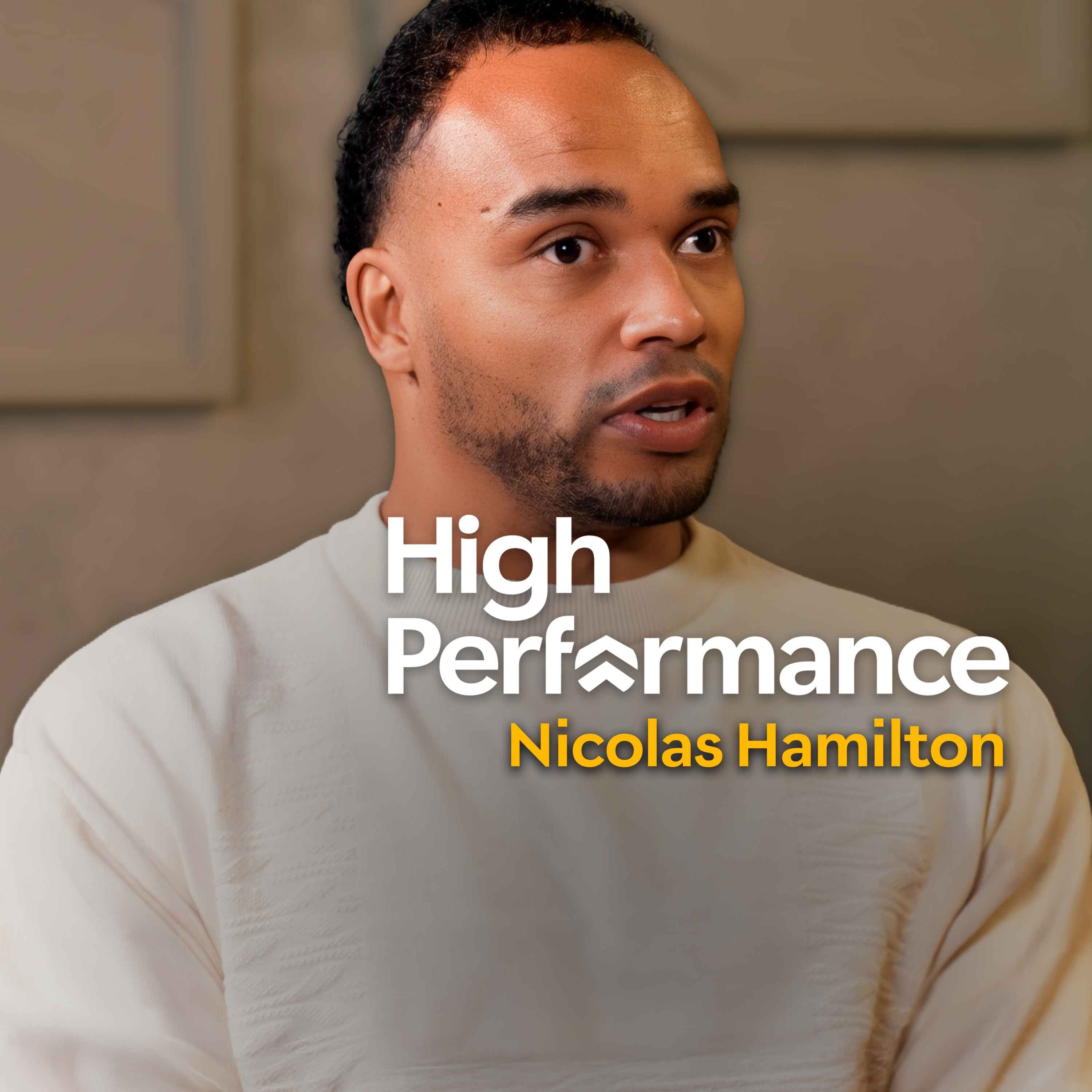
In this episode, hosts Jake Humphrey and Damian Hughes engage in a deep and insightful conversation with Nicolas Hamilton, a British racing driver who has overcome the challenges of living with cerebral palsy. As the younger brother of seven-time Formula One world champion Lewis Hamilton, Nicolas shares his journey of self-discovery, resilience, and the pursuit of personal fulfillment beyond the shadows of his brother's success.
Written by AI. May contain mistakes.

Get the gist, explore an idea or ask about something said.
 Claude
On The High Performance Podcast, what are the key points of this episode?
Searching your listeningAutomatic transcript. May contain errors.
0:28Watch it early on the High Performance App. in the garage to get into my British touring car and I can't believe that I'm physically able to do that and not just physically able to do that but physically able to compete and compete really well. That is the voice of Nick Hamilton, inspirational speaker, brother to seven-time Formula One world champion Lewis Hamilton but also a person in his own right, a racing driver and not only that, a racing driver born with cerebral palsy. But today's conversation is not about what he's done, It's about how he's managed to do it. It's not a conversation about comparison.
1:02That's happened to Nick too many times over the years. This is a conversation about the man himself, a man's journey to find self-worth, independence, his own voice, and of course the strength mentally and physically to live life on his own terms. This was a really important episode for me. I've known Nick for well over a decade, in fact almost 20 years, but the things that he talks about I had no idea about because he's going to take us into the tough love childhood that shaped him. Where falling over didn't mean being picked up, it meant getting up yourself and the strength that came from having to figure it out, sometimes alone.
1:39Nick also opens up about growing up being known only as Lewis Hamilton's brother, how he managed to find his own value but the pain that he felt along the way, the deep loneliness of living with a lifelong disability, why gaming, therapy and motorsports have helped him to rebuild and the moment he chose to become a racing driver not in his brother's shadow but also in his own name this is a really powerful honest story about identity self-esteem and the power of acceptance not from others but from within there is also a conversation about suicide in this episode so i just want you to know about that in advance before we begin please hit follow on apple or spotify you will then never miss an episode and remember you can get early access to every single episode of our show and exclusive extras on the High Performance app.
2:26And it is my great personal pleasure to welcome Nicholas Hamilton to High Performance.
2:36Nick, welcome to the show. Thank you, Jake. I really appreciate you having me here today. It's been awesome. Well, look, you and I go back a long way. I've known you for a very long time. And I was really keen to get you to come on High Performance because I think that your story is one of incredible grit, remarkable resilience, but also like not an especially easy journey. And I would love people to really understand the challenges that you faced. And I was thinking on my way in today, like what sums up to me, you? And for me, it's this idea that what is hard for you isn't necessarily bad for you.
3:08Yeah. I feel like in this day and age, a lot of people shy away from the tough path. When they have tough days, it really gets them down. And they're very, you know, scared to move forward and it can knock them back and knock them for six for a long period of time. For me, you know, I was brought up on tough love. You know, I didn't have it easy from day one. And obviously parents, especially my parents, you know, they're not going to get things right straight away. You know, it's a trial and error situation. But you know, I was born into the world, I would say with three wheels on my wagon. I had to try and make the best with it.
3:48And I made the decision to continue pushing forward regardless. You know, my parents weren't there really from day one to help me with specific obstacles. I had to find my own way to get through those tough days. And even now as a 33 year old, I struggle with the same sort of things, but my mentality is a lot stronger. So what would tough love have looked like when you were a young kid? Obviously, you know, I had my disability, you know, born with spastic diplegia cerebral palsy and my parents knew nothing about the disability and they chose collectively you know not to wrap me up in cotton wool and and not treat me any different to to any other child um and so my dad was was on my case from from early doors um you know telling me to to not fall over to make sure i pick up my feet and and and don't make mistakes or what if you did fall over he wouldn't he wouldn't shout at me he would just i guess uh roll his eyes and look at me in disappointment.
4:47And it's not necessarily he was disappointed in me. He just knew the world is an able-bodied world full of able-bodied people doing able-bodied stuff. And unfortunately, I have this disability. He's not going to be around forever. My mom's not going to be around forever, you know, holding me, picking me up. I've got to find a way to move forward. So when I did fall over, you know, my dad didn't come and help. my mum didn't come and help as long as I hadn't broken an arm or broken a leg they just left me there to figure it out myself and I guess it's hard from a I was four years old really it's the earliest I can remember and to try and understand my legs at four years old was so hard and the people you look to is your parents for that help and so I guess I resented them to start with because I was like, gosh, you could at least come and give me a helping hand.
5:47And they chose not to. They chose to stand back. And I guess now all of that sort of resentment has turned into gratitude because it takes a very strong person and a very strong relationship with my parents to stand back when they see their disabled child struggling with the real simple things. And yeah, I'm so grateful for the way they brought me up. But you know, you can always improve and do things in different ways. But that was what was instilled in me from day one. And it's got me to where I am today, pretty, pretty independent. And why are you grateful? Why has it got you to this point?
6:28Because it's affected and impacted every part of my life. Yes, physically, you know, overcoming the disability, you know, dealing with bullies at school, you know, dealing with criticism, you know, in my motorsport, you know, dealing with difficulties and relationships with within business. My parents, I guess, taught me self value quite early. When I was born with my disability, I felt like I had no value, because no one would look at you seriously. You know, I was just this kid at a point in my life where I was just in my wheelchair and no one really gave me their time. No one really spoke to me.
7:11I didn't really have any friends at school to start with. And I think because my dad was so strong and hard with me to start with, it built this strength within me that I didn't need people to be nice to me. I didn't need people to wrap me up and treat me any differently. I was strong enough within myself over time to stand up to difficult moments, difficult people. And I'm so grateful for that because it's made me really hard-headed. And, you know, every day I live my life. Physically, I struggle. It's a pain in the bum. You know, at 33, I actually don't know a disabled, not a disabled person, but a person with my disability older than me.
7:57So I don't even know how it's going to be when I get to 50. You know, will I be struggling with arthritis? Will I be able to walk? All that sort of things. But I feel like what my dad taught me from a really young age has built me in preparation for all of that to come.
8:28Keep work moving. Go to Upwork.com today and start hiring proven freelance talent fast. No bulky overhead. No rigid long-term contracts. Just the right expert right when you need them. Work smarter and faster with Upwork. Go to Upwork.com now and find your freelance expert. That's U-P-W-O-R-K.com. Post a job for free and get started today. Come to DSW for the shoes. Stay for the fun. because let's be honest, if shoe shopping isn't fun, are you even doing it right? So go ahead, try something new. Try something different. Good different. Try something that feels like you. You know, the real you.
9:05And then definitely brag about it later. Because at DSW, you've got unlimited freedom to play. With sneakers, boots, and everything in between for every style, mood, and occasion, you'll definitely find shoes that get you at prices that get your budget. DSW. Let us surprise you.
9:23This episode is brought to you by Opera Air The first browser with mindfulness at its core Now, most of us spend hours every day online But how often do we pause to take care of ourselves whilst we're doing it? And that's where Opera Air comes in It's a lightweight, fast, secure browser Built not just for productivity, but for your well-being With Opera Air, mindfulness is built right in You'll find free breathing exercises, guided meditations and soundscapes with ambient sounds, lo-fi music and binaural beats, all designed to help you focus, relax and even spark creativity while you browse.
10:01And you mentioned school very briefly there. School can be an unforgiving and vicious place if you stand out even slightly. And there you are, not just as a person of colour, the only person of colour in your school? The only person of colour, yeah. And then add into the mix a disability. That is the kind of thing that we know young people will pounce upon. What was school like? Yeah, I mean, I was obviously, I was born in the 90s. And, you know, I went to schools full of able-bodied people. So, you know, no school for, you know, special needs or, you know, special requirements. Was that also a conscious decision, do you think, by your parents?
10:39I've actually spoken to my parents, or especially my mom, about this. And my mom said we didn't even really think about it, you know. And that just shows her mentality was almost like, you know, she had me and she didn't think, oh, we need to now take him to a school where, you know, he's going to get special, you know, help. Her mentality was, we're just going to put him in school. Kind of like that though, which is great, you know, which is great. And that's why I'm so independent now, you know, and I sit here, you know, saying that I've done this and I've done that. but it's all stemmed from my parents' attitudes.
11:17And my mom, I think, is the true unsung hero. I'll go into my mom later if you want. But yeah, they made the decision to put me in a school full of able-bodied people. So my primary school, I was the only disabled person there, the only person of color there. But it's easy for them to say. It's easy for them to just go, right, Nick, you're going to school today. Have a great day. I was the person that had to deal with that day. I was the person that had to try and walk because initially I really struggled with my legs. I had an operation when I was four years old to help with the movement. So by the time I got to school, I was able to walk a little bit.
12:02But now I'm what, you know, eight years old. And at this point in my life, I hadn't seen another disabled person by the time I was eight. So I felt very, very lonely, almost like I was the only disabled person in existence at that point. And everywhere I looked around me was people that weren't my color and people that were able-bodied and didn't have my disability. So I sort of stuck out like a sore thumb. And then obviously physiotherapy and all that sort of stuff, like painful work to continue overcoming the condition whilst I'm at school, became a very difficult period of time. And then I took that into secondary school and had to pretty much start again, where I had to walk long distances.
12:46And that's where I chose to be in a wheelchair. Did you get bullied? Of course. Yeah, of course. I think I didn't get bullied because of my color. I got bullied because I was an easy target, because I walked differently, I looked different. I struggled with really simple tasks. I would just trip and fall a lot of the time. And, you know, when you get to, you know, 13, 14, 15, falling over is now seen as, you know, socially awkward. So I was bullied for that and mainly, you know, being in my wheelchair. And I chose to be in the wheelchair because of the long distances. You had to walk at school, you know, you had to go to different departments throughout secondary school, whereas primary school, you're in one classroom for all your lessons, so you don't really need to do too much.
13:39But for secondary school, you're everywhere. You know, kids would come behind me and pull me backwards in my wheelchair, so I was just lying on the floor, you know, staring at the sky. And I was always, you know, last and late to class. And, you know, people, I remember like, you know, kids used to like wear like a T-shirt with like wheels on it and stuff like that. and just try and make fun of me that way. Also try and be my friend but take the mick out of me at the same time. So I knew what they were doing but I couldn't control it. It's a lonely place that, isn't it? Yeah, yeah, absolutely.
14:20I want to remind everybody, you know, I'm speaking from my own personal experience, right? So anything I say, you know, doesn't affect everyone else. But from my personal experience, you know, being a disabled person is a very lonely place in itself because
14:37near enough everywhere I go there's only me that is disabled has my specific condition and so I'm the only person especially within my family you know that has to live has to live with it has to get up in the morning has to deal with the difficulties and the struggles that the legs present but also the impact and the knock-on effect it has on my body and all that sort of stuff you know and I have amazing amazing friends and so much support from my family my brother my mom my dad but it doesn't matter what I do this condition is gonna be here until I until I you know die and leave this earth and it can be very um very lonely I want people to know that like even when people look at me and I've achieved these things and I've done this and I've done that, I'm still quite a lonely individual and that's okay.
15:35You're not invisible and I'm not this real strong person that is indestructible. Especially in the last couple of years, I wanted to show my vulnerability to disability presents. Do you still feel lonely now? Yeah. Yeah, I do. I mean, I think I always will do. I think, you know, at my core, I feel very lonely. I feel generally almost like a reject, almost like, you know, someone that wasn't meant to fit in, wasn't really meant to be here in the normal, conventional way. And, you know, I'm able to talk about this now, you know, because I'm so heavily into mental health and well-being and do a lot of therapy and I'm in therapy twice a week and it's a real positive thing.
16:38And I think going back to my parents, the way my parents brought me up was almost like, you can do it, Nick. You can do it, Nick. You can do it, Nick. And that's true. I could, but I didn't really sit with a disability. I just swept it under the carpet and just kept pushing forward And I think over the last two years or so, I've really started to take time within therapy to sit with it and actually maybe talk to it for the first time and really try and understand my relationship with my disability. I realized it's actually not as strong as I once thought it was. And so, yeah, I feel very lonely with it.
17:20but I feel like I've got to a point with it so much that it doesn't stop me doing anything but it's like dragging a bag of sand with you everywhere you go it's always there to pull you back or to remind you certain things so it can be frustrating but I don't know any different and I wouldn't want to be any other way I'm actually really pleased for you that you're in a place where you're happy to come on a show like this and talk really openly and honestly because actually if I think about when I first met you and it would have been when I worked in Formula 1 in 2009 and you were at a lot of the races you know with Lewis at McLaren we got to know each other well and we ended up doing a bit of work together I was like you've got to meet Nick Hamilton he's got a permanent smile on his face he's the happiest guy he's the guy you want to invite to every party and I think I appreciate that like you know obviously it was an element of that, but there's also an element where that was a facade.
18:22Yeah. And I think it's so important you're now able to actually say, yeah, like, I mean, it breaks my heart a bit when you say you still have this sense that you feel a bit like a reject. No, I, you know, this isn't, I'm not speaking out for people to feel sorry for me. Absolutely not, you know. I'm being so open because I like, I pride myself in talking about subjects that a lot of people, you know, find difficult to talk about. And I feel like over the last three, four years, I've really started to see what my purpose is. And, you know, my purpose, I believe now, is to live with my disability.
19:05Yes, it's hard and it's tough. And I do this and I do that. And I struggle with different bits. But I think I'm here for a purpose. And that purpose is to live with the disability to then create awareness, but also shine light on the positive side of disability as well. But to be here in service of others and try and help people through the same sort of mental process that I've gone through or difficulties, both able-bodied people, disabled people. And you're right, when you met me in 2009 or whatever it would be, I lived my life as a kid, smiling. I was always smiling. and you know that's kudos to to my parents for for always putting a smile on my face but it was definitely a facade it was a it was a mask that I carried with me because I think you know deep down I was unhappy with being in my wheelchair at the time um you know and I have to continue to reiterate you know I'm not trying to be negative to anybody that's in a wheelchair you know because they lead fruitful lives.
20:11But from my point of view, it was, especially when you have a brother that is taking the motorsport scene by storm, you know, who is as able-bodied as it gets and is so super talented to, you know, come from the same family, but to be in a completely different situation, you know, where I'm in this wheelchair, I'm beneath, not beneath, but sitting down where everyone else is standing up. I'm looking, looking up at everybody. Everyone's looking down at me. It's a lot for a young kid to take on. And I just didn't know where my life was, was going to go. But Formula One and adults made me feel accepted.
20:55You know, I think I feel like I struggled at school to feel accepted, but adults made me feel accepted. So I was more in my element, you know, when I met you, for example, in Formula One, I felt very comfortable there. And how much of an additional challenge did it present as you were growing up that, you know, Lewis did go on this amazing journey in motorsport? And as we all know, because it's the way that world works, you can't do that on your own. Everyone has to come on the journey with you. So you have to make sacrifices. You know, your mom and dad would have had to make sacrifices. And as is often the case with people who are doing what Lewis is doing, it becomes the role of the whole family, right, to support that person.
21:34And yet you're having to do that while but also carrying a disability and having your own sort of personal struggles. There's a lot of people in the world who think that the Hamilton family just turned up and Lewis was seven times Formula World Champion from nothing. But we all worked collectively to get him to where he is today. We sacrificed a lot. My parents especially sacrificed a lot. What sort of stuff? I mean, for them, my parents had no money. My dad was a poor man, to be honest, didn't really have the best of upbringings. And I think he just wanted the best for Lewis, but also to try and pull the family out of a lot of financial struggle and grief.
22:28And initially, it was to keep Lewis out of trouble, I think. for him to focus on something after school and whatever. And he chose go-karts. And my dad worked four jobs. A lot of people know the story already, but he worked four jobs and put up signposts and everything he could to support the family. But also, my dad had a disabled son as well. So that required a lot of attention from my mom to A, hold the household together, but also to protect me, you know, because I needed carrying everywhere. And, you know, I couldn't physically move a lot when I was a kid. So, you know, there was a lot on my dad's plate, you know, and then all I knew was following Lewis to races.
23:18I was never jealous of him. I never wanted to compete with him. There was never this sibling rivalry, you know, that some people may think that there was because there really wasn't. it was I wanted to I wanted the best for Lewis and I wanted him to to have all the success and I just wanted to to sit and watch him because I couldn't believe how incredible he was you know just um a as a brother but b you know as a as an athlete and as a talent he had a lot of pressure on his shoulders you know my dad didn't let him have it easy because it was it was either this has to work or you're gonna have to maybe work somewhere else like go to Tesco's or something because you know Lewis focused on his on his schooling but he didn't put any nowhere near as much time in his schooling as he did in his motorsport so if it doesn't work he's gonna he's gonna be stuck on where he goes and my dad you know was so hard on him and and that's where Lewis gets his like relentless determination where like every race that he drives it's like it could be his last one you know because that's the budget that we were on to start with you know we got Lewis to where he is today and and to be a part of it has been a pure honor and uh yeah I I mean, I guess I sacrificed, you know, some of my life and I guess the attention from my parents because I didn't really...
24:57It's hard to say, but, you know, I didn't really... My goals and my passions weren't really important, I would say, when I was growing up. It was all about the direction we're taking with Lewis, right? So, you know, I didn't really feel like I had that relationship where I could focus on maybe what I wanted to do as a kid. But I really didn't know what I was going to do because of my disability. So it's hard. I always feel when people are sitting in the chair that you're sitting in, it's difficult to sometimes say those things because you think, well, what are the connotations? Does it make you sound like my parents weren't caring?
25:38No, of course they are. We also have to understand that you were in some ways a victim of circumstance, right? You can't get Lewis to where he got to without everyone giving it everything. And there is a cost to that. And I guess I think a bit about where was your self-esteem at that point when it was already kind of impacted by what was going on at school and then everybody wanted to talk to your brother or, Lord, your brother, he's standing on the podium all the time. Yeah, it was tough because a lot of people know me for Lewis's brother. That's like, it's almost like my name. Like, oh, you're Lewis's brother.
26:15Like, I don't have a name. So there's that, but then there's also like, you know, having my disability. So my self-esteem at the time, you know, I'm trying to figure out how I become valuable or a person that matters just in my own life where I can go to school and people don't take the mick out of me and people see me as a valuable person. What didn't really help was the fact that my brother was like one of the most well-known racing drivers up and coming. So it was like I didn't feel valuable in myself just at school, but then people were taught to me because my brother's famous now. So it was like a double whammy.
26:59They just wouldn't speak to me just for me. you know I just wanted people to to speak to me for me and and even now you know it's it's it's hard because you know the amount of people that that speak to me and talk to me and and stuff and yeah okay people starting to see the work that I do and the things that I've achieved you know but I'll never get rid of this Lewis Hamilton's brother thing and and I wouldn't change it for the world but you know it's been it's been tough you know we a lot has been as as we said, a lot's been sacrificed, but continuously as well. You know, my relationship with Lewis has to an extent been sacrificed because it's not like I can go to the cinema with him and just have a night out.
27:43Everything we do straight away potentially is going to get paparazzi or whatever. And you can't just be brothers out in public because especially with social media today, There's comments everywhere, people feeling they've got to say what they've got to say and put as much pressure on just celebrity life. It's been sad because really all I want to do is just have a pizza with my brother at home or have a pizza out or just live a normal type of day. But unfortunately, we can't do that. Have you not managed to find a way to win back some of that, the ability to just be brothers even behind closed doors?
28:28Yeah, behind closed doors I think we've found a lot in gaming we've always gamed, me and him together we used to play racing games now we play shooting games now we play Call of Duty together and I think that connection where it's like you put your headphones on it's just you and him no one else and it's like I always explain it's like being in the pub with your mates that's what gaming's like and you can you can maintain so many amazing relationships because you're talking to them every day me and Lewis don't want to talk about racing because all we do is talk about racing and racing is our lives the last thing we want to do is talk about racing so instead we talk about obviously not seriously but in Call of Duty terms you know what guns we're going to use and how we're going to what strata house just be in the same place together yeah yeah you know but he's in you know he's in monaco and i'm at home or whatever it is but we're still close and it gives us a a reason to message in the morning and being like right we're gonna play games tonight and have you sorted your gun out have you done this have you done that and um for lewis i i realized that's his way of switching switching off and also my way of switching off um and to be able to switch off together is really really important.
29:49What was he like as a younger brother? I was thinking about when you were saying your parents would allow you to get yourself up if you fell, right? Was he keen as an older brother to come and try and lift you up off the floor or whatever? No, we, no, Lewis was, um,
30:11Lewis normalized my disability. Um, and what I mean by that is just as much as my parents didn't treat me any differently, you know, as a son, my brother definitely didn't treat me any differently as a brother. It was literally like I was like his crash test dummy. So anything that looked dangerous, he would get me to do it first to see how dangerous it was, you know. And, you know, Lewis always said to me, and he might have said in interviews already before, you know, he always wanted a little baby brother, you know, and his wish was finally granted. And yeah, obviously, I ended up with this disability, but it didn't, for him, it wasn't like, oh, I've now got this baby brother.
30:52Oh, he's, he's disabled. It was, I've got a baby brother and I'm going to pick on him and I'm going to treat him just like I normally would any baby brother. So, you know, the amount of falls and crashes and scrapes and bumps and everything I've had from, from Lewis, just play fighting with me and being rough with me, like, like brothers are and siblings are, that actually has been a real big part in like how strong I am internally you know like falling over doesn't bother me at all hitting my head you know if I'm if I'm bleeding out or whatever I'm not bothered about it um you know because my my my brother was always I remember him pushing me in this go-kart and trying to get me to go around corners really fast and I would flip out of it and end up in a bush and you know whatever hit my head on something and he would be like you're all right get back in and it taught me to like that's brothers for you and it yeah and it taught me to to deal with the pain yeah and just carry on and and that's what i do my whole life now so i i my pain threshold is super high and i just continue doesn't matter what's going on I'll deal with the pain later.
32:09And was Lewis aware that his career was kind of having an impact on your life as well as he was starting out?
32:20I guess so. I'll never have that conversation with him where it's like, did you realize how much of an impact you've also had on my life? Because that's not his fault either. You know? He was... I guess, you know, chosen in life to have this talent and this opportunity to maximize. And he did that. And, you know, I'm not saying, you know, life is terrible because it isn't. Life is great. We're a great family. We've achieved great things. Lewis is happy and doing amazing things, you know, with what he has. You know, my parents are well and healthy and that's all that we can wish for. You know, I think Lewis does sit sometimes and think, you know, wow, my parents, my brother sacrificed a lot.
33:18But at the end of the day, he was the one that had to drive the car and achieve all these things. You know, I guess as a family, we just provided the opportunity. My dad provided the opportunity in terms of sponsorship and finances and doing deals with teams and whatever. and I helped him when it came to still trying to be a brother to him, you know, with all the stuff that was going on and stress and press and pressure. I was still trying to be there, being his bro. Because really, just as I'm vulnerable, he's also vulnerable and you have to understand him in the best way. And there might also be a really nice, well, there will be a really nice moment, hopefully, in the not too distant future when, you know, Lewis is not 21 anymore.
34:03he's probably going to retire from F1 in the next few years and then there could be that really lovely moment where you do get to be brothers again you do finally have time yeah I mean we try our best to make time and regardless our foundation is so strong it doesn't matter what we do we're always going to be brothers so we don't want to wish our life away too soon he's in a real good place still being in Formula 1 and having a career that's got a lot of longevity, we'll cross that bridge when we come to it. As long as he's happy and he's healthy, that's all I care about. I think one of the coolest things that I ever saw you do was when you decided to get into motor racing.
34:44Because I think with this, with everything we've just spoken about, it would have been so easy for you to go, do you know what, the one thing I'm never going to do is get behind the car with the name Hamilton on the side of that car. Because of course, the comparisons come, right? It's the most normal human thing in the world, isn't it? How did you decide to do that? Well, firstly, I want people to realize I chose to become a racing driver for me, not for anybody else. It wasn't to compete with Lewis or try and take any limelight or steal the light from him or anything like that. For me, it was like...
35:23I was born around motorsport. I eat, sleep, and breathed it every day. I was always at a racetrack supporting Lewis. I always wanted to race go-karts. Didn't think I'd ever be able to drive a road car, let alone a race car with my disability. You know, and I got the opportunity from my dad when I got to 18. I got out of my wheelchair and basically taught myself how to walk. And then I used my motorsport to build my leg strength and to make me more independent physically. And then I ended up in Renault Clio Cup Championship, which is at the time the toughest one-make series in the UK. And it was more now thinking back and looking back, it's all the childhood traumas and wounds that I had as a kid thinking my life's going to, I felt my life's not going to go anywhere.
36:17People aren't giving me attention, paying me attention. How do I get a job. I can't go on the tube every day. I need to physically figure out something that I can do where I can have some sort of longevity. Motorsport is relatively safe. If I find a way that I can train my legs, use my legs in a race car, it's more just an achievement for myself. And little nick you know who who thought at four years old five years old they'd never be able to do anything like that you know now even today you know i put my helmet on standing in the garage to get into my british touring car and i can't believe that i'm physically able to do that and not just physically able to do that but physically able to compete and compete really well with the limitations I have.
37:09And so that's why I chose to race. And if I hadn't have raced, and I've said this many times, you know, my legs wouldn't be as strong as they are. And I don't think I would be as physically independent as I am, because I had to build myself to compete against overbody people. I saw an amazing quote from you where you said, you're a Paralympian competing in the
37:38When you're racing in a car, you're hidden away from the cameras, right? No one can really see. They just see the car going around the track. They might see your eyes behind the visor, but you see so little of the driver. I don't believe you get the credit for actually the physical challenge that you have to undertake. When you're competing against 25, 30 other people who can go to the gym and they can squat and they can lift and they can go running for 25 miles, they can do stuff that you can't even attempt to do. Yeah, come Sunday afternoon at racetracks around the UK, you compete on a level playing field with them and I think that you deserve so much credit.
38:13To me, that is more than a world championship, right? That is like, because that's real. What you've done is real. Would you explain to us the process in the car, actually how much of a physical challenge it is, how different the experience is for you compared to some of the other drivers you compete against? Yeah, for sure. I mean, I was literally just having a conversation yesterday with Lewis about this and even Lewis is still learning. the differences with me when it comes to racing. It's really not that simple and it's a real pain in the bum, to be honest, because obviously the biggest thing is the disability and you've got to figure out how the disability works within a race car.
38:54And I can't flex my ankles, so my ankles are pretty ecstatic in where they are. A lot of drivers accelerate and brake with their ankles and they're able to modulate and control the attitude of the car, you know, braking and accelerating. And so everything comes from the thigh muscle with both of my legs. And so I literally have to accelerate and then pull my leg off of the throttle rather than, you know, nicely pull it back with the ankle, for example. So it's on or off at that point? It's on or off. It's like a switch in some cases. And then obviously you've got the pelvis and the hips that are very, very tight.
39:29The spasticity in the muscles, you know, constantly like a cold spring almost. So it's like trying to figure out how the hell you use all this tightness. It's like a domino effect. You know, you need the bend in your leg to accelerate. But then when you take your leg off, you can't steer, your leg gets in the way, all that sort of stuff. Then you mold your body into the seat. You're popping ribs because you're moving all the time, you know, and the legs just generally just don't want to work. you know so my last you know my last proper seat fit took me 12 and a half hours to to figure out what I need you know so I can't just jump from car to car and obviously the modifications which are basically you know one big accelerator pedal that's really wide gives me loads of surface area to put my feet same with the brake pedal and then I have a hand clutch these things are needed for me to race but then now I'm at a point I'm racing within a second of top touring car drivers and and now it's it's fine details like brake trace and all that sort of stuff and I'm noticing my disability obviously gives me a disadvantage to to find those those last like two and a half tents that you need or you know through one sector um but I make it my life goal to figure out how I make my disability faster.
40:55So what does success look like for you? Success for me is what you deem it. I feel like you can only succeed at your own life. You can't succeed at anyone else's life and you can't succeed by doing what other people do. When I was a kid, success for me was walking up three steps without holding on to anything. And having a day where I didn't fall over was a successful day. for me I'm very proud of who I am as a as a person and I think I'm a very honest and decent individual and I'm I'm really grateful and proud of myself for the man that I've become today and I feel like I'm already successful because I've managed to overcome my disability live with it in a way that it doesn't plague me it doesn't affect me to where I'm I'm down in the dumps you know I I know how to to go through life with it um yes I've I've I've raced cars and I continue to race cars and um I've achieved a goal that I always wanted to achieve whether it's the fact that I haven't won a race and I don't I would always love to um you know but I don't necessarily need to win a race to be successful.
42:14I'm already there and I'm already doing a great job. And so that's what success is to me and I'm already there and you know sitting on this chair talking to you, talking about my disability so openly but also my mentality and everything is a success in itself and I just feel people need to realise that success is only what they can you know muster up themselves and not really try and be like anyone else. If you're still overpaying for wireless, it's time to say yes to saying no. At Mint Mobile, their favourite word is no. No contracts, no monthly bills, no overages, no hidden fees, no BS. I made the switch because I was tired of those ridiculous bills and sneaky charges from my old provider.
43:01With Mint, I'm paying$15 a month and getting the same high-speed data, unlimited talk and text, and coverage on the nation's largest 5G network. Honestly, the quality is just as good, if not better than what I had before. And the best part? You don't need a new phone. You can keep your current one, bring your number, and all your contacts. I use Mint Mobile, and you should too. Ready to say yes to saying no? Make the switch at mintmobile.com slash HPP. That's mintmobile.com slash HPP. Upfront payment of$45 required. Equivalent of$15 a month. Limited time new customer offer for first three months only.
43:34Speeds may slow up a 35 gig on unlimited plan. Taxes and fees extra. See Mint Mobile for details.
44:08Upwork.com. Post a job for free and get started today. Finding great candidates to hire can be like, well, trying to find a needle in a haystack. Sure, you can post your job to some job board, but then all you can do is hope the right person comes along. Which is why you should try ZipRecruiter for free at ZipRecruiter.com. ZipRecruiter doesn't depend on candidates finding you. It finds them for you. Its powerful technology identifies people with the right experience and actively invites them to apply to your job. You get qualified candidates fast. So while other companies might deliver a lot of hay, ZipRecruiter finds you what you're looking for.
44:48The needle in the haystack. See why four out of five employers who post a job on ZipRecruiter get a quality candidate within the first day. ZipRecruiter, the smartest way to hire. And right now, you can try ZipRecruiter for free. That's right, free at ZipRecruiter.com slash zip. That's ZipRecruiter.com slash zip. ZipRecruiter.com slash zip.
45:17There's a great quote I saw recently from Chloe Kelly, who's just won Euros with England, and she said, I'd love to say thank you to everyone who wrote me off. Yeah. I'm eternally grateful. Your story reminds me of a quote from Chloe Kelly, because I don't think you are sitting here without the bullies. You're not sitting here without the fact that Lewis allowed you to be his crash test dummy for so many years. You're not sitting here without the parents who allowed you to get yourself up. But to tell people the story that you were dealt a hard hand and you did the best with it, and here you are with a smile on your face, is only telling half the story, right?
45:53Because in 2016, there was a real challenge for you, a mental health challenge. And I think if you're okay, I would like to talk about it because I think it's such an important part of your story and it's such an important thing for us to discuss for people that watch this show because there will be very few people listening to this or watching this who carry your disability, right? There'll be many, many people watching this or listening to this who are suffering with a different kind of challenge, physical or mental. They're in a dark place. They have those exact same feelings of loneliness that you've had all your life.
46:25You know, I changed schools because I was bullied and I'm sure you can relate to this. I feel that sense of loneliness now as much as I did at school. Do you know that feeling? You know when you mentioned the kids who pretend they're your friend and they're secretly not? The most painful of all. Because you finally think maybe someone is going to be a friend of mine and then it turns out they're just like everyone else. They're using you to make themselves feel better. And having had therapy myself, are you happy to tell us sort of what happened in 2016 and what you went through? Yeah, of course.
46:55You know, firstly, I don't want to sit here and say that my story is any better than anybody else's. You know, I'm here just telling my story like you asked me to do. Yeah, everyone's been bullied or, you know, gone through hardships and hard times. This is just how I dealt with it. Now, obviously, in 2016, you know, my motorsport was and is very, very important to me. It's like the anchor of my life. It gives me the purpose to get up in the morning, overcome my disability, feel like I have purpose and drive and mission and a passion. And I was in and out of motorsport for many years due to lack of funding.
47:34A lot of people, you know, think that Lewis pays for my racing and I'm only here because of Lewis and because he pays for my motorsport. And that really, really isn't true. You know, I did everything on my own. And I got to a point where I wasn't racing. I couldn't get the budget to continue racing. And I just, I don't know I was in a position where my dad was a multi-millionaire my brother was a multi-millionaire and I was this person that was basically lost where I couldn't race I couldn't find the money and money became really really important almost like I put success on money you know you're only successful if you got a load of money I didn't really know where I was going to go what I was going to do but I just wanted to make a load of money was my plan and didn't know anything about betting or football betting or gambling or whatever and I'd never been to a casino in my life and I was in my in my flat at the time and I logged on to like a website gambling website and I found online like blackjack and and I was like getting to a point putting a little bit of money on and I was I was winning and losing money winning and losing money and it put me in a real bad spiral where I basically had a gambling addiction for like seven months.
48:53Got to a point I lost all of my savings, all the money that I put into, all the money that I created myself. And for the first time in my life was trying to really think about how logistically I could commit suicide at the point because you are related to a driver or a sports personality that is worth loads of money. And I didn't want that to be a burden on him being like, well, I've got loads of money and my brother's struggling from a gambling addiction. And it wasn't his fault. No one's fault. No one knew about it. It was just me living a parallel life, basically.
49:41My flat was in a state. I just gambled all day. with all my savings basically and I lost thousands and thousands and thousands and thousands and thousands and I couldn't couldn't speak to my parents I didn't want to speak to my parents just because I thought my dad would kill me to start with and I don't know what they would say or do so I spoke to the Samaritans I decided to call them and at that period of time I felt like they they really like saved my life at that point because I was in a dark room at the end of everything thinking, shoot, what do I do now? Where do I go now? What do I do? And I don't want to talk to my parents, but at least I want to speak to someone.
50:24And, you know, I'm so angry at myself for putting myself through that. It was no one else's fault, but my own. But I try to not blame myself too much because I was going through a lot. I've been going through a lot as a child. and I think a lot of things that happen as a kid, they determine the decisions that you make later in life. And so the first time I was open about that, yeah, was in my book that I wrote in 2023 and that was a real hard thing to be able to write. But I'm so glad that I did and hopefully when people write my book or they write my book, when they read my book or listen to this podcast, they see the openness about it and that it's okay to be in dark spaces and dark places.
51:11And I speak about dark places so well because I've been in some of the darkest spots of my life and pulled through it and got it through having some structure in my life, but also a lot of self-talk, a lot of therapy. And it's built me into the character I am today. What does that darkness look or feel like for you? darkness for me you know i was in a i was a point in my life where yeah i was just lying on my back on a on cold floor in a dark room you know i do a lot of my thinking in darkness and and i think self-talk sitting there in a cold on a cold floor in a cold house in a cold place feeling cold.
52:00That for me is like what darkness feels like. And to mentally try and pull yourself out of that place is the hardest thing. Now, fortunately, I was never into drugs. I don't smoke. I don't drink. So I never looked to that sort of thing to help me deal with it. my mum from day one always taught me to deal with pain on my own like physical pain so she sounds awful but she's not she's amazing my mum like she never really gave me any like medicine or really helps me with my cuts or anything like that she taught me to deal with the pain physical pain without any help or medication or anything and I think that's really helped with sitting with like mental pain um I'm really good at it I've realized I'm really good at sitting with that pain and realizing that it will it does subside eventually um you know but actually bad days difficult times all those moments the days where you fall over the days where you that you struggle those are the days the days that you should actually you know hold on tightly to because they they build you as a man they'd build you as a person, as a human.
53:27But at the time, you just don't realize it. But I'm so proud to be, you know, on here talking about it, to be open about it, because it matches my purpose now, you know, to go through those difficult moments and times. And I know a lot of interviews that I do, I'm very dark. And I'm very, yeah, I'm very dark. I'm not necessarily really like happy and having a laugh and having a joke. And that's because I'm here to just create awareness. I'm here to be honest. I don't want to be like an influencer who tries to pretend that life is going great when really, no, we were struggling here and we're struggling there.
54:08I want to be a person that speaks my truth and takes people on the journey with me. Because if I can help just one person that's listening to this podcast, then I've done my job. But can I just say, this conversation absolutely will have helped someone. It will have helped people. There'll be people now that don't know where to turn. Because that sense of loneliness, again, is a recurring theme, I guess, in your life. You know, that sense of loneliness is very common for people when they're in these dark mental health places. They can't turn to a parent or a partner or a friend because of the stigma or the embarrassment that we still attach to people with mental health challenges.
54:44And I think the reason for that is one of the most pernicious and evil emotions that rears its ugly head when we're in a situation like this, and that is that sense of shame. Absolutely. And, you know, like, I know that Lewis gave you a card that you sold, right? Yeah. To pay your gambling debts, am I right? Yeah. Yeah. I mean, the sense of shame that would have been attached to that. Oh, God, it's so bad. It's so painful. Was it? Yeah, absolutely. It was horrible. You know, Lewis got me this present for my birthday. I can't remember what birthday it was. You know, it was amazing. It was like my pride and joy.
55:17you know and I've seen because I've done articles you know with newspapers and stuff and I mention about this and people are like oh poor you you had this amazing car that you could sell and that's not what I'm talking about that misses the point entirely completely entirely right and the fact is is that I was giving this this thing because really at the end of the day it's a thing but it was from Lewis's kind heart he wanted to do something that would put a smile on my face and I put myself in a position where I had to use that to it wasn't to pay gambling debts because I was never in debt it was to pay my tax bill basically and and the guilt that I felt in that moment to because it was Lewis's money even though it was my a gift for me I felt like I didn't work I didn't earn that car I didn't physically earn it and then I put myself in a position and then used it to get myself out of a predicament and then I literally had no money at that point where I then used my my dad luckily didn't sell my first car and um and so I was driving around in in my first car and I felt like I'd taken seven years like backstep and and car was a was a great car but it just it was rusty and and didn't look good and but but also people expect me to be keeping up appearances so when I'm having a picture with them or they see oh that's Lewis Helmson's brother because a lot of people do you know and and and I'm in this in this car that's sort of not clean not going too great you know people like is that is that your car you know and and it was it was hard for me because I was like I put myself in that place but I'm so I'm so grateful that I did um put myself in that place it's taught me so much and it's a situation that was awful but I'm really I'm really proud of and and it's great to be able to talk about it um now it still does hurt and it's still painful and people are always going to be talking about what they've done in the past with pain but how I got out of it was was realizing that I had the strength within myself to do it I told my mom eventually she helped me put structure in my life and the structure literally was just waking up getting in the shower being clean having a clean area having a clean house all that sort of stuff then I went to the gym and I started doing all that you know to try and get myself back and have a goal and a task.
58:08And then all of this, it's a real long answer, Jake, I apologize, but all of this made me realize that success is nothing about money. Money is really, really not important. People say, well, that's easy for you to say when you've got money. But really, at the end of the day, money is just so that you are able to pay bills and live life hopefully without stress but it doesn't give any happiness it doesn't give any fulfillment from my point of view at all um you know what gives me happiness and fulfillment is is helping supporting people um giving people hope and and waking up and having a goal or a passion or a purpose not because it gives me money um because it fulfills my heart and fulfills what I feel like I'm on this planet to do.
59:04And the biggest lesson that you took from that period? Biggest lesson I took from that period was that it doesn't matter how dark and awful you feel and you feel that life is like pointless and that you feel like unworthy. You have the strength to A, get out of it and B, you're already a very, very, very, very valuable human being and you actually don't need to look to anybody to give you that value or that validation. You have to look at yourself to pull yourself out of those dark moments and there's going to be people waiting to catch you and hug you and support you once you take that first step.
59:57and talking of that the fear you had to tell your dad or to tell your brother how actually was it so i don't i don't know i i can't remember actually telling my brother um but i remember um i remember telling my dad i had to eventually call them and bring them over to my my apartment at the time you know because as i said fully financially independent physically physically independent. I paid everything myself. It was all my stuff, right? And then I just got to a point where I couldn't afford anything else. But luckily I had money coming in from a job that I had. So I still didn't ask my dad for any money.
1:00:36I don't want to ask my dad for any money. I'm in a position. I've got to find my own way out. And so I remember calling my dad and said, dad, everyone come over. So my brother wasn't there. My mom and dad were obviously, and they could see that my apartment was a steak because I was just eating pot noodles basically every day. Because as long as I felt full, I didn't really care. It just meant that I could gamble more. That was literally the position I was in. And I hadn't showered and I didn't really care. And, you know, no one was at my apartment, but they could see how awful it was. And it was a terrible time because I was like, I've gambled all my money away, Dad.
1:01:18and I'm not asking for help but I don't know what to do now and I was initially really scared because I was like, my dad's going to kill me not literally obviously but he's going to be very upset about it and potentially have a go at me or whatever it is which won't help and my mum will be nervous and worried but he was like it's normal pretty much when his response it was like so many people do that they go to casinos they've been to casinos they gamble some of them walk away some of them don't you know and he even said you know he's been to many casino in his time fortunately he was strong enough to walk away you know but it does get it does get people in you know it does hold them in so don't worry about it and and I remember literally after after that he gave me a hug and he was like if you need anything I'm here and that's all I needed from from that and I was like wow and that taught me that that's the power of family that doesn't matter what's going on they're there to understand and even if you think they won't they will and if they don't understand that's also not their fault and if you don't have family then you have the samaritans and you have charities that you can talk to um but here for me it wasn't my family that pulled me out it was me that pulled me out so i doesn't say i don't want to be awful it doesn't sound i didn't need my family to pull me out i just needed me and for people listening to this that are nervous about calling the samaritans nervous about seeing a therapist nervous about telling the world finally facing up to that shame that they're feeling your advice firstly the samaritans are incredible um you call them and it's completely anonymous and um it's a non-judgmental place and space and it's nice just to have someone to talk to a voice to talk to go through any feelings that you feel i wouldn't feel nervous calling the samaritans ever um because it's a real safe place and it's actually really really empowering when it comes to therapy um therapy for me is one of the most empowering empowering things that you can do the strongest things you can do you know a lot of people there's a stigma around therapy you have to only go to therapy when there's a problem or you know if you're struggling or you you know a lot of people think oh i'm in therapy so that must mean i'm really struggling or i'm a you know really difficult human or or whatever for me if you decide to go to therapy you're like one of the strongest people there are um because you're deciding to to build your your mental strength your mental muscle you're open to learning more about yourself learning more about how you can be better for other people in your life and relationships and whatever and so people that tell me that they're in therapy I applaud them and I feel like everyone should at some stage go to therapy but don't just go to therapy and then stop because you think oh I don't feel as bad anymore because also therapy what that does I realize therapy also teaches you to like enjoy the moments where you're happy and succeeding.
1:04:55You don't just go to therapy to talk about life that's really difficult. You go to therapy and my therapist, Hannah, you know, it's lovely to walk in and go, Hannah, I'm having a great week. You know, she'll be like, amazing, why? Well, I had a great week because I'm doing this and because I'm doing that and because I'm doing this, you know, because whilst you're at therapy, you're not just talking to your therapist, in my case, Hannah, you're talking to yourself, you know, and you're building yourself with all these tools of strength, talking about really difficult stuff and I'm good at it and then talking about when life is going well and I'm also good at it.
1:05:32And so when people say, ah, stop going therapy because I felt like, now I'm like, go to therapy. It's like an internal thing. That's where I'm at. As long as you can afford it or I realize I'm in a fortunate position being able to afford it, but try and continue, continue to go because you're always evolving. I've loved this conversation. There's a great phrase that I've sort of lent on for a long time, which is I was always looking outside myself for strength and for confidence. And now I realize the only place you can find it is within hundreds of hours. And now I realize it was there all the time.
1:06:07Absolutely. All the time. And especially in society today, there's so many people having to look out for outwardly for external validation and really none of that matters you know everyone's on their own journey on their own path and it's about staying true to yourself sticking to your guns what you believe in and you go with it and you you'll go through the peaks and troughs and when you go through the troughs you realise you're always strong enough to get through it What a great way to finish Nick thank you so much man Cheers Jake I really appreciate it Thanks mate A huge thanks to Nick for joining us today.
1:06:50I think what really stood out for me was his ability to be honest, that he's in a place now where he can really talk about his life and share his life in a way he wasn't able to previously. I'm also so pleased that he's now able to reflect honestly about those moments of deep loneliness and, of course, talk about the decision to find value not in other people's opinions but in his own actions. And if today's episode has made you think about things in your own life, then there is also the opportunity for you to seek help and support. Just click the link in the description. Equally, if you think this episode might be valuable for somebody else, please do forward it onto them.
1:07:25And if you can hit follow on Apple or Spotify, it's so valuable to us. Don't forget, if you want more, just head to the High Performance app where you can find access to every episode. You can hear episodes before anyone else and there's loads of exclusive extra content. Thanks for joining us. We'll see you next time.
1:08:04Dr. India Woods here. As a veterinarian, I demand a lot of my scrubs on the job. That's why I show up in figs. Figs are made for the sometimes crazy situations I find myself in. It doesn't matter if I have to squat, sit, bend, or even chase after one of my patients. Figs moves with me and keeps me comfortable in the highest pressure situations. Figs gives me one less thing to worry about. Get 15 % off your first order by visiting wearfigs.com and use code FIGSRX at checkout. That's wearfigs.com, code FIGSRX.
Nicolas Hamilton is a British racing driver who has defied the odds to make his mark in motorsport while living with cerebral palsy. As the younger brother of Lewis Hamilton, the most successful F1 driver of all time, Nicolas has grown up around elite performance, but his own journey has been filled with challenges, setbacks, and powerful lessons about determination and self-belief.
In this episode, Jake sits down with Nicolas to explore the unseen struggles that shaped him, from feeling isolated at school to dealing with the pressure of growing up in the shadow of a world champion. Nicolas talks openly about the influence of Lewis’s mindset, the inspiration it gave him, and the unique bond they share as brothers.
He also discusses the battles many never see: the mask of happiness he wore while struggling with mental health, the expectations that weighed heavily on him, and the process of learning to be honest about his own story. Alongside this, Nicolas shares the physical demands of competing in racing and the determination that helped him achieve what once seemed impossible.
This episode offers an inspiring conversation about family, ambition, and the importance of owning your truth.
Need Support?
Samaritans: Call 116 123 or visit samaritans.org
Mental Health Mates: mentalhealthmates.co.uk
Shout: https:giveusashout.org
IAPT: https://www.england.nhs.uk/mental-health/adults/nhs-talking-therapies
🚨 Partners
Heights 👉 Get 20% off your subscription by using Code: HP20 here: https://highpfrmc.com/heights1
Vestiaire Collective 👉 Buy and sell pre-loved Fashion now: https://highpfrmc.com/vestiaire-au
Tide 👉 Free £50? Just spend £100 on your Tide card to get it when you use code HP50: https://highpfrmc.com/tidehp50
HP Foundation 👉Do you want to kick-start an evolution that will change the lives of millions of children? Find out more about the High Performance Foundation: https://hppod.co/foundation
HP Corporate Events 👉Click here to book High Performance Events: https://hppod.co/corporate-events
Explore offers and discounts through our other partners:
https://hppod.co/partners
Hosted on Acast. See acast.com/privacy for more information.


