
 Ask ChatGPT


 The High Performance Podcast
7 Oct 2024 · 1h 4m
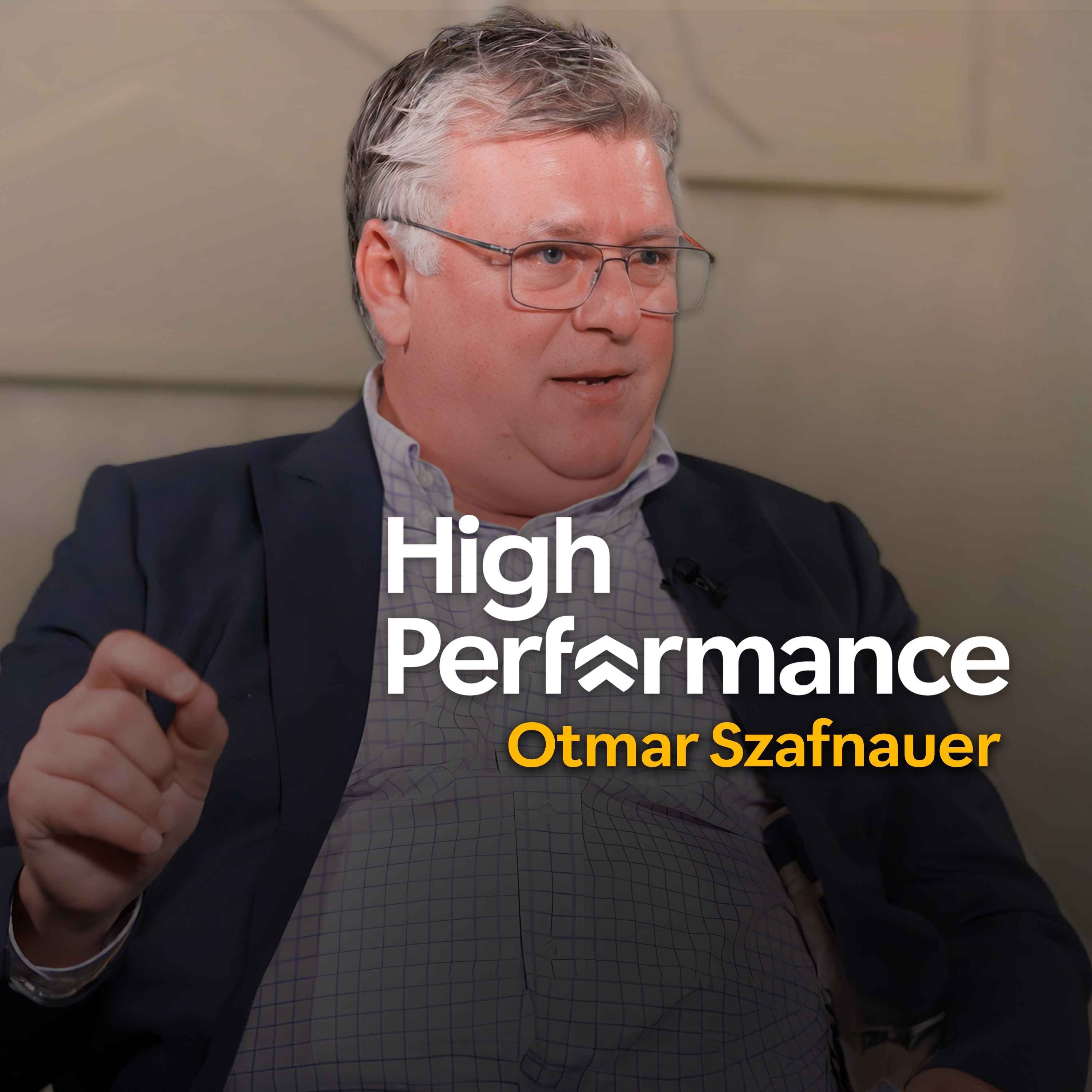
Hosts: Jake Humphrey and Damian Hughes
Otmar Szafnauer, prominent figure in Formula 1, previously at teams like Force India, Aston Martin, and Alpine.
Leadership, decision-making, psychological safety, and personal stories in high-pressure environments.
Written by AI. May contain mistakes.

Get the gist, explore an idea or ask about something said.
 Claude
On The High Performance Podcast, what are the key points of this episode?
Searching your listeningAutomatic transcript. May contain errors.
0:28Watch it early on the High Performance App. nothing to do with not signing Oscar Piastri correctly. That is the voice of Formula One team boss Omar Safnauer, who joins us on this episode of High Performance, the show that explores the stories and the ideas of some of the most extraordinary people in the world. I'm Jake Humphrey, and like a lot of you, I'm just simply fascinated by becoming a better version of myself. And I'm Damien Hughes, an expert in the world of high performance. I've worked with the England national football team, the Scotland rugby team and a range of professional sports teams right across the world, as well as with leading business people to help them understand how to get the best out of themselves and others.
1:13In this podcast, we discuss both how people achieve great things and the why that drives them. Now, I'm sure that you are particularly interested in this conversation, Damien, because as you've just said, you've spent your life around high performing teams, trying to help them find the edge. and this is a conversation with a man who did exactly that but crucially as we're about to hear he sought success through applying kindness empathy understanding and communication and I just wonder how rare that actually is in the world yeah I think a lot of people talk a good game around culture and all these kind of softer skills Jake and often when you're in high pressure situations that's the moment those things get discarded and yet what's interesting with Otmar is how he was entirely consistent with every team he's gone to.
2:00He's put this at the front and centre and that's led to his success. So what happened when he had to pay the wages for every member of the Force India team? How did they achieve success on the track from a pretty low baseline? What happened when he went to Aston Martin with billionaire Lawrence Stroll running the team and suddenly had all of his power taken away? And why, most recently, was he fired from his job at Alpine? You're about to hear it all from the man at the very centre of the story, as we welcome Omar Safnauer to High Performance.
2:38Omar, welcome to High Performance. Good to be here. Nice to have you with us. I want to talk about kindness, first off, because we have a mutual friend, Eddie Jordan, who we both know pretty well. And there's that great famous story that when he lost Michael Schumacher as his driver, the retort was, welcome to the Piranha Club. So my question for you is, does Formula One need to be a piranha club? It has that reputation, that's for sure. It's not the first time I've heard it. And there's a saying that dolphins can kill sharks. And that's because they communicate and they will attack sharks and kill them.
3:15So yeah, it's a piranha club or it's a shark infested waters or whatever you want to call it. But you don't have to be a shark or a piranha. You can be a dolphin and still succeed. And were you a dolphin? I think I was more of a dolphin than, but I mean, you can say I didn't succeed. You know, ultimately, although I was a dolphin and tried to do the right thing at Alpine, they thought they knew a little bit better and, well, look where they are now. So it's not a controlled experiment. But for sure, what I try to do was understand the piranhas. And when you're in that piranha club and you understand exactly the incentive and what others are doing, you can then afford to be a dolphin, but you have to be a half step ahead of the piranhas.
4:08And then you can. I want to talk about your time at Aston Martin and your time at Alpine. because we had a fleeting relationship when I hosted Formula One and always thought you were a stand-up guy, really friendly, really kind. It was always a place that you could go and spend some time. And mutual friend Lee McKenzie was always a huge fan of yours and the team. I remember seeing the Aston Martin takeover and the money coming in thinking, finally, Otmar gets a chance to be at a team with millions of pounds at his disposal, no issues financially, now what can he go and do? and then it doesn't end in the way that I think either of us would have wanted.
4:46Can we talk about what happened there? Yeah, so I think, so we had a decent run at Racing Point. So when Lawrence bought the team, Lawrence wanted success as we all did. But, you know, he wanted it sooner rather than waiting. and then he thought Martin Whitmarsh could help. And, you know, like I said at the time, the Catholic Church can't have two popes, you know. And I would have been happy to stay there, but, you know, Martin took away most of my responsibilities and that was a tough thing for me to face. And I left to go to Alpine. So when did you first realize that Martin was coming in? probably July of that year.
5:41And you were okay with it initially? Yeah, yeah, yeah, yeah. That was fine. But once, you know, you go from 100 % of your responsibilities down to 10, 90 of them have been removed, then you think to yourself, well, I don't have much to do here. And Alpine at the same time wanted somebody to help them. So I had discussions with Alpine. And before we move on to the Alpine time, I'm interested in how you deal with that. Do you go and fight your corner? Do you pick up the phone to Lawrence and say, look at my experience, I know what I'm doing? Do you remind him that most of the team working for Aston Martin were your people?
6:22No, I think at the time, you respect the fact that he's a team owner and those decisions are his and he can make them. And like anything else in economics, You see what other choices you have, and then you make those choices. Would you take us inside then, if you don't mind, and you're happy to, about how you go from being the new boss there. They courted you. They wanted you. You know, you left Aston Martin to go there. You had this great track record. And it felt to me very quickly, Otmar's gone. Like, he's out on his ear. Take us inside that story. Yeah, so there's a few things that went wrong at Alpine, one of which was I didn't have control.
7:04over the entire team. So for example, and I knew straight away, HR didn't report to me, reported up through France. The finance office didn't report to me, reported up through France. The communications department didn't report to me. And the marketing group commercial didn't report to me. And that in itself, I knew was going to be problematic. Did you know before you took the job? No. Before I took the job, it was everybody's reporting to me. I get there and that's not the case. And I knew at the beginning, I thought I could manage it, but I knew it's problematic. And I remember I had absolutely nothing to do with not signing Oscar Piastri correctly.
8:02That mistake was made in November. I started in March. So in November, the Piastri contract was meant to be signed. It was never signed. I started in March. I had no idea. They didn't submit the CRB documents correctly and never signed a contract with them.
8:32The market's uncertain. Revenue's tied and hiring on hold. That's why results-driven companies are using Upwork to keep work moving. Go to Upwork.com today and start hiring proven freelance talent fast. No bulky overhead. No rigid long-term contracts. Just the right expert right when you need them. Work smarter and faster with Upwork. Go to Upwork.com now and find your freelance expert. That's U-P-W-O-R-K dot com. Post a job for free and get started today. Your business is one of a kind, so your website should be too. With Wix, it's easy. Almost too easy to create a website that's perfectly yours.
9:12Just tell AI what kind of site you want to build or choose from thousands of templates. Change whatever you want, whenever you want, and get everything you need to start running your business your way. No matter what you sell or what you aspire to be, you can do it all yourself on Wix.
9:53right in. You'll find free breathing exercises, guided meditations, and soundscapes with ambient sounds, lo-fi music, and banyural beats, all designed to help you focus, relax, and even spark creativity while you browse.
10:10So let's, for people that are not F1 aficionados, when they're thinking what's the Oscar Piastri situation, just give us the backstory to what happened. So Oscar Piastri was a Alpine Academy driver who had benefited from support from Alpine. And there was a contract after he finished his F2 career where Alpine had an option on Oscar Priastri as a Formula One driver for Alpine. And that contract was never executed in November. There's a two-week time window where it could have been done. and it wasn't. Now, my point is, come the CRB where Alpine lost because the filings were incorrectly done, we put out a press release, and the press release has my image on it.
11:06So number one, nothing to do with me. I wasn't even there. But number two, the communications department that didn't report to me thought it was a good idea to deflect the incompetency of those that were Alpine at the time by putting my picture on the release. And you firmly believe that it wasn't just a case of, well, he's the team principal, let's put him on. No, no, no. Because the lady who actually put the picture on, Lucy Jenon, worked for me at Force India. So I went to Lucy and I said, Lucy, you know better than this. She said, I'm sorry, I was told to do this. How was that for you? Yeah, not great.
11:45But it just showed at the time that there are some people within the Alpine organization that were untrustworthy and that were out to get me. So they weren't working with me. But that's what I don't understand in a workplace. Why do you believe they – what does that do for anyone? Well, for rational thinkers, you're absolutely right. But when you don't care about the performance of the team, what you care about is your power base more than the performance of the team. That's when you do those types of things. And I remember a saying at Ford, and hopefully it's not like this anymore, but we used to have a saying that Ford Motor Company didn't make cars, it made careers.
12:35which means you care more about your career than, and that's not the case in Formula One. But it can be the case if you get a bunch of people from, say, the Renault group now being put in charge of Formula One team. You don't care about on-track performance. You care about your career. And if that's the case, you make those types of decisions. I remember though you saying, you said something like Zac Brown should be embarrassed by his behavior about the Piastri route. So you must have thought at some point that Alpine were doing the right thing. Well, yeah. So although we didn't sign, they didn't sign the contract in time, what was in that contract we delivered to Oscar.
13:21And that was not insignificant. It was 5 ,000 kilometers in a two-year-old car that cost you a lot of money. And we did that. We absolutely did everything that was meant to be done by that contract that was never signed. And, you know, in English law, had we taken it to an English courts, maybe we would have won. You know, that's unjust enrichment. You know, yeah, you didn't sign the contract, but you took all this and you're not delivering what you're supposed to deliver. So you've joined a team where things are not quite what you think. you haven't quite got the control that you want and now there's been this piastri moment that it feels to you like it's been engineered so that you're the kind of fool guy in that situation.
14:06Why not at that point just walk away? Well, look, I couldn't have predicted the future. I had a contract. I want to do the best I can for my team. I'm still working hard. I'm still delivering relative to today. Yeah, we were sixth in that championship but we had a couple of podiums. We're scoring points regularly. It wasn't a disaster. We're in the midfield. It's not like today. I don't know where they are today, ninth or something in the championship? Yeah, ninth, yeah. Yeah. Today, it's a disaster. Back then, yeah, it's a half step back, but sometimes you take a half step back to take two steps forward.
14:46The recruitment was happening. Good people were coming. I was going to turn that team into a top three team, which is what we wanted to do. I was working with the FIA at the time to help with the engine, the power unit equalization. You know, we're 25 horsepower down on power. When the engine freeze happened, there's a gentleman's agreement amongst the engine manufacturers that said, if somebody is way down on power, we'll allow them to come back up. At my last meeting, which was a Formula One commission meeting in Belgium, I, at the Formula One commission, put a strong case forward for allowing Alpine powertrain to come back up to equal the others.
15:35The other three were within a kilowatt of each other. You know, we're 15 kilowatts down, 25 horsepower down. Well, it's hard to compete. So I was working on all those fronts to get Alpine better. and I did it to my last day. Let's talk then about your last day. What unfolds that day? Like I said, Formula One commission meeting in the morning and then I think the announcement happened at lunchtime that weekend that both Alan Permain and I were leaving. And you obviously knew that was coming. I knew about a week before. And how was that delivered to you? just you know in a phone call from the head of HR a Zoom call head of HR not even the the head of Alpine no it was the head of it was the head of Renault HR Renault Group HR what would the reasons have been because it felt like things were going in the right direction for you I imagine yeah so I don't know I've never explored those reasons You know, there were suggestions that I needed to change a corporate culture in a way that I didn't think was the right way to do it.
16:54You know, I know how to change corporate culture into a culture that has a winning mentality, psychological safety, everything that I talked about, which I was on my way of doing. They wanted a corporate culture change in a different manner, you know, to get rid of some people that were doing a good job that have been there for a long time. and my thought was, well, if you get rid of people that do a good job, then the message you send is, do a good job, get fired. And that's not the culture that you really want. So were you explicitly asked to change to that culture? I was asked, yeah, and I said no.
17:33Well done. It's not who I am. It's in those moments that principles get tested, isn't it? You know, like, there's an argument. You could say, well, I could still be in a job and earning a massive salary if I'd have... If I would have just done what they asked, yeah. Yeah. But that would have been short term. You know, those people that have left actually did a good job. And, you know, most of them are at other teams now. And, yeah, I mean, you could just look at the results. You can see the difference. I mean, it's been a clear collapse, right, since you left, if you look at the results. Yeah, and it's not because I left.
18:13It's because there's a mass of people that left. Yeah. So after two experiences like that, are there any skills that you think now you'll acquire that will allow it not to happen to you again? Yeah, for sure. What? For sure. So if this ever happens again,
18:37trust is great. ownership is perfect and what I mean by that is I gotta own the whole thing and not ownership but ownership but like at Alpine make sure everyone reports to you because now you have ownership you don't have to trust the HR people you don't have to trust the communications people you don't have to trust the marketing or commercial people you don't have to trust the finance people they actually report to you. And if you're a decent leader, they'll appreciate working for you as well. I'm so interested to have a conversation through a Formula One lens, but about kindness, empathy, understanding, creating a positive culture, psychological safety, all these things that we know are vital in business from the conversations we've had on this show, but I sometimes think are actually lacking in certain areas.
19:34Yeah, you know, a lot of people talk about psychological safety and culture. I think it was Peter Drucker that said, you know, culture eats strategy for breakfast, which is true. And you've got to create that culture within the team, that winning mentality, but also look after each other in a psychological safe environment. So you're free to make mistakes and learn from them and get better. You don't have to worry about taking calculated risks. The risk doesn't work out. You fail, and then you're looking over your shoulder to see who on your team is stabbing you in the back. If that's the environment you have, you'll never succeed.
20:20And you need an environment where those calculated risks are encouraged. You learn from them, and then you get better. Now, I recently heard somebody say, and I believe it, that we all say we learn from our mistakes, and we do. But you learn more from your successes. And if you look at, we talked about golf earlier. When you first start golfing, do you hit a perfect shot on your first attempt? Nowhere near. I watched my son, and probably for the first six months, well, for the first few lessons, he was hitting the ground about six inches behind the ball. He wasn't even hitting the ball. So all those shots where you're trying to hit the ball but you miss, those are failures.
21:07And you learn from those failures. But the first time you hit the ball well, you learn more from that success than you did the previous failures. But if you, once you fail, you miss the ball and you say, that's it, you're never doing this again, you never get to that success. and that's where psychological safety in a team environment plays its role. Allow that failure, allow that learning from the failure so then you do get the success and learn a lot more. I think what you touched on there, Otmar, is the dichotomy that lots of people talk a good game when it comes to culture, value, psychological safety, but actually living it is often seen as a lot harder.
21:50So how do you get people to translate the theory into practice? Living it is hard. So when all things go swimmingly, and say in Formula One, you're winning, then it's easy to live it. It's easy because you're winning. When you go from winning to third or fourth or fifth, and then putting that in practice, because your natural tendency is not to have that, to blame somebody else. It can't be my fault. It's your fault. You start finger pointing. No, no, I did my job. You didn't. And that's when all that comes to the fore. That's when you need it most. And that becomes harder. There's two things that become hard.
22:33One, as a leader, you can practice psychological safety. And practicing means if we all make mistakes. And as a leader, when you make a mistake, you raise your hand and you say, you know what, I screwed up. I recognize it. I made this mistake. I'm going to try harder next time, or I'll do better next time. So can you give us an example of why you did that and saw the Ripple affairs? Many, many examples within meetings that we had. Even on the pit wall, there are times where I made the call. It was down to me, and I made a bad call. And then after, you'd have to say, you know what? You were right.
23:10I was wrong. You remember one. I love these sort of stories. I do, and this was at Alpine. and it was whether we went out on new tires in Q1 to get through to Q2 or used. Were we going to be quick enough on used? And I was so worried about getting out on Q1 and we burned up a set of new softs where we didn't have to. And I think it was Pat Fry who was right and I was wrong. And I said to him after, I said, you're right. I was wrong. I learned something. But if you say that, it kind of sets the tone for everyone else. The boss made a mistake. He raised his hand. It's okay. It's okay for me to make a mistake.
23:57But the hard thing is in that is when you have 1 ,000 people and you have other bosses and bosses below them that have people underneath them, to get everyone to act in the same manner that you wish for them to act or in the same way that you're acting. So that's the hard thing. You know, I used to always say, if you want to recruit good people at a Formula One team, and it's all about the people and how you work together, make it a good place to work. First and foremost, make it a good place to work such that people want to come to you. And I can try to make it a good place to work, and I'll have more of an influence than say, the head of electronic design.
24:39But the head of electronic design might have 30 people underneath him or her. And if they don't make it a good place to work for those 30 people, you'll have pockets of it's not such a good place to work. And how do you communicate that importance of a good place to work to everybody? Everyone that's got an influence of other people, how they treat them. And that is too the key to that. So throughout the organization, you have that same ethos. So how would you define a good place to work? It's different for different people. And that's what you have to understand. That's where empathy comes in, right?
25:19A good place for you might be different than a good place for you. And I'll give you an example. Some people care more about money and others care more about the job and the breadth of what they're doing. you know a good place for me is pay me the most and i'm happy a good place for me is i want to have a big influence on the performance of the car a good place for me is i get to go home and tell my neighbors i work for formula one team right so a good place to work is different for different people and as a good manager you have to understand what those differences are and give it to them. And how did you do that?
25:57So my direct reports, for example, I knew all those that cared about money. I knew all those that cared about being patted on the back. I knew all those that cared about just being left alone. So how were you getting that information? By reading the people, really. Let's talk about Force India generally. I mean, that was a period where you came in, chief operating officer there for a long time. And the team, if you look at it, was on a constant upward trajectory? 280 people when I started, 408 when I left. So I hired some people. Yeah, quite a few. Almost all of them I hired personally. And one of the first hires was Andrew Green.
26:44And then together we assessed areas of competency that a Formula One team required that we didn't have. and then we went out to recruit the best people that we could in those areas and again recruiting how do you get good people to leave Red Bull and come to Force India you got to make it a good place to work and I remember when Guru Joel joined us from Red Bull and I called Toto and I don't know what we were talking about, but I said, oh yeah, we've got this senior aerodynamicist guru coming from Red Bull to join us. And he was like, what? Why is he not coming to Mercedes? He couldn't believe that a guy from Red Bull at a senior level would actually entertain going to Force India.
27:38But that's because we had a reputation of go there, it's a good place to work. You mentioned Toto Dio when we spoke to him one of the things that he thought he'd done particularly well at Mercedes was he'd translated values into action so the example he famously used with us was he talked about attention to detail and he came in and noticed that the reception area was dirty there was old cups yesterday's newspapers and what he felt he did was narrow that knowing and doing gap What were the values that you were introducing into the India car? Yeah, so Toto is absolutely right. He did that at Mercedes.
28:25And, you know, when he got there, he took it to another level. And I remember people telling me that, you know, Toto would walk around in the pit lane and looked to see who had the nicest garage set up. And you could see from the pit lane into everybody's garages. And he would walk and benchmark the best, and I think it was Red Bull at the time. And he would say to his sporting director, Ron Meadows, I want something better than that, which is great. And he did that. And that translates into a lot of other things too. but like I said the one thing that I wanted at Force India because I knew we didn't have the money to do those things even if we wanted a better garage you can't is a good place to work and that was our differentiating factor so I'll give you a couple other examples we needed benches for our laminating department for the technicians to be able to laminate parts and we couldn't afford them.
29:35And I remember telling Bob Halliwell, the operations director, I said, listen, go to Costco. They have great work benches. They're about 220 pounds each and they're high quality. We went to Costco and we bought work benches for everybody. We got them at Costco. It suited what they needed. They loved them, but it wasn't a Lista that was 10 times the money. We couldn't afford it. And I remember Lawrence Stroll coming in to have a look around because he was considering whether Lance should drive for us. And I think we were fourth in the championship at the time. And Lawrence himself said, I couldn't believe it.
30:19I walked in to the electronics department and they're instrumenting a front wing with a fellow sitting on a stool and the wing was on top of a rubbish bin. So he could work at the right height. He couldn't believe that we were performing at the level that we were performing with having the front wing instrumented sitting on top of a rubbish bin. But that's all we had. You had Vijay Mallya as your team boss at Force India. You had Lawrence Stroll as your team boss at Aston Martin. both sort of larger than life individuals with their own stories. And I often look at people who have been really successful in business elsewhere and not replicated it in Formula One.
31:08And I often think how and why does that happen? I wonder what you've learned about that. Yeah, so with Vijay, he was really, really hands-off. And everything that I read now about high-performing teams is the owners, the leaders, allow the rest of the team members the latitude to do what they're good at and they don't micromanage. And Vijay didn't micromanage. He let us get on with it. Now, that's not to say there's twice that I remember where one time we had an inordinate amount of on-track failures, right? So our reliability was not great. And that's easy to know. I mean, we all follow it. We measure it.
32:02And everyone can see it. Oh, another failure. And I remember Vijay got us all together in a room, the seniors, you know, head of Aero, chief designers, head of mechanical design, head of composite design, technical director. We're all in a room. And he said, ladies, gentlemen, we have too many reliability issues. I want all of us, including myself, to go home tonight and have an introspective view as to why that is and what we can do better. And we'll come back tomorrow with some ideas. And it's all he said. then the next day we came back with ideas how to fix it and guess what reliability got so much better and very quickly vj sending everyone home saying come back and we'll have an answer in the morning i mean i imagine you were all doing that already so what did the owner of the team saying that do for i think the owner of the team saying that just gives you a much better focus for everybody on this is a priority because you've got other priorities you're a chief designer you're looking at not just reliability, but you're looking at the next upgrade, making sure those designs are on time.
33:23Now suddenly, reliability is the core issue that we need to solve today. And we had a reliability engineer like everyone else did. And it was his job, or it was a male. It was his job to write it all down, go to the design engineers that had responsibility for their part, make sure that they did an analysis to find the root cause, fix the root cause. All that was happening in the background. But we still weren't making enough progress. And it took Vijay to say, you know what? All of us, including myself, and then we just did this. And that was early on. I was there very, that was right when I started.
34:10Right. And what did you learn from Lawrence Stroll? Because, I mean, I look at him and I think he owns the team. He owns the car company that names the team. His son drives for the team. I mean, if you're talking about not being emotionally invested, I'm not sure whether that's even possible for him. Yeah, so, I mean, the absolute good bits about Lawrence is he has this great desire to do well in everything he does. So whether that's the fashion business or he doesn't want to finish second. And he's also put money into the team. You know, there's a saying in Formula One that money doesn't buy you success, but without money you will never have success.
34:55So you definitely need the money. And Lawrence is, you know, he's put his money where his mouth is and he's given them the money that we're required to have the resources, the infrastructure. There's a new wind tunnel coming on board soon. There's a beautiful new factory and another building, so there's an entire campus, and he's definitely invested. Good powertrain, good engineers, good drivers. You know, Lance is very capable, and he's got Fernando too, and I've worked with both of them. both very capable drivers
35:36Adrian Newey going there now so my point is he definitely wants to win and he will put the building blocks in place that are required I thought about this when I watched the episode of Drive to Survive and I remember Lawrence walking into it you might have even been in the meeting and he kind of came in and he said something like you've got five minutes to go I was in that meeting and I remember watching that thinking what a way to not get the best half of the people in that meeting to put, it felt like instant pressure on the people in the room. How was it being in there? That's a little bit different than Vijay saying, let's have an introspective view tonight and we'll come back tomorrow.
36:16Yeah, no, I mean, so some people handle pressure differently. You know, me personally, you know, I would care about things that I had control over and not worry about those things that I didn't. And if you do that, then you put less pressure on yourself. You know, it's yourself that's really put the pressure on nobody else. And if you can deflect it by saying, I'm going to do the best I can at this bit that is my responsibility and you're happy with that, then you don't feel the pressure as much. There's a story I want to pick up on from your time at Force India. Is it an urban myth or is it the truth that you paid the salary for the whole team?
36:56Twice. I did it twice. Would you mind giving us an idea of how much money that is? At the time, it wasn't that much. It wasn't that much. I'm sure it was a sizable number. But it was in the millions. And I paid it with the help of my partner at SoftPower. So, you know, he too, we had money in the business. I had my own money. And I knew the salaries were not going to get paid. and I know how difficult that is for people. You know, some people live from paycheck to paycheck and I understand it. And I just couldn't, we had to pay the salaries. And the Formula One money was coming in five days time.
37:41So say the salaries are due on a Friday and we're getting the Formula One money the following Wednesday. So I could have waited, not paid on Friday or paid with my own money and then waited till Wednesday to get that money back for when the Formula One money came. And did you let your team know that you were paying that? A few knew. I mean, the finance department knew, Andy Green, the technical, there's a few that knew. But no, I didn't tell. And a lot of people would have enjoyed telling everyone, I've just paid all your salaries. No, no, no, that's not what it's about. Yeah, I did that. I did that twice for them.
38:18And in between that Friday and the Wednesday, there's a huge risk of, well, A, hey, what if that money doesn't come? Or what if that money does come? And somebody else knocks on the door and says, hey, you owe me$2 million. And unless you give me this money, I'm shutting you down. So there was that five, six, seven days of, what if, you know, there's always risk. But I did it. So why was taking that risk important to you? It's important because I knew that team did well because of the team spirit, the camaraderie we had, the looking after each other. You know, there was only 400 of us or 408 or whatever it was at the end.
39:05And we were competing with teams at the time, no budget cap, right, that had 1 ,300, 1 ,400 people. And we had 400. And we had 90 million pound budget. The others had 250 million pound budget. And you can say, oh, you know, that's three times the budget? It's not that. It's 100 times the budget because some of that budget has to go towards buying your engines, flying to races, buying your tires, making the race car. And at the end, out of that 90 million, we may have had four left over for development. There's 86 of it that everyone has to spend. And you got four left over for development. Whereas the others probably had 60 left over for development or 70.
39:54And it's that four that compares to that 70 that is really the true comparison because the rest you have to spend and you're not spending it on going faster. You're spending it on going to the races and feeding the mechanics and buying your tires and you know what I mean. And that is really what Force India did, having 4 million of development budget versus 80 of something else and competing with them. And how do we do it? Teamwork, having that spirit. And if you don't pay them on time, guess what? Remember, good place to work? Well, for a lot of them, a good place to work is getting paid on time.
40:32Yeah. Or the corollary holds true. If you don't get paid on time, it's not such a good place to work. But I'm interested in like your message of you're the one taking up the slack, I'm taking the risk, reinforces the idea that we've got each other's back. So I'm interested in why... Yeah, but I didn't tell people. Why? I didn't feel it necessary. What I felt was it was necessary for everyone to get paid on time. Sure.
41:02If you're still overpaying for wireless, it's time to say yes to saying no. At Mint Mobile, their favorite word is no. No contracts, no monthly bills, no overages, no hidden fees, no BS. I made the switch because I was tired of those ridiculous bills and sneaky charges from my old provider. With Mint, I'm paying$15 a month and getting the same high-speed data, unlimited talk and text, and coverage on the nation's largest 5G network. Honestly, the quality is just as good, if not better, than what I had before. And the best part? You don't need a new phone. You can keep your current one, bring your number, and all your contacts.
41:36I use Mint Mobile and you should too. Ready to say yes to saying no? Make the switch at mintmobile.com slash HPP. That's mintmobile.com slash HPP. Upfront payment of$45 required. Equivalent to$15 a month. Limited time new customer offer for first three months only. Speeds may slow up a 35 gig on unlimited plan. Taxes and fees extra. See Mint Mobile for details. The market's uncertain. Revenue's tied and hiring on hold. That's why results-driven companies are using Upwork to keep work moving. Go to Upwork.com today and start hiring proven freelance talent fast. No bulky overhead. No rigid long-term contracts.
42:17Just the right expert right when you need them. Work smarter and faster with Upwork. Go to Upwork.com now and find your freelance expert. That's U-P-W-O-R-K.com. Post a job for free and get started today. Ah, DSW, birthplace of the humble brag. Here, the shoes are so good, no one would ever know how little you paid if you didn't go telling everyone that is. And with never-ending options for every style, mood, and occasion, all at really great prices, we'll definitely give you something to brag about. So go ahead, stock up on fresh sneakers from your favorite brands. Or try those boots you always secretly knew you could pull off.
42:54Find the shoes that get you at prices that get your budget at DSW Stores or DSW.com.
43:06Can I ask you how you convince people to come on a journey with you? Because I think the tiny thing you mentioned here, which I think is massive, is your business partner, who has nothing to do with Force India, is also stumping up a large amount of money to help you pay the salaries for a company he doesn't even work for. Yeah, and he did. He did. Alex Powell, he helped. So what would you like to share with our audience about how you can bring people on the journey, how you can convince them to support you, how you create such an incredible bond between the two people? I think with Alex, I don't know, because I never asked him, because he just said, yeah, I'll help you.
43:41It was probably, he probably thought, well, even if I never get this money back, I'm sure Otmar's good for it and he'll make me good. You know what I mean? So he probably had that trust already. probably I'll have to ask him I think you should but he did it twice for me yeah but then you also mentioned they like to pick up on Jake's theme there at Mar like Andy Green the guy that comes to you and goes I don't think that's the right decision you're too emotionally invested you obviously got the ability to create an environment where people do trust you to be able to speak freely or to lend you millions yeah which what's your secret sauce which is it's important that is really important because otherwise had Andy Green not come to me and said, you know what?
44:25Let's remember the ethos here is make it a good place to work. And what you're doing now is the opposite of that. Had he not had the, what's the right word? Had he been afraid to say that to me because I'm the boss, I would have made a poor decision. I would have made a bad decision. And we would have been worse off for it. There's a professor of mine. It's funny, and I mentioned this the other day in a talk. Political science professor, second year at university. And I remember just two things from that political science class. One was, why should you listen to the lonely dissenter? If you're in a group and everyone says, oh, we should do this.
45:14And one guy says, no, no, no, I think we should do this. Why should you listen to him. Go on. Because he might be right. That simple. Yeah. And if he's not right, then you should say, look, you're not right for this and this reason. We're doing this. Yeah. But don't discount him. Listen to him. And what was the second thing for me? The second thing was along the same lines. If you're in a group of people and you've got a decision to make and you have a subject matter expert, do you listen to everybody and take a vote, or do you just listen to the subject matter expert? Listen to everyone and take a vote.
45:55Both. So, and I remember this clearly, only because of the example the professor gave. He said, in that situation, you listen to the subject matter expert. Don't take a vote with laymen that don't know. and he said to us imagine this you've ascended Mount Everest you're all up there 14 of you 15 of you and a Sherpa you're coming down and a storm comes in you've got a decision to make do I go this path or that path and the storm's coming in you choose the wrong path you're dead do you take a vote or do you listen to the Sherpa that's been up and down 40 times you listen to the Sherpa I like that.
46:43Can I ask you a question that just intrigues me about your background? You're obviously a successful, wealthy individual, and I'm wondering, why do you do this? Why do you want to put yourself in the arena? So that's a good question. The thing that I like most is competition. And when you work at a Ford Motor Company, which I enjoyed my time there, I learned a lot, and at General Motors, and although there's competition, It's not the same as a Formula One team. Every week or every other week, you see how well you're doing. At a car company, which is the only other experience I had, you had to wait four years for that car line that you're working on to come out and see how well you did against the same sports car that General Motors have produced, which one's selling more.
47:34This is immediate competition. And that's what I like about it. I like that competition. And if I didn't think I had the skill set to put a good team together and lead it to be competitive, I wouldn't want to do it again. But I still believe I've got the skill set to put a good team together, treat the people properly, to get the best out of them, and to be competitive. So your Formula 1 story is not yet over? I hope not, but, you know, that's not completely up to me. there's only 10 teams hopefully 11 soon and it seems like at the senior levels they have you know the people that they've chosen to put in there and put in place and see how it goes but one thing for sure in Formula 1 is it never never stands still you know things change so what would you love to do?
48:30I'd like to put a new team together with the right people in a few years be super competitive, be better than mid-grid in two, three years' time. An American team? Maybe an American-backed team. Okay. But I would definitely, definitely base it in the heart of Motorsport Valley. It's where you need to be. In the UK? It has to be. I want to talk about how you create a culture that everyone can buy into, but you also have to look after the megastars, the drivers in a Formula One team. How do you do that? So you just treat them differently. We're a sport, supposedly. A team of 1 ,000 has 998 engineers, aerodynamicists, mechanics, technicians, designers, model makers.
49:28How many sportsmen? Two. So are we really a sport? Yeah. or are we a technological development company? That's really what we are. The successful ones are that. And you have two sportsmen. Now, yeah, we're a sport because you score points, you win, you're on the podium, everybody watches, it's a race. That's a sporting bit. But even when you look at that, out of 1 ,000 people, 100 travel to the race, 900 don't. So it's lopsided to technology development. So how do you get the best driver? So the two sportsmen, they're in the minority, right? You treat them differently. And, you know, you make sure that, like with anyone, you treat them with due respect, right?
50:19You have respect for their skill set. You don't look down on them for what they don't know. But you also remind them that, you know, you're the boss. You might be wiser in some areas than they are. and a lot of these guys, supreme athletes. But because of it, some had to forego a formal education because they spent so much time in a cart or a Formula 3 car or whatever. So they're not as formally educated as most of your aerodynamicists, designers, engineers, some of the others. So when you know that, you treat them a little bit differently than you do these guys over here. Look, we're talking a day or two after Daniel O 'Carlo as lightly driven for the final time in Formula One.
51:02And I always think when I see a driver midway through a season, having to come out of a car, I kind of think, is that causing more problems than it's solving? Do you think sometimes F1 is too tough on the drivers? The value of winning is big in F1. And the bigger the value, the different decision-making process that happens. And the value of sixth, seventh, fifth, sixth is also big. So I can see teams looking at it and thinking we're at risk of dropping a position. What's that monetary value of dropping that position? And are we better off with a different driver? So I can understand the decision-making process.
51:57Should you do it? I guess it's such a meritocracy that everybody wants to do the best they can in the championship. And you only know if you have better information whether the answer to that question is yes or no. Meaning, who else do you have that you can put in the car that might go a bit quicker, number one? And number two, how quickly will that person come up to speed? Now, I remember when Williams made the decision not long ago to remove Logan Sargent, to remove Logan Sargent, my first thought was whoever they put in the car is going to take three, four, five races to get up to speed. And I was wrong.
52:42And by the way, it's a kid. He's young, isn't he, Colo Pinto? But he got up to speed nearly instantly. I was wrong. So it's hard to know, but I do understand the decision-making process because the value of a position is high. And the bigger that value, the more decisions like this you're going to make. The Daniel Ricciardo situation is strange, isn't it? Because I used to think he was such a brilliant driver. I just wonder whether you think that's a confidence thing. I don't know. And he was absolutely a brilliant driver. I mean, I got to Alpine after both Daniel and Hulkenberg left. And when we had the situation of replacing, we had an empty seat before we got Gasly in.
53:31And on our list was Daniel and Hulkenberg, both on the list. And I remember talking to the engineers at random. And they're all singing Daniel's praises, how quick he was. He was quicker than Hulkenberg. and, you know, Hulkenberg and Daniel were neck and neck until towards the end. Then Daniel got the better of them. And now, like I say, I don't know what happened. I don't know. But, yeah, the guys at Alpine, I think it was Renault at the time, said really positive things about him. He's been good for the sport. He's been a great guy to have around the sport. Agreed. Before we get to the quick fires, the best driver you work with?
54:15Ah, there's so many of them, and for so many different reasons. Best total total, Sebastian Vettel. Why? The thing I like most about Sev is his relentless work ethic. And he does have that, and maybe that competitiveness, that fire in his belly. Can you give us an insight into the time that you saw his work ethic at play? work ethic and fire in the belly at the same time. So Seb was used to winning. He's won a lot, four-time world champion. And I'm sure the consideration at the other teams he was at was always, right, at a restart, when I'm in the lead, I want to know on the front straight the area of the track that has highest grip level.
55:10He got the tire engineer to measure different parts of the front straight to understand where the highest grip level was. Because at a restart, in case he was leading, that's where he was going to accelerate. So he had highest grip level relative to the others that weren't at the highest grip level, so he can have an advantage when accelerating. I remember at the time thinking, that'd be great if we're in a lead at a restart. But it's that no stone unturned. The probability of us leading a race at a restart at Aston Martin wasn't high, but he didn't care. I need to know just in case. And that's an example.
55:56Love that. And the driver you would happily never employ again? I've got to get this right. Who's the oldest now? Well, Fernando would be the oldest on the group. No, that's, yeah, but like Rubens. I worked with Rubens. Oh, my goodness. He's so old I'd never employ him again. Cop out. But I'll tell you a story about Rubens that I just thought, I can't believe this. He came to Honda, or we'd be our Honda at the time, and we were testing somewhere. And Rubens came in and he said, the tire's moving on the rim. under braking the tires moving I'm like you can't feel that number one and number two the grip would go before the tire seal to the rim goes and he was adamant I'm telling you the tires moving on the rim so we marked the tire to the rim it moved that much sure enough he could feel it wow I love those I could not believe it and it wasn't moving like 180 degrees.
57:10It was moving a couple of degrees and he could feel it. Which driver would you most love to have been the boss of? Probably Max driver today or Lando. Yeah, why Lando? Well, I've never worked with him but I know his dad. I don't know Lando that well but I listen to him and he can be really hard on himself. You know, he blames himself for a lot of things. And I think if you can just change that to be a bit more positive, I mean, he's doing well. It's not that, but yeah, I would like to work with him to say, hey, you're great. You know, in that American style of forget all that. You're great. Believe in yourself.
57:58Yeah. I want to talk to you about Aventar. This is something that I know you're excited about. And what I love about this is that all the time that we see you as a Formula One boss, you've actually got your own business going on in the background as well. I mean, you know, you don't need this Formula One stuff if you don't want it anymore. Yeah, so Eventar actually grew out of my experience in Formula One. And when I was at Aston, we were having a lot of changes to our itinerary. And, you know, you have about 120, 125 people that travel to every race. And we would have itineraries that were eight pages long.
58:37And the more people that travel, the more the probability of change. You know, my wife's having a baby. I can't go to this one. You know, we need another mechanic. Or I injured myself playing football or whatever it is. and we would have issue eight of the itinerary before we left. And everyone's printing them out, throwing them away, another issue. We don't know what issue we're on. So I said to Andy Stevenson, I said, there's got to be a better way. And Eventar was born out of the fact that if you have an itinerary, that's one interactive, chronological, and you can see what others are doing, not just your own itinerary.
59:25It just makes it that much easier and more efficient. And now, instead of having that PDF emailed to you with everybody's data, that when it changes, you need another email, it's just an app on a phone. And when you open up the app, it's got all the latest information in there, all the changes. It works offline. It also creates subgroups for you. So, for example, if 20 of the 120 are staying in one hotel, you can have a subgroup of all those in your hotel. You know who they are. You can message them saying, you know, whatever, meet you for a coffee in the morning at 7.30 to all the 20 or a subgroup of those.
1:00:11And it works. And because it's chronological, whenever you open the app, everything that's already passed you from your itinerary perspective is in the background. It's just whatever's in front of you that it tells you. And it also tells you the next thing you got to do. So how can people get hold of what sounds like the ultimate marginal gain? So Eventar, if there's, I think, eight or less of you traveling and you want to coordinate itineraries, you can download it from the App Store and it's free. If the groups are bigger, we also have a bit of software that we give the coordinator. It's called the coordinator hub.
1:00:52And usually if you have, you know, 500 people going to a convention, somebody else is booking all the flights and the hotels and whatever, just like a Formula One team. There's usually a group of four people booking flights, hotels, hire cars, transfers, what else, visas, you know, all that kind of stuff. And that coordinator hub allows you to input all the data that you need to input that you would have to do anyway. You'd either have to write it on a spreadsheet or you input it into, and we've made such that inputting is a lot more efficient. After you've done it once, you can just pull names and add them to flights and all sorts of easy things.
1:01:36And then from there, the user just opens the app. It's got all the information. Sounds brilliant. I'm sure when you finally put together your American-backed Formula One team based in Motorsport Valley, they'll be using Eventar. We're going to be using Eventar. Of course you will. Right, some quickfire questions. What is your definition of high performance? Whatever it is, success. So whether it's table tennis, whether it's golf, whether it's motor racing, to perform at a high level, you got to be successful. What are your three non-negotiable behaviors that you and everyone around you has to buy into?
1:02:17So honesty, number one. Respect, number two. And probably some essence of empathy. What advice would you give to a teenage otmar just starting out on his journey? There's a time and place in your life for everything. And I learned this a bit too late. so as a teenager do the best you can learning what you're being taught at the moment at school what's your biggest strength and your greatest weakness sounds like an interview you've got the job biggest strength I think listening and my biggest weakness is probably, like I said before, that time in my life where I didn't take the risk and invest in things I should have done.
1:03:23So maybe just a bit too conservative sometimes. What's the best bit of advice you've ever received? Probably from my dad to, you know, just to be honest and straightforward. It goes a long way. and finally what's your one golden rule to live a high performance life never give up keep pushing and probably the other bit of advice again thinking about it was from my mom my first day at Ford Motor Company because she worked at Ford as a seamstress sewing car seats and she said make sure that those people that you work with that don't have engineering degrees, you respect them for what they know. Because I see a lot of young engineers like you coming and working with the ladies that sew car seats that don't have engineering degrees and they're not respectful for what we know.
1:04:28And she said, I can tell you, we know a lot more than they do. So respect those people. Well, look, I think it's clear that you took the mindset of respect into your Formula One career, did some great things, experienced some amazing highs, a few challenges in recent times. But, hey, as you said, the story isn't over yet. Let's see what's next. Thank you for joining us. Thanks, Hopper. Thank you. Enjoyed that very much.
1:04:57Damien. Jake. You see, I really want us to get away from this idea that a good guy's finished last. You know, he is a good guy who, sometimes in Formula One, you're not judged on race wins. You know, you're judged on how you can transform a team, and he's done that time and time again while still remaining key to his core values. And I think that's a good lesson for people, that you don't have to be successful or be nice. You can be both. I think anything where it encourages you to take one of a binary position, you know, either or, rather than seeing the world as both and, You can both be really empathetic and want to win.
1:05:33And I think he's a great example of someone that exists in that nuance. And also, I think his kindness came through in the interview. He was obviously angry about what happened to Alpine, and that's still fresh and it hurts him. But there's no criticism of the senior people at Force India that put him in a position where he was having to pay the wages. There was no criticism of Lawrence Stroll and Aston Martin who put him in a position where he felt he was so powerless he had to leave the team. and he could easily have, you know, dished the dirt on those kinds of moments and those conversations and things those people got wrong.
1:06:04And I kind of respect the fact that he didn't. Yeah, definitely. I think his value shone through that, didn't it, where he said listening was a non-negotiable. He listened, he engaged. I think that final story he told around his mother's advice of treat everybody with respect, regardless of their qualifications, their ranking and organisation, or what you might perceive to be their power base is endemic of the culture that he creates, of wanting to create an inclusive culture where people are desperate to come and be a part of it rather than something that's just about the results and the winning.
1:06:41I look forward to seeing when he appears next. I've got this feeling that he's busy working in the background, putting together a load of investors to try and bring a new team into Formula One. And he kind of alluded to that a little bit there, didn't he? But again, he's a man that preaches the idea of patience, you know when he spoke about going into Alpine and telling them listen success you're seeing has been three or four years in the making I think what we've seen from Otmar today is a man that understands the power of patience thanks mate thank you and that's it for today's conversation thank you so much Otmar for joining us thank you to you as well for tuning in and listening don't forget if you want to get even closer to your own version of high performance then you can do so on the High Performance app, where there are so many conversations about kindness, understanding and empathy.
1:07:30You can also build your own playlists there. You can enjoy daily boosts and so much more. Check out the High Performance app in the App Store or click the link in the description to this podcast. And don't forget, you can watch these shows on the app as well as listen wherever you get your podcasts. Thanks for joining us and we'll see you again soon.
1:07:54Thank you.
Otmar Szafnauer is a seasoned figure in the world of Formula 1, known for his leadership roles with teams like Force India, Aston Martin, and Alpine. Born in Romania and immigrating to the U.S. as a child, Otmar’s unique journey shaped his approach to success in one of the most high-stakes sports in the world. His ability to navigate challenges both on and off the track has earned him a respected reputation within the motorsport community.
In this episode, Jake and Damian sit down with Otmar to explore his career highlights and personal philosophies. He shares insights on the importance of psychological safety in Formula 1, explaining how learning from mistakes is crucial, yet minimising them is key to sustained success. He reflects on his time at Force India, where he made a significant impact and established a reputation that emphasised trust and risk-taking.
Otmar also opens up about his experiences as an immigrant and how that mindset has influenced his approach to decision-making. He talks candidly about his tenure at Aston Martin, where expectations didn’t quite align with reality, and delves into the controversial Oscar Piastri situation, providing behind-the-scenes details.
This episode offers a fascinating look at leadership, decision-making, and the personal stories that shape a successful career in one of the most demanding sports in the world.
🚨 Partners
Huel 👉 Get £25 off the Taster Bundle. Unlock your offer here: http://huel.com/highperformance
Heights 👉 https://hppod.co/Heights Get 20% off your subscription by using Code: HP20
FORA 👉 Claim a free day pass at any Fora workspace and find the perfect home for your business here: https://hppod.co/FORAHP
Betterhelp 👉 Be at your best. Consider therapy with our paid partner, BetterHelp. Click https://betterhelp.com/PERFORMANCE for a 10% discount on your first month of therapy.
Explore offers and discounts through our other partners:
Hosted on Acast. See acast.com/privacy for more information.


