
 Ask ChatGPT


 The High Performance Podcast
22 Nov 2024 · 17m
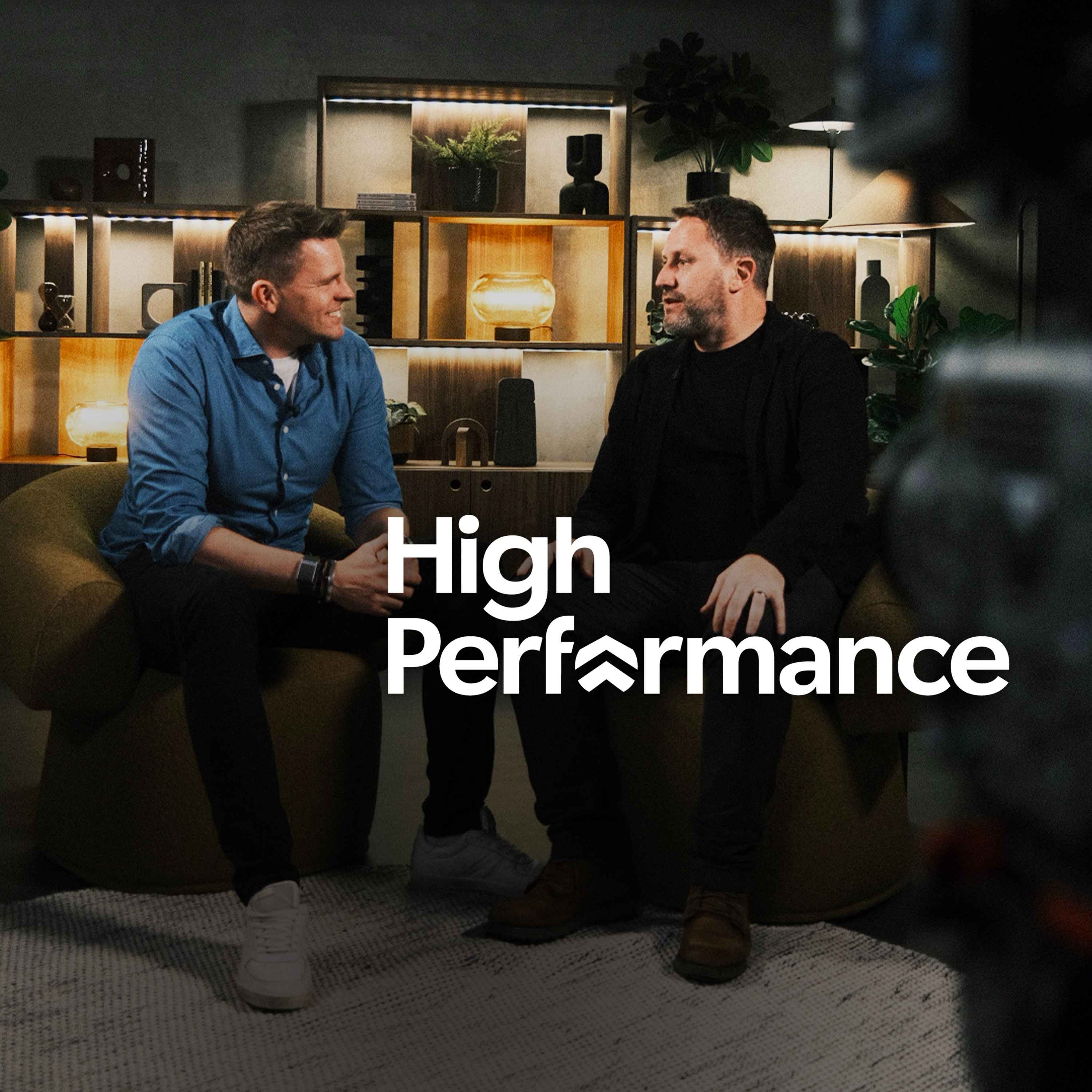
Overcoming Procrastination with Ali Abdaal, Robin Van Persie, Stef Reid & Maro Itoje
In this episode, hosts Jake Humphrey and Damian Hughes discuss procrastination by drawing insights from previous guests including Ali Abdaal, Robin Van Persie, Stef Reid, and Maro Itoje. They explore strategies to overcome procrastination and emphasize the importance of taking small, manageable steps toward achieving goals.
Written by AI. May contain mistakes.

Get the gist, explore an idea or ask about something said.
 Claude
On The High Performance Podcast, what are the key points of this episode?
Searching your listeningAutomatic transcript. May contain errors.
0:00Watch it early on the High Performance App. Available now, Roman Kemp, the broadcaster, opens up a powerful conversation on success and mental health.
0:31chopping, no weird leftovers, just delicious, easy to make meals. Get 20 % off your first two orders with code APRON20. Terms and conditions apply. Visit blueapron.com slash terms for more. The market's uncertain. Revenue's tied and hiring on hold. That's why results-driven companies are using Upwork to keep work moving. Go to upwork.com today and start hiring proven freelance talent fast. No bulky overhead. No rigid long-term contracts. Just the right expert right when you need them. Work smarter and faster with Upwork. Go to Upwork.com now and find your freelance expert. That's U-P-W-O-R-K.com.
1:09Post a job for free and get started today.
1:15This episode is brought to you by Opera Air, the first browser with mindfulness at its core. Now, most of us spend hours every day online, but how often do we pause to take care of ourselves whilst we're doing it? And that's where Opera Air comes in. It's a lightweight, fast, secure browser built not just for productivity, but for your well-being. With Opera Air, mindfulness is built right in. You'll find free breathing exercises, guided meditations, and soundscapes with ambient sounds, lo-fi music, and binaural beats, all designed to help you focus, relax, and even spark creativity while you browse.
1:52Hi there, welcome along to High Performance. The question we're asking today is, how can you leave procrastination in the past? One of the things that we love about this show is the community that we've built and the fact that I suppose we've created something where you feel vulnerable enough to tell us what's going on in your lives and the amount of times we get messages from people saying I suffer with procrastination how do I solve it um so we thought we'd make an episode about it I'm here as always with my co-host Damien Hughes so first of all for people that are thinking procrastination I need a definition from someone as bright as dh over here like how do you sum up procrastination well if you look at the etymology of the word the original latin it talks about putting a task off until tomorrow so it's about intentionally putting off something that you know needs to be done i mean i recently read a great article in the new york times that spoke to a professor of motivational psychology called dr pierce steel who actually defined procrastination as being a form of self-harm that we're doing ourselves damage by not addressing what we know needs to be done in the same article they cite a study about it being a short-term mood repair so there's a line that says procrastination is about being more focused on the immediate urgency of managing negative moods yeah they're actually getting on with the task that we know needs to be addressed that's interesting i love the conversation that we immediately go because you know this idea of um we've stopped being human beings and we're human doings like i think we always have to be very careful talking about do more do more do it all the time push yourself to the limit you know that I see some such toxic stuff on social media, people like sharing the 150 things they managed to fit into half an hour of their lives, making us all feel bad, right?
3:27We don't want to go there. But also, I think it is important to tell people that having a list, like my wife is amazing, having a list of jobs and just crossing out and ticking stuff off, right? And she feels great when she does it, because there is some real clear science that says it's not the doing of the thing that's making you feel good. It's the crossing off of the list. It's that sense of forward momentum that's actually making you feel good. I think if we can get people to that point, it really helps with their procrastination. Well, you're absolutely right, Jake. So research tells us that your brain responds in absolute.
3:57So if you tell yourself that you're going to achieve a big, massive goal, or you say, I want to set myself a more modest goal, your brain releases the same amount of doping, whether it's a big, massive achievement or whether it's a small one. So the idea of actually just shrink our expectations, just lower the bar a little bit and focus on small steps that we can take, your brain will still give you the same, the same feel good factor, just like Harriet does when she ticks off just one of those items on her to-do list. I don't think you have it, you know, because I, because you say things to me like, oh, I've got an idea for a book.
4:31And within about three weeks, you send me like 13 chapters of a book and I'm like, oh my goodness, I promised Damien I'd have a think about that book. And I haven't actually even spent two minutes thinking about what I'd put in the book and you've managed to write a load of chapters so do you suffer with procrastination uh not really i try and avoid it but part of that is avoiding like the clutter so i don't do social media and part of the reason for that is because that gives you that dopamine hit that keeps you scrolling for longer and longer so i've tried to declutter items in my life that would allow me to procrastinate and i instead just focus on really small steps that allow me to feel good instead so it's worth us listening to one of our brilliant guests on this, Richard Osman, who I stole the idea shamelessly from about how does he write his best-selling books.
5:19He talks about, he gives himself a limit of 1 ,500 words, write the 1 ,500 words and then leave it after that. So that way, the dopamine hit of hitting that word count makes you feel better than you feel like you've achieved something and then you can go and do something else instead. It's great. And we had Ali Abdaal on the show, the productivity expert. And I thought maybe we could start with a clip from him and then we'll talk about what he has to say. Go on. I love this interview. Here's Ali Abdel. You know, one of the big parts of why we procrastinate is because the thing that we're trying to do feels like a big deal.
5:56It's like, I really noticed this, I don't know if you guys did as well, with writing a book. Because a book is a big deal, right? It feels like a big deal. It feels like, you know, we're going to get a publisher and it's going to be printed. And there's something about a printed thing that makes it very different to a Google Doc. And so I procrastinate so much. and what we find if we look at the evidence around procrastination is that if you lower the bar just make it easier on yourself approaching youtube videos and approaching my work is about lowering the bar it's about thinking this video is not i'm not aiming for this video to get a million views i'm aiming for it to help at least one person and that is something that's broadly under my control i'm aiming to enjoy the process while i'm doing it it's under my control and i actually think this applies to literally anything the more we raise the bar for ourselves for some Olympic athletes, yes, raising the bar is how they get to high performance.
6:40But if we're not at that level yet, and we are struggling with procrastination, like we all do, even Olympic athletes in some areas of their life, they struggle with procrastination. The more you're struggling, the more you want to lower the bar just to make it super easy to get started. Now, I think that idea of breaking things down into small parts is actually valuable for procrastination. It's valuable for all sorts of things. Like if people are listening to this and they suffer with anxiety, you know, let's say there's something happening in front of them that lasts a week and they're nervous about it, break it down into the hours.
7:08Once you focus on something, like I often think at the start of Will Smith's brilliant autobiography, he told a story about his dad making him build a wall and he kept saying to his dad, I can't, how can I build a wall? A wall is massive. Like, look. And his dad said, well, you're not building a wall, Will. You're just putting one brick in the wall. Just keep doing one brick. Love that. And before he knew it, he built a wall. And I think that is really what Ali's saying. and I think that is a really good point to sort of start with this conversation is that don't see the overwhelming huge task in front of you.
7:41What can avoid the procrastination is just to start, just to do a little something and keep doing little steps. Well, that reminds me of, I remember reading a book years ago by two billion authors called Dan and Chip Heath and they did an idea that I try and use with my kids. They talked about, don't ask your kids to clean the room, ask your kids to clean the room for one minute. Just do a one minute clean. and the idea is you create the energy and the momentum of them actually starting and you hope that once you've got the task underway they might spend a little bit more than a minute but if you shrink it down to as small an item of time as you can the momentum starts to work in your favor rather than the apathy working against you and i think it's so important to keep the psychology in this conversation so our son loves frying an egg right he's always asking can I cook myself an egg?
8:27Now the reason is because he's cooked an egg once and almost couldn't believe he was able to cook an egg. So it's a simple thing. It takes about three minutes or whatever to fry an egg in a pan. But for Seb, it's like a massive deal because it gives him that sense of ownership. It gives him that, that, that sort of sense of autonomy. This whole idea that success leaves clues. That's happening for him. Do you know what I mean? Yeah, yeah, definitely. And we know that, you know, we often speak about our physical needs, but our emotional needs have to be addressed and what what you're describing with seb there is you use the term autonomy that ability to feel that you're in control and that links us to our next guest because this was one of our early episodes that we did but it seemed to go it was one of the early clips that went viral because i think it resonated with so many listeners it was the interview we did with robin rompercy the celebrated dutch footballer who shared with us a conversation that he'd had with his own son, Shaquille.
9:25And I actually had this chat last week. So my son plays at Feyenoord. He was on the bench. He didn't play. In the car, on the way back. He was like a bit moody, disappointed, complaining. I said, but Shaquille, I said, you sound like a loser. You know, if you talk like this in a way, you sound like you lost. I said, you are blaming him, you're blaming her, you're blaming this, you're blaming everything. I said, but I don't hear one single thing about yourself. I said, winners, they take control and they blame themselves and they look where they can improve. This is what you should be thinking about.
10:01Are you a loser or are you a winner? I love you for the same amount. It doesn't matter for me if you make it as a football player or not. I said, but you say that this is your passion. So you should take control of your life and stop complaining because it sounds like a loser. I said, then I don't mind. If you want to be a loser, be a loser. and then I watched him train the next morning. My wife said, where are you going? I said, I'm going to watch this session. And I see this tiger training, running, working. And I was like, ah, okay. There it is, a clip that's been downloaded and listened to many millions of times.
10:38Robin Van Persie. You know, a few people listened to that and got in touch with us, didn't they? And said, oh, I think that's pretty tough parenting. That's right. Do you want to be a winner or a loser? Because you're acting and talking like a loser. But I think also at this point, we need to be slightly tough with the audience and say that actually you can procrastinate or you like no one's saying you shouldn't procrastinate, but don't expect to achieve amazing things. If you procrastinate, if you put off doing the thing that really matters, then there is that day where you are going to look back and go, man, why, why did I not do the thing?
11:09You know, think, and I put something out on my socials the other day, like writing a list about doing the thing is not doing the thing. Thinking about doing the thing is not doing the thing. Talking about doing the thing is not doing the thing. Planning to do the thing is not doing the thing. Setting aside time to do the thing is not doing the thing. The only thing that's doing the thing is doing the thing. Remember Chris Williamson spoke to us about it on the podcast. And I think it's an important thing for people to hear. Well, again, we often hear it that you either spend the time doing it or you'll spend the time regretting not doing it.
11:39But either way, you're going to spend the time. So you might as well just embrace the task that you're doing because the time that is going to be invested, either in regret or actually just completing it, is still going to be spent regardless. And it's a great reminder of separating responsibility from everything else. Like the power of taking responsibility, realizing it's not to anyone else to get you to do these things. It's up to you. And I think maybe that plays nicely into a conversation we had with Steph Lee, the Paralympian, who was involved in an accident with a motorboat. Her leg was amputated.
12:13And this is what she told us. I had an amazing moment it was a Monday morning seven days after the accident initially happened and a nurse Claudette walked into the room and she had breakfast and I looked at her and I just said you know I don't I don't feel like eating today please just let me be here and wallow that is what I want to do today and then um you know I kind of opened my eyes a little bit to see if she had gone. And instead, she was right there. And she looked me straight in the eye and said, very kindly, but very firmly, it's time. It is time to get up and do something. Others have done it.
12:58You can do it too. And that was actually quite shocking. because for seven days, everybody had pretty much just felt sorry for me and let me get away with whatever I wanted. And she was the first person to walk into that room and actually expect something better than moping. She was not accepting the petty party. And initially, I mean, I was shocked. I thought, I am sick and I am sad and I have earned this. I have earned the right to sit here and feel miserable and have everyone else feel sorry for me. But she was also the first person who came in and challenged me and that actually felt really good just listening to Steph there describe it I remember the atmosphere in the studio and she told us and we were both I realized that we were both holding our breath and she described the like both the accident and also the recovery from it afterwards and you're right I think sometimes we need people to give us that tough love somebody like that nurse to come along and and say, right, you've had your grieving time.
14:01Yeah. Now this is the responsibility time. It was similar to Alfie Bo, the opera singing star, who had a suicide attempt and spoke to us around how a nurse again had came in and addressed him in that sort of cold and sparing way of, you need to move on with this now. And I think we all need people in our lives that are prepared to not just listen to our bullshit, but call us out on it as well and remind us of our responsibility. I was reading an autobiography recently of Razzy Erasmus, the double World Cup winning coach of South Africa. And he had this really interesting idea that I'd love to explore with him, where he spoke about, I don't want leadership in my team.
14:43What I do want is ownership. So I don't need you to set the standard and tell everyone else what they need to do. I just need you to role model that you own the standard. Yeah, I love that. And I really like that distinction that I think that feeds into this idea of procrastination. Just own what it is you're trying to do rather than worry about what other people are doing. And I'd like to play one final clip. Because I think the other thing when it comes to procrastination, right, is that we're now living in a world where everyone shares everything. Everyone wants to tell the world all the things they're doing.
15:15You know the people that go, had a really good day today, decided to donate£10 ,000 to charity. Why not just donate the money to charity, right? Why do you feel the need to tell people? and I want to play a clip from Maro Etoji the rugby player plays for Saracens in England because I think that one of one of the conversations that needs to be had around procrastination right is how good you'll feel when you do something that no one will ever see no one needs to know about there's no glorious moment there's no standing on Mount Olympus with your arms in the air but there is that sense of satisfaction that you know that you have done the shit that no one sees and it made you feel great so here's Maro Etoji we know that there's a a phrase at saracens the shit that no one ever sees it's all about you know all the all the little things that makes a winning team or winning performance um that the outside world doesn't necessarily pay too much attention to but without that you know the the star moments can't can't happen and you know as as with most things in life you know there's there's you always see the highlight moments and the the you know the the big the big big landmark moments which you know captures everyone's imagination but more than likely there's loads of little things that have happened in the background that that have allowed that moment to take place um and you know i think as a as a part of our processes we try and pay you know significant attention to people doing the you know the shit that people don't see i mean they even have that stitched in the back of the shirt that uh that acronym for the shit that nobody sees and what saracens yeah they do so yeah because and again like nobody sees where the acronym uh is in because it's in the inside of their collars because it's the shit that no one sees exactly and but the key point on this is it's the small things that eventually add up to the cumulative big achievements you know what um i love talking about these these small things that make a big difference because i do believe that it is it is what separates us from high performance actually um and i i would just remind us all of what james clear told us every action you take is a vote for the person that you want to be and as a final reminder for people it's a tiny step it's the first step it's about doing one thing that begins this journey for ending procrastination yeah so if you're listening and thinking high performance is about raising the bar i think the message for this is actually lower the bar make it as low as possible and give yourself the dopamine hit of achieving that but the momentum the cycle will start and take you to your own journey well look thanks a lot damien i really enjoyed that as always and i hope you enjoyed listening to this conversation and i hope this maybe acts as a reminder for you that so many things when it comes to high performance are about just tiny steps, tiny votes, tiny actions.
18:17It's not about a great leap in a certain direction. If you want to end procrastination, it's not about saying to yourself right from now on, I never procrastinate again. It's about doing the thing that you've been putting off, no matter how small it is, seeing the impact, getting the feedback, and then turning that into something that can really be life-changing. Listen, if you want to get more about procrastination or hard work or mindset, self-belief, whatever it is, then you can download the High Performance app for free. but keep on coming back for more of these conversations keep on sharing these conversations with the people that matter to you and we'll see you again soon for plenty more from high performance
How can you finally leave procrastination behind? After speaking to over 300 inspiring guests on High Performance, Jake and Damian reflect on the invaluable lessons they’ve learned and share insights that have personally resonated with them, hoping to inspire you as well.
Drawing wisdom from conversations with remarkable individuals like Ali Abdaal, Robin van Persie, Stef Reid, and Maro Itoje, they emphasise the power of breaking down overwhelming tasks into manageable steps. Embracing what needs to be done, no matter how daunting, and taking ownership of your progress are essential strategies to overcome procrastination and stay aligned with your goals.
This conversation is packed with relatable tips and honest insights to help you build the habits that support both your mental and physical well-being. Listen in to understand the practical ways you can make small changes that lead to big results.
Listen to the episodes mentioned:
Ali Abdaal: https://pod.fo/e/213471
Robin van Persie: https://pod.fo/e/18789
Stef Reid: https://pod.fo/e/15f443
Maro Itoje: https://pod.fo/e/163178
🚨 Partners
Huel 👉 Get £25 off the Taster Bundle. Unlock your offer here: http://huel.com/highperformance
Explore offers and discounts through our other partners:
Hosted on Acast. See acast.com/privacy for more information.


