
 Ask ChatGPT


 The High Performance Podcast
13 Apr 2026 · 1h 16m · 37 chapters
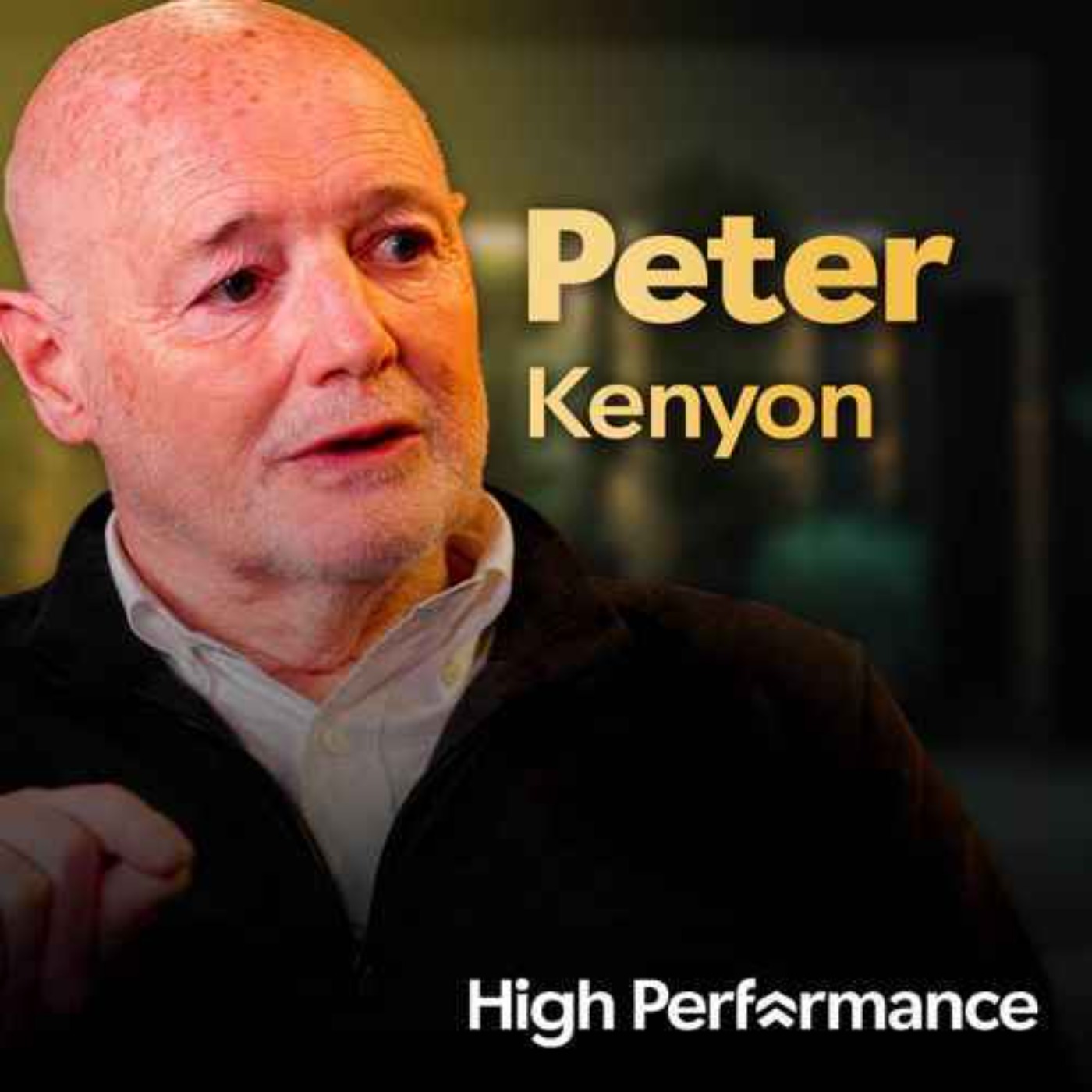
Peter Kenyon explains how he helped transform Manchester United (1996–2004) and Chelsea (2004–) by building winning cultures through business governance, “trilogy” leadership, ruthless player decisions, and long-term club structures.
Peter Kenyon is a football executive who joined Man United in 1996 and later worked with Roman Abramovich at Chelsea. He worked closely with Sir Alex Ferguson and Jose Mourinho, and discusses governance changes, commercial/medical/academy build-outs, and owner/CEO/coach dynamics.
Written by AI. May contain mistakes.
Discussion on the importance of culture in sports organizations.
“You've spoken about this holy trilogy, That triangle between the owner, the chief exec, and the manager being at the heart of successful cultures.”
Exploration of the governance structure in football clubs and its impact.
“is the key to success irrespective of the business.”
Understanding the roles of CEO, coach, and owner in a football club.
“but it was an important piece that made United really global, really successful, was about applying a business structure to this wonderful thing called Manchester United.”
Insights into the management styles of two legendary coaches.
“I'm intrigued about the relationship with Sir Alex Ferguson and you in that time.”
Explore how the cultural environment at Manchester United influenced player decisions.
“But, you know, and if you wrap all that up, I mean, his ability to sell United.”
Discuss the decision-making process behind not signing Ronaldinho due to cultural fit.
“to the outside world was still on his way up.”
Learn the complexities of managing star players and team culture at United.
“and therefore, you know, again, in Alex's view, we'd had the best of him.”
Understand Alex Ferguson's approach to maintaining team integrity and performance.
“His view on the players is what's important, not my view on the players.”
Insights into negotiating player contracts and maintaining team success.
“it was that close relationship in terms of, we wanted to give Alex the team that could win the league, the cup, the European Cup, every year.”
Hear about the special circumstances surrounding Ronaldo's acquisition by United.
“And in fact, that was probably the one exception that I was aware of, where we'd been out in the US, our final game coming back from a pre-season was in Portugal to open up the stadium.”
Explore the necessity of making tough decisions in football management.
“Now, he finished up playing more than those games on merit.”
Learn how to effectively communicate challenging decisions to players.
“What's the most ruthless decision you've ever seen him make?”
Discover the importance of honesty and respect in high-pressure environments.
“And that was one of the ways that United worked best because once the decision had been taken, it was a joint decision that just then got executed.”
Understand the value of constructive feedback in maintaining team performance.
“and, you know, they'll pay you more than we are.”
Strategies for managing relationships with powerful figures in sports.
“it's really fluid when it comes to solving problems.”
Examine how ownership influences the success of a football club.
“And Alex is not a person who doesn't like not doing what he wants to do.”
Learn about the investments made in facilities that contributed to United’s success.
“And I guarantee if this role's not here or I'm not here, you'll be less successful.”
Discuss the impact of Irish investors on Manchester United's strategy.
“Were you ever concerned about the personal friendship that Ferguson had with them because of what happened subsequently when they fell out?”
Learn how effective management contributes to the success of football clubs.
“So I think they were a real contributor to the success of United in that period.”
Understand how brand value affects operations and public perception in sports.
“You had to understand that these are important, these are investors in the club.”
Explore how public visibility and media portrayal impact sports organizations.
“So you live in an environment like a fishbowl, and that does have an impact.”
Hear about Roman Abramovich's initial experiences and relationships in football.
“that bought a small stake and increased it at that time.”
Discover the challenges and motivations behind moving to Chelsea FC.
“You know, first hurdle was he wasn't wearing a shirt and tie.”
Understand the importance of objectivity in managing sports teams.
“You've got to be doing things that is not about fandom.”
Learn about Peter Kenyon's reflections on his career move and what drove him to Chelsea.
“And a lot of that was understanding what he wanted to achieve, right?”
Explore the importance of time and investment in building a top football club.
“And there's a solitary lesson for me in that, and that is if you're going to join somewhere, look at the ownership group.”
Understand how trust between owners and management can influence a club's success.
“But you've spoken about trust being like that secret sauce.”
Learn strategies for managing the expectations and egos of club owners.
“He understood the temperature of the crowd.”
Delve into the differences in coaching styles and their impact on team performance.
“One of the plans was one of the key employees is the coach.”
Learn about the strategies used to inject a winning mentality into Chelsea's squad.
“And he made them all bigger than what they were.”
Discover how José Mourinho transformed players' performance at Chelsea.
“the way he was going to play them, the role they would play in building Chelsea to be a big European team.”
Understand the importance of culture and structure in a football club.
“And all that backroom, all that medical, all that analytics, all that academy piece was the clubs and didn't disappear and you had to start building again.”
Examine the relationship dynamics between ownership, coaching, and team performance.
“Because we'd won, because we got trophished, suddenly it's the way we play that becomes important.”
Explore the circumstances surrounding Mourinho's departure from Chelsea.
“We should have won 3-0, because we're a better.”
Learn about the transition from football to F1 and the potential for comebacks.
“Because, again, it was a great environment.”
Explore the unmatched excitement and competition in Formula 1 and its business dynamics.
“but post-Netflix are now, the excitement of F1, the personalities in F1, the competition between teams in F1 is intense.”
Learn about the importance of leadership and team dynamics in transforming racing teams.
“You said Ferguson, you knew he was a winner.”

Get the gist, explore an idea or ask about something said.
 Claude
On The High Performance Podcast, what are the key points of this episode?
Searching your listeningAutomatic transcript. May contain errors.
0:00I had the two best coaches to work with, Alex and Jose. Culture is the hardest thing to build. Alex did better than anybody else I've seen and to that point, completely ruthless, David, it's over. And we're asking you to look at joining Real Madrid, the special one. He then went two years with us without losing a game at all. Nobody had done that. It ended early, right? That's the reality. Josie said, Pete, get me out of here, will you? Your current role, Atlassian Williams. You're on record as saying that this is going to be one of the biggest comebacks in sporting history. I think it is. And why do I believe that is...
0:42Never fear a storm. Be ready to adapt. The skill is staying true to ourselves.
0:53You've spoken about this holy trilogy, That triangle between the owner, the chief exec, and the manager being at the heart of successful cultures. Yeah. Tell us a bit more. Good business practices, if you apply those to sport, you're more successful. That's the reality. And I think that's because there's a lot of sports businesses that are under-managed. Yeah. Yeah, and that's because traditionally sports have been full of fans doing jobs. and in football that certainly was you got them cheaper because they were a fan. Yeah, yeah. Okay? So I think building business principles in sport is certainly what's helped me make those things more successful.
1:36Okay. Yeah, I think that's a fundamental problem. The second thing is there is no substitute. Whatever is happening in the world today, there's no substitute for good people. Right. And what do you mean by good people? I mean people who are, Their skill set, so not everybody can do everything. So building an organisation, building a team, I guess is what it comes back to. And again, I think sport amplifies that more than anything. So, because it builds trust, right? You get somebody passing the ball into a space because they expect one of their colleagues to know them well enough to be on it. Having a left-back has got a different skill than a centre-forward.
2:21so you select the individual based on his skill but there's lots of those so why makes one team more successful than the other? It's teamwork, it's collaboration, it's belief and it's building this trust and that's a people dynamic so again I think there's a lot of people who think that these things can be automatic so we spend all our time on processes and tech and forget the people on them quality people and understanding what you need and then bringing it together is the key to success irrespective of the business. So tell us about how that would work, though, in the boardroom. One of the first jobs moving into United was there's a fundamental shift in its ownership because you started as a PLC, it was somebody else's money.
3:13Right. It wasn't your money. It wasn't a few shareholders of money. It was very public. And therefore, you know, we're talking 96 now. Governance was an important factor, right? Football's a very different environment than it was then. And I don't know if you remember, but there was several clubs who'd gone public. And they went public for liquidity reasons, just to give their shareholders some cash back. That's great. United was the only one that sort of ran it as a PLC, with governance, with understanding, not get liquidity and then just do what you were doing. Yeah, yeah. Right? So there was a fundamental sea change in United in 1996, of course, going public.
4:01We had to build the right governance structure. Right. We had to build the right reporting structures because it was someone else's money. But where did that different approach come from, Peter? Who drove that? So that was initially driven by Roland Smith. So Roland was chairman. Roland was a big industrialist. He was chairman of HSBC, professor of marketing at Manchester University, a big, big character. Yeah, yeah. Right, a big character. But he understood what good looked like. He understood what needed to happen as a PLC business. I think he was instrumental in taking it public to the benefit of the private shareholders and fundamentally to the benefit of United.
4:48Yeah. Because I think, you know, you've got to look back at these things that, you know, the Premier League started. First TV money's come in with Murdoch and he bet the farm that, you know, Sky was going to win over quite a competitive set. Yeah. And, you know, I remember talking to him and he was really explicit. Sky was going to be successful based around sport and entertainment. I know sports football was going to be it. And, you know, I mean, I think he transformed the sport of football by the way he produced it. You know, pre-Sky, there was four cameras. And most of the time it's following the ball, not the goal.
5:33So the production qualities that came in, and all those dynamics came together, which I think is another interesting thing is you look at the industry you look at the trajectory and then it's how you differentiate yourself against whoever else is in that industry so I think football started to grow World Cups in football are just a phenomenal dynamic of growing the sport every four years that's what the World Cups and then European Cup has all been about You know, these moments in time that just have this massive, continuing new fan base being brought in. So those things, you know, those things around going public fundamentally was the driver of those people didn't like it, but it was an important piece that made United really global, really successful, was about applying a business structure to this wonderful thing called Manchester United.
6:37But then tell us about this trilogy, the three main characters that then took that, took all those ingredients and helped them be successful both on and off the pitch. So that was sort of division of labour, if you like. The entity that was in charge of the cash and the responsibility for shareholder returns or value. That was invariably the board. or in Chelsea's case, the owner. The skill set between the CEO, who at that point I was responsible for delivering, putting the plan together, delivering the plan and again, giving the right returns to the investors group. And then the coach. And again, you know, pre-96, the sort of coach was did everything did the contracts for the players decided the salary decided which hotel were gone what time train they took right the sport was going to become much much bigger than that so we had to divide and divide those responsibilities and that's what we did and you know the whole of Trinity that you know Josie talks about which was him me and Roman that's how we ran the business And that was, look, you need the money.
8:03So we had to satisfy the owner that we were doing the right things. We needed to build the best team in Europe. That was the objective. And you can't do that without the coach, who ultimately can make a good player great or a good player not so great. So he's got to be completely on board. And it's that division of skill sets brought together where you really optimise the results. So what was the difference then? Say, if you compare and contrast the Chelsea experience of you just had one man to satisfy in the ownership of Abramovich, whereas Manchester United, you've got a board that you're answering to.
8:39I mean, in theory, it's the same thing. I guess what we had to do in United was very much put the structure in, you know, change the structure from, you know, a Martin and an Alex into a more formal board whose shareholders were, at that point, pension schemes or whatever. Right. Not that interested in going to the game. It was an investment. And then changing that and really supporting Alex to be what he's really, really good at and take all the other functions away. So, you know, for instance, when I walked in United, didn't have a full-time doctor. As successful as we were, we had, you know, no steady art training ground.
9:26Carrington came 98. Yeah. we had the cliff, which was one inside, one outside training pitch. Now, phenomenal, but that wasn't future-proofing United against the growth of the sport. So getting full-time medical staff, getting a marketing department, getting a commercial department, starting to align skill sets to the job that really it is doing to make United a global football brand went way beyond what it was in 95, 96. We'll be right back after a quick word from our partners. When you manage procurement for multiple facilities, every order matters. But when it's for a hospital system, they matter even more.
10:13Grainger gets it and knows there's no time for managing multiple suppliers and no room for shipping delays. That's why Grainger offers millions of products in fast, dependable delivery. so you can keep your facility stocked, safe, and running smoothly. Call 1-800-GRAINGER, click grainger.com, or just stop by. Grainger, for the ones who get it done. Hi, friends. Grace from the Working Hard podcast here. When you're stretching every dollar, Allila goes a long way, and Walmart Business is here to help. They make it easy to order what you need from tech and cleaning supplies to everyday essentials, all at low prices, and with helpful tools like spend tracking and tax-exempt purchasing for eligible organizations.
10:51because when your operations are smooth, your impact can be bigger. Visit business.warmart.com to get started. I don't know about you, but I love keeping my money where I can actually see it. Unfortunately, a big wireless company seemed to like keeping my money too. And after years of overpaying for wireless, I finally got tired of those high wireless bills, the extra fees, the so-called free perks that actually cost more in the long run. So I decided to switch to Mint Mobile. Mint helps you save money on your phone bill. Plan start at just$15 a month, and you'll get high-speed data and unlimited talk and text on the nation's largest 5G network.
11:29Honestly, the wireless service is just as good as the traditional big carriers. So keep your own phone and number, activate with eSIM in minutes, and start saving immediately. No long-term contracts, no hassle. If you like your money, Mint Mobile is for you. Shop plans at mintmobile.com slash HPP. That's mintmobile.com slash HPP.
12:02I'm intrigued about the relationship with Sir Alex Ferguson and you in that time. He's been on record as talking about where Martin Edwards sent him a letter suggesting he'd taken his eye off the ball in 97 and he was upset and piqued by it. There was the occasion where he was going to threaten to not lead the team out at Wembley because of a pay dispute. You were having to mediate. You were the third wheel in that. Look, it's tough, right? Alex is one of the best. There's no doubt about it. If I sort of lean into the football years, I had the two best coaches to work with, Alex and Jose. Very different, which is what you also find.
12:45Very different characters. Very different ways of going about it. But in terms of real management and leadership, incredible. So, well, let's answer it in terms of what did they have in common, those two? What they had in common was the ability to take people with them. And how would they do that? I mean, different ways, right? Give us an example. So Alex would, if you lost and you came back on the coach, he'd have the ability of taking people down to the depths. Like, there was nobody smiling, there was nobody talking. They were all waiting for him to crack. And then probably by about nuts, if he came from London, he'd decide that there was a Champions League game on Tuesday, so he'd better get these boys back up.
13:37And how would he do that? So, I mean, he'd do it either by whistling, right? Or he'd walk down the bus and clip Sculls' ear. Something to break it up in a way that, right? And they knew they'd suffered enough then and they'd better be backing with the right headspace to win on Tuesday. Right. Yeah. So his own unique way of doing things, okay? But, you know, and if you wrap all that up, I mean, his ability to sell United. Come on, what do you mean by that? And by that I mean you didn't come to United for the most money, ever. If you wanted the most money, we'd just close the book and say, go to where you want to go to.
14:25You're here. The culture of United was tangible. So was there anyone that you did close the book on? Yes, for sure. Go on, give us some names. Less about the money but more about the overall environment was Ronaldinho. where as great a player he was, he would have joined us and probably disrupted what United was, which was fundamental, a team. Yeah? The whole process around David being moved out was, again, David had done this incredible job. to the outside world was still on his way up. To Alex, we'd had the best. And what had he seen that would indicate that? I think one of the things that Alex did better than anybody else I've seen is understand what United needed to be as a team.
15:29And to that point, completely ruthless to that individual. Because there's a story, like Bobby Charlton tells it in his book, that he'd spotted that when Beckham scored a goal, he was running away from his teammates and not towards them because he believed it made a better shot of him on the back page of the paper. Yeah, I mean, I read that. And there was this thought that, you know, what David was doing was dropping back, not being as attacking. and therefore, you know, again, in Alex's view, we'd had the best of him. There was a lot of noise around at that time as well with, you know, David and where he was going in life.
16:19Yeah. And that didn't fit, sit well with what United was. you know a United player was 100 % focused on United no distractions right not allowed type stuff and the world the world of football was changing but can I ask you about that because you're in that position there where you you've got the biggest commercial footballer on the planet and you've got a coach saying to you no no he's not we've had the best out of him how do you mediate in a situation like that First of all, he's better at managing a team than I am. Football team. Right. Okay. His view on the players is what's important, not my view on the players.
17:16And it's understanding those two very different roles. So when I got the call about that, my answer to him is, are you sure? what you can't do is fall out you can't throw your toy in the corner and not play him alright so you've got to play the game because it's David Beckham we've got to create a market and financially we're not going to take a reduction on him because you're not happy with him so we've got to work together on this If you want, it didn't matter whether it was David or anybody else, it was that close relationship in terms of, we wanted to give Alex the team that could win the league, the cup, the European Cup, every year.
18:11And as I say, he had to be a critical part of that. So it didn't really matter. I mean, that's not to say he wasn't challenged. I'm not sure we can do that this year. You might have to do that. but he was always involved in every player. He was always a critical component in getting a player to come to us because he sold the club better than anybody else. He was brilliant with the people around the player. He was incredibly honest, like nobody gets a guarantee that you're going to play here. We're giving the opportunity to play here type approach. Can you give us an example of who we would have had that conversation with?
18:58Ronaldo, 17. Right. And in fact, that was probably the one exception that I was aware of, where we'd been out in the US, our final game coming back from a pre-season was in Portugal to open up the stadium. I'd done a deal with the club that we would take him. What, before the game? Well, yeah, the weeks before. Oh, right, yeah, yeah. And this was part of the agreement that we would go to our stadium, open it up pre-Portugal,
19:36and he could stay there for 12 months
19:41because that was probably the best way of developing him. Right. Halftime would get a call, I mean, he'd run riot with us. Okay, now it's pre-season and everybody's been away for three weeks, but he's still run riot and you never get a call from anybody at half time apart from this then and it was like we've got to take this boy back with us Alex phoning you yeah and you know walked in the dressing room and it's Keenan Giggs saying this guy's ripping us apart I mean we can't leave him here type stuff and actually that was the one exception in all where I stayed and renegotiated the deal and part of that renegotiation was he would get some games in his first season.
20:22Now, he finished up playing more than those games on merit. Yeah, yeah. But that was a sort of... I think he saw the potential of what he could be at United. Right. And again, I mean, the development of him during that period of time was history, right? And that's where Alex was, you know, brilliant. in terms of he was tough, he was stubborn at times, but he was always pragmatic.
20:58And he was ruthless. Right, he was ruthless. What's the most ruthless decision you've ever seen him make? You know, I think... I think he's made several, right? I mean, some posts I've met when Keane went. Keane would have walked through a wall and then once you've done your job it's on to the next one but you know David was ruthless David did not want to play for anybody else but Manchester United genuinely he loved the club it had been part of his life it was everything a part of his life so you know to get David to move was not about moving for more money he didn't want to go and it was basically confronting David with, David, you're not going to play for your Manchester United again.
21:56That's the reality. And that was a decision that was taken fundamentally by Alex, supported by the board completely. And that was one of the ways that United worked best because once the decision had been taken, it was a joint decision that just then got executed. But how do you prepare yourself to have a conversation like that? Because you're wielding the axe. How do you prepare?
22:29Honestly, I think you've got to be truthful. It took a decision that, look, you're not... I mean, the final call I had was one Sunday afternoon. I was barbecuing. They were barbecuing in London and it was like, David, it's over. And we're asking you to look at joining Real Madrid, not Bolton, right? I mean, I know the Madrid guys inside out. The only team that I think you can go to leaving Manchester United is Madrid, if I'm being honest. You'll be well looked after. You'll be playing with superstars. You'll be in for trophies. and, you know, they'll pay you more than we are. I mean, I'm not being funny, but more importantly than that, it's over here.
23:19And what was his reaction? I mean, tough, right? Because he didn't want to leave. And I think it's that honesty. I think it's confronting difficult situations in a way that is respectful and honest and open. And I think, you know, the big teams, the high-performing teams, or honest with each other. Yeah. You know, they're tough. It's a tough environment, right? And everybody's calling everybody else out. It's not just a senior management with employees. Yeah. Employees calling employees out, you know. Whilst there is and has to be a structure, it's really fluid when it comes to solving problems.
24:08Yeah. It's like collective problem solving. and it's not all top down by any stretch. It's everywhere in the business, I think, really saying, if we're going to win, and sport is pretty brutal at determining whether you win or lose once or twice a week, right? It's not the stock market every quarter or whatever. And sport means something to people. That's the big difference. What's the most brutal bit of feedback that you ever gave to Alex then? There's always a tension, right? And I think you've got to make sure it's a healthy tension. Right. Because you don't see eye to eye all the time. And there are times where you say, look, we can't do that.
24:59Which sometimes means you can't do that, okay? And Alex is not a person who doesn't like not doing what he wants to do. Yeah. Yeah. So that's very different walking into that environment than the previous 10 years where I ran a business, which is effectively, you know, my business that we were building into a global brand. Yeah, yeah. This is one of the most respected guys who, you know, I had to manage him, right? And he was much more powerful than I was. Yeah. So give us some tips on how did you manage him? Well, again, I think it's like, I'm not going to try and do your job, right? You're here to do this.
25:47And we better be honest about that. And I'm here to do this. And if we get that right, you'll be more successful. I'll make you more successful. You'll earn more money or win more trophies. It's whatever the mechanisms are. But we've both got a part to play. And I guarantee if this role's not here or I'm not here, you'll be less successful. Right? And joined in 96, left in 2004, and I think it was a pretty successful period. Just a bit. Okay. We took the business private away from the public market because it was the right thing to do for Manchester United. We brought the Irish in, who were good owners.
26:33and during that period of time, you know, we built Carrington, which was first of its kind. We extended Old Trafford. So it didn't have leaky roofs and all those types of things. We gave him the money and the armoury to build four teams, three teams in that period yeah and it was critical to that success but we always provided the sort of money and environment to achieve it and I think that's a good example success in the sports or a business is never down to one person it's this collective top talent that come together which is like a DNA it's not, you know, the best doesn't mean that you're best collectively yep, we have a concern You mentioned the Irish coming in, the Kilmore, the McManus and Magnier.
27:34Were you ever concerned about the personal friendship that Ferguson had with them because of what happened subsequently when they fell out? Well, it developed. I mean, it wasn't there. It wasn't part of the decision-making as to getting them versus somebody else. It was the right thing to bring new ownership in. Right. And I think overall that they were good owners for that period of time. Yeah. And I think ownership is such a critical part of whether a team's successful or not. So I think they were a real contributor to the success of United in that period. Right. I really do. Because they let the management get on with it.
28:17You know, I was CEO. Alex Remain, the manager. but were you concerned about your role in that? I think, no not at all because obviously we talk about this trilogy not at all because they were
28:37they bought into it on the basis it was a professional it was a business decision for them to do that not that they were friends of Alex's I mean they were really smart people they were businessmen who loved sport and loved what they do in horse racing. So, you know, there was some relationship there, but it did not colour one iota in terms of, they weren't involved in the day-to-day running of the business. They wanted the business to be successful. They wanted the business to be worth more when they sold it than when they bought it. Yeah, yeah. And we delivered on that. So I wasn't concerned about that.
29:17What was concerning was the fallout between them. and that wasn't a great time and there were some tough conversations that I had to go on about that because look I mean it's like
29:33the brand of Manchester United is worth a lot of money I mean talk about IP value and therefore the way that our employees and that's not just the people who take the tickets it's Alex, it's an employee. Yeah, yeah. You had to understand that these are important, these are investors in the club. The way we, you know, we don't do those types of things that brings into disrepute, either with a fan base or investors or things like that. So, yeah, it caused some reasons for, you know, you've got to confront these things and deal with them. And it got resolved in the end, as it always would do. But again, I think what you learn from that is sport matters to so many people, right?
30:34I mean, it sells new papers. Front, middle and back. Right? So you've got to understand that if you're operating in sport, you've got more visibility. But do you feel that, because we're talking about the Rocker-Gibraltar dispute between Kilmour and Sir Alex Ferguson, did you feel that Sir Alex in that case sort of misrepresented or misunderstood that he was an employee here? Because that had the potential to bring Manchester United into disrepute. Yeah, and I think this is where things get blurred, don't they? Yeah, yeah. Yeah. Because we're naive if we think that sports businesses are just like normal businesses.
31:20They're not, okay? So understanding that environment, understanding that there are things you would do in a normal business that you'd never do in a sports business because of the visibility. You've got to be hypersensitive to it. I mean, if I go back to that period, if we did one little thing, it was everywhere. you know we had our shares frozen you know two times because we made an announcement which the mail said you know we went before the phone the way we presented it the mail said United will be doing its own TV and showing its own games share price will go up next minute share price you know frozen like what are you doing so we had to you know so it was not that we'd done anything wrong it was just the way it was portrayed in the newspaper.
32:16So you live in an environment like a fishbowl, and that does have an impact. That does mean you've got to be hypersensitive. That does mean you've got a little problem, it gets exploded. So you're constantly, I think we were constantly, we were the hottest ticket in town. Yeah. Right? Which was great for so many things, and periods where it wasn't that great, and you had to deal with it. We'll be right back after a quick word from our partners. Are you a trailblazer? A risk taker? Maybe someone with countless tales of epic adventure? Well, I'm not quite there yet, but I'm working on it. Even the boldest among us started off small, right?
32:55Daring themselves to reach greater goals every day. And if you're looking to take on a challenge like that, the Defender is too. Now, I've driven a Defender for a few years. It's the best car I've ever owned. It's a vehicle built for drivers capable of great things, whether they're heading towards uncharted territory or just fancy a weekend getaway. Defender was engineered to meet challenges head-on so you can explore with confidence. It's the legendary icon of adventure, reimagined through modern design, fit for a new generation of explorers. My kids love it as much as me. It also has a tough, rigid body tested to the extreme, a modern, functional interior built for comfort.
33:28It's a vehicle that, like you, is capable of great things. And with next-gen technology from 3D surround cameras to clear sight, ground view, it will help you embrace the impossible. Explore the full Defender lineup at Land RoverUSA.com. I don't know about you, but I love keeping my money where I can actually see it. Unfortunately, a big wireless company seemed to like keeping my money too. And after years of overpaying for wireless, I finally got tired of those high wireless bills, the extra fees, the so-called free perks that actually cost more in the long run. So I decided to switch to Mint Mobile.
34:02Mint helps you save money on your phone bill. Plan start at just$15 a month, and you'll get high-speed data and unlimited talk and text on the nation's largest 5G network. Honestly, the wireless service is just as good as the traditional big carriers. So keep your own phone and number, activate with eSIM in minutes, and start saving immediately. No long-term contracts, no hassle. If you like your money, Mint Mobile is for you. Shop plans at mintmobile.com slash HPP. That's mintmobile.com slash HPP. Upfront payment of$45 for three months. Five gigabyte plan required, equivalent to$15 a month. New customer offer for the first three months only.
34:41Then full price plan options available. Taxes and fees extra. Cement Mobile for details. This episode is brought to you in association with Claude.ai. Now, if there's one thing that I'm proud of here on High Performance, it's that our conversations are real, they're honest, they're impactful. You can trust them. But that doesn't mean that we can't use AI. And I've actually really enjoyed creating a template for an interview and then asking AI some pretty complex questions. Like, how can I hone this? How can I make it better? How can the things that I want to talk about be even more impactful? Because I think that AI isn't just about making your workflow more seamless or more easy.
35:14It's also about increasing the amount of impact that you have in the world. And Claude is the AI for minds that don't stop at good enough. It's the collaborator that actually understands your entire workflow and thinks with you. Whether you're debugging code at midnight or strategizing your next business move, Claude extends your thinking to tackle the problems that matter. I also love the fact that Claude can do some really deep research for me. I'm talking about research for guests on this show that would have taken hours, maybe even days, can be done in seconds. And also, Cowork brings Claude Codes agentic power to your desktop.
35:46There's no terminal required, so anyone can use and have Claude do real work. Point it to a folder on your computer or add connectors like Google Drive and Gmail. Describe what you need, and it just handles the rest, like organizing files, building spreadsheets, drafting reports, or scattered notes, queue up tasks, and come back to finished work. Are you ready to tackle bigger problems? Get started with Claude today at claude.ai slash performance. That's claude.ai slash performance. Oh, and check out Claude Pro, which includes access to all the features mentioned in today's episode. Claude.ai slash performance.
36:19That dispute opened the door to the Glazers that bought a small stake and increased it at that time. Yeah, I think, unfortunately, what it is, I think inadvertently that probably brought the Irish tenure to an earlier end than it could have done, right? Yeah. Now, I'm not linking one to the other. That would be unfair to do. But that did lead ultimately to Irish selling on for the right reasons. They made a decent return on their investment and brought in wages. I'd left by then, so. I want to move on to the next trilogy that you became a part of, Roman Abramovich and Jose Mourinho. Tell us about those two relationships.
37:10So the first one was with Roman, never been to a football game, came to quarterfinal Real Madrid at Old Trafford. The full three. Yeah, which was probably one of the best football games ever. it was a typical Wednesday night Champions League Real Madrid like you know you could have if you had 160 ,000 seats you'd have sold it and he comes his first ever football game didn't know who he really was I mean it's quite interesting I think he was the fifth richest man and this guy turns up and he was nice he was polite watched the game after the game came over and thanked us very much for letting him come in.
37:54Best night of his life. Right. Right. You know, first hurdle was he wasn't wearing a shirt and tie. He was wearing jeans and a jacket. Getting him in the boardroom was a bit, you know, tasty. Anyway, we overcame that. We overcame that and that was fine. How do you overcome that? How do you tell the 50 richest man in the world that he's not so smart enough? We let him in. It was more selling it to my other directors. and yeah no no I think as I say I think that started the romance of him wanting to get into football ok genuinely he said this is the best night of my life I've never seen anything like this so was he interested in buying Manchester United no I don't no I mean that was never the approach that was never the approach and over over I don't know three or four months I had dinner with him a couple of times I mean, literally talking about football.
38:53Like, who owns it? Well, you know, not everything's owned. You know, FIFA, UEFA, Premier League type stuff. How does it run? First time was very generic, like, how does this thing run? Second one, clearly another level of understanding. and then sort of third one was I got a call one night and he said I just want to let you know that I'm buying Chelsea in the morning which was literally the week before it was probably going to go into administration
39:34and he said next time you're in London can you come and have dinner which I did and then he said, you know, look, I don't run my businesses. I've looked around. I think you're the best. Come and join me. I want you to come and set it up for me.
39:56You know, and it was... I mean, it was interesting because people don't leave United. Yeah. Right? But you've been there at 68. You're a Boyard United fan. Yeah. And the truth is, if you're going to run the business properly, you can't always be a fan. Yeah. You've got to be objective. You've got to be doing things that is not about fandom. It's about running it as a business. And did you ever lose that? No. Like being a fan at United? No, I think anybody who's involved in the day-to-day running of a sports team is different. You're not there as a fan, right? You know when the whistle goes, there's a whole raft of all things you have to deal with.
40:41You can't go to the pub and talk about the game. Yeah, yeah. You know. So I think, I won't say you enjoy it less. You see it through a different lens, if I'm being honest. And you need to, I think. I think really being objective is a critical part of success. Yeah. All right? I honestly believe that. and I think that's one of the things that you've got to inject in the management you're here to you're the best marketeer right don't get coloured by you know the product yeah we're really lucky because we see the product the people pay for we go and watch it we see on you know these people that people would queue hours for to meet we sat down in the canteen with them yeah right never take it for granted but never lose, become a fanboy right?
41:37So tell me about you decided that so Abramovich is seducing you, he's telling you that you're the best in the business Yeah I mean you know basically it was about you know he doesn't run his businesses so he wants the right people to run his businesses Right My point of view was I generally wasn't looking but I guess looking back what I really enjoy is building not maintaining right and it sounds silly that you could be maintaining Manchester United I don't mean it in that sense but you know when I decided to leave the board said you know who should who should take over and I said David you know David Gill was brilliant you know he'd been number two he joined United before I did yep he understood the club and the club it wasn't that build that we did over that eight year period it was a different type of role and David was there what 15 years after me so what attracted me about that was not I wasn't I hadn't fallen out with United I wasn't didn't believe in it it was this opportunity of taking the football club in the Premier League in London with a billionaire that had the resources to do what you needed to do.
43:09And a lot of that was understanding what he wanted to achieve, right? And it not being a hobby. And then in two years' time he was bored. So what were the kind of questions you were asking him then before you decided to sign on? So I think the strength of any business is, you know, what are you in it for? what are the real objectives setting a real North Star and what was his answer to that? so he said I wanted to be the best club in Europe and I said that's fine I said so two things I'm going to tell you that's time and money right and that's really important to understand and so I don't want you thinking that this can be done in a year or two years because you've got all the money we haven't got the people we haven't got the facilities we haven't got a strategy we've got some good players that gets you nowhere fundamentally and
44:13so I think I tested him on his commitment I wasn't going to leave United where I could be there for 15 years to move into something that you could be there for 3 months Yeah? Yeah, yeah, of course. And there's a solitary lesson for me in that, and that is if you're going to join somewhere, look at the ownership group. Yeah. Right? Because they are the guiding light of principles in terms of their objectives, their longevity, their values. You know, they all might be good, but they might be wanting to do it in a way that doesn't fit you. Yeah. Yeah. So I did spend quite a bit of time. And I said, okay, I'm going to take those two things, which is become best club in Europe, and time and play it back to you in terms of what I believe it needs doing.
45:08So I went back with him with a five-year play, because that's what I believed it would take, and a number. And his first reaction is, I don't want to wait five years for success. I said, no, no, to be the best club in Europe, you have to become the best club in England. Yeah. And then you qualify to be Europe, and that's what it is. And, I mean, I think the immortal advice he gave me, which I think I use a lot because I think it's relevant, particularly in sport, is after much deliberation, he said okay I understand that we need to build this and the sort of staging blocks I understand the money which was not insignificant so if I give you that money let's be successful because then I look smart if I spend that money and I'm not successful I look stupid and don't make me look stupid and I think there's a lesson for any investor in sport or any CEO who's working in sport.
46:21That's great advice. That's great advice. Because investors don't want to look stupid. But you've spoken about trust being like that secret sauce. Yeah. When did you trust him and what was it that made you trust him? I mean, so if I look back now, I think he's been one of the best owners of Premier League football. since Premier League was formed. Yeah. Okay. And why do I say that is two things, three things really. When I first went to my first Premier League meeting, there was 18 owners and two CEOs. That was myself and Rick Parry from Liverpool. And because I was there as a PLC, effectively I was speaking for the ownership group and Rick was there speaking for the ownership group of Liverpool so for all intents and purposes there was 20 owners in the room if you go today you're lucky if there's 5 or 3 right so we ran it he kept to his commitment that he wanted me in there to run it and that doesn't mean that we always agreed because we didn't but whatever we agreed on we came out and executed and that meant there was honesty there was argument in front of a better word because the requirement was to get Chelsea to be the best club in Europe so that was one thing second thing is it was like you put the money in and then one of the things we talked about way up front was he'd convert that into equity so the club would not be in debt.
48:19Because debt kills football clubs. Yeah.
48:28And he came to games. He was interested. He understood the temperature of the crowd. Right? The reason he got involved in the first place was that first night he saw what this thing could be. Yeah. He fell in love with, you know, we lost and everybody stood up and clapped because of the performance of a player or the team, right? It was so special. And I think that's what he dreamed of and this relentless pursuit of excellence. And I think there's another thing, you know, these guys that are as rich and there's a lot of them these days and a lot of those guys are coming into sport they can do anything they want every day of the week right put your money into sport doesn't mean you're successful right so I think there's this like challenge there's like excitement because it's not straight line if he put the money he put into Chelsea in one of his other investments it'd just be a straight line return because that's what it is you can have the best team it loses on a Saturday as frustrating as that is it happens with regularity yeah of course it doesn't happen over the season the best team wins over the season but on any given day and I think the Premier League more than anything else that's what keeps it like the best league in the world yeah but then we're talking very much around like your role is managing these yeah these billionaires with huge egos.
50:07Now, we've had people from that period at Chelsea that would speak about Ancelotti's term, Thunderbolt defeats, where Abramovich would struggle to countenance how Chelsea could get beat to Wigan, for example, and there'd be conversations with the head coach there. Yeah. Would you tell us about how you manage the ego of an owner in a situation like that? Well, I think it started by, I think it started by in week one. And again, you know, we had a plan. One of the plans was one of the key employees is the coach. Yeah. Okay? He's the face of the club. It's not Roman. It's not me. He's the face of the club.
50:50And it was Claudio. Okay? And Claudio's super. But having worked with Ferguson, Ferguson's a winner. I don't care what he does, he's the winner. He went into racing, won. If he went into building, he'd be the best builder. That's what he is. So what Ferguson gave me is understanding what winning means, the character you need to be, the commitment, the relentless achievement, you win, you go again. You don't, you might have a night off, you might have a beer, but next morning you're on to the next one. Yeah. Claudio was not that. Right. So, you know, I started Simon the Wednesday. We spent time together.
51:52I was meeting Roman on Thursday. One of the commitments was we were going to have a training ground. I mean, Chelsea in 2004, again, didn't have a full-time doctor, didn't have a training ground. Couldn't train on a Thursday because we used the university playing fields. So he said, we'll have a commitment to get a training ground. So I think the Thursday we'd spent in a helicopter going round in a circle. From Cobham? Yeah, or we found Cobham. He thought that was too far. I said, it's not too far, right? We can't buy Regent's Park. we can't buy high parks or that's about you so I think it became Wimbledon or Cobham right anyway Cobham was it so we did that Friday we're having dinner and how's your week I said we've got to we've got to change Carlos not Carlos we've got to change Ranieri Claudio and he said what do you mean we've got to Ranieri so I said he's not going to get us where we need to get to right Anyway, we then went on this incredible run.
53:03Gets the semi-final of the Champions League. Second in the league. And as this goes on through the season, it's like, oh, what are we going to do? Claudio, I said, we're going to change him. You never wavered in that belief. Never wavered. And he said, well, what if we win the league? I said, we change him. What if we win the Champions League? We change him. And I think this sent him into a bit of a spin, if I'm being honest, because it was like the preeminent question. Like, have you changed your mind this week? So Roman Abramowitz is shocked by your rooflessness. Yeah, I think he just didn't equate to what was happening.
53:44Right. And I said, look, the bottom line is we could win, right? Next year, we could get relegated. That's not what we're building here. you know you don't become the best club in Europe by winning and relegation that's the reality so it's a bigger long term play and I genuinely believe that and the only reason I knew that was not that again Claudio was really good but he wasn't at the level that I've been used to yeah right Alex was my benchmark of what you need to win yeah yeah and he fell way short at that and again this is not against Claudio you know Claudio was brilliant with the press like what were you seeing that was different with Claudio and Ferguson decision making and he got called he got nicknamed Tinkerman yeah the players the clarity of messaging to players right
54:53you could be the striker and you've got a score of a hat ring he'd still pick you up on the things that you didn't do yeah I mean tangibly players would come in and like I'm in for it today right and you've won the game right it's that it's that attention to detail it's that relentless pursuit of excellence
55:22which Clando just didn't have and I thought look if we've got we had some good players and again Ferguson said to me one day which is brilliant he said look you know you need to understand that until you've won you don't know what it's like to win but once you've won you never want to lose and I didn't really understand what that meant at United right I really understood what it meant at Chelsea and the reason for that is if I looked at if I looked at the team I mean we had an incredible team and didn't really win anything at Chelsea before 2004 we had the odd win there the odd win there but we had Jake we had Terry we had Lampard right we brought drug brain and so what I was looking for as a coach was somebody who got all that skill set that Ferguson had so when you said you know what have you got in common do we really like they had a different style right yeah they're a different age group they had a different coaching technique completely different but those two guys got on with each other because they're fundamentally way the same well Alex and Jose right and that's what we needed to inject winning into the team so I knew what I wanted I didn't know what he was like I knew it wasn't what we got right yeah that's the reality and when we got Jose from day one in fact I took him England England were in a camp and I got special dispensation to get the Chelsea players out for half an hour to introduce them to Jose.
57:22And he made them all bigger than what they were. Go on, how? The way he talked about them, the way he talked to them, the way he was going to play them, the role they would play in building Chelsea to be a big European team. I mean, you asked John Terry, Frank Lampard, joke all the time these guys physically grew okay and at that point I knew this guy was we'd made the right decision I mean I knew it before but just to see that reaction like my management ability in a different way than Alex but the same characteristic could get these guys walking through a wall right utter belief and so that was one decision and the second decision was again it was based around United there is no way that we were going to have another 25 year manager yeah Wenger so Jose became the first one of the next breed right he was one of one when he came and then you know Klopp followed and Pep followed and etc but at that point there was Ferguson and others in his wake if I'm being honest there was Arsene who'd done a great job I mean again he changed the sport when he came in and Jorza came and changed the sport when he came in and we decided that we're going to have a different format because the format was when you change manager, everything changed and there was another seven or eight people come in and it was another culture.
59:21And we said, uh-uh, what we're going to do, we're going to change the manager. So we're going to build a culture that remains. So everything outside of the coach and perhaps one or two assistants was the clubs. which was a real strategic direction because again, culture is the hardest thing to build and the way that, you know, certainly the way we didn't build it thinking that we'd have a manager a year but the success, one of the big successes of Chelsea was 20 trophies in 19 years. The structure, people fitted the structure. or didn't. And all that backroom, all that medical, all that analytics, all that academy piece was the clubs and didn't disappear and you had to start building again.
1:00:17So how would you articulate the culture that you were looking to build? Well, again, I think this winning culture. I mean, I think people didn't understand that two years before Josie joined us, he hadn't lost a game at home. He then went two years with us without losing a game at home. Nobody had done that. Yeah. Right? I mean, that goes back to the days where, you know, Liverpool was a fortress. You know, the badge walking out onto the pitch intimidated people, right? People came to us not thinking they could win. Yeah? Yeah. And why would you? Would you see that in the tunnel? Yeah. Yeah. You know, the psychology of nobody's beaten Chelsea in three years, three and a half years, whatever, right?
1:01:14It's a factor. Our players were just bigger for it. They were just up for it. One of his skills was incredible, was it was like chess, I think. He understood the moves. So if they made a substitution, he'd make one pretty quickly. to nullify that substitution. He'd know how the others played. He'd know how they would substitute. He'd know how they would form. So his ability to look at his game, not only from his team, but the opposing team, was way in advance than anything I'd seen. And look, I think that became... That delivers a certain type of football, okay? Yeah, yeah. And when you haven't won anything and you start winning, people love it because they love winning.
1:02:02But I think there was a building, a sort of feeling then, this is not exciting. Right, yeah. Right? Because we'd won, because we got trophished, suddenly it's the way we play that becomes important. Right? But, you know, Josie was, just like Ferguson, was so critical to the success and building of what Manchester United was. Josie, what he did and the legacy he left lasted way longer than his tenure. So how did it come to end? I mean, it was... I think it was... And again, Josie coined the phrase, the Holy Trinity, where it was easy. It was hard, but the decision-making was easy. It was Roman, me and him.
1:02:57And how often would you guys get together? Oh, regular. No, regular. I mean, I'd see Jose every day. Roman would see him around every game, right? Sometimes he'd go to training. So there was just this building that we're all building this thing together to become what it needs to be, right? It was fantastic. Again, I think there was then certain dynamics. There was certain... So going back to the first time I saw Roman, he knew nothing about football. Two years in, he knew a lot. He started to know a lot about football. So he started to have an opinion. An incredibly smart person. And again, I think he became the best ownership in Premier League football.
1:03:44And he became certainly the most knowledgeable. Genuinely. Because he was interested in it. He watched it. He came to games. when he wasn't there, he was watching it. Okay. He got really into it and interested. But as a consequence of that, then, you know, he started to have opinions. And he's the owner, so that's fine. Yeah. And he's putting a lot of money in. And then these things started to creep in in terms of, you know, we win 1-0, we need, and then put a bus. Can we not? We should have won 3-0, because we're a better. Right. And, you know, those types of things, in their own right, it's not an issue.
1:04:28That's fine, right? But you've got George's best coach in the world at that time. You know, we won the Premier League first time in 50 years in his first season. Yep. Never been, you know, a special one.
1:04:47So, again, you know, it ended early, right? that's the reality and it ended early you know and it wasn't that he got he got fired it was it was Josie came to me we were doing we were doing a a cinema launch we'd we'd got a a film about Chelsea and it was night you know the big reveal so the whole team was coming out and we met in the met in the health club and Josie said Pete get me out of here will you What would happen for him to ask that? I think he would... Look, if you look at George's tenure, it's not 10 years, is it? Never is, yeah. Right? So it's not all one way, this isn't. This is, again, he's a builder.
1:05:43He's dynamic. He's got his own style, which is not easy. Yeah. Okay? and that's all great. But I think it was sort of coming to an end and I think both, all of us, the three of us all saw it. But was there ever a meeting where you thought, I can see this starting to unravel here? Yeah, I think it didn't happen on that night. The event happened on that night and Josie sort of said, Pete, can you get me out? But tell us about the event that you thought... I don't think there was one. There wasn't this explosion, there wasn't this big argument that didn't implode. It was this gradual changing of the style that Roman wanted.
1:06:31But when he's coming and saying, yeah, it was a good one, nil, but why wasn't it three? How was Mourinho responding in that moment? Again, I think initially explanatory. and then as these things went on saw it as confrontational what are you asking me that for I've got three points we're top of the league yeah right
1:06:58and look I mean when he left so that night I said do me a favour go to the film premiere I'll stay behind meet me back here and we sorted it that night we sorted it that night and And Jose and I are really good friends. Him and Roman are very good friends, right? So what happened was, you know, and it proved not to be a problem for Jose because he went on to do other things. And it proved to not be a... We went on to continue to win as Chelsea. So I think it run its course. And probably in other clubs, that it would have taken four years to run its course or five years, it took a bit shorter. Because, again, it was a great environment.
1:07:49We created this environment of continual improvement. Yeah. Right? The standards, it was always about beating them. It was about winning and then going again. And, yeah, I mean, and again, I come back to, there's lots of similarities you know great players great organisation people working harder people working smarter and just creating this environment of continual improvement So let's take those ingredients and talk about your current role at Lassie and Williams so you're on record as saying that this is going to be one of the biggest comebacks in sports in history Yeah, I think it is. And why do I believe that?
1:08:42Well, I think as an industry, F1 is on fire.
1:08:50It's quite interesting. So I look at this in two ways, really. If you look at any sports team, it's got a cost base. In football, it's 24 players, or 30 players. In F1, it's two cars and two drivers, right? and the business has to produce more revenue than cost because then it becomes a proper business and becomes valuable. So the industry themselves, football, Premier League and F1 are both industries that are really strong in terms of its appeal from an audience point of view. The difference between F1 is you go to, is a truly global sport. You go to Singapore, you go to China, you go to America.
1:09:42In football, people come to you. So football's global from an audience point of view and people watching, F1s, people watching, but participating, right? And one of the big recent successes is Netflix. And what Netflix did is show the world and particularly the young fans that weren't fans before, but post-Netflix are now, the excitement of F1, the personalities in F1, the competition between teams in F1 is intense. It's like no other sport. So the trajectory of the sport is phenomenal. When you go, it's like someone said, it's like 24 Super Bowls. and it is so when you go to town for four days it's the hottest ticket in town whether that's government whether that's business whether that's entertainment whether that's other sports people want to be there they want to be seen there so it offers things that other sports doesn't and then the experience of being there where you're literally sat where the players are having lunch i.e.
1:10:58the drivers or you're in the garage which is like being in the changing room as the team are running out. The experience you can give is just phenomenal. Now, to be a good business, there's limited ways of getting a revenue. One is performance of the team.
1:11:20So participation, and then where you're finishing the table, and then the other one is commercial. and if Rev becomes greater than cost it starts to look like a good business the advantage of Williams is it's brand right it's 50 years next year third longest team there's been over 150 teams in F1 since it started and we're one of three who's been in 50 years or longer so it's got this unbelievable heritage it's got this value it's an independent race team so we're not selling drinks or cars or any other things, it's independent and the values attributed to Williams which are critically important to commercial partners are the ones that Frank Williams built and we were a multiple world champion so we've got this great heritage of winning we've got this wonderful values that the Williams family built in terms of trust and honesty and openness and then you've got the sport that's on fire there's no relegation so compared to my world it's easy you know you come last you get kicked out in here you finish up 10th but you're still there so the structure of the sport is good and this again this all comes back to the quality of the ownership.
1:12:55So I knew the ownership group before they bought this. Really good people. Really, they've got the money and resources to put in, which is needed in sport, right? Most sports purchasers buy it and haven't got enough money to run it. Yeah. Right? It's number one failure. these guys are in it to take it right the way back to the top they've got the resources to do that and then the component that was missing was people and we've invested really heavily in the right people to get us back to the top So you had that conversation with Abramovich that told you I want to be number one in Europe and you were telling him it's time and patience it's time and money that are your biggest barriers to that.
1:13:48When you spoke to the ownership, what were they telling you their aspirations are for Williams? Yeah, so first of all, when they bought it, they told me. And I said, it's interesting. Yeah. And the reason it was interesting is they're very private, they're very professional. And it's like, you know, sports are an interesting market, interesting product when your overall what you are is not that. It's not an ego play. It's a business play. Really professional. Smart people from tech. Smart people from engineering. And see the value. And I spoke to them and basically said, look, I don't think it's working like you plan.
1:14:40right and they've from day one always put the maximum amount of money that they can because you know we're all cost capped yeah but they clearly hadn't got the people right and you know so I I looked at it and I said look I think you know you've got some of the wrong people and and and that's that's again where you lean into people make the difference right so bringing and unfortunately you have to move people out to bring people in but bringing James Valls in who represents right again the face yeah a different generation of TP yeah and understands the sport there's Toto's number two yeah experience winning at the highest level multiple world championships and him being the face of recruiting a lot of other people who are great at what they do not just from F1 but from other industries to complement it because it's skill sets is what we will allow us to win races in 28 and it's a long-term play, right?
1:16:08Again, it was understanding that this isn't an overnight play. I mean, if you think football, you know, if it all goes bad in football, I can spend a lot of money and change the team. Yeah. You don't do that in building two world-class racing cars. Yeah. So it is about processes and it is about procedures and it is about getting a leap up in tech, which we believe is one of the advantages how we'll get back to a leader. and then fundamentally having the right people. And that's what we've been doing in the last two and a half, three years. And it's that that will get us on track. It's not about do we win this season?
1:16:50Do we win this race? You know, sport kicks you. You can't say, you know, we're the best team, but you can still lose. That's what sport does for you, okay? That's why people keep coming back to it. that's why live sport there's no substitute for it so what we're building is a next world champion will be a multiple world champion there's a period where that will happen we've invested the maximum in money getting the right people and it's that confidence and we've got this wonderful heritage brand which, you know, there's 800 million fans in F1. There's 400 million that like Williams either as a first team or as a second team because it represents all the good things about the sport.
1:17:46But you've been around winners. You said Ferguson, you knew he was a winner. Mourinho, you knew he was a winner. Was there a moment with James Fowles where you came to that same conclusion? yeah I think Sir James is a very very different character than Marino right
1:18:07but he he articulates I think he's been on he articulates what is needed how transformation is important to him how people are important to him how you're changing the culture not just the machine. Yeah? But was there a particular moment where you've seen him in action and thought, this guy's got it? I see him in action every day. I mean, I work with him as part of the executive management group. And, again, I think his experience as Mercedes is invaluable. Yeah. Right? I mean, look, the reality is number twos don't always make good number ones. Right? he's a good number one and again those characteristics he is a winner he understands what's needed to win he understands that you know it is more it is not just about building the right procedures and machines it is about getting the right people and then getting those people collaborating to become a team and that's what takes the time that's what really takes the time and I think the reason we'll be successful is our ownership group our management team are all on the same page it's not the honest thinking we can do it in two years and the management group is already saying yes we can building to delay it's like no we can't we're on the trajectory to win wrestling in 28 to contend for world championship in 30 that is you know eight years after the investors longer probably ten years that's that understanding of what's needed now everybody wants to do it quicker than that and if you can do that that's great but the great thing about the business it doesn't do short term patches that impacts the long term objective that's really smart and that ultimately comes from the ownership because they want to do the right thing that allows Williams to not win it once but become a multiple world champion just like it did under Frank Well if there's anyone that knows anything about how do you win and then keep winning I can't think of a better man than yourself Pete Thank you very much To be there Because you're on it every day and there's this there is this constant improvement right it's not you never finish a day and think that's it you know it's that is that constant but i think we're we're building a really solid team we're building a really solid team across all departments and um yeah and and james leading that i think we've got the right man to do it brilliant well pete thank you so much for giving us your time and your insights and so much wisdom it's been a honestly a real real pleasure I hope you've enjoyed it.
1:21:22I've loved it. Thank you. Thanks a lot. Thank you.
1:21:54for a hospital system, they matter even more. Grainger gets it and knows there's no time for managing multiple suppliers and no room for shipping delays. That's why Grainger offers millions of products in fast, dependable delivery. So you can keep your facility stocked, safe and running smoothly. Call 1-800-GRAINGER, click grainger.com or just stop by. Grainger, for the ones who get it done. Parles-tu français? Hablas espagnol? If you've used Babbel, you would. Babbel's conversation-based technique teaches you useful words and phrases to get you speaking quickly about the things you actually talk about in the real world.
1:22:35With lessons handcrafted by over 200 language experts and voiced by real native speakers, Babbel is like having a private tutor in your pocket. Start speaking with Babbel today. Get up to 55 % off your Babbel subscription right now at babbel.com slash acast. spelled B-A-B-B-E-L dot com slash ACAST. Rules and restrictions may apply. Shipping, billing, admin, payroll, marketing. You're managing all the things. So why waste time sending important documents the old-fashioned way? Mail and ship when you want, how you want with Stamps.com. Print postage on demand 24-7 and schedule pickups from your office or home.
1:23:17Save up to 90 % with automated rate shopping. That's why over 1 million small businesses trust Stamps.com. Go to Stamps.com and use code PODCAST to try Stamps.com risk-free for 60 days.
Peter Kenyon is a global sports powerbroker and Williams F1 Board Advisor, famed for transforming Premier League giants and securing major partnerships with global brands.
In this episode, Peter joins Damian to discuss the leadership principles that shaped his success and how his "Holy Trinity Framework", balancing the roles of owner, CEO, and manager, was key to building sustainable winning cultures at two of football’s biggest clubs.
He dives into his philosophy on culture, explaining how he made tough calls like rejecting Ronaldinho for his lifestyle and selling David Beckham despite his commercial value. He also reveals how he prioritised structure over short-term success, even when it meant making bold moves like replacing Claudio Ranieri at Chelsea.
This episode is an insightful look at how maintaining a strong structure, ruthless execution, and cultural standards is essential for lasting achievement, both on and off the field.
Heights 👉 Get 20% off your subscription by using Code: HP20 here: https://highpfrmc.com/hpp_heights_au3
Go Henry 👉 Grow their skills and their money at gohenry.com/highperformance with £5 FREE to get started!
XTB 👉 To find out more and make your money work, use code HPP at: https://highpfrmc.com/XTB-hpp-au
Randox 👉 Book a test today and save 20% on all health checks with the code HP20 at : https://highpfrmc.com/HPP_Randoxhealth_au
Visit CLIF at www.eu.clifbar.com or www.instagram.com/clifeurope to learn more and shop your favourite flavours on www.amazon.co.uk/clif
Find out more about Williams F1: https://www.williamsf1.com/
Hosted on Acast. See acast.com/privacy for more information.


