
 Ask ChatGPT


 The High Performance Podcast
15 Oct 2025 · 36m
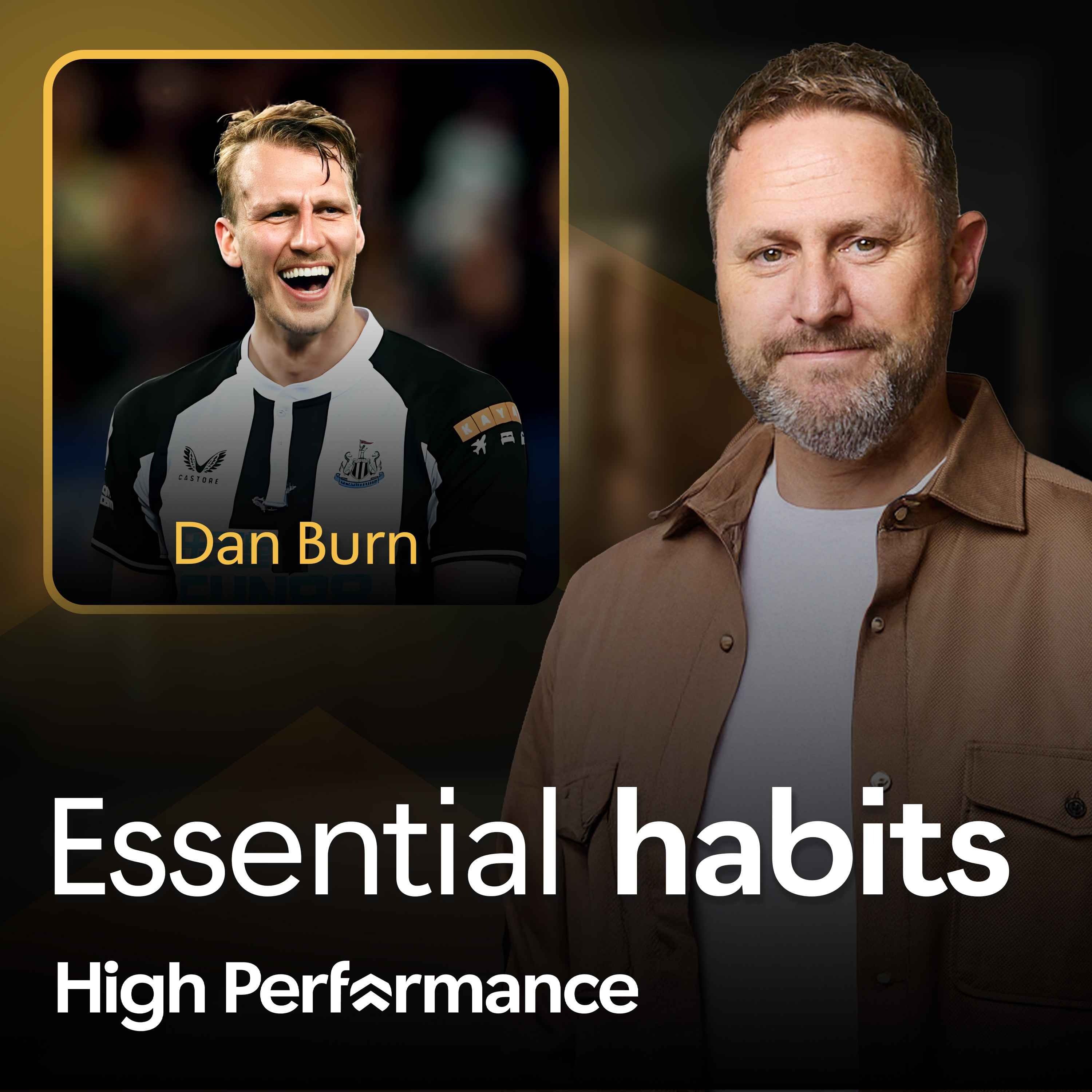
In this episode of The High Performance Podcast, hosts Jake Humphrey and Damian Hughes engage in a conversation with Dan Burn, a defender for Newcastle United. The discussion focuses on the pivotal transformation in Burn’s mindset which enabled him to manage high-pressure moments effectively, ultimately leading to success on the field.
Written by AI. May contain mistakes.

Get the gist, explore an idea or ask about something said.
 Claude
On The High Performance Podcast, what are the key points of this episode?
Searching your listeningAutomatic transcript. May contain errors.
0:00Hear it first on the High Performance App. Available now, Keeley Hodgkinson, the record-breaking middle distance runner whose fearless drive is redefining British athletics.
0:32So pull up a chair and join us at Fremont Avenue, a world premiere play only at Arena Stage. Now in performances. Tickets at arenastage.org.
0:44This episode is brought to you by Opera Air, the first browser with mindfulness at its core. Now, most of us spend hours every day online, but how often do we pause to take care of ourselves whilst we're doing it? And that's where Opera Air comes in. It's a lightweight, fast, secure browser built not just for productivity, but for your well-being. With Opera Air, mindfulness is built right in. You'll find free breathing exercises, guided meditations, and soundscapes with ambient sounds, lo-fi music, and binaural beats, all designed to help you focus, relax, and even spark creativity while you browse.
1:22Like we were way too hyped. By the time I got the game, honestly, I was done. like absolutely shattered like just like emotionally it was just too much welcome to the essential habits of high performance where we explore the daily practices the mindsets and those teachable moments that shape extraordinary lives and leaders what if pressure didn't crush you but instead it focus you this week's essential habit is all about playing the game and not the occasion. It's the difference between rising to the moment or being consumed by it. Today, we're tackling one of the biggest questions in sport, business and life.
2:06Because pressure has a strange effect. It can lift some people to new heights and it can reduce others to shadows of themselves. We're going to look at the science of why pressure derails performance. the strategies which Newcastle United used to flip that script and the practical tools that you can use to shrink any big occasion back into a game that you know how to play. Hey, I'm Damien Hughes and for the last 25 years I've served as an advisor to leaders in the world of sport, business and the arts those that are looking to shape, create and sustain high performance cultures. What I love most though is learning habits from our brilliant guests on the High Performance Podcast.
2:49and then asking, how can we apply this in our own lives?
2:56Today's guest we're focusing on is Newcastle United defender and local hero, Dan Byrne. He's a local lad who's living the dream at his boyhood club, a commanding figure at the back and someone who's learnt the hard way what pressure can do when you let the occasion get too big. Let me take you to Wembley Stadium. For some players, that's a dream fulfilled For Dan Byrne, the first time he walked up those steps It felt like it was a nightmare It was February 2023 And Newcastle United were back in a major final For the first time in two decades in the Carabao Cup Manchester United were their opponents And Tyneside was ablaze with hope But the day ended in heartbreak A 2-0 defeat, a flat performance and a crushing sense of regret lingered.
3:49Dan later admitted to us that the occasion had got to him. Like we were way too hyped. By the time I got the game, honestly, I was done. Like, absolutely shattered. Like, just like emotionally, it was just too much. Fast forward though to March 2025. The same player at the same stadium, but a very different story. This time, facing league leaders Liverpool, burn rows above Ibrahima Kanate and he thundered a header into the net. This time Newcastle didn't just turn up to the occasion they played the game and that single sentence play the game and not the occasion is one of the most powerful psychological habits in the world of high performance.
4:34Let's dig into why and how this can apply to your life. Dan's first Wembley final is a textbook example of what psychologists would describe as choking under pressure. It wasn't a lack of effort, it wasn't a lack of desire. It was that the occasion became bigger than the game. Why does this happen? Well in the late 1990s a psychologist called Sian Belloc began studying the same puzzle. Her book Choke is now essential reading for anyone who performs under pressure. She brought students onto a golf green Under normal conditions, they putted fine But raised the stakes, such as adding prize money, an audience or a video camera trained on them And their accuracy collapsed What changed?
5:22Well, not their ability, and it wasn't their skills But it was their mindset Under pressure, the brain interferes with what usually runs on autopilot so instead of swinging naturally players tend to overthink every detail their wrist angle the stance or their grip on the club it's like trying to walk normally while consciously monitoring every muscle in your leg the more you think about not messing up the more likely you are to trip when below distracted players before they put it such as asking them to hum a tune or to memorize numbers, their performance actually improved. Why? Because it stopped the overthinking.
6:00It let their body do what it had already been trained to. And that's where language can become a secret weapon. Dan Byrne explained to us how Newcastle changed their words before they approached the 2025 final. When we spoke about around the training ground that we were like, oh, like when we beat Liverpool, It wasn't like, oh, it would be good if we win. It was like, oh no, when we beat Liverpool, this will happen. And anyone who doubted that, you sort of nipped it in the bud straight away. Now that might sound like a superstition, but it's actually pretty robust science. At Harvard, the psychologist Alison Brooks ran experiments where people had to do a series of stressful tasks, such as singing karaoke, public speaking or doing maths tests.
6:46Now half the group were told to calm down. The other half were told to reframe their nerves as excitement Now those who said, I'm excited, tended to perform better They were rated as more confident, more competent And more persuasive in their arguments The reason was that anxiety and excitement are both high arousal states But one directs energy towards fear And the other towards engagement So when Dan and his teammates said, when we win They weren't just being cocky. What they were doing was turning their nerves into fuel. And you'll find this everywhere in the world of elite sport. Before Wimbledon finals, for example, Novak Djokovic deliberately tells himself, this is exactly where I want to be.
7:33Pressure is a privilege. Before his Olympic races, the swimmer Michael Phelps followed a mantra of, this is what I've trained for, not don't mess it up. So the next time you're feeling butterflies before a big presentation or a crucial meeting? Well, don't say, I must calm down. Instead, maybe reframe it and say, I'm excited about this opportunity. Because Brooks's research shows that those three words have the potential to literally change your performance. Now, another big shift that was adopted within the Newcastle United dressing room was all about focus. The first final was a circus of distractions.
8:13Tickets, suits, logistics, noise, basically. Dan remembered endless conversations about details that, in the cold light of day, didn't actually matter. We knew it as a club, like, just even, like, stupid things, like, we had such a carry-on, like, trying to sort tickets out and we're wanting to, like, or what we're wearing at the final, like, does it really matter? Like, oh, should we get suits? Like, should we do this? Should we do that? Like, oh, where are we staying? Like, what's this happening? Like, but the reality is, like, does that really make a difference? By 2025, the team had a new filter, does this really make a difference to our performance?
8:46Now that single question helped them to strip away distractions and it echoes one of the oldest lessons in high performance control the controllables The England rugby team used the same mindset during their 2003 World Cup triumph Johnny Wilkinson later admitted that he shrank the enormity of a World Cup final into simple repeatable actions catch, set, kick From the All Blacks in rugby to the Navy SEALs in combat training, every elite team has learned that when the stakes rise, narrowing your focus is the key to clarity. For Newcastle United, it meant ignoring suits and ticket drama. For you, it might mean ignoring the noise before you deliver a presentation or cutting through the small stuff before you've got to do well in an exam.
9:38So why are we learning this? well let's just zoom out for a moment what does the wider research tell us about performing under pressure well we know that pre-performance routines have the ability to anchor you the psychologist gabrielle wolf has spent decades studying how athletes perform under pressure her work shows that one of the simplest but most powerful tools is the use of pre-performance routines. Why do they work? Well routines do two things at once. Firstly they reduce self-consciousness so when we're nervous our attention tends to turn inwards. We start monitoring every detail of what we're doing whether that's our breathing, our body, our technique and all that interferes with skills that we normally perform automatically.
10:25A routine acts like a mental anchor. It shifts our focus outwards, away from anxious overthinking and back onto something that's more familiar and repeatable. The second thing it does is it frees up automatic skill. So great performers don't need to think through every action. Instead they rely on muscle memory and hours of practice. A routine creates a bridge between nerves and habit and it allows the body to do what it already knows how to do. I mean, think of the world's best tennis players Rafael Nadal, for example, tugs at his shirt He bounces the ball a precise number of times He adjusts his hair and his socks Now to the casual viewer, that might look quirky But to Nadal, it's a way of shrinking centre court down To a repeatable rhythm which he controls Serena Williams bounced the ball before every serve she would take Same posture, same bounce, same pause No matter if it's the first round or a Wimbledon final The routine tells her brain I've been here before Now across sports you can see the same pincer ball playing out Johnny Wilkinson lining up his famous World Cup winning drop goal Steph Curry spinning the ball in his hands before a free throw Michael Jordan chewing gum Each is a cue to settle the nerves, lock into a rhythm And silence the occasion The point is this, right?
11:51Routines are not superstition, they're science They shrink the occasion down to something manageable They say to the mind, this is just another rep You've done this a thousand times, now just go and do it once more Now as we cited earlier, the psychologists, Johan Bellocz, studies show something counterintuitive When you come under pressure, the harder you try to control your performance the worse you often get This hyper-focus disrupts the flow producing what Bellow called paralysis by analysis Her experiments made this crystal clear Students putting golf balls under normal conditions did fine had prize money, cameras or an audience and performance collapses Pressure pulled their attention inwards away from the skill itself The lesson is this When the pressure rises, don't think harder but think less sometimes the best way to unlock your training is to just gently distract yourself from it focus on process and not outcome across multiple sports research confirms that those who emphasize process goals that is what to do outperform those who obsess over outcome goals what to avoid which is exactly why dan burn ended his reflection like this i think we're a big team on like the process like if we get the process right like the result will take care of itself do you know what I mean?
13:20And I feel as if the second time we're nailed that and easy to say because we won. Like if we hadn't have beat Liverpool we might have been saying something else but as in like I feel that was a big difference between the two. So how do we apply this in our own big moments? Well here are four habits worth stealing from Danburn and I'll give you a little bit of the science behind it The first habit is reframe your nerves as excitement so next time you feel the butterflies don't fight them redirect them instead say this is energy this is excitement showing up second habit shrink the stage ask yourself dan burns question does this detail really matter to performance that helps cut the noise and simplify your objectives the third trust your training whether it's weeks of revision hours of prep or years of experience You've built the skill, so don't interfere with it.
14:15And the fourth, focus on the process over the prize. Instead of obsessing over winning, focus on how you're going to play. What's the first action you're going to take? What's the next small step? Now, as always, I'm going to be joined by our producer, Will, and we're going to have a listen to some of the other great lessons that Dan shared with us, including how he had to turn his back on social media due to his mental health. the emotional team bonding exercises which Eddie Howe has implemented at Newcastle, and the brilliant story of how Thomas Tuchel gave him his first England call-up.
14:55When Dan arrived, he just kind of turned up. I remember he turned up on his own, jumped on the tube, super relatable type guy. I found him one of the most kind of honest, relatable people that's come on in the football world for quite a long time yeah definitely well newcastle had played down at brighton hadn't he where he'd played for a few years so he'd sort of stayed down there he'd stayed with some old friends and then so it just made his way up on his way back home to newcastle he was no heirs and graces was he wasn't expecting chauffeur driven cars taken into stations he was like no no just walk mate that he was probably like a modern day sort of hero wasn't it he was a local lad the local lad who's kind of achieved his dreams and it's all come good i mean that on that was on the surface of what it was i think it was a fascinating chat to actually dig into that and actually hear you know as always as you always say to me and that journey of high performance that ain't a straight linear line there's lots of jagged little bits to that you say it much better thank you mate but yeah well let's listen to one of his uh one of the dips uh on his own journey when he moved down to london you know playing for fulham and i can understand it do you know i mean he's looking for validation he's moved down with his partner that became his wife but she's out working during the day and he's coming home after the training, sat on his own on the sofa, confidence is low.
16:30And like many of us would do, you look external for validation of how am I doing. Let's essentially explain the dangers of that. What I would do is I would come in from a match, and the second the manager I spoke, I'd be like, I'd type my name into Twitter, and then I'd say what people were saying. I was like, there were so many good ones, but there'd be one bad one, and that would just affect us for the full time. And I think, look back now, I was like, what was I doing? why do I care do you know what I mean like but you just you want that validation from people especially at a young age when I went from playing at Dalton to then like playing at Fulham like in the Premier League and stuff like it was class like everyone was like oh like it was doing so well like all this and then it starts going the other way and you're reading it and it was the best thing I ever did was coming away from from Twitter just to so like people couldn't get there do you know what I mean how damaging was that for you do you think when it was bad yeah really bad like mentally wise it was yeah I was struggling mentally definitely I remember going to Fulham were really good I sort of went to them and said that I was like really low struggling I felt like I needed to speak to someone and they sort of put me in contact with sort of therapists and it didn't get better for a long time it was like sort of years but like now I've got the tools to deal with that sort of stuff Yeah I mean have you ever typed your name into anything?
17:52No. And I'll tell you why I haven't, because I worked at a club years ago where there was young lads that were doing this regularly, of typing it into Twitter. And so looking over their shoulder with them, you'd see the abuse that they would get. And these are like really skilled, talented, committed athletes. And yet it was people that had never worked up a sweat for years is criticising them for decisions that they were making when they were sort of exhausted or oxygen depleted or doing it under the highest of pressures. And I remember thinking then the mismatch between why would you listen to somebody that doesn't appreciate what you're trying to do, making comments about you, that were going over the line, not that you weren't a good player, it was that you were a bad person or a human being.
18:42So I've sort of learnt from observing others that don't do it, It's not a path to happiness. Yeah, I remember when we first spoke to Kev Sinfield, when he was at the, I think he was at the Leeds at the time. That's right. And he said that was the biggest shift from his time playing to now when he stepped into coaching. He said, all the lads, first thing they do when they come out into a change room from a game is to get their phones out and check what everyone's saying about them. Look, as you say, looking for that validation of how they played. Well, I remember talking to a young athlete once with him and the way I did it was I said to him, give me a list of the five people that if they said that you were dreadful, that you would sit up and pay attention and it would really like pierce your armour.
19:28And the list was his parents, his partner, his coach and I think it was like his best friend or something like that. I said, just give me the five people that would matter. And then that was the list. And I said, so why did they matter? And it was all because they'd been with him on the journey, they understood what he was trying to do their view mattered that they carried some credibility of the impact on his career so then what we did was we went so let's have a look at these people that are making comments to you on social media none of them have earned the right to have that opinion or they've earned the right to have the opinion but they haven't earned the right that you have to listen to it or pay it any attention so the people that have it's like that old saying do you don't mean like if you've got a problem with me phone me and if you don't got a number you don't know me well enough to have a problem with me yeah is that idea of i can see why it's tempting to do it but the people that really matter i'll get in touch with you and say that wasn't very good so like so why then why do these grown adults who would know about the failings and the trappings of social media why do they seek validation from strangers and why do they give so much more weight to criticism rather than praise well i mean it's a really interesting question i think to take it in reverse order we give weight to it because negativity bias is so much stronger than positivity bias because think of it that walking through the jungle i don't need to worry about all the pretty trees i need to worry about the tree that's rustling with the tiger hiding behind it so it's a survival instinct i need to be aware of the threat which is why we remember the one bad comment and ignore the 99 good ones like dan just described i think why we do that though is often it comes from a place of insecurity that we're not clear about either our values or we're not clear about how people in our lives think about us or even how we think about ourselves so we look for that external validation i wonder actually that actually a lot of the simple answer might be oh it's to do with we got to get more obviously control on social media how people can do that how people can make comments and how it's allowed to happen but do you think that actually if you came before you get to that point if you are in a better mindset uh if you're in a better place with yourself or things have been put into place more then when you inevitably get to a place where people are going to comment on you it becomes oh i don't need to listen to that is it actually more around how you are when you're in that situation as you say what you're looking for yeah rather than as much as you know stopping doing it what's the two steps before that to actually be like no i don't really care what people say it's dangerous to say i don't care what people say i add the caveat of i care what the right people have to say about me and i think that's the point of identifying who are the people that care about me and who are giving me feedback because it's going to help me as opposed to just giving an opinion because they don't know me and they're coming from a place of like an emotional outburst, like a fan.
22:46And they're entitled to do that. So I'm adverse to say that we need to stop this kind of abuse on social media. I don't think you can. I think it's a platform that it's human nature. But you don't get to control that bit. You only get to control what you do and what you do says, be clear about your own values, have people around you that can hold you to account for that and what you were trying to do. And then as for the rest of it, it's just noise. It really is outside of your control. But I think we all need help in learning to practice it. I've seen it with some of the young athletes I've worked with.
23:24And I mean, think about when we do this podcast, I've never sat before we did this and behind a microphone and asking questions like it. So when you give me feedback and go, you could have done that better, or that was good, do more of that, I listen because I know you care about what we're trying to do and I know you know what I'm trying to do as well. Whereas if it was somebody that just went something abusive about, they don't like my accent or they think that what I had to say was stupid, well, you don't know me, so you're entitled to that view, but I'm entitled not to listen to it either.
24:00should we play another clip because I think this links to it what Dan shared with us around one of the exercises that they do at Newcastle of getting to know each other is a lovely exercise that we've spoken to Dr Pippa Grange around this she suggested the 3-H exercise of get people to stand up and talk about their hero a hardship that they've overcome in their life and a highlight of career that they want to share and by telling that story people have to make themselves vulnerable and when they make themselves vulnerable that's where greater connectivity can happen. Dan explains it far better than what I've just done.
24:39It's a thing called timeline essentially so it's um there's been a timeline we put on it now because Nick Pope's was like 40 minutes long and like we ended up having to push training back um but yeah so you get up and basically you speak 10 minutes about anything but it tends to be like your life and how you like who you grew up with all that sort of stuff but it's good because I think football like you only know people from like a superficial point of view so it's like you alright mate how are you like what did you do last night what are you doing in the summer that sort of stuff whereas you don't really like learn about people but the timeline like so like for instance Joe Linton like being brought up in Brazil like pictures where he used to live like what he used to have to do to get a train and his journey and I feel as if like because like you're quite vulnerable with it like it brings everyone really tightly together do you know what i mean so even like just little stuff that doesn't seem a big thing but then like it gives you appreciation of what someone else has has been through and like you can see it from their point of view when i was younger it was a bit like everyone's been busy do you know what i mean but i feel as if we've created an environment where people are comfortable doing that and you you want to see what motivates people and like if I got up and did it and one person gets a reaction from it then that's one person better than than it was before do you know what I mean I just feel as if it sort of focuses people and brings you that again yeah so that power of that that timelines as it was said the same thing the 3H's but in in the Newcastle dressing room it was a person's timeline them standing up and obviously giving more background I mean the interesting thing that I mean firstly took from it is that no matter how much time they spend together and every day and train together, these are the things that you just don't know about, people's backstory.
26:23Maybe there's an element of a typical male attitude sometimes when you come back from going out and your partner or your wife might be like, what do you talk about? And what are they doing? You're like, not sure. Don't know. How's Will? He's all right. He's all right, yeah. How's Jen? Don't know. I don't know. I don't know. Not mentioned her. Yeah. But, God, you can see how if you did have that, it can really bring people together. And when times get hard, and when things are really tough, whether it be on the pitch or off the pitch, in that scenario, you're going to go the extra step. Oh, every time.
27:00Like, probably the textbook example of someone that told us this, that you can measure it in results, is when Khaleesi spoke around with the South African team and he shared with us of doing that exercise and he went, he said, I'd fight for a teammate, but I'd die for a brother. And what this does is we're creating this sense of a brotherhood that we're all in it together. So you can only do that when people share something of their own story because when they share their own story, inevitably you find common ground and when you find common ground, that's where the sense of connection runs so much deeper.
27:36Do you think that you have to continue to work at that? like to foster real connection and that psychological safety and that vulnerability does that idea of a timeline as an exercise over time would it wane and do you need fresh ideas for that or that's a good question yeah i think you do so i think when i asked dan about this it was like uh you might get two players every week and it'll take you 15 minutes to tell it so in a dressing room that could go on for say three or four months of every week we just make the time to do it then it like mixing it up doing other things social activities doing stuff of like just breaking bread with each other you know like you might have a barbecue or yeah i think he said like sometimes the brazilian boys will uh will do like a brazilian barbecue and then it might be some uh somebody from africa might bring in some of their local customs yeah you read about that i remember uh remember the qatar world cup and the argentinian team and what they what they would do as in every night was like matcha tea, barbecues, steak, and they almost made a home within the hotel.
28:47And that was their, I know it gets glorified, but we all think that was a bonding experience that brought them together to get through the toughest games to obviously go on and win. Yeah, well, I mean, I remember reading that Steve Jobs when he became an investor in Pixar and they were designing the new studios, one of the things that he cared about most was the location of the toilets because he felt everybody's going to go to the toilet one day so he wanted it to be like the social hub where people could just meet coming in and out of the bathrooms and that's where they might stop and chat and share ideas I think anything that just curates an environment of people meeting and connecting and sort of having chance to chat is really powerful whether that's over a barbecue whether that's on a team night out.
29:33I think what Dan shares over there is that team spirit isn't something that happens by accident. It needs to be designed. And an exercise like it, the timelines, is a really good way of doing that. Is there a clip that you want to share, Will? I want to talk about that he had that incredible month where they won the cup, but he also got called up to England at the same time. But he told us the story of how that happened behind the scenes and how Thomas Tuchel got in touch with him with a series of FaceTimes and phone calls and waiting for this kind of decision that would ultimately make him the happiest day of his life.
30:11It was a really sweet story and I think the way he tells it says a lot about who Dan is. I got a text off Thomas Tuchel saying, hi, it's Thomas Tuchel, which I was like straight away, I'm getting pranked. So you didn't have his number in your phone? No, I just said like TT. So I was like, who do I know here who would like be able to validate it? I was like, I'm just going to have to take a chance. But that's the first, so that was the Tuesday. But what did the text say? It said like, hi Dan, was at the West Ham game last night. Would love to be able to speak to you on FaceTime later today if there's a time that's sort of convenient for you.
30:46And that was obviously the Tuesday and the team got announced on the Thursday. So like people had found out like six, seven weeks before, but I didn't have that like in the back of my head every time I played thinking, oh, the England manager's watching us, England manager I was watching is like that was just it up to the final so I was like right I'm just gonna have to commit to Jarl FaceTime to him and if it's not him like just one of them things innit I'm just gonna have to do it and it was him and I was like wow England manager what did you say? I just sort of said I'm really happy that it was you at the start it was good and he just sort of said yeah like hey I've been watching you I thought you were great last night he was like you missed one header which I was fuming about but apart from that it was alright and just said I think you'd like be a really good fit he was like I want like sort of leaders in and around the group and people that would feel they'd be ready to play right now like if we had a final could you play in the final like yes like I believe you could like you've got that sort of mentality so I was like oh buzz and then he was like oh do you want to say anything and I just sort of said listen I said the same thing that I said to Eddie Howe when I signed like I feel as if I can bring just as much on the pitch as I do off the pitch like the way that I go about it I've got really high standards on myself and like you'll not regret it do you know what I mean like if you take this chance like you'll not regret doing it, do you know what I mean?
31:55And then I come off the phone, I was like, should I have said more? So I just sent him a text and I just said, listen, if I don't send this text, I'll always think I should have sent the text. Whether it makes a difference or not, I'll just send him a text. I just said, listen, really great to speak to you. Just want to say again, I'd be so grateful for the opportunity. And I can say, this is what I'll do. And he just said, thanks for the text, me too, or whatever. And then he said, I'll let you know by Thursday. So he's not even said on those calls you're in the squad? No, he said at the minute, the problem was that obviously I'm getting older as well.
32:29So it was like, how old are you? I was like, I'm 32, so I'll be like 33 coming in. But I feel 25. Yeah, yeah, but I feel great. Do you know what I mean? He said, yeah, obviously that's probably the only thing that might work against you. But he said, how many times have you been at the England squad? I was like, no, no, I've done nothing. He said, whatever, any level. I was like, no, no. He was like, let's make it happen, then let's go and stuff. So I was buzzing, do you know what I mean? But he said, I've got a big meeting tomorrow or whatever. but I'll let you know Thursday. So I got a like seven o 'clock Thursday and I'd not heard anything.
32:58I was like, so I said to him like Ross, I was like, no, I don't think so. And then I was about to go to bed. So I got like half 10 or something. I got a text off. How are you feeling at that point? Yeah, like low, but I was like, just to even to be considered, I was like so proud of it. Like from where I'd been to what I'd done, like just to even have that recognition that like I was being considered to be an England player was like massive. And that would have been enough, genuinely, like I would have been happy with that and then I got a text just saying like are you awake so like straight away I was like yes on a FaceTime so and then he rang and he was like how unprofessional is this like 10.30 and you're not in bed like yeah Anthony Barry was right like such an unprofessional person so and then he said oh I've been sort of video calling everyone who hasn't made the squad so it's been like a pretty sad day so they're straight away but he was like oh I need to leave like a good bit at the end so like yeah we're calling you up and so I was like buzzing.
33:51Honestly, genuinely, probably the happiest I've ever been in football. My wife was crying. She was buzzing. Was you still awake? Yeah, I was on FaceTime, but I could see her in the background looking for a reaction. Then I could see her running around the room. I love that story because I think it reminds us all that even when we're talking about elite sport, we're all still kids. Do you know what I mean? You're still waiting to be selected by the teacher or by your coach. and I think the way that Thomas Tuchel sort of played it there as well shows you a bit of the humour that he's bringing to his role, you know, that we don't always see looking at it through the media lens.
34:30You see how warm and engaging he is as well. Absolutely. And I think it was, you know, he kind of said it as like, that's probably the happiest I've ever been in football. And just, you know, it was the way he painted the picture of, you know, he was waiting until half ten at night. he didn't think he was in and his girlfriend's kind of in tears and he then calls those stories are when they call their parents straight away afterwards and actually like you say I think we all think it's quite mechanical sometimes when you get to elite sport on an elite level yet those are like the moments when you as a kid as he said where you get picked for the team and you're validated and I think it's easy to forget that yeah but also as well I think it's you know like we often hear this thing of like club versus country wherever is what you see in there i think he's a legacy of gareth southgate's work of you want it to be club and country you know you want to be proud to play for your club but you're excited to be called up and to be a member of uh of the england culture as well what did you make to the bit where he came off the the face time and then he was like oh no i've got to text him back i didn't say that he said I'm only getting one shot.
35:42Actually, he felt like he needed to almost put forward who he was as a person, you know, because he didn't feel like he did it justice. Well, I think it captures what the earlier point when we listened to the timelines, I think it's when you get to know somebody for who they are rather than what they can do for you. You're more invested in their success. And I think he's obviously a product of that culture that he's come through at Newcastle of, you need to know who I am. you need to know that I'm not just going to deliver for you on the pitch. I'm going to be the kind of character. I'm going to deliver you off the pitch.
36:14I'm going to bring you value in every aspect. And actually, you know, the key thing maybe that Thomas said in it, he said, I need people to be ready today. If I call upon you, no. So, you know, he's under like a ticking time of getting a team ready, isn't he? He needs people. He hasn't got time to develop people and nurture people through. He needs people to be able to perform right now. Yeah, yeah. Well, that's the sort of scrutiny that he's under, isn't he? He's not building an England team for five years' time. He's building it for 12 months' time when he's got to deliver in America. Thanks, mate.
36:49I really enjoyed that. I enjoyed it. It was a really engaging chat with an incredibly engaging bloke. And hopefully you found it engaging too. Thanks for listening to The Essential Habits of High Performance. I'm Damien Hughes, and if this episode has resonated with you, please consider sharing it with someone that might be facing their own big moment and remember as Dan told us play the game and not the occasion
37:32you're invited to spend an evening on Fremont Avenue For generations, this house has been home to soulful music, good food, and cutthroat card games. Saints and sinners. Unexpected laughs and unspoken truths. Good times. Hard times. And of course, family. Always family. So pull up a chair and join us at Fremont Avenue. A world premiere play only at Arena Stage. Now in performances. Tickets at arenastage.org.
Pre-order our brand new book Micro-Habits and use code MICROHABITS26 for 25% off before the launch on 1st January. https://hppod.co/472Og7q
The pressure, the noise, the meaning of the occasion, it had all become too much.
Two years later, he returned to the same stadium, the same stage, and this time everything was different. He scored one of the biggest goals of his career, not because his ability had changed, but because his mindset had.
In this episode, I share what I learned from Dan’s transformation and the powerful lesson he now lives by: play the game, not the occasion. Together, we explore:
Here is more information on the studies referenced:
Listen to the full episode with Dan Burn: https://pod.fo/e/2eb8b4
Hosted on Acast. See acast.com/privacy for more information.


