
 Ask ChatGPT


 The High Performance Podcast
27 Jul 2026 · 1h 17m · 30 chapters
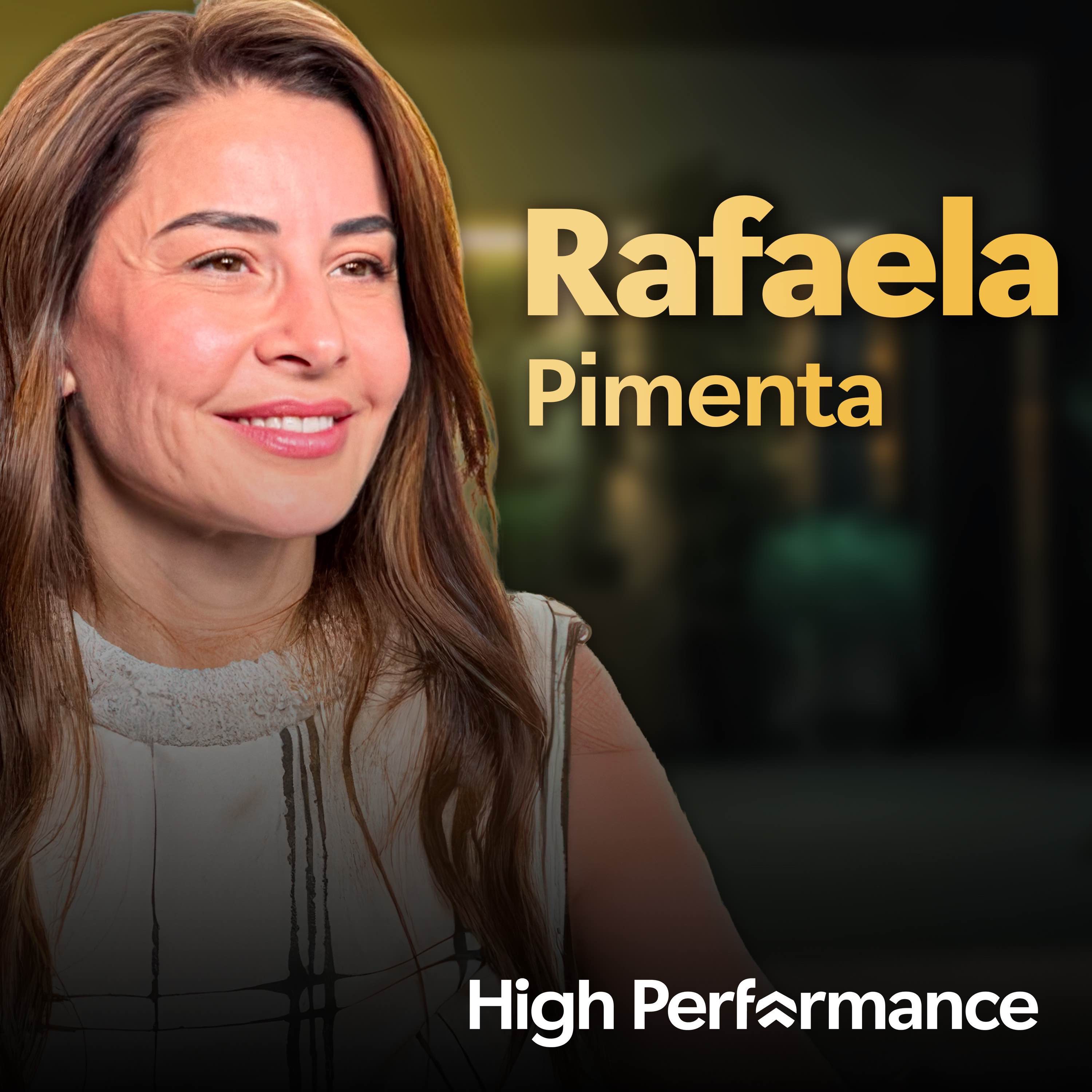
Negotiation and representation in elite football, framed through Rafaela Pimenta’s experiences as a female super-agent and lawyer. She argues negotiations are “theater,” but the work must stay professional and mission-focused (“not personal”); what matters is the player’s needs and dream, not the agent’s feelings. She also criticizes the “asset” mindset and warns that football’s growing artificiality and competition overload are harming players’ health and motivation.
Rafaela Pimenta is a lawyer by training and a high-profile football agent Forbes-listed, representing major stars including Erling Haaland, Phil Foden, and Gilberto Moura. She runs a bespoke roster approach, saying she works with no more than about 40 players and builds a 360-degree support team around each client.
Gender bias still shapes how people react to her. Agents are necessary for leverage and fairness; demonization is partly strategic. Players need representation because they can’t also be contract/finance experts. Football’s schedule expansion and commercial pre-season tours increase injury risk and reduce recovery.
A director refusing a transfer due to personal dislike; scouting a player in a “meaningless” match where body language showed low drive; Haaland’s 10-year deal as a “certainty” strategy tied to his motivation and rest structure.
Written by AI. May contain mistakes.
Rafaela discusses the challenges she faces as a female agent in a male-dominated industry.
“So I do think by now that it's a theater, although I don't doubt this would be true for other women, not because I'm better than they are, but because everybody knows me at this point, why should they be surprised?”
Exploring the theatrical aspects of negotiations in football and how emotions are managed.
“And that's what a few clubs or directors still fail to understand.”
Understanding the responsibilities of an agent and the importance of client representation.
“I am always upset when people say players are assets.”
Rafaela highlights the conflict between the emotional dreams of players and the business side of football.
“Join them to save up to 90 % off carrier rates from your computer or phone right now.”
The guest explains how he judges whether a club's environment will nurture a young player's dream, starting with whether the sports director and trainer will actually talk to the player.
“So you said then that some clubs, when you go in, are great environments for your client, where you know these were once young boys with a dream.”
Discover how personal factors influence player club choices.
“Because he doesn't expose his personal life.”
Learn why having a smaller roster can enhance agency effectiveness.
“for example, a player that I have in Rio de Janeiro.”
Explore how the role of football agents has changed over time.
“But above all, you can build a relationship.”
Understand the difficulties faced by solo agencies in modern football.
“We would work during transfer window because football was much less planned as well.”
Examine the common misconceptions surrounding football agents.
“And I see many people starting this business saying, Oh, I will not do this.”
Learn about the historical dynamics affecting players and agents.
“As much as not every doctor is good and not every engineer is good or politician.”
Discover why players still value having agents in their careers.
“There's all kinds of historical legacies.”
Explore the importance of mental strength and the role of agents in player performance.
“face the pressure, play two, three times per week sometimes, do it all over again after 10 days, get injured, recover, have the mindset if you're not very strong in your head.”
Discuss the rise of competitions and the implications for player workloads.
“UFA has time on their hands because everything becomes automated.”
Learn how to evaluate the compatibility between agents and their clients.
“I love the idea that you would go on a bad, on like a deliberately difficult day and say, how are you on a bad day to get me on a good day?”
Discover the importance of shared values in sports management relationships.
“that's not for me I wouldn't feel comfortable in a relationship where people signed because we paid.”
Explore how having a footballer parent can shape a player's perspective and career.
“And then it's better we separate because maybe it doesn't work for us and maybe it will work super nice for someone else.”
Learn about the mental attributes that contribute to Erling Haaland's success.
“because nowadays it's very common that the son is a football player.”
Understand how long-term contracts can benefit players, clubs, and sponsors.
“And I think what Erling does, and that I find amazing, is choices that allow him to focus on what he needs to focus on.”
Learn how aligning projects with player expectations can enhance their careers.
“Are you drink this drink, this drink or this drink?”
Learn how player backgrounds and experiences shape the projects agents propose.
“it's nice to know what your club is and where they are going and who's going to get on this boat.”
Discover the common traits that help elite football players succeed and maintain their status.
“So let's pivot then to talk about some of the characteristics of these elite players that you've described.”
Understand the self-critical nature of top players and how it drives their success.
“For example, they went to watch, I don't know, they went to watch, I'll just give an example, the skybox of Phil Foden.”
Explore the challenges and strategies of promoting women's football using men's football platforms.
“Every time I finish a deal, it can be any deal.”
Learn about the ongoing transformation and empowerment in women's football.
“feel like, of course, they're not treated as men would be.”
Explore Rafaela's perspective on her legacy and the importance of intentions.
“I also saw, for example, people coming to the women's football agency game because they couldn't succeed in men's or because they wanted to use it as a platform.”
Rafaela shares empowering advice for young women aspiring to succeed.
“probably if they would say, listen, this lady had good intentions, for me I think it's the best they can say.”
Discuss the evolving nature of football and the balance between sport and entertainment.
“I love that line that you use of nothing is too big, everything is too small.”
Rafaela answers quickfire questions about her personal and professional life.
“without a doubt and I hope it always remains everywhere in football again is the heart and the dream.”
Rafaela answers quickfire questions about her personal and professional life.
“Mail and ship when you want, how you want with Stamps.com.”

Get the gist, explore an idea or ask about something said.
 Claude
On The High Performance Podcast, what are the key points of this episode?
Searching your listeningAutomatic transcript. May contain errors.
0:03This week on High Performance, we welcome super agent Rafaela Pimenta, a lawyer by training, a deal maker by trade, Forbes listed, fiercely selected and representing stars including Erling Haaland, Phil Foden and Gilberto Moura.
0:22So Rafaela, you're on the Forbes list, you represent the biggest names in world football, you're behind some of the most important deals in sport and yet still people are surprised when you walk into a room. Tell us why. Very probably because they want to downplay the fact that a woman is doing the job. I don't believe anybody can be genuinely surprised at this point but I think whoever plays this game is really to try to unbalance me the moment I get there because they know that this could be an issue for a woman, that they make you feel like you're the odd one out in what some people still want to convince us that should be perceived as a man's universe.
1:13So I do think by now that it's a theater, although I don't doubt this would be true for other women, not because I'm better than they are, but because everybody knows me at this point, why should they be surprised? They shouldn't. But I don't doubt that when somebody that is coming to this universe as a woman would be treated as, oh, I'm so surprised you're a woman. No, you just want to undermine her and make her feel bad. That's what I think. I love that idea of it being a theatre. So how do you define your role in it then? Yeah, I think so. And I think we all play a theater at one point or another in this job, especially in negotiation rooms.
1:59Sometimes we realize we're doing this as a theater. Sometimes some people are just dumb and believe what they're doing. But there's a bit of a theater in the sense that, you know, at the end of the day, we should all know these are negotiations. And if we are professional enough, this shouldn't be taken personally. and that's what I think sometimes needs to be developed in football that is this is not personal. This is a job where you represent somebody or somebody gives you a mission and the mission may be I want to stay, I want to go, I've had enough, I need better conditions, whatever that is, it's a mission somebody gave you and it's your job to represent that mission and sometimes in that mission towards the same club this can be the best club ever or the worst club ever depending who you're representing because some clubs are good for a player and bad for another.
2:54And if we understand that you're fulfilling a mission, it is not how you feel about the club but how your client is feeling about the club. And that's the shirt you have to wear when you sit on that table. I don't think a club should expect from you always the same perception about the job they do. They should expect always the same behavior. You should be professional. You should be coherent. you should be serious. But sometimes you'll be serious in criticizing them. Sometimes you'll be serious in acknowledging they are great because for one they're great and for another they suck. Yeah. Yeah.
3:30So when you go into a situation like that, I imagine that it is personal because you have relationships that will explore with players. But then you talk about this isn't personal. How do you sort of step into that place of being able to uncouple emotions to be able to focus on the mission? Well, what I think I mean when I say it's not personal, it means that what I feel is irrelevant. It is absolutely irrelevant if I like you or if I like the club. It is relevant what the player feels about the club. And that's what a few clubs or directors still fail to understand. That when I say this player needs to leave, it's not because I don't like you.
4:14It's because he's not okay there. and I've seen I've had an episode two, three years ago where a player should go to a specific club and there was a good deal in place and the director said to me, and I'm not kidding he said to me, I will never let him go there, and why not I don't like that guy the director of the other club I had a fight with him, I don't know when 300 years ago, that's not my problem, that's not the problem of your club that's not the problem of the other club If you had a fight with him, go hate him in your private life and, I don't know, have a coffee with him and sort it out to whatever you want.
4:53But that's not about you. This is about your club and this client. So I think with time you get more experienced, you learn how to split your emotions. Because also sometimes you dislike the person in front of you. You really cannot see that guy or that woman because you think they're total assholes. but it's not your job to bring this emotion to the table. Your job is to have poker face and say, this is what this player needs. And maybe the fact that I'm a lawyer helped me a lot to understand this process because that's what lawyers do, right? We represent somebody. And I think when I came into football, I saw a universe where representing somebody was not accepted as I talk on behalf of.
5:46And there was this whole mix of who are you and to what point are you representing or talking for yourself. And I think the lawyer training helped a lot to split the roles and say, I talk on behalf of. I'm nobody. I'm just a bridge between what your employee thinks or needs or is looking for and the employer. and if you understand you're just a bridge, it stops being about you. It is completely irrelevant what you feel about it in terms of assessing the need. Of course, when you're talking to the client, you will tell him how you feel about it because it's also your job to advise. So you talk to your client and say, okay, I think you should do this.
6:30Why are you saying this? Why do you think this? Let's walk through it because maybe I'm seeing something you're not or maybe you can think from another angle because I've seen other angles and together you get to a conclusion. But once you get to a conclusion, you're actually representing his dream. And it's funny because I think football is becoming so much of an industry, so much of a business. I'm saying that there is a big risk to the system in times of everything becoming artificial, artificial, intelligence, food, whatever you want to call is artificial today, many things are becoming artificial.
7:12And when it's artificial intelligence or whatever you want to call it, something gets lost, emotions get lost, and the dream gets lost. And what I keep saying is, there is no football if there's no dream, if there's no emotion. So at the end of the day, what I think is very important is that whatever we do here the theater, the negotiation the splitting, personal from private whatever you want to say there's something that keeps this alive and this little fire that keeps football alive in my view is the dream what dream? the dream of the player the dream of the player to become to win, to go further to excel and this dream should not be taken for granted.
8:03I am always upset when people say players are assets. It became current. It's normal language today that players are assets. I can understand from an account's point of view where your player goes in the balance sheet. Okay, he's an asset in that angle, but he should not be an asset in the way you treat him. because an asset doesn't give you that extra mile that makes the supporter cry, that makes a child look up at the player and say, I want to be him when I grow up. That's not what an asset does. Who does that is the superhero, the superhero, the guy that is chasing this little second where he can score.
8:50And you will remember this forever. I'm sure that if you're looking back into your mind, you'll find two or three goals that you still remember from years ago. And this is because that guy, in my view, was chasing something that an asset doesn't do. You don't do this for your salary. You don't break your knee for your salary. You don't put your feet or your foot when you know it can break for the money you make at the end of the month. You put your foot there because you want to win that trophy. and this dream needs to be kept alive and this dream is what I fight for and when I go to go back to your question to a negotiation or to a theater of negotiation or to talk to a director I am fighting for the dream to keep it alive because if it dies, football dies We'll be right back after a quick word from our partners
9:49Still waiting in line? Again? That's time you'll never get back. Save time and money with Stamps.com. Over 4 million businesses have skipped the line with Stamps.com. Join them to save up to 90 % off carrier rates from your computer or phone right now. Print postage for certified mail, registered mail, and packages in seconds. Then schedule a pickup right from your home or office. For a limited time, go to Stamps.com and use code PODCAST for a free welcome gift. Taxes and fees apply. Your team just added its 67th AI tool and also your 67th security blind spot. The good news? The Vanta agent works like a GRC engineer in the background, finding every app your team uses, scoring the risk, and drafting fixes for you.
10:33Vanta is the platform used by over 16 ,000 fast-moving companies like Ramp, Cursor, and Harvey, who are shaping the future with AI and staying ahead of AI risk. Get started at Vanta.com. Hi, this is Monica Reinagle of Nutrition Diva. Today's show is sponsored by Nature Raised Farms. Grocery shopping can be a little overwhelming, especially if you're reading labels. And in my opinion, chicken shouldn't be complicated, which is why I appreciate Nature Raised Farms. It's chicken that's just chicken, and their lightly breaded chicken nuggets are free from gluten, dairy, and soy. Look for Nature Raised Farms on your next grocery trip and feel more confident about your choices.
11:20So you said then that some clubs, when you go in, are great environments for your client, where you know these were once young boys with a dream. So you're going in there to say, is this an environment that will nurture a dream? Whereas there'll be some environments where you go, they're not interested in their dream. 100%. How do you determine which is the right environment for a client then? What I think is fundamental, whatever the club is when they say I'm interested in the player the first thing I do is I want to know if the sports director can talk to the player and if the trainer can talk to the player some clubs will say no the trainer doesn't talk to anybody and when you know the player you know if this is irrelevant or not because if the trainer doesn't like to talk to you and he's hiring you this is the kind of trainer that is not very talkative which is also okay But some players need this extra good morning and relationship.
12:19So when you know the profile, you know if it fits. Because what I see today is many agencies becoming platforms. What do I call a platform? An agency that has, and I don't mean bad when I say this, it's a choice. An agency of a thousand players. and I don't know how many agents that are associating via using the name. So I use the name of the agency, I use the name, I use the name, I use the name. There's a big global platform at the end. There's many positive points to it probably. The networking, the volume and the options, whatever that is, I don't know because I'm not in a platform. So I'm not even trying to judge something that I'm not familiar with.
13:06but I'm familiar with the kind of job that is the one that we do in the company that is we have a specific amount of players and the reason we have a limited amount of players is we need the one-to-one we need to know them we have a team around players and they do different things I always say we play as we play football you cannot win a game if you only have a striker even if it's the best striker you need a team, right? And I think it's the same today for management of players. So we have a team around the player, transfers, sponsors, technical, media, social media, and each one of them will be dedicated to that player and they need to know him.
13:54So if you talk to my social media guy and I say to him, do you think he should post Valentine's Day? He says, don't even ask. He doesn't post Valentine's Day. Why not? Because he doesn't expose his personal life. So he knows them so much that he knows also what he will post or not. So I think when you get to know the client, you really, really get to know what is the right club for him to get back to your question. Because you understand this is not a club for him. I know that some players cannot survive in Manchester. Why not? You mean City, United? You mean Everton? You mean Liverpool? No, I mean Manchester, the location.
14:43Yeah? Why not? Because it rains too much. And I know that some players would not be able to stay here. And I know it sounds stupid. No, it doesn't. But because of the rain. And I know that after six months, there would be, I need sun. No, there is no sun. There's wonderful other stuff. but there is no sun. So I cannot bring here, it's very unlikely that I could bring here, for example, a player that I have in Rio de Janeiro. Because all Cariocas cannot be under the rain. No, this guy cannot be far from the sun, this specific guy. And when you know this, you avoid many mistakes. I mean, there's so much to unpack here, Raffaele, that I want to talk about the bespoke nature of your agency.
15:29So how many players do you have on a roster? because we know that you can only know so many people. I don't think we can work with more than 40 players. And I've been doing 40 players for 30 years. And I think if I wanted, I could be doing much more. I'm convinced. But I don't. Because 40 players are 40 fathers, 40 mothers, 40 girlfriends or wives that are part of this adventure. And you need to understand them all. Because if you understand them all, you can be of added value if you don't understand them all you're not of added value and 40 players more or less means many games many birthdays many injuries and if you want to be there for that that's more than enough because when they're about 40 some are really young some are at the end of the career so there's this middle though ones that are probably demanding more of you.
16:36And you can split your time in an intelligent way where you can build something. But above all, you can build a relationship. Because I think this job without a relationship is completely empty. Because when you know a person in this job, you need to know him, his family, his dog sometimes. because if it's a player that only travels with the dog, I need to know how much travel will be involved. And you think I'm kidding, but I'm not. Is that common? It happens. Yeah, yeah. Dogs are part of our existence, yes. But what I learned is, I've been doing this for 35 years, right? I come from times where doing this job was the one-man show, the one-man show agent that does it all, that positions himself as I am doing it all.
17:31The one-man show today cannot succeed because what the player needs today is 360 degrees. If you would go years before, you would think of off-the-pitch duties and opportunities, they would be much smaller. Because what a club would expect from you is show up in time, do whatever you have to do in training, go home and rest. And by rest, they really meant rest. So players would be having a coffee near their houses, playing PlayStation, going shopping with their wives. Literally, that's what players did, right? And picking up kids from school. That was it. So the off the pitch related to your job was not expected, to be honest.
18:14I come from such wild times that off the pitch was, okay, let's go party, you know. So it was completely different. And off the pitch opportunities were very different as well. you're talking of different media, printed media, local media, news related to football, or very rarely universal. So media was very local. And when it was printed, the options were much smaller. Because if you would be going to Italy at the time, and this was times of the big Italian football, right? There was three Italian, very important media outlets. And if you would be on the cover of one in January, you would not do the cover also in February, March and April.
19:01So it was like you would do one photo shoot. I remember when Pavel Nedved won the Golden Ball. He was working with us. And it was like three pictures for France football. He was on the cover. There was a four-pages article inside. And that was it. There was not a roadshow of interviews and sponsors coming because of this. Pavel didn't have a sponsor and he won the golden ball. Today you get dressed for the golden ball. You have brands preparing your suit and preparing your wife and content creation and so much. There wasn't. So it was so different and so much easier. That's why I think the one main show agency could exist.
19:45We would work during transfer window because football was much less planned as well. If we would go to a club today and this is May and talk about the transfer for August probably they would say can you come back in July? You know, today we spend an year preparing a transfer. It changed because the industry changed. So at that time it was a different job, more simple times and I think at that time we could easily say, okay we could have 40 players, 30 players, it's easy to manage, that's what we have to do. When things develop and also things became easier, traveling became easier and cheaper, finding players, finding places became easier and cheaper, there's a multiplication of agents and agencies.
20:41And the ambition of having more players, because people start thinking, okay, there's a formula, it's very easy. I want to enter this job. I take very young players because they don't know better, because they don't have access to the big agents. So I'm a young agent. If I go to Messi, he'll say no to me. But if I go to a 12-year-old and buy him a lollipop, he'll probably say yes to me. So there's so many people entering this industry by this door of, let me take a very young player. Because they will grow up with me, they either stay with me, or I associate to another agency when he's bigger because I don't know how to do his transfer.
21:21Which I at least hope they do because if they never did a transfer, why would you do it alone? But okay. Now, having said that, what happens is, I think many one-man show agencies said, you know what? I have a big name. I'll let other people use my name. And we snowball effect this amount of players. Yeah. And I see many people starting this business saying, Oh, I will not do this. I don't want to have a thousand players. I want to be a small agency. As soon as they can, they take 200 players. Again, not criticizing, happy for them. You do you, I do me. I don't believe in it. I think you need to know your client.
22:03You know what? I don't know if you're familiar, Rafael, with the concepts of Dunbar's Law. It's named after a psychologist called Robin Dunbar, who has looked at our brains and said that evolution, evolution has granted us the ability to know and have relationships with 160 people and no more the ability to remember details or we can't remember anything over 160 becomes almost impossible and you've just described 160 if you take an average family it's 4 people it's either father, mother girlfriend and player or player, brother, sister, father, mother so it's normally, it's about this amount of people and that's it because more than that you you lose the relationship yeah it just loses the touch so so you've like the way you describe some other agencies of like somebody deciding that they're gonna go and partner up with a 12 year old child and hopefully represent them through to success i think that leads to like the public perception of agents is that they're money grabbers they're nefarious they're sometimes duplicitous but it's focused mainly on their own interests and yet what you're describing is very different you're talking about relationships understanding the dreams understanding the trials i have many opinions about this i think there's a demonization if that's a word yeah of agents yeah i don't think it's casual i think it's a no purpose.
23:38I think there's an agenda to demoralize agents. Go on. Tell us more on that. Yeah. I think there's an agenda. I think there's an interest in demoralizing agents because we can be a real pain in the ass. We'll be a pain in the ass if you're the guy that thinks that a player is an asset, that you think you can do anything to a player and that think that players should be happy enough for getting paid. And that's it. of course, there's also always, as in every job, the bad apples. I'm not saying every agent is good or good intentioned or doing a good job. As much as not every doctor is good and not every engineer is good or politician.
24:24So it doesn't mean that all the apples are rotten. There's one thing and there's another. But I think public opinion has been very strong and also fed by the concept that agents only care about the bad stuff. What I use also in this conversation normally when I talk about this is an example. Yeah, please. So for example, I think when a profession becomes obsolete, it disappears by itself. So if you take, just to take a dumb example, if you take, I always think of old England and these images you see of old England. There was this guy in some pictures, those very old pictures. He would go and light the lights of the street.
25:13Yeah. Right? I don't even know the name of this guy. The gaslighter. Yeah. He doesn't have space today. If you wake up and say, hey, mom, I want to be a gaslighter? Are you stupid? Nobody needs you anymore. Yeah. So I think although everybody criticizes agent from outside, the industry, in the industry, I don't see any player that wants to not have an agent. They want to have a good agent, but they want to have an agent. And that tells me something about what we do. I think we have some use because I also see clubs wanting to have agents, which means we are useful. We are needed when we do a good job.
25:54Now that people like to talk about how much money this makes, how much money this makes, it became a hobby, right? It became a hobby to talk about how much money agents make and players make and this and that. And I don't see people doing this to Hollywood stars. I never saw anybody saying, Tom Cruise made too much money and how much was his agent paid? I don't see this negativity. I don't see this negativity in the NBA or NFL. That's why I think in football, this has been built. I don't think this was born naturally because service providers, artists, players, entertainers exist since ever. nobody questions their salaries and nobody questions the salary of their agents what is the problem here what's going on it's interesting when you describe that rafael because you think that the maximum wage here in in english football was only abolished in 1960 which is still in the history of the sport relatively recent before that players were were assets that the chairman or the owners of the clubs got to um got to decide whether they paid them or not or they paid them less in the summer and more in the seasons.
27:02There's all kinds of historical legacies. When you talk about an agenda of people wanting to demonize your industry, where do you think the agenda comes from? Well, I think it would be much more comfortable for everybody in the business, except for players, that they would not be represented. because, of course, and I always say, I think players are very, very intelligent people. You cannot be a high-performing player if you're not intelligent. You may have sometimes, I say to know intelligence, I don't know if that's an expression in English, that is, you're very intelligent for football and maybe you didn't exercise your intelligence for other stuff.
27:53Maybe you're not a good cook. because nobody should be everything, right? But I am convinced you cannot be a high-performing, super player, consistent, take care of your body, face the pressure, play two, three times per week sometimes, do it all over again after 10 days, get injured, recover, have the mindset if you're not very strong in your head. So first of all, I think people underestimate the mental strength and capacity of players. Yeah, that's one. Having said that, I cannot expect anybody, and also a player, to super perform in his own job, but also be a super negotiator, a super smart contract reader, and a super smart manager of his finances.
28:45It is impossible. I don't expect you to be this. I don't expect myself to be this. For example, I cannot play football. Probably I can do something else. So what I think is, when a player is well advised, because normally if you're strong in your head, you will choose strong people around you. If a player is well advised and well connected to his agent, he's got big leverage towards the club. This is a big thing because he's playing well, he's performing well, he's got a good agent. Okay, guys, from the club, you need to be fair to him. There needs to be a good balance. And sometimes if the player is alone, there's less leverage.
29:32So I think it is much more interesting, in my opinion, for clubs, for the regulator, that agents don't exist. Because, for example, an agenda, subject in the agenda of everybody today is how many games can a player play? How much can we make him play in a way that he doesn't get injured? Because what we see lately is many injuries are multiplying over and over and much more players are getting injured. And when we start studying, and now this is a subject of study, in UEFA, in FIFA, in the Premier League, that is what's going on? why our players get injured so often. They get injured so often because they're playing much more than they played before.
30:22And when they play much more than they played before, we will ask ourselves, why are they playing much more? They're playing much more because there are much more competitions. Why are there more competitions? There are more competitions because technology has allowed us to have more competitions, as funny as it seems. Because if you take the World Cup years and years ago, I can only imagine, let's say 60 years ago, how hard it was to plan for a global event in another country. It would probably take four years. And this is probably why this was an event every four years. Oh, where is Qatar? How do we find a hotel there?
31:05How do we host these people there? Oh, are there stadiums? this conversation 70 years ago was probably impossible. Today is, okay, now we go do Saudi Arabia World Cup. Okay, they'll get everything ready. We Google, how do we get there? Where is the team going to stay? What is the food? It became much easier. When it becomes easier, what do people do? They multiply competitions. The World Club Championship that happened in the US last year shows that FIFA has time on their hands. We'll be right back after a quick word from our partners. One thing we talk about a lot on this podcast is that high performers are not necessarily the people with all the answers.
31:51They're the ones that actually ask better questions and constantly look for ways to improve. And that's what I've tried to do recently. And I've been using Claude in my workflow because I find that their AI tools are amazing for giving me access to things that I simply wouldn't be able to access without them. Like the big thing for me is researching guests for this podcast. There's no way that I can know or even listen to every conversation and every interview or look through the CV of every single person that's ever going to appear on high performance. However, if I'm using Claude, then I find that I can get that information so quickly and it's been so valuable for these conversations.
32:27Claude is the AI for minds that just don't stop at good enough. And for me, it's the collaborator that actually understands my entire workflow and thinks with me. So whether you're debugging code at midnight or strategizing your next business move, Claude extends your thinking to tackle the problems that matter. And from our experience, one of the standout features is how Claude goes beyond giving quick answers. It actually helps you explore ideas more deeply, connects information across multiple sources, and can even work with the tools that you already use, making it feel like an extension of your own thinking rather than just another chatbot.
32:59For problems worth solving, get started with Claude at claude.ai slash performance. On high performance, we talk about cutting the noise. And that's exactly the energy that Mint Mobile brings to wireless. There are things in life you don't want to be transparent. But when it comes to your wireless bill, well, transparency is everything. And that's exactly what Mint Mobile delivers. Mint Mobile took everything that's wrong with wireless and made it right. Premium high-speed data, unlimited talk and text, all on the nation's largest 5G network for 15 bucks a month. Every plan, including unlimited.
33:29No surprise price hikes, no monthly contracts, no nonsense. You can bring your current phone and your existing numbers across. Pick from three, six or 12 month plans, pay up front and you're done. No bills dropping into your inbox every month. Just coverage that works. To get your new wireless plan for 15 bucks a month, go to mintmobile.com slash HPP. That's mintmobile.com slash HPP. Cut your wireless bill to 15 bucks a month at mintmobile.com slash HPP. That's it. No catch. Upfront payment of$45 for three months,$90 for six months or$180 for 12 months required. $15 per month equivalent. Taxes or fees extra.
34:00Initial plan term only. Greater than 50 gig may slow and network is busy. Includes up to 20 gig hotspot. Capable device required. Availability, speed and coverage varies. See mintmobile.com. What if the real question isn't where you're going, but the adventures you experience along the way? It's time to set your sights higher. On peaks still to be climbed, rivers still to be crossed and greater dreams to pursue. It's time to embrace the impossible with Defender. A family of vehicles built around capability, durability, tested on some of the most difficult terrain. Defender defines tough luxury.
34:30and I should know I've driven one for the past three years. I have the Defender 130, but from the compact confidence of the Defender 90 to the versatility of the 110 through to mine, the Defender 130 with seating for up to eight, there's endless potential. You feel in the details as well, the rugged body design, the robust materials, all working together so you can head out with confidence. And inside, ClearSight technology helps you see the world around you in a new way, while the PV Pro keeps your navigation routes and playlists flowing seamlessly as you go. and with up to 89 cubic feet of cargo space, there's room for everything you need on your journey.
35:03Explore the full Defender lineup at LandRoverUSA.com. They didn't have time on their hands. They wouldn't create a new competition. So they have time on their hands. They will create new competitions. UFA has time on their hands because everything becomes automated. I have time on my hands. I create new competitions. Why also? Because I have all these streaming platforms that I didn't have before. before I would have one broadcaster and he could host one event. Today, okay, if the BBC will host this event, maybe I will sell this competition to another broadcaster. And maybe when I sold competitions to all broadcasters, there's a YouTuber, like there is, for example, if you take Ronaldo that just entered a YouTube channel, or in Brazil, the main broadcaster today of football competitions is a YouTuber.
35:54So there's also YouTube. There's other platforms. So I can develop the product. I can sell the product. I have people to buy. Do I have audience? Yes, you do. Because when we were kids, we would be happy to watch a game every Saturday. Because we were also happy to watch a new movie one time per month. Today, it's weekend and I go on Netflix. If there's not new 10 movies, oh, Netflix sucks. There's only a new series and there's only one. It's the same with football. Kids, they want to watch it all the time. They want to watch a game on Saturday, but they're ready to watch a new one on Tuesday and then on Thursday.
36:36And after they watch it, they'll break it down and the highlights and the corners and the this and the that. There's content being created all the time. And for this, I need content. So what happens? I have only a few guys that are the source of this content creation and these are the players so what do I do? I make them play and play and play and play now you play this now you play that I have players that do not have holidays for four years oh I had seven days of holidays in the last four years every year I had seven days why? the Euros the World Club Championship the I don't know what and now the World Cup Are they happy with that?
37:21Yes, they are. But how far can your body go? Yeah. And if you have an agent, you have a pain in the ass saying to the industry, enough is enough. We need to regulate. What are we going to do with that? Because you're going to break the toy. And when it breaks, there's nothing you can do. Because when they go to the tour in Asia, this should be pre-season. Pre-season used to be get ready, rest, prepare, get into the mood and get your body ready for the season. Pre-season now is a commercial roadshow. So are you getting prepared in pre-season or are you already working full speed in a way that you're not really preparing for the season?
38:03So what do you do? You prepare before pre-season in your holidays. There's snowballing again. So the question is, where are we going with that? Should we have laws that say, this is the amount of minutes a player can play. And then you as a club, you spread it in the competition. Oh, will the supporter accept it? Will the player accept it? Because players still get angry when they're benched to rest. Because a real player doesn't want to be on the bench. He wants to play. He wants to score that extra goal that at the end of the season, oh, look what I did. So they're not happy. The mindset of the player also needs to change.
38:47They need to understand that maybe that's just too many games. And sometimes you don't play. But is the supporter happy with that? Because when you go on this famous preseason tour and people buy tickets to watch Barcelona, Madrid, Liverpool, whatever you want, they buy the tickets to see Vini. They want to see Jamal. They want to see Salah. And then he's not there because he's being arrested, because he played the World Cup until the end, for example. that's a whole confusion and if there would be in my opinion a law that says that's how much this guy can play sort it out is it convenient of course not do clubs want it no do the federations want it no do national teams want it no and then I go back to the role of the agent somebody needs to remind these people these are human beings they're not robots we need to sort it out or everybody will be injured so let's explore that relationship with the human being in it because you have a bespoke roster of 40 players that you represent would you describe a little bit about how you decide who makes it onto that roster well uh what we do is we have of course a scouting system and that's phase one right of the thing so we have the scouting system and today i'll have to say that it's so easy to scout a player.
40:15You have access to information. It's easy to scout. So we have to get there at the right time before of course it's too late because you get to somebody that is already married, it's maybe too late. So we scout and then my first filter is technical. We scouted him, how is he? Do we believe in his potential? Do we believe how he is? So for example, sometimes in your scouting phase, it's amazing the numbers of the player, the statistics, everything, the data that you collect from him. And then one of our responsible for the technical part goes watch a game. And I remember, for example, one time we were totally in love with the player from a distance.
40:59So what did we do? We went to watch a bad game, a game that meant nothing for his team. They already had won the championship, basically. It was a weak team they would play against and so on. So we went to see the player in that condition. And when we see the player in that condition, he was totally lazy. Totally fed up. Totally not wanting to be there. Yeah? Not nice body language and so on. And then at one point he got a small kick. But really, your grandmother could survive it.
41:36Out. Can I go out? He said the trainer. And he comes out. Okay, maybe he was in a bad day. Now it happens to everybody. Let's go again. Same story. So for me, that's not a player for us because that's not a player for anybody. That is a player that will not go far. Very talented, very sharp when there's a good game, but not interested when the game's not good. I love the idea that you would go on a bad, on like a deliberately difficult day and say, how are you on a bad day to get me on a good day? Yeah, because maybe, maybe the guy had the bad day can happen, right? And I always tell players, I always say to them when they're young, you play better the bad games than you do the good games because that's when people are watching you, right?
42:24But anyhow, so this is the first filter. Data, personality on the pitch. Then we try to meet him if he wants to meet us because maybe he doesn't, maybe I don't like your face I don't want to meet you. But if they want to meet us, for me that's very important because that's when you see if there's a click of ambition of personality of how you see things because not everybody is made for each other you you we may be two good people not made for each other yeah and uh sometimes when i go see a family and i think this family wants to achieve things in a way that that's not how we work okay it doesn't work like what would you mean by that for example for example if a family the most easy example is if a family wants money I don't believe in marriage for money and I don't believe in a management relationship for money okay I think if the family believes in what you can do and what you can achieve together that's cool that's amazing not judging the ones that want money maybe they have their own reasons it's just that's not for me I wouldn't feel comfortable in a relationship where people signed because we paid.
43:42I don't think that works, in my view. For some people, it probably does. It's okay. In my view, it doesn't. So that's, for me, bummer. Total cold shower. So you would walk away at that stage? I don't even go. That's the question I ask before I go. I just make it very clear. Do you want to meet? I'm not coming to offer money. Then, if they still want to meet, then it's okay it already says something and then we need to be aligned so for example many times you meet families with young players that say this is the plan he needs to do this he needs to do that he needs to do that also I know that's not gonna work because life is not what you expect it to be if you're open to let's do one day at a time and see what happens that matches us better than I want him to be here and then there and then there and then there.
44:37That's not realistic. And if there's a click, then we start. We start and we start to work. But then, what I do every year at the end of the season is an assessment of all our clients. Because as much as your client should judge you, but I believe you should also judge your client in a way to see if it's still the right client for you. Okay. And what I do is I ask everybody in the company, especially if I feel they have been having a hard time with one player or another, how has your experience been this year with this player?
45:22And it's funny because if you see that almost everybody in the company have a perception that that player or that family are in a way abusing you. At the end of the day, that's it. If you feel they're abusing your team, it's time for them to go. So every year there will be one or two players that actually we say we should part ways, we should go each one its own way because we're just not made for each other. You're not a bad guy. I hope I'm not a bad person. We just don't fit. because for you to be calling this company every day, giving a hard time to everybody just because you're the father of the player, that doesn't work.
46:08That's abusive. And then it's better we separate because maybe it doesn't work for us and maybe it will work super nice for someone else. And then we open space for a new client. That's how it goes, how the wheel should turn him, I feel. I love the idea of that mutual disclosure that you know your own value that you're bringing as much as a player might know their value to you, you're aware of what you're offering to them? I think so. I think if you don't respect yourself, nobody will. We have a team in my company that is much, I always say, more qualified than what they do. Because I don't think it's common that a 13, 14-year-old gets advice on a daily basis from somebody that is a Champions League winner and was a director of PSG and director in UEFA, like Maxwell, for example, and that played in every club imaginable, from Barcelona to PSG and to whatever you want.
47:11That's precious advice, in my view. Because if they are not overqualified, what can they tell Mora, that is a genius and a talent by itself? Oh, you played well, you want to have dinner, it's not the job of an agent. It's not to say you want to have dinner and suck up to you. The job of an agent is to say, I saw your game and I think you should have gone one inch to the left. But to have the credibility to say you should have gone one inch to the left, you need to have done more than the player did at that phase of his career. Otherwise, I'm just, I'm an anchor. Then I'm the agent that is just making money for nothing.
47:51And that's not good. And tell us, when I was looking at your roster of players, there's a number of them that have got fathers that were elite footballers themselves. So the obvious example is Erling Haaland and his father. What difference does that make? A lot. It's such an advantage. It gives you such a head start that I could only understand after seeing this generation because nowadays it's very common that the son is a football player. But if you take Alfie, you take Gilberto and Gilberto's father, you take the two Rams, you take many of them, it's such an advantage because you grow up in this environment which makes this environment less impressive for you.
48:44So you're less impressed. Nothing impresses you because you've been living through it since you were a kid. so you have less tendency to lose yourself in it. You understand better that this may finish from one day to another. If you take Alfie, he had this injury and it just finished. So when you, not only somebody's telling you, this is a story that finishes one day, you know that it finishes. So I think this gives these players that are son of footballers a better perspective that this career has a limited lifetime. Even when you're super huge, it is limited lifetime. And I also think that the conversations you have about football, they become so much part of your life since you're a small kid and you have the best advisor ever.
49:34An advisor that has been on the pitch, but also wants nothing more than seeing you happy and succeed. So it's the best advice you can give. you can get and I think it's like having let's say a bonus card that is I have my advisor at home and I think it's brilliant So if you don't mind can we explore the relationship with you and Erling Haaland because I think it's a fascinating one, you've described so many characteristics like having the bonus card of a father that was a successful player having the ability to focus on on your strengths as well as your weaknesses, having this humility and the ability to rest.
50:20There's so many fascinating things that, again, looking from the outside in at him, he looks like he's operating at that elite level of a mentality. Would you describe it for those of us that are outside that world? Well, all that you just said is him. The method, the willingness to do more, to do great. What I think is you need to have the right personality to sign a 10-year deal. I always beat myself up because it was announced at nine and a half because we took half an year negotiating it. But it's a 10-year deal. It's easier to say. It's not for everybody. Because I think for many players, if they would sign a 10-year deal, the motivation would drop eventually.
51:10So the mentality is so right that you don't see any change in motivation. If not, you see the opposite. More motivation because for him, one year, 10 years, two years, it doesn't matter. He cares of the season. He wants to win. And you can see it. It's a fact. You see it on the beach. So I think when you get to know the character, you understand that this is a guy that is there for the ambition to win. It doesn't matter what his contract says. It's not only him. But if you talk about early, he knows what he eats. He knows when to rest. He's got peace in his life. People that do not bring peace to his life, he sets apart.
51:50They will not have access to his, let's say, inner circle, if you want to say it like this. He knows the ones that can have dinner with him, the ones that should only say hi to him when he's passing by. And I think all his choices amount to a result that is he's able to have a clean head that focuses on performance. And he builds around him a whole structure that allows him to be like this. And maybe by building a structure, I mean that maybe sometimes you shouldn't be driving from your house to the training ground every day. because it's extra X amount of minutes that maybe should be used for relaxing time because maybe it's your only relaxing time of the day.
52:41So is it too much for a player to have a chef, to have a driver, to have a physio, to have a nutritionist? I don't know. It depends on the player because if you use it the right way, it's just a way to perform better because it takes your mind off of something or it gives you a better quality of life. And I think what Erling does, and that I find amazing, is choices that allow him to focus on what he needs to focus on. That is his football and his family life. It doesn't get more perfect than that. Impossible. But there's something about that. What I find remarkable hearing that is somebody who seems to be focused very much on, like that phrase of focus on the process and not the outcome.
53:34So I'm interested, that 10-year deal that you negotiated, like you say, it contradicts so much of what we would assume common sense is that people will get into a comfort zone, they would maybe coast for a few years because you've got that security. It's not for everybody. For example, there are some players that are amazing players. and if somebody wanted to do 10 years for this player, I would say it's not good. He will lose the player, not because he'll do it on purpose, because he will lose him. And in other cases, you can have a long deal with the right triggers. The player doesn't feel in a golden cage at the same time.
54:13He cannot be in a golden cage because no cage is good, even if it's made of gold. So you also have to have the feeling that year after year, this is a choice. And that's the right balance and the difficult one. But I think in this case, there is a balance because I see this is working. So then what happens next for something like that? Because it defies convention within your industry that is often relatively short term. What did you do with that? What I think it does is it passes a strong message to supporters, to players coming to the club. They know what to expect. to sponsors, because today that's very important, to broadcasters, to the Premier League.
55:00They know what they can count on. They know what to expect. And I think in a universe like the World of Football that is becoming more and more complex and more and more business-oriented also, certainty is very important. And I think it helps everybody. So my assessment of it is that for some players, it's very good. And for some clubs, it's very good as well because it gives them an identity that lasts. And it's good to have an identity. It's not good for the club, in my opinion, and the player to change all the time. Because who are you? Changing all the time. The same goes for sponsors. What do you represent?
55:45Are you drink this drink, this drink or this drink? So at the end you drink nothing, you're just drinking what they pay you to drink. And I think in times where people need, in my view, stability, need to have things to rely on, it's nice to know what your club is and where they are going and who's going to get on this boat. We try to bring to players projects that match who they are. so I don't think it would make any sense to bring a project like this for example to Gilberto Mora because he's too young he's in Tijuana he never left home it would not make sense to have a kid that has never even ever lived in Europe say this is your club you'll be there for 10 years that wouldn't make sense and I don't think they would accept it so I think when you So when you have the experience with your client and what you're doing, you come with the right project and you would expect them to agree to that because you wouldn't be bringing the wrong one.
56:54If I bring you food you don't like, you're not going to eat it. If I know what you like, I would expect you to eat it, right? But there's something about what you've described there, Rafaela, that I've seen this a lot, like my background, like my father was a boxing coach. So you often get young men that become successful and then they get lots of people surrounding them and their entourage. Where the distinction I've often made is they're people that tell you what you want to hear, whereas you're telling people what they need to hear. And there's a distinction to that. You've spoken very much around the strength of relationships being important and to deliver some truths to people.
57:34You need to have that relationship. I've lost players that left us because we didn't say what they wanted to hear. I was having dinner with the player and he was about to sign a life-changing sponsor deal. And we had this dinner before. He was going to sign the following morning. And it was me, him and a player that at the time was older than him and more experienced because he was really young. And I said to him, you're already big in football. Everybody knows you and so on. But from tomorrow, you become a global personality. Because my grandmother doesn't know you, but my grandmother knows Tiger Woods because of the job that Nike did.
58:20And they will do the same to you. It was another brand, but they'll do the same job to you. So you become known everywhere. People that know football, don't know football, doesn't matter, they will know you. And I said, I just hope you remember, even after tomorrow, that a racist joke is still a racist joke. But they'll laugh. That when you're rude to somebody, you're still rude, but they will pretend they don't care. But they will. So what I meant to say is, you're still an asshole when you are an asshole. It's just that people will not tell you. and that makes you lose sense of reality. So what I said is, I hope you never lose sense of reality because the hardest part sometimes for agents is to say no when players become too big because they're scared of losing them.
59:17And then they're scared of losing them. They don't say no and they create little monsters. And these little monsters will not work long term or they will, but your life will be so miserable by putting up with that, that maybe it's not the life worth living. I am a teacher at the UEFA course for agents. And I remember one of the questions somebody asked was a young agent and he was in total distress. I want to ask something. This player, he asked me for this and then for that and then for that. I spent all I had because he was a young agent. I bought him this, I bought him that. What should I do?
1:00:01I said, you should drop him. I said, you're afraid to drop him. You're afraid to drop him because you think he will bring you through and to be a star together with him. But he's abusing you. Do you want to be abused? Because he will not change. You let him be like this. You let the boundaries go. Now, if you're not strong enough to drop him, and if he really likes you and really thinks you're important in his life, he will go back to you and say, hey, I was wrong. Let's start over without that you need to pay all my bills. But what I see is that young agents are scared of doing this and they create little monsters and in my view, they're also hurting the player.
1:00:47So let's pivot then to talk about some of the characteristics of these elite players that you've described. So we spoke earlier about this idea that they're highly intelligent. It reminds me of, there's a great quote from a Harvard psychologist called Howard Gardner, who says that rather than ask somebody, how clever are you? Ask them the question, how are you clever? Because his point is that everybody's clever, but you're describing for footballers, it might be a physical intelligence rather than the ability to read numbers necessarily. That's one characteristic that everybody's clever. I'm interested, could you tell us a little bit more about the common characteristics of the guys that not only get to the top, but then stay there?
1:01:30Yeah, and you know them the moment you meet them. The moment I met Mora, he was 15 at the time. He was 15. You look at him and say, okay, this guy will be a big player. Unless, of course, he gets injured, something that we cannot... So what did he see? He doesn't have to say. You see it. You feel it. You just feel it. It's something like you look at them and you say, this one will be a big player. The energy of it. People say that when Muhammad Ali would enter a room, you could feel it even if you were not facing the door. You knew there was something happening in that room. That's what people say of Muhammad Ali, right?
1:02:13And you would turn, okay, Muhammad Ali. There's just this vibe that is impossible to miss. And then you start talking to the guy. And then you start seeing his eyes, how smart he is or not. And by his answers and by how he reacts to things that happen to him little by little, right? So I think from what I've seen of big players, and I am so honored to be able to say, I think I've seen them all in a way or another. and I think they're all very focused, very serious. Don't think for a minute a big player is dancing in his underwear on his Instagram because they're very serious. They're very focused.
1:03:05They know what they're doing. They know how to get there. They think of football 24 hours per day. They look much more into their mistakes than what they did good. They hammered themselves after a match for that one pass that didn't go good. Not the 10 passes that went amazing, but that one. These guys, they succeed. They take care of their buddies. They take care of their minds. They know what is not good for their mind and what is trash. They put it out. They have all this in common. They all do the same without knowing each other. It's a recipe. You look at it. That's so funny. I saw this in another house.
1:03:46you know, and they just are, they just are like this. And something funny, they respect their resting time. Go on, let's play more on that. They know that resting is an important part of it, that when you're resting, you should not be stressed, you should not be doing things that make you nervous, you should not overdo it, you should not over-party. They know this. The average player doesn't, the super player does. so tell me about some of these other characteristics and I mean that idea of the charisma when they walk into the room the energy that you describe is we were speaking like we were speaking off the record before around this intangible quality of energy and you know I think in a way everybody notices it but of course because I deal with this every day I spend more time thinking of it but what I notice for example when you have a room full of people, let's say a skybox of people that went to watch a game.
1:04:49For example, they went to watch, I don't know, they went to watch, I'll just give an example, the skybox of Phil Foden. Yeah, they went to watch Phil. The moment he enters the room after the game, everybody's silent. Everybody's, oh. Even if you're not a huge football fan, even if you went there for the fun because your friend invited you. Oh, why do you feel that? Why do you feel like something entered the room? Because the energy is so big. It's so strong. And I had players say to me, I wish when I would enter a room, people would not be silent. So they're aware of it. They're clearly aware of the amount they have.
1:05:35They're like, you know, it's a bit embarrassing because everybody's talking. I entered the room, everybody stops. And, you know, they see that normality is gone. But it's also not the fault of the people in the room. It's just there's a sort of an awe. And then the energy calms down. But it is there. My co-host, Jake, uses a great metaphor that it sounds like you're describing that. He said some people are thermostats, that they set the temperature of the room, and some people are thermometers. They simply respond to the energy in the room. and it sounds like you're describing the thermostat mentality.
1:06:11Yeah, it's funny. It's really interesting. And I think when they dominate it and they know how to play with that in a way, break the ice and make this something interesting, it puts everybody in a very good mood. You go to a photo shoot or to a filming set to do something for commercial. It's interesting because if the player knows how to manage this energy, it makes everybody work in a certain direction that is very good. But the power of that in a dressing room sounds... Yeah, I was going to say this, especially for trainers, especially for trainers. I mean, you give the tone to the dressing room and that's amazing.
1:06:56Good trainers, I find them amazing, the good ones, amazing. I am completely in awe of them, like, oh God, you just set the tone of a whole dressing room or the whole club. Yeah. It's amazing, yeah. And then I was intrigued by the bit that you said that they're hypercritical of themselves. They could score three goals and they'll focus on the one chance they missed. The good ones. Yeah. The super player ones. I've never met a super player who thinks more of the good he did on the pitch than his mistakes. All of them beat themselves up and then, of course, with time, they learn to manage this. in a way that is not obsessive.
1:07:39That is, let me review what I did. Because this can get closer to obsession. I was going to say that, because that sounds incredibly draining. And there's research out there that the ability to not focus on your strengths, but focus on your weaknesses, can often create... But I don't think it's a matter of focus. I think everybody praises players so much, people around them. Oh, you did good, oh, this or that. It comes natural. It is part of what they acknowledge. I think the super players, they know they're good. They know they do amazing. But that's just not enough. It's probably like this for everybody.
1:08:23Every time I finish a deal, it can be any deal. Sometimes I'll not sleep for days thinking, that clause, the word in that clause could have been better. And I only think of that. I don't even think if it was a good deal, everybody's happy, everybody was saying good things about it. I was like, why did I not push for sentence two and clause 38B, you know? And I'll sleep on it for days. Oh, yeah. Yeah. And I think that's what super players do as well. and how have you learned though to eventually be able to move on from that because i'd never move on i can still recall some things that i wish i i had done different in contracts of five years ago right and i use it for the next one because i think if you move on completely you don't learn right but you process it to be able to get better next time yes yes and i think that's what players do as well.
1:09:26Can we talk a little bit around 20 % of your clients are now women and you're using the platform in the men's game to open doors in the women's game would you describe what that looks like in practice? It's not easy I have to say because of course if you would see recently what's happening in Real Madrid for example, Real Madrid women there's a big level of frustration from the women's side and also they feel like, for example, and that's just an example, they feel like, of course, they're not treated as men would be. The reason I entered women's football is to use our space in men's football to bring forward the needs, the ambitions and the quality also of women's football.
1:10:25And that's what I've been trying to do. It's very hard because I think women's football has been built based on men's football, but for a different animal, because we are completely different from men. so only now we start to have studies in physiology in terms of also psychology of the game for women because we have been working for so many years with data that was created for men we have a pitch that is created with a certain size the goal of certain size the width of the ball of everything conceived for men and then you put somebody there that is physically completely different and we need to cope with that.
1:11:14Not only that, what I saw and there's a transition in here from this is many times people involved in the game, directors, trainers, physios and etc. They were in women's football either because they didn't succeed in men's football or because they wanted to get to men's football via women's football, which means you're not there because you really believe in that. There's a transition now. You have amazing people in women's football that choose to be there. You have amazing CEOs, sport directors, club owners, trainers that are actually gifted and that choose to do women's football. That changes everything.
1:12:01That changes everything because then you want to do what you're doing And you do with the full heart and long term. That's very important. I also saw, for example, people coming to the women's football agency game because they couldn't succeed in men's or because they wanted to use it as a platform. And today you have agents that only want to do women's football. They are there for women. And that's amazing because then they will really understand what they need to do. So I think there's so much that needs to change. in terms of how this is perceived. But above all, because I think every sport, and in this included women's football, makes you stronger.
1:12:47When you play something, you learn skills. You learn what we call soft skills, right? And you learn how to position yourself. And this is something you may carry for your whole life. The habit of doing sports, the mentality of sports that you can use in your job, in your studies, in your family life. And I think the more we empower women's football, the more we will inspire girls to play football or other sports. And when we are doing this, we are creating stronger adults, stronger women. And for me, this is the biggest value of women's football. It's very much a very clear purpose. so you're talking about industries that you've gone into established men's football where women don't traditionally work and you've spoken about how people will use it as a way to put you like to almost diminish you you've spoken about um the women's game of how that needs to change and evolve i'm interested in terms of for you when when when people will think about you and and the impact that you've had on sport, what would you like them to say about you in 20, 30 years' time?
1:13:59Ah, if they remember me in 20 years' time, probably if they would say, listen, this lady had good intentions, for me I think it's the best they can say. I don't know if I get it right, I don't know if all we do is good, but we have the best intentions. And for me this is everything. I think we should always do things with the best intentions. That's for me important. If they will see me as somebody with the best of intentions, to do the best to my capacity, that would be enough. If on top of this, I can get the cherry of the cake, that is some girls that will say, you know what, because I saw this lady doing this, I went to do something that normally I would have been scared of doing.
1:14:47Whatever that is. if you want to be an agent, if you want to be a dancer, if you want to be a mum. But, okay, this lady went out of her comfort zone. I'll do it myself. That's good enough. So what advice would you give to her if there was a young girl listening to this fascinating interview with you? I would say the sky is the limit because it really is. And nothing is too big and everything is too small. I say this to my kids. I say, listen, amazing where you are, it's too small. Why is it too small? Because you can do more. Because you can always do more. Everything is too small. Is it about ambition, about making money?
1:15:30No. It's about pushing yourself to always learning, always growing, always having inspiration. No matter how old you are, no matter how much money you have, you should go for more life experience, more learning, more enjoying at the right balance. So if I would say something to grow is go always looking for more. And also, and that's the dark side of it probably, it's not about how you look. It is not about using your body or looking cute or letting people give you space somewhere because they want to, at the end of the day, sleep with you. And I know this is the dark side. But I also think it's perfectly possible to succeed without having to use this or let people use you in this sense.
1:16:25And that's very important because when young agents, women, they ask me, how should I do it? What should I do? I would say, do whatever you want, but do what you believe. Don't let men take advantage of you because some of them will try. and you need to be able to say no. I love that line that you use of nothing is too big, everything is too small. What's next for you then? I like where I am. So what I like is that football is always changing. The football I met is not the football of today and it's not the football of tomorrow because football is going towards football entertainment we need to find the right balance we need to find the balance where the supporter will accept it but football is becoming football entertainment if we would have a conversation 10 years ago where it would matter how many shirts a player sells in a decision making of a club because even if somebody will deny it it's part of the decision making today this is a conversation unacceptable 10 years ago It's a normal conversation today.
1:17:43Social media, how many shirts you sell and so on. In 10 years from now, you'll be having completely different conversations. Where is this bringing us? I have no idea. But what I like is I can stay on the same boat, being an agent, because I will be doing another job. I would never imagine years ago, a decade ago, that I would be so many times in a filming set. We go back to an initial conversation of printed media, no? I mean, at least four to five times per month, we're filming something with the players. And it became okay. And it became possible to accommodate the two things without the player becoming an influencer or having a second job, if you do it right.
1:18:33And probably in 10 years from now, we will be doing things and having conversations unimaginable today. so for me what is next is what is it that is coming in football and I would love to be able to experience it and live through it and also be a part of it that Jeff Bezos quote where he talks about rather than think about what's going to change in 10 years ask the question what's going to stay the same when it comes to your practice your bespoke agency what will always remain? without a doubt and I hope it always remains everywhere in football again is the heart and the dream. If this goes away we are all dead.
1:19:12Football is dead. Take the robots of Elon Musk and let them play. If we forget heart and dreams and this it is over. So I'm sure this will stay in my agency and I hope it stays in football because that's the only way to have real, real good moments when the whistle blows. Can we just finish with some quick fire questions please Rafael? what are your three non-negotiable behaviors? non-negotiable behaviors I don't like it's impossible to bribe me it is impossible for me to stay with a player that doesn't like me because it may happen and it's possible for me to stay with a player I don't like non-negotiable what's been the greatest piece of advice you've ever received and why?
1:20:06I would say the greatest piece of advice probably I received from my father when I was very young, there was never settle for a job. Even when it's paying well, it's going good, never settle because otherwise your life will go by you and you will be doing that job every day, every day. At the end of the day, you say, I made my money, but I had no life. What's your greatest strength? I think resilience. I never give up and your biggest weakness? I'm very chaotic because I do too many things at the same time and I will forget many of them what advice would you give to a young Raffaella just starting out on this journey?
1:20:51take it less serious you could take it a bit less serious and still do it well and finally, what's your one golden rule to live a high performance life? never forget you also have a personal life yeah brilliant, Raffaella thank you so much it's been a real privilege to sit down and hear your story thank you so much for the space and the time thank you
1:21:34So why waste time sending important documents the old-fashioned way? Mail and ship when you want, how you want with Stamps.com. Print postage on demand 24-7 and schedule pickups from your office or home. Save up to 90 % with automated rate shopping. That's why over 1 million small businesses trust Stamps.com. Go to Stamps.com and use code PODCAST to try Stamps.com risk-free for 60 days. Hi, this is Monica Reinagle of Nutrition Diva. Today's show is sponsored by Nature Raised Farms. Grocery shopping can be a little overwhelming, especially if you're reading labels. And in my opinion, chicken shouldn't be complicated.
1:22:13Which is why I appreciate Nature Raised Farms. It's chicken that's just chicken. And their lightly breaded chicken nuggets are free from gluten, dairy, and soy. Look for Nature Raised Farms on your next grocery trip and feel more confident about your choices. Your team just added its 67th AI tool and also your 67th security blind spot. The good news? The Vanta agent works like a GRC engineer in the background, finding every app your team uses, scoring the risk, and drafting fixes for you. Vanta is the platform used by over 16 ,000 fast-moving companies like Ramp, Cursor, and Harvey, who are shaping the future with AI and staying ahead of AI risk.
1:22:53Get started at Vanta.com.
Rafaela Pimenta is one of football's most influential agents, representing some of the biggest names in the game, including Erling Haaland, Phil Foden and Gilberto Mora. She joins Damian to reveal what it really takes to protect, develop, and lead elite athletes at the very highest level.
Rafaela explains why players should be treated as people; not assets, how Haaland has built an environment that allows him to perform at his best, and why the modern game is placing unprecedented demands on footballers. She also shares why setting boundaries, championing player welfare, and investing in women's football are essential to the future of the sport.
This is a masterclass in modern leadership, high performance, and the ultimate responsibility of putting people before profit.
Revolut Business 👉 High-performing businesses need powerful financial tools. Get a £200 welcome bonus with Revolut Business when you sign up at https://revolutbusiness.onelink.me/jLOt/hp-ep9-aud and add money to your account by 30/09/2026. Fees, promotion terms and T&Cs apply.
AG1 👉 Head to http://drinkag1.com/highperformance to save £20 on your first month, plus a free welcome kit, Vitamin D3 + K2 and five travel packs
Postcode Lottery 👉 Discover how Postcode Lottery players are Powering Hope Together. Click here to find out more: https://highpfrmc.com/hpp-postcode-au
Eight Sleep 👉 If you want to discover deeper sleep. Use code HPP to get £360 off your Pod 5 Ultra here: https://highpfrmc.com/eightsleep_au
Hosted on Acast. See acast.com/privacy for more information.


