
 Ask ChatGPT


 The High Performance Podcast
6 Sep 2024 · 15m
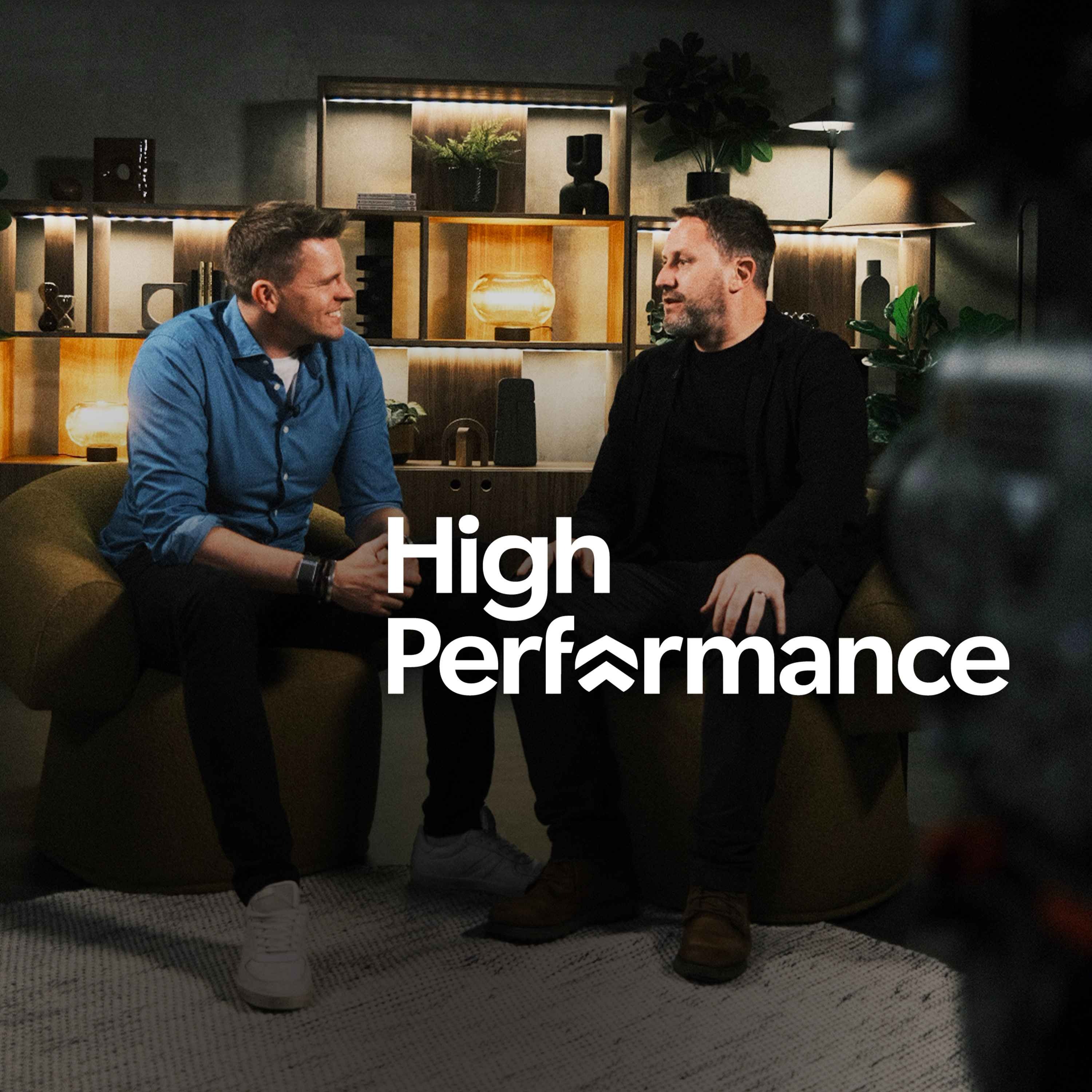
In this episode of The High Performance Podcast, hosts Jake Humphrey and Damian Hughes engage in a deep conversation with James Vowles, the principal of Williams Formula One. As the current Formula One season approaches its conclusion, they discuss Vowles's efforts to revitalize the Williams team, focusing on his leadership approach characterized by authenticity, transparency, and consistency.
Written by AI. May contain mistakes.

Get the gist, explore an idea or ask about something said.
 Claude
On The High Performance Podcast, what are the key points of this episode?
Searching your listeningAutomatic transcript. May contain errors.
0:00Watch it early on the High Performance app. available now Roman Kemp the broadcaster opens up a powerful conversation on success and mental health
0:13hi there welcome along to another episode of high performance the show that aims to understand the stories the successes and the struggles of the highest performers on the planet myself and Damien here once again hey Damien hey Jake how are you really well really well thanks mate nice to see you I thought that we would talk a little bit about Formula One they're back from the summer break they're racing towards the end of the current formula one season and i want to talk specifically about williams because i don't know we've got a nice relationship with them haven't we on high performance we've been joined by james vows and alex albon i remember your face actually the day that we walked into the williams museum at grove at their factory and you were like because we interviewed alex in that room didn't we with all those amazing f1 cars in there yeah and look whilst it's not necessarily my sport to be in a place that was so rich in history and heritage was incredible.
1:01It was, yeah, it was a real privilege to get to go there. You know what, though? And I genuinely believe this. Part of the problem that Williams have is that museum because it's a reminder of the incredible success they've enjoyed over the years. Like, you know, they're the second most successful team ever in Formula One, Damien. I mean, even as a non-F1 aficionado, you will know the most successful ever F1 team. Ferrari. Correct. The second most successful in terms of titles won is Williams. Nine times they've been crowned the constructors' winners in Formula 1. But the last time they won a race was 2012 in Spain, so 12 years ago.
1:39The last time they won a title, Damien, was 1997. So it's been 27 years since Williams knew what it felt like to be the best team in Formula 1. Yet the man charged with trying to get them back to that place is James Vowles. And all the time that he spends at Grove, there are reminders of that successful past. and actually I think that's part of the reason why we're so interested in the Williams story and actually if you check out the High Performance app which you can download for free right now you can see a brand new series behind the scenes at Williams Formula 1 from this season called What It Takes and it's a three part series where we focus on a different part of the Williams Racing Formula 1 team in each episode it's well worth a watch but one of the episodes the focus is very much on the man charged with bringing the good times back to Williams, James Vowles I thought maybe we would start this episode with taking a clip from the series on the app, Damien, and sharing it with the audience.
2:32What do you think? Yeah, I'd love that. I think it's a really rich, powerful insight into a great leader and I'd encourage people to listen to it and not just listen to the words, listen to the purpose and the meaning behind what he says as well. Here he is, James Vowles, the team boss of Williams Formula One. The person you see now is the person I am as a leader. There's no different personalities. It is honest, open, transparent. You ask me anything, I'll answer it within the boundaries of what I can tell you at the time, or the knowledge I have at the time. Whatever characteristics you demonstrate, whatever behaviors you have, are those others will follow by the nature of things.
3:10So enact every single behavior you want. In fact, I'll take it a step further. How do you get culture? It's about individuals creating the success and a thousand odd people pulling together to create the success of one organization. So there he is, James Vowles, the Williams Formula One team boss, and you can hear him in full on our new series on the High Performance app. Look, Damien, you've worked with some of the biggest, most celebrated leaders in sport. You've worked with teams that are successful, teams that are struggling. I imagine people often call you for your services when things aren't going so well.
3:42So what have you explained to people over the years about sounding authentic? Well, there's two things that I see when you crawl through the debris of a previous manager or leader that has been dismissed. And when you speak to the people that were intended to follow them and you say, what was it the last guy didn't do? What was it that went wrong? And you can often answer it in two words. One is transparency. He didn't tell us what was important. He didn't tell us what you stood for. Or the second thing is consistency. You did tell us what you stood for, but you didn't do it in every interaction.
4:21And I think what you're listening to there with James is he's being transparent. He's telling you that I'll be open, honest, and transparent. Now it's up to him to be consistent in the way that he applies that. And I think in the What It Takes documentary, you can see how he consistently focuses on honesty, transparency, and authenticity. It comes back to that great phrase as well, doesn't it? I don't believe what you say because I see the way that you act. And the behaviour of a leader is so important to getting people to pull in the same direction. And I think one thing that people don't necessarily realise, right, Damien, when it comes to Formula One, is that you think, oh, I work in Formula One.
5:01Wow, you must travel the world, go to the races, see all the celebrities, be in the garage. That is not the lived experience, right, of 90 % of the people that work for a Formula One team. And I mean 90%, often more. You know, Williams are one of the smaller teams on the grid. They're hiring fast and they're building, but there's still only, I don't know, six or 700 people, I think, at the moment that work for Williams Racing. Less than 100 of them are allowed to go and be involved in a race weekend. So you actually have this incredible situation where almost all your staff are not present in the moment that they've been working hard to create success, which I think is a real challenge for a leader, isn't it?
5:39Normally you go, come on, we'll all pull together on Saturday or we'll all pull together at the office on Monday morning. But they can't be there in those crucial moments. Well, I mean, that, again, is a really interesting point that you made, Jake, because I think there's three lenses in which you view culture as fruit. We heard on that last clip there, James, talking about culture. And one of the important lenses we need to view things through is we're all working with a sense of purpose. We're all moving in the same direction. We have to feel that what we do matters to the end result of the team that we're a part of.
6:12And like you say, if you're one of the 90 % that never actually get to see the car racing, you never actually get to be there at the sharp end of it, it's important that you feel that what you do really does matter, whether it's recruiting some of the staff that's joining it, whether you're cleaning the garages, whether you're oiling the different machines, however big, however small your role is, you need to feel that it really matters. So what James has got there as a task is to make everybody feel that they're all on the same page, moving in the same direction. And it's important that they feel they belong, that they're all part of that same team.
6:51I often think about during lockdown, you remember when we were divided into some of us were key workers, some of us were essential workers, and then the rest of us were classed as non-essential. And then we wonder whether that damaged our mental health. I think everybody needs to feel that they're essential or key workers when it comes to being part of a team and feel they belong. And if you're listening to this and you're thinking, well, I need some specifics here. What does James Vals do to make all those people feel like they belong when they can't be at the race weekend? Well, here's your answer.
7:21This is a clip that we filmed as part of our documentary of James, not just addressing the team after the British Grand Prix result where they picked up two points at Silverstone, But addressing the team about the livery that was on the car for that specific race weekend, I'll let James pick up. First and foremost, that car, whilst I've certainly been here, that livery is the one I'm the most proud of by a long, long way. And not just because it represents us in our home country, the home of Williams, but it has all of your names on and there's no order to it. It's alphabetical for a good reason, which is that every single one of you, irrespective of what department you work in, contribute towards the success of this team, the points that we had this weekend.
8:06I've said that many, many times over, but that's what that livery represents to me. And for Alex and Logan, I know they were incredibly proud. In their words, carrying you on their shoulders is part of the journey that they were racing around with. So you can actually hear, can't you, from the quality of the audio there. It was quite echoey. James was in one of the big cavernous rooms at Grove where they invited all of the staff. And I mean, all of the staff were invited into that room to share that moment with the team. And he talks, Damien, about not just, oh, it was great to have your name, you know, to stand up and go, it was great to have your names on the cars.
8:37Thanks, everyone, is one thing. But to stand up and say that's the most important livery we've had on the car since I've been here suddenly makes those people feel important. The fact that he says it was done alphabetically means that everyone feels as important as everybody else. And I think that is a brilliant insight into the efforts that James is going to, to make that team pull in the right direction. And I think actually it's a hugely underappreciated part of business, this idea of making people feel like they belong. And if you look at the studies and if you look at the research, it tells you that companies or groups where everyone feels like they play an equal part, everyone feels like they belong.
9:15They get better results. And that's what we're now seeing at Williams. Yeah, absolutely, Jake. I think if you view this kind of thing through a cynical eye, you look at that and you just see it as a gimmick. You just go, oh, this is the latest gimmick. But if you view it through the lens of the behavioural norm of how do you make everybody feel that they're part of something bigger than themselves, you start to see how subtle, but how powerful what James has done there is. Like you say, it's the fact that there's a sense of equality. It's just done in alphabetical order. But everybody's name, regardless of the role you play in the organisation is on it.
9:51That lovely line he said about the drivers feeling that you're carrying people on their shoulders. They're the sharp end of the arrow, but they're carrying all those hundreds of people with them. I remember Dan Carter spoke to us about a phrase that they have in the Maori culture in New Zealand, which is wakapapa, which is the idea that you carry the legacy of your ancestors with you. All their lessons, their learnings, their strengths come with you and it's almost the same thing of that everybody those thousands of years of experience of all that staff has all gone into creating the best car they possibly can how powerful is that from making everybody feel connected to the bigger sense of purpose and we know as well don't we that social belonging is fundamental to human need it's hardwired into our dna and i was reading an article ahead of this conversation from Harvard Business Review that said 40 % of people still say they feel isolated at work.
10:48And if someone's listening to this thinking, does it really matter this idea of belonging? Well, in the same article, it said that if workers feel like they belong, companies reap substantial bottom line benefits. High belonging was linked to a 56 % increase in job performance, a 50 % drop in turnover risk, and a 75 % reduction in sick days. So if you've got a big company, you know, 10 ,000 people working for a company, that would result in annual savings of more than$52 million. You know what, though? One thing I do want to point out is that we're having this conversation just a few days after they've removed Logan Sargent from the team and they've replaced him with a guy called Franco Colopinto, who has got only one win in Formula 2, which is the feeder series to Formula 1.
11:30He's only got one full season racing in Formula 2. So effectively, what the team is saying there is that they would rather trust a guy who's never raced a Formula 1 car and has very limited experience in single-seaters compared to someone that's driven for a season and a half with that team and I think it's important as a leader that you're still seeing someone that when it needs ruthless hard-headed business decisions you're able to take them absolutely but I also think there's something there about maybe in the transparency of their internal communication there's something about getting somebody that's going to grow with the team as well that not somebody that comes in with pre-existing ideas or beliefs about uh what a formula one team should do james has literally told us we're breaking all the rules here so breaking all the rules by bringing somebody in at that sharp end where it's going to be james's neck on the line is a really good symbolic example of somebody that's willing to go after a different way of winning look damien before we wrap this up i think it's easy for people to go well i can see how a leader can create a sense of belonging, can impact culture positively, can change the direction of a business.
12:38But how do I, as an individual, someone who sometimes feels not listened to or not heard in the workplace, how do I still drive a business in the direction that I want it to go? Yeah, great question. I think I'd point in the direction of something called the Fram and Cow studies that is basically a really fascinating series of research that validates It's that idea that we are the sum of the people we spend most of our time with. That if you want to engage in more productive habits, have a look at the people that you surround yourself with and make sure that they're adopting them. Because that sense of belonging means that we will naturally do our best to fit in.
13:16So the point is that you don't have to be a leader to boil the ocean. You just have to boil your own part of the ocean. You start demonstrating the behaviours that you want to see people around you demonstrate. and very quickly you'll find that those people start to adopt and fit in with what you want or you'll find a different group of people to start hanging around with instead. So don't feel you have to be a leader to do this. Start leading from wherever you are. Love that. Thank you so much, Damien. So you've got some choices, I think, to make now. You can either go and listen to James Vowles or Toto Wolfe or Alex's album when they join us on High Performance or, of course, you can download the High Performance app and enjoy our Williams mini-series, What It Takes, where you can hear from James Vowles.
14:00You can also hear from Jamie Chadwick, the first woman to win a road race in Indy NXT. And there's also exclusive access to Alex Albon's performance coach, Patrick Harding, as he details the training that goes into Formula One. And he takes a certain member of the high-performance production team and puts him through his paces. That alone is worth watching. Damien, thank you very much. Thanks, Jay. I've really enjoyed this chat and I've really enjoyed the documentary as well. It's been fascinating. him don't forget you can go back into the high performance catalog you can hear the full episodes with alex albon james vals tota wolf that damien just mentioned there but if you download the high performance app right now you can get exclusive access to what it takes and see exactly what is happening behind the scenes at williams as they strive to get back to where they feel they belong which is at the front in formula one thanks for listening
14:57Thank you.
As the current Formula One season nears its end, Jake and Damian catch up to chat about the future of Williams. They explore the dedication shown by James Vowles, the team's leader, in his efforts to restore Williams to the top. They reflect on Vowles's commitment to authenticity, transparency, and consistency, qualities that could help earn the team's trust in his vision and guidance as they aim for better results.
It’s clear that Vowles is doing everything he can to create a positive environment where everyone’s on the same page and working toward a brighter future for Williams. Listen in as Jake and Damian discuss the importance of a leader's behavior in getting everyone to move in the same direction and to drive progress together.
For a deeper look into Williams’ journey, check out the series ‘WHAT IT TAKES’ here:
https://thehighperformanceapp.com/collections/7BldzkxB5o70lDDnpIyA81
Hosted on Acast. See acast.com/privacy for more information.


