
 Ask ChatGPT


 The High Performance Podcast
13 Feb 2025 · 52m
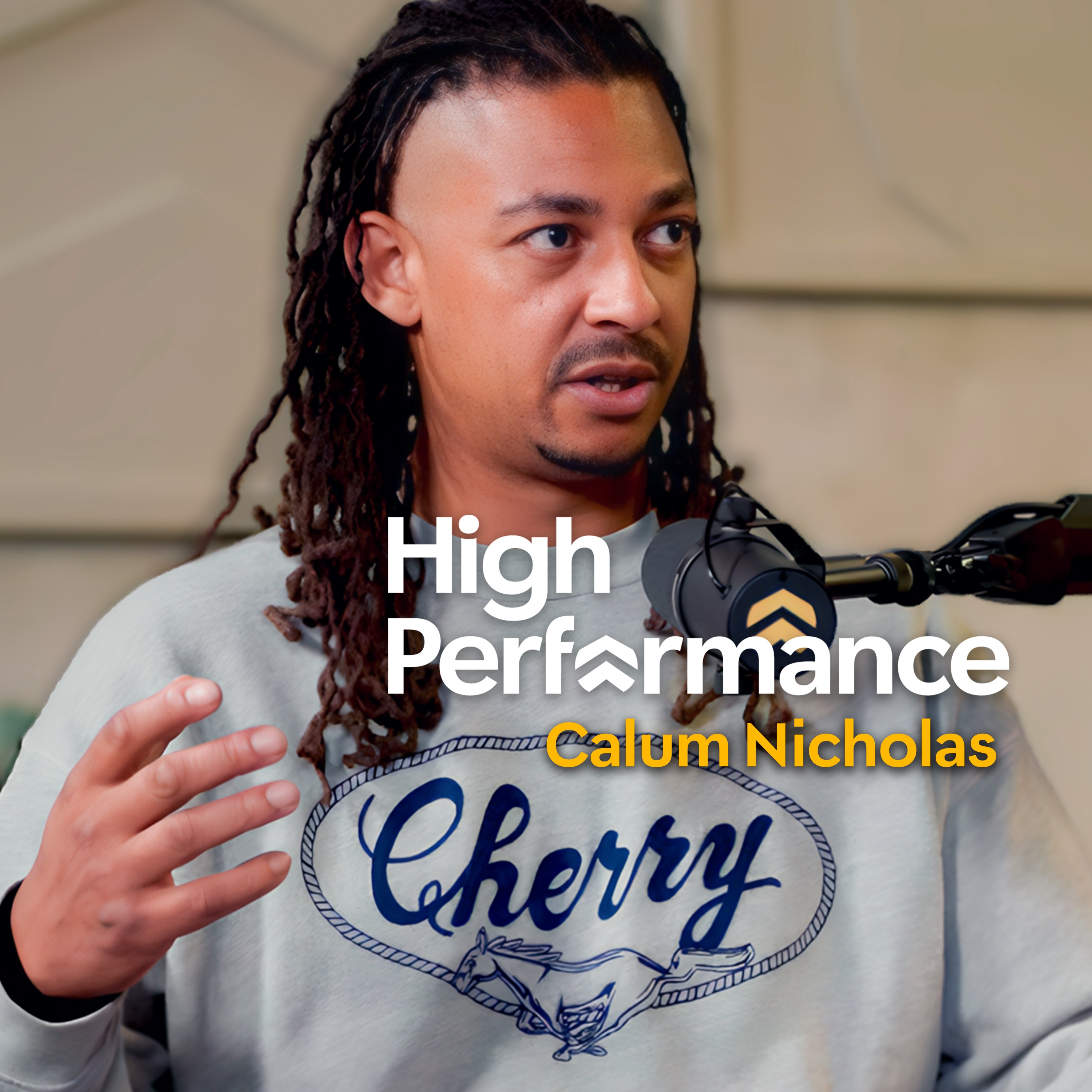
Red Bull Mechanic Calum Nicholas on the 'Real Max Verstappen' & Lewis Hamilton's F1 Legacy
In this episode, hosts Jake Humphrey and Damian Hughes engage with Calum Nicholas, a senior mechanic for Red Bull Racing, as they explore insights from the world of Formula 1 (F1). Calum shares his experiences with Max Verstappen, analyzes the intense 2021 season, discusses the importance of teamwork, diversity in motorsport, and offers advice for aspiring F1 professionals.
Written by AI. May contain mistakes.

Get the gist, explore an idea or ask about something said.
 Claude
On The High Performance Podcast, what are the key points of this episode?
Searching your listeningAutomatic transcript. May contain errors.
0:00Watch it early on the High Performance App. Available now, Roman Kemp The broadcaster opens up A powerful conversation On success and mental health Max will do absolutely anything required to win It's limitless in that It doesn't matter what's asked of him It will work towards making it happen I block everything else out From that point on, once I'm there and I'm on my knees And I see the car coming towards me All I'm looking at is the centre of that rear wheel You are going to suffer knockbacks It is not going to be something that just falls into your lap and is going to be easy. But if you are resilient and you're willing to carry on and keep pushing, that first opportunity will present itself.
0:40That is Callum Nicholas, the Red Bull mechanic who's become a well-known face among Formula 1 fans. And you're about to go inside one of the most successful F1 teams on the grid. What separates Max Verstappen from the rest? Why is it so hard to be his teammate? How did it feel being on the inside of that 2021 title controversy? and how do Red Bull pull together to perform when it matters most? Let's get the truth about life in Formula One with Red Bull's Callum Nicholas.
1:12Callum, welcome to High Performance. Thank you for having me. Well, look, we're talking after another high-performing season when Red Bull pick up another trophy and you were central to that Max Verstappen winning the Drivers' World title. What makes him so special? I think with Max it's one of those things like all of us from 2016 you know that first race with the team I think it was so obvious that there was just like this raw untamed talent in Max that was going to be incredible obviously after that win the rest of 2016 2017 car failures and crashes and things like that and I think what's made Max so great now is that he's mastered all those other little things you know like his awareness of what else is going on in a race like his ability to sort of control a race um he just does i think he's so formidable because he just does everything well you know the thing that you've seen in past champions is that it's not just about one bit of talent or speed or whatever it's that they they manage everything in the paddock so well you know and certainly in terms of like we've watched max mature into this guy that's just seems untouchable so yeah he's he's it's very special i remember when i worked in formula one and i said to David Coulthard once, I said, look, you raced alongside Michael Schumacher and at times you were quicker than him, at times he was quicker than you, but he has seven driver world titles and you have none.
2:31What was the difference? And he said to me, he said, Jake, it was spare capacity. I was good to a point, but then beyond a certain moment in the rain, wheel to wheel, an hour into a Grand Prix, he had the spare capacity to do a little bit more. And I'm really interested in this phenomenon. I wonder, is there something or a moment you've seen from Max where you're like, that is spare capacity in action. To be honest, all the way through like 2023 and even the beginning of 2024, like Max would be there, he'd be leading a race, he'd be setting fastest laps. And we know from his radio that he's driving around and he's watching the screens.
3:06He's watching the race and other things that are going on. So before a safety car's called, he's seen a crash that's happened on the screen at another part of the circuit. And he's like, right, well, let's be ready to pit or whatever, there could be a safety car here. What are we doing? And it's just, yeah, like you say, that spare capacity to be doing all of that talking on the radio and still find time to sort of be looking over here while he's driving and sort of seeing what else is going on in the race like we he will know when his nearest competitors pitted because he'll see them on the screens coming down the pit lane so then he's ready he's ready for the next lap or whatever it is and it's yeah it's something something else and what's the impact on you and on the pit wall and on the team in general when you have a driver operating to to that level like normally like as a mechanic i always say that you know you do everything you can to make sure that car's reliable it's fast it's going to finish the race but essentially once you you leave it on the grid you've done everything that's within your control other than the pit stops so when you have a driver that's sort of operating on that high level it just sort of makes you like ensure that you are getting the best out of everything you know nobody wants to be the person who's caused that problem or caused that dnf um it's it just forces you to raise your game so it's great for us in the garage you know like 2023 it was i've never seen the garage perform at such a level like i always say 21 was probably our hardest season for us or mentally emotionally and whatever but 2023 once we got into that stride it was just it was something else like everyone in the garage was just operating at such a high level and max was a huge part of that when you say we were operating at a high level for people that have never even set foot in a formula one garage yeah if you sort of visualize what that looks like what do you see so one of the things that i that always stands out to me is something that guests in the garage always say to us.
4:43Like we're renowned for having the music on like cranked to 11 all day long in the garage. And guests always say to us that they find it amazing to watch us working in the garage around the car. Nobody's talking. You can't hear each other in the garage because the music's playing so loudly. And everyone's just doing their job. We don't need to communicate. Everybody knows what's happening next. We know what's going on. We know what's going to happen. And that sort of, for me, sort of exemplifies like how good we are as a unit. you know like it's about the logistics and getting things to the circuit and making sure that all the bits are right and finding little extra things throughout the year but i think in terms of the way we just operate in the garage as a unit that's always something that stands out to me and something that guests always remark on is this you know none of you guys have had a conversation about this but everybody's doing something and they're all doing it right but there are moments of course where you need a conversation uh there's an issue with the car in the garage or maybe even worse the car's gone to the grid and something in the in the outlap is showing you that there's an issue could you share with us something that you are able to share where you've all had to really deliver a moment where you've had such pride in the fact that you got that car into the race when it looked like it might not happen yeah i mean like the one that always will stand out for me is daniel ricardo in 2018 in china um where we knew we weren't in a good shape with spare engines and then lo and behold like there's that thing in f1 if something can go wrong it will if you leave a little bit of room for something to go wrong, it will.
6:08And we were in a position in P3 where the spare engines were not ready. They were nowhere near ready for other reasons, but it was inevitable that that engine would fail in P3. And then we knew we'd have this massive issue trying to get that car out for qualifying. Ultimately, we managed it. We got the car out with like a minute to spare. So how much time did you have to get that ready? Well, from the end of FP3 to start of qualifying is like two hours. But by the time you get the car back in the garage, get the floor off it, get the body work, get the engine out, and then get the new engine on, but that engine isn't ready.
6:43So while it's going onto the chassis, we're still building parts of the exhaust system, still getting the last bits on, all the coolers and all that stuff. And there were times where I'm looking at the chief mechanic. Ultimately, I'm responsible for the prep of that engine. I'm looking at the chief mechanic, Phil, and I'm saying to him, mate, I don't know if we're going to do this. And I'm doing it whilst I'm working. so I'm there like Phil I'm looking at the time and I'm like this is going to be really tight mate do you know what I mean so yeah and you know that was one of those things that sort of really exemplified how strong we are as a unit when it comes down to it you know we got that car out with about a minute and a bit to go qualified P6 and then with a bit of fortune and a great time pit stop we ended up winning that race so that was a weekend that always stands out to me the crew that was on Max's car in Hungary when he had that off on the way to the grid and watching them change pretty much an entire left front corner was another one.
7:32I don't think there's a lot of teams that would have even attempted it. So for us, it was... How much time did they have to change that? Well, your time on the grid is about half an hour. And if you just had the time you needed, how long would that normally have taken to do that job? I mean, if you'd done it in the garage, you would have spent a good hour and a half making sure it was all perfect. But for us, it was a case of, we can get this to get through a race safely and let's see where it leaves us. because the other option is you wheel it back in the garage and you have a DNS. So for us, there was always the thing of if you don't try, then you're already accepting defeat.
8:05And what was the result of that race? I think Max finished second. It was a great result. The other thing, though, you have to think about in that moment is the mentality of the driver. He's someone sitting there thinking, I'm about to drive this at 200 miles an hour, wheel-to-wheel with someone else, and it's being built minutes before I do that. Yeah. I think it's a massive amount of trust for a driver to place in his crew. And I think, you know, but again, that's something that's been earned over years. You know, Max has seen these crews. They've seen us, he's seen us in the garage do this stuff time and time again, even when we're up against it.
8:37And like, so the same way, you know, we place our faith in Max to stop where he needs to in a pit stop. He had the faith in us to get this done and make it so that at least he was safe and we could see it might not be perfect. The steering might be down to one side or whatever, but it's safe. And he will always try and drag out the best result that he can for it.
8:56You know how everything's a subscription now? Music, movies, even socks. I swear if— To continue this ad, please upgrade to Premium Plus Platinum. Uh, what? No, anyway, Blue Apron— This is a pay-per-listen ad. Please confirm your billing. Oh, that's annoying. At least with the new Blue Apron, there's no subscription needed. Get delicious meals delivered without the weekly plan. Wait, no subscription? Keep the flavor. Ditch the subscription. Get 20 % off your first two orders with code APRON20. Terms and conditions apply. Visit blueapron.com slash terms for more. The market's uncertain. Revenue's tied and hiring on hold.
9:31That's why results-driven companies are using Upwork to keep work moving. Go to upwork.com today and start hiring proven freelance talent fast. No bulky overhead. No rigid long-term contracts. Just the right expert right when you need them. Work smarter and faster with Upwork. Go to upwork.com now and find your freelance expert. That's U-P-W-O-R-K dot com. Post a job for free and get started today.
10:00This episode is brought to you by Opera Air, the first browser with mindfulness at its core. Now, most of us spend hours every day online, but how often do we pause to take care of ourselves whilst we're doing it? And that's where Opera Air comes in. It's a lightweight, fast, secure browser built not just for productivity, but for your well-being. With Opera Air, mindfulness is built right in. You'll find free breathing exercises, guided meditations, and soundscapes with ambient sounds, lo-fi music and binaural beats, all designed to help you focus, relax and even spark creativity while you browse.
10:37You always assume a Formula One car starts to race perfectly, right? Because it's a Formula One car. But there are times that you're asking someone like Max to go into a Grand Prix and it's safe, but it is far from perfect. He's holding the wheel in a strange way or the braking's not going to be quite right. Is that right? Yeah, I mean, it happens on occasion. obviously like you said it's certainly something you try and avoid but on occasion if the choice is between that and do not start and lose a load of points I think we'll always take the sort of thing as long as we know that the car's safe we're always going to take the punt and see if we can make it happen I love this sort of conversation because you know so many times a Grand Prix finishes and I will be now watching at home and I'll be with my son Seb named after Seb Vettel actually and he will be like oh that was an easy race for Red Bull and only afterwards there's an interview going we thought from the third lap that car wasn't going to get to the end of the Grand Prix Yeah, we've had it before I think Baku 21 stands out for me with Checo's car, obviously those last laps after the red flag Checo had a huge hydraulic issue with that car to the point where we weren't sure if it was going to actually be able to start off the line, because obviously every time you pull the clutch you're losing more hydraulic fluid, there's a leak somewhere we don't know what's going on and it's just one of those things, sometimes things just have to be on your side you know in Checa we knew we only had to do one lap you're not allowed to put fluids in the car under a red flag so it's either we drag it out the pit lane and say we're going to throw away a second place here or a first place or we just give it a go and see what happens and like you said you do everything you can but sometimes you do need a little bit of luck on your side I think it's fascinating this conversation around taking risks but none of it works without hard work right?
12:15Yeah for sure I feel people have got Max Verstappen wrong I remember when I worked in Formula 1 with Sebastian Vettel the criticism and the negativity around him and I would see a hard-working caring, kind massively competitive and sometimes difficult character but as I found in my time I don't know whether you're the same, the more difficult the person the quicker they are quite often, right? Yeah, some of Max's best weekends are when you make him angry I feel like Brazil this year, Brazil here in 2024 was a perfect example of that things weren't going our way, we were upset with some of the things that had happened in the sprint race and qualifying so we were all a little bit angry about the whole thing, about how the weekend had gone.
12:50And you kind of know that in that situation, Max is just going to go out and give it absolutely everything. And that's how you do a drive from 17th to 1st. So we often hear on the radio, Angry Max, right? Yeah. And I must be honest, I think, oh, that's not a great way to talk when you've got the team trying that hard. But it almost sounds like actually you're thinking, oh, hold on, Angry Max Verstappen, this is going to be interesting. And also like that, none of us, we're never going to sit in the garage and take it personally. like we've all got a goal we're all that angry when we need to be you know we we're all exactly the same if we need something to be the way that it needs to be for us to win that's the attitude we all have and that's all it is from max max is there to race and win and there's there's no one in the garage that has an issue with that you know like we're not going to go home and go oh my god he said some mean things on the radio today that's just that's not the nature of the people in the sport you know we're resilient anyway but also we know that it's only because he's trying to reach the same goal as us.
13:44So you very much feel like a team? All the time, you know. I've said before, I'd find it very hard to even consider doing the job I'm doing now at another place. We've just become so close in the garage as sort of a unit that whilst I have good relationships up and down the paddock, I don't think I'd want to try and achieve the same things outside of this group of people. These people have been on my side for the last 10 years. I'm not really interested in sort of bailing and jumping ship. How have they created that culture at Red Bull? With all the big three teams, you have Ferrari, they're always about their passion, their history, their heritage.
14:20People take great pride in working for Ferrari. I feel like Mercedes have been really good in terms of their about process and procedure. Everything has to be the way it is, and that sort of resonates through the whole company and their parent company. That's the way they've always been. I think with Red Bull, I've always described us as the pit lane pirates. I feel like we're exactly what Enzo Ferrari would have called garage easters, but that's sort of it's just about the people it's always been like we hire good people we put them in the right positions and we give them what they need and then it's have faith in those people to deliver for you and when you do and you sort of feel this responsibility to the other people in the garage you know that's the biggest thing for me like when i think about doing my job and doing it well i think about what it means to everybody else if i let them down you know if i'm if i'm not concentrating or if i lose you know focus and i make a mistake my biggest worry isn't actually losing a race or having a failure, you know, these things happen.
15:14My biggest worry is actually that I've let all these other people down who are giving 100 % every single week. And that really just creates such strong bonds among people. Are you happy to share with us a time when maybe you didn't quite get it right and how it was dealt with? Because we've had Toto Wolff on this show and he says we have a no-blame culture. So he says if something goes wrong, we don't ask about the person, we ask about the process, which plays in exactly the way that you've just described Mercedes. these? Yeah, I think, I guess, I guess the easy example for that is pit stops. You know, you, you're going to do what, maybe 90, 100 live pit stops a year.
15:47The idea that every single one of them is going to be perfect is ridiculous. It's where the standard you're setting for yourself is so high. Like, you know, last seven years, we've won that DHL pit stop award. The standard that we've set, that benchmark is so high that you have to accept that certain things are going to go wrong. And again, in those situations, it's not about personal blame. We will look at if there's a way that we can make sure that that can't happen again with a process or whatever but i think the biggest thing is that we sort of have a nature we understand everyone in the garage they're going to be their own biggest critic there's no need to be out here blaming individuals for for certain things you know like me i know for me if i make a mistake i'm going to be the one that kicks myself for a few days before i get over it so it's not necessarily about blame culture more than anything you'll find that your teammates will just come around and support you and be like don't worry cow you know you're a professional you're the best at this you're going to pick yourself back up it happens what's your job on a pit stop i do the wheel gun on the rear right can you share with us the mindset of right you hear the car's gonna box or the decision made to box the car what happens though so for me you know we we get that we get 15 second call that's what we've had from jonathan wheelie so we'll know the car's boxing obviously we'll hear the engineers radio and we know that that pit stops coming we will have had a briefing where we know roughly what lap we're going to try and pit but you hear that 15 second call and then for me personally, I block everything else out.
17:06You know, it doesn't matter. I am single-mindedly, I'm going to where I need to be. I'm going to follow the same process of plugging the line into my hip. I'm going to settle myself in my marks. I'm going to blip the gun and make sure it's going the right way. But honestly, I think that the skill in it is that I've managed to completely find a way to block everything else out. Like I've said before, there could be anything else going on in the pit lane. You know, there could be a gang of pink elephants walking down the pit lane there could be anything from that point on once i'm there and i'm on my knees and i see the car coming towards me all i'm looking at is the center of that rear wheel so you're watching the car come down that's it so i see i'll see the car coming towards me and from the moment that i can see that rear wheel it is the only thing i'm looking at so that is entirely my field of vision almost becomes really narrow you know because if i'm looking at the tire or if i'm looking at the rear wing or the bit of floor like then i'm not looking at the wheel nut so for me is purely about making that field of vision so narrow that all I'm focusing on is that wheel nut and I know I've just got to hit that wheel nut with the gun as it arrives.
18:09There's a few other things that I use as sort of like guides. I think I always talk about the rhythm of a pit stop. For me, it's almost like a dance you do with the other two people on your corner. And I sort of think of it as like rhythm, but the sort of the cue for everybody else to start moving is as I get that socket to hit the wheel nut straight away, that's sort of the trigger for all of it. so yeah it's obviously a lot of hours of practice but it reminds me a bit of a Formula 1 car coming out of a slow corner onto a long straight right you mess up the exit of the corner you're carrying that the whole way down the straight as the person who is making content with the car first you mess that up it's carried for the rest of that pit stop isn't it yeah and one of the worst things you can do is if let's say that first bit of the stop does go wrong you can get what's like a dog to dog you know between the nut and the socket and you can spark up the socket and it looks like you're having fireworks in the pit lane.
19:01But I think the worst thing you can do in that situation is try to make up the time. Like you can't. If you try to make up the time, it's only going to get worse and worse. You have to almost, in that split second, you almost have to just reset. And if you can do that, then your bad stop might be three or three and a half seconds. If you find yourself in a situation where you either panic or you try to make up the time or try and take a shortcut or whatever, then you're going to end up with a bad stop that's five, six, seven seconds. What about panic when something does go wrong? Yeah, I mean, that's one of the biggest things.
19:34You know, all the pit stops that go right in the world, it doesn't really matter. You can do 1.8 pit stop, but if your next one is three seconds, four seconds, then it really doesn't matter. You know, it's about consistency. So I think for me, when I think about panic and when those things happen, more than anything, it's just experience. Like, I remember the first ever pit stop I did, and my hands were shaking beforehand and probably 10 minutes afterwards as well. And it's something that really only gets better with time. You know, like the more you do and sort of this acceptance that things are going to go wrong, you know, and whilst you don't plan for them, you are ready for them.
20:09You know, like I don't think to myself for one second as the car's coming towards me, oh, this could go wrong. I go out there with the mindset that I know I'm the best at what I do and I know I'm going to do it well. And then when those things do go wrong, I've had enough practice that I can just write, well, you know, that's gone wrong. we put it back on it's only three and a half seconds it's not the end of the world i go back in the garage and i just reset and it has to be just a completely new mindset for the next one you're not thinking about that last stop yeah what did you think of the mclaren pit stop that effectively won them the world title right if they mess that up on lando's car at the last race he doesn't win that race you know those those are those high pressure ones you know like the last time we really had a stop that was that important was was 2021 abu dhabi and whilst it was under the safety car you know it's still you know you have a 10 second stop because you've had a shocker and that could have changed everything so those those sort of really high pressure moments they they come they come every now and again it's more about understanding that yes there is the capability for it to go wrong but if you focus on all the things that you've spent all these years practicing statistically the chances are it's going to be absolutely fine and you need to just focus on the one job at a time what was the end of that 2021 season like for you all in the team For me, it was the toughest.
21:22Obviously, it was a long season anyway. The back half of the seasons now, with them being 24 races, they're tough. They're emotional. They're really hard mentally. A lot of us, we're making... We sort of understand that it's not just us making these sacrifices to be away. It's our families, our kids. So it gets quite tough. The back end of 2021, I've often described it like we felt like we were being hunted. There were times in the 2021 season, like mid-season where we look like well we're gonna we're gonna walk this drivers we're probably gonna walk this constructors as well everything's gonna be fine and then you know we had incidents like like Silverstone and then obviously Hungary where we lost a chunk of points in Hungary and then towards the end of the season it felt like we were being hunted they were you know Mercedes are just gaining ground gaining ground Lewis was gaining ground race on race you think like Saudi Brazil all these races sort towards the end of the year and we're just like oh my god you know We're really in it.
22:15So it was tough. That weekend in Abu Dhabi was obviously a huge amount of pressure for most of that race. It looked like we'd sort of blown it. I speak about it in my book. I talk about sitting with a colleague out the back of the garage sort of partway through that race going, I can't believe we screwed this up. I can't believe we've allowed it to get this bad. And him saying to me, you never know, anything could happen. I was like, oh, come on, Steve. We've got no chance here, mate. We've absolutely blown this. and yeah, I walked back in the garage and Latifi was in the wall and suddenly it was, everything changed.
22:47And how do you reflect on the way that the title was won at the very end? I think for me, the thing that I always actually just reflect on is the work that we did. Regardless of which way it had gone, what decisions were made that were outside of our control, I'll always just be very proud of all the work we did that year. And I know it's probably easy for me to say sitting here having come out, you know, on the better side of things, but regardless you know the other the other team worked like they they were working so hard everybody put so much into that season but i think for me i always just sort of focus on that like i'm not i'm not really that interested in people's debates about whether this should have happened or that should have happened you know my view is that you have to be there to win it you know we made sure that we'd done what we needed to do to be there and like you said in many in many forms of racing like sometimes a bit of luck just goes your way i think the only thing i reflect from a Red Bull perspective, right, is that, you know, the protocol wasn't followed, but that was by someone else, not by Red Bull, right?
23:45And this is it. You became the fortunate winners in that situation. Yeah. But then it kind of, it kind of then negatively impacted the view of that season. So no one remembered that you fought all the way through the season. No one remembered that you were already in the title fight at the final race. Yeah, yeah. And this isn't me making excuses for the way it happened. I'm just saying that the fact that you were in it it almost is overshadowed now. Do you know what I mean by that? Yeah, I don't know. For me, it really makes no difference. I've seen so many things throughout racing where things just haven't gone your way.
24:16Decisions, it is a part of the sport. And I perfectly accept that people are going to say, well, someone made an error and they made the wrong decision, and that's fine. You could look at a lot of decisions through that year and say, well, actually, this could have gone the other way and this could have gone the other way. It's an impossible one. Overall, over the course of the season, it swings and roundabouts. these things go your way sometimes they don't for us it was one of those situations it went our way when we really needed it to and and that was it you know like you could point even in that race you could point to the fact and say well you know mercedes chose to stay out on those tires for a very long time you know if you look back in the radios lewis actually questioned his own team on that at some point in that race as well he goes are you sure are you sure you want to stay out during the earlier virtual safety car um and these are all decisions that people make and they all accumulate and and this was the end result it's the privilege of being involved in a sport that has the scrutiny of the world on it right and is the pinnacle of motorsport but obviously that in itself brings challenges and you write very movingly and very honestly in your book actually about that 21 season you know not about the result not about even the job but about the sort of mental toll yeah what was going on there yeah for sure i mean like it was without a doubt like it was the hardest season ever we spent so many years like when i joined red bull in 2015 it was the worst car we've ever produced you know like we had a terrible year that year no one got a bonus we fourth in the constructors engine issues you know and we we spent all that time knowing you know from 15 up to sort of you know 18 19 we knew we weren't going to be in a position to beat that mercedes car that was so good and a team that was so well drilled and so well structured that you know we weren't we weren't in a position to fight for a championship in all those years so what we did was we just built behind the scenes all the other little bits you know parts and logistics and sort of the way we operated and we became so much better operationally as a unit that we got to 2021 and we felt ready we felt prepared but then obviously that pressure that we didn't really have you know like it felt like you know for me it felt like we were never really under that much pressure because we we and also the public sort of accepted that no one was beating those Merc cars in that era, no one was beating them.
26:28And that sort of had relieved the pressure for so many years. And now we're like, well, we've put ourselves in this position. We have to perform, we have to come through. So yeah, like, you know, you've got the eyes of the world on you. Certainly for things like pit stops in that year, the pressure was absolutely huge because any one of those that had gone wrong, and we were almost perfect that year in 2021 in the pit lane. But we all accepted that every time we stepped out there, any one of those, any person that sort of made a mistake or something went wrong for them, it was going to be hugely impactful.
27:00Which leads us on to a nice conversation about self-doubt. Was there a period in that era when Mercedes were dominating that self-doubt started to creep in? It's a tough one. I don't think I ever doubted that as a team we could get there. I think more than anything, unfortunately, it was more of a sort of... You'd always go into the start of each season and go, this could be our year, this is the year we're going to do it. And then unfortunately, most of those years, you'd get to sort of race three and race four and be like, yeah, that's not happening. And like I said, in some ways that sort of relieved the pressure.
27:31But then, you know, we turned it around with Honda in 2019. Things started to turn around and we knew we were putting ourselves in a position to fight. And then I think to a certain extent, you sort of wonder a little bit is, oh God, am I going to be up to this? Am I really ready for all this and the pressure and all the things that come with it? it's one of the things the way you get through it is is by having good people around you yeah like i know that in that 21 season the days where i was down you know i wasn't at my best i was tired i was missing my daughter you know i was i was struggling there were always colleagues around me to pick me up or just drag me along get me through it and then in a couple of weeks time it'd be my turn to lift them up and do the same thing you know it's one of those those self-doubt moments are where you really need your team and your teammates.
28:18Very few people watching or listening to this are going to feel sorry for someone that works in Formula 1, right? Because it's the dream for so many. But the truth is that the toll is real on you mentally and physically with all the traveling and missing family and stuff. What has that taught you? For me, it's, yeah, I make huge sacrifices and I miss stuff, but it's the toll on families as well. You know, like my partner Phoebe, she's made some huge sacrifices over the years and I'm really lucky I met Phoebe in the paddock years ago when I was at Marasha. So to a certain extent, she understood why I was doing this and what I wanted from it.
28:52But at the same time, she's made some of the biggest sacrifices you can ask for someone, you know, in order to allow me to sort of pursue my own dreams. Yeah, it's hard to sort of explain and I get it that sometimes people are not going to be particularly sympathetic. They're like, you know, you fly around the world and you go, yeah, I do fly around the world. The majority of the time, I see airport, racetrack, hotel room and that's it so it's massively tough but also like you said this was a dream for me it was something that I set my sights on many many years ago and if you want to achieve your dreams you have to make sacrifices and you have to be resilient so I sort of understand it from that perspective where people aren't likely to particularly feel sorry for you and you don't want that but I think it's important that people understand the sacrifices that people do make to do the sport.
29:43Let's talk about hard work as well because I think that's something that gets overlooked. I think particularly with drivers, right? People go, he's a naturally talented driver. It doesn't take into account the fact that even if you've got natural talent, if you're not the hardest worker in the room, you don't even get a look in Formula 1, let alone become a world champion. I think, you know, Seb was, you spoke about Seb earlier, Seb was sort of exemplified that, like he wanted to understand every bit of the car. Like Seb wanted to understand it all. He wasn't interested in just, oh, this is faster, this is not as fast he wanted to understand why and and that was the effort that he always put into it you know he was sort of he would have been an engineer you know Seb like he he would have quite happily worked and worked and just sort of kept understanding more and more and that's yeah it's vital you know it's the same it's the same for us all in the garage you know every day is a school day it's something that's you know very common phrase in motorsport and it's it's the same for all of us still you know like 10 years at Red Bull I still feel like I learned stuff you know about the company about the team about the car every day you know there's something new that I learn and it's just about yeah being willing to put that sort of effort in how hard working is Max Max will do absolutely anything required to win so in terms of in terms of the hard work it's sort of limitless he will do whatever it takes you know he's made that absolutely clear it's whether it's about learning or understanding or time focusing on himself and his mental state like Max will do whatever it takes um it's sort of it's limitless in that it doesn't matter what's asked of him, he will find a way and he will work towards making it happen.
31:13I think, yeah, you look at the drivers and we'll take the piss and we'll say, oh yeah, he flies in on a Thursday, flies out Sunday night. Nice private jet. Yeah, that's fine. But all that other time, Max is in the sim or he's training, he's working on himself, he's focusing on his mental state and preparation. So yeah, it's all hard work. It's different to what we're doing, but it's still work. For us, we very much look at work as the physical labor. Like a race weekend, for us now, it's over 70 hours on your feet, even with the curfew periods and a bit of travelling, you know, it's 70 hours pretty much on a race weekend, so for us it's physical labour, for other people it's just different kinds of work.
31:51And what sort of work that people don't see would he get up to after a session, after qualifying before the race? I mean, I think the thing that Max dislikes the most would be all the media requirements. You know, like, and I hear him, Max would quite happily just arrive, get in the car, do his job. You know why go faster well this is it you know it's about prioritizing what you need to win and what you don't need to win um so yeah i guess those are probably the things that frustrate him the most but i get that and look you've worked with some incredible drivers over many years in f1 what have you learned about the mindset that makes a champion i think more than anything it's resilience yeah you know i think what we've seen certainly with max's teammates over the years is i think what they struggle with is how resilient max is you know like you can have a bad weekend where the car's not great, Max will drag something out of it.
32:40And I think for a lot of the drivers that have sort of sat alongside him in the garage, it's really hard to see. It's really hard to sort of suck up, you know, and you might go out and put a great lap in and you think, God, I've dragged the most out of that car, and then Max will find two tenths on you. And I think mentally it really takes its toll on people around him. Through no fault of Max's, he's just there to go the quickest. It's a tough one for people to swallow sometimes, I think. I can't imagine what it must be like, actually, to have your performance compared directly with someone like that.
33:08Whether you're Pierre Gasly, Alex Albon's been on this show, he's spoken about the, he basically said, it became so difficult that I then had to drive the car harder. By driving the car harder, I make more mistakes. By making more mistakes, I feel more pressure, so I drive the car harder. I guess you've seen drivers just get themselves into their own headspace and a real muddle. It becomes like a real vicious cycle. Like you said, you overdrive the car, you're not going to go quicker. You're probably going to go slower and you're going to make mistakes and then those mistakes put more scrutiny on you.
33:38And yeah, it's really tough. And I think, you know, Checo's vast experience, I think that he was probably the best person to try to keep up with Max. Yeah. In that I didn't think that, in the way that Max got into other people's heads, I didn't think it would affect Checo. I think it's taken a long time until it has. But yeah, Checo, again, I think he's very resilient. Yeah. And I appreciate that. I'll tell you, Checo is such an interesting conversation because you sort of think if you've coped with Max for three or four seasons, you've become immune to his brilliance. And then I think that's probably changed now.
34:11Well, I think one of the things I feel like with Checo is that you feel sometimes that he does have, certainly when you're in Mexico, you do feel like he's got the weight of a country on his shoulders. We were out in Mexico this year and we were talking to some people and they were saying to us that, in my mind it would always have been their footballers and things like that that would have been their biggest athletes. it's quite clear when you're in Mexico City, their biggest celebrity, their biggest athlete is Checo. You know, he is the, you know, Checo's like God in Mexico. Like, honestly, like, his billboards are everywhere.
34:43Like, it must be such a huge pressure for him. And like you said, he was resilient. When Checo first came in and he was sort of finding his way into the team and putting himself in that position, I think that he did a great job of that and sort of not bowing to the pressure, not letting it get in his head. But I think there comes a point where you're like, look, I'm in a position where this car can win world championships and I want to win a world championship. And obviously that's a huge weight when the whole of Mexico wants you to do that as well. The problem is that you're up against a guy that is very, very hard to beat.
35:13So on a day when you give it your best, it's still not enough. That's the killer. And that's the killer, you know. Once you've got it in your head that I can win a world championship, but actually the guy next to you is not going to allow that because he is going to find more time than you, it's going to get to you eventually. I think one of the things that Max has never been worried about is anyone going faster than him I think that's something that he's he knows how skilled he is and it's sort of a bit of a luxury for him and he knows if you can find that lap time he can find a bit more and I think that's something that he's sort of used to his advantage and like I said he's such a nice guy Max you can always just have a really normal conversation he doesn't do PR he doesn't do any of this there's no sort of posturing it's just him and he's just going to go and drive and I think again it's one of those things that you look at how is this guy so calm?
35:57How is this guy so calm in these situations and how is he dragging it out and getting all of these bits out of it each weekend? And I'm here and I'm giving everything and it's just not working out. And I think after a while, it's going to really affect you. Can we please have this conversation about the nice guy that Max is? I've had very limited contact with him every time I have funny, welcoming. You know when you say the word normal, but you don't mean it as a criticism, you mean it in the best possible way. because there are many people in F1 that we've met that are not normal, right, by the way.
36:28Motorsport attracts odd people. It does indeed. But he is normal. And I want the world to understand that. Like I said earlier, I felt when I worked with Sebastian Vettel closely, the world didn't understand him. What would you like people to know about Max? Honestly, I mean, I totally agree with you. I think, you know, I read people's comments on social media and it's just absolutely clear that they just don't get him. And that's sort of fine. And I think luckily for him, he's not worried about that. Does he see them? I'd say that he probably does or but if he does I don't think it has any impact on him you know Max is very clear on why he's there what his job is the task he's set for himself but with us honestly I can't I couldn't speak highly enough of him like I've never I've never sort of I've never sort of idolised drivers and things like that or anything like that and it's the same with Max but he makes it easy because he just when we go out he's just he's just one of the boys you know like it's a very normal thing you can talk to him about absolutely anything his interests his hobbies you know stuff like that there's no there's no facade with him he's the same bloke monday through sunday every day he's the same guy you can be absolutely honest with him and he'll be absolutely honest with you and for us i think it's hard to maybe appreciate that when you don't have a personal relationship with him yeah but i think i don't think there's anyone out there like you said i don't think there's anyone out there that spent like real time with max and actually had real conversations with him that would tell you that he's some sort of you know mean or whatever like that's just not him at all he's very much just a normal guy that wants to get on with a job and i don't know it's refreshing i've always found it refreshing i like his honesty i know it can upset people and people expect like these sort of pr schooled answers from race drivers i think we're very lucky to have a sort of honest voice in the paddock if you're still overpaying for wireless, it's time to say yes to say no.
38:23At Mint Mobile, their favourite word is no. No contracts, no monthly bills, no overages, no hidden fees, no BS. I made the switch because I was tired of those ridiculous bills and sneaky charges from my old provider. With Mint, I'm paying$15 a month and getting the same high-speed data, unlimited talk and text, and the coverage on the nation's largest 5G network. Honestly, the quality is just as good, if not better than what I had before. And the best part? You don't need a new phone. You can keep your current one, bring your number, and all your contacts. I use Mint Mobile, and you should too.
38:56Ready to say yes to saying no? Make the switch at mintmobile.com slash HPP. That's mintmobile.com slash HPP. Upfront payment of$45 required. Equivalent of$15 a month. Limited time new customer offer for first three months only. Speeds may slow up a 35 gig on unlimited plan. Taxes and fees extra. See Mint Mobile for details. You know how everything's a subscription now? Music, movies, even socks. I swear if... To continue this ad, please upgrade to premium plus platinum. Uh, what? No, anyway, Blue Apron... This is a pay-per-listen ad. Please confirm your billing. Oh, that's annoying. At least with the new Blue Apron, there's no subscription needed.
39:34Get delicious meals delivered without the weekly plan. Wait, no subscription? Keep the flavor. Ditch the subscription. Get 20 % off your first two orders with code APRON20. Terms and conditions apply. Visit blueapron.com slash terms for more. The market's uncertain. Revenue's tied and hiring on hold. That's why results-driven companies are using Upwork to keep work moving. Go to Upwork.com today and start hiring proven freelance talent fast. No bulky overhead. No rigid long-term contracts. Just the right expert right when you need them. Work smarter and faster with Upwork. Go to Upwork.com now and find your freelance expert.
40:12That's U-P-W-O-R-K.com. Post a job for free and get started today.
40:23what we ask for all the time is a real human yeah then when someone gives us a real human we pick up on the flaws and the mistakes and criticize them for being a human that's the problem i think with people in the public eye and one of the criticisms he gets is for his wheel-to-wheel racing which can be pretty punchy right yeah yeah for sure what do you make of that yeah elbows out we're here to race like for me i look at the past champions and like you spoke about Seb and at the time I remember when Seb was winning and he catched so much criticism for things that he did on track and whatever and now we all look at Seb and we realise what kind of person he is and our view of him is completely changed.
40:57I think that when somebody is winning and doing that good a job it's a lot easier to decide you don't like them. Nobody is hating the guy that's in 18th, 19th place. When you're winning there's always going to be people that don't want to see you winning and therefore they're going to pick up on that stuff. I think my most vivid memory of of Seb right was the multi-21 moment of course for people that don't remember that the drivers had an agreement didn't they that they would swap on track yeah Seb refused to do it won the race went into the cool down room afterwards and you remember Mark Webber throwing the cap at him saying multi-21 Seb and I found that hard at the time because I was like hold on this is a guy that I really like doing something that I really don't like yeah but I think now on reflection I probably look at it and think well that's why he won the world titles that he won?
41:42This is it. The idea that you can go and compete at that level and win and not be ruthless when it... That's a fallacy. If you want to win at this level and be that good and compete... These are all great race drivers. If you want to beat them, you have to find something extra. And being ruthless is a necessity in that situation. And we've seen it from every champion that we've had in the sport. Lewis, in his first championship, he was ruthless when he needed to be. Throughout that year with Nico Rosberg, you know ultimately nico came out on top because you know he did what he had to do it wasn't popular there was tense moments in the garage because of it but ultimately these what that's what champions do they do what they need to to win and i think that to sort of bash that and say oh well you know you could have been a bit kinder here and now i mean come on man we're here to win i'm not here to to make friends sometimes you know it's nice to have friends and people to appreciate you but ultimately if you're not here to win and and that sort of nice guy persona is more important to you then you're not going to win and i think that the recent george russell criticism at the back end of the 2024 season it feels to me like that's the kind of thing that almost adds fuel to the fire for max yeah i think like i and i'm very much the same as well like in that criticism and people that want to sort of hate for whatever reason that's it's like my super unleaded like i'll just you know i'm all you're going to do is spur me on to compete and win.
43:02Can we talk about diversity in Formula One? How much has it changed? I think we're making progress. I mean, a huge part of the fact that we're making progress is down to what Lewis did. Lewis forced a conversation that plenty of us wanted to have for years. How brave did you think that was of him? Honestly, like for me, I will always appreciate Lewis's racecraft and his achievements and his ability on the track. But for me, personally, his legacy and the most important thing he will ever have done in this sport is to start this conversation you know he put himself out there it was a great personal risk and expense you know Lewis you know he wanted to fund independent research into the reasons why we were lacking this diversity he put his own time which is not an easy thing for someone to do to put their own time when you're in his position his time and his money to do it right so we are making progress we're getting better um i do think that there are certain areas where there's a long way to go like i speak about in my book i speak about that i still think that we in the paddock women are held to a much different standard to men in the paddock um it was something that i experienced when i met my partner so when i when i met my partner in the paddock um the company that she worked for as a contractor they had sort of a history of basically sacking any of the women that worked for them that got involved with mechanics right you know and it's a ridiculous never sacked the mechanic no of course not it's a ridiculous double standard like I met I met Phoebe and we tried to keep our relationship a secret for like six months just because of for that for that sole reason because we knew that the implications for her could be dire but for me you know I could have walked into the garage and announced that I was in a relationship and everyone would be like wait like it's a ridiculous double standard and I think it does still happen now it's something that we do need to do a better job of I think when we talk about certainly people from different ethnicities working in the sport there are some great things that we've started already and that they are going to come to fruition.
44:56I think we will sort of see a natural diversity over the next few years. It's already happening. But yeah, it's about recognizing that there are different barriers for different groups. But ultimately, the reason that we're making progress in this now is largely down to what Lewis did. Do you feel responsible? Look, I think for me, well, one of the reasons I wrote my book and one of the reasons I sort of started to get more involved in social media was it became apparent to me that when I started out, there was no representation for me. You know, when I started out, there were, like, up until I worked in Formula One, I'd never worked with another person of colour.
45:32You know, there was no one for me to look to and say, Oh, you know. So in all of the feeder series that you worked in? Never. Like, any junior category. Because how many years? Like, I did, like, three, four years before my first job in Formula One. You know, I was like an apprentice and doing sort of contract to work and bits when I first started. and it wasn't really until I got into Red Bull where I realized because also the other thing is you see on the screens you see a really small group of people um that are at the track compared to these massive companies that are back here and and you know when you go back to these companies actually a lot of these teams are quite diverse it's just the factory staff you don't get the visibility of um so for me it wasn't until I sort of joined Red Bull that I actually started working with people that weren't just you know white males throughout the whole sport and now I sort of find myself I've sort of found myself in a position where I could provide some of this representation and some guidance to people that had questions and just sort of providing people with a little bit of confidence like I had someone really recently come up to me someone that works for the team and they said to me oh just before I started at Red Bull I saw one of the interviews that you'd done in a podcast that I'd done a couple of years ago.
46:39And it was really nice because it just gave me that little bit of extra confidence. So the week I started in the job, I just had a little bit of extra confidence that my own ethnicity wasn't going to be a problem. So I sort of find a bit of a responsibility now. I feel like a little bit responsible to carry on. And even if I can just either inspire one, two people to just consider a career in STEM that could be amazing, then that's great. And at the same time, just being able to be on the screens and people to see that this isn't going to be a barrier for you if you have the confidence to really pursue it.
47:10Just before Lewis officially launched the Hamilton Commission, I got the opportunity to sit down with him and some other engineers in the paddock and we sort of discussed what we felt the barriers were from our own experiences and we sort of gave this sort of feedback to him and I did a case study for the group that were doing all of this Hamilton Commission research. It was inspiring to sit down with someone and see how passionate they are about something that I had an interest in, but didn't have enough knowledge about at the time. You know, like, because whilst I recognised that there were issues in the paddock, I was so, early in my career, I was so focused on just making sure that I could do what I wanted to do, that I didn't have time or sort of an inclination to sort of worry about the bigger picture.
47:53You know, it was once I was at Red Bull, I was settled in my job, I was comfortable, I was doing what I wanted to do, and then to have this opportunity to sit down with somebody who was clearly so passionate about making change, it's one of the few things over the years that have inspired me it had been a long time since I'd felt really inspired about anything racing-wise I always got the impression from Lewis that it was something that was like this is important and it doesn't matter what other people think about it it's important and we're going to change the sport and because of that sort of bravery that he had he is going to leave this industry in a much better place than he found it and your advice for anyone that wants to work in motorsport regardless of their background, their skin colour, their gender.
48:33Yeah. What are the things that you've done that have taken you from where so many people are, an ambition and a desire to work in motorsport, you know, in the smaller categories, getting all the way to the top? I think the first thing, probably the most important thing is resilience. You know, like, it does take a little bit of resilience. Certainly when you're trying to build a career, like, there was certainly, when I was at college and when I was first trying to just get my foot in the door, there were plenty of setbacks. you know I talk in the book about my first race and trying to secure my first bit of work experience and walking down a paddock and asking every single team if I could just come and help for the weekend for free you know and there were so many no's I'd gone through like 20 no's before I finally found a team that was like yeah sure you want to come and work for the weekend and that resilience is really important you know like you are going to suffer knockbacks it is not going to be something that just falls into your lap and is going to be easy but if you are resilient and you're willing to carry on and keep pushing, that first opportunity will present itself.
49:29And you talk as well in your book about the importance of saying yes. Yeah, for sure. That was actually, it was one of the first bits of advice I was ever given. As an apprentice, I had a chief mechanic that said to me, Cal, when you want to progress in this career, people are going to ask you in interviews and whatever, they're going to ask you, can you do this? And he said to me, Callum, the answer is always yes. It doesn't matter what they ask you. The answer is yes. Get there and then learn. it's a bit of advice that I've always followed I speak in my book about the first time I went to Marussia for my first interview with Dave O 'Neill and I said that honestly he could have asked me if I had any experience snake charming, the answer would have been yes like it wouldn't have mattered what he'd asked me, I would have said yes and I would have read a book or something, I would have learned before I got there, yeah the importance of saying yes and putting yourself in that position to take an opportunity is massive Don't underestimate the importance of it I also think that you've shown bravery because you know we talk about this tall poppy syndrome nobody wants to be the tall poppy and stand out from the crowd how how has it been received in the team and in the sport that the social media the writing the books all of that stuff i do you know what i think it's it's probably gone better than i could have ever hoped for um because i feared like when i saw what was going on i was like oh i don't know like are people going to be like cal you're part of you're part of a team yeah so do you know what i mean i think on the whole my colleagues in the garage like they fully understood why I wanted to do what I was doing.
50:53And they sort of appreciated that I was in a position where I could provide representation that they would love to have done as well. But they understood that I was in a position where I could be really effective in doing it. So there's been a lot of support for it. I must say that I do feel that there's probably no other team that I could have done it with. Part of Red Bull is win differently. And I think that that's sort of a philosophy that runs through the whole company in terms of everything we do. We've never been scared to do things differently. We've never been scared to sort of be outliers.
51:26So I think that I can't imagine that there were any other teams that would have allowed me to sort of build a big social media following, become sort of like this unofficial, unwanted at times, ambassador for a team that, you know, has their own departments that do this stuff and ultimately write a book. You know, I don't think there's a lot of other places that would have allowed me to get away with it. So, you know, it's a bit of a stroke of luck that this was where I ended up anyway. You've also experienced tragedy in Formula One with the loss of Jules Bianchi, who was an amazing young driver.
51:59How hard was that for you? It was really hard, actually. When I wrote about my time at Marussia and talking about Jules, I think that the way that I'd always just describe him was really kind and humble. Yeah. Jules was clearly a talent of the future but it never seemed to be in his head it was quite an admirable thing for him to sort of just be very very down to earth and understood how hard people were working for him I remember being in a nightclub in Singapore you know Amber Lounge in Singapore after the race there I do, I've had many of them it's a good one isn't it because for those that don't know the race finishes at like ridiculous o 'clock in the morning so you can happily go clubbing till 5am and not feel bad I remember sitting there with him and this is before, it's when he was the Ferrari reserve driver.
52:43And I remember there's two incidents actually. The first one was when we just found him thumbing a lift to the circuit one day because he'd missed the bus track. So we gave him a lift. And this quietly spoken, humble, keen to learn French guy was in the back of the car asking about production and TV and how it all works around Formula One. And I remember being in the Amber Lounge Nightclub and it was a little while later and he'd come over and he went, look, can I talk to you? I said yeah he goes how do I get a seat in Formula 1 like you could see the sort of the frustration almost the resignation that he was seeing other drivers getting opportunities and he hadn't had one at that point and he got it with Marussia and I still get a bit emotional thinking actually about him don't you it's like yeah like I said it was probably one of the hardest bits of the book to write for me it's still very emotional this sort of that weekend in Japan still hits hard when I'm there in Japan I love Japan it's one of my favourite races but when it rains it's sort of an inescapable memory for me um seeing sort of yeah all of that the irony of formula one of course is that his death has created or been in part created the halo which we now know has saved countless other lives absolutely yeah i think and and not just um not just the halo but all of the procedures that we do differently you know virtual safety cars and yellow flag rules and the way that we sort of manage track safety um a lot came out of jules's death um it's one of those things formula one you know you unfortunately there are these things where you you don't learn until you learn yeah um and it's a shame that we hadn't learned these lessons earlier but it's been the same you know throughout the history of the sport each time something happens we learn and we move forward and we try and make sure that it never happens again this is a man final question for people who've listened to this brilliant conversation what would you like to leave them thinking about from your life your experience your career for them to find their own version of high performance i think more than anything i think that i just tell them that no matter what you're doing, you have to accept that it's not always going to go smoothly.
54:38You have to accept the setbacks. You have to accept that things are going to go wrong and you have to be ready to push through them no matter what. Loved it. Callum, thank you so much, man. Thank you. And that's it for this episode with Callum. Thank you so much for listening. But before I let you go, I want to talk to you very briefly about an amazing event called the Apex Everest Challenge. You may know by now that we've created the High Performance Foundation, which is all about getting the lessons and learnings of high performance into schools. Well, we've also partnered with the Apex Everest Challenge.
55:08And it's not just a challenge, it's an adventure that we believe will transform the lives of thousands of people across the UK. And I would like you or people like you to take on this amazing challenge for the foundation. Do you think you could summit the Helvellyn Mountain nine times over 48 hours? That's the equivalent of climbing Everest. and this is your chance to embark on that journey. It's a unique opportunity to push your limits, support an incredible cause and conquer your own version of Everest. We're offering some incredible perks for anyone that completes the challenge on behalf of the High Performance Foundation.
55:43Some of our team have already signed up to take it on. So if you want to join them, then just visit highperformancefoundation.org and click on the Apex Everest Challenge. That's highperformancefoundation.org. Thanks for listening. See you next time. language.
Calum Nicholas is a key figure in the world of Formula 1, working as a senior mechanic for Red Bull Racing. With years of experience in the sport, he’s been at the heart of some of the most intense moments in recent F1 history, playing a crucial role in shaping championship-winning moments.
In this episode, Jake talks with Calum about what makes Max Verstappen such a rare talent and how Red Bull recognised his potential long before he became a world champion. Calum shares what it’s like working with Max, the dedication he brings to his craft, and the culture within Red Bull that keeps them at the top.
He also takes a deep dive into the unforgettable 2021 season, reflecting on the pressures, the mental battles, and the rollercoaster ride that led to Red Bull reclaiming the title. From rebuilding behind the scenes to dealing with self-doubt, Calum gives a rare glimpse into the realities of competing at the highest level.
Beyond the racing world, Calum touches on diversity in motorsport, the legacy of Lewis Hamilton, and offers valuable advice for anyone dreaming of a career in F1, no matter their background.
Life in the Pitlane: My Journey to the Heart of F1 by Calum Nicholas is now available for pre-order in hardback, audio, and eBook: https://geni.us/LifeInThePitlane
🚨 Partners
Huel 👉 Get an exclusive 10% by using code: HP at: https://hppod.co/HP
Heights 👉 Get 20% off your subscription by using Code: HP20 here: https://hppod.co/Heights
FORA 👉 Claim a free day pass at any Fora workspace and find the perfect home for your business here: https://hppod.co/FORAHP
HP Foundation 👉Do you want to kick-start an evolution that will change the lives of millions of children? Find out more about the High Performance Foundation: https://hppod.co/foundation
HP Corporate Events 👉Click here to book High Performance Events: https://hppod.co/corporate-events
Explore offers and discounts through our other partners:
https://hppod.co/partners
Hosted on Acast. See acast.com/privacy for more information.


