
 Ask ChatGPT


 The High Performance Podcast
5 Aug 2026 · 35m · 15 chapters
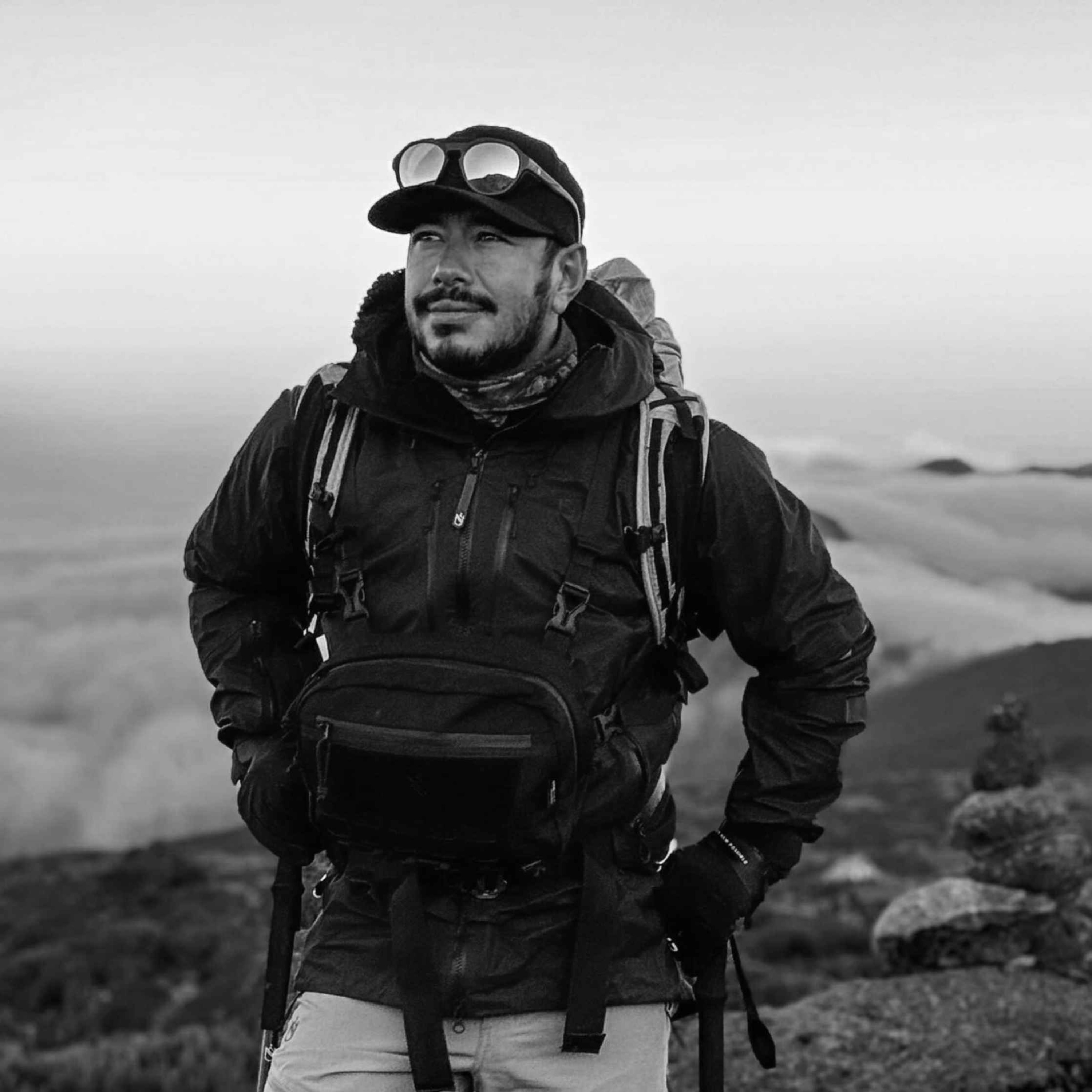
Tribute to late mountaineer Nims Purja, reflecting on lessons from his life and career, especially hope, reframing setbacks, purpose, and high-performance mindset.
No additional guests. Hosts Jake and Damian Hughes discuss their 2020 remote interview with Purja and share clips.
Purja “enhanced” environments with energy and openness; hope keeps people alive; reactions matter more than events; purpose sustains effort; “create your own opportunity”; leaders must make teams feel like family; “nothing is impossible” with belief and commitment.
Purja’s “hope is god” explanation during extreme conditions; Everest 2017 oxygen stolen story reframed as possibly saving someone; Project Possible pillars (UK Special Forces, Gurkhas, Nepalese climbing, climate/sustainability); his non-negotiables: no excuses, 100% commitment, team-as-family.
Written by AI. May contain mistakes.
Hosts reflect on the impact of Nims Purja and the loss felt by many.
“making it's somebody that's been taken far too soon it's uh the brilliant nims purger that we were lucky enough to speak to long before his 14 Peaks documentary ever sort of catapulted him to worldwide renown.”
Discussion on the concept of hope as taught by Nims Purja.
“He went, because he said that you need to be almost the anonymous figure.”
Exploration of how Nims' story embodies the power of hope.
Nims' perspective on positivity and reframing negative situations.
“Because I don't know what you were doing over the weekend, but I was constantly refreshing my browsers.”
Learn how reframing our thoughts can help in adversity.
“And by the way, if he can do it when he's faced with a moment that could literally kill him because someone has taken his oxygen, you and I can do it in our everyday lives.”
Discover the importance of a purpose larger than oneself.
“Tom Grennan and loads of other guests on the podcast have spoken about it.”
Understand the importance of hard work and seizing opportunities.
“We don't have to scale the 14 highest mountain peaks in the world to find our own version of it.”
Explore the key lessons Nims shared about persistence and resilience.
“nothing is impossible as long as you believe it and as long as you want to do it.”
Learn about the significance of teamwork and collective effort.
“But as long as you, if you keep repeating that mistake, papo ma merci.”
Learn about the critical role of teamwork and support in achieving success.
“doesn't come or become successful without the hard work of a team.”
Explore heartfelt reflections on Nims Purja's impact on his team and family.
“Well, I find it hard to listen to, to be honest.”
Discover the lessons of leadership through connection and belonging.
Learn Nims' golden rule for living a high-performance life.
“What advice would you give a teenage nymphs growing up in Nepal, just starting out on your journey?”
Reflect on the importance of living a varied and fulfilling life.
“I do think he probably would have said, I want to have a great time.”
Consider the significance of the 'dash' in life, as reflected in Nims' story.
“For that dash represents all the time they spent their life on earth and now only those who love them know what that little line is worth.”

Get the gist, explore an idea or ask about something said.
 Claude
On The High Performance Podcast, what are the key points of this episode?
Searching your listeningAutomatic transcript. May contain errors.
0:03Hi there, welcome along to another episode of High Performance. So we first started this podcast over seven years ago. And since that time, myself and Damian Hughes have had the privilege of speaking to hundreds and hundreds of the most incredible people on the planet. It's fair to say that many of them have impressed us or intrigued us or at times even changed us. but there's probably only a couple of handfuls of people that have left a genuine indelible mark on the way that we live our lives and the way that we think and we're about to talk about a man who did exactly that and in so many ways damien this is not an episode of high performance that either
0:41Jake Humphrey: of us would ever have wanted to record is it yes jake this is a episode that we wish we weren't making it's somebody that's been taken far too soon it's uh the brilliant nims purger that we were lucky enough to speak to long before his 14 Peaks documentary ever sort of catapulted him to worldwide renown. Unfortunately, this weekend he was caught up in an avalanche in Pakistan wherever his body was discovered. Indeed. So the world loses a man who brought so much energy, so much light, so much optimism, so much positivity. And I am so eternally grateful that we had the opportunity to speak to him on High Performance.
1:20And we're going to share some of the clips um from our conversation with nims remarkably damien it was like five years ago that we had the chance to speak to him time flies by and i think some people some people might listen to this episode today and think well hold on you spent an hour together five years ago and yeah we kept in touch but it's hard to explain quite why when you record an episode of this show with someone quite why you get that connection to them because it's not just it's not just talking to them for an hour like we're asking them to open themselves up to us we're opening ourselves up to them and it's really interesting that we get a very deep very intense relationship with someone very quickly when you have these kinds of conversations and i think that's why both of us you know we've been exchanging messages over the weekend i think that's why both of us were so um deeply impacted really by by the news as it emerged that nims had sadly passed away on broad peak yeah well you know
2:17Jake Humphrey: that phrase that we frequently use jake that nothing you do is neutral everything sort of either enhances an environment you go into or it subtly erodes it and i think what nims was almost the perfect embodiment of somebody that just enhanced it even when we did it remotely his energy, his enthusiasm, his openness, just was so endearing that you could tell why as a member of the special forces after he'd been a member of the Gurkhas, he'd been such an invaluable member of that team because he just made them better and we got a small glimpse of it in that hour of how he encouraged us to be better, people, communicators and presenters.
2:58Jake Humphrey: He has left an indelible mark on our lives so you know heaven knows the impact is hard on his wife and his children and those that knew him for a lot longer and we're going to play some clips from the conversation and talk about them in just a moment in some ways damien i i almost don't want to do this because hearing his voice is almost the hardest thing because you get reminded of the fact that it's not just the loss of his life and we also must pay our tributes and our respects to the people that died with him on that mountain yeah but it's it's kind of the loss of this energy source and i know the world is a poorer place without him but the world is absolutely a richer place for having had nims purger in it for the time that he was alive what are your memories of of that specific day because it was obviously recorded from a distance he was in nepal we were you were at home i was at home i tell you my vivid memories when he said something and i remember i stood up and put arms in the air and went you're just so inspiring i just have this like memory of like i don't know man i remember i remember skipping out here and saying to harry and the kids i've just recorded an episode that you need to listen to like seb was only five at the time what about you well there was three things for me one was um this repeated use of the word brother you know i mean yes brother yes and i've used brother so much since yeah yeah because i mean how can you not respond to somebody coming up with such a with such a like um an intimate term for somebody that it made you feel so good didn't it when he said it yeah the second one was that what i loved about him when i've told people is that when he was describing how he was preparing to join the uh the sbs the special forces part of his training that he did was to sit and watch only fools and horses and when we asked him why he was like well because i realized that i was gonna have to adopt the same sense of humour as the guys was going to be in.
4:54Jake Humphrey: He went, because he said that you need to be almost the anonymous figure. So he went, I have to do everything I can to assimilate. And part of that was, I need to get into the same sense of humour. What they're laughing at, I need to be able to laugh at. And to me, it was such a subtle, but really insightful and clever way that the guy thought, that that stood out. And then the final one was, he used that line to us when he went, to be world-class at anything depends on how long you're willing to be shit at it for. And I love that. I've used that so often. You've used that, like every time we're on stage, you use that word and that line with people.
5:30Jake Humphrey: Yeah, because it captures so beautifully that this was a guy that described how he failed his first attempt to join the Gurkha Regiment and then he went back a second time. Then he was the first Gurkha to become a member of the British Special Forces. Then he left there and he'd never climbed mountains before he broke those world records. this was a guy that was constantly going out of his comfort zone and we were seeing the outcome but he was at pains to say listen there's there's there's a process i've had to follow and i've been rubbish at it for a long time before i got excellent and if that isn't a great definition of high performance i don't know what is it's such a sad loss well today we are absolutely privileged to say that nim's joined us on high performance and we're extremely proud that we can play you listening or watching this some of the clips um and some of the comments and some of the thoughts that he shared with us because they are things that can be part of your life going forward from here well i did read jake that in the sort of sherpa buddhist belief system they uh there's a belief that the soul takes 49 days after death to determine its next rebirth so it's so hopefully we can put in a good word for Nims here and sort of going back and revisiting just what an incredible man he was so that whatever he comes back as is uh is is well deserving of the impact that he left I love that I love that well let's um let's go straight to a clip then from Nims Persia here he is the late great Nims Persia sharing with us the importance of hope and then it is as much like those little details as you got to pay attention now going into the mountain as you say like hope is god i'm not a really religious person you know i don't really believe in in god but then i keep saying you hope is god because that's all what we have okay as a human if you imagine let's say for my example okay if i'm in sbs if i'm in a war or somewhere else then when there's if the bullets flying around and and and when she hits the fan and if you're not like hoping that you're going to win this war that's like you you get give up the battle already and exactly when you're climbing in the mountain sometimes you know i was climbing at at 75 kilometer per hour wind speed it's so freezing cold but then if you just give up your hope that you're going to come alive from these big mountains you're going to die because you know hope is what it keeps us motivated hope is what it keeps us alive you know and that's what we have as a human i think it's a really important place to start near damien because i think if nims taught us one thing lived with one thing and left us with one thing it's hope and i think the reason why that is such an important lesson for people is i think that we need hope when we're in that moment in life where the fact offers us absolutely nothing right and the fact in front of nims perjure was that nobody climbs 14 peaks at the speed that he does it.
8:38Nobody summits these mountains without oxygen time and time and time again. But he did those things despite the fact that there was no evidence that it could be done. So there might be people listening to this knowing that they have a diagnosis that's frightening, a relationship that might be broken, a dream that might be falling apart. Maybe grief has changed the shape of everything. Maybe there are people listening to this waking up and they can't see a way forward. and I think what Nim's talked about there and we'll hear another clip about this in a moment is the fact that the hope needs to be there when the moments aren't very easy, right?
9:14Because the hope doesn't kind of deny the pain, it doesn't ignore like the reality or promise that everything's going to be fine but hope just says to you like this is not the whole story. You can rewrite something here and I think as Nim showed us hope
9:30Jake Humphrey: because hope was all he had at times can give all of us the strength to take that one step when we can't see the entire journey that just because life feels dark today doesn't mean the light has disappeared forever and i think in some ways hope is is more important when we talk about nims than ever before because he's no longer here yeah definitely i mean that whole topic of hope i remember reading a book by i called andrew remember reading a book by andrew razegi called hope where it looks at the research on its importance in life in general, not just performance. But there was one study by a psychologist called Shane Lopez who said that hope accounts for about 14 % in the variance of somebody's productivity in the workplace.
10:15Jake Humphrey: There was another study that said for academic performance, hope was a more accurate predictor than somebody's intelligence or prior grades. The belief that things can be better tomorrow than they were today is critical for us as a species. And I think, again, for Nims and the sort of message that he passed on to us is that sometimes when the night was darkest, it was his own internal light of hope that things were going to be better, that things were going to improve, that was such an inspiring example for it. And I think we can all take that and embrace it. It can also be very cruel, though, can't it, Hope?
10:53Because I don't know what you were doing over the weekend, but I was constantly refreshing my browsers. I was going on social media trying to get any news I could. And I was seeing this news that Nim's GPS tracker had said that he'd moved after the avalanche. And I was sort of, in my head, I was thinking, come on, like, if anyone can, Nim's purge, I can. You know, I tell you, I was fully expecting, fully expecting to hear the news that he was going to be okay. Because he was the kind of guy that just gave you that feeling. You know, he gave you that feeling of invincibility. and I suppose it's another reminder that, you know, human life is so fragile.
11:28Jake Humphrey: Well, he wrote in his own book, I was reminded of it when the final news came through, that he said in his own brilliant book that nature doesn't care about your reputation, your age, your gender or your personality. The mountain is entirely indifferent to who you are. And I think there's something there around, this was a man that knew and had that ultimate respect for nature and the power of it, you know, and I'd like to believe that as horrendous as his passing is, he'd have been at peace with it. He knew what he was doing and he knew the risks that he was taking on every time that he did scale those mountains.
12:04I hope so. So that's our first lesson from the great Nims Persia, which is that hope is the most important thing. And if you're listening to this, I think it's also important to remember that it's not just hope for us, it's hope for each other as well. I think we all know there are days when someone that we love can't deal with it themselves. And those days we have to carry the hope for them, remind people of who they are. You know, the fact that they've survived everything up until this point and so much of their story is still waiting to be written.
12:35Jake Humphrey: Yeah. He also gave us a great example, didn't he, Damien, about hope. I think we should probably share this story now. If you love what you're going to do, of course, you've got to work hard for it. You've got to again commit. There will be so much like negative stuff, but then you've got to think positive about everything. And just to give an example, I was on Everest in 2017. I was still in Special Forces and I was trying to break the world record for climbing in Everest, Lhotse and Makalu, which is the first, fourth and fifth mountain. And in process of doing that, when I went to Lhotse, my oxygen were stolen.
13:11so just to give you an example being oxygen stolen at camp for the death zone is it's a crime you work so hard you have to take the weather forecast you have to take those oxygen to to to put it over there it's a mission and literally when you went over there and your your oxygen is not there it is it's gonna drown you and and many people will just get angry and they will just like blame on other people and they leave but what I thought was okay Nips come on come on there must be something and what I said was okay my oxygen was probably used for some emergency situation maybe someone is alive because it was you know somebody used it for rescue that could be completely lie but then I told my brain to believe in that positive thing and I was happy okay you know somebody's alive maybe but then sometimes you have to do it all it's all about you know how you
14:04Jake Humphrey: you could be the situation i mean what a powerful story that is that you know you come to get your oxygen supplies and find out that they've been stolen but the brain in a situation like that jake is what there's a great phrase i've been using recently called the cognitive miser your brain doesn't like being generous to other people with their descriptions or their explanations so we tend to see the worst in a situation or believe it like what nim said that somebody's stolen this, how could they do it? But what I love is the sheer force of his thinking to actually try and see the positives in it, to believe that his oxygen had actually helped save somebody else's life rather than let himself dwell in that bitterness and the anger and the negativity that most of us would have sort of succumbed to.
14:50And by the way, if he can do it when he's faced with a moment that could literally kill him because someone has taken his oxygen, you and I can do it in our everyday lives. You know, this is a concept called reframing. Tom Grennan and loads of other guests on the podcast have spoken about it. You know, what benefit did it serve Nims at that moment to think I've been wronged, zero? What benefit did it serve him to write a story as untrue as it might be that his oxygen had saved someone's life? The benefit to him was huge. And it's a reminder for all of us to do this. You know, we can spend our lives getting bitter, twisted, wrapped up in what other people say, frustrated with other people's actions.
15:27But what benefit is that doing to us? So if you're listening to this now, the next lesson left for us from Nims Perger is that you are responsible for your reaction to the world. There's that great phrase, Damien, life is 95 % how you react to the 5 % of things that happen. You know, it's not about what happens. It's about how we react to those things that happen. I want to play a clip now, which I think is really important. And this is all about the power of purpose. Having something in your life that is so much bigger than you. I'll let Nims explain the importance of project possible. Sometimes I used to vision like, okay, Nims, there is all this painful, there's like so much suffering, but then what?
16:11What's going to happen when you finish the project? You can still kind of look yourself through this dark tunnel and you can see yourself on the other side. And that's what it gives you more kind of power. and as I mentioned in the book like I had a really good purpose that I believed why I needed to do this project and being completely honest if it was for myself and if it was for the name and fame I would have never been successful in this project it was you know that that huge you know you needed something bigger than this so when I left my job my mom even told me you know she is very close to to me she's my inspiration and she said oh Nims because you know you are sending money every month and now you are doing this project because you know we we are a burden to you but i said to to her no mom because this project is way bigger than me our family and all and if i can sacrifice this for the bigger reason which i absolutely believed in i think i can do it there's a chance and and the reason was yes i love the mountaineering i love the challenge but more than that i wanted to show the world in my way that nothing is impossible I wanted to raise the name of the Nepalese climbers.
17:23And equally, I want to raise the awareness about climate change and sustainable environment. And these were the core pillars. But when I say core pillars, these are the bigger picture. But then inside that, there is also layer. Because all these pillars cannot always keep you going. Then I used to think, okay, I cannot give up because I represent the best in the world, UK Special Forces. I have no right to ruin the reputation by coming out loud and be a joker then I should think okay I'm a Gurkha now then I should think okay I represent Nepalese climbing community then it goes into the circle and the cycle of everything else I love that idea Damien of of NIMS having those core pillars where he says right um I can't give up because I represent the best in the world the special forces I have no right to ruin their reputation by coming out loud and being a joker then I think okay I'm a Gurkha then I think now I represent the Nepalese climbing community All of us represent things far greater than ourselves.
18:21All of us represent our parents, our friends, our colleagues, our businesses, our legacy. And I just think it's a great way to think, isn't it? To have this idea that there's something so much bigger than us. It kind of, in many ways, removes the ego from everything. And I think Nim's got unfairly criticised for putting ego at the centre of what he did. I think we do that naturally when someone becomes famous and successful after something. It makes us feel better to say it must have been about ego. But I don't believe it was. I believe that his purpose of being a climber representing Nepal mattered more than anything for him.
18:55That wonderful scene of him holding arm-in-arm with his fellow Nepalese Sherpas and singing the Nepalese national anthem as they summited, that's a reminder that it wasn't him striding out 20 yards in front of all of the other Sherpas. That was him putting Nepal ahead of himself. And I think that often was his energy source when times were hard.
19:14Jake Humphrey: Yeah, definitely. And again, that's been consistent with so many of the special forces guys that we've seen, that they pride themselves on putting the team above the individual. So I've no reason to believe that it was about ego for him, that he was constantly lifting others up to where he went. There's a study, Jake, on finding a purpose. We don't have to scale the 14 highest mountain peaks in the world to find our own version of it. In 2019, there was a study of over 7 ,000 adults in America aged over 50, and it found that those with the lowest sense of purpose were roughly twice as likely to die during the four-year follow-up as those that said that they had a higher figure.
19:56There's other research that says those with a higher sense of purpose
20:00Jake Humphrey: are about two and a half times more likely to remain free of Alzheimer's than those with a low purpose. There's another one that says that having a purpose reduces the risk of a heart attack by about 27%. So just sort of tapping into something that's bigger than ourselves, making ourselves seem as if we're putting ourselves in situations where we have almost like a duty or an obligation to represent something bigger than us, like what Nims was talking about. It's life enhancing as well as, you know, it puts life in our years as well as years in our life. And there's something really powerful to be said around being willing to try and find and discover that sense of what we're here for.
20:41Really nice. But of course, at the same time, sometimes what we need to find is within us. It's not in the higher purpose, it's within us. And Nims also spoke about this, this idea that in life, you have to create your own opportunity. My principle was, in everything what we do in life, you should never think about the second options okay i'll give an example okay if you say that you're gonna run a complete marathon and if you're already thinking about giving up in like halfway you're gonna give up you don't have to think about giving up if you can't do it you can give up it's just there it's in your pocket you just give up you don't have to already plan to to give up you know i mean so i used to say why why refer to second options when you can plan on the on the first option and going into second option is always easier it's always easier but then it's easier doesn't mean it's right you know so that's what's kind of you know like my my thought process but then a key message here is jake you know if you look where i came from you know a really poor you know nepalese background you know we used to live in in this you know you know in this room where we had like chicken upstairs you know so there were chicken farming or you know and then having no flip-flops to then joining the Garakas.
22:06I filmed my first attempt in the Garakas, but second time I made it through. Then going into Special Forces, you know, like driving submarines, doing some of the crazy stuff that people can't even imagine. You know, I know what I've done and probably few people know. But then even from that to go and climb all these 14 highest mountains in the world that no one has ever imagined and and and who i am now i would like to say i'm pretty successful but then looking back i had nothing i was underprivileged you know i had no like opportunities but then i created opportunities so for everybody else out there who feel like that they have no privilege or underprivileged or who feel like they don't have the opportunity oh man we create our own opportunity.
22:57You just have to work twice harder, maybe. So that's a simple message that nothing is impossible as long as you believe it and as long as you want to do it. I mean, I love the way that he ended that line there, Damien, where he said a simple message, nothing's impossible as long as you believe it and as long as you want to do it. And obviously, that was the title of his Netflix documentary that propelled him to superstardom. And it's so important for someone like Nims, who didn't come from privilege, didn't come from wealth, didn't come from opportunity, to show us all what's possible. You know, when he says, you just have to work twice harder, maybe.
23:33I mean, it's something that people don't like hearing these days, I think, often. They feel like we don't all have the same opportunities, therefore we can't all be judged in the same way. But I think actually what Nims represented here was this idea that maybe that is the case, but also maybe we have far more control over the outcome of our life than we want to admit and i think it's become ever more ever more that case because i think excuses can be really helpful for people at times it allows them to hide behind the fact that there must be another reason that they haven't achieved the things they want to achieve and really what nims was saying in that message is hey listen no excuses right it's within it's
24:11Jake Humphrey: within and you need to find it mate that's such a powerful message i think when you go if people want to go back and listen to the interview we did i mean i'd encourage you to sort of dwell on his early years because we're focusing very much on on on the outcome of him becoming sort of renowned for his climbing expertise but start at the very beginning of his origin story that school that he went to uh in nepal where the deprivations you know he spoke about the fact that he didn't have flip-flops he had chickens upstairs there was no privilege the teachers treated them quite harshly and yet the idea of what the psychologist albert bandura talks about the locus of control he always believed the locus of control was within him the idea that he got up in the middle of the night and ran with weights in his uh around his ankles to make him stronger and more obdurate the fact that he sort of saw the deprivations as preparing him for to be able to cope with the harshest of circumstances he he was a guy that wasn't using excuses and I think that's a pattern that research tells us as well as what our own interviews have validated over the last seven years it's the people that believe that they are in control of their own circumstances and their own luck are the ones that tend to find it you know I know that Nims has a daughter she's only three years old very tragically but one of the things that has given me a bit of comfort actually in the last couple of days is thinking that all of these podcasts, and, you know, let's be honest, he didn't just come on high performance, he went on plenty of podcasts.
25:44He wrote plenty of articles. He was filmed on plenty of occasions. I really hope that as much as really what she would want is her dad to be around, his daughter can still really know her dad through all of these conversations, you know.
25:58Jake Humphrey: Yeah, I read an interview recently in the Sunday papers where there was a journalist that was really advocating interviewing your parents if they're still around to find out their own story their own lessons their own fears in order to help you understand and navigate life yourself and I yeah you're right I think there's plenty of incredible material out there that NIMS has passed on not only to the general public but hopefully for his own family to be able to use it as a blueprint for their own lives to go out there and make a difference. At this point in our conversation with NIMS Damien attention turned to our quickfire questions.
26:39The first question we asked Nims was what are the three non-negotiables that people around him have to buy into and bring to the table? And this was his answer. I don't accept excuses, you know. We all make mistakes. To make mistakes is fine. But as long as you, if you keep repeating that mistake, papo ma merci. The second thing is, you know, we all have, you know, different talents and all. but then you got to give 100 % to now. And third thing, if they are part of my team or if I'm their team, it has to be part of the family. And it's one mission, it's one goal. And then if me as a leader, if I make my team fail like that, I'm not good enough because leaders don't do that.
27:24There has to be something for every team members. And this is why the project became so successful because all my team members managed to climb new mountains with me. Normally, what people would do is like, okay, I'm going to go into this mountain. I'm going to have someone who has climbed this mountain because he will know the route. He will know how long it's going to take. He will know where the dangers are, et cetera. But I didn't do that. I was like, okay, you haven't climbed that mountain? You're going to come and climb that mountain with me. And I haven't climbed that mountain either because it was something for them as well.
27:57And Jake, you know, this kind of nature and the project, doesn't come or become successful without the hard work of a team. It's a team effort. Not literally from the guys who had the boots on the ground, but also at the back, my wife, and people who supported me, all the sponsors and all. And that's why I said this was a people's project. It wasn't my project. So yeah, I wanted to mention that. Well, what did you think of that, Jake? Well, I find it hard to listen to, to be honest.
28:32I feel very sad for his wife. And when he talks about his wife there and talks about his family, obviously he's, you know, many people would have felt that they're in Nims' family if they've been part of his team, if they've climbed mountains with him, if they've planned projects with him. But I think, you know, Suchi, his wife, is the person that would have known him better than all the others. I feel very, very sad for her. But I think, again, the lesson is so clear, like so clear to us so clear to everyone listening to this like people around you whether they're family or not if you make them feel like family together you will achieve so much more than if you make them feel like friends feel like colleagues feel like um an insignificant part
29:15Jake Humphrey: of your life you know yeah yeah yeah definitely what about you well i love that idea that again he's you know when he speaks around uh if you don't feel part of a family i've failed as a leader he's not attributing um that to to your failure or your personality he sees it as a reflection on him which goes back to that whole theme of that locus of control he saw it as something that he could shape and he could he uh he could create and again i think that message was so consistent in everything that he shared with us he believed that he was he was in control of the world and the results that he got.
29:54Jake Humphrey: Shall we listen to the other quickfire questions? Because as I remember it, they were just equally inspiring. Yeah, let's do it. What advice would you give a teenage nymphs growing up in Nepal, just starting out on your journey? Nothing is impossible. It's a very simple message and keep dreaming. And hopefully, you know, I will have more opportunity to make that positive impact on many lives. so how important is legacy to you uh it is important buddy i think of course what do you want your legacy to be man i really don't know i don't have answer because at the moment i'm still like 37 year old young fella and i got so much to live i got so much to do in this world so you know again you know when you look into my past life it was all about being the best soldier in the planet and now i'm doing something else and that could be something else so i think time will tell and it's not up to me to say that but hey.
30:53Jake Humphrey: And finally Nims, what is your one golden rule for living a high performance life? Wow that's a very tough question. I think never give up, never have excuses, commit, give 100 % to now, have a positive mindset and keep believing. how do you feel I've got a lump in my throat and goosebumps that bit when he spoke up being a young man and I've got so much to live for I forgot he told us that it just caught me sideways what about you same it's just so sad so sad but I don't know I think I think, knowing the kind of guy he was, I think if you asked him at the beginning of his life, listen, son, do you want a long time or do you want a great time?
31:51I do think he probably would have said, I want to have a great time. And I definitely take solace from the fact that Nim's packed more into his short few years on Earth than many of us pack into an entire lifetime. I often think like one of the saddest lives to live is where you live the same year on repeat right again and again and again the same restaurants and the same friends and the same pubs and the same other days and the same emotions and the same highs and lows yeah because I think life should be a in my opinion a mix of different emotions and challenges all the time yeah and that's exactly what he had you know constant change of scenery change of challenge he was pushing himself you know the reason why he was the only reason he was on broad peak was because he wanted to be the first person to set another record of summiting these mountains twice over and he said and he put that post up on his social media like this was never in the plan yeah maybe sometimes we have to just surrender to fate you know well there's a lovely it reminded
32:55Jake Humphrey: me of um there's a poem from a lady called linda ellis called the dash if i just read it it says I read of a man who stood to speak at the funeral of a friend. He referred to the dates on the tombstone from the beginning to the end. He noted that first came the date of birth and spoke of the following date with tears. But he said what mattered most of all was the dash between those years. For that dash represents all the time they spent their life on earth and now only those who love them know what that little line is worth. For it matters not how much we own, the cars, the house, the cash. What matters is how we live and love and how we spend our dash.
33:30Jake Humphrey: so think about this long and hard and there are things you'd like to change for you know how much time is left for you never know how much time is left that can that still can be arranged to be less quick to anger and show appreciation more and love the people in our lives like we've never loved before if we treat each other with respect and often wear a smile remembering that this little special dash might only last a while so when your eulogy is being read with your life's actions to rehash would you be proud of the things they say about how you lived your dash and i think nims can definitely be proud of his dash 100 100 um thoughts uh with nims his family his friends um all of the climbers who were on broad peak with him just a few days ago and what a privilege and what an honour to have invited Nims onto the High Performance Podcast and to get the opportunity to reflect on his dash for the last little while.
34:35Thank you very much for listening to this and we'll see you again soon for another episode.
Following the heartbreaking death of Nims Purja... Jake and Damian reflect on one of the most inspiring conversations in High Performance history.
Before 14 Peaks made him a global icon, Nims joined High Performance to share the mindset that took him from a childhood of poverty in Nepal, to the Gurkhas, the British Special Forces, and ultimately to rewriting mountaineering history.
In this special tribute episode, Jake and Damian revisit the lessons that left a lasting impact on them:
Nims' energy, humility and optimism changed the way we think about life and performance. This episode celebrates the remarkable legacy he leaves behind and the lessons that will continue to inspire millions
Hosted on Acast. See acast.com/privacy for more information.


