
 Ask ChatGPT


 The High Performance Podcast
6 Oct 2025 · 1h 14m
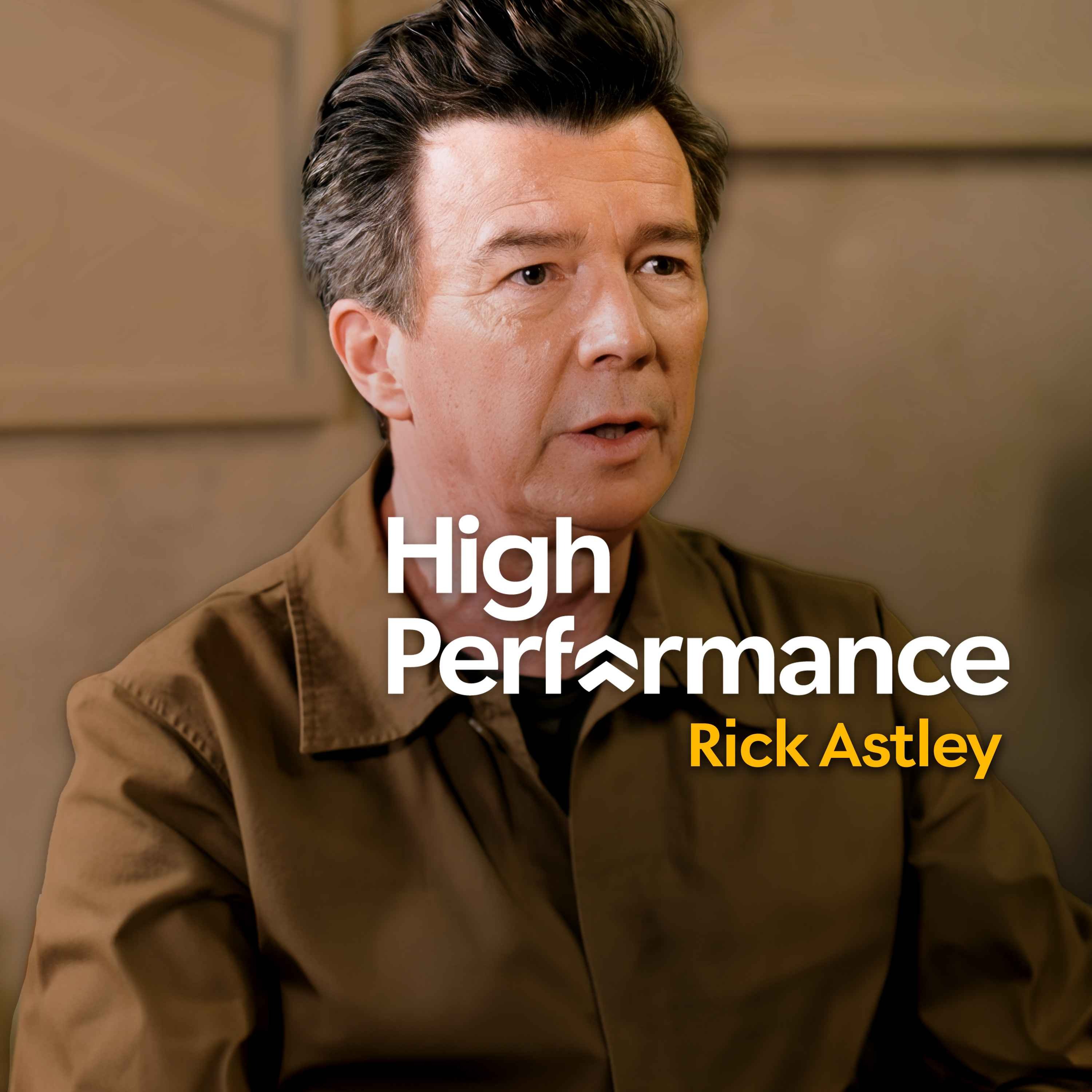
The High Performance Podcast, hosted by Jake Humphrey and Damian Hughes, features conversations with remarkable guests to uncover the secrets behind high performance and personal growth. This episode delves into the life of Rick Astley, focusing on his journey through fame, personal struggles, and insights gained along the way.
Written by AI. May contain mistakes.

Get the gist, explore an idea or ask about something said.
 Claude
On The High Performance Podcast, what are the key points of this episode?
Searching your listeningAutomatic transcript. May contain errors.
0:00Unlock your next dose of inspiration early on the High Performance App. Available now, Gary Brecker, the human biologist, helping people unlock their peak health and performance. It's bought every house. It bought my mum's house. If you cut me open like a stick of rock, it says never going to give you up in the middle. That's just what it does. My dad just lost it. He was getting ready to hit me again then. The next oldest brother, he came out of said port-a-cabin with a great big eight-inch bread knife. I'm most proud of our daughter. So, yeah, that's what I'm most proud of. The music's a nonsense.
0:35It's a lovely nonsense, but it's a nonsense. That is the voice of Rick Astley, the man behind one of the most iconic pop songs ever made. Look, we all know that, but this episode is about the things that you don't know about Rick Astley. You know, we have a WhatsApp group where we talk about guests that are coming onto the show, and I got the sense you were really excited about having Rick in the studio. Well, I was. I read his book last year in anticipation of him coming on and there was so much I didn't know. Some of the childhood trauma, the difficult father he'd had, the struggles he'd had once he'd become a pop star.
1:10It was fascinating. And you know, I've known Rick through Eddie Jordan and through the Formula One world for quite a few years, or at least I thought I'd known Rick. I absolutely did not know him at all. It was only when we sat down and had this conversation and we started talking about fame and the fear that he has about certain elements of his life and the fact that he's still figuring stuff out. You know, when he talks about therapy, saving his marriage, and that story about him just, like, walking away from the spotlight to find freedom and then ending up a few years later on stage at Glastonbury.
1:40I honestly was sitting here thinking, I knew none of this stuff. You're a fascinating guy. Well, he was, and there's so many topics that are just worth listening out to. He talks about ego, music, money, and fatherhood, including a really emotional moment towards the end that had Rick in tears. Yeah. Look, this is not a pop star story, okay? This is a human story of resilience, reflection, never giving up. Oh, I see what you did there. Thank you. Please welcome Rick Astley to High Performance.
2:12Rick, welcome to High Performance. Pleasure to be here. Lovely to welcome you to the show. And your book, Never. It is remarkable. In fact, on the front cover it says, not your standard pop star autobiography. Standard pop star, eh? what is a standard pop star? Well you're also not a standard pop star but we're going to talk about that in detail and I think what that's alluding to probably is some of the experiences and the traumas you had early in your life that have maybe formed the decisions that you made the person that very much sits in front of us here and I wonder what are the sort of ghosts of those early years of your life that you still feel rattle around your adult body?
2:49I think there's always a bit of doubt for anybody who's ever done anything in the limelight or creative or what have you. You're kind of like, does anybody really want to hear this, see this? You know, even though you've got a stage and there might be thousands of people who've all got off their backsides, bought a ticket, made efforts to come to the gig, and you're still in the back of your mind, there's this little devil kind of going, yeah, they don't really want to be here though, do they? You know what I mean? But I also think that is, that also then drives you, I think, a little bit as well.
3:19So there's a tiny bit of that. And why do you relate that instantly to your childhood? What was it about your childhood that built that? I think because I don't really feel that... And I did the book after my parents passed away because I didn't feel like I could be completely honest about that. And I wanted to be because I do believe that, like, with all of us really, our upbringing, so what turns us into the person we are, you can change that, you can work on that, you can do a lot. But you bring a lot from your childhood, definitely. And I think people who've jumped on a stage for whatever reason definitely bring some of that.
3:50So I think I've just kind of probably, at different times in my life, I mean, I did quite a lot of therapy in my late 20s, but that was kind of after my pop thing and what have you. And I think that was partly to help keep my marriage together and my life together and everything, you know, and that's just for most of us, I think. But also, I think it was to try and delve into my childhood a little bit and try and be able not to judge myself, perhaps the way that my dad would have judged, not just me but the world and what story from your childhood would would you be happy to share with us and our audience right now that that really kind of makes it clear to them why this was such a significant there's a big one we talked about it off camera briefly didn't we before yeah um there was a scene which which is pretty dramatic i think to be honest but my dad had a little business and my dad was a bit quirky to say the least um we lived in a kind of a nice Victorian house and then we didn't because he wanted to sell the house and put money into this little business which is a little garden centre so by the age of 13, 14 I went to live in a porter cabin which on the one you could sort of think is a teenage adventure we had a forklift truck you know we had a tractor you know you pick up anything in that thing we had tools everywhere and all kinds of things so like a boys kind of you know and I went to live there with my two older brothers and my dad but he was under a lot of pressure and a lot of stress and he dealt with it in his way.
5:17So he was either, he would probably be diagnosed today. And I can't say I could give him a diagnosis, but if we just throw bipolar out there or something to the degree where he was unbelievably up or he was unbelievably down. He wasn't physically abusive to us in any way, but he physically abused anything that got in his way. So he would destroy something in front of us. Even as a very small child, four or five. Terrified. Terrified. I mean, the one person or the two people, let's say your mum and your dad, but your dad is the person you're hoping is going to guide you through things and put an arm around you.
5:52And he did do a bit of that. You know, I have no ill will towards him or anything, right? I really don't. He went through nightmares. They had a son who died way before I was born and the next eldest was born. And I think it just broke them then, but they just carried on as people do sometimes and they managed to keep it together and have a life and they'll never get through that 100 % because you don't get over it or anything. You just, you learn to deal with it. Anyway, going back to this moment when it was like this thing. So my dad, one morning, I'm probably about 17 or 18 at this point. You know, the garden center's been going a while.
6:24My dad just lost it, like big time, over something. I don't even know what. Comes to me, knocks me to the ground. He's never really done that in his life. As I say, he's been very physical around us, but not towards us. So I don't even know what's going on. But I mean, he's in like a serious rage at this point. And he's screaming. Did he push you or punch you? Yeah, he didn't punch me. It was like a sort of a connected push, let's say. But he wasn't backing off. He was getting ready to hit me again then. And I don't know why. I think I was just in the way and he just lost it. He just completely lost it.
6:56And I think, like I say, I think he needed medical help. He needed help with stuff. And I just don't think he got that. And obviously what he got was a lot of stress, four kids, all the rest of it. So anyway, the next eldest brother, Mike, this is not Mike's go-to thing either, you know. He came out of said port-a-cabin with a great big eight-inch bread knife, put it against his throat, and said, I will fucking drop you if you move. Just move, and you're done. That's what your brother said to you, Dad? Yeah. I don't know about word for word, but that, you know, I remember the sentiment of it. By this time, I'm on my feet as well.
7:34And, you know, not to make light of it, we could have buried him, do you know what I mean? We had a tractor, we could have dug a hole. I was about 17, 18. and I actually when I've read other biographies and I've been through people's life stories a little bit and this that and the other it's not like I'm saying this was like it was massive to me but compared to what some kids have been through it's a day in the park almost because he wasn't coming at me with a knife it wasn't do you know what I'm saying some people have had but all those things as we know are all relative it's perhaps what you've had before it's what you're used to this was an explosion we hadn't really seen but I hadn't seen Mike do that either and And so anyway, so we left home and went to live with my grands, which is where my mom lived.
8:15And it was like a huge, it was an end and a beginning, actually. I kind of made it up with my dad again, you know, and we, yeah, we did make it up actually, yeah. And I went back to work at the garden center. My brother Mike didn't. He actually got his head down and studied, became a chartered accountant and a financial director of companies, which is a bit odd when you think he was a motorcycle hoodlum who pulled a knife on his dad. But he's not that guy. He was doing it to defend me. He was doing it in, I need to stop this, you know. So.
9:10without the weekly plan. Wait, no subscription? Keep the flavor. Ditch the subscription. Get 20 % off your first two orders with code APRON20. Terms and conditions apply. Visit blueapron.com slash terms for more. I don't know about you, but as I get older, I start to think more and more about the long game. You know, I'm going to be 47 very soon. And I love the fact that I can show up well today. But actually, I really want to start thinking about things that will leave me in a good place tomorrow, next year, even decades from now. And that's why longevity is so important for me. And one small change I'd love you to consider is MiterPure gummies.
9:46You know, these are the first longevity gummies, and they're powered by something cool called Urolithin A. Now, unlike most supplements, these work at the deepest level with your cells. And when your cells are stronger, everything you do from training to focus just feels easier. And as always, I ask about the science behind these things. Well, MiterPure has been shown to boost energy and even increase muscle strength by up to 12 % in just 16 weeks. They're vegan, gluten-free, clean label certified. They taste great. So if you care about staying strong, energized, and ready for whatever comes your way, think about them.
10:18My friends at Timeline are giving you a high-performance listener, 20 % off. Just go to timeline.com slash highperformance. That's timeline.com slash highperformance. And think about your longevity. This episode is brought to you by Opera Air, the first browser with mindfulness at its core. Now, most of us spend hours every day online, but how often do we pause to take care of ourselves whilst we're doing it? And that's where Opera Air comes in. It's a lightweight, fast, secure browser built not just for productivity, but for your well-being. With Opera Air, mindfulness is built right in. You'll find free breathing exercises, guided meditations, and soundscapes with ambient sounds, lo-fi music, and binaural beats, all designed to help you focus, relax, and even spark creativity while you browse.
11:09there is a pattern in your stories having read your book with around endings and beginnings as you've just said whether that's um what you saw in terms of your own parents relationship separating yeah like would you tell us a bit around that yeah i mean they they never spoke to each other which it's just weird you know we'd get a phone call at the house on a landline obviously my dad would pick the phone up and if it was my mom he would sometimes say it's her or he would just put the phone down and walk away. And therefore we knew it was mum. And we lived with my dad, which was pretty unusual.
11:41And again, I've tried to go through this, not with her because I didn't want to put her under that strain and stress exactly really. I think she just, she was just done. I think she, in her own, I guess in her own way, she'd had a breakdown as well and not really verbalized it as that or even, you know, which at times it just felt like she was behind a pane of glass a little bit. But I love both my parents and I know they loved me. They just were dealt the wrong cards. And that's what they were dealt with. And that's what, you know. But so many people experience anxiety in childhood and either repeat the cycle or they consciously break it.
12:18Yeah. It sounds like you've made a conscious decision. Yeah, I definitely have. And I know my brothers and my sister have as well. We're all with partners that we've been with forever kind of thing. We've all got kids. Nothing's perfect in anyone's life, but at least you... the weird thing is when the four of us get together the four siblings we laugh and joke about it so for instance when we spread both their ashes because it was kind of in the Covid period when they died not because of Covid actually but so it wasn't it was about a year apart but we hadn't done anything with my dad's ashes so we decided to do it on the same day and I'm not sure this is legal but whatever it's only on a podcast here we go we went and spread them in two places that they both we both knew they really loved and we had a whiskey with my dad's and we threw his ashes into a river.
13:07He'd bought a cottage and he was going to run away and escape. And this last business kind of brought him back, if you know what I mean. And it's a real shame because he should have just gone and we would have been all right. You know, we were all teenagers. We would have been okay. Anyway, it was quite emotional that. It was very emotional actually. And I don't know. I kind of feel it wasn't like there wasn't any love there and there was on both sides and he was a great dad in lots of ways. He just couldn't control himself. But what we do as siblings, we laugh about it more than we do anything.
13:42And maybe that's a very British thing as well, that you laugh about adversity and this, that and the other. But we cry with laughter about it, literally. And every now and again, the four of us, we haven't done it for a while now actually, but the four of us will just go off for a day and do something and go to a nice restaurant or whatever. have you? And it comes up, obviously. I'm the one who usually brings it up together as well. We talk about our parents a lot in our upbringing, and there's a lot to laugh about as well, you know. So I do 100 % believe that some of the things that happened in my childhood are the reason I got on a stage.
14:13And even though that's a tiny bit twisted, possibly, I see it in most people who get on a stage. Go on, say more on that. Well, in the sense that you're craving attention from somewhere, you're craving an escape from somewhere so it gives you both of those things you're my dad loved me and my mum loved me, I'm aware of that I was aware of it at the time but it was probably a bit more like that I think and I think when you are in front of a lot of people and they're all singing a song that you've got a hit with it does feel like love it's not love like family and it's not love like your wife, your husband your whatever or partner or whatever but there is some kind of love there And it's a weird thing to distill and try and work out what it is.
14:58But it is, and I hope I give some out as well. I really do. I hope I'm giving a bit of something to receive that. And so I think being on a stage, I actually genuinely don't care about being famous. And I know people say that and don't mean it. I kind of don't really care. Because being on stage is amazing. And that's a different thing. And being famous for something you perhaps are supposed to be good at and maybe are good at is one thing. Being famous in Tesco is absolutely pointless. It serves nobody other than somebody gets a selfie out of it. I don't mind doing it. I want to do selfies for anybody who wants one, but I'm just putting that out there.
15:36But I don't think it really gives me anything. It doesn't, you know what I mean? What gives me something is when someone's at a gig and I can see emotionally, they remember that tune and they turn to their partner and have a bit of a cuddle. That means something. But is there something about, like, in a concert, it's from questioning their devotion to you their passion they have whatever it's to meet you in a supermarket I want something but I'm trying to take something from you yeah I don't well I mean I don't know where I call it taking from me because that's it's part of the job I think you know what I mean and I I kind of get that I do get it that like I bumped into somebody in the thing and I got a selfie with them you'll never guess whatever I'm all good with it I really am I guess it's just the thing about performing especially some of the songs I've written in the last 10 years.
16:22Like for instance, I made this record in my garage 10 years ago just because I wanted to have a go at doing a record again. I wasn't signed to anybody. I just thought I'm going to have a go at it. And so it led for me doing the demos that weren't really demos. So I ended up playing everything and producing it and doing everything right. So doing the theme tune and everything. So we went to my old label and they wanted to do it and boom. So off we went and did it and all the rest of it. Some of those songs, especially the first song on that first record actually, is a little story about being in the car with my dad and him crying driving and me going like, what is going on?
16:57Because I was pretty young at this point. And this actually happened? Yeah, yeah, yeah. And I don't remember the absolute details of it. I just remember this man who was quite a tough guy, quite physically in terms of like, he'd been physical all his life in terms of the work that he did and stuff. You know, he always had a little business that involved building stuff and doing stuff. You know what I mean? He wasn't afraid of getting his hands dirty and everything. And don't get me wrong, That doesn't mean to say that those guys shouldn't cry. But it's just, I've never seen, movies don't do that.
17:25You don't see that. You do now, but that's not the way you were brought up to see a guy who's just, you know, built something, is driving home with his son in the car and suddenly loses it. That's not the story we're told. So that was pretty... And how did that make you feel? Frightened. Because if he can cry, what else is coming? You know, he's the one who's supposed to be able to deal with everything. You know, that's what dads do, isn't it? So-called, you know. But I also think, like I say, I think those things, they do shape you and they change you and they make you feel, as you were saying, well, I don't want to cry in front of my daughter and I'm pretty sure I've done it, but I've done it for the right reasons, I hope.
18:06You know, she's probably seen me cry at a few other things as well, but, you know. I think in some ways it's really sad, actually, for your dad that he lived in a time where crying in front of your son was seen as such a big thing. Yeah. You know, we've spoken to so many people about their mental health on this podcast. We are regularly partnering with brands like BetterHelp, right? Who provide therapy for hundreds of thousands of people around the world. Because we live in an era where it's absolutely fine for you to actually sit on this show with hundreds of thousands of people watching. And if you tear up and cry, no one goes, oh, there's a man crying.
18:38That's a bit strange. But they did. How sad in the 60s and 70s and 80s. I get this impression of your dad just like wanting to let go and he can't. No, no. I'm from a very, you know, working class area, northwest of England, tiny little town and it's just not what people did. And my dad wasn't a crier either. It's not, I think I was a one and only maybe. And I don't know why. I don't know what it was that triggered him but it was kind of like, I just remember being in the car with him and thinking, I think fear, like I said, because it's like, wow, if he's crying, then what the, you know. Yeah.
19:12So, but you're right. I totally agree. I think it's, I love a good cry to be honest and I think it's, I'm not afraid of my own emotions at all, really. And I think emotions shared are better, even publicly. Absolutely. Because I think it breaks down some of the stigmatism and barriers. I'm very lucky that I haven't buried either of my parents. Damien lost his dad a few years ago and you've lost both your parents. I can only assume it's an incredibly emotional day anyway. Yeah. But you said that when you scattered your parents' ashes, particularly your dads, it was really emotional. It was, yeah.
19:45But also I think it was emotional because I think one of the terms we've used that one of my brothers said was we're actually almost not mourning them, we're mourning what could have been and perhaps what should have been. And maybe that's not fair on them to say should have been, but, you know, like I say, my mum and dad, losing a child, let's not even, I don't particularly want to talk about that. I think it's like, it's just, I don't know how people ever get over that. But, you know, people have to go on if they've got other kids as well, especially in stuff. It's just, I don't know, man, And that takes a different kind of steel and bravery.
20:17And I don't know, I can't even use words for it. But again, I'm pretty sure they wouldn't have had any therapy over it. There wasn't the resource there, I think, for people to do that. And one of the things that I sort of almost get on my high horse and fly a flag about is that I made some money in the 80s. Thank Christ. And it's given me a life that has been amazing. because if I wanted therapy, I had the time and the money to pay for it. And I was in a period of our existence where it was okay for a bloke to go, I'd like some therapy, please. Particularly an outwardly successful guy that has everything he could have ever wished for and still needs therapy.
20:56Looks all shiny. What's going on? Yeah, yeah, yeah. Yeah. I'm eternally grateful for that. And I'm not shy of saying that thing because sometimes it annoys me almost when people say, oh, well, I didn't do it for the money. And I didn't do it. I did a lot of my shit for the money. I did a lot of it for the money. I did a lot of it to get out of a working class town, leave, you know, the parenting I had and whatever life that was, and go, give me some security. I did it all for the security. Should we go into that point in your life then? Well, I kind of talk about it in the book a little bit as well, that it's kind of saying, well, don't get me wrong.
21:33And I can almost picture people, musicians and artists and what have you, sort of going, wanker. I can almost do that, right? But there's a part of me going, yeah, but it depends where you're coming from. I absolutely love music. My little studio's at the back of the house. I'm normally in there at some point in the day. If someone says to me, do you want to come and play drums for a laugh in the pub tomorrow? I'm there. I like doing it. It's sort of part of something. It's therapeutic. It's all those things, but it's just great. I just like doing it. But I think when I did what I did in terms of getting a deal and stuff, I'm not even sure that was the deal I wanted.
22:07I'm not sure. I signed to these guys, Stock Aitken Waterman. So how did you go then from this quite traumatic upbringing to being even in a room with the Stock Aitken Waterman, which at that time, by the way, was like the music machine? For a minute, I want to paint something else about my dad, which is a very different side to him. He hated pop music and he hated accountants. My brother became a chartered accountant, one of them did, and I became a pop star. So that was a kind of... But in saying that, he also had this massive greenhouse, industrial sized greenhouse that I had my Pearl drum kit which he bought and the reason he bought it was because I had a shitty little drum kit and the band I was in with two friends at school got to play no it was before FBI like your research darling but before Give Way we were called and we got to play the school disco Valentine's disco and when my sister Jane said to my dad you know Rich is playing at the you know the dance as it were he said what?
23:04with that and this shitty horrible drum kit. He said, you can't be doing that. And my dad had cash. He always had money because he had a little business, you know. He said, right, come on, we're buying you a drum kit. And he didn't even take me for it. He just paid for it. And so he was a very generous man and he wasn't unaware of things and he wasn't... He hated pop music. Well, he let me and two numbskull friends of mine. Isn't that nice? That's an act of love though from your dad. Sorry? That's an act of love. Of course it is. Of course it is. And he let us knock the hell out of our instruments in the greenhouse till 10 o 'clock at night.
23:36I remember I bought a saxophone once because I thought it was the coolest thing in the world. And in the second band I was in. So I was trying to teach myself how to play saxophone in one of the garages that was next to the port I came with. I'm just thinking, and when I've thought back over certain years, he wasn't even a big drinker, my dad, but I think he had a drink when I was playing the saxophone. Do you know what I mean? It must have been awful. But anyway, but he did it. Anyway, so I was in different bands and the band FBI that I got into, we sort of got it together. you know we were writing our own songs I wrote most of them I think and we were writing our own songs and we had a bit of a following in some of the local pubs and things like that we kind of got some managers interested they knew a couple of people we had one or two A &R people come and they weren't convinced because we weren't the full you know we weren't there yet and then somehow they got Waterman Pete Waterman to come up north because he was coming up north anyway and we did a showcase with two other bands and he liked my voice and he said I can make a record with that kid kind of thing but he didn't want to sign the band so I didn't want to do it I said no at first I don't know if I said a blanket no but I was like I just don't want to do this I've got a band I want to be in a band that's what we are Did he tell you this personally or did you have someone looking after you?
24:47No this was through the managers who were managers at that point Right and that was you know that went on for a few months and all the rest of it and it was difficult because we were all really young we weren't really getting anywhere I was probably a bit more motivated than some of them I can't swear to that but I feel I was I'd get people out of bed sometimes do you know what I mean it was that kind of thing you know what I mean to rehearse and stuff and all the rest of it and it was my life it was my everything that's all I wanted to do and Waterman kept in touch and then eventually we went down to see him and in the end I just thought sod it I'm going to do this because he wasn't this stock-haking Waterman machine yet these are just three guys who'd had some records they'd had artists who'd been on top of the pops but they hadn't had a number one they hadn't like gone boom I didn't know who they were if you think about the transition into becoming certainly in britain the biggest pop producers possibly of the last 50 years you know trevor horn aside and a couple of others who were in a different universe of production if you know what i mean but in terms of like let's have singles one after the other boom this is what we do we make a record in two weeks trevor makes one in two years in terms of that it's a very different thing and and yeah so i just signed a little deal with them and the weird thing about it was literally weeks, maybe months, but I'd say weeks after, they had a number one with Princess with a song called Serumy Number One and they had a number one with Dead or Alive, You Spin Me Round, which are both fantastic records and very different.
26:16Very different artists and very different records. You can't really pigeonhole them to them same thing. And I was thinking like, this is amazing. This is amazing. I've signed to these guys and now they're having it records. And were you inspired by that? Or were you kind of slightly derailed because other people were getting success and you hadn't had one at that point? Well, no, I was really happy about it because I was kind of thinking like, I've actually signed a production deal with three guys who are basically making hit records. I thought it was a bit of a punt and now it seems to be a bit like a steam train almost, you know.
26:46And the weird thing was, in certain ways, was that they got inundated with labels. Because I was kind of living in and around. you know I lived at Pete Walkman's like from Monday to Friday so did you what happened you moved to London or something? yeah because he just realised I was just hanging around doing nothing and he said look why don't you come and live in London a bit you can stay at mine which is pretty bizarre really I don't think that would even be allowed to happen these days but stay at mine so I drove in in his Porsche every day while he was on his massive big grey 80s phone like organising deals and like booking things and chatting to the head of Polydor or this that and the other Bananarama yeah get them down you know what I mean and it was mad it was absolutely mad but can I ask you about that transition though because coming from a working-class community, Loot and the Willows, to move down to London at that young age without any guarantees of success, what was that like?
27:35Well, I think when you're that young, you don't need a guarantee. You just go, yep. You know what I mean? You just do it. And also, it's hard to describe the fever pitch that they were in and around and everything and it was created by them. They were making hit records every couple of weeks and I didn't really clock that until after quite a while that not many other people were. They'd been making hit records, but it would take them a while to get one and it might be a miss and a miss and then they get another artist. These guys were kind of churning them out almost. But in that process, I got put on the back burner because obviously I'm just signed to them.
28:14I'm not signed to a huge record label that said, here's a load of money, we want a record from you. And other labels were doing that. So Bananarama and various other people came in and made records with them. And I made tea for Bananarama and the rest of Dead or Alive's album and loads of people's got the sandwiches for this, got the coffee for that. What was the biggest thing you learnt then, almost having that? Like being in the room where it happened? I guess, I don't know if I learnt a lot really from the artists because I wouldn't really talk to them. Played a bit of table tennis with Dead or Alive.
28:43But I mean, the girls, the bananas, they say they remember. I don't know whether they do or they're just being sweet. Let's be honest, they're probably just being sweet, right? Yeah, I think they are. Yeah, yeah, yeah. It wouldn't have been a big deal to them, would it, some guys making them a cup of tea? Just a guy bringing a cup of tea, exactly. But having said that, Pete did very often say to people, well, the guy who's just brought your tea in, by the way, he's going to be a big star. You want to hear his voice. He would say that to people quite a lot, which was great. But what I got out of it, more than anything, and this is really crazy, they wrote the songs.
29:14That's it. That's why you go there, they write the songs, or they co-wrote them with Bananas, I think. But most people, Kylie, obviously, Jason, and various people who came just shortly after me at the same time, they wrote the songs and that's it. But Pete wanted to sign me to a major label. So we went for a meeting at RCA Records, which for me is just like, it doesn't get any better. This is David Bowie, this is Elvis, and everybody else. This is great. So we go in the RCA offices, a guy called Peter Robinson, lovely bloke, basically said to Pete, I'd love to sign him, or I'm going to have to hear him sing, because obviously I can't just sign him because you think he's great, Pete.
29:48you know so he said no problem we'll do we'll do a i'll get the guys to do it you know to play for rick and we'll do a showcase he's meaning matt and mike stock and aching get back to the studio they're like we ain't doing that we're busy making hit records so i went home to my friend's stepdad's four track studio stripped the vocals off my demos and came and sang them in the reception of the stock aching waterman building in a shitty old mic with no reverb in a crappy speaker and an amp we found. Not even a PA, nothing. So, I sang the four songs, probably shuffled about a bit as well. What songs were they?
30:24They were just songs I'd written. Just my demos. Yeah. Were you not nervous as hell? Oh, I was nervous as hell, yeah. I mean, it was ridiculous. There was like Pete Waterman, Tony was one of my old managers, a guy called David Howells who ran Pete's Empire, as it were, and Peter Robinson. Just four guys, four dudes, a lot older than me, just stood there. I love this story I'm 19 or 20 at this point and how do you combat those nerves to be able to do a decent job because I just thought this is it he's from RCA this has to happen it's like this is it you know and so I sang the four songs and Peter Robinson bless him bless you Peter turned to Pete Waterman and said so who wrote those songs then and without batting an eyelid Pete Warman said he's a great songwriter as well so I ended up with four songs on that first record and it sold about 8 million records I love that so that is so game changing I can't even begin to tell you so tell us the moment then where you realised this attempt to become a pop star in front of these guys actually was working did they just at the end of it go you're in no I don't think there was a lot of that I think that was a key thing just the fact that Peter Robinson mentioned the songs and I'm like, I didn't even know what publishing was, right?
31:41I'm not even sure what this even, you know, I'm not sure what it means today. I think your naivety was probably quite useful though, right? Yeah, I mean, I think that is a really interesting point for anyone's life on the one end. If you're naive enough, you just get on with it. I've had friends like when I was in my 20s who were trying to get a deal and on the edge of getting one and maybe even being offered one, but then kind of refusing it because like, well, this isn't right and that's not right. I'm like, just sign it, get on with it and then renegotiate it. just get your foot in the door because this door is closing any second I'm not saying that's the best advice ever I'm not go and get a great lawyer that's great advice but I'm saying sometimes I think people dilly-dally to the point because they know a bit they've been on YouTube and seen someone talk about publishing so now they think they know about it yeah you can learn an awful lot on YouTube but I'm just saying sometimes you've got to dive in with both feet and naivety sometimes lets you do that rather than you know I want to come back to this but I just want to skip forward and give you a quote that's attributed to you which is sometimes overthinking gets in the way and you're describing here not overthinking just jumping in yeah I mean obviously it's very difficult because I'm sure you've you know had people on the podcast where they've told you stories about what happened when they dived in but I don't ever look at it like that I'm not saying I signed the best deal in the world with Pete and those guys and everything financially or what have you but I have no way got a gripe about it I don't care I'm not bothered I'm still doing gigs today I've still got songs that 10 year old kids know how do you translate that from you know and if I would have if my managers at the time or we would have had I don't even think I signed I don't think I had a lawyer when I signed that deal I think I just signed it which is a bit unheard of today you wouldn't even you know because everyone's a bit more savvy no one is as naive as they were in 1986 those days are gone do you know what I mean but I also think you know like if you see you know the movie about the Manchester scene with...
33:38Twins for our past people. Yeah, yeah. I mean, some of the stuff that went on in that world, but some of the music that came out of it is forever amazing. And I'm not saying that one lives without the other. You know, you could be completely savvy and not be naive and still make great music. But I don't think that was what they were bothered about. And I don't think I was. If somebody would have said, well, you're going to make less money doing this, or you're going to this, I would have said, I'm not interested. Let me get to where I want to be, which is in the studio doing something and then hopefully playing it live.
34:08You know what I mean? It's not about that. And I just think I've been very, very lucky overall. So I have no negativity towards any of it, you know? So you signed the deal. Yeah. When was the first time you heard the song that's become so synonymous with your life? I'm going to probably say it was on Capitol Radio, I think. There was a DJ called Mick Brown and I think he just played it all the time. So much so that I went and did like, an underage you know like you had like an 18 and over disco but you had like teenage ones as well and I went and did one somewhere I can't remember where really it's outside London somewhere you know that he was DJing that kind of thing you know and and he was a legend by the way he was like massive on Capital and all the rest of it and I think I've got a feeling I was in the car somewhere and it came on the radio it could have even been in John's Caff which is around the corner from Stock Akin Waterman's place I could have even still been getting in the sandwiches.
35:04No, I'm joking. It wasn't your... You didn't write the song, right? No, no, no, not at all. I'm really interested in the process of how this song came to you. Yeah, yeah. So, these three guys got so busy, I mean, really busy, unbelievable, that they had other teams in the building that were doing a few things. So, some of those guys were producing a couple of tracks that I'd written, some of the four songs, but they're never going to give you up thing because I'm getting ahead of myself there. This is afterwards, really. They're never going to give you up thing. they hired a guy called Ian Kernow as a programmer.
35:35And I'd never heard that term before. But what that means is he's an amazing, crazy, amazing piano player, keyboard player, but great at putting things together and stuff. So this is in the early days of programming a track using a computer or, I don't know, say a computer, they bought a Fairlight, which was, if anybody doesn't know, is like the early days. You could buy, I mean, literally I used to say to friends, you know, they've just bought this thing and you could buy a street of terraced houses for the same money it cost. It was like 80 grand or something. And Peter Gabriel had one, a couple of other big producers, I'm sure Trevor Allen had one, various people.
36:09But it was a way of inputting information into a computer which had samples in it, the early days of sampling, but some really great samples and stuff and building a track that way. Mike Stock came down, hummed him the tune, put the chords in and said, could do with a bit of brass. Be nice if we had a bit of this. So was it much stock that came with that? Yeah, but I couldn't swear to who wrote that. It was very good, by the way. Thank you. Was it in tune? Because they used to write in a very... We weren't always... I say we, the young kids weren't always in the room when they wrote either, by the way.
36:41They'd clear us out sometimes, especially when artists were there. Were you there for this one, do you think? Not when they wrote that thing, because when I was in the room with Ian and Mike, because it was this tiny room in the basement, it was very nice. They just kitted it all out for him. They just bought an 80 grand thing. but it was a little room in the basement and Mike came down and put the chords in so I'm getting the coffee in for Ian filling in full of biscuits and coffee I love the while they're creating the song that has become so famous around the world related to you you're making the tea absolutely it's just but I think that's more valuable I think it's way more valuable being in that position than just coming in to do a vocal and off you go like for instance when When Kylie came the first time, I seem to remember she came for like a week to England and it was just pandemonium.
37:32And at some point, I mean, I think I've heard her talk about this. It was almost like, oh, we better get you in to sing this song then. I think that's how it goes. Where I was kind of, you know, and I got to do my posh demos at the weekend with engineers that were engineering number one records. I go, I'll come in on Sunday, we can help you with that. What did you learn about relationships with these engineers and successful people? Well, I also think one of the things that I have when we go on the road and stuff is, I hope I do anyway, I hope I have a lot of respect for all the guys and girls in the crew.
38:07And it's not just our immediate crew. We're all kind of friends with them. We all hang out and we know each other and we'll go for a drink and all of that, right? There's crew that are brought into a gig when it's big enough. You'll never see again, pretty much, because they work at four and five and six in the morning and they're in bed all day and then they're up again like the drivers and all the rest of it. So once in a tour, you'll sort of possibly get to know somebody's name, but I hope I show them some respect for what they do. And I think every record that I've ever been involved with in terms of once we've actually finished the music, that's kind of where it starts.
38:41Not saying the music's the easy bit, but at least we've got that. How do we get everyone to hear it? How do we get anybody to, how do we get on the radio, the telly, podcast? How do we get out there and do all of that? And that is a world unto itself. and I think sometimes people do get carried away with how great they are, not realizing, well, people have been on this for like months. But that's why you making the tea, seeing the engineers, seeing the programmer, watching the process, has given you this sort of rounded view of your industry rather than already being famous for something else.
39:15I don't know, a pop star, a movie star or a soap star. You come in and sing the song with no real understanding of the talent that's required to get you to that point because then you think it's all about you. Yeah, I think it's also an ego thing as well. And I do have an ego. I couldn't have done anything I've done without one. But I think most of the time it's relatively in check and I allow it not to be in check for an hour and a half certain nights of the week. Because I think that's the other thing you've got to. Like even like we did Glastonbury a couple of years ago and I'm telling you, man, that is a...
39:49You have to let your ego let loose at that point. explain what you mean you can't go up to like a wall fire and go oh oh you've got to go out there and have it you know what I mean and when we did Glastonbury we were first one on pyramid stage on Saturday and that's an amazing slot and I'm grateful for it but it's also terrifying because the field is empty at 11.45 there's just nobody there nobody and my wife and I who manages me we went out at about 11.25 and it was just an empty field just an empty field and what time were you on stage 12 o 'clock. And I went back down to the dressing room, which is a long way away, by the way.
40:28And our daughter was with us, and there's friends and family. We had lots of people with us, actually, loads. And obviously the band and the crew, and our daughter was in my little dressing room. And for whatever reason, she was steaming my trousers. She doesn't have to. She just felt like it, I think. And I was talking to her, and she's been to Glastonbury loads of times. I said, there's nobody in the field. She said, there will be. I'm like, but there's nobody in there. She said, don't sweat it, there will be. You'll be all right. I'm like okay and she's like and she said look just go and treat it like any other gig you do just go and just go and do what you do and just enjoy it there's no again word for word I don't know what she said but these are the words that are seeping through yeah so I put my suit on put the trousers on and went up there and by the time we sort of peered around the you know there's tens of thousands of people there just a sea of people don't know how that magic trick happens but it happens and I just I don't know I just sort of thought I'm probably never going to get to do this one you know you get back in a certain gig sometimes at some point but Blastonbury's probably for certain people they will but for most of us you get one go and so I just thought that's it can I say fuck it fuck it definitely so I just thought that's it so and I had some technical problems as well I couldn't hear anything my pack had gone so I couldn't hear anything I was just stood in this weird vortex because everyone else could hear everything fine and I'm looking at everybody I'm thinking you can hear everything can I Like, yeah.
41:50I'm like, oh God. Anyway, got another pack, another set of ears, everything, still couldn't. And then I moved about three or four feet and it all came and I was like, okay. But everything that could have conspired to sort of unnerve me, sort of did. Like no audience, wrong trousers, you know, pack didn't work. So by the time I actually got, I'd had a Jaeger, obviously, we all have a Jaeger. And by the time I got out, I just thought, literally, I just thought, fuck it. And I just gave everything and just went for it. And I think that's when you have to say, I'm just going to treat it like I should be here do you know what I mean?
42:22just going to own it because the audience don't want you not to do that they want you to own it but I think if you're it's not even false modesty I think I'm really good at what I do and that's not really it's a bit ugly to say that but I do think I'm really good at what I do but I have that thing within me like I say that sort of says it just sort of challenges me and kind of says well you better be and was that still there when you just let your ego run loose or does your ego quiet that voice my ego does quiet it down but also it's just the adrenaline of it I've been really sick before I've been on stage like really ill like friends and different people with us and people going like oh yeah no he is really like you know like in bed and like oof half an hour before we go on stage and adrenaline just wipes all of it away and you just go and do it if you're still overpaying for wireless it's time to say yes to say no.
43:17At Mint Mobile, their favourite word is no. No contracts, no monthly bills, no overages, no hidden fees, no BS. I made the switch because I was tired of those ridiculous bills and sneaky charges from my old provider. With Mint, I'm paying$15 a month and getting the same high-speed data, unlimited talk and text, and the coverage on the nation's largest 5G network. Honestly, the quality is just as good, if not better, than what I had before. And the best part? You don't need a new phone. You can keep your current one, bring your number, and all your contacts. I use Mint Mobile, and you should too.
43:50Ready to say yes to saying no? Make the switch at mintmobile.com slash HPP. That's mintmobile.com slash HPP. Upfront payment of$45 required, equivalent to$15 a month. Limited time new customer offer for first three months only. Speeds may slow up a 35 gig on unlimited plan. Taxes and fees extra. See Mint Mobile for details. Hi, it's Sarah. I'm the founder of Olive & June, and can I tell you the one thing that always makes my day better? A fresh manicure. But who has the time or the money to go to the salon every week? That's why we created the Olive & June Gel Manny System. It gives you that same mani that you get at a salon for so much less.
44:29It comes with everything you need, a pro-level lamp, salon-grade tools, our damage-free gel polish that lasts up to 21 days. All you do is prep, paint, cure, and you're good to go. And the best part, it's super easy and so affordable. Each mani breaks down to$2. So let's skip that$80 salon appointment and get the salon quality look at home for so much less than on your schedule. Head to oliveandjune.com slash DIYgel20 and use code DIYgel20 for 20 % off your first gel mani system. That's oliveandjune.com slash DIYgel20. Code DIYgel20 for 20 % off your first gel mani system. Hi, I'm Darina, co-founder of Quo.
45:12You might know us as OpenPhone. My dad is a business owner, and growing up, he always kept his ringtone super loud so he'd never miss a customer call. That stuck with me. When we started Quo, our mission was to help businesses not just stay in touch, but make every customer feel valued, no matter when they might call. Quo gives your team business phone numbers to call and text on your phone or computer. Your calls, messages, and contacts live in one workspace so your team can stay fully aligned and reply faster. And with our AI agent answering 24-7, you'll really never miss a customer. Over 90 ,000 businesses use Quo.
45:52Get 20 % off at quo.com slash business. That's Q-U-O dot com slash business. And we can port your existing numbers over for free. Quo. No missed calls, no missed customers.
46:11I think there's something fantastic about kind of standing on that stage at Glastonbury feeling like that but knowing that the story kind of started to be written a good you know 35-40 years previously so going back to the day that or the period where Never Gonna Give You Up was created was there a moment where someone said to you Rick have a listen to this song and tell you if you think it's any good no no Mike Stock put the chords into this thing right the computer and sang it and said this is rick's first single and this is how it's gonna go and i'd helped him unpack the thing as well right and ian we didn't know each other because he'd only just arrived really but mike knew me and i knew mike do you know what i mean we weren't buddies but i went to the pub with him every night i was a kid but i was allowed to you know the weird thing is when you've got an old song like that and it's been a big hit and it's kind of sort of it's just been there forever almost it's very hard to to think about it not being there in my universe because it's part of my DNA.
47:10If you cut me open like a stick of rock, it says never going to give you up in the middle. That's just what it does, right? It's part of my everything. It's part of everything. This is crass, but I love saying it because I'm grateful for it. It's bought every house. It bought my mom's house. It bought this, it bought that. It's not just money, but it goes back to this thing about security. It goes back to the world is a tough, cynical place. And if you've been given something that enables you, for one, just to keep the wolf from the door, because all the other shit's still coming at you. They don't care how much money you've got.
47:45I've met, I'm sure you've met very, very, very wealthy people. Still not completely happy, some of them. And you're like, okay, there's a lesson. Because if they're not happy, we're all fucked. You know what I mean? If money can't buy that then it can't that's proof of it so you've got to find something else and did you hear the song being sung for the first time and think ooh that sounds special I remember Mike's a great singer by the way and he nails he nails everything he does to be honest and Matt Akin was the same in terms of they were both extraordinary musicians that's one of the things that gets overlooked a little bit I've done TV shows around the world and gone on with the house band sung a certain song and then they've all come back after and gone That's pretty fucking great, isn't it?
48:28And I'm like, well, yeah. No, I didn't write it, but I'm sort of saying, yeah. And like, there's a few key changes in some of the songs. Not necessarily Never Gonna Give You Up. There's a song called Whenever You Need Somebody. It's got the weirdest key changes in the world. And like musicians who are seasoned pros who know what they're doing in a house band on a big American TV show, played every song in the world, go, ooh, that's a, you know, they knew what they were doing. And so when he sang it, I was kind of like, yeah, that sounds great. That sounds pretty hooky there. And then as it got built by Ian, and then we'd put a vocal on it at some point, but then it went through this weird thing where loads of different people in the building who would mix for Pete.
49:10They'd come in and do mixes and stuff. They weren't like PWL employees, but they mixed all their stuff. One in particular called Phil Harding as well. They all had a go. And they changed the bass line, they changed the drums, they changed the this, they changed the that. They did loads of things because they weren't completely convinced. one of the things, especially Matt and Mike, and I didn't know this till later on, weren't convinced about, was that I look 12 years old, but don't sing like I look. And that song sounds like, that record doesn't sound like that guy's singing it. And just as another, you know, little side to that, we didn't make a video until it went to number one.
49:48So that record was out for five weeks before we made a video. This is the ultimate 87 period of MTV being the king of everything. We didn't even have a video for it. So it goes to show in a way that like, it's somebody, I don't know whether anybody was clever enough to do that. I just think they had made a video because they just, we kind of threw it out as well. RCA made Pete release it really because they weren't sure. They were all a bit unsure. I was probably quite a naive singer. They probably had to fight to get that vocal out of me, if I'm honest. Also, because I was singing it the way they wanted me to sing it, to be fair.
50:23you know and that's unless you've done a lot of singing in a studio it's not the same as in a pub it just isn't and it's like I think I've got a voice that's worth putting on a record but I don't think I'm technically one of the best singers I've been around for sure and like the girls and the people I work with are way better singers than I am but if you've got a voice that sounds a bit different that's far more important than any of the other stuff and so yeah I think it probably needed Mike Stock to kind of like squeeze that vocal out of me. Do you know what I mean? And they always did it up there as well.
50:58They'd find a key and go, yeah, one more. Because that creates tension in your voice, you know? But then that's a really interesting point about people that can push you beyond what you think you can yourself. What have you learned about almost being coached and what do the great coaches do for you? I think one of the things about being a producer really is that you're the artist head is, I've got to go and sing this. maybe even for the rest of my life if I'm lucky, or I've got to go and sing it on telly, or I've got to go and do whatever. They don't. They're making a record to be the best sounding record they can make to go out into the universe and find its place.
51:35So they're not doing it with the same consciousness. They're not doing it with fear. They're not doing it with like, am I going to be able to reach that note again? I managed to do it today, but how many, you know what I mean? And listen, some people can just sing for days and it's absolutely fine. But doing vocals is a bit of a tricky thing. and I've been around enough singers as well to sort of see people like leaving a dressing room to go and do a TV show and they're terrified because they're not necessarily, I mean, they're great and they all sound great and we're all going, what's the problem?
52:02But some people just don't, you know. And I think producers, the great ones anyway, know what record you should be making. And on the one end, a great artist, I don't think Prince was ever told by somebody you should be making this record, mate. But those are, and I've produced records of my own actually, the last few years, but that's been more because I wanted to do it. I think if you can work with somebody who's got the experience, the passion, and the, you know, the whatever, to be able to drag out of you something and put you in a different space. So Rick Rubin, as an example, you know, is completely honest to the point of saying, like, you know, don't give him a bass or a guitar.
52:42Don't do it. You know, I don't think he produces in the way of, like, you know, I'm going to tell you about chords today, guys. You know what I mean? he is there to make sure that the artist doesn't lose their way and keep them on track and perhaps put them in a space and go that's great why don't you have a go at doing it like that and then there's the kind of more usually in pop producer who basically makes the whole record and gets you to sing on it and that's again it's worth its weight in gold if they're doing the right thing and it suits you but I think obviously the ultimate would be like some of the greatest records that we all love where they've had a George Martin in the room and they've all gone, we don't really know what making records is because we're making it up as we go along.
53:27And as the technology changes every year, we now can do this. So George, should we do this? Let's do that. What an amazing time that would have been, you know? But to have like a, as they called him, the fifth Beatle or whatever, you know? And I think that's what every artist would like is like somebody who can put you in a different headspace and a different emotional space to be able to sing something in a slightly different way or approach it in a different way. But I think the way technology's gone, it's probably getting harder and harder because I've made, I'm not saying they're any good, I'm just saying I've actually made records at home in a converted garage.
54:01And people do it on a laptop in a bedroom. So the technology has made it that you can do things in a totally different way. So there's going to be less and less of the old school way of producing where there's somebody at the back of the room creating a mood. So you released this song. I mean, to say it's a hit is the understatement of the century. I mean, it's one of the biggest hits of the century. You've just broken a... Is it a world record you've just broken for a billion streams? No, no, it's not a world record. No, no, no, no, no. Far from it. We've had a billion streams on Spotify with that song, and that happened this year, this summer.
54:35A billion? Yeah, yeah, but I mean, listen, there's people with multi-billions, but they're young. Yeah. There's a few older ones as well. There are a few, but there's not many. it is a young person's game once you get into the billions and my thing about it is when we made that record I'm not sure I'd heard the word billion very often and that's not an exaggeration it would have perhaps been used in a science way or in a you know they wouldn't have said I mean what? a billion dollars you know a billion dollars who would have who would have said oh that guy's a billionaire you know that woman made a billion when she sold her business that's not really a term you used in 87 so the billion thing the billion of anything has become this sort of everyday parlance everyday kind of like you know I don't know it's taking the edge off it but it's sort of hard to think about being in 1987 and releasing a record that would be released on the internet which we didn't even know was coming anyway and then having a billion streams on one of the platforms it's kind of a bit weird yeah but it just shows you the size the impact and the scale of that song and obviously it transformed your life yeah so the song comes out it goes number one not just in the UK but worldwide yep what did Becoming Famous give you and what did it take away from you again it's so boring it's unbelievable I am the Alan Partridge of music but there you go it gave me security for one thing because I knew it was that big I just thought it's not a flash it could be a flash in the pan it's like we might not have another one but it was kind of that big it was like we've got to have something of one the second one's got to do something because this is number one in America.
56:14It's number one here, there, everywhere. And in terms of the sort of financial impact on your life, I kind of assumed being a young guy, signing with Stock Aiken Waterman, they would have had it all sewn up. They might have paid you a bit of money to sing the song, but the vast amount of money would have gone to them. I had a deal with them. I had a proper deal and I did make money. And when I was alluding to things before, what I'm saying is that if you'd got like the best lawyer in London who goes into the right label and says, look, this is the deal I'm after, or else we walk next door. Then, you know what I mean?
56:45And I'm sure that's happened when a band's got this vibe about them and everybody wants to sign them. And for me, it was very much the other way. It's like, sign here, kid. Okay. But there's still enough money to change your life forever. Oh my God, no, no, no, no, no. I did unbelievably well out of that album. And again, because I wrote four of the songs on it. The publishing is a massive thing. They weren't singles, and that, again, is how a lot of money is generated from the plays, the constant plays. It's sold over 5 million singles in America. Not in that moment, but it's done it since then.
57:17That's one freaking territory. Do you know what I mean? The biggest one, granted. I got an award for it recently, see, and I've still tried to get my head around it, going like, what? And the fame thing, it's a bit like the Julia Roberts thing when she says, it's not real, you know. And it absolutely isn't. It's real in a sense of in the plastic moment that you are doing something that creates that moment of fame again, but it's not real in my everyday life. I don't really walk around feeling famous, and hopefully I don't behave that way either. I'm conscious of it. I'm conscious that at any moment someone can ask for a selfie or shout, wanker, or whatever, right?
58:02but I don't I'm not conscious of the fact of like using it in a sort of sort of I'm going to admit to something I do use it a little bit go on well because there are times when my wife and I we've done this right and it probably counts for this these days but there's been times when we've sort of gone we are never going to get a table in there so we use my name instead of hers and occasionally we get an email back going yeah the benefits can you remember the first time you felt famous wow like actually famous that's a difficult one really because even though it was very very quick from going like on the top of the pops and then and all the rest of it I think the first time it felt weird in the sense of this is weird is I'd done a couple of trips to Europe I'd been to Berlin which was a whole thing in itself because it was Berlin before the Iron Curtain came down.
59:02That was a whole trip in itself. Anyway, and then one of the early ones, we went to Stockholm in Sweden. I'd never been to Sweden in my life. I'd never really had an ambition to, never thought I'd ever go to Sweden. So we land in Stockholm, we get into the airport. I've probably been recognized a little bit by people on the plane, because we're probably maybe even second single in at this point, I don't know. But when we're in Sweden, or getting ready for the second single maybe, we go to Sweden and we get in the airport. I'm getting recognized quite a lot. And this is, we don't have the internet, we don't have this, we don't have anything.
59:33I'm just going around doing what I'm supposed to do. They give me a list on a fuzzy fax and say, that's what you're doing this week, and I go and do it. So we arrive in Sweden, in the airport, walking through. And are you not on private planes and surrounded by a team of people at this point? No, no, no. Far from it. We were just on a plane, going there, and that's it. Right. I wasn't super famous or anything, but it was bubbling. It was beginning, you know. We get there, and then I say to the guy, I say to the guy who met us from the record label, I said, so how's it all going? like you know I was you know he says you do realise you're number one at the moment don't you I'm like oh oh great great because I didn't know what to say to him like I should have known that if you know what I mean but and that's not me being flippant about it or anything like I say we didn't have the internet we didn't have access to just going you know I'm not going to sit on a plane like reading through the you know where the records you know you just got up you did the interviews you went for a few drinks you went to bed you got up did the interview it was just you just did it and I just remember arriving in a country I've never been in, couldn't say a word in, you know, any language, never mind Swedish.
1:00:35Didn't know anything about Sweden other than the Swedish chef on the Muppets, right? Nothing, absolutely nothing. And the guy goes, you've got the biggest record in the country right now. I'm like, great, okay, fine. And it just made me think, this is going to be nuts because I'm going to places where they kind of have got to know me a little bit perhaps or at least have, you know, heard the song, seen the video, maybe whatever it took, you know. Because again, we think about releasing stuff today, you push a button and it's everywhere, all over the world for anyone to see or hear if they want to.
1:01:08Those days, it was far from it. You released in Britain, you went at it for as long as you could to get it as far as you could. Then Europe went, yeah, we might have a go at that then. And territory by territory, you went and you promoted and you tried and you tried to get things going. And obviously some country might just pick it up, run with it and it just go boom, you know. But it was a bit of a slog. I'm not moaning, it was amazing, but I'm saying the physical side of promoting a record was pretty full on. It was mad, to be honest. You've spoken about that the financial success gave you freedom, and yet you chose to walk away.
1:01:42Yeah. I mean, I loved a lot of it, and I didn't like some of it. And I never really liked the fame side of it. I've always said fame would be amazing if you could just turn it on and off. You just literally had a cloak of invisibility or whatever, and just went, not today, thanks. and you could just go about and doing whatever. And at the time, I was pretty famous, you know. What did you not like? Well, just privacy. Just trying to have a moment to yourself that wasn't about being him, really, if you know what I mean. Because I kind of sometimes wanted to sort of stand up and go, I am him, but I'm also me.
1:02:18I'm like this other, you know, that picture of that guy. I don't really dance like that. I don't get up in the morning and dance like that in the mirror. I did that because a load of people put cameras in front of me and went, go on, son, we're making a video, you know. I look at that video sometimes and all of them go, wow, who is that dude? Is that right? Yeah, because it was just, you know what? I've done it on TV shows back in the day. I'd go to a TV and there'd be a band doing a TV and everyone would be miming somewhere in Germany or Spain or what have you. And I'd get up there and I'd shuffle about and I'd sort of sing my song, mime my song, you know, and the rest of it.
1:02:52And they'd get up there and they would perform like they were at Wembley Arena for the last night of their career or what have you. You know what I mean? Jumping over this and doing all this. I'm like, lads, we're miming on telly. What are you doing? But some people, I just think, I don't know. I just think their focus was different. For me, it was just, it was a bit of a nonsense, the whole thing. But it's a nonsense I'm ever so grateful to, and I'm proud of some of it. And there's even songs that bring tears to my eyes occasionally when I'm singing them today. Like what? Even Never Give You Up does it.
1:03:26stop yourself, here we go. It does, because I can see people in the audience and I can see that it's their song. And that makes me go like, boom. Do you know what I mean? And things that I've written that meant something to me are really important to me at times. Not every night, because some nights you're just lost in like singing and performing and what have you. But every now and again, it's why I forget lyrics sometimes, because I'm so locked into like, oh my God, I've seen you at a gig before. you two have been here before and I know what's coming because when we do Never Gonna Give You Up or it could be even When I Fall In Love or Together Forever or what have you that's their song and when I do it they're gonna hug all the way through it and that's pretty like that's you know yeah it's pretty amazing so I think one thing that's really interesting here is that I kind of wondered why this wasn't a story of someone getting famous really quickly at a young age right falling off the rails getting lost in a world of drugs, losing themselves.
1:04:25And I kind of get the sense through your conversation that you saw it for what it was at the very beginning. You knew it wasn't real. But the other thing that I think is really important about your story is that when things matter to you, it's not about you. It's about when you get emotional. You're not getting emotional about yourself. You're getting emotional about people in the audience who've been impacted by your music and your work. I think those two things are so vital for kind of keeping you on the right track. I get emotional seeing bands because their music's meant a lot to me. You know, I'll go to a gig and I end up getting tears at different times.
1:04:58So if I see it happen to someone else, I'm kind of like, oh my God, I'm part of that universe. I'm not going to put myself on a level with anybody else, whether it's lower or higher or anything. I'm just saying, I've had that thing where that song has meant something to somebody. And I've got the words of Don't Dream It's Over written on the inside of that ring for that very reason of what that song means to my wife and I. I love it. So it's kind of like, I understand the power of music. Tell us what it means. Well, it's just our song, do you know what I mean? And that can mean whatever to anybody, but it's our song.
1:05:29But you then walked away from all this? Yeah, but there was massive fear at that point. I don't know, really. I was very mixed up at the time. I developed a fear of flying, because I used to fly almost every day, and then I just got to a point where it was really getting on me, and I was kind of terrified to get on a plane. I still don't like it, so obviously I fly to America and different places that we go to, because I have to. I don't really ever fly in Europe. I will drive to Lisbon rather than fly there. Is that one of the reasons that you stopped doing music? It's not one of the reasons.
1:06:02What happened was, you mentioned drink and drugs before. I think it's one of the reasons people start with drink and drugs. It's because they're frightened. Something is very, very wrong. And if you can blot it out with whatever you can blot it out with, you'll get on the plane. You'll do the gig. you'll get back in the studio you'll do whatever it takes but you're not really you anymore and there's there has been managers in this world who are quite happy to provide those substances just to get people in that thing and alright they might have been doing it initially to be going like they just need to pick me up I've just got to get them in and then we'll get them fine and then we'll get out and then we'll be fine but it becomes a bit of a thing I think the business is a lot cleaner than it was but maybe I'm being naive but I think I had a manager at the time I'm still good friends with we were on our way to Heathrow and I said I just don't think I can get on the plane because I really felt it wasn't going to make it like it wasn't like I'm a bit nervous or I don't like it it was like we won't get there I've got a two year old daughter at home I've got an amazing partner I've made some money I think I just want to stop I just don't want to do this anymore I didn't love it enough to want to do it because it isn't what I ever got into it for I like playing I like messing around in the studio and doing things that's a tiny percentage of what you do and ironically I do more gigs today than I ever did back in the 80s nobody wanted me to play live because there was no money in it for them we sold loads of records that's where the money was and that's where everybody else made money and I don't begrudge them that that's the way the system worked and today more money probably is in live music than it's ever been and today people release a record just so they can go out on tour.
1:07:49So it's sort of gone full circle in that way. And this is now the magic part of your story. I remember being in the car with the kids a couple, three years ago. It's hard to remember, isn't it? Because time sometimes plays tricks on your mind. But they were in charge of our Spotify. Got it. And on came, never going to give you up. Like a 10 and an 8 year old. Knew every word. This guy's a legend. We love this song. this is everywhere and I'm thinking how are you even and then I get to understand what Rick Rowling is and then suddenly I see that you're on the pyramid stage at Glastonbury and then you're suddenly selling out arenas as we have this conversation a tour is in the offing it's like this kind of the triumphant return of Rick Astley must have been the strangest but most wonderful thing it is it's I still occasionally I'm not I'm not making this up just because we're doing this right now there are moments where I walk in the bathroom and I see me I see myself, my human self whatever, and I kind of go is this happening?
1:08:53I'm like yeah, this is happening. It's weird because, well because I think if you wrote it down on a card 30 whatever it is years ago that's not the way it would have ended you wouldn't have said, well when you get to 60 you'll do an arena tour, you will have just done Glastonbury a couple of years before, you'll be this, that and the other you will have made new records in your garage. We had a number one with one of them, by the way. I know, trumpet blowing, blah, blah. That's a weird story. I go in a garage, make a record on my own, without a record label, as some old bloke who sings old songs from whenever, and deliver a record that we have a number one album with.
1:09:32That's weird. That's weird. But it's still so real. You're not really even let in the building as a 50-year-old. People don't really want 50-year-olds in the building, never mind in the charts. So, yeah, I don't think I believe it sometimes. And then I'm confronted with it because I'm on stage. Or I'm even less than doing this, because this actually feels quite like we're having a chat. And I'm not totally unaware of the fact we've got microphones and cameras, but it is still having a chat with, you know, humans. And it's like, it's not the same as the intro starts and you walk out and you do a gig.
1:10:08It's just not. it's not the same kind of a thing at all you're in the same ballpark of being I'm here because I'm kind of famous and I've made some music but I'm not you know what I mean performing is it's just a million light years away from it yeah so as we wrap up what are you most proud of? are you most proud of the boy that survived that? I'm most proud of our daughter why?
1:10:37I think because wow I think because despite everything that I feel and I've been through and done and everything and my wife obviously she's pretty god damn solid and talented and amazing and as we discussed at the beginning of it I'm glad that it didn't turn out a different way and there you have it yeah that's what I'm most proud of the music's a nonsense it's a lovely nonsense but it's a nonsense
1:11:20I did tell you I liked a good cry yeah well done though for remembering that it's a nonsense and that the real stuff it is it's a lovely glorious nonsense and I wouldn't swap it with anybody I really wouldn't but it is a nonsense really and that's I don't know it's one of the it's one of the things I'll never fathom I don't think. I think I could, I'm not doing therapy, I haven't done it for a long, long time, but I think even if I went twice a week, I don't think I'd ever fathom that one out. It's a weird one, I think. I'm so lucky to have got, you know, into some of the situations that I've been in with music and stuff and some of the people that I've met and worked with and, you know, like I said earlier on as well, when I go to gigs and I see the crew all getting a thing ready and what have you, I still get excited about it.
1:12:05I can see them doing things and I go, oh, we're half an hour away. Because I know, you know what I mean? And, you know, it's a bit like the F1 thing as well, when you see that universe and that, you just, it's unbelievable. What's your daughter made of your return to? She loves it. She's super proud of me. We both say that to each other a lot. And I think, yeah, she gets it. I think it's obviously, it's been tough for her at times, I think, because it's hard for her to understand. And doing the biography, I think, at times was probably difficult for her because it's weird. You don't, your dad's putting something out there, like really out there and that's you know but she she's been pretty incredible I think with the choices she's made in her life and everything and I see that as kind of being despite of me rather than not despite me that's not really that's not fair to me really but you know she's just dealt with a lot of things of having a dad who kind of was famous well was famous in the 80s and then wasn't for a long time and was just kind of like you know and then having come back at it again, she's just taking that in a stride and going, oh right, so, you know, like her husband, Paul, the first time I ever met him was at the Albert Hall backstage.
1:13:16And that's kind of like... That's an intimidating environment. Exactly. And it's like, you know, but she's just took it in a stride and thankfully he seems to have. Do you know what I mean? And that's like, and on the one hand, there's part of me screaming like Julia Roberts does. This isn't real. This isn't real. It's just a room with a couch in it. We're fine. But it's hard to do that when you walk in the Albert Hall, isn't it? Like you walk in and you go, it's not fucking hell but all, you know. If you can come full circle, you spoke about some of the gifts that you inherited from your own dad, whether that was for good or bad, that led you on this journey.
1:13:49What gifts do you think you've passed down to your daughter? Oh, wow. I don't know. Wow. I genuinely think she's got a lot of good things from her mum, if I'm honest. Lena, my wife, manages me. she's a very very creative person as well she's produced movies and commercials and all kinds of stuff and she's a real doer she really gets stuff done but like I say she's got very very creative vision as well about a lot of things and to be honest me making a record in the garage probably would have stayed in the garage she kind of initiated the whole thing and actually got it to happen really and it doesn't always work I don't think husbands and wives in any business but certainly not in music, I don't think.
1:14:31But that one seems to work really well. And I think Amelia, our daughter, has got a really strong drive about stuff. I've got a lot of drive, but it only gets focused in very small amounts on certain things. I don't have the drive to kind of do certain things. And Lena, my wife, seems to be a drive for days. She can just sort of just get on with stuff. And our daughter Amelia's like that. She really gets stuck in and she just gets on with things. And she copes with things. she takes things in her stride a lot and I'd probably lose my rack a bit more than that and sort of like get all upset about stuff and yeah so well look good luck with the tour thank you we'll add a nice link under here so people can get their hands on the tickets come along and cry on the front row and make you cry in return exactly look congratulations on not just on your story congratulations on putting it into a book thank you but also congratulations on Rick Astley becoming famous but Rick Astley not actually forgetting who Rick Astley really is thank you underneath all that and that has absolutely shone through in this conversation.
1:15:29Thank you.
1:15:34Damien. Jake. I remember watching a documentary about the Bee Gees, right? And it started with Barry Gibb standing, looking over a lake, saying, only now can I reflect on my life and realize that none of it's real. I wish I knew that at the time, right? And I watched that and thought, I don't understand what he's talking about. But basically what he was saying was he realized that when the Bee Gees were the most famous band in the world, it wasn't real. When the whole world turned against disco and hated the bgs that also wasn't real and i loved it when rick said in this conversation i realized it wasn't real and the magic i think that he brings to this conversation about high performance is that he knew at the time as a young guy at the height of his fame when he was globally famous when he was selling records that it wasn't real like people were celebrating a thing that isn't that wasn't rick astley yeah rick astley is a different person he's the person that sat in front of us today and it's a great reminder for for anyone that aspires for fame which feels like that's the whole world at the moment that it isn't real and sort of taking control and looking after the person that you really are is very important and you know when was he most emotional talking about something real like his daughter yeah yeah true i was reminded of do you remember the conversation we had with alan de botton the the founder of the school of life who spoke to us around anyone that wants to go on the stage is he's searching for something that they haven't had in their real world whether it's attention or affection that both of those rick said he didn't really get growing up i think what he's done the trick is he's recognized that that was a powerful driver to get him to into a place of financial security with his records but then he flipped the script on it and then and then realized that it's having a sense of purpose if it was about the music rather than selling the records it was about those moments of joy or connection he could see from on the stage so he's carrying on doing that now into his 60s well he seems to have gone through the process of healing whatever it was from his childhood he's also not embarrassed is he about never going to give you up because so many people who are have got one standout hit they kind of shun it and they hate it and i like the fact actually that when we get people who are slightly older on the show like i think that they are more comfortable just to say it like it is so he's like yeah i did stuff for the money yeah i love that song because it's bought every house i've ever lived in you know like those things are important to say because because it is the truth and that's like that's how the world actually is and i like that michael kane used to say that didn't people used to say to him jars four is the worst film i've ever seen and they went i've never seen it but i've seen the house it bob yeah there you go well i won't name the person but i remember talking to a man who at the time was the manager of England, right?
1:18:14You can guess who it might be. A few years back. And I said, what's the best management job you've ever had? And he said, oh, the best management jobs are the ones where you get the job, you sign a four-year contract, and you get sacked six months later, and you get paid up. And I'm like, wow. But that's the truth, you know? I mean, I now know from that moment that there are managers just actively looking to get sacked because they've signed a big new deal. And a few months later, they're like, you know what, I'd actually just rather have the money than do the job. So they do what they can to lose their job.
1:18:46They do lose their job. Lo and behold, they get a payout. They go somewhere else and carry on earning money. And you can't ignore the reality. And I think the nice thing about that conversation with Rick is that he told us the truth. Yeah, I loved it. I really enjoyed it. He's a brilliant story teller. Yeah, thanks, mate. Thank you, mate. Well, thanks to Rick for his valuable time and more importantly, his incredible insights. Make sure to follow or subscribe to High Performance wherever you're listening to stay up to date with upcoming episodes. And if you want episodes before anyone else, download the High Performance app from your app store for early access.
1:19:22See you next time.
1:19:46Hey, I'm Paige DeSorbo, and I'm always thinking about underwear. I'm Hannah Burner, and I'm also thinking about underwear, but I prefer full coverage. I like to call them my granny panties. Actually, I never think about underwear. That's the magic of Tommy John. Same. They're so light and so comfy, and if it's not comfortable, I'm not wearing it. And the bras, soft, supportive, and actually breathable. Yes, Lord knows the girls need to breathe. Also, I need my PJs to breathe and be buttery soft and stretchy enough for my dramatic tossing and turning at night. That's why I live in my Tommy John pajamas.
1:20:19Plus, they're so cute because they fit perfectly. Put yourself on to Tommy John. Upgrade your drawer with Tommy John. Save 25 % for a limited time at TommyJohn.com slash comfort. See site for details. Hi, this is Robert Mays from The Athletic. The new Peloton Cross Training Tread Plus is built to take your training to the next level. I've had a Peloton for the past five years. It has completely changed the way that I work out. It's completely changed my relationship to exercise. It's in our basement. I use it virtually every single day. I'm a huge fan of the platform. I'm a huge fan of the library of classes that are offered.
1:20:56I cannot recommend the program enough if you're looking for a way to change your workout routine and really lock in to improving yourself physically. Powered by Peloton IQ, it plans your workouts, tracks your progress, corrects your form, and gives you real-time coaching so you can push harder and see real results. And with the swivel screen, you can go from running to strength training with one smooth spin, keeping your routine balanced and your body ready for anything. Let yourself run, lift, flex, push, and go. Explore the new Peloton Cross Training Tread Plus at OnePeloton.com.
At the height of global stardom, Rick Astley made the decision to step away from fame. In this deeply honest conversation, he opens up about the anxiety and fear that came with constant travel, the unhealthy coping mechanisms it triggered, and why leaving the spotlight was the only way to reconnect with himself.
Rick reflects on the drive for financial security that fuelled his career, the realisation that fame is ultimately “a lovely nonsense,” and why the true reward has always been the joy of connecting with people through music, not public recognition. He also shares how therapy and emotional honesty helped him process those experiences and build a more authentic life.
This is a rare glimpse behind the curtain of fame, and a powerful reminder of what really matters when the noise fades.
🚨 Partners
Heights 👉 Get 20% off your subscription by using Code: HP20 here: https://highpfrmc.com/heights1
HP Foundation 👉Do you want to kick-start an evolution that will change the lives of millions of children? Find out more about the High Performance Foundation: https://hppod.co/foundation
HP Corporate Events 👉Click here to book High Performance Events: https://hppod.co/corporate-events
Explore offers and discounts through our other partners:
https://hppod.co/partners
Hosted on Acast. See acast.com/privacy for more information.


