
 Ask ChatGPT


 The High Performance Podcast
5 Jan 2026 · 1h 2m · 32 chapters
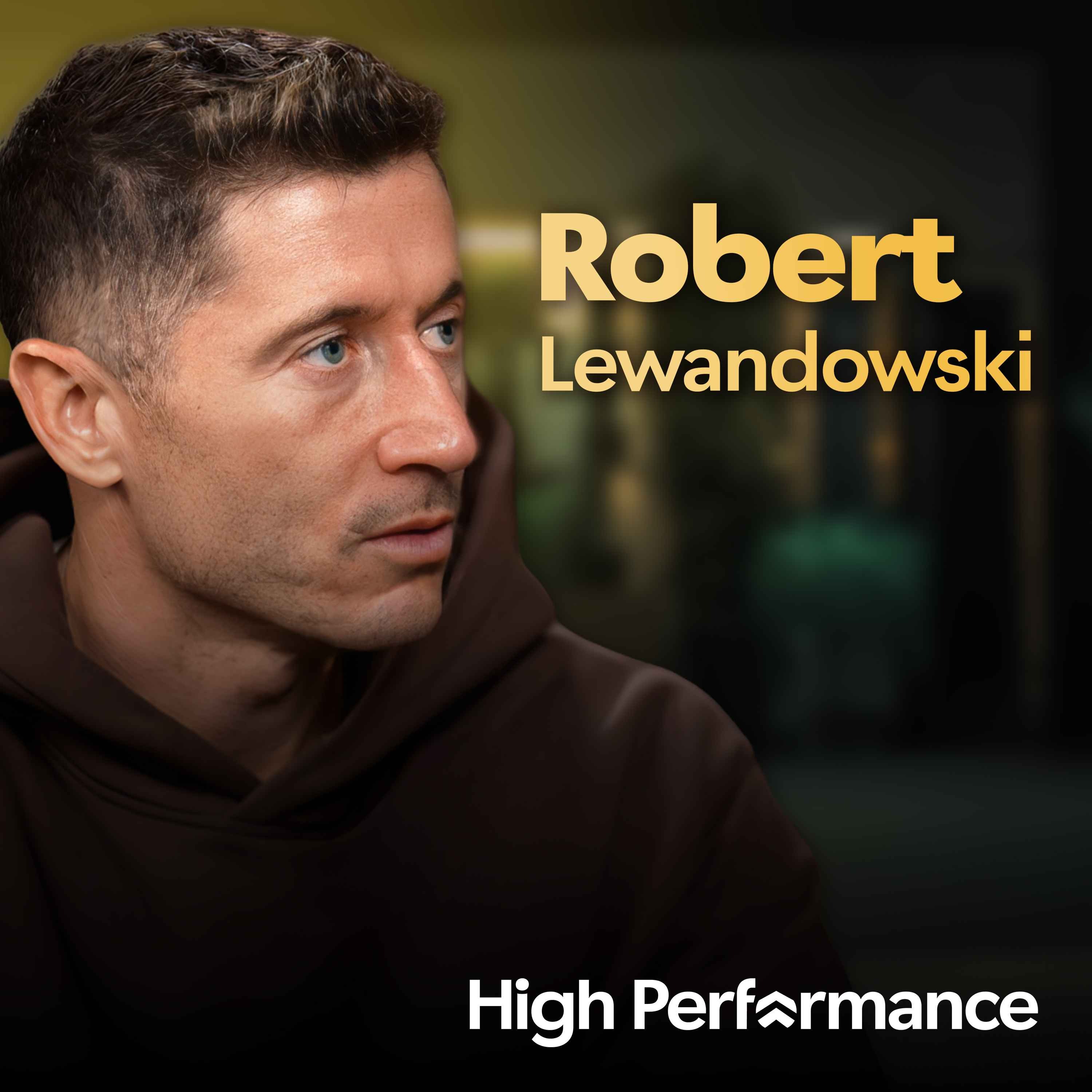
Host: Jake Humphrey & Damian Hughes
Robert Lewandowski
Exploring the mindset and experiences of Robert Lewandowski, a top football striker, highlighting the importance of mentality in achieving high performance.
Written by AI. May contain mistakes.
Robert shares the challenges of losing his father at a young age and how it shaped his aspirations.
“It means a lot that I could be a competition guy with these big names.”
Robert discusses the balance between mental strength and physical ability in achieving success.
“So, over a thousand matches, almost 800 goals, 20 years as a professional football player.”
Insights on how the game of football has changed over the years, including tactical and cultural shifts.
“Mentally, I'm going to say that it's 70%.”
Robert reflects on the responsibility of mentoring younger players and adapting to new cultures.
“you know, and when I joined to Barcelona, I saw that so many young players and I started to be more tough for them.”
A discussion on the importance of empathy in football and how it affects player relationships.
“So you still have in you the mentality of a footballer from 60 years ago.”
Robert discusses the impact of social media on players' mental health and career longevity.
“when I started to see that they understand a lot, football, you know, I think that many years ago was in that age that the players from Barcelona are now.”
Robert shares his personal growth journey and the lessons learned from overcoming obstacles.
“what do you think that you Ronaldo Messi have got in your mentality that has made the difference what is the thing that you've tapped into, that they've tapped into?”
Reflecting on the lessons from his father and their influence on his football career.
“but okay, I am from Poland so I didn't have the role model before me that I could, okay, maybe I want to go that direction that my previously player from Poland.”
Discussion on how Robert carries the legacy of his father into his career, fueling his drive.
“of course I don't have son but I have two daughters.”
Explore how Robert Lewandowski's father's memory drives his career.
“and we've had hundreds of conversations on high performance, many of them with people who, like you, had a trauma at a young age.”
Discussion on Robert's early sports experiences and family background.
“I feel still now, his support, you know.”
Robert reflects on his father's hardships and the impact on his mindset.
“I was so nervous before that I knew it that I cannot do this but only football gives me like the pure happiness without stress, without nothing.”
Insights into the psychological aspects of being a professional athlete.
“So I was pissed off and I came in the second half, I scored five goals in nine minutes.”
Robert discusses handling external pressures and expectations as a player.
“I know that I scored goals, but I didn't know what does it mean.”
Robert shares his approach to parenting and teaching respect.
“You have to be on the training at that time, you have to be on the game that time, and after so many years, you have to do it yourself.”
A conversation about the significance of father figures in children's lives.
“You know, in our home, also my wife had the problem with father because, you know, her father left the house when she was 14 years old.”
Robert discusses the fine line between arrogance and confidence in football.
“everything what I'm doing is perfectly, because I'm not perfectly, I'm not doing always the best things or perfectly things.”
Robert reflects on his journey through hardship and the value of hard work.
“And of course, I didn't, I never was like arrogant.”
Robert emphasizes the importance of fighting for one's goals and self-belief.
“But I get the impression with you that you've always had to force a lot.”
Robert shares insights on choosing persistence over giving up in tough times.
“I don't know because I am the fighter, because of my situation, my history in my life that I lost my father, that I was injured in very...”
Robert recounts a pivotal conversation with Klopp that helped him emotionally.
“You know, even that day was angry and so many times, of course.”
Robert discusses valuable lessons learned from various football managers.
“Do you think that you emotionally closed off after the loss of your father?”
Learn about the mental preparedness required for success as a striker.
“you have some players that they can, they want to enjoy the football more.”
Discover how coaches shape players' confidence and decision-making on the pitch.
“that so many things, no, he should run there because like everyone should to run the first post.”
Explore Lewandowski's insights on the significance of the Ballon d'Or in his career.
“Because I think the way you've dealt with that has been, you understand the word magnanimous?”
Understand how competition with legends like Messi and Ronaldo drives performance.
“is this was a battle of you against Lionel Messi.”
Examine how pressure affects players' mental health and performance expectations.
“Because everyone from us starting from the different level, from different situation, with everyone from us has the different problems, you know.”
Learn about the differences in performance expectations when playing for club versus country.
“But you have so many games that you have to think about recovery.”
Learn about the challenges of managing expectations between national and club teams.
“that was starting to people talking, ah in Poland he don't want, you know, just for the club and that for me was like I didn't hit this kind of bullshit, you know, because I didn't play for money for the national team.”
Discover Robert Lewandowski's most memorable games and performances.
“Okay, I don't know the best, but most epic.”
Explore valuable advice from legends like Thierry Henry and its impact on performance.
“what I should do better, what I should do to do the next step.”
Understand the importance of mental health in achieving peak performance.
“What a way to start 2026 with one of the greatest strikers of all time sitting down with us in Barcelona to share his incredible story.”

Get the gist, explore an idea or ask about something said.
 Claude
On The High Performance Podcast, what are the key points of this episode?
Searching your listeningAutomatic transcript. May contain errors.
0:00It means a lot that I could be a competition guy with these big names. I think that the Cristiano Leal Messi helped me a lot. You know, I lost my father when I was 16 years old. I didn't ready to be a man, you know. And one day, in one minute, I had to be. In my head, always I have big dreams, you know. But I want to show everyone that it doesn't matter where I come from you, that you can achieve your goals. You're listening to High Performance. Thanks to everyone who's already subscribed. If you've not, right now is the time because you'll get new episodes the moment they drop and your support helps us bring more world-class guests onto the show.
0:42Tap subscribe right now and keep growing with High Performance.
0:49Robert, welcome to High Performance. Hello. So, over a thousand matches, almost 800 goals, 20 years as a professional football player. Do you think your success is more mental or more physical? I have to say that both. Which is more important? Mentally, I'm going to say that it's 70%. Generally, what you need to be on the top, you know, not for one, two or three years, but many years. Physically as well, because the football is changing. I think every five years that the football changes a lot. What I see since I am a football player. And I think if you compare football now and the football five years ago or even 10 years ago, is different, completely different.
1:37Not only like the tactically things, what you have to do on the pitch, but also off the pitch. You know, when I see now the new generation that the young talent players that I'm working out every day with 70 years old players, 80 years old players, you know, and I'm 37, next year I'm going to be 38 years old guy, you know, as a football. But I see the huge difference and I have to say on the beginning for me, when I joined to Barcelona, you know, from Germany, from Bayern Munich, that the club is on every level like perfectly, also the mentality is different, you know, because we had more experienced players, more tough, you know, and when I joined to Barcelona, I saw that so many young players and I started to be more tough for them.
2:29And then I started to see, they don't like, you know, this kind of like, not only conversation, but also behavior. Even that the club tell me on the beginning, try to be, you know, more serious guys because we need this in this club, we need that the young player learn something not only on the pitch, but off the pitch as well, you know, what you are doing on the gym, how important is to working hard every day. And after a few months, I saw it that the young players doesn't like, you know, this behavior. And who asked you to come in and be this bad teacher? Before I joined to Barcelona, when I was talking with the people from Barcelona, you know, they told me, yeah, we need someone like you, that mentality physically.
3:22Also, it's very strong and show them that to be on the top is not only one, two or three seasons, but also what you're doing off the pitch is very important. So I know that I can do this. But later, when I meet the people, when I show it, the culture is different than Germany, I start to learn from them also. Like, you know, to empathy, everything that is around the football. And it helps me a lot as well. So you were lacking a bit of empathy, a bit of personal understanding. Yeah, because I think that I was in different world, different generation. Because when I started to be the football players, I'm starting to play with the players that were 35 years old so I was 18 you know and now I'm 37 and they have like 60, 70 years old so it's like almost 40 years difference you know so it's good for me that if someone talk to me and say hey come on you have to push push more harder you know that for me okay I'm gonna do and now you have to talk you have to explain it's completely different because you learned football from people 20 years older than you yeah Someone 20 years older than you is now nearly 60.
4:35So you still have in you the mentality of a footballer from 60 years ago. It's so interesting. I'm older than the father of the players. I'm older than the father of Lamine, for example. That is like, for me also, it's like, hey, come on. I have to learn from them as well. Not only that they should learn from me, but I'm starting to think, hey, I can learn from them as well. many things. Like, well, when I started to see that they understand a lot, football, you know, I think that many years ago was in that age that the players from Barcelona are now. I think that the players doesn't understand football so much they understand them, you know, now.
5:14We didn't have internet, we didn't have the social media, we didn't have so many programs that we can speak about the football, what's going on, even mentality, physically, psychology as well, you know, now you have so many things that you can learn. And that time, I think that the young player, they didn't want asking sometimes because they're afraid. Because of the generation, you know. And now they're open. They know the words, you know. They know what they want as well. I think that many years ago, the people doesn't know exactly what they can do, what they want to do in their life, not only in the football.
5:48And now it's a huge difference. Is this a healthier culture now in football than it was when you were first coming through, which was a much harder time? I don't know. because from one side, if you want to stay on the top for many years, 10, 15, like Cristiano, Leo Messi, you know, you have to be strong mentality. If you are weak mentality for the long term, I think that it's going to be difficult to stay on the top, especially now. Not only because of the money that you have in football in the age of 18, 19 or 20 years old. You know, many years ago, I had to work in a few years to get bigger money.
6:26now is I think much more easier but also everything what you have in the social media internet that one day you are here and the next day you are on the ground so like this is also it that you have emotionally every day so many you know so many jump on jump back makes you also I think a little bit more weak what do you think that you Ronaldo Messi have got in your mentality that has made the difference what is the thing that you've tapped into, that they've tapped into? I think that we had to work much more longer to achieve our goals, to achieve what we want. And from one side, maybe it was a little bit easier for us because we didn't have social media.
7:15Because I think social media is a tough subject, you know. Because if you read everything or if you listen to everything about you, yourself, your club every day is so many information that in one day that can broke you, you know. And that time we started, we know how it looks words without the social media and now how it looks the words with social media or with television, everything was going around. And sometimes for myself, I can stay on the side if it's something's too much. And the new generation maybe they don't know how because they don't know the words without. and if this is good for them I don't know yet maybe if you're waiting 10 years then we can speak about this but I think that for the new generation it will be tough staying on the top level for the long time So when you think back to you now at 37 playing what are the characteristics you learned at 17 when you first started that are still present?
8:14You know when I was a very young guy 70 years old I had the dream for sure but I didn't know what does it mean exactly because of course I have the dream to play on the big stadium, playing the big clubs and I know that I have to work very hard but okay, I am from Poland so I didn't have the role model before me that I could, okay, maybe I want to go that direction that my previously player from Poland. So everything what I did or still what I'm doing is like I'm trying, I'm Czech and sometimes if I see the wall, you know, I know that, okay, it's the wall, but it's not for me that I cannot jump on this or crash the wall.
8:59Because, okay, maybe if I see the wall and I'm stepped back, I will be not in the same place that I am now. I'm always trying, if I see the wall, okay, I crash them, I'm jumping on and I'm going forward, you know, and that was sometimes very, very tough for me because I didn't know what is behind the wall. But I was trying and I think that that helped me a lot.
9:23and where did that come from that willingness to jump the wall i don't know exactly but maybe i was the child from poland from the i was born in warsaw but i was grow up in small city i might have always i have big dreams you know but i want to show everyone that it doesn't matter where i come from you that you can achieve your goals you know and And I told myself when I was young, so long I'm going to play football. I want to do everything for, not for 100%, but everything that I can show my best performance, my best skills. Because not because of only of this, because I love the sport. I have passion, but I know that some days I'm going to miss this.
10:10When I finish my career, you know, it's only one part of my life. and one side of me is already ready for the second part of my life, but one part says to me, so long you can do this on a good level, try to do this. So, you know, I don't afraid to finish my career because I started to prepare for finishing my career when I was 27, 20 years old. Already I'm starting to prepare things that I can do after the football career because I know that football is a very important part of my life, But football is not all my life, especially now. You know, when I was young, I didn't think about this because I had in my head only football, football, football.
10:51But now, when I know that I'm very close to finish my career, I don't know, one, two, three years, maybe four, I don't know. But I don't have pressure, you know. If one day I feel my body, I feel that something in my head changes and say, I think you start to think about finish your career, then I will be ready for this. So right now, is the fire inside you as strong as the fire that was inside that young boy? You know, I lost my father when I was 16 years old. And that was very tough for me. You know, I didn't ready to be a man. You know, and one day, in one minute, I had to be the man in my family and in my life.
11:33You know, and nobody tell me how to be the man. You know, I have to try. and I think all of my life it depends on trying, of don't be afraid to do something. Even that I don't have answers for my question because that time I had so many questions in my head, not only about the football but about the life, how it looks and I couldn't ask my father. You know, and it's always different between the connection between son and father and between son and mother. Even the mother is, you know, she's trying to do everything the best what she can and I appreciate it but always you know some subject that you want to talk with some men and I didn't have person who can tell me explain what I can expect in my life in football in club in training session on everything so what I said that was for me very very tough if there was one thing that you would have wanted a father to have told you at 16 what do you wish you would have known?
12:34now I am the father of course I don't have son but I have two daughters. But it's difficult to say one advice, you know, to a young boy. More importantly is that you can be with your son, seeing what he's doing and sometimes give even small advice or just talk with him. I think what I miss a lot is just conversation with my father. Not about some important subject, of course, yes, but just talk. Because after that I heard that my father's dead I close for the words I close for the people you know I don't know why because I was young I was not enough ready for this I wasn't enough you closed up emotionally yeah emotionally yeah for sure and especially when I when I went to Germany you know that the people in Germany they are more also they are very close because they are focused on work and what they have at home so many I was 12 years in Germany so I learned from them a lot as well.
13:37And I think that the first step that I came to Barcelona and I saw the people, the culture, even the first days that Gavi came to me and hacked me, that was for me, how is it possible that the players in the dressing would hack me? So with empathy, with everything. And I'm starting to think, wow, it's amazing. So I'm starting to learn from them as well. One thing that we've realized and we've had hundreds of conversations on high performance, many of them with people who, like you, had a trauma at a young age. And I think often we look at those traumas as things that are bad for us. But just because they're hard for us, it doesn't always mean that they're actually bad for us.
14:16And I wonder whether one of the reasons why you're still sitting here today with a fire inside you is because you lost your father, is because you have the memory of him looking at you, and it's on the documentary about your life when he looks at you in front of the Christmas tree and goes, one day you'll be the best striker in Europe, one day you will play in Italy, one day people will know your name. I wonder whether you have carried that with you in your career. Yeah, I have to say that every time when I go out on the pitch, you know, that I know that my father see me on the first, you know, the best place in the stadium and he support me a lot because he helped me, he support me a lot when I'm starting to train with the first professional team, I mean, like, even that was the third league, but first professional team, but he died before my first game, you know.
15:04So, I know that every first goals in every new team or in the national team, that will be for him, you know, and every goals in the first team, Lech Poz, then the national team, then Borussia Dortmund, Bayern Munich and Barcelona, that always was for him, you know. And even, I feel still now, his support, you know. I know that sometimes if someone doesn't lose someone, you know, from their family, that is difficult what I want to try to say or explain. But I feel that he's around me. He helped me a lot because he was also the athlete. You know, he was like the judo guy, you know. He helped me a lot with judo.
15:44I was training with him so many times at home to judo. But he didn't want that I'm going to go with this direction to train judo because he knew that it's so tough. And it's not, you know, it's like you have only the Olympic, you know, the time for judo. But during these four years, you have competition, but not so important for the people. So he knew that for me, that the different sport will be much more better. But I have so many opportunities to, my mother was a volleyball player, my sister as well. Even my wife was karate, you know. But I have to say that I think the football choose me. because when I was three years old four years old I saw I saw the pictures that already had the ball football ball in my hand and I did so many different sports even I was running for one kilometer one half kilometers I won every every you know the tournament but what I want to say I was so nervous before that I knew it that I cannot do this but only football gives me like the pure happiness without stress, without nothing.
16:54And I think because of this also that I know that the football is going to be what I want to do. Your father sounds an amazing man. What are the characteristics or the qualities that you see in you on a football field that reminds you of him? You know, after so many years, of course, you want to remember just the good things. You know, when I'm thinking about my father, he's like the real man. you know, he was big, he was very strong. Even I remember when he had also a lot of respect of friends, of people, even at the place where we are living was very dangerous, you know. And when I met some people from them and he knew that I'm son of my father, they really started, oh, okay, you have our respect and we protect you, don't worry, nothing happens.
17:43So that's everything what this kind of things, when I heard that means that my father was like, of course he had the problems with his life with his emotion as well because so long he was fit healthy, he was strong but when he got some problems, healthy problems I saw it that he's starting being, you know not motivated anymore he got more weight he's starting to drink a lot of beers, alcohol as well and I remember him before and after So long he was healthy, in my head I still see him like he was running, you know, a lot. But after he was like more guy who was sitting on the coat or the sofa drinking beer, you know.
18:33And it's like I think that he couldn't fix his problem, mentality or even healthy problems. From one side I was too young to help him because I didn't know how. I didn't know that he has this kind of problems. but from another side, you know, it's like he was responsible for this and I don't, you know, many years ago, even I know something, it was tough to help you know, this mentality, physically psychology as well, things to help your family now will be different because I know what does it mean, you know, I know how hard it is for the people with the small problems because we are talking sometimes for the football players, they have expectation that so many people thinking on the also the places there are a lot of problems even that so many players doesn't speak about this but that's why you have to be very strong but how to be strong nobody can tell you nobody can teach you because you cannot read this in the book because how many players how many people know that you know you can you can read a lot of about the psychology about mentality but so long you are not in this position I mean that not belong to you is tough to learn to know it so tell us then Robert, you've spoken a lot about psychology and mentality and you've said that 70 % of your incredible career has been down to the mental side what would you tell us are the most important psychological elements?
19:55I never listen to people from outside I mean, of course sometimes it's good to listen to people from outside but if you listen too much, like not only bad things but also good things or for example I'm starting to see when I even read good things about me after the game one, two, three games for the next game that makes me more weak really of course nobody wants to read bad things also but I mean and I remember when I scored five goals in nine minutes you know and during the game I was pissed off of bad because I didn't play from the beginning that I could even that I was a little bit injury, but I don't know why, but in my head I was, I should to play from the first minutes.
20:43So I was pissed off and I came in the second half, I scored five goals in nine minutes. But even after the game, I didn't, I didn't know what I did. I was like in some different worlds, you know, I was so focused to score the for 1-1, then 2-1, okay, then for 3-1 and okay, if I can, I can score the next one, next one. Even I remember when like the situation after the game that Thomas Miller pushed me to the fans, hey, celebrate with the fans. And I, why? We won the game, okay, important game because we were fighting to the first place in the Bundesliga. But I didn't realize, why? What do you want from me?
21:23Yeah, I'm scoring. We won as a team, not only me. But you knew you'd scored five goals in nine minutes. Yeah, but that time I didn't know. I didn't know. How did you not know? I know that I scored goals, but I didn't know what does it mean. Even the next game, we have the open train for the fans. I came out and I don't know how many, 2 ,000 fans, I don't know how many fans was on the training. They're starting, you know, to do it. I don't know. Why? What's happened? We won the game. Okay, I scored the goals. And even that time, and I remembered that I found the solution that I don't want to read nothing about this game, about me, because three days later we had Champions League.
22:01I scored three goals. Three days later we had Bundesliga, I scored two goals. and three days later we had, I think, Champions League again or some games or maybe Bundesliga again. And in four games I scored 12 goals. And I didn't read nothing about myself. And that was like the first test in my life. I didn't want because I was so focused on the next challenge. But why was seeing positive information about you making you weaker? Because I started to think if I read too much about myself, amazing, brilliant information, that, you know, I would be too much relaxed. Yeah. You know. And first time that I started to thinking about what I did in this five goes in nine minutes, I remember till now, was the Christmas time.
22:50Because that was the first time that I be, I was like more relaxed with my family. And I understood that I remember till now that I was on the table with my family and I was like, I did like, ah, oh fuck, I know what I did now. what I achieve, you know. And I remember that was like three months later, two and a half months later. And I was, I had in my vision, like, you know, corridor that I want to do the best what I can. I don't want to lose time for thinking about this. And, you know, it's like, the emotional in football is also very important. You know, even that you read the bad things. Now is the opposite side.
23:36If you read too much, you know, because the fans or someone even doesn't know you, talk about you or starting to write what is the best for you. If you are not strong or if you read this too much also, it's like so many players have these problems, you know. Okay, sometimes you can handle this, but not for the long term. And I'm starting to work on my mentality, psychology as well, because I knew it, that the psychology in my life always was the most important things. Because even that I finished my career, I don't want to have the problem, psychology, but it can happen, you know, because you're going to miss something.
24:18Every day you're waking up, you go to the training, you have a plan, who since 20 years, or no, I think 30 years, because I started playing football when I was eight years old, and I'm 38, so almost 30 years, someone did the plan for you. You have to be on the training at that time, you have to be on the game that time, and after so many years, you have to do it yourself. So I know that will be tough sometimes for me, but in my life always, the main point was the psychology for myself, for my family or people around me, the most important thing. That's why even though I choose to do something, I choose it because of the psychology things that can help me, not opposite sides.
25:01Even that so many people understood this. And your daughters are very young. But what do you say to them already to help them to try and create the mindset that you've got? I'm starting to talk with them. Of course, we have the subject in the school now, you know, and I know, sometimes I'm trying to be, I'm from between me and my wife, I am the guy who is a little bit more tough to them. But because I know that the life is not easy. it doesn't matter that you are a football player or you are going to some company to work in it doesn't matter because you have to be you don't have to be but it's better that you are ready for the real life and I'm trying to explain to them so many things what's important in their life what's the one thing you'd love them to understand?
25:54the respect I'm trying to always I had the last week even the conversation of my oldest daughter, she's eight years old and I'm starting hearing that she's starting using the words probably from the school for the different kids. But she doesn't know what does it mean and also starting to talk about me, you know. And I'm starting to talk with my daughters that it's not important, you know, what your father's name is or who I am, who is your father. More important is that you have to respect every parents, every father, you know, because it's not important what you have at home. It's more important what you want to take out from your home.
26:39And I started to speak with her, to explain how words look or what's going to be, even that she's going to be 18, 20, 30 years old, you know. That, okay, I know that the next month or year is going to be more conversation like that, but I'm slowly starting to explain to her so many I can. I love the role that you're playing in your daughter's lives. I'm interested in who filled that gap as a father figure for you after your father had passed away. You know, in our home, also my wife had the problem with father because, you know, her father left the house when she was 14 years old. So we talk a lot about this.
27:24And she told me that so long he was at home, that, you know, for the daughters, father is like the hero. You know, and she lost his father when she was in the age that she needed him a lot. And also she explained me how important is what I'm doing at home, how is going to be important father for them, not only now, but even later, more important, you know, because, you know, daughters, they're trying to find someone like father so many times in the future, you know, as the boyfriend or maybe the husband. And I don't want to try to tell them that everything what I'm doing is perfectly, because I'm not perfectly, I'm not doing always the best things or perfectly things.
28:08But more importantly, that she has to listen to her voice. It doesn't matter what the people are saying in the school, what the kids are saying in the school. I'm trying to tell her also that listen to your heart and try to find the best way that will be the best for you. not for someone else. And, you know, it's also tough because she's very emotional. The youngest is more as me, you know. She doesn't care too much about what's going on around, but the oldest one, she's very emotional. So, I know that also important to take care of her, but also I'm not trying that we as the parents too much take care of her, you know.
28:50She has to know it, what she has to do in the future for her, you know, also that But we'll be not living with her all life, you know. It's normal that someday she came and, Daddy, I want to leave. And I say, okay, if you're ready, I can help you. But now you have your own way, you know, and you have to be ready for this. But you've spoken about you wish that you'd been a little bit more arrogant yourself when you first started playing football. How did you learn to cross that line between arrogance and confidence and who helped you? I tried to find my way alone, you know. Sometimes I didn't know.
29:31I just tried. And of course, I didn't, I never was like arrogant. Of course, I was the striker. So on the pitch, I was so many times egoistic, you know, that I know that I have to be thinking about myself but because that can help not only me, but that things can help also my teammates, you know. And even now I have to say that my position, I can compare with the position of goalkeeper. Because we are playing with the team, but how we should to train, we should to train different as the rest of the teammates, you know. Because even that you play some games, how many touches you have as a striker and how many touches as the midfield players or defender.
30:21is completely like you have maybe 20 % of all touches during the training session and the middle felt 60 and 30 % or 40 % also has defenders. So every training session, you have less touches, you know. So if you're one week, two weeks, one month, two months, so it doesn't mean that your teammates doing like 1 ,000 in one week or I don't know how many and you're doing 200 only touches. So it means that you need extra exercise or the different exercise. And even that during the game, always I was trying to think differently, the teammates, trying to figure out how to score the goal, you know, how to be one step quicker, faster than my opponent, you know.
31:04And if you are in the box, sometimes you're doing the things, not thinking about these things, just automatically. You're doing that because you train this, because you have it in your blood, because not that you had only 20 touches in the game, because you're doing the exercise extra, you know. And in the end, you always have to think more, you know, about yourself than your teammates because of that position. But because if you want to take out the best what you have inside, not only in the head, but also in the legs, that helps you a lot. Tell us about the importance of hard work then, because we talk so much in football about natural talent or natural ability.
31:44But I get the impression with you that you've always had to force a lot. You know, you lost your dad at a young age. A year later, you get released and you get badly injured when you're released by Legio Warsaw. You then go right back to the very lowest rung of Polish football and fight your way back up. And then you end up moving to Dortmund and fight your way to win over the fans after a difficult start there. Then you go to Bayern and you have to fight to show you're a Bayern player. Then you come to one of the biggest clubs in the world and fight to show that you deserve to play at Barcelona.
32:13I think your career is littered with hard work, self-belief, but also fight. So I am the fighter, yeah? Do you think you are? Yeah. I think you have to be. You have to be. If you don't fight, you cannot achieve everything what you want. Okay, you can achieve some goals. But I think in my way, if I don't fight for myself, I will be not in the same place that I am. That's for sure. I don't know because I am the fighter, because of my situation, my history in my life that I lost my father, that I was injured in very... I was 70 years in Legia Warsaw that I finished my contract. So I was without the club after injury that I couldn't even run 400%.
33:03I remember till now that my legs were still behind because my muscles were so weak. But still I believed myself. Of course, I knew that everything what I'm doing, I'm doing because I want. And if that time I listened to people around, Probably I'm not in the same place and we are not talking now. You would have walked away if you'd have taken advice. Yeah, probably. Because at that time I had two ways, you know. Maybe to finish with the football or to show everyone that they did the big mistakes. And I chose this way, you know. Because I know that even I was young, I still have from my eyes the picture that you see that one group going in that way because everyone's going and one guy going the left, you know.
33:47and after so many years I can tell you that I am this guy you know to go the different way So were you born with this self-belief? I think yeah because I was when I was young and you know some group especially that you're in the school and you know your friends everyone tell oh come on we are going and we are doing this and you know that from because of depression so many people doing this because of the group because so many people tell you you know and I'm always was this guy no I don't want no I don't do this I'm going that way. You know, even that day was angry and so many times, of course.
34:21But in the end, I knew that it's best for me, not from someone. And I think that maybe I'm born with this or maybe I learned, even that I don't know from who or from where. There's a conversation that you recount you had after a 3-0 defeat against Marseille with Jurgen Klopp, where in your words you said you had a conversation that unlike one you'd had since your father died. Would you tell us about it? That conversation, of course, that was a very important conversation for me. But I was like one year in Germany maybe in three, four months. So I didn't speak too much. You know, I was speaking Germany but not fluency that could speak about so emotional things in Germany.
35:11But we were speaking about two hours, you know. Even that I didn't understand him a lot. For me, more important was like that I had conversation like maybe with like my father. And for me, it was important his impression, you know, just to see in his eyes, in his face. I saw that he believed in me, you know. He believed me. He knows that I'm a good player, that even I was, I didn't understand what he want from me, you know, because I came to him and asking, Jürgen, what do you want from me? Because I don't understand why you want that I'm playing like that or, you know, tactically, everything, you know.
35:53And after two hours, I understood that I miss this kind of conversation since years with my father. And even I cannot tell you everything what he told me because I didn't understand. what's more important was that I saw someone like big guy, you know, that looks not, I want to say similar, but in the same shape as my father. And I found something that maybe I missed since years because I lost my father. And I remember that we played Champions League on Wednesday. And Saturday was the game Bundesliga. And we won 4-0 against Augsburg, I think. And I scored hat-trick an assist. I had an assist, you know.
36:39So, that was the first game that I pushed myself and I showed not everything, but I showed my skills, you know. The first game. And after this conversation, after these games, everything in my life, in my career is going up. Do you think that you emotionally closed off after the loss of your father? Do you think in that conversation with Jurgen Klopp he managed to unblock some of that emotion? For sure. He unblocked me in some case. I don't know which, I don't know what exactly. And although you don't understand the whole conversation. No. What do you understand, he said, that lit you up, that made you understand, that unblocked you?
37:19Belief. I think that I saw him, his face, like what he had in the eyes, that he believed that I am the guy who can not only score a lot of goals, but who can be one of the best, you know. And of course, I understood a few things, you know. But what most important things in this conversation, what I take it out, was that just things inside, emotionally. Not about... I think that everything when we talk about the football, for me, wasn't important. Most important was that he talked to me like the man who is talking with the son. of maybe for me from my side for you guys should not but from my side that was like that and I think that he unblocked my no I want to say not talent but he unblocked freedom freedom oh I think the freedom yeah and because before I heard so many times from the people from Dortmund because the first season was tough for me you know the language the culture everything the training session the intensity of the training session was tough because I want to show I am the guy who can do everything and I show you that I can do this.
38:37But it was too hard, you know, and then one game I missed some situation and etc. was difficult. And I think that this freedom give me like, no, I want to say that they tell me so many times, if you show us in the game 70 % of your performance in the training session, for us will be enough. But I couldn't in the game, you know. And I think after this conversation, I give them the best word I had.
39:10You're very interesting because often when people are really successful, they want the world to understand the way that they think. But you're someone who's very successful, but I get the impression that all you want to do is find out from other people. What do you think? What do you know? I wonder whether we could talk a bit about some of the managers you've worked with and the biggest lesson that you learned from each one. So maybe starting with Jürgen, the biggest lesson that he taught you? he when I when I think about the Jurgen and what he gave me what he gave me what he teached me that you know this mentality that the Jurgen was very impressed you know he was like the guy who from one side he can hack you you know like a father like an uncle but from another side he was like the bad teacher and I was very young so for me I was that was very good lessons you know in this time and And that's true that in my life, the football career, I want to take everything, each of the coaches, they have the best.
40:09From Jurgen Klopp, from Pep Guardiola, Carlo Ancelotti, Jupp Henkes, Nagelsmann as well, you know. Of course, in Barcelona, Hansi Flick, or even in Bayern Munich as well. Because I know that I'm the guy who loves to teach, you know. Not only because of the football, but because of my life. I also had a good conversation with the people like the presidents or owners of the clubs, you know, about the club, about what's going on off the pitch, you know. For example, okay, Bursadom as well with Akivatsky, you know, we had so many conversations but in Bayern Munich that you see that the club they, you know, how they manage the club is everything like Germany, you know, the Ordnung that everything's going perfectly line and now in Barcelona they had so many financial problems that how they fix try to fix it is very interesting you know it's so tough but it's very interesting and I think I can take this so many things from the football also in the business things you know for the future for example or you know it's like if you are talking about the coaches like of course Jurgen Klopp was the guy even that I talk with him like I see that pure love you know that everything what he tried to speak is like pure and he doing that because of what he had in the heart.
41:30But Pep was like the tactically coaches who can change your mind, change your, you know, your thinking about the football. And of course, he was like SMN, sometimes tough, difficult for the players. Not for me. Too tactical. I think that the Pep, he gave you 110%, but he wanted from you as well 100%. I think that not everyone was ready for this. Because, you know, you have some players that they can, they want to enjoy the football more. They are not ready mentally to give someone so many, you know. For me, it was easier because I was ready for this, you know, mentality, not only physically, but mentality as well.
42:13And Pep is, I don't know, now, after so many years, he changed maybe, you know. If you talk now with the City players, maybe they told you that maybe it's not the same Pep as 8 years ago or even 10 years ago, you know, for sure. Because when I see that, how they're playing, that he has to change as well. But you know, it's like I'm appreciated that I met so huge, not only names in my football way, but also amazing people like their personality from the beginning probably because of them now I'm here where I am. Of course, I know that But I remember one conversation with Pep and he told me, I can help you to build up how that you got the ball in the box.
43:08But don't listen to nobody who tries to tell you what you should do to do the ball because you are the best, you know better than me and you know that. Don't listen to other coaches to try to, you have to run the first post, you have to run there. No, I know that you know better for everyone in the world. So listen to yourself. And that was for me. How is it possible? I was listening to the coach, what they tell me. And after he also changed my mind. And because, you know, the striker, sometimes if you see the game, that so many things, no, he should run there because like everyone should to run the first post.
43:45But I see the football, the situation in different ways. you know, because I know that defender is easier if he waiting that I'm running the first post. So sometimes it's better to waiting or change the position of someone who attacked from the second line. And yeah, that's true that later I didn't listen to much coaches about, no, about only not tactically things, about what I should do in the box, you know. And I had so many write about what is better way, what is better for me in this situation for the team as well. Of course, I need so many conversations with my teammates to know that if I'm going there that way, that you have space, you can attack the space where it's free, you know, and then maybe if you got the ball, you are alone.
44:27Of course, and Bayern, that was working very well, and Barcelona as well, you know, in the beginning was maybe tough, but after when they understood the players' teammates, that I'm this kind of player that likes or attack in this situation, first post, but in this situation, second post. That is easier for the whole team. What about Carlo Ancelotti? Oh, he gave me so many self-confidence, you know. He came to Bayern and the first season that everything's working very well, you know. And he's starting to talk with me. He's starting to give me some advice that I should do the free kick, you know, that he believed in me, that I can do this.
45:07And he gave me a lot of self-confidence, you know. And I saw that after this I scored the first, maybe not first, but I started to scoring the goals from the free kick, then penalty as well, you know, and some kind of situation that I took responsibly for the team. He helped me a lot. I would like to talk to you about the Ballon d 'Or moment. Because I think the way you've dealt with that has been, you understand the word magnanimous? The English word, you've accepted it. How have you accepted it? Because for so many people, it feels very wrong. when I heard this conversation question then I started to understand that was some big you know I don't want to say mistake but big you know that the gala wasn't happening you know but from me I don't think about this nothing really only when I got this question I started to think okay I should win maybe maybe so many people talking that I should win but what I can do you know it's like that was a few years ago.
46:12I won two times in a row the best football in the world, you know. So for me, for the guy from Poland, winning FIFA, the best player in the world, two times in a row, it means a lot. But of course, like for the image, like for the show, Ballon d 'Or is always like, because it's more gold, you know. But in the end, I don't have that. I'm sleeping bad or I'm thinking about this. No, but if I got this question, okay, something big, because so many people asking me about this. But what I can do? Nothing, you know. And then later, 2021, I lost. I was second and I lost with Leo Messi. It means a lot that I was a guy, the competition between me and Leo Messi and Cristiano Ronaldo.
46:58I was in this era very close and sometimes I won against them, like the FIFA, you know, two times. The best player in the world. Okay, Ballon d 'Or, I wasn't in the first place. But in the end, for the media, for the, you know, it's big things, but not for me. You know, it's like, it doesn't change my life. One thing that's interesting though, is this was a battle of you against Lionel Messi. And I actually, you're good friends with Novak Djokovic, yeah? Yeah. I often look at his career and I think, there's Novak. And he's always had Roger Federer and Rafa Nadal. winning things and just pipping him.
47:38And I then look at your career and I think you've always had Lionel Messi and Cristiano Ronaldo just that tiny edge. And I often wonder what his career and your career would look like without those people in the way. You know, I think that Cristiano Lionel Messi helped me a lot. You know, because I'm trying to achieve not the level but what they achieve with the goals, you know, with the titles and, you know, that motivated me a lot. On the beginning I didn't I wasn't dreaming to be so close to fight with them, to win some titles. And in the end, I won over them, you know. It means like, wow, when I think about this, when I'm looking back, it means a lot.
48:21Of course, I cannot tell you that I was the better place than them, but I could compare with them some, you know, even two years in the row, I remember like, I was me, Cristiano, and Lionel Messi. And between us was who's going to win, you know. and the next year I was I think that between me Leo Messi as well and maybe I don't know that Cristiano as well was there but even that I was there not one time but two times it means wow I was in their world in their table you know so close and it means a lot for me I don't want to say that I was much more better player or I was better player than Cristiano Leo Messi of course not but it means a lot that I could be competition guy with these big names and you know and it's like amazing i think a good lesson from your life as well for people is you only really seem to want to control the things you can control you can't control the ballon d 'or you can't control the success of christiana and leo but you can control your own work ethic and your own self-belief and you can control not living with regret is that fair yeah when i think about myself everything what i achieve i can be proud of myself you know i don't want to compare my way to Lowe Messi, to Cristiano, all the different players.
49:37Because everyone from us starting from the different level, from different situation, with everyone from us has the different problems, you know. But when I look up and I see all titles, everything what I achieve, I can be very proud of myself and I can go in my head up. The boy from Poland did good. I think very good. But given that you are in the same company as Cristiano Ronaldo and Leo Messi, what is the one thing that you think distinguishes elite talent like you guys from other footballers and from the rest of the population? I can speak about myself, you know, because I know. I don't know exactly what Leo and Cristiano...
50:26I know maybe, but, you know, I cannot talk for them, but for myself, I know that it doesn't matter how good you play the last game. The most important is the next game. And in football, we have so many games and expectation is very high. Not only on the pitch, that's 80 ,000, I don't know, maybe more fans looking on you, but the people on television, to look in the television. Also, it's different if you play for the club, but different if you're playing for the national team, you know. But for the football player to stay on the top is tough, you know. Not only because of its expectation, but also you have to be ready always.
51:11Because if one game you don't play well, then the people start to talk. You had the bad performance. Okay, it can happen. But you have so many games that you have to think about recovery. Because if you don't think about recovery, the next game you're going to be more tired. If you're going to be more tired, then you're going to start thinking slowly. If you're starting thinking slowly, then your legs starting to run slowly. If your legs starting slowly, then you cannot score the goal. And of course, the kind of different position because striker, so many people know that you play well or not.
51:45Because if you score, then good. If not, then bad. It doesn't matter that you did an amazing job. And this kind of things are sometimes good because if you score the goal, even that you play bad, then it's fine, you know. But in the football, of course, for the strike, it's important that your head, that everything that you had, had, that also you are ready for the game. Not only physically, but mentally. Because even that you feel well, your body physically well, but mentally, you know, you cannot score the goal. Goals. Maybe you can score one game, one goal. It can happen next game. But to scoring goals almost every game, it's not only because of your skills.
52:25more is because of the mentality. And I remember when I was scoring 69 goals in one year, you know, in 55 games, I think that I did the same level as Cristiano Ronaldo, the best season, you know. And Cristiano, when you are looking back that he was scoring 91, the best year, he scored 91 goals, it's like, wow, I'm there, yeah, I'm 69. and it's like before the game that even is not important for the team or for you because if you win if you lose it doesn't happen but for the striker it's very important because if you're going to score maybe you're going to break some record maybe you're going to win some titles in the end you know and you cannot be ready physically you have to always be ready also before the game mentality for the striker because it's not like that we're going on the pitch and we're just playing if I play pass if I change the side, diagonal ball, it will be fine.
53:23No. The strike has to be always ready and every second. You cannot start thinking, okay, in the second half I start to be more focused. Sometimes it's too late. You have to be ready before the game and you cannot start like one hour before the game. After the game, for me, after the game, I already started preparation for the next game. And what is the cost of living a life like this for so many years? Maybe you have to ask my wife or my friends. But of course it's not easy. It's not easy because everything what you are doing at home is because of football. You know, sometimes I was so many times so tired.
53:58So I was always thinking I have to come back to home because in two days we have another game. So I have to be ready. I cannot walk somewhere. I cannot go somewhere because I was starting to think if I rest at home well, then I will be ready for the game. If I do some stupid, not stupid, but normal things, that cost me the power. Maybe in the game I missed something. So many choices I chose in my life was because of the football. Has the pressure ever affected your mental health? Yeah, of course. The pressure, especially sometimes, not only the club, but also the national team. So many people believe in you.
54:43And you know that because of you, that means a lot, not only for you, but also for the players and also for the fans. And if you're going to play bad, if you don't score the goal, you know, that maybe you don't win the game. If you don't win the game, that maybe you don't qualify to World Cup or to the Europe Championship, you know. And that was, I think, national team, the pressure was much more higher than in the club. Also because the expectation was very high, you know, because I was playing the best club in the world. So, so many things was starting to think that we have two or three players in the good club that we are ready to win some titles, you know.
55:21And now I think in every nationality, good nationality, you have players that are playing in the good league, in the La Liga, Bundesliga, Serie A, you know. So that there's so many people thinking still if you play away of Poland, that means that you are playing the good club. but now everyone, almost everyone from the national team is playing in this kind of good clubs so it means for me that I came to national team from that time Dortmund and Bayern Munich, I was scoring every game goals and then in national team it was more tough to score a goal or I scored but a little bit less that was starting to people talking, ah in Poland he don't want, you know, just for the club and that for me was like I didn't hit this kind of bullshit, you know, because I didn't play for money for the national team.
56:15I didn't play because I could win something, you know, for myself. I played for the national team because I love my country, because I won it and because I wanted to give them something, you know, that they can enjoy the happiness. And sometimes the expectation was very high. And, you know, it's like for me also was tough. I remember that my expectation also for the teammates in the national team was almost the same level as I was in the Bayern Munich. I had to change that, you know, because I couldn't expect for my teammates in the national team the same level as Bayern Munich. I don't want to say to everyone, but, you know, to the quality.
56:53And for me, that was also like, okay, I cannot expect for them that we're going to play the same level as I was in the Bayern Munich because for them it was tough. and also I pushed them a lot. And I'm starting to see that for so many players it was too much. Mentality was too much. Because I was thinking, if I can do this, so you can do this as well. But it wasn't correct, you know. And I'm starting to, okay, change this because it was, I don't know, maybe that was my mistake. But also maybe because I pushed them also that they tried to do the next step, even that they didn't want or they didn't try or they didn't afraid, you know.
57:32but in the end also I learned a lot on this case because it's difficult from Bayern or Barcelona you know and the national team you are on a different level but your expectation was in the same level but I couldn't expect the same from my teammates in the national team. We've reached the time for our quickfire questions. Okay.
57:56Your best ever game? Only one? Yeah. Wow. That's a confident man. Okay, I don't know the best, but most epic. The five goals in nine minutes. For sure, four goals in the semifinal of Champions League against Real Madrid. Yeah, most epic, yeah, for sure. Or even, you know, it depends what does it mean. But most epic, yeah, directly I can see. You know, World Cup, because of the goal. No, but these two directly are in my mind, yeah. What's the best piece of advice you've ever received? Terry Henry told me one story. His story, I think, with Arsene Wenger. After the one game or training session, he came to him and asked him what he can do better to beat a better football.
58:48And Arsene Wenger told him, I can tell you. You have to find out yourself. And I started to think about this. And it's like so good advice. and I think my way, my life was the same. I had to find out my way, what I should do better, what I should do to do the next step. Not that someone tell me. If you don't figure out that maybe you don't have too much respect for this, that you did this yourself. And life is so much more interesting when you work it out for yourself. Okay, sometimes that might help you a lot. I have to say that if I get this kind of advice earlier maybe that will be easier in some things but of course the taste in the end is much more better what are the three non-negotiable behaviors that you and everyone around you is expected to bite into always I'm trying to be honest even that for someone was tough because I'm trying to tell the truth you know and not everyone wants to hear the truth but I think honestly hard work and never give up.
1:00:01And finally, for people that have listened to this amazing conversation and understand even more about your career, what would you like them to leave thinking about as the one golden rule for living a high-performance life? Always thinking about your psychology. Because it doesn't matter that you are a football player or you are in your life, private life. This is the most important thing. If you stay healthy, the rest and other things you can fix yourself. So I think psychology or mentality things are the most important that you have to take care of this. What a way to start 2026 with one of the greatest strikers of all time sitting down with us in Barcelona to share his incredible story.
1:00:46The discipline, the obsession with marginal gains and that insatiable hunger to prove himself even after everything he's already achieved. well that's what separates the truly elite from everyone else. At that moment when he talked about losing his dad well that was a powerful reminder that even at the very top these human emotions still drive everything. If you've listened to this as a podcast please go and watch it on YouTube. We flew to Barcelona specifically to sit down with Robert and seeing his face as he tells his stories had so much more to the conversation. This is going to be an incredible year of high performance, so please hit subscribe, share this with any football fans in your life, and together, let's make 2026 a year of growth, resilience and relentless improvement.
1:01:35Welcome to the new year. We look forward to seeing you throughout.
1:01:50Thank you.
Robert Lewandowski is one of the most consistent goal scorers of his generation, a player who has stayed at the very top of world football not just through talent, but through mindset.
In this episode, Robert sits down with Jake and Damian to explain why he believes mentality counts for more than physical ability, and how players like Cristiano Ronaldo and Lionel Messi have sustained excellence for so long.
From losing his father to being released early on, he describes the moments that forced him to build self-belief, resilience, and an uncompromising work ethic. He also talks about adapting as football evolves, learning from different cultures at Bayern Munich and Barcelona, and why even the modern elite, players like Erling Haaland and Harry Kane, can’t escape the need for constant growth.
Lewandowski explains why he avoids social media, how online judgement impacts younger players, and why protecting mental health is his personal “golden rule.” Drawing on lessons from managers like Jürgen Klopp, Pep Guardiola, Carlo Ancelotti, and Hansi Flick, he shares the core values that have shaped his career: honesty, hard work, and never giving up.
This is a rare insight into what it really takes to perform, adapt, and endure at the highest level, without losing yourself along the way.
🚨 Partners
Simba 👉 Jake believes better performance starts with better sleep. Discover Simba, start your 200-night trial today now:
https://highpfrmc.com/hpp-simba-au
Heights 👉 Get 20% off your subscription by using Code: HP20 here: https://highpfrmc.com/hpp_heights_au
Surfshark 👉 Go to https://highpfrmc.com/HPP_Surfshark_AU or use code HIGHPERFORMANCE at checkout to get 4 extra months of Surfshark VPN!
Visit Seattle 👉 Start planning your perfect summer of football by searching Visit Seattle on social media, or discover more at: https://highpfrmc.com/visitseattle-ut-au
Hosted on Acast. See acast.com/privacy for more information.


