
 Ask ChatGPT


 The High Performance Podcast
2 Oct 2026 · 45m · 12 chapters
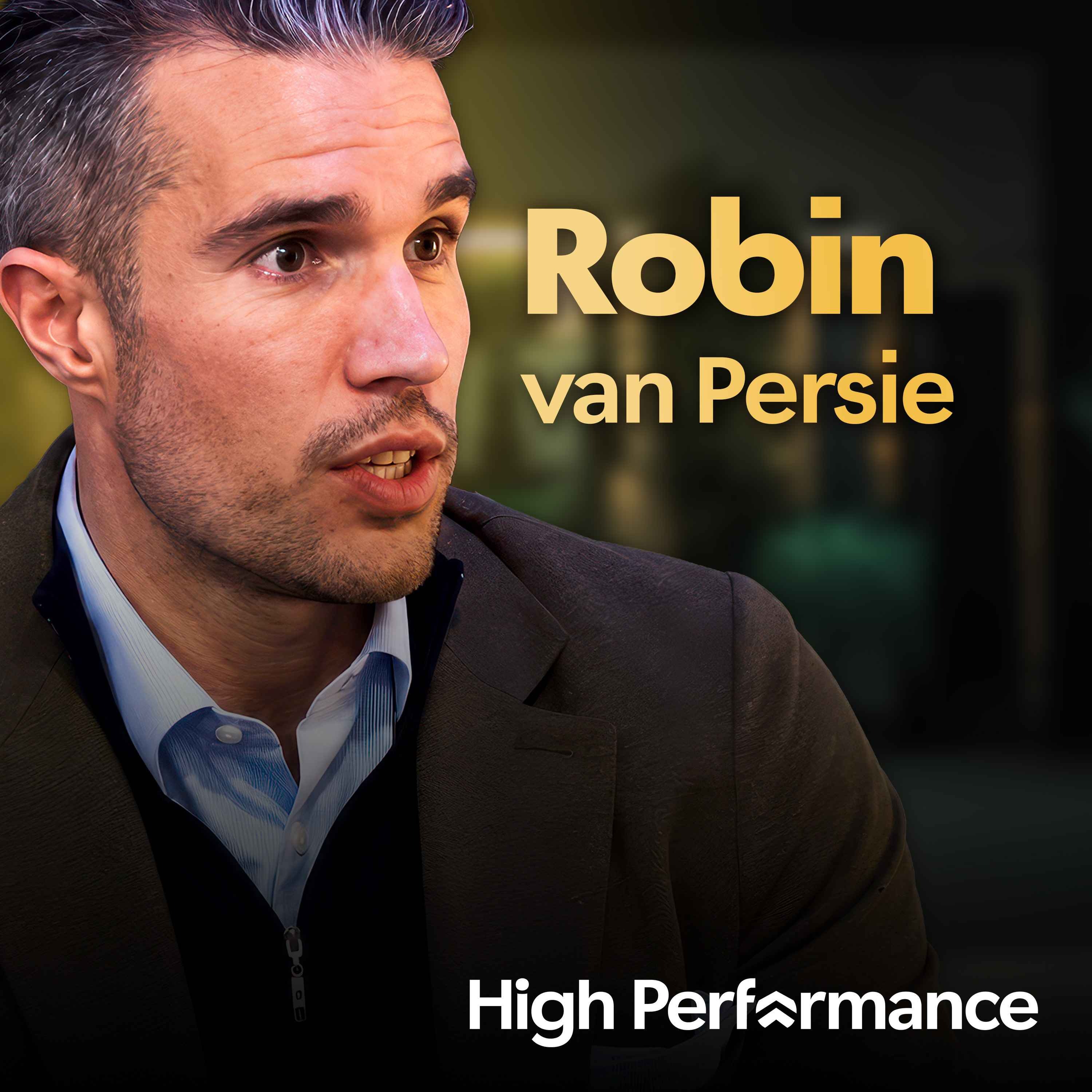
Robin van Persie discusses becoming world-class through radical self-honesty, responsibility, and controlling reactions. He explains his mental/behavioral shift from impulsive, emotionally reactive play (often leading to being provoked and sent off) to calmer, stronger performance. He also covers culture differences between Arsenal (development, protection) and Manchester United (ruthless expectation), and the moment Louis van Gaal told him his “time is up” despite his contract. He describes writing an “open letter”/self-letter at Arsenal, cutting negativity from his life, and giving his son Shaquille a “loser vs winner” message.
Robin van Persie (former Dutch striker; played for Feyenoord, Arsenal, Manchester United; also scored for the Netherlands). Interviewer/host: Damien/Jake (High Performance podcast host(s)); includes references to Louis van Gaal, Arsène Wenger, Sir Alex Ferguson, and Dennis Bergkamp, plus Robin’s wife and friends.
Written by AI. May contain mistakes.
Robin shares his experiences and realizations during his peak as a footballer.
“This is Robin Van Persie on High Performance.”
Discover how Robin dealt with emotional struggles and transformed his mindset.
“And once I started to do that, I talked with Arsene Wenger about this as well.”
Robin discusses the importance of evaluating relationships for personal success.
“Because there'll be people listening to this podcast and they're not professional athletes.”
Explore the balance between selfishness and supporting teammates in sports and life.
“Yeah, it was like, but that letter I wrote to myself was more about me as a player, what I liked about myself, what I could improve.”
Explore the balance between selfishness and selflessness in achieving success.
“It seems to me like a very different culture.”
Learn how open communication can help navigate difficult situations.
“But to come back on this topic, how do you deal with that?”
Hear Robin van Persie discuss his journey to influence club culture.
“That was my period when I was the captain, top scorer.”
Explore valuable life lessons on responsibility and dealing with failure.
“That is everything high performance podcast is about.”
Learn the importance of giving your best and embracing failure as part of the journey.
“but that, you know, but whatever they do and my daughter, she rides a horse now five times a week and she's really serious about it.”
Discover how self-awareness and honesty play critical roles in personal and professional development.
“That conversation was exactly what I hoped it would be.”
Understand how winners focus on what they can control instead of blaming external factors.
“about responsibility once again, and also someone who had got himself into a place of such confidence that he felt he was able to do that.”
Explore the balance between love and responsibility in pursuing high performance.
“what could they do about the thing that's out of their control?”

Get the gist, explore an idea or ask about something said.
 Claude
On The High Performance Podcast, what are the key points of this episode?
Searching your listeningAutomatic transcript. May contain errors.
0:02I had this chat with Louis van Gaal and then he told me, okay Robin, I'm the coach, you are the player and you have to go, your time is up. I was like, yeah, but I still have a contract. He said, yeah, I don't care. You should ask yourself the question, are you a loser or are you a winner? I said, for me it doesn't matter. I said, because I'm your dad, you can do what you want. I love you for the same amount. I said, but if you want to be a winner, take control of your life and stop complaining about others. That is Robin van Persie, one of the legendary strikers for Dutch football, Arsenal, Man United and the Premier League.
0:37Well, what happens when you sit down and write an honest letter to yourself and realise you've been lying? Well, that's exactly what Robin van Persie did at Arsenal. He wrote down what he was good at, where he needed to improve and reading it back, realised he was making excuses. And that moment became part of a philosophy that would shape the rest of his career. Take responsibility for what you can control. It's the same lesson that he later gave his son Shaquille after a difficult game. Stop blaming the coach. Stop blaming other people because winners take control. And you'll hear that theme throughout this conversation.
1:12From Arsene Wenger, Robin learned patience, development and how to become a world-class player. Then he walked into Sir Alex Ferguson's Manchester United and discovered something different. An environment where winning wasn't an ambition, it was an expectation. This is a conversation about football, but really it's about honesty, ownership, standards and what it actually takes to become better. But we start this episode with Robin Van Persie explaining to us when he believes he was at his absolute peak as a footballer. This is Robin Van Persie on High Performance.
1:48In my mind, when I was at my highest level, I was about 27, 28. personally so that's a very long road until that moment from and that starts basically from very young from five six years old you start that process without realizing it but um yeah i was at my peak personally mentally physically around that age so how would you have defined yourself so when you were delivering high performance at that age yeah beyond the physical attributes of being fast and fit and strong what were the sort of behaviors that you would describe you were demonstrating during that time of high performance yeah during that period everything came together it's like physically mentally more in balance i was quite impulsive when i was younger in my reactions the way i was talking the way i was behaving the way i was playing and that slowly changed over the years because just by basically listening, looking, learning and improving myself as a person at the start and then I brought that back into football because at one point I realized that every game was such a struggle and I didn't really want that.
3:08I didn't want to have a constant struggle. In what way was it a struggle? It's like because the opponents found out that if they triggered me, if they talked to me in a certain way, or if they did all those things, they could get me sent off. What would wind you up? It was going both ways. Because if the opponent was stepping on my toes and trying to bully me, I was going really hard. And I was going against it. But in the end, after a period, I started to think about that. And then it made sense to me. I was like, okay, the reaction I have, I shouldn't have that reaction. I shouldn't go against it.
3:48I should stand above it. So that is like a process of a couple of years. Because if I go against it, then it's such a struggle. I was just like mentally, physically, I was drained after every match for quite a long time, from the age of 23 to 26. And then I realized that I was like constantly fighting, you know. And as well, if I missed a chance, for example, that's a process as well. I was very emotional after I missed a chance. I was like constantly, ah, no, and showing the world how disappointed I was. And then at one point, I was like, yeah, but that's weakness somewhere. Because then the opponent sees that I'm disappointed and that I'm not happy with myself.
4:32So I slowly started to change that. And I was like, okay, you know, if I don't show my weakness, then they don't have like, if I don't react on the bullying, if I don't react, if I miss a chance, then I become stronger and better. And once I started to do that, I talked with Arsene Wenger about this as well. Everything became lighter, you know, it was so heavy. It was for all those years, it was heavy, but I was making it heavy. Yeah. I just needed a couple of years to realize that. But what I find interesting on that, Robin, is that I think that takes real courage to have that reflection because what you'd been doing had obviously worked for you.
5:13You know, like when you look back at the start of your career of leaving ex-Celsea and then the run-ins that you'd had with the coach at Feyenoord, that you'd obviously been fighting and resisting it and you'd still been achieving success. Yeah, but that was because of the love of the game, because I truly love football from the bottom of my heart. I love it. And that is what sort of saved me in a way, because I made some stupid mistakes over the years, some silly ones. What sort of things did you do? From arguing with all the players. It's like you have to know your place as well. In football, it's like when you're young, that's your place.
5:52You have to earn the right, basically. And I wasn't doing that. I was very impulsive. I was very against the rules somehow. So why was I doing that? Why was I against the... I wonder whether you almost felt you needed to be like that to show you cared and to show you wanted to be the best. You know, you didn't want to just cruise into training and cruise through training and cruise through a game. You almost felt you needed to have a battle every game to show your teammates and yourself, yeah, this matters to you. It was going too far. It was going too far and was becoming a problem because I wasn't creating nice stuff.
6:29I was making problems for myself. I wasn't really expressing myself good enough just to solve the problem because most problems started with communication. If you just talk about it in a normal way, you can solve a lot of possible problems. And so over the years, I kept asking questions and I even wrote stuff down to myself. So at one point at Arsenal, after two years, I wasn't satisfied. I wasn't happy. It was going okay, but not good enough. So I started to write a letter to myself. What are my positives and what are my negatives? And then I noticed that I was lying to myself. I was making myself feel better.
7:11Really? Yeah. By reading it back, I was thinking, nah, that's not true, Robin. And did you do that on your own, or did your wife help you with that? Yeah, well, I was talking with my wife a lot and with my friends. And then that is something as well. friends have an influence. Everyone in your life has an influence. At one point, you need to be very honest to yourself if those people in your life, whoever it is, if it's your wife or your friends or your family, have a positive impact on your life. I think if you aim to be the best in your sport in this case, you have to be ruthless at one certain point.
7:52You have to cut out the people who bring negativity and that is very hard. How did you do it? Because there'll be people listening to this podcast and they're not professional athletes. Yes. But they find their life is made more difficult by the people around them or maybe they drain them. What process did you go through to decide quite ruthlessly who could no longer be part of your life? At one point I was ending up in situations where I just didn't want to end up in. And it wasn't my fault. It was the fault of the people I was around with. And I was thinking, yeah, but okay, this is not bringing me further.
8:28You know, I have a dream. I want to live my dream. Because I had this romantic idea of my childhood friends. They should always stay with me. They should always stay connected. And I want them in my life forever. But okay, we have a different life. So at one point, I just made a roundup of what they bring, what they offer me. Because I'm giving them time. In some cases, I gave them money. I tried to help them. But what did they give me? They have to, at one point, they have to accept what the situation is of their life and my life. And they have to sort of somehow live by those unwritten rules.
9:11And some of my childhood friends didn't do that. So they could not follow. They could not follow me because I was going fast in my life. So I just rounded it up. Do they bring something positive in my life? Anything. Even if it's something small, it's fine. But they weren't at one certain point. And then I just invited them. And I said to two of my childhood friends, I said, guys, I love you. I respect you. But I have different dreams than you guys. So it will stop here. Wow. It will stop. How old were you when you were having this conversation? 24, 25. Wow. Yeah. And these guys I knew from a young age.
9:50I said, because you make different choices, you have different priorities than me, and I can't have that. I can't have negativity in my life because this is where I want to go to. And if I have to constantly lose energy on you guys, it's not going to help me. That's ruthless, that's hard. But I felt that I needed to do that.
10:17there's a really nice way of describing that that it's often we talk about the people that come with us are with us for seasons reasons or lifetimes yeah you have periods you have faces with with people in your life in my case because i'm quite intense i'm all or nothing so i had to bring that level down of myself as well i had to take it a little bit softer that was a process of many years as well so i in my private life i started to have friendships which were lighter not so intense and that cost less energy you know so i could focus more on football but the main thing i think for everyone who's listening as well is that keep asking yourself even stupid questions you know keep asking them um to yourself and write letters to yourself or how how it's Do you remember what was in the letters?
11:08Yeah, it was like, but that letter I wrote to myself was more about me as a player, what I liked about myself, what I could improve. From memory, what could you improve? What did you write down in the improve column? Goals. I should score more goals. I should make more runs in behind by talking to So, Campbell, Henry, Bergkamp, Pires, all these guys. So told me once, he said, Robin, he said, the way you play is a dream for a defender like me. I said, why? Tell me why. He said, because you want every ball on your feet. You have to force me to make a choice, you know, to close you down or to follow you.
11:52You have to make runs in behind. So I was like, okay, hang on. Then I came up with the rule. okay out of three actions at least one of them needs to be in behind because i have to hurt the defenders because soar camber told me he doesn't like it yeah you know so i was like constantly asking myself questions and listening listening to players who are better than me what you're describing is something that uh is sometimes referred to as the zander letter and it's named after there's a conductor in boston called benjamin zander and um when he was teaching sort of appreciation of music and the arts and things like that.
12:27One of the things he found with his students was that they got too caught up in the result that they were getting rather than learning about the process of appreciating music. So he used to get them to write a letter to themselves, basic 12 months in the future, and talk about all the things that they were going to achieve and all the things they were going to learn to love about music. Yeah. I had a chat with a colleague of mine. He came up with this idea. I was listening to him for an hour, getting bored. He was like, yeah, I will buy 50 apartments and I will get a grand per apartment and this is how I make my money.
13:04And he was playing in the Premier League back then. And then after one hour, he asked me what my opinion was. I said, but if you want to make money, you should work on your first touch and your header. I said, this is what you should work on because if you do that, he will make 10 times more than this grand per apartment I said if you fix that he will be a world class player and did he take your advice? no he didn't listen he didn't listen but to be fair to him he had a good career he had an okay career but could be better should be better I wonder how different though that that Robin Van Persie is to the Robin Van Persie who was a petulant youth team player causing problems I think that often when people first start out whatever their career this isn't just about football everyone starts out selfish because it's about me achieving my aims and my ambitions for my life and i think it takes time to get to a point where and i think we would both agree you know we're all in our you're not quite in your 40s yet but we're in our 40s and it life becomes about building other people up and it's one of the best feel it's just almost a better feeling than achieving yourself is helping other people to thrive but you it's hard to do that when you're 15 and 16 no it's it's a this is a very deep one because will you get to this stage without being selfish earliest earlier stages so you have to be selfish in the beginning to get the success to then be selfless and pass it on i think so i think so to to actually achieve what you want to achieve to be able to give back you have to be selfish then football is ruthless and at any business it's like that so you have to be selfish and you have to come up for yourself you have to in a team in any team in any business you have to make sure that your position is there safe because otherwise you get eaten well I'm interested in say like your experience of going into Manchester United so you'd been through a period of Arsenal where you hadn't been winning a lot and it almost felt like there was a certain drift or a malaise and then you went into an environment where you were expected to win the title or you came in.
15:13It seems to me like a very different culture. What was your experience of that? Yeah, it was a different world if you compare Arsenal with Manchester United. But I was ready for that world. As a young player, it was much easier to get into the Arsenal team, into the Arsenal philosophy with a coach like Arsene. and Manchester United is like a beast, you know. You have to, you have to perform back in the day. So that was a different experience for me, but I was ready for that, you know. And like all those years of like asking questions and becoming better on all levels did help me to be ready for a challenge like that.
16:01And what would you say was the biggest difference then that you noticed when you went into Manchester United? said. If you're winning, everything is beautiful. Because the impact of Manchester United was bigger in terms of worldwide and the amount of fans, etc. The size of the club. But if you look at when it doesn't go well, at Arsenal, if it doesn't go well, you have your coach who protects you. You have your players who protect you. But Manchester United, you're on yourself. You're alone. No one protects you. Is that healthy? It's tougher. It's ruthless. And I've experienced that in my second year when things weren't going well.
16:43I was still scoring 18 goals that second year, scoring 12 for the national team. So it's not a bad season or something. But people were ruthless. It's not good enough. Bang. Then you're on your own. And that was sort of like a period where I was thinking, yeah, I'm not that bad, you know. Telling myself, I'm not that bad of a player. I'm still scoring. Okay, maybe I'm not like last season or whatever, but it was just ruthless, hard. And then I had to, in my last season, I had this chat with Louis van Gaal. I think I chatted with you about the Czech. Where I had two very good seasons with the national team.
17:21Then I worked, okay, the season, his first season, my last season at Manchester was not great. And then I had this chat with Louis van Gaal. and then he told me, okay, Robin, I'm the coach, you are the player and you have to go. Your time is up. I was like, yeah, but I still have a contract. He said, yeah, I don't care. He said, wow. Did you see it coming? Ruthless. Yeah, towards the end of it, I saw something coming but not this ruthless and the way he said it as well and then, like a lot of things go through your mind, you know, when you get a message like that because I still have a contract.
18:00My family was happy. was my 11th year in England. We love living in England. What's next? You know, my kids going to school, they have their friends and everything. So in like a split second, all these things come across. And how do you react to that? You know, I said, okay. I said, we will see what happens. I said, that's your opinion. I said, but I have a contract and I'm happy in England and at Manchester United and my family is as well. So we will see what happens. And I just shook his hand, stood up. I was at the golf club in Mare, stood up and left it. And how quickly did you decide that on the training pitch and in games you would attempt to change his mind and prove to him that he's made a mistake?
18:46Well, on the way back home, I was thinking, okay, this is tough. How do you react to a message like that? That ruthless, that hard, that direct. And then loads of things came from my mind. and we started pre-season and I wasn't allowed to play in the 11 against 11. You get a ball and do your own stuff. I was like, okay, hang on. So you try to stay calm, stay cool. You know what I mean? But there's loads of things happening. You're playing the macho card. Okay, it doesn't affect me. It doesn't do this. But it does affect me and my family and my career, you know, big time. Maybe at that point, it was good for me to talk to someone outside my inner circle but I was too stubborn as well to do that now if I look back at it there were maybe a couple of points in my career where I should have done that I had that feeling like a life coach or a mental trainer I always had that feeling yeah but these people will create problems instead of solving them so I kept them at distance and up until today I never had a session with anyone in that way but now I'm open to it and maybe it's partly age experience but if I look back at my career it could have been a good case if I would have talked to someone like that at this particular moment for example but it's often said that like the best managers are the best psychologists as well so who would you say was the best coach you had that got the best out of you as an individual well I was lucky to have such great coaches but Arsene Arsene was so intelligent he was you could talk to him about anything and what I learned from him as well and this is like when you talk to Arsene he's not answering straight away maybe you know that he's letting the question in first then he checks you out when you have a normal conversation he checks you from the front from the left from the right then he answers so I was like I'm way too soon with my answers you know and sometimes I think my answer is too fast you know I should have thought about it a bit longer.
20:57And then I saw him doing that in interviews and just by chatting to him, I was thinking, okay, I will pick that up from him. You know, that's clever. You were learning more than just football from Arsene Banga. Yes, very much. And yeah, he's a professor in maths, in German, English, such a clever guy. I was learning as well off the pitch by looking at Bergkamp, even how they had their lunch. Early days, I had my lunch, like quick, quick, bang, in, out, always on the goal. then I saw these guys they were putting their jacket on the seat and they were talking before they were eating they were making jokes then they enjoyed their lunch then they had a nice cup of coffee it was just so tranquilo so relaxed you know and I was I was so everything except relaxed I was all over the place I read a story Ian Wright told when he shared with Dennis Bergkamp and he saw him wearing pajamas and he said that he started to wear pajamas because Dennis Bergkamp did on a way trip.
21:58So yeah, you're in good company in terms of copying him. Yeah, yeah. Well, of course, yeah. Dennis was a very interesting person, character, player. He's like off camera. He's one of the funniest guys you will ever see, especially in English. So funny, so dry. It's ridiculous. It's just when the camera, when the lights go on, he's shy, you know, almost, but very clever, clever guy and I learned a lot by just looking at him. So when you've spent your formative football years with Arsene Wenger and he's taught you so much more than just football, almost like a father figure, lots of players talk about him like that.
22:39How difficult was the conversation the day when you went to him to explain what had to change at Arsenal for you to stay? Well, that was actually before our last decisive chat that was in Austrian training camp. Before that, we were changing our philosophies of how to bring the club forward. But it was not only between me and Arsene, because it was like I told you before, there was more happening with Ivan, of course, and the way he behaved and he handled the whole situation. Do you want to talk about that? If I look back at that whole situation, it's that, you know, in that situation, I have to look at myself as well, where I could have done better or could have done something differently.
23:32If I look back at that, that open letter, I didn't mention it during our show with BT, that open letter, I shouldn't have done that. You know, if you look back at that, it is impossible to, in such a delicate, difficult situation of making a transfer after spending so much time at Arsenal, to make a decision to write an open letter to tell my truth in two pages is impossible. And where did you do that, sorry, Robin? Where was the letter? Yeah, I think back then I went to the newspaper because there was not... In the Telegraph, I think. Yeah, so I did that. And that was because I was disappointed with Ivan, with his behavior.
24:09But I could not go into detail about what exactly then, you know, Because it's just impossible to tell the whole story behind it. And partly was the fact that Arsenal didn't offer me a deal. So if I look back at that, I should have done that better. Because the difficult thing for Arsenal fans even now is, you know, we talk about the fact they didn't offer you a deal, but then when you released the statement to the papers, you said you've decided not to stay. Yeah, exactly. Exactly. For Arsenal fans, it's still a difficult period to get their heads around. They still don't quite understand it, I don't think.
24:46I can promise you, my kids, if someone comes with proof that Arsenal offered me a deal, I will give you a million now. But did you make it almost impossible to offer you a deal because you were so demanding, because you were so desperate to win the Premier League? No, it was Arsenal's decision not to offer me a deal. And that is up to them. You know, after many conversations, it came clear that we had different ideas. What was it that you think was lacking? What did you need from Arsenal at that time to convince you? I had seven points where I thought Arsenal could improve. And in my opinion, those seven points, they should start with dealing with them straight away to be able to compete with the best teams.
25:36Do you remember what they were? Yeah, but it doesn't really matter what points they were. What matters is that Ivan decided that he didn't agree on one single point of those seven points, which is fair enough. So taking that information on board, so Arsenal doesn't offer me a deal. They didn't agree with my views. My views were only to help. It was like honest views of how the club should move forward. That is a very clear message. For me, it is not an issue anymore. I'm now talking with you about it for the second time and that is fine. It is not an issue for me. That's life. That's life at the top.
26:20Clubs, businesses make decisions and players as well in this case do as well. I'm perfectly happy how it ended up. I went to Manchester United. We won the league. you know so it's perfectly fine for me and I'm not angry with Ivan you know and I'm grateful to have worked with Arsene for eight years he played such a crucial part in my career I can honestly say that without his influence I would not be the player I ended up with in the end so I'm thankful I'm happy and thankful it's just that there are certain facts you can't look away from you know it's just how it was And is it hard when you can't talk because you played through injuries, you dedicated yourself every day, you trained hard, you loved the club, loved the fans, loved the manager?
27:10Yeah, I did. And then when the fallout happens, you just have to kind of accept it. And I always, you know, whether it's football or something else, I think that's a very difficult position for a human being to be in where you're like, hold on, you've seen 10 % of the truth and you've made the other 90 % up, you know? Yeah, but I do sort of realize that people have that judgment ready based on 10%, like you said. And that is how it is. But honestly, I'm grateful for Arsenal for the years I've played there, for Arsene. While Ivan and me didn't really click, that can happen as well. But it's a big man's world.
27:53There is a moment where you have to move on. And like I said as well, sometimes in the top it can be ruthless, sometimes in your favor, sometimes against you. But to come back on this topic, how do you deal with that? How do you deal with such things who have such a big impact on your life? Key to that is communicating, keep talking. And although some situations can be very difficult, stay open for others. because I know a lot of colleagues of mine as well who tend to close up. You know, when things become difficult, they close up and they stop to talk to anyone. But that is not the solution. You should stay yourself, stay open, keep asking questions and stay friendly, you know.
28:41Today's episode is brought to you by Olympic Hospitality. The Olympic Games are coming to Los Angeles in 2028. This is a once-in-a-generation event that you will not want to miss. And it's more than a ticket. It's a story you share with your family and friends. And the ultimate way to get closer to the action is with an Olympic hospitality package. Ticket-inclusive packages offer a range of prime seating and lounge access options, venue-dependent priority entry, food and beverage selections from LA's diverse dining scene, and elevated service and continuous support, making your day at the Olympic Games one to remember for a lifetime.
29:17Get ahead of the curve with an LA28 hospitality package. discover more at hospitality.la28.org forward slash high performance
29:29so you made a comment earlier robin where you spoke about when you first as a young player you had to know your place in terms of what you can say and what you could challenge when did you feel that it was your place to go and make these seven points and challenge the culture and what you saw the club needed to do? That was my period when I was the captain, top scorer. That was the period where I felt that my views would count. And as a 20-year-old kid your views of how the club should move forward don't really count. Then you have to fight for your place, be quiet and learn and be a better player.
30:10Try to be a better player every day. But I was 28 back then, 29. I felt that it was my right to give my honest opinion. Sure. It sounds like you were isolated on your own in terms of that the club decided to reject you from the organization. Do you feel you could have recruited other characters within that dressing room that had equal weight or equal credibility to enhance your argument? Yeah, good point. for example some colleagues did came up and did want to support me but I said no because for one reason is that I didn't want to put them in a difficult place I didn't want to put them in my place because it was my right to speak out and I was the captain of that team so in my opinion if I would bring two or three other guys who shared my opinion it would put them in a difficult place I will not do that because I will take the blame.
31:15I will live with the consequences, whatever they are, but I don't want to put you guys into this position. It's not an easy thing, is it, for a football club to say, actually, that footballer, that individual player, can help to change the culture of this football club. But maybe that's the healthiest thing. The healthiest thing to do at a football club is to take the input from an experienced pro, a 19-year-old who can tell you what the pathway is like from the academy, from the person that serves the lunch everyone i think not just in football but in life everyone should be able to add to a culture i think so too clive woodward used to talk about it that the trouble is when you're a head coach everyone tries harder in the gym everyone runs a bit faster yeah so you know the question is what's happening when you're not in the gym it's a very good point it's a very good point but the um at clubs they they tend to um have sort of created feeling like okay you are a football player you should stick to playing football well uh i am more of the type of guy you know even the kidman his opinion i would like to know you know especially him because he's right in the middle of that team what is the reason why this some presidents or people in higher functions behave like that and the only reason i can come up with is that they're trying to protect their own position.
32:31And is that big? Is that a big way of thinking? No, of course not. And that should change, in my opinion. You should listen, because you're all in it together. And in a smaller version, like when I was mid-20s, I just realized because early days I was like, yeah, okay, this is my position. I have to try to play. And I don't really talk to the manager. And then at one point, I was talking to Arsene. At first, I was scared to talk to him. And at one point, I realized, like, no, no, no, hang on. So we are this team. We have the coach. He has his staff. He has the medical staff. He has Mr. Dean in the first couple of years around.
33:15I said, we should all work together. So I should really start opening up to the coach. So we are working together on the same target. So there's no reason for me to be scared of the coach. Why should I be scared of him? So that was the moment where I realized, like, okay, hang on. I would just ask him questions. I would just talk to him. It's almost like you realize that your job is more than just doing your job. Exactly. And this is actually a common theme, I think, with the conversation we've had with Robin. Whether it's writing down notes, whether it's going and seeing Arsene Wenger about the future of the football club, whether it is taking on board criticism from Louis van Gaal that you're going to leave Man United and trying to retain your place there.
33:56The recurring theme, I think, is that there was a moment in your career where you realized you have to take the responsibility. No one else is going to run your career for you. Yes. And that is what I did when I was about 24, 25, halfway. And I actually had this chat, funny enough, seriously, with my son. So my son plays at Feyenoord. He played against Ajax under 14. He was on the bench. he didn't play so in the car on the way back he was like a bit moody disappointed complaining a little bit about others about the coach etc and then I said yeah I said but Shakil I said you sound like a loser you know if you talk like this in a way you sound like you lost I said you are blaming him you're blaming her you're blaming this you're blaming everything I said but I don't hear one single thing about yourself I said winners, I said, they take control and they blame themselves and they look where they can improve.
35:00And this is what you should be thinking about. So I didn't tell him what he should think about. You should ask yourself the question, are you a loser or are you a winner? I said, for me, it doesn't matter. I said, because I'm your dad, the only job I have and your mom has is when you're 20 that you're a good boy, that you're ready for life. You know, you can make your mistakes, you can do what you want. I love you for the same amount. It doesn't matter for me if you make it as a football player or not. I said, but you say that this is your passion. So you should take control of your life and stop complaining because it sounds like a loser.
35:39I said, and I don't mind. If you want to be a loser, be a loser. I still love you as much. I said, it doesn't matter for me. I said, but if you want to be a winner, take control of your life and stop complaining about others. and then I watched him train the next morning my wife said where are you going I said I'm going to watch this session two days later actually because they played on Saturday and Monday morning so I'm there sitting cold hoodie on I'm looking and I see this tiger training running working and I was like ah okay okay he realized he has to take control of his life he's 13 now that's the podcast right there by the way isn't it That is it.
36:21That is everything high performance podcast is about. Parental advice and everything. But did anyone ever have that conversation with you? Well, in like bits and pieces. Stages, yeah. Yeah, over the years. And what I liked about, for example, Asen, is that he never really judged me. You know, it was almost like a parent in a way. Because my son, I can, it doesn't help if you judge people constantly, if you tell them off and if you say you have to do this it doesn't work like that you know it's their process you have to respect their process of your kids or your friends and you can advise them you can you can guide them for a certain way but in the end they have to make their mistakes they will make their mistakes let them make it and then they decide what they do with it you know but sometimes it's good to give them a guideline but Arsene as well Arsene said why are you not a top player you're still not a top player I said okay okay, tell me why I'm not the top player.
37:21No, I'm not telling you. You have to find out yourself. So I had conversations like that. He said, you have to ask yourself the right questions. He said, look around you. He said, you saw all these top players, but you're not one of them. Did he? Yeah. And your reaction can go two ways. You can either deal with that and make yourself a top player, or that can break some people. Yeah, and then I started to look at Perez, how he played. look at Jungberg how he made his runs look at Dennis look at Jerry look at Vieira I was thinking he's right he's right I'm so far off you know these guys are on such a level that's where I want to go but he was not forcing me into it you know you had to find the answers I had to find the answers myself isn't that building coaching isn't that the art of great coaching I think so too pose a question and then let you answer yeah exactly but that is a perfect way because you have to feel it you know if you see it or if you hear it okay sometimes it can be enough but most times it's not enough you have to feel it you have to find out yourself you know and along the way you can make mistakes you can struggle you can but uh in the end you decide if you want to be a winner or a loser it's your decision right we're going to finish with some quick fire questions okay what is the absolutely unacceptable behavior that you just don't tolerate what's the one thing that really winds you up um well i think as a person uh it defines you how you behave towards people you don't think you need.
38:51You know, I think that is what they find. That is the status of a person, in my opinion. So, for example, if you're in a restaurant and you're arrogant towards the waitress, for example, or do the people help you and you're one of them, then I don't think you're a good person, you know, especially towards the people who you don't tend to need. You know, if you're a good guy, just be good because you're good, not because you think you might need someone or so what would you say robin are the three non-negotiable behaviors that you and people around you have to buy into you have to be polite um after manners and that's that is what i tell my kids as well but this is quickfire it's not really going well it's quickfire so what are the three um okay uh politeness manners and um yeah, desire to achieve.
39:45What advice would you give to a teenage Robin Van Persie just starting his career? Just relax. Just relax. Have a breather. Enjoy it. Enjoy the ride. And how did you react to your greatest failure? Well, this is a difficult question to answer quickfire, right? What is your greatest failure? Yeah, good question. We have to find out. So many. We'll come back to that one. Yeah. Are you happy? Yes. I am. Yeah. Yeah. Not perfect, but happy. Yeah. How important is legacy to you? Yeah. Important. Important because I like the idea that I had an influence on some people along the way, like a positive influence.
40:32So that is some sort of legacy. And not just related to football, but this is related to life. What is your one golden rule to living a high performance life? Try to live in one world. That is very difficult, especially nowadays. Distractions all over the place. But try to live that world, what you choose for. Then you're able to compete at the highest level. Because you tend to mix it up and to be the best, for example, player you can be and then yeah but there's a nice party there as well and let's go to the party and let's do this and let's do that you try to live in five six worlds try to especially during your prime time during your career try to live in one comes back to taking responsibility doesn't it yeah exactly have you worked out your greatest failure yet maybe you just didn't have one man well let's imagine your son fails yeah yeah what would you say to him once he's failed at something what's the best way to react to that moment?
41:39Because I'm a real firm believer that failure is healthy. Failure is a good thing. Yeah. And failure, you should make mistakes. I'm telling my kids as well and we are trying to raise them very openly and we're trying to sort of send them the message that they can make mistakes, can fail, but that, you know, but whatever they do and my daughter, she rides a horse now five times a week and she's really serious about it. I said, okay. I said, you can fail. You can even fail off the horse. You can fall off. It's fine. But, you know, once you found your passion, do your best. Do your best, your maximum.
42:21Give your maximum. Whatever that is, then it's always fine, you know. And then you can fail or you can fall off as many times as you want. But do your best. Brilliant. Do you know what? That conversation was exactly what I hoped it would be. I really liked it. Thank you very much. Thanks, mate. Well, Damien. Jake. What stood out for you? Just this self-awareness. He's serving honesty, both with himself and with other people around him, which I imagine can be quite difficult for people to hear occasionally. But there's a transparency to what he was saying. I like the fact that he's so honest. He sort of talks really clearly about when he wasn't in the right place, mentally like when he was a young lad and he struggled to kind of control his own temper and his own emotions to compare a young guy who got wound up on the football field to the point where it impacted his performances and exhausted him compare that to a guy in his mid to late 20s who went into the office of one of the most famous football managers we've ever had in English football and gave him his seven points to improve the football club it comes back to that conversation about responsibility once again, and also someone who had got himself into a place of such confidence that he felt he was able to do that.
43:39Yeah, but do it constructively. And it tells you also about football, where they go, oh, he's a footballer. He's just a player. We can't listen to him. You know, maybe that's where things go wrong in the game. Yeah, but again, one of Robin's key messages was about that curiosity. Keep asking, keep inquiring. Don't just accept your role. Find out more. Challenge. I really hope you enjoyed that. You know, there's one element from that conversation that I've thought about so much since we spoke, which is that winners take control. And it's not because winners like to control everything, like they obviously can't and they don't, but because they spend less time blaming what they can't control and more time asking, what could they do about the thing that's out of their control?
44:22You know, you hear it actually in Robin's letter that he wrote to himself, confronting some really uncomfortable truths. I think you also heard it in advice he gave to his son Shaquille. and you definitely hear it in the contrast between Arsenal and Manchester United. Two extraordinary environments that taught him different things about growth, standards and winning. But you know, I also loved the message to his son. Like it wasn't, you have to succeed. It was, I love you, whether you succeed or fail. But if you tell me this matters to you, well, take responsibility for it. And maybe that's the distinction that we sometimes lose when we talk about high performance.
44:54It isn't about relentless winning. It isn't about beating yourself up when things go wrong. it's about being honest enough to ask what part of this is mine what can I learn and what can I do next and I think that feels like a pretty powerful place to be listen thank you so much for joining us on high performance hope you enjoyed this conversation remember please like subscribe share the chat that you've just heard remain humble curious and empathetic and we'll see you next time
45:28Thank you.
Robin van Persie captained Arsenal and won the league with Manchester United, but for years he says his hardest opponent was himself.
We re-visit our classic episode with Robin where he talks about the letter he wrote to himself that he didn't believe when he read it back, the childhood friends he let go at 24, the Arsenal exit he'd handle differently and the advice to his son that Jake calls the whole podcast in two minutes.
Our partners in this episode:
AG1 👉 Head to http://drinkag1.com/highperformance to save £20 on your first month, plus a free welcome kit, Vitamin D3 + K2 and five travel packs
XTB 👉 To find out more and make your money work, use code HPP at: https://highpfrmc.com/XTB_HPP_AU
Vitality 👉 We've partnered with Vitality because our philosophies align perfectly: healthy habits build high performance and can lead to a healthier, longer life. Find out more about health and life insurance with Vitality: https://highpfrmc.com/vitality-hpp-au
Hosted on Acast. See acast.com/privacy for more information.


