
 Ask ChatGPT


 The High Performance Podcast
29 Sep 2025 · 1h 6m
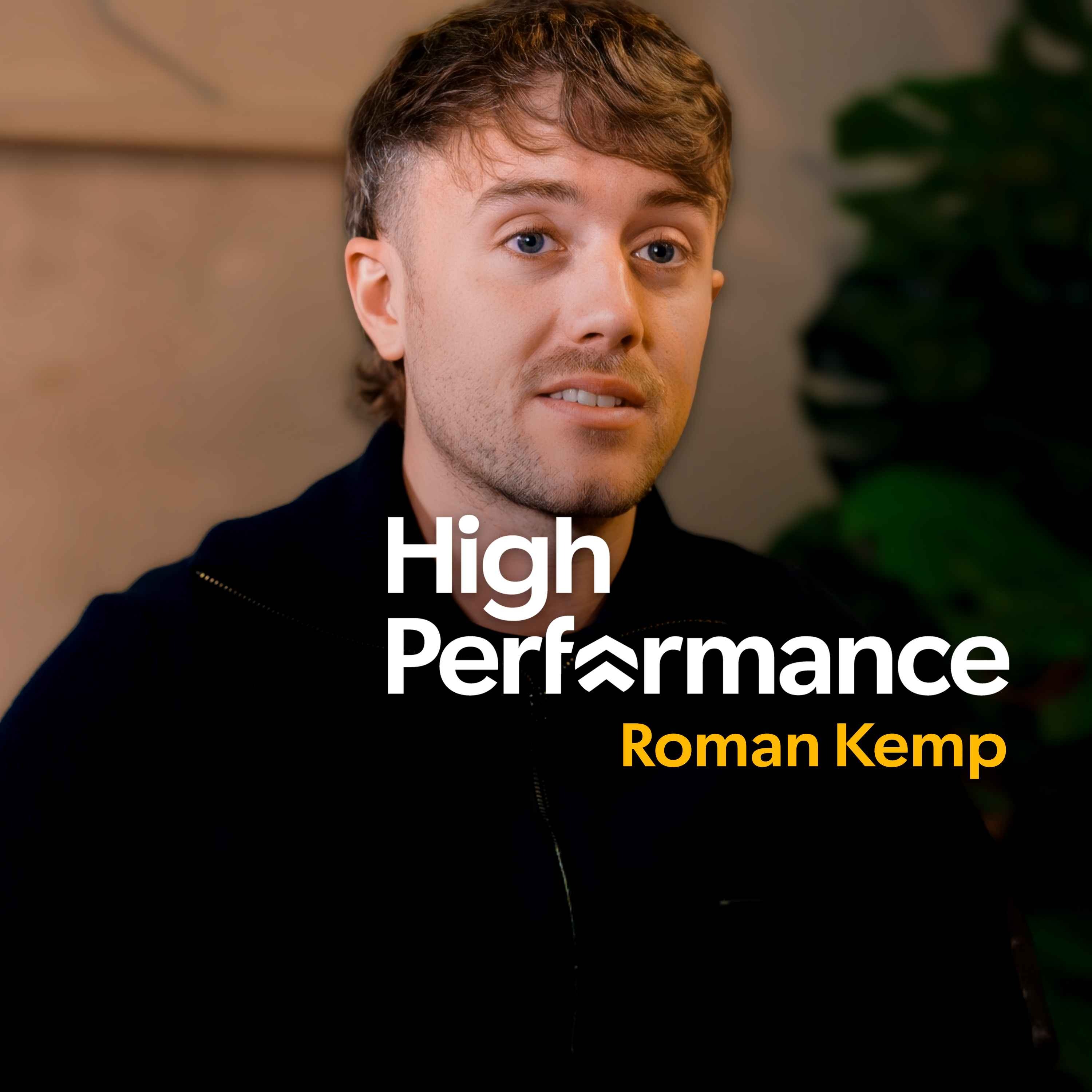
In this poignant episode of The High Performance Podcast, hosts Jake Humphrey and Damian Hughes engage in a heartfelt conversation with broadcaster Roman Kemp. Roman opens up about his personal struggles with mental health, particularly following the tragic loss of his best friend to suicide. The discussion centers on the stigma surrounding mental health, the importance of open conversations, and the initiative "Together Against Suicide," aimed at creating supportive environments for men within football communities.
Written by AI. May contain mistakes.

Get the gist, explore an idea or ask about something said.
 Claude
On The High Performance Podcast, what are the key points of this episode?
Searching your listeningAutomatic transcript. May contain errors.
0:00Watch it early on the High Performance app. Available now, Roman Kemp, the broadcaster, opens up a powerful conversation on success and mental health. Before we start, please be advised that there is some themes of trauma and suicide in this conversation. One in four men will experience some form of suicidal thoughts. I never thought to ask that question to him, and then all of a sudden, bang, gone. 70 % of football fans are more likely to speak to their club than their own GP. that's pure connection and that's huge every 90 minutes someone goes through that same situation that we went through where you get that phone call you get that knock on the door from the police and that is earth shattering That is the voice of Roman Kemp broadcaster, podcaster and one of the most important voices in the UK right now regarding mental health and suicide prevention And today's episode we really hope will be a useful one because this is a conversation about what so many of us feel, but so few of us are brave enough to say.
1:05It's built on devastating truths. Someone in the UK takes her life every 90 minutes. And for people under 35, suicide is the biggest killer. More than cancer, more than car crashes. And this is a very different episode, actually, to the one that you might be expecting or to the kind of episode that we normally record. I guess this is less of an interview, more of just a conversation. it's three men talking about our past struggles the things that are on our minds right now we open up about therapy, about medication and actually we try and work out the three of us just why men are struggling so much with their mental health and of course why the person that you least expect to be someone who's struggling may actually be the person who is silently collapsing inside You're also going to hear some powerful messages from current elite footballers and managers who anonymously reveal what they really think about whether the football world is finally getting to grips at dealing with mental health.
2:07Roman speaks about this today not as a campaigner but as someone who has lived it. He shares stories about growing up in the shadow of fame with his parents and his godfather George Michael and he talks about losing his best friend Joe to suicide and the chilling moment of clarity that if he didn't confront his own mental health he could follow the same path. This is a practical, emotional and honest conversation and we really hope that it helps you Please welcome Roman Kemp to High Performance
2:40Roman, thanks for joining us Thanks so much for having me, thank you Would you just please, for people that are still unaware of the facts and the numbers surrounding depression and suicide rates for men in this country would you just give us a few of the headlines that you feel we really need to understand? Absolutely I still think the most shocking thing still is it's the biggest killer of men under the age of 50, which I'm presuming is everyone in this room right now. I'm not looking at you too long, well, don't worry. But no, it's the biggest killer of men under the age of 50. It's the biggest killer of women under the age of 35.
3:13I think the one that always stifles a lot of people is the one in four, which is that one in four men will experience some form of suicidal thoughts, suicidal ideation throughout their life. It's a completely normal thing to have, that feeling of waking up and thinking to yourself, I don't want to be here anymore. It's something that I've certainly had at different stages of my life. It's something that friends that I know have had and you have to pull people out of those moments. But still, I think the shocking factor that it's one in four still doesn't resonate with some people. And I actually first explained that in a football sense.
3:51I was like, imagine at the Emirates every weekend, you've got 60 ,000 people. if I took one and four out of them so that's 15 ,000 people out there it's a hell of a lot of people in that in that stadium and visually you can see just how many people that is I think as well when it comes to suicide in this country especially in the UK one person every 90 minutes takes their life so that is one game of football and it was just one of those weird kind of things that when we dug into the data and looked at it that it kind of was almost synonymous with football at the same time. Those stats still aren't kind of talked about enough within the demographic.
4:27You know, I still find it shocking that the demographic doesn't know just how big of a risk it is to them. In men under the age, put it this way, in men under the age of 50, their biggest risk to them in dying is themselves. Yet we're still looking on Instagram for what's the health benefits of this? What can I do this? You know, how do I avoid this disease or how do I avoid looking like this? That should be a focus and that should be a focus on as many people as possible's lives, whether that be women or men. And then when we dug even deeper in terms of realizing that the first conversation with someone, when you open up and say that you've been having those suicidal ideations or suicidal thoughts, your actual risk of suicide decreases massively, percentage-wise.
5:16Just from physically coming out of your mouth to another human being, your chance percentage comes down huge. And that, for me, was the big pitch that I tried to put to the Premier League. And it was like, you've got the demographic. You are a honey trap to these people and you can really use it in a positive way. I think the work that you're doing with the Premier League is amazing. And congratulations, because often people think they want to do something and they either don't or they don't think as big as you thought. But to go to the Premier League and get something involving all the Premier League clubs and the biggest football league in the world is amazing.
5:51And congratulations. Thank you, man. I think the most important thing for me, right, from everything that you've just said, I think there's two things, actually. The first one is that having suicidal thoughts is totally normal, right? I often say, like, if Stephen King can imagine the things he writes in his books, you know, his horror stories, right? The human brain has the ability to write horror stories, right? The trick is not to believe the horror story you're writing is real. When I was in therapy, that was the biggest moment for me when the therapist said, you know, like, it's a thought, it's not a fact.
6:21I was like, wow. I think the other important thing that you just mentioned is as soon as you say to people, I've been having suicidal thoughts, the chances of you carrying out that act decreases hugely so if you took a call with this I would really like the three of us as three men of varying ages one of us not quite in the under 50 demographic as of a couple of weeks ago but almost you're not in the under 50? thanks for being shocked I was not too shocked oh mate 50 in two weeks I'd love us just to have a conversation right for the next hour or so by the end of this mum, dad brother, sister man woman auntie uncle grandparent child if they've heard this conversation and they're having these thoughts and let's say if 100 ,000 people are listening right now that's 25 ,000 people that are having these thoughts that at the end of this conversation our listeners or our viewers think alright I'm going to tell someone that I've had suicidal thoughts yeah absolutely I think that's it and I always go back to it I'm like the thing that shocked me the most the thing that hits me is when you go around and for the last over five years now where I've been deep into data and talking to doctors and psychotherapists and things like that.
7:36But still, if I went out and said to the general public, if I said, what does a suicidal person look like to you? Like if I said, draw it, right? They'd be like, oh, they're lying down on a psychotherapist's like long leather chair and they're explaining to them why they hate their life and they hate themselves. And it's like, it's just not true. Like a suicidal person doesn't look like that. If anything, they're the opposite. it the only tie i could make because you know when you lose someone through suicide or you've had those suicidal thoughts yourself the grief is so bad because you're like it's so confusing like you you deal with anger you deal with confusion it's like someone's murdered your mate but the murderer was your mate and you know you're just going so you don't know who to be angry at and you're just you know i mean there's this horrible thing that you've got going on and the only correlation that I had from speaking to every single person that I met throughout this whole journey and it's still the same now the same answer that comes back whenever I say you know did you see any signs or anything like that always say the last person you would have expected the last person you would have expected there's the sign yeah do you know what I mean yeah it's the person at the party that's all going for it they're the people that no one is asking how are you because you presume they're fine the people you presume are fine are the ones that really probably aren't.
8:54And that's why, go back to it, the Norwich video was the Norwich City video that they did was the best kind of representation of suicide I've ever seen. You know, they released, for those people that don't know what it is, it was the video that they put out. You're a great club. The greatest football club. You've seen the greatest. It was, no, but it was a phenomenal video. It was a shot of two guys. If you've never seen it, please go and watch it. It's two guys and they're going to the football and there's one who sat there and he's very somber, he's very quiet, he's obviously got a lot going on in his head and like the team score and he's not really clapping, he's kind of like, but the guy next to him is so enthusiastic, you know, putting his arms around everyone saying, well, you know, come on, let's do this, how great was that, etc.
9:38And then at the end of the video, we realised that that's the guy that's passed away, the happy one. I lived that experience. I had that experience, you know, with my best mate. It was the exact same thing. It was, I was talking to him about, you know, man, I've been having these thoughts. I don't want to be here anymore. I'm going to therapy. I'm taking this drug. I'm doing this. Like, you know, and he was always there for me, pulling me out of that to the point where I never thought to ask that question to him because I looked at him as like, you got that figured out and then all of a sudden, bang, gone.
10:11That's the horrible reality of it. Have you managed to get any closure on that? Yeah, bits and bobs. Yeah, but I thought, the thing is, is that like, I've spoken about what I've been through a million times. We've made documentaries about it. But I think the thing is that that still goes on in so many different families and different people's lives every single day, every 90 minutes. Someone goes through that same situation that we went through where you get that phone call, you get that knock on the door from the police. And that is earth-shattering. And I think, again, it's like what people don't understand is that like for one suicide, they've ranked it out to about, it affects one sort of suicide, affects 180 people around that one person, whether that be in a small way or a big way.
10:58It goes down to that thing of, there was always a stigmatism around like, one, people saying the word suicide, they don't want to say that, right? They just don't like that word. Two, there was always a stigma around when someone did die of suicide, you can't say it's selfish. You can't say it. You can't shame them. you know that's their decision they did what they want to do but it's like that's not the reality and I think you know Joe's mum is the best example that I still will ever have in my life of someone that has been through it and obviously you know her son has taken his own life and the only I you know I said I remember saying to her if you could really think about the one thing that you'd want to say to that person that is suicidal or having those thoughts what would be that one thing that you'd just be like just let me go in there and just let me say this before you do anything.
11:47And she kind of fronted it in a way that was like going against the grain of what you should do. And she just said, look, whatever you think you're going through in that point or in that moment, no matter how bad it is for you, you are not getting rid of any of that pain. You are not getting rid of it. You're not making anything stop. All you are doing is transferring how bad that is in your head to every single person that you love. And that's true. you know and I'd never heard someone kind of say it that kind of bluntly before
12:44with Upwork. Go to Upwork.com now and find your freelance expert. That's U-P-W-O-R-K.com. Post a job for free and get started today. Hey, I'm Dr. Z and I'm a neurosurgeon. So that means long hours, early rounds, late nights, and everything in between. And through it all, I wear figs. They're comfortable when it counts and functional when I need them the most. So where do you wear your figs? On shift, on call, on the couch in the break room, listening to this podcast, wherever it is, they fit right in. And now listeners of this podcast can get 15 % off their first order. Just head to wearfigs.com and use code FIGSRX at checkout.
13:20That's wearfigs.com, code FIGSRX. This episode is brought to you by Opera Air, the first browser with mindfulness at its core. Now, most of us spend hours every day online, but how often do we pause to take care of ourselves whilst we're doing it? And that's where Opera Air comes in. It's a lightweight, fast, secure browser built not just for productivity, but for your well-being. With Opera Air, mindfulness is built right in. You'll find free breathing exercises, guided meditations, and soundscapes with ambient sounds, lo-fi music, and binaural beats, all designed to help you focus, relax, and even spark creativity while you browse.
14:04we interviewed Alfie Bowe yeah the singer and he told us something similar didn't he when he tried to take his life and it was when he was recovering in the hospital he said the nurse came to him and she wasn't compassionate she told him the stats on the likelihood of his children subsequently going on to take their life had increased massively yeah of course and he said that was the moment when he realised that it was selfish what he was doing. He wasn't thinking about it from the perspective of other people. The tough thing with this, right, is that you've got two sides to it. You've got the one where it's like, if I go outside and I say to everyone, yeah, how do you solve the suicide crisis?
14:44How do you solve it? What do you do? The majority of answers that I will get back are, men, they've just got to talk more, got to talk more, got to talk more. And that is true. But then there comes an action point where you are done with talking, where I've been there, where I've done the talking bit. I've told people I still don't want to be here. How do I press the reset button? And at that point, there has to be an action. And the issue is that where we are right now in society and how it currently is in the UK, you just can't be seen. You are not priority at all. You're going to be on a waiting list for 18 months.
15:22If you have tried to kill yourself, maybe it'll reduce down to eight months. but like that's not enough time do you know what I mean like if you've tried to attempt to take your own life it's going to be quite soon after potentially you might do it again so that's not enough time so that's why something like this that you know that we've been doing it was just it was kind of my way of just looking at it trying to see it from a logical perspective and go okay who can see the person as quickly as possible and the best thing about that is it's actually the local charities that are around them that can act as a better version of what that person needs.
16:00Because 99 % of the time, someone that is for the first time experienced a suicidal thought thinks, oh my God, something's wrong with me. Let's go to A &E right now. Do you know what I mean? Or like even their family member might say to them, oh my God, you've got to go to A &E. Like, you know, what do you do? I mean, we all know we've been to A &E at some point. The worst place in the world that you could possibly go if you are having a mental breakdown, which is what it is, right? The worst place in the world, right? Not because of the work that the doctors are doing, just because the environment is so bad.
16:31And then after that, it will then be the waiting list scenario. Whereas these local charities, they know who you are, they know the area you come from, they potentially know your socioeconomic state. They can speak to you like someone that is from where you're from. And they can see you within some cases the same day or two to three days. And sometimes those smaller charities, they're not heard about. so that's why it was all about with this it was like you know linking a football club to all of those local charities that can see them quicker it's not saying it's not you know and Samaritan's kind of overlooking the whole thing you know and working with those smaller charities but being able to take one take the pressure off the NHS and those waiting lists and then two have the lure of football to kind of say look we're your football club and we like this charity and we like this local place that you can go and chat to.
17:27I think something else that's important for us to talk about, right, is this sense that we feel like if you're broken, you're in therapy and then you get repaired and you never need to go to therapy again. And I still feel sometimes we have these triumphant conversations where people will say to us even on this show, don't they? They go, well, I'm not in therapy anymore. I've got through that. And it's like, that doesn't necessarily need to be the case. You cannot be broken and still be in therapy. I mean, I wonder how hard having these conversations has been for you and whether that has caused some some issues yeah yeah i called my therapist last week i said i said i need to come back in yeah like i said i need to come back in i'm down like you know really down and like you know and right now i'm i'm not in a great place in the sense of i i feel like i'm very overworked and overstressed right now and i think the mixture of personal stuff and and then dealing with talking about suicide it it's really draining, like on anyone, you know, and so I think for me, I was like, look, you know, the other week, I need to make that call, and, you know, even my parents, you know, they said to me, they're like, have you spoken to, to, you know, therapists about, do you want to go in and have a chat with them?
18:39I was like, yeah, totally. But I know, because, and I, and I can only speak, and you guys, do you both do therapy? Not at the moment, but yeah. Sorry, yeah. Apologies if that's too much of a personal question. but I whenever I go in I know that I'm going to feel so amazing when I leave it's kind of like I don't know I've really struggled to leave emotions really somewhere else other than when I go to therapy have you had therapy? because that's actually something I've never asked you in five years of working together you've never asked that? no I'm sorry that's an interesting insight into two guys that work together all the time like what currently or previously or previously yeah yeah yeah and did you feel like that like because you know i always try to explain that feeling because so many of my mates have always been like terrified so terrified about going therapy because they all think someone's going to sit there and tell me how i should feel when really i come out there and i've realized that i've asked myself a load of questions and i've come out with all the answers.
19:48Yeah, no, for me, it was, I'd just become a dad and it was about 18 months in. I had a persistent cough and I went to the doctor and he said to me, go and look at yourself in the mirror. I was like, what? And he was like, you've not got a cough. You're on the edge of a breakdown, mate. Really? Yeah. And he was like, it was just overworking, like being a dad and thinking I needed to provide. So not saying no to anything. Yeah. Yeah, just over worrying about everything. But overworking as well, just trying to do everything. Yeah. I mean, you know, you have said a few times, I'm absolutely exhausted, I'm overwhelmed.
20:23I mean, I do think there is a reason why people have to say yes to everything. And it isn't just because they're ambitious. Sometimes it is because I do think it masks a lot of other stuff. Absolutely. I think I'm 100 % one of those people. Like, I'm 100 % one of those people where it's like, if I can, to be honest, when I look at it, you know, really honestly about, why it matters to me to progress the suicide check and try and almost force it as work means that I don't have to front it up as personally and emotionally as possible. Does that make sense? It's kind of like I'm compartmentalizing it as that's work.
21:00I need to go and talk about it. Yeah. I met a psychiatrist recently, a brilliant woman called Judith Joseph, who's got a book called High Functioning Depression. Right. And I was telling Jake about it, my wife was reading the book and we're in bed and she was like, asked me a series of questions. Yeah. And she was like, I think you might be one of the, like, What were the questions like? Well, it was just like, do you overwork? Do you, when you have any degree of success, do you immediately move on from it and start planning the next one? Do you struggle to create close relationships because you're moving from one task to another?
21:39So when I spoke to Judith Joseph, this was the point she was making, a bit like your example before, but draw a picture of a suicidal person. And she was like, describe somebody with depression and people assume it's someone that can't get out of bed or they're struggling. And yet she was saying the amount of high-function depressives that are out there working hard, providing, just relentlessly not stopping. But she said it's the inability to feel joy because you don't allow yourself to get the barriers down. But that, do you know that I felt like I had that for a long time, like, because I was on antidepressants for so long.
22:17I was like 15. When I was 15, I started having real thoughts about killing myself. And then, like, my mum. Did they just, like, come out of the blue one day? Like, you were a happy kid and then. Kind of. I mean, it's a better question for my mum, to be honest. But, like, it was. Have you asked her? Yeah. She kind of said that it was a difficult one because from when I was, like, 14, it almost developed. It was almost like it became my identity to be more depressive, if that makes sense. And then you're kind of trapped in this thing of like... But she was worried because she couldn't put that down to teenage angst type vibe.
22:55You know, like my son's becoming a teenager. Were you anxious generally in life? No, my anxiety has always been high. Like I do have high anxiety levels, but it was more so I remember very clearly saying to the doctor when I was younger it feels like every day I'm waking and there's a cloud like when you wake up on a day and it's really sunny and you can look outside and it looks really nice and most people go oh this is a really nice day mine was a constant thing of like it's about to rain that's how it felt and that's the only way I could kind of describe it yeah so then I ended up you know taking fluoxetine for a long time and then subsequently changing to different types of antidepressants just because they change.
23:41And I'm far better now than what I was two years ago. You know, I'm just in a moment where I'm just, you know, working a lot and that type of thing. But last year, I kind of got to a point I was like, I'm really good in my life. I feel, you know, I kind of I'd left capital and I was just like, I've got time to breathe a little bit, you know, because whilst that's the greatest job on on earth, it was like relentless, right? so I said I wanted to come off them because I wanted to professionally come off them tapering down dosages and working with the doctor and it was because I felt like I'd never really experienced actual happiness but at the same time I'd never experienced real sadness again very personal question don't feel like you have to answer if any of you have done antidepressants before they really helped me for a long time for an amazingly long time.
24:37But what they can do, and you have to be wary of it, obviously, and speak to your doctor, is that they can numb you in many different ways. And the best example that I can have is that I'd watch a... My dosage would be pretty high and I would recognize it in weird moments where I almost kind of felt like if I was watching a horror movie, if a jump scare came on the screen, it would take me a second to realize that it was a jump scare and I'd be sat there like just watching it and my mates would be like you're not really I'd be like oh sorry I've only just realised it's happened five minutes later you're screaming yeah exactly but it does they numb you and so you know the last year for me has been really amazing scary but amazing so you're not on the antidepressants now no no no no and don't get me wrong if I get to a point where I don't like it I will go back absolutely because that's my life I'd rather of you know feel good and and but i think what's been amazing is that i've you know been able to properly i guess cry i've been able to experience happiness or sadness or anything like that and so it's just my body's just navigating everything at the minute and have you used any particular tools and during that year that you've been off them to be able to regulate your emotions no not really like the only constant i have in my life is football like if i'm genuinely honest i have to play football once a week like i have to like it's the only thing i always say it's my it's my favorite part of my week you know i play with my my guys that are the same mates i've had since i was seven years old so it's why my parents love it obviously because it's you know school kids and we have a seven aside team so it's like you know i have to have that as part of my week that's the only thing i can really have as a constant i guess but that i think is important because i think that we still feel like if you have things that are good for your mental health then it has to be a group or a class or a medication or a meeting or like it actually isn't i don't what's the thing that's what's the best thing for your mental health uh walking the dog is it yeah cutting the lawn for me is it oh absolutely yeah what just free from everyone else yep i feel like a different person i feel more creative i feel calmer i think i'm a better dad i'm i think i'm a better husband because i think that we sort of have this feeling that we have to do big things yeah to improve our mental health and it's about like exploring and finding what these little things are yeah and you know what we have done almost almost 500 episodes what percent of people that have sat in the chair romans in do you think are truly like content and happy and loving life 10 i would have said less than 10 this is the mad thing though isn't it will be speaking to the people at the top of fame at the top of success yeah at the top of wealth at the top of achievement and they are not happy people.
27:28Me, like, nail on the head, right? For me, growing up, I was so lucky that I got to witness fame at different levels, constantly. What do you mean by that? Growing up, I have, like, my mum's level of fame, right? So, my mum's level of fame is every now and again in WH Smiths, someone would come up to her and go, love Wham, love Pepsi and Shirley do you know what I mean that would be it then you have my dad's level of fame which is when we go to the football everyone's going up to him it's more so I'm watching him on TV all the time he's winning NTAs those types that type of fame you know on the airplane the air stewards are coming over and blah blah blah that type of fame then I had a godfather in George Michael that was beyond fame like we got on holidays and the airport half the airport would get shut down because he has to go through genuinely and you know you're like this is you know insane like you know he doesn't i know he doesn't didn't leave the house or like you know my mom used to explain to me you know york doesn't go his um his greek name is yogios so it's uh yog to us my mom would be like yog doesn't go to tesco like he can't you know this is when i was really little and i understand it and i really remember I remember as well, like when he did the outside video and it was kind of like he came out, you know, as gay.
28:53But I always obviously knew he was gay my whole life because him and his boyfriend Kenny were like my uncles, like, you know, in our house. And then I remember being like, why, you know, is this a big thing? You know, why is it in the newspapers that Jörg's got a boyfriend? And then my mom having to explain about the fame side of that and how that's affecting him personally, et cetera. and you see it on that scale, that is the last thing I would want in my life to live like that. So then I've got this weird juxtaposition of like, yes, I'm in our line of work, right? You know, as presenters, you're like, yeah, you want to be successful, but I don't want to be famous, you know, and I still love my job.
29:38But, you know, if someone says to me, oh, do you want to go and shoot something with a bunch of footballers next week? Yeah, that sounds great. But with that, you know, there's pros and cons to our job, which is, you know, you've got the pro of you get to meet the person, you get to do this amazing thing and call it work. But the con of it is afterwards, you've got the fame side of it, which, you know, you kind of wish you could deplete that. What is it? Everyone always says, drummer of Coldplay, best job in the world. Pretty well paid, I imagine. Yeah. And you can go in any airport, you're in Coldplay, you get the thrill on the stage.
30:09That's what I mean. And then afterwards, you can walk to the tube with everybody else. That's it, man. It's the tube. But that's it. Why do you think, look, so many people we've spoken to on here are successful but not happy? Well, there's like a shadow side of everything. I don't know if you agree with this one, but the drive that gets you not to be willing to settle for a status quo, to go after that feeling of discomfort, to go after your ambitions. Yeah. The shadow side of it is inevitably that you're never satisfied. There's always another mountain to conquer. Football is such an interesting area for you to talk about mental health because I think people have so little disregard for the mental health of footballers.
30:48Oh, wow, yeah, 100%. So I sent some messages to some friends of mine. Every single one of these messages comes from a footballer playing in the top flight. So the best of the best of the best, right? And my question to them was, is mental health in elite sport improving or getting worse? And how are you finding it? And I've got a voice note from a manager, a top flight manager, which I'll play us in a second. We're going to disguise his voice. so that people at home, he can remain anonymous. But these are the messages from some of the players. And I just think this is so interesting for people to hear this.
31:19Absolutely, I'm interested, yeah. Particularly if they're at home going, I'm going to be happy when I'm successful. If I can just be successful, my mental health challenges will disappear and everything will be great. Absolutely, yeah. So these are what the players said. And again, we're going to keep these anonymous. How can I possibly tell people I'm struggling with the salary I'm on? Yeah. When I was a kid, being intense was the reason I became a professional footballer. now it's knackering me out and I'm just not happy I think that's so interesting my advice and these are all from different players my advice come off socials develop an ironclad mind before you go back on I mean does such thing even exist another player said our game is dominated by player isolation another comment I don't play with a single footballer who is free on the pitch because of the fear of the fan criticism which is killing us we're told we can talk openly about mental health but really can we would a club sign a player who seems flawed or unreliable because of their mental health?
32:14I believe it's seen in the same way as a player being injury prone. They need to see our mental struggles, not just our physical ones. But in the end, we're simply a commodity that people want to buy and sell. A message from a manager who was also a player at one of the biggest clubs in the country before he was a manager. Support was increased, but so is scrutiny and criticism. So I believe the current mental health of footballers in the UK is net zero. as a culture we need to change our obsession with failure in this country Manchester United and Rangers are the two prime examples I mean I think this is such a line he says as a culture we're fucked because we take comfort in others failing and we hate the success of others I'll play you this voice note as well what's your reaction when you hear that I certainly agree I actually had a conversation with someone else who's in the game with the same thing and we were talking about it's so scary where we are right now I think and it doesn't play well into, you know, no wonder people are struggling because we are currently in a society where shame is king.
33:15Like, I think if you can find a way to shame someone, it's like people are obeying for it. Like, do you know what I mean? Like, that's the society we live in is how can we shame the next person? And I think that as opposed to looking at and celebrating the wins of people, do you know what I mean? Wherever you can, that plays into it massively. We love it, don't we? When someone gets shamed. like when they're on the front page of the paper and they've done something or something's happened and their entire world and career is collapsing around them. People just dive on it, don't they? But that's it.
33:46So this is a message from a current manager. It depends how you define mental health. In elite sport, people must be more resilient because they face constant threat, criticism and scrutiny. Social media has amplified that noise. But does that improve overall mental health? I am not convinced. Many young men I work with have no real sense of self outside the game. They do not know their values or what matters to them. They just get through it. That is why snooze is so big now in football. And why others copy it. It used to be nights out and drinking. I do not know which is better. Players use social media for validation and praise because they crave attention.
34:27So, yes, they have become more resilient. But I am not sure mental health has improved. Dressing rooms may be less toxic now, and there is more awareness of bullying from senior players or coaches. Inside the game, it is easier to be accepted and to be yourself. Outside the game, the pressure remains. I'm not sure there is a definitive answer, but if you actually break down what was being said there, using snuzz, which is the tobacco that they shove up in their gums, to dull their senses, being impacted by social media, having no sense of self, following the crowd looking for external validation yeah yeah we're talking about elite footballers right we're talking about people in professional sport but all of the things that that manager was talking about are the things that are also affecting the young people in our country who are not elite sports people it terrifies me like even just thinking imagine even when i was at school if we had phones in essence like and the level of like ability to message that kids do now at school and stuff like that the instant you know instantaneous nature of it all about you know straight away they've seen a post and they want to chat about it that level scares me i think going back to the the clubs taking taking that from two perspectives it's like the clubs are trying what they can uh well certain clubs certainly that i know of uh are really trying to push you know developing and helping with the mental health of the players the staff uh as well you know and you know i look at someone like per mertesacker arsenal for instance i know that they have that going on at the club where especially around you know you got to think of the young kids that also get dropped from you know being able to go through at the age of 12 13 14 15 up to 16 and then all of a sudden no you're not you're not playing anymore that's it you're out like that is a massive part of the game that that you know isn't spoken about enough and they're kind of following up issues of that especially within mental health but i think when it comes to anyone at the elite level of their game it's like it's in the same way okay so put it this way it's like you know take tom grennan who i do my podcast with right so i speak to tom a lot of the time you know tom as is you know has his things in his head and when we chat it's like i get it totally get it like he's at the elite level of artistry you know that everyone kind of craves for you want the sellout tour etc yeah but then he's on he's at a rehearsal or he arrives at an arena and then when those artists get there they then look around and realize that oh you know shit basically everyone is here because of me like and no one gets paid if i don't turn up like When I mean everyone's here, it's like the lighting guys, the stage people, the sound people, all of it.
37:20They're all somehow on a payroll that's linked to this person. And then comes the scrutiny of like, do I want that pressure? Do I want that level of people? And then people saying, oh, it's not good enough. And then you start worrying about, oh, are we going to get the next tour? And are these people going to lose their jobs? I think anyone at that elite level, those things are on their mind constantly. So those messages don't shock me. I thought it was interesting about snus. That's football as self-medicating, right? Yeah, that's basically what they're doing. I mean, listen, I've only tried snus once in my life and I thought I was going to die.
37:56It is... I don't know how they do it. It's horrible. Someone gave me like a minty for one. And I went, oh yeah, and I put that in my top... And within about two seconds, my heart was racing. Me, yeah. I slid it out without them knowing. But even then, I was too ashamed to go, sorry, this isn't really for me. I suppose what I worry about with the stuff that we've just looked up there and heard from is like it's like just the narrative in society like you know this one of the reasons why I'd really had enough of being a football presenter was the encouragement for people to row like for you to be you know asking questions should a referee be dropped from the next game should a 17 year old doing their best not play next week should a manager be sacked like what shit questions to be asking people on national television to try and get a rise from a pundit to have a punchy answer so it does numbers on social media and then that person has to go home or that manager or that player or referee has to go home and hear it and I see all these football podcasts now we were watching some just before you came in so critical we've got to change the narrative of how we talk about other people I think that's always the thing even for me this year I've started on Sky Sports so for me it's like I do think about those thoughts all the time and I do think what's the clever way around this situation or around this conversation because at the end of the day those conversations are going to be there.
39:13You can't eliminate. You're brave going in that world. I wish you the best. I found it really difficult. No, it is. You try being a football presenter and have a podcast called High Performance. You will just get the shit ripped out of you from every two-bar podcast presenter who hasn't, you know, like it was awful. But you have to think as well, like from the same perspective it's like, mate, from the first day I went to school I was getting pelters from people. Yeah, because I was the celebrity kid. so it's like you know again it's hard to and it affects me sometimes you know sometimes it affects me and sometimes I'll come home and I'll call my mates and my mates you know I've got the most amazing mates in the world that are like so good with me because where were they from?
39:54like where did you primary school from primary school? yeah from primary school so long before they knew you were the celebrity kid they knew but they've now known me long enough like so when I was I remember going to prep school right and that was like primary school and joining and everyone already knew and like the teacher, some parents would tell their kids to hang out with me because they wanted to be invited to the house. You knew that even as a kid? Oh, yeah, yeah. But you can tell, man. Like, I don't know. It's like a weird six-end. Me and my sister have it. I can tell. I know. I know.
40:27Well, I used to know. And my mum used to be like, no, like I can, she can see it. If you're still overpaying for wireless, it's time to say yes to saying no. At Mint Mobile, their favourite word is no. No contracts, no monthly bills, no overages, no hidden fees, no BS. I made the switch because I was tired of those ridiculous bills and sneaky charges from my old provider. With Mint, I'm paying$15 a month and getting the same high-speed data, unlimited talk and text, and the coverage on the nation's largest 5G network. Honestly, the quality is just as good, if not better, than what I had before.
41:03And the best part? You don't need a new phone. You can keep your current one, bring your number, and all your contacts. I use Mint Mobile, and you should too. Ready to say yes to saying no? Make the switch at mintmobile.com slash HPP. That's mintmobile.com slash HPP. Upfront payment of$45 required, equivalent to$15 a month. Limited time new customer offer for first three months only. Speeds may slow up a 35 gig on unlimited plan. Taxes and fees extra. See Mint Mobile for details. The market's uncertain. Revenues tied and hiring on hold. That's why results-driven companies are using Upwork to keep work moving.
41:40Go to Upwork.com today and start hiring proven freelance talent fast. No bulky overhead. No rigid long-term contracts. Just the right expert right when you need them. Work smarter and faster with Upwork. Go to Upwork.com now and find your freelance expert. That's U-P-W-O-R-K.com. Post a job for free and get started today. Ah, DSW, birthplace of the humble brag. Here, the shoes are so good, no one would ever know how little you paid if you didn't go telling everyone that is. And with never-ending options for every style, mood, and occasion, all at really great prices, we'll definitely give you something to brag about.
42:19So go ahead, stock up on fresh sneakers from your favorite brands. Or try those boots you always secretly knew you could pull off. Find the shoes that get you at prices that get your budget at DSW Stores or DSW.com.
42:38How did your dad help you navigate what must have been quite a confusing period of your life? I don't know. My dad's always been my best mate. He's always validated every emotion that I've ever felt. Like, you know, he's never told me that, you know, oh, people aren't doing that. You know, it'd always be, I don't know. he's always looking for the better in people always you know and i'm so lucky that he's like that sometimes he's too like that like it's at a point where like if you tell my dad a story if i go to if i say to him oh i've seen this you know i'll be like oh did you see that film that was on thingy the other day he'll go to me yeah just because he wants me to carry on the story and he wants me to you know like think like not to kill the the vibe yeah so so he's that type of guy as well i would say sometimes he's too nice but no i think he's always been my best mate he's been someone that I've always been so proud of so it's never been a case of like like you know I've got mates that don't want to attach their surname to them and like pretend they've got a different surname because they've got a famous parent it's like I'm so lucky man that the two people that I'm most proud of in the life of my parents and like you know so whenever someone kind of linked friendship or anything like that to them I just kind of look at it like well I'm lucky that but i mean like but that instance i've never never thought of it from that people wanting to be a mate so they can come around for tea or whatever yeah yeah how would your dad help you navigate of choosing a good mate versus someone he never really what he never really would like he would always i don't know that that conversation was always more my mom my mom was always very up on that my mom was always very like cautious my mom's always very aware like of i don't know like put it this way like we'd go I would always be very aware of like even if we went for dinner you know we used to go to like an Ask Pizza or something like that and like I would hate it and I would always say to my parents those people are looking at us those people are looking at us you know this is when I was like six and it would always be my dad would just be like don't worry about it don't worry about it my mum would be like who is it?
44:41Excuse me we're having a family meeting can you just look the other way? But you know I'm quite like her in that sense Have you made any friends as an adult that come close to those primary school mates? Yes yeah yeah yeah yeah absolutely one of the best friendships that I have in my life is one of my best mates who has absolutely no idea who my dad was like at all but it was the weirdest thing because he is he lost his dad in quite a bad way and he lost his dad the same kind of two weeks that I lost my best mate Joe and then we but he was the manager of the gym that I was at. And then we just kind of got chatting and then realised that we both had this massive trauma at the same time.
45:26And this is how long ago? Five years ago. This is five years ago. Yeah, yeah, yeah. So then from that, you know, that's like a newer friendship. So he's made a good friend later in life then. Yeah, like, you know, which is rare. I think it's so hard. I don't reckon I've had anyone that I'm mates with back home where I live and they'll now be like, what, you're not including me? Like a really, like, really good mate. I don't think I've met any for years because... Thanks, mate. But it's true. You know what I mean? I'm joking. Sorry. Yeah, yeah, you're right. It's hard. But that's it. It is really hard.
45:58It's so, so hard. But trauma can do that, though. Trauma can definitely do that. I've seen it happen in so many different ways. What, bring people together? Yeah, absolutely. Yeah, yeah, yeah. Like, you know, I still have... But you don't want trauma to make mates. Like, why are blokes so shit at becoming friends? Yeah, I know. My wife has, like, they're just falling out of her ears every left, right, centre. There's all these friends all around our house all the time and I do sometimes enviously look at them and think, I'd love to tell someone what I'm thinking. But that's it. But then on the flip side, I look at like, my dad doesn't have any mates.
46:30Yeah. Genuinely, we don't have friends. And he's just happy like that. His best friend is my mum. His best friend is me. His best friend is my sister, Harley. And that is it. I couldn't name you one of my dad's mates. And I know that sounds so weird. Do you go on laps holidays? no I went last about two years ago I went two years ago yeah I have done in the past I've not I've never been on a lads holiday and I'm so jealous of people that do because I just think what's it like having that group where you can just like it is fun don't get me wrong like but our lads holidays our lads holidays ain't like those types of ones careful yeah but those types of ones our ones were like like our last holiday that we went on was we we all got around and we ended up, we knew we wanted to do like a road trip somewhere and we all had to go on Zoom and basically do a presentation of what the trip that you wanted to do.
47:26And I presented to them a tour of the deep south in America and we ended up doing it. And that's the last Lad's Hollow that I went on. It was just four of us mates. I think that male connection is so important. Yeah. I think it's hard to get it. Yeah. And sometimes I sort of jealously look at guys that are like doing this sort of stuff. and then I just say to myself, well, I just haven't got the time with two or three businesses that I'm running, a podcast I'm hosting, young kids and then I come back to your high-functioning depressive where you're like, well, maybe you're making, maybe I'm making that the story, right?
48:00Maybe I should try and find, or maybe all of us, all men should try and find more time to kind of connect in this way. Absolutely. Again, with connection, it comes back to the Together Against Suicide campaign that we've got because the data that I was like, wow which sums it up in my opinion is 70 % of football fans are more likely to speak to their club than their own GP that's pure connection that's what you're talking about is that I feel more connected to these people as a man this is my safe space this is where I can be comfortable you know I know these people these people I've shared emotions with already they've seen me when I'm down they've seen me when I'm happy I can talk to them and they can tell me where to go I'm not going to learn to a GP I'm not going to ask them what I need to do and that's huge it's wild like you know it's kind of like on its head isn't it realistically like you know there'll be a lot of guys that will listen to this that will kind of say can they admit to their partners that they'd be more likely to speak to their club than their own GP you know I find that fascinating that's why football's so important can you offer any tips Rowan about how we can all be better allies because we can listen about how we can do it but how can we do it for other people?
49:17It's so hard, man. Because everyone is different, you can only ever... Now that I've worked in it for five years, it's crazy, isn't it? I even used the phrase worked in it, worked in suicide. I shouldn't say that. Why shouldn't you? Because, again, I'm doing what we were talking about, which is I'm making it work. When realistically, it's like I've been affected by suicide for five years. That's realistically what it is. You know what? I also think one of the things we mustn't keep doing in this area is keep catching the way we talk about it because it makes people worried about... I still see videos on social media where the word suicide is bleeped out.
49:50But look, I've worked, you know, been affected by suicide for the last five years and I think the amount of times... Even on the day that I went to go and, you know, we had the first game week, I got in the car and I was in a black cab and this cabbie drove me to the Emirates and literally we got into a conversation and he was like, oh you're doing that thing around suicide and I was like yeah yeah yeah and he's like oh yeah I tried to kill myself two years ago and then he's like you know he tells me this whole story so it's like it is everywhere right and and I get those conversations all the time whether or not it's someone that is that has said they've tried to take their own life or they're thinking about it or it's a lot of family members you know girlfriends partners you know mums dads sisters brothers everything and it's always the same thing of you know what can what can I do how can I do it and I can only see the tips and tricks that definitely work for me and I know my friend group.
50:44The best one I always think is whenever people want to talk about it and when they want to talk to their friends about it, they'll go, look, mate, can we have a chat? And like, can we sit down and like, you know, chat about things? And then they sit down and they're face to face with someone. And then their eye contact is like, you know, front on. If you go back to like Neanderthal times, that means we're going to fight. that's like confrontational style face to face having that conversation the way how my mum used to do it and used to trick me into doing it was she'd always either hold those conversations for the car or if we were on a dog walk right because I'm not looking at her she's not looking at me and we're just walking and I'm and I can look at other things and distract myself and all of a sudden I've said stuff that I didn't realise I've said and I've admitted to almost or admitted to those feelings.
51:38So I think definitely if you're trying or thinking about having those conversations with someone that is potentially going through something, have that in the back of your mind of maybe let's not sit down and don't say to your partner, right, can we sit down and chat about things like on the sofa, face to face. Do it in a moment where you're in a nice area or like go for a walk or anything like that. That always really helped me for sure. I think that and also that thing of not taking yes, in this case, for an answer. Yeah. Which is, you know, are you all right? And they go, yeah, yeah, yeah. I wonder also whether you just ask people, like, have you had suicidal thoughts?
52:15I wonder whether that normal... They've started doing that, yeah. It just normalizes it. Well, they've actually encouraged, in some businesses, they've encouraged them to front up that question, which is quite a slap-in-the-face question. But instantly, you get quicker to that moment where you decrease the percentage chance. Have you ever had suicidal thoughts? Yeah, but when I was feeling poorly, when I went to adult school. Yeah, yeah, yeah. What about yourself? Have you? Yeah. And funnily enough for me, it was when I first moved to London and got a job on Children's BBC. It's been the best thing that's ever happened to me.
52:53Yeah. I had this thing that, I've done some research on it, it's called Pure, oh, it's like intrusive thoughts, OCD, intrusive thoughts. I just thought that I was going to like, go mad and murder people and do all sorts of crazy shit and I genuinely believed it and then I lost like two years of my life not daring to do anything about it and it's so different because back in those days the only way to well the only way I found a therapist was there was like a high rate phone number in the back of the daily mirror it said if you're struggling with your mental health call this number so I rang this number and this person said I think you definitely need to go and see someone and then another friend of mine who was on Children's BBC said I'm seeing a therapist I went to this woman told her what I was thinking and she went of course you're not going to do that stuff because you're here telling me you're worried about it if you weren't worried about it then I'd be worried but this is the most normal thing in the world what you're going through the weight fell off not physically emotionally the weight fell off and that's why I just think if anyone listens to this we're pretty much out of time if people can listen to this and just be like I'm just going to tell people that I've had some suicidal thoughts I'm going to tell people I still think we dance around it a bit like when people are depressed they don't go I'm feeling depressed they go I feel a bit strange at the moment I wish you'd say what it really feels like when you were depressed what did it really feel like I'll tell you I didn't until I made my first documentary I never and that was in 2021 I had never told my mum that you know three years prior I properly was planning how I was going to go.
54:33And that was it. And if it wasn't for like a phone call from her at the right time, I could have had a very different day. And I never admitted to it. For a long time, I would still go to therapy and it's hit me with that question. And I still wouldn't say it. Because I thought then I'd be caught almost. It's weird. It's like I felt like I was being caught. Like I'd be like, yeah, no, I'm good. I'm not there though I'm not there I'm not there but I was 100 % I was there but then when I was going through those those moments there's very few bits that I like I it's happened to me twice in my life and it's like pure blackout and time is gone I can't I have no no concept of time like everything feels like it's racing at a million miles an hour and I need it to stop is is how I could think about it in my head.
55:30And I think, and then I was really lucky that, that obviously my mum called it. It's exhausting. Isn't it exhausting when you're struggling with your mental health? Yeah. You don't sleep. My mum used to say to me, why are you so, why is the bed so wet? Wet, yeah. What is going on there? Yeah. I don't know, I think I've got a virus. That has come as like buildup. Yeah. You know, that comes as buildup, you know, and that's the same, same with me now. Like, you know, I can, I can kind of feel, I can feel that process coming, you know, when I know I need to then go back into therapy and talk about it.
56:01And what does it feel like when it first starts to... For me, it's the can't breathe. For me, it's like it's the anxiety. It's like, have you ever had a panic attack? Have you had a panic attack? I don't think so. A panic attack is horrible. Like, they are the worst things. Like, because you convince yourself you're going to die. like it's so strange like really strange I've had panic attacks like in front of my sister before and I'm like no I think you should probably call ambulance because I'm gonna die and she's like you're not gonna die you're okay like and you're convinced in your head that everyone else around you is miles off it and what's triggered it when it's happened to you can be little things can be anything can be for me it can be like a form of PTSD from whatever it is that I've been through like you know from different scenarios before in my life or it can be you know i remember like the second time when i you know really didn't fully attempt to take my own life but i mapped it out basically what i was going to do and you kind of got in that headspace i got like a tax letter and it was fine i could pay the tax like it was you know it was no issue but for some reason it just went like in your case what you're talking about responsibilities yeah you know things like that and it's too much for me i want to get off the ride i don't want to do this anymore and it's like and that's it can be as simple as that and and that's why like it always upsets me when i hear about like when they they you know again you look at the reasons as the reasons as to why people want to take their own life.
57:47And so much of it, from a guy's perspective, boils down to I'm not where I should be in life. Which, again, surely that's up to the state of what you perceive as society. Do you know what I mean? What's not where you want to be? I tell you what I struggled with, though, when I was down and I went for therapy. the therapist started by going like i see you i hear you i understand you and in my head i had a voice going i don't give a shit about that stuff yeah i just want to not feel like a flawed man i don't want to feel like a weak man i want to feel like my family can rely on me i want to feel strong i want to feel powerful all of those things that maybe we now talk about as being slightly toxic right for the the way that men think but i do think a very big part of this conversation is that we do still feel like we are responsible, that we should make stuff happen, we should protect the people around us, we should look after our wives and our kids.
58:44So when you're feeling down, part of it obviously is that you're depressed and that's horrible in itself, but also part of it is you then feel that makes you a shit version of a man. And then I sometimes think in therapy they don't quite get on to that. They're like, can you make me feel useful again, please? Yeah, but also I think, certainly what I take as a positive out of therapy is I feel like, I just understand myself better. And I understand why I've got that way of thinking. And I can see what my brain is trying to do. And as soon as I have that understanding, I go, no, I get that. Oh, that's why I felt like that.
59:24I felt like that because this part of my brain wanted to say this. I get it all the time. There was a whole part of my life where I had to go there because I didn't like the... I wanted me and my friend group to be equal and it wasn't it was always me that had to try and organize a dinner or something like that a nice place or stuff like that and I didn't like it I wanted us to all be on the same platform and they ended up putting me under hypnosis and doing all this stuff and I ended up telling this whole story of where my mates were down here and I was trying to pull them up and it was really odd but it made so much sense in my head that's why I always say this therapy saved my life and it continues to do so continues to do so and that's what whether or not you can classify it from a, that can be therapy in the sense of a psychotherapist a trained psychotherapist or someone working for a charity that is there just to speak to you and isn't connected to you in a way you know it's just that that what it's just a wall that you're speaking to that has a face you know i think to wrap this up i think it'd be nice yeah it's been an amazing conversation if each of us just sort of said something that they think is really relevant so if someone's listened to this conversation they're about to turn it off maybe they're about to tell someone about it maybe they're about to send this episode on to someone or maybe they are someone that's struggling themselves what's the kind of final thing that you would like them to hear the number one word that is just so prevalent in my mind always when i remember i talked to people that have lost people to suicide or things like that is just stay because that one conversation will change everything yeah and life has its own way of being able to to change in an instance and you know if you feel like you're not where you are in life it will come back round but you have to stay for that you know I always you know I said this before it's like you know with Joe my best mate when when he's a big Spurs fan and me being a big Arsenal fan that was you know quite funny but but even like after he died I would go back to his grave and I would always you know do the man thing trying to make a joke out of it every time that I would leave and I'd you know kind of you you know, touches Gravestone, I'd be like, I love you mate, and then I'd be like, by the way, Spurs still haven't won anything, you know, and now that's changed, and, and, you know, I cried when, day one, fucking hell, it makes me feel like, I don't know, it's football, do you know what I mean, like, it's even just football, it's just like, if he had just stayed, you know, he would have seen, what a great moment, you know, for them, you know, winning, you know, and that would have brought him so much happiness, and that might have been something that he just needed in that moment, and you know it makes that those things make me sad so that's what I'd say stay yeah I want to draw on the high functioning depression I was talking about because Dr Judith talks about the five D's the first two of them are the ones easy to remember the first one is just find someone to vent to and then the second one is then that validates your feelings so it's not that what we've said here is feeling suicidal isn't unusual is your brain doing its job yeah normal but you're that's that i didn't know that about just being able to vent and say it reduces the likelihood yeah perhaps it's the two v's yeah of course and i would just say that how you're feeling no matter how you're feeling it is normal the fact that the human brain is capable of having these feelings means that it's normal like the brain can do this and i think this sense that i'm feeling in an abnormal way or the things i'm thinking are abnormal i think that is so often the reason why people don't dare share it because they have this sense of shame sense of judgment, the fact they shouldn't be feeling like this because, you know, they've got so many good things in their life.
1:03:21But how can we be here for 80, what we get 4 ,000 weeks on average, right? How can we have 4 ,000 weeks and expect that every single one of those weeks we're going to feel okay? It's just unrealistic to think that you're either a happy person or a sad person, a depressed person or a joyful person. Like you will go through peaks and troughs. And I actually like the fact that all three of us have been therapy. One of us has been on antidepressants. All of us have had issues and things in their lives and we can sit here and talk about it because the other thing to remind people is if they're at a really low ebb you feel often there is no way out.
1:03:54You don't see a way out. And it's only now you can sit here and realise that the person with the mental health challenges is probably the strongest person in the room because they find their way forwards. Look, thank you so much for coming on. I really appreciate it. I really appreciate it. It's also a very nice way to remember your your great friend as well. I think that's another thing that's important. You know, so when I was a teenager, my grandma died by suicide, took her own life. And I did a service recently about suicide. And at the end they said, write something about the person that you'd love them to know.
1:04:26And I was like, what do you do? So I wrote down, dear grandma, you gave more than you took, right? And the point I was trying to make was we often think about what you lose when someone dies in this way. You get annoyed by all the shit they took away from you, You've got the chance to have a laugh with them about the fact that Spurs have finally won a play. But I think it's also important to remember all that they gave is an awful lot more than they took, for sure. Absolutely. And, you know, that's it. You know, I think, again, it was really emotional about it because I just, you know, when we had that first game week and now, like, even when we look at a Premier League match now and you see together against a side going around the thing, you're kind of like, you know, know in my head i just talked to joe and i just i'm like fuck me we did it like do you know i mean so it's cool it's really cool thank you mate thanks man
1:05:20damien jake it was very sort of unique episode that for us because it was less of an even more of a conversation how was it for you kind of opening up a bit more than you normally would about how what you've been through and how you feel about the life a bit uncomfortable why is that i don't like sort of bringing too much of the personal into it because i always feel our job is to give the platform to the guests to share rather than share too much but i just think when i reflected when we were talking beforehand about normalizing these conversations i think you can't want to normalize it and not be willing to make yourself uncomfortable or vulnerable and you know when you're not hosting high performance are you able to be vulnerable with the men in your life and the people in your life or still not really uh yeah i am i am um i yeah i am i'm not sure i would ever tell them about suicidal thoughts or anything like that i'm not sure i'd be brave enough to do that but i'd certainly talk about emotions it's interesting that it still needs bravery though isn't it yeah yeah i think so yeah i think it's more around i think it's generational as well i think like we alluded to i think men have sort of our generation haven't been brought up having these conversations so i think if we can go some way to raising it and making it normal you know if it plays a small part if one person listening to this goes i've been there i understand it i wouldn't talk to somebody it's worth it i actually have to credit my dad for a lot of this stuff because he was the total opposite of like withholding how you're feeling like he was the person really that taught me and my brother and sister to talk about like nothing should be off the table because then it becomes taboo then it becomes awkward but did he do this after after his mom died no he was always like that he was always how are you feeling what's it we just everything was open and I think I've tried to take that into not just doing this job but like my own life so a good example is Florence is 12 I must have had 20 conversations with her about starting her period going through her little period bag and saying to her like you know the day that it arrives if I'm with you that is absolutely cool that I'm your dad and you should tell me and we'll work this stuff out together because I just think that's a small example of where if you don't talk really openly about this stuff it can become a much bigger deal and I feel that about the conversation we've just had like roman saying suicidal thoughts are normal like 25 of people have them oh do they or is it 25 of people dare to tell people they've had them maybe it's nearer 75 of people yeah yeah you know like i bet if we walk around the high performance office now and said at any point in your life have you considered taking your own life and people assume that means they must have been in some awful place like yeah it was this really massive thing but i'm not sure i'm not sure it is i think by talking about it we normalize it to a point where yeah sometimes i did it doesn't mean it was ever actually going to happen yeah but yeah i did have those those thoughts flashed in my head for example so i think if we can get people talking in that way then it makes this a really powerful episode and yeah definitely credit roman for having that conversation you know what i think what he's doing is billing i think he's using his platform for good absolute full marks to him thank you mate thank you mate if today's episode has made you think about things in your own life then there is also the opportunity for you to seek help and support just click the link in the description equally if you think this episode might be valuable for somebody else please do forward it on to them and if you can hit follow on apple or spotify it's so valuable to us don't forget if you want more just head to the high performance app where you can find access to every episode you can hear episodes before anyone else.
1:09:07And there's loads of exclusive extra content. Thanks for joining us. We'll see you next time.
1:09:33hey i'm dr z and i'm a neurosurgeon so that means long hours early rounds late nights and everything in between. And through it all, I wear figs. They're comfortable when it counts and functional when I need them the most. So where do you wear your figs? On shift, on call, on the couch in the break room listening to this podcast, wherever it is, they fit right in. And now listeners of this podcast can get 15 % off their first order. Just head to wearfigs.com and use code FIGSRX at checkout. That's wearfigs.com, code FIGSRX.
Suicide is the biggest killer of men under 50, yet the stigma around mental health still keeps too many silent. In this episode, Roman Kemp opens up to Jake and Damian about his own battles with depression, the devastating loss of his best friend, and why talking openly about suicidal thoughts can save lives.
Motivated by personal tragedy, Roman has turned his pain into action. He discusses the new initiative he’s designed alongside Tottenham CEO Vinai Venkatesham for the Premier League – Together Against Suicide, connecting football clubs with local charities, creating spaces where men feel safe enough to speak.
He also reflects on the strength of family support, and the role both football and community can play in changing the conversation.
This episode is a raw, heartfelt call to break the silence, challenge the stereotypes, and create real, accessible help for those who need it most.
Need Support?
Samaritans: Call 116 123 or visit samaritans.org
Mental Health Mates: mentalhealthmates.co.uk
Shout: https:giveusashout.org
IAPT: https://www.england.nhs.uk/mental-health/adults/nhs-talking-therapies
🚨 Partners
Heights 👉 Get 20% off your subscription by using Code: HP20 here: https://highpfrmc.com/heights1
Tide 👉 Free £50? Just spend £100 on your Tide card to get it when you use code HP50: https://highpfrmc.com/tidehp50
FORA 👉 Claim a free day pass at any Fora workspace and find the perfect home for your business here: https://highpfrmc.com/fora-free-au
HP Foundation 👉Do you want to kick-start an evolution that will change the lives of millions of children? Find out more about the High Performance Foundation: https://hppod.co/foundation
HP Corporate Events 👉Click here to book High Performance Events: https://hppod.co/corporate-events
Explore offers and discounts through our other partners:
https://hppod.co/partners
Hosted on Acast. See acast.com/privacy for more information.


