
 Ask ChatGPT



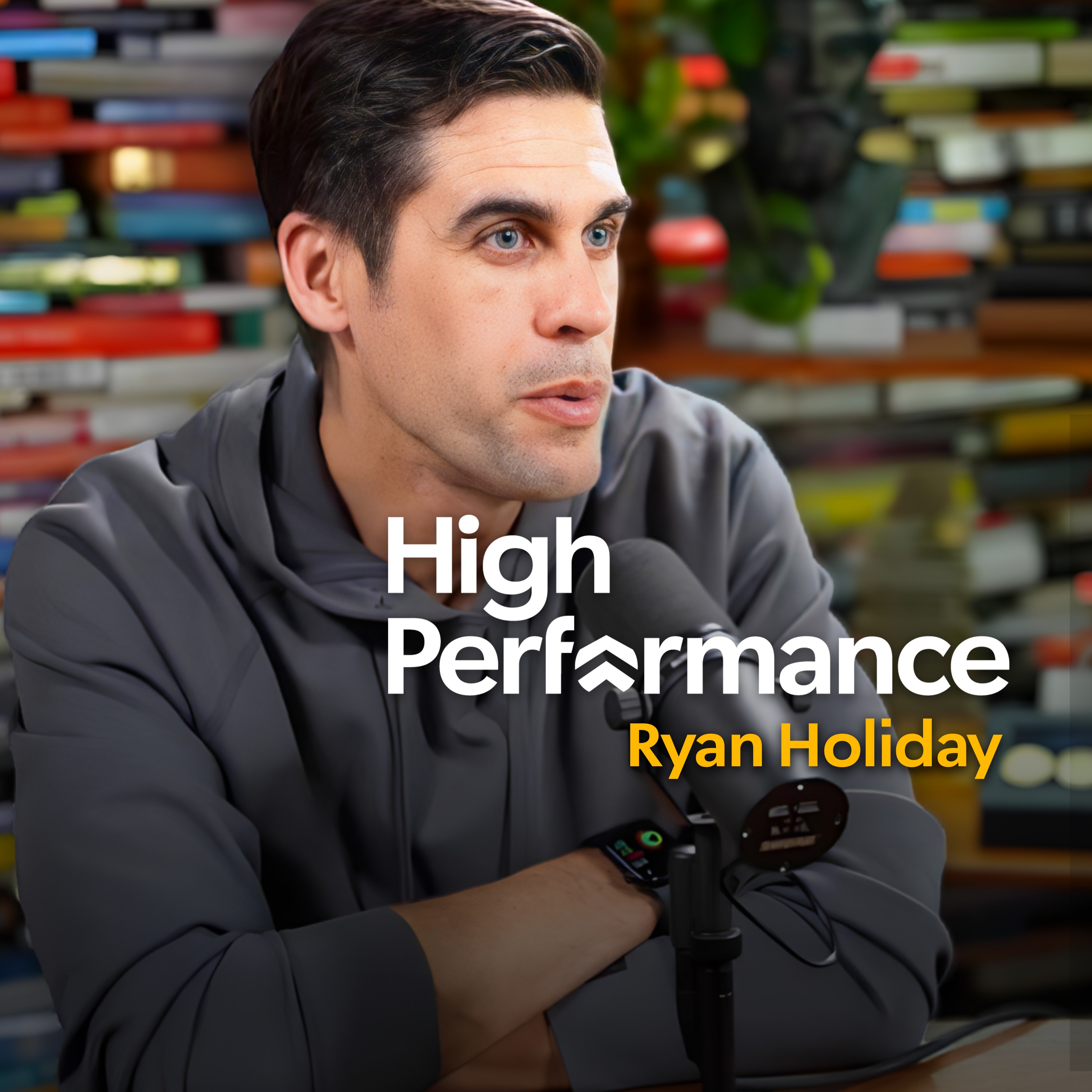
In this episode of The High Performance Podcast, hosts Jake Humphrey and Damian Hughes engage in a thought-provoking conversation with bestselling author and stoic philosophy expert Ryan Holiday. Known for his works such as The Obstacle Is the Way and Daily Stoic, Ryan discusses how stoicism can be applied to modern life, touching on themes like discipline, self-awareness, and confronting mortality.
Written by AI. May contain mistakes.

Get the gist, explore an idea or ask about something said.
 Claude
On The High Performance Podcast, what are the key points of this episode?
Searching your listeningAutomatic transcript. May contain errors.
0:00Watch it early on the High Performance App. Available now, Roman Kemp, the broadcaster, opens up a powerful conversation on success and mental health. Every single one of us at birth was given a terminal diagnosis. It is the one prophecy that never fails. We don't really know what we want, so we want what other people want. To be like everyone else because it's safer, it's a betrayal of an incredible gift. Life is full of hard things. and we practice doing hard things. So when hard things happen, we have experience dealing with hard things. We have muscles that allow us to handle that. That is the voice of bestselling author Ryan Holiday, who joins us on today's episode of High Performance.
0:44I'm Jay Comfrey. And in today's conversation, we explore the mind of one of the leading experts of stoic thinking. And as you probably know by now, I'm a huge fan of the stoics, the way they thought, the things they wrote about, the behaviors they lived by. In fact, I have the words Memento Mori tattooed on my left wrist, which reminds me about the practice of being aware of my mortality, developing an intimacy with my mortality and the power that should have on my everyday thinking to give me some urgency, but also some perspective. And in this brilliant chat with Ryan, we're going to explore how he balances creativity with discipline, what it means to focus on effort over outcome and how to tackle obstacles with resilience and grace.
1:25You can also expect to hear him sharing his thoughts on how to stay grounded in this crazy age of comparison. The importance of doing hard things and why parenting is actually an exercise in finding purpose, not perfection. So whether you're seeking clarity, motivation, or maybe you just want a deeper understanding of how to live a meaningful life, I promise you this conversation is packed with actionable wisdom. We actually recorded this in Ryan's own bookshop, which is in a really cute little town just outside of Austin, Texas. And if you'd like to see what it looks like, you can check it out by watching the conversation on the high performance app right let's get to it then recorded in the united states ryan holiday on high performance
2:10well ryan first of all thank you very much for inviting me into your home here in here in bastrop texas i would love to show you something if you don't mind when we last spoke i promised you i mentioned to you that i was going to get a tattoo what do you got and is that memento mori That is Memento Mori. There you go. So if people are watching this on YouTube, they can see this. It's quite small. I wasn't brave enough to go for like the huge skull. No, no, it's the same thing. It's not being able to be covered by the watch. Yeah, or some people have got like, you know, like the time passing on here and everything.
2:39Can we talk about Memento Mori? In the Roman Empire, it was said that the emperor had a slave who would whisper it in their ear at their moment of greatest triumph. But it's actually less about the humility of like realizing you're not a god. And I think more the day-to-day reminder of the fragility and ephemerality of life. In meditations, Mark Stroud says, you could leave life right now. Let that determine what you do and say and think. So the idea is to live as if you are aware of that fact. And the reality is most of us have knowledge of that fact, but we don't really have awareness of that fact.
3:21So we act as if we have forever. We act as if we're the exception. And we act as if any of this shit matters in contrast to the fact that we're going to die. And to me, memento mori creates a kind of an urgency. There's a passage in meditations that I think is actually one of the trickiest ones. Mark Sturlus is quoting Epictetus, and he says that as you tuck your child in at night, you should say to yourself, they will not make it to the morning. So he's practicing memento mori not for himself, but for someone he loves. Now, this, to some, might embody the worst of Stoicism, that it's about sort of detachment and disassociation.
4:00Marx really buries half of his children in his lifetime. It's a heinous, you know, horrendous, tragic fate. I don't think that's what he's doing. I think the very specific point of that exercise, what I take from it, is the idea of this moment is the moment that you have for certain with them. So why would you get in an argument? Why would you rush through it? Why would you waste it? Why would you not be there for it? To me, that's what the practice of momentum worry is about. And as you know, because you just met them, I'm traveling the US with my kids at the moment. How's that going? It's going great, thanks.
4:37You kindly instructed them to find a park down the road with my wife, I might add. We haven't just sent a nine and 11-year-old off on their own walking around Bastrop. But I'm sure you probably didn't notice, but the last thing that I did was grab them, love you see it i live with this idea of momentum all the time i'm absolutely acutely aware yeah that many people over the course of time have said goodbye to their kids to go to the park and never seen their kids again or their wife again right i didn't say goodbye they they said get out of here or i already told you about this or why are you behaving this way yeah this sort of negative parting is yeah the amount of tragic pointlessly negative partings it is a terrifying thing to think about hence always a kiss always and i love you that's lovely always a goodbye but this is where i think we need to focus this conversation of memento mori that it yes we're talking about death and the fact that remembering that we're mortal but it's a positive and whenever i mention memento mori people go what a negative way yeah to live your life and i believe it's so the opposite of that but i'm not as eloquent as you explaining why it's such a positive thing for well i think I think people can wrap their heads around memento mori for their own life.
5:48It's when you go memento mori for your kid. I think that part's even harder for people to wrap their heads around. But yes, the point of memento mori at bedtime is to go, where are you rushing towards again? You're rushing towards death. You are rushing towards a final parting. It could be tonight. It could be 10 years from now. But why are you rushing away from this? This thing you have right now. At some point in your life, you would give anything to do one more time. You are rushing through. To me, that's what it's about. It's about doing it now, not doing it later. Some things you won't do, right?
6:28Because it doesn't matter. And then other things you would do. But as you do them, you should enjoy them. One of the things I'm proudest of is not how my books have sold better as I've gone on. but that I have enjoyed doing them more as I've gone on. I've become less tortured by it as I do it. Not just because I think I've gotten better at it, but I sort of consciously decided that if I'm going to keep doing this thing, and the outcome is uncertain, not just how it will do is uncertain, but I could get struck by lightning tomorrow and all that remains is my manuscript. so torturing myself to get over the finish line and have the finish line be the reward is a dangerous bargain so all that i have is the ability to enjoy it as i'm doing i have to take the satisfaction and the appreciation and the gratitude and just the love of it as i'm doing it as opposed to making it dependent on whether I get to the other side or not.
7:39So yeah, to me, there's a whole bunch of positive things that you take from it. And any of the negative things, like the things that, oh, that makes me sad. It's only sad because it's fucking true. You know what I mean? It's not like you're going around choosing to see the awfulness in situations. what is making you sad is the fundamental reality of human existence not thinking about it doesn't make it not true yeah but i almost think that the sadness and the tragedy of it is the power of it sure that's the very reason why it resonates do you remember when you first heard the phrase yeah i don't remember when i first heard the phrase i mean i don't know if it i mean doesn't obviously appear in the english translations of the stoics but it's a pretty common phrase i mean you can see it on tombs.
8:25There's a restaurant at Disneyland called Memento Mori in New Orleans Square. It's like a very common phrase, but the idea of it as a practice is an interesting one to me. And it's also interesting to me that it was, we are very privileged to live in a time when infant mortality is stunningly low, life expectancy is almost unbelievably high, and yet it was in the ancient world that they needed the reminder of mortality more like if anyone if in a time where you could die from a cut on your finger when almost every family buried a child when plagues were commonplace when you could be you know executed by the guillotine or like When life was much crueler, memento mori was a more active practice, as if they needed a reminder.
9:18Like, there weren't just dead bodies in the street on a regular basis. So it's kind of funny that it works, that today is when we need it the most, and we are the most distant from it.
9:41using Upwork to keep work moving. Go to Upwork.com today and start hiring proven freelance talent fast. No bulky overhead. No rigid long-term contracts. Just the right expert right when you need them. Work smarter and faster with Upwork. Go to Upwork.com now and find your freelance expert. That's U-P-W-O-R-K.com. Post a job for free and get started today. Come to DSW for the shoes, stay for the fun. Because let's be honest, if shoe shopping isn't fun, Are you even doing it right? So go ahead, try something new. Try something different. Good different. Try something that feels like you. You know, the real you.
10:20And then definitely brag about it later. Because at DSW, you've got unlimited freedom to play. With sneakers, boots, and everything in between for every style, mood, and occasion, you'll definitely find shoes that get you at prices that get your budget. DSW, let us surprise you.
10:38This episode is brought to you by Opera Air, the first browser with mindfulness at its core. Now, most of us spend hours every day online, but how often do we pause to take care of ourselves whilst we're doing it? And that's where Opera Air comes in. It's a lightweight, fast, secure browser built not just for productivity, but for your well-being. With Opera Air, mindfulness is built right in. You'll find free breathing exercises, guided meditations, and soundscapes with ambient sounds, lo-fi music, and binaural beats, all designed to help you focus, relax, and even spark creativity while you browse.
11:16And yet, you're right, we live in a world where we save the best things to say about people until their funeral, right? When they can't hear it. Yeah. So what would you share with people? I suppose there's two things really here. What would you share with them about how they can live with this practice more? Mm-hmm. And I guess something that I think, probably the area of Memento Mori that challenges me the most often is apart from having a tattoo on our wrist, how can we remind us of this more often? Well, I think understanding that it is a practice. It's not this thing that you hear once and then you get.
11:48It is a practice. So I think a reminder is part of the practice. What is the tangible, daily, consistent reminder of it for you? David Stoke, we have some challenge points. I have a chunk of a tombstone that sits on my mirror in my bathroom. and uh i don't know how this came for sale to this antique dealer but it's it's just like a broken off you know hunk of marble and it just says dad on it and it's like is it somebody's dad was it somebody who identified as a dad like why does it say this but where is that guy now you know he died so long ago his tombstone is falling apart right and i just i see that every morning when I brush my teeth, and I see it when I brush my teeth before bed.
12:35It's just there. And so having some kind of reminder. You see this in a lot of, like, Renaissance paintings. There's always, like, a skull. And the idea was to have, like, a—and those are probably human skulls, right? Just as a reminder of, you know, the ephemerality of death or the ever-presence of death. There's a great exercise from Seneca. I think it's kind of changed how I think about it. He says that it's actually wrong to think of memento mori, to think of death as this thing that's going to happen to you once. That death is coming for me at some point, and then it's over. And usually when we think that way, we tend to think of it as in the distant future.
13:20People my age, born in this year, in this country, average life expectancy is 78 or whatever. So I've got however many years left. He says, that's totally wrong. He says, actually, death is happening now. He says, the time that passes belongs to death. And so instead of thinking of memento mori as this mortality event that happens to you, think of death as something that is happening to you now. He says, like, we're dying every minute. We're dying every day. So the time that we spend on things, once we kill time, it is gone. Like time is killing us, actually. So I would go not, hey, I have 40 odd years to live, but in fact that I have died 37 years.
14:08It's a very different way to think about it. And I think it changes the paradigm a little bit because it ceases to be this thing that you're procrastinating thinking about because it's in the future. And in fact, it's here right now. So at the moment, you're in a period of writing. So I suppose I'd love to know what is the stoic thought around the lack of procrastination? And what is the stoic thought around the discipline to just get this stuff done? I'm thinking about that balance right now. So my goal was I would turn this in by the end of November before I go on the speaking tour. Or sorry, by the end of October before I go on the speaking tour.
14:48and there's this tension when you're working on any project between getting it done and then getting it done at the level you want it to get done and also your perfectionism or your impossible standards that tell you there's always more you can do there's always a change you can make i think i've gotten better at accepting things being a work in progress. So understanding that what I'm turning in, because I've been through the process enough times, what I'm turning in is not going to be close to what's published. And so it's actually not until I turn it in that I can get to the next stage of the process.
15:34And in this case, it would be incorporating other people's notes. So you can get kind of, there's, I guess, many forms of procrastination. For a lot of people, procrastination is not starting. Seneca says the one thing all fools have in common is they're always getting ready to start. I tend not to have that problem. The other form of procrastination is endlessly working on and tweaking and getting bogged down in the details that's not letting you finish and ship the thing. And it feels it's a much more seductive place to be. But in the end, if you're not getting it done, if you're not moving along in the process, it's the same as just not starting because neither one involves you finishing.
16:19And so getting less precious with it and understanding that the process has to be allowed to do its work, that's something I'm thinking a lot about now. And the arbitrariness of the deadline is kind of the point. The point is, work on it. It's like when you're taking a test in school. Like you have an hour, work on it for the hour, and then the hour is done. Like I just need to play all the way through the whistle, and then I'll get another half after, but I have to finish this one. There's a very famous British athlete who's been on high performance, a guy called Chris Hoy. He's for a long time the most decorated Olympian that we have in the country, and he's younger than me, and he's just been given a terminal illness diagnosis.
17:06And I think you will love what he said in the interview about this. He said, this is bigger than the Olympics. It's bigger than anything. This is about appreciating life and finding joy. There is so much positivity that can come out of this from all angles. And I just think the imminence of death seems to have given Chris this appreciation for the life that he has got left. And this is where I get frustrated because I want people who haven't had that diagnosis to think in those terms. But I would push back on you. Everyone has a diagnosis, right? So we do that. We go, what would I do if I found out I had cancer?
17:36What would I do if I found out I was going to be sentenced to death tomorrow, right? You do have that diagnosis. Every single one of us at birth was given a terminal diagnosis. It is the one prophecy that never fails. Like, there's every single person that's been born, even those that believed in radical life extension, even the ones that today think they're going to live a lot longer, every single person that's born will die. Right. Even if, yeah, even if we solve some technological issue, radically extend, like you still get hit by a bus, right? Something will take you out eventually if you live long enough.
18:15So it obviously, and it's not to be glib about someone's, you know, horrendous diagnosis, because that would bring it real in a profound, you know, unmistakable way. But there's this side of ourselves that thinks that, like, we've got it good. And so we don't just have a better version of the same problem. The diagnosis is only changing the timeline. Like, what he found out from the doctor, it's not like the doctor said, oh, it turns out you're one of the rare humans who is going to die. He just said, oh, actually, you're one of the rare humans who's not going to get a full seven decades. You're going to get five decades or whatever, right?
18:55And so understanding that that's already happening to you is to me like an important shift that we have to make as we think about these things. Well, let's talk then about how we can make that shift. Have you read Bronnie Ware's amazing book, The Top Five Regrets of the Dying? No, I mean, I know about it, but - It's a great book. And where she cites the number one regret in her experience as a palliative care nurse, people saying to her, I wish I'd had the courage to live a life true to myself and not the life that others expected of me. Now, that's her being told that by people who are dying.
19:30I've heard you say something so similar on so many occasions, but I still think it's something that as human beings we're struggling with. So as well as appreciating life, what lessons can you share with us about how we can live a life that is true to ourselves? You're you, right? You're a set of circumstances, a combination of DNA. a moment in time that has never existed before and will never exist again. It seems insane to live your life in any way other than to realize that, like to make the most of that, to be what someone else wants you to be, to be afraid of hurting other people's feelings, you know, to be like everyone else because it's safer.
20:16These are insane, you know, like it's a, It's a betrayal of an incredible gift. But that's what most of us do, right? We are this totally unique thing. And then we kind of go, well, what are other people doing? I'll do that. You know, and only in the, faced with the reality of one's impending death, do I imagine that the full tragicness of that choice, do you feel the weight of it? You're like, I had one shot and I was a, you know, and insert this or that or that, you know, why? I don't even like it. You know, you talk to people and you're like, why are you in this? i don't know you know they don't have a like they they don't have a reason it's crazy so how do we how do we live a life true to ourselves then what would the stoics have told us about this i don't know if the stoics are necessarily the best example here because i feel like in 2000 years we've we've had some breakthroughs as far as designing a society of a little more dynamism and personal choice right like i think it's fascinating you know marcus is emperor and everyone goes, oh, it'd be so cool to be emperor.
21:28I don't think he wanted to be emperor. You know, I don't think that's what he wanted to do necessarily. He did a good job, I think. But the idea that like you get to choose what you do with your life, it's a relatively recent sort of cultural understanding. I mean, there are still people and you talk to them and their parents choose who they marry, their parents choose what profession they go into, their parents choose where they live. You know, they have grandkids because they want them, but because someone else wanted them. Or they just kind of do what everyone else is doing, right? Like, do you know who René Girard is?
22:05He's a French philosopher. He was at Stanford. He has this theory called mimesis. But basically, he says that we don't really know what we want, so we want what other people want. and that a lot of the competition is actually not like two people fighting for the same thing. It's just two people copying each other and then they kind of get locked in a competition. It's better in business and life and everything to sort of go and have your own space. Like you're a monopoly of one. Why would you give that up? It's like if you didn't do it, would someone else do it? oh yeah there'd be endless other bankers endless other insurance sales you know if you are incredibly replaceable that seems like a strange choice for your life so if people are now listening to this going right maybe maybe i have just lived a life that was expected of me by my parents or maybe i have been too controlled by the things i've seen on social media or there's a line from Seneca, I actually have it framed on a note card in my office, and he says, too many people lack the fickleness.
23:21And fickleness is an interesting word because we tend to think of it as negative. But he says they lack the fickleness to live as they wish and instead live simply as they have begun. Right? So you're already down a road, right? You already got started. You made this assumption, you have this going on, and change seems hard, expensive, embarrassing, weird. And so you just keep going, as if you have forever, or as if the majority of people don't list as their primary regret upon dying, that they wished they'd made a different decision in your exact fucking shoes. And so we just keep going. And that's strange.
24:10I mean, I've made a couple big, you know, sort of shifts or twists in my life. One of the things, as I understand it from the research, like, we think, well, I don't want to make this change and then regret it, right? And the reality is we never regret things because, like, have you ever actually met someone who's, like, crippled by regret? It's not a common thing because most of the time, our mind convinces us that whatever we did was actually the best thing, right? Like you're not, chances are you're not going to regret it. You're not going to regret it. It's the fear of the regret that stops us making the move that we won't regret anyway.
24:44From doing anything. Yes, exactly. And so you can kind of outsmart yourself a little bit and then decide to do the thing. We're really good at adjusting. Yeah. But we underestimate our ability to adjust. and we overestimate how hard and expensive and crazy and terrible. I remember when I dropped out of college when I was 19, and this was like the biggest, hardest decision I made in my life because I hadn't made that very many decisions. But I remember, I think about this all the time, when I went in to drop out, I went to the person and I said, hey, I'm here to drop out of college. And she goes, that's not a thing.
25:25And I said, what do you mean? she's like there's no paperwork to officially unenroll in college we don't have paperwork for that she's like you just stop showing up or you can take a semester off and then re-enroll anytime by this form and so that's what i did i paid 40 i found the receipt not that long ago i have i still have the paperwork and the receipt from when i took a semester off which 18 years or so later. Isn't it horrible when you reflect thinking it must be five or ten years, then when your brain does the math, you're like, can it be? Is it 20 years ago? Yeah, 17 years ago. Some crazy number.
26:04But like, I could re-enroll now. I could still do it. And so it's just a lot of these things that we think are big, or we think are irrevocable, or we think are so dangerous, are in fact so much smaller than we think they are, you know? And we make up reasons not to do them, or to try them. And then we stay as we are. And it's one thing to do these things. It's something else entirely to feel so passionately about this stuff that you want to tell the world about it. Sure. What inspired that? For me and stoicism? Actually, not that long before I dropped out of college. Marx releases meditations.
26:43I bought it on Amazon. It came and I read it and I just thought, this is amazing. I wish everyone knew about this. What was it? what was the i just didn't know that that's what philosophy could be i didn't know that existed i didn't know that the most powerful man in the world wrote a book of his private thoughts yeah and that it survives to us and that they would be relevant to a college student to a 80 year old to a you know a hollywood mogul or a politician like i just didn't i didn't know and so i remember just thinking this is amazing i wish more people knew about it i don't think i immediately thought and I'm that person.
27:21But with time, that sort of became clearer. And it was crazy. I just gave a talk in Brazil. And as I was walking through the airport, I saw the cover of Meditations in an airport bookstore. And I was like, that's weird. It's not really an airport book. And so, I walked up to it. And it was obviously in Portuguese. But at the top was a quote from me about that translation. And I don't know who published it. I don't know where they got this quote from me or whatever. But it was like, oh, I kind of did it. Yeah. How did that feel? It felt very surreal. It felt great, but kind of not real. That thing, that thought I had, it didn't become a crusade the next day, but slowly over time, I've told a lot of people about it.
28:15and that actually leads me on to a tweet of yours that i read a while ago that i really loved where you said focus on the effort not the outcome yeah did you do your best did you give it your all yeah did you use the best judgment if that's the case you've already won regardless of the outcome i've said this before i i think on my early on my first book i was probably 10 % satisfied with it as its own thing. Yep. And 90 % looking forward at how it would do, which was kind of a rough ride. It came out of the gate hot, sold okay, kind of struggled to find an audience, and then very slowly, steadily over time, you know, it's gone on to be sort of a, it's kind of controls a category or it's, you know, they teach it in schools and stuff.
29:05that's a lot to put on a process you don't control yeah um what if it had been blacklisted what if uh it turned out that the world went in a very different direction and became irrelevant right all these things would say that that was a failure and so i would say that with time i went from you know 10 percent inwardly inner scorecard 90 percent outer scorecard and i'd say that i've come close to flipping it? I mean, are there moments I care? I mean, yeah, I care. And I'm aware, but it's not really something I think about. It's certainly majority win before it comes out and everything else from there is extra.
29:50So what would you say to our audience who exist in this very modern way of seeing other people's successes on social media, feeling the need to share their own and basing all of their self-worth on outcome rather than process i'm a runner and one of the things you learn running not races but just like running day to day is um you don't know when somebody started you don't know when they're finishing you don't know how many days a week they do it you don't know and they also don't know anything about you they don't know that you just came back from an injury. They don't know that you're feeling sick.
30:26They don't know, you know, that you just ran a 50 miler a week ago. And so you, you, you kind of get better at just doing your own thing that like the winning is, is that you got out there number one. And two, you determine your pace and you determine the run you are doing that day. And you get better at just not even thinking about what other people are doing other than, you know, a smile or a wave at someone. And I've tried to get to that place in my career. Like I'm doing my thing. I'm not competing. I'm not even competing with the people on the bestseller list that I might be appearing on with.
31:08What advice would you give those people listening to this that are still in that place? Well, I'm saying that you have to work to get out of that place. You have to think about it as you are doing your thing. You are in your business. You don't know when they started. You don't know why they're doing it. You don't know what advantages they have. something that's been really helpful for me like you do this long enough and then somebody gets arrested somebody you find out had some enormous backer you know you find out that this thing you were kind of competing with or measuring yourself against you realize like they were cheating like that that appearances were very deceiving and that the inferiority you were feeling was based on something that was fundamentally not true, right?
31:59Or that they would give anything to switch places with you now, now that they know where it ended up, right? And so, like, I just, maybe, I just assume people are lying. I just assume people are making stuff up. I just assume I have no idea how it's actually working. I mean, that's another thing, right? It's like, it's like in business, you might hear that so-and-so's revenues are bigger than yours. But revenues don't fucking matter. Profits matter, right? And that's not something that you're going to have any access to, right? And so just understanding that it is impossible to actually really measure yourself against anyone or anything but yourself is immensely freeing.
32:47And that's the kind of work I try to do on myself. So how do you measure yourself against yourself? Do I feel like I did anything here that I was not capable of doing earlier? Like, what's the challenge that I got through on this, right? That's one of the rules I think about on my books. Or, you know, did I, what was I trying to say at the outset? Like, what was important to me about this thing? And did I do that? you know like uh and then and then i i think day to day did i put in what i was capable of putting in or when i really think about it you know i only showed up like 50 percent of the time and how honest are you with yourself in that regard um i think i'm pretty honest about it uh i i'm kind of just try to always be lost in it i'm just lost in the doing the thing that's how i think about it because it's an interesting one for me because i i've spent the last chunk of my career being a tv presenter right and basically if you're on the telly you're kind of doing okay because you someone's employed you sure and then i walk away from tv and really focus on high performance and podcasting and it's harder too because there's a lot more numbers and those numbers are much more in real time than some of the more legacy things, which were estimated.
34:19Absolutely. Yeah. But also, I think when you're employed, as I was on a three or four year contract to be a TV presenter, a bad week or a bad month doesn't really matter. Sure. Because you've got your long-term contract. No one's really telling you what the numbers are. Suddenly, I'm absolutely comparing high performance to other podcasts of a similar ilk. I actually think there's real value for me in seeing a million play button or seeing that you got a book that was number one on the New York Times bestsellers list. Because for a long time, I used to think, why is that my success? Now, I think your success is my success.
34:54Because if you can be there, then I can be there, right? I think that's an interesting way to think about it. If you see other people's success as an indication to you as to what is possible, there's a line I've always loved in meditations, Marcus Lewis says, if it's humanly possible, remind yourself that you can do it also. So if what you see someone else succeed, someone else sells a million of this, somebody else from this background manages to do this, there's someone that looks like you on television, there's someone that looks like you that gets into Harvard or from your background that goes on into this space where there weren't a lot of people like that.
35:32If you see it as something that opens up your mind or your conceptions as to what is possible, then I think it has a healthy effect on you. If you see it as, oh, I have to match that or beat that or surpass it, if you see yourself in a race with those people, I think you're going to end up spending a lot of time and energy on things you don't control. Look, these plaques are nice, and the publisher sends them to you when you do them. And then you're sort of like, my wife doesn't let me hang them up in the house because it just becomes a weird shrine. And this is an office space, and we have some walls, so I hang them up.
36:11but it doesn't really mean anything and i try to remind myself like the first time i got number one uh was for stillness is the key and then it was five years before i did it again so but stillness came out it hit number one was in the fall of 2019 and then i remember who took it the next week and it was donald trump jr for a book that he didn't write and then it came out as a bit of a scandal that one of the his father's political organizations had bought all the copies right and then you go oh this thing this achievement this sort of objective codification of my success that i was going to put identity or pride or or or use as a as a metric for what I did, it's fucking bullshit.
37:09Like it's less than meaningless. Like it's easily manipulated. It's outright fraudulent. It doesn't mean anything. What matters to me is not how that book did in its first week. What matters to me is that that book was a book I needed to write at that moment and I learned a lot doing it. And then if I'm going to take pride in the sales at all and an external, as the Stokes would call it at all, it would be that the book is still selling this week. you know, these years later. And that people who've read it have told me it did something for them. These are all much better metrics for success. But it's a very tricky thing, the sort of digital world that we're talking about, podcasts or YouTube or social media.
37:50It's an unhealthy amount of data. And you have access to that data in real time. And there's a real cost to it because every minute you spend going, do you see who's number one this week is energy you're not spending going i've got this conversation coming up how do i do a good job on it yeah so let me ask you then a question that we ask all of our guests okay what do you believe high performance to be in the context curious what i said the first time to me high performance is is being the best that you are capable of being in that moment. And so it's not just that high performance varies between individuals, but high performance varies even in the trajectory or the career or the life of that individual.
38:37So what I was capable of in my 20s is different than what I'm capable of now. Some ways better, some ways worse. What high performance is for a person who, you know, has a new baby at home is different than what high performance is expected of a billionaire with a huge staff and, you know, unlimited resources, you know, like, so I think of high performance as it's got to be relative to what your capacity is in that moment. And can you bring as much of that as possible to the thing that you are doing. If you're still overpaying for wireless, it's time to say yes to saying no. At Mint Mobile, their favorite word is no.
39:26No contracts, no monthly bills, no overages, no hidden fees, no BS. I made the switch because I was tired of those ridiculous bills and sneaky charges from my old provider. With Mint, I'm paying$15 a month and getting the same high-speed data, unlimited talk and text and coverage on the nation's largest 5G network. Honestly, the quality is just as good, if not better than what I had before. And the best part, you don't need a new phone. You can keep your current one, bring your number and all your contacts. I use Mint Mobile and you should too. Ready to say yes to saying no? Make the switch at mintmobile.com slash HPP.
40:02That's mintmobile.com slash HPP. Upfront payment of$45 required, equivalent to$15 a month. Limited time new customer offer for first three months only. Speeds may slow up a 35 gig on unlimited plan. Taxes and fees extra. See Mint Mobile for details.
40:37Work smarter and faster with Upwork. Go to Upwork.com now and find your freelance expert. That's U-P-W-O-R-K.com. Post a job for free and get started today. Dr. India Woods here. As a veterinarian, I demand a lot of my scrubs on the job. That's why I show up in FIGS. FIGS are made for the sometimes crazy situations I find myself in. It doesn't matter if I have to squat, sit, bend, or even chase after one of my patients. FIGS moves with me and keeps me comfortable in the highest pressure situations. Figs gives me one less thing to worry about. Get 15 % off your first order by visiting wherefigs.com and use code FIGSRX at checkout.
41:15That's wherefigs.com, code FIGSRX.
41:24And what is the risk of living a life of comparison? For people that are listening to this going, well, I spend my days looking at other people's numbers and trying to beat their numbers. That works for me. You just learn that if you're putting your value in being the best, the most, having this or that, hey, I did really well. I just got paid X. And then you hear about some idiot who got paid double that for something that sucks or whatever. Right. It's just it's an incredibly fragile place because it's out of your control. And it's vital we insulate ourselves against that. I think so. Once we see what someone else has done, you've still done what you did.
42:05Yes. Until you opened your phone or looked on the internet, it was good enough for you. Suddenly, what is it not good enough for you? And what, just because you heard someone else did better, you suddenly have different capacities? Probably not. Like, if you did the absolute best that you were capable of being and doing, knowing that someone else did better, really shouldn't unlock anything in you. because you should have already done the idea that, oh, just knowing there's someone else that I could one up, that makes me try harder. I don't know. I am trying not to be in competition with anyone else.
42:38I am trying to, one of my favorite quotes, I just saw them last weekend. Someone came up to the manager of Iron Maiden once, said something about the music industry. His name's Rod Smallwood. And he said, you should have him on the show. I would love to listen to this. And he said, I'm not in the music business. He said, I'm in the Iron Fucking Maiden business. And the idea that you're not, like, I'm not in book publishing. Do you know what I mean? I'm not in the local retail game. Like, I'm not, I am not in the bookstore business. I am in the Ryan Holiday business. I am in the business of doing what I do.
43:18Yes. For the people that like that stuff. That's the only thing I can actually, that's the only category I can actually truly dominate. I'm in the business of doing the most that I can do with what I have. And I want to push those boundaries. I want to, but, but I am not in, I'm not in the economy. I'm in my business. You know, I am in me. That's all. That's it. I think that's brilliant. I mean, straight away, I'm thinking, well, I started by thinking, yeah, that's great. I'm going to adopt that and think I'm not in the podcasting business. I'm in the high performance podcasting business and that's all I'm doing.
43:51But also I'm not in the parenting business yeah i'm in the parenting flow and said business you don't have people like you don't have uh an average kid you have your kid it doesn't it doesn't matter like there's that's one of the hardest things about having a parent is you have this totally unique thing it's never existed it's a combination of you and their their parent and um you take them into the doctor for that first appointment and they're like 72 percent of height 72 percent category a thing you don't control that doesn't mean anything and all of a sudden from the get-go you are comparing your kid to other kids and look some of these things are important you like this is how you would know if they have a disease or syndrome if something's wrong sure but mostly it's just causing generalized like status anxiety you're like other parents have taller kids than me.
44:44Other parents have, or you go, you know, at two, they should be doing this by now. But that's the average kid. You don't have an average kid. You have your kid and they have an age at which they are going to start reading, start walking, start doing X, Y, or Z. Some people discover what they were meant to do at seven. Some people discover it at 17 and some people discover it at 47. You know, we all have a unique sort of journey and your job is to help your kids become themselves, not become some version of them. And if you think, I think sometimes this can all sound like zen or, you know, impossibly unrealistic in a world.
45:28I mean, Iron Maiden sold 100 million albums. Like, they've done okay. When he says, I'm not in the music business, what he means is he doesn't care that grunge is popular. He cares about delivering an Iron Maiden album to Iron Maiden fans, right? Like, it doesn't matter what is happening in the industry, what's happening in the moment. What matters is what you do for your audience and how you reach your potential audience and how you serve that. That's what matters. And any minute he spends thinking about how amazing Taylor Swift's album sales are, gets on made and no closer to greatness. Any minute you spend wondering how James Clear was selling that many books after 300 weeks in the top 10, doesn't get you any closer to having a greater impact.
46:13And I think the other thing I often try and remind Harriet, my wife, about who you met earlier, we're talking about do we have a third child? And sometimes we see a family with three kids, and she's like, oh, look at that. And I often say, well, if you want, would you swap your two for their three? It has to be our two have to leave our lives completely for the three to come in. And then straight away she's like, no! Well, there you go. Yeah, you don't know. Totally. There's a few things that I've read from you over the years that I'd just like to go through. and I'd like to get your thoughts on it.
46:42These are the things that for me have been the most valuable. The first one is the obstacle is the way. I'd love you to explain that to our audience but also really explain to them how they can reframe difficulty that might be in front of them at the moment. So the idea in Stoicism is we don't control what happens, we control how we respond to what happens. So the idea is you face, this comes from Mark Sturlus' meditations, that the thing that is in front of you, it very well could prevent you from doing whatever you set out to do, but it doesn't prevent you from doing something else. Nothing can prevent you from practicing virtue, from being your best self.
47:21Nothing prevents you from becoming a better person as a result of this thing. That's what the obstacles away from. It doesn't mean that this terrible injury that ends your sporting career is actually great for your sporting career. It's the end of your sporting career as an athlete, but maybe you become a coach as a result. Maybe it forces you to finally transition out of this thing and start the family that you always wanted or to actually be there for the family you already have. There's all these new avenues that are opened as a result of this one closing. That's what the obstacle is the way it means.
48:01And what is the power for us of doing hard things? life is full of hard things. We practice doing hard things. So when hard things happen, we have experience in dealing with hard things. We have muscles that allow us to handle that. At some point, you're going to go through something heartbreaking and overwhelming and awful. Do you want that to be the first time that you've ever been tested? Or do you want to build a practice of testing yourself and going towards the challenge and using the challenges as a chance to do things you maybe otherwise wouldn't have been inclined to do. That's what that attitude is about.
48:41I love this one. Those who've subdued their ego understand that it doesn't degrade you. When others treat you poorly, it degrades them. Yeah, Frederick Douglass was being sent to the back of a train car in segregated America. And someone rushed up to him and said, I'm so sorry you've been degraded in this manner. And he said, these people can't degrade me, you know? He says, they can't touch my soul. It's a very stoic idea. They could throw you in prison. They could pelt you with eggs. They could call you horrible names. They could do shitty things to you that they shouldn't do. And they shouldn't be allowed to do.
49:20But that does happen. And the understanding that external things can't touch what's inside, they can't touch the soul, they can't touch your value, is a very essential idea in socialism. Basically, actually the only thing that can degrade you is how you respond to that thing. So if it brings you down to that level, if it makes you betray yourself or your values to get revenge or to prove them wrong or whatever, then actually you have been harmed. If it makes you a bitter, angry, deranged person, like in a sense, they succeeded. That's the idea. And did you struggle with this at the beginning when your work started to get noticed?
50:03And naturally, if you put your head above the parapet, criticism comes your way? Yeah, always. Yeah, always people say things about you. They don't get your intentions. They don't understand. Or they just sense something that you're vulnerable about and they nail that thing. Yeah, you have to develop kind of a thick skin. And you have to have your own, yeah, your own scorecard as to what you value and what you do. And what do you say to yourself when you see those comments? I try not to see those comments. But if you do? That's the first part. You know, how has this person earned my listening to their opinion?
50:38And you can go down the rabbit hole a couple of times and you very quickly realize, oh, I wouldn't listen to this person about anything. Why would I listen to them about the thing that I know the most about? This person's a clown. you know understanding who the person is and what their other opinions are often sort of lets you off the hook a little bit very good um i want to talk to you about routine there's there's this great quote routine done for long enough and done sincerely enough becomes more than routine it becomes ritual yeah it becomes sanctified and holy yeah so what are the routines that have given you the the most benefit in life wake up early they're they're simple it's how i I think people want these real complicated things.
51:21Wake up early. Don't get sucked into the phone. Do family time first. A walk or some kind of physical activity. Do the writing first. I try not to eat till later in the day. You know, stuff like that. How do you not get sucked into the phone? Don't sleep with the phone next to the bed, number one. And then don't touch it first thing. If you go, oh, I just got a C. I got any emails, right? or I just let me check this or let me do this. That's where you start to get sucked in. So I try to just do, I started for me building that space was, my rule was I just do one thing first. So it's like I get up and I get in the shower as opposed to I roll over and grab the phone.
52:04You know, I just try to do something first. And then now the rule is I usually just don't touch it for like the first hour. And then even when I am touching it, I'm not like scrolling social media and stuff. I might get directions to where I'm going, but I'm not just replying to emails. I'm a big believer in deep work, and I want to get that out of the way before I get sucked into things that are obviously not deep work. And do you have a set amount of time that you want to do deep work for in any given day? No, it's just got to be a good chunk, and it's got to be front-loaded. Like, if I try to do it now, having dicked around the first half of the day, it's just not.
52:48I just, it's not good. I think you need to, I need to come at it fresh. I think willpower is a finite resource. And it's dissipating from the moment you wake up. So I try to get at it as soon as possible. Final one before we do our quick questions. Focus on the moment, not the monsters that may or may not be up ahead. And this is a selfish one because I'm a catastrophizer. Me too. I can't deal with uncertainty. If there's uncertainty, my brain tells me the worst outcome is going to be the outcome. How do I get to a point where I don't live thinking all of those stressful things in my life that were so stressful never even happened?
53:25Seneca said, he who suffers before it is necessary suffers more than it's necessary. I know. It doesn't stop me suffering. But I think about why would I suffer extra? Like those things you're thinking about might happen. is thinking about them affecting the outcome? If so, maybe we can indulge it. If not, I'm just paying a tax on top of it. That's what I try to remember. But then my brain says to me, I'm worried I haven't worried enough. Maybe you haven't. No, I just think worrying and anxiety are my two most expensive habits. And I have not purchased anything of value with them. Lovely. Right, some quickfire questions.
54:09don't mind. Sure.
54:13The three non-negotiable behaviors that you think are most important in life? Large, uninterrupted blocks of concentration, some form of physical activity, and something that's not about you. Very good. Advice for a young Ron Holiday, just starting out in life? Oh, relax, man. Most of the things you're stressed about are... your stressing about them is not affecting them one way or another. And that if you want to do this sustainably and for a long period of time, you're not going to be able to do it at the level of intensity that you're currently thinking about it. I wish I could just even it out a little bit.
54:58What's your biggest strength and what's your greatest weakness? Biggest strength? I don't know. I'm pretty good at tackling big projects. like little pieces one after another i struggle with like enough you know like why why do you need more uh why do you need to do it right now why do you need to tackle the next big thing you know the sort of discipline of ill discipline is something i struggle with what is the the biggest stoic lesson that you would love to share with people for not being overwhelmed by this uncertainty ahead of us well i was i've been saying that i think our greatest task is to not let crazy times make us into crazy people or to not let assholes turn you into an asshole like that that all that stuff is true and it is broken and deranged and radicalized huge percentage of the population and um it requires an immense amount of skill and discipline and perspective and self-command to not be sucked into it i interviewed uh this guy mike duncan he's a podcaster and we were talking about he talks about roman history and he was saying that to him the definition of stoicism was some version of expressing especially politically like the Stoics during the rise and fall of the Roman Empire.
56:32It's saying, the winds may howl, but I will not be swept away. To me, that seems like the task of this moment. And I know a lot of people that are really successful, really smart, that I admired, who have not managed to succeed at that. And the final question for people that have listened and watched this conversation, what would you like to leave them thinking about? Your one golden rule, if you like, for them to find their own version of high performance. Well, we talked about Memento Mori. I think that's the perennial lesson of the human experience, that none of us are here forever. We don't know when we're going to go.
57:11And you might find that unpleasant or unsettling, and so you push it away, but you actually have to do the exact opposite. You have to really think about it. It gives you both urgency and perspective. it speeds things up and it slows them down which to me are all really important components of elite performance and that brings us to the end of today's episode which we recorded at ryan's bookshop just outside austin texas if you want to see it as well as listen to it then download the high performance app and there's so much other cool stuff on the app i promise you it's the best place to enjoy high performance please do feel free to share this episode with someone who you think will benefit from hearing Ryan's wisdom and we'll see you for plenty more very soon from High Performance.
57:57Thank you.
58:27care about your success. Like your enrollment specialist who gets to know you and the goals you'd like to achieve. You'll also get a designated academic coach who's with you throughout your entire program. Plus, career coaches are available to help you navigate your professional goals. A different future is closer than you think with Capella University. Learn more at capella.edu. Dr. India Woods here. As a veterinarian, I demand a lot of my scrubs on the job. That's why I show up in FIGS. FIGS are made for the sometimes crazy situations I find myself in. It doesn't matter if I have to squat, sit, bend, or even chase after one of my patients.
59:05FIGS moves with me and keeps me comfortable in the highest pressure situations. FIGS gives me one less thing to worry about. Get 15 % off your first order by visiting wearfigs.com and use code FIGSRX at checkout. That's wearfigs.com, code FIGSRX.
Ryan Holiday is a bestselling author and expert on stoic philosophy, known for his books like ‘The Obstacle Is the Way’ and ‘Daily Stoic’. Through his work, he helps others apply ancient wisdom to modern-day challenges, exploring themes like discipline, perseverance, and self-awareness.
In this episode, Jake talks with Ryan about stoicism and how its principles can improve everyday life. Ryan covers ways to overcome procrastination, build discipline, and face life’s challenges with purpose and clarity.
He shares insights on the power of reframing obstacles as opportunities and the danger of living in constant comparison with others. Ryan also unpacks the stoic practice of ‘Memento Mori’, a powerful reminder of mortality, and how it can be used as a tool for living a more meaningful life.
This conversation is packed with practical lessons for living a more intentional, disciplined, and authentic life, grounded in the wisdom of stoicism and Ryan’s own journey.
🚨 Partners
Huel 👉 Get an exclusive 15% by using code: HP at: https://hppod.co/HP
Heights 👉 Get 20% off your subscription by using Code: HP20 here: https://hppod.co/Heights
FORA 👉 Claim a free day pass at any Fora workspace and find the perfect home for your business here: https://hppod.co/FORAHP
HP Foundation 👉Do you want to kick-start an evolution that will change the lives of millions of children? Find out more about the High Performance Foundation: https://hppod.co/foundation
HP Corporate Events 👉Click here to book High Performance Events: https://hppod.co/corporate-events
Explore offers and discounts through our other partners:
https://hppod.co/partners
Hosted on Acast. See acast.com/privacy for more information.


