
 Ask ChatGPT


 The High Performance Podcast
26 Sep 2025 · 30m
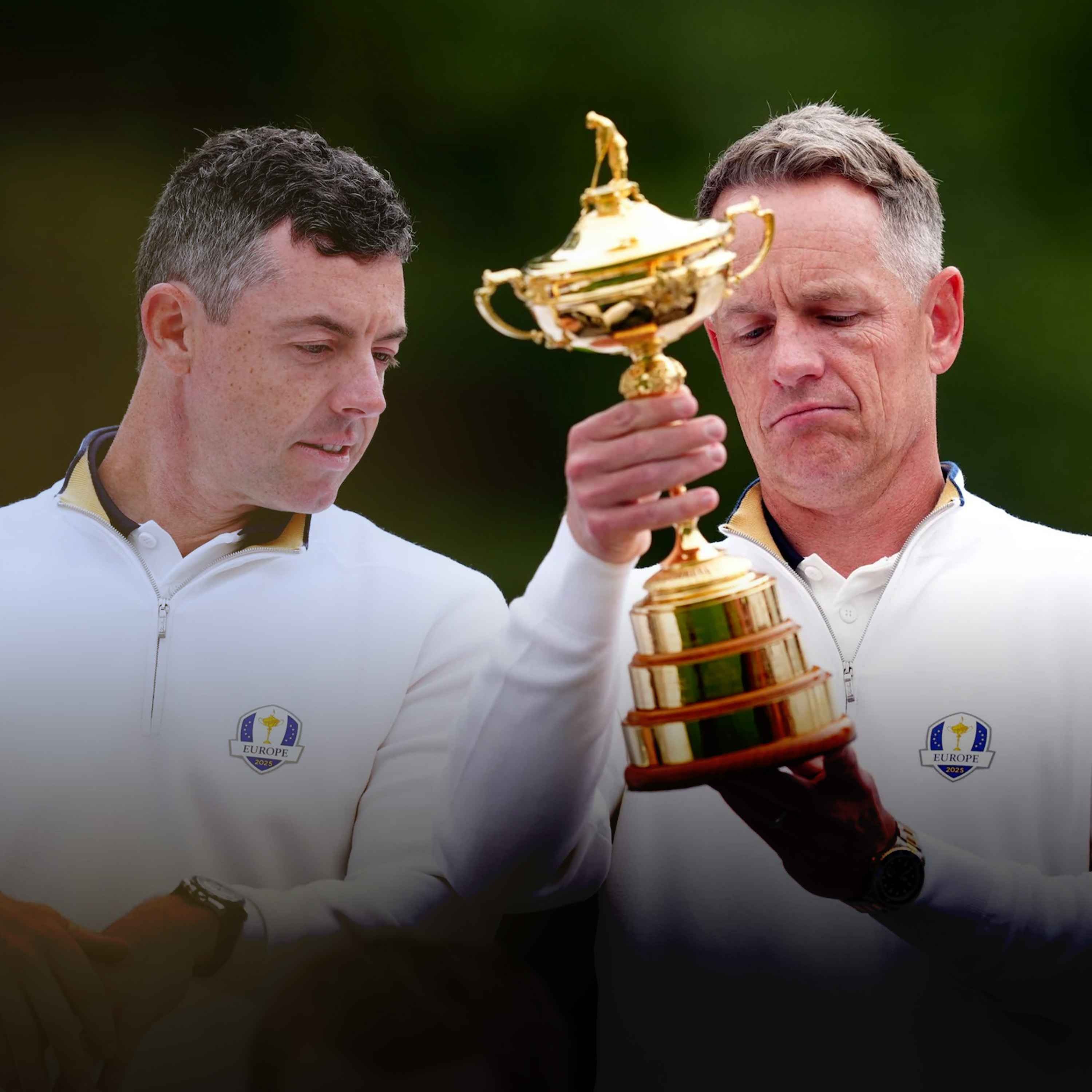
The Ryder Cup is a prestigious golf event showcasing the intense rivalry between Europe and the United States. In this episode, European captain Luke Donald, along with former captains Paul McGinley and Sam Torrance, discuss leadership under pressure, building team culture, and memorable moments from their battles against the USA. The conversation transcends golf, delving into themes of leadership, unity, and performance under pressure.
Written by AI. May contain mistakes.

Get the gist, explore an idea or ask about something said.
 Claude
On The High Performance Podcast, what are the key points of this episode?
Searching your listeningAutomatic transcript. May contain errors.
0:28Watch it early on the High Performance App. Grainger for easy reordering so you never run out of what you need. Call 1-800-GRAINGER, click grainger.com, or just stop by. Grainger, for the ones who get it done. The market's uncertain, revenues tied, and hiring on hold. That's why results-driven companies are using Upwork to keep work moving. Go to upwork.com today and start hiring proven freelance talent fast. No bulky overhead. No rigid long-term contracts. Just the right expert, right when you need them. Work smarter and faster with Upwork. Go to Upwork.com now and find your freelance expert.
1:07That's U-P-W-O-R-K.com. Post a job for free and get started today.
1:15This episode is brought to you by Opera Air, the first browser with mindfulness at its core. Now, most of us spend hours every day online, but how often do we pause to take care of ourselves whilst we're doing it? And that's where Opera Air comes in. It's a lightweight, fast, secure browser built not just for productivity, but for your well-being. With Opera Air, mindfulness is built right in. You'll find free breathing exercises, guided meditations, and soundscapes with ambient sounds, lo-fi music, and binaural beats, all designed to help you focus, relax, and even spark creativity while you browse.
1:50It's just an amazing feeling, the Ryder Cup. You don't get that feeling. It's just unbelievable. It's unbelievable. You didn't pick him in 2014, did you? Are you going to bring that up? Yeah, I think we should. Let's get to the bottom of this. I think we should. I'm blaming Sam. He was my vice-captain. Be the guy that's in front of you. The guy that's standing on the first tee looking at you. Show no fear. Look him in the eye. Shake his hand. Say good luck. Then be him. So the Ryder Cup is here. Excited for it, Damien? Very. Look, we both know that golf's not your number one sport, but you do love, like, when it comes to golf, particularly in the Ryder Cup, the kind of the personal challenge as part of a sporting challenge, as part of a team game, in that kind of like incredible atmosphere that only the Ryder Cup creates.
2:38I think you, of all the golf tournaments, this one is the sort of thing that plays into the things that you love the most. Oh yeah, I love the passion, the energy, the parties and nature, the crowds and watching players have to perform under the greatest of pressure. Well, you're about to hear from some players that know exactly how to do it. You're about to hear why captaining the Ryder Cup is so special from people who've lived it. Luke Donald, the current European captain. Paul McGinley and Sam Torrance, of course, their former Europe captains who brought us unforgettable victories. I say us because Europe is who we're cheering on here on High Performance.
3:11In this episode, you're going to discover what it takes to lead in a high-pressure role. You're going to understand how to build a winning team culture in just a few days and get some personal stories from some of the fiercest moments of the Europe-USA rivalry. I'm going to be on the sofa for the next three or four days, just kind of ignoring everything else in the world apart from the golf. But this chat actually isn't about golf, it's about creating a culture. It's about inspiring a team. It's about getting someone to perform under the greatest pressure. So please welcome to High Performance our European Ryder Cup captains, Luke Donald, Paul McGinley and Sam Torrance.
3:50If I was to ask each of you to tell us a story or a moment that springs to mind when you really felt that Europe-USA rivalry, where does your brain take you to? It's just always there. Every single shot? Yeah, it's Europe against America from Friday morning to Sunday night. May the best team win, it doesn't really change. I think we're all very cognizant of the history and what's gone before and why there is that passion. There is a big rivalry from Seve and instances in the past. Oh, Seve. It's sport and you want to win. It's just an amazing feeling in the Ryder Cup. You don't get that feeling.
4:40It's just unbelievable. It is unbelievable. France, the first day in France was just, you know, when they started that. The clap. That was just incredible. I mean, goosebumps. So can I jump in there then, Sam, and ask, how do you control the emotion to be able to go out and play effectively without it overwhelming you? Stay in the moment and don't get ahead of yourself and don't even think about getting involved with the crowd. You know, you're doing a job out there. and when you watch a player win a major they'll get excited, we'll be excited when the all-along pops, there's still three holes to go the one ahead, but in the Ryder Cup just win the hole and just go to the next don't matter, don't run about mad, just try and stay in that same mode the whole day without getting yourself put out of place What about you Paul?
5:31You nodded. I'd have a slightly different view than that because I remember Sam, I don't know if you remember this in that meeting in your bedroom when... You're not going to tell that one. I remember it was a Tuesday or Wednesday and at the end of the meeting, it weren't very long meetings, they were 10, 15 minutes long. And at the end of the meeting, you said, is anybody anything to say before we wrap up here? It was the Monday or the Tuesday. We'd only got there, one of our first meetings. And Parnovic said, yeah, I've got something to say. I thought Parnovic gave some great insights. I thought he was off his game.
6:06He said two very, very relevant things. that I took a lot out of. And the first one was, he said, I just want to say to the rookies playing at home, there's going to be a big energy coming from the crowd. And it's up to you as a player to decide what you're going to do with that energy. You can take it and ride it like a surf and you can get engaged with the crowd or you can do as Sam says and disconnect and just play. He said, neither one is right, neither one is wrong. You as a player have to decide which one is best for you. And I remember then Darren Clark talking to me about what he used to do would look into the crowd and just smile.
6:40And just by the body language of smiling, it raised the decibels again more. And, you know, I certainly used that during the week. You know, I remember, you know, very much engaging with the crowd when I hold the putt, feeling that I was doing it for them. And I remember standing on this, you asked me about the moment there, Damien, a minute ago. And I remember standing on the 16th hole in the four balls, last game on the golf course with Darren. We were one down playing 16. I'd hit it into about six feet and I had the six footer to go all square. The matches were level at that stage. So depending on how this match finished, it would be determined how we were going into the singles.
7:16And I remember having this put from six feet, everybody was finished, and I had this to go all square. And that's a moment where you get scared. And that's a moment where you think, oh my God, I hope I don't miss and I hope I don't let everybody down. And for some reason, something came into my head. If you believe in spirituality or wherever it came from, I don't know. And what came into my head was, this place, remember, Remember, this is the only game on the course. It's 15 deep, yeah, 15, 20 deep around the green. It's going to go ballistic if I hold this. So rather than thinking, oh my God, I hope I don't miss, I felt the opposite.
7:46Now I'm playing to my, now my ego was like out of control. It's like, oh my God, if I hold this, this place is going to go nuts. Now I couldn't wait to hold a putt. I hit a great putt in the middle of the hole. Crowd went absolutely ballistic. And I totally engaged with the crowd. And I brought that into my captaincy in 14 and had a huge image, a lot of imagery that were important with messages. I want to get to the players rather than just saying to them, I want to portray messages through images. And I had a picture of Justin Rose that I got superimposed with, smoke coming out of his hands. And the smoke came up the back.
8:17Yeah. And all the crowd behind. And it was basically, you have the power of 60 ,000 people in the palms of your hands. And when you're standing at first tee and rather than thinking, oh my God, you know, get the tee in the ground. I hope I don't miss it. I hope I don't sky it or block it. Just think when it goes quiet, this place is going to rock if I rip it down the middle of the fairway. So it's like a reframing of the moment and being really empowered by the moment rather than afraid of the moment. And then you smash it down the middle and the crowd just go ballistic. They want a reason to scream.
8:50I don't mind the crowd going ballistic. You don't want to go ballistic. Well, everybody's different. Some people want to ride the wave and some people want to be calm, like Sam obviously was, like Langer certainly was, like Luke probably was. and then somebody like Sergio I mean look at Sergio how good did Sergio put in Ryder Cups compared to majors and other events why? because he was empowered he was engaged and yeah it's interesting isn't it getting this balance because you know you're very calm and controlled and you look very relaxed at the moment but there is also this thing of getting people in the moment isn't there as well but without being so much in the moment that it kind of impairs their golf rather than improves it And I mean, it's a high-pressure situation.
9:34I think, you know, a lot of these golfers are used to that. But the Ryder Cup is a different level. Again, when you're playing for your teammates, there's more pressure. When you're playing for your country, you know, all these kind of real intrinsic motivators that are real and what makes the Ryder Cup so special. But I think it always, again, you want to, again, be on the front foot always. And if you feel like you're on the back foot and you feel like you're doubting yourself, just reframe your mindset, as Paul says. Turn it into something like a challenge. Bring it on. I've got this. Look at the crowd.
10:09Let's make the crowd smile. All those kind of little keys that I would certainly have used on an individual level in high-pressure situations. I certainly had to rely on those in Ryder Cups. And even as calm as I am on a golf course, Ryder Cups brought out some passion in me too. I would bite my lip and fist pump and I just nothing quite like match play. You know, I think it's such a different mindset. You know, I was never one of the longer players, so I was always hitting into first, into greens. I love the ability to put pressure on people. I love the ability to switch a hole, turn a hole around when it looked like I was going to lose.
10:46I'd chip one in, they had three putt. And, you know, that psychology of match play is really, really fun for me. I've just, again, that's maybe why I've been quite good at match play over the years. I don't know, but I just love that mentality. Just to say the roar that he's talking about, not only does it lift the crowd around the green, every other player on the team knows that was a European roar. That's right, yeah. You can tell the roar. That was definitely European. Or if it's a wee, oh, the Americans just hold it up. So that's important too. And reverse when you're playing away from home.
11:23Exactly. You want it quiet. So what would you say are the best attributes of the captains that you played under then? For me, it was communication, kind of having that clarity, that understanding what the plan was ahead of time. You know, I think most people, I think they appreciate that. They want to kind of have a sense of what's going to happen, a sense of who they might be playing with, just so they can prepare. That's important for me, you know, is that constant clarity, that constant communication. I'm interested in how all three of you kind of approached it. Well, I wanted just to look after them individually.
12:02Right. And make them feel special. How did you do that? Talk to them. Take them aside. Just be a pal, really. To me, the captain was always daunting. It's kind of like the headmaster in the school. That's why the vice captains are great. You know, so you can go to the vice captain and say, I've got the wee problem here, can you get it fixed? He'll either fix it or take it to the captain. He will definitely fix it. But the captain was kind of up there, you know, so it's different for me to be that man up there. I was normally the reprobate causing them trouble. But just make sure that we're feeling okay and relaxed.
12:38Yeah, I think show them that you care, that they're important and you're doing all the work to give them the best team to succeed. And, yeah, I don't think you can really change who you are. I mean, I've had to maybe become a little bit more outgoing, extroverted, you know, up my communication. I was someone that kind of stuck in my own lane as a player individually. I think a lot of us do, you know, we're sort of, isn't it, very individual sport. You mix a little bit with players, but, you know, you're very single-minded about what you need to do to be successful. Ryder Cubs are a little bit different.
13:17You want to keep that mindset with the players, but you want to create that belonging that everyone is there and that you care about them. So I think for me that's been a big thing for me in my captaincy. Can you give us any tangible examples of how you demonstrate that you care for one of your team? I guess it's just constant communication, constant feedback, wanting to hear from them as well, not just thinking that I know everything just getting their opinions, getting their takes I think that's important there's certain things I won't go into because I think they're sacred to the team of how to create that belonging getting guys feeling comfortable around each other certain things that we've done as a team some of these aren't secret you create dinners, you go out to dinners and you just get to know them Even my wife, Diane, plays an important role.
14:17I think talking to the wives, making them feel comfortable, the partners, girlfriends, all those. So once we get there on the match week, we already understand each other a little bit more. We're already happy in a team room together. We're not feeling like the rookies are in one table and the superstars are on another. Everyone's mixing together and involved with each other. So that's kind of my philosophy anyway. On that, winning a team, you're going to have some guys who are the superstars and are going to be the guys taking the heavy load in terms of playing big matches and a lot of matches and then other guys that are going to come in and play a lesser role in terms of lesser matches.
15:00So there is that natural divide in every team. And I was part of the vice-captaincy in 2012 in Medina. And one of the things that came out of Medina, that Oli was the captain who was very instinctive. So he made his decisions based on his heart and his soul more than analytics or anything else. Now, there's not many people who have as big a heart and a soul as him. And, you know, we were all waiting. And sometimes he was waiting until five minutes. You know, the guys are in play in the morning and he wouldn't put the team for the afternoon in until literally he wouldn't make his call until five minutes before.
15:34So that was causing chaos for the guys. As Luke says, a lot of them are like him, kind of OCD style structured and like to know what they're doing. And he got four guys back in the locker room climbing the walls, not knowing whether they're teeing off in an hour or not. And Ollie was, you know, at the 11th hour he'd make us call. So one of the things in the debrief that we found from Medina was the value of maybe instead of having four vice captains, one to follow each game and the captain to roam, that we needed a fifth vice captain to be with the four guys who were not there. So there was a constant stream of communication back rather than somebody having to come off the golf course to go in and say, wait a minute, guys, he still hasn't made his decision.
16:12I'll be back in half an hour, then back out to follow their game again, which is what Thomas Bjorn had to do. So, you know, that's the kind of thing that evolves. And, you know, you've got to be careful because communication is so important and you don't want the guys who are not playing to feel second rate. As Alex Ferguson said to me, you know, never give bad news on its own. Always give good news with it. You're not playing in the morning, but I did that with Graham McDowell. you're only playing three matches, but I'm going to put you out number one in the singles on Sunday. So, you know, there's a yin and a yang there.
16:41And so, you know, that's what good communication is about. This is interesting though, isn't it? You know, you're a golfer, right? Suddenly you're going to have to employ a load of skills that the guys have just explained about understanding human beings, communicating, solving problems, stuff that you haven't had to do for your career. So I wonder where kind of fear and doubt an imposter syndrome is sitting for you at the moment, having to do something that you've not done in a long and distinguished career? I mean, I think there's fear in everything that you do in life that's tough. You know, when I talk to the guys, it's not my natural place, but, you know, if I'm prepared, then I can do it and I can send the right message.
17:23And, you know, I think once you step towards that fear and you go through it, you come think about it 10 minutes later and you're like, oh, it wasn't so bad, you know, it's fine. So yeah, I think there's fear in everything that you do. It's a very busy week, the Rally Cup. As a player even, it's a long week. There's a lot going on. There's dinners, there's gala dinners, there's opening ceremonies, there's all kinds of videos and fun things for the team. And I always have a notebook. I write things down, I put things in my phone. I think that's just the way I am. Not every captain would be like that, But, you know, I like to listen and learn from the people that came before me.
18:06Well, that's great. That's exactly what your job is. And a lot of it is just listening to your players, to your team, what they're saying, what they're doing, how's they feeling. And it's so instinctive. You'll fly through it. The skill sets of the vice captains is important too. You know, where you're weak, you put somebody in strong. I mean, I had Sam as a vice captain because, you know, He's got this effusive energy that was going to radiate through the room. And it was really important to have that. I wanted a vibe. So I made sure that I had vice captains who were going to have a vibe about them.
18:40That's really important. So Luke was saying there about him being structured, I'm the opposite. I'm really unstructured. So I had to force myself to write things and take a notebook, as he says, and write things down on my phone. And I mean, you learn that. You learn that. And it makes you grow as a person. You know, it certainly made me do. I'm sure you'd feel the same, Sam. You'll come out the other side of this as a more rounded person. What's the application process like to apply for the job of captain? I've probably changed over the years. I don't know. For me, it was like there's five people on a committee and you're pretty much like a job interview.
19:19Is it? Yeah. It has evolved a lot. Ken Schofield came to Mark James and I said, you two are the next two captains. Is that what happened? Take your pick. Really? And I just won the French Open in 98. And I said to Jesse, I think I can actually make the team. So he took Brookline. So good move, Sam. Well, don't give him the away one. That was the short move. First tick in the box as a captain. Yeah, captain at home. All three of us have done it at home. It's a hell of a lot easier than doing it away. Is it? I don't know. I wouldn't have thought so. It's more enjoyable, probably. I found it easier to play away than at home.
19:54Yeah, I remember you telling me that. because? Well, the crowd really annoyed you. Go on, explain what you mean. Well, they'd get you out. Get you out. You know, it's great. The atmosphere is wild. But when you're underdogs and they're trying to, they're a little bit, sometimes can be a little bit unkind and it just makes you madder and just want to play better and, you know, there's less expectation from you abroad. But we liked it, you know. We liked it a lot, I thought. You didn't pick him in 2014, did you? Are you going to bring that up? Yeah, I think we should. Let's get to the bottom of this.
20:32I think we should. I'm blaming Sam. He was my vice-captain. So we've got the captain and the vice-captain not picking the current captain in 2014. I think we should finally get to the bottom of this. Who won in 2014? Do we have any boxing gloves under the table? I think he did the right job. I think he did, but I think it's just very interesting. No, you're stirring it up. You're not getting there, Jake, okay? You should be having the two glasses of wine, but not us. Great, yes, we should all be on the wine. No, but I think it's very interesting how you make these decisions, how you deliver the news, but also how the players take that news.
21:06I mean, I don't know, does it still sting now? The hardest call to make, isn't it? It is the hardest call. It's the happiest call for seven of them. A few tough calls, especially one. But, I mean, yeah, I was, you know, when you get that call and you're not... When you're left out, you feel a little bit lost. You're like, wow. It's so disappointing. Two years before, I was playing number one in the singles in Medina, and then suddenly my form did drop. I mean, I understand that. And I think as a player, you realize that you have the ability to get into the automatic spots. And if you don't, it's out of your hands.
21:43And that's a little bit on you as a player. You should always have the ability to control your fate. If you play well enough, you're going to be there. And I certainly, my form had dipped a little bit. I still would have backed myself to be on that team and perform and contribute. But, you know, it was tough. Certainly my game, I'd lost a little bit of confidence in my game. I'd gone through a different swing coach in 2013, then went back to my old coach. And, you know, there was definitely some things in the professional world that weren't going my way. So they understood that. They were watching me.
22:20They saw that. I still, you know, obviously still think I could have... It still hurts. It still hurts. It doesn't hurt because, you know, there's nothing quite like a Ryder Cup. You want to be a part of it. Every Ryder Cup, there's always one or two guys that think they should be there and they deserve to be there. And it's very disappointing. It's disappointing for me because I've been through that. I've been on the end of those calls where you didn't make the team. So I understand it and I have certainly a lot of empathy for those guys. And I tried to show that to the guys that didn't make it, you know, and...
22:52And that's, again, part of being a leader and a captain. You suddenly have to make those tough decisions at times. His memories of 2014 ring true with yours? I mean, it is about those tough decisions. Yeah, I mean, look, it was a very tough decision, obviously, for me. Luke, he was the next man in. And it was a tough decision at the end of the day. And I remember it was the count fall I hated having to make. Luke's first Ryder Cup match, I was his partner in 2010 and 2012 under Monty and Alasaba, where I was a vice captain. and my job was assigned to look after Luke. And he played brilliant in both of those games and were number one in the singles and winning that as he started out that comeback on the Sunday to Medina.
23:31But, you know, I had Molinari. The stats guys were telling me Molinari was the guy to pick, Francisco Molinari. I didn't feel he had the steel in his game that he subsequently got when he started working with Dave Aldred in the next year or two and going on to become Open champion. And, you know, Lee Westwood was there on the edge as well too. And it came down to Luke and Lee. and I just felt September, Glen Eagles, big heavy golf course, Lee's game would more suited to that challenge. And then, you know, the big thing was Luke's form had gone off. That was a big problem. I think I stand corrected on this, Luke, but if I remember it was, I think your best finish from May until the qualification was 40th.
24:06So I didn't see a lot of form and I was hoping for form, anything. And I know you were trying hard, you're going through your swing changes at the time. And, you know, I had to make a call at the end and I felt that Lee was going to be more suited to that. Now, it was a tough call to make and it could have gone wrong for me because of all the modern guys, you know, Sergio, you put all our best players in the last couple of decades before Sam's era. So, you know, you take the great players, the Poulters and you take the Westwoods and you take the Sergios and Montes and Darren and, you know, put all of those players in.
24:42You know, Luke's winning percentage is 70%, which is superior in all of those. so we had natural partnerships in the team as well too but you know it was a tough call but I just didn't think there was enough form there to play the big heavy golf course that it was going to be and who knows, maybe it was the wrong call maybe it would have won by more having you in So you've all been part of winning teams in the Ryder Cup what would you pinpoint as the difference between winning and losing? A lot of tears being in the right place at the right time people doing things Paul making that wonderful four at the last at the Barfrey to win it for us.
25:20And it comes down to so little at the end of the week. I mean, it can be half a point. But that's all about the golf, right? I wonder whether the three of you think a captain actually can win or lose a Ryder Cup, or whether that's putting too much emphasis and pressure on that role. It's all about the golf. Yeah, it's about the players and it's about the golf. The captain's in a very strong position. that's putting the people out there to play the best game. It's about creating the platform, as I say. You're not hitting the shots, but you are creating the platform. You're putting the pairings together, and you're creating the energy.
25:53You're creating the buzz. You're creating the atmosphere in the team room. You're trying to create a platform that is phenomenal and exciting so the players go out and they play to the best of their ability. I can speak from experience under Sam. He talks about Parnvick an office game. I went office my game too. I was sixth in the money list to qualify, 2001 for my first Ryder Cup. 9-11 happened. It's canceled. I come back 12 months later. And I'm, you know, 40th in the money list. And I'm missing more cuts than I'm making. And my form is off. But I've got to play because it's the same team in play that qualified.
26:26But when I went in, as I say, the effusiveness in that team room, the energy, the vibe, I remember, I mean, it was so innocent in some ways, Sam, I remember. But, you know, I got on a high from that. and all of a sudden I forgot about my game being moderate and I went out and performed really well culminating in holding a winning putt. And I promise you, not because he's sitting here, I've said it so many times, I would not have held that putt. I wouldn't have been in that mindset to hold a putt without Sam and how he managed me and how he made me feel like I was the most important guy in the team.
27:01Even though I was the guy he was probably worried about, one of the most about because I was miles off form. No, I wasn't actually, there was much worse than you. But I remember team room, I remember team meetings, and this was before your time, Luke, and the team meeting is so different now. You know, everything is so clinical and team rooms and everything. But I remember the team meetings in the evening times were in Sam's bedroom. Sam had a penthouse in the belfry. So we had a situation where we were actually in the bedroom, in the bed, and guys lying on the bed, some on the floor, some on the sofa, Sam holding a meeting, and Suzanne next door drying her hair, blow-drying her hair.
27:37That was the team meetings in the Belfry, but it created that sense of congeniality and fun and all in it together. And that kind of vibe, certainly from my experience, lifted me. But also the captain makes big decisions tactically that can determine the outcome. And I'm thinking of Medina in 2012 and how we put out the team singles, four points behind. We knew we had to get momentum. we knew we had to put our strength at the top and we knew we had to try to eat into that lead. The worst thing we could do was lose two of the first three matches and fall further behind. So what we do is we tactically put out the team.
28:18We put out Luke, who was a Chicago boy, out number one, big heart. That's the kind of guy you play number one. I think we put Poulter too, who'd just done his heroics on a Saturday. I think it was Rory three. I think it was then Justin four and maybe Paul Laurie, who played so well in 99 in Brookline, away from home. and we knew that he had a guy with a big heart to play in that role. And then we won. I think we won all those five points. So now we're one point ahead. Now the guys in the bottom in America are thinking, oh my God, I thought we were going to win this easily. We were walking the park.
28:50We've lost our lead. And Tiger Woods was the best player in the world that year, 2012, and they put him out number 12. Tiger should have been number one, and they wouldn't make that mistake now. I think America have moved on a lot. They've had the task force and they've learned a lot of lessons. and they're the kind of things where the captain does have a role. But absolutely, captains don't win the Ryder Cups, but they can help create that platform. We've got a few quick fire questions, especially for you as the current captain.
29:23What are the three non-negotiable behaviors as the Ryder Cup captain that you want to see or that you want to instill in the team? For me, it would be consistency, communication, fun. What one person has had the biggest impact on the type of captain that you're going to be? I mean, to say your missus quickly.
29:51My wife's obviously a great support, but I've tried to learn from all of them, to be honest. I think the most similar captain that I served under was Bernard Langer. Again, I love that detail. I love that stuff. But I've talked to a lot of them. I've talked to Paul a lot. I've talked to Padre. I've talked to Thomas Bjorn. I've talked to Jose Maria. So, I mean, it goes on and on. You just try and take little bits. I've learned a few things in the last hour that we've been talking. So, you know, those things have gone in the head for what will happen in that team room in a couple of weeks. Very good.
30:25And this is the final question. And it is to all three of you. We'll start with you, Paul, and work around. we normally ask at the end of these conversations, one golden rule to living a high-performance life. But today the question is your one golden rule to winning the Ryder Cup. The golden rule is to create an environment for players to go out unburdened and unshackled and inspired to play as good as they can play. Beat the guy that's in front of you. The guy that's standing on the first deal looking at you. Show no fear, look him in the eye, shake his hand, say good luck then be them or them yeah I think a clear plan and a great culture again a great environment for them to succeed give them purpose thank you so much for listening to our special Ryder Cup episode of High Performance an unforgettable insight that into what leadership really looks like under pressure and if you love your golf we've got plans to feature many more stars of the sport so keep your eyes and ears peeled and don't forget you can get early access to future episodes only on the High Performance app.
31:30See you soon.
31:53If you're a maintenance supervisor at a manufacturing facility, and your machinery isn't working right, Grainger knows you need to understand what's wrong as soon as possible. So when a conveyor motor falters, Grainger offers diagnostic tools like calibration kits and multimeters to help you identify and fix the problem. With Grainger, you can be confident you have everything you need to keep your facility running smoothly. Call 1-800-GRAINGER, click grainger.com, or just stop by. Grainger, for the ones who get it done.
The Ryder Cup is one of the greatest events in sport, where Europe and the United States put aside individual achievement for national pride in one of the fiercest rivalries anywhere.
In this episode, European captain Luke Donald joins former captains Paul McGinley and Sam Torrance to share what it really takes to lead under the highest pressure, how to build a winning team culture in just days, and the unforgettable moments that defined their battles against the USA.
This isn’t just a chat about golf, it’s about leadership, unity, and inspiring people to perform when it matters most.
Heights 👉 Get 20% off your subscription by using Code: HP20 here: https://highpfrmc.com/heights20
Hosted on Acast. See acast.com/privacy for more information.


