
 Ask ChatGPT


 The High Performance Podcast
14 Nov 2024 · 1h 4m
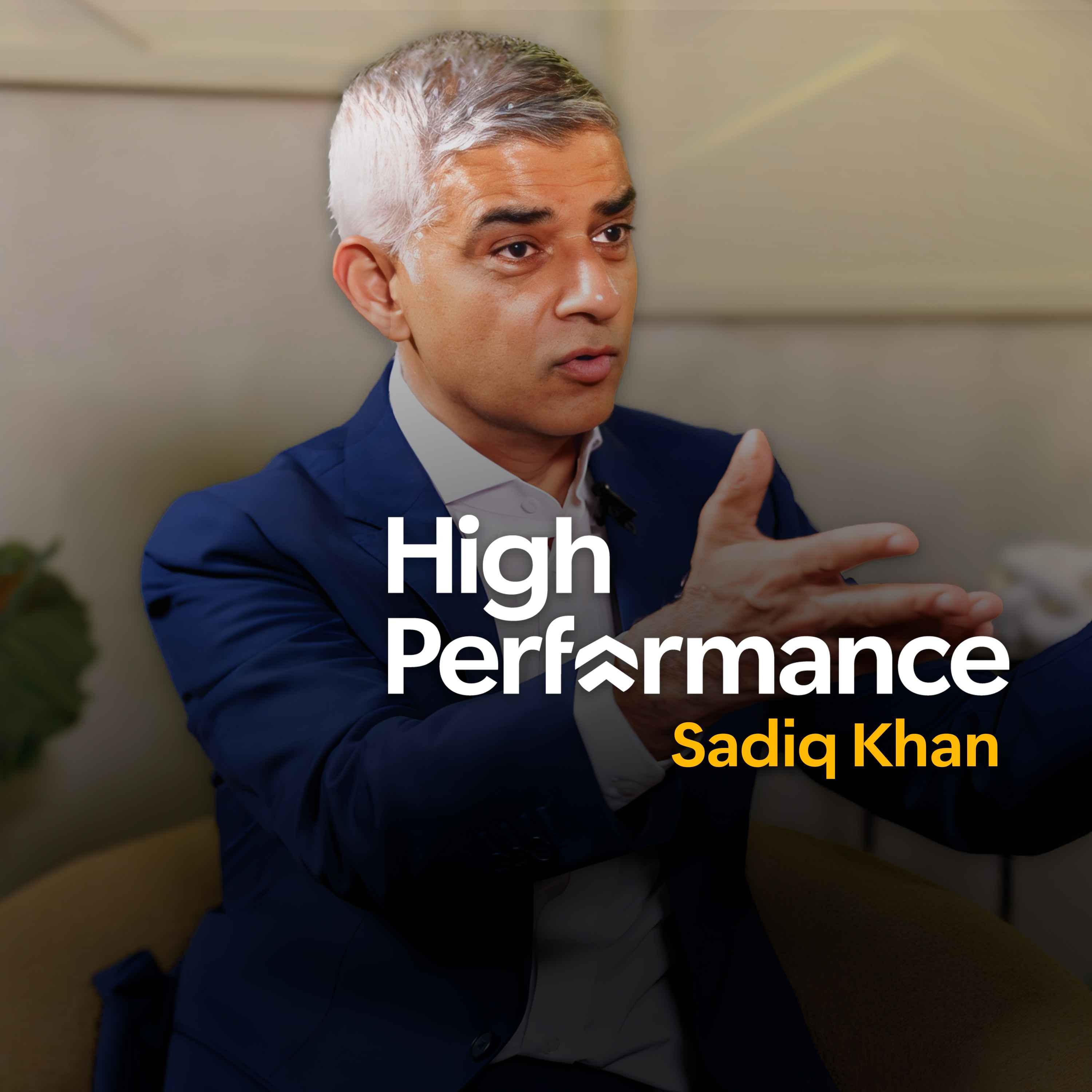
Hosts: Jake Humphrey and Damian Hughes
Sadiq Khan, Mayor of London
This episode of The High Performance Podcast features an in-depth conversation with Sadiq Khan, the Mayor of London. Throughout the episode, Khan shares insights about his personal journey, leadership philosophy, and the challenges he faces in his role. The discussion covers topics ranging from his upbringing to his experience navigating political controversies, including his well-known feud with Donald Trump.
Written by AI. May contain mistakes.

Get the gist, explore an idea or ask about something said.
 Claude
On The High Performance Podcast, what are the key points of this episode?
Searching your listeningAutomatic transcript. May contain errors.
0:28Watch it early on the High Performance App. great country. They were rights. Some of those people who were getting involved and sucked into this have genuine legitimate concerns. There's a very prominent politician by the name of Donald Trump who seems to operate in a totally opposite way. How did it feel when he kept coming for you over and over again? It's personal, right? Let's be frank. So that was the voice of Sadiq Khan, the mayor of London, who joins us on today's Hype Performance. I'm Jay Comfrey, and like so many of you, I want to try and live a fulfilling life, a life where I'm constantly exploring, constantly learning and I believe that I can do that by leaning into some of the most incredible people in the world through this show.
1:06And I'm Damien Hughes. I've spent my life immersed in the world of high performance. I've written a number of books that have been translated into 10 different languages and the essence of them is about trying to help anybody understand how they can get the best out of themselves and others. So many people know Sadiq Khan as the Mayor of London but who is he as a person, as a dad, as a friend, as a colleague? Look, we're keen to stress this is not a political interview. And I know that naturally some people will go, oh, Sadiq Khan, I won't listen to that. Well, what's that going to do for you, right?
1:40Sometimes the very best thing we can do is lean into people, regardless of whether we agree with their politics or not, because this is a conversation about a man from humble beginnings who rose to take charge of one of the greatest cities in the world. One of the big things we often hear people talk about our political leaders Jake is we want them to be authentic and we then can't complain when they come on a podcast and share their story about what drives them their background that shaped them and their ambitions that they have so I think it's incumbent on us when we were speaking to Sadiq and to anybody that's going to listen to this to come with that open mind and be willing to hear him speak and if we want vulnerability we have to create the environment for our leaders to come and make themselves vulnerable.
2:26Very good. So there you go. This one is not just about opening your ears. It's about opening your minds as we invite Sadiq Khan to High Performance.
2:38I want to start this conversation with a quote of yours. We should celebrate when optimism triumphs over cynicism. How do you maintain your optimism? Just by virtue of my daily experiences, I spend every day hanging around London. I've just come from a visit in Golders Green. And we're a remarkably optimistic bunch of Londoners. And I think people don't realise this. I mean, English people have a reputation overseas of these dry... We queue up, we're just worried about the weather, and we're miserable, and our food's not great. And that's just nonsense. It's a caricature and a stereotype that doesn't hold true for London or other parts of the country.
3:15And if you're ever feeling down or in the dumps and stuff, it's just worth just thinking about what it is. I always work backwards. Why am I feeling, what's the issue and stuff? Then there's always, you think, actually, I know there's a reason why you should be happy, why you should be optimistic. And this is a huge source of optimism. I went today to, just on the way here, did a visit where we launched a new bus route. And the community said, listen, we've been lobbying for this bus for 16 years. And what's special about this bus route? It's a really interesting story. We've got a significant Jewish community in Golders Green, a significant Jewish community in Stamford Hill.
3:53and you can go from one community to the other but you've got to change buses at Finsbury Park. Not a difficult issue. We've made it free to change buses. But since October 7th, there's been a rise in antisemitism and the Jewish community said, look, we've not been attacked, but we just don't feel safe. Wouldn't it be great if there's a direct bus connecting these two areas rather than having to change in the middle? And so I made a promise during the campaign this year that if I'm re-elected, we'll sort it out. It doesn't seem to be on the wits of us to sort out this bus route. It's got to be single-decker because there's a low bridge.
4:25And we launched it today. Oh my God, the enthusiasm, the optimism, the excitement. You can think about the geopolitics in that community, what's going on in Israel and Gaza. A new bus route has made this community just so happy. And that's made my day. I mean, the joy from the community feeding back to me. I mean, in the grand scheme of things, Jake, I mean, what I do as mayor is a little thing, right? a new bus going from A to B, not stopping at C to change. But for those people, I tell you what, it's not just made their day, they are just flying. And that makes me happy, it makes me optimistic.
4:59And it shows, by the way, the power of politics. Yeah. A new bus. So if we applied the same thinking then, so they can work backwards, would you tell us a little bit around your own background? Yes, I'm the child of immigrants. The joke I tell with, I smoke when I tell you I'll be the first in three generations of Khans who's not migrated. Why do I say that? My grandparents migrated from India to Pakistan during partition in 1947, if you're basically speaking. Muslims went from India to Pakistan, generally speaking. Hindus and Sikhs who were in Pakistan went to India, generally speaking. So we made my grandparents and family, both mum's side and dad's side, make the journey from India to Pakistan migrants.
5:39My parents migrated from Pakistan to London, immigrants. and I'm born and raised in London. I ain't going nowhere. So first in three cons, not going nowhere. And so born and raised in a council estate. My dad is a bus driver. My father worked incredibly hard, really proud to be a bus driver. Mum was a seamstress. She'd be in the corner of the room with a machine doing piecework, you know, 50p address or whatever. And they had eight children. So I'm in sort of the middle. I've got three older brothers, three younger brothers and an older sister. Very happy childhood. I mean, looking back now, yeah, it was tough and, you know, the challenges and all this, but I had a great childhood, you know.
6:19I enjoyed school. Again, people tell me now, oh, you're into a tough school, bloody hell. You know, you're the only person that come out of it, you've done well and stuff. But I enjoyed school. Joined university, went to law school. I did science A-levels. I was destined to be a dentist. And, but a combination of George Suits. Yeah. Well, my generation of Suits was LA Law, right? And so there's a great program about LA Law and I'll just be Cusack. I still want to be Cusack or Fuentes. And so my maths teacher once said to me, he was arguing, Siddiqui, why don't you be a lawyer rather than a dentist?
6:52And so a combination of Mr. Brown and LA Law, I did a law degree rather than dentistry. Thoroughly enjoyed being a lawyer for 11 years. I was a human rights lawyer. Thoroughly enjoyed it. And then the MP4, where I was born and raised, I was a tutor and decided to retire. I didn't want to be an MP for MP's sake. It was just the idea of representing my community, where I'd been born and raised in Tutu. I was an MP for 11 years, got the privilege of serving in Cabinet, and then the opportunity arose to be the mayor of this great city, so I've been the mayor for the last eight and a half years. So when you look back over that quick potted history, what are the elements that you see there?
7:29I mean, I can imagine being one of eight kids growing up teaches you about sharing and eating fast, if you want to eat. Get seconds and speak fast if you want to be heard. The two most important skills that got me through my childhood. But yeah, you learn a lot when you're a big family, sharing empathy, love. I've always felt loved. I mean, that's the thing. You know, I can't remember not being loved. Sure, you have arguments with your brothers or my sister. But, you know, and then you get, you know, you become a teenager. I've got friends that I love. They love me. You fall in love. You get married.
8:02So I've always, that's been the constant throughout the love. Sense of family is really important. My religion is very important. I'm a Muslim. My parents are both practicing. That's quite important. Sense of giving back is really important. Most of my siblings, like all of them, do some sort of voluntary work, whether it's coaching in a boxing gym or helping at the local swimming club. That's really important. We all recognize the opportunity this city, this country gave us because I've got cousins in Pakistan, ethnic majority, religious majority. I've got cousins in India, ethnic majority, religious minority.
8:42We've done better than them, right? Ethnic minority, religious minority in this country, in this city and stuff, right? Which makes me grateful and appreciative of all that we've been given. And I completely recognize I have not pulled myself up on our bootstraps. The reason why, you know, I and my siblings and others have benefited and been successful is because of help given by others, by the state, by our teachers, by a grant, by mentors and so forth. And it's really important to have the humility to recognize that and to give back.
9:17The market's uncertain. Revenue's tied and hiring on hold. That's why results-driven companies are using Upwork to keep work moving. Go to upwork.com today and start hiring proven freelance talent fast. No bulky overhead. No rigid long-term contracts. Just the right expert right when you need them. Work smarter and faster with Upwork. Go to Upwork.com now and find your freelance expert. That's U-P-W-O-R-K.com. Post a job for free and get started today. No one knows your business better than you. So who better to create your website than, well, you? Wix's website builder puts it all in your hands.
9:58Create a beautiful website just by talking with AI. or choosing from thousands of templates. Customize every detail with simple drag-and-drop tools and get everything you need to start running business your way. Build more, think bigger, and do it all yourself on Wix. This episode is brought to you by Opera Air, the first browser with mindfulness at its core. Now, most of us spend hours every day online, but how often do we pause to take care of ourselves whilst we're doing it? And that's where Opera Air comes in. It's a lightweight, fast, secure browser built not just for productivity, but for your well-being.
10:37With Opera Air, mindfulness is built right in. You'll find free breathing exercises, guided meditations, and soundscapes with ambient sounds, lo-fi music, and binaural beats, all designed to help you focus, relax, and even spark creativity while you browse. And was there a particular moment then when you look back, that you recognised that somebody was lifting you up and giving you an opportunity? All the time. My dad would tell all of us a number of things. Firstly, there was a recognition about the challenges. I'm not going to pretend it was utopian, being the colour of my skin growing up and stuff.
11:13But this phrase, you've got to work twice as hard to be considered half as good. That work ethic from an early age was really important. But also, he instilled in all of us, always listen to your teachers. This deference to our teachers was really important. I had great teachers. But we'd always listen to them, work hard against, defer to your teachers, take their advice, they know what they're doing, listen to them, be respectful, treat your elders with respect. And so throughout, you know, council house, brackets, because of the state, that is a bus driver, brackets, it was then a nationalized bus company.
11:48Us getting grants to go to university, going to local state schools. And so throughout my life, I recognize, this is why I talk about the power of politics, right? We can be cynical about politicians, and there are many things that my profession has done that we should all moan about and be unhappy about and do something about changing. But actually, there's a whole group of politicians who brought about huge examples of good. The best story I can give you is my father's past now, but he used to tell us about how when he first came to this country... And by the way, my dad first went to Australia.
12:20Apologies to my Australian friends. Didn't really enjoy Australia. Went back to Pakistan, came to London, and fell in love with London. But when he came to London, there were signs in, you know, guest houses and pubs saying, no blacks, no Irish, no dogs. And by no blacks, that meant anybody who is a person of colour, right? Yeah. So my dad comes to this country, signs saying no blacks, people like me, no Irish, no dogs. Huge discrimination. A Labour government brings in a law, the Race Relations Act, which outlaws that sort of overt discrimination. So you can't treat people differently because of the colour of their skin.
13:04And that changes the way people behave, but also the way they think. So within one generation of those signs, one of my dad's children has been voted by Londoners to be the mayor of this great city. That shows the progress we've made, but actually the catalyst was parliament passing a law. Can I ask you about the upbringing that you have and how you make sure that your children have the same fire in their belly because we spoke with Dame Stephanie Shirley who came over on the kindertransport right and she said to us I wanted to make my life one worth saving you know this immigrant or migrant mindset 43 % of FTSE 100 businesses are owned by either first or second generation immigrants because it creates in them this fight, this fire, this desire to have an impact.
13:51And you would have seen it from your dad. You would have been inspired by it. He would have been inspired by his parents' story. Now as a parent, with your children living a lovely, comfortable life in a great city with their dad as the mayor, how do you light that fire in them? Great question. It's a challenge for working-class children to become middle-class parents. Because my children, it's not there for them, they're middle-class kids. They often tease me when I go and I tell a story. I don't want to do your one-hour lad. It's like, it's not how I thought you were poor, Dad. I mean, you know what I'm saying?
14:21It's not our fault, yeah? And so, but it's the value. It's about values. It's a great question because basically we want to instill in our value, Jordan, the sort of values we had without them going through the pain and the anguish and so forth we had. There's a three-generation cycle, isn't there? The third being dissipate, right? The first, you mentioned the 40-100 companies. The first two generations do really well. The third generation dissipate. Well, that's been accumulated by the first two. What are the values? Look, you know, they're not rocket science values and stuff. It's, you know, work ethic really important.
14:55You know, it's really important that you work hard. There's a temptation when you are somebody who's, in inverted commas, successful to rely upon nepotism or favoritism or favors or the network and so forth. But work ethic is really important. You've got to work hard. Other things I think are non-negotiable. Treat others with respect. Respect your elders. listen you know you can learn a lot by shadowing by watching other people and so forth these values are universal but having them as your foundations they're really good life skills to have going on and it's really important because basically you know when I was growing up we didn't have a desk in our home for us to do homework in right we'd be doing it on the floor none of us had our own bedroom you know I slept in a bunk bed till I was 23 I don't want my kids to go through that just you know so they can understand the struggle and they can achieve well and yeah they've done really well they're good kids they're adults now because hopefully those values have you know have been instilled in them and they've and they've they've learned from them still living at home they are both of them oh you've made it too easy well there's this there's this there's a great there's a great um my wife and i've often joke about this in fact because you know my wife oh so do i love them being at home yeah but there's there's a stat which you know goes to a serious issue we've got a housing crisis in uh london in fact across most major cities across the globe but one out of three one out of three children aged 30 will still be living with mum and dad by 2030 so i've got skin in the game in sort of the housing crisis right yeah let's get this deal yeah so how would you define high performance sensitivity for me it's a number of things um but the key thing is that the work ethic you know there is an alternative you know you know work hard tina there's an alternative you've got Second thing is treat people well, treat people civil.
16:47There's a school of thought, you've got to be mean and nasty and horrible to get to the top. You don't. I'm really proud when I was a lawyer, when I was a parliamentarian, now as mayor, the environment in my team is one where we treat each other with respect. Junior members of staff can suggest ideas, they're treated with respect. I'll ask people, what do you think? Bring you in. You may come up with ten ideas, I'll reject nine of them, but I may accept one. and but keep on coming up with those ideas and the third thing is understand the mission the purpose the goal so you know so it could be we want to deliver a green a green london a fairer london a safe london we want to be the helping hand that i benefit from if you work uh hard and that that purpose is really important you know jfk famously earth shot moonshot i beg your pardon prince williams got earthshot and for us you know having that common purpose is important in relation to the job of politics.
17:42And so, you know, understanding what the mission is about, whether you do comms, you do social media, you do policy, you're one of our apprentices, whatever role you play in the team, understand, work hard, treat others with respect, understand what the mission is, what the goal is. And that leads to high performance. And the final bit, sorry, sorry, Jake, consistency. Not a one hit wonder. We've got to keep those high levels up throughout my tenure. Why? First, if I can successfully reapply for my job. But secondly, if we can deliver. And so, yeah, winning the Premier League once is fine. It's great.
18:18Winning the FA Cup once is fine, or the Champions League, or winning Wimbledon once. But can you do it again and again and again and again and again? That's why I'm in awe of the Djokovic and the Nodels and the Fedras or the Pep Guardiola and stuff or Alex Ferguson or Ali. Again and again and again. And so, look, in the current climate across the globe, most politicians have a very short life expectancy. one-term wonders, you know, including in this country, sometimes 49 days. And so they may have got the high performance bit right in relation to getting there, but they've not kept it once they've got their, there's a great former governor of New York saying, you campaign in poetry, you govern in prose.
18:59Well, I'm going to govern in poetry to keep on going, keep the consistency up, and so it's really important. Are you incredibly proud of the fact that you've won successive terms as mayor? Well, of course I'm really proud that we've broken records in relation to the electoral results, you know, but it's what we've achieved in between them. There are other people, you know, who've won elections, but actually what have they actually achieved once they've won those elections, you know? So yeah, of course, you know, there's a huge sense of pride in the team that we've had these great results against all the odds, again and again and again, breaking all records.
19:33But it's what we achieved for them. The phrase I use in my team, you know, is it's not about making history, it's about shaping our future. And your focus has got to be, it's great to be in the record books, and I think those records aren't going to be broken, by the way, but it's about what we can do with this mandate, a huge mandate. And the joy of politics in a democracy is you've now got permission to do what you promised. We made some pretty big promises. We've now got permission to do that. And so it may be bumpy initially in relation to people aren't always receptive in the short term, but you say in a respectful way, without being patronising.
20:08But I promised I would achieve this and to do so, we've got a bump in us on the way because it's really important that people see, in my profession, politicians deliver. I want to talk about specifically how you go about making decisions, not from a political angle, but from a personal angle, about how you do this. Because I think that the decisions that you take are often really huge decisions that will, as you know, will impact millions of people. So how do you work out what the decision should be? What's your process? It's really important to have a diverse range of views around you. There's nothing worse than an echo chamber.
20:47So when I was a lawyer, I learnt early doors. Just to explain, in this country we've got solicitors and barristers. The joke among solicitors is we do all the work, solicitors, and barristers are the posers in the court, right? Which is true. Keir Starmer's a barrister, by the way. Dear friend. So as a solicitor, you would organise the case, interview the witnesses, right? Instruct the experts, decide which barristers to use. A barrister that's good for a jury is different from a barrister that's good for a judge-only case. And so you make a team. And so basically a solicitor is actually a manager.
21:23He's bringing the team together to win the case. But actually, if during the case you've not challenged some of the views that are held by witnesses or experts, when he gets to trial, you'll fall apart. The same goes in my job as a politician. Have a wide range of views. There's nothing worse than an echo chamber. There's a great phrase from Matthew's side called cognitive diversity, right? I believe in diversity because if you've got women around you, they've got different experiences to men. If you've got minorities around you, different experiences to men. You mentioned one of the Kindertransport survivors.
21:57First-generation immigrants, different working class, right? People from outside London. A range of views. What you don't want, Jake, is an idea. All 15 of you think it's a great idea because nobody's actually kicked the ties to make sure. How do you encourage that then? Because I can easily see how people go, well, I'm not going to challenge him. He's the mayor of London. Really good point. And by the way, I've been in rooms, you know, when I was a baby MP and a baby solicitor where I wouldn't challenge because the environment wasn't conducive to baby members challenging when the alpha comes up with an idea.
22:34And that goes to, we mentioned you asked the question, Damien, about what's high performance. And I mentioned work ethic. But the second thing is create the environment by treating people with respect that they can volunteer things and come with ideas. I found that challenging, by the way, during the pandemic because teams and Zooms doesn't, if you're a junior member of the team, you lack confidence. So I'd encourage them to use the chat room. If you don't want to speak, use the chat room. Turn your camera on so we can see. But you've got to encourage an environment, Jake, because otherwise it's just the alpha or the top advisors, you know, suggesting stuff.
23:05And everyone's too scared to challenge that because if people think that this person's got my ear, they don't want to challenge them and be undermined. And that is really important. You know, process matters. When I used to be a lawyer, we used to have a type of case called a judicial review. Well, a judicial review basically is you're using the judges to review a decision taken by a public authority. And often the substantive decision was a poor one because of procedural irregularities. Politicians or policymakers hadn't followed the right process, not consulting properly, not engaging properly, and so forth.
23:42And so process matters. And if you've got good process, it leads to good decisions. And so it's really important. Have the meetings, have the engagement, listen to the ideas, be receptive to challenge. And we practice. So we say, you know, what's the good things? What's the bad things? And we also have lots of analytics. So we do use focus groups. We use polling. You know, my job is to make sure on a four-year cycle, I can reapply for my job and win again, right? This is a popular policy. And the tension, Jake, is when to provide fellowship, follow the polls, what people are saying, when to provide leadership, which may in the short term be unpopular.
24:27And to drown out what can sometimes be a vocal minority versus the silent majority. There's a great piece of advice I was given by a former mayor of New York. I'm always asking for advice, always. That's the other thing. I never stop asking for advice. That's why I was fascinated by Keeley's visualisation, the reward for winning gold, the poor, I love it. I feel less guilty now because I have my own sort of things. Anyway, so there's great advice that a former mayor of New York gave me, he said, listen, New York's population, it's relevant to the story, is about 8.1 million. Our population is 9.7 million in London, not that I'm competitive, right?
25:06So he said, listen, even if 90 % of the city love you and approve of what you're doing, and it's never that high, and 10 % hate what you're doing and disapprove, that 10 % is 810 ,000 people. 10%, but don't forget the 90%. So he said, if in London, you know, even if 90 % of people are happy with what you're doing, never that high, that's, you know, 970 ,000 people who may disapprove. Now, they can make a lot of noise, but as long as I've done the work and now I'm making the right decision, I've got to actually try and persuade them I'm doing the right thing. But if they still aren't persuadable, I've got to ignore the 10 % because the 90 % support what I'm doing.
25:47So do you have any techniques you could share with us about how you do invite that dissent so that it's practical and useful rather than just being abusive or empty noise? Yeah, well, firstly, I think you've got to be authentic. I think most subordinates, most colleagues, can see through somebody who's inauthentic. So if you're a nasty piece of works, you've got to try and, first of all, stop being a nasty piece of works, right? That's not a conducive personality to being a great leader. You may be successful, by the way, We all know, I'm sure if we're honest, some nasty piece of work has been successful, right?
26:25But you want your consistency. And so you've got to be authentic. So I bring humour into it. You know, I try and lighten the atmosphere and stuff. Everyone knows though that I'm demanding. I mean, you know, but I'm demanding on myself. So if you work with me, you work hard, but you'll have fun. It's going to be a hell of a ride. You'll enjoy the experience as well as the memory. you've got to work hard. But the environment we create is one where everyone is treated as an equal. Whether you're an apprentice, whether you're a junior member of the comms team, whether you're a baby speechwriter, whether you're somebody who's just joined the research department, you're treated with respect.
27:04We don't talk badly of each other. The phrase in politics is briefing. So and so is briefing against so and so. Horrible. You hear stories now about the new number 10, about briefing. It's just horrible, right? We have an environment where, I mean, I'm really proud. I've been the mayor for eight and a half years. No briefing within City Hall about any other personalities and stuff. I'm also bringing outsiders. So I've got a number of deputy mayors who aren't politicians because it's the cognitive diversity point, right? Politicians are all well and good, but we're not the bees' knees and stuff.
27:36So, you know, some of my deputy mayors have never been in politics before at all. But their experiences are crucial in the environment because they come from a different vibe, a different background and stuff where it's not adversarial. And so that leads to an environment where you can talk about these things. And the other thing is, because I think it's a pleasant environment, people socialize together. And I encourage that because often you have your eureka movement outside office hours because you'll be thinking about it. You could be lying in bed thinking about something. It'll come to you.
28:06Or you could be out and about having a drink. Or the amount of messages I get from staff during summer holidays, on holiday, right? saying I've got this great idea because what I say to my staff is, listen, I'd rather we steal well than invent badly. So they'll be holding CEA. These are amazing. Why don't we do this in London? I say, let's do it. Can you give us an example then where all those component parts have led to a really smart or effective decision? So the socialisation, the respect for others, the lack of... I'll tell you a recent example, which is relevant to what we're talking about, is, so the thing with politics is most members of the public, and most of your listeners, if we're honest, and those who view this, they're not politically engaged.
28:48And so the challenge for us is to get them registered to vote and to vote right. Now, our generation are reasonably well engaged, right? But the younger generation, between 18 and 24 in particular, are not engaged. And so what happens is politicians have policies that reflect those who are going to vote. because if pensioners vote, don't be surprised if politicians focus on policies that are pensioner-friendly, right? Younger people don't vote, don't be surprised if politicians focus on policies that are for younger people. Anyway, about six months ago, some members of my team said, let's make this great idea, Sadiq.
29:23I said, yeah, well, he goes, we think you should promise to bring WrestleMania to London, international WrestleMania to London. I said, what's WrestleMania? It's huge. What do you mean, what's WrestleMania? Right? I said, I remember Big Daddy, right? Giant Haystacks. I stretched John Cena, right? Or, you know, or The Rock, right? It's huge. So they showed me some films like WrestleMania and stuff, and it's huge, by the way. We should speak to the organizers, right? WWE and get International WrestleMania to London. I said, fine, but it feels a bit of a gimmick. Anyway, we did some research, did the due diligence, see if it was a go-ah and stuff, because we brought NFL here.
30:09I brought MLB here. I'm trying to bring basketball here. Oh, my God, it broke the internet. So we did the research. I announced it. I'm going to bring, if I'm re-elected, international WrestleMania to London. I tear this, Damien. My Twitter went berserk. My Facebook went berserk. People on the tube during the campaign weren't asking about housing, right, or about, you know, climate change. it was, is it true you're bringing WrestleMania here? Within six weeks, Triple H is in City Hall discussing bringing WrestleMania to London. Now, I've got to be honest, I blagged it a bit with Triple H and with the team, right?
30:46With their team. But it's going to come, not my idea, not my thing. WrestleMania won the mayoral election. See what, honestly, it's huge, Jake. I mean, you still have jokes, because what it is, it's about, it's the power of sport, by the way. as well. It's about us being a global city. It's about, you know, Paris hasn't got it, Madrid hasn't got it, Barcelona hasn't got it, Frankfurt hasn't got it, you know. Is that a thing, like rivalries between cities looking at what have Paris managed to get themselves, what have Madrid done? See, we collaborate a lot, but we compete a lot. We're very competitive.
31:21But we do work together as well. So we pinch ideas. We've got a fora. So I'm also chair of something called C40. Originally 40 cities, now 97 of the biggest cities in the world, the L.A.'s, the New Yorks, the Parises, and in the global majority, the Dakars, the free towns. And we meet regularly, virtually and stuff. We meet in person when we can. And we are competitive, yeah. I want London to be, it already is, but I want it to stay, the sporting capsule of the world. So, you know, I'm jealous of the Paris Olympics. I think they were fantastic. They were amazing. I think we should get the Olympics back to London, right, 2040.
31:57You know, when I see something taking place, you know, I see the boxing in Saudi. I was really proud to bring Joshua and Klitschko to London. Eddie Hearn said he wants to break more records. Let's do it. 90 ,000 at Wembley. Dubois and Joshua taking place at Wembley. So I want the biggest events to take place in London. And so I'm competitive. So if I see another city doing something, and I think we can do a better job or do it as well, let's do it, yeah. You've mentioned hard work a lot of times already. And interestingly, your lovely team who arrived just before you, I said, what would be a great thing to talk to Sadiq about?
32:30And the first answer was, well, I'm inspired by his hard work. That's what they said. It wasn't a grievance, was it? No, it wasn't a grievance. It was a positive. And we can talk about how you get people to work hard, but also sort of protect their home lives as well. But I'd love to know, what does hard work look like to you? How do you know when you're really working hard? So firstly, it should be the norm, not the exception. I think all of us are privileged. You and your job, me and mine, we're doing a job that we love. We're doing a job we love, right? But I recognise my job is finite. And this is why I don't understand elite sports people who could turn Charlies.
33:06You know, if you're an elite sports person, you're probably going to stop at 32, 33, unless you're Ronaldo or Messi, right? But, you know, so make the most, maximise that time, right? So I'm a politician. I'm a Labour politician. And we don't tend to win elections. We don't. So when I first ran to be mayor in 2016, the last time Labour had won a big election before 2016 when I won was 2005. We lost 2010, we lost the Scottish Parliament, we lost again in 2015, we lost again in the Scottish Parliament, we lost the mayoralty. And so I spent a lot of time speaking to people who'd won 97, won 2001, won 2005.
33:46I spoke to mayors across the globe, how'd you win? How'd you win against the odds? and the common denominator was working hard, right? Understanding the goal, understanding what it needs to get to that goal and the work ethic was really important. Here's the thing. I was a member of the cabinet when we lost in 2010. I bet you have my friends who were similar age to me when we were honest with each other. We asked the question, did we make the most of those 13 years when we were in office, right? Could we have done more? and there was a frustration that actually we probably could have done more.
34:24There was an assumption by some of my friends, don't worry, we'll win again very soon. We were out of office for a long time, 14 years. So my mentality, and I share this with my team, is it's a privilege being the executive. It's a privilege doing this job. We've only been it for another three and a half years. so there's about 1 ,100 days left in this term don't assume we're going to win the next time there's an election use every day there shouldn't be a day we've not used that day effectively in the job we've got it's a privilege and I say the same respectfully to both of you look this is a great podcast it may go on for decades and decades and decades but you know you're doing a job you love right why would you not try and have you know you know you know as many guests as possible to get the most out of it and stuff and whatever walk whatever job you do i hope you love your job make the most of it right what does that look like for you making the most of it on a day look so so i'm never off i mean i'm you know i'm a seven days a gig seven days a week guy um and uh i don't expect my team to respond out of office hours unless it's urgent or weekends but there should be a place where we can send ideas.
35:35So I'll be emailing and stuff. You don't respond on the weekend, but here's an idea of what you're saying. And this is urgent. You've got to respond around the clock if it's urgent. And the social media age has meant that I think my generation of politicians have got it the hardest. You can never be off. You read history books about Churchill, or about Asquith, or even about JFK. They could be off. You can't be off now. Keir Starmer's prime minister is very different to Tony Blair's prime minister, because of not just mobile phones, but social media. and so forth. So what it means is I'm an early riser.
36:04You know, I was up to day six. I didn't really start sport. I wanted to do 5K before I went out because if I, my point about, I know if I've run, I just feel better. Not just because it's helping my physical health. I know it affects my performance in relation to, you know, when I'm on a visit. And the great thing about my job, it's the great thing about my job, what I'm most challenging is forget no two days are the same, no two hours are the same. Right? So after I do this, go to City Hall, I've got a meeting with the Traumasic Commissioner, I'm later on speaking to the Met Police Commissioner, I've got a team meeting with my chief of staff who's been away for two weeks, and so forth and so forth.
36:41There could be an event in the evening, there could be an event with a CBI or the Federation of Businesses, or it could be a community event. And again, I'm not asking for sympathy, I love it, I love this job. But you're always on though, what I mean by you're always on? I've always got to recognise, and again another piece of advice I received from a fellow politician is,
37:04I'm not your brother, 200th person I've met today, right? But for you, I may be the only politician you meet in a week or a month or a year, or for me, ever. So I've got to make a good impression on you, right? Because that's why I've got to be on. I can't afford to be in misery. It's my point about, you know, in my team, I'm going to be high performance, high energy, because it reflects on them. If I look at my mojo, I look a bit down. If I look at my mojo, I look a bit down. It affects my team because they love me and I love them. And so it has an impact on each other. And so we were joking about football before we came on.
37:39When you're a Liverpool fan and this guy's a Man United fan, you can joke about it quite a bit. And so, but there's a great thing about Klopp. Before Klopp began winning stuff, he made me happy. Because of his interviews and the way he performed and stuff. There's a great saying from Maya Angelou, you may forget what somebody did, what they said, you don't forget how they made you feel. Clough made me happy, man. He made me happy. And as the mayor, you know, of course, there's sometimes tragedies and I can't make you happy. We've got to respond to the tragedies and stuff. But all my team, my staff, I want us to be happy.
38:13And politics should be about hope and optimism and excitement and about change. Much of the doomy, gloomy stuff. But then you need purpose, right? To continue that constant, relentless push. And you've mentioned a few times Keely Hodgkinson and the Porsche. I love it. I love it. this has struck something with you so her dream was if i win gold i get myself a porsche do you employ similar techniques yeah all the time all the time i always play mind games so for example if i'm doing a 5k i think you know what if i can do a 6k i'll have a great day and that'll that'll make me do the 6k because i don't want to i don't want to have a crappy day and see there's lots of tricks you can play in your minds and stuff you do so one trick i learned from Paula Ratcliffe is, not personally, but she wrote about this, is that she said when she used to run, if she was having problems, she'd start counting one to a hundred.
39:03There's a lot of things you can do in relation to that. So I do lots of things. So I won't tell you what the means is. I'll tell you what the ends is. So there's a thing that I've done recently with my wife, actually. We've promised if something happens, apologies, there are other brands available as well. We're going to buy Peloton, right? And so that's the price, what we've got to do and stuff. So it's a really good motivator. And as parents, we often think we may spoil our kids, but no, it's a reward for hard work. And so, you know, I use it as a parent as well for the kids. We're on a great holiday this year.
39:31And I said to the kids, if so-and-so happens, we'll go on a great holiday this year, and I can probably switch off because, you know... Was that winning the election? They said they had to do. Oh, that's it. And so, and these little things work because it's really important because, look, you know, I wasn't a middle-class child, but my parents worked incredibly hard. They couldn't give me the rewards I give my kids. But you want to make sure your kids have earned these rewards because what upsets me, and I saw a lot in the law, I see a lot in politics, is this sense of entitlement. And I think that's one of the things that leads to low performance.
40:06If you think you're going to get it anyway, this get-rich-quick culture where you think you can get overnight success. You know, I had the privilege of going to an event a few years ago when I first became mayor at the London Irish Centre. Great, great organisation in Camden Town. and Ed Sheeran, Ed Sheeran, right, this is a guy who sells at Wembley, gave off a night to come along and raise funds for the London Irish Centre and meeting Ed was great but meeting John Sheeran, the dad, was even better. I'm at the Asian now where I know the pair, I know Dua Lipa's dad, man, forget Dua Lipa, right?
40:38You know, I'm that sort of generation, right? And John Sheeran told me, he said, he's remarkable, he said, Ed Sheeran, forget the giving back stuff, he's a nice guy, he gives back, we know that about Ed Sheeran. he spent years before he became successful doing pubs, sleeping on sofas doing three gigs a night again, you know that's how he excelled at his art and his art by the way it's really important, right? and the reward is look, the guy's now just this global phenomenon and stuff and so that goes to the work ethic if you enjoy your work right, Jake you won't mind working hard if you hate work, hate the environment not only will you not come with ideas you're not really going to work hard you're going to switch off and by the way I don't begrudge anybody who wants to do a 9-to-5 job.
41:22That's perfectly respectable, perfectly honourable, nothing wrong with that at all. But in my line of work, I think it's really difficult. Yeah. If you're still overpaying for wireless, it's time to say yes to saying no. At Mint Mobile, their favourite word is no. No contracts, no monthly bills, no overages, no hidden fees, no BS. I made the switch because I was tired of those ridiculous bills and sneaky charges from my old provider. With Mint, I'm paying$15 a month and getting the same high-speed data, unlimited talk and text, and coverage on the nation's largest 5G network. Honestly, the quality is just as good, if not better than what I had before.
42:00And the best part? You don't need a new phone. You can keep your current one, bring your number, and all your contacts. I use Mint Mobile, and you should too. Ready to say yes to saying no? Make the switch at mintmobile.com slash HPP. That's mintmobile.com slash HPP. Upfront payment of$45 required, equivalent to$15 a month. Limited time new customer offer for first three months only. Speeds may slow up a 35 gig on unlimited plan. Taxes and fees extra. See Mint Mobile for details. The market's uncertain. Revenue's tied and hiring on hold. That's why results-driven companies are using Upwork to keep work moving.
42:38Go to upwork.com today and start hiring proven freelance talent fast. No bulky overhead. No rigid long-term contracts. Just the right expert right when you need them. Work smarter and faster with Upwork. Go to Upwork.com now and find your freelance expert. That's U-P-W-O-R-K.com. Post a job for free and get started today. Hey, I'm Dr. Z and I'm a neurosurgeon. So that means long hours, early rounds, late nights, and everything in between. And through it all, I wear figs. They're comfortable when it counts and functional when I need them the most. So where do you wear your figs? On shift, on call, on the couch in the break room listening to this podcast?
43:17Wherever it is, they fit right in. And now listeners of this podcast can get 15 % off their first order. Just head to wearfigs.com and use code FIGSRX at checkout. That's wearfigs.com, code FIGSRX.
43:35and what was it about running that you came to relatively late like you say 10 years ago what was it that attracted you to that this is this is it goes to high performance and motivation actually jake so uh i'm not a runner i'm not built to be a runner i love sports love football love cricket love tennis i used to love squash in 2014 the even standard newspaper approached me, it's London's only daily paper. And they said, listen, we've asked Ed Balls if you want to run the London Marathon for our charity. He said, no, he's running for a Stammer charity. He's not going to do it. Would you be interested in running?
44:08Not really. But then my staff said, listen, man, you're thinking about running to be the mayor, right? Even Stammer has approached you to run the marathon for their charity. If you run the marathon, they give you good press, right? They give you good coverage and stuff. So I ran for selfish reasons, basically, to suck up to the Evenstandard, to raise money for the charity and so forth. So the good news is we raised lots of money for the charity. I beat Andy Burnham. I beat Ed Balls. The Evenstandard didn't endorse me. And I got asthma as a consequence, but that's another story, yeah. You seem very at ease talking about the decisions you've made, the things you've done, the highs and the lows.
44:50Are you the most comfortable you've ever been as a person in a leadership position? I think you're most comfortable after an election victory. And what happens is, because it's a vindication, it's very different. The first time you run, you run on promise. When you run again, it's on delivery. When you run again, it's on delivery. You're dealing with fatigue. There's great, I mean, Gordon Brown used to advise that basically a politician, and he was at his peak in the 90s and the noughties, has a seven-year cycle, basically. if you do a bell curve. And that's why the third victory was, you know, with a swing towards us and a record victory and so forth and all the rest of it and so forth, was it's a vindication that what we're doing, and I've always thought it's the right thing to do, genuinely felt the right thing to do, but it's been rewarded by Londoners.
45:38And so you can transfer that to any other industry. Shere prices are going up. You're winning the Premier League. You're winning the... It's a vindication for the work you've done, the hard graft you've done. It's paying dividends. So that leads to a sense of comfort, but I'm not in any way complacent, you know, And in the spirit of vulnerability, how nervous were you before this election? You should always be nervous if you're a politician.
46:04I'm a subscriber to the Madeleine Albright School. I thought, you know, I'm an optimist who worries a lot. And so you're always nervous because I'm as jolly or miserable as the last voter, the last door I knock on. So I've got this superstition, which is we're going to be canvassing and I will not stop knocking on doors unless I get a label promise. So you can do it, and I deliberately, you know, so it's like, come on, people aren't in, I don't care, I want a label promise and stuff because it affects my mood. If the last person I spoke to is unhappy with saying, that affects my mood. So if I can't bring them around, we're going to carry on going until we get some...
46:39I love this phrase, by the way, I'm an optimist that worries a lot. That sums me up. Absolutely to a T. I'm an optimist, but I'm a catastrophiser as well. But that's a good thing, you know, because it keeps you, not in a negative way, on your toes, vigilant, and not complacent. Complacent is fine in certain times in our lives and stuff, but when it comes to the job that's a high performance job, you've got to be a bit careful in relation to, leading to poor performance or not optimizing your performance. So would you give us some advice on how you deal with overwhelm, if you get overwhelmed? Because the decisions that you make are so impactful for so many people.
47:17What do you do to deal with overwhelm? I learned as a lawyer this trick, which is, at a normal time, I'd have between 1 ,500 cases, a lot of cases, and I could pick and choose my cases towards the end of my legal career. But there could be one case really stressing you out. It could affect you quite a lot, because I'd get quite wrapped up in my cases. And I learned to compartmentalize. So what does that mean? So I'd say, listen, this one case, I just can't get my head around it. let me just box this and do the other stuff that's more easy to do, other cases and stuff. And I'll come back to it later on because, you know, you talk about, you know, catastriving, catastriving everything else, but that one case could affect all my other work.
47:56So you've got to box it up. And it's a really good life school, but come back to it because don't, you know, forget about it. And the same applies to other parts of your life. So you think of your life, right? So in my life, I've got work. I'll call it work, although it affects everything. Work, I've got my wife, my children, siblings, mum, mates, my hobbies, Liverpool, FC, music. So even if one part of your life is not going well, try and do the other things that are. Because that one part of your life of work is going badly. It affects all these other things, right? All these other things. How do you do that, though?
48:35You've got to teach yourself this. And this is, you can teach yourself to compartmentalize things, but if it's a serious issue, don't. Don't box it up if it's, you know, so bereavement's a good example. Don't box it up if you're grieving. You've got to address the issue of grieving and stuff for a reason. There's a reason why you're grieving and stuff, right? And so you've got to teach yourself. You've got to have a good circle of friends, and I'm surrounded by love at work, at home, my mum, siblings, so forth. You've got to have a space where you can be vulnerable. But also, that's why you've got the podcast, right?
49:08To teach people these skills that are life skills. But also, they will ensure that in other boxes, you can have high performance. So listen, you know, we talk about high performance in terms of my job. There's high performance in terms of my marriage, right? You know, date nights, get away for the weekend, really important. With your kids, you know, I'm now Swifty, right? You know this. We're all now Swifty. And so, but see, high performance with my mates, right? But if I've neglected them for a while, it's an issue because we're missing out on things. So you make time for them. So you mentioned how I work ethic.
49:42I diarise football. It's in my diary. I've got a seven-day diary. I diarise tennis. I diarise getting out with my mates. There's a family event tonight. It's in my diary for two weeks. So you've got to make time for these things, otherwise you'll not do them. Because whatever work you do, if it's a demanding job, it can swallow everything else. You talked about going to football yesterday and stuff. You need to make that time to do that, right? Otherwise, if you're not careful, you'll be writing a paper or writing a lecture. Listen to our conversation with Shane Parrish on this podcast where he spoke about how you make sure the important stuff isn't swallowed up by the urgent stuff.
50:13It's really good. It's good advice. Can I ask you about your experience on the doorsteps? Because you're going in and meeting people that don't want to listen, that don't want to engage, that can't find that common ground. And I'm interested in the lessons that you've learned about how do you get to engage with people that don't necessarily want to engage with you. This is a big challenge for democracies across the globe. How we engage the disengaged is really important. What you're seeing across the globe is a rise in nativist populism because my profession, particularly progressives in my profession, have lost the art, and politics is a combination of art and science, of doing that.
50:54So the first thing is we've got to recognise in the 2020s, it ain't just about door knocking. I door knock a lot. It's also about social media, about focus groups, about on the phone or doing stuff like this. The medium has changed from the olden days or even the last 10 years to what it is now. And you've got to respect that and recognise that. I recognise that all people who weren't open the door will listen to high performance. It's just a fact I'm not being sacrophantic. It's a fact, right? A lot of opinion formers who support we need to get foreign direct investment into London to talk up London, listen to high performance, right?
51:27They want answer doors and so forth. And so it's been using the science to recognize what are the mediums by which people get information, which will lead to them, hopefully, if I knock on the door, they're opening the door because they know a bit more about me. So what we do regularly, Damien, it goes back to science and analytics, is we do a table of what sources of information Londoners get their news from, right? TikTok is actually huge. And most young people, and this is an opportunity and a threat, their only source information are short TikTok videos. And the algorithms mean you get the same sorts of messages and they're only getting one dimension.
52:07They're not getting balance and debate. When we were growing up, we'd watch the medical news, the technical news, newspapers. There'd be debate and opposition. We could form our own views. The algorithms now work in a way you're only getting one version of events. So it's really important, firstly, to use the mediums at our disposal. There are new ones arriving all the time. But also to understand people's concerns and fears. So I'll give you a live example. This summer across our great country, there were riots. There were riots because of, you know, organized some by the far right, caused by misinformation, disinformation.
52:44But actually, some of those people who were getting involved and sucked into this have genuine, legitimate concerns that demand addressing. What are their concerns? I can't get my childhood in decent school. I'm waiting so long for decent healthcare. I can't get decent, affordable housing. So those are genuine concerns, right? And some people are trying to say, well, the source of your problem is asylum seekers or immigrants, they're playing on their fears. I think what we should do is rather than playing on fears, address those fears, respect and recognise you've got genuine concerns, and then respond to them.
53:17And so you may get a door slammed in your face. Hopefully, you can try and engage that person. If not, try and come back to them with a drop of note. We've got Facebook adverts. You can now do Facebook adverts that are targeted towards a postcode and so forth. So we can't afford for those people to become... First, if you're not engaged, you become apathetic, then you become cynical. And cynicism is a real problem for us. The dream I have, and we're working towards this, is turning what are consumers, raw consumers, into citizens and then active citizens. Not necessarily party political, but active.
53:53And that's really important. We're about to move on to our quickfire questions. We are basically out of time. Before we go, though, you've just spoken about bridging the gap and bringing people together. There's a very prominent politician by the name of Donald Trump who seems to operate in a totally opposite way. How did it feel when he kept coming for you over and over again? It's personal, right? Let's be frank. If I wasn't this color skin, if I wasn't practicing Muslim, he wouldn't come for me. He wasn't coming for me because I'm five foot six, right? He's come for me because of, let's be frank, my ethnicity and my religion.
54:27So it's incredibly personal to me. It affects me, my family. What worries me though is not about me and my family. What worries me is the fact that he's the leader of the free world. This is the president of the USA, say a country we all adore, love. We love Americans, we love American culture. But also, you know, America is like a lighthouse. You know, they can be somebody that's a source of good, ripples of hope and love, but also ripples of hate. So, you know, the fact that I was speaking out against somebody whose policies were sexist, homophobic, Islamophobic, racist, wasn't because, you know, I want to come to his attention, because I have a responsibility to speak out if I think something's affecting not just Londoners, but affecting all of us.
55:16And so, you know, it's not great. Would I do it again? Absolutely, because you've got to speak truth to power. And, you know, and I've got a platform in the sense of, you know, explaining that actually the policies of America has an impact on us, positive and negative. And I think one of the things that's great about our country in America is the special relationship, the allyship. Look at our inspiration for the civil rights movement. It was America in the 60s, right? Or around LGBTQI plus rights. It was, look at Stonewall and America and so forth. So look, a lot of my heroes are Americans and long may that continue and stuff.
55:52But I think this idea that it's a very English thing, we shouldn't say boo to a goose. I think we should. And I think, by the way, this special relationship, Jake, it applies to our working lives and your private lives. I think the responsibility you have to your work colleagues is greater to a stranger. The responsibility to your best mate is more than to an acquaintance. And USA are our closest ally. And if we can't say boo to a goose to our closest ally when they're wrong, what is the point of being best mates? Just before we do these quick questions, though, because I think this is interesting.
56:24There's two options for you if Donald Trump gets into power. ignore everything and just be like, I'm not going near him. Or despite his behaviour, you to be the one to go, let's actually have a conversation. Absolutely. Listen, which one would you do? I would love Donald Trump, whether he wins or not, come to London and let me show him around our wonderfully diverse communities. Let me take him on the Pride march this coming summer, next summer. Let me take him to a mosque. Let me take him to some of our diverse communities and understand that actually it is perfectly compatible to be a Westerner and to be a Muslim.
57:04It is perfectly compatible to treat women with respect and to be a leader and to be a man. It's perfectly compatible to be somebody who disagrees, but disagrees agreeably. Of course, we're not one homogenous society. You know, I haven't discussed politics, but we all have differences. That's fine. That's the joy of a democracy. Pluralism is a good thing. But the idea that you get abusive, you use the power you've got of having millions of followers he has to get people to spread hatred against me is just, I think, not... It lets down the position of being president. It lets down the position that the White House gives to people when they become president.
57:44Also, it forgets the rich histories of our two countries. Well, look, good luck getting Donald Trump to a pride march. That's the optimism coming out in you, I think, right there. Finally, quickfire questions. Sure.
57:58What are the three most important, non-negotiable behaviours that matter to you? Work hard, treat people with respect, and understand the common purpose, the goal, the mission. What advice would you give to a teenage Sadiq just starting out? It's going to be all right. It's going to be all right. Trust your gut. When did you last cry? I cry all the time when I'm watching movies and stuff. My girls always tease me. When I'm watching TV at home and the girls are there and the lights are out, they'll turn the lights and see if I'm crying and stuff. I'm quite emotional. I mean, you know, I didn't cry when I was young.
58:32It's fascinating. I had six brothers. We were quite an alpha family. We hugged. We never cried and showed emotion. It was not because of... Maybe it could be thought it was a sign of weakness. I went to an old boy's school. But, you know, since I got married and had kids and my parents got older, you know, I've become more emotional. What's your biggest strength and your greatest weakness? I think my biggest strength is my work ethic. I'm somebody of average ability. And I always say to people, I mentor a lot of people, I say, listen, if I can do it, anybody can do it. When I do assemblies with young people, I always say, listen, if I, from my background, can achieve what I've done, you can easily do it.
59:05The phrase I use is something called the London Promise. The London Promise is very simple. You work hard, you've got a helping hand, you can achieve anything. And City Hall is a helping hand. And so that's my strength, I think, my work ethic. I'm the average Joe, who's mayor of the greatest city in the world. My greatest weakness, I think, is something I've sought to address over the last eight years is I'm quite adversarial. And I know why, actually. I've thought about this a lot. It's because I play lots of sports. I used to be a lawyer doing lots of litigation, adversarial system. When you're in the House of Commons, it's a really gladiatorial environment, that chamber.
59:49It's like, we're at the dispatch box, all these hostiles coming in and stuff. And I can often respond quickly without realizing that you're not being necessarily adversarial, you're asking a genuine question. And so for the last eight years I've tried to have altitude, the phrase, I've tried altitude and actually be less adversarial. And I'm still working on it, by the way, I'm still a work in progress and stuff. Because in my line of work, you can often get into tribal politics and it's a memory muscle thing because my memory muscle is adversarial. And so I'm having to teach myself not to be.
1:00:25And that's a challenge. So how do you gain altitude? Well, winning three times helps. I mean, success does lead to confidence, which means you can have altitude. But also to give people the benefit of good faith. It's not male fighters all the time. could be bona fides and stuff. And so I give people good faith. Sometimes people are being beastly and adversarial, and I can respond in kind. But give people the benefit of doubt. And actually, most people appreciate that. Also, the other thing I didn't realise is it's bloody popular. I mean, not to be adversarial. I mean, who would have thought, right?
1:00:58And so people like it, which I find a reward for me trying to change my behaviour, is people like that I'm not being adversarial. Penultimate question. You've delivered so much amazing advice and wisdom from other people in this conversation. So what is the greatest piece of advice you've ever been given? I've had loads. And I always ask for it, by the way. I'll give you two. So when I was running in 2016, I often speak to opponents for advice. So when I was running in 2015 before 2016, I went to speak to, I won't name the politician, but he's an opponent, world famous. I went to speak to his right-hand man.
1:01:37and it's always how you ask the question if I said to you listen how do you make me beat your side that's not going to get you a good answer right I said what did he do and he said he got fit before the campaign which I thought was interesting he got fit before the campaign so I take that advice but I've sustained it so his mistake was he then became flabby once he got the job right so that's really important the second piece of advice somebody gave me when I became mayor which is great advice I always give to people is enjoy the experience and it's not just the memory. It's a classic mistake we all make.
1:02:09And I'm coldest now, and use it in your private life as well. So my kids are now 24 and 23. And so we make the most of every day with them and stuff because there'll be a stage where they'll move out. As we say, we're joking, they're gonna move out. And your kids are younger than mine, but when they're up to about 10 or 12, they wanna be with you all the time, right? Then they become teenagers and they wanna be with their mates and so forth. And so, rather than looking back in the memory of them, try and enjoy the experience man so if they want to if they want to go to a gig and they want you to go with them hallelujah go make the time to go because that experience is really important and enjoy it don't just do it for the memory and the same goes with my job by the way you know i'm trying to enjoy the experience and stuff as well and so you know enjoy the experience rather than looking back and saying what a great time it was brilliant and the final question today is what's your one golden rule to live a high performance life it's a thing I live by and it comes from actually it's a golden rule and what's fascinating is it comes from all the Abrahamic faiths but also it applies whether you are religious or secular it's treat others how you'd want to be treated it's a very simple thing to do um so whether you're a doctor how would how would you feel if you're a patient when you're given a piece of bad news how would you feel if your parents receive that bad news when you're a politician how would I feel if a politician didn't give my mum the time of day?
1:03:34How would I feel if they ignored an email from my niece? And so treat others how you want to be treated. And the same goes to the workplace, by the way. How would I feel if I was a baby political advisor and I had this great idea and the male was dismissive about the idea or if I was a business person with a great idea or whatever? So treat others how you want to be treated. It's something I've lived by and my parents lived by it. It's still been in pretty good stead. What a lovely way to finish. What a fascinating conversation. Thank you so much. Thanks for having me on.
1:04:07Damien. Jake. So what do we think of that conversation with the Mayor of London, Sadiq Khan? It was really fascinating to see the human behind the role. I think we can often see these people and we sort of label them because that's all we ever see through the public lens, whereas he was kind, he was decent, he was empathetic, he wanted to do his best. And I think it was a real privilege to get to see that. Shall I be really honest? Go on. I'd never met Sadiq before. And I didn't like him very much before I sat down with him today. Because? Because of portrayals, because of social media, because of the media, because of the narrative, because of the polarising language, because of the modern discourse.
1:04:51And it's only now I'm sort of saying to myself, what am I hoovering up? How am I absorbing media? What websites am I going on? What social media apps am I using? Because the opinion I had of him is a million miles away from the man who sat down with us today. You know, when I said he was coming on on my socials, there was a few people going, I can't wait to listen. But there was also a lot of people going, oh, chucking, you know, anger, criticism, dislike. And I wonder whether they're in the same place that I was before, where we're basing our opinions on nothing more than the way that we're absorbing our media.
1:05:28Yeah, and it's a great reminder that, you know, we talk a lot on this podcast about nutrition, right? We have to be so careful about the information we put into our brain as well as what we put into our body. And I feel a bit ashamed, really, that I was so sort of impacted by other people's opinions of someone. Well, it's really honest of you to admit it, Jake. I think the ability to learn and unlearn is what we're trying to talk to so many people on this, that, like, part your opinion and just come and listen and see whether you've got any more evidence to change your mind. and I think the fact that you've done it is role modelling high performance.
1:06:01What do I think now about Sadiq Khan? I see him as a family man who loves his country, loves his capital. I see him as someone who is sort of obviously a voracious reader and a gatherer of information and he constantly is asking people, you know, things that they know that can make him a better mayor of London. He's got his own challenges, as he said to us. He was depressed with a small d, but it's still depression during lockdown and he's had to create coping mechanisms, coping mechanisms for criticism that he might get or the big decisions he has to take. And, you know, he's just a human being doing his best.
1:06:35He won't get it always right, but he's trying to protect the capital with many millions of people living in it and, you know, all power to him. Yeah, and I think there's something else that I often admire of somebody that doesn't allow themselves to become a product of their environment. You know, when he spoke about the school he went to, the area he grew up, almost the idea that there was eight kids in a three-bedroom house, that he's not allowed what he doesn't have to define what he wanted to go on and do. And I think regardless of whether you like his policies or what he's trying to do, I think that story on its own gives us all hope that if you don't like where you are, you do have the tools to change it, as he's demonstrated through hard work, being decent and being willing to step out of your comfort zone.
1:07:22I loved the conversation with him. Yeah, me too. Thanks, mate. Cheers, mate. And that's it for today's show. Sadiq, thank you very much for making the time to come on this episode. Look, we don't take Sadiq's time for granted or any of our guests that choose to come on this show and share the kinds of things that you've heard from Sadiq. And I'd actually love to know from you whether this has changed your opinion of him because I think it's fascinating to have our opinions changed and challenged. Please keep on listening to High Performance and we'll see you again soon for another conversation.
1:07:54Thank you.
1:08:24to create a website that's perfectly yours. Just tell AI what kind of site you want to build or choose from thousands of templates. Change whatever you want, whenever you want, and get everything you need to start running your business your way. No matter what you sell or what you aspire to be, you can do it all yourself on Wix. At Capella University, learning online doesn't mean learning alone. You'll get support from people who care about your success, like your enrollment specialist, who gets to know you and the goals you'd like to achieve. You'll also get a designated academic coach who's with you throughout your entire program.
1:09:02Plus, career coaches are available to help you navigate your professional goals. A different future is closer than you think with Capella University. Learn more at capella.edu. Hey, I'm Dr. Z and I'm a neurosurgeon. So that means long hours, early rounds, late nights, and everything in between. And through it all, I wear figs. They're comfortable when it counts and functional when I need them the most. So where do you wear your figs? On shift, on call, on the couch in the break room listening to this podcast? Wherever it is, they fit right in. And now listeners of this podcast can get 15 % off their first order.
1:09:37Just head to wearfigs.com and use code FIGSRX at checkout. That's wearfigs.com, code FIGSRX.
We welcome the Mayor of London, Sadiq Khan, to High Performance. In this episode, Sadiq sits down with Jake and Damian for an honest and open conversation about his life, his journey, and what it means to lead a city as vibrant and complex as London. From his family’s roots in Pakistan to his path to becoming mayor, he shares insights that go far beyond politics.
Sadiq opens up about his personal background, reflecting on his parents' migration story and his own experience growing up in London. He discusses how his upbringing has shaped his values and how he’s tried to instill those same values in his own children. Sadiq also dives into the balance he maintains between his political responsibilities and personal beliefs, explaining his unique approach to decision-making.
He discusses the challenges he faces in his role, from handling the intensity of London’s mayoral responsibilities to navigating complex issues like racism and public scrutiny. He also touches on his well-known feud with Donald Trump, offering insights into how he deals with public criticism and personal attacks while staying focused on his goals.
This episode offers a fascinating look into Sadiq's background, his approach to leadership, and his ability to maintain optimism despite the challenges he faces in his political career.
🚨 Partners
Huel 👉 Get £25 off the Taster Bundle. Unlock your offer here: http://huel.com/highperformance
Payhawk 👉 See our sponsor, Payhawk in action here: https://hppod.co/Payhawk
FORA 👉 Claim a free day pass at any Fora workspace and find the perfect home for your business here: https://hppod.co/FORAHP
HP Foundation 👉Do you want to kick-start an evolution that will change the lives of millions of children? Find out more about the High Performance Foundation: https://hppod.co/foundation
HP Corporate Events 👉Click here to book High Performance Events: https://hppod.co/corporate-events
Explore offers and discounts through our other partners:
https://hppod.co/partners
Hosted on Acast. See acast.com/privacy for more information.


