
 Ask ChatGPT


 The High Performance Podcast
16 Jun 2025 · 1h 19m
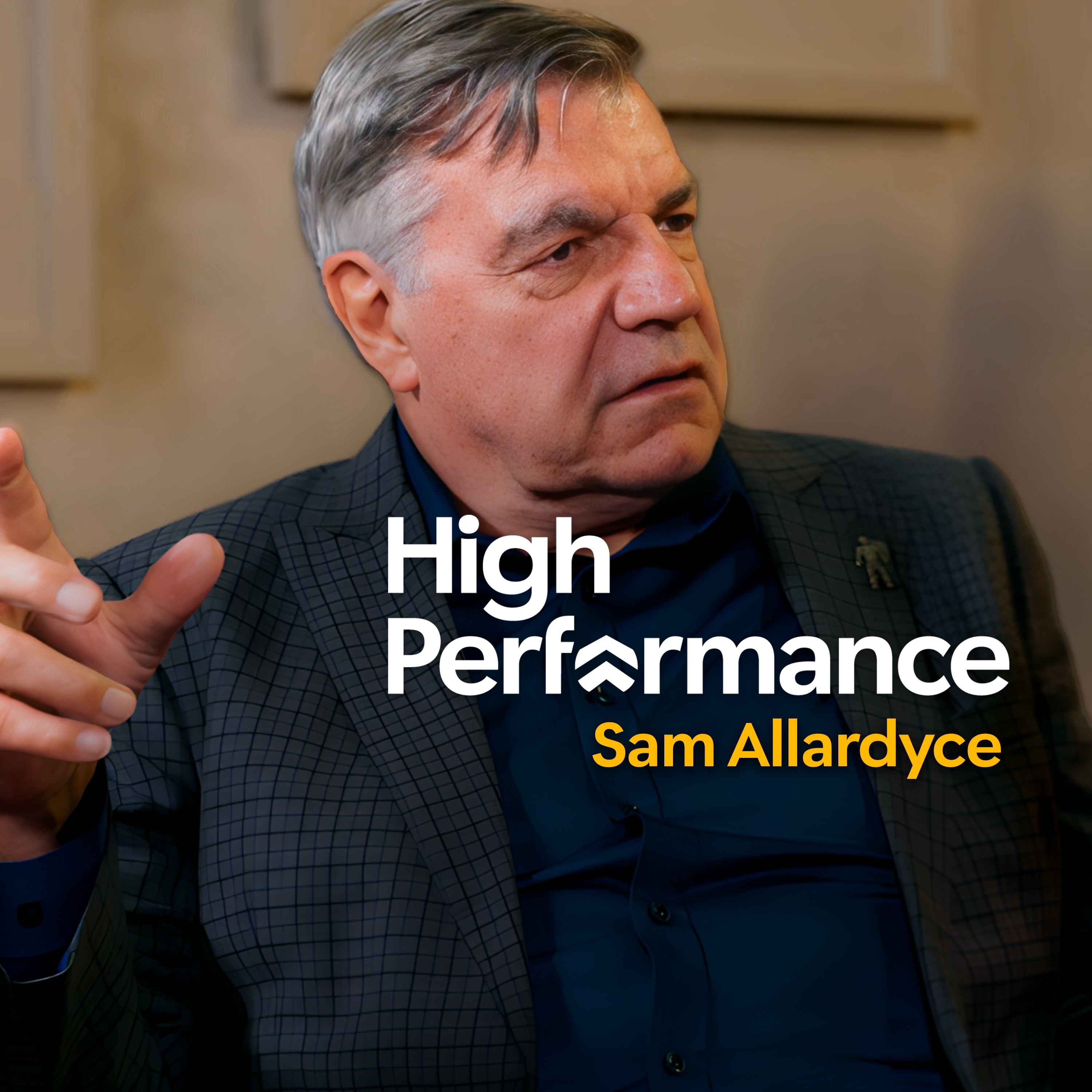
In this episode of The High Performance Podcast, hosts Jake Humphrey and Damian Hughes engage in an insightful conversation with Sam Allardyce, a prominent English football manager. Allardyce, known for his straightforward approach and extensive experience in football management, shares his unique perspectives on leadership, performance, and the human side of managing within the high-pressure environment of professional football.
Written by AI. May contain mistakes.

Get the gist, explore an idea or ask about something said.
 Claude
On The High Performance Podcast, what are the key points of this episode?
Searching your listeningAutomatic transcript. May contain errors.
0:28Watch it early on the High Performance App. There's a nagging in the back of the head. And that's where you always think, what if? Only 19 people in history have been asked to manage the England football team. And that man, Sam Allardyce, was one of them. And 67 days later, the job was no longer his. In today's episode, you'll hear what it really felt like being asked to lead his country. And he opens up about the depression that followed his departure. Look, this show isn't about the headlines, it isn't about the speculation, this is the truth from the man who was at the centre of a global story.
1:06And also in this intriguing episode, we talk about the price of being in the public eye, the toll it takes on your family, and we learn how you keep going when it seems like the whole world has turned against you. What I found particularly intriguing was Sam taking us behind the curtain to understand how you deal with the pressure of a relegation scrap. Look, remember that Sam has taken charge of almost 550 Premier League games. He's faced the highs and the lows of football for more than two decades. And yeah, I know he's earned a reputation as a firefighter for clubs in crisis. Yet he is so much more than that.
1:41Before we dive in, please hit follow on Apple or Spotify so you never miss an episode and help us bring you more stories like this as we welcome Sam Allardyce to High Performance.
1:56Hey Sam, welcome to High Performance. Yes, great to be here. Yeah, nice journey down on the train and yeah, looking forward to this podcast because I've been doing my own, as you well know. Tippi Tappi Football. No, Tippi Tappi Football, so I've got to get that one in straight away. Absolutely. And make sure everybody has a look when you get the chance. And yeah, I've been enjoying the fact that I can get out and talk about football a lot more with less restrictions, you know what I mean? And the name has been with me for a long, long time on the fact that how the game has changed to, you know, no tippy-tappy when I say, which is too much tippy-tappy now.
2:38So I think we're finally realising that everybody's coming round to the fact that it is over-exaggerated by a million miles. and even Gary Neville did a bit of research on which was very interesting for me, listening to Gary on what is going on. And his stats sort of came out that the people, or the players with the most possession today are the defenders and the centre-hours particularly instead of the creative midfield players. So I think it goes to show that the teams that are excellent at it, fantastic. you know obviously comes from pep particularly which is which is outstanding and so should they play like that but everybody else are down the leagues who are being or promoting the fact that this is the only way i'm going to play is a negative a negative vibe on the entertainment value for me and um and of course when you're a manager or you're not a manager now you're a head coach, your life depends on results, whatever and however you want to play or whatever anybody says.
3:50So you can play as much out the back as you want, but if you don't, when you don't keep your job. And that is very dangerous for young coaches today. I feel particularly sorry for them because it's a given fact that boardrooms are saying today, what type of football do you play? I always say winning football and if that's not enough, well sorry, you know what I mean, because winning football is all what anybody and everybody wants and a coach can only play to the strengths of his team and the strengths of his team can only be determined by you when you're playing and being with the players every day to suit the strengths of the team and not to say we can only play this way.
4:38And it's the wrong way to play. It's the wrong way to promote. It's the wrong way to coach. And if it's acceptable to give the ball away, as they're talking about in coaching courses now, coaching manuals, it's wrong. I want to start with what I think is probably one of the greatest moments of your life. I was looking at these stats today. Only 19 people have ever had a phone call or a meeting where they're offered the job as the England manager. Please take us into how that moment felt. It was an unexpected moment. Was it a phone call? It was a phone call for an interview via my agent. Not that we'd expected it, but we threw our name into the app because they needed a British coach or an English coach, which they still do.
5:38No disrespect to Mr. Tootle, but I still think they should. And after the interview, which is the second time around, because the first time was quite a few years before that when I was at Bolton, and did a quick presentation and they said yes, which was quite a surprise. In the interview they said yes? No, a few days later. there was other interviews going on at the time and I think that when we finally cracked it it was the ultimate feeling of joy, excitement, nervous and what you had to do was try and go and get the job done as quick as you can. The change in influence at St George's Park was a bit of breath of fresh air, what they told me.
6:31Because everybody had to move there. Everybody had to work from there. And I thought, wow, at last they're getting a grip of it. This is the National Training Centre. And instead of being what looked like a part-time training centre, they wanted it to come full-time at all ages. And obviously, my job in particular was to be as good as I possibly could to get the team to try and win the Euroleagues or the World Cup. And I think that internally, St George's Park was not a place the players liked. So me and Sammy Lee had a few days, quite a few days to change it, which obviously they were too pleased to do.
7:23I mean, because the first problem was, and we couldn't change that, was that people still stayed in the hotel. and I went you can't have anybody here the England squad's here you can't have any any punters in the hotel any kids because the players couldn't get out the top floor so you had this claustrophobic effect that they talked about you know anyway we moved on moved on very quickly and achieved achieved the first squad achieved the result we wanted which was a 1-0 totally battered them really you know but luckily for me they scored in the last minute and listened to the press conference after the press conference on the negativity around it at the time particularly around Wayne you know So I was going to sort of get the stats out there and just say, look, this was our total domination of that team, but thoroughly enjoyed the opportunity.
8:40And then wham, bam, thank you, Sam. It was over and done within 67 days, which is legally challenging for me on how much I talk about it. But I sometimes think and look back now, it's a long time ago, but how, well, difficulty to deal with was an understatement. But why is something I never got to grips with? Because in my opinion and lots of other people's opinion and my lawyer's opinion shouldn't have really happened. But I think that was panic from them, panic from their point of view. And the journey was over.
9:23The market's uncertain. and revenues tied in hiring on hold. That's why results-driven companies are using Upwork to keep work moving. Go to Upwork.com today and start hiring proven freelance talent fast. No bulky overhead. No rigid long-term contracts. Just the right expert right when you need them. Work smarter and faster with Upwork. Go to Upwork.com now and find your freelance expert. That's U-P-W-O-R-K.com. Post a job for free and get started today. A Mochi moment from Mark, who writes, I just want to thank you for making GLP-1s affordable. What would have been over$1 ,000 a month is just$99 a month with Mochi.
10:06Money shouldn't be a barrier to healthy weight. Three months in, and I have smaller jeans and a bigger wallet. You're the best. Thanks, Mark. I'm Myra Amid, founder of Mochi Health. To find your Mochi moment, visit joinmochi.com. Mark is a Mochi member compensated for his story.
10:26This episode is brought to you by Opera Air, the first browser with mindfulness at its core. Now, most of us spend hours every day online, but how often do we pause to take care of ourselves whilst we're doing it? And that's where Opera Air comes in. It's a lightweight, fast, secure browser built not just for productivity, but for your well-being. With Opera Air, mindfulness is built right in. You'll find free breathing exercises, guided meditations, and soundscapes with ambient sounds, lo-fi music, and binaural beats, all designed to help you focus, relax, and even spark creativity while you browse.
11:04Would you mind taking us, when you say very briefly there, like, it was painful? I think so often when someone's in the public eye, we revel in a downfall. We're joyful. You know, we love the fact that someone's been, you know, caught out by the papers or whatever we want to call it. And we forget about the human being. And we forget about the human being's partner and the human being's kids. Would you take us into your head at that point and those people around you that loved you and what happened to watch this? Well, I was more concerned about them. What was the impact on them? Well, the press.
11:40I slipped away, but they still found me in Spain. followed us all over for ages, took pictures, wrote headlines, completely fabricated headlines day after day after day after day to a point where you look around and say, is it all worth it? Regarding the evidence, it doesn't really matter, does it? you know so I think it went round about gosh knows nearly every country in the world I did a bit of research with with somebody offered to help on the on the on the press side of it you know but but I think in the end you you or I've got to try to not look at it right what was it doing for you if you did look at it well Well, it was the false stories, the false narratives, the fact that it was all about something that wasn't really or hadn't really happened, you know.
12:50And I think that, like everything else, the newspapers need big stories, don't they? And this was a big story. But the negativity around it and the fact of the matter, is that I'd have to say this. I've been with Act Off. I've met a lot of Act Off. And I'm quite fortunate because what's happened to some of them is staggering from the press point of view. You know, so I went and spent some time with that because I thought it would be interesting to see and mingle with other people that had been in that situation and listened to their stories. and I came out like I've got off pretty lightly compared to some of the things that had happened to them.
13:41But it was a great phone call from Steve Parrish because that was the turning point because he had no qualms about employing me and said what a load of rubbish that was. And how did that feel? Great, because I'm back in the Premier League now. Can I ask you something, what was the fabricated headline that stung most? The fabricated headlines were the change of the actual recording, according to my lawyer, the twist to make the story bigger and better than it actually was. So there was no rule-breaking. There was no law-breaking. That was said in the House of Commons by the FA about two months later when they got called up to say what's going on here and to say that I'm breaking these rules.
14:38And they wrote a slavery headline. This is slavery, you know. And I mean, the fact of the matter is that those rules were never broken, those third-party ownership rules. I never suggested they'd be breaking in the conversation I'd had, which obviously took an awful long time to find out. I mean, I had the best lawyer I've ever experienced in my life on the job he did. And the trouble is, even though it was set up before and I can't remember the initials, what they are now, that was set up after Act Off to protect us, complete waste of time. And I'm interested in, you said when the press were hounding you in Spain, you asked yourself, is it worth it?
15:30what was that reflection period like for you? I think that it's probably the most depressing time I've ever, apart from, you know, your parents dying or, you know, Lynn's parents passing away or some close friend passing away. Probably the worst experience. And of course, then there's grandkids at school, you know, they're going to get a lot of stick, you know what I mean? And then obviously you've got your own kids and all that. There's one or two swice crackers and they're not all the time. I mean, just tell them, whatever you do, don't thump them. You know what I mean? Because it's not worth it.
16:17I mean, just walk away. Do you think you were depressed? Oh, there's no doubt about that. Like I said, Steve got me out of it. and I've been ever grateful for that particular time. I mean, I had a great journey on achieving what we wanted to achieve when I went into, I think it was in mid-December, into Palace, like you mean, and finished the season brilliantly. And do you think the depression or the sadness, the darkness that you had, was it all those years of building a career to the pinnacle that every football manager dreams of being taken away. Was it your brain thinking, I could have really done something with that squad?
17:01I could have been the guy. Oh, there's no doubt about that. There's no doubt about my... People call it arrogance or ego, but I've nothing but confidence in my own ability because of the time and length I have taken every challenge on board and succeeded with it. Not to the length of, I've got a load of these great trophies and medals, but, you know, apart from, I would probably say West Brom, which unfortunately was, you know, too difficult for me to save them. Because two things, we tried our very hardest with the long players in January. It's all we could afford. We changed the results around, but not good enough.
17:49but COVID was the killer. If you've got a squad in or around the bottom of the league and you're restricted with your training time, you're restricted with how many people who have a room in your training ground and you're running out of time, when I look back on that now, and some players coming back from COVID couldn't run. They were that bad. Do you think if you'd have remained in the England job you would have won a trophy? Well, I got to think that. I mean, I can't take the job without thinking I'm going to win it. I also think the team for it still do. Still think you've got the squad for it.
18:28How do you think that period when you were being hounded and you lost the job, how do you feel that's changed you as a person and as a manager since? I try to be less... I'm not sure what I'm going to think of the right word now. I try to be a little calmer. I can be a bit dominating. So the missus tells me. Once I get on a subject, you can't shut me up. And she says, shut up because you don't know everything. So I have to rein in on that scenario. I have a bit of an opinion on what I believe is right. And I've always tried to say it as it is. Not bullshit, you know what I mean? You know, if we're poor, we're poor.
19:17if we're okay we're okay and if we're great we're great like you know there's many managers come on the TV and says well we just got defeated again but we were good we played the right way we did we did a lot of things right didn't we no you didn't because you didn't win and why did that period teach you to be more like that I think because because if you put yourself out there too much they'll bring you down as many people as support you who think you're great. The other side are the dislikers, the disapprovers. And those are the ones that, you know, you don't... You get upset by it in your early parts of your careers, but you really try and avoid them and avoid it when you get older and get a bit wiser, like you mean.
20:08So, you know, you build your own standards and you build your own career by what you believe in. And that's where you stay strong and where you stay strong in your beliefs. How ever many people try to change it and how many people give you an opinion. And if it's somebody's opinion you respect, you think about it and you may well use it. But if it's somebody's opinion you don't respect, you just really move on. What did that period around England teach you about people? Did you stop trusting people? I've just trusted many people a long time before that. I mean, there's a small social gathering of yours that you trust and you have a bigger gathering because of who you are and the people that you know and you're great to be out with them and so on.
21:04But in terms of confidence, confidential and being confidential, there's a small group you need to rely on. I mean, it's like going into a football club you don't know you can trust. Yeah. Because somewhere along the line, there'll be somebody who feeds something back to the board, the owner, or the chief executive, like you mean. So, you know, is he an ally or is he an enemy? And that's one of the things you face in a football club when you go in. Who is that person? and if they are feeding back, is it negative feedback or is it positive feedback? But most owners or football clubs will have one.
21:49There isn't a club where they haven't had one. And I want to talk about your clubs in a second, just two more questions on this. The first one is when you get that phone call from the FA saying, or the meeting saying, look, it's done, do you fight it? Do you kind of go, look, come on, try and see my side of the story or do you just accept that that's the decision the FA have made? Like I said, it was a panic situation on them. I mean, you've got to bear in mind that I was golfing on the golf course for the FA at Stokes Park on a Sunday. When you lost your job? No, I was just on, when I got the call.
22:24Oh, about the... And you've got to drive all the way back. And I was on the way back home and I got to drive all the way back down and couldn't have any representation. This was the problem. But if I'd have had my time all over again, I probably wouldn't have accepted it. I'd have probably said, let's go to court or something like that. Or at least let me have the right way. And obviously the right way was going through HR. So they rang you while you were on the golf course playing for an event? Come back down tomorrow. I was on my way back home. Come back down tomorrow. And did you know what was coming then?
23:00No. Because I thought there'd be maybe a rap on the knuckles. don't, if there's anything like that again, don't, don't be, let us know, don't let us think about it like you mean. But the problem was at the time I was, I'd lost my headspace by then and that's why I needed a time period or a representation from my side of it, my lawyer or wouldn't even let me agent in. and then we talked about HR, we'd have to have an HR meeting over this and then about three hours later you're gone. So they actually didn't, if I'd ever known what I know now, I said no, they'd have had to do two things, give me the right way.
23:49I mean this is a big executive football organisation in the country, the FA runs all the football and it has certain actions you're supposed to take. because you're really classed as an executive of the business, aren't you? So the protocol is serve the notice, give you opportunity to defend yourself, and then they make a decision that never happened. So if I'd been, my agent tried to talk me out of just doing that, being big like that, but he wasn't in the meeting in the first, and was only in the meeting at the end, when they'd just come in and said, that's enough. and all these years later how much pain is there still for you?
24:32well there's there's a period of whenever England play there's a nagging in the back of the back of the head and and that's where you always think what if you know what I mean what if but you know like I say when I pop around wherever I go I do have a 100 % record don't I so It's a quote from your mate, Alex Ferguson, that says the definition of a good friend is someone that walks in the room when everyone else is walking out. Who surprised you in terms of walking in the room and who surprised you if you walked out? So Alex invited me down to watch a game pretty quickly, so get yourself out of the house.
25:14And then quite a few friends, not too much in football, more outside of football, which is always the case. But they've been getting out and about was in England was, you needed to let a period of time elapse. That's why I went abroad out the way and let everything else chundle on. And then as years go on, it becomes less and less and less. But was there anyone surprise you that walked out when you thought they'd be in your corner? Not that I can remember much now, particularly so long time ago. I don't dwell in the past. I probably dwell in the past more about England than anything else in my life.
25:57Right. It's just now I can't change it. Yeah. You know what I mean? Whatever the past is, it's been great for me. I've had a fantastic time, but it's the past I'm more interested in what the future brings, what the future holds like. I mean, because I gain experience, good or bad, by that, but I can't change it if I want to. I just can't do that. And too many people are too negative about the past. digging up stuff that happened so many years ago and years ago this or that or the other and if it's the past and it's positive let's have a chat if we get in the pub and a few old mates there I played with a few mates I'm remember that remember that I can do that all day long but if somebody comes in and says oh you didn't do that why did it happen to that then oh forget about that's the past we can't change that well let's talk then about the 100 % record which relegation escape when you think back to it still gives you the goosebumps Sunderland was intriguing on the basis of managing your owner because it's rare now it's rare you work with your owner but you work with Ellis Short and you tell him as it is because he tells it as is himself so there's a there's a I wouldn't say heated but there is a quite lively discussion between the two of you about what he thinks and what you think and what he wants to do and what you need Would you take us into one of those conversations?
27:39well obviously it's about buying players in January Yeah because you start off with saying I can't help you unless you're going to buy me some players in January what do you mean? I've already put enough money into the club I say yeah but you're going to have to put more in if you want to save it I can save the club, but I can't save the club unless I've got your help. I can't be as good as I want to be without your help and without better players. And the trick on getting out of trouble is obviously convincing the players that if we work hard and we stick together, we'll get out of trouble if we do these things.
28:20And obviously all the stats lads come in play then and give everybody all what we need to do, which is not that difficult on paper. Because it's what, well, if you remember old Al Pacino, you know, it's only inches. And that's all it is. Each player gives a few more inches. You will get there, like you mean. So you build a picture of what you do in terms of points, goals, goals against free kicks, set plays, clean sheets. and what the points total brings you, what points total you need to try and get in small pockets of play to give them a clear vision on from when we start to when we've got to go, how to get to where we go.
29:07So we're not talking about just, we're just talking about small pockets and reviewing it. Are we getting closer to getting out of trouble or are we still in trouble? Are we in more trouble? There are quite a few little specific things in there, But I guess your first job, right, is to try and get to the heart of these players. So a little role-play moment, right? Damien and I are the football club. We're doomed. We're in trouble. We're about to meet our new manager with a few games left in the season. You walk in. What are the first three sentences out of your mouth to us? I'm here to help. I'm here to get you out of trouble.
29:42And if we all pull together, both on and off the field, because you've got to do the backroom staff as well. You might do everybody together, but then you'll do the players. then you can do the backroom stuff and then you've got to do one-on-ones as quick as you can in my opinion it's not in my opinion like you mean so you've got to find out the positives and negatives of what was happened before happened before what do you ask in those one-on-ones? players where do you like to play? what system do you like to play? what problems have you had before I arrived? how can I resolve those problems do you think?
30:22And is there anything outside of football that might be troubling you? Because that's a big one. The player who loses his form or often loses his place in the team is troubled outside the training ground and the football club, not inside. So it's a particular difficult task to find out what that problem is. so that's where you need a lot of you a lot of staff keeping their ears to the ground and being confidential in that matter which boils down to when you talk about coaching this you're talking about man management which is the super skill for anybody to be successful man management you know you'd be the best coach in the world but if you can't man manage you you won't be able to use the tools that you got and that's a phrase that lots of people use sam i'm interested in Can you give us specifics of what makes a great man manager?
31:22Your beliefs, your understanding, your knowledge of the player or getting to know the player. I don't know what term I've got that I never knew I had for a long, long time. People probably came from your dyslexia is to work somebody out pretty quickly and have the ability to do that. and then to show that a laugh and a joke is a great thing and when you first start often the previous manager has never been like this so I'm taking the mickey you know I'm saying cool where did you get that what are you doing dressed like that you know what I mean it's like so you're trying to relate to them on a human level well break down the barriers lots of managers don't lots of managers are purely there.
32:18But me, it's inter-reaction. And, you know, how are you? What do you feel like? I mean, talk about the game, anything you need. What about last Saturday's game? What did you think? That's like not an official meeting. That's just on the training ground. Just, you know, bumping into somebody, like you mean, and saying, like, you know, it's getting better, isn't it? I mean, as a captain, and if they've got a captain and they've got a small committee, they're very important. I'm intrigued by you think your dyslexia, though, gives you an advantage of working people out. What do you think it offers?
33:02Well, it's all that research you've read, isn't it? When you become a dyslexic, you're not held into any great esteem in terms of your knowledge or your education. Right. because it's inhibiting in many ways, particularly spelling. Yeah, it says here, it's often said dyslexia can enhance a person's ability to relate to others because the unique challenges and experiences associated with dyslexia leads to a heightened empathy, sensitivity, and a stronger understanding of individual differences. So I never knew that until I was in my 20s. No dyslexia at school. You were just thick. There you go.
33:46So therefore, you have to become resilient. Remedial class for spelling and read, come and see me. You know what I mean? I used to have to do a talk because I was captain of the school team. I used to have to go and do a talk on the stage. I used to do it off the top of my head. I never wrote it down. Because if anybody saw my spelling mistakes, it would be embarrassing. So I've done that a lot in my life. You know, talk from my personal experience, just talk on the subject matter. Here's your subject, Sam, can you talk about it right here I go? There's a lot of stuff in coaching terms that comes to my mind.
34:25When I'm coaching, I invent other coaching sessions while I'm coaching. They're not all written down in crosses and O's. So it sort of comes to me in my mind. Is that right? So then I'm going to try that. Right, off we go, lads, let's do this. And then... So how much of what you did then in your career was based on science and how much was based on gut feel? Well, science was somebody else's bat. So if you're restricted, many managers have told me, like, when you're restricted, and many people and lecturers I've listened to, if you don't know your strengths and your weaknesses, you're going to struggle.
35:09and don't forget to use your strengths to the maximum and cover your weaknesses. So I chose to pick the best possible staff I could find to cover the weaknesses that lay out. In the early days when you manage, you try and do everybody's job and try and do everything. Most of the time when you're in the lower divisions, you have to. You know what I mean? It's a part of growing up. It's a part of learning about the job. Letting go is the hardest thing. I want to coach, I want to scout, I want to manage, I want to play, I want to join in every day. And as time goes by, you section off what your purpose is.
35:52And my purpose is to prepare the team as best I possibly can. So what's missing, and each department becomes its own department, but then a part of the whole thing. building a team behind the team was a necessity to create a positive environment where no player could really criticise what we were giving him or doing for them to be successful. And then because of technology, because of all the stuff we could gather and all the stuff we could, I mean, when I first went into Bolton, we had no service. and then we said what do you want a laptop for I said we need to record all what we're doing now what do you mean I said well we need to lock everything down we need to create these departments and create this new environment about being free to think outside the box so I wanted the staff to to be at the end of the game, I didn't say we're going to follow them.
37:06I'd say find out what they haven't got. So my staff had to go out and find out what others hadn't got. You know what I mean? So we did all that. Took quite a while at Bolton, but we did it. And we even got criticised for that. You know, too many staff, whereas you need all that stuff. It's nonsense, isn't it? Like, you mean. But, you know, we knew and we believed in what we were doing. Sports psychology and clinical psychologist was still frowned upon then. So we had two. So we didn't just have a sports psychologist. We had a clinical psychologist called Mike Fogger, sports psychologist. And then Mark Nesty became the clinical psychologist.
37:55Mark wrote about, I don't know whether it's two or three books on his time at Bolton. and they were leaders in doing away days and stopping doing everything and talking about the past and what the future's going to bring and how we're going to do it, how we're going to achieve it. And what did you do in those early days of data that you wouldn't have done without the data? What were the sort of tangible differences? Well, one of the greatest things was no player could come and really criticise me for leaving him out, which is a big thing because we've all knocked on the door me included saying why have I been dropped?
38:38You know what I mean? So what would you do then? Well have you looked at your data? And most times I go no and I say well yeah then here's your data come back because you're losing you're diminishing in your performances because the data is not just about physical the data is collective of the whole game the passing the running, the heading, the tackling. You know, everybody gets overstated about distance run. I mean, distance run is fine, but the real important thing is high intensity and speed. That's the best distance you look at. But then you look where they run in the position that they hold, and then you look at what you create as a whole individually and then collectively.
39:29So how many crosses has the wide man gone in or the fullback? How many crosses has he stopped the fullback? You've got all that data. I don't put all that together. I'm not clever enough for that. But we get a load of students out of John Moores University and they couldn't wait to get there. And so I started logging all this data. So then more and more computers had to come in more and more servers. and then to take out the, there's that much data, you take out the stuff you really need because you can overload on data. And we, or they, came to me and I said, go and find out what the elite performance is.
40:13What do you mean? I want all this data, because we've got all the opposition's data. Find out what elite performance is in every position. Oh, all right, like you mean. So we've got elite performance if you're a full-back, you need to do this, this, this and this. If you're a midfielder, this, this, this and this. Defender, this, this, this and this. Centre forward, this, this, this and this. And so there's elite and then the ones that go under. So we're looking at what players are close or moving up towards elite performance in the Premier League. So in the end, we had quite a few. I'm quite taken Sam by you use the plural we did this we did that always we yeah but that's what I'm interested in that implies a humility yeah and I'm interested in we'll come back to the some of the innovations that you brought around but what was the moment where where it dawned on you that you couldn't do it on your own that you did need to rely on the collective um I think I was experimenting down below and budget's a restrictive thing and restrict your development quite a lot at whatever football club you're at.
41:35But in the end, we started experimenting at Blackpool and we'd start by talking to the owner or the financial director about a part-time fitness coach, a part-time nutritionist. and even the odd chat from a sports psychologist. And then to grow and build on that, like you mean. And then food, nutrition. So we started experimenting, or I started experimenting down there as best we could, which meant that players, particularly players then, had never seen any of that. And most of them thought we're a load of shit. You know, what's this crap? you've given us like me and say well you don't have to you don't have to like it you can't force it particularly sports psychology you cannot force it on them but what you do find is particularly when they're full time they've got this hard exterior that says well a bit like me when I went to the States I used to have you've got an appointment to go and see the sports psychologist and I go This is for weak people, this.
42:52This is the Brits for you. These are for weak people, these are. The Yanks love it. They're all at it, by the way. But it's amazing. It's amazing if he's really good and they're full-time and they're part of the family, how many people get attracted to him that you don't know. Now, my sports psychologist couldn't come in and tell me anything that they discussed unless, and this is one of the problems in football, unless the player agreed. So if Fordy said, is it all right if I talk to the manager about that? And if he says, yeah. If he says no, I wouldn't have a clue. And how were you sure that the sports psychologist was making a tangible difference on the pitch?
43:41Because of what results we were achieving. Because we were getting better and we were achieving more on a day-to-day basis and I used him a lot myself. So when everybody else had gone, he used to come in and said, I want to talk about this. What sort of things would you want to share with him? Well, a lot about the pressure. You know, I used to say, well, you know, like a raving lunatic on the bench, why don't you sit upstairs or do something like that? Which I did for a long time. The only trouble is sitting upstairs in England as a football manager or coach. You get criticised. New ideas. You don't in rugby, do you?
44:19New ideas are never well received in English football. So you've got to be close next to the fans. It's rubbish. Yeah. You'd be upstairs looking at rugby. You know, we did a lot with England rugby at the time. Got a lot of stuff off them. They sit up there with all live data. Your live data gives you a better opportunity to make a more informed decision. and a more informed decision is what you need, particularly under the pressure of a game of football. Like, I'm stood there thinking, I'm going to change this. Everybody else is stood there, particularly on the bench, and I'm going to go, right, I'm going to make a substitution.
45:01So we talk about it. So we came to the opportunity of saying, me saying, listen, I'm going to talk about it for a while. You're going to say yes or no. you can say yes you can say no this is live on the bench I don't I don't mind you say yes you say no fitness coach or physio come in me and say gaffer get him off it's flagging it's tiring because they've got a particular watch sports scientist and all that like they might come back from injury and say this is what you could do if you were upstairs with the data you could see the drop off before before perhaps you see it you worry you rely on your own eye and then you match up your own eye to what decisions you've made and then you go, right, I'm making that substitution.
45:50Oh, he's sure he's... Yeah, get him on. So how did you bring this data into sport really early on? You were looking at players' nutrition at Blackpool before you even had the money to buy new players. You were looking into rugby and other sports and finding out how they did things. You were sitting up in the stands and watching the game in a different way. With an earpiece in. With an earpiece in. You gave every member of the bench... Everybody's saying, you can't allow that's not allowing is it we had a TV we had a TV in the dugout a delayed TV so we could see but all these innovations were being brought in referee rang the referees association to get the television out because because we could see we could see his decisions 10 seconds after that but I don't understand how old can you imagine that can you imagine that for one stage for one stage we had a coder we had our coder who coded the game live which I used to use at half time instead of talking for 15 minutes I used to put up four or five things that had happened good or bad in the game this is great or look be careful this is not so good much better than talking for 15 minutes you know what I mean they're going what's this FA Premier League what's this what are you doing with this this laptop on the bench like recording what's it going to do with you TV's got banned at the in the dugout when we did it.
47:15TVs got banned at the General Meeting of the Premier League that summer. Phil Gartt signed around me and said, they banned your TVs. I go, why? Are they scared? Scared of innovation. You know what I mean? It's like, it's like, it's scary how antiquated or old it can be, you know, when it comes to change. I mean, but when you're bringing something in that's new and everybody's talking about, well, look at that, that's not right. If you don't find out what's happening and don't keep ahead of everybody else or try and keep ahead of everybody else, you're not going to succeed, are you? So what's the innovation that gave you the biggest gains and which one got laughed out?
48:00Prevention of injury, nutrition, strength and conditioning, the fact that we would ultimately rely on keeping a squad fitter than anybody else. So how many points do you feel that that was worth? Mega. Mega. And how would you do that? Prevention of injury. What was the process? Well, everybody had their own program. Very often I had to accept wouldn't train with us. They'd be off to leave to train. so I had the physio with the doctor and the sports psychologist lads saying he has to stay out of training that's hard to accept but you have to accept it if you're employing them and they're saying that's fine when they're going to come back at the very least I need them Thursday, Friday to talk about how we're going to play and who we're going to play against I'd go to I'd go to Friday because it was important I had this player and sometimes, and rare occasions, I'd even wait till Saturday morning and they'd have to ring in if he'd passed a fitness test.
49:11But then I had to stop a lot of preparation or I had to tell the player that what might not play he was going to fill in and if this player's not fit, you're going to play. That's quite difficult. But to do the preparation, occasionally, I mean Fordy came up with dislocated expectation not me let's not tell him anything and just pick a team at two for a change just let's play that phrase dislocated expectation well they don't expect it it's foreign to them because every player comes in and starts going I'm the worst for this because I have great planners coaches are great planners they go they're not like me they come and plan their sessions.
50:02Do you know what I mean? So I'd go, oh, I'm not doing that today. And they'd go, oh, it's off again, isn't it? You know what I mean? So, and it's just a feeling. By the way, sports psychologists don't think you can feel a feeling. They don't think you can feel a good dressing room. Can you? Yeah, of course you can. What does it feel like? And you feel a bad one as well. Tell me what a good one feels like. You've got the buzz, it's going well. It feels right. Then your problem is just keeping on top of it and not let it become complacency. Complacency is a big worry when it happens. But a good dressing room is a great feeling.
50:48If you're still overpaying for wireless, it's time to say yes to saying no. At Minmobile, their favourite word is no. No contracts, no monthly bills, no overages, no hidden fees, no BS. I made the switch because I was tired of those ridiculous bills and sneaky charges from my old provider. With Mint, I'm paying$15 a month and getting the same high-speed data, unlimited talk and text, and the coverage on the nation's largest 5G network. Honestly, the quality is just as good, if not better, than what I had before. And the best part? You don't need a new phone. You can keep your current one, bring your number, and all your contacts.
51:23I use Mint Mobile and you should too. Ready to say yes to saying no? Make the switch at mintmobile.com slash HPP. That's mintmobile.com slash HPP. Upfront payment of$45 required, equivalent to$15 a month. Limited time new customer offer for first three months only. Speeds may slow up a 35 gig on unlimited plan. Taxes and fees extra. See Mint Mobile for details. The market's uncertain. Revenue's tied and hiring on hold. That's why results-driven companies are using Upwork to keep work moving. Go to Upwork.com today and start hiring proven freelance talent fast. No bulky overhead. No rigid long-term contracts.
52:04Just the right expert right when you need them. Work smarter and faster with Upwork. Go to Upwork.com now and find your freelance expert. That's U-P-W-O-R-K.com. Post a job for free and get started today. A mochi moment from Mark, who writes. I just want to thank you for making GLP-1s affordable. What would have been over$1 ,000 a month is just$99 a month with Mochi. Money shouldn't be a barrier to healthy weight. Three months in, and I have smaller jeans and a bigger wallet. You're the best. Thanks, Mark. I'm Myra Amid, founder of Mochi Health. To find your Mochi moment, visit joinmochi.com. Mark is a Mochi member compensated for his story.
52:53take us into a great dressing room I want I want you to really paint the picture tell us about some of the characters and a few little stories well I think that at the at the end of 2003 well there's look I've had a great time everywhere there's two clubs I built in the Premier League it was Bolton and West Ham so the tag is Fireman Sam or whatever it is because that's the way it went, you know what I mean? But before that, and quite a lot of people have forgotten the fact that you can build, if you've got the opportunity, you've got the time and you've got the world, you can build a football club for the future, not just the present.
53:40And too many clubs are just about the present and not about the future. It's all about this year and not next year. if you can get a three-year plan or five-year plan, then you're going to succeed on the basis. What the club give you in terms of finance to build that, and you use wisely, make sure you can get the right staff, get the right players and grow. The trouble is everybody wants you to grow straight away. and it's a need and a necessity to keep your job, but then to change things as quick as you can to get the team better with better players, finding better players. So I've got to persuade, particularly, and at West Ham, I've got to persuade that the club needs to forget that it's all about just this season and think about what we're going to do when we get there, how we're going to stay there, and how we're going to, for West Ham, how are we going to develop to go into the new stadium?
54:47At Bolton, it was all about, I had a 10-year contract and we're deciding that we've found these players initially want to keep the wages down. When I say keep the wages down, we didn't have long contracts for anybody. You know, they were all coming in on loan or coming on a free and they were all having 50 % reduction in their wages if we got relegated. So how would you convince them to join the club then? Because it was the Premier League, wasn't it? And nobody else wanted them most of the time in the early stages. After we got, I would say, probably Yuri. I mean, Yuri was the big fish. I mean, we got Yuri Yorkayev not only to come and play till the end of the season.
55:39He came, he liked it so much. This is new when we got something. You know when you don't know what you've really got? You know, you go day to day, what we can do and all that. If you're a Yorker that's ringing up and saying, can I come back and have a three-year contract? Well, you've got to know you're not a winner. You know what I mean? Did he tell you why? Sure, he loved it. He said he loved Manchester. He lived in the centre with his kids. He drove in in the, I don't know, the smallest car you've ever seen. his gear were crap he used to get slaughtered for his gear but he'd just come in and went and you look at a World Cup winner European winner played at the highest level and our department asked if if they didn't mind telling us what it was like at them big clubs they were at so tell us what it was like at Madrid or Milan or you know wherever they might be and what could what could we we improve what could we learn from them so there's there was a good pick up from that we used to use his image to sign other players what did he tell you that they did at those clubs that you then incorporated at Bolton well most of the time I was lucky enough to say you probably do more than them What did he tell you of why he loved it so much?
57:12One of the things he said, you have no life in Italy. Right. You know what I mean? You're completely, you have to completely shut away. As much great as the football is, as much as you achieve, it's almost a no-go area because you're mobbed. Right. Uri experienced, probably for the first time, a coach that bombed him out because he came from Germany. I think it was Leverkusen. And the only reason we got him at the time was the agent rang me up and we were very important, by the way, agents. You really have to work with them. You've got to. And you got criticism for that as well. Oh, absolutely.
57:56And I think that he said that we've got Yuri and the chairman said, you can't get Yuri to York AF, which is a good challenge for me. They should never say that to me. You can't get... so I said where is he he says in Germany I said well this is I think January I think probably December so I put the package together we had this package we put together and Yuri was on you know one of the first we'd tried we built a a short video of Manchester Bolton we never showed the training ground because it was a shithole that was they only got to see the training ground after they signed on you know what I mean So we've got this wonderful stadium, hotel, beautiful design, iconic stadium, landmark for Bolton.
58:44Never gets the credit it deserves because it's only 28 ,000. But it's a great, great, great stadium. And when you're showing it in a film, when you're showing Manchester and when you see it, you can even say it's only a short ride to London. It's an hour and 50 on the train or it's, you know, it's, you know. so did you put this video together to show you're a job yeah we took out we took out me and the staff a few of the staff for like I said and then I took the secretary with me Simon Marland because he was the one that wrote down all the figures and I wanted because I did that's when you're a manager I'm a manager I do all the financing and I sort all the contracts out so you would make those decisions so I make those decisions yeah and so we'll show the video but one thing the agent told us when he was with us he said look this is why you're going to get him if you're alright he's got to play for somebody's first team otherwise you don't get picked for the World Cup so the bottom line for you is is when we're finished and he's going and he goes well yeah that's all good and I said and you'll play for us you'll play you'll go straight in the team are you fit enough to go straight in the team he goes looks at me what do you think you're talking to what do you mean so the fact that he was going to play was going to get him in the World Cup squad how good was he oh just unbelievable I mean I mean the goals he scored and the touch he had it can be quiet yeah but when he was when he had the ball something happened.
1:00:33And what questions would you ask these, particularly the big-name players or the, you know, the super-talented, the JJ Ococh, the Ivan Cambos, these great players you signed at Bolton, what were the questions that you would ask to make sure they're not just great footballers, they're also great men? There's a general chat then, there's a football chat. Yeah. Like you mean, and the fact of the matter is, look, everybody's going to say, everybody's going to say, if you come, you're a journeyman, you just come for the money, you've just done it for, you know, you're not really, you know, you're past yourself by date and all that.
1:01:06And I said, you can't come if you think like that. And they go, I've never thought like that in my life. And I never will. So as time goes on and other big starts come, and there's still that negative press about all the punters out there saying he's a freeloader, he's doing all this. And they do a very quick assessment on that. and don't forget, it's the hardest place to hit the ground running straight away. There's so much lack of patience on the involvement of a player to come to England and fit into a Premier League side and play well from the start. You've got to think about the family. you know the family has to be settled the family has to get the right place to live get the right schools for the kids get them sorted out the car sort the insurance out how they pay the bills even to the point where our player agent officers we had two if they didn't speak english we'd have to go around the supermarket with them to try and explain about the food that they're that they're and everybody forgets that.
1:02:25We learnt in the early days about the fact if we leave him in the hotel for too long, it's not going to... We need the family over. We need to get the family settled. We need to get... And then if the player goes home and the wife's crying, you've no chance. Did you ever walk away from a big player, a big contract? I always say at the end of our conversation, you know, you might not like me. If you don't like me, don't come. I mean, you know, I'm the manager. Yeah. We're going to be, I'm going to be in contact with you the more you're going to be in contact with your missus in the season. Because, you know, all players were in on Sunday then, but they would never do it.
1:03:03There's hardly a day off. The only time they got a day off is when I used to feel generous. So why didn't you sign with Alda? Didn't think he'd fit. It was ego too big. So it was as a man, not as a footballer. That was a good judgment. Yeah, I think it would be, you take that chance when you do a Yuri and a Fernando Yaro what a man you know the standards man the standards tell us I'd love a story when you saw a player do something and you're like that's the level in Yuri it's about quite quiet but it's his performance his performance is no trouble compared to a Juve he's a godsend you know what I mean no trouble compared to who a Jufy and the the character you understand the character he comes in doesn't say he wants to go home and then who's a Jufy Elad's Juf oh Elad's Juf Jufy Jufy yeah well is he such a pain oh yeah yeah yeah likeable rogue but great but I'd love a can you give me a story on him one time well he just had He just looked after far too many people that sucked up to him that he used to look after and pay the bills for.
1:04:29It's not rare. Take them out and, you know, don't worry about it. And, you know, get on the champagne. What did you do to try and make him realise he's such a talented footballer? Stop spending his money. Well, Sue Whittle, who was our player liaison officer, he used to call her mum. He was that close to her and she tried to control his money. But he just, he had the best suits, the best watches. I think he must have been one of the first players to wrap a car, Mercedes sports, when he came in. Elijah Juvin' his suit, pinstripe. Elijah Juvin' it. You've spoken about one of your superpowers, if you like, was your man management, where you could, you said your dyslexia has given you the ability to spot something about somebody's character.
1:05:16was there a consistent trait about the character of some of these superstar players you brought in professionalism right the willingness to try what we were doing because we were trying stuff so you weren't done like me okay you know cryotherapy unit we've got to get in on 100 minus 120 for two minutes what year were you doing cryotherapy about 2004 I think 3-4 so how were you bringing in all of these innovations doing things knowing our boys find them it was their responsibility to find them but then why would you get this moniker of of being like a dinosaur manager or an old school manager that's outside that's outside nuggets innit you know if one thing I regret is I never fought back against it I'll just say that we're more interested in what we're doing in our football club than responding to that crap yeah I mean I get the I get the long ball stuff because we used it when we need to I mean it's the only way we could beat Arsenal and how do you feel when you watch teams that now get promoted to the Premier League getting relegated having barely had a fight what's the mistake they're making I think that like I said football clubs and owners have become infected with the same thing by how you play and I'm glad to see Scott Parker who was a tippy-tappy man makes up brilliantly Burnley to be both to have the best defensive record in the league and actually be called boring Burnley in the end but look where he's got he got 100 points should have won the league but Russell Martin at Sampton might say well this is the style I play as a manager this is my identity he might not get another job though young lads have got this huge pressure by owners and press telling them they can only play this way actual fact by the whole of football in England being taught that way and not being pragmatic enough to say look what is the alternatives what are the alternatives to different systems what are the alternatives to different ways of playing what are the alternatives to bringing somebody up to say look if you lose the ball that is wrong so do you think you'll ever manage in the Premier League again depends who it is and who and whether they feel like I could contribute to making them better than what they are at that particular time do you feel you will though I think if the right opportunity come in, I probably wouldn't be against, and I've just changed my mind for this, my wife won't like this by the way, but she knows I've gotten a bit itchy.
1:07:52But I wouldn't mind doing what I did at Bolton and what I did at West Ham. Building a club up. Yeah, building a club up. Because West Ham, in all fairness, talk about how did we do it. You know, sometimes I look at West Ham and say, how do we deal with all that chaos and then still get promoted? because the chaos is the downside. Yeah. The chaos is the negativity of a relegated team. The chaos is people getting sacked left, right and centre behind the scenes and players being sold on or let go to reduce the wage bill and then to reinvent the club with the players that you bring in and the players that are already there that want to stay and then getting rid of the players that don't want to stay as quick as possible.
1:08:46That's when you become a manager. That's when you're not a coach, you're a manager because you have to be ruthless, really, really ruthless and telling them they've got no future. You need to get yourself away as quickly as possible. You're not going to get involved in this team. You want away or you don't particularly want that player to stay. You tell them, say, don't hang about because you won't like it. I think the fire for you to manage burns as bright as ever, if I'm honest. Yeah, well, you know, it's a great life, isn't it? What do you mean when you say you're getting a bit itchy? I don't know.
1:09:21Sometimes I look and say, well, you know, you look and say, look, well, there's sometimes I look and say, do I want, you look at the stress of a manager on the bench and you go, I know what you're feeling. Yeah. I know, I know, I know exactly. You're willing to go back in. Exactly what you're going through, like, I mean, but then there's the buzz, isn't there? And of course, at 70 dealing with young men young people is a great inspiration like you mean and staying relative I suppose and I think that it's a great it's a great I'm talking about I left school at 15 and never worked in my life I say that wherever I go I left school at 15 and never worked there's only them small parts of my life like you talked about England and other other parts and disappointments but most of it's there's that 90 % positive and only 10 % negative.
1:10:15Absolutely. Quickfire questions. Are you ready for something? Yeah, I don't answer quickfire questions. Well, let's see how we go. I'll try my best.
1:10:26Did you nearly sign Robert Lewandowski? Yes. How did it not happen? The volcano in Iceland. What? Can you tell us the story? Stopped all flights. He was at the airport ready to fly over to Blackburn and sign on. and the ash cloud stopped all them flights for a week or so and Bayer Leverkusen jumped in and signed him. So Blackburn could have signed Robert Lewandowski? Even he talks about it. Does he? Which is surprising, but he does. What are the three non-negotiable behaviours that you and people around you are expected to buy into? Don't be injured and not report it. Yep. Discipline and respect for everybody that works at the football.
1:11:08club, even the laundry lady, even the groundsman, the kit man, whoever it is, respect. Greatest player you ever managed and why? Oh, this is so hard. So, so hard. I mean, I've managed Wayne Rooney as one of the greatest players, but I think he was you know, not at his when he came to Everton not as his brilliant, brilliant best, but just an unbelievable character and player. So I need to sort of mention him. But overall, the greatest player that made an influence was Yuri Yorkev and Fernando Yerro. But the overall contribution was the time JJ Akotja stayed there because he was the captain and he was the inspiration.
1:12:04and other players, I think I remember somebody telling me that why is JJ Koccher playing in that team? Other players on the opposition, Terry Henry said it apparently. Why is JJ Koccher playing in that team? He's so good I'd go and watch him, something like that. And he's a great, great leader. Yeah. If you could go back to one moment of your life, what would it be and why? In football terms, it has to be in football terms, would be winning promotion at Bolton Wanderers. Because Bolton Wanderers is everything. It started me off. It let me play there for 10, 12 years. It brought me back as manager and we had the best time ever.
1:12:53Just a pity they spoilt it. If you give yourself one bit of advice, as a young Sam just starting out in life, what would the advice be? Believe. in your own ability. And never lose the dream. It's not a mission statement and all that rubbish the business school come out with and all that. It's your dream. Fulfill your dreams. Never lose your dream. And that's what I did at nine. I've had a dream at nine and fulfilled every bit of it. Now I'm 70. I'm still here. Looking young. What's the single best piece of advice you've ever received? Who from and why? Football terms is the fact that if you're going to be a manager you Sam you must must manage your way and nobody else's who told you that John McGrath and the final question to leave people pondering on after this fascinating conversation your one golden rule for living a high performance life it has it has to be an obsession to become an elite performer that has to absorb all your life, really.
1:14:06And you have to have a very, very good family relationship to cope with that, because it breaks a few, quite a few. But you have to be obsessed to get to the top. We talk about 10 ,000 hours and all that stuff, don't we? But you talk about every top. Most parents do it today. every top performer him or her you'll see her dad Tiger Woods' dad yeah and getting him out at six and seven and focusing on it like you mean and saying that's what you're going to be tennis players you know Boris Becker and his dad and Serena and Venus Serena and Venus and you know what I mean and I think when I look back it wasn't me dad or me mum It was a total obsession to play in every particular sport I could possibly play because school was a non-entity to me academically.
1:15:10But football, tennis, swimming, athletics, all of it was an obsession. Boxing even, didn't last long in boxing to be fair. Table tennis at the youth club. My whole life was about playing games, playing ball games in all those areas. So it wasn't just football like it is today. And if we're going to breed footballers, we need them out of school. We don't need them going with the parents after school. There's far too much pressure on the parents and not enough time. So you need as much time to become a professional footballer as you do to become a graduated mathematician. So you have to have as much time as that at football as you have to do maths or English.
1:16:02So if you want a master's, and the time, have you done a master's? Have you? How long did it take? Four years. Four years. How hard was it? See. Football is a master's degree if you want to play in the Premier League. And that's hours and hours daily. Homework and the holidays. It's not just a pastime that everybody talks about in this country, at the academies. And the academies have fantastic facilities to take the kids out of school, take them at the football club, particularly in the Premier League, and spend a whole afternoon with them twice a week, certainly from 10. And then that should increase.
1:16:41They don't need geography. They'll throw geography away in history by the time they pick their own subjects. So why do we not? I mean, the school at Lillashaw was the starter. That told everybody it could be achieved. The elite school, when they took them at 14. and how many players they developed. Now, parents are going, another four hours they're driving, four hours back, just got back from work. On a Sunday. And then at the end of that, they get released. Oh, what do they do now? And there's so much fallout on footballers and the fact that we don't really give them the opportunity to get more English-British players to become Premier League or league footballers because we don't give them enough time out of school.
1:17:31They shouldn't be at school. If they've got a contract with a professional football club, they should be either at the club being trained rather than at the school being taught frivolous lessons that will have nothing to do with their life after they finish. So why do we inhibit it? Why do we create a fat country by obesity, by not giving part of education, physical education as a bigger part, as academic education. Parents are obsessed with A plus, A this, A that, A the other. Yeah, university, this, that, university degree. What do they do with them? Well, they've done it. Where'd they get a job?
1:18:17You know, you get a job by grafting, finding out what you like what you dream of follow your dream and go and do that forget about alright you have to have you have to have your English your maths you have to have your reading your writing you have to know how to get by on a computer today and all that but what what attracts you to that particular that particular journey and if it's in sporting terms you've got to go and do it from as early as you your dad's going to help you because you can't go and play in the street anymore like we did it's too dangerous you know you can't even let your kids go out on the street now I've gone off on one now I shouldn't have done what a great way to finish I'm at it all the time I do go off on one I can't help it thanks so much for your time pleasure thanks Sam
1:19:12Damien Jake I find it very interesting when Sam talks about the kind of the pain of that period of his life where he where he lost his job as the England manager. And when he talks about it, you do realise that the scrutiny, the pressure, the questions were a lot, but it was the loss of a job that he would have wanted and been so proud to have landed that would really, really have hurt him. Yeah, well, he spoke about being a, you know, a nine-year-old boy with a dream and he achieves that dream and then gets it snatched away in circumstances not entirely within his control. And you can kind of tell when you speak to him, he spent hours thinking about what happened afterwards, whether he did the right thing, what he did differently.
1:19:52Like, he said, I don't regret in life, but I think that is something he does. Yeah, definitely. I think he's, well, he made that comment and 90 % of his career has been really positive, but that 10 % still casts a fair old shadow. Yeah. It does though. That's the way that the world works. And talking about casting shadows, you know, he did so much that was pioneering and different and the way that he used data and the kind of people that he employed and sitting up in the stands with earpieces on and his whole approach to football. And yet he was seen as the kind of like, they used to call him, you know, like a bit of a dinosaur old school manager.
1:20:27It's a reminder for all of us not to let prejudice get in the way of the truth sometimes. You know what, Jay? That's the one thing that I've taken out of this conversation that it's reminded me to check your prejudices. You know what I mean? Like, I think there was an image of Sam that I certainly subscribe to of like being quite a belligerent or sometimes a little bit of an arrogant character. and yet this was a guy that said no no I always talk about we you know that's a man with humility a man that wants to credit lots of other people like he did you know so I think sometimes we can get caught up in this idea of giving somebody a stereotype or a label because it's easy for us to make sense of them when actually he gives us a reminder that everybody's far more richer and complex than what than what we can often assume.
1:21:15And what about the end when he's 70 years old when he goes, well, I've been thinking actually, my wife will kill me, but I'd like to take on a project again. I mean, the fire for football burns bright still. Which again goes back to somebody that's living a life on purpose. You know, that's a man that's, he knows where he thrives. So why wouldn't he want to be in that environment? Because listen to the knowledge and the experience and the depth of wisdom he's got. I can't imagine many football clubs wouldn't want to tap in and utilize that. Thank you, mate. Thanks, mate. a big thank you to sam for sharing his side of the story a side that we rarely hear and if you got something from this episode please hit follow on apple or spotify or maybe share it with someone that you think needs it and for early access to all our new episodes and exclusive extras grab the high performance app from your app store thanks for listening
1:22:13Thank you.
1:22:42program. Plus, career coaches are available to help you navigate your professional goals. A different future is closer than you think with Capella University. Learn more at capella.edu. Hey, I'm Dr. Z and I'm a neurosurgeon. So that means long hours, early rounds, late nights, and everything in between. And through it all, I wear figs. They're comfortable when it counts and functional when I need them the most. So where do you wear your figs? On shift, on call, on the couch in the break room listening to this podcast, wherever it is, they fit right in. And now listeners of this podcast can get 15 % off their first order.
1:23:18Just head to wherefigs.com and use code FIGSRX at checkout. That's wherefigs.com, code FIGSRX.
Sam Allardyce is one of English football’s most seasoned and straight-talking managers, known as much for his no-nonsense attitude as for his deep understanding of the game. With a career spanning decades, he’s led clubs like Bolton, West Ham, and Everton, and even had a brief but infamous spell as England manager.
In this episode, Big Sam opens up about what it really takes to build a football club from the ground up. From keeping your job long enough to make lasting changes, to scouting better players and improving performance fast, he lays out the reality of trying to grow while constantly under pressure.
He also reflects on his time in charge of England and the regret over how that chapter ended, showing a more reflective and human side to his story. The conversation also dives into Allardyce’s more forward-thinking strategies, like bringing cryotherapy into football before it was cool, and using player data to back up tough decisions.
This episode offers an honest, behind-the-scenes look at what football management is really like, tough, complex, and full of lessons you won’t find in a textbook.
🚨 Partners
AG1 👉 Join Jake and top performers using AG1. Click the link and get an offer worth £68: https://hppod.co/ag1
HP Foundation 👉Do you want to kick-start an evolution that will change the lives of millions of children? Find out more about the High Performance Foundation: https://hppod.co/foundation
HP Corporate Events 👉Click here to book High Performance Events: https://hppod.co/corporate-events
Explore offers and discounts through our other partners:
https://hppod.co/partners
Hosted on Acast. See acast.com/privacy for more information.


