
 Ask ChatGPT


 The High Performance Podcast
20 Jan 2025 · 1h 7m
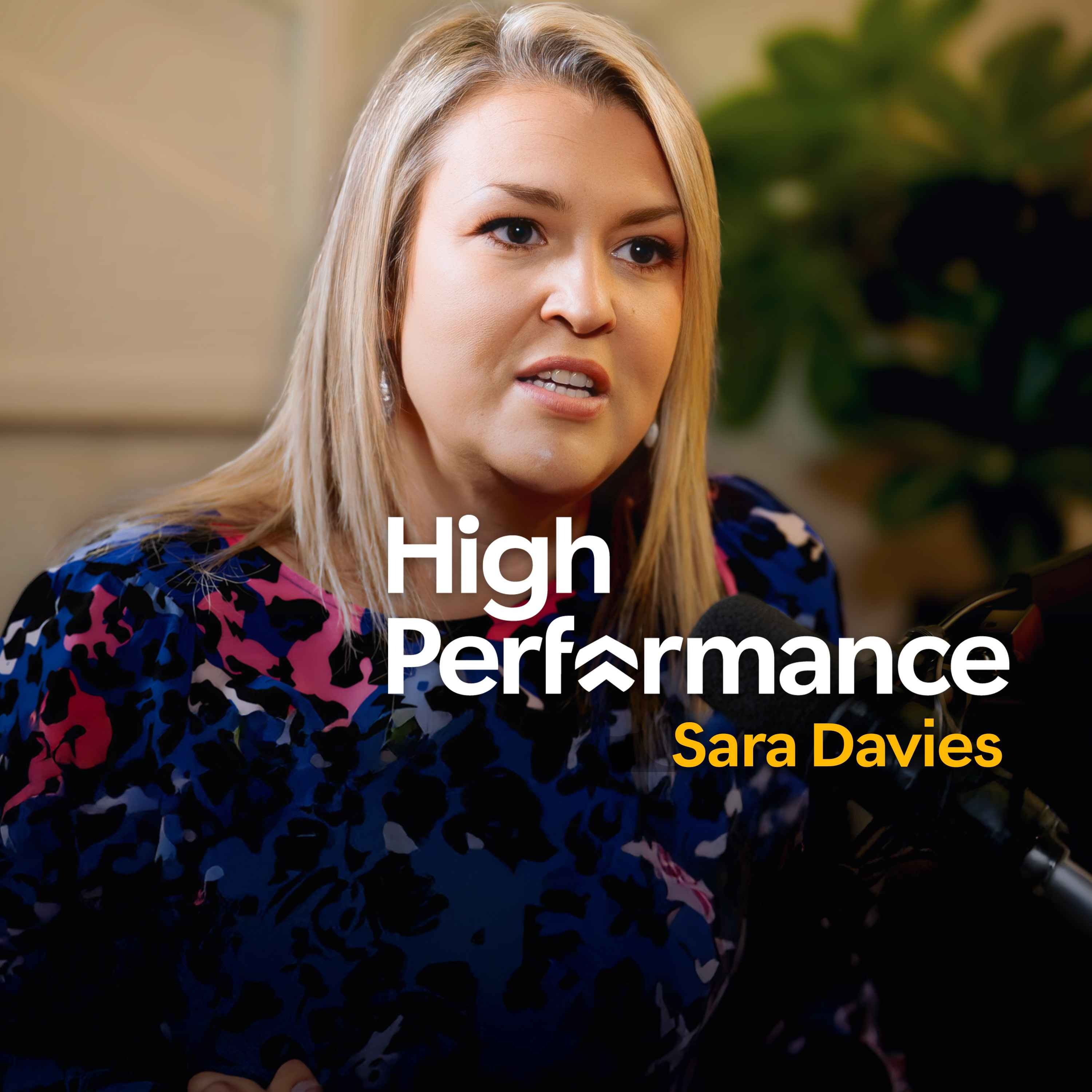
In this episode of The High Performance Podcast, hosts Jake Humphrey and Damian Hughes interview Sara Davies, an entrepreneur and TV personality known for founding Crafter's Companion. The discussion revolves around emotional intelligence in business, balancing work and family, and the journey of a female entrepreneur navigating challenges in the business world.
Written by AI. May contain mistakes.

Get the gist, explore an idea or ask about something said.
 Claude
On The High Performance Podcast, what are the key points of this episode?
Searching your listeningAutomatic transcript. May contain errors.
0:28Watch it early on the High Performance App. forward in your career, making the best that you can be, you need to own it. You need to be accountable and you need to have that drive to get there yourself.
0:39That was a voice right out of the dragon's den, Sarah Davies, who joins us today on High Performance. I'm Jay Comfrey and along with our expert, Damien Hughes, this is the show that explores the stories, ideas and mindsets behind some of the world's highest performers. And look, Sarah's story is nothing short of inspirational. She started a business while at university, worked her way up to becoming a multi-millionaire. When she joined Dragon's Den, she was the youngest ever dragon to join the cast. This is a really incredible story of someone who not only had the seed of a brilliant idea, but who actually planted it and then cultivated that idea into a large and successful business, which has now thrived for the last 20 years.
1:20It's a really fantastic conversation about how you go about breaking down barriers and learning to build the confidence you need to back yourself and then go for it. You can expect to hear Sarah share insights into the reality of what success actually takes because let's be honest it isn't for everyone. You're going to hear about the graft, the long hours, the mistakes and the thick skin that Sarah had to develop to conquer the business world. But you'll also hear about how she keeps humanity at the core of her work, how that's given her an edge and how she believes that you too can replicate her success as we welcome a dragon to High Performance in the best possible way, Sarah Davies.
2:02Sarah, welcome to High Performance. Why, thank you. I should say thank you for having me. It's quite an honour. Well, it's an honour to have you here. So, the show's called High Performance. Someone walks into the den, they're about to pitch to you. What does high performance look like from their perspective? So, I can tell within about three minutes of someone walking through them lift doors if I'm going to make them an offer. And I can tell because of the energy in the room. I just know from that person. And for a lot of them, that is the biggest moment of their life. And it's how well prepared they are.
2:36If they realise this is the biggest moment of my life and I'm really going to make the most of it. And they go all out, not just to impress, but to show us this is me and you would be lucky to be on my journey with me. And if they make me feel like that, and I know it's somebody that I feel like I can connect with and they're really going to relish all the advice I can give them, I think, yep, I'm in. And then, I mean, I don't tell them I'm in straight away, you know, I make them go through a lot of rounds of questioning and whatnot, but I've made the decision in my heart, do you know what, I'm in on this one.
3:06And I think it's unusual for people to know that soon. It's very interesting because energy is kind of this ethereal thing that you can't touch, you can't grab it, you can't really ask questions about it. It's just a sense that you get. So for people listening to this who are looking to sell, as we all are every day, every room we walk into, we're kind of selling ourselves. What would you tell people about energy, about how they should or shouldn't carry themselves in these situations? So to me, it's passion, it's drive and it's authenticity. And if I can see somebody who is so, is as excited to be in that room as I am and is relishing this opportunity and is so driven that I know they will stop at nothing to succeed, to me that it's worth me putting my time in.
3:50Because it's a little bit, it sounds a little bit crass. The money is not the difficult decision for me. Money is not my limiting factor. When I sit in the den, it's time. And what these people coming in wanting, they could get money from the bank. They could get money from other institutional investors. It's my time. Am I willing to invest my time into them? And if you can feel that from them, that you know what, they are going to hang on my every word. They're really going to want to learn from me. they're going to challenge me, you know, then I think, yeah, I'm for you. Tell us about a great pitch then.
4:22So you come in with the energy, but how do we then engage you? So I've spent a good part of 20 years now on Shop and Telly. And I think if you ever want to learn about storytelling, you just need to go and watch a bit of QVC. And I challenge you to watch QVC for an hour and not buy something. And that is our job, is to make you feel like your life is going to be better if you own whatever it is we're selling that day. And then I try and take that into my everyday life. So if you bring that into pitching, okay, everything starts with solving a problem. So if you walk through that lift door and you can tell me this is a problem in everyday life and this is how either my product or my service or I solve that problem.
5:03And if you really believe every word that's coming out of your mouth and I feel it, then I'm all in. Because that is, all I need to do then is to give you a platform for you to replicate that storytelling on a bigger level and we're on to an absolute winner. It's when people come in and they're fumbling and they're a little bit quiet and they're like, oh, well, yeah, my turnover last year was this and my profit was this. Great, we need to know your numbers, but I need to know that you really believe in what you're doing and you will stop at nothing to make it work. So how do you know the difference then between a bluffer and someone who's genuine?
5:35And I ask this question because I've got two kids and my son is quiet, but he's incredibly confident. and people always say, oh, your son's not very confident. And I'm like, no, you don't get him. He's so confident that he judges people. He's only nine. He sort of just wants to work people out before he gives everything. Yep. And I think we have to sometimes be careful, don't we, to go, the super confident person is the one that I invest in because they might just be a great blagger, a great bluffer. So how do we tell the difference? Or how do you tell the difference? I mean, I can sniff a bit of BS a mile off.
6:04I mean, it just reeks out of every part. BS radar is strong. Yeah. But I think it's a little bit like in everyday life. you know a lot of people when they meet me in real life after having watched me on dragon's den or just on tv in general they go oh you're just like i thought you were going to be and i think the biggest tool i have in my armory is i am always authentically me wherever you meet me whether if you bump into me in the shop you know if you watch me presenting morning like whatever it is you'll get the same version of me i don't turn something on or pretend to be something in the moment and I think that's a really big skill in someone, in having the confidence in yourself to be authentically you.
6:43And I wasn't always this way. You know, I would say when I was younger, especially when I was in my early 20s and I was starting out in business, I was nearly always the only woman in the room, the only young person in the room, the only person who sounded like this, had this delightful accent, which clearly to everybody else in the room assumed I wasn't as good as they were. And so I was constantly overcoming that and battling that. So every room I went into, I thought, who do I have to be to be good enough to be in this room? And I would just put that on. And it was, whether it was power dressing, whether it was trying to lose my accent a little bit and sound a bit posh, how I carried myself, but I was always trying to be somebody else to be good enough to be there.
7:24And it wasn't until I got probably into my 30s that I started thinking, do you know what? That room's bloody lucky to have me in it. And it's me. Sarah Davies is turning up into that room. And if I'm not good enough to be in that room, it's their loss. and I'm out of there. And I think having the confidence in your own ability to do that really gives that air of, I'm here and you've got me. And it's the same when I sit in the den, you know, I sat in the den in that first year, really suffering from a lot of imposter syndrome. I'd spent years and years imagining what it would be like to be on Dragon's Den, but I'd only ever let myself imagine what it would be like to walk through the lift doors and pitch.
7:59I'd never for one minute imagined I would be a dragon. And so to sit there as a dragon, And I kept thinking, oh my God, I'm so bloody lucky. I can't believe I'm sitting next to Deborah Mead and I'm like next to some of the greats of this, great business minds of this country. How lucky am I? And six years later, I sit in the den thinking, they're really lucky to have me, the BBC. I'm being a great dragon. I'm being true to myself. I know I'm a great mentor to the dozens of businesses that I've invested in. I know myself where I've added value to these businesses and I feel great about this. And I'm sitting here excited to offer some other lucky entrepreneurs the chance to work with me this year.
8:36And I feel great about that. So it's not about feeling lucky to be here. It's about, I earned this space and I'm going to really own that. What changed then? For people that are in the place of imposter syndrome and self-doubt, what would you tell them? So what I always say about imposter syndrome, right, is, and I talk a lot to people, a lot of my friends or whatever, when they're at work, and maybe their boss has given them a chance for a promotion. And they suffer from imposter syndrome and they don't think they're good enough. And I always say, him. You don't think you're good enough, but you're not the one making that decision.
9:07It's like me. When I went on Dragon's Den, I was like, oh my God, am I good enough to be a dragon? Do I deserve my place here? Well, that wasn't my call. The executive producer, she was the one who interviewed me, put me through rounds of screen tests, decided that she thought I was good enough. She was putting me forward to a panel of BBC commissioners. Those BBC commissioners, their job depends on choosing the right person. They selected me to do this. So who am I to question whether or not I'm good enough. I'm not qualified to decide who's good enough to be a dragon, but the people who are qualified to decide who's good enough decided that I was.
9:39So I just need to live up to their expectations and go and be the best version of myself and really own that. And it's the same for you at work. You know, if your boss has decided you're good enough for that promotion, how are you going to know if you're good enough or not? But they are qualified to know if you're good enough. So show them that they were right in believing in you and go and be what they believe you can be.
10:28That's U-P-W-O-R-K dot com. Post a job for free and get started today.
10:57the shoes that get you at prices that get your budget at DSW stores or DSW.com.
11:06This episode is brought to you by Opera Air, the first browser with mindfulness at its core. Now, most of us spend hours every day online, but how often do we pause to take care of ourselves whilst we're doing it? And that's where Opera Air comes in. It's a lightweight, fast, secure browser built not just for productivity, but for your well-being. With Opera Air, mindfulness is built right in. You'll find free breathing exercises, guided meditations and soundscapes with ambient sounds, lo-fi music and binaural beats, all designed to help you focus, relax and even spark creativity while you browse.
11:42But how did you avoid like not getting into compromises, maybe softening the accent or wearing the clothes that you think fit you in? Like what was it that stopped you doing that? So it was a really tight call, actually. So when I went through the process of, you know, applying to become a dragon and getting through the interview stages, it was at my final interview. So I had to go down, do a screen test with Tuga and they filmed it all. And I remember the exec producer calling me, I was on the train on the way down and she said, so we think you could be brilliant at Dragon's Den. The only thing is you're just a bit nice and it's Dragon's Den.
12:20and so if you could just show your teeth a bit more, be a little bit more dragon-y, right? And I really chewed on that because I thought, it's a job interview. I can go and be whatever I need to be. You know, it's a little bit like all them years in my 20s. I just put on whatever I had I needed to be in that room. I can do that. But the problem is, if I did that, then every day that I sit in that chair, I've got to be the version of me that I was in that interview. Otherwise, I'm not being fair to that executive producer. and so I made what I felt at the time was a really brave decision to go into that room and be unapologetically me.
12:55I am nice. Doesn't mean I'm not firm, doesn't mean I'm not fair, doesn't mean I'm not a great dragon, doesn't mean I can't show my teeth at times but I'm nice about it and I kind of have a bit of a reputation now for being the nice dragon as it was but I'm not the nice dragon who's weak or who's soft or who's compromised in any way, it's just that is my persona and I sit in that chair feeling like it's okay to be me because I was me in that interview and they still gave me the goddamn job. Even though they weren't sure they wanted me to be more dragony, I wasn't. I was just what I felt was right.
13:27And so now I feel, and I think that's given me the confidence in my everyday life to go there and just be me because it was me that was invited along to this, not some other version of me. I also think it's important because it's not only you being real, right? I think being nice is being more real about business. I'm the owner of a few different businesses and I can tell everyone that would like to hear it, being nasty has got me nowhere, being nice has got me everywhere. And that's actually one of my issues with business shows on the telly, whether it's, you know, Dragon's Den where successful people have got a pile of money and a desperate, keen wannabe is right there and you're going, I'm out.
14:04Or whether even worse for me, it's Alan Sugar, hugely rich and successful saying to some again desperate keen young person you're fired I think there is a message we need to to discuss or talk about which is um business isn't actually like that like you don't have to be a dragon to be successful in business you don't have to be yelling you're fired at some poor person who's doing their best to be successful and I wonder whether you think that there is room for a kinder conversation about business on television so are you familiar with the concept of radical candor tell me Kim Scott yes Kim Scott so it's it's a principle I follow in my everyday life and it's all it's a way of giving feedback right and I always think people only ever get better in this world if they are constantly in pursuit of feedback and you know constructive criticism to keep improving and a lot of my senior staff and the other entrepreneurs that I coach and it's all about giving them feedback to make them better Now, someone once said to me, Sarah, how do you give feedback?
15:05And I said, oh, I'm brilliant at it. Yep, yep. I use the shit sandwich method. But the problem I think I have is I deliver a wafer thin slice of ham in a big fat stutty bread when what was needed was a steak in a pitta, right? And it was a leadership coach, Kirsty, that gave me that. And she said, right, we're going to learn to deliver the steak and lose the pitta. And I was like, oh, I don't know about that, you know. And so she explained to me the concept of radical candor. and it's all about, when you give feedback, it's about caring humanly, really caring about somebody deeply, but being very direct in what you're doing.
15:40And I learned that, you know, if you, when you talk to people, if you flower it up, if you put a bit of, you know, if you put the pitta around the steak, it's just a load of waffly BS and people know the steak's coming. They're waiting for it, but they're having to fish through all of this other stuff that you're giving them that feels insincere to get to what is the crux of the feedback you're giving me. And the more that you give this fluff, the more insincere you feel and people don't trust you. So I've learned to strip back all of the fluff and all of the insincerity and just show people that I care about them so deeply.
16:21And as difficult as it is for me to give them this feedback, I'm doing it so that they can get better and progress in their career, in their job, in their business. And you build up that trust with somebody and you can give them that radical kind of feedback all the time. And I find that that is what is really, that is what's changed me from being a successful entrepreneur to a really successful entrepreneur is being that ability. And it took lots of coaching. You know, I had a fantastic leadership coach and she worked with me on this. And I don't like conflict. I find difficult conversations with people.
16:52I steer away from them at all costs. But if you're not giving them, if I'm their boss, and I'm not giving them the feedback to help them improve, that at some point our business is going to outgrow them. So what would you say to me if I was in your business and I wasn't awful, but I just wasn't what you wanted? How do you deliver the fact that I need to be better? So I need to make you, before I can even start and have the conversation with you about where you're not performing well enough, I need to make you understand that the reason I'm having this conversation is because I want you to succeed.
17:25I believe in you as a person. I really like you as a person. I want you to be on a great career trajectory and I want you to have a great future in my business. And as long as those aren't hollow words... And you'd say that to them? I would say that, but words are only so much, right? It's all about actions and it's all about, have you heard that principle whereby only 7 % of what someone hears are the actual physical words they say? You know, it's 53 % is the body language, 30-odd percent is the intonation. So every ounce of your being has to portray to them, I genuinely care about you, right?
17:59Once I can tell that you understand that the reason we're sitting in this room together is because I genuinely care about you and I want you to succeed, then I can start and deliver the difficult feedback. And actually, you will be more susceptible to it. And I always start with a little bit of a story. And I explain to people from a fable, and the one that Kirsty, the leadership coach, explained to me is she talked about somebody who who worked at Google, right? And it was quite a high-powered woman in this job and she had a young lad start and work for her. And he was so keen and he was the only breadwinner in the family, had two young children to support.
18:36He'd got this job, it was a really big opportunity for him and he would do anything and work all the hours, right? But he wasn't quite performing at the level she needed him to. But because he was so nice, she didn't want to upset him or hurt his feelings by saying anything to him. so she thought she was doing the right thing whereby every time he'd written a report it wasn't quite good enough she'd tweak it so that by the time it went to her boss it was perfect so she was constantly making up for his shortfalls well people aren't stupid you know her boss quickly cottoned on to that and so her boss says to her well he's not performing well enough you need to get him up to scratch but because she's frightened to have the difficult conversation because she loves him so dearly she constantly just keeps making up for him now as a manager I can tell you I don't want her doing that.
19:20It's a waste of her time. The whole point is I need her to be a good leader. I need her to develop people below her, not work harder to make up for their incompetencies. That's not a skill that is desirable in any business. So eventually what happened? The boss sailed in and made that young lad lose his job. And so the woman who loved him and was trying to protect him all this time, actually because of her inability to give him that feedback, it was her fault he'd lost his job. And I just think that is what I explained to my leaders in the business to my managers is it is your job to develop these people not to make up for them not to cover their incompetencies and if you can't develop them as people you aren't going to move on in your career either and everyone's being let down and I think as soon as you can explain and give examples like this and show people they understand that you care about them and then they are receptive to the difficult feedback you have to give them.
20:12I think that's so powerful because for people listening to this who work in business you get this image that you've got someone like you and then below you is one of the leaders and there might be 20 people below them but if that leader isn't delivering the feedback or improving them it's almost like a a blocker a blocker so no one below that leader is improving is developing is growing therefore the entire business isn't developing and isn't growing and also you you therefore it's your fault if you aren't performing as a leader you are letting the business down but you think you're doing the right thing but you are letting you're letting people down and that's the really difficult part about it really good can you give us an example from your crafters companion business though because you started that at university you and you were a little band of volunteers and yet you've grown the business to be incredibly successful so you've obviously delivered feedback to help people develop can you give us a specific example where you've used this radical candor approach yeah so i can tell you when i first started the business what i was really good at is employing doers.
21:13So I'd do the thinking and I had my best friend's mum worked for us, one of my other best friend's little sisters, a girl I'd worked with when I was younger, she came. So they were all friends and they believed in where I was going and I would have a million and one ideas and they'd just, I'd run off at a pace of knots, leaving a massive trail of destruction behind me and they'd run along behind us with their sweeten brushes trying to make it all work. And because I was so energised and excited about where we were going, I could bring them along on that journey, right? But that only lasted so long, right?
21:48That was brilliant for the first kind of year, 18 months, and I could run it on that hype and that excitement. But eventually, that's exhausting for people. And I remember it was Sharon that worked for me, this girl, and she's been with me now 19 years. And she sat me down, it was her first year's review, and she was a little bit prickly. And when I got to the nub of what the problem was is, there was no structure. There was no, she couldn't see where she fit into the business, where she was going, what her career trajectory looked like, all of this. She was bought into the vision of Sarah and where I wanted to go and being a part of that.
22:25But that would only get us so far. She needed to feel like there was this structure. And I was only 21 year old and nobody had ever taught me how to do that and how to build that into a business. And I remember thinking, shit, I'm going to run out of goodwill. You know, people are only going to give me it so long. I need to be what they need. And I hadn't spent time worrying. I just kept thinking if I treat them great and I'm a lovely boss and they're excited about this, they'll just keep coming. But that's not enough to get you there. And I'd like to think I'm a great entrepreneur. I'm a great ideas woman.
22:57I'm terrible in the detail. And the problem I had is I would never, that business was my baby. I would never have handed that over to somebody else because it would never matter as much they would never care like I cared about that business and it was about two years in turned over a couple of million I had about a dozen staff and we were going through a massive legal battle at the time and it was the most draining stressful thing we were defending one of our patents and I mean I was 23 year old I didn't know about patent law I didn't understand anything that was going on I used to come home every night having been in London in court or whatever and cry myself to sleep because I just had no idea I could potentially lose the whole business if I got this wrong.
23:36And I remember at that time, my husband came home from work one day and he just said, I've handed my notice in at work today and I'm on a three-month notice. And so I'll start the business on the 1st of March. I've worked out there's enough money in the bank accounts. We can pay our mortgage off. And if you and I take 10 grand a year salary, that's enough to kind of keep us if we don't have a mortgage. And I'll run the business and you do your thing. and I just felt like this huge weight had been lifted. It's quite emotional when you say it. I'm like, wow, that's a genuine marriage right there.
24:08And what was incredible for me is we're like chalk and cheese, me and Simon. He is the complete... We're not even in different pages of the book. We're in different goddamn libraries, me and Simon. And he thrived on being in corporate. You know, he was really climbing the ladder in his corporate career. He was really well thought of at work and everything like that. but he realised that I couldn't do this and if I kept going like this I was going to over trade and implode it's where a lot of businesses you know you don't I wasn't going to run out of money I wasn't going to run out of energy I would have over traded and imploded because I didn't have the skills to do the running of the business he had those skills but he's not wired to be an entrepreneur you know he was used to running multi-billion pound budgets for this massive company and going to work in a suit and tie every day and all of a sudden And he started coming to work in his tracksuit and unloading containers because that's where we were at and that's what we had to do.
24:59And I would never, ever have asked him to give up his career and his dream so that I could have mine. But he was looking forward and thinking, she's on to something here. This has got huge potential for our family, even though we hadn't had any kids yet. I think he was looking forward and thinking this could be our security. So it's the right thing to do. So it's not about what I'm going to enjoy the most in my career. It's about what's going to be right for our family. and so he kind of made that sacrifice there and then and I remember looking for the first couple of years and I could tell, I knew that he wasn't loving it but he was still getting up and doing it every day anyway wasn't loving it like he was loving his old corporate job but he would never ever say that to me and so, and we've been together since I was 15 so I can kind of read him well and I remember just thinking you've given up your career for me to live my dream so I'm going to make this business big enough that you are going to love running it like you loved your job.
25:52And that was what drove me in all them early years is I wanted the business to be bigger because I wanted it to be good enough to justify him running it because then I could give him what he'd given me. And I think that's partnership, isn't it? And how does it feel now reflecting on that? Do you know, it's quite moving. It's really moving and really emotional. And it's, well, you know, when it's the person that you love and you kind of do this together, and it's hard because the last few years as well, my career has really taken off in a TV capacity and I've got a big public persona now. And he's the one that nobody ever knows about.
26:28That's the guy in the background. And he was the one, you know, when I went off to do Strictly, that was three months I essentially had to take off work. And I was trying to juggle everything. I've got my investment portfolio to juggle. I've got the TV commitments I've got. I'm juggling. There's the business, which by this point was a 35 million pound business with 250 staff globally. There's our house because we had two young kids at the time and he's me going off you know with my arms wrapped around a sexy Slovenian guy 10 hours a day and he's having to run around and pick up the pieces not only in our house with the kids but at work with the business he's picking up the pieces in my investment portfolio just doing it all with a smile on his face just grabbing on what would you say to him if he tunes into this episode oh he's never going to tune in he's the one alright that's great that's even better he is the one who will likes to keep my feet on the ground I'll tell you a little story about Simon and so they asked me a few years ago to deliver a BAFTA.
27:23They asked me to come along, not only to come to the BAFTAs, but to give somebody a BAFTA on stage and then to sit at the table with the president of BAFTA for my dinner. And I was like, and they were like, we want you and your husband to come along. And I rang Simon, I was like, oh my God, Simon, we've been invited to the BAFTAs. It'd be my first time on a red carpet. He says, well, I'm not going. And I said, well, but it's the BAFTAs. He said, I wouldn't watch it on the telly, so why should I go down with my life? You know, and he saw that and I tried to persuade him to do it. I said, but we'll be on the red carpet.
27:56And he said, that's your life, sweetheart, not mine. You know, he is absolutely the one who will just keep my feet on the ground. You know, I'll have a text when I've come out of here. Not, how did your podcast go? It's, what's for tea? Have you got it sorted? You know, he is really the feet on the ground type of person. Love that. And I think that is what's kept me real all these years. You know, very quickly, I was hosting the FA Cup final once and we were literally minutes before we went on air and my phone buzz I thought that would be my wife telling me good luck have a great FA Cup final probably yeah literally this message she goes who ate all the pond bears not helpful exclamation mark that was it I showed it to all the lads I was like that's but it's exactly the same thing it reminds you who cares you know these football clubs playing in the FA Cup final or your sort of job on the table this is real life keeping it real which we're talking about I think that's real and I think that's what that's what really helps we have a human connection with people because I am just the normal person dealing with, you know, I'm rushing out of here now because I'm determined to make my 12 o 'clock train because I want to be there to pick the kids up from school because I wasn't there to take them this morning.
29:00And it's just, it's that constant juggle of, yes, you've got this really high powered, exciting career, but at the same time, you just want to be a great wife and a great man. There's two things I want to pick up on, sorry, if you don't mind. One is, I like the fact that you make corporate language accessible. You know, like you don't talk about being an entrepreneur. You say you just run a business. And another line that you've spoken about is your emotional intelligence is a distinguishing factor of you. And I'd like you to explain in the pragmatic language that you explain businesses, what is emotional intelligence and why has it been such a key part of your success?
29:38Oh, that's a brilliant one. And, you know, EQ or emotional intelligence, I didn't understand what it was. I really didn't. And it was my sister called me one day. So my brother-in-law worked for Balfour Beatty and he'd been selected to go on a big leadership course where they only have eight kids in the country get selected for this leadership programme. And he was one of them people that thought, you know, courses at work and all this load of BS. You know, I haven't got time for this. I just need to crack on and do my job. And he'd been sent on this course for the day and he came home that night and was raving so much about the woman that had ran this course and what he'd taken away from it, to the point whereby my sister rang me and she said, I just, there's something in me tells me you need to speak to this woman.
30:22I think she's going to really help you and understand what you do. So I rang her, not even knowing what I was asking of her, but just said, really, my brother-in-law's been on one of your courses and I think you might be able to help me. And I'm quite good at this. I'm quite good at picking little people up in my life. if somebody says, do you know what? I think so-and-so would be a really great person. I'll just pick up the phone. I want to talk to them. And then you tell me how you can add value in my life. And you know, that was 10 years ago now. And Kirsty's been my leadership coach ever since.
30:51And at the point at which she came into my life when my sister recommended it, we were going through a really difficult stage in the business whereby the business was going through this massive period of growth. And I'd convinced myself that I wasn't good enough to run it because I hadn't been there and done that and got the t-shirt. so I was trying to hire big expensive people to come in who'd been there and done that in other businesses and paying them to take my business to the next level and in doing so they were kind of telling me well this is great that you do this Sarah but you're undermining people doing this and you know we need you less accessible to the staff and so for me to do my job you need to kind of get the hell out of my way and so I was doing what they said and in doing so I could feel the the heart of the business just beating slower and slower.
31:37And I can look back on it now retrospectively and realise that I was the beating heart of that business and I was what made that work. But I felt like, do you know what? Yes, I got a degree in management, but I only know so much and I haven't had the experience that other people have had. And what Kirsty did is she did loads of work with me. And anytime I was struggling in a situation, I wanted to know the theory. I wanted to know what was the business model and the theory that someone, like Radical Candor, that somebody's written that explains something. And how she used to approach it is, I would talk to her about the challenge I was having with a member of staff or whatever.
32:15She'd then explain to me the theory behind what I should do and why I should do it. But then she'd point out that what I was doing was actually the same outcome as what the theory tells me I should do, even though I didn't know the theory. So what she did over the course of four or five years is show to me that what my gut says is the right thing to do, is the right thing to do, even though I haven't learned all of the theories. And it gave me that confidence to understand that it is people are everything. People are absolutely everything and caring about your people and putting the people, whether it's your customers or whether it's your staff at the heart of anything you're working around it.
32:51If you genuinely care, you will find the right outcome and the right answer. and that's emotional intelligence. It's really understanding. And in so many businesses, I see corporate people at the top, just massive egos, pursuing their own agenda, you know, maybe going against the ethos of the company, but because it's going to help them in their career and just not doing the right thing. And I always try and instill in my staff, if you just do the right thing, if at any point you don't know what's right, what's wrong, whatever, just sit there and think, what is the right thing to do for our customers, for my staff, for the other people in this business, I will never, ever challenge you for doing that.
33:31You know, if you do it, it's the wrong thing. You've done it with the right intention. And it's harder because the bigger we've got, the more egos we end up hiring into the business. And it might seem like they're acting in the right way at the time, but then, you know, things start to run away with them. And sometimes I can say, that's not you acting in the interest of the company, that's you acting in the interest of your ego. And that's the point at which it becomes really difficult. And I mean, everyone's got an ego. I'm not going to sit here and tell you I haven't got an ego because I'd be lying, right?
34:00It's about being able to keep your ego in check and do the right thing at the right time. And I think that's emotional intelligence. And so few people understand it, but you'll know it. I can sit in a room with somebody and think you're an absolute. You've got as much emotional intelligence in your body as I've got in my little finger, but that's why I'll get where I'm going and you won't ever get where you want to go. Because I'm sure there are people that are still cynical about emotional intelligence because they look at business as this kind of hard-nosed, got to be aggressive, got to be the winner.
34:30What does emotional intelligence actually do? You've just said that someone with a small amount will lose, someone with a large amount like you will win. Why will you win with emotional intelligence in life as well as business? So I believe, and different people have different beliefs, okay, But if I just think of the companies I'm involved with and the companies that I've run or whatever, my staff would do anything for me. They would literally walk over hot calls and do absolutely. And they give me, if I think back to during the pandemic, you know, people are going through such difficult times in their lives and they're giving me every ounce of their being.
35:08Even though I can't guarantee that I'm going to get the company through this. I'm trying my damnedest, but I can't guarantee that. and I just think they did that for me because of the human connection I have with them. If I'm just a big corporate and I've seen it, you know, people don't give a shit. They feel like the company doesn't give a shit about them so why should they give a shit about the company? So they'll do the bare minimum to get through, right? That is never going to drive your company to the next level and it might be different once you get to big corporates but I think this is why I enjoy smaller business.
35:40You know, I love, if I think back to the time when I loved my business the most, it was probably when we were sub 100 staff and I still knew every one of them staff members' names. I'd been involved in their recruitment. I knew if their little boy had a football tournament that weekend, I would ask them on the Monday morning how he got on. And it's caring on that deep level. The bigger you get, and you become more removed from the staff because you have to put people in and you have to put a CEO, you have to put other leaders in there. and the really difficult part is is embedding the culture in the business and people always talk about you know culture and you've got to build culture in but it's about values for me and I think where again Kirsty really helped me understand is we worked on what are my personal values and then what are the values that are driving the business and because they were all one in the same thing that's what I realized these people are following me they're working hard for me but I need them, I need them to follow the business and work hard for the business.
36:43It's not just about, it can't just be about me. And that was the really difficult thing when the business got so big that it wasn't based around me. You know, yes, it was based around me as the figurehead of the business, but I'm not in the business every day. I'm not the one leading the people and driving the people. Trying to find the right people to do that is bloody impossible. So what were your personal values? So I'll tell you what's a really interesting one. I'm big on family. And people talk a lot about family and family and business. And the business isn't your family. You know, your family have to like you or they have to spend time with you irrespective of what's going on in the rest of the world, right?
37:25These people come to work because you pay them. It is a transactional relationship, right? and as long as you can make sure that they are happy at work and they feel like they're going somewhere and it's structured and they've been looked after and they're giving a lot to the company but the company's giving a lot back that will continue to be successful but you can't have those people just be there because they feel like family and I remember once I had a girl worked for me and she was I think she was employee number four or something and when we were a small company she was in love with the company was brilliant you know we were a bit of a jack of all trades we did everything.
38:01She used to go to trade shows with me and she'd bunk in top and toe in the bed because I could only afford a single room and you know, and she worked like that. And as the business got bigger and we became, dare I say, a little bit more corporate, I could see that just in her general life, this wasn't, it's not what she signed up for. This is not the sort of environment in which she flourishes. But because she loved me and she was connected with her business, she kept sticking it out. And I remember eventually one day, and it was about 10, 12 years in, she came into my office and she said, I'm really sorry, Sarah, but I handed my notice into my boss today and I just wanted to tell you personally and I'm going to leave.
38:37And I cried and she was like, oh my God, I knew you'd cry. I'm so sad. I said, I'm just so relieved and I'm so happy for you. And she was like, what? I said, I'm so pleased. She said, oh, I thought you'd be devastated that I'm leaving. I said, I am. The company, you're going to be a huge loss to the company. I said, but this company isn't right for you anymore. I watch you sitting at your desk and you're not thriving like the Meg I saw 10 years ago used to thrive and I can see it's not bringing you happiness. I said and so I'm so happy that you're going to move on to a business where you can, you will feel that again and she said oh why didn't you tell me?
39:18If you told me this a couple of years ago I would have left a couple of, she was only staying there because she didn't want want to let me down. And I said to her, how would you have felt if I pulled you into my office and said, I think you should leave? How would you have felt? You wouldn't have felt like Sarah's got my best interest. You would have thought that I didn't think you were good enough to be in this. But I said, you are good enough, Meg. I'd take 10 of you tomorrow, but I can see it's not making you happy. I said, this has got to work for you and work for me. And it's not working for both anymore.
39:45Therefore, I want you to go off with all my best wishes. And if I can ever help you in future in your career. I'm right there. And actually, she didn't leave to go to another business. She left and set up her own small business using the skills that she'd learned working with me for all those years. And now I refer a lot of my Dragon's Den businesses to her to do some work with them. And she's thriving again. But it's so difficult to know that and have them conversations with people. If you're still overpaying for wireless, it's time to say yes to saying no. At Mint Mobile, their favourite word is no.
40:16No contracts, No monthly bills, no overages, no hidden fees, no BS. I made the switch because I was tired of those ridiculous bills and sneaky charges from my old provider. With Mint, I'm paying$15 a month and getting the same high-speed data, unlimited talk and text, and the coverage on the nation's largest 5G network. Honestly, the quality is just as good, if not better, than what I had before. And the best part? You don't need a new phone. You can keep your current one, bring your number, and all your contacts. I use Mint Mobile, and you should too. Ready to say yes to saying no? Make the switch at mintmobile.com slash HPP.
40:52That's mintmobile.com slash HPP. Upfront payment of$45 required, equivalent to$15 a month. Limited time new customer offer for first three months only. Speeds may slow up a 35 gig on unlimited plan. Taxes and fees extra. See Mint Mobile for details. The market's uncertain. Revenue's tied and hiring on hold. That's why results-driven companies are using Upwork to keep work moving. Go to Upwork.com today and start hiring proven freelance talent fast. No bulky overhead. No rigid long-term contracts. Just the right expert right when you need them. Work smarter and faster with Upwork. Go to Upwork.com now and find your freelance expert.
41:32That's U-P-W-O-R-K.com. Post a job for free and get started today. Ah, DSW, birthplace of the humble brag. Here, the shoes are so good, no one would ever know how little you paid. If you didn't go telling everyone that is. And with never-ending options for every style, mood, and occasion, all at really great prices, we'll definitely give you something to brag about. So go ahead, stock up on fresh sneakers from your favorite brands. Or try those boots you always secretly knew you could pull off. Find the shoes that get you at prices that get your budget at DSW stores or DSW.com.
42:13I love the emotional conversation that we're having about emotional intelligence and understanding people leaning into people but we can't talk to you without talking about hard work whether we go right back to the start of the story where you're the person loading the van doing the grafting or whether it's the hard work you put in today so let's have a really honest conversation with people about hard work what it looks like and why you can't be successful without it so it's interesting because when I had the kids I am certainly my first son coming up 11 years ago now I remember going and going off to all the mum and baby groups and you know chatting to all the other people and whatnot and when people knew that I ran my own business they would be like oh my god you're so lucky that's so great you know you when you go back to work you'll be able to pick and choose your hours and do the school room when you want you're so lucky I think I might start my own business.
43:06And I'd sit there thinking, you've got no flaming idea. You are, you know, and I think it's, I always say running your own business, it's not a career choice. It's a way of life. And I knew what that looked like because I'd seen my parents do it. You know, so I grew up in that entrepreneurial environment whereby my mum and dad had a wallpaper and paint shop in our village. And it wouldn't be unusual for us to have a decorator banging on our door at 10 o 'clock at night because they were going on a job at six o 'clock the next morning. They needed a tin of paint mixing. And my mom would just get up, put a dressing gown on, go and open the shop up, mix in the tin of paint.
43:42Like you'd never get that if you went to B &Q, you know, but it's, and she would just do it with a smile on her face because that's what we did. We did anything to make that business successful. And it's like now, you know, it's a little bit like Insta versus reality. People see the really shiny, lovely side of, oh, you run your own business and you, you know you call the shots and everything but they don't see the insane sacrifices that you make which are so so for me i can remember especially when i when i had the kids and i was younger when when the kids were younger and i had to go away i had to you know especially i used to go to america every three weeks and i used to take the six o 'clock flight on a sunday morning and i used to fly out and i used to do a really big tv show on the shopping tv that we used to work with and I used to have to work all the way on the flight out there prepping, do 36 hours in studio, have about six hours sleep, get on the plane, you know, try and sleep on the way home, land back, nine o 'clock Thursday morning straight into the office.
44:39And I just had to do, I had to fit that into my life. That's what the business needed. And I remember my dad saying to us, he was like, kid, this is too much. You can't keep going on living this life. You're going to burn out. You're missing too much of the kids' childhood. Something's got to give. but for me it was it wasn't the money I wanted it was I wanted to be the best at what I did I was chasing success growth success wanted to be the best at what I did all those things is what drove me to want to do more and more and more all the time but the more you want to achieve the harder you have to work at it which means you've got to make those sacrifices and it's really difficult because now I'm a little bit further on in that journey and the kids are a little bit older and I feel like they need me more and it's difficult because when they were little, they would cry when I was leaving, but they were just crying.
45:30Now, my 10-year-old, I have to justify where I'm going and why I'm doing it. You know, and he'll say to me... Quite right, though. He's right. And he'll say, do you really need to do that, mummy? Sometimes he says to me, how much are they paying you to do that, mummy? And I'm like, well, they're not, son. It's not about them. Well, why are you doing it? Is that more important than being here for me and Charlie? It's a wise, Zara. My God. It's hard, but it makes you reflect and think differently. And the one thing that I've always, I think the one trick that gets me through and makes it work for me is I'm all about being present, right?
46:06I'm not there for my kids as much as other parents are. You know, in terms of physical hours with them, I don't spend as many physical hours with my kids as some other parents do. So what I do is make the hours that I am there count. You know, so I don't like to be that parent that is, you know, on the side of the football pitch, but I'm on my emails catching up. If I'm there watching that football match, I am there watching every kick and shouting for everybody and they can see that I am and I really care. So when I'm with them, they're getting 100 % of me. But then when I'm away from them, I don't let myself feel guilty about the fact that I'm not there.
46:42I focus on the fact of, right, I've committed to be in London today recording that podcast. I'm really going to, I'm going to give it my all and I'm going to enjoy that. And I'm going to take a lot from doing that, not worry about what I'm not doing. And I think mum guilt is something that so many women suffer from. And I just say, there is no place in this life for mum guilt. It's not going to get you anywhere. I missed sports day last year. Nothing I could do about it. I wasn't there. And instead of clinging on to the fact that I missed sports day and what a bloody terrible mother I am, because I wasn't there, I made the school nativity.
47:14So I'm chuffed to bits. Yeah, I did really well, made the school nativity focus on what I did do not what I didn't do because making myself feel shit not gonna get me anywhere in this life and I think it's all about just being present and focusing on what you are achieving not what you're not but tell us about that self-talk then that you obviously engage in that because there's part of our brain would naturally go you're a shit mom Sarah but actually you're learning to have a different conversation with yourself and there's lots of our our viewers that are also interested in how they change that narrative yeah there's only you can control that.
47:48And I say now, you know, it's a difficult time at the moment. You know, it's a difficult economy. It's a difficult job market. And I have a lot of friends that are struggling. And when I talk to them and I try and kind of, I suppose, coach them through it, there's two types of people out there. There's the ones who really want to get on and do something about it and have a positive mindset. I can work with them people all day long. And then it's the ones who have victim mentality and just feel sorry for themselves. They've been dealt a shithand and they feel terrible about it. And I haven't got time for those people.
48:22It's hard and I feel like a terrible friend, but I can't help them. If they're not willing to help themselves, then I certainly can't help them. And sometimes it's that whole grief curve and maybe they're just at the bottom of the grief curve and I need to wait till they're in a different stage and then I can pick them up and help them. And all that you find is the more time I spend trying to help the people who aren't trying to help themselves, it drains my cup. And I am a cup over floath type of person, right? That's what's great about me. But that cup needs to fill up. And like I can tell you, I've enjoyed so much chatting to you two.
48:57I'll go skipping out of that door, my cup will be overflowing, right? I've had conversations where I've gone where it's been difficult and I'll walk out feeling absolutely drained because they've pulled every ounce of my being out there. and I think you've got to surround yourself with people who are going to take from you but also give to you at the same time and it's always, I talk about energy exchange and I can remember a few years ago, it was just after I did Strictly, I became really good friends with Adam Peaty and we went for a walk on the moose, about eight hours one day and we talked about everything.
49:29You know, we'd both been struggling after we'd come out Strictly and the emotional thing with that. Obviously him with his competing, I was going through challenges with my business And so we talked a lot and we got to the end of our eight hour walk on the mountain. He gave us this massive hug and he said, thank you so much. I've taken so much away from today. I'm so grateful for you giving me the time. And I said, no, mate, it's me that's thanking you for everything you've given me today. And he said, don't be silly. I've not given you anything. I've just, I've take, take, take. And I think when both people walk away from a conversation feeling like they've taken more than what they've given and their cup is fuller or their batteries more charged than it was when they went into it, those are the most successful partnerships and relationships.
50:10And I'm always telling people, go in pursuit of those people who you can have that energy exchange with and who will fill your cup up, but who will take from you in a really positive way. Because I get so much, it's like corporate speaking. You know, I was speaking at the British Library last night to 120 startup businesses. and I can see those people were hanging on my every word and took so much away from all the business advice I gave. But in knowing that I had had an impact on them 120 people's lives, I skipped out of there feeling like I'd really done my bit for the British economy and I felt so good about myself.
50:44They'd filled up my cup whilst I'd been filling their cup up and that's the sort of stuff you need. And you've got to avoid those energy drains or energy vampires as people reference them. I'm loving the honesty with this conversation, right? but I think when we are having an honest conversation, it does need to be honest. And you very briefly said there, me and Adam were together because we both struggled a bit after Strictly. And the public will look and go, what you did, a bit of dancing on Saturday night telly, wonderful, what a great way to earn a few quid and raise your profile and enjoy life.
51:14So would you mind telling us the truth about the struggles after Strictly? Yeah, I really struggled. And I struggled to understand why I was struggling. So I went, I did nine weeks in the show. and Adam was out the week before me actually and so we both kind of experienced that similar thing and I can remember at the time I met somebody, Dr. Ranj he'd been on the show a couple of years before me and he just looked at me I think it was the Tuesday night after I'd been eliminated and he said, how are you? I said, I'm not good mate I'm just crying uncontrollably and he said, yeah, it's shit isn't it?
51:51He said, the best way I can describe it is it's like being on this massive party bus and you're having the time of your life driving along the motorway at 100 miles an hour with all your mates, then all of a sudden someone slams on the handbrake, chucks you out, leaves you on the side of the kerb and carries on. And you watch that bus pull off in the distance with all your friends on it still, while you sit on the side of the kerb. And it was exactly that. And what I really struggled with is, I mean, I'd lost a really close friend to cancer just the year before. And I remember thinking, I didn't cry this much when Julie died.
52:23Like, it's a bloody dance competition. Why am I crying? Why am I sad? Why am I crying? Nobody's died. How am I this upset? But I think the best way to describe it is you get so, you go into this like almost alternative universe and you're living this different life and it's a fantastic life. Doesn't mean that my old life wasn't great. I have had a fantastic life. But I was in this surreal second universe and it came to an end abruptly, I was never going to make the final. I wasn't a good enough dancer. You know, I set myself the target of getting to halfway and I got past halfway. So I was probably on borrowed time.
53:03But it doesn't mean that I then mourned not having that because all of your other friends are still having that a little bit. And also it's quite a, it's a big life-changing thing. I think that's what Adam struggled with as well. It's a really life-changing moment. And what way do you mean by that? So for me, the biggest thing I learned, so I don't know if you remember, but when I was in Strictly, week one, I was bottom of the leaderboard and I was Bucky's favourite to be out first, right? And that was really difficult because I knew I didn't, this was the biggest opportunity in my life. I was so excited about it.
53:37And I went into that show and we did the dress run on the first day and I watched everybody else, 15 contestants. and I kind of weighed up my competition and I thought there's about half of you who are definitely better than me and the other half of you I can give you a damn good run for your money so if I work really hard I might make it to halfway that's what that is halfway to me it's like winning to other people that's what I'm going to set my targets on right and so I focused so much on me cha-cha-cha the first week getting my lockstep perfect putting my hip out on the New Yorker like all the technical stuff.
54:11And then I went onto the show and I did it. I was fourth to dance and I got really crappy scores off the judges, but I'd watched other people's cha-cha-chas when I thought, yeah, but I did that New Yorker better than you. And I had straighter legs than you. So I know technically I, I know I'm better. So you're probably going to score worse than me. And they bloody didn't. They all got more scores. And I didn't understand that because that didn't seem fair. I was like, well, but my dancing was better. And I know, because I've studied this now for two weeks. I know that dancing was better. And I watched the show back that weekend and I realised what they did, which I didn't, is they gave all of themselves to that process.
54:47They went out there on the dance floor on the Saturday night, all their inhibitions were gone and they just gave themselves. And I didn't. I'm a businesswoman. I have walls built around here like this and nobody, you know, I don't do showy off stuff and it's not me. You know, so those walls were up. So I was focusing on being a good dancer, but with the walls up. And the public don't want to see that. You know, they want to see a bit of vulnerability. They want to see you giving yourself over to it. And I remember thinking, this is the biggest opportunity in my life, and I'm probably going to screw it over, and I'm going to be out in week two, and I'll be devastated, right?
55:19However, week two was a ballroom dance. So whereas the first week was Latin, and Latin's all about showing off, right? The ballroom is about being elegant and being technically perfect. and I worked so damn hard at it. You know, I remember it was all about, it was foxtrot driving through your standing leg, all that, you know, and I worked on the technique and I perfected, perfected, perfected. And I came out on that Saturday night and I made strictly history. I was the only person to double my scores from week one to week two and I went from the very bottom of the leaderboard to the very top of the leaderboard in week two.
55:50And it just gave me that whole understanding of, okay, I've got to go back to Latin next week and actually I'm going to go back to being shit and I'm going to go back to being at the bottom of the leaderboard unless I can break those walls down and show a bit of vulnerability. And how did you do that? So they hired an acting coach to come in. So my V team week three is I hired this guy. They hired this guy called Daniel, put me on a stage up in Stockton and made me stand on this stage and do acting things. Now, you've got to remember most people who've got to be on Strictly have probably been through stage school, either because they're in a band or they're in a TV show or whatever.
56:27I haven't. I'm a businesswoman. We don't learn how to do this stuff, right? And I remember Aliash was sitting in the audience in the middle of this theatre and I was on the stage and this Daniel's making us do all this stupid stuff or whatever, right? And after about an hour, I could feel my emotions were bubbling up a little bit. And so as I do, I was just suppressing them, you know, because there was no place for emotion on here. This was a dance competition. It's all about technique, right? And he sensed it in me and he kept pushing me, pushing me, pushing me. and so I kept suppressing, suppressing, suppressing and eventually he said to us I can be here all day if we need to, you know I'm not going until those emotions come out and I stood there and I thought he needs me to cry on this stage he's going to keep pushing me until I start crying I don't cry in front of anybody I don't cry in front of my husband and I certainly wasn't going to stand on the stage and cry in front of Aliash, no chance and then he's telling me you're not going until we've done it and he's not telling me turn on the waterworks he's like I'm going to keep pushing you and the more you suppress, the more I'm going to push.
57:27So until you give yourself over to this process, we ain't going home. And I remember having to do it and he broke us, you know, and I stood on that stage and I cried, Ian, it broke Aliash. It just killed him. And I remember he kind of like, once he got me to do that, he pulled me off stage. He said, right, come on, we'll go back to the train room. And he got me into the car and he was like, partner, I'm so sorry. I'm so sorry they did that to you. You know, he didn't, he could sense that that's not me, but it needed to happen. I needed to learn how to break that down and let the emotion come out.
57:56And I needed to kind of let those brick walls down a little bit. And I think that's what Strictly taught me. It taught me to be vulnerable in front of other people when I'd never, ever allowed myself to do that. And I think it's really helped me in my everyday life, but learning how to control it. Still don't cry in front of other people. Right. You know. Why not? I think it's a lot of the people, so within my business, right, those people look up to me. even when times are tough they need to believe that I've got my shit together and I've got this and if I'm worried that if I show some weakness they're going to panic and think crap she hasn't got it well what we're going to do the world's going to fall in and so I still kind of hold to that of I've got to do this but I remember at the end of Strictly I remember when I went and did my my takes two interview I was overcome with emotion and I remember ending up right Rylan got me crying in the studio, on national telly.
58:50But I wasn't annoyed with myself because I just thought, do you know what? I'm only human and this has got to me and it's broken me. And it's probably all right for people to see that because it's not a weakness in business. It's not a weakness in life. It's a human response. I also think it plays into so much of your story, which is about being a lifelong learner, constantly developing, constantly growing. So before we move on to our quickfire questions to wrap up so you can get that train to get home to your kids, which is very important. I'd love to get some advice from you for our audience about being a lifelong learner, how we can live with that mindset, but crucially, why that has been such an important calling card for the life that you've lived.
59:31This is going to sound big-headed, but I'm not trying to say it. I am the best in the world at selling craft products on the telly, right? And that's not my opinion. I can tell you now, you can look at our dollars per minute sales, nobody can touch us. I'm absolutely brilliant at that right but I'm still constantly trying to get better and I do that by studying I'm the best in the world at selling craft products but there's people better than me Andrew Lesserman is the biggest vitamin seller in America I watch his shows I study what he does I think about how he makes me feel as a viewer when I'm watching his pictures how that informs my behavior at what point has he made me think I need to buy this and so I'm constantly learning, right?
1:00:12I've probably been the best in the world at doing that for at least the last six or seven years, but I still, every show, I'm endeavouring to be better than I was the one before. Not for anybody else, not because the buyers expect me to take more money or anything, but because I want to keep getting better. And it's the same in every walk of life. Even when you get to be the best at something, you shouldn't be complacent about it. I've done six years in the den. I think I'm a pretty damn good dragon now. Doesn't mean I can't keep getting better and I'm constantly looking and working on how can I get better and be better and I think as soon as people get to that point of well no I'm the best or I'm brilliant at this now so I'm going to stop trying to learn you'll never get anywhere and I think if you ever um you you interview a lot of people with that high performing mindset it is that constant pursuit doesn't matter how good you are of always wanting to be better and self-development what is the biggest lesson you've learned from your fellow dragons?
1:01:04Oh, from my fellow dragons. Do you know, I remember my very first day in the den, we had a, it was a street food pitch. It was the very first pitch ever. And so they came in and they pitched and the street food people said, do you want to come up and get some food? And Tuca, being Tuca, jumps up, goes running to go first. And so I shouts, whoa, whoa, whoa, excuse me, ladies first, ladies first. And Debra barked at me. like she was saying, she barked at me and she said, none of that in here. There's no ladies and no gentlemen. We're all dragons. We're all the same. And I didn't understand at the time what that meant or why it was.
1:01:46I just felt like, oh shit, day one and Deborah's barked at us. This is not a good start. Right. But you know what? She's kind of taken me under her wing now for six years and she's an incredibly powerful woman in business, but she will never let you call her that. She's like, I'm not a woman in business. I'm just in business. If I start thinking about myself as being different and a woman, then, you know, I can't stand up against my male counterparts. I'm just in business. And I think for a lot of people that say to me, you know, oh, I'm either an ethnic minority or I sound like I do or whatever it is, you immediately put yourself into that mindset of I'm in a minority or I'm not as good as other people.
1:02:24And I think just learning to be, you know, everybody's the same and I'm going to be the best irrespective of what that is in that class. That's the way to constantly keep driving and to be the best that you can be. So can we go into quickfire questions? Oh, yes. I'm feeling under pressure now. Well, we spoke a little bit about the values that you personally have and how they align with the business. We want to delve deeper and go into what are the three non-negotiable behaviours that you and everyone around you is expected to buy into? Non-negotiable behaviours. Authenticity and integrity is definitely one.
1:03:00Fairness. I've got no time in the world for people who aren't fair. And drive. I've never thought about them like that, but I quite like them three. You better write them down because I'm going to ask you for them again later. Yeah, I like that. You can have that one. What advice would you give to a young Sarah just starting out? I would tell little Sarah that she was good enough. I'm disappointed that I spent most of my 20s thinking I wasn't good enough to be in that room and I had to be somebody different but then actually I think at least by the time I got to my 30s I worked out that I was good enough some people are in their 60s and 70s and haven't worked out that yet so yeah I've just given myself them extra kind of 10 years of you are good enough What does high performance mean for you?
1:03:45Being the best being the best but working out what the best is for you So strictly, I was never going to be good enough to win. So setting myself that target, I was never going to achieve it. Therefore, I was always going to feel like a failure. So I reassessed and I decided my own new target, which was halfway is hitting the jackpot for me. And that's what I set myself to do. So high performance for me was achieving at my absolute capacity that was reasonable for what I could get to. What's your biggest strength? What's your greatest weakness? My biggest strength is my drive. without a shadow of a doubt.
1:04:22And my biggest weakness, I think sometimes I care too much and I make things too personal. You've been on record of saying that joy is something we should all be seeking. So when your life is over, what joy would you like to experience? When life is over, what joy would I like to experience? What do you mean? What would you like to do that is on your bucket list, if you like? I think spending time with your family is the one thing that kind of brings the most joy I think I've probably spent the last 10 years not being so wrapped up in the business and and living to work not working to live and I like to think that I've started to understand and get that balance now and it's not just about working hard to earn enough money to be able to pay to go on nice fancy holidays because the best holiday I had this year was taking the kids camping in Scotland for two weeks which cost next to nothing right it's it's taken that time out and being able to be present in that time so I think yes is is having the um the wherewithal to understand and see my own faults and see that you know what I was living to work and now I'm going to work to live and the final question as we come to the end of this really fascinating conversation what would you like to leave people thinking about with regards your one golden rule for living a high performance life?
1:05:46You are in control of it. Nobody else can make you be the best that you are. You have to be constantly striving. You are the one who's responsible for filling up your own cup. You make the decisions about which people you're surrounding yourself with. You look at how you're investing in yourself and making time for that. You know, are you settling for being second best at something or are you constantly striving? Nobody else is going to make you great. You have to do that. Nobody else is responsible for driving you forward in your career, and making the best that you can be, you need to own it, you need to be accountable and you need to have that drive to get there yourself.
1:06:19Sarah, thank you very much. Thank you. I've loved that. Loved it.
1:06:27Damien. Jake. That was what I would file under the heading classic high-performance conversation. I mean, I like that sometimes we go a bit rogue or we go a bit left field and get different and interesting, eclectic guests on. But I think for Sarah to sit in that chair and break down the way she runs her business, the lessons that she's learned, the resilience, the emotional intelligence, the fortitude that she needs to do it, and the spark and the energy and the hard work that's got her there is all the things that I think this show has been built on. Yeah, definitely. But the bit, though, that I took away from it was her vulnerability to come and share so freely those lessons, you know.
1:07:04And I think that vulnerability allows her to test herself in different domains, whether that's setting up a business when she was still at university, whether it was going on Dragon's Den, where she said the imposter syndrome was strong, going on Strictly. You know, that vulnerability allows her to go into new areas. I think she's still working on that though, don't you? I still think it's not easy for her to let down the walls as a female businesswoman. Well, I think that's the point that, again, it makes us reflect on it, that we're two blokes talking to a female. and often when you get that perspective, there's things that we take for granted in the world that she's explaining to us, it doesn't come as easily or I have to overcome some of those prejudices.
1:07:47I mean, as someone that runs a business like you do with Whisper, what did you take from her in relation to that? I think for me, it was this conversation that you can get people to follow you, but you then actually need to do the hard work of putting systems and processes in place to allow people to thrive. you know you can set up a business and go this is my grand vision this is how i'm going to change the world who's coming on the journey and you get your disciples and they follow you but she's right that that only lasts a certain amount of time and then actually what people need is a process for self-improvement a hierarchy so they can manage up and manage down um a roadmap for what the business looks like and what their part and role is in that business you know passion and excitement and entrepreneurial drive is only going to take a team so far.
1:08:31Process is what gets you from B to C. Passion is what gets you from A to B. And I think it was understanding that difference that really, I think, really stood out for me. Yeah, well, I mean, that's really interesting because she is credible. She's done it as well, hasn't she? And the fact that, you know, in her new book, The Six Minute Entrepreneur, she's given these insights onto people. And I think it's really powerful that you run in a successful business. and recognising the essential truth in what she says. It's a bit like at the end of, you know, when Lewis Hamilton finishes last race for Mercedes in Abu Dhabi.
1:09:04Did you hear what he said over the radio? No. You'll love this. He said to the team, he said, alone we dreamed, together we believed. Oh, nice. And that plays nicely into what that's about really, isn't it? The difference between dreaming and actually believing is the team around you. Yeah, and, you know, it reminded me of, I remember reading Bruce Springsteen used a great phrase years ago that he said, nobody wins unless everybody wins. Yeah, brilliant. You create an environment where everybody feels he can contribute and thrive and offer something. And Sarah described that perfectly today. I loved it.
1:09:39Thank you so much, mate. Thank you, mate. So that brings us to the end of today's episode. Huge thanks to Sarah for joining us today. And of course, to you for tuning in. I hope you enjoyed that as much as we enjoyed recording it. And look, if you're looking to take up new habits in 2025, and I know many of you are, please check out the High Performance app where you can use our new habit reminders feature where you can find new habits and then set them on your phone to give you regular reminders and help you get closer to high performance. It'll keep you accountable and the app is full of loads of ideas that I know are going to inspire you.
1:10:14Look, thanks again for joining us and I hope we'll see you soon for plenty more from High Performance.
1:10:26Thank you.
1:10:55a designated academic coach who's with you throughout your entire program. Plus, career coaches are available to help you navigate your professional goals. A different future is closer than you think with Capella University. Learn more at capella.edu.
Sara Davies is a brilliant entrepreneur, TV personality, and founder of Crafter's Companion, a leading arts and crafts business. Known for her infectious energy and no-nonsense advice, Sara has inspired countless people with her journey from a small-town girl to a global business leader.
In this episode, Jake and Damian dive into Sara’s insights on balancing work, family, and ambition. She reflects on the importance of emotional intelligence in business and why it’s often the secret ingredient to winning. From hard work to navigating self-doubt and imposter syndrome, Sara shares how leaders can build successful businesses by developing the people around them and staying true to their values.
Sara also opens up about her personal journey, including her experience on Strictly Come Dancing and how it challenged her in unexpected ways. She candidly discusses her husband’s sacrifices to support her career and what parenting looks like when you’re juggling multiple roles as a business owner, TV star, and mother.
This episode is packed with relatable advice, real-life stories, and a fresh perspective on what it takes to succeed in business and life.
🚨 Partners
Huel 👉 Get an exclusive 15% by using code: HP at: https://hppod.co/HP
XTB 👉 Download the XTB app today and start making your money work for you. Buy stocks and ETFs commission-free, open an ISA account, earn up to 4.75% interest on uninvested funds, and more at: https://hppod.co/xtbhp
Payhawk 👉 See our sponsor, Payhawk in action here: https://hppod.co/Payhawk
FORA 👉 Claim a free day pass at any Fora workspace and find the perfect home for your business here: https://hppod.co/FORAHP
HP Foundation 👉Do you want to kick-start an evolution that will change the lives of millions of children? Find out more about the High Performance Foundation: https://hppod.co/foundation
HP Corporate Events 👉Click here to book High Performance Events: https://hppod.co/corporate-events
Explore offers and discounts through our other partners:
https://hppod.co/partners
Hosted on Acast. See acast.com/privacy for more information.


