
 Ask ChatGPT


 The High Performance Podcast
13 Mar 2025 · 1h
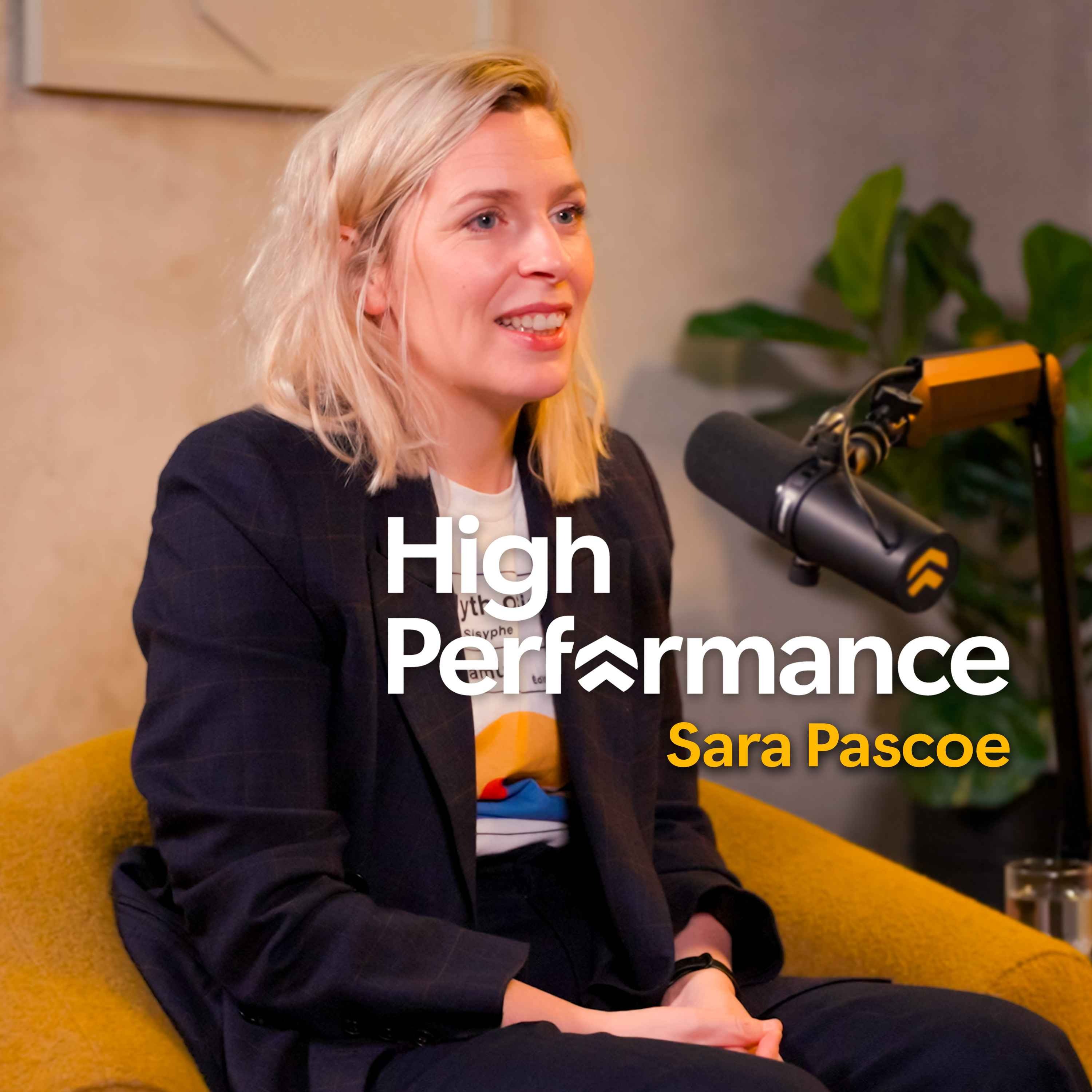
In this episode of "The High Performance Podcast," hosts Jake Humphrey and Damian Hughes converse with comedian Sara Pascoe. They explore her journey through self-doubt, resilience, and the interplay between personal experiences and professional growth. Through candid discussions, Sara reveals how her struggles with self-criticism and negative self-talk have shaped her career in comedy and her approach to happiness.
Written by AI. May contain mistakes.

Get the gist, explore an idea or ask about something said.
 Claude
On The High Performance Podcast, what are the key points of this episode?
Searching your listeningAutomatic transcript. May contain errors.
0:28Watch it early on the High Performance App. in only being good when you're winning or only being good when everyone likes you or only taking pleasure in the wins. And that is true for all of us. That is Sarah Pascoe, best-selling author, a claimed stand-up, regular star of hit comedy panel shows such as QI and Taskmaster and also the host of the great British Sewing Bee. Look, there's no doubt she is multi-talented, hugely successful. But today, Sarah sits down with me, Jay Comfrey, and our expert, Damian Hughes, to talk about so much more than just telling jokes. Yeah, very much. I was amazed by how she revealed the way she talks to herself before she walks onto a stage and listen out for that story she reveals about one of Britain's biggest comedians and how they found little joy in winning the biggest comedy award in Britain.
1:18And in many ways, Damien, that's the message from this episode, that achievements won't transform your self-worth. Sarah talks about struggles at school, bombing on stage, lessons from therapy, and actually why the real stuff, the stuff at home, the stuff with friends, the stuff with family, that is where happiness lies. And if you love this conversation as much as myself and Damien did, tickets to her UK and Ireland tour, I Am a Strange Gloop, are on sale now as we welcome the fascinating Sarah Pascoe to High Performance.
1:50Sarah, thank you so much for joining us. Thank you so much for having me. Lovely to have you on the show. So look, you've had an amazing career and we want to talk in detail about the things that you've done. But the clip from the Literary Festival where you spoke about advice to your 14-year-old self went viral, went global, been seen by many millions of people. Why do you think that clip resonated so deeply with so many? I was very emotional. And the backstory is, I had a baby at the time. He was five months. I still have that baby, actually, I should say. I still have him, it's just a bit bigger.
2:22And he, the backstory is that my son refused to take a bottle for six months. And so I didn't have a choice about breastfeeding or not. And it meant that when I left him, so that's the longest I'd ever left him for. And obviously, hey, it's five hours from London. And I was already so emotional, like, let's get this thing done so I can get back home. And then there was the Q &A. And I was already sort of on the cusp of, your body, well, it needs to be around its baby or your baby. And so I was asked a question. that have been asked before, and you could do quite a glib answer. And I was just on the verge of tears already.
2:57And then I was talking about something that I felt quite... So I think the reason it connected with people is because I was being very vulnerable. I wasn't going, yeah, I guess I'd say work really hard, don't take drugs. That kind of thing. I was really in a place of, wow, I used to be really sad and I'm not anymore. And I'm so sad. I'm so sad for people who are that age and think life isn't going to get better for them and think this is it. and that's definitely what I thought, that school was the world and I wasn't popular and I wasn't good enough and I believe those things very definitely. And what I've loved about responses to it because I don't really remember what I said.
3:31I know I got emotional and I know that the girl who asked me the question, her voice shook when she asked the question. So I was already like, oh God, I just want to hug you. And when I've had responses from people saying that they showed it to their kid to say like, this is what I've been trying to tell you. So that's what, oh God, it makes you feel so wonderful when you're able to provide something useful, especially when your normal job is comedy. And yes, you might give someone a nice night out, but it's not like, oh, you really helped us. Would you mind sharing with us what it was that made life so hard for you at 14?
4:08Just unpopularity. I mean, I didn't, it's not a hugely big story. We didn't have very much money. my mum had tried really hard to get me into a good school. I was bullied a bit in the first school. When I say bullied, I wasn't terribly beaten up. My life wasn't in danger. I was just embarking in a school unpopular. And I think what I struggled with as a child was fitting in, mirroring what they call it now, masking. All of these things that they say, I didn't know how to be normal. And I thought I was being normal. And children are very cruel. And they like to make fun of you. And I was very sensitive to that.
4:43And then my mum got me into a school, which was in a better economic area. She'd worked very hard to do that. And then I had sort of the opposite problem. But still me and my sister just didn't know how to fit in. And so I think it's a very common story. I mean, it's not a special story. I'm not the only person who's ever experienced just other children not liking them very much. It's very interesting. I remember I moved schools at a time when everyone already had their friendship groups. And it's then very difficult to find your way in. So you end up just saying stupid stuff that backfires, right?
5:14or trying a bit too hard because people sniff that out yeah my issue I think was I was confused by why people didn't like me I don't know whether that resonated you think what what is it like I remember people saying to me you're just annoying yeah and you think what it's very hard isn't it as a young person to cope with that sort of messaging really hard and I wonder with performers actually because you have this seesaw especially in comedy between insecurity and arrogance and that's also what you can feel a lot as a 13 or 14 year old which is like I'm amazing I'm king of the world I definitely think special stuff's going to happen for me.
5:46But also, why does no one want me at their sleepover? Did you think that special stuff would happen? Yeah. I was lucky, actually, I never did a reality TV show with the talking heads because I would have been the epitome of like, I've always known. I've always known I'm going to be on the world stage, not working at McDonald's anymore. I really believed that, but with absolutely no evidence. I wasn't good at anything. So where did that come from then? I don't know. I know that when I was a small child, partly because I think my parents were a bit untraditional and also I think I went to a good school in Dagenham.
6:20I just remember being told by a teacher, as she was telling the whole class, not just me, you can do anything you want to. At this point in your life, she was sort of saying you can do anything. If you want to be an astronaut, that is a possible thing. And I just absolutely believed her. I was like, great, okay, I'll decide what I want to be then. So what age did you then start to form an idea of what you wanted to be? Well, I really wanted to be an actor. So I remember when I was 12 years old, telling my sister Cheryl, she was trying to go to sleep, and I was like, right now, get up. We need to practice scenes.
6:52I've decided I'm going to be an actor. And I was very sure of that. And so that's the odd thing about my career is I'm not an actor. I didn't become an actor. I'm a failed actor. I tried for ages, but it mutated into something else. But that belief at the beginning that I was going in one direction, it did stop me having a CV that would allow anyone else to employ me properly. So I did have to make something creative work. It's interesting, isn't it? This kind of, I can feel this like push and pull against someone who felt a bit unpopular and was confused by that and was unhappy because of that.
7:28But then someone who also had this deep confidence that great things were going to happen. it's a really interesting mix and I wonder why the people at school that are making your life difficult it didn't beat out of you that self-belief yeah but I think that's the thing about self-belief is like any kind of faith it isn't built on evidence and so I guess it's buoyant I have a sort of theory about child development where if your parents love you if you feel loved and obviously that in some ways it feels like oh that's the basic but also for lots of people that wasn't a given then you have you know if you think of the earth like the center of you your magma that's self-belief i'm worthy of love i walk into a room and someone goes hello here you are like that kind of thing and then the crust is what happens socially so the crust might be very broken insecure might be lots of volcanoes i'm trying to keep my earth metaphor yeah so that's yes thank you so so but but your The magma underneath it all goes, no, no, no, reset.
8:31I am okay. Today went badly. They didn't enjoy it. Someone else will. And I think that's why it's so important. And I think it's such a deficit when people don't have that. Because, yeah, the world might say that isn't good enough, but you go back home and you come back with something else.
8:51Does it ever feel like you're a marketing professional just speaking into the void? But with LinkedIn ads, you can know you're reaching the right decision makers, a network of 130 million of them, in fact. You can even target buyers by job title, industry, company, seniority, skills, and did I say job title? See how you can avoid the void and reach the right buyers with LinkedIn ads. Spend$250 on your first campaign and get a free$250 credit for the next one. Get started at linkedin.com slash campaign. Terms and conditions apply. If you're a maintenance supervisor at a manufacturing facility and your machinery isn't working right, Grainger knows you need to understand what's wrong as soon as possible.
9:29So when a conveyor motor falters, Grainger offers diagnostic tools like calibration kits and multimeters to help you identify and fix the problem. With Grainger, you can be confident you have everything you need to keep your facility running smoothly. Call 1-800-GRAINGER, click grainger.com or just stop by. Grainger, for the ones who get it done.
9:54This episode is brought to you by Opera Air, the first browser with mindfulness at its core. Now, most of us spend hours every day online, but how often do we pause to take care of ourselves whilst we're doing it? And that's where Opera Air comes in. It's a lightweight, fast, secure browser built not just for productivity, but for your well-being. With Opera Air, mindfulness is built right in. You'll find free breathing exercises, guided meditations, and soundscapes with ambient sounds, lo-fi music and binaural beats, all designed to help you focus, relax and even spark creativity while you browse.
10:31And I wonder why other people getting the treatment that you had at school still affects you so deeply to this day. I desperately need, I want everyone to like me. And some people are okay with some people not liking them. And other people absolutely need everyone to like them. and it like burns when they don't. What do you guys have, do you think? Do you read comments for your podcast and stuff? Yeah. Yeah. And when you get someone going, I didn't like this bit or you shouldn't have done that, does it bother you all day? Or you're like, okay, fine, different experiences. I definitely was that at that point.
11:07But the more conversations we've had about high performance, the more you realise their opinion of me is none of my business. But it's so much of the reaction to the comment is made up in our own heads anyway, right? I remember Gordon Ramsay being on this show and his one golden rule for a high-performance life is take it professionally, not personally. Yeah. Which I think is really helpful. And I'm sure you've had situations in your career where something's happened and the story you've written about that thing is actually so far detached from reality. Yeah, and that's what you realise is, yeah, you create the narrative and sometimes we have an emotional reaction and we then attach a narrative.
11:43Sometimes people don't mean to hurt you, but you are hurt. so you have a reaction. Comedy is amazing for not being able to please everyone because not everyone will laugh. Not everyone will find you funny. And that isn't a reflection of how much work you've put in, how skilled you are, et cetera, et cetera. You have to be okay with the fact that it's a bit like being a chef and that you made dinner. And as long as you did make the dinner and you tried to make it well, if someone says, I don't like the taste of this, that's okay. That doesn't mean I've hugely failed. I did everything I could to make you dinner.
12:15and that's how doing a comedy show is. You do your comedy show, you try and make it as funny as possible. So when someone says, not funny, not a comedian, da-da-da-da, you go, there's nothing else I could have done. But if they came to a show where you hadn't done your practice, you hadn't rehearsed it, you were trying a bit and it failed, then yeah, sorry, dinner was bad. But you're describing where you are now with that view. But I'm interested in that journey from the girl that was desperate to be liked by everybody to get into the place where you can take it or leave it. Well, the bit about being desperate to be liked is the bit that gets you on stage in the first place.
12:50Anyone who has a compulsion to be in front of everyone, because sometimes it's a hugely uncomfortable place to be, especially if you are talking about yourself, making stuff up, coming on stage at the beginning, your first fives and tens, you're very unrehearsed. You don't have material that's worked before, you are generating it from nothing. So the compulsion to do it is the bit where wanting to be looked at is about wanting to be liked. Yeah. not being liked makes you work harder on what you're being looked at for, I guess. So that's the process, if it makes sense. But I wanted to act because I thought I was going to be someone else on stage.
13:24So I was going to be liked as a pretense. And I'm a very bad actor, unfortunately. And then through therapy about, and it'd be about four or five years ago, it's brilliant in therapy when you have like a, oh my God, the key to everything moment where I realised that it's because I wanted to be seen as myself, I was a bad actor because I was never Lady Macbeth. I was Sarah Pascoe going, oh no. I've got blood on my hands. How did the therapist help get you to that point? With therapy, because I would say this to anyone listening, because I think I took too long to go to therapy. And if anyone has access to it, just such a useful tool.
14:01It's hearing yourself say things more than you have some genius sitting there going, ah, ha, ha, ha. Did you hear this? I think she asked me, I think I said something like, well, I'm not a good enough actor. And she said, why? And then it was the first time I had to actually think, what is wrong with yeah what was wrong with my acting what why didn't I get into drama school I tried for all these drama schools for five years I never ever got a call back and so to actually think all all these years later what did I do wrong and then to go oh I never ever lost myself the thing that when I watch acting you know the person disappears or they become someone else and you believe them I never did any of that I never disappeared and then she's like well why not and then you go oh yeah and what was the answer to the why not question because it was me right from childhood who wanted who wanted the attention right yeah so the ego the self is that is the part so you don't lose that i wanted to be an actor because i wanted the attention i think some people go into politics for the same reason that they couldn't act but they still want everyone to look at them yeah yeah i remember an interview with christian bale where he actually said, he said, you know, my life is dressing up and being someone else.
15:10And he said, no one has any understanding of how painful it is that the only person people want you to be is not you. Which is, because you would look at Christian Bain and think, what a great, successful, wonderful career. Yeah. And you're really describing the same thing, that actually there was a need in you and probably still is in you to be heard, to be seen, to be loved, to be liked, to be funny. So if you're acting as someone else, well, that's not solving the problem. Yeah, yeah. It's not going to give you what you needed, what you started it for. If you don't mind me inquiring, you mentioned that you'd been to therapy.
15:42Yeah. Would you mind sharing what was the trigger for you to want to pursue that path? I had a very working class chip on my shoulder about therapy, which was if you hadn't had a great trauma, get on with it. For years and years, I had friends who went to therapy. It wasn't like I thought about them. I just thought you need to sort it out. What was the it? what is it? Knowing I could be happier. Knowing that I was telling myself very negative things about myself. And actually, I told myself very negative things. And I thought that was the seat of all ambition. And I thought that was a drive and it was a fire.
16:20So, you know, you have a bad gig or you have a bad day or you have a rejection. And then your inner monologue says you're a piece of shit who deserved it. And life was proving you were less of a piece of shit. And going to therapy was actually the hugest thing of, oh, I don't think telling myself I'm a piece of shit all the time is a nice state to be in. It's definitely not a nice head to be in. But I thought the two things went hand in hand. I had had some work success because I told myself I was a piece of shit, but I didn't enjoy that work success. Because I was there thinking, you know, you're tricking everyone or you've only done it or you're definitely, definitely, you don't deserve to be there.
16:54We don't deserve anything good. That's why I went to therapy. I didn't think I deserved anything good and I was getting cognitive dissonance because my career was sometimes saying I had value and I didn't feel like I had any value where would you learn to talk to yourself like that oh god I know it's awful isn't it because I definitely had an arrogance as I say like from a very young age of I think I'm special but then I can't pinpoint it on on anything in particular it wasn't I think it probably was tiny little voices that I solidified rather than I didn't have anyone in my life saying Sarah you are not good enough I think I probably took lots of little things that happened but when do you think it became the common narrative in your head definitely through teenage years so that's that's what fit to go back to what we were talking about the beginning that's what all fits together is I wasn't liked and I couldn't help but go what have you done then to be so unlikable yeah and then stand-up gives you both things at the beginning you get i'm really really liked oh i'm really really not liked and and and that's the thing that's the thing that's fascinating about the descent of a tiny descent you know the one comment the fact that human beings unfortunately uh are really we pay a lot more attention to negative than positive and so everyone we know who is successful still has you know that line from a review that if they can't sleep just goes around their head or the person they're arguing with who commented on an article that they got interviewed in unfortunately that's i read that in terms of evolution we can only learn from negatives they're useful positives offer you nothing in terms of preparing you for the future so we go yeah okay have you familiar with barbara frederickson's work on this that the paper she wrote was like what use are positive emotions because from an evolutionary point of view, as you said, it teaches nothing, but she says that positive emotions actually broaden your perspective and build your confidence is the two things it offers us.
18:57Okay, yeah, I think it's really good to have that as balance because we don't want our lives to just be like about an absence of pain or an absence of discomfort. This is what's difficult if you're very career-minded, very ambitious. It's really difficult to go, what else could make my life nourishing? and that's why I think things like therapy even if you consider yourself a very privileged lucky person which I do and always have was really interesting to go well what other areas of my life should I also be looking at I was a very very bad friend I just wasn't good at being friends with people that's something I learnt very late in adulthood and I wouldn't have my marriage I wouldn't have my children unless I'd learned intimacy and things like that and maybe people don't realise that they're also things you have to work on like you work on your career.
19:44Because you were too obsessed with your career? I think I had a really horrible kind of ambition where I would have set fire to anyone to get what I wanted at the beginning. And also because I thought it was me against the world. And also because I had had rejections, I thought I'm scrabbling my way up. I am a terrier biting at the ankles of a, you know, I thought that was the only way to get ahead. And so, yeah, after university, my best friend and she is still my best friend cariad we once had to do a joint audition together and when we came out she went that was scary and and i what i mean and she went no you disappeared behind the eyes and i was like yeah yeah i do i go into this this is what i want my focus and that's what's yeah there's definitely points in life where all of us can benefit from that but there's in terms of your life in general you have to also not behave like that to people who care about you See I'm really interested in how you've learned to control that so you can draw on it when you need it but how have you learned to be able to put it to one side and be a better friend?
20:52I learned because Cariad was a really good friend to me actually and she gave me chances when other friends wouldn't have done you know I got off with a boy she likes this is a really long time ago she's very happily married but I did things like that which is how previous friendships would have broken up and she was upset and hurt with me but she didn't go okay we're not never talking to each other again so she i think she taught me i mean i know she taught me a lot and then wanting to be better and recognizing that i was bad at it rather than going it's other people's problem if they don't like me going oh no i'm not good at intimacy and the intimacy is something you have to learn how to be good at what did the therapist say that that helped you because i'm sure there are people listening to this yeah yeah let's be really frank right yeah people that listen to a podcast called high performance right yeah they're here to they're here to make more money right 10 quick tips my 10 quick tips for how therapy can make you a millionaire right there are a lot of people who are successful and listen to this show but when they hear you say i was achieving success by beating myself up yeah i imagine they can relate to that yes right yeah what could you offer them the scary thing is that you think if you stop beating yourself up you'll be less successful there's something in comedy where people go if i'm happy i won't be funny anymore Miserable comedians always think that they're funniest.
22:08And perhaps there's something even scarier, which is that you can have everything you want. Isn't that terrifying? But you could be working to have everything you want and that you deserve those things. Or that the world deserves those things. Because I think something I would have thought was, there's people in the world in desperate need and desperate times, like harrowing things are going on in the world. How dare I be a bit sad because I've got low self-esteem? and actually I think you're a much better member of a family, a society. We are a communal tribal species everywhere you go. If you've done some work on yourself, you are better for everyone else.
22:45It's also an act of generosity doing that work, I think. And it's such a waste of energy. People feeling fat is a waste of energy. People feeling ugly, old, all the anti-aging stuff, all that headspace. If you can just go, I'm not that pretty, but I'm worthy of love or Or, yeah, I didn't have a great day at work today. Or I'm still learning how to do that. Or I attempted that and I didn't quite get as close to it as I wish I had. And being a bit easier on yourself, you will be so much better for the world, actually. That's what I'd say. And you've made that comment a few times that this is something you have to continually work on.
23:20Yeah. So how do you continually work on changing that narrative? Well, I guess a little bit. It's like being a little therapist in your own brain. Observing yourself, you're allowed to be fascinated with yourself. You're allowed to go, oh, you're thinking that again. you're allowed to go so what caused me to think that what is it about now that's making me those voices come back or that narrative come back to me and then you tell yourself other other things the softer things you're not perfect yeah and be proud of yourself that you tried i mean i know this is different if it's just jessica ennis hill before a race not going oh you did your best at the hurdles but you've made the final yeah yeah yeah it's still worthy of love but the rest of us can actually be a little bit softer and that might make us much more productive because when we're softer we go i'm going to have another go i'm going to do it again tomorrow when the crash isn't as huge that's where the resilience comes from right that's when you then go i didn't lose anything i didn't lose anything because i wasn't smashing myself figuratively in the head the next day i was going yeah i'm a person who had to go at that it's a great you know what we've said this a few times aren't we that one of our big lessons we've learned on this is that nobody needs to be resilient in the face of kindness you only need to be resilient when you're surrounded by dickheads or by people choosing but also internally as well i still think that we feel unless it's a struggle we haven't reached our limits i think we've been told that that's how great things are achieved the whole thing about 80s and individualism and even like american dream or like pulling yourself up by your bootstraps all that stuff is you against the world no one's going to help you and worse comes from yeah you only get to the mountain all by yourself you get given your your prize your medal and then you go oh i did it and there is no and no one's we we haven't had enough conversation about the journey uh the the thing that's really enjoyable but enjoyable about achieving is uh having earned it having worked at it the earning of it it has almost no value unless it was hard, unless it was uncomfortable.
25:27That's when you feel proud of yourself. And those achievements, they aren't decided by anyone else. You get to decide. Some people hate public speaking. I love it. I won't shut up. But for someone who's very, very nervous, speaking up at a meeting, saying thank you driver to a bus driver, there are things you can do. And you were allowed to go, smash that. Didn't want to do it. And then I did it. my husband's got ADHD and he absolutely hates like phoning up to say we're about to be late or we got charged twice for the gas bill so his achievements sometimes are really what are they for someone else they would be nothing but you are supposed to go oh I was uncomfortable I pushed myself I'm proud of myself I left it eight hours it's been all my things to do this all day but I did it I think we should be celebrating those things for ourselves.
26:20So one of my favourite stories is that, I don't know how apocryphal it is, but I think it's told by Kurt Von Engut where he talks about, he was at this billionaire's house just off Manhattan and somebody said to him, oh, this guy's got more money than you'll ever have. And he says, but I've got something he'll never have, which is enough. Yeah. When did you, when did you... That's really great, isn't it? Yeah. But I'm interested in, when did you decide you've got enough? If you have. Well, I tell you why, it's meeting people that I thought had everything who were sad. And I've met some really, you know, we all have some really, really sad, very successful, very talented.
26:55And it's not because their families don't love them. It's because if we don't allow anything to be solid, you know, I've got it. I've got to be careful which example I use. I know someone who won the Edinburgh Award. So it used to be called the Perrier, biggest award. And also it was everything he wanted, right? So he practised the speech for years in the bath. He was so focused on, because that's when I know I'm good enough, I've arrived, what am I, not even respected. People value me, everyone knows I'm good. So it's the epitome for lots of people in comedy. And he won it and it was astonishing.
27:38It was astonishing. He got the thing he wanted and then seeing him months afterwards, as sad as he was before, as depressed as he was before, In a way, it was worse because he had no point that was supposed to. He then knew nothing would ever be okay. It wasn't going to be an amount of people in the audience. It wasn't going to be an amount of money. And it wasn't going to be this award that was everything. And he said, sometimes I stand in front of the mirror and I hold it up. And I say to myself, you won it. You won it. And he doesn't feel anything. That's heartbreaking. But we all know people who have that, where you think they play stadiums.
28:10They've got millions. I think especially people who don't have money, which I didn't have. it's hard to feel sorry for rich people isn't it because like okay we'll go and be sad in the Bahamas there like because you think it's an answer so when you meet people who have everything you think you want and they're as sad as you or sadder you then go okay there's another journey and I fear that you could have been there at some point in your life because you were searching for the love right yeah and no matter how much love you get you still need more yeah well I actually I think I I don't think I was a completely empty chalice I think there are people who are completely empty and it fills with an audience and then it's empty again whereas I think I had a trickle in there and it got it did stuff it did get built up having money changed my life having money gives you freedom it wasn't like it was like oh my god I never thought I'd go on holiday let alone like have a mortgage when I bought my flat with a mortgage I got a dog and I had a bike and I was like, I've got everything I wanted when I was nine and I didn't ever think I'd have.
29:18There were moments in my life where that chalice did fill up. So, and that's enough to make you want to do the more work to go, I want to enjoy my flat. I want to enjoy walking my dog. I want to enjoy the pleasures that my job that I fell into because I failed gave me. Because if we can't be happy, what hope has anyone else got? Because there are people who, it's not their fault that they're unhappy. It's because of what they're living with. So the audacity of really lucky, lucky, lucky people doing what they love to then go, I'm sad. And I know that depression can also be, God, I'm worried about being glib.
29:52I know it's chemical as well. So it's not me going, no one's allowed to be depressed, get a dog. It's that if there is any path towards enjoying your life more, why not take it? Whether that's therapy, whether that's exercise, whether that's, yeah, I don't push myself in my career. Those are the things that are very, like nourishing I think is such a lovely word. I love this message that you can and should feel you can have it all. The risk these days is the message that we're telling a lot of people is about the trappings of external success. You go on Instagram, that's all it's about. Get a Ferrari, get a yacht, be a billionaire.
30:24This is how to be successful. None of it is doing exactly what you talk about, which is the truth underneath that underpins all of this. Well, I think the thing is the actual truth makes you a worse citizen under capitalism because the thing that you're talking about, and that's why it's Instagram is it makes you buy more stuff. Whether that's gym membership, whether it's smoothies, whether it's mushrooms we're all supposed to be drinking now, all of that stuff, the more you think they're all telling you it's something you can buy. Because even the people saying, you know, you can do these exercises at home and get abs, they're going, but subscribe to my thing and I'll tell you what to do about carbs.
30:59Like everyone is selling you something. If you stop feeling inadequate, you need to buy a lot less. And so that's the thing about the messages. to answer your apocryphal story about Kurt Vonnegut, which I love, by the way. The one I think of is, so this is, I think it's from Buddhism, but it's about how they used to trap monkeys in the jungle. Do you know this one? So there's a jar, so it's got a thin neck on the vase and then they put sweets inside. And the monkeys put their hand inside to get the sweets and then they're stuck. And the message is, if you want to be free, all you need to do is let go.
31:32And I think that's so massive because a lot of time when we wind ourselves up, actually, if you think, oh I could just care a bit less oh it's like it happened it happened I'll try better I'll try more I'll try again I'll forgive myself Sarah Millican had a thing about bad gigs because we get obviously it's a horrible feeling having a bad gig and she had a rule has a rule I think it's like okay you're allowed to feel bad until 11 o 'clock at night so you can feel bad on the way home but by the time you go to bed it's done and tomorrow's tomorrow and it's another gig Like, caring less about things, again, I think comes back to high performance.
32:09Because when you look at the people who are able to consistently work, they aren't burning out, they aren't giving up, they aren't, like, engaged with the next stage of their life. They're not bored. It's because sometimes they went, yeah, no one watched my film. Like, yeah, the reviews gave it two stars. And now we do the next thing. Freedom. Yeah, freedom. Let go a bit. And that's what the Instagram thing never says, unless it's trying to sell you vases. I think throughout this conversation, one of your superpowers is letting go of other people's opinions, realising that, as we said at the beginning, it is none of your business.
32:46Yeah, yeah, it's none of your business. But I think it's hard, and I think anyone who's listening going, I just can't do it, I think it comes back. I think it's a constant. I think it's a constant letting go of people's opinions. I feel like I'm in quite a good place with it now, but I have never, for instance, had a real problem with the press or things like that. I've got, oh once I did and it was sort of small and I did all right about it but there are there are friends I've had who just out of nowhere you do a joke you say something on a podcast you have you have and you experience a lot of dislike a lot of suddenly people the people's first awareness of you is very negative there are situations what I'm trying to say is I think I'm quite good at it but I feel that's hubristic to say because I still think there could be things around the corner I'm like oh yeah I'm back crying at home because nobody likes me.
33:32There's a level to all these things. Yeah, yeah. You know, I look at someone like James Corden and the sort of criticism and the hate that he gets and it must be really hard for him to kind of go, well, I think people are fine, you know, I'll let them have their opinion because it's so vicious and horrible and uncordable. It must be a bit of both with someone like James Corden because like what happened with Gavin and Stacey at Christmas? It was such a huge amount of love for something that he's done. And when I say huge amount of love, it wasn't, I don't mean like viewing figures, I was in the hairdressers and some people were talking about it and someone said, was it good then?
34:03A man hadn't seen it said was it good and the girl she was probably 25, 26 she said it was better than good it's Gavin and Stacey it's like he has made things that are the epitome of quality I don't know if it's a British thing I don't know if it's a human thing we undervalue overdogs rather than actually going wow they made works their album was we appreciate it in retrospect like with Prince and David Bowie and people but with the people currently doing those things there's this like oh, everyone's read it, oh, everyone's watching it. So we're allowed to sneer or be so affronted when it's not for us, which is what people have with comedy.
34:39I didn't enjoy it. My opinion is the most important in the entire world. What is it Ricky Gervais says? Well, then it's not for you. Yeah. Don't get angry about it. Just walk past it. But it's funny because with opera, this is what I always think. I mean, obviously, I don't know anything about opera, but no one's ever at the back going, I'm not enjoying it. I don't think this is a really good version of Beethoven. but in comedy that is what they're thinking which means the we feel qualified with comedy to go yeah none of us go i don't think i'm intellectual enough stewart lee we go i don't think he's funny don't use that as a clip because i think that's in the trailer um what it leads to is is the need for you to have resilience yeah i'd love you to talk to us about because that's the no point in only being good when you're winning or only being good when everyone likes you or only taking pleasure in the wins it's the resilience it's the how fun is it to be on a journey and that is true for all of us or all of us who love our jobs or love aspects of our lives I guess the start of your career was full of rejection you had five years of never getting callbacks for drama school well actually yeah and longer than that and actually uh acting I think is that my My husband's an actor and I've got friends who are actors.
35:56Acting is the most brutal profession in terms of rejection. And now since COVID, you don't even audition in the room. They make them audition on tapes. So you don't even know if they've been watched. And no one tells you when you haven't got a job. They go, here's what it is. And then... So that amazing feedback loop that you're privileged to have, your husband can't have. Because he records the tape in his house, sends it off and he has nothing. Yeah. So I'd love to know what you learned about resilience, where your resilience was built. And I guess the question is, have you now understood that all those things that were really hard for you, from not being included at school and not getting any love when you were trying to act, and that first gig where it was total silence, have you learned that those really hard things were actually really beneficial?
36:42Yes, they are important. I think everything is useful if we can use it in a certain... Yeah, it's about how you reframe things, it's about how you utilise them. failure and I know that obviously this is what Elizabeth Day has done such amazing rebranding for is a learning tool and even if it feels horrific and uncombackable from every single person whose career you respect had moments of no one bought it no one wanted it it was terrible I was bad in it etc the shame that comes with that the things trying to control variables looking at things as rather than linear and I don't know this must be different with sports but like a wave going in and out you know little improvements little backward slides oh I've got up there oh I can't reach there again understanding that it's that it's that it's in and out and it's that it's learning and that also that you're to go back to like this this inner self you are not worthy of love, affection, intimacy with people, all of these things that actually make a human life really bearable to pleasurable, they are not based on your work performance.
37:56They are based on other things. So if you go out and you have a really terrible day at work, and it is your fault, that doesn't mean you don't deserve a happy life. And that's where softness, I think, needs to come in. Because I think a lot of very ambitious people then have quite hard lives because they don't allow that. Do you? Yeah, I do. But maybe that's put a little ceiling on my success though. Because I think having children really late, having children after IVF, after struggling with infertility for years and years, and then seeing the absolute limits that are put on my, parameters I should say, better than limits, but that are then put on my career, but knowing that that adds a value to my life more than gigging in stadiums or awards or just certain things that you might say should be the top of my mountain.
38:44If you were a male comedian having kids, it probably wouldn't be a problem. Thank you. It wouldn't, it wouldn't. I think it's very different. Because I actually think what you need is someone who's going to do a lot of stuff and not be miserable. If your partner's miserable doing all the stuff, it doesn't work either because that doesn't help anyone. I think it's a lot easier if you have someone to co-parent with who'll do all the bedtimes. Or understand that you need to spend hours and hours doing your job to be good at your job. The struggle I had when I first had a baby was turning up at work and it was the opposite of that chef with his cooked meal.
39:20And it was, okay, what have we got in the cupboard? And feeling this frantic and having literally done a horrible bedtime and then walking out on stage. And there were certain places where they were big rooms and I felt so unprepared. and actually here's where the resilience comes in because I had two choices either I didn't work and work is my favourite thing or I absorbed where I was in my life and I took that on stage with me I didn't try and pretend I didn't try and dress up lots of times I'd go on stage going I haven't brushed my teeth today that kind of thing so I had to absorb that into my work and talk about what my life was like and that's the advantage of stand-up over acting is I probably would have got fired from an acting job but stand-up I just had to make where I was in my life funny.
40:05And did you find you got a different reaction by doing that? Yeah, because lots of people are parents, and everyone has had parents, and it's a very universal experience, where sometimes I want to talk on stage about something that's not very universal. So I felt a huge connection with people. And again, I sometimes would get a wonderful response. I remember a gig in Walthamstow, and sleep was really bad at that point. Neither of my children sleep through still, and one of them's about to be three. but at this point it was really bad every hour in the night and just having someone message you going you just made me feel better about how much I hate my life and it's like yeah we hate our lives right now because you've got this thing which we're supposed to be so happy about but actually it really ruins things I love also the fact that the thing that takes you further away from the obsession of comedy which is children pushes you further towards pleasing an audience isn't that great?
40:56yes, it's amazing and it's why I'm so grateful for my career it's made me notice so much what I have in terms of time like stand up as a job you're quite in control of your control when you write it when when and where you take gigs you can for me I can gig in London I could I could gig only after bedtime if I wanted if I only ever took slots they were at half eight nine relatively near my house I mean most parents don't have that choice with work they go back kids have to go to nursery or you have to have family they're going to look after them it's really restrictive yeah so can I ask you then about how you generated the material so you want people to see you yeah but you also said that you're telling stories you're making stuff yeah it's fictionalized truth um stand-up comedy because often the the truth isn't by itself funny I would say it's a bit like um in terms of the fictionalizing it's a bit like if someone's rude to you in a supermarket and you sort of take it you go home and then you think of what you should have said the next day.
41:57Stand-up comedy is, you did say that thing. You just, that's the repackage of it. So it's still what you thought and it's still you in the story, but it's a different version of you where you were like, actually, and you say the really clever thing, but you are yourself. And actually, when you first start stand-up, you can be very influenced by other people. And so often you're heavily, you can see who you've watched and who you think is funny. And the process of it is becoming more and more yourself on stage. How do you get to that point? confidence and assessment all the time. So the audience feel like they've met you and you feel like you've been you for them, I guess.
42:37If you're still overpaying for wireless, it's time to say yes to saying no. At Mint Mobile, their favourite word is no. No contracts, no monthly bills, no overages, no hidden fees, no BS. I made the switch because I was tired of those ridiculous bills and sneaky charges from my old provider. With Mint, I'm paying$15 a month and getting the same high-speed data, unlimited talk and text, and coverage on the nation's largest 5G network. Honestly, the quality is just as good, if not better, than what I had before. And the best part? You don't need a new phone. You can keep your current one, bring your number, and all your contacts.
43:12I use Mint Mobile, and you should too. Ready to say yes to saying no? Make the switch at mintmobile.com slash HPP. That's mintmobile.com slash HPP. Upfront payment of$45 required, equivalent to$15 a month. Limited time new customer offer for first three months only. Speeds may slow up a 35 gig on unlimited plan. Taxes and fees extra. See Mint Mobile for details.
43:52the right expert right when you need them. Work smarter and faster with Upwork. Go to Upwork.com now and find your freelance expert. That's U-P-W-O-R-K dot com. Post a job for free and get started today. If you're a maintenance supervisor at a manufacturing facility and your machinery isn't working right, Grainger knows you need to understand what's wrong as soon as possible. So when a conveyor motor falters, Grainger offers diagnostic tools like calibration kits and multimeters to help you identify and fix the problem. With Grainger, you can be confident you have everything you need to keep your facility running smoothly.
44:28Call 1-800-GRAINGER, clickgrainger.com, or just stop by. Grainger, for the ones who get it done.
44:41So tell us about building confidence, then, because you said that line that confidence is built on evidence. Yeah. So how are we finding the evidence? Practice again and again and again and again. and I'd say like with anything because you know the 10 ,000 hours thing which is really tempting to go if you do something enough you get better you don't get better unless you assess it constantly so with gigs I used to write a diary and I still do if I've had a tricky one I had four in a row last week that were really weird almost to the point I thought I mean gaslight isn't the right term but the audiences were behaving in such ways where it's like are you fucking with me there was one in Ely in Cambridgeshire where they kept laughing at the beginning like the set ups and then going completely silent for the jokes.
45:25So if I said, oh, so we've got a new boiler at home, they laughed at that bit. And then when I told them the funny bit, they were like, okay. How does that feel? Well, uncanny. And you have to sort of think, what was it? What was it that I did? So my questions were, I'm doing new stuff. Was I trying too hard to remember the lines? Was I going too fast trying to work out if this set works? did I not come on and actually say hello properly and be present to them? All of those things were true. I was there for me doing new stuff, not actually, hey. So when do you do this assessment? I write on the train.
46:02Sometimes I write the next day. Sometimes you listen back to it. So at the beginning, in terms of building confidence to go back to your question, you're doing fives, you're doing tens. You have to constantly look at what was the room like? What were they like? You mean five or ten people? Ten minutes. Ten minutes, right. So it's all the chunks at the beginning for most people, especially in London or a city you'd be doing fives which means you've got a very short amount of time to meet people tell them who you are, get any jokes out really that's a really short amount of time so your assessment is how did I respond to them, how did I respond to the room who did really well after me with comedy you're always on with people much better than you and you have to stay you have to stay and watch them and go what have they got that I haven't what are they doing that I haven't got how did the audience respond to what they did and then the same if you watch people go badly, sometimes you could tell them why.
46:50And they're like, what happened? And you think, no, someone dropped something and you didn't mention it. And then we all went, oh, can't you hear? Are you not in the room? It's really, you stumble a word and you don't comment on the fact that you stumbled the word and almost you lose connection. It's so odd. There are tiny little variables, but you have to be obsessed with it. You have to be obsessed with it because there's two things one are you connecting with human beings two is it actually funny yeah so tell us about how you connect them because that i mean the applicability of that is that's but that's just that that's just a feeling and even from body language you can tell when people are listening to what you're saying and you know when you've lost their interest you know you know when someone's disengaged and if and with a room the audience is one they're one being whether that's five people or 500 people 5 000 people you know when you've lost them and And you're assessing all the time when you're on stage.
47:42Yeah. This is why you get obsessed with it. It's because you absolutely never can phone in your job. There's absolutely no point where you go, yeah, just went out, you know, five minutes before the end. I thought, oh, I'm clocking off in a minute. It just isn't like a job. It's always important. It's really viscerally dangerous sometimes. And I feel, I mean, dangerous in the terms of, because when you lose them or they stop laughing, that is a horrible feeling and you have failed. And so to be quite successful and still fail regularly at your job, that's where comedy, I think, is unique. That's where I don't think Christian Bale gets to do that.
48:17He might be in a film and it gets bad reviews. It might be in a film and it doesn't make very much money. But the scenes where he doesn't do well aren't put in the film, whereas mine are. All my audience sees it. But how do you avoid the feeling of panic? Because if you're constantly assessing and that, you can feel it going away with you. You don't avoid the feelings of panic. and it's why I think people are surprised when they, sometimes you'll be backstage and you'll meet a technician and they'll tell you someone famous who was there, I won't name any, but they'll tell you someone's famous and they'll be surprised that they were nervous.
48:48Like, you just wouldn't think someone like him. He was pacing up and down. There was one point I thought he wasn't going to go on and you go, yeah, because there's fear. There's fear inbuilt to what we, and then there's great payoffs because when you're scared of something, your body really rewards you when it's done and it really rewards you if it goes well. So that's why people, I think you have jobs like mine, don't jump out of airplanes and stuff. Because they don't, that's our version of it, is to walk out on stage in Milton Keynes. So are you working hard for the day that you don't have fear?
49:18No. What I've realized is that's why certain people pick certain jobs. So your podcast is about high performance. I've really been thinking a lot about what that means and what that means to different jobs. and for my job all it can mean really is to be as prepared as possible but knowing that there are so many variables you will never consistently perform well the best you could do is look back and go I had done everything I could in advance I controlled what I could to perform well So we've done over 300 episodes of high performance and you've just described what we believe high performance to be after all these conversations the best you can where you are with what you've got.
50:00Yeah. And also I think that's where self-esteem comes from. Because if I go out and have a bad show somewhere, I now don't go home saying I'm a bad comedian. I go, I'm a person who now has a toolbox and I still didn't have what I needed tonight. Or I made a mistake on, I need to remind myself, go back to this thing you learned so long ago. But I don't go home going a bad comedian. I now know it's part of work. Did you used to do that? Yeah, yeah. I remember my first gig to Silence. which was for the Hackney Empire, a new act. It's a big competition, a gig in Kilburn and I followed a dog jumping up at a balloon.
50:40Now the mistake I made was if they like this dog jumping at a balloon, imagine how much they're going to like me with my words, my opposable thumbs. And what I should have done is comment on the fact I was following a dog jumping at a balloon. He absolutely smashed it. He absolutely smashed it, this guy. and instead what happened is I just went into my material, which I was, again, confident of. I'd had a very strong start in comedy. There weren't very many women. So you're a small pool. You have access to lots more gigs at the beginning, or you definitely did then. And they just stared at me, and I'd never had a gig to absolute silence before, which is absolutely failure.
51:19Oh, it's absolutely failure, and it feels horrific, and then you've got nothing else to do, or at that point I had nothing else to do. What I should have done was stopped doing material. and commented on the fact it wasn't working. But at that point, I would have been far too scared to do that. All you just hope is the next joke they'll laugh at, the next joke they'll laugh at, and five minutes in that is very, very long. To know you're failing, and then to be doing a sort of impression of yourself as if the gig was going well. And you'll have had this as well, and it's actually, I say, this is low performance.
51:49Hearing your own voice really loud in your head while you're also talking. Have you ever had that? And isn't that a horrible feeling? because it makes you feel insane. And then you're going, how's my mouth still talking while I'm shouting at myself up here? Oh, awful. But on the train home, as I wrote my notes up about how it had gone, and I thought about it for the next few days, not at any point did I not want to do comedy again. I knew this was a massive learning experience, but I knew the biggest thing I'd learned was, oh, it can feel like that and I still want to do it. Now that I know that can happen, I still want to do this job.
52:19So that actually was a really huge learning experience. And what intrigues me, Sarah, is that one of my favourite bits of talking to high performers is the stuff in the shadows, you know, like the boxer in the tunnel before the fight or Jessica Ennis Hill talking about the night before she goes to perform at the Olympics. I'm interested in the moment before you have to walk on that stage. So you've just had a disastrous performance. That voice in your head is saying, this is scary. How are you sort of overcoming that to be able to still walk on and go again? Well, probably what an athlete tells himself would be very unuseful for me.
52:56So if I was to sort of give myself a talk of like, there is no other option, you go out there and you do this, you don't listen to pain, you push past it, because I'm not trying to run really, really fast. I have to go the exact opposite way of softening and flexibility. And actually, I have to tell myself really wonderful things, like, I'm so lucky to do this job. I wanted to be here, no one's making me be here. I could have pulled this gig. Sometimes I tell myself, I don't need the money. I don't need the money. I'm here because I love it. I remind myself that I love human beings. I tell you who I really love.
53:30Human beings who leave the house to go and watch stuff. Why do we leave the house? It's so nice at home. The web is terrible. There's amazing stuff on TV. None of us have seen all of it. These people got childcare or made an arrangement or came by themselves. These people, why are you scared of them? You're in love with these people. and in terms of my own ability I wind it all back it's not like you've done live at the Apollo you've got this many followers on Instagram none of that is solid what is solid is I want to share with them what I've got to say and I want to see how they respond and again it goes back to that I made them dinner I made them a nice dinner and I used to I used to have this horrible thing where I used to imagine with tour shows that half of your audience had been dragged there by someone a really negative thought where I'd go, men, dragged by wives, they don't think women are funny.
54:21That's so unuseful to my brain to think I'm trying to convince someone I'm good at my job. And as I've done it more, I've just started to go, they're here. If they didn't want to be here, why would they be here? Convincing someone of your, this is how far that journey's gone from a 14-year-old who didn't think anyone liked her, who wants to be on stage to go, I don't care if you don't like me, you have to look at me, to come to a place of like, why don't you just trust that most people are here because they actually, they do want, they do want to see you. How delightful is that? And Alan Davis has a bit in his book, actually, it's about being a toddler and how walking out as a comic to an audience who wants to see you is like running into a room as a toddler.
54:58They're like, hey, it's you, you're here. And that's already enough. You came. It's like unconditional positive regard. Exactly. So they've come in a positive frame of mind. You just have to meet it in a positive frame of mind. And the fear and the negativity and winning, there is no way you can win. It's a gig. there isn't a with line-up gigs I think one of the shames of the 90s and the 80s was that the set-up was and again it was mostly men is that you've got an opener, middle an MC and a headliner and they were all in competition to have the best gig the only way to become a headliner was to be unfollowable so you've got an opener and a middle who are trying to be better than the headliner, the headliner has to take the roof off the place and in a way the structure of the gig has said this is the best one.
55:42And then you've got an MC who's trying to upstage everyone and they get to meet the audience and they get to improvise. And stand-up shouldn't be a competition. I think the difference that changed in the 2000s, especially with lots of my friends who I started out at the same time, is a lot of us were more theatre and improv group-based, which was all of us are building on the time the audience are having. So if the MC sets them up, they're having a good time, you come on, give them an even better time. And the next person comes on and gives them an even better time. And we were all doing very different styles of comedy.
56:11talking about very different lives. We weren't similar. So as comedy became more diverse, which I know people, some people in comment sections can see as some kind of trying to be fair. It wasn't. It diversified and it kept an audience there because people were talking about very different things because they'd have very different lives. And that's when comedy, I think, started to get much better, in my opinion. And I saw something the other day saying that we need to still realise that women can be funny. Oh, who said that? Catherine Ryan? She said women can be funny. She said people won't find women funny until we realise women can be funny.
56:47We have to accept that women can be funny. I mean, I feel we've already gone beyond that place. I don't know. Yeah. Well, most people who say they don't find women funny, if you say to them, is your mum not funny? Because most people's mums are funny, whether they're intending to be or not. I'm not saying their mums should be stand-ups, but we all know really funny. We all have people who make us hysterical in the kitchen or telling their story, the funny thing they did, or post on social media. There's people in our lives. Most of those people do have women in their lives who make them laugh.
57:19More truly what they mean is it makes me uncomfortable to see a woman talking on stage. Or I don't think a woman should talk about sex. Or I don't like their little voices. There's some kind of sexism usually inherent in why they don't like women talking and trying to be funny or something. But it's not hugely interesting often. I once got into a taxi and the driver said, I must have had a book in my hand, and he told me he never read books by women because they weren't as well researched as men. And I said, oh, who do you read? And he said, Andy McNabb, he lived it. And I thought, in one way, this is fascinating.
57:52But in another way, why would anyone bother trying to tell you about Hilary Mantel and like these incredible historical, it's like, you've lost out in a way. Has the world lost out? That you're just, you love Andy McNabb? That's amazing. the fact that you've then made that into an insult. Yeah, it was his ignorance rather than anything that women are doing in writing. And it's the same with women in comedy, I think. Before we finish, we have some quickfire questions. Oh, yeah. Would you mind? No, please. I find quickfire really hard just so you know. It's all right. We can edit it. Okay, I'm going to try.
58:26Your three non-negotiable behaviours that matter the most to you. This is why quickfire is so hard. Right, okay. Non-negotiable behaviours. No, you're out of time. Politeness. Politeness to waiters and waitresses. And yeah, politeness. Manners. So I know it's the same thing. Listening. What's your greatest strength and your biggest weakness? My biggest weakness is I'm lazy. And my greatest strength is I forgive myself for being bad at things. I'm content with mediocrity. That's what I used to say. Sorry. Quickfire. Come on, man. I'm bad at quickfire. what's the greatest piece of advice you've ever been given and why this is from a yoga class and the teacher said um that yoga is not about being good enough um she said that we've got nothing to prove everything to share and i think that's works for everything in terms of it's really good yeah i'm conscious that we're repeating the hey literary festival there but What advice would you give to a teenage Sarah just starting out?
59:33Well, nowadays, if I was talking to a teenager, it would be the Instagram stuff. The don't do injectables. You don't have to have fillers in your face. Everyone looks weird. And you look lovely. That's what I'd say. Final question. What you would like to leave ringing in people's ears who've listened to this fascinating hour-long conversation. You're one golden rule, if you like, for living a high-performance life? You are supposed to be enjoying it. That's what I'd say. Yeah. Are you enjoying it? Yeah, I am actually. But I am also the luckiest person in the world.
1:00:14Damien. Jake. I think the big takeaway for me from that conversation is this idea that so many of us are chasing a joy that doesn't exist in a place where we're not going to find it because all we're doing is working and pushing and grafting and believing that something huge happening to us is going to give us a happiness that we don't already have. And as Sarah's just brilliantly explained to us there, you're not going to find happiness by looking in those places. We're looking in the wrong places for happiness. Happiness lies in the truth. When you take away all the trappings of life and you look at what's left, that's where happiness lies.
1:00:48And I'm so pleased that she's made that discovery. How common is that as a narrative? We hear it from so many, where they go right back to Johnny Wilkinson telling us about the 20 seconds of joy after winning the World Cup, through to Bradley Wiggins talking about winning that Olympic gold medal and not feeling quite satisfied. And Sarah's talking about it from her journey in the world of comedy. You've got to enjoy the process, not the outcome. The outcome will never be worthy of a process you've not enjoyed. What stood out from your perspective? I love, love, love that bit of the unconditional positive regard that she says to herself before she goes out on a gig.
1:01:24The idea of going out and going, these people are here because they want to be, these people have made a choice to come, these people really want to connect. And I think when we start adopting that idea of unconditional positive regard, we're familiar with the term paranoia. The alternative is pro-noia, believing that everybody is out to help you. And I think that idea of being behind the stage before you go out on a big gig and believing that everybody wants you to succeed just puts you in a far better place to connect and therefore, you know, make the gig a success or whatever it is we're doing.
1:01:57Yeah, you don't need to be a comedian walking out of the O2 or an Olympian performing for a medal or a footballer trying to win a trophy. Everyone listening to this can start adopting this mindset right now of pro-noya, of thinking, right, before I do anything, let's believe that the people in that interview, in that meeting, are wanting me to be the best I can be. So saying don't mess it up is doing me no favours. Saying everyone's there to see me fly is going to do me a load of favours. So I agree with you. An amazing woman, an incredible conversation. I will let the audience into a slight secret.
1:02:32As soon as we finished and Sarah left the room, you said, that's one of my favourite ever episodes, didn't you? Yeah, I did because almost like Sarah, when she came in, again, people won't hear this on the record. She was like, you know, I'm afraid I'm a bit boring. most taxi drivers that I get in the back of the cab want me to tell a joke and I don't do that. I'm quite a reflective person. So I think the fact that she came in and was so willing to be open, to be vulnerable and to share some of her lessons really felt special. Thanks, mate. Thank you, mate. And that's it for today's episode. Thank you so much for listening.
1:03:07Don't forget, you can also watch on the High Performance app for the full High Performance experience where you can also check out our amazing Habits Reminders features. It honestly can be a game changer for you. Thanks for joining us, and we'll see you next time for another episode of High Performance.
1:03:42If you're a maintenance supervisor at a manufacturing facility and your machinery isn't working right, Grainger knows you need to understand what's wrong as soon as possible. So when a conveyor motor falters, Grainger offers diagnostic tools like calibration kits and multimeters to help you identify and fix the problem. With Grainger, you can be confident you have everything you need to keep your facility running smoothly. Call 1-800-GRAINGER, click grainger.com, or just stop by. Grainger, for the ones who get it done. When you think of skyrocketing brands like Aloe, Allbirds, or Skims, it's easy to credit their success to great products, sleek branding, and brilliant marketing.
1:04:23But here's the overlooked secret. The real magic lies in the engine behind the scenes, the business powering their business. For millions of brands, that engine is Shopify, making selling seamless for them and shopping effortless for us. Upgrade your business and get the same checkout Aloe Yoga uses. Sign up for your$1 per month trial period at shopify.com slash retail, all lowercase. Go to shopify.com slash retail to upgrade your selling today. Shopify.com slash retail. You ever wonder how far an EV can take you on one charge? Well, most people drive about 40 miles a day, which means you can do all daily stuff, no problem.
1:05:05Go to work, grab the kids at school, get the groceries, and still have enough charge to visit your in-laws in the next county. But they don't need to know that. And the best part, you won't have to buy gas at all. The way forward is electric. Explore EVs that fit your life at electricforall.org.
Sara Pascoe is a comedian, writer, and actor known for her sharp wit and deeply personal storytelling. With a career spanning stand-up, TV, and books, she’s built a reputation for blending humor with honest reflections on life, relationships, and self-worth.
In this episode, she opens up about her journey, from early struggles with self-doubt to finding confidence in both her career and personal life. Sara also talks about the importance of resilience in comedy, recalling the moments of failure that ultimately reinforced her love for performing.
Throughout the conversation, she gets candid about her battle with negative self-talk and the role therapy played in changing her mindset. She also reveals her method for professional growth, keeping a diary of every gig to analyze what worked, what didn’t, and how to keep evolving.
This episode dives into the highs and lows of creative careers, the power of self-reflection, and the joy of embracing life’s imperfections.
🚨 Partners
XTB 👉 Download the XTB app today and start making your money work for you at: https://hppod.co/xtbhp
Heights 👉 Get 20% off your subscription by using Code: HP20 here: https://hppod.co/20heights
HP Foundation 👉Do you want to kick-start an evolution that will change the lives of millions of children? Find out more about the High Performance Foundation: https://hppod.co/foundation
HP Corporate Events 👉Click here to book High Performance Events: https://hppod.co/corporate-events
Explore offers and discounts through our other partners:
https://hppod.co/partners
Hosted on Acast. See acast.com/privacy for more information.


