
 Ask ChatGPT


 The High Performance Podcast
18 Jul 2025 · 29m
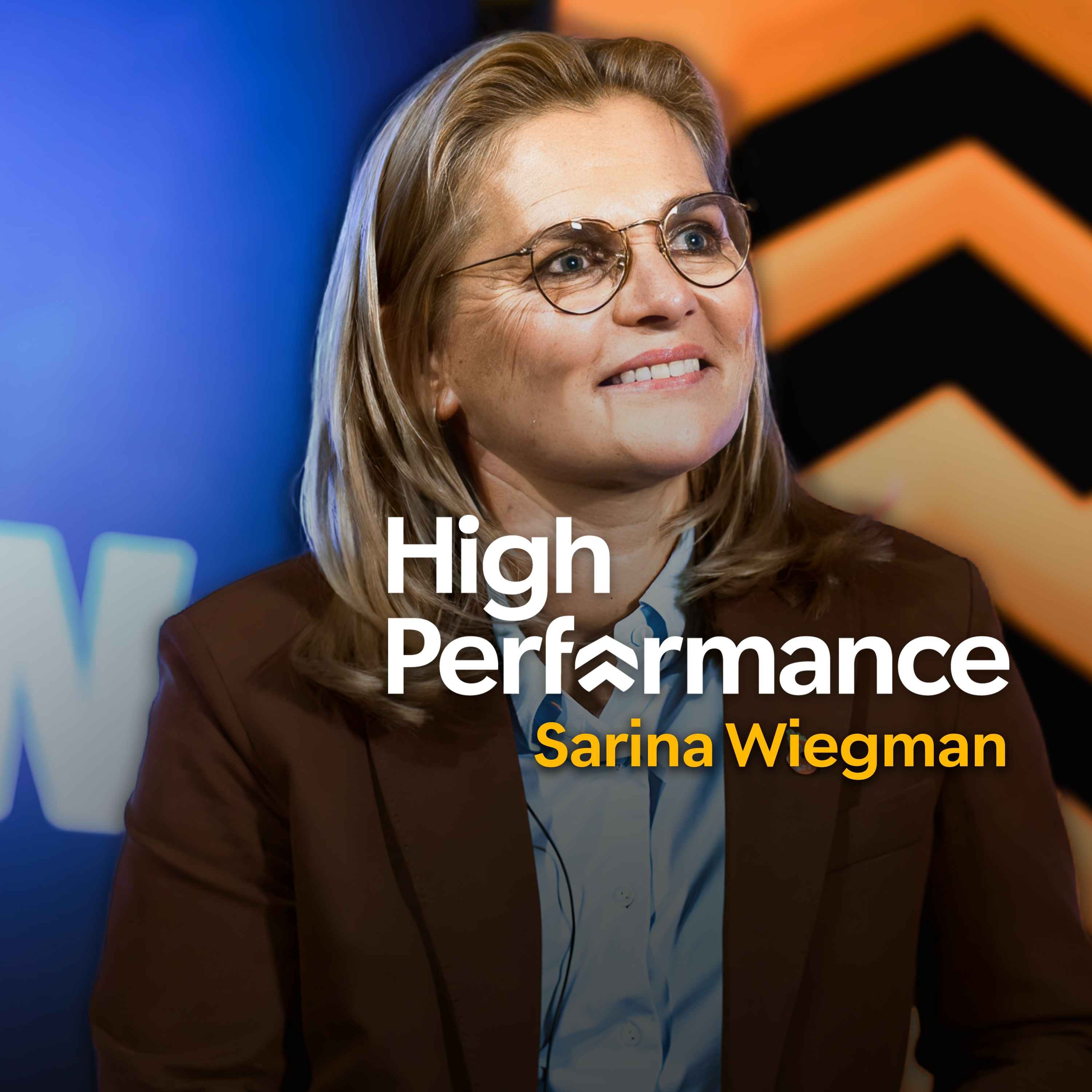
In this episode of The High Performance Podcast, hosts Jake Humphrey and Damian Hughes converse with Sarina Wiegman, the head coach of the England Lionesses, who led the team to victory in UEFA Women's Euro 2022. Wiegman shares insights on leadership principles, personal experiences, and how to cultivate a winning mindset within a team.
Written by AI. May contain mistakes.

Get the gist, explore an idea or ask about something said.
 Claude
On The High Performance Podcast, what are the key points of this episode?
Searching your listeningAutomatic transcript. May contain errors.
0:28Watch it early on the High Performance App. expert right when you need them. Work smarter and faster with Upwork. Go to Upwork.com now and find your freelance expert. That's U-P-W-O-R-K dot com. Post a job for free and get started today. If you're a maintenance supervisor at a manufacturing facility and your machinery isn't working right, Grainger knows you need to understand what's wrong as soon as possible. So when a conveyor motor falters, Grainger offers diagnostic tools like calibration kits and multimeters to help you identify and fix the problem. With Grainger, you can be confident you have everything you need to keep your facility running smoothly.
1:05Call 1-800-GRAINGER, clickgrainger.com or just stop by. Grainger, for the ones who get it done.
1:15This episode is brought to you by Opera Air, the first browser with mindfulness at its core. Now, most of us spend hours every day online, but how often do we pause to take care of ourselves whilst we're doing it? And that's where Opera Air comes in. It's a lightweight, fast, secure browser built not just for productivity, but for your well-being. With Opera Air, mindfulness is built right in. You'll find free breathing exercises, guided meditations and soundscapes with ambient sounds, lo-fi music and binaural beats, all designed to help you focus, relax and even spark creativity while you browse.
1:50You come to a moment, they say, OK, who are we? how we can win and what behaviors are part of that winning environment. So when she got really at the end of her life, she gave me her bracelet. I felt so connected with her. It was just a really nice moment. You're in this stage now, you play at the highest level and it's an absolute privilege that you're allowed to play for 80 ,000 people. So we better enjoy it. That is the voice of England Lionesses manager Serena Wiegmann. And this is High Performance, the podcast that turns the lived experiences of the planet's highest performers into your life lessons.
2:32I want to start this podcast at a particularly crucial moment. September 2021. Serena addresses her New England squad for the very first time. A group of players still carrying the weight of near misses, still unsure what it would take to win. There's no jokes, no easing in, just pure clarity. She shows a photograph of her family, outlines her values, respect, development and transparency and then she delivers the message that changes everything. That's exactly where this conversation begins. At the moment a team shifted its mindset and a culture of accountability and strong belief in their capability took hold.
3:21With England now heading into the semi-finals of the Euros there's never been a better time to hear how Serena built a winning culture within the Lionesses how she fostered connection and how her biggest lesson came from carrying a devastating personal grief This is a story of Serena Wiegmann
3:46Now look, when I came in in September 21 I met the team of course I knew the team because I'd followed them and we played them several times and we met at Monday and we had our first game on Friday so I first needed to give some clarity what the week would look like so I came in I said well this is the this is my philosophy of coaching this is who I am I showed a picture of my family too so I shared some private things and I said well this is the structure of the week so we have meetings there and I tried to keep it really simple but it had to be very clear what the week looked like what my philosophy was like we're not really going into detail because that came all over across the week but that had to be clear because we had to play on friday and then over that first week we had individual conversations with players arian and i did that my my assistant coach who came with me he's also from the Netherlands and we then we started to ask the questions you know what made this team so good and what do we need to do to make this team even better and get to the next stage and then we started to work you know more personal questions which they wanted to share or not that's up to them.
4:58There's loads for us to pick up there just one quick one and I hope you don't mind being personal just for a moment like you said you told them about you what did you choose to tell the lionesses the first time you met them about you and why did you choose to tell them what you told them um i found it important to tell them uh what my values were what were they my values are respect i always try to treat everyone with respect growth development and clarity so i gave clarity straight away this is how we're going to do and i didn't say this is how we're going to play and things we tried to figure out how they help and of course i'd seen that too So the fundament of this team was there already.
5:41If you make the semifinal three times in a row, then they've done a really good job. So when we came in, I just thought, okay, what's going really well? And what can we add to make the next step? Because there was already a big fundament. Talking about Jill, so coming back on that, it's a nice story. So what we did to try to connect, like Jill was probably, Like, the Linus, they're incredible. And they're all unique and different personalities. And I'm really, I'm so proud of them, what they do on the pitch, but also how they change the society in a positive way. But Jill's just the most special person I've ever met.
6:19Like, it's just incredible how she does everything now, too. She's all over the place, all over the world. And she's always smiling. So a couple of camps, then we wanted to connect. So we paired players and staff. And we gave them a task to talk about themselves and get connected. And I mixed up with Jill. So we went out for a walk at St. George's Park. And she said that she felt a little uncomfortable. I thought, Jill, uncomfortable. I've never ever seen her uncomfortable. And then it fell apart. And we really had very nice conversations and got really connected and talked all about personal stuff.
6:56Lovely. And I'm interested in the answer you got back, Serena, to those two questions when you went into the Lionesses of what did they regard they were already doing well and what were the key things they felt they could do better? Yeah, I haven't asked them if I can share that with the world. So I'll be a little general. They said... They're not going to tell you off though, are they? No, I know. Right. You're literally the boss. Yeah, yeah. Yeah, well, they said under the highest pressure, they sometimes didn't stick to the plan because they were trying really hard by starting doing their own thing and didn't support them good enough.
7:34So what we really, and we saw that too. So yes, everyone works so hard, but you have to stick with the plan because then you become accountable. So that's mainly what they said. And what brought them so far is that we have enough quality. We have so many good players. We just need to take the next step. So they say to you, when it really matters, we don't quite manage to get there. What's your job then with that information? I'm really interested how you process that message and then along with Arjen work out how do we solve the problem. Yeah, and not only with Arjen, with the whole staff, basically technical staff.
8:09So yes, we asked these questions. We made a summary of that and gave it back to the team and said, oh, this is what we got out of the individual conversations. And there were also a couple of things that they wanted some more clarity about how we're going to play. So then you come to a moment, they say, okay, who are we? why are we together? Of course, it's the best players of the country to come together and we want to win. Then you have to give clarity how we want to play, how we can win and what behaviours are part of that winning environment. So that's what you're working on all the time, clarity on so many things and how we treat each other, how we want to play, what's expected in training sessions.
8:53So there's a big story around that. So what were the behaviours that the team identified? they wanted to embody? Keep doing the things together. Well, then from the feedback we get, we said, okay, when we have a plan, we have to stick to the plan. But within that plan, so style of play, so you also have to feel the freedom to make your own decisions on the pitch. So what we just said, football, the ball's always open, so it's all about decision-making. But in our principles of play, we know how we want to attack, We know how we want to defend and what we want to do in transition moments. And then when you do your task really well, you become very accountable.
9:35And that's what we speak about all the time. But you're always also allowed to make mistakes because football and life is absolutely making mistakes. If you never make a mistake, you're not developing because then you don't take action. Well, there's a brilliant bit in your book where one of your players describes almost like that light bulb moment when you came in and said, you can make mistakes here, you're okay to do that. Would you tell us about that instantly? Yeah, when we came in, then I noticed that some players in training, things went well, but then we played the game and I thought, they don't take action.
10:11They just pass the ball to another, so you make that decision. I thought, we're so much better than this, so I just encouraged them to take action. And when you take action, you can do something extraordinary and you can make a mistake. but at least you can learn from those things and you show who you are too so you have to take action and if you make the same mistake five times in a row then we have a problem and the player has a problem too so you do have to learn from your mistakes there's the clarity that she talks about cheers but would you do the same Serena would you if you made a mistake whether it was setting up a team tactically or you picked the wrong personnel would you go in and admit that mistake to them i would admit and accepting mistakes for myself is harder than from others yeah i bet serena told us a great story when she arrived at her car came around there and she's like what were those people queuing up for we were like they were queuing up for you um talking about change and adapting to change i just want to read um a quote from from your assistant and talk to you about when you first arrived in england because um first of all ian verring's quote he says in your book in england it's a whole different ball game and i find it fascinating i'm interested in why it's so different here and how we can actually open up more easily about the things that matter and you spoke about coming into english football and you know when you're in the netherlands and you say that's interesting you actually mean oh that's interesting over here we mean yeah yeah that's interesting um and this this need for you to kind of almost relearn the language that you'd learned when you were in Holland, because we talk differently over here.
11:53And this closed nature with which a lot of us operate in this country, I'd love to find out a little bit more about that, because you managed to turn things around very fast. Yeah, you know, before I came in, I took some English lessons and I tried, well, I played in the US, so I know a little bit of English. And in the Netherlands, everyone speaks English too. But these things, the difference, like if you want to communicate effectively, and I'm talking about interesting and everyone thinks, well, she thinks we should not do that. And for us, when you say it's interesting, you want to learn more about it.
12:25So it's totally opposite. So you have to know a couple of things. And I made that mistake too. Well, there were two things. One, in the beginning, I said, when we watched, when we reviewed training sessions or we showed clips, I said, well, this is pretty okay. And then I thought, well, we're doing a good job. So after a couple of months, some players said, well, when you say it's really okay, it's actually average. And I said, oh, it's really nice you tell me now, because I was actually giving you a compliment. So that was really nice. And one time I went with the general manager, Anja, she's Dutch too.
12:57And we went to a game, and then Sue Campbell, she said, oh, you could come over for dinner. And then we said, well, the English people invite you for dinner. You're not sure if you should go. So we were thinking, okay, if you're in an Netherlands, you say come for dinner, you go for dinner. So we said, talking to each other, I think for half an hour, should we go or shouldn't we? Well, if we go and she doesn't expect us, it's really embarrassing too. So at the end, we didn't go. So the next morning, I asked her, Sue, did you really mean? Yes, yes, you could have come. I said, oh, well, I'm sorry.
13:29So then we felt it was rude. We didn't go. So, well, we learned a lot about that situation. And in the team, you know, they laugh at us sometimes. Some words I just keep mixing up. And you just, you know, it's just funny. and a little bit of self-humour that brings some joy to you. Can we go to that final? Because, again, to quote Jill Scott in your book, she talks about that you changed the way she thought. She thought you had to win something to build relationships with the fans. And you said you build the relationships with the fans whether you win something or not. Yeah. But I'm interested in your experiences and your memories of that day at Wembley when we did win the Euros.
14:08Would you tell us it from your perspective on the touchline? well, that's one of the most incredible sports moments of my life. So that noise, I will never forget that noise. Probably you were there.
14:29I think it was also your support because that helped a lot too. What I noticed when I came in, like, I know, when I was an international player, we were happy when there were 5 ,000 people coming to watch us. And now the game has changed so much. So lots of people come out there, travel the whole day to come there. And we went on the pitch and we went like this. And we thought, we have to focus on the game. And I thought, we should be really grateful and happy. And we were happy, but they thought that I was thinking that they weren't focused on football when they would wave to the fans. So I said, you better go out and wave because they took all the efforts to come and support us.
15:13And I know you're such professionals that you go out there, you wave, and then you start your warm-up. And I'm not thinking you're not focused on football, but you're in this stage now. You play at the highest level, and it's an absolute privilege that you're allowed to play for 80 ,000 people. So we better enjoy it. No discussion of that final would be complete without also talking about your own personal situation in the build-up to that. I mean, what I find incredible, and again, reading your account of it in the book, is how you processed the grief of dealing with your sister and her passing away to be able to come and perform.
15:49Would you tell us a little bit about what you learned about dealing with those emotions and still being able to go out there and be in the moment? Yeah. Yeah, I think, you know, in life, so also in football life, sometimes things go really well and sometimes things don't go well and you don't have control of a lot of things in life. My sister got diagnosed with cancer right before the Olympics, the Netherlands, and it took about a little more than a year before she passed away. And at the moment I started in England, she was already ill. so and I thought when I sign a contract abroad I hope that everyone stays healthy because otherwise it becomes really hard and then she she got that um but we found a way and it was really nice we played one game in Luxembourg so she could come and drive there and unfortunately she couldn't come to England at all because she just we had bad news but she got bad news all the time so before the tournament we knew she was going to pass away because she went really downhill of course you don't really know the moment but she went really bad and but we had had so many conversations uh together and she was such she's one of my biggest fans and my husband he's over there so she said you better perform there and you better go get that um get that prize and i'll be there i'll sit on the crossbar on or on the on the post for you and we we had some of those moments and it was so close so she she wanted me to do well and of course i wanted the team was so supportive the fa the whole team was so supportive so i could park it at that moment and perform really well i actually really enjoyed it too and afterwards i got hit a little bit yeah as the final whistle blew and you walked onto the pitch and famously kissed the bracelet that was her her bracelet wasn't it yeah yeah when i so when she got really at the end of her life and i had to go she told me you have a training camp you have to go i found that really hard so i said well can i take something from you and so she gave me her bracelet um so that just felt really nice and i just kept it i still have it on and well at that moment that you become european champion it's so emotional i didn't even know i was doing that you don't even you're not even aware anymore that the whole world is watching there's so many cameras around you i was just doing it and later on i noticed okay i had done that and everyone's seeing it now but that's fine too it's part of life and i felt so connected with her that it was just a really nice moment so what can you teach us people here tonight and listening to the podcast about managing emotions even in something as extremely intense as that and still be able to go out there and function yeah I think first of all you have to embrace it like you can park things for a certain amount of time but you can't just push it away and thinking it's not there because well part of a book about the body keeps score so so then it comes back at moments you really don't want it or you you get pain in your body and so you have to find a way to also grieve and mourn um and and take that time but you can't just say okay now i'm going to sit down and now i'm going to be really sad so that doesn't help either but at the moment come you have to embrace it and and and find those moments and then there are some moments that you have to park for a while and then and i think i can do that pretty well i've been working in this environment for such a long time i've well this was the hardest one but there have been moments that I had to park things too and then at another moment you have the time and it will hit you anyway but then you have the time to embrace it and really take those moments to process it too.
19:43In many ways did it actually help to put into perspective that football is just a game you know sometimes I think in the role you're in it can be so all-consuming and actually you know your husband who's here this evening and your friends they're the ones that pay the price. You know, your family members that you don't spend as much time with and your daughters, they pay the price. And maybe this was a moment that actually reminded you that there's an awful lot more to the world than just winning and losing games of football. Yeah, in those moments, absolutely. And then sometimes at that moment, when it's so fresh, you think, oh, it's worth everything, but then things go on and then you get so into football again, you want to win everything, you want to do all your best and you get sucked into it again.
20:23but what does happen is don't wait do things now when you have the opportunity to do it some things you would really want to do so don't wait because you don't know what your life looks like next year things can happen so quickly so that's what I really learned and yeah just family is the most important thing and health family and health is just the most important thing it doesn't mean you you have to make choices when you're in this environment you can't just say okay now now it's family time I'm not coming to training session that's not how it works but you just have to to work on everything to keep things right yeah well thank you for sharing that with us the other thing that you and your incredible players seem to be experts at is choosing the right moment to make your voices heard and as the father of young daughters who love sport I'd love to just take this moment to applaud you for the letter that came out straight after the success in the euros because the truth is absolutely yeah and that's not me that's really the players the players did that um incredible i'm so proud of them like taking that moment but it starts with performing at the highest level so first we're professional players want to perform at the highest level and when you do then you have the platform to address things and they really took that moment and they absolutely made a positive change for society and hopefully your daughters will benefit from that too.
22:00I certainly hope so and look you know we've seen in recent months there's still big areas where these things need to change and they need to improve and in fact you wrote in your book that you know you learned to change the way you make decisions when you're in front of men? Yeah, I know I'm generalizing a little bit, but that's how it works for me, and that's what I've heard from a lot of women. When they ask you, do you want to have this job? The first thing you think, okay, I can't do this, and I can't do that, and I can do that, but you first think, what you can't do. I think with a lot of men, you can confirm or not, they think, yes, I'm going to do it, and then they start a job, and I think, hmm, maybe this is not right.
22:37Yeah, but the first time... My wife is nodding at the back of the room right now. So I think that's why it's also important that when you have these pros that you need women in the room. And women most of the time need a little encouragement and a little more time to overthink things and then take the decision. Oh, yes, you're now looking very different. Your face. No, but I think it's like... I talked to Eleanor, like three women that are in different environments also working in men dominate or at the highest level. And we shared those experiences too. So like you have to encourage women a little more in general, I think, and give a little more time and not think, oh, she's insecure of that.
23:27We just need one more time and need to be encouraged. So you can't do it. And is your overriding emotion, look how far we've come? or is your overriding emotion, look how far we've still got to go? Oh no, that's black and white a little bit. Yeah. No, I'm really like...
23:50Well, I think I'm so happy that I've been part of this whole journey and I could not imagine that we're here now where we are. And that's so positive and really positive because we've taken so many steps forward and I think we're going into the right direction. But I also think we still have a long way to go. So it's a little bit of both. And can I ask you about yourself as a coach then? What are you looking to improve? Keep connected with players, keep connected with staff and trying to get better. Keep listening to the players from what do we need to do better, but also keep the trends, and that's what we're doing.
24:29so what's developing what do we have to do then and that's all I really want get feedback also from players and staff to say okay where can I still improve and things I think you can always improve and things so before we move on to our quickfire questions your feeling is that despite what you've already done there's still so much to do with the Lionesses right? yeah why are you asking that? we're excited
25:00Okay, quick fire questions, Serena. The first one is, what three non-negotiable behaviors do you and your team around you need to buy into? Non-negotiables. Not working hard is absolutely non-negotiable. Not acting in team first so that you're not supportive to your teammates. Not taking action is a non-negotiable. Not taking action that's on and off pitch. So you always have to keep communicating in good times. Well, bad times sound so bad, but in challenging times, keep communicating. So not taking any action when things are happening in the team that need to be taken action on, that's a non-negotiable.
25:43If you could go back to one moment of your life, what would it be and why? In my football life? My personal life? It's up to you. Well, that's a very easy answer. That's the birth of my two kids. Very nice.
26:03Well, our two kids. You need two persons. Come on now, it takes two to tango. No talk about the making of. No talk about the making of, no. No, no, no. I thought you were more offended that she hadn't said the wedding day. He's very direct to his Dutch. How important is legacy to you, Serena? I think that's very important. I think over the years, I feel more and more responsible to share things and to have a legacy. And I think with the book, where lots of people contributed, and I'm very, very grateful they did because I think it's a really good contribution to the book. I think I hope to inspire people you know I see so many different people here and it's really nice to see so many different people here but people from everywhere whether you're in sport or management or education it doesn't matter but even more girls and women to inspire them and hopefully that brings more coaches more female coaches and that's what I hope for also with this book even more yeah that would be really great Lovely.
27:20What advice would you give to a teenage serena, just starting out? Follow your heart. That's what I basically did, always. And don't let anyone tell you you can't do it, because you can if you want to.
27:43What is your biggest strength, or what is your greatest weakness? my biggest strength i think i'm connecting people connecting with people i think that's one of the biggest strengths but maybe you should ask other people that work with me and your greatest weakness i think i'm doing my best and i'm doing a lot better but not switching off and the final question then serena is what is your one golden rule to live in a high-performance life? Commitment. Yeah, I think, well, first of all, when you're in a high performance, you have talent. But I think commitment and perseverance are very important.
28:29Brilliant. Well, look, can I just say, on behalf of every football fan in this country, thank you so much for answering the phone when the FA called. And I know that when you came in, you wanted to completely rearrange the whole setup of the backroom staff and how everything operated. And you went in there and you met a bunch of players that had doubts and fears and weren't sure what was going to happen. But there was one thing that we are in no doubt about at all. What we needed was a direct coach to come in and be direct with our players. And you delivered such joy. and I think I speak for all of us when I say that you know I really hope that there is a lot more to come from Serena Viegman as the England manager thank you so much for joining us
29:24thanks for listening to this episode of High Performance with Serena it's a reminder that high performance isn't always about trophies it's often about connection clarity and commitment. Serena showed us how great leadership starts with listening and how the smallest actions like learning to ask the right question can lead to the biggest change. If this episode resonated with you please share it with someone who will take value from it as well and don't forget to follow for more powerful conversations with the world's highest performers. We'll see you next time.
30:34We'll see you next time. tools like calibration kits and multimeters to help you identify and fix the problem. With Grainger, you can be confident you have everything you need to keep your facility running smoothly. Call 1-800-GRAINGER, click grainger.com, or just stop by. Grainger, for the ones who get it done. You're invited to spend an evening on Fremont Avenue. For generations, this house has been home to soulful music, good food, and cutthroat card games, saints and sinners, unexpected laughs and unspoken truths, good times, hard times, and of course, family, always family. So pull up a chair and join us at Fremont Avenue, a world premiere play only at Arena Stage.
31:18Performances start October 8th. Tickets at arenastage.org. Your sausage McMuffin with egg didn't change. Your receipt did. The sausage and muffin with egg extra value meal includes a hash brown and a small coffee for just$5. Only at McDonald's for a limited time. Prices and participation may vary.
As UEFA Women’s Euro 2025 builds momentum, here is a powerful conversation with England Lionesses head coach Sarina Wiegman, who led the Lionesses to victory at Euro 2022.
In this episode, Sarina shares with Jake and Damian the leadership principles that shaped a Euros-winning team, highlighting the power of connection, clarity, and trust. From her personal grief in the days leading up to EURO 2022 to guiding England to glory, this is a masterclass in calm, values-driven leadership.
Listen in as Sarina reveals the power of clarity, connection, and calm leadership, and offers lessons that reach far beyond the pitch.
Listen to the full episode: https://pod.fo/e/2013d6
Hosted on Acast. See acast.com/privacy for more information.


