
 Ask ChatGPT


 The High Performance Podcast
24 Nov 2025 · 1h 17m
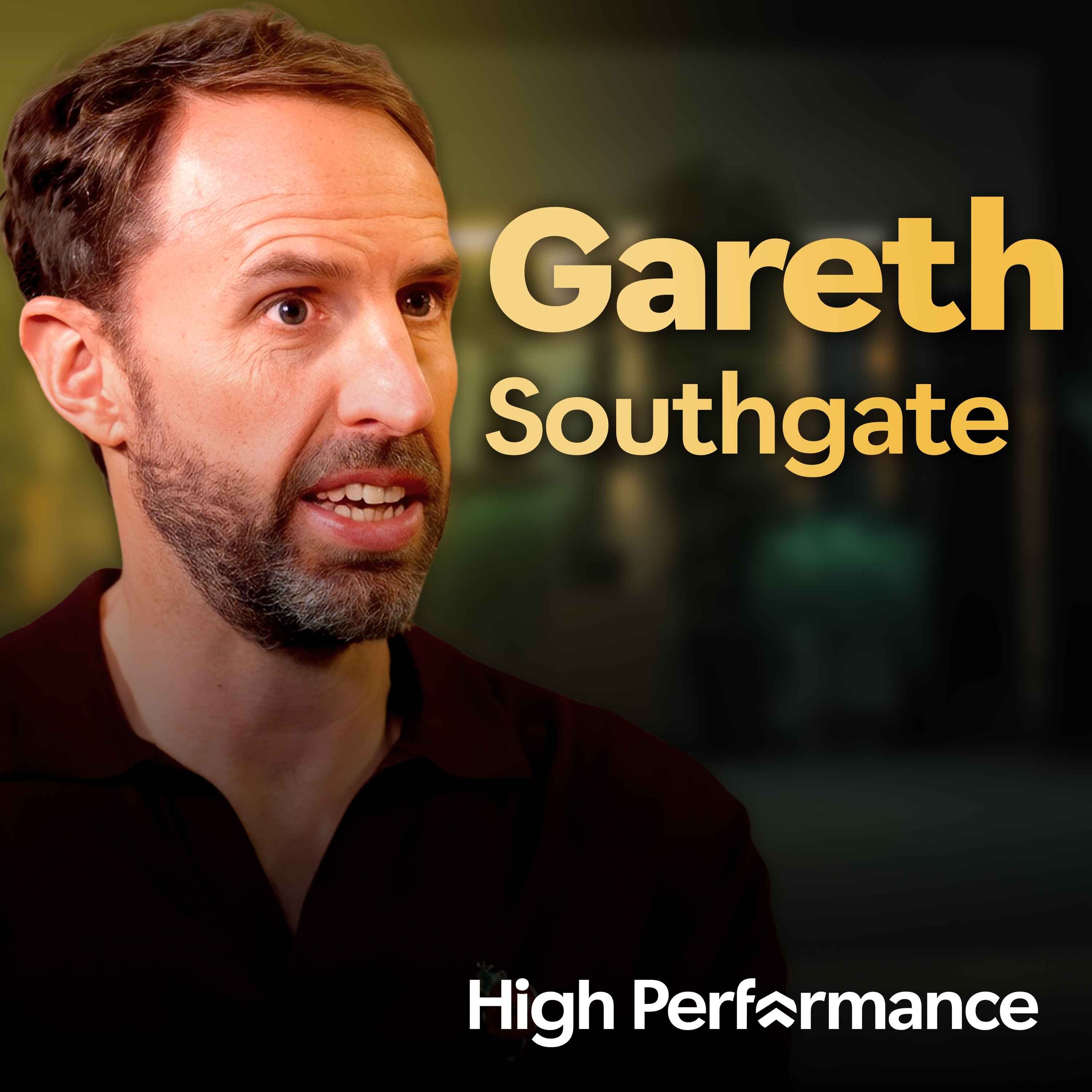
In this episode of The High Performance Podcast, hosts Jake Humphrey and Damian Hughes welcome back Sir Gareth Southgate for an insightful conversation about his tenure as the manager of the England national football team. Southgate opens up about his experiences, the pressure of leadership, and the evolution of team culture, providing valuable lessons on resilience, empathy, and accountability.
Written by AI. May contain mistakes.

Get the gist, explore an idea or ask about something said.
 Claude
On The High Performance Podcast, what are the key points of this episode?
Searching your listeningAutomatic transcript. May contain errors.
0:00Unlock it early on the High Performance app. Gareth Southgate England's former manager who opens up about life leading his country Then we go to a penalty shootout For us in that moment it was about the process that gives us the best percentage chance of winning A friend of ours had looked after the dog and he's thrown up all over the bedroom floor Bear in mind the Spanish manager is currently in Madrid on an open top bus Go over to support the fans that are lobbying beer at me If the joy is gone you're going to find it hard to give that feeling that you need to give the players that is the voice of gareth southgate the former england manager a transformative leader the man who took a team that hadn't won a knockout game in a decade to back-to-back european championship finals but this is about so much more than just football because this is a conversation about gareth navigating incredible scrutiny dealing with the highest stakes and defining a legacy that goes far beyond the scoreline.
1:01We're about to delve into the profound shift from managing football results to managing human beings. Gareth explains to us what it was like walking through the door as England manager in 2016 to find a team disconnected from its fans, disconnected from the media and players just protecting themselves from failure. He explains to us why he took his team into the mud with the marines and what the soldiers revealed about who the real England leaders were. We talk about the penalty shootout redemption from missing in 96 to masterminding three wins in four attempts and why he told Marcus Rashford to practice less and that final tournament in Germany having beer thrown at him by England fans him asking the people closest to him not to come to the tournament and actually why he knew before that final whether they won or lost he'd be walking away please welcome back to high performance the incredible Sir Gareth Southgate
2:01Welcome back to High Performance. Thanks for having me again. Well, Gareth, it's been 15 months since you walked away from the England job. Why? Well, why? Expectations have changed around the team. So the freshness that we had at the start, you know, there's progress, there's new things we're doing, there's enthusiasm, the fans are on a journey with us. You know, once we'd lost the final to Italy, one or two games over the next couple of years, there was a different narrative. There was a narrative about perception of style of play. So, you know, we play with a handbrake on more. Actually, there's only two periods in English football where they've scored more goals per game.
2:48So, you know, whatever the style of play is, we're scoring more than previous generations. I think some of the stands I took for the team on social issues affected the support from some sections of the fans. So there's a little bit of division now over whether I'm the right person to stay. There's a little bit of a narrative of we've got the players, we just need to get a coach that can deliver the win. And you felt that? Well, yeah, because inevitably, although I'm not searching for articles, I'm sitting in press conferences people are asking those questions to me, they're telling me that they're challenging me in press conferences you know people are saying you're the person holding the team back you know there's an alternative narrative where the way that we manage the team is why we got as far as we did maybe we'd have gone out far earlier but so I'd got to a stage where the FA were very keen for me to stay.
3:55They offered me a new contract. I didn't think signing a new contract before the tournament would be a good idea because I'd seen Fabio Capello do that years earlier and it created a tension. Well, why is he getting a new contract before the tournament? It should be after. And it actually, I thought, increased the pressure on the team. So, okay, what will be acceptable performance? Well, that's hard to judge, but I knew anything less than winning it. And we're one of the favourites, but still only even as one of the favourites, there's a 15 % chance statistically of winning it. But if we don't win, I just know the narrative will be a desire for change externally.
4:40And then during that tournament, that we didn't play as well as we'd have hoped, we couldn't find a rhythm. We had players with injuries. We had some key players that we lost just before the tournament, people like Maguire. By the way, people who we were criticised for years for playing, but have now actually become a really important part of how people view the team. So then we're in the early stages of the competition, the crowd are turning in the stadium. And that's now starting to affect the team, I felt. You know, we're back to the tension in an England game. and we're back to this sort of sense of entitlement.
5:23And probably once we play Slovenia again, we finish the game, we haven't played well, but we've topped the group. You go over to support the fans, they're lobbing beer at me. You're kind of thinking, well, probably win or lose, it's probably the right time to go because further down the line, this is just going to ramp pressure on the team. and also from a personal perspective the enjoyment from the wins was getting even shorter and shorter even the semi-final against Holland I made changes one sub sets up the other sub to score the winner and it's about as good as it can get as a coach we're now in a second final first final on foreign shores celebrate on the pitch do a ridiculous dad dance on the pitch love watching the players celebrate in the dressing room for five minutes and then suddenly I thought, no, no, but I lived all this in the last Euros and three days later, you know, it was carnage.
6:26So I was straight on to the next thing. So even the semi-final win, I probably enjoyed it for eight, nine minutes. And if the joy is gone, then you're going to find it hard to give that feeling that you need to give the players. probably any leader it's a long period eight years you know if you look at leaders in anything i think people get i've said in the book incumbency fatigue or whatever they call it you know they're ready for change circumstances around the team don't change you know if we're to change your government tomorrow the new government's got all the problems and issues to deal with but people that elected a different government would think there's hope because they're hoping for something different.
7:18Whoever's in power, I think that's what happens in football. There's moments where the support's gone for managers. Clubs change because they're trying to release the tension and there's hope but actually they've still got the same centre-back, they've still got no money to spend, so you've got to be a wizard to come in and make that very different because a coach is relying on all the other parts of a football club or a rugby club or whatever, being in a good place to be able to succeed. But can we go back to that voice in your head at this stage because some of this narrative that's building around you is unfair patently based on the facts of history and decisions you've made in that semifinal.
8:02what were you saying to yourself to be able to still front or to still represent the leader that the team needed that i've got to navigate the team through this of the four tournaments this is probably the most challenging for keeping the outside noise on the outside so after every game bringing the whole group together players and staff talking to them about this this is where we're at this is the reality there was a picture we drew 1-1 with Denmark not a good performance the Danes are celebrating with their fans they've got one point and they're on two points for the tournament our players are like this they're on the floor they're head in hands we've also got a point we're top of the table on four points but the players have gone with this narrative that we should be ashamed of the performance not thinking hang on this is tournament football you know the objective is to qualify from the group so fellas we're fine you know we've now two games gone we're a 97 chance that we're through anyway whatever happens in the third game so we've got to stay on track we've got to stay calm in a in a tournament you're in this bubble where you can be so affected by what's going on outside and lose the togetherness, lose the sense of direction that my job through that tournament was to keep reminding them, boom, hey, we've got to get better, by the way.
9:39This is what we've got to do better. We're not doing this well enough. But we're still here. And regardless of everything else, we're showing resilience and we're showing spirit that we've developed over six, eight years through the big nights where we've won and the nights where we've lost. So let's keep on track. And they needed to see the leader as confident of where we're heading. In those moments, everybody's looking at the leader. How's he dealing with it? Am I ready to follow him? How's he coping? So I know what I've got to project, but I also know in my room, I'm thinking I've got to see this through.
10:21I'm going to keep my dignity in the press conferences. I'm not going to bite. I'm in control. I know I'm actually feeling personally in pretty good form. So, yeah, so all of those things where, had I been 10 years younger, back to my time at Middlesbrough, I've got nowhere near the catalogue of experiences to draw on. So I couldn't possibly have got through that then. But 10 years later with 100 internationals behind me, totally different experiences to draw on, strength of resolve, everything really. And what about your family though? Because that must be pretty horrific for them to watch you having to walk through this.
11:07Yeah, well that is, I mean, reality is that is different because they haven't elected to be in that environment and they are living it and they are reading about their dad. they didn't come to a game until the final because I said you know I don't think it's a good idea for you to come I don't think you should be in the stadium because of the abuse well yeah just because the environment for them the discussion the narrative around my position through that tournament I didn't want to be worrying about what they might be dealing with so let's cut that problem out you guys stay at home when we won the semi-final I said you might be alright now story's turned a little bit you might as well come because you never know we might actually have an incredible night that'll be so again you've got to manage the things that you're in control of it'll be interesting the Ryder Cup lads next time do they want all their families around or actually I don't want to be worrying about I've got to play.
12:12I can't be worrying about those other things. So I had to manage. There's always a bit of... I have brilliant people that look after me that would have helped my family with their travel and everything else. But a small part of you would have still been saying, I hope they're all right. I don't know who's sitting around them. What are they saying? So we avoided that issue. Did they know you were finishing the job after the tournament? Yeah, I did have that conversation with them because I had to reassure them. Look, I'm reassuring them. I'm fine. They're at home. They're reading things. They're watching television.
12:55They're listening because they're not as experienced as I am at closing those things off. So they're thinking, blimey, is dad all right? In a rare moment of worrying about dad. so but yeah so I'm thinking no no no look I know where we are you know this if it ends on Wednesday we've had an amazing journey I don't want to go and you know Slovakia first knockout game or whatever it is I don't want it to finish on Wednesday but if it does we'll have to deal with it but I'm fine okay we're on to the next one we're on to the next one and I needed to reassure them that I was fine and it was easy for me to do that because I was in a good place.
13:40So I wasn't having to act that. They would have known me. They would sense where I was with everything. You didn't feel lonely? I had brilliant staff around me. So you're never succeeding on your own. You're constantly drawing on good people around you. Leadership position, there are moments where you are the only one. and you make decisions and you're left with your own thoughts. But I wasn't in that camp thinking, oh God, you know, I'm not, I felt unbelievably well supported by good people. Obviously there's the moment that you decide to walk away, right? Before that, did you try and turn things around and explain this is unfair for the following reasons or attempt to change the direction of the media narrative and the public mood?
14:35yeah but I think this had been building for you know I don't think this was a two three month thing I think we'd been four years of not picking you know he's not picking the right team he's not playing the right way you know there's a better alternative out there so you are fighting it for you know it wasn't like oh okay I'm getting a bit of criticism I'm off you know I'm a bit more resilient than that there'd been this build-up for a long period you know even through the euros at home we should be playing should be playing x should be playing y why are we playing five at the back against germany well actually we've matched them up and we've we've won against a very very good side first time we've beaten germany in a knockout game for 30 years so you know it was a constant fight i had those two three years leading into russia that it was all it's all new it's all fresh did you understand it at all or was it just confusing like why is this the narrative around a successful team, the most successful team since Alphamsey?
15:37Well, that's logical to take that view. And of course, part of me would definitely think that that would be a fair way to look at it. But I understood it because I've been in football for 37 years. So I understand that as a leader, you know, the important thing is they come for me, not for the team. My job is to take it for the team. I've got to give them space. I've got to take the pressure off of them so I've because of all the things I've that have happened in my life I've developed that resilience that shell that you can cope with it a little bit more and you know I can't take it all because you know everybody's got to take a little bit but I'm going to protect them as much as I can um so and you accept you know I'd seen everybody from Graham Taylor to Bobby Robson I knew what the job was most amazing life experience incredible memories nights that I'll never ever forget that people that come up to me will never forget you know some kids think we always get to find us they've never known anything different they haven't lived the 45 years we have so leadership's hard isn't it you know and it's never been harder because of 24-7 media, social media.
16:54That is the landscape. It comes with great rewards, great experiences, and there's another side to that as well. If you'd have known the cost, though, would you have still taken the job? Well, I did know what the costs would be. When Roy left, I was asked to apply, and I backed off of it, really. And one of the reasons being, I'd seen all those previous managers and, do I want to go through all of that? And a little bit of a lack of belief in myself perhaps and a feeling that actually an internal appointment at that moment where we'd just lost to Iceland I think would have got lambasted by the public.
17:33So actually two months down the line when Sam left slightly different, actually we've got a game in a week's time somebody's got to take the team I'm the only one left so we'll give it a go there's a different narrative that you're inheriting. If you're going in on the back foot from the start it's hard to change that. I see managers appointed now and there's either this is great and we're ready for this. Daishi going to Forest, he's a Forest guy and so there's a little bit of momentum but I've seen managers appointed and fans are against it from the start. Russell at Rangers. you're pushing a boulder up a hill from the off you know it's not impossible to turn that around but it's much much harder so despite the way it finished you didn't ever regret taking the job
18:36oh god no i mean the life experience i've had the the things i've been able to do i've met royal family, prime ministers, travelled the world, had the most amazing nights in professional sport, been involved in some of the biggest games in world football, amazing relationships with players and staff. So, no, I mean, you know, for all the, we focused a little bit on a period where it's hard and that leaves a few scars, there's no doubt about that. But no, what a life experience to be able to do that, hold that position for the length of time I had. And the following day after you told the FA and you were no longer the England manager, how did that feel?
19:22A lot calmer.
19:26I told a story, did a stage show the other day. The morning after the final, we land back in Birmingham. We're obviously charter flight. my family is still flying back on with all the other families so they're they're going to be home after us so i get back to home and um a friend of ours had looked after the dog we've got a little cockapoo by the way i don't normally like to be seen out in the hours of daylight with him i'd prefer a lab or something teddy teddy he's 12 now so i open the door and there's Ted. I mean, he doesn't care about the final, does he? You know, he doesn't care who's played left back.
20:13He's there. It's unconditional. Got all my bags from six weeks and I go upstairs, I take my bags upstairs and he's thrown up all over the bedroom floor. So now bear in mind the Spanish manager's currently in Madrid on an open top bus with the trophy so if you want the contrast between the margins of winning and losing there you are in a nutshell it's turning welcome home you know what though in some ways isn't that almost the best welcome home because it's a reminder that like life just keeps on moving yeah yeah yeah like i mean i'm not putting myself in with rock bands but i've heard about rock bands going on tour and the struggle to adapt back to you know i mean my wife's pretty quick to tell me never mind that you're home now get the bins out so but that's you know that is life isn't it life goes on okay and but but they are the that's the difference you know I'm we're 85 minutes won all in the final they were the better team but if we win 2-1 you know I'm not home alone with the dog I'm in Trafalgar Square you know that's that's the margins of winning and losing and that's legacy in some ways for and it made it's made me wonder historic figures that have incredible history that we've read about you know church or whoever else it might be across world history i wonder what those margins were in those moments and how we judge whether people were successful or you know less successful take a look at that photo and that fresh-faced young man on the day he's announced as the England manager.
22:04Did he realise what was ahead of him, do you think? No, clearly you can't know at that point how everything's going to play out. I do remember talking in a press conference and saying, I've seen people get into roles and that's almost been their end. And I was determined that, okay, get in the role, that's fine. and it's a level above anything I've ever experienced before. But it's really now about what we do and what we go and deliver and how we go about it. So I was very clear that that wasn't the end of it. It was day one. Yeah, even though it was a huge step from anything I'd done previously.
22:46See, I think we're now talking at a very interesting time for you because I think when you were the England manager and it was about results and it was about tournaments and it was about progression and it was about selection than it was about players. All the other things that you did in the role that are now your legacy were kind of, they weren't dismissed, but they weren't discussed because there was bigger things in that moment. And I kind of feel that now we're finally having the conversation about just how different England looks to the day that you walked through the door in 2016. So can you take us back to what you found in the England setup when you did walk through the door and you thought, okay, this needs my attention?
23:22yeah I mean the start point was obviously results so no knockout win for 10 years disconnect with the public disconnect with the media I didn't find a group that were disunited so you know under Roy I thought the lad I thought lads got on you know there was the start of relationships being built so I wouldn't say we walked in and goodness me you know they were all over the place disagreeing with each other that that wasn't the case I think because when a team's underperforming they sometimes don't commit as much because because they sense it it might not work and they don't want to throw themselves all in because they'll be scarred by the failure almost so it was a fortunate period in that I think because of results there was a willingness for change.
24:17There was definitely an openness within the FA. We'd moved to St George's Park a few years before. A lot of change was going on with the junior youth teams and I'd been involved in that. People like Dan Ashworth were there, Dave Redding. So good strategic people. I wasn't then particularly good strategically. So I had people around me with other skill sets that I was able to lean into but culture felt like one of the biggest things and this commitment to the cause and was there fear we really well definitely fear of I guess what I experienced being the player that was responsible for the moment where you go out of a tournament and I think there was there was definitely a feeling of I don't want to be that player so a bit of self-protection playing for your national football team doesn't come with much more pressure than that in sport because you're outside your comfort zone.
25:16At a club, you're there 300 days a year. You know everybody from the kit man to the lady that's washing the kit to dinner people providing the meals. So if you have a bad performance, this comfort there, this I suppose what we'd call psychological security. With the national team, you're in, you've got to bond quickly when you have a performance everybody's weighing in with opinion so for a player it's a much much less secure feeling if you like and one of the things I wanted to create was okay how do we release that tension because I played for England and I knew what that felt like and we couldn't be burdened by the history of my generation and not getting the results.
26:09Part of what we did was to focus on this moment in time, free you up of everything that's gone before, talk to them a bit about my experiences. But you can make this moment something really special. You'd have heard us talk about creating our own history. That was why we kept using that phrase really. Okay, we haven't won here for 30 years, let's be the first to do it. sort of challenge mindset rather than feeling the pressure of we've got to win I suppose. I think what was significant Gareth is and you write about this really beautifully in in your brilliant book you didn't just rely on slogans of let's create our own history you then boiled it down to really clear cultural behaviors would you including like how you give the kit back yeah do you explain a bit about that and its significance?
26:59Culture is a word that's used an enormous amount isn't it so what is that what creates that well the leader definitely sets the tone for that and respectfully there's what you say but then what you do is far more important yeah so same as our kids looking at us you know they're looking at our behaviors they're mimicking what we do it's why i pull the same faces that my dad pulls you know you go oh god i must be getting old because i'm doing those things so players are the same you know if you're saying we want to have freedom and then a mistake happens on the pitch and I'm jumping up and down like John Cleese then they're gonna say well there is no hang on a minute he's talking about freedom but actually he's killing us or he's killing us in a meeting afterwards so and then there's the small habits so when I was a young coach at Middlesbrough I let small things go I didn't pull up little cultural creep what sort of things would count as small cultural well like putting the kit in the wash basket you know kits on the floor okay so it's the kit is it the kit man's job to pick your kit up off the floor or actually are we going to have a standard where there's respect for the kit man all we're asking you to do is put your kit in the wash basket makes his life easier shows a bit of respect for the kit you know we're not i'm not going to fine people for doing it but let's have those little things as accepted behaviors and when those small things are right nobody actually notices them but when they start to disappear you get what I call this creep of behaviors that slowly erodes and if if you don't step on it then you know slightly more important you know timekeeping starts to suffer and and before you know it then on the field you're taking those behaviors onto the field so I think it's about respect for the whole group players staff you know everybody thinks about the 26 players but you've probably got double that many staff now as well so everybody's got to be part of that one of the other things that i i really enjoyed seeing you do early on was taking your players out of the comfort that so many are used to and into the mud of the marine environment and doing some time with the military would you sort of share with us why you felt it was important that you had not just a shared experience but some shared discomfort with your players?
29:22Yeah, yeah. So firstly, I always think it's important to acknowledge where other people have been involved because as a leader, you get a lot of stick for things that aren't all your fault and you get credit for things that aren't all your decisions. So, I mean, Dave Redding, who's now joined Wales Rugby, he was with Clive Woodward in 2003. They'd been to the Marines. So he'd lived through that experience and he suggested, he thought this would be a good way of putting the guys into a different environment taking them out of their comfort zone then as the leader you've got to assimilate all those ideas well what does that mean?
30:00we've got tens of millions of pounds worth of football as if one of them turns their ankle we're in real trouble with the clubs here where are we heading with that? will they like it? will they hate it? a lot of the players that were with us for the full eight years would say one of the best experiences they ever had did the Marines give you any feedback on what they were seeing from the squad? Well we definitely asked about who they saw as strong leaders in the group so I remember on that camp they talked about Joe Hart, Harry Kane and then we were up, okay what was that and there was a selflessness, there was a going in first a fearlessness about how they approached things So it was great to get an outside view of your group.
30:49I mean, I love that aspect of it anyway. I'm always looking at the psychology of a group and the hierarchy of a group and the dynamics because fundamentally that's what you're building. There's the tactics board, but there's the flesh and blood and there's how does this all fit together. Those team dynamics and squad dynamics are critical to creating a culture where players can go and perform at their very best and a team can perform at their best so I have to be careful I don't you know I don't just focus on that there's all the other things that you need to get right but you get an idea of players that are going to fit in or not fit in anyway but a trip like that accelerates that massively because they're under pressure they're a bit tired they're a bit irritable they can't just be on their best behavior you know their natural tendencies come out and you can start to identify not not sure that's going to work in this environment really i remember you tell me a story about on that trip was it karen trippier collecting rubbish that impressed you yeah yeah yeah i i mean again we're back to small details but you know you're camping out and some of the lads wrapped the tent up cleared off and there's a pile of mess on the uh you know we're out in the countryside okay what we're doing about that he'd just tidied his bedroom basically you know again simple things but small habits matter um you know small habits every day are what end up leading to elite performance really and how would a trip like that help england to win games of football well i think there was an element of hardship i mean we actually our next game we were away at Hampden Park so we were going into a pretty hostile environment and you know we talked about the resilience that we had gained and we were 1-0 ahead in the game pretty comfortable 85 minutes Lee Griffiths hits a free kick 1-0 2 minutes later he gets an identical free kick same position and I'm looking at it thinking this is going in by the way he pops it in we're now 2-1 down and if we lose this game now the whole Marines trip's got a different plant on it.
33:07And that's also when public opinion feels very different about those sorts of things as we've seen. Russell Martin is a good example as a manager. Results weren't helping him when he did an outdoors trip with his lads. Well, you're a hostage to outcome. And of course outcome in football is such fine margins, such random events that can happen. So they pop two free kicks. We're now 2-1 down, three minutes to go but we get a late equalizer and of course we can now build on resilience character all those things we've just talked about you're building a different story so there are sliding doors moments that can go another way and then you've really got to fight to keep the team and the narrative on track in a different way There's a brilliant story in the book that I'd like you to explain about the poker chips and how you engage the players.
34:00Would you tell us more about it? Well, that was not the players so much. It was more the staff group behind the scenes. So this was one of Dave's again. At that stage, everything was up for grabs. Okay, how can we improve the performance of the team? So it could be the physical preparation. It could be the psychological preparation. It might, you know, what are we doing on our football? so details of set plays. And had you taken charge of a game before you did this? This was after my four games as a caretaker. Right, so this is almost the start of your reign properly. Yeah, and how do we, you know, we're now 14th in the world.
34:41We want to be the best. That's the gap. How do we bridge that gap? Media relations, as an example, we knew there was this disconnect. How do we bridge that gap? You know, our comms team wrote a paper, almost like an academic paper on the influence of communications on performance. So it wasn't just how we're going to do the media better. It was, look, this is actually how we view our communication as a performance gain. and if you think back to Russia where it was the first time really a team had used social media to engage with the fans you know we were in that transition where clubs weren't necessarily doing that so all this different content where you saw the dad's genuine you know behind the scenes enjoyment relaxed pictures we had our own photographer embedded whereas what you used to see was photographs from the day before a game training at the stadium everyone's got their game facing because well we better be we better look serious because the press are in so can't look like we're enjoying it everybody will think we're messing about and not taking it seriously whereas so people thought well they don't like playing for England well I don't think that was always the story but that was the images that were going out so all of a sudden you've got you know Maguire on his inflatable unicorn and all those sorts of things that are, oh, these lads get on, you know.
36:13It's changing the narrative, then you win a couple of games. So, yeah, so all those details. And back to your poker chips. So there's all these things we could do, but we've only got 50 days a year with the team. So we can't do everything. And what are the key things? So staff then, okay, where are you going to put your poker chips, basically? you've got 30 chips you can put them all on one area and what sort of topics were you offering them? so in a football sense how we attack, how we defend set plays, penalty shootouts so we know or we knew you've probably got to win a penalty shootout to win a tournament history tells us that we're a disaster at them history tells us that as well so that's an obvious one but again set plays You know, set play coaches at that time, specialist coaches in other sports were more prevalent.
37:12They weren't in football. When we went to Russia, we had a huge amount of success with set plays. And then medically, you know, you can't make the players in the time you have them internationally, you can't make the players fitter and stronger, really. You haven't got long enough. If you push them too hard, you're going to break them, you're going to send them back injured. so you've got to really think about how much training they're doing you know it's got to be aligned with what they do at their club otherwise they're going to be fatigued going into a game that's going to inhibit their performance um so all these things right i'm going to put some chips there and we slowly developed a picture of okay this is where we need to allocate our time this is where we've only got a certain amount of financial resource so if we want a set play coach that's going to cost us money.
38:02What aren't we going to do if we're putting that in place? And it was basically a prioritization exercise. But your staff were the ones that made the decision as to where they thought the times should be prioritized. It didn't come from you? No. We all, I mean, I had to go. But it wasn't like a authoritarian situation where you're like, this is how England runs under Gareth Southgate. No. You know, there are some things where you have to put your marker down. you know so the culture I want to set that is that has to come from me because I've got to live that but every other thing you know I've got people that are better at those individual areas than I am more experienced greater knowledge my job is to gather all the information and make the best possible decisions with what they're telling me so I need to give them the most open forum possible to feel like they can speak that I'm not influencing them you know talking the book that if we're in team meetings, I tried to speak last from a staff because as soon as I've given an opinion, that risks influencing someone else's, not their thinking, but their willingness to share.
39:12If they're thinking differently to the leader who the perception is holds the power in the room, then they're going to be reluctant to go in a completely different direction. I've just seen that in so many businesses and so many environments I've been in where a leader comes in and gives a speech and people are thinking, well, I wouldn't quite have done it that way, but I'd better not say anything. So I think so many organisations underperform because that environment exists. Can I just pick up on the point about the way the press spoke about England? Was it a rugby player that said to us, he watches football and sees every player playing within themselves?
39:51Yes. Who was it? Was it Johnny Wilkinson? Yes. I thought so. So a long time ago when we spoke with Johnny Wilson, we talked about dealing with other people's opinions of you and he said he watches football and he sees fear gripping every professional footballer in the country because of the amount of social media scrutiny, the way the media write about footballers. Have you ever allowed yourself to kind of think about what the game would look like if we just spoke positively about these young people that are doing the best to represent their club and represent their country? Jake, I love it. and now let's go back to the real world.
40:26But why are we in this world where we want to be hypercritical and then say, now go and perform as a 21-year-old in front of the world. And then pillory them for playing badly. It feels like we'll create the problem and then we'll criticize them for being part of the problem. Is that fair? Completely. And that's why internally when you're coaching, you've got to create an environment where you're balancing all of that noise that they're getting externally. So you've got to allow them as much freedom as you possibly can. I talk to my players regularly about if we're not trying things, if you're not making mistakes, then we're probably not really going for it.
41:10I'm expecting you to make mistakes and I'm not going to criticise you for making mistakes. I will criticise you if you make a mistake and then you don't look for the ball the next time. I will criticise you if you make a mistake, lose the ball, and you don't chase back quickly. But the actual process, especially for attacking players, because they've got to fail. To beat somebody is hard. The odds are in the favour of the defender. So if I'm running at you, you're going to probably stop me because even by just putting a foot out, you might get lucky. So forwards are going to fail because they've got to try things and it's harder.
41:47but then you're waiting for one moment where they beat the defender, whip the cross in and bang, you win the game. You've got to keep reinforcing that because their brain and all the noise around them is telling them the opposite. I always talk about where does pressure come from? It's the voice in your head, really. It's how your voice is interpreting all the noise that's around you. nobody's standing over you full of pressure and actually all that noise doesn't mean anything until you interpret it in your mind and which player do you look back on in that period or players and you thought I really hope to lift the pressure there because it's a myth to think that these players aren't seeing what's written in the papers or what's said on social media like they are on there right they are using these apps yeah I mean I don't know why they do that did you try to encourage them to not go on I do know why they do it because there's a great method of communicating with people.
42:51But unless you're really strong, resilient, can rationalize things, then if you're starting to read all the comments underneath, I can't see how that's ever going to help performance. Is anyone strong enough to deal with that? Well, I'd say no in reality because the volume now of that debate is so intense. so yeah I remember talking to players quite often after their debut you know how did you find it yeah great I can remember I think Harry Maguire's debut was in Lithuania how did you find it yeah great didn't make any mistakes great how about next time you try to be the best player you can be you know but isn't that what we just said yeah yeah the number one criteria for a professional footballer was to make no mistakes that's restrictive in itself isn't it it is but I think if I think back to when I started playing my aim when I first got in the team was just to stay in the team and your thought process is well if I don't make any mistakes I can probably achieve and so again as a coaching team you've got to work doubly hard to okay that's fine that's a certain level but if we're going to be world class then we could have a different mindset and of course you've got players that have you know they don't see that risk in the same way you you know their their personality if you profiled them they see opportunity not um not risk and so they're they're more likely to go for those things naturally with the other boys you've really got to keep encouraging and when they fail come on you can go again you know so it's all trying to affect the psychology really.
44:42But can I ask you about that voice, the voice in your head that brings the pressure? How did you learn to manage and control that voice for you? Yeah, it took me 52 years. I've just started to crack it on the last three because I was there as a player. So period, well, actually going into Euro 96, I was flying and I played really well in the tournament on the biggest stage I'd ever been on because I was in flow wasn't worrying about what might go wrong I knew I was in form I knew I was fit I was reading things well when I missed the penalty the next six months of my England career not so much club because the club I was back to the comfort but England career now can't afford to give a goal away here you know if I give a goal away then media are going to be on me again and so I'm now playing trying not to make mistakes as you know it's a disaster you can't you're never going to perform at the level you need to so what flipped that for me was I got dropped Glenn Hoddle dropped me I was mortified at the time I went back to my room and then I actually I was relieved I'm out the team and then it was kind of well hang on a minute that's not good so how do we get back and okay well now I realize I've probably been through the worst that can happen is I'm out the team and if I reflect on missing the penalty career-wise that's probably the worst thing that can happen to me as a professional sportsman bar injury so actually it's all you know no inhibitions now I can go for it so it was a real you know it's a six-month period because we didn't have people like Damien to come in and help talk us through all of that in those days you had to work it out for yourself which isn't necessarily a bad thing but I think somebody skilled like Damien is in working you through that journey would have helped fast track the learning and make that more structured whereas you had to kind of work it out for yourself but you know I got through it and the resilience that was built because of it helped me for the rest of my life so you realize there then that just because something is hard for you it isn't necessarily bad for you do you think you missing the penalty in 1996 was directly related to the fact that you were the england coach that managed to get england to a successful penalty shootout in 2018 yeah without a doubt why well because i've become a world expert on penalty shoots now what did you
47:27Well, firstly, to go back to your... You asked about how did I control the... You know, it was all these experiences along the way that taught me how to control the voice in my head. You've probably talked before to Gears Your Day and people who've done enormous penalty studies. So, again, this was an area we threw open to our analysis team, right? You guys go away. We'll need to win a penalty shootout. And we need to get the British public out from behind the sofa every time we go to one. So what areas can we work out? And all of this has been made public over the last few years, really. So I don't feel like I'm giving away intellectual property that's going to cost England next year.
48:11But they analysed everything from the moment the referee blows the final whistle. So actually, how long have we got to talk to the team? because we don't want to talk too early and then the players are hanging around. Well, actually, we know there's at least three and a half minutes. Why? Because every TV station in the world goes to a commercial break and they won't start the penalty shootout earlier than that. So, okay, so we've got three and a half minutes. What are we doing in that time? What do the players need at that moment? What type of communication? And then you're going through. And what was the type of communication they needed?
48:50well had to be really clear concise you know in moments of pressure when I talk to people from the military or you know they're used to communicating and there's got to be you know less is good I think you know you can't be using elaborate language you can't be talking for too long because the ability to take information on at that moment is really difficult you know half time is tough but end of a game waiting for a penalty shootout really really concise again I think I got better at that we had four shootouts by the last one we'd cleared all everybody away all the subs away communication I'd kind of prepared it the day before because I knew if we're at that moment I know exactly what needs to be said what did you say in your final one basically reassurance that you've got a process you know we're in control so one of the important things was the narrative for years was it's a lottery you can't practice it but actually having control over situations like that is critical or perception of control so we know the techniques that we need to use you know we weren't working to improve of an Ivan Toni.
50:16He scores every week, but we did need to work with Kieran Trippier before Moscow, with Harry Maguire before he buried his one in the top corner against Italy. So, you know, we could show you video footage of Maguire practising that penalty in training. Boom, boom, boom. So that doesn't make it any less pressure I'm sure he was still incredibly nervous, but he had a routine. And so he feels in control of that moment. He knows what he's going to do. Now you've got to stick to the plan. So by the point we got to all the work had been done, it's just reminding them that you've got a process. Stick with what you've been practicing.
51:06Yeah, that was it. Simple as that, really. you don't need to be whipping them up at that moment it's actually a but it felt good the first one when Eric Dias I bet you were like did it put some of those 96 demons away for you? well there were so many layers to that shootout because there's obviously the personal narrative there's the fact you know we had to at least win a knock if the team were going to show progression in that tournament we needed to win a knockout game that's the first knockout game so we know before the game really perceived success or failure of this tournament rests on this knockout game then we go to a penalty shootout you know if we don't change this narrative you can imagine what the narrative the stories about me would have been ah well is it any wonder we've lost the shootout because he got us knocked out in 96 so and also belief in all the processes we'd been going through on the details across all these different areas of the game.
52:10So they definitely felt a feeling of redemption. But of course, that doesn't help the players that played with me in 96. But it was a start of a process of hopefully, if England get a penalty shootout next summer, I think the whole nation is looking differently at that because we've won three of our last four, whereas we'd lost six of our seven. Did you ever tell them about your experience in 96?
52:44Yeah, I'm not somebody that worries about sharing vulnerability. I think the players needed to understand that I had empathy. I mean, you're not always going to be able to directly relate to a group of people that you're managing and leading. But in that instance, having been a player was helpful. you know I don't think you have to have been a top player to be a coach which was lucky because I wasn't a top player but in those examples the the fact that you've walked in their shoes and you know how difficult it is and you can tell them why you didn't you know I couldn't I failed to execute a skill under pressure so how can I help you to be able to master that skill and this is why I think it's important and this is what I think can help you and you said showing vulnerability can be helpful what are the benefits of you as a leader doing that I think people see you're human they get that you're opening up for them you know you're bearing you're bearing everything you're leaving yourself a bit exposed but actually you're confident enough to do that so it's not a sign of weakness I'd say it's a sign of strong confidence that yeah I don't mind standing up in front of this group of alpha males and superstar players and talking about...
54:05Now, by the way, not every story can be about things that went wrong because they'll start to think, has he got a clue what he's doing? But I think in that environment, it's a very macho... You've been around sport long enough to know men's sport, what that all looks like. but I think people are changing as well. The way we lead people is changing. I don't think they'll just give respect to an authoritarian leader. You've got to earn their respect even more. I think younger generations, it's not about a title. It's how you treat them. It's how you engage with them. So I think that timing of the way, my style is always going to be that way because that's how I am.
54:53And maybe the timing of that is good for me, that professional football, professional sports changing a little bit. The expected communication isn't just directive demanding. There are moments you've got to do that, but people want to see what we call softer skills, but critical skills really. It's not soft. Talking about critical skills, two years after that penalty shootout, there was another one against Italy, this time in the final. and I've read about the work that you did with Casper Berry, the poker player. And I think about the relevance of that moment where you made late substitutions specifically for a penalty shootout.
55:36I mean, I saw the criticism that also came your way after the penalty shootout because of the result primarily. But I'm just really interested in how you got to a point through maybe some of the work you did with him where in that pressure cooker, white hot moment at Wembley against Italy in a final to still be able to make what you believe to be the right decisions regardless of what the external opinion of those decisions might become or might be at the time. For us in that moment, it was about the process that gives us the best percentage chance of winning. And people criticised Raheem Sterling for not taking a penalty, Jack Grealish, but that wasn't their call.
56:20I didn't put Raheem in that position on that night. He was a more experienced player. He was an important, crucial player for us. But his penalty record was 33%. Marcus Rashford's 87%. So these were data-driven decisions? Well, they were, you know, evidence-based. Now, if we're not going to go that route, then we just toss a coin and go back to what we were doing for years before. so you know had we left Raheem on and not used Marcus you know had Raheem missed and maybe he would have scored but had he missed we'd have been going well it's 33 % of course why did we marry that up by going right he's 33 and he's over 80 but he's been sitting on the subs bench he's been playing he's played well he was in a good form this week he came to me with a bit of a fear a couple of days ago how do you balance the kind of the data with the human and that's fair because you've still got to factor in all those aspects.
57:22And clearly only being on the pitch for a very short period isn't helpful. But that's a big percentage shift. And there's plenty of World Cup final. Argentina put Dybala on in the last minute. He takes penalty scores. Nobody's talking about it. When Harry Kane missed his second penalty against France in Qatar, some people said oh you shouldn't have let him take a second pen there's two parts to that in the World Cup final Mbappe scored three and then also if we hadn't let Kane take it and we'd let somebody else take it and he'd missed so again as a leader you've got to accept that people will judge on the outcome but to your point about the poker player that came in his point to us was you had a good hand there you were right to play the hand you lost it but if you play that hand ten times you're going to win eight of them so you've got to gamble on the hand you had Did that help you afterwards when you thought about that despite the result well I played the hand I had Well we had that meet like eight months later so I then was thinking back because we then got a decision on do we stick with the process for our next penalty shootout or do we change it?
58:49And that discussion around the decision you made with the evidence and information you had at the time, do you still think that was right? That did affect my thinking moving forward because there was a risk of ripping everything up that had succeeded against Colombia, had succeeded against Switzerland in a Nations League game, but we've lost one now. so are we going to stick with it or are we going to change and we slightly refined you know one of the things we actually we practiced a little bit less right so I think one of the things in 2021 Marcus had almost practiced too many times he was trying to be too perfect in practice because the goalkeepers had started to read where he'd go.
59:42So if you look at the penalty he takes in that final, he takes way longer than ever before. Now normally people talk about rushed penalty ticks, not taking long enough over the penalty. He actually takes longer. Now he might feel differently about that, but my sense was, and I said to him months later, I think because he'd been practicing against goalkeepers in training too often, he was trying to be too perfect. So he's looking for the right in that stanchion area and hits the post. So, okay, we're going to take fewer penalties next time. There's more pressure on each one. you can only have three not eight because actually they lose focus and we're going to take an extra goalkeeper so that you're not facing the same goalkeeper every time as well so yeah of course we win the shootout so is everything right?
1:00:47I don't know In football it is Well yeah Yeah that's the problem But I think the more you build up the percentages in your favour then logically to me you've got a better chance of succeeding Can I speak to you about some of the tougher calls that you made as well gav like navigating the retirement of wayne rooney from the international setup it seems that you handled that with thought and consideration would you tell us how you came to decisions like that yeah i mean they are big calls so you're very conscious that whilst i talk a lot about people and managing people and people that think I'm empathetic and hugging everybody.
1:01:31There's decisions that have to be made and you've got to make big calls. Wayne's one of our greatest ever players. Now I have to say he could have made that incredibly difficult because we know that one of the hardest things for an athlete is to accept they're on the decline. One of the reasons they are as good as they are is because they've got unbelievable self-belief. they won't want to admit that they're coming towards the end. In the second game I had, he'd started the first game. I said, look, I'm not going to start you in the second. But for a top player, his humility and his awareness was incredible, really, because he said, no, look, I'm not getting into Manchester United's team.
1:02:18I don't expect, therefore, just to start for England. So play that out a few months down the line, and he's heading towards the end at United and there were players that were playing better than him. Now, all I could do then is show as much respect as possible for the career he'd had. I played with him on his debut, so I wanted to be as respectful of what he'd achieved and go and see him and talk it through. But the reality of that is the way he received that information made that much more comfortable for me because that could have gone anywhere, that conversation. you know we've seen those things happen so his humility his acceptance and we all have a choice in those moments don't we you know it's a bit of a reminder that delivering bad news is difficult but how you receive bad news I think the person on the other side would always remember that because you know I could have left with a very different view of Wayne I'm telling you a story where he comes out with enormous credit I probably wouldn't have talked about it if it's been the other way but in my back of my mind I'd have been thinking yeah that wasn't that didn't go so well what is the secret to to delivering that kind of news particularly when it's a winner like like Wayne Rooney is it let me tell you about all the amazing things that you've done for me and will continue to do but by the way here's some bad news or are you just like listen Wayne I've made a call and you're not in my plans or I think there are different types of tough conversation so there's tough performance conversations where you're probably going to be with us for the next few games, Jake, but we need more.
1:04:01So I need to highlight that, firstly, where do you see your performance? And are we seeing it in the same... Because maybe it isn't a tough conversation because maybe you're saying to me, actually, I've been struggling with this and this. Okay, well, how can I help you? For a coach, that's a much easier... so let's try that way first and save ourselves a lot of heartache but if you if you're not seeing what i'm seeing now i've got to say look now look i like this this and this but i think you've got to be better in this area and how do i help you get there because if i don't highlight that the issues i'm seeing and i'll just leave you out the team in three weeks that's a shock that's a harder conversation to have and I actually haven't helped you I haven't helped to coach you to be the best you can be so so although that might feel like a tough conversation by avoiding it and you're then out of the team I'm creating an even harder conversation further down the line so I think when people put those conversations off which I did a couple of times as a young coach actually they're storing up trouble for themselves so I would urge people have the coaching conversation I heard Steve Peters talk about it, you know, frame it.
1:05:23If you're delivering that discussion, frame it. I'm trying to help you, but it's coming from a place of love, if you like. I'm trying to help you get better. It's not, I'm trying to highlight that you're poor at this. You know, you're going to be a better player. You're going to be a better person for this information I'm handing on, which means that then the other conversation where you're delivering bad news, I don't think you should spend too long on that I don't think people hear too much once you've told them that bad news I think they switch off And was that what the conversation was with Wayne?
1:05:59Well I think we were further down the line so I'd ask to go and see him that's not normally a good discussion so he's semi-prepared for what's coming but to broaden it more generally if I've got to leave a player out of a game, then I think it's telling the bad news, no use fluffing it up, but then give them the opportunity to come back later when they've had time to process their thoughts, go through what they're really thinking, what their emotions are. Simply because, as I said, I think if you waffle for a long time and try and make yourself feel better, because I'm giving them a bit of sugar here as well as the bad news.
1:06:44I don't think they're hearing any of that. I think all they're thinking, you know, I know I've been dropped from teams. All I'm thinking is, right, I'm out. And what does that mean? And I'm away with the fairies then. So how do you think people will in the years to come write about your tenure? Yeah, I mean, some people will have loved it. You know, it's the most successful period since 66 to 72 because even Sir Ralph didn't qualify in 74 for the World Cup. So even he ended up leaving on a bit of a low. Others will say we should have won with the team that we had and you've got to live with that as a leader.
1:07:25You're defined in football by trophies. But I think on a broader scale, if I was talking to youngsters about leadership and you've got to think about what was there when you started, you know what did you leave behind how did you affect the people that were with you what are their memories of it how did you make people feel along that journey so there's you know the risk in purely defining and people will say oh well he's not going to define it by trophies because he didn't win so i'm accepting that i'm accepting that but we have to be broader than that otherwise life for most people in the population it's going to be pretty miserable so we have to have a better balance on those things.
1:08:11And you said earlier on that some scars still remain from the way that it finished England. What have you found over the last 15 months has been the best way to help those scars to heal? I think some things will always be there but I've enjoyed well I'm now in a, something else you'd have talked about over the years with other people you know I'm now in a career transition moment almost okay I've had 37 years and 15 defined as a player never had the chance to think about because I went from player to manager overnight so this is the first period where am I going to stay in football am I going to do something completely different and a lot of people my sort of age are going through that process I think you know I've sold a business or I've stepped away from a big role and what do I want to do with the rest of my life but I think a lot of people are looking for purpose you know I had amazing purpose because it was my country so replicating the size of the job I had and having purpose that's close to impossible really so I'm not against going in a completely different direction you know I want to help young people I want to help this change this narrative around our country that the country's a mess you know we should all be moving away well let's change that you know let's give young people hope let's think about how we mentor young people and none of us want to turn the television and hear that every day it's just a self-fulfilling prophecy so but we've all got a chance to do something every day to change that help guide young people mentor young people whatever that might be we you know we're an amazing country with so much talent people want to have businesses here because the legal system's the best in the world so how much more valuable is it for young people to be told actually in so many areas life has never been better the opportunities are greater than they've ever been and that's not for young people i think that's for you as well i think you know you've if you've learned anything is that you can't control everything right yeah So what happens next is probably arguably not within your control.
1:10:24So it's maybe time to explore and just see what the world gives you, what the universe offers up. Definitely. Finally. I wonder what that guy in the middle would have made of the journey that you've been on. Yeah, yeah. My granddad, he was in the Royal Marines.
1:10:42I mean, I've been blessed that my parents gave me a loving start. So, I mean, you'd have heard of attachment theory where the first few hours, weeks of a kid's life is hugely important. They feel that love. So there's this security that gives you. There's a trust. You know, a lot of young people find it hard to give trust because they've not experienced those early years in that environment. And then because my granddad had standards of the basics, you know, his shoes were polished every morning because he had that military background he always had a tie on he'd take his hat off if he saw walk past a lady so he was around when I started playing for Crystal Palace he didn't quite get there to see me play for England but without a doubt when I stood and sung the national anthem the first time in an England shirt he was one of the people I was thinking of yeah.
1:11:38Well he would indeed be proud as should you you know there's no doubt about the the fact that you changed the narrative around the England team, you changed the trajectory of the England team. There was hard times towards the end of that story, but in some ways the hard times hopefully frame just how incredible and special the good times were. And I think you are a voice for the future that we all need to hear. Thank you for giving me the opportunity to speak.
1:12:05Damien. Jake. It was really interesting understanding the things that he did at England to improve the culture, the mindset, the self-belief of the players. And I honestly think that's work that Thomas Tuchel and others will benefit from. But the other half of the interview was the clear pain that you could see in his eyes actually when talking about the end with England. And I really hope that Gareth, as much as this book he's released is about leadership, I also hope it stands as a testament to the fact that we need to be kinder to people. and I know that often isn't the currency in football but this was a guy giving England their greatest results since Sir Ralph Ramsey and pretty much hounded out of the job, right?
1:12:49You know, he said he left because the perception around him had changed. If the perception was different, he wouldn't have left. And I just got this sense that it remains really unfair. I think the second half where he talks around the culture of the England team, you don't need to understand football to be able to take lessons from that in wherever we are, you know, in any culture, whether you're in a school, a business, whether you're thinking about it in relation to your family. I think what he's learned and what he's sharing so generously in his book and in the conversation with us is invaluable.
1:13:20I love the stuff about the poker chips and giving people the opportunity to decide where are you going to put your money where your mouth is? Where are you going to prioritize? We can't do everything. Or we can do anything, but we can't do everything. So where are we going to invest our time? I think your definition of a leader is, do you leave a situation better than what you inherited it? And I think when we look at it through that lens, not whether you've won a trophy or not, the answers are unequivocal. Yeah, of course you did. What about when he said he didn't have his family? That bit for me was heartbreaking, right?
1:13:51When you're the England boss, you're winning games. He then says against Holland, he felt very little thrill because he knew the storm that was coming, if things didn't work out. And his family weren't even there. Like, he kept them away from England games. That is how vitriolic it had got. How sad is that? Well, to me, it's a sign of a sickness in society, isn't it? That means that we have to look at ourselves rather than, for him as a leader, the fact that you've got somebody in charge that's out there in the arena doing the best and they would be worried about the safety of what their family would be subjected to.
1:14:30That's something that should give anybody listening to this pause for a moment of self-reflection. You've just hit the nail on the head there. The criticism of Gareth as the England boss was not a reflection on him or the results he was getting. It's a reflection on society, 100%. And I just hope that people read the book, understand the man behind the England job and reflect positively on a guy who, from the very best place possible, with a good heart, a kind guy, changed England. And by the way, what was he like with our team before and after the record today? Exactly what you see Decent, humble, caring, courteous I remember when we interviewed Sia Khaleesi The captain of the South African rugby union team Who's back-to-back world champions And I remember saying to my wife in the conversation I've met a man that's playing a different game Than what most of us are That's a man that should be in a position of influence To shape society as a whole And I feel exactly the same about Gareth I think he's got a wider role in society to play Than just being the England manager indeed thank you mate thanks mate look huge thanks to Gareth for such an honest reflective conversation from that fresh faced young manager in 2016 to leaving as England's most successful manager in over 50 years what a journey it's been and I don't believe he gets the applause the applaudits or the praise for what he did as England manager and I hope that this conversation might have changed your mind about him if you're one of those who was in the Gareth Southgate negativity camp And listen, if this conversation resonated with you, whether it's the leadership, the resilience, the importance of finding purpose after a career transition, please share this with someone who needs to hear it.
1:16:12Look, we give away these podcasts for free, right? It's very important to us. But the more you can support us, the more we can grow this channel. Most people that listen don't already subscribe. So if you can do that, I would be so pleased. So please hit subscribe on whatever app you're listening. Please share these conversations with people. And don't forget, if you want more incredible leaders and coaches, we've got episodes with Eddie Jones, Steve Hansen, Thomas Frank, Serena Vigerman, Sean Dyche, and so many more. You can find them all on YouTube and on the High Performance app. Thanks for being with us, and we'll see you next time.
We welcome back Sir Gareth Southgate to High Performance for his most open and reflective conversation yet.
In this episode, Gareth breaks his silence on England’s “almost” era, revealing the fear of failure, pressure of history, and fine margins that have shaped his time as manager. He discusses the burden of expectation, the culture of small daily habits and respect he’s built, and the empathy and vulnerability that define his modern approach to leadership.
From handling Wayne Rooney’s retirement to protecting players from public scrutiny, Southgate opens up about the realities of leading under relentless pressure, the evolution of England’s team culture, and what legacy truly means beyond trophies.
This is a rare, honest conversation with one of football’s most thoughtful leaders, about resilience, accountability, and what it really takes to lead a nation.
🚨 Partners
Simba 👉 Jake believes better performance starts with better sleep. Discover Simba, start your 200-night trial today now:
https://highpfrmc.com/hpp-simba-au
Babbel 👉 Learn a new Language and get up to 55% off your subscription at: https://highpfrmc.com/HPP-Babbel-AU
Visit Seattle 👉 Start planning your perfect summer of football by searching Visit Seattle on social media, or discover more at: https://highpfrmc.com/visitseattle-ut-au
Gemini 👉 Get started and grow your portfolio 📈🚀
https://highpfrmc.com/HPP-Gemini-au
Don’t invest unless you’re prepared to lose all the money you invest. This is a high-risk investment and you should not expect to be protected if something goes wrong.
Gemini Intergalactic UK, Ltd is registered with the Financial Conduct Authority, under Firm Reference Number: 921817
HP Foundation 👉 Do you want to kick-start an evolution that will change the lives of millions of children? Find out more about the High Performance Foundation: https://hppod.co/foundation
HP Corporate Events 👉 Click here to book High Performance Events: https://hppod.co/corporate-events
Explore offers and discounts through our other partners:
https://hppod.co/partners
Hosted on Acast. See acast.com/privacy for more information.


