
 Ask ChatGPT


 The High Performance Podcast
22 Aug 2024 · 1h 3m
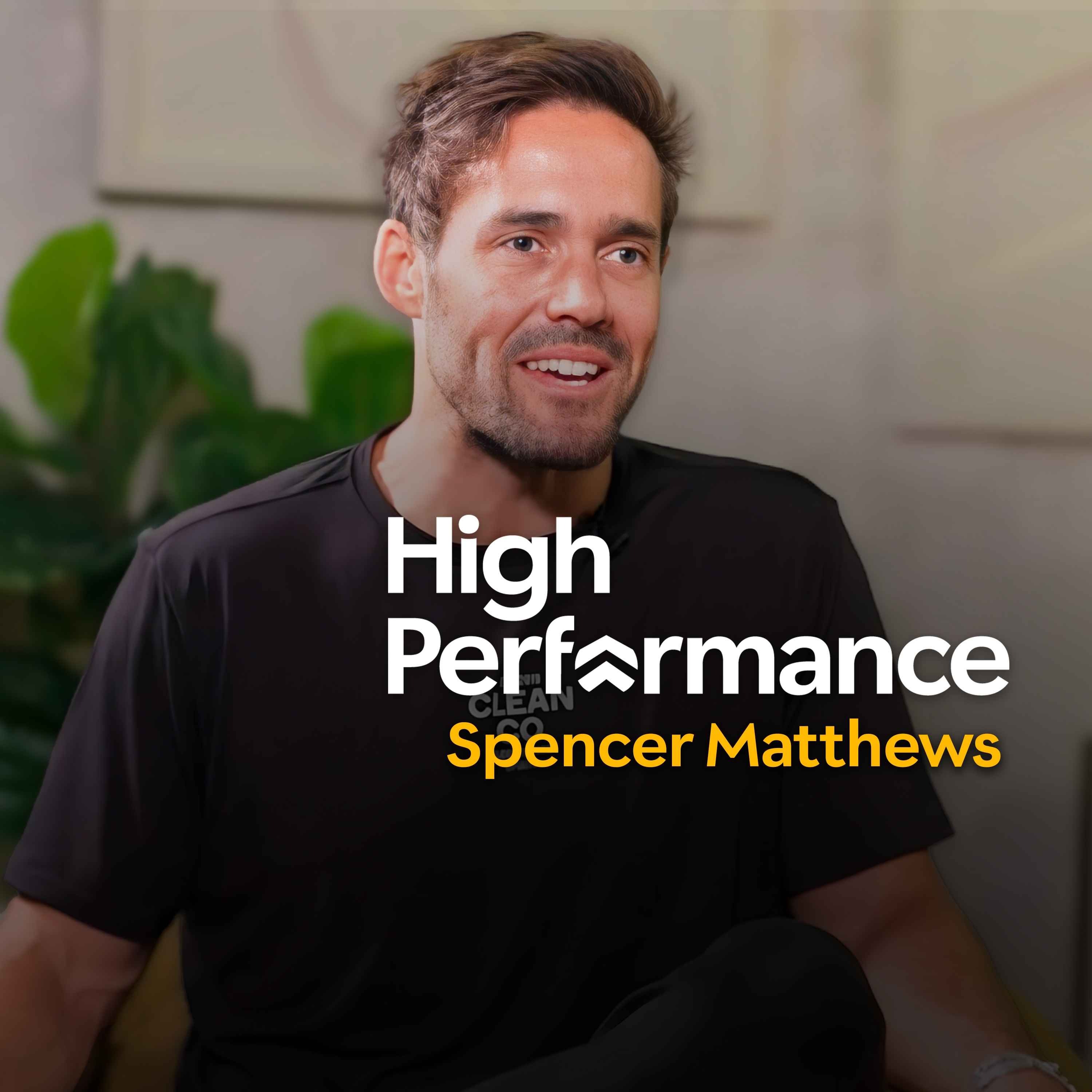
Hosts: Jake Humphrey and Damian Hughes
The podcast focuses on conversations with high performers across various fields to uncover the behaviors and mindsets necessary for success.
Written by AI. May contain mistakes.

Get the gist, explore an idea or ask about something said.
 Claude
On The High Performance Podcast, what are the key points of this episode?
Searching your listeningAutomatic transcript. May contain errors.
0:28Watch it early on the High Performance App. I can go to compete with myself, but it'll be hot. I went through the best part of a bottle of whiskey to myself one night towards the end of it feeling very problematic. And I just thought, this has to stop. You just heard the voice of Spencer Matthews, the latest guest here on High Performance, the show that delves a little deeper into the stories and ideas of some of the most extraordinary people in the world. I'm Jay Comfrey, and like a lot of you, I'm simply fascinated by unlocking a better version of myself. So along with Damien Hughes, we discover not just how people achieve great things, but the why that drives them.
1:11So Spencer is best known as the character from Made in Chelsea that gave him his fame, but to say that's all he is, is to do him no justice at all. From his entrepreneurial story with alcohol-free drinks brand Clean Co, which is very impressive, to his own brilliant podcasts, to the remarkable 30 marathons in 30 days that he's currently completing in the roasting, arid Jordanian desert. So in this conversation with Spencer, which we obviously recorded before he left for the desert, he explains to us how he'd finally had enough of letting himself down, what he did to turn himself from overweight and unfit into an elite athlete, and how he wants you to view him today.
1:52And of course, the crucial moment in his upbringing that informs every step he takes and every decision he makes. Enjoy the show.
2:04Welcome to the show. Thank you so much for having me. This is a real pleasure for me, by the way. Love the show and delighted to be here. Thank you very much. We're delighted to have you. What do you believe High Performance to be, Spencer? Achieving large goals, I suppose. setting yourself goals that might feel out of reach and managing to achieve those doing it with a smile on your face maybe and just generally feeling content I suppose as well you know whilst you perform I think if you perform to what you believe to be a high level but it's at the detriment of your health or your mental health or your family or loved ones then is it is it really high performance.
2:44In my particular case, I think setting yourself new goals and achieving the goals that you set yourself feels like you're on a good trajectory, a good journey. And as long as you're growing, I think you're probably performing. So let's talk about the large goals and the big goals, the big ambitious targets. By the time people watch or listen to this, you're going to be in the midst of your great desert challenge, which is 30 marathons in 30 days on sand, which I believe will be a world record, what would the temperature be? At the height of the day, it'll be about 48 degrees. We'll try and avoid that, obviously.
3:21In the middle of the night, at its coolest, it'll be 29 degrees. So it's still pretty hot. 29.30, as I'm sure you know, is kind of like a hot beach holiday. There'll be no exposure to UV at that time, which makes a difference, but it'll be hot. So the simple question is why? I've done a few ultras before. I come from an alcoholic background where I felt pretty ashamed and disappointed in myself for extended periods of time. And so I began a personal journey of growth, I suppose, and internal development a few years ago. I kicked alcohol to the curb completely for just short of four years. and in that time was able to kind of really change my perspective on a lot of things, you know, drive, business, achievement, success.
4:17And in that time was able to do a few ultras, Marathon de Sable, the Ice Ultra, which unfortunately I was pulled out of because of COVID all the way up in Arctic Sweden. Getting back was a pain. and then the Amazon Ultra, all of which are about 250 kilometers, five-day stage races, and found in them just a lot of change and found them to be quite transformational experiences that I remember incredibly fondly, despite them being pretty brutal at times. And a lot of people who are kind enough to show interest in this challenge are asking me why, and there's two sides to it. So it's a personal thing to see how far I can go to compete with myself essentially and test those limits.
5:06And there's a charitable element to this as well. I've teamed up with Globals Make Some Noise, which are a charity within Global that has a lot more reach than I would have just doing this on my own. So looking to raise as much money as possible to make a difference for small charities in the UK that focus mostly on homelessness, loneliness, bereavement, mental and physical health, you know, lots of work with children. And I've met some of these families and they're just, you know, they don't deserve a lot of the misfortune that has come their way and anything we can do to help, we'd be happy to do it.
5:40So tell us about the moment where you said you kind of grew, like something happened when you were competing. I'm really interested in what you felt there was there was a moment in the marathon de sable on on the fourth day which is a it's an 82 kilometer day so it's you know just just shy of a double marathon temperatures that year in 2021 were in the high 40s so it's a bit higher than it ordinarily would be and you just really had to dig deep on on that day in particular you know it's you're four days in, you've covered 110, 120 kilometers already, you're quite depleted, tired, you know, it's a self-sufficient race, so you're carrying everything on you, all your food for the week, six days, all your sleeping equipment.
6:25And there was this large kind of mountain about 60k in, and it was just a real hard slog, man, I don't really know how else to describe it, it was just a really really tough you know the desire to give up was was incredibly real i met a guy at the base of the hill you don't really help people by the way not out of choice you just you're busy looking after yourself in these things normally right and so it's quite rare to come across someone that would be very kind with their time because it's a race at the end of the day and this guy helped me out he prepared a meal for me right so like he saw me i was in a bit of spot of bother another competitor.
7:03Yeah, just a guy managing his own race. He got a meal out for me, prepared it for me, gave it to me, sat with me and then helped me up this mountain. It took about an hour and a half to climb the mountain. When we got to the top of the mountain, you got another 20k to do. You know, we're nowhere near finish, by the way. We got to the top of the mountain and the guy, I hadn't even asked his name, right? We were just cruising along with each other. I said to him at the top of the mountain, I was like, how, you know, by the way, what's your name? He said, Michael and my I have a I had a brother that I lost on Everest called Michael and it kind of felt in that moment like Michael my Michael was kind of helping me out in some way up this mountain I'm pretty sure I may not have you know I might have had to have spent the night at the base of it and all kinds of stuff but I got over the mountain and I just found it peculiar that this guy would be called Michael and never saw him again actually after I didn't even see him in camp or anything and it was just it felt like an unusual thing for me also recently learned about this thing called thin space I was filming a show for BBC called pilgrimage and it's thin space is said to be that space between earth and heaven or the afterlife it might be a beautiful sunset or something really incredible that you see that you know touches you in some way or a gust of wind on the back of your neck or something if you're thinking of someone that's passed away or something like that, you know, something that feels unusual in the moment.
8:25And these events are full of that, you know, these desert events and these ultras when you're depleted and exhausted. You get a sense of not being alone, even when you are alone. And I suppose it makes me feel closer to my brother as well. He was an adventurer, you know, he lost his life, unfortunately, on Everest when he was 22 and I was 10. And there's an element of wanting to make him proud in all of this as well. And it's full of moments like that, you know, these events, particularly when you're feeling low and exhausted, there are moments of extreme beauty in it all. You know, I don't see it as grim and an uphill challenge.
9:02I see it as a kind of experience that will live with me forever.
9:2230 million of them, in fact. You can even target buyers by job title, industry, company, seniority, skills, and did I say job title? See how you can avoid the void and reach the right buyers with LinkedIn ads. Spend$250 on your first campaign and get a free$250 credit for the next one. Get started at linkedin.com slash campaign. Terms and conditions apply. At Capella University, learning online doesn't mean learning alone. You'll get support from people who care about your success. like your enrollment specialist who gets to know you and the goals you'd like to achieve. You'll also get a designated academic coach who's with you throughout your entire program.
10:00Plus, career coaches are available to help you navigate your professional goals. A different future is closer than you think with Capella University. Learn more at capella.edu. This episode is brought to you by Opera Air, the first browser with mindfulness at its core. Now, most of us spend hours every day online, but how often do we pause to take care of ourselves whilst we're doing it? And that's where Opera Air comes in. It's a lightweight, fast, secure browser built not just for productivity, but for your well-being. With Opera Air, mindfulness is built right in. You'll find free breathing exercises, guided meditations, and soundscapes with ambient sounds, lo-fi music and binaural beats, all designed to help you focus, relax and even spark creativity while you browse.
10:54So how much would you say then, if you base it on your Marathon de Saba experience, is about the physical duress that you're able to withstand and how much of it is about the mental game of being able to be comfortable with the discomfort? that? I think the time that you're immersed in it makes a big difference to that. And it's a good question. I think a very resilient person who's gritty and determined can pull themselves through a five-day event. Obviously, you need a level of physicality to it as well. But I think you can't play with what I'm currently attempting. Unless your body is ready and your mind is ready, you will fail you know there's no there's no room really for error or shooting from the hip or taking any unnecessary risks this is a very controlled you know thing that we're monitoring in a very specific way i'm intrigued by a concept that i remember reading in uh oliver berkman have you read his book the antidote i've not unfortunately well he talks about a lot of the stuff of that we often prescribe like positive thinking and he goes positive thinking is useful in small doses, but not too much of it, because then you become deluded.
12:03But he talks about one idea called goal idiocy, where he talks about some people become so fixated on achieving a target that they almost then become so tunnel visioned, they miss the obvious things. And when you made that comment there about some people died doing that marathon de Sable, that was the idea that came into my head of goal idiocy, of being that desperate to achieve it. You ignore the warning signs that your body's going, you need to just stop here or you've done enough. And I'm interested in how do you set such an ambitious goal like what you do in the 30 in 30 while at the same time accepting that there's other factors that are going to be really important?
12:42I think as a father now, I have a different view on that. If I'm in a position that feels even remotely life-threatening, just stop. Also, I feel incredibly prepared for what's coming. I have some experience in the desert. I understand what it's going to be. I've been training pretty relentlessly in a heat chamber, which I'd love to. I could bore you for the entire interview about the heat chamber because it's actually really fascinating, but I'll try and make it really quick. It's at the University of London South Bank, and it's 50 degrees Celsius, 20 % humidity, and there's one of those treadmills in it that you can't program it yourself.
13:24It's like a hamster wheel. It actually feels harder than running on a road. And you go in for two hour blocks, and you try and run continuously for two hours in this environment that's really full on. And if you get it wrong, and the whole aim of the game in the heat chamber is your heart rate's being monitored, and so is your internal temperature. So they come in every 10, 15 minutes, and they'll zap you in the ear with one of those things, the children's thermometer thing that you use on babies. And the idea is to try to get your temperature level and your heart rate level for the whole two hour period.
14:03And when you first do it, it's like you feel really comfortable initially because it hasn't hit yet. And then 20 minutes in, it's like your heart rate starts soaring, your temperature goes ballistic. And then you simply can't carry on and you've got to come out of the thing and take five minutes, go back in and it happens again. And the doctor there who's incredible, Dr. Freya, she's just like, you know, the idea is you need to become comfortable, teach yourself how to keep your temperature level, heart rate level. So you start, you know, toning it down a bit and breathing differently. And you work your way into a position where you can do the full two hours.
14:39And I'm there with that. I've got two hours this evening. You quite look forward to it in a weird, like sadistic way now, because it's fun, because you're getting better at it, right? So it's kind of like anything, like people, I don't think, love running until they get comfortable running it's like this heat chamber i really didn't like it you know i don't shy away from anything ordinarily i try to never give up on anything and i was completely crushed by this thing after an hour and like i was thinking in my head how do i come up with an excuse to not do the second hour without sounding weak you know basically and like i kind of came out and like went to use the bathroom and she was like no no no and like it came out i used the bathroom came out and i was like you know i'm running a half you know tomorrow so i might just do an hour for this first one and she's like no no no no no like you've got to get back in i was like oh like well you know i've you know i was just going coming up with all these excuses and i was like this is not me you know so i got back in it and then it became a bit easier but it's quite a fascinating thing to learn because what the the the heat thing is what will pull you out the race when i hear you talk like this though i think back to previous interviews i've listened to you.
15:46You've been on loads and they're brilliant. I loved the Elizabeth Day conversation from 18 months ago or ever on how to fail, where you were talking about being a pretty unspectacular young person, right? I don't understand how you've gone from that unspectacular teen to this guy that is pushing himself to the limit, doing ultra marathons. We'll talk about your reality TV career in a bit. We'll talk about Clean Co in a bit. There's all these amazing things going on. you're a father, you're a dad. When did all of this suddenly happen for you? Where's that kid? I never cared enormously about performance when I was younger.
16:25It sounds silly, but school never felt that important to me. It just sounds a strange thing to say, because obviously I'd like my children to take school seriously. And of course school is important. But even from a young age I can remember thinking like what actually happens if I don't do well at school I always saw it as a bit of a a bit of a chore really but you had this high achieving dad who was a self-made success story you had two older brothers who were doing incredible like if school didn't inspire you why did that not inspire you I don't know I do I do think that the relationship with alcohol was was was certainly a consideration because I kind of grew up thinking that anything was possible I always had that mindset as a kid the like you know whatever I want to be I can be and that's probably is it good parenting I don't know what that is but like I like but like I grew up I grew up feeling like I was enough and I could achieve stuff and if I wanted to be the CEO of a big business I can be that and if I want to be a sports guy I can be a sports guy sports guy is a bad example because I was not particularly talented at sport but you know I've always felt that stuff was within reach.
17:37And I suppose that's because I come from a position of privilege and whatever. But I also felt like we had an awesome family in which anything was possible. And I grew up with that mentality. The relationship with booze was a big detriment to me. And it became, this isn't just like a few drinks having a bit of fun. I would drink really early in the day, pretty regularly. What sort of age? I would drink pretty heavily from the age of 15, 15, 16. Like, you know, whilst at school, for sure. And were you at boarding school? Yeah. Because when I was reading about boarding schools, there is actually something called the boarding school syndrome.
18:16I don't know if you're familiar with it. It's about the ABC that when you go to boarding school, for some people, there's a sense of abandonment from the family unit. There's some people that go through a sense of bereavement, the idea that they're on their own. Others talk about feeling captive as if they've got no choice in it, they've been sent there. and then the fourth one is this sense of disassociation and that's the d is it yeah and when you're describing the idea of school didn't really matter to me i wasn't sure at the point of it i'm hearing the d bit come through that disassociation of why am i here what's what's the significance of this and i'm just interested in exploring what you think the boarding school experience both gave you but what it also took from you well i was never naturally academically gifted.
19:06So when you get thrust into a situation like Eton, where getting straight A's is a given for everyone, that's tough for me. Because I can't just do a few terms of biology and get 98 % in my exams like everybody else around me. So I felt quite stupid going through Eton. And I'm not a stupid person. But I felt kind of silly at Eton, because my work ethic probably wasn't what it could have been. Most people took their studies and homework and stuff far more seriously than I did. I was far more interested in sport and the social side of things and drinking and having a good time and just enjoying myself and trying my best to be popular.
19:52right and uh i kind of i think i think loads of people would relive their their their schooling you know if they could yeah you know i'd go back in time and do it differently i had a great time by the way like i really really enjoyed my time at eton had an awesome time but the academic side of things was always quite rough for me you know i relied on the fact that i can speak french right so french was easy for me i didn't have to do anything at all to just get a stars and come first in French no problem easy so that's great I was always quite arty so art was another topic of mine perfect my mum's an artist I've always drawn I love art you know and then you know drama had to learn a bit about Stanislavski but really enjoyed it found it quite fascinating so you know I naturally just gravitated towards the things that I knew I was good at in order to survive academically and get the grades that I needed what do you think alcohol was a way of sort of symbolising that I'm not giving it my all here.
20:49I don't know if you're familiar, there's a concept that I hear with lots of high achievers about a French chess player called Deschapel. And what he used to do was, he'd claim he was the best chess player in the world, but he'd only play you if he could put himself at a disadvantage before the game started. So if he beat you, he could then say, look how good I am, because I beat you even when I was at a disadvantage. But if you won, he'd go, you only won because I was at a disadvantage. And I'm interested in, you've described later on in your career that we'll explore, you've gone all in and you've literally committed yourself to this task that you're doing now, your business and the other aspects of your career.
21:26But at that age, was it a protective mechanism to go, I could be great, but I'm also interested in going on the piss. I'm also interested in pursuing sport. So that's why I'm not top of the class. Maybe. it kind of sounds like uh you know i've had therapy in the past and and just not necessarily because i felt like i needed it just because i think actually it's it's a shame that it's stigmatized a bit and actually i think that having a non-biased conversation with a professional is a is a great way to learn more about yourself blow off a bit of steam you know having an unbiased chat with someone that's not a friend or a family member is phenomenal and um you know you can blame the excessive drinking on all kinds of stuff.
22:09You know, I lost my brother when I was 10. Most therapists I've spoken to will say that that would be a, you know, massive reason for, you know, drinking too excess. I absolutely despise blaming, you know, that event on my behavior, sorry, on that event. I don't see the two, like, you know, getting drunk as a teenager and venting and being angry about what happened, sure, you know, but I don't see my brother's death as the reason for my alcoholism um i like what you just said actually i might start using that the chess player yeah yeah yeah it's interesting though i don't know i do i feel like you're in i feel that larger and this doesn't go for people who are clinically alcoholic or you I don't believe I was ever an alcoholic in that sense, sick with alcoholism.
23:07I think I made bad decisions and I got into bad habits and I didn't have the balls to pull myself out of it and it was laziness. I would get drunk regularly and I knew it was wrong and I was ashamed of it, but I couldn't be bothered to fix it either. It kind of felt fine at the time and every so often I'd have a run-in with my family over it and I wouldn't bother changing because I would deep down think I was right and I was in control and I probably wasn't. It's funny when you've been on both sides of it with the booze thing. I'm in a place now where I do drink alcohol, but I hardly ever feel like drinking alcohol.
23:49It's very rare. I feel like I probably have a normal relationship with booze, the kind of relationship that my mum might have, just like doesn't really drink, that might have the odd drink from time to time and wake up feeling a bit dusty and that's it for a few weeks you know that's kind of where I am with it but the difference in in in life quality for me like you know having made at the age of 35 now having you know paying more attention to health and wanting to be better has made a massive difference you know just a few things you know better quality sleep, hardly drinking any alcohol, being sober, call it 99 % of the time, proper food, proper diet, supplementation, regular training.
24:33It's all good stuff that I wish I'd done earlier. I'm very interested in the family dynamic of going off to boarding school. Was it a loving family? Were you open with each other? Were you vulnerable? Was it that kind of household? Completely. I mean, not so much vulnerable, no. I got into trouble for saying this, but I'll say it again just because it's good fun. I've said before that I felt that I couldn't really show weakness in front of my father, which isn't strictly true, certainly not nowadays. You got in trouble with him for saying that? Yeah, I said it and they printed it and it was like a headline of something that, you know, I grew up in some kind of hard, stern, you know, household.
25:12And that's not true, by the way. Like, we're a very, very loving family. But I can remember as a kid, you know, feeling like, you know, just a small example, like say you fall off your bike and you hurt yourself. If I'm around with dad, had I burst into tears and started crying, there would have been a lot of, you know, crying's not going to help you, you know, what are you doing, you know, crying, crying well. And, you know, I had that from a very young age, which is fine, by the way, like I'm not in any way, I'm a bit like that with my sons, and I probably shouldn't be, but I am. And it was instilled in me at quite a young age, and I think this is a normal northern stuff right my dad's from Sheffield my brothers are from Sheffield and like I think it was pretty normal to have you know stiff upper lip upbringing it's just standard stuff which I don't see as a bad thing but yeah I do remember feeling like any expression of emotion or fear was weak and I shouldn't be doing it as a kid right like and i don't you know cry and i don't express much weakness now as a result of it you know i i feel like people should just get on with stuff you know just just crack on if you can i'm certainly that way if a problem presents itself i try and handle it you know as and when i don't worry about you know stuff prior to things happening and yeah you know particularly around mike's death i can remember thinking i'm not quite sure like how I'm supposed to react around this.
26:42Do we all, are we all super strong now? Or like, are we supposed to be mourning and crying? Or what are we doing here? You know, and I remember having that feeling when I was 10. Which, but, you know, I think my father, by the way, is awesome, right? And he's a great dad. And like, I love having the relationship that I have with my dad. So nobody is complaining here. You know, amazing mother, beautiful family, always been very close, you know, very lucky, very fortunate to have that kind of family dynamic around me. But I think we've always all been quite competitive and, you know, just, just, we get on with stuff.
27:17So what did you do when, when you were told that your, your brother had passed away? What conclusion did you come to about how you should act in that situation? I think, you know, as a 10 year old, I was able to, to navigate it probably less painfully than the rest of the family, right? For them, it was like being, you know, hit by a freight train you know michael's lost on everest okay you know to me that sounded like well cool you know i'm sure we'll find him whereas you know to anybody that knew anything about everest you know surviving a night on everest uh is incredibly rare and surviving two or three has never happened before right so it's kind of you know straight away that you know he's in very serious bother or is already dead as a child you don't know that you know my head's full of disney cartoons and you know other whimsical things that I love and you know again I always had I still to some effect live in Disneyland right my brother says I live in Disney World you know because like I have these big ideas that I think are achievable and I just head out and try and do them and you know he tells me that stuff is impossible and then of course it's not impossible and that's a great feeling so then I had the assumption that Michael would be found alive so it never affected me in the way that it could have done had I been more logical and you know a more logical thinker which children aren't usually you know even at his memorial service I was reading but there was no body so to me I was like well what's this all about I think you know like and you know I was told by then very clearly that you know Michael's never coming home and I was just like you know it took me a while to process um that I would never see him again uh then we went to make Finding Michael and the realization that I might see him again became quite a stern realization because again I hadn't fully processed that you know I'm sat there at base camp I was there for five weeks and I was thinking if we're successful, I'm going to come face to face with my brother's body, which would be probably perfectly preserved.
29:34So like I'll be his older brother now. He's frozen in time. He died 12 years older than me. I'd now be 12 years older than him. The whole thing would have been a bit of a mindfuck, frankly.
29:52If you're still overpaying for wireless, it's time to say yes to saying no. At Mint Mobile, their favourite word is no. No contracts, no monthly bills, no overages, no hidden fees, no BS. I made the switch because I was tired of those ridiculous bills and sneaky charges from my old provider. With Mint, I'm paying$15 a month and getting the same high-speed data, unlimited talk and text, and coverage on the nation's largest 5G network. Honestly, the quality is just as good, if not better than what I had before. And the best part? You don't need a new phone. You can keep your current one, bring your number, and all your contacts.
30:27I use Mint Mobile, and you should too. Ready to say yes to saying no? Make the switch at mintmobile.com slash HPP. That's mintmobile.com slash HPP. Upfront payment of$45 required. Equivalent of$15 a month. Limited time new customer offer for first three months only. Speeds may slow up a 35 gig on unlimited plan. Taxes and fees extra. See Mint Mobile for details. The market's uncertain. Revenue's tied and hiring on hold. That's why results-driven companies are using Upwork to keep work moving. Go to Upwork.com today and start hiring proven freelance talent fast. No bulky overhead. No rigid long-term contracts.
31:07Just the right expert right when you need them. Work smarter and faster with Upwork. Go to Upwork.com now and find your freelance expert. That's U-P-W-O-R-K.com. Post a job for free and get started today. Hey, I'm Dr. Z and I'm a neurosurgeon. So that means long hours, early rounds, late nights, and everything in between. And through it all, I wear figs. They're comfortable when it counts and functional when I need them the most. So where do you wear your figs? On shift, on call, on the couch in the break room, listening to this podcast, wherever it is, they fit right in. And now listeners of this podcast can get 15 % off their first order.
31:44Just head to wherefigs.com and use code FIGSRX at checkout. That's wherefigs.com, code FIGSRX.
31:58What did your parents think about you going on that search? They were quite supportive of it, providing we were considerate of risk to other human life and and just operated with care and proper people, basically. Bear Grylls was very kind to executive produce and come on board quite early and put us in touch with great people. I think around the time that Disney became interested, I think everyone was a bit more relaxed about the whole thing. Can I ask a question that I'm conscious it can come across as crass, but it's picking up some of the themes that you've just shared with us. that you described you were a competitive family and you've lost a brother at 22.
32:48How much of what you're doing now is competing with somebody that isn't there? You know, like your brother can never fail. Your brother can never grow old. Your brother can never make mistakes. So you're almost competing against somebody that's perfect or perfectly preserved in the memory of your family. It's a really interesting question. and I do think Mike plays a part in all of this, right? Because I grew up feeling, even though he lost his life, that he was heroic in that moment. Somebody asked me the other day, and I'm trying to think who it was, whether or not I resent him for going up the mountain and losing his life in that way.
33:25Not at all. It's never even crossed my mind to resent him. I see him as a hero. I also use him as a way of trying to be better, right? Because I think because, you know, if you've lost a loved one, I don't know if you have, but most people have, or at least will at some point in their lives. There's different ways of looking at death, and obviously people deal with it in their own way. My grieving of Michael probably came quite a lot later, you know, with more maturity in my life. And I want to use that awful experience as a way to be better, do more, and in a strange way even though he's dead make him proud also I don't talk about my brother James ever really because he's a very private person and I won't go into it but James was a huge inspiration for me when Michael died James did all kinds of incredible things to raise money for the Michael Matthews Foundation he ran a huge amount of marathons did the Marathon of Saab cycled across America and I grew up with that watching him as well and thinking wow you know he's incredible so I had it I had it from both sides yeah when you're kind of three quarters of the way through a bottle of whiskey that kind of added to the shame of it all you know that like why my brother's so amazing and you know why am I drunk it's nice though to look back at it all and to see the development and and you know part of this great desert challenge the 1330 thing is exactly that you know I think people talk about journeys and journeys through life and And this is a literal journey right through the desert.
35:05And I think there'll be incredible moments all the way through it, you know, in which I'll be reminded of them and my past and the future, you know. And it'll be a really reflective, incredible time that I'll remember for the rest of my life. And it's just all part of the journey. Have you heard of the phrase post-traumatic growth? No. So we talk often about post-traumatic stress. Yeah. And there's so much focus on the negative things that trauma brings us. But actually, there's very few conversations about the fact that there's an awful amount of research and knowledge that points to the fact that people who've been through a trauma, they kind of have a fire inside them that the people who haven't can never even relate to.
35:50I just wonder how much time you've spent thinking about the fact that maybe all of this actually probably does stem from the fire that was lit inside you when you were 10 years old and you were told that your brother had been lost. Yeah, I think so. Mike is a constant in my life, right? And there's not a day that goes by where I don't think of him. And I feel, I've not heard of that, by the way, but I think it's very relevant. I think there's choice in life, isn't there? How you behave and how you react to certain things. Obviously, there's a degree of emotion and emotions are hard to control, obviously but making an effort to try to be better is something that everyone can do right and being able to recognize faults and to be able to not pass blame on something that you had no control over i think is quite important so i think it's quite easy in some people's position to say well my brother died so this is how i'm going to behave from now on you know and And I think people who choose to do that find each to their own.
37:04But I'd prefer to, as you say, take the trauma and try to grow. I don't think I'm the most successful guy in the world. I don't think I've achieved more than the next person. It's nothing to do with that. I just feel really proud of where I am. And was there a moment when you can recognise that you did actually feel proud of where you were? Not specifically, no. I think getting ready for this event has been awesome for me and really taking the time to prepare and putting in the work. It's similar to jiu-jitsu in a way. I don't know if either of you guys roll, but I love jiu-jitsu. The longer you spend on the mat, the better you become.
37:50The more time you spend in that gym or dojo, the better you will be at rolling. Running's pretty similar, right? You can lace up, you don't need any help from anyone. You go out, the more you run, the more you'll enjoy it, the better you'll be, the fitter you'll become. And I think having that satisfaction, it almost feels like this level of prep is something I wish I had known about before. Even though everyone always tells you to be prepared for stuff, something I've never bothered with. Exams at school, never bothered. previous ultra has never really bothered this is like i feel really so i feel so satisfied with the position that we're in that like you know were we to fail we've done everything we can i think so that that's kind of i've not been in that position before i think it's great you're in such a brilliant place i want to rewind a few years because we can't talk to you without talking about the made in chelsea period in your life i'm just fascinated by what made you want to do that that's a it's such a good question isn't it like because i i look back at it well i've listened to a million interviews and no one's ever really said like why did you just say why did you say yes to that because at the time it felt original and quite fun and it to me was only ever an interesting business opportunity i never saw it as being particularly real or like a true reflection of myself.
39:17I saw it as an opportunity to work with a film crew to become savvy around how to create television. Reality TV was on the rise. It wasn't what it is today. Everywhere, you know, it was the Hills was wildly successful for MTV over in LA. I'd spent some time with Brodie Jenner and Spencer Pratt out there. I went to USC for a year and I just couldn't understand the fame that they had like I couldn't believe it like did you love that I thought it was pretty exciting at the time yeah it was like I was 19 years old they were getting paid 100k to turn up to a nightclub I was like what the fuck is this about like honestly I thought it was the most ridiculous thing I'd ever seen in my entire life right they'd roll up to these nightclubs everyone screams their head off they're getting paid this huge fees money that I'd never even seen I just thought well what what makes them so special and then kind of came back to the UK it didn't exist here at all, TOWIE hadn't materialized.
40:16There was something called Living on the Edge, but I don't, anyway, whatever. And there was an opportunity, you know, that came out of, you know, we shot a pilot initially, me and some friends of mine, with a company called Pulse, called The Big Smoke, we wanted to call it. And it was shit, right? Nobody cared about it. We didn't even get a call back, I don't think. We were kind of, you know, it was just rubbish. And about eight months goes by and I got a call uh I'd love to chat to you about doing this show it's called Chelsea Girls uh you're the guy that wanted to do this thing with Pulse somebody got you know passed on your phone number you know come for a meeting and I kind of came in and I was like right well yeah you know if I'm going to be involved then you know I'd like you know this this and this and you know blah blah and she was like you get fucking nothing mate like you get 50 quid a day and that's that's the way it's going to be and you can either be involved or not I was like okay Yeah, I'll take it.
41:09I'll still be involved. Perfect, that sounds good. Great negotiation. Hope you've got better at negotiating since then. Yeah, yeah. Well, in my eyes at the time, it was like pioneering a new genre of TV in the UK, you know, whatever. You're on a BAFTA. I mean, it was, actually, to be honest, pioneering and a new genre. That's kind of how it felt. The excitement of all of that. Was there a moment where that changed? Because I think when we now think of Man in Chelsea, the question is just how real was it? You know, like, was it you? Was it you playing a role? all like was there a moment where you thought this is not quite what i i think i think the first couple of series you know were pretty real and you turn up to a scene and you wouldn't know what's going on in the scene and it'd be exciting and interesting and quite good fun because it was new to everyone and then i think they you know like anything they started to just dramatize normal situations and i think people were confused in the cast as to what was real and what wasn't because you do a scene with someone and that well you do a scene with someone they'd be really bent out of about something and then like the cameras would stop and they'd be fine and he was like are you pissed off or are you not pissed off I don't really get it uh and and that you know it was just a layer of kind of it just became pretty um I'm not suggesting by the way that what you see on in Made in Chelsea isn't real but it's certainly elaborated and dramatized and you know if I'm not getting the nod to Binky's boat party I don't really give a shit in real life you know but it may be the case that you might have to care for the sake of a scene or you know did you decide you had enough of it yeah why when ah god far too late in the process you know this is i'd already been villainized uh to death by this stage and you know i'd taken to wearing only black clothes and being the the bad boy on set and you know it'd become part of my uh part of the fun of of being me in that show and you know looking back at that now i just feel like it's a bit of a shame all of it you know i kind of i wish you know it's just it's it's it's hard to say you regret certain things right because main chelsea obviously gave me a platform to do other stuff i mean people regardless of what i've done you know finding michael raising lots of money for charity podcasts with millions of listeners all kinds of stuff you know no one cares about any of that it's always made in chelsea right it's spencer from made in Chelsea I just did a press morning all about the 1330 thing this morning gave six interviews and I had to say you know like by the way in the headline like is there any chance that you won't refer to me as you know Spencer Matthews from Made in Chelsea because it's actually not part of my identity you know I have nothing to do with the show I left 12 years ago you know and I guarantee you that they will all do that anyway right and it's kind of I don't know it shouldn't bother me as much as it does but it does it do you think I don't know I don't really I don't I don't love the show and I just it's kind of do you love the person you were on the show no no yeah maybe but also just like the show itself is just it's not my kind of tv as I said like when we when we first started I suppose you can work at a job that you don't love right but it's kind of I don't know I don't think it's also a fair reflection of you as a person as well I don't know you especially well but I know you a little and I think you're a funny great guy good morals work hard, great work ethic.
44:26I remember watching on Made in Chelsea thinking, does this guy know he's being filmed? Because he acts like a total bellender. You sound like my brother. But then I'm now thinking, well, you must have been comfortable with them filming you, acting and being like that. And then it leads me to think, well, are you kind of just immune to other people's opinion of you? Because if so, that's quite a powerful place to be. Yeah. At the time, I definitely didn't care what people thought of me. How do you get to that point in life? I don't think that's a great place to be to be honest like I think I've almost come out of that and like reverse engineered it a bit to not be affected by the opinions of others but at least to take them into account I think it's you know as a business owner and a podcast host and somebody who's well dare I say it kind of in the public eye I think to completely not care about people's opinions is a bit stupid, to be honest.
45:20I think you need to be at least aware of how you're perceived. I was, again, drunk for a lot of Made in Chelsea and on some rampage. I don't even really recognise the person that I was back then. And I thought it was really cool just not to give a shit about anything or anyone. And I'm just going to do whatever I want all of the time. and if you don't like it, then you can do one. And I just think that's a bit lame, to be honest. It's not really like, it's not how I'd encourage my boys to be, or my girl, but, you know, I just think it's, it's a shame. It's just not, I think I felt like it was cool at the time.
46:01And I just kind of just don't really think it's very cool anymore. It's good you've grown as a person. Yeah, I don't know. But I agree with you. Like, I really don't want to come across as a guy that's biting the hand that fed me, but I'm talking about my own behavior, not the show as a format like I think the show does very well and always has done very well and winning a BAFTA was awesome I'm talking very much about myself in that role and I did see it as a role by the way I don't see it as real like my worst nightmare I think is my kids growing up and watching that stuff I think it's just yeah that will happen I know it's dire though it's really dire I'm going to have to explain to them that it was all fake or something but you said it was you played a role so I think that's the way to look at it the unfortunate thing for you is you played a role but the public thought it was real then you've got to spend the next 30 years unpicking that perception but there's echoes in what you're saying Spencer when we sat down with Vicky Patterson that had been through a similar experience on Geordie Shore where she made decisions that she said I've spent the next 10 years paying the consequences of it in terms of walking into a room and having people judge her for actions that she did when she was in her early 20s.
47:17And the nature of those shows, as I understand them, is you're basically selling drama if you're being kind to each other and treating each other with civility. That's boring television. Nobody wants to watch it. Well, the show would be cancelled. Yeah, so having the explosive row. Its commodity is drama. So even if you're an undramatic person or someone that hates confrontation you will be thrust into confrontation and drama and actually you know we were praised for creating drama but i can imagine though like real life relationships that aren't just built on that constant drama must have felt quite dull or boring at that young age when you're walking away from the set where you've been rewarded and celebrated for the for the explosiveness and then you're having to try and build relationships on treating each other with dignity and respect and kindness?
48:09I think, how did you discern it? Well, I'm a kind of, you know, I'm a, I'm a naturally kind person. Yeah. Right. So like all of the explosive nonsense is bollocks in my eyes. It's not real. Right. So the huge rows, you know, in bars and stuff, it's just like, I've never, I've never shouted at anyone in real life, you know, in my whole life. It's all just rubbish, you know, in my eyes. But obviously people see it and they go, wow, that's, you know, that's pretty wild. he's you know loose um but then there's all the the the drink as well right you arrive on set and you drink all day and then you shoot some scene with your ex you know once you've got three bottles of champagne in you good luck they encourage you to have a few drinks because it would make better tv yeah yeah yeah i don't know what the show is like now but there was certainly booze available on sets you know if you want to fill your boots you can fill your boots type thing and you did and i did
49:13again you hinted at it that you think about the three eyes of a cycle of the first of all you're an innovator so you're doing something that isn't out there on tv then you get lots of imitators that come along and copy it and then you get lots of idiots that are late at the party and then try and jump on board when when the train's already left the station you said that you stayed for too long and i'm wondering if you could tell us what you learned about knowing when to get out i i had a sudden realization that i just had enough like i left the show a few times and then negotiated a better contract and came back for more money um and and you know it was very transactional for me past a certain point like none of it felt real to me i'd you know the if they paid me properly i'd come back and film another season if they won't, I won't, you know, whatever, it just became business.
50:00Some people develop an attachment to the show where they feel like if they leave the show, that that'll be it for them. I never felt that way, but that's just because, you know, going back to how I naturally am, right, I think stuff's possible, I think I can land jobs, you know, whatever, you know, might come across as arrogant, I'd prefer it to sound confident. Optimistic. Yeah, optimistic and confident, I've always been both those things. very fine line between arrogance and confidence so you need to tread it carefully I don't know I think when your heart's not in something and you're kind of plowing into it anyway it might you know I think at least considering other options or or or pulling out of it could could be I mean this isn't necessarily wise words of advice it's just I want to see I'd had enough you know I just wanted I wanted change I wanted to come out a good example of this I'm sure you wouldn't mind me mentioning it is Jamie Lang.
50:53Jamie stayed with the show for years after I left and he would come to me and he would say, you know, his anxiety would be through the roof and like he'd just be miserable and like, I'm not blaming the show by the way, but he would be, you know, borderline depressed, you know, just like, just upset, you know, constantly in these dramatic scenarios. And I said to him, just leave mate. I said, just, just, just pack your bags and leave just just like get out of whatever contract you've got or see it through and just leave like you'll you'll see your life just go from a storm cloud to a beautiful beach sunset like there's there's there's no drama in my life at all like like I don't wake up with any drama like because you know I have a beautiful loving wife who's my best mate and kids and you know obviously that it wasn't around then but your that show thrusts you purposefully into confrontational corners with created drama to the minute you leave it it's kind of like you feel a huge weight lifted um and i just don't think it's that healthy to be honest for you know it's just a bit you're fine when you're young and up for it and you kind of understand it but the minute you lose control of it and you become the subject of, you know, online hatred as an example.
52:17It can be a lot for people. The next natural question is, how do you go from the arrogant, self-centered, conceited, made-in-Chelsea guy that thinks the world revolves around him to being this person? I assume the answer is stopping drinking. Yeah, stopping drinking, a beautiful, great wife who's, you know, a strong character who, you know i i you know just respect enormously like i went through life pretty much only caring about my opinion right and just like i'm right and to be honest if you've got a different opinion to me then you're wrong was me for alcoholic teenage 20s um and you know vogue vogue really without even trying too hard really shaped me into a much better person in my opinion i just think the desire to want to be better for someone is always helpful isn't it like i've never had that before i always just you know if uh if something didn't feel right it would just naturally separate whereas if there was ever a period with vogue where something didn't feel right i would want to fix that and it's just the first time that i'd felt that is there anything that she's ever said to you that really resonated that that led you to change a belief or a behavior your habit?
53:34She probably won't like me saying this, but she told me once that my drinking habits reminded her of her dad. And her father was a very heavy drinker. And I didn't like that at all. It bothered me a lot. Why? Because she meant it in a way that was supposed to hurt, I think. Even though she loves her father enormously. She's her father's biggest... Her father's dead now. But she said it in a way to make, she knew that I wasn't a fan of that side of his nature. And she pinned that on me as being just like him, essentially. And by the way, by the sounds of things, he was an amazing guy. Lots of people absolutely love this guy, but I never met him.
54:23But that side of him in the way that it had always been reported back to me or told to me or stories of him sounded to me like he could have done with drinking less as a parent you know and and i and i just didn't like it i found that to be um it was quite cutting you know i just found the whole thing to be a bit okay all you've ever told me is you know how big a boozer this guy was and you know i don't really want to be in that um camp so how do you go from that to stopping drinking? What was the moment where you just decided to put the drink away? I went through the best part of a bottle of whiskey to myself one night towards the end of it feeling very problematic.
55:12This is around a time that walking the dogs felt like an enormous chore that I didn't have to, I didn't want to bother. I would lie sometimes about having walked the dogs like that's how bad it was and I'd be at home just like drinking I would time calls with certain people earlier in the day to make sure that I wasn't too drunk to take the call like literally it was pretty bad and I remember just thinking I got myself to bed that night in in quite a tricky way I was like bouncing into walls and my head hit the pillow and I just thought this has to stop like i simply can't be getting into bed in this way and woke up the following day and just thought right i just i simply cannot carry on like this and uh one way that i begin to change is i tell people who are close to me that i'm going to do something and then i feel the kind of guilt if i don't do it type thing so i told vogue told my brother told my mom all of whom just didn't believe a word of it.
56:20I literally said, like, right, okay, I'm done with drinking. Had you told them that before? They would probably say yes, but to me this was different. So I'd never announced, like, right, I'm never drinking again before, but I may have said, like, you know, I'm going to dial it back or whatever. But, like, this to me felt like a very different time. And, yeah, just stopped. After about four days, three days, I felt my whole life change. It was unbelievable. It was like if I were a Ferrari, it was like I'd been driving my whole, for the last 10 years with the handbrake on, and just fighting against all this power.
57:09right and and and and literally just like just flew off right and like it felt the difference was just mad and i just became hooked on that i loved it i just started lifting weights and went straight into developing clean co like because after like a week of not drinking i was just like okay like come on like what can we be doing what can i do big gap in the market in my opinion for non-alcoholic spirits didn't exist really um and you know went started going down that route but yeah like it was a huge change and I feel delighted and very you know fortunate to be where I am now with all of that how happy are you now I couldn't be happier I don't think really yeah no I know and it's an annoying thing to say obviously because I don't always feel this way but at the moment I feel it'd be hard to feel better and I think it's because I have an awesome wife that supports me, I've got healthy kids.
58:07And it's, you know, we're more in love now and happier now than we were when we first met, which I think is a beautiful place to be after seven years of being with someone. And that is quite rare, maybe, I don't know, I don't spend too much time inquiring into other people's relationships. But it's certainly kind of how it should be, right, that you grow together as a couple. And, and yeah, I think I think we're quite lucky, because we've both changed. We've come quite a long way, probably more so me than her. She didn't have the necessity to change quite as much as I did. But I think where we are now is this really powerful, equal place where we both love and respect each other and work really well together instead of me feeling like I need to play catch up or be a certain way so that she feels a certain thing.
58:56I think there's mutual love and respect there that feels awesome. And hopefully we continue to grow. Good luck. Thank you, man. Quickfire questions. The three non-negotiable behaviours that matter the most to you? Working hard. Great. Being kind. And staying respectable. Like putting a good foot forward for your children. What's your greatest strength and your biggest weakness? Greatest strength is probably that I believe in myself fully. Biggest weakness is I can be overly optimistic and sometimes miss the detail. So, you know, if I'm looking at something, I kind of tend to only see the good in it.
59:44Business opportunity, that's going to be the next, you know, and I love it so much that I'm almost invested completely before doing any kind of DD or anything like that. And biggest weakness, I can be quite selfish as well sometimes. I'll put myself first. Even now? Yeah. I'll put myself first, you know, ordinarily. So I'll wake up, I'll look after myself. I get up before everyone else, but I'll look after myself. I'll make sure that, you know, I get myself to the gym, you know, early in the morning, three times. You know, I'll, which I don't actually believe is a terrible thing. It's not like I disregard everyone else, but I will look after myself.
1:00:21I can be selfish. So that's one thing that if I could naturally care about other people more and do it first, I would like to add that. Best bit of advice you've ever received? I was speaking to a very prominent CEO of a huge, very famous company. I won't name the guy just because I don't know if he would appreciate being named or not. But he said there's a big difference between working hard and making a difference. and he said always be conscious of making a difference which I thought was quite interesting because obviously you can come into a big role and just do the job but he specifically looks to try to drive change and making a difference in his work and I thought that was quite interesting but I mean a bit of a yeah I mean best piece of advice that things are fleeting as well like you know if you're feeling a certain way it's probably in your minds in your head that people can't see the way you're feeling.
1:01:19It's quite easy to get pent up in something and feel like you're in a kind of fishbowl with it. It's everyone's reality when actually it might just be yours. So to try and remove yourself out of whatever it is you might be feeling and just generally have a better overview of situations. And finally, what's your one golden rule for living a high performance life? Get some proper sleep. I made that mistake a lot for years. Just I wouldn't value sleep at all. And I think if you are in a position where you can prioritize good sleep, it makes a huge difference whether or not you're a professional athlete, amateur athlete, businessman, whatever.
1:02:07And also make time for loved ones and family. I think I interviewed Robin Sharma, who I think is phenomenal and so... so well-versed around any question you throw at him. He just gives you these beautiful answers that are so deep that you can take with you and ponder for the rest of the day. And it's great, something that I can't do, but he can. And he told me that he coaches all these billionaires and they're so wealthy, but loads of them have just lost their kids and their wives and their families and they're alone. They're literally just alone and they're not happy. I think prioritizing your time well is just really important, regardless of how far you want to reach.
1:02:59You're never going to get there if you're not managing your time properly. Brilliant. Thanks a lot, man. Pleasure. Thank you. Thank you.
1:03:11Damien. Jake. I loved having a conversation with someone who seems in such a great place. And I think, you know, towards the end there where he spoke about some great advice he's had in life is that things don't last forever. Yeah. Things pass. It all plays really nicely into the fact that he's someone who's grown and changed and adapted throughout his life a huge amount and seemingly is in the best place he's ever been. Yeah, definitely. And I think a big part of the change is the change of being more emotionally literate. There's a famous study that was done where people were asked to watch a film and they said just express your emotions as you go through it and they would track the levels of stress that they went through and it was normal.
1:03:50And yet when they watched the same film later and were told to suppress their emotions at funny bits or sad bits, you could track the stress levels shot through the roof, they spiked immediately. And when I was listening to Spencer there, I sensed that there was a breakthrough for him at some stage where he's learned to show the emotions that maybe his family didn't necessarily encourage. So rather than feel shame at drinking a bottle of whiskey, feel proud that you're able to set up a business, you're able to run these incredible marathon endeavours that he's doing. So I think there's a takeaway there for anyone listening to this of learning to be able to express our emotions in safe environments with people that listen can be hugely helpful.
1:04:31And I think you never recover from the kind of trauma of losing your big older brother who's your hero. But I do think that you can come to terms with the fact that so much that's good in your life is from that moment. You know, it's created some drive in him that means he's doing all the things that he's doing. But also that he's managed to find ways to connect to his brother, whether it was going back to Everest and trying to find his body, which sadly he couldn't. But even now, you know, when he spoke about these intense physical expeditions and trips that he goes on, they give him multiple moments where, you know, he spoke about the small gap between earth and heaven.
1:05:07It put him in that place. It puts him closer to his brother, and he clearly carries the weight of that, the death of his brother, so closely, even if he perhaps wouldn't link the two that clearly. No, I think you're right, and I think you made a brilliant point to him, Jake, around the post-traumatic growth that he wasn't aware of. And one of the factors of growth can happen after a traumatic event if we can tell ourselves a more empowering story rather than the story of why me? Why has this happened to us? Where we cast ourselves as the victims. When we say, what can I do with this? How can this inspire or inform the rest of my life?
1:05:44That's where growth can occur. And I think Spencer's a great example of unwittingly he's put a narrative around his brother's passing that's allowed him to go on and live a really fulfilling life. I really enjoyed it as well. And if you at home would like to hear more about the challenge that Spencer's going on, just check out. make some noise.com and that's it for today look if you enjoyed this conversation perhaps check out our conversations with jamie lang who of course is a good mate of spencer's we've also had vicky patterson on the show as well another reality star who i think will take you by surprise and if extreme challenges are your thing then have a listen to our conversation with ashley kane it was very moving and massively inspiring i'd love you to reach out and tell me what stood out to you from today's conversation with Spencer.
1:06:29But most of all, I just want to say a genuine thanks to you for growing and sharing this show among your community. Please hit the follow button if you haven't already and do continue to spread the learnings you're taking from high performance. And we'll see you very soon.
1:06:56Thank you.
1:07:26No judgments, just the facts straight from the experts for more than 140 beverage ingredients. Visit goodtoknowfacts.org. What does it mean to move at the speed of AI? It means thinking big and moving fast. It means running like a 10-person team, even if it's just you. With Wix, it's possible. Create a website that's as unique as your business. Launch a new campaign or test new ways to make more money without slowing down. Think it, build it, scale it, all with AI on Wix. At Capella University, learning online doesn't mean learning alone. You'll get support from people who care about your success, like your enrollment specialist who gets to know you and the goals you'd like to achieve.
1:08:14You'll also get a designated academic coach who's with you throughout your entire program. Plus, career coaches are available to help you navigate your professional goals. A different future. is closer than you think, with Capella University. Learn more at capella.edu.
Spencer Matthews is a well-known TV personality and entrepreneur who first rose to fame on the reality show "Made in Chelsea." Beyond his on-screen persona, Spencer has pushed himself to the limits with aspiring challenges, including competing in ultra-marathons and overcoming personal struggles.
In this episode, Spencer joins Jake and Damian to discuss his remarkable transformation from reality TV star to ultra-marathoner. He opens up about his experiences in boarding school, the impact of losing his brother, and the moment he realised he needed to change his life.
As Spencer prepares for an extraordinary challenge this summer, running 30 marathons in 30 days across the Jordanian desert to raise funds for Global’s Make Some Noise, he reveals his preparation strategies and the mindset needed to set such an ambitious goal.
The episode explores themes of resilience, goal-setting, and the balance between ambition and acceptance, offering a raw and inspiring look at what it takes to modify ourselves and strive for greatness.
🚨 Partners
Huel 👉 Claim your FREE t-shirt HERE: my.huel.com/hpblack
Discover all 154 health benefits at uk.huel.com/benefits
Heights 👉 https://hppod.co/heights
FORA 👉 Enjoy 25% off your first meeting room booking at a Fora workspace HERE: https://hppod.co/FORA25
Explore offers and discounts through our other partners:
https://hppod.co/partners
Hosted on Acast. See acast.com/privacy for more information.


