
 Ask ChatGPT


 The High Performance Podcast
11 Aug 2025 · 1h
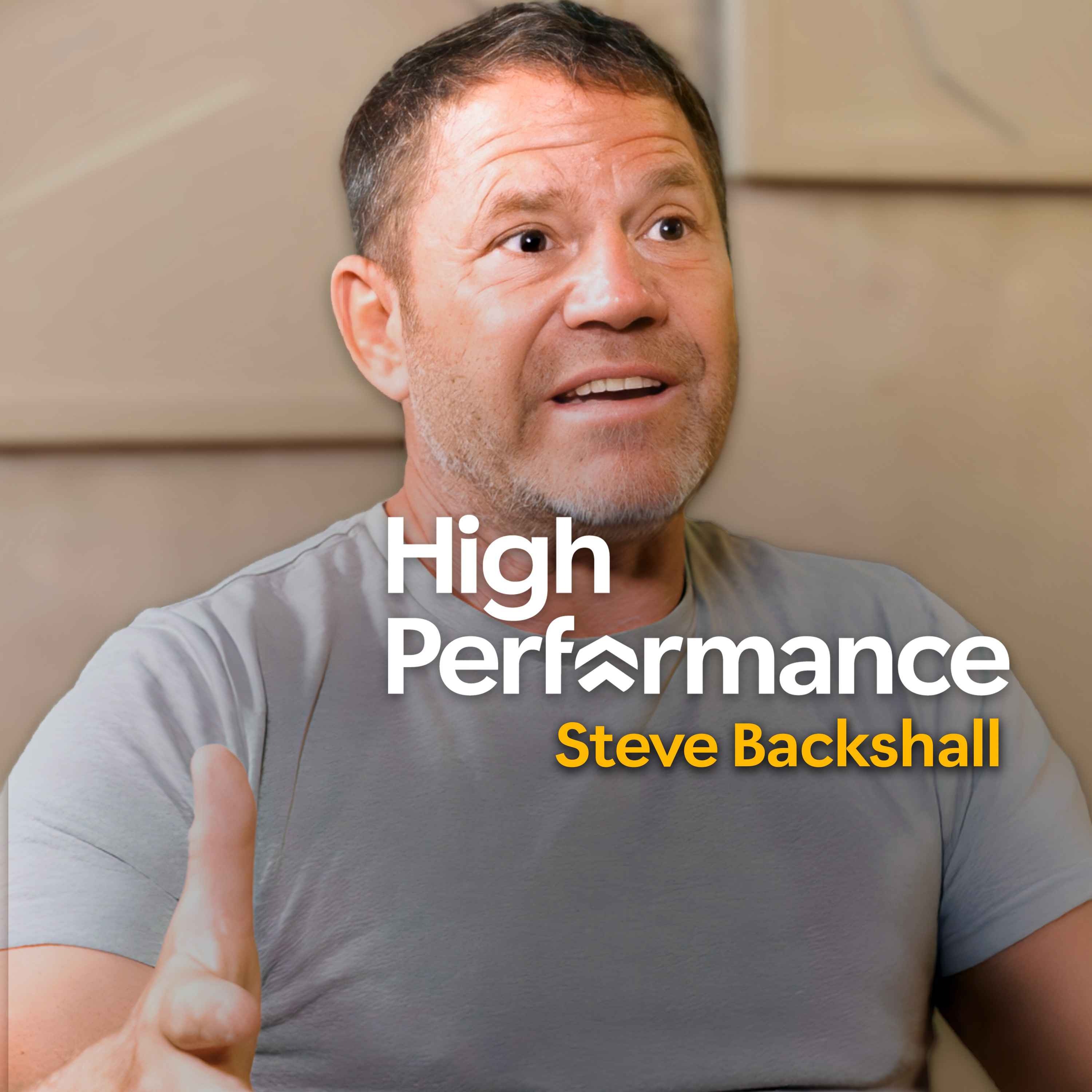
In this gripping episode, adventurer and naturalist Steve Backshall shares his experiences of facing death, exploring risk, and finding purpose in life. Known for his extreme adventures, Steve recounts a near-death experience in Bhutan, delving into the psychological shifts that occur during life-or-death moments. He also reflects on fatherhood and the implications of risk-taking.
Written by AI. May contain mistakes.

Get the gist, explore an idea or ask about something said.
 Claude
On The High Performance Podcast, what are the key points of this episode?
Searching your listeningAutomatic transcript. May contain errors.
0:28Watch it early on the High Performance App. an absolute overdose of that. There are so many things in the outdoors, in beautiful landscapes that can just leave your jaw on the floor with awe. That is the voice of Steve Backshall, world-renowned explorer, naturalist, someone who's come closer to death than almost anyone we've ever spoken to on this show. And you might know Steve from hit TV shows like Deadly 60 or Expedition, but the truth is that Steve has been trapped underwater in freezing rapids. He's had polar bears stalk his kayak. He's triggered rock slides while climbing remote cliffs. Yet somehow he's still standing, or in this episode sitting, and talking to us, more curious and more committed to living with purpose than ever before.
1:09But in this conversation, Steve's about to reveal what really happens, in your mind, at the edge of survival, as he opens up about the four and a half minutes underwater in Bhutan, where he genuinely thought it was all over. How he learned to find clarity, not panic, in extreme environments. the voice inside his head when he's alone with sharks, craps in caves or confronted with failure and why he believes that when you think you've finished you're actually just at 50 % of your capacity. He also talks about his emotional reflections on fatherhood, his marriage to Olympic champion Helen Glover and the identity struggles he faced growing up where he had to pretend to be someone else just to fit in and how that still impacts him to this day.
1:49Honestly, this is a really rare insight into how to stay calm under pressure, find meaning and discomfort, and go beyond what you think is possible physically and mentally. Please hit follow on Apple or Spotify so you never miss an episode, and that means we can bring you more incredible stories like this. Oh, and Steve's new podcast, That's Just Wild, is also out wherever you get your podcasts. Amazing animal facts, fascinating science, and loads of other great stuff. But right now, it's my pleasure to welcome to High Performance, Steve Batchel.
2:22Steve, welcome to High Performance. Thank you. Thank you very much for having me on. Sometimes in life, the hardest, the most difficult moments are the ones that teach us the most valuable lessons. So would you kindly take us back to a moment that you faced death in Bhutan and tell us what it taught you? Yeah, I think that I've probably faced death on camera, exposed to millions of people more times than anybody else in human history. That, though, is the time that I think I was closest. So to anyone that hasn't seen it, we were on an expedition in the Himalayas. We were leading the first descent of one of the last great undescended whitewater rivers in Bhutan, which is this absolutely magical Himalayan kingdom.
3:04It's an incredible place. The culture is phenomenal. People are extraordinary. It is more forested and protected than just about anywhere else on Earth. but it is also rent with these extraordinary cataracts that thunder down from the Himalayas to the lowlands and they pass through rocky gorges that you just can't get into we couldn't even fly drones into them to get a sense of where we were going to be going and what we would do as we would go down in our kayaks would be that we would stop off every time we had a significant rapid ahead of us and we'd scout it we'd get a really good look at it and figure out what our route was going to be down through it and then we were coming towards the end of one day I think we'd done about 20 or 30 completely unrun rapids before in that day we were tired we were on the edge we were you know really ready to find camp and we came to what was clearly a significant rapid it was entrapped on either side by vertical rock faces and we just couldn't scout it there was no way of getting down around the rocks to get a look at what we were doing now looking back at it we should have we should have aborted, we should have just found a way out of that situation.
4:09Instead, we decided to run it blind. And that was a big mistake. And it was a mistake that very nearly cost me my life. So first of all, my paddle partner, Sal Montgomery, who's an extraordinary first descent specialist, waterfall specialist, went down the rapid, thundered down, disappeared out of view, and then it was my turn to go. And as I paddled down, I saw the water just dropping off into nothing. And what you're supposed to do as you go over one of those is to really commit. Like anyone who does anything to do with extreme sports knows that if you go half-assed at something, something's going to go wrong.
4:47If you properly throw yourself at it, you're much more likely to succeed. Well, I kind of bottled out at the last second, went over this drop, and then got caught in this spinning whirlpool beneath it. And I battled over and over to try and right myself. I did about, I don't know, 15, 20 Eskimo rolls and then just take it straight back down every time. And eventually I thought, right, well, this is it. I'm going to pull the ripcord. So I pulled myself out of the boat and went into the water. At that point, the water is glacial meltwater. So it's not much above zero degrees and it is highly aerated and spinning.
5:22So your buoyancy disappears. I was being dragged down to the bottom over and over again. The cold meant that all the air was going out of my lungs. I couldn't breathe. and I was coming back up and clawing for the rocks around the side, but just couldn't get a hold of them. And I was in there for four and a half minutes. Underwater? Underwater, yeah. So coming up every, you know, once in a while and then straight back down again. And it was the longest four and a half minutes of my life. I've had a lot of close calls in the past, but never that amount of time to process what was happening to me.
5:53To think, this is really bad. I'm drowning. I haven't got the wherewithal to get out of this myself. I can't swim out of this I'm not going to pop out of it I am done feel all the strength going out of my body and just knowing that I couldn't rescue myself and that was when somehow and I'm still not really sure how she managed to do it Sal battled upstream against the rapids got a line and threw it to me and she had one shot because if she hadn't hit me with that one line she had to redo the rope back in the bag and I would have been gone pulled me out and then I just pinballed all the way down to all these rapids until I was hauled out further downstream and I think the thing the reason that it stuck with me more than any other one was that amount of time that amount of time to to think about and process what was happening to me to think about my my little boy who'd really only just been born that I would never get to see grow up to think about my my wife and this life that we planned together that wasn't going to happen.
6:56And also to feel like I've never felt this before, the strength sapping out of my body to a degree where I just couldn't do anything. You know, I couldn't swim myself back up to the surface. I was finished. It's a very, very powerful thing to know that someone has saved your life in the absolute underlined in bold letters way that Sal did for me then. And I can say that every single thing that's happened in my life since then, including me having twins and you know all the other stuff has been down to sell and it's great that on things like this I get a chance to say thank you. Wow what a story can I just ask about the moment where you're realizing that you're going to die right because I think that most people think your entire thought process and your all your physical movements are totally consumed with trying to stay alive so how much of like where are those thoughts about your family and your your life in your brain, where are they when you're trying to stay alive and you're trying to make decisions to get out of the water?
7:56Yeah, I've thought about this often, you know. I can compare it to one of the other very, very close calls that I had, which was a rock climbing fall back in 2011, where I broke my back in two places, smashed my left ankle, put my ankle bone through the underside of my foot. The fall itself, from about 30 feet up, I know scientifically would have taken a second and a half. And in that second and a half, I had time to see the leaves passing by me on the trees, to flash back through my life to so many of the things that had happened to me. And there's, you know, there's lots of suggested scientific reasons why that might happen.
8:38The adrenaline might quite literally make our brains process things faster. So time appears to slow down, that our brains are zipping back through our life history to try and find something that might save us in that instance, some little moment that could give us the clarity to act and, you know, in my case, you know, stump my fall. And that was a second and a half. And in a second and a half, I did see my life flash before me. Well, in four and a half minutes, your brain is just struggling to find anything it can to get you out of that situation. It's running through every single scenario it can find.
9:13It's running through all the training that you've done over the years, through all your experiences, through the different things that you've had that might possibly make you think, oh, what I need to do is to pull this particular ripcord and everything will be right. In this case, that didn't happen. And without Sal, I would not, absolutely without question, would not be sat here today.
9:49No bulky overhead. No rigid long-term contracts. Just the right expert right when you need them. Work smarter and faster with Upwork. Go to Upwork.com now and find your freelance expert. That's U-P-W-O-R-K dot com. Post a job for free and get started today. Time. It's always vanishing. The commute, the errands, the work functions, the meetings, selling your car. Unless you sell your car with Carvana. Get a real offer in minutes. Get it picked up from your door. Get paid on the spot. So fast you'll wonder what the catch is. There isn't one. We just respect you and your time. Oh, you're still here?
10:28Move along now. Enjoy your day. Sell your car today. Carvana. Pick up these may apply.
10:39This episode is brought to you by Opera Air, the first browser with mindfulness at its core. Now, most of us spend hours every day online, but how often do we pause to take care of ourselves whilst we're doing it? And that's where Opera Air comes in. It's a lightweight, fast, secure browser built not just for productivity, but for your well-being. With Opera Air, mindfulness is built right in. You'll find free breathing exercises, guided meditations, and soundscapes with ambient sounds, lo-fi music, and binaural beats, all designed to help you focus, relax, and even spark creativity while you browse.
11:17so when did you get chance to be able to make sense of it though i know you said you processed it in that four and a half minutes but i'm thinking about when you finally reach the shore you reach safety how was your reaction to that i think i i came out and i was completely exhausted i was total jelly i could barely walk to the side i had to be dragged out by my by my life jacket that evening I had a really bleak bleak time I drank pretty much an entire bottle of scotch to myself in my tent just lay there just kind of thinking what on earth has just happened to me because I would have imagined it's like euphoria like I could have died today and here I am still no it wasn't not that not that night anyway why and I think well there was there was lots of reasons I think the darkness had been very real and it had really kind of etched itself into my brain to a certain degree.
12:11That real sense of this is how it all ends for me is something that didn't just evaporate and leave me kind of buzzing. In fact, I've never really had a sense of euphoria afterwards. You think that I would, but I really didn't have. The next thing was, I think that I kind of knew even then I was going to have to continue that if I got out and went, well, that's it for me, I'm done, that the expedition would be over. And you know, sitting here now, how ridiculous is that? Of course the expedition should have been over. Of course we should have just walked away. What was I thinking that I would be actually in that moment processing?
12:46Well, I need to get back on this river tomorrow morning. I need to keep paddling all this whole expedition's over and all these people are not going to have anything to do. And I mean, now sitting here for the first time, I realized quite how ludicrous that is. Where does that pressure come from? Where does that sense that we should have to continue when I had nearly lost everything on that river. And actually, what did it mean? It was kind of nothing in the big picture. But almost immediately, my brain was saying, you've got to finish this. You've got to get back in that river tomorrow morning.
13:16And where does that pressure come from then? I don't know, really. I think that I've always pressured myself in things that I don't think I'm particularly good at. I've always wanted to push myself to overcome things that I am not naturally adept at, whether that be in science. You know, I find science very, very challenging. Well, you know, my brain was kind of there like a little gremlin in the back of my mind sort of saying, you need to get your science qualifications because you don't understand it. You don't really get it. You're just completely, you're a fake, you're a fraud. You've got to make sure you do that.
13:50To running, I'm not a very natural runner. And so I found myself kind of like over and over again, kind of, well, you need to do some big runs. You need to start running over the mountains. All these things at which I am not good, I find myself pushing myself to try and be better at, and often failing, but the triumph when you succeed, when you beat it, there's nothing that can better that. It's so much better than succeeding at things at which you find naturally easy. And have you thought about why you're the kind of person that needs to do the things you're not very good at, rather than just leaning into the stuff that you've already great at?
14:26I don't know. I think that there is definitely a part of my personality that has that, you know, what we hideously call imposter syndrome, that is always wanting to prove that I am not the fraud that maybe I thought I was when I was a youngster. And that I'm still trying to do that now when I'm 52 years old is perhaps a little sad. You'd kind of hope that at some stage, you could gain a sense of equanimity and kind of a little bit more happiness in all the things that I've done and be a little bit more at ease with that. I'm still not. But that sounds quite a cruel term to describe yourself as, that inner voice, to use the term fraud.
15:14I think it is cruel. But in some ways, that cruelty, that judgment of myself is one of the things that has driven me over the years and that is still driving me now, you know, even as my body is falling apart and I clearly should be, you know, wearing carpet slippers and being much more sensible about my life. It's still there. That nagging voice is still there and it's still the reason why I keep pushing myself. But that must have originated somewhere. I mean, I think it would probably go all the way back to school. I didn't have particularly good time at school. Didn't enjoy myself. had quite a hard time with my schoolmates.
15:55I think I knew the kind of things that I loved in life, the things that made me happy, the things that fulfilled me. And I could never have shared those with the people that I was at school with. I went to quite a robust, comprehensive school. If I'd gone in and let people know that at the weekend I've been out birdwatching and looking at birds' eggs and nests and watching the hatchlings fledge, I would have been beaten black and blue. So I spent most of my school years pretending to be someone completely different, someone that I absolutely was not. And whether it's something that has persisted since then, I don't know.
16:34You know, Damien, with one question, is linked to this feeling that you have in your 40s and 50s about being a fraud with the fact that you were walking into school every day as a teenager and you were having to be a fraud as a kind of self-preservation method. Yeah. And here it is still lingering all these years later. I wonder if it is that. If it is that, that is really, really frightening. Because I kind of feel like I am done and dusted with the 14, 15-year-old that I was and have been for a very, very long time. But if that's still lurking somewhere in the back of my subconscious, that's pretty scary.
17:08I need to get rid of that, don't I? I need to address this better. That's an interesting question, though, whether you do. because yes, we kind of have this image that you shouldn't carry any kind of baggage, right? Because it has a cost. But look at all the things that you've done in your life, including being at the bottom of a whitewater rapid in Bhutan. That's what you do when you're trying to prove yourself, when you feel that you've got something unfulfilled inside you, when you have that kind of inner fire in your stomach. Like those are the things you end up doing. So in some ways, maybe it's the most valuable thing that you possess is this desire to prove yourself wrong.
17:46It might be, but at the same time, I think I could really do with being able to celebrate the successes a bit more and get a bit more out of them. You know, talking about that Bhutan expedition, that was one of 20 world-first expeditions that we did in the space of about two and a half years. And any one of those should be enough for me to revel in for the rest of my life. But instead, I finish it and I'm instantly on to the next one. I haven't gained the proper amount of satisfaction from doing one of those expeditions. And to a certain extent, that's a waste, isn't it? Because there are so many stories, so many lessons, so many things that I could share from any one of those single expeditions.
18:34is that any greater from me having done 20 probably not actually probably i would be better to sit down and process and and enjoy any one of those experiences a bit more rather than having this ceaseless desire to just keep on going keep on doing new things keep on achieving and it's got to end somewhere and let's just hope that it's not somewhere bad but who are you trying to prove yourself to i cannot think of any single person or thing that i'm trying to prove myself to it is It is purely self-driven. And it's something that has always, always been that way. I've told the story before of an expedition that I was doing in the Himalayas with some friends of mine.
19:17And we took about five weeks to try and make an ascent of this quite serious mountain near Everest. And it was really intense. It was really full on. We all got a little bit scared, a little bit overwhelmed. and we turned back at a critical point when a couple of little tweaks could have seen us to the summit. And I had a photo of the summit ridge blown up and put on my wall in front of my bed so that for about 10 years, every single time I woke up in the morning, the first thing I would see would be that photo and would be the reminder of how it felt to turn back when I could have pushed on and gained the glory.
19:58and I wanted it to be not so much an inspiration as a kind of nagging sense of what failure feels like and what turning back when you shouldn't feels like and isn't that a bit messed up looking back at it now I mean I thought at the time that I was I was being really clever that I was using psychology to trick myself and to drive myself on to achieving more but wasn't I actually completely tormenting myself in a needless way. Well, just as you said it there, the idea that came into my head, I don't know if you're familiar with that. There's a phrase called goal idiocy and it was written by a guide that looked at climbers scaling Everest and the amount of people that have almost set the goal of I need to get to the summit of Everest and then died on the summit when all the evidence was like, turn back, this isn't healthy for you, you're likely to perish.
20:50and the number, and that was where the phrase came from. Goal idiocy, I love it. Yes, so when you described it, I'm listening to somebody that's actually making the smart decision of whatever your rationale would have been, you've done it because it's the right reason, and yet you're using it to beat yourself up for it. Yeah, we call that summit fever as well, and it's a real thing, it's a very real thing, you know, that sense of I've just got to get to that summit, metaphorical or literal, and not seeing beyond it, and not seeing the consequences or not seeing, you know, in mountaineering, the very real sense that getting down is harder than going up.
21:26So, you know, if you completely rinse yourself getting to the top, then you are stuffed. Can I just say this is probably the best and most frightening therapy session I have had in my entire life. I'm digging up demons I haven't talked about before. Thank you. Yes, thank you. The point is, though, it works for you, right? To set yourself these targets, to almost punish yourself to the point of achieving, it's successful. But you've already said it yourself, it has to stop one day. Yeah. So have you actually thought about that? Because at 53? 52, yeah. 52, you're an awful lot closer to the it has to end one day than when you were 22.
22:09Yeah. I know. And where it ends is a question that I've been asking myself for a long time. You know, I've been doing a kids' wildlife series. we were talking about this, you know, just before, for, well, since 2003, I've been making kids television programs. And every single significant milestone, I said, well, no one's going to be wanting to see me do this in my 30s. No one will be wanting to see me do this in my 40s. Nobody's going to be wanting to see me do this in my 50s. And yeah, I'm still making Deadly 60 now. It's got to end somewhere. How does it end? How do I move on? What happens next?
22:44It's kind of been the huge question in my life for the last decade and I don't know the answer and every time I feel like I've discovered the solution and what's going to be next you know something else happens that means that I just drop back into the old familiar groove and one reason is that I really enjoy it another is that I clearly get something from from the the achievements and from the big ticks in the boxes, whether I like it when I put it in that sense or not. And so I don't know. I don't know where it ends. And what I feel like, some of these things that I use to motivate myself and some of the lessons that I get from them would be very useful if, for example, they were in sport, where the consequences are glory and excellence and excitement, and the negatives are maybe not quite getting where you want to get to whereas in what i do there's you know less glory from the attainment but the the possible negative outcomes are quite literal death so i probably need to get better at assessing all of this and figuring out the answer to that question when does it end and what happens next i think earlier you said it has to end someday let's hope it doesn't end badly or did you did you say yeah there are so many things that i've done um over the years and i i am someone who continually risk assesses every single area of my life and i you know have come to the conclusion that the majority of things that i do while they may appear to be dangerous have been thought through and are always based on experience and knowledge and all of that other stuff but there's no getting around the fact that you know i have nearly died on a multitude of occasions and often on camera very publicly and I think I do need to think more about that particularly now as I've you know got three young kids and a lot of bigger responsibilities just to make sure that it the needle is always nudging towards experience and away from the chaos of youth because you know when you're in your 20s and 30s and you think you're utterly invincible and that nothing can bring you down.
25:02You've also got the physical capabilities, and I'm aware now that my physical capabilities are not what they were when I was in my 20s and 30s. So I need to be better at making sure my risk assessments are good. But you are so experienced, so knowledgeable. You do your risk assessments, you know about summit fever, you now know about goal idiocy. But despite all of that, you're standing there looking at a whitewater rapid in Bhutan and you go, well, we can't assess it. Let's go for it anyway. Yeah. I don't understand how you came to that decision. Neither do I. And whether actually, like you can learn a lot from nearly dying under the water, right?
25:45And we can talk about the lessons you've learned and how that's changed how you feel about life. But surely you've changed how you make decisions after nearly killing yourself. I hope so. Yeah, I really do hope so. And I know that I've become a lot more rational now than I was 15 years ago, 20 years ago. But there are still things that I do that you could argue are kind of lunacy. You know, the closest call that I think I've had with an animal was diving with Nile crocodiles in the Okobango Delta. And we were there for about 10 days. we dived with, I don't know, maybe sort of 15 or 20 of these crocodiles.
26:26And the reasoning was that at that time of year, the water is very clear and very cold. And so the crocs that are underwater, as so-called cold-blooded animals, they're chilled, they don't have a tremendous amount of energy. And so you can swim up and you can be kneeling alongside them underwater. This will be a three meter long crocodile, and they will completely ignore you. And they do. And there is what appears to be no risk from that scenario. And it's been thought through, it's been risk assessed. And then coming towards the end of the trip, we came across this big male crocodile who's more like four and a half meters long.
27:00And he'd possibly been out of the water basking, or maybe the fact that he was big made that he could maintain more heat than the smaller crocs. But he did not lie there and do nothing. He came straight at us underwater, swam in between my camera operator and I, we've got this incredible image of this big ball of sand on the bottom and then the croc coming out of it and coming in between the two of us. You could toss a coin as to whether we lived or died in that moment. And every time we've replayed that in our heads, we've all gone, it was just pure luck, pure chance that no one got killed that day.
27:35And in the exact same scenario, people have been killed. And yet, you know, the last series of Deadly Six, I was back in Diving with crocodiles again and going through the same processes saying oh well these ones are smaller and you know that they are they're purely fish feeding species and so therefore it's going to be fine and the images of crocs just like swimming over my head while i've got the camera like this so in some but you don't get the fear then after what's happened previously um i have to say i didn't i don't know i i think that you know one of the things working with animals is that the old adage about animals being able to sense fear is probably the number one maxim that I still use for my animal encounters now, because it is the truest thing.
28:20Animals can absolutely sense fear and they react negatively to it. So if you are calm and confident, if you are making a big image underwater or on land, you are far less likely to have a negative reaction from an animal. The worst thing you can do with any kind of animal, particularly a predator, is to run or to show any sign of stress or weakness. That is what triggers their predatory sense. But let's just go back a step before that though, Steve. How do you control your fear to be able to convey that sense of confidence? It depends what I'm working with. If I'm going into a situation with an animal and I am nervous or frightened, and there is an easy out, then I'll take it.
29:02because putting yourself into that situation, if you are scared, is a bad idea. And now, having been doing this for 30 years, I know what that line is. Working with things like sharks... So how does fear show up for you then? Fear, you know, is something that if you have it, you can't really mask it, particularly not to an animal, because first of all, your heart rate's going to increase, your breathing is going to increase. Underwater, that's transmitted through the water by ripples and sharks and crocodiles. they are absolutely honed to picking those symbols up. In the air, the fact that you move differently, the fact that you hold yourself in a different way, the fact that you are going to be exuding chemicals through your sweat, which they can sense and smell, all these things you cannot hide, you cannot mask.
29:46So you have to not be scared. And that's, you know, easier said than done. But I guess an example would be working with highly venomous snakes. If you work with highly venomous snakes for a long time, then you learn there are simple rules that you can live by, a striking distance that you can stay outside of where you are safe. And if you do that, then there is no reason to be scared. And likewise, working with sharks. You know, when I work with sharks, I work in clear water. I don't do it at dusk and dawn. I make sure that I have the right species, the right individuals, and that, you know, there is a set amount of the right kind of bait around.
30:25And if you do that, then it is near as damn it safe. And I know that and I am calm and confident. And if I'm not calm and confident, then I shouldn't be there. What's the one animal that when it gets mentioned, you immediately feel a little rise of fear? Hippos. Hippos by far. I've talked there about snakes, sharks, crocodiles, all of them animals that are so-called cold-blooded and are very predictable you know they can catch you out of course they can but they are for the most part animals that you can learn the rules stick to the rules you're going to be okay hippos are a large intelligent warm-blooded mammal that are not predictable in any sense you could work with hippos your whole life and you still don't know what they're going to do next they are aggressive they're territorial the females when they're looking after their calves are very dangerous.
31:17The males when they are feeling grumpy are incredibly dangerous. And they're in the water, usually completely brown murky water where you can't see them. And therefore, if you're there in a boat, in a kayak, on a paddleboard, or God forbid, underwater, they are the absolute boss of you. They can move faster than you can. They can pop up alongside you. We're not expecting it. How do they attack? Their teeth are insane. So the tusks can be as long as my arm and they are self-sharpening. They sharpen against the teeth from the upper jaw. So they are, you know, they're as sharp as a sword. The other thing is on land as well.
31:53I've been saying for a long, long time, hippos can run as fast as an Olympic sprinter because that's what the record books say, but I never believed it. And then last year we were filming in Zambia and I saw one at night get spooked and it went off like, there's no doubt that it would have outpaced Usain Bolt and it did it through waist-deep water and then stampeding over rough ground at insane speeds. If you were chased by a hippo, you would have zero chance, absolutely no chance. If you were between a hippo and the water and it wanted to get into the water, it's going through you. So yeah, they're the one animal that exceeds expectations.
32:32We've talked a lot about fear and what drives you and fears for the future as well as fears for what you're doing now. but there's also magic to what you do because you have to operate in a space that 99 % of people are not operating in so can we talk about how you sort of optimize your brain to operate like this and what it feels like when you know that you're getting the absolute most out of what's in here that's a wonderful question and I think that you know probably the answer to all of the quandaries I've talked about up to this point is the wonder and the joy I get from this job um There is nothing that comes close to the absolute saturated joy of holding in your hand a species that is new to science, knowing that yours are the first eyes ever to see it.
33:24That comes with striding across a summit ridge to get onto a pinnacle that no human being has stood on before, looking out to the view, knowing yours are the first eyes to ever see it in that way. Swimming into a subterranean cabin and your light illuminating darkness that has never before seen light and knowing that every single stalactite is being seen by your eyes for the very first time. That ecstasy, that euphoria, if I could bottle that, I would be a trilly there. Can you describe it? I think, you know, sometimes even just the joy of waking up in a morning on an expedition and opening up your tent and looking outside at a beautiful view and thinking, I don't know what's going to happen today.
34:10It's going to be something amazing, but I don't know what it's going to be. It's joyous. It's life affirming. It makes all the effort that you've taken to get to that point worthwhile. And it's incredible. And maybe it is that that I'm searching for. Maybe that is the reason why I'm still pushing myself to do these things over and over again, rather than taking the time that I should be taking to get the most out of the lessons I'm learning, to be sharing the stories that I've had. I'm always ticking on to the next one. Maybe it's a kind of addiction. Maybe it is, you know, the incredible release of hormones that I get from that magic moment when you see something new that I think makes it so special.
34:56And I guess if I kind of process that from a scientific perspective, that desire to discover, that urge to seek out new things, is one of the things that has made us as a species so successful. It's one of the reasons why human beings are at the top of the tree right now is because we look at the world as something that needs explaining. We look for new things and want to figure out how they work and figure out how they process. And that is the thing that almost defines our success. And I have had the opportunity to do that over and over and over again in my life. And it just feels amazing. It sounds like there's echoes as you're talking there, Steve, of an interview that we did with a brain surgeon who spoke about the psychology of awe.
35:43When it looks inside somebody's head, the sense of awe that he gets leads him to be more and more curious. What has awe taught you about the world that you think you still use that you pass on to your three children? I think that, first of all, I need to listen to that episode, for sure. That is a wonderful way of describing it because awe is the greatest drug out there. It really is. to stand below the angel falls in full cascade and look up at them, having just descended on a line alongside them and know that you're looking at one of the greatest wonders of the world. And it's just you stood on that little pinnacle looking up at it.
36:31It's something absolutely overwhelming. And it is, as you're intimating, something that I desperately want to be able to share with my kids. And whether that be at, you know, last night, staring down a microscope into the compound eyes of a dragonfly for the first time and seeing them, you know, accentuated in all their tens of thousands of lenses of glory. What, with your children? Yes, yeah. What a lovely thing to do. Those little moments where you see eyes light up and potentially the naturalists of the future being born are really special and it's awe that does it. Awe and wonder is the thing that we can use to lead young people towards the things that, you know, are going to give them the best possible life.
37:13And I think that with a natural world, we have an absolute overdose of that. There are so many things in the outdoors, in beautiful landscapes, in wildlife and animals that can do just that, that can just leave your jaw on the floor with awe. So will you tell us how you maintain that sense of curiosity for anyone listening to this about how can they tap into some of those principles of awe in their everyday lives? I mean, I don't know if it's universal, the kind of sense of order I have with the natural world. If it is, then I would say that that is the perfect way to go because it's so big and so infinite.
37:48And because you can go from, like I say, the mega, the staring at a gigantic mountain, to the teeny, teeny, tiny, to staring down a microscope at a dragonfly's eye. And that, to me, is infinite in its possibilities. There's at least 20 million different species on the planet. You could never know everything about them. and there is always some little element of discovery. And sometimes it's in the familiar, it's in things that you see every day. And in other times it's in something that you have to work really, really hard for. So that gives you so many possibilities for achieving that awe, that wonder, which, you know, just kind of sets everything right in life and gives everything purpose.
38:27So if anyone out there is looking for their thing, try nature and see if it works for you. You tend to think that from a, you know, scientific perspective, that it would make sense that it does because, you know, we have hundreds of thousands of evolutionary history where wanting to learn about the things around us has been very important and it's been something that keeps us alive. So I would think that a significant amount of people have that same thing in them that I do. They just probably don't, you know, spend as much time and effort into evoking it as I do. And when it comes to parenting, how do you encourage your kids to find the thing that they love and not kind of overpower them with loving the thing that you love?
39:07Yeah, that is such a big question, isn't it? Because, you know, both myself and my wife, my wife's a, you know, four-time Olympic athlete and I'm someone who's obsessed with nature. And it was the first conversation we had before we had kids was we have to make sure that we don't try and push our kids into doing our thing. First of all, because I've done enough work with young people to know that the thing you push them towards is the thing they're most likely to reject. but at the same time we want to make sure that it's available to them we want to make sure that they have the experience that Helen and I have offered to them as a resource should they want it and the best thing I can do really is to try and make it cool is to try and make it something that they actively enjoy that they don't feel that they absolutely don't feel they're being forced into or led by the nose into because then it's something that's always going to be oh that's dad's thing we don't like that and right now you know they're a great age the twins are five Logan is six.
39:58And so we still have an opportunity to sow the seeds, to make it awesome, but then to let them make their own choices, which they will ultimately have to do. Can we talk about your marriage too? For those that don't know, Helen Glover, Olympic rower, amazing athlete, incredible woman, you'd be the first to say. What does a marriage look like when it's an Olympian and a kind of adrenaline obsessed adventurer? it's a weird marriage from from everybody's kind of out external perspective why well because you know we spend we spend a lot of time apart we both have very disparate all-consuming objectives we're both incredibly driven people but we're also both essentially homebodies who are really desperate to be the best possible parents we can and those things can sometimes come together into a beautiful synthesis that enables us to give things our kids that almost, without wanting to sound smug, no other parents can.
41:03But at the same time, we're very aware that it can put an enormous amount of pressure on the kids. There's also a lot of time where they don't have both of us, they have one or the other of us, and that there are an awful lot of things going on in our lives that create a huge amount of stress and energy that five-year-olds don't necessarily understand. so it's a battle it's a battle to make sure that we we give them as many positives as we can that we give them as much of the experience as we have but you know can you imagine for our youngsters if they were to start getting into sport and they would start feeling but your your mom's Helen Glover your mom is one of the most successful Olympians this country has ever seen how are you ever going to live up to that um that could be desperate for a kid and I think figuring out ways that we can kind of shield them from that while still allowing them to have Helen's expertise, it's not a challenge we take lightly and we're not going to always succeed at it.
42:02And what have you found? I think that it's about that balance between providing the inspiration without putting in too much pressure. And we're also very, very aware that we're still at an early stage with this. We're still at the five-year-old, six-year-old stage where they're still quite malleable, where they still want to be with us, they still listen to us, they still respect us, and that isn't always going to be the case. We're very aware of that. I've got plenty of friends who have kids who are teenagers, and even the most high-achieving of them, there is going to be a day where they don't care about mum and dad anymore.
42:38So we're enjoying these halcyon days and trying to get the best out of them we possibly can. If you're still overpaying for wireless, it's time to say yes to saying no. At Mint Mobile, their favorite word is no. No contracts, no monthly bills, no overages, no hidden fees, no BS. I made the switch because I was tired of those ridiculous bills and sneaky charges from my old provider. With Mint, I'm paying$15 a month and getting the same high-speed data, unlimited talk and text, and the coverage on the nation's largest 5G network. Honestly, the quality is just as good, if not better, than what I had before.
43:13And the best part? You don't need a new phone. You can keep your current one, bring your number, and all your contacts. I use Mint Mobile, and you should too. Ready to say yes to saying no? Make the switch at mintmobile.com slash HPP. That's mintmobile.com slash HPP. Upfront payment of$45 required, equivalent to$15 a month. Limited time new customer offer for first three months only. Speeds may slow up a 35 gig on unlimited plan. Taxes and fees extra. See Mint Mobile for details. The market's uncertain. revenues tied and hiring on hold that's why results driven companies are using upwork to keep work moving go to upwork.com today and start hiring proven freelance talent fast no bulky overhead no rigid long-term contracts just the right expert right when you need them work smarter and faster with upwork go to upwork.com now and find your freelance expert that's upwork.com Post a job for free and get started today.
44:13Ah, DSW, birthplace of the humble brag. Here, the shoes are so good, no one would ever know how little you paid if you didn't go telling everyone that is. And with never-ending options for every style, mood, and occasion, all at really great prices, we'll definitely give you something to brag about. So go ahead, stock up on fresh sneakers from your favorite brands. Or try those boots you always secretly knew you could pull off. Find the shoes that get you at prices that get your budget at DSW stores or DSW.com.
44:49And did the way that you speak to her, look after her and love her and the way that you parent and love your kids change at all after you really thought you were going to die in Bhutan? Yeah, yeah, for sure. I think that I came back, first of all, just very glad and very joyous that, you know, I was still alive and you know there was still gonna be things that I could do and I definitely had a an enriched sense of appreciation of life after that I don't think though that it was as as big of an impact on my perception as fatherhood had been and that had been maybe you know a year and a half before that moment in Bhutan and that had been such a sea change in my life and such a change in you know the way that I perceived everything in life that it was always going to overwhelm something as comparatively trivially as nearly drowning.
45:41Having my firstborn child for me changed everything in the most cliched way imaginable. You know, I felt like I've been someone who'd been a real searcher my whole life, who'd been looking for the purpose, the meaning of life, why are we here? Then I had kids and I went, oh, that's why we're here. You know, it's not some massive, grand, self-serving purpose. It's something as simple as the kind of thing that, you know, pretty much everyone does. but all of a sudden realizing that that you know now everything is invested in in them is a powerful and important thing can i ask you about the languages of love between you and helen it's the work of a guy called gary chapman who talks about all couples have like a way that they like to express affection to each other it might be time it might be words it might be physical gestures like how do you two connect with each other then given that you're both competitive animals, but you do spend so much time apart.
46:39I'm a very, very romantic person and quite emotional. And I do lots of full-on romantic things for Helen to try and make sure that she always knows I'm thinking about her and I'm on her side. And, you know, that I want to champion her to do and achieve everything that she can. What do you do? Oh God, all sorts. Nothing that is going to endear me to any of your listeners. You never know who listens to this. If Helen's a listener, it deals. Well, you know, Helen knows all too well, but she'll be the first person to be reaching for the sick bucket. I mean, it's really important that those things that you start off with early in the relationship that you keep doing as much as possible.
47:21And so, you know, Helen has had a massage every single night that we've been together in the last 12 years. That's nice. Who's the masseuse? That's me. I just got this big day from two houses down yeah I mean as a sports person who has endless aches and pains she's always needing a back rub or a foot rub or something like that and something as simple as you know just making sure that every single evening I do that and I never say no is an important thing I still write her poems and send her cards and photos and leave little surprises and boxes of chocolate in the places that she's last looking for them.
48:02And do all those things to check in as much as possible. Love that. Can we talk about the amazing physical shape you're in? For people that are listening to this on their podcast player, and they don't get the full Steve Batshaw experience because we get the pecs and the lats and the guns and the abs. I mean, you look in amazing shape for someone in his early 50s. Looks can be deceiving. Come on, Steve. What is the secret to looking like you are? what are the behaviors that you would love people to think about adopting? So the first thing to say is that I have had a lot of serious injuries in the past and that if I don't train every day, and that might be as simple as a bit of yoga or some weight, some calisthenics, whatever.
48:47If I don't train every day, I start to break down really quickly now. And it's not surprising. I broke my back in two places. I've smashed up my leg. I've had countless operations to try and get myself working again. If I don't take really good care of myself, it starts to become very obvious very, very quickly. So I do try and train every day and I try and make sure that wherever I go and whatever I do, I take with me a set of rings, a TRX, a skipping rope, maybe an ab roller. And I find the time, I make the time to do something every single day. And one of the things that I think I've really learned from Helen is that something that Helen was amazing at, particularly in the Tokyo Olympic year, when it was post-pandemic, she had three kids under two years of age, and she was still smashing it to a degree where she could go out and become the first, you know, female rower to go to the Olympics having had kids.
49:43And the reason she did it was not so much the getting up at six look in the morning, going out for a two-hour row, you know, even though she had no sleep the night before because she'd been breastfeeding two kids. The reason she did it was that every time she had five minutes or 10 minutes spare, she'd be down on the ground doing a core session or she'd be doing chins. And you'd think, or I thought before that, if I've got five minutes, I haven't got time to train. I've only got five minutes. What's the point in that? You know, you're not even getting your heart rate up. For Helen, it was like, no, I'm taking that five minutes.
50:13I'm going to do something with it. And actually over the course of a day, those five minutes would add up to half an hour. And over the course of a week, they've added up to three hours or four hours on top of her normal training. And actually, you absolutely can do a really decent ab workout in five minutes if you've got it, if you want to. And I started becoming better at doing that, at taking those small moments of time and using them. And they add up and they really add up. And if you've got a really, really busy day and you only have five minutes and you use that five minutes, the difference it makes, not just your physicality, but your mental feeling about how that day has gone is stratospheric.
50:56You know, if I come to the end of a day and I haven't done anything physical, I feel low, I feel heavy, I feel, you know, a bit disappointed in myself. If I've done five minutes, if I had five free minutes and I spent it doing something physical, I feel proud of myself. So what would you do in those five minutes? So for me, it depends whether I'm at home, whether there's a gym available or whether I'm quite literally in a featureless environment. Like I've just come back from an Arctic expedition where we were out on the Arctic tundra or the Arctic sea ice for the whole expedition. So there wasn't a tree to hang the rings off or to get the TRX on.
51:29I had nothing. And I simply did burpees and jumping squats and doing lunges all the way through the snow and shadow boxing. Doesn't matter. It absolutely doesn't matter as long as you do something. And a lot of that is psychological as well as physical. Go on, explain what you mean by that. If I've got a really good gym available, I can go and I can do 45 minutes of a, you know, a hardcore physical workout with every bit of modern equipment you can use. What I have mentally at the end of that is probably not as much as if I've had a tree outside my hut in Africa and I've thrown my rings over it and I've spent 10 minutes doing Skin the Cat because I know that it's taken more willpower to do that and in doing that I got a little bit of mental strength out of that I proved a little bit about my own resilience from the fact that I've made myself do it when most other people wouldn't and that I think is in some ways as important as the physical stuff is when obviously I was on children's BBC when you first started making children's BBC shows and I remember you would come in and you would be full of energy and enthusiasm and love for the natural world and now you're all browbeating and I couldn't wait to see you again because I love the sort of like, we talk often about being the spark of light in the room.
52:49And I think you are the spark of light in the room. But what's really interesting for me here is I think sometimes when someone is the spark of light, when they are the enthusiast, when they are the one that's doing the thing that they love, you assume they're just on this linear path of happiness. I think the biggest revelation for me is that kind of, the fact you can do the things you love, but sometimes the things that drive you to do the things you love are a lot darker than the things that you love. Is that a fair reflection of the conversation we've had actually? I think I'm beginning to realize through this conversation that that is absolutely true.
53:19Yeah. I reckon that I have always been someone who has been searching for meaning, always been someone who's been searching for purpose, been driven by a desire to do everything amazing I possibly can without necessarily understanding where that drive comes from. And I absolutely should spend more time processing, more time figuring out what it is that psychologically drives me and everyone. and also more time kind of breaking down and understanding and appreciating some of the things that I've done in the past and trying to find out what the lessons are. Because if I don't do that, then what was the point of them really?
53:55You know, it's fair enough when I'm 24, 25 and you're, you know, running up a mountain to feel good about yourself, but I'm 52 now and I've got three kids and there are so many things that I could learn and share from those experiences. Maybe it's time to just stop having my foot on the accelerator every second of every day and start having more time to just try and figure out what it's all been about. So why don't you do that? I mean, I think that a lot of it is down to pure logistics and purely the self-employed mentality. I have been someone that's been working in television and the media for a very long time.
54:33and I still have there that desire to grab every job that's thrown my way. And I think that I might be wrong, but in our area of the media, you're kind of either hot or you're not. And I've got a lot of people that I have huge respect for that are better naturalists than I am who are nowhere in the media now because they took their foot off the gas at the wrong time. And that's always kind of there in the back of my brain. That sort of, if you don't take every job and if you don't throw yourself into every single scenario, then somebody else is going to do it for you. And I'm probably at that cusp now where I could go from, you know, having more work than I can do to having none in a heartbeat.
55:14And so there's that there. I think probably, you know, a lot of people probably assume that because I talk in quite a nice way that I come from money and that I've, you know, always had it easy, silver spoon, loads of cash. In actual fact, you know, I've been a CBBC presenter for most of my career. And as I'm sure you know that, that does not come with vast wealth. And I don't come from money. So I'm comfortable now, but I still have the wolves of paying the rent, you know, calling over my shoulder. And what I need to do is just do that. Maybe, again, nothing else from doing this podcast. It's that sense of it's time.
55:52It's time to start, you know, taking a bit more time for the family, for the kids and for just figuring stuff out. I am taking this summer off. I'm taking this summer off to just have a couple of months of family time and, you know, being a better dad. We've got some quickfire questions to finish with. Yeah.
56:14What are the three non-negotiable behaviours that you think are most important in life? Wow. Oh my gosh. Loyalty, generosity, and... How can I put this? I want to say openness of heart, just kind of willingness, openness. Yeah, a vulnerability. No, I wouldn't say that so much. I think being always willing to, I mean, this is going to go, instead of giving you one word, I'm going to give you like a thesis. But the ability to be willing to accept everyone and everything, to learn from every possible thing that's thrown your way. Openness, just being open to every experience, I think is really important.
57:07What advice would you give a teenage, Dave? Forget about now. Life's going to be great. These kids that you think are everything and their opinions matter, they're not in your life in three years' time. You'll never see them again. Don't worry about what they think. actually what you've got, the things that you know you love and that make you happy, are going to give you a really, really good life. So just focus on them and screw everyone else. I love that. What's the best bit of advice that you've ever been given? When I was a kid, one of my mum's main maxims was, if a job's worth doing, it's worth doing well.
57:47and I have kind of always stuck to that I'm someone who does my research who does everything a hundred percent throws myself into every task or doesn't do it at all and I think that that is is a really good way of doing things I think you know a lot of the people that I admire the most particularly in this industry are people who are just like that I can remember um I hope which doesn't mind me saying this, but I was promoting a book a couple of years ago and I did two days of radio interviews. I'm sure you guys have done it where you've been locked in those booths where you talk to every radio station all around the country and half of them didn't know who I was or couldn't pronounce my name or, you know, ask me stupid questions.
58:36And then the next morning I was on with Claire Balding, busiest presenter in the country. And she had not only read the book that I was promoting, but had read the previous two books before that as well. She asked me questions like you guys have that I've never even thought of before in my life and really kind of probed into me as a person and made me feel like I was the most important person in the world for a couple of hours. And I came out at the end of it and went, that's why you're Claire Boulding is because you are prepared to do the work that nobody else will to prepare yourself. and I want to be like that.
59:12I want to be the person who's always best prepared. If you could go back to one moment of your life, what would it be and why? Oh, oh wow. My wedding day, yeah, that was the happiest day of my life. You know, I've had lots since with the kids but Helen and I, we got married on a Cornish clifftop not far from where her family are in Penzance. The sky was blue. everybody that I love in life was there in one big tent on a cliffside and I have never been happier. Final question, your one golden rule that you'd like to leave people thinking about for living their own high performance life? There is nothing that is going to get you so hard as the regret of not having done something or not having tried something.
1:00:02you know we learn so much more from our mistakes than we do from our achievements so go for it try it whatever it is if you mess up if you fail then you're gonna be a better person for it but in a few years time if you haven't done it that's the thing that's gonna nag at you that's gonna be the thing that's back in the back of your brain going you never tried that thing you never gave it a go so don't be in that position try it if it fails you're still gonna to gain and learn and grow.
1:00:38Damien, Jake, you know, I'm going to say that we have been sitting together, having conversations like this on almost 400 occasions. And that was one of the most enjoyable and interesting, I think. Absolutely. Yeah. I think we saw a real paradox of a man, you know, somebody that's out there, the adrenaline fueled on the edge of sort of extreme adventures. And yet somebody that's also appreciates vulnerability, being human, and those emotional aspects are not what you always see from him. What I really enjoyed, right, is that, you know, for those that don't know my backstory, I was a kids' TV presenter from 2001 to 2008.
1:01:12Steve started doing his kids' TV show in 2003. So for a good five years, I would probably see him four or five times a year because he'd come on to Children's BBC when I hosted the links in between the shows. He'd come on as a guest and talk about his new show and then we'd say, right, here it is, and we'd link into the show. And he was always just Mr. Energy, Mr. Up, Mr. Optimism, Mr. Let's Get It Done. So to finally have a conversation with him where there is actually, there is a bit of pain and there is a bit of trauma and there is a bit of baggage behind this constant need to always do things.
1:01:45And you know what I really hope is that he does something about that because, you know, we have, for those that don't know, again, we have a guestbook, right? When the guests leave, we ask them to sign the guestbook. And he did write in the guestbook after this record. I am now going to go and have a therapy session but I genuinely hope that he does because I think that it kind of got him to look at not just what he does but why he does it probably in a way that he hasn't done before well there's that paradox again I think like he said he's been doing 30 years of this at the extreme edge of endurance and sometimes the ability to stop to slow down and just process some of these experiences a huge you know anyone listening to that opening description of that four and a half minutes where he was facing death in the eye.
1:02:29But what was interesting for me was how a bottle of whiskey and then we go on again rather than the idea of what am I doing here? I'm a father, three kids, and I'm putting myself in such extreme situations. I thought actually so much about that bottle of whiskey moment. The decision to go over the edge when he shouldn't was a bad decision. 12 hours later, he's making another bad decision to keep on going. It almost makes me think that need to do that stuff is so strong. You're kind of, you wonder what the future looks like for someone that needs it that badly. Yeah, and that's why I'm hoping that this sort of next stage of his life can almost continue those adventures, continue the stuff he gets out of it, but equally give him the chance to process it and to just be rather than to do.
1:03:17And to realize that being a present dad and a loving husband, like that carries as much value as finding a crab that's never been seen before by human eyes. Do you know what I mean? 100%, yeah, definitely. Brilliant. I really enjoyed it, mate. Thanks ever so much. I thought you asked some great questions. Oh, well, thank you, mate. Loved it. Huge thanks to Steve for taking us into some of the most extreme places on Earth. And of course, deep into his head as well. If this conversation left you thinking differently, please hit follow on Apple or Spotify or maybe share it with someone that you think really needs to hear Steve's story.
1:03:50and don't forget you can get early access to every episode along with exclusive content on the high performance app thanks for listening and we'll see you next time
1:04:21Dr. India Woods here. As a veterinarian, I demand a lot of my scrubs on the job. That's why I show up in FIGS. FIGS are made for the sometimes crazy situations I find myself in. It doesn't matter if I have to squat, sit, bend, or even chase after one of my patients. FIGS moves with me and keeps me comfortable in the highest pressure situations. FIGS gives me one less thing to worry about. Get 15 % off your first order by visiting wearfigs.com and use code FIGSRX at checkout. That's wearfigs.com, code FIGSRX.
Steve Backshall is no stranger to the edge. As a BAFTA-winning naturalist, adventurer, and presenter of Deadly 60, he’s spent his life in some of the world’s most extreme environments, from dense jungles to deep caves. In this raw and gripping episode, Steve opens up about what really happens when you face death head-on.
He takes us through one of his most terrifying moments: being trapped underwater in Bhutan for over four minutes. Steve also dives deep into how the brain shifts gears in life-or-death moments, revealing the strange clarity and focus that can emerge at the edge.
Beyond survival, Steve reflects on why humans are wired to chase risk and adventure. He talks about fear, not just feeling it, but using it, and the powerful difference between facing hard-earned challenges versus easy wins.
This episode explores the razor-thin line between danger and discovery, and what it teaches us about our own minds.
Steve's new podcast That's Just Wild is out now. Amazing animal facts, fascinating science and stories of real-life, wildlife adventures, wherever you get your podcasts.
🚨 Partners
Heights 👉 Get 20% off your subscription by using Code: HP20 here: https://highpfrmc.com/heights1
HP Foundation 👉Do you want to kick-start an evolution that will change the lives of millions of children? Find out more about the High Performance Foundation: https://hppod.co/foundation
HP Corporate Events 👉Click here to book High Performance Events: https://hppod.co/corporate-events
Explore offers and discounts through our other partners:
https://hppod.co/partners
Hosted on Acast. See acast.com/privacy for more information.


