
 Ask ChatGPT


 The High Performance Podcast
3 Jul 2026 · 54m · 18 chapters
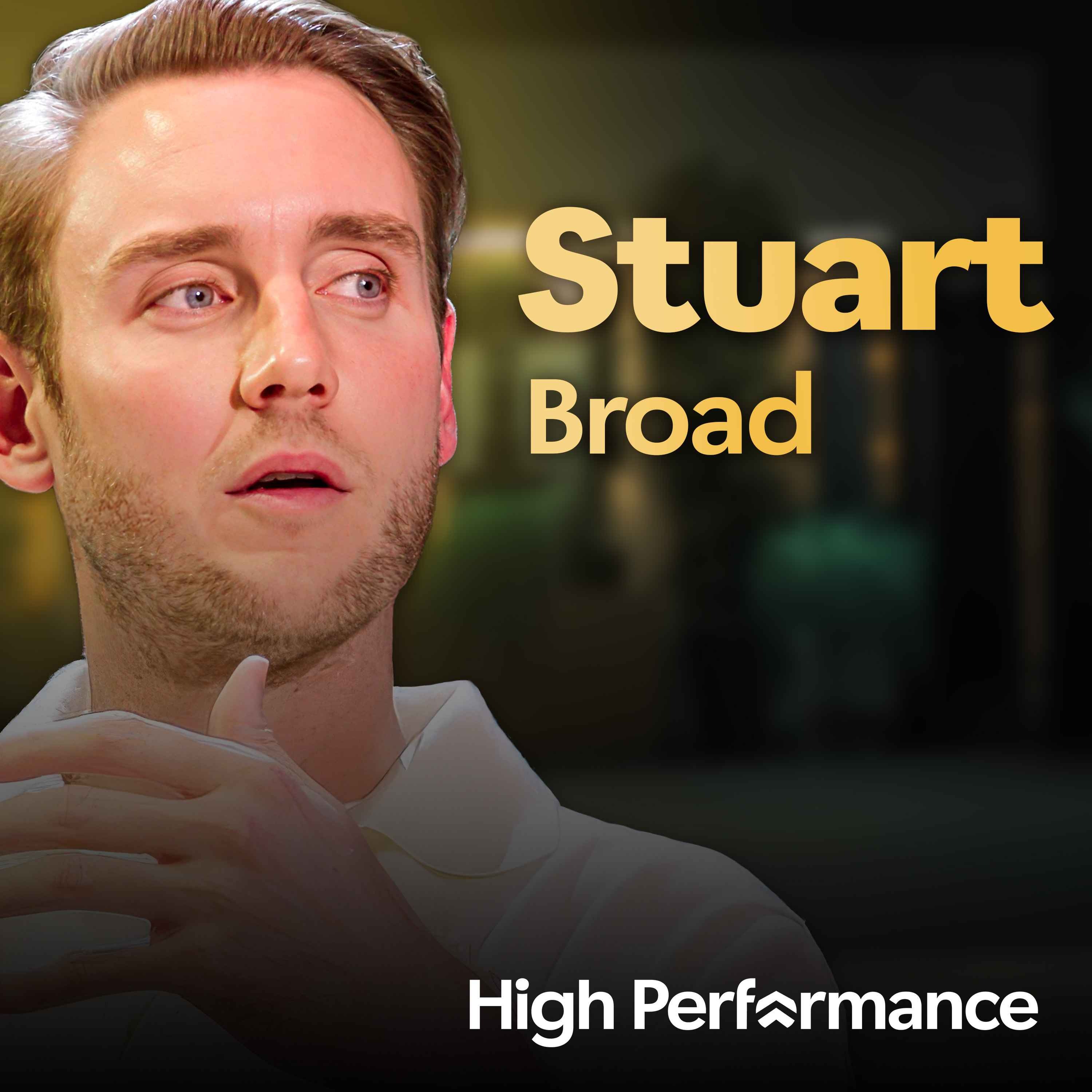
Stuart Broad discusses Ben Stokes’ retirement announcement, the “Bazball” mindset shift in English cricket, and the mental frameworks that helped Broad perform for over a decade.
Stuart Broad, former England fast bowler (retired 2023). He describes his upbringing, his England debut era, working with coaches and sports psychologists, and his own routines (warrior mode, assassin mode, and note-taking).
Elite performance depends more on mental process than outcomes; Broad avoids the word “retirement” and frames it as a new chapter. After a chaotic 2007 Durban T20 World Cup match (including “6-6s”), he built routines to prevent repeating that lack of preparation. He says “warrior mode” ramps up competitiveness, while “assassin mode” cools emotions when things go wrong. Brendan McCullum’s approach is authentic, attacking, and designed to remove fear of failure.
Broad knocking on Stokes’ door at Trent Bridge to tell him his career was over; Durban World Cup turnaround; Edgbaston Ashes note-writing about nervousness; “flip the bails” at The Oval (vs Australia) as a lucky reset; Trent Bridge England vs New Zealand “go and win” moment leading to a 10-in-11 run.
Written by AI. May contain mistakes.
Discussion on Ben Stokes' retirement and Stuart Broad's own journey.
“Listen, if you're in a moment in your life where a big decision is looming or maybe big change is on the horizon, you may be feeling fearful.”
Stuart shares the emotional journey of deciding to retire from cricket.
“And we start where every great career eventually has to get to.”
Broad explains why he prefers to view retirement as a new chapter.
“for a couple of days that I've had in my career, really.”
Stuart discusses his early career and the pressures of being a professional cricketer.
“that stems from the book, which is your mindset and the way that you worked so hard behind the scenes, the things that we've never seen, that you had to do to get yourself to where you wanted to be.”
Broad reflects on his initial experiences and the emotions of starting his professional career.
“Certainly, I had a few different memories that I can remember.”
Learn how observing a mentor influenced mindset and longevity in cricket.
“of information just spurring me on all the time, but without filling me with all sorts of stuff all the time.”
Explore the pivotal moment in a player's career that shaped future success.
“It's probably 90-10 because the mental routines of what I put in place that day held me pretty strong for the next sort of 16, 17 years.”
Discover the mental routines established to enhance performance under pressure.
“which would control everything about bowling a spell.”
Understand the emotional regulation techniques for competitive scenarios.
“It's just putting a structure in place, really, that when it's not going so well on the field, instead of it not going so well for half an hour and you lose the game, it doesn't go so well for 10 minutes.”
Learn the impact of writing notes on emotional awareness and team dynamics.
“and you only sort of give it fleeting mentions, oh, my note making or my note taking, or I wrote my notes and that helped me.”
Explore how positivity and authenticity can transform team culture and personal mindset.
“Yeah, I was being how I wanted to feel instead of how I felt.”
Learn how positivity and confidence can transform performance in sports.
“And Stokesy and Baz are very positive in the changing.”
Explore how McCullum fosters a fearless and entertaining cricket culture.
“And you can really stamp a different mindset or a different authority on it.”
Learn how small acts of recognition can change team dynamics and morale.
“And one thing that he is incredible at, which is only a tiny thing, he praises small things within the changing room.”
Discover the leadership qualities of Ben Stokes and their effect on the team.
“We also can't discount the role of Ben Stokes in this.”
Understand the significance of mental habits in sports and life.
“I've not written anything down since the oval finished.”
Explore the balance between stubbornness and adaptability in personal growth.
“So that'll be something that I will lead forward for sure.”
Reflect on what legacy means and how it can influence future generations.
“And I think legacy changes with every personnel and every style of coach and group.”

Get the gist, explore an idea or ask about something said.
 Claude
On The High Performance Podcast, what are the key points of this episode?
Searching your listeningAutomatic transcript. May contain errors.
0:00Stuart Broad: Before we get into today's episode, a massive thank you to Apple Podcasts for including High Performance in their 2026 Creators We Love campaign. If you've just found the show, welcome. Nice to have you with us. Head to Apple Podcasts to see mine and Damien's favourite episodes from the last six years of High Performance.
0:17Ben Stokes: People have spent the money to come and watch you here at Lords Home of Cricket. They don't want to see you block the ball. Go and win the game. And if you lose trying to win, we're all happy, but go and win the game. It's a game based around being able to deal with failure. and being able to deal with someone getting the better of you, but then bouncing back. You know, you're not going to score 100 every day. You're not going to get five for every day. But that's why you can't judge yourself on the outcome all the time. Challenge your limitations, but learn and stick by your strengths. Hi there.
0:46Stuart Broad: Welcome along to High Performance. Listen, if you're in a moment in your life where a big decision is looming or maybe big change is on the horizon, you may be feeling fearful. Well, today's guest is here to help you understand how we can deal with fear and deal with uncertainty that change often brings us. This week, the cricket world was stopped in its tracks when Ben Stokes, the man who arguably has transformed English cricket as he led with total authenticity and always ran towards danger, announced his retirement from the game at Trent Bridge. And he leaves behind one of the most remarkable captaincy stories the game has ever seen.
1:20Stuart Broad: And there's actually one other person who knows exactly what that decision feels like and who totally understands Ben Stokes as a leader better than almost anyone. That man is Stuart Broad. He retired in 2023, having chosen his moment perfectly. The ashes at the Oval, leaving at the very top. In this conversation, he shares the story of the night he walked down the corridor at the Oval Hotel and knocked on Stokes' door to tell him his career was over. But this episode is about far more than just leaving things behind. It is full of lessons for you about what it actually takes to perform at the elite level, decade after decade.
1:57Stuart Broad: The mental frameworks that Stuart built after one of the most public failures in cricket history. The warrior mode that he used. The honesty that he shares. The note-making that he relied on. And actually, I think that you might be the ones making some notes as you listen to this. So let's jump straight into our conversation with Stuart. Recorded live in a theatre. And we start where every great career eventually has to get to. The hardest decision of all. Enjoy.
2:25Ben Stokes: Ultimately, I think anyone knows when you walk away from something that you absolutely love, it's one of the most difficult decisions going. And I was in a place where I was bowling really well. I was enjoying my bowling. I was loving playing under Stokesy and Baz. The team environment was sensational. Turning up each day, having a lot of fun. And of course, there's always pressure with international cricket, but I didn't feel a huge amount of pressure and scrutiny. I trusted the hierarchy. but ultimately I knew I had a goal to finish playing for England I knew I wanted my last ball to be at the pinnacle England versus Australia at the oval a gorgeous place to play I think that's what makes me most proud is that I stuck to my principles of knowing that I wanted to finish at the top and you know I went through a bit of an emotional roller coaster in the final 10 days of my career I started thinking about it a bit at Old Trafford and then the oval just came so quickly You know, when you've got a big decision hanging over you, time seems to go, like, disappear on you a bit, doesn't it?
3:28Ben Stokes: So I tried not to think too much about it because ultimately we need to win the Oval Test match. We've got to focus on performance and deliver a good game. But it got to the Friday night, so that would be day two, end of day two. And I'm like, I've got to make a decision here. You know, I've kept my sort of inner circle tiny. Neil Fair, a great friend of mine, Molly, my mum and Alistair Cook were basically my real sort of confidences in it. And it was getting to that stage of the game is approaching the end. You know, I need to know what I'm thinking. And I FaceTimed Molly on the Friday night, still umming and ahhing a little bit.
4:07Ben Stokes: And she said, trust your gut, trust your gut, you know, we'll support you forever. Problem is I had no gut feeling. That was a really difficult thing. I said to Molly that on the FaceTime I said you know what I just wish I was like playing badly so something was telling me just walk away from it you know I've always had that fear of bowling against a 21 year old and them going I thought he was supposed to be good but I so I put the FaceTime down still a bit undersized I was like right I'm gonna go and knock on Stokesy's door verbalize the decision and see how I feel because ultimately I know him really well.
4:42Ben Stokes: He's a great friend of mine. I knew he wouldn't tell anyone. And I sort of knew I could call him 7am the next day if it didn't feel right and go, Stokesy, forget that. You know, I'm cancelling that decision. So I walked down the corridor, three doors down, knock on the door. He's like, who is it? I'm like, Brody. He goes, I'm icing my knee. I was like, right. So he's like plugged in, you know, to the wall and he's game ready. He said, can you call me? I'm like, oh, I prefer to see you face to face. And he said, as soon as I said that, he's like, I know something's coming here. So he got up, opened the door.
5:16Ben Stokes: I put my hand out and said, that's me. And he goes, what do you mean? I said, this is going to be my last game of cricket. And he was like, you're joking, aren't you? I was like, no, it's been a hard decision. But I knew I couldn't go with too much doubt because I didn't want it to be a negotiation. I needed to say it. And he gave me a massive hug. I said, thank you so much for being a great friend, but also giving me the most enjoyable 15 months. I said, just keep it to yourself tonight because I need to see how I feel in the morning type thing. And then woke up at 7am the next morning and felt lighter, fresher, happy, you know, no sad feelings and knew it was the right decision.
5:56Ben Stokes: And that's maybe when my gut feeling told me that it was the right call. So actually verbalizing it to Stokesy helped me accept it and then went on the most incredible sort of journey for a couple of days that I've had in my career, really.
6:10Stuart Broad: Why does the word retirement sit so uneasily with you?
6:14Ben Stokes: 37 years old.
6:17Stuart Broad: That's literally everyone's dream.
6:19Ben Stokes: It feels so like... It feels so final, that word, doesn't it, retirement. You know, I just see it very much as a changing of career, a changing of paths. Ultimately, sport is a funny beast in the fact that most sports are quite age-dependent. you know that you come to a time when either you can choose to go, which very rarely do you get to go on your own terms or an injury comes or loss of form comes in age, wipes you out. So yeah, I try and avoid the word retirement at all costs really, and just see it as a new chapter in life, a change of direction. And I think that just helps me, you know, change my focus to being a positive one.
7:00Stuart Broad: I want to talk in this sort of first half of the show about one of the key things really that stems from the book, which is your mindset and the way that you worked so hard behind the scenes, the things that we've never seen, that you had to do to get yourself to where you wanted to be. So I'd like to start right at the very beginning. You know, you're writing the book brilliantly about your mum saying to you, look, don't go to uni. Just give it a couple of years as a professional cricketer. And if it doesn't work out, you can go to uni then. But why not give it a go? Why not explore and see? I'd love to know what it was like the first time that you turned up and actually suddenly this was no longer simply a game.
7:36Stuart Broad: This was now going to be your career.
7:38Ben Stokes: Yeah, so I was very lucky throughout my childhood. My dad had played for England 25 tests and sometimes I think when you're the child of someone that's achieved something, there's an added pressure or scrutiny or maybe coaches at clubs think, oh, you should be better than you are. Your dad played for England type thing. But my parents sort of protected me from that quite a lot and mum was incredible for me because sport was about fun, about enjoyment. So I'd get back in the car after a game of football, rugby, cricket, whatever. First question, without fail, have you had fun? Have you enjoyed it?
8:11Ben Stokes: Her belief was you could turn up on a Saturday, get no runs, no wickets, drop a few catches, but you can still enjoy your time with your friends. If you're basing everything at that age on performing and results, then it just creates so much pressure on you. And then it becomes like a job when you're trying to be learning and experiencing the most. And I tried to hold that mindset as much as I possibly could throughout my whole career about fun and enjoyment and definitely finished it the last 15 months. It definitely changes when you become a pro. It definitely does. You know, if you can hold on as long to that feeling that you used to get as a kid when you open the curtains on a Saturday morning and you're praying for it not to be raining, you know, it's sunny and you're like, yes, I can play cricket.
8:54Ben Stokes: that's awesome or yeah I can play sport and sometimes with media pressure and expectancy and and why you're not in the team why you're struggling a bit that you can lose that slightly why is that I'm not sure I mean I've tried to I've never seen it as a job it's always been a hobby for me I love cricket I hope to stay in cricket for the rest of my life you know my family it's in my family's blood really it's a great love of mine but there's there's something about crossing that line as a pro that maybe you just take it too seriously.
9:51Stuart Broad: flash deals July 6th. Don't wait. Shop Wayfair's 4th of July clearance now through July 6th at wayfair.com. Here's a tip for you. There's a podcast out there with fans waiting to be your next customer. They tune in every week. They trust the host. And that host wants to talk about brands like yours in their own words to their audience. The problem is you just haven't been introduced We're Acast, where that introduction happens. As the world's largest podcast marketplace, we let you browse shows, see who's listening, and book host-read sponsorships or run your own ads all from one platform. Transparent pricing, real-time data, complete control.
10:34Stuart Broad: Start advertising on podcasts by visiting acast.com slash advertise.
10:45Stuart Broad: So what was your emotion the first time that you went to work as a pro cricketer? Were you excited? Was there a sense of imposter syndrome? What are your memories of that time?
10:56Ben Stokes: Certainly, I had a few different memories that I can remember. One was a really positive one. So I played in the biggest game of my career at the time was a T20 finals day at Trent Bridge. and Essex had been travelling really well. They had a few stars in their team. We were like the underdogs. And I fronted up in that game. I was hugely competitive. I didn't back down to any of their senior players. Ronnie Arani had had an amazing series for them and attacked me a little bit. What age are you here? 19, I think. But he said, right, this is the young whippersnapper. I'm going to take him on verbally and physically and try and overpower him.
11:34Ben Stokes: And I stood up to that really well. What was he saying?
11:41Ben Stokes: he said, the rooms are true, you're as big a swear word as your dad was. And I sort of said along the lines of, well, you're old enough to have played against both of us, type route, and got him out, he got a nine ball nought, and you can see when I get him out, I'm obviously like buzzing, and my whole team, because they've heard the verbals going on erupt, but then after that sort of showing I got picked for England and this is I wouldn't say it's imposter syndrome I think you know I was buzzing to be I was really excited about the opportunity but it's overpowering you know so 2006 I'm walking into a team room of those 05 heroes you know Strauss, Truscoffit, Goff was in there, Harmeson and you know I've got no experience before I'm suddenly in a team meeting with guys that I've idolized on TV and and I'm there you know I rock cup and they've all got Jaguars and Mercs and I've got a Vauxhall Corsair, you know, I'm a bit like parking in the car park in the corner type thing.
12:42Ben Stokes: But Goffey, and I speak about this in the book, actually how good Goffey was for me. And that's the reason I wore the number eight shirt throughout my career. He took me under his wing. He amazingly let me bowl with the wind on my England debut, which, you know, it sounds a little thing, but it was his little way of saying, you're the youngster have every advantage going for you because I know how hard this is. And that was a really special thing for him to do and I think that's why I got that bond with him even now if I see him you know we have a hug and we just know that we've got that like number eight club we've got that that mutual respect because he treated me so well as a kid.
13:17Stuart Broad: You spoke nicely in the book as well about Otis Gibson. Yeah I love him. What was it that you saw then in him early on and you thought right that is the standard that I need to be operating at?
13:26Ben Stokes: Yeah like true professional you know he'd go to the swimming pool every single morning I think he was 37 38 at the time but he committed so much work into his game that I think that was quite influential for me because I saw a 37 year old doing that when I'm 18. I said, well, if he's doing it at that age, I should be doing it now. So he taught me everything about working on your game, looking to improve all the time, picking things in your game. So he'd actually left the game and become a coach and come back out of finishing playing to play again because he felt he learned so much being a coach that he wanted to put it into practice again.
14:01Ben Stokes: And yeah, he just had nuggets of information just spurring me on all the time, but without filling me with all sorts of stuff all the time. So yeah, he went on to coach the West Indies, South Africa.
14:12Stuart Broad: You remember an early bit of advice from him where you thought that's golden?
14:16Ben Stokes: It wasn't so much the verbal advice all the time. I could just watch him. I could just watch it. You know, he got in the battle on the field. He'd always do the hard yards on the field, which I respected, but look after himself incredibly off it. You know, I'm lucky. Jimmy and I are the same. We've played in an era where we've got the nutrition, we've got the science, we've got the facilities. He almost did it before that era came, but I could watch him and just think, I could get to 37, you know, if I do what he does.
14:44Stuart Broad: What I like is that you write in the book about your upbringing and you were talented and your parents gave you this opportunity and then you get the chance and, you know, you went up against Ronnie Arani and that went really well and suddenly you're playing for England. Got the blonde highlights. Got the blonde highlights. Probably got rid of the Corsa. And then Durban happens. And what was probably the darkest day in your career at that point, I have no doubt, was really important in shaping you for the future.
15:13Ben Stokes: Massively, yeah. And, you know, I haven't really talked about the 6-6s in Durban at all because I had this mentality that after 24 hours, I'm going to park the bus, leave it behind. And I sort of knew where I'd, or was aware where I'd gone wrong. And I didn't want to have those feelings again in my playing career. It was too hurtful, too damaging. But I knew what I'd done wrong in that instance. I'd got maybe a touch comfortable. I was 21 maybe. And for three months I was talented. I'd played for England a bit. I'd had the odd good performance. I was inconsistent. But I thought, yeah, I've got this game.
15:53Ben Stokes: I know what I'm doing. and I had no mental preparation. I had no real physical preparation that I stuck to and played this T20 World Cup game in Durban. South Africa played first and we had maybe a 10, 15 minute turnaround for TV then the next game's on. So it's all a bit rushed. So, you know, you're getting out there, you take a few catches, right, get a feel for it. I only had time to mark one end of the pitch where my run-up would be because I knew I was going to start that end. so looking back on it I uh the captain I think it was Collie said oh we're gonna bowl this end 19th over I was like well all right yeah so I'm easily thinking okay I've not marked run up out there that's not great um so got the ball and just strode like got my run-up sorted scratched the mark so immediately I've not thought once about where I'm gonna bowl not thought once about my field I've not set about who I'm bowling at you know it was a doni at one end UV at the other both set flat pitch had no real plan and I tried to bowl which I you know I tried to bowl six for the same delivery and really after three I should have gone that's not working yeah
17:03Stuart Broad: and was no one there to say to you you're young you're getting yourself into a hole here just stop take a breath
17:10Ben Stokes: I think Collie sort of came up a little bit and said do you think we should change the field or something but by then everything was happening so quickly and spiraling out of control and and well I think it was quite a obviously a devastating thing to have happened to me at such a young age, but it gave me a bit of a kick to say, right, you need to get some processes in place to look after yourself under pressure. It all became a scramble. You know, if you've had moments in your career where you can't really remember that last 10 minutes, you're like, oh, what happened there? So I needed to put some things in place that I never bowled six balls the same ever again.
17:46Ben Stokes: That was one learning first. That was probably the only physical thing. But the mindset, thing is I created a routine around that that I stuck with all the way up until my last game in July. And yes, it evolved and grew over particularly the first three or four years of me learning about it. But, you know, I think I mentioned you before, my dad said the game's 80 % mental, 20 % technical when I was 15 years old. And I was like, what's the on about? Absolute nonsense. I actually think it's more than that. It's probably 90-10 because the mental routines of what I put in place that day held me pretty strong for the next sort of 16, 17 years.
18:24Ben Stokes: And it almost took that moment of chaos to wake me up a bit, to realize talent doesn't really get you that far. It actually, you need to work very hard on the different side of the game and the sport that actually will drag you further. And I was lucky in the fact that that happened to me at 21. Takes some players in all sports to the 25, 26 to really get to grips of starting that process. And then by the time they're 29, they get it. So they have three or four years of success. Whereas I felt like I got it by the time I was 26. So I could have 11 years of pretty consistent success.
19:00Stuart Broad: What changed after that moment?
19:01Ben Stokes: So my mum's always had a 24-hour rule. Like you're allowed to be a bit disappointed or focus on things that maybe didn't go so well for 24 hours, lose a game, 24 hours. And then that 24 hours hits, look forward, right? Where are we moving to? and I had the 24 hours in a hotel room of a bit of devastation and then I'd start looking at the positives while we were already out of the World Cup, didn't knock us out of the World Cup, we didn't lose a trophy because of my poor decision making, etc. I eventually came up with this thing called warrior mode which would control everything about bowling a spell.
19:34Ben Stokes: So the routine of, I'd always run over the boundary's edge because that's me then entering my battle arena, so to speak. And then I'd stick to a routine before bowling my first ball. It's funny, I'm talking here and it's all mental work. I didn't, not one bit of me went physically I need to do loads of different things. It was very much, I need to build a mental framework about being able to deliver more consistently. And it took a bit of time to evolve, but I'd say the last 10 years of my career, I pretty much got it spot on.
20:07Stuart Broad: Look, that's quite a big thing to create an almost a different persona for the minute you cross the white line. this idea of warrior mode. I mean, that's almost too much work for you to do on your own. So did you bring someone into the fold at that point or did you have conversations with psychologists or anything that you maybe hadn't had until that point?
20:24Ben Stokes: Yeah, I must admit, I mean, I made my debut in 06. Sports psychologists were maybe around, but they weren't overly used. It's become very much the culture now that every player would build a routine around training and playing. with the team sports psychologist. But I probably only really grew into that 2008, 2009 of really working with some individual, Mark Borden, who was with the team. And we'd check in all the time, do sort of little checkboards of what I'd be looking to achieve in that day. And he'd email me in the evening and say, did you do this? Did you do this? Did you do this? What sort of things?
21:07Ben Stokes: Did you get in a contest? It was never about the results. It was never like, did you take wickets? sort of did you get in a contest did you create chances for your team did you lead the players in a competitive way did you give positivity to someone within the changing room just little things that take you away i think with all psychology things it probably evolves over time of things you want to tweak and want to want to want to stop but one of the most important things actually was remember as a bowler the game can't start until you're ready so actually physically the game doesn't move until I go okay I'm ready to deliver my the first ball and um I would start that process the day before so like I said to you when I got hit for six six is I started that process I didn't have a run up marked I'd never practiced a ball from that end so there was no process there was no process I was I was I was like scratching my mark you know having to ball so I'm not one moment did I think what am I going to bowl first ball here what's my field.
22:05Ben Stokes: I'd just gone, right, where's my runner?
22:06Stuart Broad: You wouldn't go out with a plan for what your first ball was going to be.
22:08Ben Stokes: Well, it was unique in that World Cup because South Africa had played a game just before us and then there was a 10-minute turnaround and when we played the game, so you didn't have time to do a full warm-up and a check. But, you know, for the final 10 years of my career, the day before a game, I'd go to the end I was going to start and I'd bowl. I'd imagine the crowd cheering or booing like Australia. I'd imagine, like, if I'm at Lourdes, the champagne corks popping all that sort of thing I can really feel it and then I'd bowled 24 balls in my mind all just going through to the wicket keeper so then when I arrived on the day of the game I felt like I'd already done that and for five years I before I went to sleep the night before I'd bowl those balls in my mind before I slept but then I found I didn't need to do that because I could already feel the emotion of what I'd already done so I was almost visualizing the bowling before I'd done it so I felt comfortable when I did actually bowl and that was warrior mode
23:01Stuart Broad: you also write in the book about assassin mode which also sounds very dangerous um and I think a few opposition players might have seen that over the years explain assassin mode that's when
23:11Ben Stokes: warrior mode got a bit heated and I had to bring it down you know that's when I had to really sort of if I if my emotions got a bit sky high or I got a bit competitive and don't like I think you remember with the Alex Carey incident when I was batting that I don't control this all the time bear in mind you know it's not 100 success rate but uh assassin mode was just little things to bring my emotions down so warrior mode okay ashes day one ramp it up yeah ramp get the crowd going bang up we go assassin mode things aren't going so well maybe it's a go get got a bit heated out there you've leaked a few runs how do you bring your emotions down and that connected with that is disconnecting a bit from the game picking um you know going to talk to a teammate rather and getting too involved with an opposition.
23:56Ben Stokes: It's just putting a structure in place, really, that when it's not going so well on the field, instead of it not going so well for half an hour and you lose the game, it doesn't go so well for 10 minutes. You can drag yourself back out of there and go, right, let's get back on track. What are we focusing on?
24:14Stuart Broad: And you write often in the book about, and you only sort of give it fleeting mentions, oh, my note making or my note taking, or I wrote my notes and that helped me. I'd love to delve a bit deeper into this if possible like when do you remember when you first started diligently writing notes to yourself in your career started to dabble at yeah 26 ish um
24:33Ben Stokes: how did it begin uh I was working with the sports psychologist of the team Mark Borden and and we started to actually one of them this is a bit silly but I still Andy Flowers getting annoyed that I wouldn't turn around to the umpire when appealing which was turned into the celebrity appeal. So Andy had gone to the sports psychologist and said, I need you to work with Brodie and get him turning around to the umpire when he starts, when he appeals. So the sports psychologist comes to me and goes, I've got a challenge for you. So I'm like, oh yeah, should I work on a new ball? No, no, you got to turn around to the umpire.
25:05Ben Stokes: So I'm like, oh, fair enough. So he put in plans that I'd train it actually in practice, turn around. He'd stand as umpire every time I got an appeal, I'd turn around to him and then he'd review it every time. So he said, I need you to start writing down when you feel like it was the first thing that came to your mind to turn around and when it didn't spring to mind after about three months of really trying to turn around I realized this isn't working at all I just can't physically bring myself to to turn around like those those 20 seconds when you hit someone on the pad it's just meant you just got flying around like with airplanes and all sorts so you know I was like I'm fighting a losing battle here but there's there's something in it that I really found therapeutic of writing things and it connected me to my emotions and it connected me to how I wanted to target that day.
25:51And I did it loosely
25:54Ben Stokes: and evaluated, not on performance, but I evaluated whether I had good intent, whether I created chances for the team, whether I led the team positively onto the field, whether I spoke positively in changing rooms. So that's what I evaluated at the start. And then back...
26:10Stuart Broad: Did you set yourself a challenge on the notes for that day or not? Was it reflective at the
26:14Ben Stokes: beginning reflective it was it was a like an evaluation of the day did I was I positive did I did I speak well in the changing room did I create chances did I have the right attitude in on the field and then it the back end of my career the last five six years it turned into how I wanted to operate so I didn't ask myself those questions I was more uh three thoughts um three feelings three things I'm grateful for so every morning uh I mean particularly throughout this Ashes series, I wake up, coffee and go, you know, how am I feeling? And what I got really good at in the last six years is actually being genuinely honest with my feelings.
26:51Ben Stokes: I would actually write down, so first morning of the Ashes test at Edgbaston, I'm feeling nervous, you know, connect to that nervousness. Why am I feeling nervous? Of course, I'm going to feel nervous. First day of the Ashes, you know, it sets up the pinnacle of the series. It's such an, I might bowl the first ball of it. So I need to prepare for that. That's why I've got a bit of anxiety and um you know i'd get i actually that day got to the game chatted to jimmy feeling a bit nervous how are you feeling he goes yeah i was going to mention the same to you because legs are feeling heavy already i've not really done anything so we connected already because i had the i don't know like the not bravery but i'd established how i was feeling in the morning put it down on paper and that opened it up to me so then i could then connect with teammates and go how you feeling you good you feel great and jimmy i went no i feel nervous i said god i do as well
27:39Stuart Broad: Well, you lined yourself at the beginning and not being really honest with actually how you felt, do you think?
27:44Ben Stokes: Yeah, I was being how I wanted to feel instead of how I felt. And definitely the better mindset I got in the last couple of years of how I felt helped me. Because I do think sometimes I wake up knackered, like bowl 20 overs, feel still. And Stokesy and Baz are very positive in the changing. They want positive language. So I'd have to write down, right, today, you're just going to have to be so over positive. because I know you feel tired, but go in and first thing you say is, how good's that coffee at the hotel? You know, little things. I know that sounds silly, but I'd walk in and go, God, you don't want to have the cappuccinos, unbelievable at the hotel, you know, because it starts me off because the works I've done with psychologists, they say everyone would have had it when you walk into an office and someone goes, I feel tired.
28:30Ben Stokes: And you might not feel tired, but then you go, do I feel tired? Yeah, I do feel a bit tired actually. Yeah, I had a bit of a late night. yeah I feel tired so the Baz's culture is about breeding confidence and positivity in that way and he's so authentic with it doesn't necessarily come that naturally to me so I had to connect with my note writing to then be able to go I feel great actually I'm actually going to give positive energy to the group because I've got my real like thoughts down on a piece of paper if that makes
28:58Stuart Broad: sense because you say in the book that there was a point where you were actually a bit negative maybe around the place?
29:03Ben Stokes: Yeah, I mean, I think day three might have not any wickets or you might have not bowled well. The pitch doesn't feel great. So Edgebaston, again, for an example, Lords, for example, I had written in there, appreciate the pitch isn't suiting you. Know it's slow. Know it's not really working for you, but is what it is. Get over it. You know, you've noted it, but the lads don't need to hear that. So that was the sort of thing that I think I developed massively with towards the end and wish I did that earlier for sure.
29:31Stuart Broad: And I still think, particularly in this country, I still think we're a little bit suspicious of this sort of stuff. But the truth is, you've operated at the elite level and gone out on the most incredible high. You wouldn't have been able to do what you did without it, would you?
29:47Ben Stokes: No, no. I think I relied on talent for the sort of early part of my career and then Durban happened and that was a slap like, OK, talent isn't going to get you very far in this game. you've got to build other things. And then I would say the mentality side of my game, I'm not the most talented. I have to work really hard. I always had something looking to drive me forward. I mentioned to you about having an Everest in my mind. What's my Everest? What am I chasing? I always had to have a goal that was tangible and close. So the Everest is, yeah, might be ashes four years time. What's going to get me there?
30:26Ben Stokes: Well, the outswinger to Marlinson Smith will help me the work around the wickets the left handers will help me um so it's little goals within a big one and ultimately if you just keep them in your own brain and don't um not verbalize them but don't put them on paper to to appreciate and look at and review against well you're just floating around you don't actually have the direction that you need
30:46Stuart Broad: and you describe yourself in the book as being an adaptable realist what's that
30:53Ben Stokes: that was actually part of my um psychological report yeah the ecb do they do sort of a big test on you as players every couple of years and to help the coaches actually so the coaches can figure out the best way to talk to players and get the best out of them and and yeah i was an adaptable realist so basically don't give me wishy-washy nonsense i don't want to hear like stats and facts that don't mean anything give me a give me a direct this will improve you because of this and then I can adapt and be and go for the the realism of of that information
31:25Stuart Broad: and when you were on the pitch um you know you got to this point you've made your notes you've been working with the psychologist your incredible natural ability working really hard but things still go wrong absolutely how did you deal with that what were your you you wrote about trigger thoughts what were the sort of trigger thoughts what were the tools you had in your armor that when things weren't going right, you could deal with them?
31:46Ben Stokes: Well, I mean, having partnerships within the group was massive. So Jimmy is a great friend of mine and a big partner. Stokes, he's the same. I think it's really difficult. I have so much respect for individual sports people, you know, tennis players and who have to do all this themselves. If they're slightly off, they've got to find exactly what they're doing and put it right straight away. Whereas I definitely use the energy of other people to bounce ideas off and be like, Jim, I feel like I'm overstriding. Have a look at this, would you, for two balls and give me your feedback. So a trigger for me would be get out of here, of your own brain, stop being internal, get external for a minute, ask an opinion of someone because it gets then out of my brain and into someone else's and they might go, actually, yeah, your knees are not picking up like they were.
32:33Ben Stokes: And then if that doesn't work, for me, the crowd. Because if I'm thinking technical, running in going, right, where are my shoulders? What's my front arm doing? All that wind's in my face. It's just put me off. I'm done. I need to have something else that's got my mind in that competitive spirit. And the crowd became, in my notes, a big thing. Probably the most written thing throughout this Asher series was engage the crowd. And if I felt a bit energyless or things weren't going my way, just felt slightly off, out it came, you know, here we go, you know, and that actually became a really big thing for me, because it's quite a brave thing to do, you know, ultimately, young players aren't going to do that so much, because if I engage the crowd and then bowl a pile of rubbish, not a great look, is it, so, but that helped me rev myself up, get myself in a competitive spirit, because I knew that I had to deliver my skill, but also everything became external, and I stopped thinking about little nonsenses that were taking him away from the battle.
33:36Stuart Broad: And you do all that and you still get hit for six, right? What happens then internally? You swear?
33:43Ben Stokes: Yeah. So one of my little triggers that I actually picked up from Tiger Woods was always look above the stands. So the view of that is if someone's watching on TV or the opposition are watching me, I wouldn't want them to know if I've been hit for four, bowled a great ball, got a play and miss, been hit for six. My posture should never change walking back to my mark I should always be head up I'm six foot six head up stand tall eyes above the stands and ultimately my view on it was if I got my eyes to the clouds I'm not thinking about you know it's weird when you're on the pitch you do see faces you think cool that fan's a bit disappointed with that you know you do you do you like you you do you go oh god like they're all just drinking the champagne now they're not interested in this anymore so I get my eyes above the the stands and zone out of the hot zone for a bit refocus turn and go uh that would be a big trigger for me to you know if I you know if I'm not getting quite right if my eyes are really up you know I'm getting out of the cauldron I'm making sure that I leave that ball behind and reset but yeah I think ultimately Josh Butler and I have this conversation all the time Cricket's an interesting sport that really, only probably one in 10, two in 10 days are really great days.
34:58Ben Stokes: It's a game based around being able to deal with failure and being able to deal with someone getting the better of you, but then bouncing back. You're not going to score 100 every day. You're not going to get five for every day. But that's why you can't judge yourself on the outcome all the time. You have to judge yourself on how you felt, whether you delivered your skill, whether you did all you can do. Because ultimately, I can bowl the best spell of my life, get nonfer and then uh bowl really badly and get five far so if i'm jumping for joy when i get five far it's actually false um and then if it's all going to poo then just flip the bails over and you're all right it worked for you
35:40Ben Stokes: i tried it twice in my career and two wickets fell in those it should have tried it 17 years ago it would have been all right um actually the first one was you know i'll talk about the second one like the first one was mark wood was bowling at minus labashane i'm at mid-arm and the oval's gone quiet it's got 11 runs in 14 uh overs we're bowling great player misses we're not getting a nick and i i was stood at mid-arm thinking i'm i'm bored and i'm playing ashes cricket if i'm bored what are the crowd thinking and you know we're all our team ethos is about entertaining the crowd. And I thought, I'd heard.
36:19Ben Stokes: It turns out I thought I heard. I'd heard that there was an Australian habit that if you flip the bales over, it was a change of luck. I've spoken to quite a few Australians since and none of them have confirmed that theory. But I walked up to the bales at Marnus's end, a bit to get in his grill, a little bit into his bubble, just get into his space, sort of be a presence there. And I flipped them over and not many people noticed actually. And I wandered back to mid-arm and Mark Wood got the edge. Rudy took a great catch. And I was like, it's worked. I can't believe it. So I started running towards Stokesy, who's captain at mid-off because he was like cheering away.
36:59Ben Stokes: And on my route to Stokesy, Usman Khawaja, the non-strikers at the stumps. And for the first time my whole career, I celebrated with the opposition. I put my hands on his shoulders and went, it worked, it worked. I was like, what am I doing? And that's when I got to my teammates and they're like, oh my God, you changed the bales, it worked. Like, what did you do that for? I said, oh, I thought it was a change of luck. I was like, oh, that's unbelievable. So it worked number one and very strangely, it worked number two as well.
38:03Stuart Broad: We'll be right back. its thing. So why do your marketing results look the same as six months ago? That's because you're fishing in the same pond as everyone else. Podcast listeners are a different audience entirely, more engaged, harder to reach through traditional channels, and ready to act when someone they trust makes a recommendation. We're Acast, and we put them right in front of you. Browse thousands of the world's leading podcasts, book host reads or run your own ads, and track every conversion in real-time same skills you already have brand new results a cast a cast.com slash advertise
38:47Stuart Broad: you've mentioned a couple of times they're playing with freedom um focusing on the process not the outcome this is all messages from brendan mccullum right this is what he lives by yeah it's basball era but you're not allowed to say basball because he hates the phrase basball right that's true yeah I'll say you don't I would love to know when Brendan first walks in what does he do what does he say to take away the fear of playing for your country on the biggest stage of all because it's one thing to say don't be fearful it's a totally different thing to be able to create that
39:18Ben Stokes: in a team yeah I mean he took over a time we'd won one in 17 tests so it's almost like you know if you're a coach it's probably a great time to take over isn't it you're not gonna you're not going to do any worse than what's come. And you can really stamp a different mindset or a different authority on it. And, you know, he was in the laws change room. He's not one for PowerPoint presentations. He doesn't do grand speeches. We were just getting ready for training day one. And he said, boys, just, you know, I have a couple of minutes. You know, I want us to play attacking cricket. I'm going to back you as players.
39:51Ben Stokes: You're my team. I want us to always have the mindset that if you can take the attacking option, do it. You've got, you know, that's what the changing room want from you. He lives by this saying, sort of, run towards the danger. You know, if there's danger, run at it, don't back off it. And he'll always encourage you to, you know, sprint towards pressure moments.
40:11Stuart Broad: Does that work for everyone, though?
40:13Ben Stokes: Well, it has in this team, because you sort of got to live by that, you know. And it's a talk in the changing room. If we go a bit negative in with our shell, like, recognise that, come out of it. And he said, love you to get on the back pages of the papers, but never end up on the front, which is quite a good message as well. So I think what did he do to sort of get that fear of failure, that positivity within the group? A, I think it's incredibly authentic to both Ben and him that this positive style of cricket. He was a genuine believer that in cricket to sell tickets in the stadium, you're fighting against football, theatres, cinemas, museums.
40:53Ben Stokes: people have spent the money to come and watch you here at Lord's Home of Cricket. Entertain them. You know, ultimately, they don't want to see you block it and try and, like, survive. Go and hit boundaries, hit sixes. You know, try and take wickets at every ball, which is quite a free way of looking at the game because, ultimately, professional sport... I've always viewed professional sport as this long, straight road. And, you know, the better you can stay on that straight road, there's all things trying to knock you off all the time, trying to bunt you off. But if you stay on that straight road, you'll have great success and he was just basically saying this is the direction forward we're going to run forward all the time we're going to take no negativity in the change I mean honestly in 15 months I've never heard him say one negative word not once and I think that's really important because if he comes out and says play without fear I'm going to back you you know I prefer you to get caught along off and caught in the slips defending then if you get out caught long off and he goes that's a crap shot why did you play that the whole thing's blown but also So if your teammates go, shouldn't have played that shot, that's not acceptable.
41:57Ben Stokes: It's all about, you just need to hit a yard further. If you hit a yard further, that's six, great shot. You know, so it's a freedom. And one thing that he is incredible at, which is only a tiny thing, he praises small things within the changing room. So if Joe Root gets 150, he's not there going, Joe, you're the best player in the world. You're amazing, 150, another one. Well done, awesome. Barely even mentions the 150. He'll go, Johnny Bester might have got 15, but hit two great fours. He'll go, I just want to say, Johnny, those two fours, they changed the momentum of the game. Honestly, that's exactly what we want to play like.
42:33Ben Stokes: That's exactly what we want. You put the pressure back on the bowlers. Yeah, you got out, but you got out in a way that we're trying to promote the game. So stick doing that. And if you continue doing that, you'll win as a game soon. And just doing little things like that, suddenly Johnny's got 15 and he's sat there like that. Baz mentions him. He's like, yeah. You know, and it's a tiny, like he really focuses on, on building up little positivities all the time. You know, for me, he knew I'm a competitive person. It would be, you know, getting a battle for us today or, or get the crowd, crowds you today, crowds you just reminded me, even if I go a bit quiet, he'll spot it and go, go on, get, get everyone going out there.
43:16Ben Stokes: Cause he knows, never come to me and go, think about your front arm or you look like you're running, your stride pattern's too long. Nothing ever like that. You know, he says, you'll never see me on the tools. What he means by that, you'll never see him get technical and going on the laptop and studying why you're getting out because your foot's gone an inch that way. He's got the coaches that can guide that, but he's very much the mentality of being positive and, you know, without sticking on Baz too long, there was one moment at Trent Bridge. I don't know if you remember England, New Zealand, we needed, we're chasing 280, got to T, needed 170.
43:50Ben Stokes: This is only his second ever game in charge. Ben and Johnny are at the crease and come in at T, game's on the line a bit and Ben folks in next and Ben goes, oh, if we lose a wicket, like what's my job? Am I shutting up shop? Am I, you know, going for the draw, get the draw with one up in the series? Baz is like, everyone in, everyone come in. In we get, 20 minute tea break. Just so we're all clear, we're going for the win at all costs. Jimmy, you're the last man. If you get out there, try and hit boundaries, try and hit runs, take the game away from New Zealand. You know, I don't believe in draws.
44:26Ben Stokes: I'm not interested in draws. Look outside. And he made everyone look at Trent Bridge, full house on a Monday. He goes, these guys have spent money to come and watch. They don't want to see you block the ball. Go and win the game. and if you lose trying to win, we're all happy, but go and win the game. And everyone was like, okay, that's quite un-English. And we went out after tea, so everyone sort of sat there watching and Matt Henry bowls Johnny Bester, a bouncer, first ball after tea, and Johnny ducks it and Stokesy walks down to Johnny and goes, what are you doing? And Johnny goes, well, I was having a look at it, first ball after tea.
45:01Ben Stokes: He goes, don't have a look at it, hit it for six. and then as you remember Johnny just went got 100 and we won the game and I think that was such a crucial moment because it was the coach saying what he wanted and then a senior player went and delivered it and that just gave the whole group like such belief that anything was possible and we went on that run of winning 10 out of 11 I think and I think the thing that rang true the most for me was we're 2-0 down in the ashes this year I'm walking out getting a coffee with with molly and someone walked past me and went loving the cricket keep going and i wanted to go we're two nil down that was my instinct i'm like love winning and you know i said we're two nil down you know we need to get win the next game but that really stuck with me that actually the public were just enjoying the style of cricket and it becomes slight baz have managed to change not just 11 players maybe even the public's view that this is an entertainment entertainment sport and Actually, it's more fun watching teams have a real crack.
46:00Ben Stokes: And if it fails, yeah, we don't mind losing. But if it's successful, it's really fun.
46:05Stuart Broad: We also can't discount the role of Ben Stokes in this. You know, you wrote brilliantly in the book about your admiration for Brendan, but also you make it absolutely clear your deep respect for Ben. What lesson from your time spent with him would you like to share with us that really sort of lays bare just what a special player he is, but more than that, a special person, a special leader?
46:27Ben Stokes: Yeah, a few times. I mean, he's very authentic of what he says. You know, you can tell that he's never, he never like pre-writes a speech or anything and comes to deliver it. He just sort of says what comes to his mind that time. But I think the style of cricket that we play is very much how Stokesy lives his life without speaking out of turn. He's quite helter-skelter. He's quite unpredictable. You don't really know what's coming your way. And that's how we play cricket really. But he actually, before he took over as captain, but he covered a game when Rudy was, his second child was being born.
47:01Ben Stokes: And I actually, Stokes, he dropped me. It was the COVID game at South Africa. I did a bit of a silly interview in a big brother tent, if you remember. And he dropped me because he sort of said, look, I'm going with the pace of these guys. And I felt quite emotional about that. I was leading wicket-taker in the world at the time. I didn't agree with the decision. And the next day, we weren't allowed in each other's room it was the covid you know you had your own room you weren't allowed to eat together you had single like exam tables to eat on all that sort of thing and he knocked on my door and came in my room which was you know we were allowed to do at the time but uh and he just it wasn't him coming in as a captain or i think he just went how are you mate how you doing i was just sat in a dark room like it wasn't around family or anything so we weren't allowed out and that was probably his strongest bit of leadership he he knew that he'd maybe been quite a big part in the decision of leaving me out but he had the heart and respect to come and knock on my room just check how I was he didn't go how are you bowling like how's the cricket all that just because how are you doing and you know that's probably he's like that with every single player he calls you at random times just checking in how you're doing so he's just a ultimately Baz and Stokes they're just really great human beings and and that's uh led to the team just falling in love with their style of leading I think brilliant and what did that do
48:18Stuart Broad: for you when he came in and said that?
48:19Ben Stokes: It lifted me. I mean, I had no real anger towards him anyway, particularly. I was angry a bit myself for not getting in the team and some other decision making that I didn't agree with. But ultimately, I loved the fact that he took ownership of the decision a little bit and looked at me in the eye and said he had a part to play. He didn't say it was the wrong decision or the right decision, but he boosted me from that moment. I knew it wasn't a personal thing. I knew our friendship wasn't going to be affected. I could draw a line in the sand and go and attack and get better. And actually, I had a really good end of that summer from that moment.
48:57Ben Stokes: So yeah, that taught me that if there's ever any sort of niggle or question marks and someone's brain's whirling, just go and speak to them. Be honest. Go and almost attack the awkwardness and people get over it.
49:11Stuart Broad: And look, we all know what you did as a cricketer. I think this has been such an interesting insight into how you've done it and are you still doing the
49:18Ben Stokes: note making oh annoying that so i went for a run actually and listened to dan carter that you were talking to and he said after he moved away from rugby he had a moment like two three months later he was like i've not written a journal i've not done the things i was doing that made me successful in rugby and i i was actually running i think it was last saturday and he said it and i stopped i I was like, I haven't. I've not written anything down since the oval finished. It's almost like I signed away from cricket and I thought, oh, I signed away from my mental habits. Well, actually, that was a great realisation for me because I didn't write necessarily just about cricket.
49:55Ben Stokes: I wrote about feelings, thoughts, what I'm grateful for. So why have I stopped since I've moved away from cricket? So that was a great moment for me in the fact that, you know, why would I not spare five minutes a day to just continue the mindset that served me so well in the pressure of cricket, where I've moved into the pressure of life and everything else. So yeah, I got back to that.
50:18Stuart Broad: Great. I love that. Right now, before we finish, I've got some of my quickfire questions.
50:26Stuart Broad: What are the three non-negotiable behaviours that you and the people around you need to buy into?
50:31Ben Stokes: For me, consistency in mental prep is a big one. Like I just said, three months or two and a half months without doing that. That was a realization for me. So that'll be something that I will lead forward for sure. Pushing boundaries. And that's quite a unique one. But I think that was something that I was really strong at in my career. I think coaches maybe didn't always see eye to eye with me because I'd ask why and how a little bit. They'd come and say, right, I think we need to bowl fuller now. I'll be like, why? Give me some information as to why. And that always helped me move my game forward because I think if you're just a bit of a yes person and you take on every bit of advice all the time and take it as gospel, then what are you learning for yourself?
51:19Ben Stokes: What are you gathering for yourself and finding what really works for you? So I will always push boundaries on seniority a little bit, but I play devil's advocate a little bit. Why should I do that? And how is it going to make me better as a person and a player? Good, that's two. And the one I live by from Durban was consistent improvement, continuous improvement all the time. And I think with that, all of the top professionals I play with, Joss, Stokesy, Rooty, Jimmy, it's always their number one goal, always their non-negotiable. They're looking for something in their game, in their preparation, in their physicality, within the change room that can improve them.
52:01Ben Stokes: And I didn't do that for four or five months around the Durban incident. And I live by that ever since, even up until.
52:10Stuart Broad: What's your advice for a teenage Stuart just starting out on his journey?
52:15Ben Stokes: Yeah, I mean, we touched on it a little bit with the note-making, but I said I started at 26-ish, dabbling and took it more seriously into my 30s. But actually, when we talk in sport about experience, so the players got better with experience and the team's better with the experience in there. How could you grow that quicker? How can you grow the experience quicker? And I think if I had my time again at 15, 16, I'd start writing, it takes five minutes to write, thoughts, grateful, feelings. I'd start writing them down then and I would have probably learned how to express my feelings better. I would have learned where the consistencies in my mindset lay and what really spurred me on.
52:58Ben Stokes: So I did learn later that it was external things that got me going, crowds and feeding off energy of teammates. At the start, I didn't really realize that. I probably enjoyed the crowd, but didn't engage with the crowd that much. So I would definitely tell a 15-year-old Stuart to write more, to make a little journal. I've got something to look back on and learn from.
53:23Stuart Broad: Nice. What is your biggest strength? What is your greatest weakness?
53:28Ben Stokes: Can that be the same?
53:29Stuart Broad: Yes.
53:30Ben Stokes: Has anyone ever said it's the same before? Yes. I'm stubborn. Right. Really stubborn, which is a great strength. So that single-minded site, I will get this job done. I will do it. I will not let you down. Set me a challenge and it will get done. But also a weakness of mine and why coaches have probably found me niggly at times is it takes a lot of convincing for me to change like that. Do you know what I mean? I need the information. I need data, facts, whatever. I'm not just going to be an emotional changer of something. If I think it's the right thing for me and someone else doesn't agree with that, it can be a bit like that.
54:15Ben Stokes: But I've got better with age on that. I think I was worse in my 20s. I was like, no, don't need that. I've got this, I've got that. So stubbornness is a great strength, but definitely has been a pretty decent weakness.
54:30Stuart Broad: How important is legacy to you?
54:32Ben Stokes: One thing that rang really true, the All Blacks legacy of leaving that shirt in a better place is a really good, really good thing. That definitely sat with me a lot of the time and ultimately when I did move away from the game, I could hang that shirt up in my spot and go, you know, I've played a little part in that shirt being in a better place, not just through individual performances but also the last 15 months of leading what Baz wanted to get across. And I think legacy changes with every personnel and every style of coach and group. But I feel proud that the Baz Ball legacy, I've played a part in starting that.
55:09Ben Stokes: Hard to deny it is a legacy if it's in the dictionary, you know what I mean?
55:12Stuart Broad: There you go. It's set there forever. And the final question, your one golden rule that you'd like to leave people with for living a high-performance life?
55:22Ben Stokes: golden rule challenge your limitations but learn and stick by your strengths i'd say you know that you know be aware of what doesn't work for you and work on getting better at them but also if you've got strengths that you know work for you stick by them and stick true to them
55:41Stuart Broad: thank you so much for listening to that incredible conversation with stewart i think his message there that talent only takes you so far and the real work is the mental work couldn't be more relevant than right now and i really hope it's provided some true value for you if it did connect with you please share it with someone who you also think needs to hear it leave us a comment hit subscribe hit like it makes a real difference to us please continue to come back to high performance and make sure that you remain humble curious and empathetic and we'll see you next time thanks for listening
56:42Stuart Broad: We'll see you next time.
56:46Stuart Broad: and save up to 70 % off during Wayfair's 4th of July clearance. Score huge deals on outdoor furniture, area rugs, and more. We're talking thousands of products for every style and budget. Plus, surprise flash deals July 6th. Don't wait. Shop Wayfair's 4th of July clearance now through July 6th at Wayfair.com. Wayfair, every style, every home. Quick question. When was the last time a display ad changed your mind? Now think about the last time a friend told you about something they loved. Different feeling, right? That's how podcast advertising works. A host who's built real trust with their audience talks about your brand in their own words, in their own voice.
57:23Stuart Broad: It doesn't interrupt the experience. It's part of it. With Acast, you can access the world's largest podcast marketplace. Choose the right shows, the right audiences, the right format. Then watch the data tell you it worked. You're not buying impressions. You're buying influence. Learn more by visiting acast.com slash advertise. Thank you.
Ben Stokes has just announced his retirement from international cricket. And the person who can best explain what that decision truly costs — and what Stokes has meant as a captain and a human being — is Stuart Broad.
Stuart retired in 2023 on his own terms: last ball, The Oval, England versus Australia. In this conversation, he tells the full story of the night he walked down the hotel corridor and knocked on Stokesy's door to tell him it was over. What happened in that room, and how he felt when he woke up the next morning, is something every leader will recognise.
But this conversation goes much deeper than retirement. Stuart opens up about the T20 World Cup in Durban — the day six sixes were hit off one over, and how the humiliation changed everything. He explains the mental frameworks he quietly built over the following 16 years: warrior mode, assassin mode, the daily note-making practice that started as a cricket habit and became a life habit. And he makes a case that the game is not 80% mental — it's closer to 90.
A brilliant episode on performance, legacy, and knowing when to walk away.
Thanks to our partners:
Revolut Business 👉 High-performing businesses need powerful financial tools. Get a £200 welcome bonus with Revolut Business when you sign up at https://revolutbusiness.onelink.me/jLOt/hp-ep5-aud and add money to your account by 30/09/2026. Fees, promotion terms and T&Cs apply.
AG1 👉Head to http://drinkag1.com/highperformance to save £20 on your first month, plus a free welcome kit, Vitamin D3 + K2 and five travel packs
Do Health 👉 Get ahead of your health, don't react to it. Head to https://highpfrmc.com/dohealth-hpp-au to sign up now
Better Help 👉 Join Jake in Saying It Louder with 10% off Betterhelp Therapy. Click here: https://highpfrmc.com/hpp-betterhelp-au
Go Henry 👉 Grow their skills and their money at gohenry.com/highperformance with £5 FREE to get started!
Postcode Lottery 👉 Discover how Postcode Lottery players are Powering Hope Together. Click here to find out more: https://highpfrmc.com/hpp-postcode-au
Hosted on Acast. See acast.com/privacy for more information.


