
 Ask ChatGPT


 The High Performance Podcast
27 Oct 2025 · 1h 13m
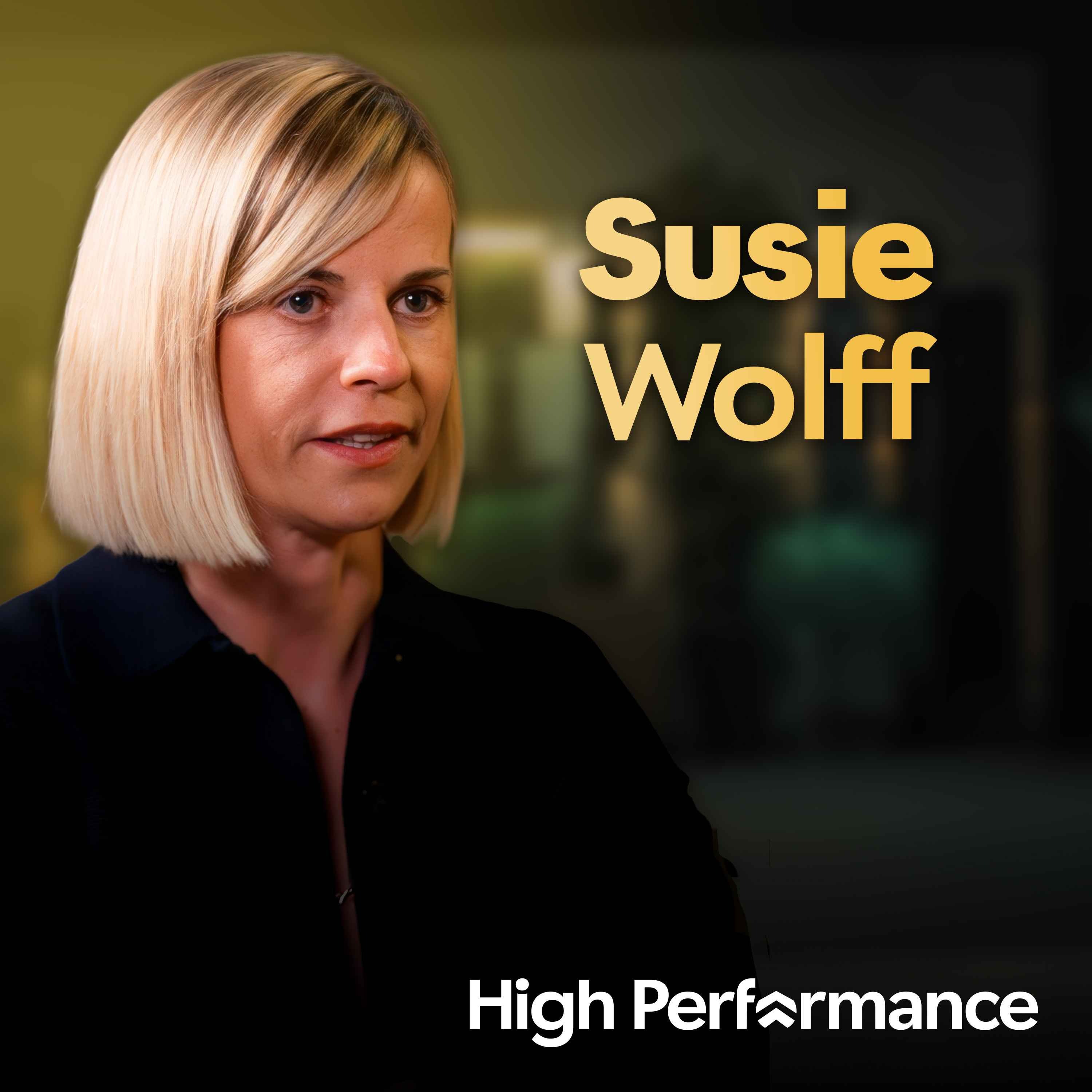
In this episode, Susie Wolff shares her journey as a trailblazer in motorsport, discussing the hardships and triumphs she encountered as one of the few women in Formula One. Susie opens up about her leadership role in the F1 Academy, her experiences with misogyny and scrutiny, and the importance of resilience and self-worth in a male-dominated industry.
Written by AI. May contain mistakes.

Get the gist, explore an idea or ask about something said.
 Claude
On The High Performance Podcast, what are the key points of this episode?
Searching your listeningAutomatic transcript. May contain errors.
0:00Unlock it early on the High Performance App. Available now, Mika Hakkinen, the Formula One world champion who mastered life at 200 miles an hour and the mindset it takes to win. There's punches thrown every now and then, but then when it all started unfolding that it was serious, that's when I really got angry. There was a party and there was a powerful member who tried to get into my room at two o 'clock in the morning. Something inside of me said, You can't let it end like this. By February of the following year, I'd had the call from Mercedes. That really was the moment that changed everything.
0:39That is the voice of the irrepressible Susie Wolfe, a pioneering CEO, a team leader, one of the most powerful leaders in global motorsport, one of the few women to drive a car during a Formula One race weekend. But this is actually a story not just about someone relentlessly pursuing speed, but actually relentlessly pursuing the ability to have her voice heard in a world where so often in the past it would have been drowned out. She also, though, Damien, shares with us the kind of, the heavy price, I guess, that comes with trying to be a person who's creating change in her world. Yeah, definitely.
1:15This is around the constant internal fight that goes on for Susie, the pressure of performing under a microscope in a world that doesn't always want to make space for her. I particularly love the crucial moment she shares where her husband, Toto, delivered a single line that forced her to stop and think. You're going to hear so much in this conversation, from the feeling of being a token gesture to diversity, to becoming a genuine leader. She talks to us about the emotional toll of public scrutiny, how she battled accusations of conflict of interests with her husband, how she restructured the business model for sustainability in the F1 Academy after facing an initial lack of sponsorship and support, and crucially the quiet power of her family and her ultimate lesson, your self-worth is not in your last race result.
2:03This is a proper gem of an episode. It's a story of resilience, reinvention, and rediscovering your worth when it's been questioned too many times. Look, if you've ever struggled to prove yourself or felt like you were living by someone else's script, this is the conversation for you. as we welcome Susie Wolfe to High Performance.
2:27Susie, welcome to High Performance. Thank you for having me. In recent years, how much has the drive for equality pushing women in motorsport? How much of a toll has it taken on you personally at times? That's a tough question. I feel like when I hung up my helmet, I started Dare to be Different. It obviously became Girls on Track. and I felt like I'd done all the panel discussions. I'd done what I could to give back to the sport because I do believe in energy. If you take, you've got to give back. And I kind of felt, okay, I've done my part and I was off looking at the space industry to think I need to get out of my comfort zone and try something completely different.
3:06But when Stefano called with the idea of F1 Academy, I suddenly started thinking, well, that's something I never thought I would see in my lifetime. that the pinnacle of the sport was willing to not just invest, but really get behind something which would create opportunity long term. And after discussing it with Toto and him saying, listen, if you don't do it, who will? And you'll always have to know that that chance was there and you didn't take it. So I took the chance and it was tough at the beginning because what F1 Academy had been set up for, And I'll never forget the first time I went to the first race.
3:46I'd been in Bahrain, met all the team principals, been announced. And then I arrived at Paul Ricard and there was nobody there. And I mean nobody. And I'd never been to a racetrack that was so deserted. It was just the F1 Academy teams and drivers and four or five personnel. And I remember thinking, this is not going to work. There's nobody here. And then I just literally got off my car and the teams came to see me and said, well listen we're not finding any sponsorship so it's great that you're here now because we're not going to continue and then the drivers came to me said well we can't even find the budget to travel to the races never mind contribute to our our racing budget and I suddenly thought okay this this needs a lot of work this is not sustainable as it is and I immediately called Stefan and said okay I need six weeks to deep dive and how this is even going to function because I don't think this model that you've built will be something which is medium to long-term successful.
4:44And that then started the process of, okay, what do we need to do? What do we need to build up to actually get more women into the sport off track as well as on track? And what are the building blocks we need in place for long-term success? So I completely changed the business model. Now the teams are on board. We race with F1. We took in all the assets. So we centralize them and stop the teams and drivers having to go out and search individually for sponsorships. And in a short space of time, I sometimes have to pinch myself just how far we've come and how much momentum we have. A recent survey said that F1 Academy is the second most watched motorsport by F1 fans, which is an incredible achievement in such a short space of time.
5:29And we will talk about how you've done this, because I think, you know, so much of the accolades for building it and growing it and getting to where it is belong to you but I remember the news breaking in late 2023 when the FIA accused you of and the exact phrase was a conflict of interest because of your marriage to Toto for you to be on such a hike creating something so great and then for that to happen would you tell us how how you felt when you first saw or heard the rumor that this was this was something that the FIA were pursuing well I think it's important to mention that Formula One Academy is not an FIA governed championship so I actually have no interactions with the FIA at all we write our own sporting regs and we registered the championship through an ASN so there's no relationship with the FIA and I've been in this sport long enough to know that there's punches thrown every now and then but when it came out I was my initial reaction was well that's just ludicrous because I had nothing to do with the F1 business, running F1 Academy or trying to build up was taking all of my capacity and energy.
6:36So initially there was a kind of disbelief but then when it all started unfolding that it was serious and there was going to be an investigation, that's when I really got angry because the fact that such a thing could happen with no grounds, with no evidence, but just an idea, and then for it to be suddenly dropped, was for me a moment where I just wasn't willing to accept being treated like that, that my name would be thrown out into an investigation that obviously became very public very quickly, with zero ground, and then suddenly have it dropped. kind of 24 hours later. And how did you process that anger to use it as a fuel rather than let it consume you?
7:27Well I've got pretty good over the years of turning failure and doors being slammed in my face into let's say more energy to try and succeed and to break down the barriers in front of me but I'm quite pragmatic in those situations. It was not an emotional reaction to say this is so not fair what we'll do it's like okay well I want there to be a process now I want to understand who took that decision I want there to be transparency in how such a decision was taken and and I want there to be accountability because I can't stand up and preach about how I'm trying to make the sport better for women and about how I feel the sport is becoming a better sport for women to be in if I'm not willing to stand up and take action in situations where I feel something wrong has happened.
8:18So it was quite an easy decision to say, okay, well, I'm going to launch a defamation case in the French criminal courts. When you saw this thing gathering momentum, and we know the internet never forgets, right? Once something's out there, it's out there. It can't just be forgotten 24 hours later. When you saw the retweets and the social media posts and the news articles, hundreds of news articles within hours of this, what was your emotion at that point? Because I think we so often don't talk about the personal toll on the human being in the middle of a story like that it wasn't easy at the time and it was on my birthday of all days but I think in that situation it was just this recurring emotion thinking well I'm I'm just not going to accept that I thought your reaction actually on Instagram was was powerful and for people that didn't see it you said deeply insulted but sadly unsurprised rooted in in intimidatory and misogynistic behavior and focused on my marital status rather than my abilities did it remind you that despite so much work having been done by you and many other people over so many years there's still so much further that we still need to go yes absolutely but the amount of support I also got around that time I mean Stefano was one of the first to pick up the phone and say well we know there's no conflict of interest because we know you're not involved in the F1 side of the business so we are going to stand by you 100 % And then in hearing that all nine teams, I mean, obviously Mercedes couldn't lodge the same statement because they were involved in it.
9:50But all nine teams stood up to unanimously say, we didn't file any complaint. Now, it's not often that all teams unite together and they chose to unite behind me and behind F1 Academy. So that really meant something. So as much as I was very frustrated at what had happened, it was also a reminder that it's not all bad. We are making progress and there are people that are willing to stand up and support what they believe is right. And I do get a lot of support from within the sport. And a lot of people praise me for how far F1 Academy has come. But it really is a credit to the sport because the F1 team's got behind it.
10:33have the full support of F1, all the investment needed to build it up. There's a real authenticity to people in Formula One wanting to see F1 Academy be a success because they know that it can have a positive impact on the sport. One of the most powerful voices of support came from Lewis Hamilton, who said that there's no transparency and no accountability. What did his support mean to you? Lewis is always someone that has been willing to use his voice for good and has always been someone that's seen a wider picture of how his influence can have a positive impact. And, you know, sometimes it's easy to take the trodden path that everyone else does, but he's absolutely forged his own path and he's had such a big impact in the sport.
11:19It was no surprise for me that he was one to stand up and speak because he is always the one that stands up to speak when there's something to be said or when something hasn't been said but needs to be said. and I don't think he sometimes gets enough credit for that. He's turned that walk into the paddock into a catwalk. He's played a part in making Formula One culturally relevant outside of just motorsport and sport and I do think he's someone that has a very powerful voice and uses it for good and others should take some inspiration from that. And have you spoken to him away from the sort of glare of global media about fight and about the power of having a purpose?
12:04Because I think sometimes when you really feel a strong sense of purpose, it does make the decision clearer for you, doesn't it? It makes it clear, but I think it's also that we are, we have been shaped by our experiences. I know what it's to be the only one in the room. So does he. In a sport where we were more often than not either the only one or one of a handful. And it's very... easy for people to think they know what that's like but they don't and I very often found myself in in meeting rooms where yes I've been the only woman but I have men telling me well this is what it should be or when we're talking about F1 Academy and it's sometimes I have to turn around and say well are any of you a woman?
12:51Clearly you're not, I am. Have any of you driven a racing car or you haven't and if you've driven a Formula One car or you haven't well don't tell me what it's like because I have I am a woman in this quite male-dominated environment I have driven racing cars I've come through the whole pathway and I speak from first-hand experience because sometimes people mean well but they simply don't know what it's like to be the only one in the room and I think his personal experience of having to face his own challenges along the way break down his own barriers to get to where he is and become one of the greatest of all time it gives him an empathy to others that also are facing challenges of being the only one or let's say not or following a path which which isn't always easy and was it a hard decision to to take the FIA to court to launch an action against them knowing that your husband works in Formula One you've got a long history in Formula One, it's a sport that you're really closely connected to and you can't do these things without kind of implications, right?
13:57I think you've seen that I've tried not to actually speak too much about the case. I am someone that just, I take a decision and the decision is taken and I take the steps on the decision. It's not about a vendetta, it's not about an emotionally driven revenge, it's simply what I feel is the right thing to do. there has to be accountability there has to be transparency and it's a very separate situation from Toto this is my case and in that this was my role F1 Academy I know what the boundaries are of having a husband that works in the same sport I'm not out for success at all costs there's an integrity that we both believe in there's boundaries that we both have but never once did we feel there was even close to those boundaries being passed I mean there's nothing I would know in my role F1 Academy that would anyway have any influence on on a team in Formula One so the decision didn't involve Toto but it was something I just simply felt I had to do and I would regret if I didn't do we've both read your new book Driven and it is brilliant but you were going to say that no you can't tell he's not good no no I honestly I texted you and I said it was excellent honestly I thought it was absolutely fantastic and you say in the book that you've often felt like a token gesture to diversity do you ever feel like that today it was interesting writing the book because there was a lot of memories a lot of reflection and I have to give a lot of credit to my brother who stepped in to help me write it I couldn't have done it without him and he forced me to go to the tough places because I think I'm very good at compartmentalizing and I was at a times writing and he said that's you know you've got to go deeper I remember how tough those moments were for you and I remember the the battles that were going on in your head in certain situations so he really forced me to go to those difficult moments throughout my career and yes of course when I look back it's more obvious looking back now that there were the moments where I was there because I was a woman but on the other hand I was there I'd been given the chance so there's two ways to to look back that yes there was talking gesture, female on the grid, but I was on the grid.
16:29And you don't make it onto the grid if you're not good enough. And I had been given chances in my career that I'm grateful for to this day because they changed not the trajectory of my career, but of my life. And those chances were only small chances, but I grabbed them with both hands and they were really pivotal moments in my career and my life. So I don't look back with any bitterness or with any regret. And I feel in a way, now in my position with F1 Academy, it's great that things have moved on and that there are less, let's say, symbols of token gestures in the sport and on the grid. But I think at the time, it was part and parcel.
17:13all. What struck me reading the book Susie was the moments of loneliness that often accompanied your journey. What was the moment that you felt most alone and how did you get through that? Most alone was when I lost my F3 drive, I'd broken my ankle, I lost my sponsor, I lost a seat and at that point there were moments where I thought I'm not sure I can get this back on track because I'd really lost all the momentum and my parents were up in Scotland and I was quite isolated having to still work to to make a living but I think sport can be very lonely because if you're not in a team sport there's a lot of pressure to perform and it can be a a lonely place because you're so consumed by the sport and by trying to be successful in the sport that it's difficult to build up a life outside of the sport because you make sacrifices you don't go to the family gatherings you don't go to your friends invitations because you're busy doing your sport and then suddenly when your sport's not there well what else is there and your whole identity gets very hung up on who you are as a sports person as opposed to who you are as an individual so what did you learn about uncoupling your identity from so who you are from what you did that only came much later in my life and getting meeting total and getting married was was definitely a huge help in that moment it was the first time I didn't feel like I was on my own that I could share my insecurities that I could share my real thoughts with him because he understood it he never wrapped me in cotton wool but he got it and he was always very good at giving me inputs but not shying me away from the challenges because he he knew that it was a tough sport and if I was going to succeed I was going to have to be tough but it really was the first moment with him where I felt okay I'm I'm part of a team now I'm I'm not on my own but even before meeting Toto it was it was difficult to deal with the loneliness and the sense that I was only as good as my last race result and it's something I quite often say to the young drivers I see now in F1 Academy you are not judged by how good your last race was you as an individual you've done incredibly well to get this far but don't allow your whole sense of self-worth to be wrapped up in how good your last race result was because there's more but it's quite difficult to see at that young age and that's where I feel in a position where I can at least hand over that advice to the next generation now.
20:05And do you feel it would have made a difference if anyone would have had that conversation with you in terms of your performance? A hundred percent and if there'd just been a woman that I could have spoken to and said listen this is tough how did you deal with it or what did you do to cope with it but there wasn't but I did have allies around me who weren't women but who were supportive the number one being my family so I always had them as that strong backbone that I always knew was there for me and they definitely played a huge part throughout my journey especially through the tough moments can we talk then about some of those tough moments i'm interested in um your brother playing a really pivotal role in this book would you take us to one of the moments where you weren't very comfortable writing about it until he said come on like i think we need the truth about this moment there was lots of moments of those you know i i remember when i first joined mercedes-benz and dtm and i was struggling with okay what should i wear to an event because if i wear a dress am i trying too hard if I wear a suit do I look too masculine and I really was it was a huge fight in my head before every event thinking okay well how am I turning up that wasn't even going to make it into the book but he said I remember those struggles you had of trying to find your place of you calling from the fitness week and saying well they didn't have a program for me and I ended up doing the program that the boys did because I felt well I'm racing the same car I have to do the same program so he forced me to to go there and to relive those experiences and then obviously when I broke my ankle it it reminded me just how low that point was in my life and how difficult it was to keep going because that would have been the moment where I could easily have said well the journey's come to an end what else am I going to do but it's sometimes just picking yourself up that one last time and giving it a try that can sometimes just be the difference between success and failure and I think because I had become so used to be having to pick myself up so used to having to find that resilience and tenacity that I was used to it it wasn't something that threw me into a real unknown situation I know what it's like to have to pick yourself back up because in sport there's only ever one winner and you get more used to failure than success unless you maybe you're Lewis or Max so I knew what it was to pick myself back up and to come back stronger and to have that tenacity and that ultimately was the turning point when I chose to keep going and got my big break with Mercedes.
22:52Would you take us then to the that tough period where you've broken your ankle because you you write very movingly in the book that you've got a diary and you just write in it, please help me, Grandpa, right?
23:08Yeah, my grandfather had passed away and I was very close to him and I had his cravat that he always used to wear. And I guess at that age, it's so easy looking back now because everything obviously did work out, but I was just so unsure of how I was going to get myself back out in a racing car. And what actually happened? I'd had a great season in Formula Renault, finished fourth in the championship and been nominated for Young Driver of the Year. That whole momentum, I was doing Formula 3 the following season. And six, well, just after New Year, I was out running. I actually wasn't out running.
23:51I was out buying milk for my grandmother up in Scotland and I slipped, there was ice on the pavement and I broke my ankle in, in four places. I had a plate and 10 pins put, holding it back together and lost my seat in the F3 team that then meant I lost the sponsorship to do that season and I really lost all the momentum. I wasn't racing anymore and I went back down to Silverstone where I was renting a room in a house full of racing drivers because I still had to make a living and my parents still had to go back to work up in Scotland. But those were the difficult days. I was on crutches, in a lot of pain.
24:34I'd lost my race licence, I'd lost my race seat, I'd lost the sponsorship, and I didn't really know how I was going to get everything back on track. So it was one of the most difficult periods. And why your grandpa? He's always someone that had believed in me and not just him but my whole family but because he was the first member of our family to pass away and he's someone I was very close with and I think at that moment where you've run out of hope you've clutched anything that you think could give you guidance or help you and I am a great believer in trusting your gut instinct and I remember a couple of times thinking I'm just not sure I can keep going I didn't see any light at the end of the tunnel but something inside of me said you can't let it end like this all of this can't just be gone because of one fall and icy pavement and I got myself back out in a in a world series by Renault car and by the February of the following year I'd had the call from Mercedes and that really was the moment that that changed everything and you would imagine that once you're racing in dtm and you're a you're a mercedes driver that you would be getting more respect as a woman but also that you would think right you know what i've made it now i'm like i am racing in dtm so you lot need to respect me but i thought it was very interesting reading the book that like you were still so keen to not show any weakness at all weren't you like when they offered you the drive and we said we'll make the car lighter or when they offered to put foam in the car to give you some protection.
26:18It was a no every time. And I wonder how you reflect on that Susie, who was not going to show any weakness at all. That Susie should have taken all the help that was offered to her in that moment. But I was a fierce little girl. And I think sometimes as you grow up, you can sometimes forget that fierceness because society imprints its own impressions on you and life becomes a reality of thinking, well, it's not quite as easy as I thought. But sometimes I look back and I think, my God, you were such a fierce little girl and I have so much respect for that little girl. And there's sometimes in my life where I think, don't lose that because it's so easy to get caught up in everything else when you become a mother or a wife.
27:05But I don't ever want to lose that fierceness. And I remember this look of disbelief when they said, you don't want. weight out of the car. I think it's a brilliant story. I had waited a long time to have the meeting with Norbert and at the time Gerhard Unger and I came into the boardroom at the Mercedes-Benz Motorsport headquarters in Stuttgart and I was offered a one-year contract on the back of a good test in Barcelona and they said and we'll be taking 30 kilos out of the car so that you're able to compete at the front and without even having to think about it I said I don't want the weight out of the car.
27:42And they were silent and they looked at each other and I said, I don't need that. I can compete. I don't need the weight out of the car to be able to compete against these guys. And they eventually said, OK, well, you'll be the same weight. and I didn't realise then that I was in a you know in the B team so I was in an older version of the car so actually my goal wasn't to win races it was actually to try and be the best of the midfield in a hope that one day I would get into the top car but sometimes now I think if I just taken that help maybe it would have been easier but then on the other hand would I have ever been respected for my results because I would always have always have had an advantage And what do you think the answer to that question is?
28:30Well it's who I am, I don't shy away from challenges I was of the belief and I still am of the belief that I can compete on the highest level without having an advantage and this sport isn't segregated so it's very difficult to then say well a girl's in the same race but she's got a lighter car is that fair? Is that pure? I don't believe it is so I stand by my decision at the time to have said no I don't need that to compete but I also now with getting older and more experienced if someone wants to help you it's okay to accept help and I didn't put the foam in to help my neck on the first ATM test but when I was doing the race distance at Barcelona Lewis came to me and said listen your neck won't survive it, you've got to lap one, you've got to lean on your headrest and make sure they build in a headrest, get it painted the colour of the car so it's not obvious but that's what's going to help you perform in that long run and be able to make the race distance and he was absolutely right and I took his advice I didn't try to be a heroic of holding my head up through turn three at Barcelona for 17 laps When you drove the F1 car When I drove the F1 car so I did learn from experience that sometimes it's okay to accept help but I don't ever regret not taking the advantage of the lesser weight I think by the time I had got that far, I'd already overcome so much noise around my gender.
29:57And, you know, I started racing at the age of eight. I had a motorbike at the age of two. I never set out on a path to prove what a woman could do in a male-dominated sport. I love racing. I was that competitive little girl. I love the speed. I love the adrenaline. And I loved the sport. And it wasn't really until I got into my teenage years that I realized I was, more often than not, the only girl on track because you're wearing a helmet so it's not always the most obvious and I think because all this noise had been created around my gender that I was getting really good at blocking it that I wanted to be taken seriously as a racing driver I had full belief in my abilities because I had to because I had so many doubters that I've realized very quickly well if I don't believe in myself I'm not going to be able to convince others to believe in myself I had that belief because I knew I had to.
30:52I had that confidence because I knew I needed it in situations that I wasn't going to get maybe the bandwidth of, oh, is she or is she good? Well, no, I had to be good enough and I had to put myself forward because if I didn't, there wasn't others that were going to do it for me. And I think that toughness and that hardness, it held me in good stead throughout my career, but definitely becoming a wife and a mother brought in a softness which I'm glad it did because I was hard and that hardness isn't always easy in other elements of your life. Like what? It's a power to admit weakness it's a power to say I don't know or I'm struggling but I never felt in my environment that I could do that whereas now I have no problem in saying I'm struggling or I'm not sure I'm good enough it's okay and I think the world's changing a positive in that we can speak more openly about our struggles and it's up to the individual how open they want to be with the struggles or what support network they can put around them but I was just so used to not being able to show weakness and I remember a World Series Baryona test I could barely hang on out on track but I came into the pits and said yeah everything's fine to the team and went to the toilets and cried my eyes out thinking how am I going to get to the end of this test but it wasn't an environment where I felt I could show any form of weakness and I do think that's changed now.
32:34But when you're in the child that's crying thinking how am I going to get through this where do you find the answer and what was it the answer was dig deep get back out there and find a way because there was no option for me to say well I don't think I can drive the car because I was set to race in that category the following season and there was no way I was going to admit to the team that I was losing two and a half tenths in that one corner because I simply couldn't hang on to the car so it was digging deep and I managed to kind of hold my arm against the side of the car. But it's why now when we have wider discussions, do the junior formulas need power steering or not?
33:17Is it possible for a young woman to manage physically the ladder up to Formula One? I think sometimes it's harder than it needs to be because in a Formula One car we have power steering so why does it need to be a physical barrier in the junior formulas when it isn't something at the pinnacle of the sport but at that time and quite often I see the young drivers now that I work with who who refuse to say well it's actually really difficult out there and I'm the one that has to say to them I know how difficult it is out there I know how physically demanding it is I know when you get into a single seat of the first time your first day in a Formula a four car it is tough and it's okay for it to be tough you don't need to shy away from the fact that it's that it is challenging but how are we going to get you fit enough to manage it in the f4 car and because i've been through that journey and to go back to your question it it was that inner tenacity and determination that got me through that said you're going back out there and you're going to find a way to get quicker and to hold it through that fast right-hander i thought some of the stories in the book about what was going on were also a testament to your power as a racing driver and as someone who was putting other people in uncomfortable situations like this is a great story about you racing in DTM.
34:37John Alacey was involved in the series and you get out of the car and what was he saying on the radio while the race was on? Get this girl out of my way. That's what he's saying over the team radio because they shared the same team and I think that that shows that you were it's not the right thing for him to be saying but it's almost like yeah look where you were you know you were causing this xf1 driver to be frustrated and angry and not know what to do with that anger you know but there was also a story in the book that wasn't about racing and are you happy to talk about it it's what happened after the party that you were at in germany um because i think it's also an it's in the book for an important reason and I think it's important to talk about it here if you're happy to.
35:19Anything that's in the book I'm happy to talk about and I put it in the book for a reason. I didn't mention names in the book because I didn't feel it was necessary given the outcome of what happened but the incident you're referring to I felt had to go in because I think it's something a lot of women will be able to relate to. There was a party celebrating the end of the season. It was DTM drivers and the Formula One drivers together. And there was a powerful member who tried to get into my room at two o 'clock in the morning. And they didn't get into the room. They later apologized for it. But it was a really uncomfortable situation for me.
36:07And I felt it was important to put in because then I didn't tell anyone because I didn't know who I could tell. it wasn't an environment where I felt there was anyone that I could say listen I'm frightened this thing happened and what was the thing because in the end they didn't get into my room so it was just an attempt to get into the room there was an apology but it was a situation that just shows you as a woman how quickly a situation can come down to a split-second decision and it puts you in a very uncomfortable spot. And I also felt it was important to put in because I do think the world has changed in that now I would like to think that there would be someone that a young woman can tell.
36:58Not just tell, but be listened to and there'll be actions put into place to make sure that it wouldn't happen again or there's at least an understanding of what did happen and if there were any ill intentions. And you say an apology was offered. It was given. Was that sought by you? No. So it came without you having to go and confront the perpetrator. Yeah. What did he say? I owe you an apology. Straight away when I saw him the next time. And you said? Apology accepted. Do you wish you had spoken out at that time? No, because I don't know who I would have spoken to. and I don't know what they would have done anyway.
37:47But I felt it was important to put in the book because I do think it's important to speak out now when you're put in an uncomfortable situation and it's not easy. It's not always easy as a woman to judge what is the right thing to do. And it has consequences as well which need to be thought through. But it was something that I went through that was uncomfortable and I felt would have been not fair of me to have left out such a difficult moment. And beyond the fear of somebody trying to get into your room at that time, were you worried about the consequences of your refusal to open that door in terms of your career?
38:39The person was very powerful and could have had a huge influence on my career. But that wasn't the reason why I didn't do something. It was more in that environment and at that time there was nobody to tell. Or there wouldn't have been a clear understanding of what anyway would have been the consequences. but I do think the sport has definitely changed for the better in that you can speak up now not always does it result in the outcome it should but you can at least speak up now and you will be listened and you will be heard and that's a big change in the right direction And at this point in your career what was the thing that was still driving you at this point?
39:27Because you've been through this horrendous experience in a hotel room with a fellow member of the motorsport community You've had a mechanic in the team saying, oh, last year's female driver was fat, and you having to say, no, it's me. I look different to how I looked last season. You had a member of the… Well, to be fair to him, I'd lost 10 kilos between the seasons. Even so, right? Even so. You had a PR person saying, we need to make you look like a sexy racing driver. You know, Jean-Alaissi saying, get this girl out of my way. You know, constant hurdles, constant battles, constant challenges.
40:00What was keeping you going at this point? because I think you are one of the greatest stories of resilience that we've ever had on high performance without any doubt. You know, as much as it all sounds so negative, I was still a Mercedes-Benz driver racing in German touring cars, which at the time was a huge series, biggest touring car championship in the world. So I don't want it to sound like it was all negative. I had huge opportunity. I had great experiences. You know, we've highlighted the struggles and the tough moments, but there were also great moments along that journey and not forgetting that's where I met Toto.
40:39That was the big love story and is the big love story. So I think it would be unfair to just say it was all tough. Yes, it was tough because I was doing something which was unusual for a woman in that environment. There weren't any other women and it was at times really difficult to navigate and to balance. But that's why, you know, I keep saying it, it's why I'm so thankful in the role that I'm in that the next generation, they won't have it like that anymore because there won't be those off-the-cuff remarks. There won't be the only one because they're not the only one anymore. They've got each other.
41:20They're respected and they have opportunity. They don't need to fight maybe just quite as hard as I did. you know I think now to a 16 year old girl coming out of karting having the opportunity of F1 Academy that's something I could never have even dreamed of when I was racing but the fact that the sport has progressed in that way I think is a testament to the progress and if I've played a small part in that and if it was my tenacity that kept me going to get me in this position to be able to make that possible then it's worth it because I don't look back with any resentment of god it was so tough yes it was tough but there were also huge highs you know I was racing I enjoyed the racing I enjoyed the environment and it led me into Formula One with Williams which was a goal since I was a little 13-year-old girl.
42:19So there was also a lot of positives along the way. I'm taken by, there's a very keen distinction that Renee Brown, the writer, talks about, the difference between fitting in and feeling that you belong. And it sounds like there was a stage where you've gone from having to fit in to very much feeling that you belong in this world. When did that happen and what could you teach our audience about the difference and how they can find a sense of belonging. Well, that idea of fitting in and having to fit the mould, that was definitely challenging when I was racing and I think that's changed. Because when I was racing, there was this perception, okay, if you're a female racing driver, you're either the sexy female racing driver or you're the tomboy.
43:08Well, I didn't want to be portrayed as the sexy female racing driver because that's not who I am. I'm not comfortable stripping down for a photo shoot and putting lots of makeup on. But there was an element where you're representing a brand, you're representing sponsors. There has to be a comfort zone you find yourself in because that is a part of the role. It's not just getting in a car and driving. But then there's the other mold of saying, well, if she's not that, then she's just a tomboy. She's very butch. And I wasn't that either. you know I enjoy fashion I like being the best version of myself and it was about trying to find in my own path of saying well if I want to make an effort and look good that doesn't mean I can't be taken seriously as a racing driver but that doesn't mean I need to be portrayed as the sexy racing driver and you know an F1 Academy now we did a great partnership with a makeup brand And I very much said to all the drivers, you are who you are as individuals.
44:11Some of you will want to wear lots of makeup. Some of you will want to wear none. You decide because that doesn't judge you as a racing driver. You want to wear a full face of makeup and go out there and be fierce on track. You can. And nobody is going to tell you that that's right or wrong because you are you and you stay true to who you are. and that's something which I battled with because people tried to put me in a mould and I tried to keep myself out of going on my own path and that's definitely the role Toto played because he very much said, you are who you are, stay authentic to who you are and you need to carry on in that path and not be forced one way or the other and that was a moment where I really felt a weight off my shoulders how soon did you feel comfortable with Toto to be yourself almost instantly I mean he's someone that's very easy to talk to anyway but we from when we got together to when we got engaged when we got married it all happened pretty quickly because he's someone that just I connected with we understood each other so quickly and so clearly that it was that it was instant in a way and And the role he's played in me having gone from being that fierce, hard, young racing driver and the different chapters I've gone through.
45:38Obviously, getting married, becoming a mother, but having my time in Formula E and Formula One. You know, I see a very powerful statement in the book. I wouldn't be here if he wasn't there. he played a big part in that journey of me being more comfortable in who I am but he always found this balance of never wrapping me in cotton wool of never shying me away from the challenges because he knows how tough this industry is and he also knew that those challenges would make me stronger he's got a lot of empathy and he's always able to put himself in the position of others to understand okay why does she have that viewpoint or why is she feeling that in this moment?
46:22And he's not scared to talk about his own struggles and weaknesses. So it's never like you feel you're inferior or he's speaking down to you. And we're just very open with each other. And it's very easy when we've all got such busy lives and you're juggling family life and then your own career to sometimes not communicate well enough. And suddenly it's disjointed. but we always make an effort to speak openly with each other. Also, the difficult topics of, well, I'm not feeling supported right now and it can't always be you that gets to dictate the schedule because I want to have my own career.
47:03But he's always been very good at understanding who I am. He knew that I'm someone that's very driven and ambitious so it was never going to be that I suddenly became a wife and a mother and let all of that go. And he didn't want me to be that version of myself either. So he was always very respectful of my own ambitions. And we're just very open with each other in terms of the struggles we're facing and how we can support each other. But I don't want this to sound now like it's all rosy and there's never difficult moments. Like with anyone, there's challenging times where we're both under a lot of stress and we're trying to manage family.
47:45logistics and sometimes we drop the balls but we just always have the open conversations no matter how hard they are and he's stood by you through some amazing times in recent years and I want to talk to you about you know Formula One Formula E there's lots to talk about but you've also been there alongside him in some of his tough moments as well what was it like seeing the personal strain on him during those challenges of late 2021?
48:17told you someone that can soak up so much pressure and make it look easy and there was there's been moments where I've thought that's that's a lot now but he has an easiness about him but he's always also the first to put his hand up and say okay I'm struggling and he's not scared to to admit that and he doesn't see that as weakness he sees that as okay this is something I have to to deal with this is something I need to get through I think a lot of it is is you know related to his difficult childhood but that was the moment where I had to step up and say okay well how can I make this better for you because I haven't experienced that myself what I appreciate a lot is that he took me on the journey with him he didn't shut himself in a room and say well this is a dark time for me he was always very open of this is how I'm feeling this is how it is and I need to figure this out and it enabled me to not be shut off and struggle to understand what he was actually going through and then what I respect the most is the fact that he was willing to talk about it because he felt if he was going through that there was others that were going through it and if he could speak openly about it it might make it easier for others to understand that it's okay to go through those difficult moments um and I've gone through difficult moments of in in my life but in a different way where it's been challenging moments of struggling to hang on to who I was after becoming a mother of of trying to understand well what does come next and how can I hang on to who I am and not lose myself but a different type of challenge um than what he went through how was he feeling after that moment what did he say to you that made you realize actually i need to i need to be here now i need to as you say step up it was just something which didn't even need to be said it was it was obvious and we're very good at leaning on each other yeah he's not someone that tries to always maintain control and look like everything is is perfect he's the first to put his hand up and say i really need your help and and this moment but it was intuitive he didn't have to say can you pick this this this all up just now because I need time to figure this all out it was it was I think very clear to me and we are we're two people that that definitely are on the same wavelength so it didn't even need to be obviously said and then it was also obvious when I could step back again where he was back and it wasn't a moment where you could say oh that was the moment or there it was just a flow that happened and we got through it.
51:07What did you do? Listened a lot, cleared my calendar in that I only did the very necessary things at that moment so that I was there because sometimes it's just being there you don't always need to be having the big deep conversations but just being there and being there in those moments so the person isn't alone that you're managing all the family logistics so they're not strained by their inability to do the things that they normally do and just being very present and making sure that when I was away it was only for things that I really had to to be away for work-wise. And can we talk about him supporting you after you had Jack?
51:50I think it's a really important topic of conversation this how did you feel after a jack was born because i think the um the image of parenthood is that suddenly everything makes sense everything's in flow you've got a child you shouldn't be anything other than happy how can anything be more important than having a baby or a child here's your purpose everything suddenly makes sense but so often that is not the lived experience of of people and it makes them feel very strange when they feel it should be i don't know whether that relates to how you felt at that time i was very open about that in the the book because i wanted people to realize that it's it's okay to for it not to be okay sometimes i was super happy of becoming a mother and felt all of the joys that you do but after a few months very quickly realized okay well i i can't give up everything and just be a mother and a wife how did you know my instinct it I have too much fire in me too much drive to not have my own challenge and my own purpose in life and being a mother is very challenging and it gives a lot of purpose in your life but I knew from my past experiences in my past career it wasn't going to be enough for me and that's an individual decision you have to take but I always said you know that the days where I was in the office were easier than the days where I spent at home all day with a one or two year old because it is exhausting but it was also the battle for me and that Toto was traveling a lot and having huge success in Formula One so if I was going to do something and that would take myself away from Jack it had to mean something it had to be worthy of taking me away from the family life.
53:37And it had to be something that I felt passionate enough about. And I know passion is a very commonly used word now, but it had to be something I really wanted to do because it couldn't just be for the sake of it. And it was challenging finding what that would be because I obviously had a husband that traveled a lot and I was very adamant that I couldn't work in motorsport because I didn't want to work for him or against him. so I really was exploring lots of different things and I very much relied on my my gut instinct of what felt right but I remember when I was going through this difficult period a lot of people kind of said oh you just you know it's postnatal depression it's fine it's like well how dare you so quickly label what I'm going through that it should suddenly just be postnatal depression because that's what women get after they have children no I I was going through a huge adjustment in my life of suddenly having this little human being that I love more than anything in the world relying on me for everything and suddenly you weren't just taking a work call or you weren't just driving to a meeting everything had to be so coordinated because that little person relied on you and that was a real adjustment and then also realizing that I wanted to work again that I wanted to find the next challenge and that that was okay because I then also had the judgment of people saying, well, you don't need to work.
55:02Is it really fair that you're leaving your son when your husband travels so much? So much judgment from others. Were you depressed, do you think? No, I think I was going through a huge moment of adjustment in my life. But having seen what Toto went through, it wasn't the same experience. How did you learn who to listen to and who not? I think I flexed that muscle so often during my racing career and it's something that holds me in such good stead even to this day it's not that I don't care what others think I mean the people that I respect I care what they think but I'm responsible for my own happiness and everyone is always going to have an opinion or judge how you do something but in the end in that moment I knew how bad I felt and I knew what I needed to do to make myself feel better.
55:56So the judgment of, oh, you're going back to work and that's not fair. And I didn't worry about those comments because I knew that actually I was going to be a better wife and mother if I worked. And it was the right decision for me. And I often say to all of my colleagues in F1 Academy and the drivers, don't worry about the noise of all the opinions of what others think. Only you know what's right for you because there's only one you. And it's not what's right for someone else. It's not what society tells you is right for your path. Only you know what's right for you and what happiness means for you.
56:34And don't let others imprint their impressions of what's right for you because that decision can only sit with you. And in this day and age where there's so much social media which is showing you what's perfection, what it should be, don't get caught up in in that follow your own path and make sure that you are forging that path because quite often I find you're suddenly in the passenger seat excuse the pun where suddenly things are rolling and you're just rolling with them because well is there an option not to roll with them make sure that there's the decisions that are happening in your life and the path that you're on is that actually the path you want to be on or is it the path you're on because everyone is just forcing you to be on that path.
57:17But I also realized that what brings me, and maybe the pandemic helped in this, what brings me the happiness are the, how cliche it is, but it's the simple things. It's time with my family. It's a time with my son, putting my phone away. It's not the invitations to all the big events where you get dressed up and then stand in a room of small talk with people. You might think that initially, but I realized quite quickly, well that doesn't make me happy so I got very good at saying no and just prioritizing and making sure that I filled my life and my schedule and my days with things that I actually wanted to do you have to go through the process of finding yourself and discovering well who are you and what does make you tick and what does bring you joy what ignites you what would you do if you had a free day and it was your day to plan but that only only comes later but it is massively liberating and people particularly women talk about the perils of aging I wouldn't have any other way because with age comes experience and experience allows you to just drop all the the noise which is so irrelevant anyway and it allows you to really focus on what does make you happy what what priorities you want to have in your life and to shape your life as to you how you want to have it and it's not always you know I can't make every day as I want there's certain obligations that I have to do and there's days where I have to do things I don't want to do but it does allow me space to create the moments that I really do get a lot of enjoyment for and I obviously try and prioritize those over the days where I do stuff that I don't enjoy so much.
58:56I'm slightly disappointed you know that we've got to this point and we've skipped over the text message you sent to Toto that I sent that is a very important point do you remember the words or shall I read them out if it had to be if it had to be someone from Mercedes it would only ever be you I didn't realise what a romantic you were the most important text you've ever sent absolutely yeah and the most frightening text I've ever sent why? And you put yourself out there and it wasn't a given, but again, it was my instinct. I felt that connection with him through the conversations that we had. And it would always been kind of in a jovial situation where we hadn't made it obvious to each other, but it might have been a possibility.
59:48And I just thought, I can't leave it like this. and I sent the text and that was the start of something that very quickly turned into something very special. How fast did you get a response? Well, I got the response quite quickly, but he was getting into an aeroplane and he said, you'll know it because in the book it's, well, that's nice to hear. I'll call you as soon as I land. I was like, what? I mean, on the one hand, it wasn't dismissive, but it wasn't overly positive either. But then he called as soon as he landed and then very quickly. I mean, I didn't know at the time he'd bought the engagement ring six weeks later.
1:00:25So it was pretty good pretty quickly. I just find it really interesting that you were so guarded and so many barriers were up and then suddenly you meet this guy and those barriers have gone. I wonder whether he started with the vulnerability to break them down or whether you were comfortable from the first moment. No, I think he was key in allowing me to feel that I could be vulnerable. and it's interesting because he always said in the time when he was in DTM but before we came together you always kept your distance you were never someone that anyone could really you know get too close to that distance and I always respected that you kept that distance and I guess it was because I had seen how quickly and how unfairly women got reputations in such an environment and I definitely say unfairly because it was never the same the other way around.
1:01:20But I felt if I was going to succeed, I had to, I couldn't put a foot wrong because there were so many ways that I could very quickly slip up and my dream of being a professional racing driver would be over. But was total from that very first, I mean, the text message, you have to actually mention the fact that we had spoken on the phone before, it didn't come from anywhere. But I had called him because he'd had a bad accident trying to break the lap record in Nürburgring. But from the first conversation with him, it was easy. And I felt like I could open up. But that vulnerability definitely was something.
1:01:58And that softness is definitely what came when we got together. I've loved going through the incredible life and career that you've had. And I think what's really important is that at this moment, you've got some amazing opportunities. The first one being a team boss in Formula E, right? and I guess all of those lessons the highs the lows the challenges the resilience the emotional intelligence had to be used to their full capacity to suddenly run a team in Formula E which I know had its various challenges when you walked into that team what was the secret to the powerful leadership that you brought because there was huge success at that time Well the team had been racing around in the back and hadn't been successful and so it was a turnaround job.
1:02:49But I mean to summarise it I definitely surrounded myself with brilliant people and I empowered them. I set up a culture where the women in the team and I ended up with the most diverse team but not intentionally and I always said I don't get any world championship points from creating the most diverse team but I created a culture where I'm not going to judge how long you sit at your desk I'm not going to judge how often you're you're in the office or whether you have to take your son to an appointment at the doctors at nine you do the job in your own terms but I'm going to judge you on the performance you you bring in the job and the women that came to the team were brilliant at what they did and put into an environment where they could actually thrive and not have to feel like they were being judged as mothers or wives of how much they could be in the office also gave them a sense of well actually in this culture I can thrive and so we ended up building a team where the women felt they could do their jobs really really well because I gave them that freedom and obviously I had the same freedom because I couldn't move to Monaco but we also built a team where there was an openness I'd never driven an electric racing car I didn't know all the terminology I didn't go into the first meeting pretending I did know everything and there was technicians and technical people on the team where for sure they thought well she's just an ex-racing driver you know how's she going to turn this team around how did you know that you feel it in a room it's never an obvious statement it's never a deep negativity but as a woman you can always feel it in the room when there's skepticism but I didn't in a way understood their skepticism I never judged them for having it I just methodically went around my plan of saying okay how do I get the right people on board how do I bring an openness and communication to the team how do I set realistic goals how do I bring an energy and you know it's very difficult to bring energy energy something which comes from within and how was I going to create that energy where we were in this situation where we all had a belief that we could become winners and then suddenly one year later we'd won our first race and suddenly we knew what it was to win well if we can do it once we can sure as hell do it again and then slowly the the whole momentum turned in the team and we had a real camaraderie of being a group because we weren't a big manufacturer we were functioning on a fraction of the budget of the big teams and it wasn't about having the fanciest garage of or having the most high-tech kind of elements and but we were disciplined and we had a really really efficiently run organization and in a way we were the underdogs and we loved being the underdogs because we could challenge the bigger teams and take them on and win which put them under more pressure so it was a really really interesting chapter in my life where I learned so much there was definitely still moments of thinking what have I got myself into because initially there were so many elements that I had to to very quickly learn and I was out of my comfort zone but also the realization that I love being out of my comfort zone I love challenging myself learning new things and forcing myself to to keep improving as a person and never believing that well I'm 42 this is who I am no there's always the ability to keep improving yourself and to keep learning new things but i also think that the secret that you possess is the ability to bring people on side you don't get things done by forcing people you're able to bring them on the journey i think a great story in the book is when you went to see christian and we all know that your husband and christian have had some really heated um battles on and off track over the last few seasons and you know at times it's crossed the line but he goes i won't take a car I'll take three cars in F1 Academy so what is the secret to being able to put other things aside and actually bring people on the journey that we want them to come on how do we sell our dream to other people?
1:07:02I mean that was a pivotal moment because for Christian to commit in that way was the moment I thought I can do this because that was having McLaren, Ferrari and then Red Bull and then knowing if I had them eventually told I had to see it that was the moment I thought, well, if I've got Christian on board, this is going to happen. And I obviously knew people that Christian knew very well that were going to present the idea on my behalf. But I also, I definitely take people on the journey with me. I never try and force it through on my own. And I'm also quite open to criticism. You know, when I sat down with Fred Vassura for the first time, he's someone I respect a lot.
1:07:40He knows a lot about junior formulas. he gives me a lot of you know feedback especially even to this day of what's not working and what I need to do better and I don't shy away from that you know I say to everyone well tell me what we can do better I don't have all the answers but we want to make this a success so if you've got inputs for me challenge me bring me what we need to do better and I'll most certainly try my best and if I can't there'll be a reason why I can't but even in the Formula E team it was the sense that we were on a journey together. It wasn't just me on my own trying to force good results.
1:08:13It was bringing people on the journey, enjoying the journey, making the journey a big part of what this was. It's so often that we're always just talking about what the destination is, but there has to be enjoyment in the journey towards the destination. Otherwise, you end up in the destination, you think, well, was that it? and I do think you know F1 Academy is seen as a very female led movement but all the the main players in the sport who are not women but actually men they were on the journey with me with F1 Academy and it wouldn't have been possible without them and this mantra where you need to bring men on the journey with you absolutely agree because F1 Academy wouldn't be what it is without the collective effort Brilliant, brilliant Ready for some quick fire questions I hope so.
1:09:07Three most important non-negotiable behaviours in life? Politeness, kindness, loyalty. What advice would you give to a teenage Susie? Oh, that's a tough one. I would have so much advice. I think believe in yourself. Believe in yourself because there'll be moments where others don't believe in you and it's going to take your belief and your own abilities to make things happen. what's the best bit of advice you've ever been given and why be authentic be who you are it's it's so often that we're forced into thinking we have to be someone else that we're not enough well you are enough be who you are and be the best version of who you are you could go back to one more one of your life what would it be and why i don't need to go back if i had to go back my wedding day best day ever the final question to leave people thinking about your one golden rule for a high performance life bring your best self to the table you can only be the best version of you and if that's not enough walk away with your held held up high and say i gave it my best shot but you can only be the best you and be the best you you are so inspiring listen thank you so much uh the book is brilliant i absolutely mean it and i think having sat here before the conversation i was thinking i wonder whether i'll get the sense that Susie's done all these things and she's ready to chill out a bit.
1:10:32And I absolutely have not got that impression. I can't wait to see what comes next.
1:10:40Damien. Jake. A powerhouse of a woman. And I think what was really lovely actually was that interview. It took us sort of through the story of a young woman full of grit and determination who had to put up the barriers. She had to, for her own mental health, probably as much as anything else, she had to become the toughest person in motorsport at that time. But now I think we have a very different Susie Wolfe, someone who understands why she was like that, but also knows that the true Susie is not that person. And actually the person we've just spoken to for the last hour and a half is kind of the real Susie Wolfe, you know?
1:11:14She offered a textbook example to me of how you go from fitting into a culture of having to adopt the same ways and take on the same challenges as the men that was around her. to create a culture of belonging where she's allowing young women in the FIA Academy to talk about if you want to wear makeup, wear makeup. If you want to sort of be who you are, just be exactly who you are. I think there's something really powerful there that she can teach any of us listening to this about creating that culture of inclusivity. It's also a reminder that you have to go through the tough stuff, right, to be built into the person that you are today.
1:11:49For me, she should be the next president of the FIA. Really? Yeah, I think she'd be fantastic. So as somebody that's worked in that world a lot, you've got a better sense of Susie's journey and the struggles that she's overcome. What stands out for you as her defining characteristic? I think her relentlessness, because people think that to become a female racing driver on the British Grand Prix weekend to driver Williams is like the pinnacle. She's far surpassed that now by running her own Formula E team, by becoming a parent, by now creating the F1 Academy, I mean, an entire racing series, which is now the second most watched racing series for Formula One fans.
1:12:27Like, that is her true legacy. Almost what felt huge, driving a racing car, feels quite insignificant compared to what she's done recently, I think. It was fantastic. Thanks, mate. Wow, thank you, mate. Oh, huge thanks to Susie for joining myself and Damien for that conversation. So honest, so powerful. If it's given you something to think about, please share it with someone you think would benefit. And don't forget to follow the show. You'll never miss an episode. And it really helps us to grow. And if you enjoyed the conversation, then we've got so many F1 chats waiting for you in our archive.
1:12:59Toto Wolf, Claire Williams, Christian Orler, Lando Norris, so many more. You can find them all right now on the High Performance app, where you also get early access to every episode. Thanks for joining us.
1:13:22Thank you.
In a sport long dominated by men, Susie Wolff has carved her own path, turning barriers into breakthroughs and setbacks into strength. From proving her place on the grid to leading a complete transformation of F1 Academy, Susie’s story is one of belief, vision, and resilience.
In this episode, she opens up about being dismissed as a “token gesture,” the determination it took to be taken seriously, and how she rebuilt her career after painful setbacks. Susie also shares her bold approach to leadership, creating cultures built on trust, empowerment, and authenticity, and the powerful partnership she shares with Toto Wolff, grounded in mutual respect and open communication.
This is a conversation about courage, conviction, and carving out your place in the world, on your own terms.
🚨 Partners
FORA 👉 Claim a free day pass at any Fora workspace and find the perfect home for your business here: https://highpfrmc.com/fora-free-yt
HP Foundation 👉Do you want to kick-start an evolution that will change the lives of millions of children? Find out more about the High Performance Foundation: https://hppod.co/foundation
HP Corporate Events 👉Click here to book High Performance Events: https://hppod.co/corporate-events
Explore offers and discounts through our other partners:
https://hppod.co/partners
Hosted on Acast. See acast.com/privacy for more information.


