
 Ask ChatGPT



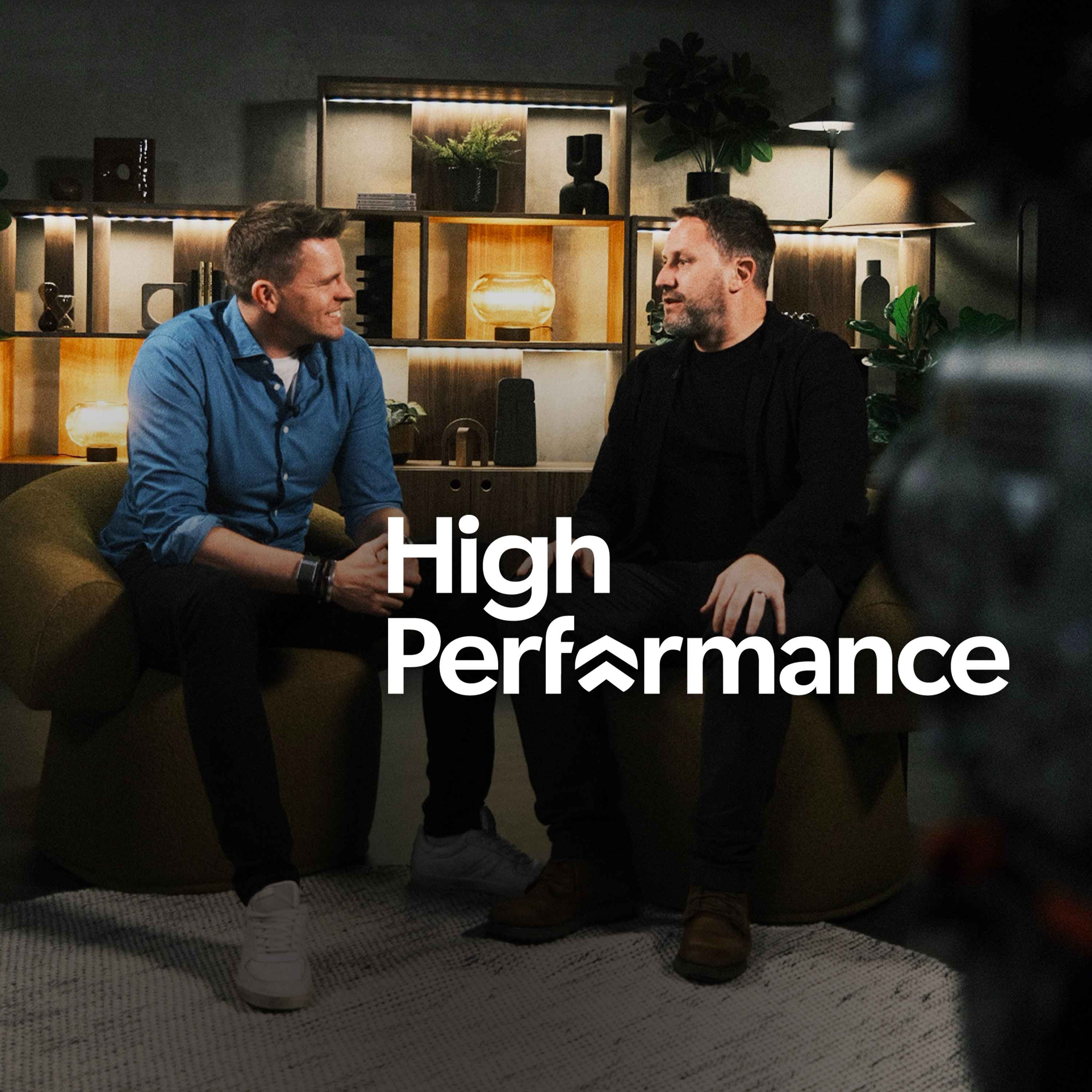
In this episode, hosts Jake Humphrey and Damian Hughes delve into the often invisible aspects that drive success, emphasizing the importance of self-discipline, internal motivation, and the determination to push through when no one is watching. They draw insights from esteemed guests including Alex Inglethorpe, Ben Bergeron, and Olympic legend Michael Johnson, sharing stories of dedication and the struggle between comfort and hard work.
Written by AI. May contain mistakes.

Get the gist, explore an idea or ask about something said.
 Claude
On The High Performance Podcast, what are the key points of this episode?
Searching your listeningAutomatic transcript. May contain errors.
0:00Watch it early on the High Performance app. available now Roman Kemp the broadcaster opens up a powerful conversation on success and mental health hi there welcome back to another short episode of high performance where myself and Damien Hughes sit down and just discuss stuff that you've either messaged us about things that we've been thinking about or maybe a comment or a moment with a guest that has really sort of piqued our interest and Damien has just returned from a lovely summer break off to Canada with the family and Damien you were listening to a bunch of podcasts while you were on your break which has kind of informed the conversation that you want to have yeah so I've really been enjoying listening to David Senra's Founders Notes podcast and he has this great line that he uses repeatedly where he says the public praise people for the practice they do in private so what he means is like if you listen to the Jay-Z episode he talks about how Jay-Z was writing rhymes and and raps from about the age of 12, every opportunity he got, he speaks about how he spent three summers in his bedroom, right, in at least five raps a day.
1:10And he talks about, he didn't actually end up recording until he was nearly 26. So people saw him and thought he was this prodigiously talented guy. But his point was, we praise people for the practice that they do in private. He'd spent 14 years getting his craft to that level. and it's a theme that we see so often jake from all our guests that we often talk to them about the outcomes but what we're also interested in is the process that it's taken to get there and the stuff that happens in the shadows is what really intrigues me now i think this is really really interesting because when when a certain theme or a certain message keeps on coming up time and time again from various high performers you have to stop and listen to it and i remember you remember the nfo linebacker ray lewis yeah yeah something of a legend i remember a quote from him the hardest thing to do is work hard when no one's watching uh there's a great quote from john woodden the true test of a man's character is what he does when no one's watching and even uh c.s lewis the author integrity is doing the right thing even when no one's watching right so let's talk about why this is so important and by the way we speak to a lot of sports people who have coaches we're not talking even about the work they do in the shadows with the coach this is the work you do when no one is watching why does this matter so much do you think well again it's a theme that i saw growing up in the boxing gym in manchester that it was it's that famous muhammad ali truism that says that the fight isn't won underneath the bright lights of the ring it's often won on the dark mornings when you've got to get up and run on your own that's the stuff that happens when nobody's watching and when we spoke to Jamie Peacock the rugby league player on the podcast he spoke about how at the end of the day before he'd put his head on the pillow he'd divide his day up into easy versus hard decisions that he'd done when no one was watching because he felt the more hard decisions you do the more when you say I'll go out and run but I won't listen to anything I'll just manage my own thoughts that showed a discipline that when the bright lights are shining and you've got to deliver your brain has got evidence remember that confidence comes from evidence you've given yourself lots of moments where you can find evidence that you're capable of doing the hard thing going the extra mile doing that extra rep is the bit that distinguishes you so you're basically proving to yourself that you're capable of doing what you said you would and i think that is almost a great definition of high performance in its own right but you're doing it under pressure as well.
3:49So that's the interesting part then. It's about people making a decision at some point that the standards they hold themselves to, not the standards that others hold them to, the standards they hold themselves to is what really matters. And do you remember when we spoke to Alex Inglethorpe, the academy director at Liverpool, and he told us a story about Harry Kane? Let's hear that story now. I was always pretty OCD myself around collecting the footballs in. You count the footballs in because you're not getting replacements. and I could never understand why I was like always two or three short they're just driving me mad I'd be in my office and you know it's sort of cottoned on that one day there's a bit of you know you could just see sort of like heads in the distance and all the rest of it and what they'd done is they were hiding the footballs in the bushes and then in the afternoon going out and having their own session and the best thing I ever did was just turn a blind eye and who was in that group that would have probably been Andros Townsend Harry Kane so the reason why I like that is obviously there was someone watching and it was Alex Inglethorpe who was one of Harry Kane's bosses but Harry had no idea that along with a few other footballers he was being watched and I think that it's not just a coincidence that Harry Kane had a great career and Harry Kane also did the work in the shadows when no one was watching the two are intrinsically linked because I think it's that quote from Mark Webber when he joined us on high performance average is easy that's why it's popular you know the people who are holding themselves to the highest standards in front of big audiences well they're pretty common people who hold themselves to the highest of standards when it's them and their coach they're still quite common people who hold themselves to the very highest of standards when it's just them on their own well that's not so common and i think it's it's that final element that really really makes a difference for people yeah absolutely i mean do you remember when we listened to ben bergeron the brilliant sort of enthusiastic guy that's led so many people to become like crossfit world champions he spoke about that you've got an angel on your shoulder and you've got a devil and the angel is saying to you maintain the high standards the devil is saying just relax nobody knows and it's who you choose to listen to most that's more important ben explains it better than i've done.
6:03Let's listen to a clip of him. That voice that's playing both those roles really loudly, the devil and the angel, if you will. Other people call it self one, self two. Other people, Freud called it the id, the ego, and the super ego. There's all these different names for it, but basically it's this dichotomy between something that wants you to do what's right for you and the other one that's in preservation mode. Go sit on the couch, snooze, don't get up in the morning, go eat the sugar covered blueberry muffin, have the croissants. It's time to watch another show on Netflix. That is inside of all of us.
6:43But equally inside all of us is the voice that goes, go get it, dude. Do the hard work. Pound on your craft. Have that hard conversation. Go and get up in the morning. Get out of bed. Don't hit the snooze alarm. Let's go do the work. You know, I think that's really important, right, Damien? Because we can hear a clip in a moment from Michael Johnson. But I think we need to make it clear that people who are high performers, they don't not have the voice saying, stay in bed, have another bag of crisps, go and have a bit of junk food, go out on the beers with your mates. They don't not have that voice.
7:20They still have it. They're able somehow to ignore that voice and follow the right one. So how is that possible? what is the thing that makes them do that I believe it's about a sense of purpose I think if you have a really deep sense of purpose and that you're doing something that really matters I think it makes the hard decision an awful lot easier and I think sometimes where we really struggle is where we don't have that purpose in our life and therefore it doesn't inform the decisions that we make every single day well it's a really smart point you're making Jake and the science validates exactly what you've said that there's research on this that goes back to the early 1970s at rochester university in new york by two psychologists one was called edward deasy and the other one was called richard ryan and what they were exploring was the topic of motivation that drives all high performers and what they found is that it's not a switch where you go i'm motivated or i'm not they called it something the self-determination theory that it's like a complex web that has to be in place to do it.
8:25So what they said is there's three factors that drive true intrinsic motivation to do anything and purpose is one of them. The other one is this sense of belonging, feeling that what you do matters to the wider community that you identify with. And then the other one is having a sense of control, that you're the one that chooses to do that or not. If we just break off a minute here and we'll go into more detail on this, Michael Johnson's interview is a really good example of control What was your coach like if you ever missed a training session or something? I never missed a training session Never missed a training session Come on man, what in your life?
9:06No, never missed a training session There was no reason to miss a training session There was literally no reason to miss a training session You could have been tired, you could have not fancied it that day You could have been a bit down or not interested I wanted it too bad There was never a reason I missed a training session. What he's talking about there is, we're talking about when you ask him around missing training, the sense of control is, I'm not missing training because I'm choosing to do this. We've heard it from so many other guests when we ask about the sacrifices they make. Joe Hart told us, I didn't make any sacrifices.
9:42I wanted to do it. I loved it. So they're coming from a place of true intrinsic motivation. and they're those three factors of having a sense of purpose having a sense of belonging and having a sense of control and it's a theme that we see so often the recent podcast episode we did with the brilliant Alex Honnold this is a guy that spent 10 years preparing to free solo El Capitan that's somebody that was invested in the mastery of what they were doing that he controlled it he decided when he was going to do the climb this was a guy that was just purely passionate around it fruit to someone like keely hodgkinson who spoke to us about the incentive that she'd set for herself of owning a porsche buying herself a porsche when she won the gold medal recently in the olympics in paris this is all stuff that comes back to those three things that dc and ryan spoke to about purpose belonging and control and they're available to any of us and i think the other thing that's so important that we must talk about is environment because there will be people listening to this thinking how how do i find this do you know about the broken windows theory demo oh yeah yeah that was like i called james wilson in new york and basically you know what they were saying was that if if there's visible signs of disorder or neglect in your environment then you will kind of add to that you know if uh if there are broken windows if there's graffiti everywhere if there's litter on the streets if there's antisocial behavior happening around you then you will also act in a less desirable way your behavior will change based on the environment and so i i feel like we have to have this conversation as well because if people are thinking what how do i how do i change my behavior well one of the most important things we can often do is change our environment yeah definitely and again there's like really good research on this that says you know like there was there was a big fear in america in the 70s when soldiers were coming back from Vietnam that they was going to introduce a heroin epidemic into America because so many soldiers were using heroin when they were in Vietnam.
11:47But when they got out of the environment of the stressful environment of being on active combat and came back to their homes in America, most people never got into the trap of using it to cope in that situation. And what that proved was the power of our environment and how important it is so you might be there thinking well how can I change my environment well things like what are you watching on tv what are you listening to who do you spend your time with all these things are all factors that feed into our environment and I know we can't change everything radically but we can change things around us if we start to look for the opportunity and I do like that because I think sometimes we feel that we can't change our environment can we like we can't change where we live who we live with the job we do the people at our workplace but we can absolutely change the channels we choose on the television the content we choose on our phones the things we watch on youtube it's i think it actually it's difficult to overstate how important it is to make those decisions and make them right and if this has got you thinking and you want more of a peek behind the curtain to get an even deeper understanding of what kind of work goes on in the shadows you had a great opportunity damien to spend some time with the Team GB Divers recently.
13:02It's on the High Performance app. It's called Behind Greatness. If you could give us one line about Jane Figueredo, what would you say she does in the shadows that makes a difference? Love. That one word, love. I think she's somebody that turns up every day. She loves her environment. She's the one that you'll see picking up rubbish before anybody gets there. She's the one setting up the facilities to make sure the athletes have the best opportunity she can. And she's the one that's going speaking to them long after training's done when she sees they've been upset. And I'd say that it comes down to the love of what she does, the love of the craft that she's working on, and the love of the people that she's working with.
13:46Brilliant. And if you want to hear more from the love that a coach can impart and the impact it has on their players, listen to an episode from a very long time ago. Sean Wayne the England Rugby League manager who delivered one of the great and early high performance episodes so therefore it hasn't perhaps had the love it should have had but he was an amazing guest thanks a lot Damo thanks mate I love these conversations and hopefully people listening to it do as well but again it's a good example of the work in the shadows even if nobody's listening to it me and you are and that's what I enjoy doing I'm feeling the love thanks mate me too just like Jane in parts and if there's something that you'd love Damien and I to talk about.
14:25In fact, Damien, I want to do an episode on this. I got a message. Let me just go into my DMs here. I got a message on Instagram from Tom. He said, I think you and Damien should do a high performance podcast conversation on how to deal with difficult people. I know it's a bit of a side thought, but the reality is so many can't perform well when someone's been destructive or has an ego bigger than them or their project. People always say that the truth or the real stars will shine through, but sometimes it takes a very long time and you can't help but think things would be accelerated if you could deal with problem people straight away so how about we have a conversation before long about how to deal with difficult people oh i'd like that that'd be good all right and tom that episode will be just for you and if you would love to hear us talk about something specific just ping us an email we're on hp team at highperformancegroup.co.uk or you can just send us a dm across social media damian thanks a lot mate thanks mate look forward to catching up with you soon and you thank you very much for listening and we'll see you again soon for another cracking episode of high performance you
In this episode, Jake and Damian explore the unseen factors that drive success. They explore the importance of self-discipline and how pushing yourself when no one else is watching can build confidence and lead to High Performance.
Reflecting on insightful conversations with Liverpool Academy Director Alex Inglethorpe, Crossfit Coach Ben Bergeron, and Olympic legend Michael Johnson, they share inspiring stories of dedication, discipline, and the internal struggles between comfort and hard work. They also discuss how top performers resist the urge to take the easy path and maintain their drive to excel.
Listen in as Jake and Damian highlight how a strong sense of purpose keeps high achievers on track, even when the temptation to take shortcuts arises. Plus, don’t forget to send your questions to [email protected] for a chance to be featured in upcoming episodes!
Listen to the episodes mentioned:
Alex Inglethorpe: https://hppod.co/alex-inglethorpe
Michael Johnson: https://hppod.co/michael-johnson
Ben Bergeron: https://thehighperformanceapp.com/episodes/1U1XGZ0EehQFiAyJAHUC5L
Shaun Wane: https://thehighperformanceapp.com/episodes/6ouSgEESlrJZYb19vw5YF1
🚨 Partners:
Huel 👉 Claim your FREE t-shirt HERE: my.huel.com/hpblack
Discover all 154 health benefits at uk.huel.com/benefits
Heights 👉 https://hppod.co/heights
FORA 👉 Enjoy 25% off your first meeting room booking at a Fora workspace HERE: https://hppod.co/FORA25
Explore offers and discounts through our other partners:
https://hppod.co/partners
Hosted on Acast. See acast.com/privacy for more information.


