
 Ask ChatGPT


 The High Performance Podcast
1 May 2026 · 44m · 23 chapters
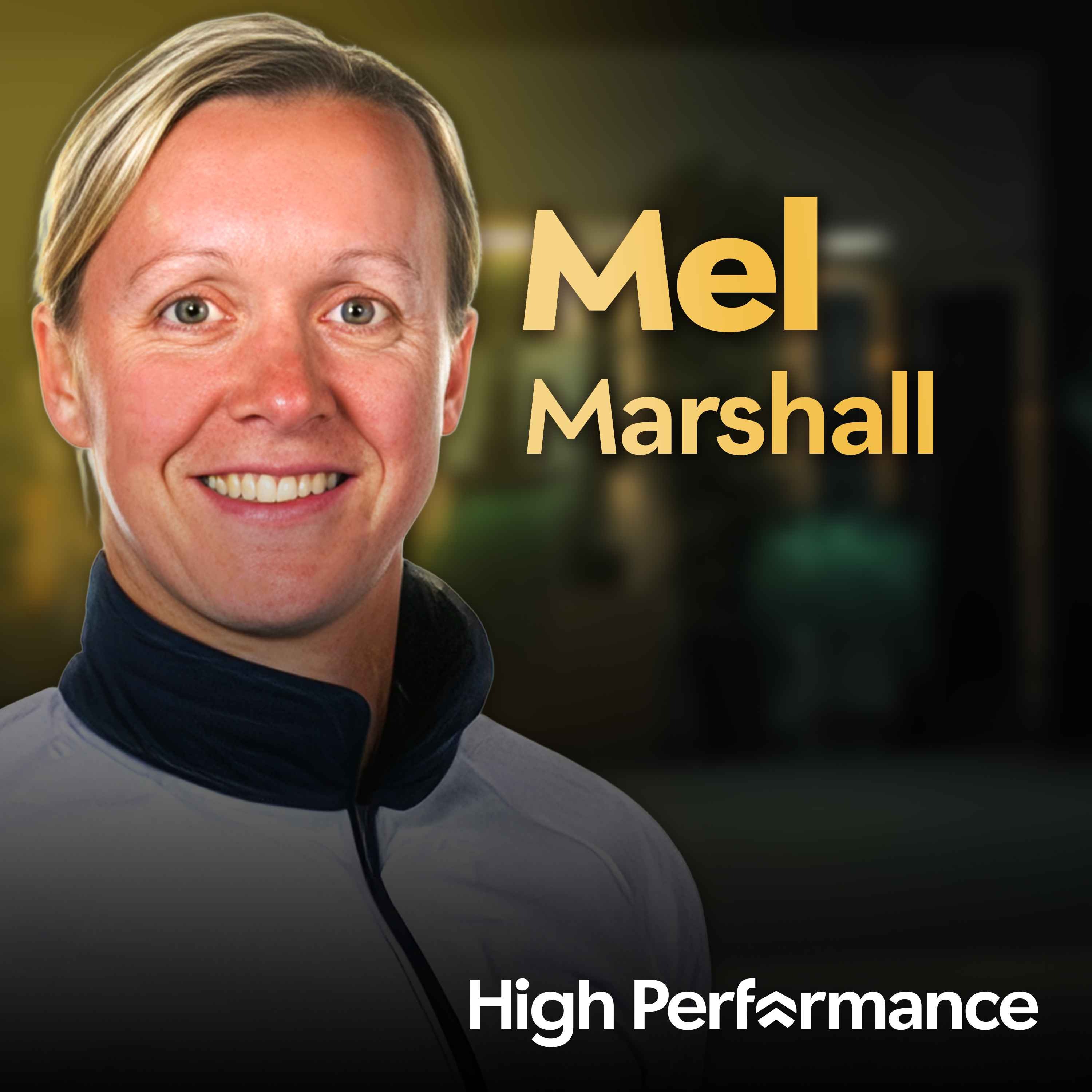
Mel Marshall, Adam Peaty’s Olympic breaststroke coach, explains her people-first coaching philosophy: “people before performance,” sustainable questioning, balance, and building character alongside technical training. She argues the real win is who athletes become, not just medals, and describes how to lead cultures where everyone finds “their version of gold.”
Mel Marshall is a high-performance swimming coach who led Adam Peaty to multiple Olympic gold medals, world records, and a decade of dominance. She also coaches community/club athletes and has interviewed/learned from elite leaders (e.g., Alex Ferguson, Eddie Jones).
Sustainable success requires ongoing critical conversations; feedback must be timed and tailored to the individual; relationships determine how much feedback can be absorbed under pressure; competitive hurdles and adversity training build resilience.
childhood lessons from parents; friend Daniel with muscular dystrophy; coaching a club from 12 regional-standard swimmers to outcomes including Paralympic bronze (Lewis), scholarships to America, and Fran Baldwin’s relay/qualification breakthrough; Zambia camp unpredictability; Rio kit stolen—Peaty adapts and still performs.
Written by AI. May contain mistakes.
Discussion on personal growth and striving for the best version of oneself.
“that made him the greatest breaststroke swimmer the sport has ever seen.”
Mel shares her childhood experiences that shaped her competitive spirit.
“Well, I put a cold copperberg in the fridge and I wait till 7.30 at home.”
Story of Mel's best friend with muscular dystrophy and the inspiration he provided.
“So yeah, I think that's the foundations of where I've come from.”
Mel describes her journey in swimming and her drive to be the best.
“And I would say that, you know, that is, that's kind of, that's me really.”
Mel explains her motivation for becoming a coach after competing.
“And again, probably because my dad would never let me that, you know, seven, eight, nine, 10 year old development for me was like, well, I'm going to find a way to win here, no matter what it takes.”
Discussion on the importance of balance in high performance and personal life.
“taps into your ego, that taps into your technicality, that taps into your processes.”
Mel emphasizes her belief that prioritizing people leads to better performance.
“Maybe it's not the questions you're asking of yourself.”
Learn how prioritizing personal well-being leads to better athletic performance.
“Do you have that conversation with him, which kind of might cause even more issues for you winning the medals?”
Discover Mel's experiences with various leaders and how they shaped her coaching approach.
“You know, whenever Adam, you know, achieves things, I'm always super, super happy for him because, God, he's an incredible athlete to work with.”
Understand the importance of authenticity and communication style in coaching.
“Now I sit inside a system that isn't like that, but it's still working incredibly well.”
Explore how a commitment culture can enhance performance and teamwork.
“I always talk about the endurance of parents.”
Learn how love and community impact coaching success and athlete development.
“Because I'm interested in that club period where you were delivering phenomenal results, but you had the chance to shape it.”
Hear inspiring stories of athletes and lessons learned in a club coaching setting.
“And if I look at what came out of that programme, I started that programme and it had 12 regional standard swimmers.”
Understand the value of honest feedback and self-reflection in coaching.
Learn how effective feedback can impact athlete performance and relationships.
Understand how to customize feedback to suit different athletes' needs.
“I've got one particular athlete that would be really adverse to receiving feedback.”
Explore how overcoming challenges shapes character in young athletes.
“Can I ask you one final question about this?”
Learn about integrating character training with technical skill development.
“When I went in January, it was green and it did have no visibility at the bottom.”
Discover the balance between mental and physical components for success.
Discover the personal strengths and challenges that shape high performance.
“Oh, it's called the subtle art of not giving a...”
Explore why Mel's influence extends beyond swimming and resonates with many.
“We always have these conversations away from the podcast, me and David, about which is your favourite episode.”
Learn the significance of sharing transformative experiences to inspire others.
“So honestly, thank you for being so honest, so vulnerable, so open.”
Understand how adaptability in coaching can lead to extraordinary performances.
“And the fact that when Adam had his kit stolen in Rio and he was still able just to adapt and move on from it so quickly to still go out there and deliver such a phenomenal performance.”

Get the gist, explore an idea or ask about something said.
 Claude
On The High Performance Podcast, what are the key points of this episode?
Searching your listeningAutomatic transcript. May contain errors.
0:02You're going to go to your Olympics, whatever that might be. That might be the county championships, that might be the actual Olympic Games. There's no ceilings, there's no boundaries. I just want your energy, enthusiasm and your constant commitment and we'll get you to your Olympics, whatever that might be. You go to sleep an expert and you wake up a novice. I just think that if you treat life like that, every day is a journey. It's about how do you make the best version of yourself every single day.
0:30Jake Humphrey: Today, we're revisiting one of the most loved episodes in high-performance history. Our conversation with the phenomenal Mel Marshall. Mel is the woman who coached Adam Peaty to multiple Olympic gold medals, a number of world records and a decade of dominance that made him the greatest breaststroke swimmer the sport has ever seen. But this episode was never really about swimming. It's about how you can build people up, how you can lead teams and how you create cultures where everyone, from the most talented to the least, finds their version of gold. What you're about to hear on this podcast is a masterclass in people management, how to give feedback that actually lands with impact, how to develop character and not just performance.
1:17Jake Humphrey: And why, for Mel, the real win isn't the gold medal, it's who you become on your way to getting it. I'd love to welcome to high performance, the brilliant Mel Marshall.
1:34I think you go to sleep an expert and you wake up a novice. And I just think that if you treat life like that, every day is a journey. It's about how do you make the best version of yourself every single day? That's what my life's about as a person, as a performer, as a professional. And I love it. I literally, you know, I love it. I wake up in the morning and don't get me wrong, I still have the days where I just like, oh, come on, is it over yet? But most of the time, the majority of my response is, right, what's out there to explore? How can I get better? And how can I win life today, I suppose?
2:07And what do you do when you're having one of those days? Well, I put a cold copperberg in the fridge and I wait till 7.30 at home. That's high performance right there.
2:17Jake Humphrey: So Mel, will you take us back to your origin story? because I do know a little bit about your background and I'm interested in when you first developed that growth mindset because you weren't coming from an environment where high performance was necessarily all around you. Yeah I mean it comes from my mum and my dad really and Jake I've heard you talk about you know your history and your adversity and and does that you know certainly shape you for the future and I absolutely think it does. You know my mum I won't go into too much detail but she's had um you know a few challenges around physicality over the over the years and she sort of sat me down when I was about nine years of age and she looked at me across the kitchen table and she said to me look you've got two arms at work you've got two legs at work you've got energy and you've got enthusiasm go out and give the world the very best you've got and don't come home until you have and that sort of that was really born in my childhood and then I have an over competitive father who literally would not want to lose anything and you know there was just no mercy it was like no you can go in goal and I the 35 year old strong man will strike the ball at 100 mile an hour and you will learn to cope and I the professional table tennis player will not teach you how to serve I will just serve at you but that in itself was a life lesson it was a competitive hurdle I had to get over and it was the foundations of me my competitive you know nature really um and interestingly I you know I fought and fought and fought and you know the day that I did beat him he stopped racing um so yeah so yeah he retired basically no we're not we're not we're not running racing anymore we're not swimming racing anymore so but again I thank both my parents for you know what they taught me in those real key lessons and you know competition is the bread of life isn't it and I I love being competitive and I've had to learn how to be competitive and also be compassionate as life's gone on.
4:13So yeah, I think that's the foundations of where I've come from. And I had a best friend called Daniel, and he had a condition called muscular dystrophy. And it was a very, very severe disability. And he lived, he was given the prognosis to live to the age of 12. He lived in my village, and I went to school with him. And, you know, we did things that kids do. And I was surrounded. And it was probably the most inspirational story I've ever been witness to living was his mum and dad called Paula and Stuart they never saw that he was supposed to make it till 12 they said right we accept this challenge and we're going to make the very best of this boy's life and you know he passed away at 36 years of age but he met Rihanna he met every single Tottenham player he went to every football game you know he came to me to with me to watch my championships and they would hang out all the Star Wars, the Game of Thrones.
5:06I mean, you wouldn't believe it. It's almost like he's a member of Hollywood or something. But to me, like people like Dan and Paula and Stuart, they're the real life people in this world that are, you know, given a challenging hand, but they make the decision to accept the situation and find the most positive resolution. And I would say that, you know, that is, that's kind of, that's me really. That's a little bit part of my DNA.
5:30Jake Humphrey: So when did you discover your talent for swimming then? Because like Jake said in the introduction, you were an incredible athlete in your own right. So tell us a little bit about that journey of discovery. I started swimming when I was around seven years of age. Again, there was some kind of history around my parents and whether or not I had a physical condition that would maybe show later on in life. So it was basically like, right, swimming exercises all the muscles. So you're going swimming. That journey started at four. The first fallout with my dad started at five because the independent female in me at five was convinced that she knew how to swim on her own and proceeded to drown in the small pool in Spalding.
6:11and um you know then I just went three or four times a week and then I saw a swimming club and I started they were in two lanes and I was in the public lane and then I was like right I'll try and beat them they kind of spotted me and um and then I and I went from there really and then again that sort of competitive animal in me was just like right I want to win the lane I want to win my age group I want to win the club I want to win they'd be the best in the club and I want to then be the best in the county and just never really gave up. Just like my boss now says I'm like a Jack Russell with a really good bone.
6:46I just never give up.
6:52Jake Humphrey: But the obvious question, Mel, is why? Why did you feel you had to win? Because it's just who I am. It's, I've just, that's what I do. I guess it's, I've just always wanted to be good. I've always wanted to be the best version of myself. I've always wanted to win. And again, probably because my dad would never let me that, you know, seven, eight, nine, 10 year old development for me was like, well, I'm going to find a way to win here, no matter what it takes. And the level is really high. And I've got to get to that standard. That's just in me. It's a blessing. And it's a curse. And like most people, you have a, there's the little Mel, isn't there?
7:26And then there's the big Mel. And you often to find the best version of yourself, the little Mel with the insecurities and the little fighter is in there. and then you try and overtake it with the mel that's kind of evolving and growing as time goes on. And you went from your parents setting you challenges to struggling in that pool in Spalding to wanting to be the best at the club. You ended up as the best in the world, winning gold medals, travelling to major tournaments and then you became a coach. What is it about being a coach that works for you? We had someone on the podcast called Susie Ma who spoke about infinite purpose.
7:58You may have heard it where just the never-ending purpose in your life. So as a coach, what do you see as your infinite purpose? Well, I'll take you back to where I started and found my reason why. So in the Olympic Games in 2004, you know, I went into the Olympic Games ranked fastest in the world and I came out with a broken heart. As you know, they only give out 56 medals every Olympics and most people will leave with a broken heart. Good old games. It's all good fun. Good statistics. and anyway I digress but yeah my reason why I was born from that moment because the competitor in me said I think I can do a much not much better but I think I can do a really good job for athletes with everything that I know now that I've had frontline experience of I think that I can do a really good job for athletes and that coupled with my competitive spirit that coupled with my probably innovative coaching thinking.
8:52That's sort of how I found myself into coaching. And sustainable success is founded upon sustainable questioning and this sort of thirst and drive to just try and get better. And, you know, there's winning once and there's winning twice and there's winning better each time. And you've always got to, and me and Adam talk about this regularly, but you've always got to start the next one with nothing. And so you earn it all again. And that taps into your ego, that taps into your technicality, that taps into your processes. But to me, I think that's how I found myself in coaching. And my reason why has always been really strong is I want to illuminate people to flourish on the highest of stages.
9:37I want to challenge people when they get that platform to do great things with it. And my reason why is very much about just help giving people wings to roots to grow and wings to fly. And Damien, you've said that to me before, and I've stolen it. So if that gets some good intellectual property and hits, that's courtesy of Damien Hughes about two years ago in a service station somewhere. So love that. Could you go a bit deeper on what was it you said, sustainable success comes from sustainable questioning? Like I said earlier, you go to bed an expert and you wake up a novice. And when you've got a performance that is good, that is world leading, you really have to manufacture and know what to manufacture to get your motivation to keep questioning, keep asking, is there more?
10:23How do we find it? when you're on the run the first time it's all new and it's all we can try this and we can do that and we will get this when you're trying to do it for the fourth the fifth the sixth time you really have to manufacture that almost like uncomfortableness as in no it's not it's not good enough how do we have that critical conversation what is the elephant in the room that we need to discuss what is that you know conversation that we've not had or what is that technicality I don't understand that I'm frightened of the detail you've really got to push yourself to you know because it could quite easily just float along and you could just ride this this kind of high but if you want more you have to be more and if you want it to look better it has to be better and so that
11:05Jake Humphrey: for me is that's the point really I love that you pushed over there that 2004 experience Mel but I'm fascinated in terms of going back to that that you were that competitive animal that was going in there as a favorite for those Athens games what happened then that enabled you to discover that that powerful sense of why I think looking back now and I actually I actually did an auto ethnography on the relationship between stress and burnout and there's a whole host of reasons of which I've you know I'm in a place now where I'm incredibly thankful for it but to me the thing that I would summarise that situation with is balance you know in terms of when you jake you've got a real thirst i can see when you talk to other people around that thing with you know a dad and a high achiever a dad and a high achiever and it kind of pulls you either side and what i learned through those athens olympics was the power of balance how can you push to the highest heights but also sustain your integrity sustain the things that matter to you sustain the pace in which you travel app through your work and that was the thing that that taught me was the power of balance and everything and you've got to know what your inner balance is because I think that some people have the ability to churn work and it doesn't compromise certain things I think once it compromises your happiness your well-being your ability to drive harder then you need to recheck where your balance is but I think that answers your question Damien around you know what the Athens Olympics teach me about high performance it was the power of making sure you make progress but how you maintain a balance to strike your hardest punch so you've got that in terms of me completely right Mel this this push and pull constantly between fatherhood and wanting to go out and be a high achiever and the big picture about what's it all about the answer I always come back to is it should just be about being a dad but then I feel like there's something else there as well what are the questions that I'm maybe not asking myself about how to get the balance, do you think?
13:05Maybe it's not the questions you're asking of yourself. Maybe it's the questions you're asking the people around you. I think the thing is it's ask the people around you, but also it's a constant checking in because, you know, ultimately... What, with yourself or with other people? Everybody, your team, you know, and the team involves your home team and your professional team. And I think it's about how you regularly check in. like it's almost like you we presume family and friends will just always be there we don't we don't ring we don't check in but yet at work we would do every kind of debrief that you would ever imagine to make things better yet in our personal lives we like stop the debrief because we just presume oh that's ticked that's all set up well I just think if you want your relationships to evolve if you want family to involve you want your personal life to evolve it's how you debrief and keep having conversations about the things that matter and again just keeping that balance in check and sometimes we're actually doing a better job than we think and sometimes it's okay to strive and be the role model in what it is to try and be the best version of yourself and you know I think that's okay your job basically right is to win medals for Adam and to help him win Olympic gold so what if you feel that he's not spending enough time with his newborn child or I'm not sure that he's caring enough about his friends who've always been there for him.
14:26Do you have that conversation with him, which kind of might cause even more issues for you winning the medals? Because you're actually saying, go and have some home time. Yeah, I think when I started coaching, I was very in tune with my moral purpose straight away. And to me, people comes before performance. And if you put people before performance, performance will take care of itself. So if Adam's happy, if Adam's in check with his family, if Adam's home team's good, if Adam's feeling like his, you know, his energy cup is being filled with the right things, you know, he will perform. And that's the bit to me that I take care of first.
15:02You know, whenever Adam, you know, achieves things, I'm always super, super happy for him because, God, he's an incredible athlete to work with. But to me, the win is that when he walks away from this, he'll be able to reflect and go, I did it right. And when I ask him the question at the end of his career, who are you without those medals? If he can answer me that, then I've won in coaching. Because to me, medals is one part of the balance. The person is the 110 % the other part. And my job as a coach and that community coach in my heart that I am, that person that is in touch with my moral purpose in this journey of coaching, is very much around.
15:42You have to be able to answer both. Are you happy with the career that you had? And are you happy with the person you became through the triumphs and adversities that you faced? And if they can answer yes to both of that, then that to me is all I'll ever need in terms of recognition.
15:58Jake Humphrey: So who helps you now then as a coach? And now that we transfer from, you're not an athlete, now you're a coach and a person. Who coaches you now with keeping those questions honest and allowing you to retain that balance? I went on a journey a couple of years ago, Damien, as you know, because I came and interviewed you. And again, just I went and I was a bit lost in my leadership and I was like, what do I need? What do I want? Where am I at? Who am I? Where do I sit in this kind of this new role? And I just went and, you know, I spent time with 24 different leaders from different places, you know, including people like Alex Ferguson, Eddie Jones, yourself, Adrian Morehouse, some really great people.
16:35and just felt myself growing from that experience. So I guess when I'm lost and I don't know how to find the answers, to me, sometimes Winnie the Pooh is right. Sometimes the best thing to do is to do nothing. And then sometimes the other side is you have to find the answers that you don't have. And sometimes that explorative space where you don't quite know what you're looking for, like when I'm not sure whether I want to go on a run and then I go on a run with a high-performance podcast, I'm like, I wasn't sure that I was looking, what I was looking for, but actually thank you, Joe Malone this morning for telling me what you've told me.
17:12You know, to me, it's that always have someone that you can be a sounding board to. So you can offload to reload, take time to explore. Sometimes you don't know what you're looking for until you explore. And the third one is just keep asking questions, keep checking in. What answer did you find Mel when you had that, that time out and you went and spoke to all those people well it's interesting and Damien you absolutely nailed it and like you literally I don't think you quite understand how thankful I was after that conversation around how you you basically put a framework around a lot of lost thoughts um and I was I'd come from a program where I was where my position in my leadership role was all up front all doing everything you know all singing and dancing and then and then I came into a system which is an amazing system um but I was like I'm not sure where my role is here and the the culture was still a great culture but it was a different culture to what I had delivered when when I delivered it as the the sort of the leader of my program um but once I found out what rules I was playing against I was able to come up with this kind of new skill set so Damien you've talked about before I am 110 10 % commitment culture leader.
18:24That's just who I am. Now I sit inside a system that isn't like that, but it's still working incredibly well. I've had to learn how to lead in a different way. Like I'm very upfront leader, whereas I've had to learn how do I invisibly lead here? How do I influence? How do I create the changes that I want and not get the recognition that I would like, which is really important for me as a person to sort of like be seen. It's love for me, you know, leadership you know in my old role I felt a lot of love um and so I had to learn this kind of new skill set of right okay Mel put your ego out of the way and it's not about you and you're not going to save the day and come in here on your giant horse um you have to learn how to make the changes quietly and an influence around the edges and so um that was one of the things I learned And also with those guys, the people that I met, what a fascinating group of people.
19:20But authenticity was the thing that I learned. You know, I met 24 great people, but none of them did it the same way. And I think authenticity is incredibly important. But it's how you have the education and knowledge and mastery to deliver your content and your communication and the way you go about your business in your authentic way. and I think that's where you really take people with you when you can have all of those things but amazing things I like people like Catherine Granger just on the opening call was just like sport matters incredibly and deeply to this country and I'd forgotten that and then people like Chelsea Warrior was head of performance for UK Sports she just said you need to know yourself your inner self and how you're projecting to everybody else and just amazing things like like that like Paula Dunn who's in British Para-Athletics she said how to give critical difficult feedback with emotionally sensitive preparation and delivery and just I'm making notes like you wouldn't believe right here would you just explain the importance you know through the work with Damien as well of commitment culture for people listening to this you know we have a lot of teachers we have a lot of business leaders we have a lot of people working in teams and they're always looking for for help and advice when it comes to cultures what is it why does it work so well for you I think it works so well for me is because it aligns with my moral purpose and I think if you're in line with your moral purpose and you're in line with your reason why I think there's this this 10 % factor the 20 % factor that you can get out out of people for no finance for no for nothing just because they're all aligned to one mission and it's really easily seen.
21:03I always talk about the endurance of parents. So when I was in my old club job, you know, the endurance of some of these parents at five in the morning till seven at night, selling on the Tom Bowler to help raise funds, helping with charity missions, you know, helping at the meets and stuff. I'm like, their moral purpose was, sounds really, really soft and flake, but love. And they were so in line with their, you know, how much they loved their children and how much they love what their children were doing. They gave you an extra 20%. And I just think it comes back to that as you, it comes back to me is like you create a real commitment culture.
21:39You have to lead, inform and inspire people to fall in love with the same things that are important to you, but also to fall in love with the journey they're going to go on to reach a destination. And even if you win or lose at the end of the destination, the journey that you create to get there, they will always look back on as something that, God, I'm glad I took that opportunity.
22:01Jake Humphrey: How common is phrases like love? Because I'm interested in that club period where you were delivering phenomenal results, but you had the chance to shape it. How unique was that in your experience, Mel? I think a lot of people do. I think when you look at the volunteer communities of sport and people, you know, people do it for the love. They don't do it for the finance. But if I look at why did we make something possible in an impossible situation? And it really was, Damien, it was just about daring to love something, naively pursuing it and just not giving up on it. and if I look at the love and passion and commitment I gave the kids the parents the committee and those you know those first six years of my job and then I look at what I needed in the last two years of my job and how much I got back oh it's tenfold even now if I ring one of the parents that I you know Rihanna Sheehan's dad you know I took his daughter from 12 all the way to 18 she had a great journey if my my gas boiler went in the middle of the night he would come and help me because, and I gave, I gave my full commitment and, you know, full passion and everything to, to those kids at the time.
23:07So I think it's what we're so afraid of now is we live in a society and systemically, if there are a hundred things that go well, most people pick up on the one thing that's not great. And I just think that we get crushed and crushed and crushed, but I think you've just got to keep coming with the 99 things that are great every day and find those things and not let the one thing crush you down one of my swimmers said to me once kill them with kindness and god it's powerful it's like you know when that road rage person comes across and tries to you know cut you up i remember being dressed as an elf one christmas and i thought you know what i'm going to kill this guy with kindness because i'm going to get out and dance in the middle of the road like an elf and everyone was like cheering in the area but it's just like you know i was in control of the situation because i was like i'm going to kill you with some kindness
23:55Jake Humphrey: here mate love it would you tell us some of the successes then that you had in that club environment beyond the obvious of seeing adam and his emergence i'm interested in some of those other human stories like i love the idea of the guy coming to fit your gas boiler yeah what are the sort of stories that still light you up and keep you warm at night oh there's so many damien and you know i'm a community i'm a performance coach but there's still a community coach in me at heart and you know i took a group of kids and they were from the age of 12 and i saw them all the way through to 18 really and there were so many stories of triumphs but we had this mantra of you're going to go to your olympics whatever that might be that might be the county championships that might be the actual olympic games there's no ceilings there's no boundaries i just want your energy enthusiasm and your constant commitment and we'll get you to your olympics whatever that might be that might be to finish swimming and go on to college that might be to do your a levels and balance that out with swimming at the same time.
24:53And if I look at what came out of that programme, I started that programme and it had 12 regional standard swimmers. I had four lanes, I had dodgy lane ropes, I had a 30 metre pool that had not been emptied in 45 years, would regularly break. And in the end, I left, I had Adam who won the Olympics, I had a young guy called Lewis who got a bronze at the Paralympics in the same year. I had two kids on scholarships to America. um I have kids with thousands and thousands of memories around what we did like we would go there was no gym facilities so but we would just run in the the local um town center and at Christmas I'd make everybody dressed up as Santa Claus including Kyle's dad who hated running and we would have all the kids around the city of center of Derby just running around as Santa Claus and I'd have them doing you know Christmas challenges now in my little mind it was like well actually if I pretend by taking them bowling and doing fun barbecues then what I'll do is I won't lose a week of training before Christmas when they all normally slack it off so um but there was a real good story around a girl called Fran Baldwin and now Fran she wasn't the most talented swimmer and she was one of three um three girls and her dad brought her the first time and he was like um look we're not getting too involved we're going to go a couple times a week eight years down the line he's got one kid in America he's been on the team manager for seven trips and all that sort of stuff anyway so Fran Baldwin just really encompasses everything that we tried to do in that program because I think we got her to her Olympics which was a national championships and she you know the qualification standard that she needed to do she was the anchor leg in the relay and she just blew something out of nowhere um but that to me is the power of sport and you can have all the technical manuals in the world and all of the detail from all the best scientists in the world but it's human connectivity it's enthusiasm and it's emotion that finds those brilliant moments look at the pyramids right you didn't see a spreadsheet there did you you saw like we want to do this and we're going to get all these people in one place with a great vision and we're going to make something impossible happen and that's what people go to work for they go to work for that human connectivity and and that you know that moment like that's the beauty of sport in it guys it's like it's the only thing left whereby because of the cutthroat nature of it in some ways but it lifts people out of their seats in the living room what would you say has been the best piece of feedback you've had from one of your athletes probably adam actually um just around he wants the feedback quick he wants it honest and he wants in a safe environment so he doesn't you know I'd said to him in the past you know I was um I didn't know how much how much honesty he I was always I would always be honest with him but how much of what I saw he wanted to hear in terms and he was like I want to hear it um now he changes his mind sometimes because he doesn't that would probably be the most honest that one of the best bits of feedback and also I've had quite a lot of 360 feedback from staff and coaches and athletes and was what was quite nice about that was I was doing way better than I thought I thought I was which was lovely because I was just like I actually thought I was much worse than this but people think I'm actually all right because again as a leader as a coach you're the one out front aren't you you're often when you're trying to be pioneering and the first time of doing anything it's like god I'm not I am I'm actually not quite sure but I've got conviction in my choices and I'm I think it's a calculated risk and we're going to go for it but you are often you know getting that trusted feedback from a source that you respect and knows the situation well enough I think we get a little bit buzzwordy don't we with feedback so I'll just throw a bit it's like no you have to have it from the people that are really really close to you What if the real question isn't where you're going but the adventures you experience along the way It's time to set your sights higher on peaks still to be climbed rivers still to be crossed and greater dreams to pursue It's time to embrace the impossible with Defender A family of vehicles built around capability durability tested on some of the most difficult terrain Defender defines tough luxury and I should know I've driven one for the past three years.
28:57I have the Defender 130, but from the compact confidence of the Defender 90 to the versatility of the 110 through to mine, the Defender 130 with seating for up to eight, there's endless potential. You feel in the details as well, the rugged body design, the robust materials, all working together so you can head out with confidence. And inside, ClearSight technology helps you see the world around you in a new way, while the PV Pro keeps your navigation routes and playlists flowing seamlessly as you go. And with up to 89 cubic feet of cargo space there's room for everything you need on your journey explore the full defender lineup at landroverusa.com i've got quite a few questions about feedback if you don't mind i want to dive into because i think it'll be so useful for people that listen to this podcast to hear so first of all you said you weren't sure how much you wanted to hear do you start with minimal amounts of feedback and build it up and get more honest and not necessarily more brutal but more blunt until you think oh I'm not sure this is working and you're watching the athlete's reaction but do you start from the other direction where you give them everything and see how how they react and maybe start to pull it back I think it goes back to my point earlier when I said about people before performance and I think when you're giving that feedback you've got to know you know of course see it say it but see it say it at the right time with the right understanding of that individual so I've got you know nine athletes and not one of them would receive feedback in the same way.
30:19I've got one particular athlete that would be really adverse to receiving feedback. So I think when you give, if ultimately your overall goal is you want that person, that organization, that culture to grow and progress, that's the purpose and intention of your feedback. You have to understand, unless you understand the people that are receiving the feedback, your intention might be good, but it may not be received that way. So I think the question is to ask the right question first. Okay, I've got some pretty critical feedback here. How would you like me to deliver this? Is it the right time for you?
30:52Is it something you want to grow on? Give them the choice to receive it. Then that way, not only are they empowered by receiving it, they are empowered by the fact that they made the choice to receive it. So you get a double win. And then the final piece is then, because it was their idea to receive it, then it's their idea to own it and change it. So it's basically, you know, double manipulation really but very smart very smart so the athlete that doesn't like or won't accept feedback is it not your job as the as their coach to coach them in the important ability to accept feedback absolutely and you know it for me it's also as well I will always go to a point where I will see that person's capability to grow so if I think it's going to damage my relationship and they're probably just not at that space yet where they can grow in that that time I will wait so to me again it's the right time the right time the right timing the right type and the right place and if it's not the right time for the feedback for them it's never going to all you're going to do is damage your relationship so you have to wait timing is massively key like I saw things it's hard though isn't it because you just want to give them the feedback and improve them as quick as possible absolutely and we are in a time-based sport you know we've got we live from hundreds to hundreds and weeks to week and days to days.
32:08But I think if your intuition gives you the, if you know the person well enough, your intuition, you know, sometimes I go back, it sounds really weird, but sometimes the best thing to do can still be to do nothing because your source of feedback is one potential source of growth. Also them working it out on their own and that exploratory learning is also a source of growth. And ultimately you've got to, it's risk versus reward. if the risk and you have to have that critical conversation is going to give you a reward then you need to have that critical conversation if the risk outweighs the reward that you're going to damage it and the person's going to be destructed afterwards and the momentum that they'd already made up was going to be lost it's still not the right time to give the feedback and the final sort of question on this whole feedback thing is how you give the feedback what do you do how do you empower them to come up with the answer do you empower them to come up with the answer do you just lay it on the line and simply say something's not good enough um again i go back to the person like some like i have like i have nine athletes and one athlete would want can i have the instructions for what's next and a plan and a detailed a b and c and i'll just do that and i'm happy with that other people want shared ownership of their their journey and they want to be heard and seen and included and explore with you and go on the journey together so I guess it's it's knowing you can have a team goal but you have to have an individual focus and I think if you have that individual focus and realize that not everybody's the same not everybody's going to get to destination x the same way not everyone's going to get there at the same speed the same time I think then you start really empowering the people that you work with you know you do you at the end of the day and it should be the same principle when you give feedback or what's right for that individual person at this time that's going to create the better performance for the overall collective.
33:57Brilliant. Can I ask you one final question about this? How different is it giving them feedback on a technical element like you need to improve your breaststroke compared to, let's say you're watching a swimmer and you know they've lost their motivation or they think they're giving 100 % but you actually know that there's more. Do you deliver it differently if it's something psychological rather than something physical? Absolutely. Because the thing is when you give technical feedback, you're critiquing what they do when you give character feedback you're critiquing who they are which is a much more difficult conversation to have and so I think that's the chemistry piece the relationship piece the relationship and how good that relationship really cements how fluid and how connected that communication how quickly that can happen so my message on the feedback thing around when you have to have those critical conversations it's like the power of your relationship at the first space will determine how much feedback and how quickly that can be coped with under stress and pressure
34:54Jake Humphrey: brilliant i think there's a really incredible skill that you have mel that you've taken some of these kids at 12 years of age and now you're dealing with adults and you still have the ability to put their relationships at the front and center would you explain a little bit about because there's lots of parents that listen to this our teachers is there a difference in terms of engaging a child in many effects as opposed to dealing with an elite olympic athlete there's some similarities and there's some difference i think for me around parents i call it the competitive hurdles and loving eyes can never see so like when you're a parent i don't know i've got two jogs and i am crazy about them but i think there's this you know reluctance to let the kids get over the competitive hurdles themselves.
35:44And if we remove all of it, so if there's a hundred meters track, right, and there are 20 competitive hurdles, and once they've got over those 20 competitive hurdles, they are going to be more full of people, more determined, more capable, more able to cope with the challenges that are going to come their way in adulthood, then that's a good route for them to go. If parents, coaches remove those competitive hurdles, when they get to the end when they get to 18 they won't be able to cope with anything because they thought that it was an easy smooth road so my thing to anybody that's working with those development years is put as many competitive hurdles in their way and effectively help them to get over them but also if they can't help them understand why they can't you know when Adam was in his young years people thought I was crazy I took him on a training camp to Zambia I took him on a bike ride as well, where we cycled 500 kilometers across, basically, it was 42 degree heat.
36:37And the reason I wanted to take him there was because to me, I wanted to help his character understand, you know, life isn't easy. It's not a bed of roses. It is difficult. It is challenging. There will be good days. There will be bad days. People that you know and love will pass away. There will be divorces. There will be all those things. And sport's the same thing. There will be wins there will be losses and it's just about how you triumph through all of those and accept that that is the journey that you're on and I just think that less is more like them I do think now unfortunately you know I use an example my friend's 23 year old son he went to a job interview the day with 1400 other people for a 25 grand a year job he came from a school that basically gave him participation medals when he was younger so he thinks that well I participated I should get something for this we're setting them up to fail because that's not how the world works when you get past the age of 18 and i just think now we're we so want to helicopter them out of all the challenges it's like no we have to let them learn and grow from each challenge and just be there to support them through those challenges not remove the challenges so there's some brilliant parallels
37:47Jake Humphrey: there we'd say reading about what bob bowman did when he developed michael phelps's character so the story of him deliberately breaking his goggles before a race to see how he could cope with the adversity of having to swim without them or you know turning the lights off or not giving him a drink of water that as an outsider you might appear cruel or you wonder why you're doing it and you've explained why have you ever done anything like that with Adam to develop his competitive instincts and his ability to deal with adversity yeah 100 % all the time that's everything we do and I think it was Richard Dennett that said about it wasn't it goes in terms of how do you simulate what's required in your practice and do it at a higher level so that when you you know come under pressure you just revert to type and albeit it's not the same as the military for sure but that's everything that we do you know I would over prepare Adam so that he would be the race itself would be easy and if you listen to him talk now I mean um he talks about it's just two lengths of the baths but you know it's I can't remember who said it but it takes a genius to work out to make it that simple in the end.
38:53But everything, you know, I've done so many things with him, like, okay, when I took him to Zambia on a training camp, you know, when I went to Zambia in the October in this OIDC place, the water in the 50 meter pool was blue. When I went in January, it was green and it did have no visibility at the bottom. And they did say that it would open at eight o 'clock and it didn't open till 10.30. So we had to climb over the gates every day they did say there would be breakfast at eight and there was not breakfast ever and they did say there would be cutlery and you would get a fork for your cereal and the purpose when I took those 12 kids to that camp was because I wanted them to cope with you know it's unpredictable but you can either react to it or you could deal with it and what I left there with I left there with 12 soldiers really in some ways 12 life soldiers that we're not going to react to what came their way they're just going to deal with it and just you know not make a mountain out of a molehill and then fast forward three years when adam went to the rio olympics he had all of his kit stolen his technical kit is everything and we had 48 hours now i was running around like a blue ass you know whatever trying to find all the technical kit but he was he was still in the t-shirt that he traveled in three days afterwards with a rash on his armpit but he'd almost he'd got this mantra and developed this mindset through a series of challenges that we'd set him that he was just like if i have to swim in this dirty t-shirt with a rash on my armpit so be it and it's to me I've always said it's about if somebody says the Olympics is now going to be in a shark infested pool with lame ropes you've got to have the mindset and the character go I'll be in there first see it in there and that's that's to me you do that you know I just think you train people's character you train their technicality you train their character you train their physicality but to me you how you can positively push and challenge somebody in innovative ways and take them to new heights that to me is the beauty of coaching Mel what a brilliant brilliant episode we're about to move on to our quickfire questions but before we do that the final question for you and this is an interesting one because we normally ask this to the athlete but having a coach on we can't not ask you the question with your athletes when they're competing what percentage is their success down to their mental approach and what percent is down to the physical side uh i think it's a balance of both jake i think that you can't do one without the other um but i think in terms of reaching your full potential your your full physical potential is is down to your ability to believe in yourself your ability to perform under pressure without perceiving stress and your ability to you know bring the best version of yourself to the most difficult situation and deliver great right quick fire questions
41:42three non-negotiable behaviors that you and all the people around you have to buy into effort fun and reality fun that's a rare one i'm pleased it's in there what advice would you give to a teenage male just starting out do it all again exactly the same way if you could recommend one book for our listeners and our viewers to get their heads into what book would you recommend Oh, it's called the subtle art of not giving a... Yeah, it's excellent.
42:10Jake Humphrey: It's really, really good. What's your greatest strength and what's your greatest weakness? Greatest strength, I think, is innovative creativity. Greatest weakness is finding the ability to believe in myself when others challenge me. Are you happy? 100%. And finally, what's your one golden rule for living a high-performance life? Life is what you give it. Brilliant. Brilliant, brilliant, brilliant, brilliant. We always have these conversations away from the podcast, me and David, about which is your favourite episode. And we normally come up with about 20, but I think we might have just... You're number one.
42:45I think we might have just recorded the one that is top of the list. Mel, man, thank you so much. Do you know what? We often say that the beauty of this podcast is that we speak to someone like you. You're a swimming coach, but we haven't even mentioned swimming, which shows that you're so much more than just a swimming coach in the same way that your athletes are not just swimmers and the business people are not just business people. You know, we're all, we're basically all people and we're all learning things that can all be applied to everyone else's lives. And I promise you there will be tens, if not hundreds of thousands of people that will listen to this episode and take away stuff that will improve their lives.
43:21So honestly, thank you for being so honest, so vulnerable, so open. It's brilliant. Thank you. And if you are, when you have PE on, say mine's the best ever, see if we can match that. Right, let's see.
43:34Jake Humphrey: Oh, I love that episode. I'm lucky enough. I've known Mel for a number of years, but when she recounts that story of her and Adam having to scramble over the fence and getting him to dive into an algae-covered pool, I thought that was just a great example of how you can train people in, not the fact, but how you react. And the fact that when Adam had his kit stolen in Rio and he was still able just to adapt and move on from it so quickly to still go out there and deliver such a phenomenal performance. That's a great example of what a coach can do. Well, listen, if this episode's moved you, please share it with a coach, a parent, a manager, or basically anyone who's responsible for bringing out the best in someone else.
44:21Jake Humphrey: That's exactly who Mel made it for. It's been a real treat to listen to this episode with Mel. We'll be back very soon with more High Performance.
44:34Thank you.
This week we're revisiting one of the most beloved episodes in High Performance history — our conversation with Mel Marshall, former head coach to Adam Peaty and one of the most compelling thinkers on leadership, coaching and human development we've ever had on the show.
Mel went to Athens in 2004 as the world's fastest swimmer in her event. She came home without a medal. From that moment, she built an entirely new philosophy — and went on to coach Adam Peaty to multiple Olympic gold medals from a club pool in Derby with dodgy lane ropes and no gym.
In this episode, Mel talks about why people always come before performance. How she builds commitment culture. The art of giving feedback that actually changes behaviour. And the question she plans to ask Adam at the end of his career that has nothing to do with medals.
One of the most complete conversations we've had on this show — and one that will stay with you long after it's finished.
Heights 👉 Get 20% off your subscription by using Code: HP20 here: https://highpfrmc.com/hpp_heights_au3
Go Henry 👉 Grow their skills and their money at gohenry.com/highperformance with £5 FREE to get started!
XTB 👉🏻 To find out more and make your money work, use code HPP at: https://highpfrmc.com/XTB-hpp-au
Hosted on Acast. See acast.com/privacy for more information.


