
 Ask ChatGPT


 The High Performance Podcast
24 Sep 2025 · 29m
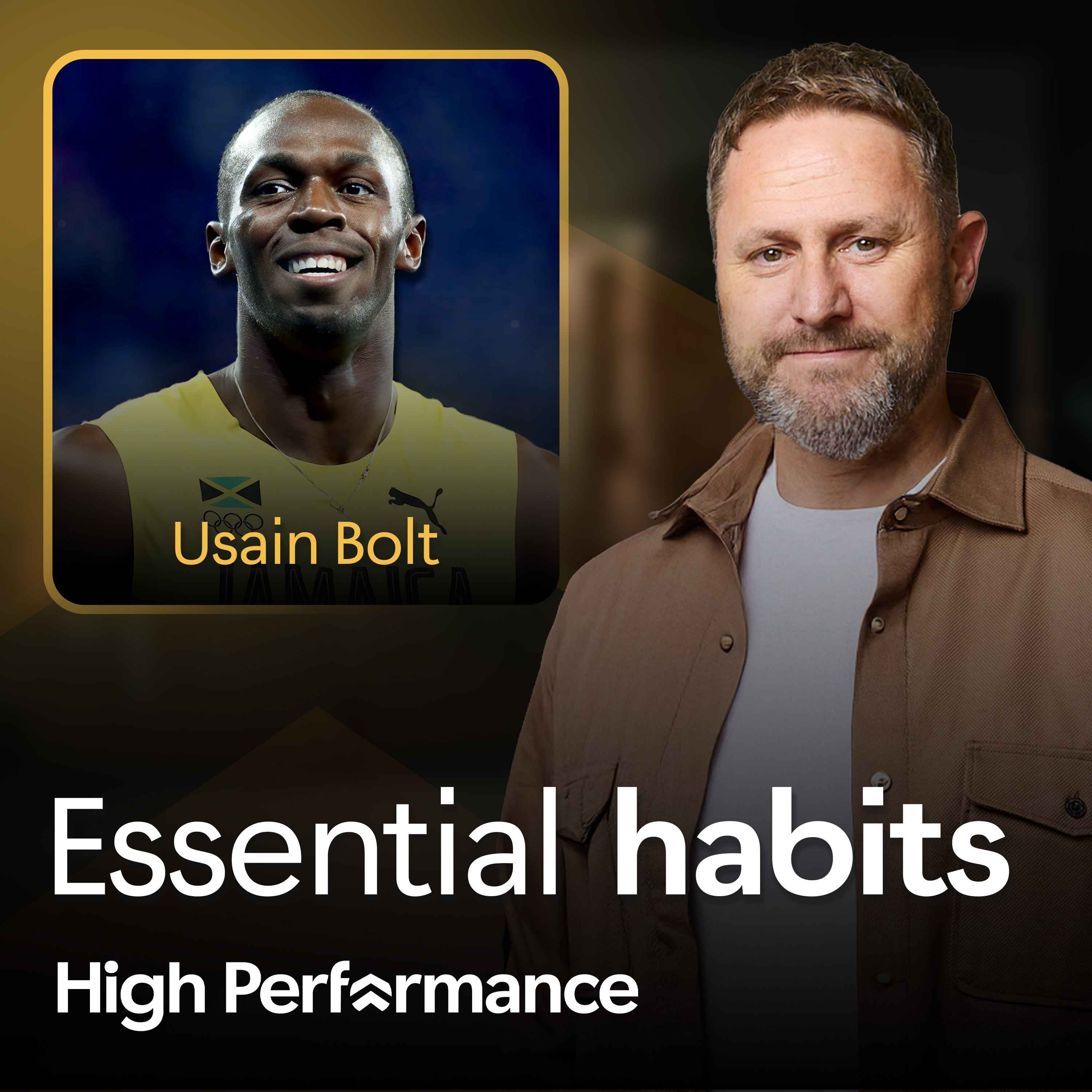
The Defining Moment That Changed Usain Bolt's Approach to Failure
In this episode, Usain Bolt reflects on his journey as an athlete, focusing on how his initial failures shaped his eventual successes. He emphasizes the importance of learning from loss and how a pivotal moment at the 2004 Athens Olympics influenced his mindset towards competition and growth.
Written by AI. May contain mistakes.

Get the gist, explore an idea or ask about something said.
 Claude
On The High Performance Podcast, what are the key points of this episode?
Searching your listeningAutomatic transcript. May contain errors.
0:28Watch it early on the High Performance App. Right when you need them. Work smarter and faster with Upwork. Go to Upwork.com now and find your freelance expert. That's U-P-W-O-R-K dot com. Post a job for free and get started today. Come to DSW for the shoes. Stay for the fun. Because let's be honest, if shoe shopping isn't fun, are you even doing it right? So go ahead. Try something new. Try something different. Good different. Try something that feels like you. You know, the real you. And then definitely brag about it later. because at DSW, you've got unlimited freedom to play. With sneakers, boots, and everything in between for every style, mood, and occasion, you'll definitely find shoes that get you at prices that get your budget.
1:10DSW, let us surprise you.
1:15This episode is brought to you by Opera Air, the first browser with mindfulness at its core. Now, most of us spend hours every day online, but how often do we pause to take care of ourselves whilst we're doing it? And that's where Opera Air comes in. It's a lightweight, fast, secure browser built not just for productivity, but for your well-being. With Opera Air, mindfulness is built right in. You'll find free breathing exercises, guided meditations, and soundscapes with ambient sounds, lo-fi music, and binaural beats, all designed to help you focus, relax, and even spark creativity while you browse.
1:52You have to learn how to lose before you can learn how to win. Welcome back to the Essential Habits of High Performance, a place where we explore the daily practices that shape extraordinary lives. Now, when we think of Usain Bolt, the images that spring to mind are obvious. The lightning bolt pose, the 9.58 second world record, the swagger. But when we sat down with the fastest man alive, he wanted to talk about something else entirely. Not winning, but losing. And what struck me most was this The man who made victory look effortless Who could jog through finals that others sprinted desperately for Told us that his entire career was shaped by defeat And his essential habit?
2:41Learning how to lose before he could learn how to win I'm Damien Hughes and for over two decades I've worked with elite teams in business and sport because above all, I'm someone who loves exploring how high performance works and most importantly, how we can all take the lessons from our guests and apply them into our own world. Usain Bolt will go down in history as one of the greatest athletes of all time. From the age of 15, he was thrust into the spotlight, expected to dominate and he wasn't short of confidence. I think when I started out, it was... I didn't understand the concept of being great.
3:23You know what I mean? Because I was young. When I started out, I was 15 when I won the World Juniors. I was really young. I was really talented. So I didn't have to work as hard. It was just talent. So I was winning and winning and winning. That word, talent, it came easily. And so did the victories. Until suddenly, it didn't. By the time Usain Bolt arrived at the 2004 Olympic Games in Athens, he thought the pattern would simply continue. He'd done well at the Jamaican trials. He was confident. But when he came up against the world's best, he didn't even make it past the first round. If you didn't follow my career, a lot of people did not know that I went to the Olympics in 2004 in Athens.
4:06And for me, I was going to that season okay. and I thought I was ready as always. Because of my talent, I was like, yeah, I'm doing well because I did well at the Jamaican trials. And then you get to the Olympics and you meet up with all these guys that have been training all year round and been dedicated to their craft. And I didn't even make it out the first round. That was a little bit of a wake-up call to say, listen, you have a long way to go because if you can't make it out the first round at the Olympics, and there's three more rounds that show how far behind I was. It was a lesson that talent alone wouldn't be enough.
4:48Now, we all know that losing can hurt. It always does. Our instinct, though, is often to protect ourselves, to find excuses. But realise that. I want you to listen out for one particular word that jumps out in what he says next. No one wants to talk about their failures as much going on, But I, over the years, I understand that that's what helped me to get better. Because if you can be truthful to yourself, if it's one thing I've learned, if you can be truthful to yourself, that's how you get better. Spot it? That word, truthful. Too many athletes and leaders often look outwards when things go wrong.
5:32They're quick to blame the conditions, the referee, their colleagues. But instead, Usain Bolt learned to look inwards. This is all on me. I needed to work hard. I felt like it was easy. So it's something that really helped me to get better throughout the years. The turning point came when he began working with Glenn Mills, one of the great coaches in the world of track and field. Mills gave him a short, sharp reality check. He kind of sat me down and explained that, listen, everybody who's a professional has talent. So it's who works the hardest on their talent that will be the best. At the 2007 World Championships, Bolt won silver, and he thought he'd done enough.
6:18He went to Coach Mills and he said, I really tried, I really worked hard. But Mills wasn't convinced. He told Bolt this. You didn't work hard, you didn't go to the gym every day. You missed a few days, and he would tell me, like you missed a couple of days throughout the year and it adds up to a month or it adds up to six weeks. Then came the sentence that would transform Usain Bolt's career. You have to learn how to lose before you can learn how to win. He was baffled at first. Why would I want to learn how to lose? But over time, he got it. Losing was feedback. It was data. It was the truth staring straight back at him.
7:00Here's why this stuff matters Not just for Olympians, but for all of us Science shows that losing triggers a stress response Cortisol rises and testosterone drops We feel anxious, cautious and hesitant It's why teams on losing streaks tend to spiral It's why in the animal kingdom Losers literally lose rank and status While winners become more dominant As Will Storr, the author of the brilliant book The Status Game, explains, defeat threatens our sense of status, the way we measure ourselves in dominance, success and virtue. And when our status feels threatened, we tend to defend, deflect and deny.
7:44Coached to some of the world's top endurance runners in the world, Steve Magnus, puts it bluntly. He says, after a loss we often delude ourselves to protect ourselves. the bigger the game the more likely we are to default to protection posturing and deflection does that sound familiar that meeting where someone blames the client the athlete who blames the weather or that inner voice that whispers inside your head it really wasn't my fault but here's the thing protection doesn't help you to grow truth does so how do we do what Usain Bolt did. How do we turn losing into learning? Bolt's story and the research gives us two steps to follow.
8:29Step one is surround yourself with truth tellers. When professional rugby players took part in a fascinating study, researchers monitored their hormonal responses during post-match reviews. In one condition, the debrief was brutal, where every error, every missed tackle, every poor decision was replayed and dissected. The result? Players' cortisol levels spiked. Now cortisol is the body's primary stress hormone. It makes you hyper alert but it also makes you anxious, cautious and reduces your creativity. In the days that followed these rugby players' performances actually dipped. In the other condition however the same players still reviewed mistakes but they also spent time identifying what went well.
9:16Good tackles, clever offloads, brave decisions made under pressure. This small shift created a different hormonal cocktail where testosterone increased. Now that matters because testosterone is what fuels confidence, resilience and the willingness to take on the next challenge. These players didn't just feel better, they actually played better the following week. Now the lesson here is a simple but profound one. After a setback you don't need someone to come along and crush you with negativity but you do need people who can hold up a mirror to your strengths as well as your weaknesses. Now that doesn't mean sugarcoating the message or drowning you with toxic positivity.
10:00It means delivering balanced honesty. It means saying to someone, yeah, here's what you need to fix, but also here's what you did really well. Here's the evidence that you're moving in the right direction. Because when all you hear is failure, your body and your brain shut down. But when you're reminded of your competence, when you're lifted up as well as challenged, your perspective widens, your confidence grows and your performance improves. That's why Usain Bolt was right when he told us about surrounding himself with people in his corner. High performance isn't just about talent or even your work ethic.
10:39It's all about the environment you're recovering after you lose. Bolt put it simply. It's always important to have a great team. Somebody you can lean on when you make mistakes or when you need motivation because we had one goal and we all were working towards that one goal. Step two, adopt a growth mindset now regular listeners to the podcast will be well aware of the work of carol dweck's research at stanford university which uncovered something simple but profound the way we explain struggle to ourselves shapes our future dweck split students into two groups the fixed mindset kids who believed that their ability was set in stone they were given a series of puzzles to complete.
11:27But as they got increasingly hard, these kids tended to crumble. They thought, well I guess I'm just not smart enough and quickly gave up. They avoided risk and tended to shrink back from challenges. The other group known as the growth mindset kids, they thought differently. They believed that their ability could be developed. So when they were confronted with the same puzzles that got increasingly harder, they tended to lean into the challenge. They said things like, oh I love this, or I'll get this with a bit more practice. It was the same task with the same level of difficulty, but they had completely different reactions.
12:07And over time, they had completely different outcomes. The people who adopted this mindset not only perform better over time, but they also recover faster from setbacks. They stay motivated for longer, and they're more willing to seek out feedback. That's exactly the shift that Usain Bolt made, from raw talent that fizzled out to consistent greatness built on learning. So the next time you hit a wall, whether it's a failed project or tough exam or a missed opportunity, remember that mindset. It's the same mindset that helped transform a young sprinter who couldn't get out of the Olympic heat into the fastest man who ever lived.
12:49So what can we learn from Usain Bolt's essential habit of learning to lose? Well, here are three takeaways. The first one, be truthful with yourself. Don't deflect and don't blame, but instead ask yourself, what can I do better next time? Two, build your corner. Find people who give you support and perspective, the ones who remind you of what you're truly capable of. And three, shift from the fixed to a growth mindset. where you turn every failure into a work in progress. When we look at Bolt's medals, we tend to see brilliance, but when we listen to his story, we hear honesty, vulnerability, the willingness to say, my talent wasn't enough, I had to learn how to lose.
13:40And isn't that the real secret of high performance? It's not about never losing, but it's about learning to lose well. Because every defeat is either a setback, are a stepping stone. And the brilliant thing is, the choice is yours. Now, I'm going to be joined by our brilliant producer, Will, and we're going to have a listen to some more of the conversation with Usain, where he told us about how nerves impacted him before the World Juniors in Jamaica, how he didn't let a chronic back condition get in the way of his ultimate success, and the motivational power of his rivalry with Justin Gatlin.
14:21If you're still overpaying for wireless, it's time to say yes to saying no. At Mint Mobile, their favourite word is no. No contracts, no monthly bills, no overages, no hidden fees, no BS. I made the switch because I was tired of those ridiculous bills and sneaky charges from my old provider. With Mint, I'm paying$15 a month and getting the same high-speed data, unlimited talk and text, and coverage on the nation's largest 5G network. Honestly, the quality is just as good, if not better, than what I had before. And the best part, you don't need a new phone. You can keep your current one, bring your number, and all your contacts.
14:56I use Mint Mobile, and you should too. Ready to say yes to saying no? Make the switch at mintmobile.com slash HPP. That's mintmobile.com slash HPP. Upfront payment of$45 required. Equivalent of$15 a month. Limited time new customer offer for first three months only. Speeds may slow up a 35 gig on unlimited plan. Taxes and fees extra. See Mint Mobile for details. The market's uncertain, revenues tied, and hiring on hold. That's why results-driven companies are using Upwork to keep work moving. Go to Upwork.com today and start hiring proven freelance talent fast. No bulky overhead. No rigid long-term contracts.
15:37Just the right expert right when you need them. Work smarter and faster with Upwork. Go to Upwork.com now and find your freelance expert. That's U-P-W-O-R-K.com. Post a job for free and get started today. Come to DSW for the shoes. Stay for the fun. Because let's be honest, if shoe shopping isn't fun, are you even doing it right? So go ahead. Try something new. Try something different. Good different. Try something that feels like you. You know, the real you. And then definitely brag about it later. Because at DSW, you've got unlimited freedom to play. With sneakers, boots, and everything in between for every style, mood, and occasion, you'll definitely find shoes that get you at prices that get your budget.
16:18DSW. Let us surprise you.
16:25there was a lot of excitement around this episode wasn't there wasn't they just yeah we flew out to Orlando to go and spend this time with Usain and I actually had the privilege of getting on the same flight as him I was a bit I was in James Bond stealth mode remember there was a long planning session to get this you know to get this organized and then he was flying from Manchester which raises a few like have we got the right manchester is there a manchester somewhere else in the world which i think there is uh and then um uh you were just it was just like right whatsapp checks is he there is he on the plane how does he look like it was like your you were our man on the inside i was and i'd say what was really interesting about him so we i'd sort of saw him at check-in at manchester airport and then i've watched him sort of go in the lounge and and then sort of make his way to board the flight and you remember that story about marilyn munro i don't know if it's apocryphal or not but she was walking with a friend through manhattan and like nobody recognized her and a friend commented of i'm surprised you don't be recognized and she went watch this and it was almost like she turned on a charisma button and then suddenly everybody recognized it's marilyn munro there that was what it reminded me of seeing usain bolt that he almost wanted to be incognito as he was walking through the airport and getting on the flight.
17:47And nobody stopped. Nobody gave him... He was incognito in the airport. Right, yeah. And if I tell you that he was wearing a bright red tracksuit with his hood pulled up and, you know, like he's a tall guy. He's a huge, yeah. Imposing figure. Nobody stopped him. Not one person. And I know this because I was stood behind him at check-in, watched him walk all the way through passport control. And he literally went through with not one person giving a second glance to him. Wow. And then the contrast of when he turned up in Orlando and he was in full Usain Bolt megawattage mode and everybody's eyes were on him.
18:21It was a real fascinating observation. Yeah, and because you put things in place so he has security around him and walking in there, which by the nature of that makes people turn around and go, why is there a whole group of people surrounding a person? So it kind of attracts all that attention too, whereas he probably could just walk in and go up to his room and no one would be done the wiser. I thought he was such an engaging character as well because do you remember then he invited us to go in and just sit and have a chat with him and as soon as we did that and when I said to him, from Manchester, the conversation immediately turned on to Manchester United.
18:57Yeah. And he wanted to chat about the team. He had observations of what he felt was going wrong, where it needed to put right. And he was just a really, really engaging bloke. He was really nice, really engaging and you're slightly intimidated more. He's a global superstar and you know for us it was a really big deal it was episode 300 like we'd planned it to be this milestone episode we were out in florida just about the hurricanes were trying to stop us oh yeah forgot about that yeah yeah so it had all this drama around it and it was building up to this conversation on stage in front of thousands of people and he was just so honest and eloquent and just like kind it was it was a beautiful record yeah well i think that's the point that really sort of struck home with me was he got what we were trying to discuss and just brought in so many really powerful stories about it he wasn't glib he wasn't facetious he sort of wanted to go into depth of saying this is what i've learned and this is what i can pass on if we listen to a first story he told us about when nerves really took hold of him you know like you don't think of Usain Bolt as being nervous and yet he wanted to dwell on the Jamaican World Juniors, his first occasion of sort of competing on home soil in front of a huge expectant crowd.
20:18Let's listen to him describe how that was a real crucible of fire that helped him in his later career. Surprisingly, one of my greatest moments that I love is it was the first time I won in front of my home crowd. I think that made such a big impact on my life and helped me to overcome so much. When I won at 15 in Jamaica, in World Juniors, I think that in my career was so big. It might not seem big to a lot of people, but I was so nervous. That's a one time, like nerves to the point where I'm shaking. You know what I mean? I put the wrong shoe on the wrong foot because I couldn't focus. I was just so stressed and I said to myself if I can win in front of my home crowd that nervous that really set the benchmark for me show my years to be better so I feel like winning in front of my home crowd that was one of my proudest moments and one of my biggest moments that really helped me to navigate the world and to really get better at short time yeah why that clip's really great is because he says that's his like that's his proudest memory that's his proudest moment and you know this is he's obviously had so many pivotal moments in olympic finals winning gold like three in a row and these races and these times that we all remember so vividly but he's pinpointing a moment that was completely behind the outside of the world's view as one of the proudest things that he's done and that insight around it was just so beautiful why do you think that it resonated so much with him.
22:00We often say that phrase, that confidence comes from evidence. And I think that was probably one of the first times when he felt genuinely tested. You know, he described himself as being almost like naturally gifted from such a young age that he's probably just blazed the trail through and never really been tested. And then the first time he comes up against the weight of expectation, people expected him to win. People expected him to win in style. People expected him to look really good when he's doing it has really sort of challenged him. And the fact that he's come through that and still been able to win in a blaze of glory has then given the evidence that he is capable of dealing with nerves and setbacks.
22:42So I can see really why that was probably the launch pad of recognising that he had to go from just being purely prodigiously talented to then having to invest something in controlling his nerves, making sure he was regulating his emotions in a really effective way. Yeah, and I think, you know, he's obviously became famous for his intros and his fun, his fist bumping, the character he had later on, which he referenced in the episode, just that he was wanting to give back and he was recognizing the moment and how these people there were, you know, volunteers and he just wanted to, you know, relax and make them as comfortable as well.
23:20on it. But also, I think we sometimes we assume that people like that just have this, they just turn up and win. I know that sounds really flippant. But he really emphasized things going on behind the scenes and the hard work you have to put in. And it's not just turning up and running a race. And I know I've diminished it to a really simple thing. But I think he had that, like he was so talented, that you almost sometimes think that you don't have to work as hard. Well, picking up on that then, let's listen to this other clip. Something that I wasn't aware of when I did the preparation into his background and his career was that he was dealing with scoliosis, which is a back condition that would often cause him to feel real chronic pain and difficulties.
24:07And yet, the way that he chose to perceive that and relate to it is the sign of a champion. I had scoliosis, but we figured out how can we manage? what do I need to do to make sure I can compete with scoliosis and the good thing about it I found a doctor in Möller-Würfelder who's from Germany that really understood how to help me to manage and he explained if I did my back exercise my core exercise and I saw him on the regular it wasn't perfect we still got injured every now and then but it helped to manage was necessary. The moment you start using something to say, oh, this is why I'm not doing that, then you're always going to be behind eight ball.
24:54I never used that. I was like, you know what? Yes, I have that, but I still can compete. I still can be the best. And I didn't put, as I said, I didn't put limits on myself. You know what I mean? So I kind of pushed through the hard times and understood that if I worked hard and I managed my scoliosis right, then I'll be fine. I wasn't aware of that either. it wasn't something I think is actually really common knowledge and considering how you could really pull that out as something that might limit you and be an excuse even and he just didn't seem to really acknowledge that and put it in the public eye do you think it's more that idea of being defined by limitations or not letting your competitors know that there's a weakness?
25:37I think if you go back in the first half of the episode today We spoke about this brilliant book by Will Stoke called The Status Game, where he talks about how in the animal kingdom, and we are all animals as well, that we often define our dominance through our success and then we define it through our virtues or our values. And I think when we get beat, all three of those things can often get challenged, which is why we'll often make excuses and go, oh, the referee was bad or a loss because it was injured, rather than confront the reality of it. And I think that example where he talks about the scoliosis is a great example of how he understood that his status was about his dominance, his success, but also the values of I don't make excuses here.
26:22And I think that's a lesson that any of us can learn. You know what I mean? That it might be if there's kids listening to this and, oh, my teacher's no good. Well, you're suddenly making excuses rather than how do I get the best out of that teacher? you know if we've got a boss that we're not getting on with well how much have you invested in that relationship yourself rather than just waiting for them to do it that no excuses mindset can be adopted by any of us at any time in any situation is there a clip you want to listen to will yeah funny because you mentioned like you know getting beat and actually the last clip relates to the you know the person he actually lost to i guess i think in his last race in the world championships i know and he was at the tail end of obviously his career here um but it's around his rivalry with justin gatlin and you know do you remember how he was i think he was struggling for motivation but he tells you of a poignant turning point of when he knew that actually that competitive edge of him and that love of being like chased down really like like came to the forefront so yeah let's listen to how he described uh when uh justin gatlin spiked his attention with a little snotty remark you want to win so bad like with me i want to i've always won to win and that's what drives me my competition this is one thing i remember in 20 in 2016 um it It was coming up to my last Olympics.
27:52And my biggest competitor was Justin Gatlin. And shortly here, I was struggling with motivation because I had won everything. You know what I mean? And it was at the end, and I was like, going to training, and the older you get, the harder it gets. And I was like, I was just tired, and I was, every day was work, and I got injured, and it was double the work. So for me, it was hard to motivate myself every day. And I remember watching a video that he was on a podcast at the time and they were saying, oh, are you going to win? And he said, yeah, I'm going to win. And they were going to go on a tour around the world with gold medals.
28:39And that, for me, did it for me. It lighted a fire and I was like, yeah, you're not going to win. So it kind of lit a fire. That's how competitive I was. If I probably didn't see that video, it probably would have been different. But I saw that video and it helped to motivate me to say, all right, you know what, I need to get to training. I need to do this because there's no way I'm going to allow him to beat me. So that's how competitive I am. Oh, I love that. I love that. I think what that to me captures is that any high performer, you're almost defined by your competition. You know, you think of Federer and Nadal, Ali and Frazier or Senna and Prost.
29:16They've almost been defined by each other. they pushed each other on you know we've seen it in the tennis now with Alcaraz and Sinner I read something recently the Latin conjugation of compete is that it's something about lifting each other up and I think great competitors can lift each other up to new heights you can challenge each other to break the limits of what you think and I think would Usain Bolt have been as incredible as he was if he didn't have these rivals like Justin Gatland that were prepared to take him on and challenge him and, you know, almost test his own limits. I think that's a really great example.
29:55Yeah, and you're so right. I mean, we love watching it, don't we? And, you know, you will these kind of moments to happen, these defining sporting moments, just like those Sinner and Laudcaraz things are playing out right now, and it's just so close. But do you think there's a shift in the motivation of an athlete or a person where they actually look for more extrinsic things later on, or whereas at the start it's more intrinsic, how, you know, I want to be better, I want to be the best, I might want to break world records or win medals. But as time goes on and you achieve these things, do these external motivators, like someone doing a snide remark, or how do you get yourself up for it, basically is what I'm saying.
30:37Yeah, well, do you remember in the Last Dance documentary where Michael Jordan was sat there and he would make up slides from somebody, that like he'd believed that somebody had been rude to him in a restaurant or somebody, a coach had made a comment about him that had never, ever been said. But he almost had to have that personal enmity that would fire him up. His competitive juices could only get going when he felt it was sort of some personal test or slight that he had to avenge. I think for guys like Usain Bolt, I think once you've sort of, you've done your three Olympic gold medals, you've set the world record in two different disciplines like where else do you go you're at the top of the mountain so now you are looking for what's going to fire me up to go again and I think it's a really really interesting area that doesn't often get talked about but actually is really powerful yeah I loved it it was a real highlight just for us as a team as well to be out in uh you don't get those opportunities to be out in Florida with a superstar like that and you know it will be long go down as one of my favourite memories of high performance.
31:47Yeah, me too. But I think the overall message that we associate Usain Bolt with gold medals and world records, and yet for him to be humble enough to come and talk about, no, no, you need to learn how to lose. All that stuff's interesting, but it's the learning to lose that's the most powerful habit that he shared with us. Because, again, I'm going to quote one of our other guests, Greg Hoffman, the former chief marketer at Nike, failure is the price of ambition. So if we're going to go after high performance however we define it, failure is baked into the process. So you're saying to a bit of, you better learn how to do that effectively.
32:26It's something that we can all use and adopt in our own lives. So listen, thank you for joining us today on the essential habits of high performance. If the episodes resonated with you, please consider sharing it with someone that you work with. you live with or that you love. I'm Damian Hughes, and until next time, keep building the habits that make a difference.
33:11and functional when I need them the most. So where do you wear your figs? On shift, on call, on the couch in the break room, listening to this podcast, wherever it is, they fit right in. And now listeners of this podcast can get 15 % off their first order. Just head to wearfigs.com and use code FIGSRX at checkout. That's wearfigs.com, code FIGSRX.
When most people think of Usain Bolt, they see the medals, the world records, the effortless dominance. But his journey wasn’t built on winning, it was built on losing.
At the Athens Olympics in 2004, Bolt crashed out in the first round. It was a painful wake-up call, but also the turning point of his career. With the guidance of coach Glen Mills, he learned the habit that would define his legacy: “you have to learn how to lose before you can learn how to win.”
In this episode, I share what I took from Bolt’s story about truth, resilience, and growth.
Together, we explore:
Here is more information on the studies referenced:
Listen to the full episode with Usain Bolt: https://pod.fo/e/279623
Hosted on Acast. See acast.com/privacy for more information.


