
 Ask ChatGPT


 The High Performance Podcast
18 May 2026 · 1h 5m · 28 chapters
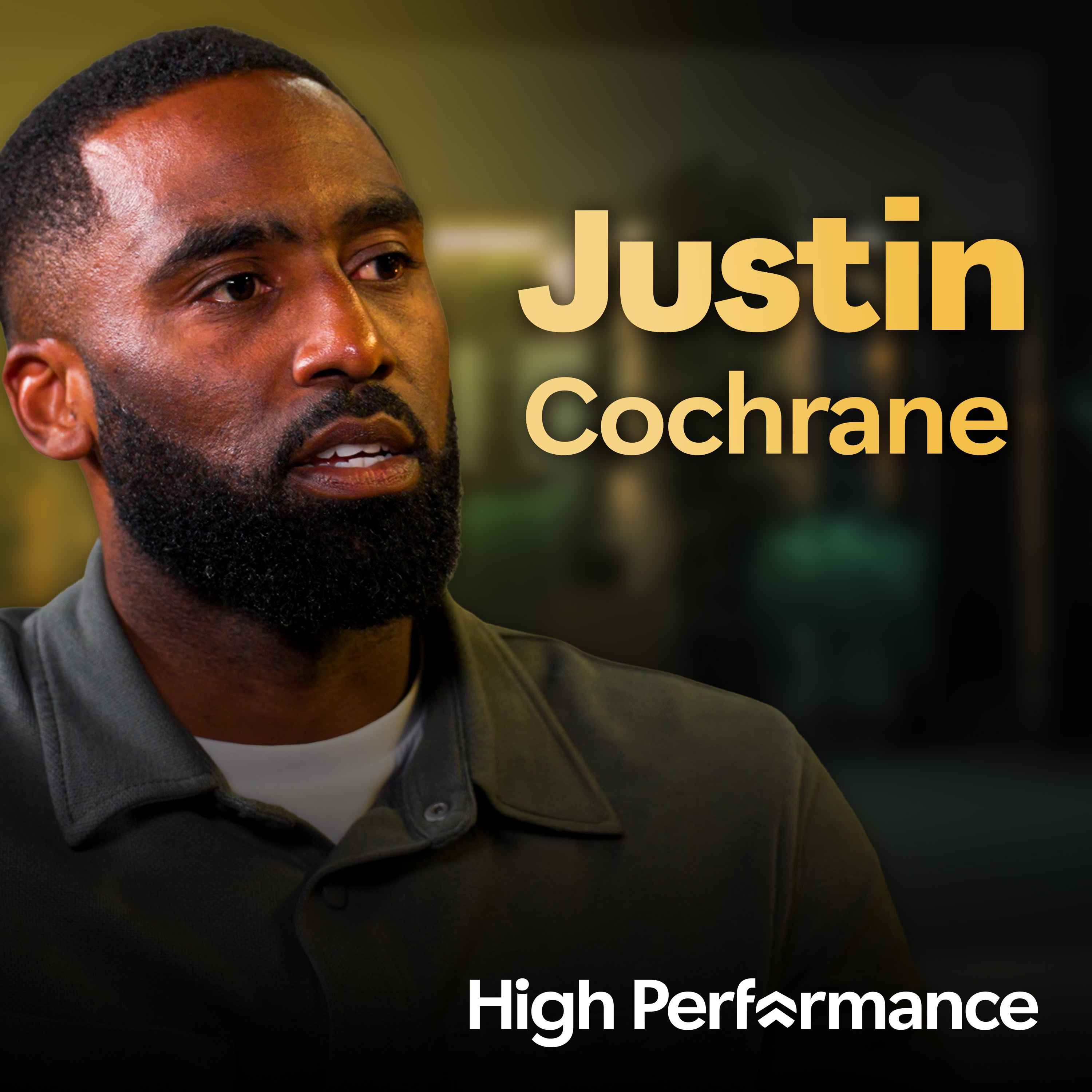
Justin Cochrane, England’s World Cup ’26 backroom coach, describes carrying personal grief after his wife Leanne’s death from anaplastic thyroid cancer (she died Nov 2024) while continuing elite football work, coaching youth-to-pro development, and managing emotions and resilience.
Justin Cochrane is an England coach and former youth football coach/player. He worked in youth football at Manchester United, Tottenham, and England, and later joined Brentford’s staff. He became an England assistant coach under Thomas Tuchel and also worked at Tottenham (with Thomas Frank).
High-performing environments come from connection, rapport, trust, vulnerability, and enough challenge plus support. Coaches should guide young players and help them build life skills beyond making the first team. Grief coping involves letting emotions exist, using routines, therapy, and “filtering noise” to keep performing. Football can function as “medicine” during trauma.
He told Brentford players his wife had cancer; the club supported him with flexibility. He told his sons “mummy might die” (hospice guidance). He says the first real joy came when England qualified for the World Cup.
Written by AI. May contain mistakes.
Justin shares the shocking news of his wife's cancer diagnosis and its impact.
“Justin, welcome to the show Thank you for having me So look, you're part of Thomas Sewell's backroom team as we gear up for a World Cup.”
Discussion on building supportive environments in youth football.
“about mutual self-disclosure where you reveal a bit about yourself and then when people feel safe enough they'll reveal about themselves and gradually people move closer to each other.”
The significance of building trust and connection with players is explored.
“I'm interested in, for those that haven't met Leanne, tell us something about what made her so special and unique.”
Justin reflects on his relationship with Leanne and her unwavering support.
“And she made me get to where I am now without doubt.”
Justin discusses the emotional turmoil of dealing with Leanne's illness.
“There's going to be further scans, further tests.”
Justin reflects on how to communicate difficult news about illness to children.
“when did you know to let go of hope and face reality at times?”
Learn how to cope with overwhelming feelings during difficult times.
“you just work yourself into a feeling that you can't really digest almost.”
Discover strategies for discussing illness and loss with children.
“I think it was better doing it that way rather than maybe lying and then Leanne was no longer here.”
Understand the importance of honesty when dealing with serious family issues.
“Because you feel like you can give them more information, but you don't want them to have to carry stuff that they shouldn't be carrying.”
Explore how support from family, friends, and colleagues can aid during loss.
“She was just thinking, what would be best for you and what would be best for her boys?”
Learn about managing work responsibilities while dealing with personal tragedy.
“continue to work yeah i went back to after leanne passed went back to work probably three weeks so and before like while leanne was ill you continued work yeah did you did you tell them what was going on at Brentford?”
Understand how a supportive work culture can help employees cope with personal issues.
“And yeah, the players, like I said, they were fantastic.”
Discover how to build resilience in the face of overwhelming grief.
“I think you'd have to say Thomas, Phil, Matthew Benham.”
Learn techniques to maintain daily routines to cope with grief effectively.
“so just keep going and one of the messages was she said But in true Leanne and just in fashion, we get on with stuff.”
Learn about a three-step process to cope with grief and establish a daily routine.
“That helped me get through the days in terms of routine.”
Explore how to navigate grief while maintaining responsibilities and parenting.
“It sounds like the advice from the therapist that you worked with after Leanne passed away was almost giving you freedom to feel everything that you needed to feel, not trying to control stuff.”
Understand the challenges of balancing personal grief with professional commitments in football.
“I think you're absolutely right in that.”
Discover how emotional resilience can enhance performance in high-pressure football environments.
“And Leanne passed away at the end of 2024.”
Learn how to reclaim joy and perspective after experiencing profound loss.
“So I'm able to deal with maybe a defeat and then maybe okay, now we've got to go again.”
Explore Justin's experiences at Manchester United and Tottenham, and his personal growth as a coach.
“So your reputation within your world is for what you can do and how you can make people better.”
Discuss Justin's decision to join the England coaching staff and its implications.
“He said that would be a good fit for both me and for the national team.”
Insights on creating a winning team culture and the importance of vibe in tournaments.
“So would you describe the process then of how, when it comes to the England team, maybe Thomas sets an intention of this is how I want to play.”
Learn how player selection goes beyond talent to team dynamics.
“Of course you'll have the talent to play and be effective in your position.”
Discover strategies for navigating grief and supporting oneself.
“We have some ups and downs in terms of feelings, but we're learning how to navigate them more so now.”
Hear valuable advice learned from personal tragedy and resilience.
“What's the best piece of advice you've ever received and why?”
Understand the key behaviors that define high performance.
“I probably started learning how to learn when I was early 30s.”
Explore the role of vulnerability and support in coaching contexts.
“thank you final question how is it in the world that you're in, even in 2026, after everything you've been through, to be a coach at the top level of the game and still be vulnerable like this?”
Learn the importance of empathy and understanding unseen struggles.
“and you have a personal tragedy, the club puts its arm around you.”

Get the gist, explore an idea or ask about something said.
 Claude
On The High Performance Podcast, what are the key points of this episode?
Searching your listeningAutomatic transcript. May contain errors.
0:03This week on High Performance, the England coach carrying personal heartbreak all the way to the World Cup. If there was a life going well scale, from 0 to 100, I was in the mid-90s, everything was going well. I signed a new contract at Brentford, my three sons, it was just beautiful. I got a phone call to say, it's come back as cancerous. There was like two existing emotions at the same time. one of hope, okay we're going to beat this and one of reality that the statistics say that is unlikely you live past 12 months and Leanne just come in and said mummy might die the truth is mummy might die but you've got each other you've got the best dad that can take care of you and it was the worst day of my life
0:49Justin, welcome to the show Thank you for having me So look, you're part of Thomas Sewell's backroom team as we gear up for a World Cup. How are you feeling? Yeah, just extremely excited, looking forward to the 1st of June when we fly out and looking forward to going with the team on this World Cup journey where, fingers crossed, things go our way, maybe we have an opportunity to win some silverware. That'll be very, very tricky, very tough, but ultimately just looking forward to it. And you're a guy who built your career work in youth football after your playing career finished. you were involved at Manchester United, at Tottenham, at England, at youth level.
1:25When it comes to creating environments where people can be honest, can open up, can give their best, what is the secret to an environment of success like that, a true high-performing environment, do you think? Yeah, I'm not sure there's a particular secret, but I do think that creating the right type of environment for people to be themselves, people to thrive, for there to be enough challenge, that there's been enough support is really important, especially for young people. Young players predominantly in youth setups, you need to help direct them, you need to help guide them. And the environment is what creates that, I'd say.
1:59So when you do that, what are the essential elements of that environment? I think, if I think about myself and the clubs I worked at, I think personally it's being able to build a connection with the players and build rapport and a relationship, not a friendship a relationship where they trust you where you can guide them where they believe you but also in that relationship and that connection you can start saying okay well maybe you need to do this or you need to work a bit harder you can kind of guide their steps I think you've got to make sure it's not a friendship where you're just trying to be nice but by building a relationship making it making the player understand that you've got their their progress at the centre of what you're thinking about really helps them and it builds that that connection needed to help players develop So there's a psychologist called Arthur Arons who specialises in sort of looking at how you build connections and he talks about mutual self-disclosure where you reveal a bit about yourself and then when people feel safe enough they'll reveal about themselves and gradually people move closer to each other.
3:02How much of yourself do you reveal because I'm conscious of that idea of not trying to be friends but you still want to be to have that connection? Yeah I think as a coach I've always shown vulnerability I think I think that I always spoke about my journey I played a lot not a lot I didn't play many games, but I played in the lower divisions. I made a lot of mistakes. I probably didn't connect enough with some coaches. Probably thought I knew best and my career was quite short. So I shared these stories with the players. I speak to them about my experiences and about how also football, when you work in academy football, it's not just about producing players for the first team.
3:36Likelihood is that they're not going to make it. Likelihood is not going to be a professional at the highest level. So what skills can you help teach them that can help them navigate through life and through sport? and football in particular there's lots of things you can help young people with lots of topics subjects you can help young people with that'll actually help them if they don't have a life within football One of the things that football often does right is it loses a sense of perspective fans footballers coaches the media you know they obsess about things that maybe in reality we shouldn't obsess about and you have had something happen in your personal life that I think probably puts the game into perspective are you you happy to talk about that yeah jake for sure i'm happy to speak about it and hopefully something i say may help some people that may have suffered or suffering at the moment well let's talk then about leanne was it love at first sight oh good question was it love at first sight she actually turned me down the first first time we met we'd known each other we grew up in the same area and i was 17 or 18 when i first met leanne and we were friends for a little while but Then I went and played football.
4:42I moved up north. I didn't see her for probably 10 years. And then I happened to be at Notting Hill Carnival and I saw Leanne as I was walking through the crowd of people. Managed to stop to speak to her. And then from there, we went on a few dates. And yeah, they're fond memories. And we got together after that. How early in the relationship did you know that she was the one? Yeah, I think I did. I think I did. I think I was at the right age to be ready to commit and to be settled. I was back in London. I'd played football all over England for a bit and I was probably back in London, settled playing, settled coaching as well.
5:20I just started coaching at Tottenham. And then when I met her, I knew after the first few dates that she was the one. She was a very, very special woman. Hold on a minute. You're saying you were ready to commit. I think we've got to be clear here. Leanne is the one that had to commit because if you're going to go out with someone or marry someone that's in football, you're moving house, you're moving clubs, constant sackings, constant uncertainty and in that world of uncertainty I'm so interested in what she did for you Do we have two hours? We don't have two hours, no At the early stage of course it was just getting to know each other It was towards the back end of my playing career I was transitioning into non-league and back more coaching So I was settled in London and yeah from that time and up until she left, she was just an incredible woman, incredible support for me she was my number one supporter of course she was my my wife she was she took care of the home she looked after the boys she allowed me to progress and chase my dreams which was in football and of course a wonderful mother to my three sons so she was just she was tough she was resilient but she was also caring she was kind and yeah selfless in in in in everything she did yeah so when you you've described a lot there of what she did.
6:40I'm interested in, for those that haven't met Leanne, tell us something about what made her so special and unique. What were her characteristics? I think, especially when she had our first son, she made mothering look easy and she took it in her stride. And I felt that she was able to handle everything that was going on in terms of becoming a mother, raising a home, sorry raising my sons creating a home creating the right environment for me to thrive and also letting me focus on my journey and becoming becoming a better coach so yeah I'll just describe her as selfless but also always had a smile on her face brought people together there's so many so many descriptive words I could use um but yeah just she just changed my life in terms of being a single man to then being with Leanne and being a married man.
7:37My life just changed totally. And she made me get to where I am now without doubt. We'll be right back after a quick word from our partners.
7:49Justin Cochrane: Here's a tip for you. There's a podcast out there with fans waiting to be your next customer. They tune in every week. They trust the host. And that host wants to talk about brands like yours in their own words to their audience. The problem is, you just haven't been introduced yet. We're Acast, where that introduction happens. As the world's largest podcast marketplace, we let you browse shows, see who's listening, and book host-read sponsorships or run your own ads all from one platform. Transparent pricing, real-time data, complete control. Start advertising on podcasts by visiting acast.com slash advertise.
8:32And so your career was going great, you were making inroads in the world of coaching, you had kids, you were happily married and then Lian got ill. Yeah, I have lots of different thoughts at times and if there was a life going well scale from 0 to 100, mine was in the mid 90s, everything was going well, I signed a new contract at Brentford. we just had was given nine days off during the season during January because the schedule allowed it we had a family holiday to Antigua everything was fantastic you know my three sons it was just beautiful we came back and then probably within a month Leanne had a growth on her neck that she was aware of but the doctor had thought it was just a goiter by the time we had the the assessments and the biopsy, they realized it was cancerous.
9:29And then in, I think it was mid-February, that's just when it just shocked my whole world. It just shocked my whole world when I got a phone call to say, from the ante, that it's come back as cancerous. Man. In all those years of being taught how to coach people and look after people and nurture people, suddenly you had a very real-world lesson here in you and Leanne being a team? Yeah, it just hit, of course. Your first thinking, your first thoughts, okay, like in football and life in general, okay, we're going to beat this. This is it. Another challenge. We've done well so far. We've been together 12, 13 years.
10:13We're going to overcome this. There's going to be further scans, further tests. But it just shocks you. It just hits your nervous system right in the centre. and it did us, but Leanne was so brave, so consistent, so able to deal with the uncertainty, the distress, without it affecting the whole family. She handled it in her stride and then of course there's further tests and then when you head the news that we heard in terms of the diagnosis of it being anaplastic thyroid cancer, which is a very, very aggressive cancer, which is the survival rate is very low over two years or over 12 months even.
10:53It was just like, I was just saying, it was just a bit of a blur, a bit of a daze. The diagnosis times that would have been April time after she had an operation to remove it. So yeah, just cancer affects so many. There's other people that will listen to this who are going through the journey or have been through the journey so I know when you get their news. Of course, there's further tests and you hear more devastating news. It actually rocks you and you can get into a bit of a blur or a daze. You've described Leanne as being selfless. How did she deal with this horrendous news?
11:29She, of course, she's upset and she's low and a bit of disbelief. But I think there are lots of people living with cancer. So we thought, OK, this might be something we live with. this might be something that we, that after a year or two we can overcome. So at the beginning stages, no, in fact, there's positivity throughout. Who's going to beat this? But when you hear the sad news, I mentioned previously that just before we came on, that at that time for both of us, there was like two existing emotions at the same time. One of hope, okay, we're going to beat this. and the amount of reality that the statistics say that is unlikely you live past 12 months.
12:16And the doctor at the Royal Marsden said that to us. So that when you get that, when that hits you, you're thinking, this can't be true. Especially where Leanne's symptoms, although she had a lump on her neck, by this time it had been removed, she was fine. She wasn't ill, she wasn't had any medication at the time. it was just you would never have known and for maybe four to five so from march till probably august you'd never have known because she lost a bit of weight but that was it but it's just dealing with it the two the two things co-existent at the same time the hope and the reality breeds a cocktail of emotions in your body that you find it hard to navigate sleep was tricky of course had to work at the same time sleep was tricky we both wake up in the night and be like you're awake yeah yeah, we were both awake speaking to each other.
13:09So, you know, it was this really tough time for the family, really, really tough time. And that push and pull of those emotions of hope and then sometimes having to face the stark reality, when did you know to let go of hope and face reality at times? And when did you decide to just cling on to hope regardless of what was happening? I think Damien, I think I learned to let both exist and just go with the emotion that was present, not fight with anything, not fight with, right, it's going to be this, or it's going to be that. I had to just let whatever emotion presented itself. A lot of the time it happens in the subconscious when you're half asleep or you just wake up in the morning, you're a little bit of dazed, or this is going to happen.
13:58I had to just let it play out because you fight against it, I found. you just work yourself into a feeling that you can't really digest almost. So I just, okay, whatever comes to mind, I'll let it come, it will show its face and I'll let it go and I'll get on with the day because ultimately it was out of my control. And what we wanted to do was not meet trouble halfway. So not just bring the trouble forward. So she passed in November 2024. but in May I didn't want to be thinking about November 2024 or whether that would be December 24 or January 25 I just thought we'd just deal with the present and control what we can control and all three of us here have got children I mean I don't even know how you begin to navigate this for your children who, you know, the youngest back then would have been what, five?
14:52Five, yeah five it was Jude How did the two of you work out how to present this to your kids? yeah this was a challenge we read some stuff about obviously in the hospice they give you handouts and things to suggest things but when it got really serious well the whole thing is serious but when Liam was really ill towards the end maybe a couple of weeks before she passed when they said there's nothing more they could do we told the children the full extent so the children knew mummy was ill they knew she had cancer but they didn't know the full extent so probably 10 days before she passed away Leanne we had probably an hour speaking about how we're going to tell the children and some family members just said maybe say you know mummy's a bit ill or this but we just decided to be really just honest and I started my words were trembling and Leanne just came in and said mummy might die the truth is mummy might die but you've got each other, you've got the best dad that can take care of you and explained, there was more to it but I just switched by then and the kids just, it was just the most, it was the worst day of my life just all my kids burst into tears, it was just incredibly, incredibly tough incredibly tough to tell the children but what actually happened was after that when they saw their mum, that it was likely their mum was going to pass away they could tell, especially my oldest because we had almost prepared him with the news.
16:31He was more accepted. I think it was better doing it that way rather than maybe lying and then Leanne was no longer here. And I was like, what's happened, Dad? So I think that was the best way. And even my son's sister, I said, I'm always going to tell you the truth. Remember, we said from this day, we'll tell you the truth. So I think the advice he was given from the hospice was the right advice. It's a real challenge, isn't it, with the oldest? Because you feel like you can give them more information, but you don't want them to have to carry stuff that they shouldn't be carrying. Such a hard balance.
17:02It is, but it was reality we were faced with and we have to make decisions in the moment. Like I said to my son at the time, I said, you know, this is something we have to face. This is something that will live with us, but it's something that we have a lot of support with and that as long as we keep communicating and we speak as a family. As your mum always said to you, there's three of you, you've all got your brothers, you've all got to stick together. And of course, I had a lot of support from family, a lot of support from friends, a lot of support from the organisations that I worked for at Brentford Football Club at the time.
17:43But lots of people reached out. So that support, it doesn't soften anything, but it knows that you've got people around you that care about you. And there's people that, so many people that helped me and also my children including the school including uh parents of of my son's friends so it's just yeah I was able to navigate a little bit better with that support and what did Leanne say to you about your relationship and the life that you had to continue to live did you did you have conversations about that yeah she did she just she yeah she i spoke with with rio a couple of times over text and because he had been through what i'd been through and i think leon and maybe i think together we'd watched his documentary years before and she always said that you have to get on with your life you have to go back to work you have to chase your dreams and if the opportunity came to to meet someone you should go and live your life and And she was just selfless in that.
18:46She was just thinking, what would be best for you and what would be best for her boys? So she was just really adamant that I'd continue and live my life. And yeah, we had so many conversations about how to look after the boys, what she would want, the support she needed from the other family members. So she was very open. I think that Leanne accepted towards the end, she accepted what was coming to her and thought, okay this is coming my way i'm going to try and put this this this and that in place to maybe help she sounds incredibly brave she was without doubt jake honestly like just incredible when i think about it now left notes in the phone to me you need to do this you need to do that this is for this son this is this give that to my sister give this to my to my mom you know just it was it was incredible is there any note that you still go back to i've got the more i've got the more damon notes for the boys when they're older stuff it's a message a long message to me um yeah just lots of stuff every now and again you look for a bit it's heavy it's just stuff it's heavy to even discuss and to feel but it's it's important that we we unpack it and throughout this time did you continue to work yeah i went back to after leanne passed went back to work probably three weeks so and before like while leanne was ill you continued work yeah did you did you tell them what was going on at Brentford?
20:11Yeah I spoke to them so yeah so when because when Leanne was ill she wasn't it was for a large part of the nine months she survived after diagnosis there was no symptoms so she continued to operate as normal she was she was fine so I told staff at the staff at Brentford I spoke to the players at one stage because I was missing days to go to hospital appointments and the players I remember standing at the front of the players at Brentford at training ground and just seeing their faces just in total shock because it's a family club, family people, top players, top environment, top culture. And they were just with me.
20:45They were just supporting me with me. They were just with me all the time. So I felt that support, that helped. But also football helped me escape what I was going through. I get a passion and fulfillment from being on the football pitch. So going out every day, putting the mannequins in the grass, setting the pitch up, designing the training sessions, executing the training sessions, That gave me my fix, my high. It enabled me to escape a bit from what was going on in my life. Football, though, can also be a world where vulnerability is not something that's often at the surface. Yeah. How did you make the decision that you were going to speak to the players as a whole, as a collective?
21:26Did that come from Thomas Frank, or was that your decision? Yeah, it was a bit of both. Thomas left it up to me. We had numerous conversations. Yeah, I can't remember exactly how we decided, but we said we'll speak to the players. And I went up to the meeting room and just explained the situation. I might be missing some days. I've got to go to the appointments. My wife's got cancer.
21:51And yeah, the players, like I said, they were fantastic. But yeah, the type of club Brentford are, the people, family's always first. Thomas has always said that. But the whole club just come around, how can they support, whether it's Phil Giles, whether it was the owner who messaged me. Everyone was just so supportive and understanding. So if I needed to leave early, it was no problem. If we travelled to an away game the night before, I could go in the morning and meet the team at the hotel or at the stadium. If I needed extra time, I could take extra time. So they were so supportive of what I was going through.
22:26It reminds me a little bit of when we interviewed Sia Khaleesi, the South African captain of the rugby union team, and he spoke about this. He wanted to preside of a culture that in the Zulu phrase is Ubuntu, which is I am because you are. And he spoke about that vulnerability of people talking about loss or bereavement in their world actually brought people closer together. I don't know if you would be able to judge that when you shared the information about what you were going through, do you think it made a tangible difference in that dressing room? I think that when the Christian Orgott spoke at the end of the season in front of the players and he really he spoke really highly of me he said for Justin to go through what he's been through and still being able to perform still being able to support us still being able to coach us still being able to lead his journey that is something that brings us all closer I felt like maybe that that may answer your question but I do I'm not sorry we brought anyone close or anything, but I just felt like caring about each other is at the centre of what Brentford Football Club's about.
23:38And I think the captain represented that at that moment of time. And I felt supported. I felt like, okay, these guys, I can be myself. If I need to burst into tears in the corner, I can. And I was happy to speak about it as well. I felt like I didn't want it to be a subject that we couldn't speak about. So people say, how's your wife? and I'd say, okay, she's here, so we're doing that. So I felt like that club, the environment of that club is open and people, I felt comfortable speaking, basically due to the people that work for the club. And how much of that environment is down to what Thomas Frank created?
24:14I think you'd have to say Thomas, Phil, Matthew Benham. I think they've created that type of culture where they've been together a while before Thomas left for Tottenham. Thomas I think had nine years nine years at Brentford so he had an opportunity to build something there and he built a culture that people wanted to come to work people felt together Phil Giles wanted the club to feel like one there's not much separation between the academy and the first team it was like everyone's together everyone's in the same building everyone eats together there's no you can't walk over this part of the building it was just like that open type of environment where everyone could be themselves celebrate different celebrate a diverse working group it was just a real a real pleasure to work and to go to i think sometimes we look at environments like that and we do question like is there a value in this does it does it really matter and then when someone's going through what you are in your personal life yeah you then realize actually why an environment like that is is so incredibly important um and as you've mentioned this isn't something that leanne was able to survive and eventually cancer did take her life it sounds like at the very end though she was still reminding you what a great guy you were and that you were well equipped to look after those children yeah so she made that clear in the video she said you're the best person to make decisions for the boys you're the best father for these boys you're the best husband I could have wished for so just keep going and one of the messages was she said But in true Leanne and just in fashion, we get on with stuff.
25:57I know that sounds a little bit, I don't know, a bit direct. We just can't just get on with it. But I had to keep going. I had to keep going. I had to put my right foot in front of my left foot and find a way to navigate this tragedy for myself and for my sons. Like I said, I had all the support, but I wanted to just keep going. And, of course, I've been resilient all my life, but I thought this builds a new level of resilience. Yeah, and I just found a way. I found a way in the early months to just, it was a bit of a daze, a bit of a blur. Sadness was present everywhere. It was almost like, you can't see this in the podcast, but it's like wherever you try to look and turn, the sadness was right there in front of you.
26:44So I had to find a way. I got counselling, I got therapy, which was amazing. Really helped me. And I almost built tools to try and help me get through the day. But initially, as you can imagine, I took on the role that Leanne played. So I went from Leanne maybe doing 80 % of the boys in the home and the school. So now I have to take on this role. So it's almost becoming mother and father in one. But I was fortunate enough to have my parents, both retired, who live a mile away, they're separated, but they live close to each other and close to me, who come and support Leanne's mum, who only works three days a week.
27:22she was able to come and support so I did the support from the family immediately and then being in the position I was I was able to afford to pay for a nanny who committed a certain number of hours a week to help with the school run help with the kids help with this and all that so we've got like a and she's a close family member so I had these these four main people who came almost to the rescue and just help lift keep me on my feet and help the boys routines may be maintained and when you cast your mind back to those dark days immediately following leon's passing is there any tips or techniques you can think about that did help you to be able to keep putting one foot in front of another it's actually one of the episodes i listened to it with mo gaudet i remember you listening to it years ago whenever you guys first released it and he said that he had like almost like a three-step process and i hope i get it right it was like is it true is there anything you can do about it can you continue despite his presence so I just used that whole the three step process let's call it, is it true yes it's true, she's no longer with us, anything I can do about it absolutely nothing you can do, she's not coming back unfortunately and then I have to continue despite it being there so I remember using that early on and then I got up every morning, I opened the blinds I made my bed, I thought that's one thing done or two things done.
28:51And I tried to exercise, I tried to go outside and do something, even if it was just light stretching and some body exercises, I had a walk bike at home, so I tried to get outside, get some fresh air, get the body moving. That helped me get through the days in terms of routine. Since then, I've built on that and do more deliberate stuff to help me be able to perform and do my best throughout the day whether it's work or personal no like what well just just moments of being still um just some breathing stuff some breathing techniques uh all this stuff i feel i've learned this with with counseling so i think i've always been someone who's a doer gotta get that done get this done get through that busy days schedules so it's agendas to-do lists got to get this do that got to make this good you know that type of person i just realized that sometimes you can't keep doing it, you've just got to be, sometimes you've just got to be still, you've got to just this is all stuff I've learnt, especially with the trauma and the grief, sometimes you've got to just take some time out just to be still, let the subconscious do whatever it wants to do let it bring all the crazy thoughts forward and then let them pass through and then you carry on with the day so try to have a bit of a morning routine that gets me prepared to go to work at the time when I was at Tottenham Artsburg but also just to navigate the full day when I was working and with my boys.
30:16It sounds like the advice from the therapist that you worked with after Leanne passed away was almost giving you freedom to feel everything that you needed to feel, not trying to control stuff. For someone whose life is about control, control the results, control the performance, control the training, it was about letting go, was it? When you lose someone, the initial grief is, grief can come in waves, but it hits you. if you tried to fight against it or even tense up, it just, you're not going to win. So I almost, in them dark moments, when Leanne was still here and when she passed up, when the mind was, the subconscious was going and, okay, you're going to struggle with your kids and how are you going to do that?
30:58And I just let everything play out in front of me and just accepted that this was thoughts flying around in my head. And everyone goes through stuff. Everyone got their own problems and issues. Everyone has maybe sleepless nights or waking up happens the mind is is playing tricks on him and the mind is telling them stuff I just learned to just live with what it was telling me not believe it all and get on with the day but I think that process of letting what was in the subconscious come out really helped me in terms of the grief the trauma and then able to process what I needed to do that day and what was the the right way do you think to parent your boys at this point it's a very good question i hope i'm i hope it is the right way but my job i said this at the funeral is to try and give them the best childhood possible yeah so when they're older they just say yeah dad you done well thank you so that's it so the right way is them being at the center of all my decisions so all my decisions based on is that good for my boy so me trying to become the best coach trying to become really successful trying to set an example to them modeling the right behavior being vulnerable speaking a lot I think I want to I want them to see how I am and think okay my dad's my dad's trying hard my dad's trying to do his best for us and have you checked in with them and asked them no I haven't checked I've asked them how I'm doing but we speak a lot and I know my sons are proud of me and I'm proud of them.
32:31I think you're absolutely right in that. One of the big challenges though is you're trying to do the right thing by your boys. You're trying to process your own grief. Knowing the kind of person you are in the short time that I've known you, you would have also been thinking about Leanne's family and her parents and your parents and brothers and sisters and everybody else, you know, trying to take care of everyone. Yet at the same time, the sport which has been your life, which is football, doesn't stop. Did you feel this sense of pressure that actually like there was also this other world which is moving forwards without you that you have to go back to at some point i didn't i needed that i needed that i needed that and during this sad time there's a lot of highs so once leon passed away of course it was extreme low extreme sadness present every day but brentford had a brilliant season the front players were doing fantastically well they scored 50 premier league goals between them.
33:28Things were going really well at Brentford. Top 10 finish was on at the time, so we were going for it. Got offered the England assistant coach's role. I played with Antti Barry. I knew Antti Barry for a while, and when him and Thomas Tuchel were appointed, that opportunity arose. That was probably late December, early January. So despite the sadness, there were some professional highs. And then in the end of the season, I get the opportunity to move to Tottenham with Thomas Frank. So though you may think it was going on without me, I was still at the pace that it was moving. I still managed to do both.
34:06The resilience I built, the tools I had, the support that allowed me still to operate and still coach well, still be there, still be present, be at every game, be with the national team. So in national breaks, people had time off. I was with the squad. So I just enjoyed football. Football was my... So you went to England and Spurs? I did England and Brentford first. Yeah. And then England and Spurs. And Leanne passed away at the end of 2024. November. And you took the England job? In February 2025. So only three months later, you're suddenly juggling two jobs, looking after the boys, processing your own grief as well.
34:44Yeah, with the support of all my family. But football is medicine. Football is what I love. Football is my passion. Football is what gives me that buzz. So when I'm on that pitch for an hour, an hour and a half, two hours, whatever it is, I'm totally zoned in on that. When grief hits you, it's not always, it's not sadness every single day. It's not tears every single day. You may have a good week. So I was fortunate enough to work at this level, fortunate enough to work for great people who helped me, fortunate enough to work for great football clubs and be, it's not long to work for the national team.
35:14So I feel like during this sad time, I've actually developed, I've actually got better and built skills, tools to help me perform and skills that will be with me for the rest of my career. Would you share with us what they are? Well, firstly, personally, it's just how my morning routine sets me up for the day. I think I'll try to be consistent with that for the rest of my life, just by having some still time, being active in the mornings, and just making sure I look after myself. I think that's important, looking after yourself. I think the other stuff that I've built is a new level of resilience, without a new level of manage my emotions.
35:51And what does that feel like? It feels like a person I'm able to separate almost what's happening or what's happened, process it, but then move quickly on in like a short space of time. In a football example, it might be you lose the game, you're down in the doldrums. How long are you down for? Or are you up quickly? think okay that's happened now how do we prepare for the next game and that happened at Tottenham where some of the results wasn't good we had a very very good start but when things when maybe the result didn't go away I was quickly thinking okay on to the next one I had to filter out the noise how do we try and perform better next game how do we prepare the team for the next match so I feel like them skills I always had them but they reached a new level now I mean I have to manage the emotions manage what you're going through and make sure you don't get caught up in the last noise.
36:48And is that, sorry Damien, is that because you've been given the perspective that it's just a football result in the grand scheme of things, in the grand story of life it really is not that important? I understand, of course you get that, but I think it's more, I'm able to it's more coping skills I'm able to cope with, being able to cope with huge loss and still operate at a high level. So I'm able to deal with maybe a defeat and then maybe okay, now we've got to go again. So it's that bit between disappointment appointment and going again is probably shorter for me i was okay that's happened because i had the worst thing that could happen to you happen and was there not a period where you literally just didn't care because i kind of feel that if i lost my wife i'm not sure i'd care about hosting this show or how many people were watching it or if i was a football coach whether we won or lost the game i just don't think i would give a shit like do you know what i mean yeah i think the The first game back after Leanne passed was a tough game.
37:47I felt like we went up to Everton with Brentford. And I was able to go on the day. It was Everton away. And I went on the train to Liverpool. And I remember just thinking, I've got nothing in me today to give to the team. I didn't have the energy in me. Thomas was aware of that. But me just being there was positive for the team and the players and myself. After that, I think as soon as I got to the game, you're fully tuned into the game. You're fully tuned into being your professional pride now comes in. We want to win. You know, I'm fiercely competitive. I wanted to win. I wanted to make sure that I supported the staff, supported the players, supported the manager, do whatever it takes to help the team get three points.
38:35So I think that comes into it. however at the end of the game wherever we won there wasn't like a massive high I might not have reached the same high as others and if we lost I definitely didn't reach the same low as others so I was able to due to what I'd been through I was able to stay in between that and probably the biggest where I felt it returned a bit slightly was when we qualified for the World Cup that was the first time when I was like yes I felt that real joy a real joy when I was there did you allow yourself to feel it because a lot of people who've had a trauma or have suffered with grief they almost don't they don't feel they're allowed to be happy yeah I just felt like that that moment because I was it was just like such an amazing achievement to do what we did in the qualifier to do what the team did in the qualification stage and I just felt that I felt that joy at that moment time but the previous previous stuff I think maybe also because when you're in the rhythm of the Premier League is always okay well done you've got a result now we've got an away game in two days later now we've got a tough European tie so maybe it was a bit of a hamster wheel effect but back to the first point I would say that I always care and I always will care for sure but I feel like you didn't enjoy the highs as much and you didn't go as low as much that would be that perspective but that that changes now Tottenham now when it it was a bit further down the line.
40:04You start feeling it more and it gets you, you know. So that was, yeah. We'll be right back after a quick word from our partners. What if the real question isn't where you're going, but the adventures you experience along the way? It's time to set your sights higher. On peaks still to be climbed, rivers still to be crossed and greater dreams to pursue. It's time to embrace the impossible with Defender. A family of vehicles built around capability, durability, tested on some of the most difficult terrain, Defender defines tough luxury. And I should know, I've driven one for the past three years.
40:36I have the Defender 130, but from the compact confidence of the Defender 90 to the versatility of the 110 through to mine, the Defender 130 with seating for up to eight, there's endless potential. You feel it in the details as well. The rugged body design, the robust materials, all working together so you can head out with confidence. And inside, ClearSight technology helps you see the world around you in a new way, while the PV Pro keeps your navigation routes and playlists flowing seamlessly as you go. And with up to 89 cubic feet of cargo space, there's room for everything you need on your journey.
41:06Explore the full Defender lineup at LandRoverUSA.com. When your business starts growing quickly, one of the things that can really slow you down is fulfillment. But that's where ShipStation comes in. It basically puts everything you need in one place, orders, inventory, returns, analytics, and connects with over 200 sales channels so you're not jumping between loads of different tools. It also compares rates across carriers like USPS, UPS and FedEx, including your own discounted rates. So you always get the best option. And what I like is the automation side of ShipStation. They pack, they pick the best carrier, they find the best rate, they print the labels in bulk, they send tracking updates automatically, returns management gives you data on what items come back and why, and analytics show where to optimize.
41:44One million businesses have trusted ShipStation. And if I were running an econ business, this is exactly what I would use because the time you save on shipping is time you can spend growing the business that you love and doing the things you really enjoy. Try ShipStation free for 60 days with full access to all features, no credit card needed. Go to ShipStation.com and use the code HPP for 60 days for free. 60 days gives you plenty of time to see exactly how much time and money you're saving on every shipment. That's ShipStation.com, code HPP. ShipStation.com, code HPP. While every other channel is fighting for your customer's attention, podcasts are where they've already given it.
42:19No one accidentally listens to a podcast for 45 minutes. They choose to be here. They trust the voice in their ears. And when that voice talks about your brand, it doesn't sound like advertising. It sounds like a recommendation from a friend. Acast gives you that trust at scale, digital precision, post-read authenticity, and performance data that proves it worked. Don't fight for attention. Buy it with Acast. Learn more by visiting acast.com slash advertise.
42:50but for those that are not aware of your story and that you have a stellar reputation within football for what you do on the field for making people better yeah i we first met when you were at manchester united and i knew your reputation from people there and phil giles spoke about it when we had him on the podcast he was excited that you joined the staff and and Anthony Barry's spoken to me about how good you are on the field. So your reputation within your world is for what you can do and how you can make people better. And I'm interested in what has this whole experience done for you in your bread and butter out there on the field, and how has it enhanced you?
43:34I just think it's made me more driven, if I'm honest. I don't think it's my coaching that's changed. I just think it's made me more driven. it's made me want to enjoy all the moments that football brings more because I realized that it was a medicine for me but it's not changed me in such maybe just the managing the emotions bit in terms okay I feel like I'm able to cope with a with a lot of load I can I can I can manage load I can I can organize I can prioritize and for sure that's made me more resilient for sure but I would like to think I was pretty resilient before there's um there's a lot of research that trauma leads to triumph so many of the people that we've sat and had a conversation with on high performance at some point in their life have been through an almost unbearable trauma and a lot of the research points to the fact that it gives them an understanding an empathy of other of other people that they perhaps they perhaps didn't have before so it was after this that you ended up at tottenham and i think that you would have been so much more attuned to what a great environment looks like.
44:38So what was going on at Tottenham that was difficult for Thomas or that you as a collective were unable to turn around? That is the question. It started very well at Tottenham. It started very well. I think, firstly, it's a totally different cup to Brentford. but at Tottenham it started very well and I think the schedule of playing every three days in Europe and the Premier League with a squad that probably wasn't as robust as potentially it could be Mentally or physically? I think maybe physically physically made it tricky plus also the previous year the previous year they had four probably outstanding front players who were very dangerous in Dominic Solanke, Madison Kulasewski and Son, who produced a large number of assists and goals.
45:41We didn't have them at the start of the year through injury. Yes, there were players that replaced him that were brought in, in Jarvie Simmons, Kola Mawani, Mamie Kudas and some young players in Older-Barton-Tel, but there was no real evidence that they would be as prolific as the other guys. And that was probably the biggest challenge we found, like getting that offensive threat out after the first probably seven, eight games, and then dealing with the schedule. Of course, we didn't get everything right. We were trying to find the right line-up, but everyone does it at the beginning stages. But as much as it didn't work out, there was also the bit that was filtering the noise.
46:23The noise was, that's the bit that was the major challenge. A lot of noise from the outside, a lot of noise from the supporters. That was a big challenge to navigate as well. Can you talk about that challenge and how you navigate it? Well, I just think we had to concentrate on what we could control. And that was trying to get the training right. That was trying to get the game plan right. That was trying to put a team out that could win. But it was a new challenge for us playing every three days, of course, because that wasn't the case at Brentford. and that is how we just focused in. Thomas was extremely hardworking, the hardest working person I've ever met in my football career and yeah, that was what we did every day, just tried to navigate that the best we could.
47:05When you went into Tottenham, did you tell people about your personal story or at this point had you decided that that wasn't something that you wanted to do or needed to do? Yeah, no, I didn't tell everyone a personal story. When the year anniversary came around on November 8th, 2025, Thomas just mentioned it in the team meeting because I wasn't travelling with the team that day I was going to spend some time and then come a little bit later so Thomas mentioned that to the players and of course some of the players spoke to me and supported me and once again they were very understanding I'm also intrigued by the offer of you joining England as one of their coaches this was Thomas Tuchel right?
47:47coming to you to offer you this job was he aware at the time that you were grieving the loss of your wife only a couple of months before yeah Thomas was and John McDermott Anthony Barry they all were aware and gave me lots of time to think they wanted me to really think it through I sought after advice from different people but when it's your national team when it's an opportunity to represent your country represent have the opportunity to go to a world cup potentially at the time it wasn't wasn't something I could turn down and of course my boys were at the centre of my decision if they could say their father's been to a world cup and supported England during during uh the world cup and work that I thought that they would they'll be proud of that as well so and what did they say to convince you to do this because I'm I can only imagine that there would have been so many conflicting thoughts in your head I need to be here for my boys they're still grieving I don't know what the right decision is to make at the moment I'm still processing what's happened it's England I've got to commit to Brentford that is a tricky, tricky period for you from a psychological perspective Yeah, they said if at any time I needed a day I had to go home from St.
48:55George's Park if I really was struggling and they would understand that they're just good people I think I've been very fortunate enough in the jobs I've worked for to work for very, very good people with human skills people that are not just fully only focused on the result the outcome, the tactics they're interested in the people that work for them or work with them I think that both Thomas Tuchel and Ibarri they're warm people in general and they said whatever you need however we can support you we'll be prepared but we would like you to be part of the staff and he knew of me because we played together we had similar coaching journeys in terms of our qualifications and working in first team environments he thought it would be a good me being part time joining up with a camp as well as working full-time at Brentford at the time.
49:44He said that would be a good fit for both me and for the national team. And what did you feel that you could bring to that coaching set-up that was different or unique? I feel like I could bring something a bit different. I feel like I was currently working in the Premier League. They'd come from Germany, both working out at Bayern. I felt like I've got insights into a lot of the players. I worked with a lot of the youth players as well. that was one of the things that was important for Anthony he said I worked in the England youth set up for three years I knew quite a lot of the players I had relationships with some of the players in the national team they felt like I've got I have a good understanding of the dynamics so I could work with Anthony Anthony would be comfortable working with me and me and him working together working with Thomas, I knew John McDermott from previous being at Tottenham I understood the way the FA works it was almost like a good blend of characters personalities and the experiences that I've had.
50:41So would you describe the process then of how, when it comes to the England team, maybe Thomas sets an intention of this is how I want to play. How does that process work then from Thomas declaring it to you and Anthony and John and the other coaches translating it into action? Yeah, I think it's more he translates it to the coaches and translates it to the players. So the players are clear of what an England performance what our identity wants to be, how we want to play, how we want to attack, how we want to defend. We've got some clear principles, clear ideas that we've tried to build throughout the camps and the qualification phase that hopefully we can take into the World Cup.
51:24That's been fascinating for me because tactically, tactical brain, unbelievable. The manager, his level of detail in all the phases of the game is incredible. Would you just pause and sort of explain to those of us that are not in that dressing room. What do you mean by that? Well, in every phase of the game, whether it be building up, maybe attacking, defending high, defending the middle of the pitch, defending low, the level of detail for the players, what's expected is very high, a very high level of detail, but delivered in such a personal manner that's easy to digest for the players. So he has the high level of football understanding and football knowledge, of course, he's won so many trophies but also that personal nature very warm very open outstanding communicator outstanding person being able to that mixture of both what they know and then how to deliver what they know i just think it makes him one of the best what moment have you seen from thomas tucco where you thought that is a very cool bit of football management no it's not it's not like that i think it's just i think more of him as a person so impressive it was more the personal thing because he's an impressive person he's very warm he's very open he's been brilliant for me he's supported me in moments when he's probably seen I need a little bit of support he's texted me at different times he's just a human skill stand out for me but of course a fantastic winner won trophies at the clubs he's been at so that's what makes me excited about this tournament he's not the only impressive man in the room right you know when you were at Spurs and things were difficult towards the end of Thomas Frank's time what were you able to do for Thomas Frank to help him in those moments do you think I just I always was supporting so supporting first a person and then coming up with some potential solutions I just felt like okay should we try this should we do that and the staff were all great all the staff at Tottenham was trying to look for ways to get more out of the players we changed system we tried different things we was always just looking for solutions and Thomas was at the forefront of that.
53:36Every day we looked for, okay, how do we make this team better? How do we perform better than the previous game? So it's just that support as a number two. You're always trying to look at ways of supporting the manager, supporting his ideas, supporting the game plan, supporting the players, helping the players develop to get results on the weekend or midweek. And with the perspective that life's given you in the last couple of years, when it did end at Spurs how quickly were you able to flip that switch? Well I was gutted first and foremost it was a tough period because I felt like if we could have the odd goal, every game was the odd goal, 2-1s, 3-2s 1-0s, there was never any real devastating results towards the end in Europe we've done fantastic so yeah of course you're gutted you're gutted but you just, okay now I had to think what comes next, I've got to keep going I've still got the England camp to look forward to in March still got the summer to look forward to and an opportunity maybe to spend a bit more time with my boys so I had to look at the positives but still up to today, you miss being in that day to day, delighted when the team won on Sunday so you're watching, you're thinking go on, go on you want them to be successful so you want them to do well Well listen you're on the verge of a big period in football Can I ask you how you assess the vibe or the feel in a team?
55:05I've got a thing called the vibe scale you always need to get the vibe right What's the vibe scale? I think sometimes you've got to feel how things feel I think there's lots of data in football lots of measurements lots of metrics that people search for but you want to get the vibe right especially going to a tournament where you're going to live together for six or seven weeks hopefully you've got to make sure that people feel comfortable people feel there's energy it's not too serious it's not serious it's always serious but it's not too suffocating players need to feel free they need to be able to be themselves so how do you make sure you get the vibe right I think that's important in any environment How's the vibe?
55:40Yeah it's exciting it's exciting times I'm sure the players are excited but there's a big few weeks happening in in the Premier League the FA Cup the European competitions so we'll see what pans out then and then hopefully then it will be all set ready to go to the US and are you sat in the selection meeting for the final squad? do you want to know? you want to know don't you? no no I don't want to know who's in it I'd like to know what's the criteria for selecting players because we assume it's about picking the 26 best players but it's more subtle than that I think it's just a team I think the team is what's going to be successful so there's so many players there's so many good players there's so many players to choose from it'll be tricky making the final decisions but ultimately the manager will look at the construction of a squad and then make the decisions based on what he feels is best.
56:31But beyond the talent that we'll take as a given that there would even be in that conversation, if you could describe the certain characteristics of the players that are going to make up that squad, what are the three behaviours that are going to be consistent? Of course you'll have the talent to play and be effective in your position. You've got to be a good teammate. You maybe need to have a super strength. So if you're not going to be a major starter, are you someone who can offer something off the bench? Are you something that can offer someone in the penalty? Have you got a specialist in penalty taking?
57:04So are you brilliant on set pieces? So there's probably different phases of the game where someone can offer something because all 26 are not going to play all the minutes. So you need to make sure that everyone there can be a good teammate predominantly and then offer something to the squad when called upon. Listen we're obviously excited for the World Cup this summer but I think more than that all of us are delighted that someone like you who's been through such a challenging 18 months has got the opportunity not just to do something over the summer that gives you an escape but also an opportunity to take your boys out to the United States let them come and watch some international football How are you and your boys doing now?
57:47Yeah, we're doing okay. We have some ups and downs in terms of feelings, but we're learning how to navigate them more so now. We talk a lot. We talk about Leanne a lot. But we're doing okay. We're doing okay. I remember, obviously I was working with Rio when he sadly lost his wife Rebecca. And he was so creative in the things that he did. They had a room where you could go in and it was full of photos of Rebecca, or there was a jar you could write down your memories or your thoughts and put them in the jar and I know that there'll be people that will see that this is the conversation we're having today and they will come to this conversation because they too are going through a grief journey or they too have something on the horizon that they're scared about what what advice would you like to give people who are either in this or fear they're about to go into this I think you got to be kind to yourself.
58:42I think you've got to look after yourself. You've got to do something for yourself each day, whether that might just be getting out in the open air, getting some fresh air, going for walks, call upon support.
58:56And I'd say that you can only do your best in the scenario that you're in. You can only do your best each day. So some days are different to other days. You can't be perfect every day, but I feel like doing something for yourself every day is important. getting out and being a little bit active no matter what it might be a walk some exercise potentially but most importantly I'd say you need to talk you need to speak about how you're feeling find someone that might be someone that you don't know you might have to call a helpline you need to speak in speaking you can let it out and it helps with the processing What would Leanne think of how well you've coped?
59:36I think she'd just be proud I don't think she'd be too surprised I think she'd know that I would find a way to keep going and do what's best for the children so I think she'd just be proud Yeah, and let's also remember that before she passed away she gave you the strength to do this as well Exactly Well, I get the impression that you're not parenting on your own No, I've got a brilliant support network around me I'm very fortunate because some people don't have that and I'm aware of that too Right then, time to finish with our quick fire questions what are your three non-negotiable behaviours?
1:00:09So I think three things that I value and that I live my life I think we need to keep going so whatever you face you need to find a way to keep going second one would be respond well so whatever happens to you small things, say to my sons you need to respond well be measured, think about it try your best to respond well and then help others I think they're the three things that I'd like to think that I prioritise and expect my children to. What's the best piece of advice you've ever received and why? Yeah, so my wife, Leanne, she had a saying that she said to me that I always think back on, and she said, you need someone to love, something to do, and something to look forward to.
1:00:56And there'd be times where I'd be having a bit of a lull and I think I'll realise I've maybe got something to look forward to at the moment and then maybe I'll do something with my friends, my close friends or we'd book a holiday. So I think that's something that I live by as well. What is your biggest strength? I think my biggest strength over my professional career, I'd say, is the ability to learn. I think I'm good at absorbing information, listening to other people speak, reading stuff, absorbing information from coaches and probably applying it in my context. so I'd probably describe myself as a good learner.
1:01:32What's your biggest weakness? Switching off. I had to think about that when I was planning this stuff. I was thinking, yeah, I'm not very good at switching off, I need to get better at that, switching off and being still. What advice would you give to a teenage you?
1:01:48I'd say just enjoy the present moment, have fun, enjoy being young, but also learn anything you can from anyone you can as well, or be even a learner at a younger age. I probably started learning how to learn when I was early 30s. And the final question, what's your golden rule for anyone wanting to live a high-performance life? Yeah, I thought about it because I listened to the show or listened to the show over the years. I think how I'd describe that is, I think the high performance is that willingness to do what needs to be done, when it needs to be done, with effort, discipline and consistency, and actually think of a person when I thought about this and someone I worked with at Brentford, a kid called Josh Hillier who's worked in the kit department.
1:02:36I'd describe him as a high performer because we'd prepare the training and he'd come up and he'd wait outside the office with me and Kevin O 'Connor and he'd be like, what do you need guys? And every day he'd be willing to come and put the mannequins exactly where he wanted, he'd put the goal, mini goals on the pitch too, he'd put the markers down. If the markers had any mess on it, he'd clean it. The balls would pump perfectly. the balls were such a level of detail to what he did and I felt he always did it willingly wind, rain or shine freezing cold he would come up willingly get the balls ready get the equipment ready get the tape out get the the flat disc ready and then he did it with effort with discipline and consistency when I thought about this I thought Josh Hillier reminded me he's a high performer I love that listen thank you so much thank you final question how is it in the world that you're in, even in 2026, after everything you've been through, to be a coach at the top level of the game and still be vulnerable like this?
1:03:37Yeah, it is me. So I will always be myself. So I'll tell the truth. But I don't see a lot of bravado quite a bit. But the more people, when you speak to people, then you realise that there are a lot of people who are vulnerable, a lot of people who are open in football and who speak because the wellbeing of players now is really important with social media, with what they go through. I think people need to be vulnerable, we need to be supportive, people in open environments to help players through what they're going through and be at their best. And listen, I know that there'll be fear about what does what happened to Leanne do to our children, but we've spoken to so many people on this show who have only sat here because they went through a trauma at a young age.
1:04:28And there is so much evidence that that can light a fire in someone. People who haven't been through a trauma can never really relate to it. Nobody would wish that on your children to have lost their mum. But it certainly doesn't write their story for the rest of their lives. I'm very sure with you as their dad, they're going to go on to do some amazing stuff. Thank you, Jay. I hope so too. Top man. Thank you, mate. Thank you. Damien. Jake. That is a man who, as we heard in that conversation, has a really deep understanding of the things that actually matter in life. And I wonder whether one thing we can all take away from that conversation is the things that we think are important are so often not the things that are actually important.
1:05:11And if we all have the opportunity to finish this conversation or watch this episode and go and hug our partner or kids or parents, we should make sure that we do that. because your life is fragile and precious. And sometimes it's a conversation like that that is important to remind us of what really matters in life. Yeah, yeah. Like when I was listening to Justin, that Carlo Ancelotti quote that football is, the most important or the least important things in life, came to mind because he's a man that's working in an industry that many people are passionate about. But the reality is, when you step away from it, is a father and is a grieving husband at the moment in time.
1:05:54I thought it was raw, it was very real, and I really commend him for being prepared to make himself so open and candid. I'm also pleased to hear that football, which often has a reputation for being cold and calculated and cutthroat, is a world where if you're a coach at Brentford and you have a personal tragedy, the club puts its arm around you. Christian Norgard reaches out, the manager protects you. It is still an industry where Thomas Tuchel, the England coach, under big pressure trying to build his team for the first major tournament, will still reach out to someone who is in a really difficult personal place and says, you take all the time you need, we still want you part of this team.
1:06:38I think I feel good about the world of football for having heard that conversation. Yeah, that's very true. I think how many people have told us over the years when we've been talking to them, like whatever your industry is, it's a people business. Like the best cultures put people first. And I think there's no surprise to hear that when Justin went through such a horrible time, the ones that you would admire, the ones that you would expect were the ones that demonstrated, stress tested, that people always come first in their world. Lesson for that, that hopefully we don't have to go through such horrible experiences as what Justin experienced.
1:07:18But we can all recognise that when somebody is having a hard time, somebody's having a tough day, somebody's just had a bit of difficult feedback, be the one that just goes and gives them that little bit of humanity. And over the next few weeks, we're going to get glimpses and see shots of Justin, you know, taking training on the pitch before games or on the bench with the England players, hopefully leaping in the air when England, victoriously lift the World Cup. But even that is a reminder for people that spot him and see him having heard this conversation, that you now know his story, right?
1:07:51But there are thousands of people walking around with stories that we don't know. And we have to remember that everyone is carrying a weight that is unseen. And full credit to Justin for sharing his story to help other people on here. But let's all just live with that reminder that everyone's carrying something. Yeah. Thanks, mate. Brilliant. Thank you. no problem at all look if you've been affected by anything that you heard in that conversation with Justin please make sure that you hit the show notes down below for some advice and some help and thank you so much for listening to the conversation as always you can watch as well as listen on Apple Podcasts you can check us out on YouTube or you can listen to High Performance wherever you get your podcasts and if you know someone that could benefit from hearing that conversation with Justin please feel free to send them the episode thanks very much for listening hit subscribe and we'll see you again for another episode of High Performance.
1:09:11Acast gives you that trust at scale, digital precision, post-read authenticity, and performance data that proves it worked. Don't fight for attention. Buy it with Acast. Learn more by visiting acast.com slash advertise.
Justin Cochrane is one of elite football’s most respected coaches and a vital part of the England Men's backroom team. Justin’s leadership focuses on reading a squad’s emotional temperature and providing players the freedom to be themselves.
In this episode, Justin shares the moving story of losing his wife Leeanne to cancer and how her selfless approach to her final days redefined his perspective. He discusses the "medicine" of football, explaining how returning to coaching weeks after her death provided the stability needed to carry immense grief while operating at the highest level.
Justin also speaks to Jake and Damian about how personal trauma made him a better leader by shortening the gap between disappointment and recovery. From raising his three sons alone to preparing for a World Cup, Justin offers a masterclass in resilience, guided by Leeanne’s final gift: the reminder to always have "someone to love, something to do, and something to look forward to."
Postcode Lottery 👉 Discover how Postcode Lottery players are Powering Hope Together. Click here to find out more: https://highpfrmc.com/ut-postcode-au
Better Help 👉 Join Jake in Saying It Louder with 10% off Betterhelp Therapy. Click here: https://highpfrmc.com/hpp-betterhelp-au
AG1 👉Head to http://drinkag1.com/highperformance to save £20 on your first month, plus a free welcome kit, Vitamin D3 + K2 and five travel packs
XTB 👉🏻 To find out more and make your money work, use code HPP at: https://highpfrmc.com/XTB-hpp-au
Hosted on Acast. See acast.com/privacy for more information.


