
 Ask ChatGPT


 The High Performance Podcast
30 Jul 2025 · 23m
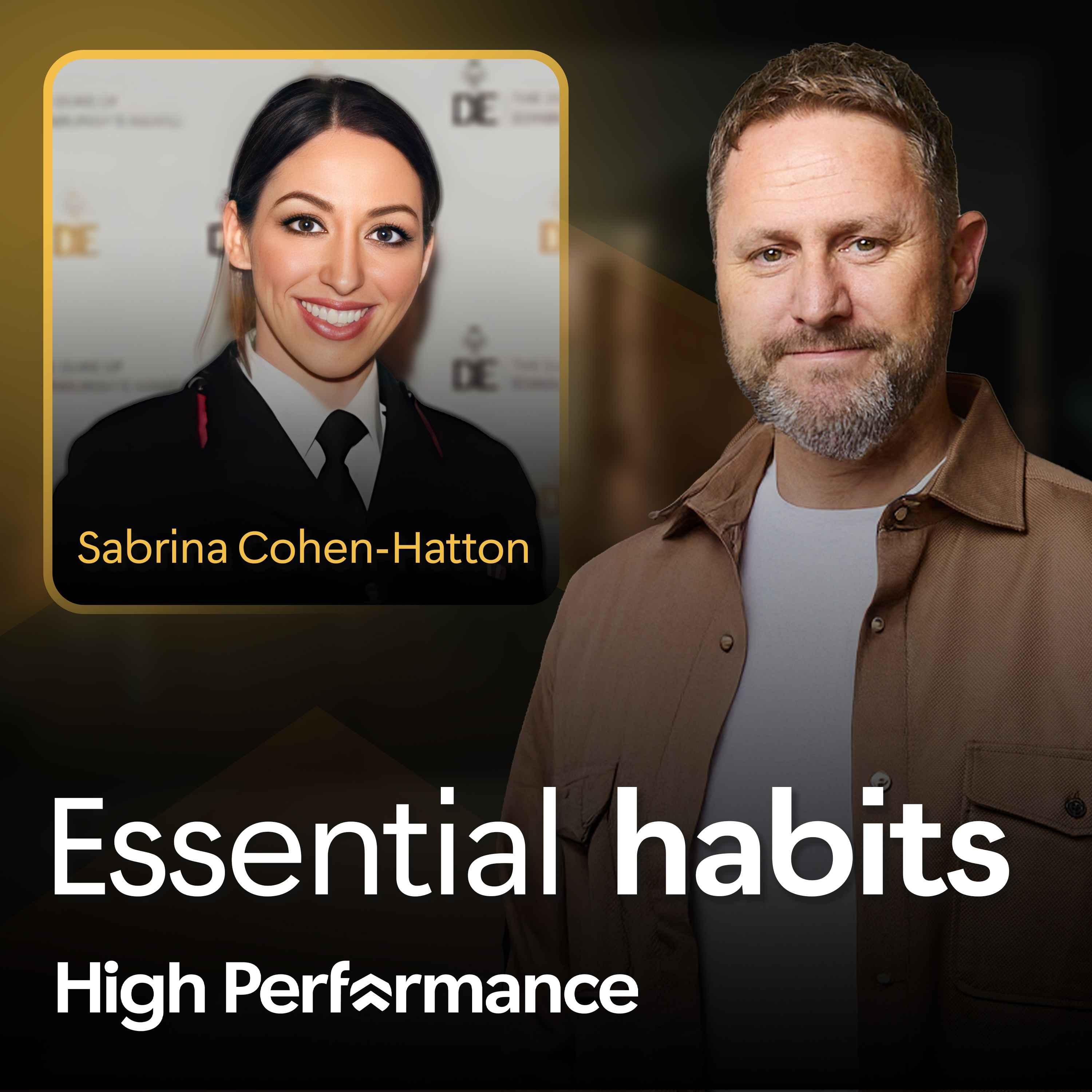
In this episode, hosted by Jake Humphrey and Damian Hughes, the focus is on how to make effective decisions under pressure, particularly in high-stakes situations. The guest is Dr. Sabrina Cohen-Hatton, a Chief Fire Officer, a Behavioral Neuroscientist, and a bestselling author. Her insights are drawn from her experience in the fire service and the psychological mechanisms that influence decision-making during crises.
Written by AI. May contain mistakes.

Get the gist, explore an idea or ask about something said.
 Claude
On The High Performance Podcast, what are the key points of this episode?
Searching your listeningAutomatic transcript. May contain errors.
0:28Watch it early on the High Performance App. Right when you need them. Work smarter and faster with Upwork. Go to Upwork.com now and find your freelance expert. That's U-P-W-O-R-K dot com. Post a job for free and get started today. Morning people wake up for peace and quiet. McDonald's breakfast people, we wake up for the sweet rush of getting that warm, delicious breakfast right before it ends. with McValue at McDonald's get any size pumpkin spice iced coffee for just 99 cents until 11am and try our pumpkin and cream pie they're spiced and priced so very nice price and participation may vary cannot be combined with any other offer
1:14this episode is brought to you by Opera Air the first browser with mindfulness at its core now most of us spend hours every day online but how often do we pause wants to take care of ourselves whilst we're doing it. And that's where Opera Air comes in. It's a lightweight, fast, secure browser built not just for productivity, but for your well-being. With Opera Air, mindfulness is built right in. You'll find free breathing exercises, guided meditations, and soundscapes with ambient sounds, lo-fi music, and binaural beats, all designed to help you focus, relax, and even spark creativity while you browse.
1:52some decisions you make are gut decisions and in high pressure usually about 80 percent according to our research will be a gut decision only about 20 percent will be very analytical we train people to go through a really rapid mental checklist of decision controls welcome to the essential habits of high performance where we explore the daily practices, the mindsets and the teachable moments that shape extraordinary lives and leaders. How many decisions do you think you've made today so far? Maybe you chose coffee over tea, answered a message or left it unread, took a longer route to work because traffic fell off or decided to listen to this podcast instead of doom scrolling.
2:35Good choice by the way. Researchers estimate we make between 30 ,000 and 35 ,000 decisions every single day. and most of them are tiny and automatic but some well they shape who we are where we go and what happens next. So the real question we're looking at today is how do we make better decisions especially when we're under pressure? This week we're learning with someone who's done precisely that, making decisions under real pressure. I'm talking about life and death pressure. Dr. Sabrina Cohen-Hatton is a Chief Fire Officer, a Behavioural Neuroscientist and a best-selling author. I'm Damien Hughes.
3:18I've spent 25 years working with some of the world's top leaders and teams in business, sport and beyond. I've advised World Cup winning managers, I've written books on performance psychology and I've co-hosted this podcast with Jake for over five years now. But above all, I'm fascinated by how high performance actually works in real life and what we can learn from it. Dr. Sabrina Cohen-Hatton is one of the highest-ranking female firefighters in the UK. She was born in Newport, South Wales, and she faced significant challenges early on in her life. After the death of her dad, she became homeless at the age of 15, where she spent two years living on the streets of Newport.
4:04During this period, she sold the big issue to survive and she endured some horrible abuse, intolerance and violence. Now, despite these hardships, she pursued her education, eventually earning a PhD in behavioural neuroscience from Cardiff University. Her academic research focused on decision-making processes under pressure. It's not always the big incidents that everybody hears about that have the biggest impact on you. Sometimes it's the smaller ones that nobody else knows about, but actually have an enormous impact on you because they recalibrate your view of something. So I'll give you an example.
4:44There was one road traffic collision that I went to when me and Mike were due to get married, you know, when dating goes too far, that thing, marriage. And I'd gone to this road traffic collision it was this young couple that had just got married they're on their way back from the honeymoon and they had all their luggage in the car and they had their Mr and Mrs towels on the back seat and it was a really bad incident uh bread lorry had kind of the driver had fallen asleep at the wheel and it had jumped over the central reservation and and crashed into this car and sadly the the husband was killed instantly and the the wife was in quite a bad way and that really bothered me.
5:22And the reason that that bothered me is because it recalibrated my view of what forever meant. I thought me and Mike are about to get married and that's forever and we're going to, you know, retire one day together and, you know, all of that kind of stuff that you think about, again, when dating goes too far. But I realized at that moment in time, that's not necessarily going to happen. You know, something could happen tomorrow and completely change that. So my view of forever got recalibrated. Now this particular event shook her up deeply. It led her to research how we all make choices in chaos, proper chaos, where lives are at stake and where seconds matter.
6:03Today we're going to unpack her essential habit, which is all about making better decisions under pressure. Now there's something Sabrina says that I found incredibly powerful. every decision that you make is based on your perspective which carries with it all of your experiences so every decision that you make isn't just made based on that one thing that you're you're looking at in the moment you carry everything with you up until that point what a line that is every decision you make is based on your perspective and that carries every experience that you've ever had. Just think about that for a second.
6:41Every decision you make is like a mosaic. It's like tiny tiles made up from past wins, losses, traumas, habits and assumptions. That's why no two people ever see the same situation in the same way. It's also why judgment gets a bit cloudy when we come under pressure because we're turning up with all our baggage in the room. There's another concept that Sabrina talks about which is decision inertia. that moment where we freeze when the stakes are high i don't know about you but i certainly recognize that moment when your heart's pounding the pressure's mounting and instead of acting you wait you hesitate you stall it's often not because you don't care it's because your mind is actually being hijacked by fear mostly the fear of getting it wrong she compares that moment to this really beautiful image what i know from my research is sometimes when you are making those big decisions, you can experience something called decision inertia.
7:41Now, this happens in situations that can be really uncertain or situations where you are overly focused on anxieties about your own accountability. Now, some accountability anxieties are good, right? That helps to keep you on track. It helps you to think about the ramifications of what you're doing. But if you're so focused on those, you get caught in a loop of what ifs, like throwing a pebble in a pond and you're constantly thinking about the ripples you lose sight of the pebble and where that's landed. Sometimes inaction creates worse consequences than the wrong action. To combat this Sabrina created a set of mental problems for all firefighters but these work for everyone whether you're in a boardroom a classroom or even in your kitchen at midnight.
8:27They're called decision controls and so we now train our firefighters at the point in which they've made a decision. Not before, because some decisions you make are gut decisions and in high pressure, usually about 80%, according to our research, will be a gut decision. Only about 20 % will be very analytical. But you can't tell someone you're going to make an analytical decision this time or no, no, no, this time it's going to be a gut one. It depends on too much, what they've previously experienced, how well they're coping with the stress, how much more they've got in the tank, too much. But the point in which you do have an opportunity for an intervention is once they've made a decision but before they action it and at that point we train people to go through a really rapid mental checklist of decision controls the first one is what's my goal that might sound really simple but if you're making a gut decision you might be making a decision based on a piece of the jigsaw just a single piece of the situation which might be the right thing for that but it could have unintended consequences when you stop that piece of the jigsaw back in the bigger picture the second one is what do i expect to happen now that sounds again really simple but when you're making a gut decision or you're under pressure we found from our research that people's situational awareness is actually quite low you're very much focused on the here and now not on the what might happen next where you're going to be in the next 30 minutes so just priming that to say what do i expect to happen is a really effective way of increasing your situational awareness and then the final one again super simple how does the benefit outweigh the risk.
9:57And just rationalizing that to yourself can help to kick you out of that loop of accountability anxieties and really stand by the decision that you make. And so from my experience of those kind of decision-making environments, those are three really simple techniques that you can extrapolate into any decision-making environment that can be incredibly helpful. One, what's my goal? Zoom out. Are you solving the right problem or are you just reacting to a symptom? Two, what do I expect to happen? Push your mind forward. What's the likely outcome of this decision five minutes from now or an hour or tomorrow?
10:36Three, does the benefit outweigh the risk? Now this question brings logic into the loop and it helps you stand behind your decision. Even in tiny moments, like reaching for a second slice of cake, this framework works. You can do it when you go into the fridge and you're trying to decide whether or not you're going to grab that extra piece of chocolate cake. What's my goal? Well, it's to eat healthily and this isn't going to get me any closer to it. What do I expect to happen? Well, if I eat this cake, it's going to be amazing in the moment, but then I'm going to feel like crap for the rest of the evening.
11:08I'm going to feel really guilty and I'm going to have to go for a three mile run tomorrow, which I really can't be arsed with. And is the benefit worth the risk or reflection? Probably not. And at that point I reached for a banana. Now I want to dive deeper into the research that backs this up. And don't forget, in the show notes you'll find links to the studies and the research which I reference. So why do we struggle to make good decisions under pressure? Well our brains often find it harder to make smart choices, and that's because stress affects how our brain works in a few key ways. Let's have a look at them.
11:42The first one is stress makes it harder to think clearly. The prefrontal cortex is the part of the brain that helps with planning, focus and self-control. But when we're stressed, the brain releases chemicals that can interrupt how this area works. Now this makes it harder to hold things in your memory, to switch between tasks or simply to think flexibly. For example, there was a survey conducted during the COVID pandemic where it saw 36 % of adults say they found it harder to make everyday choices like deciding what to wear or what to eat than they did before the pandemic. Two, we fall back on habit.
12:19When we're stressed out, the brain shifts away from thoughtful thinking and starts using older, more automatic systems like the amygdala and the basal ganglia. These parts of the brain are more about emotion and habit. So instead of stopping to think, we often just do what we've always done, even if it's not always the best option. Three, stress changes how we see risk. People under pressure are more likely to go for high risk, high reward options, even if safer choices are available. Studies have shown that the timing of stress matters as well. People who took a decision-making test 28 minutes after they'd experienced a stressful event made riskier choices than those that took the test right away, or not at all.
13:044. Our brain gets easily overloaded. In high-pressure situations, we often have to deal with too much information at once. That overload tires out the brain and it leads to decision fatigue. When that happens, we might take the easy way out, choosing whatever's familiar or not deciding at all. And the fifth reason is emotions often get in the way. Emotions are a big part of our decision making, but when we're stressed out, strong emotions can take over and make it hard to think clearly. This can lead us to making quick emotional choices that don't always match our long-term goals. So why does this matter?
13:45Well, knowing how stress affects decision-making helps us handle pressure better. It's a reminder to manage stress, to slow down, and build habits or systems that support clearer thinking when it counts the most. So here's your challenge for this week. Pick a decision that you're likely to make today, big or small, it doesn't matter. and before you act, pause and run through Sabrina's three-question habit. What's my goal? What do I expect to happen? And do the benefits outweigh the risks? Try it once, then give it a go again tomorrow. This process has helped firefighters improve their decision-making five-fold.
14:29It's been tested in chaos and it works in everyday life too. Let us know how it goes. We want to hear how this habit shows up in your world. Now I'm going to be joined by our brilliant producer Will, who's been with us here on the podcast since the very start. And we're going to listen to what Sabrina said about how a particular experience when she was sleeping rough reshaped how she thought about empathy. She speaks about her regret on staying silent when faced with harassment and how we can all challenge gender stereotypes being taught to kids.
15:05If you're still overpaying for wireless, it's time to say yes to saying no. At Mint Mobile, their favourite word is no. No contracts, no monthly bills, no overages, no hidden fees, no BS. I made the switch because I was tired of those ridiculous bills and sneaky charges from my old provider. With Mint, I'm paying$15 a month and getting the same high-speed data, unlimited talk and text, and the coverage on the nation's largest 5G network. Honestly, the quality is just as good, if not better than what I had before. And the best part? You don't need a new phone. You can keep your current one, bring your number, and all your contacts.
15:40I use Mint Mobile, and you should too. Ready to say yes to saying no? Make the switch at mintmobile.com slash HPP. That's mintmobile.com slash HPP. Upfront payment of$45 required, equivalent to$15 a month. Limited time new customer offer for first three months only. Speeds may slow up a 35 gig on unlimited plan. Taxes and Fees Extra. See Mint Mobile for details.
16:29U-P-W-O-R-K dot com. Post a job for free and get started today. Your sausage McMuffin with egg didn't change. Your receipt did. The sausage McMuffin with egg extra value meal includes a hash brown and a small coffee for just$5. Only at McDonald's for a limited time. Prices and participation may vary.
16:54So this was an episode that I think we recorded on Zoom, didn't we? Yeah, we did. Yeah, it was in the summer of 2023 when Sabina was promoting a book at the time, which is a brilliant read in its own right. But again, it was a real privilege just to get to speak to her. There's a part of her story which is like really impactful in the fact that she was homeless for quite a long time and then how she kind of dealt with that and still studied and still bettered herself and still, you know, to become the person that she is like she is now. Do you remember the story that she told about someone urinating on her?
17:29Yeah, yeah. Well, there was a nice punchline to that, wasn't there? Where she had a dog that she'd looked after, even when she was at her lowest ebb, and the dog had been like a real faithful companion. Now, the dog leapt to her defense, didn't she, when some idiot was taking her wee on her? Absolutely, yeah. She told it with like a bit of a chuckle, but it was quite a shocking story at the time. Yeah, definitely. Let's listen to her explain a little bit around what this taught her, though. about the power of empathy? I had no clean bedding. I had nowhere to go. So I just went and sat on a bench in the middle of the town centre and I pulled my knees up to my chest and I just sobbed until the sun came up, which I guessed was about maybe six o 'clock in the morning.
18:11And the bus station toilets opened then. So I went down to the bus station toilets and I cleaned myself in the sink as best as I could. And then I went into the toilet cubicle and I shut the door behind me and I locked it and I put the bag down on the toilet seat and I pulled out a crumpled up school uniform and I put it on and I went and waited for the bus and I went to school and listen that was one of my earliest lessons in empathy because nobody would have known why I was so short-tempered that day nobody would have known why I was acting the way that I was because no one knew what I'd gone through and that's a lesson that I've carried with me every single day because we meet people all the time don't we and we think i have got no clue on your perspective on this i've got no clue why you're responding to me like that but we never know what those people have been through that day before we've come across them i mean that's bonkers that we often don't know what people are going through the baggage that they might be carrying the struggles that they're experiencing and sometimes just leaning in and trying to take an interest to be curious can make such a huge difference yeah and she was faced with quite a lot of opposition and harassment during her career wasn't she like and that came through on our chat with her as well that how you know some people were uncomfortable about someone like that being in the role she was yeah she does but the bit that i want to play on this bit will is the fact that we associate her with being brave and making smart decisions when she told us that she hadn't always been brave she wasn't always willing to stand up to injustice when she was faced with it and but she explains why that's the case when I think about some of the things that I experienced there's no way I should have gone through that but you know what I didn't challenge it at the time and I'll be really honest about that and that is one of my biggest regrets that is one of my biggest failures what why is that a regret or a failure though because you can't become these things until you go through the experiences in life that turns you into someone that can deal with them you know maybe you just had to learn and do you know I think you've got to not be so tough on yourself it's true but equally by not speaking out I didn't stop it from happening to anybody else yeah and I'm sure that there were people that came up behind me that had the same experience that I had that might not have if I'd have had the courage to speak up then.
20:34And that's why I look at people who are talking about this today and I really admire them. I'm really pleased that they feel that they can talk about those experiences. And it's so important that we listen and we do better as a result of it. But for me, the reason that I didn't speak out at the time is in truth, I was young. I joined at 18. I was really young. I was insecure and I felt like the balance of power was against me. I felt like I didn't have the voice because of the dynamics in the group it's not about you know the service or the organization and what they do or whether they take it seriously because I'm pretty certain they would have it was about the acceptance of your peers it was about being perceived to be the squeaky wheel and I just went into survival mode because I wanted to survive and when that was happening to me I can I would think there is no way you're taking this away from me I've worked too hard.
21:29I've come too far. There is absolutely no way on God's green earth that I'm giving up because of you and your bigoted opinions. Yeah. How do you feel like she says that as a really big regret that she had, that she didn't speak up at the time and she didn't try and help, you know, to help the people that came after her. But it's a funny one that, isn't it? Well, I think this is right you know when we see scandals now in the sort of public domain whether it's sort of like big media figures or politicians that get dragged over the coals it's often where they abuse that power imbalance it's almost the message to anybody that is in a position of influence that actually spot the most junior member the member that maybe wields the least power and make sure that you're engaging them if you're genuinely going to create an inclusive culture where everybody feels valued Yeah.
22:24And I think there was another story in it, which I think will play out next, which is my favourite one, actually. Well, it kind of, it talks about how we're embedded with these gender stereotypes from such a young age. And some of us, look, sometimes we do it without even realising with our own kids, you know, by the toys you pick or the programmes you watch or anything like that. But she tells a lovely story of how school kids came to view these typical male professions. Do you remember? Oh, yeah. Let's have a listen to this one. She tells it really well. gender stereotypes are set really young by the ages of between five and seven and they are incredibly powerful because of all of these messages that we're absorbing all the time so my best advice that i could give you to help her would be to help her to recognize that she is who she is and she will be absorbing all of these messages and to help her filter through that to help her recognize that the way that she might feel about something is because of these things that she's absorbed all the time and to help her to be able to recalibrate to absorb different information and recalibrate so i'll give you an example there was this lovely study done with children who were all asked to draw pictures um they were all about they were preschool they were kind of like five years old they were all asked to draw pictures of firefighters of doctors and of pilots.
23:45And out of 61 pictures, only four of them were female. All of the rest of them were male. And then in walks, a real life firefighter, a real life surgeon and a real life fighter pilot, and they've all got their masks on. And the kids are like, yeah, this is amazing. And then they pull off their masks and they reveal that they're women. And the kids are like, how cool. And then they're asking loads of questions and they're instantly, their stereotype of those things are recalibrated. Yeah, imagine being in the classroom and seeing that. And I think that too. I think if I ask my kids to draw, like draw a pilot, draw a doctor, I think they would naturally, you would naturally do that.
24:23And I think you need to sometimes see it, don't you? You need to see it to really then understand and to really change that. Well, how often have we heard that phrase on the podcast of you've got to see, if you can see it, you can be it. And I think this is what Sabrina is so powerful for, as a figurehead for lots of young women that maybe want to pursue a career in what we might perceive as typically or traditionally male environments. And we've got a trailblazer that sat down with us and shared not only her own incredible story, but equally what we can all take away from it. It reminds me of a few other interviews we did with kind of these trailblazing women almost.
25:04Do you remember a podcast we did with Amanda Blanc from the CEO of Aviva? Yeah, when people sort of like go back to in the kitchen, do the dishes. I met Amanda recently, actually, and she was telling us about how even now she's getting sort of like death threats and like really horrible messages from people that are just affronted that a woman is the chief exec of a hugely successful business. It shows you in many ways that what to us we think is ridiculous, why would anyone have a problem with it? some of these deep-rooted beliefs are still prevalent out there in society. Yeah, and it really goes to show really how much more work needs to be done.
25:43Yeah, absolutely. And if you've enjoyed listening to this episode of The Essential Habits, maybe share it with somebody that could benefit from listening to Sabrina's wisdom on how we can all make better decisions under pressure. I'm Damien Hughes, and I'll see you again next time.
26:06At Capella University, learning online doesn't mean learning alone. You'll get support from people who care about your success, like your enrollment specialist who gets to know you and the goals you'd like to achieve. You'll also get a designated academic coach who's with you throughout your entire program. Plus, career coaches are available to help you navigate your professional goals. A different future is closer than you think with Capella University. Learn more at capella.edu.
We make thousands of decisions every day, but under pressure, those choices become harder, and more important.
When I first came across Dr. Sabrina Cohen-Hatton’s story, what struck me wasn’t just what she’s achieved, it’s how she thinks under pressure.
In this episode, I unpack a habit I took from her years on the frontline of the fire service, one that has helped her make life-or-death decisions and one we can all use in our everyday lives. It’s a habit built not on instinct or speed, but on clarity.
Sabrina taught me that when we freeze under pressure, it’s rarely because we don’t care, it’s because we care so much, we don’t want to get it wrong.
Whether you’re managing a team, making a personal change, or just trying to feel less overwhelmed in high-stakes situations, this conversation will help you understand how to make better choices under pressure, and why the smartest leaders aren’t the fastest, they’re the most prepared.
We explore:
This one’s for anyone facing the hard calls, and wanting to meet them with confidence.
Here is more information on the studies referenced:
Listen to the full episode with Sabrina Cohen-Hatton: https://pod.fo/e/18cd7c
Hosted on Acast. See acast.com/privacy for more information.


