
 Ask ChatGPT


 The High Performance Podcast
4 May 2026 · 55m · 30 chapters
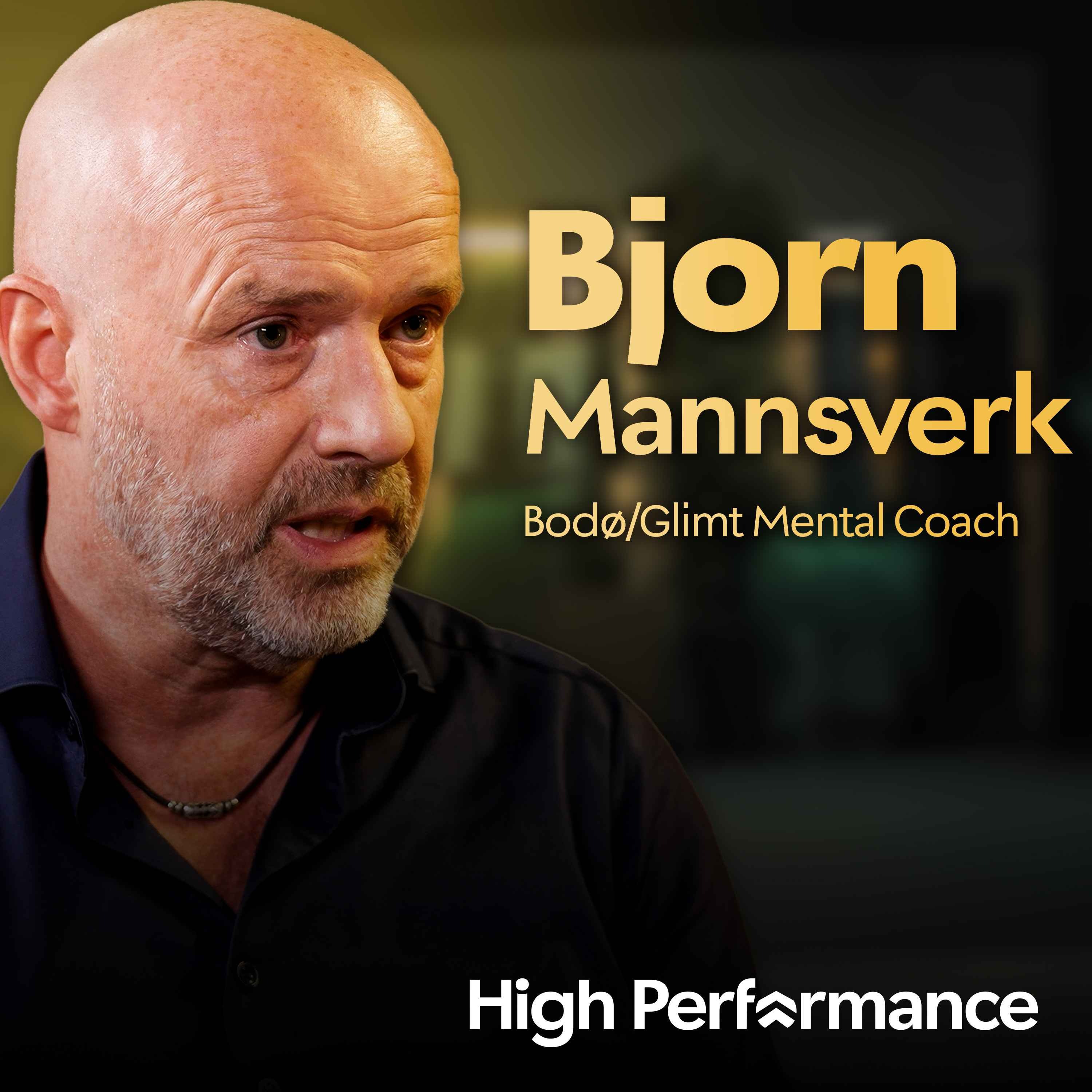
Bjørn Mannsverk explains how Bodø/Glimt’s “Champions League miracle” was built through fighter-pilot-style mental training and a “sustainable performance culture” that focuses on controllable performance rather than results.
Mannsverk is a former F-16 fighter pilot who developed “mental training” after a 2009–2010 experiment in mental training for pilots. He later applied the approach to Bodø/Glimt after the club’s 2016 “crash and burn” and a “collective mental collapse” during their 100th-anniversary season.
Bodø/Glimt initially had no structured mental training and overfocused on winning/points, which biased learning. Mannsverk says culture is mindset plus process, built over years, and that “expectation” can be liberating when removed. He argues mental training is closely tied to mental health and requires voluntary buy-in.
The 6-1 win over Jose Mourinho’s Roma (first full manifestation of the philosophy); Champions League upsets including Manchester City, Atletico Madrid, and Inter Milan; “ring” huddles after goals/conceded goals; mindfulness/awareness training in kit; captain-led group sessions and player-to-player sharing.
Written by AI. May contain mistakes.
Bjørn discusses his transition from being a fighter pilot to working with a football club.
“Now, I think we have to go back to my background as a fighter pilot.”
Exploration of the mental collapse faced by Bodø/Glimt and the introduction of mental training.
“and well aware that mental training, there was a little bit of stigma around it.”
Bjørn shares his observations of the team dynamics and energy upon joining.
“No, basically I was told that they claimed this was a collective mental collapse and that they believe in mental training.”
Discussion on the importance of voluntary participation in the mental training process.
“I also believe that you're willing to try something else.”
Bjørn emphasizes the shift from focusing on game results to individual performance.
“But the focus were way over the top in a way that if we win a game, it's a good performance.”
The importance of individual strength in maintaining high performance over time.
“On the individual side, it's a matter of if we can make you as strong as possible, because it's going to be a heavy load being a high performer, especially over time.”
Learn about the role of mental friction in performance and self-talk.
“So what's left is what we call the performance.”
Discover how meditation contributes to mental training in athletes.
“Like this is how we do mental training at different levels.”
Explore mindfulness training and its impact on focus and performance.
“Yeah, awareness training, we use the mindfulness approach.”
Learn why players practice mindfulness in their kits and its effects.
“And you figure out that since I'm sitting in a quiet room, I'm sitting still, and I'm closing my eyes, there are more or less no external inputs.”
Understand the significance of voluntary mental training for athletes.
“We tried to do it like in a normal setting.”
Discover how to foster open communication among players for improvement.
“So tell us about the group sessions then because you spoke about having friction meetings.”
Learn how sharing strengths among teammates builds trust and collaboration.
“And then suddenly we really succeeded where they start sharing.”
Explore the role of accountability in enhancing team performance and dynamics.
“And also they came up with findings that we don't really believe in this, the way we defend each other or part of the game, the way we are supposed to play.”
Understand the significance of the 'ring' concept in team strategy and cohesion.
“and for the team and be bold enough and brave enough to face the coach.”
Learn how team huddles can refocus players during critical game moments.
“They said, yeah, this is a brilliant idea.”
Discover the benefits of having multiple team captains and their selection process.
“But it is not like, it's more like, hey, we need to refocus, forget about this, this is important now.”
Explore strategies for fostering a positive team culture from within.
“But me and Håvar, we really believe that we should increase the numbers.”
Understand how structured group sessions can enhance team communication and feedback.
“right things to talk about, a topic that could be relevant for everybody?”
Learn how to manage players who do not fit within a team's culture.
“We'll be right back after a quick word from our partners.”
Learn how the team approaches celebration and maintaining focus after victories.
“You get back into the dressing room, you've just defeated Jose Mourinho's team 6-1.”
Discover the unique mindset and preparation strategies against top teams.
“And I thought then this is great effect.”
Explore how the team adjusts its mentality as expectations rise.
“So then we were like, wow, cool, but still, Manchester City, no way, we can just go out there.”
Understand the importance of staying motivated and hungry for growth.
“But the captain team, they stepped up and said that, hey, now we can't focus on what we did not achieve.”
Learn how team culture emphasizes personal growth and sustainability.
“So I think that to keep the hunger, you need to really, really embrace this.”
Delve into the nuances of creating a performance-focused team culture.
“It is the way we are thinking, and it's the way we work.”
Identify key behaviors essential for team success and cohesion.
“We've been working on that for years, and we still, obviously, we fail, and we have to onboard new people in the way of thinking.”
Learn about the principles of creating a committed team culture at Bodeglimt.
“but also take feedback so you can adjust if your behavior is not good.”
Discover key questions to evaluate time and energy usage in organizations.
“that's the most important question in your own life but also as an organization and then the next question is what are we using time and energy on?”
The host expresses gratitude for the insightful discussion with Bjørn.

Get the gist, explore an idea or ask about something said.
 Claude
On The High Performance Podcast, what are the key points of this episode?
Searching your listeningAutomatic transcript. May contain errors.
0:28Thank you very much. Now you're a former F-16 fighter pilot, you've never played football, you've got no interest in the sport, and yet the club that you work with have just beaten Manchester City, Atletico Madrid, then Inter Milan and the Champions League. Tell us, how does that happen? How does that happen? Now, I think we have to go back to my background as a fighter pilot. And to keep it short, we did an experiment in 2009, 2010. That was mental training. We didn't really know what it was, but we just was looking for something we could train outside the normal fighter pilot stuff. And it was quite a new method in a way.
1:14and it was well received by the pilots, by other personnel at the squadron, and the effect was also very good. And then some years later, in 2016, when Boreglind were supposed to celebrate their 100th anniversary, and it was a crash and burn. So even though they believed that they had the skills to remain at the top level, they didn't manage and they realized that this is caused to a collective mental collapse. And they also realized that they didn't have any way of training within the mental aspect. But by accident, they came across this mental project, the mental training in my squadron many years before, just a few hundred meters actually away from Asmira Stadium in Buda.
2:08and they liked as well the method and how it was received and well aware that mental training, there was a little bit of stigma around it. Okay. What do you mean by that? I think that they have seen or they have tried something during their career and seen that sometimes it hits, sometimes you really get a pushback and then the locker room kind of closes for a year or two and they were afraid of that happening. And I personally, I think that mental training is very closely related to mental health, bad mental health. So if you do mental training, you have a problem. That's my personal perspective.
2:53But they liked it. And they thought that if it worked for a fighter pilot, we believe it's going to work for a football player as well. So that's when BodeGlund made contact. Now you're going into the BodeGlund dressing room just when they'd been relegated. Yeah. Yeah. Can you describe what it was like? I didn't have any reference, first of all. So I just had to see what I saw. But actually, I just watched them playing some games and I could easily see that there was a lot of bad energy. Like they were not united. A lot of aggression towards referee decisions and so on. So that was what I saw.
3:35But other than that, I more had to depend on the information I got from the club itself. And what were you being told? No, basically I was told that they claimed this was a collective mental collapse and that they believe in mental training. And then when I met them for the first time, I met the coach team. I did a presentation based on my references from the fighter pilot culture and from the mental training at least and kind of a plan. They responded very well and they also promised to be part of this journey and they fulfilled that promise. So this is not a one-man show. You can easily point at me, but I will point back to many people.
4:23So this is a joint journey. so they liked the idea and other than that they picked out some players that we believe they have a potential but they are struggling and maybe you can help them I was quite clear that I had to do this in my spare time because I had a full job on Full Job Plus so I said I can do this in my spare time but I can't take all but anyway you need to give me some, that volunteer. In a way, because I already experienced from our own project in the squadron that you can't force this on people. I mean, people are chief in charge in their own life. They make their own decisions that will impact their life.
5:11So we need to save time. It's going to be a waste of time for me and for them if they don't want to even try. So when I meet people, I can kind of say that, hey, I know you're volunteering. i.e. I also believe that you're willing to try something else. So tell us a little bit around what was the... You've got players then that have volunteered. They recognize that they've experienced the mental collapse. They want to get better. Tell me the first thing that you would do with somebody that sits in front of you then. No, it's more to get to know them. So basically, let's start talking about something.
5:47I think I'm kind of, my thing in a way is that when we talk, suddenly there is something I can't really, I don't really follow you. It doesn't really make sense. So I become curious. I normally say that I'm kind of holding you tight now for a moment and ask, hey, could you explain that and go a little bit deeper. So in a way, then I hear how they are thinking and a lot of the times it doesn't make sense. This is only making sense in your head. But as soon as you have to explain it to me, they kind of understand themselves that this is not completely right. Or we can discuss, could there be different ways of thinking?
6:31And could you change your perspective when it comes to that? So that's a typical situation. But it turned out that I would say that we had a flying start. But would you tell us about some of the specific ideas that you've introduced to the club? What I have introduced? Again, I think that the way it works is that we end up with something, but a lot of the times we really struggle to figure out who came up with the idea. Sure. So it's just a process. But what we have done, I think that the first thing that kind of surprised me when I came into the club. Beyond that, they didn't have any mental training.
7:16I thought everybody had it. Right. Yeah, because I knew from my own background that this was so powerful, even though we were top athletes as fighter pilots. So that surprised me. The other thing was that the extreme focus on results. It was a matter of just winning games and taking points. And obviously, that's why we're in for it, to get good results. But the focus were way over the top in a way that if we win a game, it's a good performance. If we lose a game, it's a bad performance. And that does something with learning. We get so biased. So that was really strange for me because I came from a background where we couldn't really look at the result.
8:01As a Norwegian fighter pilot, luckily, you never went to war. Yeah. Yeah. But we understood that the consequences of not performing well enough, if shit hit the fan, that could be fatal for you and the system in itself. So we were really motivated to always improve to become better. So that was my kind of, I say most likely I'm a little bit damaged out of being in that culture for more than 20 years, but that was my default when I came in. So that was a collision. But I said, okay, I just have to continue to argue my way, in a way, and realize that to change culture, it takes time. I mean, culture is a mentality, the way we are thinking.
8:47It takes time. So I was talking to my eight, ten players for one and a half year, always kind of manipulating them into believing in focusing on the performance not the result and in january we started in in may june 2017 in january 2019 i had this last meeting around with one-to-ones and then we met in a group session and i was and they were supposed to leave for preseason camp a couple of days later. And I heard that they have a tradition to meet the coach team and the players on that preseason camp and come up with ambition for this season. So I heard about it. So I said, so what do you think the ambition is going to be?
9:40I was like, we're going to be top five and we need to have so many points, blah, blah, blah. And I was so tired of this. So I gave him quite a heavy pushback and said, why don't you just focus on your own performance, what you can control? And it was a little bit resistance, but then they were ready. And then they said, yes, that's a good idea. And then this Horvath Sakariasen, we always did this together. So he just took that information and shared that with Kjeteknutz, which was the head coach at that time. He said, this is the status with half of the players or the leaders or the ones participating in the program.
10:22And he was like, yes, that's the way we're going to go. And we never had that meeting. So we haven't had any results, goals since January 2019. So you're a football club that doesn't set goals, doesn't set targets, doesn't talk about winning? No. and Shetty Knudsen told me that that was the final brick or the missing brick and now he felt free free to maneuver to really focus on making the steps and moving in the right direction So what did they talk about if they're not talking about winning then? They still talk about winning and losing but you just have to continue to focus on the things things that you can control.
11:10And I mean, for us, the most important mentality and as a performance culture is that we need to focus on the things, on the right things that we can control. Saying that, what I'm actually trying to say is that we do have a limited capacity of time and energy and we need to spend that on the most important things and basically don't waste time and energy on things that you can't control. So what are the most important things? And the result is not fully controllable. We know that there are factors that will impact the result. So for us, it's not efficient enough. We need to spend it on other stuff.
11:49So you can do it on, focus on, obviously, nutrition, preparations, focus, intensity, present when you are on training, recovery, sleep. It's so many things that you can fully control. but as long as you don't get tempted to start controlling like the other team, are they going to be better than us? Maybe, we don't know. We just need to try and be loyal to our game plan and do as good as we can. So that is our mentality in this, we call it sustainable performance culture. A performance culture is basically where we, in culture you need, culture is always people. So it's mindset. So we work with individuals, but we also work with individuals working together.
12:42We'll be right back after a quick word from our partners. This is a Monday.com ad. TheSameMonday.com helping people worldwide getting work done faster and better. TheSameMonday.com designed for every team and every industry. TheSameMonday.com with built-in AI, scaling your work from day one. The same Monday.com that your team will actually love using. The same Monday.com with an easy and intuitive setup. Go to Monday.com and try it for free. Yes, the same Monday.com.
13:21On the individual side, it's a matter of if we can make you as strong as possible, because it's going to be a heavy load being a high performer, especially over time. so you need to be as strong as possible first of all you need to secure your foundation then strengthen it as much as you can and then we focus more on we all have a potential so even I have a potential, it's not big as a football player but I have a potential but this is where I think mental training is focusing because even though we have a potential we really struggle to get a full potential out Yeah. So what's left is what we call the performance.
14:03But there is a big piece of that cake is friction or disturbances. And it's most likely the way we're thinking. So self-talk. Okay. So if you'll permit us, Bjorn, let's talk about some of the individual techniques. And then we'll talk about how this manifests itself in the team environment. So you talk about doing meditation and get the players to do that in their kit. Explain the importance. Meditation, we can start because that's the basic. And even though I say it's no quick fix in mental training, there is a shortcut. And the shortcut is awareness training. And that was what we did in the squadron.
14:48Because we were presented the model of the Olympic Top Athlete Center in Norway. Like this is how we do mental training at different levels. But we do realize at that time, it was like we do realize that it doesn't really matter where we're working in the model. There is always one common factor and that's you need to be present. And it's actually pretty obvious. So we are wondering if we put our effort into just basic awareness training, can we get aggravated effects? do we get side effects without even practicing it? So describe what awareness training looks like. Yeah, awareness training, we use the mindfulness approach.
15:37But I think that if we spool even further back to understand why do we need mindfulness training, and me and you, we do have a lot of things in common, I would say. Because if we go all the way back to our ancestors and they're back in the stone age or whatever. We have a special type of people that survived. And that was the people that kind of picked up that movement or that noise. And they also, in addition, they had a brain that was always thinking, this is not good. I mean, drama kings and drama queens, that was the one. And they thought that something's going to eat me. I don't care what it is, but I think it's going to eat me.
16:25And you climb in the top of a tree or hide in a cave, you survived. So that's us. We have the same brain. We have kind of an autopilot in the way of thinking. So the ones that picked up that movement or that noise, they get kind of credit for that. But that also means that we are not really good on keeping focused. We get easily distracted. and it's one thing that is quite important when you want to perform. It is to be present. It is to be in the present moment because that's where you're performing. And this mindfulness training is basically, it's not to increase the length that you are focusing.
17:07It is to be really good to discover that I lost focus. Okay. And then I will be really quickly, quickly return my focus to the most important thing to perform. So that's the very basic with this mindfulness training. So you are basically sitting down and meditating. And you figure out that since I'm sitting in a quiet room, I'm sitting still, and I'm closing my eyes, there are more or less no external inputs. But still, I lose focus. And that is basically some thoughts, some feelings, or it could be some body signals. And you just have to get into that zone or test it out to realize how big impact it has.
17:53And our way of thinking is that, first of all, something is about keeping focused. But the other thing is that realize that, wow, this is the way I'm thinking. And you can't really control it. It comes and go in magnitude and in directions. But we do believe that how you think and how you feel will impact your decisions. So it's better to at least be aware that I know I'm afraid or I'm really upset or angry or jealous or whatever it takes. So this is the basic for the mental training, the mindfulness training. So you do this mindfulness training. You ask the players to wear their football kit in the dressing room while they're doing it.
18:33Would you explain why? No, I didn't. We tried to do it like in a normal setting. So we basically met in a room and sit on chairs and meditate. And we also forced everybody. Yeah. We put all in the club, including the coach team and the medical team. So the room was full. But it is the explanation and the effect is quite clear. Scientific findings as well. but it is so boring and people don't really necessarily see the effect quickly enough. And so it's hard. Otherwise, everybody would do it. But some really pick up on this mindfulness. And Ulrich Sartes was one of them. So he got really strong on being aware on how he's thinking and how he's feeling, but also being more sensitive to what's happening around.
19:29That's why I think it's been so important to kind of make our development where we should focus during the time. And you mentioned as well about the voluntary nature of working with you and the input that you do. Why is that important? It was a waste of time because I had limited time available, but also on the receiving end if they were really against it. but we kind of changed that as well so right now I do 1-2-1s with all the players a quick catch up but this was something that the captain's team wanted because we always try to make new steps and we figured out that Kjetil was asking Langsau what's the intention within the mental aspect this year why don't we just ask the captain's team and they came up with like, hey, we need to go back to the group sessions and what about the one-to-ones?
20:32And I asked everybody. So they made a decision. Brilliant. So tell us about the group sessions then because you spoke about having friction meetings. Yeah. Describe that. Yeah. So we've been describing now the individual, the model, like foundation, performance, and obviously to develop your own skills. On the more organizational part, this was more directly related to my experience from the fighter pilot community, where we are the experts. We need to meet and evaluate what we're doing and being able to identify lessons and find fixes and share that quickly. We also need always to kind of attack, I call it attack what we're doing, continuously improve.
21:25So it's like what we did yesterday, it is not necessarily good enough for tomorrow. So it's more like, more than just evaluating one game. It's like more like how we defend over time. And obviously a top layer is where we together try to be creative and develop up something make smarter solutions so so this was what i was used to and this was also an eye opener for me when i started in bullying because i did these one-to-ones with those eight eight ten players when they were talking no problem one-to-ones i don't know i figured out okay my job is just to put them in one room and obviously they know a lot of football i don't So I put them in their room and I said, please start sharing.
22:16And it was totally silent. So then I understood that they haven't trained on this. They're not well trained on this. So I identified they didn't have a dialogue with the coach team either. There was a monologue. Not because the coach team wanted that, but they didn't respond. So then we had to really roll it back and say, okay, we need to practice. this so first we need to expose ourselves so we should talk about something it doesn't really matter okay get used to that and then when we get used to that then we know now we need to tweak it towards talking about the right thing what is right the right thing for us right now and then maybe we could start criticism and criticize each other or being skeptical or to help identify to We improved, so we tried to do all these processes with just the players.
23:08And then suddenly we really succeeded where they start sharing. They are competing against each other, but they start sharing the good stuff with each other. Go on, explain more on that. I'm fascinated. Yeah, because I think that if we talk about sharing, it's like, hey, we should meet, and if we are struggling with something, we can ask for help. That's pretty obvious because there is an incentive. It's an incentive for me if I'm struggling to get the solution from you. So I win on that. You lose in a system where we don't trust each other. So for us, for me at least, it was like a really important day when I saw that there was a player sharing something good with the ones he was competing against at the same role in the team.
24:00Then we see that the trust is there. So I believe, basically, when I share something that I'm good at with you, I strongly believe that you will give me back something in the future. And did you see that happen? Yeah, yeah. So it was like they didn't hide for each other. We're more open. But it's still a struggle, obviously. Yeah. We are not perfect. But experts coming together and discussing is important. And also they came up with findings that we don't really believe in this, the way we defend each other or part of the game, the way we are supposed to play. And we've been trying this for months now.
24:48And I felt that they are starting to lose faith in that. I said, okay, but then I think it's important that we bring this out of this room and meet the coach team to discuss this. And the players would then take that to the coaches. Yeah, and that's part of the training, to make you accountable for your own career and for the team and be bold enough and brave enough to face the coach. Which then brings me, then, Bjorn, to the ring, the fellowship of the ring, the TIFO that the Bodo fans have got. This is the one that, when your name is mentioned, is synonymous with this. It's not me. But would you describe what is the ring?
25:32Yeah, as I mentioned, in this organizational part of the work, meet, learn and share, continuously improve, and then develop, or where we need to be creative. And this was also a very important date. We have been discussing how are we going to kind of stick together when people are making mistakes, so we can hug each other and so on. But my perspective is that we did meet in a group session. This was on the way out of the pandemic. In Norway, we started to play without audience or spectators. But now it was like, I think, like 200, 400 or 600 was maximum at the stadium. So it's really quiet, really quiet.
26:22but the week the following week we are inbound traveling to Poland to play I don't remember the team but basically they were opening up so it's going to be like 30 ,000 people on the stadium so that was the right thing to talk about so what that's going to happen next week what's your thoughts and then they just start sharing perspective it's going to be great a lot of people a lot of energy and it's going to be noise and this is the players talking I have all the voices now So it's going to be a lot of noise. Yeah, I guess it's going to be hard to hear the coaches. It's actually going to be hard to hear each other out on the pitch.
27:00Yeah, so basically we have this talk before we go. The game starts in the locker room and then we have in the break. And so then, yeah, that's it. and then I just throw in some some like in handball at least the coaches have a timeout card so you can throw that in on the table and you get some I don't know 60 seconds or whatever so you can change your tactics or whatever and then everybody was like kind of laughing and then one of the guys was like no but there is a break and people are like what are you what are you talking about every time the goal is scored there will be a natural break Yeah, that's true.
27:46But then we can gather. How are we gather? Who's going to take the initiative? And how are we going to form it? And what are we going to talk about? And they kind of invented something new. And then we said that they liked it. They said, yeah, this is a brilliant idea. So just for closing, so this will be either when Boro score a goal or when Boro concede a goal, the players will come together in this ring. They can. They can use it. So they don't use it all the time. So we have obviously examples when we are really on the defensive side. But I also recall when we were playing another game and we were actually in Europe.
28:26And this was the day before the match. And I asked them, okay, what should be the focus for tomorrow? And then someone in the place said, yeah, recently it seems like when we have scored a goal, we kind of a couple of minutes later we kind of we're lowering your intensity or something like that people are like yeah I think you're right yeah maybe we should take a ring tomorrow when we score so then they took the ring to just get hey pay attention now now I don't know if you're aware of this at the moment Bjorn but there's been a debate with Chelsea Football Club that they get together in a huddle and people think it's performative rather than it actually makes a difference so tell us a little bit about the huddle like who like who initiates it what do they say within that huddle and what do you think the benefits of it are yeah um actually i don't know because i never listen into when they they join during a game uh but basically anyone can form it okay yeah so but you can see it's like they they understand, kind of, now we need to get together.
29:40But it is not like, it's more like, hey, we need to refocus, forget about this, this is important now. I believe it's something like that. Very, very constructive, very to the point. And that's the benefit of having a lot of captains as well. So tell us a little bit around how the captains are selected. You said there's eight of them. The captains team? Yeah. Yeah. actually that was my third surprise when I came into football because they had one captain and for me it's a matter of leadership so so if you're going to have someone leading the players why do you end up with a grumpy one so so I was like okay how do you pick a captain and and then I said why do you only have one because I'm used to some from the from the fighter pilot business, even though I was the squadron commander, I was not necessarily leading every training mission, the formations.
30:39You had a group of people that they were qualified to lead, for instance, for jets. And they will just be evenly shared. So everybody gets a chance to practice because it's a difference between being a lead and being number four in a formation. So the good thing is when you are a lead, you can really feel on your body what you need from your wingmans and flight leads to perform. And then the next day, you are the wingman, so you know what the lead needs from you. So it's a good dynamic. And it builds, obviously, something within you, confidence and self-esteem, but also knowledge on leadership.
31:23It's a lot of leadership. so that's what like why don't we have more captains that rotate on on playing as a captain so we ended up with three for many years and it is kind of a pilot you test out something but obviously we got the feedback it was it was good to to the captains just to talk together who's gonna be captain today yeah I've been sleeping a little bit not perfect last night or I've been captain now for two or three games and I'm a little bit weird out. Could we change? So they all saw the benefit of that. But me and Håvar, we really believe that we should increase the numbers. So it took a while to convince Kjetil that this is smart.
32:14And I think that in combination that we now were at a point that we understood that culture is absolutely the most important thing, a good culture. And realizing also it's hard to dictate players to have a culture from the outside. We need to, instead of losing the locker room, we're going to take it from the inside. So we will have more captains to do the job, make them accountable, responsible, but also identifying captains that do have the values, the attitude, they walk the talk, and they don't need to be perfect in the mindset or the performance mindset. They don't even have to be playing a lot.
33:02That doesn't matter, but they all should volunteer to play as a captain if they get the chance so they can feel this responsibility. So then we ended up with eight. right now it's 7 because one retired from football but I hope we get back to 8 pretty soon because we also use them in the group sessions so then we split the player all the players into 4 groups so we are down at 6-7 that's a good group dynamic and there will be one most likely 2 captains in each group then they are kind of they are sticking together and they can really run this group session, not me or Håvar. And the cycle, if I can share that, the cycle is that right now, because everything changes, but right now, it's like I have a one-to-one, a catch-up, short catch-up with all the players, and it's like, hey, we are in on our group session next week, so do you have any right things to talk about, a topic that could be relevant for everybody?
34:11so I get all these inputs and then I kind of figure out that I think these could be important topics I could have some of myself or get some inputs from from what kind of topics do they offer you? It depends it could be we've been working feedback culture initiate a project around that and then we get the status on that and what do we see it could be medical team or but it can't be like a small thing just relevant for you. Yeah. How we all arrange traveling or, yeah. So it could be different things. Then we meet the captain's team, me and Holovar, and then we share our perspectives and do you have any aspects?
35:01It's basically pre-planned, the group sessions. Right. So we make a decision that we think these are the topics we should bring into the group session and have a discussion. Then we spread out, small, comfortable groups. It's not risky to share. No coaches present. And then they speak more freely. And then we join again. So what happened? What's the biggest takeaway? And then we prepare for meeting the coach team. And also that strategy, how are we going to approach them? And then they meet, they discuss, they come up with some kind of decisions. This is going to be our 1 % improvement on the coach side or on the team side, and then they feed it back to all the players.
35:45That's kind of the... Have you ever had a player that doesn't fit within this culture? Basically, you need to get rid of them. Has that happened? Yes, I think so. So how does the process of the rejection of that player from the culture happen? Normally, I would say that make it a good story in a way that you can move on and we can move on. So you can kind of follow your own dreams. So I think that should happen. I think that should happen not only in sport, but in business as well. Because that's what we see, that culture is so important. But you can have a really strong culture, but if you have like a few individuals that are cheating or something and it's really disruptive.
36:38So we really have to protect that. We'll be right back after a quick word from our partners. What if the real question isn't where you're going, but the adventures you experience along the way? It's time to set your sights higher. On peaks still to be climbed, rivers still to be crossed and greater dreams to pursue. It's time to embrace the impossible with Defender. A family of vehicles built around capability, durability, tested on some of the most difficult terrain. Defender defines tough luxury. and I should know I've driven one for the past three years. I have the Defender 130, but from the compact confidence of the Defender 90 to the versatility of the 110 through to mine, the Defender 130 with seating for up to eight, there's endless potential.
37:18You feel in the details as well, the rugged body design, the robust materials, all working together so you can head out with confidence. And inside, ClearSight technology helps you see the world around you in a new way, while the PV Pro keeps your navigation routes and playlists flowing seamlessly as you go. and with up to 89 cubic feet of cargo space, there's room for everything you need on your journey. Explore the full Defender lineup at LandRoverUSA.com. If something's been a bit off in the bedroom, you're definitely not alone. And a lot of guys put off doing anything about it for longer than they need to.
37:47With HIMSS, it's easy to take action. Everything's fully handled online. No awkward appointments, no pharmacy queues. You fill out a quick online intake and a licensed healthcare provider will see if treatment is right for you. If prescribed, your treatment's delivered in a discreet package. This includes Sildenafil, generic for Viagra, available through HIMSS, up to 95 % less than the brand name. And if that's not the right fit, there are other options available so you can find what works best for you. To get simple online access to personalised affordable care for ED, hair loss, weight loss and more, visit HIMSS.com slash performance.
38:18That's HIMSS.com slash performance for your free online visit. HIMSS.com slash performance. Prescription required. See website for details and important safety information. Sildenafil is the generic version of Viagra. Viagra is a registered trademark of Beatrice. Speciality LLC. Hims is not affiliated with or endorsed by Beatrice. I don't know about you, but I really love keeping my money where I can actually see it. Unfortunately, traditional big wireless companies seem to like hanging on to my money for me. For years, I was overpaying for wireless simply because it's what I used to do. I didn't really question the high monthly bill, the extra fees, or those free perks that somehow end up costing me.
38:54Eventually, I realized it didn't make sense, so I switched to Mint Mobile. Most people just accept overpaying for their phone bill. but you don't have to thanks to Mint Mobile. With premium wireless plans starting at just 15 bucks a month, you still get high-speed data and limited talk and text all on the nation's largest 5G network. Honestly, the wireless service is just as good as the traditional big carriers. It's easy to switch too. Keep your phone, your number, and get set up in minutes with eSIM. No contracts, no hassle. If you like your money, Mint Mobile is for you. Shop plans at mintmobile.com slash HPP.
39:26That's mintmobile.com slash HPP. upfront payment of$45 for three months 5GB plan required equivalent to$15 a month new customer offer for first three months only then full price plan options available taxes and fees extra see Mint Mobile for details So you started this journey in 2017 almost like the apex when you came to global consciousness was the 6-1 defeat of Roma Jose Mourinho and all you've described that as one of the first times you've ever seen the potential of a group actually manifest itself? Yeah, potential of the group. I don't know the potential of the group, but that was the first time when I saw the philosophy, our philosophy played out.
40:07Describe it. Yeah, the philosophy was sustainable performance culture. So if we, as I mentioned, if you have the athlete, the player, like the strongest foundation they can have right now that they are playing up to their potential and they continue to develop the skill set, that's what we expect from you. Nothing more, but nothing less either. You do as good as you can in all these aspects. And if you can put 11 of those into the team and you put on our values when it comes to the team values, like you need to be loyal to the game plan and the way we're going to play. And also this brother and sisters in arms attitude that we stick together.
40:51It doesn't matter if we win and lose together, but we also try to play each other as good as possible. then the team is performing at this so they're your three values loyalty, brothers and sisters in arms we call it performance development, loyalty and then stick together brothers in arms so those four values we always refer to that then we think the team will perform at its best and we will get a result as deserved over time and this was what I saw in the game versus Rome, where I saw so many players playing up to their potential, and I knew some of them had made giant leaps when it comes to development, and they did this as a team with loyalty and this brother-in-arms attitude, so we got a result that was deserved.
41:45That was the first time I saw that played out all the way, and we've been nitty-gritty on the details for so many years, and And finally, we bloomed. So tell us about the dressing room after that then. You get back into the dressing room, you've just defeated Jose Mourinho's team 6-1. Yeah. You don't talk about winning. So what's the conversation? Yeah, we celebrate. Yeah, yeah, yeah. But that time, I think we did, was a home game and away game. Then we normally don't celebrate until we're done with both the games. But it has changed. Obviously, people get enthusiastic. But I see that over time when this mentality is really all over you, that's you, you see that these victories is not that important.
42:40It is like, oh, this misunderstand me correctly, but it's like, this was great, what's next? Right. Yeah. What did Mourinho behave like after a humbling like that? Do you know? No, he behaved, then that time he behaved, but it didn't go well after that, but he was using his power technique. I remember he was like gosing up in the face of Kjeteknützen. But after that... He did what? So what did he do? No, he was just up in his head and like, doing that and it was like that was a power play you can watch it on YouTube and then it changed he's using all the tricks but what I heard that's kind of a fun fact you're talking about the ring and the ring actually became such a focus area for Rome when we played I think in the quarter final in the they have a match meeting I think the day before with UEFA and then Rome kind of claimed that they should be prohibited to use the ring during the game.
43:51And I thought then this is great effect. Yeah, great artist steal, eh? So then tell us about some of these other incredible results. Talk about Manchester City. You've got one of the richest clubs in the world turning up in the Arctic Circle. Yeah. What was the preparation like leading into a game like that? I think that we are not perfect and even though we have a philosophy and not focusing and talking about results people do get affected we are all people we are afraid of making mistakes and we are afraid of losing something we are more afraid of losing something than gaining something that's our Stone Age brain in a way so they are not perfect and I think that when we finally qualified to Champions League we started to play we played actually pretty well I think but we didn't really manage to to get those points and the final so in a way we were hoping for for the knockout phase or at least the playoff and then at some point it was like you can forget about that I think it was like 0.3 % chance right before the the last three games Düsseldorf or Dortmund and and I remember we I met them in Spain just before that game, and we were talking about this, and it was like, okay, guys, now you can really let go of the expectations.
45:20You have nothing to defend. Now you can go out and play. So, and even half the team were sick as well, then we kind of played a draw against them. So then we were like, wow, cool, but still, Manchester City, no way, we can just go out there. there's no expectation and they managed to have no expectations and then I think we again we met Manchester City maybe at the weakest point in this season and they were up in the north there's a lot of benefits on our side but we we played really well and then it became a surprise for them so so it's it's great fun to see them when they are unafraid yeah in a way and they're also with Atletico Madrid it's like still and suddenly it's a miracle we continue so so it is still we are not perfect not at all but there's a really intriguing pattern that you've described here whether it's with the individual players or or collectively as a team that when you remove that sense of expectation the liberation that follows their freedom yeah tends to happen how were you preparing to go though from being the hunter to the hunted because now that you're developing a reputation you're being seen as more than just giant killers how are you dealing with that sense of expectation it's the same deal we try to focus on ourselves that's the only thing we can control but I think that we see that we have been beaten hard in the national league now by our the previous champion, Viking.
47:08That was a 5-0. And it's we're not, we're still good, but the mentality is like, no, we face people that, or face team that really knows as well. I think that's been a benefit, I believe, in the Europe game. Nobody knows about Bude Glimt. Right now they know about Bude Glimt, but still it's like, no, can't be like that. So that's a benefit. But back home, no we get nothing for free nothing for free so we need to change that mentality and we also need to be hungry and again go out and perform that's Jettel Knutson always it's like I don't give a damn in the results go out and perform he always says that so that's the basic story that's the recipe so after the sports in Lisbon game you win 3-0 in the first leg and then are defeated in the second what's the conversation like in the dressing room after that?
48:07They were pretty good we also have this this captain's team is also responsible for a quick debrief in the locker room after the game so out with all the medical team and the coaches and they are alone and I was quite impressed with them because then they managed to get into the locker room they were really really disappointed they were heavily beaten they felt that they failed and they were ashamed and all that. But the captain team, they stepped up and said that, hey, now we can't focus on what we did not achieve. We have to look at all our achievements and we are still good even though we were not good today.
48:49So I think that lifting up that mentality impressed me and they do it by themselves. So tell us about staying hungry then. How are you going to get this team to keep this hunger, this curiosity, this willingness to keep going into their growth zone? Yeah. Personally, I believe that the motivation, the inner motivation, is that I always become a little bit better. I learn something new. I always become a little bit better. And I think that's also related to when I'm saying that when we achieve something, it's not that important. It's like, what's next? So even, I remember even the first time we became champions in the National League, first time ever, it was like party, we are ready to party.
49:38And then like, no, let's move on. So I think that to keep the hunger, you need to really, really embrace this. I'm learning something new. And by that, you also have a stronger motivation to get out of your comfort zone, into the growth zone and kind of enjoy having to struggle with stuff. And I see that with Patrick Bergis. He's really great on that. Now I'm struggling. I love it. So it's something like that. But the risk is always that you can become a little bit fat and happy. And what about you? I mean, this has been an incredible journey that you've been part of. what's been the biggest learning that you've gained biggest learning I think we have developed appreciate at least I really appreciate our philosophy that we have developed it's very oriented it's very warm when it comes to people individuals because it doesn't matter if you're a football player or your middle of your career is something that you really can bring on the rest of your life and it's it's sustainable uh in a way that it's gonna last uh but also realizing that you can't use more than you you have so i think that i really love that philosophy i think it's really warm it's not like a uh you try to squeeze everything out of people and then and then leave them um what i also learned uh in and that's not from football but it's like we talk about our brain design that we all come from the same place and what i see is that even though i meet so many skillful people i mean really skillful people in what they do they do different things it turns out that everybody's turned out to be people people are people we are all human beings So we face kind of the same challenges, but we also have the same opportunities.
51:50So that's why we try to keep it simple in the way we work. Because it doesn't matter if you're a portfolio manager in the Norwegian oil fund or a fullback in Bodeglimt or a fighter pilot or a business lawyer. People are people. They kind of respond on the same things. and my final question then beyond this fascinating conversation has been that culture is probably one of these most used and abused terms within the corporate and the sporting landscape what you've described here breaks down culture into something very tangible how much difference do you think it really makes to the ultimate performance of a team the culture yeah i think that's if you can call You can also, I think you can take this mentality or mental work, and that will be a really big part of this culture.
52:53It is the way we are thinking, and it's the way we work. So we say it's mentality and process. That's how we do it. And absolutely the biggest factor for us. Obviously, they need to have some kind of idea on the football side and the technique, and that's taken care of, but by far the most important thing. And I think that the more you talk about it, but you also need to challenge all the time what you mean. It is like an energy debate. We are lacking energy. Okay, so what kind of buttons are we going to push now? What do you mean about energy? What do you mean about culture? We need to have more, we have to develop a more precise language in a way.
53:41What is good culture? What is not good culture? And we also need to make sure that everybody knows what's within and what's outside. So you can correct behavior that is not within the culture we want in plenary, for instance. See, I think one of the things that has made you extraordinarily special in terms of what you've done at Bodo is that you've taken an abstract idea of culture and even today you've made it really practical, tangible and accessible. What's the biggest mistake that people make when it comes to trying to create a high-performing culture? They're not able to disengage from looking at the result.
54:30Yeah, because you get so biased when you know the result. and I know that good result can hide bad performance and the other way around. Yeah. So I think that's the biggest mistake and that's what I hear a lot of people talk about we are only focusing on performance but I can clearly hear that they are mixing it up for us. So I think Patrick Berg, one of our captains, he said that officially that I don't think anybody is as specific on this as us. He can also clearly hear that or see it when he goes to other places, that we are quite unique in the precision of that. But it takes time. As we said, it's not a quick fix.
55:15We've been working on that for years, and we still, obviously, we fail, and we have to onboard new people in the way of thinking. So we're still human beings. We still struggle, you know. So if we can finish with some quickfire questions around your work and the culture that you do, Would you describe the three non-negotiable behaviors that people have to buy into when they come and join? I think it's clearly you have to be really skillful and talented if you're going to play and disregard the behavior. But we want people to be themselves because we believe you're best on being yourself, but also take feedback so you can adjust if your behavior is not good.
56:06You need to be loyal to the way we're playing. You need to try to play each other better. So I guess that was more than three. There's four, yeah. They relate to the values. Yeah, the values, it's all over. Values is all over in a way. And there's an interesting thing in Bodeglimt, they also developed what we call employees' promises in a way. Normally, what I see is that when you come into a business, the business is kind of promising the employees this. If you work for us, we will give you this. We turned it around. we said that when you're part of Bodeglimt you promise us to and that is also based on the values I will values and the method I will share what I learn, I will ask questions, I will criticize I will, so it's all that kind of And the players agree to this That's a strategy document so I don't think I believe some of the places they don't know about it at all but we do it all the time that's our culture in the first team but we have a bigger organisation that way we put it in but it's the principle of just hey you need to commit to the team is the most important so that is so what's the greatest piece of advice you'd give anyone that wants to create a culture similar to this and I think you can start the most effective tip is basically ask yourself the question that what I'm now wasting time and energy on or we are wasting time and energy can we, if that's uncontrollable we need to stop doing that can we control it?
58:08that's the most important question in your own life but also as an organization and then the next question is what are we using time and energy on? is that the most important thing? and that's basically the mantra in the fighter pilot community was like train as you intend to fight and you turn it around to a question but we are now spending time and energy on we really need to believe that this is what we need if shit hit the fan and we have to go to the war Train as if we Intend to fight Intend to fight Yeah Love that Bjorn I've loved this whole conversation it's been so rich and so detailed and thank you for being so candid with us it's uh it's been so illuminating well thank you very much thank you
Bjørn Mannsverk is the former F-16 fighter pilot who swapped combat missions for football kits to lead Bodø/Glimt on a historic rise. Under his guidance, the small Norwegian club achieved the impossible, dismantling giants like Manchester City, Inter Milan, and Atletico Madrid despite a stadium capacity of just 8,200.
In this episode, Bjørn explains how he transformed the team by strictly banning the word "winning" and replacing it with a performance-driven culture built on "awareness training." He breaks down his "Fighter Pilot Method," including high-pressure "friction meetings" and the on-pitch huddle known as "The Ring" that refocused his team after every goal.
Bjørn also explores how treating a dressing room like a combat squadron drove the club’s revenue from €4.2m to €80m and why letting go of ambition is the ultimate key to elite success.
Better Help 👉 Join Jake in Saying It Louder with 10% off Betterhelp Therapy. Click here: https://highpfrmc.com/hpp-betterhelp-au
Postcode 👉 Discover how Postcode Lottery players are Powering Hope Together. Click here to find out more: https://highpfrmc.com/ut-postcode-au
Heights 👉 Get 20% off your subscription by using Code: HP20 here: https://highpfrmc.com/hpp_heights_au3
Go Henry 👉 Grow their skills and their money at gohenry.com/highperformance with £5 FREE to get started!
Hosted on Acast. See acast.com/privacy for more information.


