
 Ask ChatGPT


 The High Performance Podcast
2 Jul 2025 · 28m
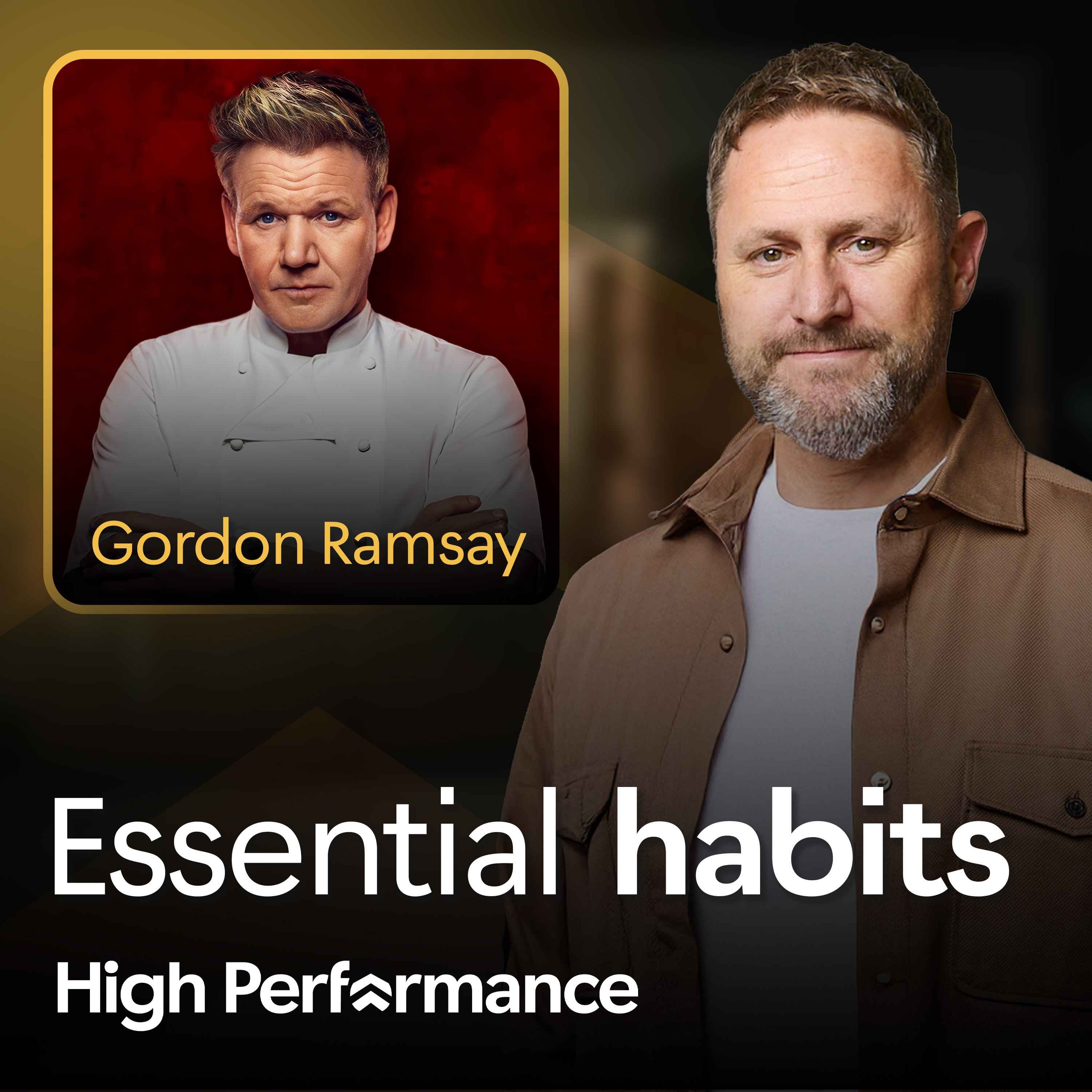
In this episode, hosts Jake Humphrey and Damian Hughes engage in a conversation with renowned chef Gordon Ramsay, focusing on his approach to handling feedback and criticism. Ramsay emphasizes the importance of taking criticism professionally rather than personally, which he attributes to his journey from a footballer to a Michelin-star chef. The discussion encompasses various aspects of growth, feedback mechanisms, and habits that contribute to high performance.
Written by AI. May contain mistakes.

Get the gist, explore an idea or ask about something said.
 Claude
On The High Performance Podcast, what are the key points of this episode?
Searching your listeningAutomatic transcript. May contain errors.
0:28Watch it early on the High Performance App.
0:42I'm no tech genius, but I knew if I wanted my business to crush it, I needed a website now. Thankfully, Bluehost made it easy. I customized, optimized, and monetized everything exactly how I wanted with AI. In minutes, my site was up. I couldn't believe it. The search engine tools even helped me get more site visitors. Whatever your passion project is, you can set it up with Bluehost. With their 30-day money-back guarantee, what have you got to lose? Head to bluehost.com to start now. This episode is brought to you by Opera Air, the first browser with mindfulness at its core. Now, most of us spend hours every day online, but how often do we pause to take care of ourselves whilst we're doing it?
1:24And that's where Opera Air comes in. It's a lightweight, fast, secure browser built not just for productivity, but for your well-being. With Opera Air, mindfulness is built right in. You'll find free breathing exercises, guided meditations, and soundscapes with ambient sounds, lo-fi music, and binaural beats, all designed to help you focus, relax, and even spark creativity while you browse.
1:51Getting told off is f***ing good. really healthy but take it professionally don't take it personally i can't stress how important that is welcome back to the essential habits of high performance this is where we explore the small everyday habits that make high performers tick and how we can all learn to live and work a little bit better i'm damian hughes i'm co-host of the high performance podcast i'm someone who loves exploring how these habits work and how we can take the lessons and apply them. I'll be bringing the latest research and academic insights to help give you a chance to explore them and turn them into habits which can help you thrive.
2:36Have you ever had feedback that made your stomach turn? You know the kind I'm talking about, where your heart's pounding, your ears are ringing, and somewhere deep inside your inner voices yelling, I better start mentally writing my resignation letter. Now imagine hearing that feedback from Gordon Ramsay. When you type the words Gordon Ramsay feedback into a search engine, try this one. What comes up isn't a gentle masterclass in communication. No, it's a highlight reel of one-liners so scorching you'd need other mitts just to scroll through them. You put so much ginger in this, it's a Weasley.
3:14This fish is so raw, he's still finding Nemo. You use so much oil, the US want to invade the plate. Now, they're brutal, hilarious and terrifying. But here's the plot twist. Behind those theatrics, Gordon Ramsay believes in feedback more than most people. And not just in giving it, but also in taking it. Take it professionally, not personally. That's our habit today. And it might just be the one thing that separates those who get stuck from those who get better. In the show notes, you'll find links to the studies and research which I reference. When Gordon Ramsay talks about feedback, he doesn't soften his message.
3:57He sharpens the focus. You need to be a sponge. The best listening device is you. Sponge. He paused, as he often does when he wants something to land. Getting told off is fucking good. Really healthy. But take it professionally. Don't take it personally. I can't stress how important that is. Simple, sharp, spot on. And this isn't just something he says, it's something he lives. Because remember, he didn't start with a Michelin star. He started on a football pitch, where his dream was to play professionally. But when that dream ended with a knee injury and a brutal decision to cut him. What then?
4:41I've always been a solution solver. I've never sat there. Even at that age? Even at that age. Because I got involved with sport early on and so I was super fit, good at what I did. And I think having a chance to get involved with football at a high level and that's been taken away from you was a big blow. And so you don't sit there and become bitter for the rest of your life. It's just dust yourself down. Mum always told me, you know, deal with it. get on it early, get your priorities right, you know, focus on what you want out of life. And so those traits still sit there daily, even today. Let's just listen to this line again.
5:17So you don't sit there and become bitter for the rest of your life. It's just dust yourself down. Mum always told me, you know, deal with it, get on it early, get your priorities right. Which is exactly what he did. He decided to enter the kitchen, not with a sense of entitlement, but with a sense of humility. And when feedback came, now in his case, this was from some great names, whether it was Marco, Pierre, Wyatt, Albert Roux, or Guy Savoy, he didn't flinch, he absorbed the lesson. Listen out in this next clip for nine words which capture the essence of why Ramsey has been so consistently successful.
5:56See if you can spot them. I had father figures in my life. Marco, Pierre, Wyatt was like a big brother father figure. Albert Roux at Le Gavroche was another father figure. Guy Savoy in Paris, all of a sudden you start going to their wings and once you're talent in that division then all they do is pass you on to absolute amazing establishments to sort of learn and I think the secret early on is every time I got to a level next time I went into another establishment I came down a level to learn even greater because sometimes when you jump too high the learning stops because they want to know what you've just been taught so that was bullshit for me because it wasn't making me any better.
6:37And I was on that pursuit to garner all this info. Intel, Intel. Everywhere I went, give me the Intel. What is it? How does that sourdough work perfectly? How do you bone out a pigeon beautifully and not waste anything on that carcass? Did you catch the words? Listen to them again here. Sometimes when you jump too high, the learning stops. Instead of performing for applause, he was positioning himself for feedback. He wasn't looking for praise. He was gathering intelligence. How does that sourdough work perfectly? How do you bone out a pigeon beautifully and not waste anything on that carcass?
7:12Here's the key lesson for all of us. He didn't take his feedback personally. He took it professionally. He wasn't seeing feedback as rejection. He was seeing it as a direction. And that is a habit we can all learn. So what's really happening in our minds when we receive feedback, whether it's positive or negative? Feedback triggers a lot of reactions, many of which are rooted in our psychology and our biology. The actor Bradley Whitford is best known for his role of Josh Lyman, the deputy chief of staff to the president in The West Wing. He may have put it best in an interview where he described his own internal response to receiving direction from a film director.
7:56He said, I go through three beats. The first one is, fuck you. The second one is, I suck. And the third one is, okay, what? It's really brutally honest and, as you're going to hear in a minute, actually remarkably scientifically accurate. When we receive feedback, whether, as we say, it's praise or criticism, our brains go through a process. If we can understand how our brains handle feedback, it helps us turn it into an opportunity to growth instead of letting it hold us back. So let's start with the science. Whenever we hear feedback, especially if it is critical, our brains are hardwired to react defensively.
8:40This goes back to our evolutionary survival instincts. In ancient times, when our ancestors faced a threat, their brains went into fight or flight mode to protect them. Today, when something feels like a threat to our self-esteem or to our ability, our brain still reacts in exactly the same way. it sees the feedback as a potential danger. Neuroscientifically, feedback triggers the amygdala. That's the part of the brain responsible for processing emotion like fear and stress. That's why we often feel anxious or defensive or even angry when we get criticised. That's our amygdala which is practically shouting danger and our natural impulse is to fight back, defend ourselves or just shut down emotionally.
9:26But here's the twist. When we receive feedback that's constructive or helpful, something different happens in our brains. The prefrontal cortex, that's the part that handles reasoning and decision making, suddenly lights up and becomes more active. This shift helps us to process the feedback in a more rational way, allowing us to use it to improve. However, even when feedback is positive, there's still a catch. If we're not careful, we can still get caught up in emotional reactions. As we've discussed, negative feedback often feels like an attack on our identity and it triggers those feelings of self-doubt and defensiveness.
10:08In fact, studies have shown that negative feedback activates the same parts of the brain as when we feel physical pain. Honestly that's right, when we criticise our brain treats it as if we've been hurt physically. Now positive feedback on the other hand tends to activate areas of the brain associated with reward and motivation like the dopamine system. This makes us feel validated and encouraged but even with positive feedback we still need to process it in a way that leads us to be able to use it to improve. It's easy to get caught up in the praise and fail to act on it. The real challenge arises when we get stuck in negative emotions.
10:51That initial defensive reaction, that's where the real problem lies. When we're stuck in that fight or flight mode, it's difficult to move forward and learn what's been said. Now there was this massive meta-analysis of feedback research dating all the way back to 1905, which backs up this idea. The data showed that in 38 % of cases, feedback, even positive feedback, actually made someone's performance worse. Why? Well, we get stuck in those first two stages that Bradley Whitford described. We get lost in the emotions, whether it's the fuck you or the I suck stage, and it clouds our ability to process the feedback and to be able to use it effectively.
11:36It's like our pride blocks us from making progress and the emotions that we feel cloud our ability to see things with insight. So the key question you might be asking is, how do we get to stage three then, the okay what, faster? How do we move beyond the emotional reaction and start using feedback to be able to grow and improve? Well, this is where the psychologists Avram Kluger and Dina Neer come in. Those two have proposed a fascinating alternative to traditional feedback. They call it feedforward. Unlike traditional feedback, which focuses on past mistakes, feedforward does what it says. It shifts the focus to future actions and improvements.
12:26So instead of saying to somebody, you messed this up, you might say, next time, why don't you try it this way? so feedforward subtly shifts the conversation from past mistakes to future actions and it keeps us moving it skips the guilt and most importantly it works because it has five key benefits the first one is it reduces emotional reactivity by focusing on future actions feedforward doesn't trigger the same emotional reactions tied to past mistakes so it lets people feel empowered not discouraged. The second benefit is it increases motivation and engagement so it helps people focus on their strengths and the opportunities that are coming up.
13:10It fosters a growth mindset, boosts motivation and it keeps people engaged in their learning. The third benefit is it improves performance. Studies have shown that feedforward results in better performance. It's because the advice given is relevant to future tasks providing a clear path forward. The fourth one is that it encourages positive relationships so you're avoiding the blame game so it instead fosters a more positive collaborative relationship between the giver and the receiver. And the fifth benefit is it just supports a culture of continuous learning. It gets people focused on getting better constantly which as we know is key for high performance cultures.
13:54So why don't we have a look at how feedforward works in real life. If you're in the workplace, right, a manager might say, I noticed that you handled the project well, but for next time, why don't you try communicating which tasks you'll take in which order to keep the team aligned and on schedule? If you're thinking about applying this in the sports context, a coach might say, your positioning was great, but next time focus on keeping your head down when you shoot. If it's an education, a teacher might feed forward by saying, your homework essay on Macbeth is dead strong, but next time try including more support and evidence to make your argument even stronger.
14:31If you listen to those three examples, in each case the feedback focuses on future steps that can be taken to improve the performance going forward. This approach, as I say proposed by Kluger and Nier, is a powerful tool for improving performance and if we can embrace it we can stop people seeing feedback as something to fear and instead view it as a tool for ongoing growth and success. So how do you take on feedback like Gordon Ramsay? Well, there are three suggested ways in which you might do this. The first one is to assume good intent. When somebody offers feedback to you, don't start with the thought of, they're attacking me, but instead reframe it to, they're helping me here.
15:17So even when Gordon Ramsay shouts, the goal is to make people better, not make them feel smaller. So start by asking yourself, what if this criticism isn't of me, but is instead a gift to me getting better? Think of it as not somebody trying to burn you, but trying to sharpen you instead. The second idea is, use the three-beat filter. When you hear tough feedback, almost mentally check off those three beats of Bradley Whitford. Fuck you, I suck, okay what? And try not to dwell in those first two, but instead aim to get to stage three as fast as possible. Because as we've discovered, that's where the learning lives.
15:59The third idea is practice feeding forward in your own feedback style. So when you give feedback to others or you ask for it yourself, focus on their future actions. So you might ask, what should we do next time? Or what part of this works and how can we build on it? Or what's the one thing I could do to improve? This not only keeps feedback productive, but it also makes it more likely to be received. Gordon Ramsay didn't rise to the top of his game by avoiding tough feedback. He invited it. He wanted it. When we asked him whether he'd ever found this feedback difficult, have a listen to what he told us.
16:40Never. Not once. Fuck no, never. I wanted it. I absolutely wanted it because I could see this opening of escape. I could see the grind, the grit, determination all paying off. And I was becoming better, don't forget. So you've got to sort of self-reflect a little bit because all of a sudden I'd mastered a tortellini. I could make beautiful pasta. I understood how to braise, you know, short ribs. And so that's the payoff. And when you're not getting that substance back and you're not learning on that level, then it's time to quit. but I was learning so fast. I mean, it was just, it was incredible to what I was gaining.
17:23That's the habit right there. Get better, not bitter. Stay open when it's easy to shut down or stay curious when your ego says defend. Because performance isn't about ego, it's about evolution. So the next time somebody offers you a bit of feedback, channel Gordon Ramsay. Be a sponge. Take it professionally and then get to the OK, what stage as quick as possible? Now, the whole of the Gordon Ramsay episode on high performance was fascinating. But coming up next, I'm going to be speaking to our producer, Will, about the social clip that blew up the internet, the traumatic end to Gordon's football career, and the difficult relationship that he had with his dad, which he credits with making him into the success he is today.
18:11If you're still overpaying for wireless, it's time to say yes to saying no. At Mint Mobile, their favourite word is no. No contracts, no monthly bills, no overages, no hidden fees, no BS. I made the switch because I was tired of those ridiculous bills and sneaky charges from my old provider. With Mint, I'm paying$15 a month and getting the same high-speed data, unlimited talk and text, and coverage on the nation's largest 5G network. Honestly, the quality is just as good, if not better than what I had before. And the best part? You don't need a new phone. You can keep your current one, bring your number, and all your contacts.
18:46I use Mint Mobile, and you should too. Ready to say yes to saying no? Make the switch at mintmobile.com slash HPP. That's mintmobile.com slash HPP. Upfront payment of$45 required. Equivalent of$15 a month. Limited time new customer offer for first three months only. Speeds may slow up a 35 gig on unlimited plan. Taxes and fees extra. See Mint Mobile for details. Tonight's meal, tilapia surprise with boiled cabbage. Begin cooking steps 1 through 50 now. Are you kidding me? Making dinner shouldn't feel like doing a thousand-piece puzzle. With Blue Apron's new one-pan assemble-and-bake meals, the hard part's already done.
19:24Pre-chopped ingredients, zero stress. Just assemble, bake, and enjoy. No complicated steps, no mountain of dishes. Try assemble-and-bake today. Get 20 % off your first two orders with code APRON20. Terms and conditions apply. Visit blueapron.com slash terms for more. I'm no tech genius, but I knew if I wanted my business to crush it, I needed a website now. Thankfully, Bluehost made it easy. I customized, optimized, and monetized everything exactly how I wanted with AI. In minutes, my site was up. I couldn't believe it. The search engine tools even helped me get more site visitors. Whatever your passion project is, you can set it up with Bluehost.
20:02With their 30-day money-back guarantee, what have you got to lose? Head to Bluehost.com to start now.
20:12how you doing day mate yeah good mate how are you yeah so gordon ramsay you weren't here for this one no i was away and actually that's an interesting point in it that his schedule was that inflexible that he could only do a certain hour on a certain day and that was all we were going to get off him absolutely we set up in a members club in london to make sure the environment was right it had to maybe kind of specifically around a certain area. And he was a dream guest from the start. I actually remember there being a dream guest list and him being on it. So it was an exciting person to have on.
20:48Yeah, and he had quite a strict team around him as well, didn't he, that were managing his time and being really clear about what was on and off limits. Absolutely. And I'll give you a painted little picture for what it was like on the day as he came in. We're kind of nervous. Sometimes you get a bit nervous when people arrive. And not often, but only because he carries such a reputation. And it kind of, his aura in the room was like immediately there. But to his credit, he walks around, he asks everybody's name, firm handshake, like proper firm handshake. Like, I mean business handshake. and wanted to, you know, polite but wanted to crack on.
21:33Like, time is important. But, and then, you know, as you would expect, just actually an amazing storyteller. I don't think people give him enough credit for the storyteller that he is. So he's done, he has the skills, he's done this amazing career, but my God, he can deliver it in such a good way. You know what I find interesting there, though, is like your description of him is very similar to the description Marcus Waring told us when he saw him in the kitchen for the first time, this sort of charismatic, magnetic character where people are drawn to his energy. Yeah, you kind of almost, you know, certain people walk in and you just know they're there and then you kind of can't keep your kind of eyes off them.
22:17He was exactly like that. So let's get into a clip then because I wasn't there, but I was dealing with some of the fallout from a certain section of it that went viral. Should we have a listen to that and then you can tell us a bit more about it? Yeah, listen to it first and then we'll tell you what happened. I remember going to ask her father if I could borrow 20 grand for the deposit for a flat that we fell in love with. And I thought this was all going well. Lunch is good. I'll pay for lunch. And I said, oh, by the way, Chris, you know, about that deposit, you know, Tana and I, we've got half of what we need, the other 20 grand.
22:54I'll pay you back in a year. He said, okay. Yeah. Here's what I'll do. I'll have another lunch with you. When you sell your Porsche. I thought, you fucker. But you clever fucker. Here I am driving around in a flash fucking 911. 911 turbo conversion. And Tyler and I loved the car. And we didn't even have a fucking house. Didn't have a flat. Didn't have a roof over her head. That's the best advice he ever gave me. Sell your fucking Porsche. I did sell it. And 10 years later, I went and bought it back. Same car? Same fucking car. Yes. Right, go on then. So, we were testing out something where we teased a clip before the episode went out.
23:46So, we were like massive guest, drum up interest. So, we clipped out that bit about selling his Porsche. and it took off on a life of its own. Well, I remember sort of, I was away at the time and I was getting messages off people saying it was dangerous and it was really disgusting and against the principles of high performance. And it was only when I phoned you and Jake and got the wider context that I realised that people were misinterpreting actually quite a powerful message he was giving. Yeah, and this was the bit like, the clip went through all of the steps clips go through for sign-off as well.
24:25So it went through his team and him, maybe it was him, I'm not sure, to be like, yeah, everything's fine, everything's great. Like nothing was flat. I genuinely like, it's a good clip. It's really punchy. I didn't think, I thought the message was in it, but it obviously just wasn't. I think just the idea of sell your Porsche just seemed to grate on a certain area of social media. I get that, but I think the wider point he's talking about there is just how sometimes we can be deluded. And he was acknowledging the role of his father-in-law of just popping that bubble of delusion. Yeah. I'd like to explore another clip where he talks about his mentality of being a problem solver and that was born out of the trauma of his football career ending early.
25:08Yeah, I was a fiddle, you know, six foot two, naturally left-footed. Very, very few individuals got past me. And so I was, you know, I was a steam train. I remember playing a testimonial for the first team, got my first call-up. And then, of course, he'd just broken into the first team. He was playing for Scotland under-21s. I was 18 at the time. Dave McPherson just got his first big call-up. And so, all of a sudden, you're in this amazing team. You're on the sheet. Your name's there, number three on the back of the shirt. And I went in for this 50-50 tackle, and it was crunch. And I laid there in such pain, tore my crucial ligament, and smash my cartilage.
25:49Then we didn't have private healthcare. You didn't get whisked off to Germany for the latest surgeon. You were on the rubbish heap. You were in the scrap heap. Because there's four or five guys behind me instantly to take my place. So that was devastating. Then I came back down to Banbury in Oxfordshire and I lived in a council flat with my sister and then got into college, got into catering as a way of becoming independent and moving further away from the upset that was in my mind on a daily basis. How painful was that? Oh, shit. I mean, really painful. But brutally painful, especially when your mates are making it and they're progressing and you're seeing the headlines, you're purposely not watching the news, you're purposely not finding out the scores at five to five on a Saturday afternoon because you want to move away from that.
26:39So it was that moment that my mum taught me, dust yourself down, pick yourself up and go again. And then that freedom with the connection with food all of a sudden started to really resonate the sort of the breadth of what you need to understand. And then I got to London. I had to head to London. I had to go into somewhere unique in order to learn unique things. Because if you want to be one of the best, you need to work with the best. He just has this weight of delivering messages with some colorful language, which really hammers home the point. and it just makes you hang on his words. And that, for me, just shone through the whole chat and why I find him such a captivating person.
27:25Even the stuff about his profanities and things like that, I think he's a man that's a product of his environment, isn't he? Playing football in the late 80s, early 90s, when he was coming through, that was what you'd expect from coaches and leaders in that environment. So he's been shaped by that. But there's another interesting clip where he talks about the role of his father. If we're going to understand him, looking at the role of his dad, I think he's worth just exploring. I think growing up and watching the destruction that my father was creating, and he taught me in many ways how to become a great father by doing the opposite of what he showed me.
28:01And so I was desperate for that chance to get out of that mess and create something special for myself. What sort of father was he? Didn't really get on with him in a way that he, in many ways, was maybe some fair to say a failed musician, but he was into music, played with the Marty Wilds, had these band, did records, etc. But I remember on multiple occasions we're going in and out bars, lumping gear every Saturday night, and then sat watching him. And it was never a fun evening, because as the drinks got bigger, the room got feistier, and all of a sudden, you're sort of rushed out in the back of a transit van and you're sort of disappearing.
28:45So I never really had that connect with him. We never really bonded. We never really spent a lot of time together. So, you know, I make up for that now having two sons. Again, maybe not something that is very familiar that definitely came out of the podcast was the drug issues that his brother had suffered and then the role of his father growing up. Obviously, a fair amount of violence within that and the lessons it taught him to be a good father. but definitely the trauma of his kind of youth shaping him into the person he is today. Well, one of the main things we often talk about on the podcast is this idea of post-traumatic growth, you know, where it's almost like the lesser-known cousin of the more famous post-traumatic stress disorder.
29:28And I think without being too crass about it, I think Gordon and his brother are a great example of both of those things where his brother's experienced some of the same traumatic events and it's sort of been difficult for him to process, whereas Gordon has experienced it and used it as a springboard to grow, to be better, you know, whether that's as a dad or as a professional. I don't think there are many... We've had a few chefs on, and I think we can probably... I can think of, like, Marcus, Gordon... Tom Kerridge. Tom Kerridge. There's something about that environment that it's almost like that high-pressure environment which just is, you know, a real fascinating job to really analyse.
30:13And every single one of those conversations has stood out. Yeah, definitely. I mean, the Tom Kerrigs about rather be a pirate than join the Navy. You know, Marcus wearing his dad saying, hang around with shit, you smell like shit. Gordon Ramsay sort of believing that, you know, you take a job that's beneath you so you can learn. These are all fascinating people that are teaching us some incredible habits that we can apply regardless of our industry. Yeah. So what's the abiding message you want to leave people with today, Damo? What we started, this idea of we have to be open to feedback from people that really matter to us.
30:51But when we get it, it's about how we receive it. We have to take it professionally and not personally. We spoke in the first half around getting to those three beats. First of all, your instinct is to think, God and Ramsey style, fuck you. and then we reflect on, oh, I'm not good enough. If we can get beyond those first two stages and get to that, okay, now what can I do with this stuff? That's where I think we all can adopt that habit of high performance. Thanks for joining me on the Essential Habits of High Performance. I'm Damien Hughes. If this episode's given you something to think about, share it with someone else who's serious about growing.
31:27And remember, feedback isn't failure, it's fuel. We grow by being challenged. so stay open, stay hungry and I'll see you next time
31:47Did you know that over 9 % of Americans will have an eating disorder at some point in their life? That's almost 1 out of every 10 people meaning that you almost certainly know someone with an eating disorder or maybe you're struggling yourself If you're concerned about your eating habits or are worried about a loved one I want to introduce you to Equip Equip is a fully virtual, evidence-based eating disorder treatment program that helps patients achieve lasting recovery at home. Equip treats patients of all ages and all eating disorder diagnoses. It's covered by insurance and there's no wait list.
32:15If you think that you or a loved one could be struggling with an eating disorder, don't wait to get help. Visit equip.health to learn more. That's equip.health. At Capella University, learning online doesn't mean learning alone. You'll get support from people who care about your success. like your enrollment specialist who gets to know you and the goals you'd like to achieve. You'll also get a designated academic coach who's with you throughout your entire program. Plus, career coaches are available to help you navigate your professional goals. A different future is closer than you think with Capella University.
32:50Learn more at capella.edu. Hey, I'm Dr. Z and I'm a neurosurgeon. So that means long hours, early rounds, late nights, and everything in between. And through it all, I wear figs. They're comfortable when it counts and functional when I need them the most. So where do you wear your figs? On shift, on call, on the couch in the break room listening to this podcast, wherever it is, they fit right in. And now listeners of this podcast can get 15 % off their first order. Just head to wearfigs.com and use code FIGSRX at checkout. That's wearfigs.com, code FIGSRX.
When you think of Gordon Ramsay, you probably think of shouting, sarcasm, and one-liners hot enough to sear a steak. But behind the fire is a habit that’s far more important than the volume: He takes feedback professionally, not personally.
In this episode, we go beyond the reputation and dig into the mindset that helped Gordon rise, not just to fame, but to genuine mastery. From his early football dreams to Michelin-starred kitchens, Ramsay shares how embracing criticism, and choosing to learn from it instead of defending against it, changed everything.
We explore:
Whether you're leading a team, learning a craft, or just trying to handle tough conversations better, this episode is for you.
Because growth isn’t about never being wrong. It’s about what you do when someone tells you you are.
Listen to the full episode with Gordon Ramsay: https://pod.fo/e/1fa614
Here is more information on the studies referenced:
Hosted on Acast. See acast.com/privacy for more information.


