
 Ask ChatGPT


 The High Performance Podcast
29 Aug 2025 · 31m
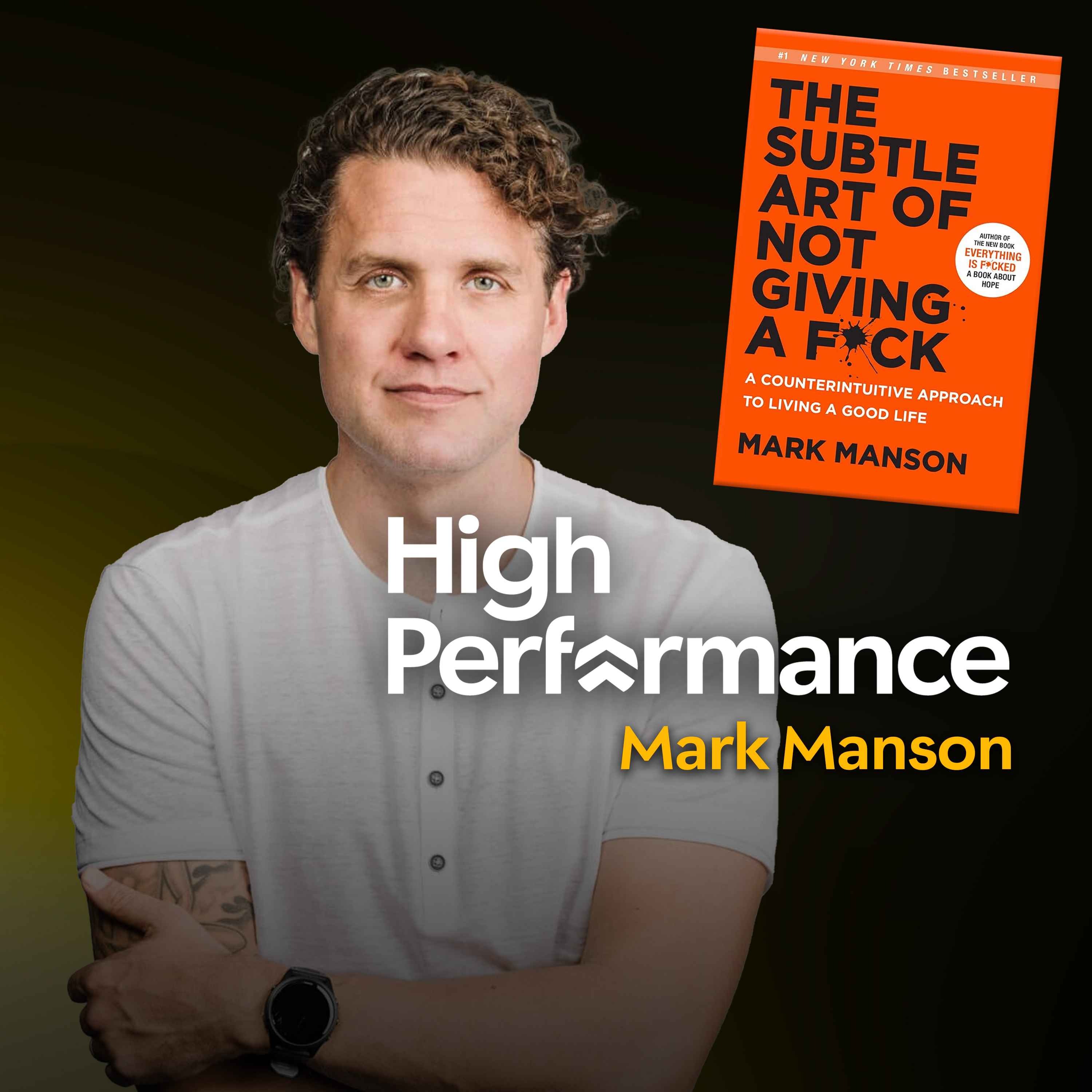
In this compelling episode of the High Performance Podcast, hosts Jake Humphrey and Damian Hughes engage in a deep conversation with Mark Manson, the bestselling author of *The Subtle Art of Not Giving a F. Manson opens up about his experience with sudden success, depression, and the journey of rebuilding meaning and direction after experiencing burnout.
Written by AI. May contain mistakes.

Get the gist, explore an idea or ask about something said.
 Claude
On The High Performance Podcast, what are the key points of this episode?
Searching your listeningAutomatic transcript. May contain errors.
0:28Watch it early on the High Performance App. expert right when you need them. Work smarter and faster with Upwork. Go to Upwork.com now and find your freelance expert. That's U-P-W-O-R-K.com. Post a job for free and get started today. Did you know adults 60 plus lose more than$60 billion each year to financial exploitation? Greenlight's new Family Shield plan empowers you to monitor your accounts for suspicious activity, protect yourself with up to$1 million identity theft coverage, and reassure loved ones that you're safe with location sharing and place alerts. Get peace of mind today at greenlight.com slash protect.
1:04That's greenlight.com slash protect. This episode is brought to you by Opera Air, the first browser with mindfulness at its core. Now, most of us spend hours every day online, but how often do we pause to take care of ourselves whilst we're doing it? And that's where Opera Air comes in. It's a lightweight, fast, secure browser built not just for productivity, but for your well-being. With Opera Air, mindfulness is built right in. You'll find free breathing exercises, guided meditations, and soundscapes with ambient sounds, lo-fi music, and binaural beats, all designed to help you focus, relax, and even spark creativity while you browse.
1:45Quincy Jones used to call it altitude sickness. He said people would climb the success ladder too fast and they would get altitude sickness and they'd fall off. We all have a certain amount of capacity to do things that we don't really care about. I used to be critical of the idea of burnout. And then it happened to me. However we define ourselves, our emotions tend to protect that. This is why people self-sabotage a lot when like huge opportunities come by. That is the voice of Mark Manson. And this is High Performance, the podcast that turns the lived experiences of the planet's high performers into life lessons for all of us.
2:22And we start this episode at the exact moment that success arrived for Mark. The subtle art of not giving up bleep had just become the number one bestseller in multiple countries. Mark was 32. His biggest dreams had just been realized. And yet this is what he said. I was the most depressed I had been probably since I was a teenager. Isn't that interesting? In this conversation, Mark will open up about the hedonic treadmill that so many of us are on that we're chasing more, more, more all the time and for what reason because the emptiness that can follow that achievement is real and mark will also share what we get so wrong when we think the success will fix everything in our lives because this is a conversation about expectations identity the courage to stop performing and just start living so why don't you hit follow on apple or spotify so you never miss an episode as we welcome to high performance mark manson
3:20honestly when when subtle art blew up and became number one on all the bestseller lists and was huge in a bunch of different countries i was the most depressed i had been probably since i was a teenager and it was simply because i had no fucking idea what to do next like here are all my dreams that I had since I was in my early 20s, and they all happened within about three months of each other. And I was only 32 years old. And I'm like, shit, I still have a whole career in front of me. And I'm pretty sure nothing I ever do is going to match or top this. I just kind of felt this paralysis of not knowing what to do next, not knowing who I was going to be, not knowing what to dream, like what my goals were, what to pursue, what to care about.
4:11And so it sent me into kind of like a six-month tailspin that was really blindsided me because, you know, like everybody, I kind of assume that you have this big best-selling book and everything's going to be great and you're going to be happy all the time. And it's very ironic considering the stuff I talk about in the book because in my book, I kind of talk about how this stuff, it's not clear cut and it's not obvious and you always need a new problem to confront. But yeah, it's interesting. I think this idea, this game that our minds play with us of dangling that carrot in front of us and telling us, hey, if you get the carrot, everything's going to be great.
4:50That it is just a game. It's kind of an illusion that goes on. I think it's important and it is really, it's necessary to talk about with these topics. Quincy Jones used to call it altitude sickness. He said people would climb the success ladder too fast and they would get altitude sickness and they'd fall off. You almost have to experience success at a certain rate of growth to kind of remain mentally stable. When I did the publicity rounds for my follow-up book, and I shared this story about kind of being depressed after the book success. So many people reached out to me. They're like, I've never talked about this with anybody before.
5:31You know, I had a friend in New York who actually came up to me and he was a really successful startup founder and he exited his first startup for an obscene amount of money. And he told me, he said that first year after I exited, this is the most miserable year of my life. Like I, he had many, many, many millions of dollars in his bank account. And he said he just sat around in his house, bored, depressed, like completely lost. So it's, but this is the thing. Mark, so sorry to interrupt. I'm interested as a survivor of altitude sickness yourself then, and having met other sufferers of it, what are the tricks that you've learned to be able to process that success and then carry on without it feeling that everything else is a disappointment after it one ingredient of it is is simply time let it normalize a little bit in your brain and then also get a little bit of distance from it to use my own phrasing like to give fewer fucks about it i actually i have a friend who's an author who has experienced similar drastic, sudden success recently.
6:46And I had a conversation with him about a year ago about it. And he was kind of going through a lot of the same stuff that I went through. And I told him, I said, the best piece of advice I can give you is to just wait. If you're unsure, if you're kind of freaking out, if all these projects are showing up and you feel like an obligation to do them, but you also are an anxiety-ridden mess doing them. I said, just wait. Just take a couple of years. It's not going to go away. Most of the deals in front of you are still going to be there. Just take a year or two. Get your head on straight. Because I kind of did the opposite.
7:23I started saying yes to everything because I think I had kind of this insecurity of my lottery ticket hit and this is going to be gone soon. So I should just say yes to every project, every speaking gig, every appearance. because it's all going to go away. And I burnt myself out really bad. And I kind of lost direction because I was, you know, if you're saying yes to everything, then like, you need to say no to things to know what you care about. I think that's another big piece of it is to get better at saying no to things, get more discerning on what projects actually excite you, what you actually care about.
7:59And then for me, it took a couple years to kind of start formulating new dreams for myself, new goals, new aspirations? What is the next big thing that I want to accomplish? And then once I found that, it's basically that old saying of you climb a mountain, you spend years climbing a mountain, and you get to the top. And just to realize that there's another bigger mountain behind it, you got to figure out what that bigger mountain behind it is, essentially. And then you go start climbing that. What's yours? I actually, I want to create a media company over the next 10 years. I'm still going to write books, but I started blogging in 2008.
8:41And the knowledge I've gained from building up a web business, building up an online platform, doing all the blogging, doing all the social media, hiring a team to do all that stuff, I feel like I've just accumulated enough knowledge that I can start kind of building a full company out of that knowledge. And I feel like there's just a lot of opportunity. I mean, you guys are part of it as well. Like just in podcasting and video, YouTube, this is the new TV and radio of the 21st century. And we're still in like the very, very early stage of it. But when I listened to you describing that, the journey that you're now on and the adventures you're now pursuing though, mark it sounds exhausting to me and the reason I say that is because you mentioned a word that really made my ears pick up which was burnout as somebody that's come close to that myself over the years where you you get a bit too close to the flame and you start to see the symptoms of it and I know that lots of people that listen to this will contact us and talk around the dangers of burnout.
9:52I'm interested in your experiences of it, your definition of it, and also your lessons of how you've stepped back from the brink so you can go after these new exciting adventures without risking it again. I've always been a little bit of a workaholic my entire adult life. And it's funny too, because I used to be critical of the idea of burnout years ago. And then it happened to me and I was like, whoa, I didn't, where did that come from? I've never felt this before. And And looking back, I think the problem was, I think we all have a certain amount of capacity to do things that we don't really care about.
10:29Do it for the paycheck. Do it because it's good for the resume, whatever. Like there's a certain percentage of your effort that you can allot to stuff like that. I think once you exceed that percentage for too long of a period of time, it starts to eat away at you. And I think that's what happened to me. kind of going back to this feeling that I needed to say yes to everything. Yeah, I basically got myself into a situation where I'm going to a bunch of events that I don't really care about. I'm working on some projects I don't really care about. And you can do that a little bit. But once you do it for three, four years, and you're doing it around the clock and working your ass off, it catches up with you.
11:12And so again, I think it comes back to learning how to say no to things and being very, very discerning and merciless about the things you say no to. And then in my case, I mean, I think once you're in that burnout, like you really need just time away. You need time off. You need a vacation, a short sabbatical, whatever. I ended up, I originally planned on only taking a month off at the end of last year. And then I had so underestimated how burnt out I was that after that month, I was like, I think I need like two or three more. And I ended up taking six off. And it complicated a bunch of contracts.
11:50I had to call people and say, hey, that thing I was going to do, I'm not doing it. Or hey, that book that you thought I was going to be writing this year, I'm not writing it. But it needed to be done. And honestly, it was one of the best decisions I've made in the last few years. I had been saying yes to so many things for so long that I forgot what I actually wanted to be working on. But when you just cut everything off and you go away for a while, you start missing some projects and you don't miss others. And I came back with a list of like, these are things I'm never doing again, period, right?
12:26For me, the number one thing was public speaking. it's easy money on paper in my profession but it it's just like so draining and just not enjoyable for me when i was away it was the first and most obvious thing of like i should stop doing this like it's just not i don't need the money it doesn't make me happy it wastes a bunch of time it distracts me from things i want to be working on like uh and so i you know you come back with a list of like okay these are the things i'm not going to do anymore these are things i'm not going to focus on. But I think on the other side, it's people look at it and it allows them to miss you.
13:03It allows them to say like, shit, Mark was adding a lot of value on this project. I really can't wait for him to come back. And so I think it can improve business relationships. And again, this is under the assumption that you're not doing anything drastic or unreasonable like disappearing for three years. And then, you know, obviously, if you disappear for three years, your job's not going to wait for you that long. But like, you know, if you're anxious or uncertain about, you know, maybe you really do feel like you need a couple months away, and you're afraid to ask for that, a lot of people could be pleasantly surprised at the reaction that they could get.
13:48I love all that stuff because it plays really nicely into the power of taking responsibility for things. You know, like you talk brilliantly in the film, fault versus responsibility. And that is one of our key lessons here on high performance is trying to help people realize the difference between just because something isn't your fault, it's still your responsibility to deal with it. Yeah, absolutely. And I think that's particularly important as it relates to teams and it also relates to leadership. This concept of radical responsibility. It's not my fault somebody on my team fucked up, but I need to be there and pick up the slack.
14:25Can you talk to us about Manson's law of avoidance? You said in your film that it would be a dream to have a law named after yourself one day. You've nailed it. You've had everything now. Yeah. I could die happy. I was obnoxious enough to name a law after myself So Manson's Law of Avoidance is basically just this idea that however we define ourselves, like the way we think about ourselves, our emotions tend to protect that. So like the simplest example of this is that if you largely define yourself by say, you know, how good of a podcaster you are or whatever, you then read a comment of somebody talking shit about you, your natural reaction is going to be anger.
15:12You're going to be like, what the hell is wrong with this person? I'm so sick of these trolls and haters. And you're going to have an emotional reaction to that. And just the way our mind seems to function is that whatever the self-definition is, the emotions kind of conspire and get together to protect that self-definition, to respond in a way that keeps that self-definition intact. It's often referred to as the ego. So, well, what's interesting is that we have that emotional response, not only when somebody challenges our identity in a negative way, but we also have that emotional response when something challenges our identity in a positive way.
15:51This is why people self-sabotage a lot when huge opportunities come by. It's sometimes referred to as this feeling of not deserving. It's not so much that you don't deserve something good in your life. It's just that you've defined yourself in one way that is extremely comfortable and feels secure to you. And then when somebody comes and offers you a huge opportunity, that completely negates a lot of the narratives that you've been basing your life on. And that's a really, really scary thing. And that creates a lot of anxiety. And it creates a lot of resistance. and it creates a lot of emotions that try to convince you to not do that huge opportunity because that might mess everything up.
16:33And so Manson's law of avoidance is really just like, we tend to be repelled by anything that challenges our definition of ourselves. So how does that fit with the start of this conversation about that delusional positivity? Because if you present it with an opportunity and you've convinced yourself that it goes outside your comfort zone. Surely to believe you can take it on then requires a degree of delusional positivity. Well, I think this is probably the reason why a delusional positivity in terms of future projection is so useful and does lead to higher performance so often. It's because if the narrative you're telling yourself is like, I'm going to be huge, I'm a huge success, it just hasn't happened yet.
17:20And then the opportunity comes by, you're like, ah, it's about damn time somebody else noticed. Whereas if you don't have that narrative to begin with, then you might resist that opportunity. This opportunity that you said when all your dreams came true, when the subtle art did become that international bestseller. I'm interested in what were the ghosts from your childhood that were rattling around your own adult body? You know, the narratives that you'd had from your own upbringing that maybe got in the way of you being able to enjoy that success. But it's really funny because as a teenager, I wanted to be a musician and I took it very seriously.
18:00I went to music school and then I realized, okay, I don't want to be a musician. This is really fucking hard. And damn, people expect you to practice a lot. You know, when I started, when I started my first website, my only goal was to make enough money online that I could go to Thailand and Argentina and Brazil and party and hang out at the beach. That was pretty much the extent of my ambitions for most of my 20s. And then it wasn't until the first real big ambition I had, I decided, I think it was 26. I've been doing a bunch of websites, online business. I've been doing some freelance web design.
18:44I'd been doing some online marketing. I'd been doing some affiliate stuff. And then I had been doing the blogging. And I was okay at all of it and not excellent at anything. And I looked at it and I said, okay, I've been doing all this stuff for a few years. I've been living on beaches in Thailand and Argentina and Brazil. The one thing out of everything I'm doing, the one thing I think I have actually have some talent and I actually really enjoy is the writing. And so I decided at that point, okay, my dream is I want to be an author. I want to be a published author. I want to have books. And one day I want to be like a New York Times bestseller.
19:20If I can do that, then, oh my God, life is going to be great. And so for the next five or six years, I progressively worked towards things that led to that. I built up a blog and I built up the readership and I got an agent and I got a book deal and yada yada. Well, then the book comes out and it becomes a huge hit. And all that stuff is realized within, like I said, within a few months of the book coming out. And the problem was, is I had no vision for myself beyond that. Like in my head, I was like, I'm going to be writing and working at this dream, probably my entire adult life. Like if I hit it, I'm probably going to be like in my late 40s or 50s.
20:03And then I hit it in my early 30s. I think it kind of triggered a midlife crisis a little bit early for me, in which I'm sitting around in my apartment, you know, wondering, what is it all for? What's next? You know, what am I going to do with my life? What's the point of any of this? you know so it something i failed to do but i think is important especially for people who are in industries like mine or say people who are athletes i think it's important to think about okay what's what's the thing that's next i have a i have a friend in new york who's a sports psychologist and he told me he said we start talking to athletes about planning for their second career, their rookie season.
20:56He said, I'll get a guy coming in who's 21 years old, was hot shit, went first round in the draft, is going to be the new star for his baseball team or his football team or whatever. And he's like, I'm already talking to him. What are you going to do when you're 40? What is your second career going to be? How are you going to spend your 40s and 50s and 60s? Because he said that so many athletes, they get to the end of their career and they still have half their life in front of them and no vision for themselves. I guess the same way you would diversify a portfolio, like your financial investments, you should probably diversify how you invest in how you see yourself.
21:39Don't just go all in on one pursuit. Have a well-rounded identity of various ambitions and goals that you want throughout your life. So that not only if you like do hit a dream, you don't feel completely lost, but also like, you know, if something goes horribly wrong in one area of your life, you don't feel like you're completely lost either. We're about to move on to our quickfire questions, but I can't do that without asking you just to share one last story with us from the film about Dave Mustaine, the founding member of Metallica. I thought it was absolutely fantastic. We live in a world where everyone is comparing themselves to everybody else.
22:18So would you mind for our listeners, just sharing this story just briefly for a couple of minutes. Okay, so I'm a big metal fan. And Dave Mustaine, he was the first lead guitarist of Metallica. And he actually got kicked out of Metallica right before Metallica recorded their first album. Now, obviously, that's a terrible thing. But Dave Mustaine was super interesting in that he got very pissed off. And he said, I'm going to use this as fuel. He did all the things that we all talk about that you should do when you have a setback or a failure or whatever. He said, I'm going to work my ass off. I'm going to make a better band.
22:54I'm going to sell more records. I'm going to sell more albums, do a bigger tours, et cetera, et cetera. And so he created Megadest. And I think to this day, he's sold a hundred million records. He's done stadium tours around the world. He's grossed hundreds of millions of dollars. He's one of the biggest rock musicians in history. The problem is the band that he was kicked out of is an even bigger group of even bigger rock musicians in history. And so there's this fascinating documentary, I think it happened in the early 2000s, where in an interview, he had tears in his eyes and he said, I still feel like a failure because I'm still the guy who got kicked out of Metallica.
23:36Doesn't matter how many records I sell, doesn't matter how many stadiums I play to, I'm not Metallica. They've done more. They've sold more records. They've done bigger tours. And so I still feel like a failure. And to me, it's just such a fascinating demonstration that the way we define success for ourselves is so precarious. You have to be really, really careful because Dave Mustaine's a great example of he defined success for himself in a way that was very helpful early in his career. He was like, oh those guys kicked me out of their band fuck those guys i'm gonna be bigger and better and more successful than them and that helped him get started and it helped him you know sell a bunch of records and everything but jump ahead 20 years and that definition of success became a prison for him and it prevented him from appreciating anything that he had accomplished from enjoying any of the successes that he had had it's just a really fascinating cautionary tale of be careful how you're measuring yourself it's good stuff man let's move on to our quick fire questions to round up mark
24:45the first one is what are the three behaviors that you and ideally the people around you must buy into authenticity respect and compassion nice i would say if you could go back to one moment in your life what would it be and why i do my wedding again my wife is brazilian and brazilians if there was a nobel prize for parties a brazilian would win every single year for the last hundred years like they are just any sort of celebration or joyous occasion they do it best and we our wedding was in brazil and it was just unbelievable so nice where were you where are you where are you going fuck man i'm a writer so like my mind is like spinning up all these metaphors and like i you come on think out loud this is we want to hear this is not a this is not a quick fire question for me um i think i think where i was and i'm thinking of myself say like 10 to 15 years ago was somebody with a lot of drive and talent but without focus i think where i am now is I am like in that prism of like taking wide diffuse light and focusing it on a single point and where I'm going is I'm trying to be merciless and protecting that focus on that single point saying no to all the distractions in life and and by the way side note sorry this is getting really long this is not a quick fire answer at all side note ties in with all this discussion about success, one of the things that people never tell you about success is that it gets harder and harder to say no to things because all of the things that people are coming and offering you are shinier and shinier and shinier.
26:52And so early in my career, I always prided myself at being very good at not doing things I didn't want to do. But fuck, man, it gets hard. It gets really hard. like like there's just so many cool opportunities and big checks and you know like and it's a trap it's a it's a huge trap so that's where i feel like i'm going you had a dream um and then it someone said why do you care i'm dead when you're still too afraid to live i think we should finish with you just sharing that with us because i think that probably is a lesson for how to live a high performance life yeah absolutely so for people who have not read the book or seen the movie i tell a story i had a friend when i was a teenager i had a friend who passed away suddenly and tragically and um when i was young i was i was you know i smoked a lot of weed and was just kind of kind of a lazy entitled young person and also suffered a lot from social anxiety and was just like very much within my shell.
27:56And I had a dream. This friend of mine was a very outgoing guy that I looked up to. And shortly after he died, I had a dream with him in it. And I told him, I said, I'm sorry you died. And he responded, why are you sorry I'm dead when you're still so afraid to live? And I remember I woke up crying from that. And honestly, that whole experience, His passing and then just the number that grieving process did to me psychologically as a young person. Like it really, I think it's one of the most formative things that has ever happened to me. It's showing me how fragile life is, how easily it can be taken away and how you really, really, whatever you do, cannot waste a moment.
28:49I appreciate every second of it. What a way to finish. Mark, the pleasure's been all ours. Thank you so much for finding the time to speak to us on High Performance. Thank you, guys.
29:03Damien. Jake. I think that was full of gold. I thought it was brilliant, yeah. I love his brilliant writing. I've enjoyed reading his blogs for a long time. I just love how he can take an idea and explain it in such a succinct, digestible way. I think there's a real talent in that. And having met him, I think his ability to articulate it was equally fabulous. I think that one of the big takeaways for me, right, from Mark Manson's work is this understanding that we're all thinking happiness lies in having a problem-free life. He makes it very clear that there is no such thing as a problem-free life.
29:41Like life is not without problems. It's not without pain. It's not without disaster. It's not without disappointment, but it can still be good. And having those problems, and overcoming those problems is actually where the fulfillment in life is, rather than, as he says, getting to the top of the mountain, thinking you've scaled the mountain and seeing straight away there's another peak five miles further on. In that world, nothing joyful lives because you're constantly on that, again, the hedonic treadmill thinking, right, next mountain, next mountain. For him, it's this understanding that the overcoming of life's shitty things is actually the greatness in life.
30:19Yep, the journey, not the destination. I think there was another big thing though that I took away from it was it reminded me of um there's a brilliant book by a guy called Barry Schwartz and the book is called the paradox of choice where we convince ourselves that having a plethora of choices will make us happier you know if I could have this and this and this and and I'd love that and I'd love to have that choice and what Barry Schwartz talks about and what Mark's just told us is that actually having lots of choice makes us unhappier because we always feel we're missing out on something that there's always something else that we could be having rather than enjoying what we've got in this moment in time and i think that was a really interesting part of the discussion around the success how brighter bigger shinier objects come your way and that doesn't make you happier focusing on what really lights your fire is where true high performance exists yeah and i think the way that he signed off that conversation talking about you know the death of his friend and the impact it had on him and the dream that he had i think i get the sense that that kind of lives with him daily you know people most people will hear this podcast but if people are are watching it you'll see that actually he looked quite emotional just even talking about it there yeah i mean what a great line that is that why would you be worried about my death when you're afraid to live and i think there's so many echoes with previous guests in terms of what Mark's sharing with us there.
31:43It was a real privilege to listen to him. Huge thanks to Mark for joining us. Listen, if you found something valuable in that episode, please just send it to someone, ping it to them. They might never have heard of High Performance. And if you can hit follow on Apple or Spotify, it means we can keep growing the channel. And if you love this self-help stuff, then you can check out the High Performance app and search in the back catalogue for the likes of James Clear, Mel Robbins, Ryan Holiday, Chris Voss and so many more. See you next time.
32:58Thank you.
In this episode, we’re joined by Mark Manson, bestselling author of The Subtle Art of Not Giving a F***. We start at the exact moment his book became a global bestseller. Mark says that when it blew up he was the most depressed he’d been since his teens and explains why success did not fix him.
Mark unpacks the hedonic treadmill and the cost of constant chasing and how your identity can get tangled with performance, sharing raw stories of burnout, grief, and the hard choices that forced him to stop ‘performing’.
He offers simple practices he used to rebuild direction and meaning. Listen as Mark walks you through the fallout, the recovery, and the small actions that changed everything. You’ll hear questions to test your own relationship with success.
Heights 👉 Get 20% off your subscription by using Code: HP20 here: https://highpfrmc.com/heights20
Hosted on Acast. See acast.com/privacy for more information.


