
 Ask ChatGPT


 The High Performance Podcast
17 Apr 2025 · 46m
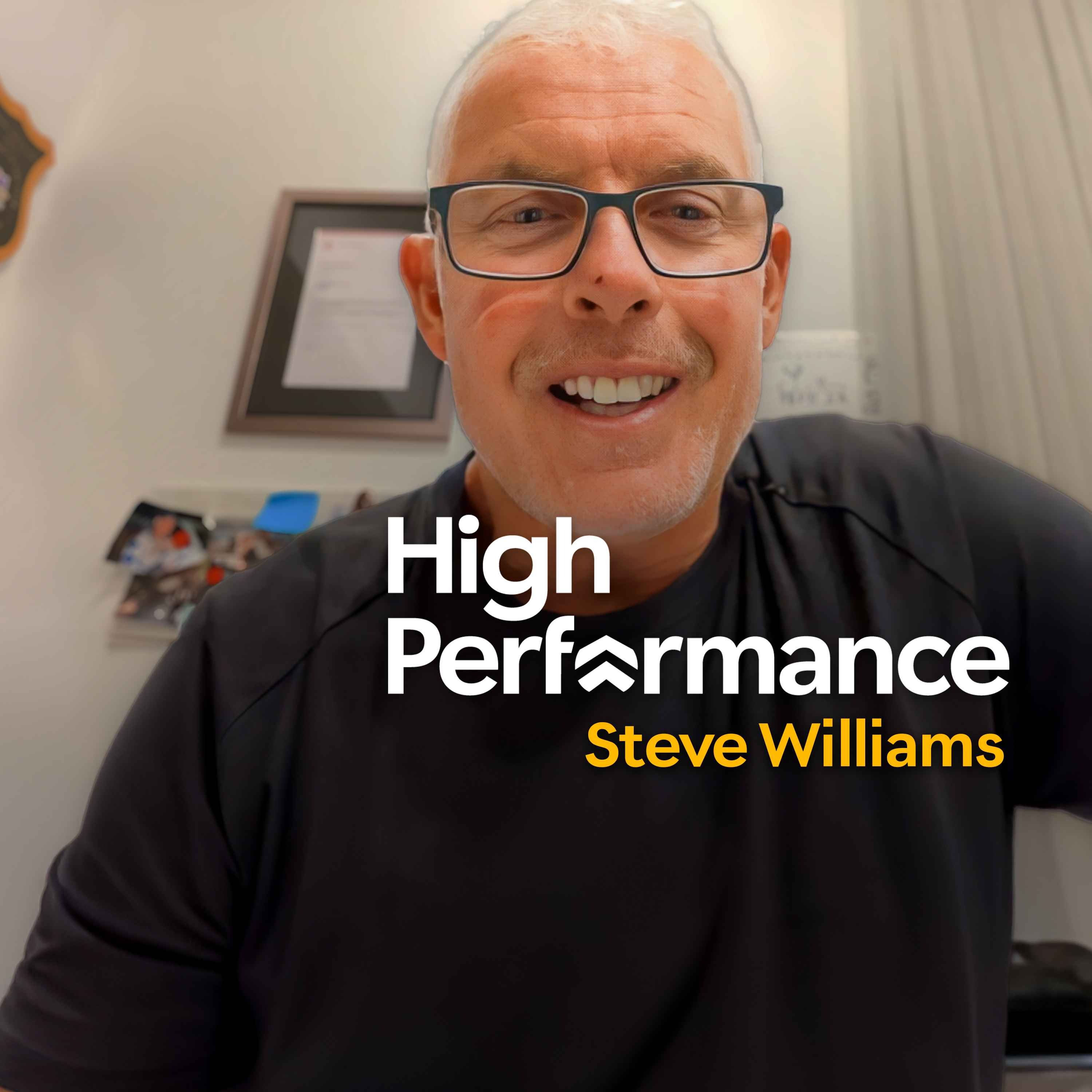
Tiger Woods' Caddie Reveals the Ruthless Drive Behind Golf's Greatest Champion | Steve Williams
In this episode, renowned caddie Steve Williams shares his insights and experiences from years of working with golf champion Tiger Woods. Steve recounts key lessons learned during his time with Tiger, emphasizing the importance of mental resilience, goal-setting, and the unique dynamics of caddy-golfer relationships.
Written by AI. May contain mistakes.

Get the gist, explore an idea or ask about something said.
 Claude
On The High Performance Podcast, what are the key points of this episode?
Searching your listeningAutomatic transcript. May contain errors.
0:00Watch it early on the High Performance App. Available now, Roman Kemp, the broadcaster, opens up a powerful conversation on success and mental health. I don't believe in golf. Anyone's played a golf tournament under that much pressure. All of the talk was, you know, can Tiger win the Masters and hold all four major championships? After Tiger came back, after his time away from the game there, the connection between the two of us wasn't the same. There wasn't something was missing. when you're caddying for a guy like Tiger and it's only a successful week if it wins. You can only last so long in that kind of pressure cooker.
0:39That's the voice of Steve Williams, former caddy to arguably the greatest golfer of all time, Tiger Woods. Steve worked alongside Tiger during the most successful period of his career. He was on the bag for 13 of Tiger's 15 majors, as well as more than 80 victories around the world before the pair's relationship ended in controversy in 2011. so many people Damien have an opinion about Steve Williams. Yeah no I wasn't here for this one Jake so what stood out for you? I think it was a unique insight into what made Tiger the competitor he was things I've never heard him talk about before. He described to us that doubt is the worst disease that you can suffer if you're going to be at the elite level and I think people will find that fascinating.
1:19He shares the things that he did to motivate Tiger while they were walking around the course, the times when he knew Tiger was struggling and the things he said to end that struggle. He also goes into great detail, actually, about his regrets around the split with Tiger, the advice that his wife gave him about that moment that he ignored. You know, we're talking about arguably the most successful duo in global sports over the last 20 years, and the insights are incredible. As we welcome to High Performance, Steve Williams.
1:52Well, Steve, welcome to High Performance. Yeah, thanks very much. Good to be on the show. So Tiger left you a message after his first Masters win in Augusta saying to Stevie, thank you for helping make my dreams come true, your friend Tiger Woods. What do you think was the secret to the success that you and Tiger Woods shared? I think two people of very similar mindsets, you know, a very good desire to conquer something and two people that work very hard. and then just basically I think I had a very good understanding of what he was trying to achieve, how he was going to go about it and I could pretty much predict everything he was going to do in a day and based on his mood and the situation that he was in.
2:40So just being able to read his mind without having to ask him made the job a whole lot easier to do. You were able to predict what he would do based on the mood he was in. That sounds fascinating. How did you get to that point? Yeah, well, I kept an enormous amount of stats, including things like, you know, when he would come to the golf course, if he was fidgety or he was walking confidently or he wasn't walking confidently, I would write down how he played that day. Did he play aggressive? Did he play conservatively? What was his mood? I wrote so many things down. So in the end, based on the situation he was in, and I could, you know, accurately guess what was going to follow and how I should, you know, act to make that, you know, either change it or try and make things better, whatever it might be, yeah.
3:31And when you talk about changing how you act to make things better, are you talking about the decision of the golf club you're going to use for a certain hole, for example, or do you mean the conversations that you were having with Tiger would change depending on the mood he was in? Yeah, just the conversations. and also he would come to the golf course and the very first few swings of the day would just basically tell you the story of the day. If I could sense that he was a little bit uptight, then I would know that from the first tee until he got into some kind of rhythm or he got under par quickly that he would have to play conservatively and if he came to the golf course and he was smiling, relaxed, everything, walking just confidently and those first few swings would produce some very good shots and then it was like a green light to get on that first tee and really play aggressively.
4:21You try and put yourself in his footsteps, sorry, in his shoes and see what he's seeing, seeing what he's feeling. Yeah, so it was probably not many other Ks, I suppose, have written down as comprehensively the kind of notes that I was keeping. But yeah, it seemed to help, not all the time, but a great deal of the time. So would you take us back to the time when Tiger turns up? He's looking a bit edgy. He looks a bit anxious. You did something and it had an effect. When Tiger would come to the last round of a major championship, obviously the nerves are always running and there's a lot at stake in that.
5:03And sometimes those first couple of swings may not be as great as it could be. and just a little thing like, hey, just go through your routine, check your grip, check your stance, your posture and so forth or whatever it might be. Just some little things that you could put your finger on, just check your grip pressure or whatever it might be. Some little thing that you could say that would just trigger a thought or something that would bring some confidence and away you go. So every situation was different than that. But, you know, sometimes on the course, things might be slipping away a little bit.
5:43And we used to have these little mini bets. You know, it might be three holes, six holes, nine holes, whatever it is. And, you know, it's$100 for every fairway hit for you. And it's$100 for every fairway miss for me. And$100 for every green hit for you. And$100 for every green miss for me. You know, a little mini game within the game to take your mind away that you're playing poorly. Tiger absolutely hated to lose money. He didn't, you know, in any situation. And he would rather, you know, like a little bet within the golf tournament was sometimes a little excitement. And, you know, he just might have pulled the right button and triggered something good because he didn't want to part with any money to his caddy.
6:24I love the idea that Tiger Woods in the middle of a major tournament is having like a secret silent bet with you. And every great shot he's playing, you're thinking, oh, that's just cost me another$100. dollars. Yeah, but you know, just little things like that can just, you know, can sometimes sway from, you know, a day being not as good as it could be and into a great day. Just, you know, there's just, when you're a caddy, that's like what makes a good caddy is somebody that's able to translate something, to say something that the pro can translate to that could help them play better. Just some little saying, some little thing, some little quirk, you know, it's a very difficult job.
7:00Caddying is a difficult job to explain to somebody that plays golf, let alone and try and explain to somebody that doesn't play golf. It's a very, you know, caddies, it's a wonderful job because a caddy wears so many hats. And, you know, an on-course psychologist is just one of the many roles that a caddy plays. Can we go back to the time when you first met Tiger Woods? What was the first moment that you thought, hold on, this guy's not like everybody else. There's something else happening here. I can clearly tell you that moment. I went to Tiger's house the first time when I went to Scust working for Tiger.
7:29And I knocked on the door and some, time after, a few seconds, you know, he came to the, just, I'll come and see, just hang on, I'm in the middle of doing something, and he's playing a video game, and the intensity that he was playing with the video game, it was like, whoa. And I'm not someone, and this is going back to 99, and I've never played a video game, let alone watch a video game, and he's playing this video game with so much intensity, and I thought, wow, there's just something different about this guy here, just watching him, yeah, it was pretty amazing, I'll never forget it. And was that intensity reflected across his life?
8:06Well, not so much across his life, but on the golf course. You know, Tiger's no different to anybody else off the golf course. He's just a regular human being that does, you know, he doesn't do anything different to anybody else and doesn't think differently to anybody else. But when he gets to the golf course and he's playing in a golf tournament, well, not just at a golf tournament, even when he's at home practicing, the intensity with which he practices with and plays with goes with every great sports person, and he's no different. But, you know, if you're going to set the goals as high as he was setting them, you've got to have an immense amount of intensity.
8:43That's one of the attributes you've got to have to be able to get to attain at such a high level of goals that you set yourself.
8:54You open the fridge. There's nothing there. So what's it going to be? greasy pizza sad drive-thru burgers dish by blue apron is for nights like that these are the pre-made meals of your dreams at least 20 grams of protein no artificial flavors or colors no chopping no cleanup no guilt keep the flavor ditch the subscription get 20 off your first two orders with code apron 20 terms and conditions apply visit blueapron.com slash terms for more I'm no tech genius, but I knew if I wanted my business to crush it, I needed a website now. Thankfully, Bluehost made it easy. I customized, optimized, and monetized everything exactly how I wanted with AI.
9:37In minutes, my site was up. I couldn't believe it. The search engine tools even helped me get more site visitors. Whatever your passion project is, you can set it up with Bluehost. With their 30-day money-back guarantee, what have you got to lose? Head to bluehost.com to start now. This episode is brought to you by Opera Air, the first browser with mindfulness at its core. Now, most of us spend hours every day online, but how often do we pause to take care of ourselves whilst we're doing it? And that's where Opera Air comes in. It's a lightweight, fast, secure browser built not just for productivity, but for your well-being.
10:13With Opera Air, mindfulness is built right in. You'll find free breathing exercises, guided meditations, and soundscapes with ambient sounds, lo-fi music, and binaural beats. all designed to help you focus, relax, and even spark creativity while you browse.
10:32See, a lot of us think that we are intense or we have high standards or we're a high performer, but obviously it differs from person to person. So when you say that Tiger was intense, even in practice, not just during tournaments, would you take us into his practice sessions? Yeah, Tiger's a great player. We all know that his record speaks for itself, but just the way he went about doing it, And, like, we used to practice a lot at Isleworth, and one of the guys that would be often on the range at the same time that Tiger was practicing was a guy called Charles Howell III, very good player, compass player.
11:06And I was always intrigued watching for every three balls that Charles hit, Tiger only hit one, because every shot he hit had some meaning to it. A lot of guys get on the practice field, and they say, okay, you know, I'm going to practice for two hours, and I'm going to hit 200 balls. and they just go through the routine of doing it. But every single shot Tiger would hit after he'd loosened up, it had a purpose. It was either a shape to a shot or it was a shot that he was picturing for an upcoming tournament. But there was never just this case of just standing there swinging and hitting a shot.
11:36There was always, you know, it had to be a left-to-right shot, right-to-left, high shot, low shot, whatever it might be. There was always some purpose. And, you know, he practiced with a lot of intensity. In every major, the lead-up to a major, He never played the week before a major unless it was a tournament that he absolutely had to play. And he would be practicing the week before the major and those were weeks I joined him all the time. And, you know, we'd go through the golf course and Matt, if it's one that we knew, and he'd be just standing there and I'd say, okay, this is the 13th hole at Augusta.
12:08You know, I want to see this shot or that shot. And, you know, just, you know, almost play around the golf on the range sort of thing, but with some intensity as well. I mean, you know, it meant something. So when he got to the golf course, that's where he produced so many fabulous shots under extreme pressure because he put himself under that kind of pressure, visualized being under that kind of pressure on the range practicing. So a wonderful attribute that he has. And what was the best thing you could say to Tiger for the opposite effect when the pressure was too much, when the last thing he needed was more pressure, when actually he was looking to his caddy to relieve some of that pressure?
12:43What were those golden words from you? When the moment might have become a little bit overwhelming, whatever it might be, it's like, hey, Tiger, this is what all that practice you do. This is what all the time you've spent, this is what it's for. This is what you're made to do. This is what you wanted to do. This is another opportunity. And he loved that kind of inspiration there, like particularly all the practice you do is for moments like these, and this is what you show people why you're the best. And that kind of confirmation there always went a long way. How did you end up getting a job with Tiger Woods?
13:15Once you've been to his house, once you've met him a couple of times and you've seen he's quite intense, what did you have to say to him for him to go, all right, then let's do this? I went up to his house. Like I said, I was catting in Miami, went up to his house in Orlando, spoke to him about it, and I said, you know, we had a real good chat. And I was, you know, I knew he had lofty goals. We talked about what his goals were, and it was fantastic to see someone had such a strong desire to break Jack's record of 18 majors. and his whole career and even in 1990, he's still only a young guy on the tour.
13:46He'd only been on the tour for four years and that. But he had strong goals and wanted to create a legacy. But I knew the job would be intense. I knew it wasn't going to be an easy job. So I'd mould it over for 24 hours and talked to a couple of people about whether I should take the job on or that. And yeah, I didn't sort of say to him when I was at his house, I didn't tell him right there and then I was going to take the job. But I thought about it for 24 hours and that. And I knew it was good. I'd worked for Greg Norman. I'd had some kind of experience of caring for someone, particularly when Greg played in Australia.
14:23I mean, he was an Australian icon. And everywhere he went in Australia, there was a lot of fanfare and that. So I knew it was going to be the same thing to persist on a different scale with Tiger. But yeah, hey, I took the job and went on with it. We have a lot of professional athletes that listen to this show. and I messaged a couple of professional footballers because they love their golf and I told them you were coming on today and one of them replied and said, please ask him about Tiger's daily goals that got him to the big target. I guess maybe he's asking for himself so he can set some. So if I say to you, daily goals, what would a daily goal look like for Tiger?
14:56A daily goal would be generally related to what aspect of the game that he was working on. So, you know, what can I improve today over yesterday. So, okay, yesterday's practice session, I did this, this, and this. And what was my part of my game? Was it my chipping, my bunker play, my putting, my long iron play? What part of my game yesterday didn't satisfy me like the other part? So, okay, my goal tomorrow, my daily goal tomorrow, is I want to work on that part of my game. And how would they translate to his weekly goals? His only tick mark at the end of the week is winning a tournament. So every tournament he played in, the goal was to win the tournament.
15:40And if he didn't win the tournament, it wasn't a successful week. So obviously you can't win every tournament. But sometimes when you're in a period of time when you're not playing as well as what you'd expect to play, you've got to readjust those weekly goals. Okay, my performance right now is not as good as it should be. Why is my performance not good? You've got to identify that. Is it because I'm not hitting enough fairways? I'm not hitting enough greens? I'm not making enough putts? So the weekly goal would be, okay, last week, this is my statistic last week, you know, I hit 55 % of the fairways and I averaged 31 putts, okay?
16:14This week I need to up that up to at least 60 % of the fairways and I need to reduce the putting, you know, from an average of 32 per round down to, you know, 30, 31 or something like that. So, you know, a weekly goal would normally be based on last week's or the previous tournament's performance and what was good about the performance and what was poor about that performance. And what's interesting there as well is that you and Tiger together were really getting into the weeds of how he was playing golf. It wasn't just about hitting a good shot or playing a good hole or having a decent tournament.
16:49You're talking about percentages. You're talking about stats. You're talking about benchmarking. You're talking about measuring today against yesterday to the smallest of margins. Why was that so important for the two of you? Tiger had this inkling that it was a great saying. I loved it. He said, Stevie, I want to own my swing. I don't want to rent my swing. And what he believed is ultimately, you know, golf, it's a very difficult sport because it's, you know, you're hitting a stationary object. And every day you feel different. You know, some days you feel confident. Some days you don't. You know, you have a tweak in your back.
17:26And you never stand over the ball the same as you did the day before. There's so many moving parts of golf. but he believed at some point that you would be able to find a way that every day when you stood over that golf ball, you were going to have the same confidence the day before and where would that come from? That would just come from experimenting with your swing and practicing with so much discipline and so much intensity that almost every day you could play and confidently play well and he did that for a long period of time. You know, he just built an inner confidence. And where did that inner confidence come?
18:03It came from practicing. But practicing, you know, he practiced hard, but didn't hit as many balls as what a lot of other guys did because each shot that he hit would resemble a shot that he was going to hit on the golf course. So, yeah, a lot to be learned for something like that. And, you know, you can apply a lot of that to other sports now. Very interesting, though, when you start to talk about his mental toughness and how the practice improved his resilience. Would you give us a story of a time where you looked at Tiger's mental toughness and thought, that is pretty special? When Tiger had the opportunity in 2001 at the Masters to have the first time that a professional golfer's been in a position where they currently hold the three previous major championships and they're going to go and play in the Masters, or he's playing in the Masters and he's got the chance to win the fourth one, is that the Grand Slam was at the Tiger Slam.
18:58We can debate that at another time. But the amount of pressure that he was under, like Tiger loves to listen to all the different sports channels, you know, like ESPN or Sky Sports when you're in the UK and reading the paper and so forth. But even he turned off watching TV and listening to the radio and reading any print media over the opportunity that presented when he was playing at Augusta in 2001 because the PGA back then finished in August. So, you know, it's eight months till Augusta starts and all the talk was for eight months and it ramped up every month was, you know, can Tiger win the Masters and hold all four major championships at the same time?
19:41I don't believe in golf. Anyone's played a golf tournament under that much pressure. And for him to go out and execute, that's the ultimate tick in my book right there. And what did he have to do to get himself into that place? Apart from ignoring the noise, it sounds like. The practice sessions in 2001 leading up to Augusta, even when he was practicing at another tournament, he was practicing shots for Augusta. There was so much thought with him to that. He was continually thinking of shots that he would require at Augusta. you know, there's certain shots that he loves to hit on certain holes.
20:24And, you know, typically heading into Augusta the week before, that is the time when all those shots will start getting practiced. But in 2001, heading to Augusta from January right up into April, even when he was practicing on the range for a round, be it before or after, there was some mention of a shot for Augusta. So there was, you know, he put a lot on the line there. And, you know, like I said, like no golfers played, you know, with that much scrutiny as he did that week. And to actually pull that tournament off and, you know, hold the four major championships at the same time was a wonderful tribute to somebody that worked so hard to do something and was able to accomplish that, you know, under, that's about as much pressure as one could be under.
21:11And ultimately, what makes these guys like Tiger Woods, Michael Jordan, in some of these unbelievable athletes, what makes them so special is their ability to play the most or play their best when it means the most. And how do you do that? How do you play the best when it means the most? I mean, you know, most people, not most people, but in golf, a lot of people's scoring average would be best on Thursday, slightly lower on Friday, slightly lower on Saturday, and maybe not as good Sunday, whereas Tiger was the complete opposite. His Sunday scoring average was better than his, you know, because he had, you know, some believed it was that red shirt that he put on.
21:51It was a Superman cape a lot of it. People thought when he put that red shirt on Sunday, there was something to it that enabled him to play the period that he did on Thursday and Friday and Saturday. Do you think there was something to that, the importance of putting on that red shirt? Yeah, absolutely. I mean, he had so much success in that red shirt. It was never going to leave. Once that tradition of wearing that red shirt on Sunday, it became evident very quickly. there's something to it. And, yeah, I mean, that's a little psyche that gets into some of the other players' heads for sure. You know, here's Tiger on Sunday.
22:21He's in that red shirt, the Superman cape. And there's so much that's unseen in golf. You know, most of us absorb it on the television. We're watching a number of golfers at any one time. We don't see all the holes. There's a lot of time where you're away from the crowds, walking along the fairways. What was he like with the other golfers? How much would he interact with them? I mean, I'm talking here about, you know, maybe the last round of a major when everything's on the line. What's his relationship then like with someone? When you're playing in the last round of a major championship, it doesn't matter.
22:52I don't think there are, whether it be Tiger Woods or any other player, there's not the same amount of banter and the same amount of talk. I mean, major championships consume you and they're a pressure cooker. I mean, it's just what it is. The crowd gets involved in it. There's atmosphere, there's a lot at stake, there's history at stake. and the best way to handle that in the majority of situations is to go about things in your own way and walk slowly and whatever it might be that you need to do to be able to take it all in that's going to make you play better in that and you can get a little bit loose if you like spending a whole afternoon talking to somebody else, getting to their world.
23:35Tiger, he never made that mistake. He lived in his own world and he was the ultimate warrior that he just went about things on his own in his way and he loved dominating golf tournaments. What would you be saying to each other in those crucial career moments? We always wanted to enjoy those moments. Like I said before, I always made Tiger very aware of all the hard work that you've done. This is part of it. this is a reward you get for working as hard as you did. People think that somebody that has as much success as Tiger, did he ever get bored with winning? No, absolutely. Winning spreads winning.
24:17It breeds winning in that the more you can win. And ultimately, the more you win, the more confidence you build and the more confidence you build in the program that you're doing, the practice that you're doing, the way you're going about things, you know it's right. and when you know that all the work that you're doing is putting some results on the board, it's very satisfying because you can, you know, ultimately in all sports, there's a lot of people that have a huge amount of ability. They go and put a huge amount of work in and they don't get the results. And, you know, there's multiple reasons why some athletes don't get the results that they probably should.
24:51Well, it's a great reminder, isn't it, that golf, of course, is about your physical ability to play the game, but it's about getting your head into the right space, isn't it? It's a mental game as much as anything. I wonder where you put the balance between how much of being the best in the world is a mental thing and how much is a physical thing. To be a great player, obviously you've got to have all the physical attributes. You can't become a great player if you haven't got all the physical attributes. You've got to have some natural ability, but the majority of it is mental. It's what it is.
25:22It's how you apply yourself, how you act under pressure, and how you go about things. It's all mental. I mean, your trust in yourself and your trust in your ability to play the shot that's required and take the nerves out of it and not think of the consequences if it doesn't go right. When you play at the level that players play at, at the highest level in professional golf, I believe it just comes down to a battle of mental toughness. And, you know, there was no one more mentally tough than Tiger. And he showed it week in and week out. Was there a moment in 2001 where you thought, hold on, we've bloody done this?
26:03No. No, there wasn't. Look, we didn't talk about the situation, but we talked a lot about what shots and what was going to be required. And like I said, during the 2001 season leading up to the Masters, I mean, you know, there wouldn't be anybody that would play, you know, let's say Tiger was at the Bay Hill Classic, you know, four or five weeks out from Augusta, and we'd be standing on the range on Thursday morning. You'd be thinking, focusing solely on what was a hitter at Bay Hill, but, you know, two or three times in that practice session, he'd say, oh, I'm just going to hit this shot for this hole at Augusta, and I'm going to hit this shot for that hole at Augusta.
26:46But one thing that I just admired so much about Tiger, despite all his incredible success, his desire never wavered one bit. And with success comes a lot of wealth and a lot of fame and a lot of notoriety. And a lot of players get a little bit wrapped up in that. And when you get an enormous amount of wealth, that creates a comfort level that allows you sometimes to take your finger off the pulse. Tiger never let that happen. Obviously, he's one of the wealthiest sportsmen that's ever played, but the amount of wealth that he generated from his golf never, ever took his finger off the pulse. You know, like you're a fisherman, let's say, and you've got a great day for fishing, but you know you should be practicing for a tournament, but you know your bank account's full.
27:35Well, no, I'm all right. I'll just go fishing today. It'll be all right. You know, the tiger would never entertain that kind of thought despite, you know, his enormous wealth and everything. you know, there's no golfer that played for trophies. He just wanted to keep getting those trophies. If you're still overpaying for wireless, it's time to say yes to saying no. At Mint Mobile, their favourite word is no. No contracts, no monthly bills, no overages, no hidden fees, no BS. I made the switch because I was tired of those ridiculous bills and sneaky charges from my old provider. With Mint, I'm paying$15 a month and getting the same high-speed data, unlimited talk and text, and coverage on the nation's largest 5G network.
28:18Honestly, the quality is just as good, if not better than what I had before. And the best part? You don't need a new phone. You can keep your current one, bring your number, and all your contacts. I use Mint Mobile, and you should too. Ready to say yes to saying no? Make the switch at mintmobile.com slash HPP. That's mintmobile.com slash HPP. Upfront payment of$45 required, equivalent to$15 a month. Limited time new customer offer for first three months only. speeds may slow up a 35 gig on unlimited plan taxes and fees extra see mint mobile for details the market's uncertain revenues tied and hiring on hold that's why results driven companies are using upwork to keep work moving go to upwork.com today and start hiring proven freelance talent fast no bulky overhead no rigid long-term contracts just the right expert right when you need them Work smarter and faster with Upwork.
29:13Go to Upwork.com now and find your freelance expert. That's U-P-W-O-R-K dot com. Post a job for free and get started today. I'm no tech genius, but I knew if I wanted my business to crush it, I needed a website now. Thankfully, Bluehost made it easy. I customized, optimized, and monetized everything exactly how I wanted with AI. In minutes, my site was up. I couldn't believe it. The search engine tools even helped me get more site visitors. Whatever your passion project is, you can set it up with Bluehost. With their 30-day money-back guarantee, what have you got to lose? Head to bluehost.com to start now.
29:55It's the smallest of margins as well in professional sport. I'm a big Formula 1 fan. I saw an interview recently with Daniel Ricciardo where he said that towards the latter years of his Formula 1 career, there was just a small part of him asking whether the risk is worth taking behind the wheel of a Formula One car. And it's the smallest margin, isn't it? It's just that tiny question can have the biggest impact in the way that you perform. When you want to perform at the highest level at eSport and there is any percentage of doubt, when doubt creeps into your mind, that's the worst disease that can happen is doubt.
30:32And when you're playing professional golf, And if you've got any doubt on your mind, you start thinking, oh, you know, there's OB over there or there's water over there. Instead of looking at the green, you're trying to hit where your ball might go with a poor shot. One of the greatest things I ever took from Jack Nicklaus was we were playing a practice round with Jack Nicklaus. I was coming with Greg Norman at the time, and Greg Norman went over to the left of the second green at Augusta and hitting some flop shops over the bunker over to a left pin. And Jack said, why is he practicing over there, Steve?
31:09I said, well, he might hit it over there. And he said, you don't ever go and practice where you don't want to hit it because if you go and practice it, you might hit it there. If you don't go and practice it, you won't hit it there. It's one of the greatest, you know, UC guys at Augusta will go and throw a ball down at the drop zone on the 12th hole. If you hit it in the raised creek there, short of the green on the 12th, there's a drop zone over to the right side there as you play the hole. It's on the left, you know, off the 13th tee there. And you'll see, you know, they'll mark the drop zone out where it is and you'll see players go over there and hit a shot from the drop zone.
31:40I mean, that's, you know, when you're saying about having a moment of doubt, well, what you're saying is I might hit that ball over there, so I just want to go and play that shot. Yes, it's a difficult shot and it's probably, there is some sense that you might want to hit one there, but that's absolutely not what you want to do because you're telling yourself, I might hit it over there. And Jack said to me, you don't ever go and practice from somewhere that you don't want to be because if you go and practice there, you might hit it there. Would Tiger ever do it? 100 % not. When we were playing a practice round and he would see somebody go and practice that shot on the 12th, I don't want to say on the air what he'd say, but it wasn't very favorable.
32:20Paul, you're welcome to swear on him. No, no, no. What was driving Tiger? Trying to eclipse Jack's record. That's what he wanted to do. I mean, you know, the opportunity that came about with his, you know, very quick succession of winning some major championships, like seven out of 11, I believe it was, the reality was that it was very feasible that he could break his record of tie 18 majors and 19 to beat it. So, you know, that was a very, very lofty goal, but something that made him get out of bed every single day and work as hard as he could every day towards that goal. Do you think Tiger still believes he can do the 18?
33:02Well, I don't know that he believes he can do the 18, but people have asked me, do you think Tiger's career is over? You know, I can't answer that because I'm not talking to him, but I know in his heart, he'll believe that at some point here in the next year or two, he'll be able to stand on the first tee of a major championship and know that his body can last 72 holes with no problem and that he's put in enough work to believe that he could still win a major championship. And until such time that doesn't happen, he'll keep, you know, even though he's had some injury problems, he'll keep plugging away because, you know, he's seen Phil win a major at 50 and he knows that he's physically fit and he's still capable of playing extraordinary golf.
33:47And if he can get his physical side sorted to where he can practice hard enough to stand on the first tee and have the confidence to hit all the shots that's required to win a major, he'd believe he can do it. And I'd certainly agree with that. What did you think watching 2019, which for many people is arguably the greatest comeback in the history of sport? God, you know, look, at that particular point in time, even though I'm working for Tiger, you know, I ultimately was hoping that he would get to, you know, 18 or 19 major championships. And, you know, I wouldn't have been able to say I was there for two thirds of those.
34:22So, you know, I was hoping, you know, ultimately that he'd do that. But, yeah, no, that was actually the last golf tournament I watched. It was that one. I haven't watched one since. But, yeah, it was a special moment. You know, it was like, even though, like I said, I wasn't working for him, you're pretty proud to see that happen. If he picked up the phone tomorrow and said, look, Steve, let's put all this to one side, come back and caddy me for the end of my career, would you do it? Yep, I'm in. Would you? Yeah, of course. How would you not? Would you talk to us about the split from Tiger and how painful that was for you?
35:02I wouldn't say it was painful. It was just disappointing. I guess, basically, in a nutshell, Adam Scott wanted me to caddy for him. I said, yes, Tiger didn't want me to do it. And I thought, well, that's a bit strange. You know, it's no big deal. I go and caddy with Adam. And Tiger's agent said, well, if you go and do that, you won't be working with Tiger. I thought, no, there's no way. And that's what happened. I went to caddy for Adam while Tiger was injured, and that was the end of it. So it was just more disappointing. I guess I didn't read the situation right. I just didn't think that would happen.
35:29But, you know, when you caddy, there's no contract. There's no whatever it is. You know, you work for somebody, and they can end at any time in that. So, you know, it's just the way the cookie goes. It's the way it uncrumpled. But that's what, I wouldn't, you know, I wasn't angry. It was just disappointing. Why would Tiger have said no, though? It seems like a strange thing for him to not want you to do, doesn't it? I guess I understood. I mean, Adam's a very good player that hadn't had great success in the major championships. And I guess Ty would think that when you go to caddy for someone else, perhaps you're going to pass on some of the knowledge and some of the things that you've learned from somebody else that might help someone else.
36:13He's another competitor and probably didn't want me sharing any of the stuff. that he was privy to or I was privy to working for him. So, you know, I guess I didn't think about that, but my wife did and I should have listened, I guess. Or was your wife telling you not to do it? Yeah, yeah, yeah. She was more clued up than me. But, you know, Adam was a friend of mine and I'd often wondered why he, you know, was an underperformer in the major championships. So I kind of, just as a friend, you know, I was quite honoured that he would ask me to come and get him for him. But yeah, that's just the way the cookie crumbled.
36:52I look at the relationship you had with Tiger, which feels so much more than golfer and caddy. It actually feels even so much more than just friends, right? Why wasn't this a situation where you could just go, listen, I made a mistake. I'm a human being. Look at what we've shared. Look at what we've done. It's great for me and it's great for you if we carry on. Let's just allow me to apologise and let's move forwards. Yeah, look, that's obviously one angle you could have taken. But, you know, to be brutally honest, you know, after Tiger came back after his time away from the game there, we don't need to get into that.
37:29But when he came back, it just didn't feel the same. The connection between the two of us wasn't the same. There wasn't, something was missing. So had something not been missing, it would have been very likely that that situation could have arose. where I would have, you know, tried to put things behind us. And the thing is, I quickly moved on with Adam. And, you know, when you move from one player to the next, it's a new challenge, it's a new job, and you take that and do the best you can. So, yeah, that's the way it was, yeah. And you've got such an intuition for the way you and Tiger related to each other and the way that he thought and operated.
38:05What had changed in the period where he took a break from the game and then came back? yeah look I mean you know he was away out of the game for a long time and you know as a friend I wasn't concerned of what he was getting accused of and what was happening that he was a friend and I was just concerned about his well-being and everything and you know he'd been through a rough period no question about that and he you know he obviously if he could take his time back he would do things differently but But there just wasn't that same connection towards each other. It's just, you know, he'd been through a big period of his life and there was obviously a lot of change.
38:49And, you know, we just weren't connecting. Is there something to think about that a really intense relationship, competing at the highest level, doing things that very few people do over a long period of time, almost the intensity eventually can be the problem. You just can't keep up that level of pressure, scrutiny, practice, determination. hard work, desire, without eventually something just sort of slightly changing or collapsing? Working for Tiger, you know, obviously I love golf and I love being around the PGA Tour and I love watching other pros play. It's the ultimate job, traveling the world, seeing the greatest golfers and actually caddying for one of them and playing on all the greatest courses there are around the world.
39:34But at some point in time when you're caddying for a guy like Tiger and it's only a successful week if it wins, ultimately, you know, I was feeling the pressure as well. You know, you can only last so long in that kind of pressure cooker. It's a very unique role, isn't it, being a caddy, where you're trying to perform as an elite individual at the same time as allowing the golfer you're playing alongside to be the best they can. And if you've got doubts, the last thing you want to do is start telling your golfer that you've got doubts or that you're struggling because you need to kind of be their cheerleader and their psychologist and their coach and their confidant all at the same time.
40:13Yeah, yeah. Look, you hit the nail on the head there. There's so many roles that a caddy plays and you've got to be the upbeat, most positive person you can be every single day and you can't carry, like, you're only human. You know, everybody has problems and everybody's got day-to-day dramas and that, but you can't, you know, when you're caddying to somebody and you're trying to be as confident and give that person the utmost confidence for them to play well and do what you need to do, you can't take any of your problems along with it. So, yeah, it's a unique job being a caddy for sure. It does sound like eventually for you it's a mentally exhausting, mentally draining thing to have to do actually.
40:54When you go to caddy for someone like Tiger and you buy into the deal of what he's trying to accomplish and then you take that on board as well, You know, every step that he took in winning a major championship, that's one step up the ladder and that's, you know, one step close to the ultimate goal. But everybody's different. I guess, you know, if you ask anybody that knows me, I'm about as intense as they come as well. So you take that task on, you know, you choose to take that task on and you're going to thrive on that task. But, you know, ultimately at some point, you know, like I said, you can only stay in that pressure cooker for so long and you've got to get away and do your own thing and get away from it.
41:38So, you know, I spent from 1999 to 2013 alongside Tiger. It's a lengthy stint of time. He played some remarkable golf. He was a great guy to work for. And he played and set some records that, you know, are going to stand for a long time. So, you know, you're proud to be associated and have that opportunity to be part of something special. What do you reflect on as the single greatest moment when you lay your head on the pillow at night or maybe when you're on your deathbed and you're thinking back? What moment would your brain take you to, do you think? My wife and I had the great pleasure of being able to give a million dollars to a place here in New Zealand called the Starship Children's Hospital.
42:24The cancer ward, the children's oncology ward there, needed a founding donor to start the rebuild of that hospital. So that's the greatest moment of my life. And I wouldn't have been able to, my wife and I wouldn't have been able to be part of that gift process if I didn't work for Tiger Woods. So that's the most special moment of my life. That is a beautiful answer. Amongst all the madness of the world of professional sport, you come back to that. We're about to move on to our quickfire questions. before we get there though when did you and Tiger last speak? I was at the Los Angeles Open in 2023 and I had a good chat to Tiger I actually ran into him in the hotel and then he was in the locker room there so not that long ago well that was a couple of years ago How was that?
43:17Yeah it was good you know like hey we all know time heals We talk about that in all sorts of sports, all sorts of relationship time. And it does. There's no two ways about that. And did you talk about maybe getting back together? No. My time caddings, you know, I've done my stint. No, I don't believe you. I think that you think that's the right thing to say. But you've just said you're one of the most intense people around. You might not want to go and do another 15 years, every major and every golf tournament. but I know if one of you reaches out to the other one, the two of you are back on a golf course in the blink of an eye.
43:59Yeah, never say never. I like your thinking. Great. Right, some quickfire questions for you, Steve.
44:08After all the things you've done, seen and experienced, and the people you've worked alongside, what do you think are the three non-negotiables, the three most important non-negotiable behaviours that people should bring to the table in life? It's loyalty is number one. loyalty is number one, being open and truthful is number two, and being hard work. Nothing replaces hard work. How important was the Phil Mickelson rivalry to Tiger Woods' success? Absolutely. It was a huge part of the... It was a huge rivalry because Tiger knew that when Phil would win his first major championship that he would ultimately win more.
44:48So being able to keep him at bay with zero major championships was something he was willing to work hard to do. If you could go back to one moment that you and Tiger shared, which moment would you pick? I think when Tiger won the Open Championship at Hoylake, the first major championship that he won And after his father passed away, not only myself, but the whole world that was watching the telecast that day saw a different side of Tiger. And I was one of his closest people to him then. But to see that side of him was pretty special. What was the most emotional moment in that day for you? I said to him, it was a grey, overcast, muggy sort of day and the sun hadn't been out much at all, in fact.
45:46and we were coming down the 18th hole and it was hard to describe, but sometimes you get these rays of sun come between the clouds. It was almost like someone was shooting some kind of rays out there. And I said to Tiger, he called his father Pops. I said, that's Pops looking down on you, Tiger. And I didn't think about it. It just came out. As soon as I said, oh, I didn't think about it, But, you know, even when we got up to the green there, I got very emotional as well. You know, he wouldn't let me go and I had some tears going. It was incredibly emotional because I'd not seen him break down like that.
46:29And then, you know, I didn't realise for a split second why. And then I thought, oh, yeah, that's Pops looking down here. And, yeah, so that was an incredibly powerful connection for those couple of lengthy minutes hug that went on on the 18th green there at Toy Lake. What's the best advice you've ever been given and why? Money is hard earned and easily spent. So that bit of advice enabled my wife and I, through some hard work and some savings, to be able to make a difference to a lot of young kids' lives that are not as fortunate as a lot of other people. Wonderful. If you could have one trait of tigers, as your own, what would you go for?
47:13The ability to train harder than anybody else physically. Yeah, I can only go so far and I've had a lot of gym sessions with him where, okay, I've just got to go to the car. I'll wait for you to come back, buddy. I'm done here. Love that. And finally, the sort of last message from you really after this fascinating conversation that you'd like to leave ringing in the eyes and ears of our audience. your golden rule for people to live their own high-performance life? The golden rule, and I mean, look, it's a saying that you've all heard, but it's so true, is that to never let anybody else create any doubt and don't ever have anybody say you can't achieve that.
48:02Because if you can dream high and aspire to those dreams, you can do anything. Don't let anyone ever tell you you can't do it. Look, there's a lot of people, a lot of parents, there's always a lot of outside influence that ultimately can influence you. But if you put enough thought into what you're doing and enough trust in your own ability, don't let anybody tell you you can't do it. That's what I love to tell kids that. If you want to be something, who do you want to be? You can be him. Don't let anyone say you can't because you can. Brilliant. Steve, thank you so much. I love that conversation.
48:42And obviously, feel free to take your own advice. Believe that you can do it. Pick up the phone. Just message Tiger and say, listen, I love you. I love what we shared. No one's done what we've done before. Let's get the band back together. And I look forward to seeing the two of you on a golf course at some point in the future. I'll do my best I can for you, Jake. Top man. Thanks a lot, mate. You got it, buddy. thank you so much to steve and you can get your hands on his new book if you want even more about his life it's called together we roared it's in shops now and if you enjoyed that conversation check out our episode with matt fitzpatrick and get in touch with us on socials because we'd love you to tell us which golfers you want on high performance and we'll do our best to make it happen thanks for listening
49:34Thank you.
50:04are sharing more information about our ingredients at goodtoknowfacts.org. No spin, no judgments, just the facts straight from the experts for more than 140 beverage ingredients. Visit goodtoknowfacts.org. At Capella University, learning online doesn't mean learning alone. You'll get support from people who care about your success, like your enrollment specialist, who gets to know you and the goals you'd like to achieve. You'll also get a designated academic coach who's with you throughout your entire program. Plus, career coaches are available to help you navigate your professional goals. A different future is closer than you think with Capella University.
50:47Learn more at capella.edu. Dr. India Woods here. As a veterinarian, I demand a lot of my scrubs on the job. That's why I show up in figs. Figs are made for the sometimes crazy situations I find myself in. It doesn't matter if I have to squat, sit, bend, or even chase after one of my patients. Figs moves with me and keeps me comfortable in the highest pressure situations. Figs gives me one less thing to worry about. Get 15 % off your first order by visiting wearfigs.com and use code FIGSRX at checkout. That's wearfigs.com, code FIGSRX.
Steve Williams is a renowned caddie who worked alongside Tiger Woods, playing a crucial role in some of his most iconic victories. With years of experience in the world of professional golf, Steve gained deep insights into the mental and physical aspects of high-level competition.
In this episode, Jake speaks with Steve to dive into the powerful lessons he's learned throughout his career, from his time with Tiger Woods to his personal journey. Steve reveals how setting both big and small goals helped him and Tiger stay driven and focused on their quest for greatness.
Steve also opens up about his approach to overcoming mental pressure, explaining how practicing under intense conditions builds the mental toughness needed to perform when it matters most. His perspective on navigating pressure provides valuable insights for athletes and anyone facing challenges in life.
This episode offers a candid look at the journey of striving for excellence, whether in sports or personal life and the lessons learned along the way.
🚨 Partners
XTB 👉 Download the XTB app today and start making your money work for you at: https://hppod.co/xtbhp
Heights 👉 Get 20% off your subscription by using Code: HP20 here: https://hppod.co/20heights
HP Foundation 👉Do you want to kick-start an evolution that will change the lives of millions of children? Find out more about the High Performance Foundation: https://hppod.co/foundation
HP Corporate Events 👉Click here to book High Performance Events: https://hppod.co/corporate-events
Explore offers and discounts through our other partners:
https://hppod.co/partners
Hosted on Acast. See acast.com/privacy for more information.


