
 Ask ChatGPT



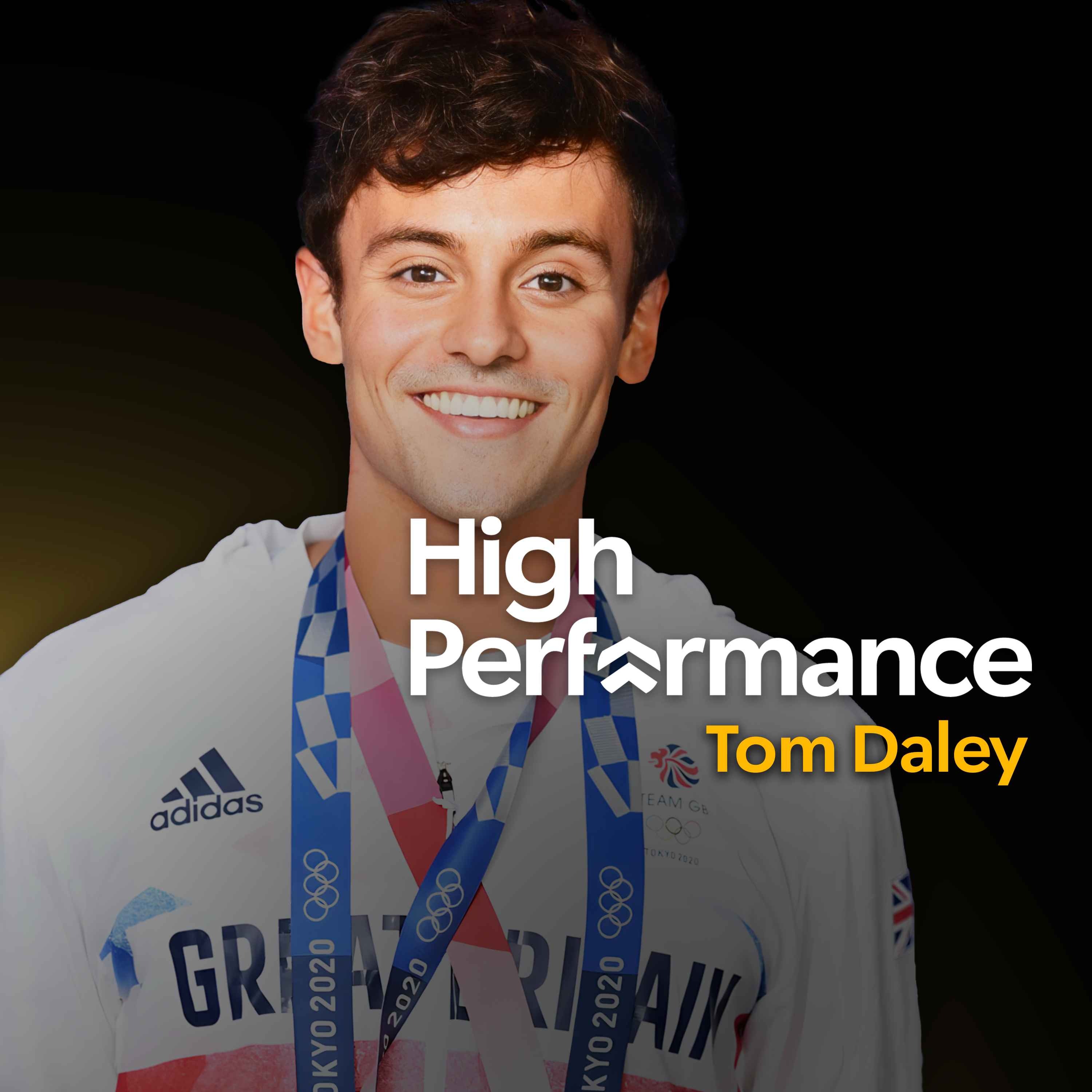
In this special episode of The High Performance Podcast, hosts Jake Humphrey and Damian Hughes engage in an inspiring conversation with Olympian Tom Daley. Following his return from retirement and recent silver medal win at the 2024 Olympic Games in Paris, Daley shares his remarkable journey, addressing challenges including loss, identity, and resilience, while also offering insights into the mindset that drives high performance.
Written by AI. May contain mistakes.

Get the gist, explore an idea or ask about something said.
 Claude
On The High Performance Podcast, what are the key points of this episode?
Searching your listeningAutomatic transcript. May contain errors.
0:28Watch it early on the High Performance App. going to give this everything I've got. That is Olympian Tom Daley and this is High Performance. Welcome along to a special episode of High Performance released because we're in the throes of the Paris 2024 Olympic Games at the moment and one of the most moving and inspiring stories so far from the Games is that man Tom Daley having decided to retire from diving, having spent a couple of years not competing, he returns, he's at the Olympic Games and he meddles once again. He is one of the greatest athletes this country has ever produced and he's been through some really tough times to get to this point as well.
1:05And today's episode isn't just about all of the great things that have happened in Tom's life. We also discuss with him and in some ways celebrate with him the fact that the hardest challenges and the toughest times can often be the thing that really makes somebody. There's a reason why Tom Daly keeps on competing at the top level and keeps on delivering. And you're about to find out what those reasons are. as always thank you so much for coming along to high performance to get your dose of inspiration and knowledge if you want even more then right now you can download the high performance app we've created um some amazing content on there as we go inside the team gb diving training camp with tom and the rest of the divers preparing for the 2024 games it's a really cool mini documentary it's called behind greatness you can find it right now on the high performance app here's a quick taste of what you can expect.
1:53The ultimate performance that under Jane you've gone from bronze to a gold medalist. In Rio you broke like the Olympic record in the prelim yeah and then on the same day it's that sort of sport and it was the lowest moment of my diving career like going from being the Olympic record holder winning a prelim and then the semi-final getting knocked out um and I remember in that moment not wanting to quit and not wanting to give up because it was my husband who said to me maybe you weren't meant to win your olympic gold medal then maybe your future kids are meant to see you win your olympic gold medal which Robbie did so wow yeah flash forward five years ended up being yeah it was really I mean that's why it was all the more special and all the more meaningful to me when I was stood on the podium because it felt like you know I've worked really hard and been through a lot to get to that point and it finally all came together so that's a little taste of behind greatness available right now on the high performance app, but right here on High Performance, let's get the inside track on how Tom Daly has really done it, as we welcome Tom to High Performance.
3:00You know those guests, right, who are young, good looking, massively talented. Don't you hate them? Wow. We don't really. Actually, there is nothing to dislike, to be honest, about our guest today, because he's a man who won a national, you have to correct me if any of this is not right, a national under 18 competition, aged just 10. Yeah. A 13 competed in the Olympics. Well, I was 14, 13 when I qualified. Right, 14 when he competed in the Olympics. His career has been touched by tragedy. He's grown up under the glare of social media. He's come out. He's got married. He's had a baby. Welcome to High Performance, Tom Daley.
3:40Thank you very much for having me. Wow, that sounds really like grand hearing those things. You don't often hear them listed off like that. Damien, that's what this is about really though, isn't it? Someone like Tom, who has had so much going on around himself, yet still manages to deliver high performance year after year. Yeah, I think one of the really interesting concepts that hopefully we'll get into, Tom, is this idea of being able to cut through the noise that obviously surrounds you to be able to still nail performance when it really counts. And, you know, that's what Jake's just said is a real example of how you've successfully done that for so long.
4:17Yeah, I think it's all about compartmentalizing, if you like, just being able to, I mean, diving is quite a quiet sport. So when you talk about cutting through the noise of all the distractions outside the pool, what's going on in my life, whether it's good or bad, standing on the end of that diving board, once the whistle blows, it is silent. and you can hear a pin drop. So being able to hone in everything that you've done in training and everything that you've done in your life to be able to just focus on the here and now is something that has taken me years to get to a point where I feel like I can stand on the end of the board and not think about anything else and just find a sense of flow, if you like.
4:53Can you talk us through that process for you mentally? Yeah, I mean, there's been a lot of things I've done over the years. I mean, I started off my diving career, not really knowing what I was doing. And I literally would just go into competitions because I really enjoyed diving. I really enjoyed competing. And the chance to be able to dive against people twice my age, I didn't have any pressure. I was just, I've got nothing to lose. I'm just going to go out and have fun because this is what I enjoy doing. And as I got older and started winning more competitions, there was this, you know, then started to add the pressure, the expectation, the public eye, if you like, to be able to, people would come up to me in the streets and say, oh, you're going to go and win a gold medal at the Olympics.
5:38You're going to go and win this. And actually, when you start thinking about it, you can really easily overthink it. And mindfulness has played a big part in what I do every day. I try to do 10 minutes at least, just focusing on my breathing to be able to get to a point where at any given moment, no matter how stressful, how pressurized that moment is, to be able to just focus on my breathing and just be there and then rather than thinking about what's already been, what's about to happen, just being really present.
6:16The market's uncertain. Revenue's tied and hiring on hold. That's why results-driven companies are using Upwork to keep work moving. Go to Upwork.com today and start hiring proven freelance talent fast. No bulky overhead. No rigid long-term contracts. Just the right expert right when you need them. Work smarter and faster with Upwork. Go to Upwork.com now and find your freelance expert. That's U-P-W-O-R-K dot com. Post a job for free and get started today. At Capella University, learning online doesn't mean learning alone. You'll get support from people who care about your success. like your enrollment specialist who gets to know you and the goals you'd like to achieve.
7:00You'll also get a designated academic coach who's with you throughout your entire program. Plus, career coaches are available to help you navigate your professional goals. A different future is closer than you think with Capella University. Learn more at capella.edu. This episode is brought to you by Opera Air, the first browser with mindfulness at its core. Now, most of us spend hours every day online, but how often do we pause to take care of ourselves whilst we're doing it? And that's where Opera Air comes in. It's a lightweight, fast, secure browser built not just for productivity, but for your well-being.
7:38With Opera Air, mindfulness is built right in. You'll find free breathing exercises, guided meditations and soundscapes with ambient sounds, lo-fi music and binaural beats, all designed to help you focus, relax and even spark creativity while you browse.
7:57So this is something that you've learned? Many athletes will tell you we spend hours and hours training our bodies and training our muscle memory, working as hard as you possibly can in the gym, fueling your body with food. but you can do all of that but if you don't work out and train your mind and train the way that you think and train the habits that you think and trying to think of try and think a bit more rationally because sometimes when things have gone badly in the past you can start thinking about those and actually when things already happened it's already happened don't spend any more energy on things that have gone well or badly so just to always think about what you can do It's kind of an easy thing to say, but from a psychological perspective, a very difficult thing to do, actually.
8:43Very much. And there's a really interesting bit of when I was researching about your background, Tom, that from a very young age, it seems to me that you've been open to that psychological intervention. So I read, was it a concept, lost time syndrome when you dive in that you spoke about that was the first time you went to speak to a psychologist around that. And then you had your cuddly monkey. Yeah, exactly. I mean, I still got this, still in my room, actually, funnily enough. I had a lucky monkey. That lucky monkey story was I went away when I was younger. I was nine years old, and it was the first time I'd stayed away from my parents.
9:18And it was a training camp, and I just remember crying every single night. Then I didn't want to be there in the evenings. I was just too scared. I was worried. I was homesick. And my dad said, if you stay tonight, I'll get you a monkey. And I was like, I've always wanted a pet monkey. So I was like, okay, I'm going to stay. Anyway, I stayed. And then the next morning he goes, I've got you a monkey. And I was like, oh my God, I'm so excited. It was like a Velcro hand, you know, cuddly toy monkey. And from then on, I took that everywhere with me. And it was kind of became my lucky charm, if you like, which talking later in my career, I had to stop using a lucky monkey because I didn't want any superstitious things or things to bring with me.
9:55but yeah it's been a big developing career in that sense of being able to grow up especially with the lost move syndrome that you were talking about it's I learned a lot of dives very young very quickly and it was all before I started growing really so as soon as I started to grow my arms were longer than they used to be my legs were longer than they used to be so every time I would get into a tuck shape a pike shape I'd take off my arms and my legs weren't quite in the same place they used to be. So I was disoriented. And I remember I hit my feet on the board. I hit my head on the board. I landed flat so many times that it got to a point where I was like, I'm terrified.
10:35I can't go up there anymore. Did you sort of think you'd lost it? Yeah, that's exactly how it feels. I stood on the end of the board and I was like, I can't remember how to do this. I couldn't physically swing my arms and take off the board because I was like, I have no idea how to do this. I'm too terrified to even jump. Something that I've done for so many years I am too scared to go and I didn't actually dive off 10 meter for 11 months so you experienced that and I've read about some of the accidents you had where you crack your head on holiday with your family and things like that and got taken to hospital it was the courage to whether it was get back on the board or whether it was to go and seek help to do that yeah I mean where did that insight come from um I remember watching the Athens 2004 Olympic Games and seeing Pete Waterfield and Leon Taylor win an Olympic silver medal.
11:23I was down the caravan. We used to go to Anuki and go to the caravan every weekend. And I remember sitting in the caravan while everyone else was at the clubhouse and, you know, having a good time. I remember sitting there watching that event. And from that moment, it was like a switch. I was like, I want to compete at an Olympic Games. And it was actually maybe a couple of months before that, I had this little sketchbook that I my dad actually it was his idea um I had every medal I won he would draw around it and I would then write on it what the event was how old I was and what place I'd finished so I kept like a little book of all my medals that I had drawn around and colored in and in the front of it I drew a picture of myself in a handstand uh that said London 2012 with the Olympic rings on it and that was only when London was a candidate city so it hadn't even been announced that London was going to be the host but I just had this vision that I wanted to be at the Olympic Games and I wanted to be the best I could be and it was almost like nothing could stop me and I think that's something that's so powerful about visualization and visualizing where you want to be and visualizing how you can get there.
12:40And for me, writing things down of where I wanted to be, goal setting and just drawing that picture age nine kind of made me, I don't know, I just knew what I wanted and would not stop at anything to make it happen. Very different, but I remember writing my name in a school book and I had no desire to write to be on television or to really be famous or do anything that I do now. But I remember as a kid at life, I would have been year nine, year eight, year nine. I remember writing my name in a book over and over and over and over again and saying to myself, one day all the kids in this room are going to know that I've gone and done something really special.
13:16I didn't even know, like you knew exactly what it was that you were going to do. I had no idea. But I am absolutely with you that I think that gave me this sort of like sense almost of destiny. Yeah. Of like I have to be better than all the other people in this room because there's something greater waiting for me. And I think that is such a helpful mindset. Yeah. yeah and it comes from within i don't know where it comes from yeah that's i mean i don't think every person has it because you meet lots of people that are very much focused like that and want to achieve everything they can and then there's some people that are very laid back and still are able to you know achieve things and i think there's lots of different ways that you can become the best at something and different things work for different people but there was just something inside me that i it wasn't anything that i'd learned it wasn't anything that i had you know been told that I had to do it was something that I just wanted and there wasn't do you still do it now then Tom yeah I still I mean I even do it even on a smaller scale like every morning I'll write three things down that I want to sometimes it's just reminders sometimes it's something that I goal that I want to do for the day for example like today I'm going to be doing one of my my twisting dive on three meter for the first time this season I want to stay positive when I go into the pool after because I know I've got a hard gym session later.
14:36So sometimes after a hard gym session, you can feel like you're not going to have the best pool session. And also just being able to make sure that I pick up some milk on the way home. So like there's three, but there will always be three things I write down every day that I want to achieve. And again, I'll do that at the beginning of every year. But the difference is now that I don't write outcome goals. Outcome goals for me are a slippery slope thinking like if I was to write down win world championships or win world series that for me is too much focused on the outcome and outcomes you often can't control the only thing you can control is the process so controlling the controllables and focusing on what you need to do to get to where you know where you want to be and you know how you can achieve the goals I wouldn't want to write down but to be able to focus on the process of each individual thing as it comes rather than just thinking I need to get there and not think about how.
15:35So when did you do that because I mean the example that you wrote that lovely example of drawing the picture is very much an outcome goal of standing on the podium at London so there's been a transition between going from outcome to process now when did that happen? I mean, when I was younger, the concept of thinking about the process and thinking about what I, I just couldn't get my head around that. All I wanted to do was go to the Olympic Games. Like I still know what I want to achieve, but being able to then disregard that and think, okay, how do I get that? What are the steps? What is the process to get there?
16:09Because, you know, I don't start thinking about the Olympics and competing there until it's the next competition. because I have so many competitions before that. I have the national championships, world series, world cup, European championships, and then the Olympic games. So not getting ahead of myself is something that I try to do now because you want to be able to take each competition as it comes and then get to the Olympic games and be best prepared because you don't want to have all of that constant energy and constant thinking about the Olympic games. Yes, it's always there, but you want to be able to focus on things before that too.
16:45your transition period was fascinating for me when I was reading about it at that young age where you were being taken to the Olympic site long before it was ever built and the Daily Mail put you as one of their seven to watch didn't they seven years out from the games and things like that it fascinated me the fact that you've almost been put on that pedestal for a long time and then you'd spoken earlier about this sense of not going into competition with that weight of expectation on you so when did you learn that process i mean in london 2012 there was a lot of expectation and a lot of pressure and i felt that pressure a lot especially in the prelim the worst competition of my year was in that olympic prelim and i finished 15th and top 18 go through what went wrong um i was feeling the pressure i remember standing there thinking there are 18 000 people watching here there are millions of people watching at home there's billboards on the mall outside the pool with my face on it and I'm here about to do six dives I've trained for four years and I get one shot at this and I remember thinking oh my god like so all of your learning about compartmentalizing your life and when you get to the pool everything else doesn't matter yeah that on that day that process failed you yeah it went out the window and I I remember going through the competition thinking oh no this is this is everything that I didn't want it to be and it wasn't until I mean I made it through the prelim and got to the semi-final and I was like you know what what why am I doing this if I'm not enjoying it and if I'm not going to this competing in Olympic Games for most people is a once in a lifetime to compete in Olympic Games in front of a home crowd is like something that so few people get to ever experience so I was like you know what I'm just gonna have fun and enjoy this and just let it rip and I remember the semi-final went consistently well and then going into the final instead of being worried about what might go wrong I was just like you know what no matter what happens I am just gonna go out there and enjoy it and dive I've got my family in the audience watching and I can just go out there and have fun you know um I was obviously hosting yeah games that night and I was I think I was doing BBC two yeah i think gary linica was hosting on bbc one and someone else was hosting on bbc three three channels three different sports all of us got the word the producer came on and said right listen up every channel is switching to the diving yeah tom's about to win a medal we think yeah and suddenly at that moment bbc one two and three all just go away from everything they're covering and they're live in the pool for a moment i'll never forget that and i i remember going into the last dive like I knew I was in medal contention and I remember walking to the end of the diving board the cheers were just like deafening thousands and thousands of people the whistle blew and it went completely silent there was nothing because it was so loud before it all you could hear was the the water going down the the filter and the drains and I remember walking to the end I looked down you see the Olympic rings on the bottom of the pool like London 2012 and I remember standing on like walking to the end thinking this is the moment that I have dreamt of my whole life and I just was like you know what I get one shot at this and I just remember having this switch in my head where I was like I'm gonna give this everything I've got I've got nothing to lose everything to gain and I remember hitting the water knowing that I've done a good dive and it almost felt like I could have like been a dolphin and like swam out the water and gone back up to 10 meter like the adrenaline that was pumping through my body at that point it was like something that is is so hard to ever recreate it's almost like now looking back on it i can't really remember what happened i don't know what my brain's done but it's kind of like blanked out so much of what had happened and i couldn't recall to you how each of my dives went other than that last did you go back to the drawing in the book in your brain at that moment before the dive you know what it didn't come into my uh head but it was actually when i got home and my mom got out this book and was like, you said you were going to do that.
20:54And you did. Did you think about the journey to that point? Did you think about your dad? Yeah, I mean, all of it, like the whole process of getting to that point. I remember it wasn't until I was actually about to get the medal and we were in the call room that I just sat there and I just thought, this doesn't seem real. This has been, you know, years and years and years of work. This has been, you know, my dad took me to every single training session, every single competition, every single uh whether it was in this country or not he was there but you didn't go there on the board before the dive you didn't let yourself go there mentally no going there i think when you start thinking about what has been uh when you're on the end of the board it can be quite overwhelming and i think you just i there was just something that i found a sense of flow and i just knew what i was doing and i didn't have to overthink it i could just stand on the end of the board and just do it yeah so when you now need to replicate that as you had to do in Rio and like you'll do over the next six months how do you tap into that sense of flow now that you've gone through such a yeah I mean again Rio didn't go exactly to plan in the synchro it was everything that I had hoped for but in the individual again the prelim was I had my flow and things were going extremely well an Olympic record, I won the prelim and it was the complete contrast to what had happened in London.
22:19But then going into that semi-final, I was top of the leaderboard and, you know, it was mine to lose. And I'd never been in that position before. And my, there was my mind and body did not connect. And I was not, there was something about that day. I have no idea why I could have done a hundred of my dives and maybe one of them would have been as bad as I did every single dive in that semi-final and I could just feel it falling away like it was there was no matter what I did no matter what I tried to do sticking to my exact same routines just wasn't meant to be what would you do different now if you were in that situation where you could feel it slipping away from you um I mean it happens in lots of competitions when you just don't have the day that you want to have and I think there's if going back there is lots of different things that I think could have gone slightly different.
23:13I know that my coach changed some of her routine randomly. My music on my phone stopped working, which was something part of my routine in between each dive. And it was something that I had never won a prelim as well. So it was a really strange position for me to be in. And funnily enough, I found myself in exactly the same position in 2017. I had won the semifinal or I was following the two Chinese because I'd beat them in the in the semifinal. So going into the final, I had exactly the same position that I was in going into the semifinal at the Olympics. So that was a chance for me to get redemption, if you like.
23:55Hey, sorry to jump into this chat, but I just wanted to take a moment to tell you about some of the fantastic partners we're working with. But do stick around, though, to find out what our guest was talking about when they said this. So I think my whole life I felt a little bit on the outside and a little bit like people didn't understand me as an athlete, my dad passing away, being gay. But everyone, if you think about it, everyone is a little bit different in some way. And it's about embracing those differences because those differences can often be the things that set us apart from the rest when it comes to life experience and what you can handle.
24:30If you're still overpaying for wireless, it's time to say yes to saying no. At Mint Mobile, their favourite word is no. No contracts, no monthly bills, no overages, no hidden fees, no BS. I made the switch because I was tired of those ridiculous bills and sneaky charges from my old provider. With Mint, I'm paying$15 a month and getting the same high-speed data, unlimited talk and text, and the coverage on the nation's largest 5G network. Honestly, the quality is just as good, if not better than what I had before. And the best part? You don't need a new phone. You can keep your current one, bring your number, and all your contacts.
25:05I use Mint Mobile, and you should too. Ready to say yes to saying no? Make the switch at mintmobile.com slash HPP. That's mintmobile.com slash HPP. Upfront payment of$45 required, equivalent to$15 a month. Limited time new customer offer for first three months only. Speeds may slow up a 35 gig on unlimited plan. Taxes and Fees Extra. See Mint Mobile for details.
25:54U-P-W-O-R-K dot com. Post a job for free and get started today. For a limited time at McDonald's, get a Big Mac extra value meal for$8. That means two all-beef patties, special sauce, lettuce, cheese, pickles, onions on a sesame seed bun, and medium fries, and a drink. We may need to change that jingle. Prices and participation may vary.
26:20That reminds me of a story about Bob Bowman. so Michael Phelps' coach and he spoke about from a really young age when he had Phelps that he would deliberately sabotage training sessions for him so he would sort of switch the lights out or he'd turn the water off so that he couldn't go and get a drink in between it and the famous example he did when he was quite a young athlete was he trod on his goggles to break them literally seconds before he went out to the pool and it was all to get him ready for those moments when your music doesn't work when things go wrong It is one of those things that we do sit down and try and think of the what if scenarios so that we can kind of prepare for anything that might be thrown at us.
27:01But sometimes there's just things that you can't prepare for. And you're either ready for it or you're not. And on that day, I wasn't. And that day, it didn't happen. which again was one of the most heartbreaking well for me it was the most heartbreaking moment of my whole entire diving career because I know how that day could have ended what it could have been so and four years is a long time to wait to give it another go and I think you know now that I'm a parent it has changed the way I think completely about my sport if anything that's going to be a big help a massive change of perspective before you were a parent yes how long would you have dwelled on that failure oh gosh I mean I wasn't a parent in 2016 and I remember just feeling I've felt down in the dumps for so long it was funny because it was almost like instant that I got a fire to come back and do better um I know for my coach Jane it was completely heartbreaking for her and she really struggled um and don't get me wrong I struggled too but you know I wanted to have a break so I took a break I took about three months off I came back into the sport gradually and I knew that I had to work harder to be better and I worked as hard as I possibly could for that whole year and there was nothing that was going to stop me almost going into that world championships the year after and to then motivate you going forwards do you completely take that failure out of your head and go right i failed it was a mistake it wasn't good for me it wasn't good for my coach we move on or are you the kind of athlete that goes right remember how that felt remember that moment remember how dark that was don't let yourself go there again what's what's your approach to that to holding on to that failure or letting it go i mean i try to i try to analyze what like and do like a debrief of what could have been different to avoid those situations.
28:58But actually, sometimes there is no, there isn't anything in particular. Sometimes it's just one of those days. And for me, I don't like to think of something, I don't like to be on the board in any way and think, don't let this happen. Don't do this. Because often if you think don't do this, you're going to do it. So being, always trying to talk to myself in positive self-talk and be like, focus on the process, make sure you jump, swing your arms, make sure you come out quickly those kind of things rather than thinking oh i need to do this dive but don't do it wrong because else you're going to be out if that makes sense yeah it does but failure can be a really good tool for improvement of course motivation can't it for the training is a massive motivation like you know on the days where i would feel like oh gosh i really this is tough today i think you know what the tough days is what is going to set me above the rest these little one percents these making sure that I recover in this way, making sure I do this, make sure I sleep these many hours.
29:57Being able to do that, those little 1 % can make the biggest difference. So having gone through failure and having something to claw after and achieve is something that's very motivating. I wouldn't be sensitive about the way I ask this because I appreciate your dad's not here. But there was a lot of drive from your dad that obviously pushed you. So there was times when, especially as a young boy, you were in situations where you were homesick and you went away to camps and you were going into a level of competition that obviously made you feel uncomfortable. Yeah. And your dad was there as very much a driving force.
30:33Yeah, I think I would never have actually gone on the camps if my mum or dad weren't going to be in the hotel next door. My dad was unlike a lot of the parents of sporting people. he didn't pretend or even try to know anything technical about diving he didn't pretend or try to say things that I needed to improve on or work on he didn't pretend to try and adjust what I ate or adjust how much I slept he let me figure it out and he was just there for me even just things like the way that my dad used to make me feel about competition I remember that first competition where I was diving for the first time in a senior competition at 10 years old, the senior national championships.
31:17I remember we got the list of how many people were going to be in it. And there was 18 divers. And I said to my dad, I'm so nervous. Like, what if I do badly? What if I don't dive as well as I do in training? You know, it's the first time I'm going to dive at a senior event. And he just said to me, Tom, there's 18 divers in this competition. if you come last you are going to be 18th best in the whole country like how cool is that and when he said that to me I was like you're right 18th best in the country that's pretty darn good the way that he used to say things to me just took all the pressure off like I knew whether I did well or I did badly that he would have just treated it exactly the same and my mum as well she was just very much like oh that was nice even if it was absolutely diabolical and she knew it she would just say you know you did a great job today i find this a really interesting topic i actually get quite moved by it like when you told your story about your dad saying you can come 18th i was sitting here welling up a bit because as a parent all you want is just for your kids to be happy and to do their best right and he would have loved you to come first of course he would have done yeah but he was smart enough to know that to go listen tom you can do it you can be the best dive with competition yeah that is just adding weight to your shoulders and I to be totally honest Tom I assumed that's what he was like I assumed yeah because maybe sometimes like you can get the very best out of your kids just by giving them absolute comfort and it sounds to me like what your dad gave you was he didn't push you or challenge you necessarily he just made you feel totally safe in your environment whether that's on the board or at home absolutely like there was nothing that obviously if I had done something bad I would get told off but things like when it came to diving there was no that and my schoolwork that so there was something I think there was just something inside me that wanted to do the best I could do every single thing there's so many things that my dad taught me even with my schoolwork just he always just used to say to me you know do do what you can at school because you never know what's going to happen with your diving you don't know if you're gonna break your leg and not have anything to fall back on but it was something that I it's just something in my nature and I think that's something that sport taught me was to all of the goal setting and the mindset and the discipline transferred over into my school work so I want I transferred those same mindsets of being disciplined and focused and time management I think it was key for me going to school at the same time as going to the Olympics you know I was studying my for my a levels i just taken my a levels when i went to london i had not even taken my gcse's when i was in the beijing olympics so you know each olympics has put me into a very different scenario 2016 i didn't have anything and actually i was starting to do more outside of diving because i wanted to have something that would fill in those gaps because i didn't have anything outside of diving and when it's just diving diving diving diving it can be really stressful i mean now i mean i'm married i've got a kid so that takes a lot of that away like i can actually for the first time ever leave my diving at the pool like i've never been able to do that before but when you have a kid you don't have a choice you don't you can't be thinking about what you're going to be doing tomorrow in the pool you know you have to be thinking about what's going to be going on with robbie today like what is he doing is he it's good for you isn't it yeah it is for me it feels like there's a disconnect here though because you've got a dad who's massively supportive and you've got a son who is an elite athlete so where is the person saying this is what elite behavior is this is what elite thinking is this is the mindset of a competitor because you say well i just sort of had it but i don't know whether i believe people can be born with that mindset damien can talk to you about the sort of golden seed theory that someone has to put that into you you grow it but they have to put it there i can't think of a particular time where somebody had ever said to me that I needed to do something for me the only thing I can think of is what was when I was watching that competition in Athens when I saw Leon and Pete win an Olympic silver medal that for me was like I want to do that and I remember going to watch well at that national championships that I went to Leon and Pete were there and I remember going up to them asking for their autograph and getting them to sign my calendar I mean I dived with Pete in the London Olympics in synchro, you know, eight years later.
35:41But it was, I think, you know, speaking to Leon, I used to speak to him quite often, because it then kind of became like a mentor role. And he used to call me once a week, and we just talk about my training, and what I was doing, and he would give me little words of advice and tips. So he definitely helped me with what an athlete needed to do and what an athlete needed to be. But for me, what an athlete is has changed so dramatically over the years it wasn't just uh I haven't been the same athlete my whole career my first coach was very much a laid-back coach and would just you know he wouldn't really care so much about what I was doing outside of the pool it was more performance based very technical he taught me all of my dives which I absolutely loved but then it got to a point where you get so comfortable with someone if there's some and he's like oh you need to do one more oh no I think I'm done like you need someone that is going to come in change things up push you and when I moved to Jane that really changed the way I thought about what it meant to be an athlete there was so many different new ideas and things that have been developed talking about I'd never really thought all that much about my nutrition and my recovery and all the little extra one percent the ice baths even psychologically we do a thing called mental mondays every other monday we have a workshop on a different part of the psychology of what it means to be a competitor So I do a lot more thinking about that side of things now.
37:06There's something that's always been competitive in our family, though. Like playing a game of Monopoly at Christmas. Oh, my God. Boards get flipped. Cash gets thrown. Look, we got there in the end. Yeah. I mean, we got there in the end. Exactly. There had to be something, and there it is. It's a competitive family. There's a theory that I'm sure you're familiar with, with this idea of trauma leads to triumph. Yeah. Again, looking through your biography, Tom, There's a couple of incidents that stood out for me that I'd be interested in just understanding more. So your experience of feeling isolated at school, a success, took you away from your peer group and you experienced the bullying.
37:46And then there was almost the trauma that would have followed your dad's passing that would have, I imagine, would have led to a sense of isolation again. Yeah. I'm interested in how you handled those moments where you've had to go off on your own and forge your own path? My whole life, I feel like lots of the time I've felt like people don't understand. People don't get it. With school, people just didn't get it that I wanted to be at the pool for five hours after school. People didn't get the fact that I wanted to do everything that I could. I couldn't go to the cinema in the evenings and come back at 10.30 if I had to be up at six.
38:22I couldn't go to the parties on the weekend or drink when everyone else was. you know those little things people just didn't understand that and then I felt the same when my dad passed away you know I went and competed at the national championships the week after which looking back on now is like kind of like crazy but I must have just you know that's what my dad would have wanted me to compete like he would have wanted me to carry on I didn't miss any training sessions and I don't know there was just something that was very tunnel vision on that and it was almost like I was shutting everything out but yeah like again like I didn't think that any of the diving people understood how I was feeling.
38:57I was always trying to just, you know, get things done and not think about it and just be like, I know, I know what I need to do and I just need to do it. And then the similar thing my whole life is obviously I knew that I was different as long as I can remember. And I think when I came out in 2013, I almost felt alone then. I was like, I don't know if people understand how difficult it has been for me growing up and feeling different, feeling on the outside and feeling like I was an outsider. But people didn't know that I was an outsider. I knew that I was an outsider and I wasn't the same as everyone else.
39:32And in a certain way, I think growing up as a gay little boy and then growing up with knowing that and not knowing how to say it or if I could ever say it, especially in the public eye, there was something I think about that that I wanted to prove that I could be good. I could do well at school. I could be good at sport. And that wasn't going to define me. So I think my whole life, I felt a little bit on the outside and a little bit like people didn't understand me as an athlete, my dad passing away, being gay. But everyone, if you think about it, everyone is a little bit different in some way.
40:09And it's about embracing those differences, because those differences can often be the things that set us apart from the rest when it comes to life experience and what you can handle. but then we all need the tribe somebody that we feel a place we can go to where we can be ourselves and and and be safe and be secure in that environment so do you feel you found that now oh absolutely my I mean my diving team for one my obviously my family um there was something that was so special about being able to go to diving being able to be myself not necessarily that they knew exactly everything but the fact that I was able to be myself it kind of did make me feel safe I had a safe environment at home I had a safe environment at the pool as well which I think can then take a lot of stress and pressure and anxiety away to allow us to fly I wonder whether when I hear all of this whether you actually feel quite bulletproof because I think that when people and there has been clinical studies into this that when people have these big traumas early in their lives and things keep on happening it can send you one way or the other it can break a lot of people or it can lead to the kind of person who just has extreme resilience so you're bullied at school so your dad dies so you become publicly known and you have a couple of exposés in the press so there's question marks about your sexuality and you haven't yet come out so you go on to a tv show and british swimming doesn't back you despite the fact that you're making diving more popular than ever before so there's huge pressure on you to deliver when you're on the diving board and of course you've got your friends and you've got your coaches and people you can talk to but you know what it all comes down to Tom Daley dealing with that in his head yeah absolutely it's something that I've had to deal with so many things from such a young age that I don't know any different so do you feel bulletproof I guess you could say that I feel like the way that I think about life in general is that there's so much more to what other people think about me and what other people's opinions are of me and what happens in life the things that are most important are my family and my happiness and loving what I do and people can think what they want to think people can say what they want to say and at the end of the day you can let as much as that in or not as you want to and it's something that I've had to learn how to do because don't get me wrong you with the world of social media now people can be really really nasty so being able to rationalize things i think is something that's really key and something i've had to learn to rationalize the fact that that someone sat behind a computer and would they really say that to your face bothered anymore like i imagine there was a time where you felt like shouting from the rooftops hey i'm a human being yeah i'm a nice guy i'm just trying to be an elite performer why are you all trying to fuck with my head yeah no exactly of course you initially when those things happen you want to say that but it's also now i've learned i don't want to give them the satisfaction of knowing that i've even read it because people can be horrible and that's for them to be horrible but you know i like to kill people with kindness um listen to finish with and it has been a really fascinating chat so thank you for being so open and honest about the journey to this point we've just got a few quick fire questions that we'd like to run through at the very end of the pod the first one from me is the three non-negotiable behaviors that both you and the people that compete around you and your coaches have to buy into um commitment i'll have to be the first one ambition and drive because i think those things if you're committed to doing whatever it takes if you have the drive to want to achieve and you have that ambition there I feel like that's a recipe for getting the best out of what you need to do.
44:01What advice would you give a teenage Tom if you were just starting out again? To be honest, I would want teenage Tom to give me the advice because I remember when I was just starting out, there was no cares. There were no worries. There was no worries about expectations. So to go into a competition, remembering how I felt then of just doing it because it's the thing that I love to do more than anything. and just always remembering that I love to dive. And that actually leads nicely to my quickfire question. Are you taking time to savour it and enjoy it? Yeah, I think enjoyment is something that I think is really important and I think that comes with balance.
44:42Yes, we, as an athlete, we want to train every single day and it's all about that. But also sometimes you just need a day off with your family. So how important is legacy to you? If somebody had told me when I first started diving that one, that there would have been a live Saturday night TV show about diving. If diving was going to be shown on primetime television, if diving was ever going to be a sport that was actually even mentioned in the roundup on like Olympic grandstand kind of thing. That would for me would have been like, oh, my goodness, that is absolutely insane. and I started the Tom Daly Diving Academy in London that now has 800 people diving at the aquatic center I wanted to try and make diving accessible is something that I would love that in 10 years time people can go to their local pool even if they've just got a poolside or even if they've just got a one meter board they don't need to have the full facility but they have the opportunity to learn to dive just giving people the opportunity to be able to try it was something that I would like to think would be my legacy.
45:48Very nice. And the final question for people listening to this, your one golden rule for living a high performance life. High performance life, only touch things once. And when I say that, I mean, don't procrastinate. Just if you need to do something, get it done. Because if you think about it for too long, it can become this big thing that you don't need it to be. Get it done. Get it done. Yeah, exactly.
46:19And that's it for today. Don't forget, we have spoken to so many incredible Olympians. You can listen to our conversations wherever you get your podcasts, or of course, you can watch the conversations on YouTube as well. But please do keep on spreading the learnings you're taking from our show. And if you can just hit the follow button, if you can just tell someone about our show, if you can just help to grow high performance, that very little bit, it makes a huge difference to us. So thanks very much for listening. Stay humble, curious, and empathetic, and we'll see you very soon.
47:11Your sausage mcbuffin with egg didn't change. Your receipt did. The sausage mcbuffin with egg extra value meal includes a hash brown and a small coffee for just$5. Only at McDonald's for a limited time. Prices and participation may vary. At Capella University, learning online doesn't mean learning alone. You'll get support from people who care about your success. Like your enrollment specialist, who gets to know you and the goals you'd like to achieve. you'll also get a designated academic coach who's with you throughout your entire program plus career coaches are available to help you navigate your professional goals a different future is closer than you think with capella university learn more at capella.edu
After coming out of retirement and winning Silver at the 2024 Olympic Games in Paris, we revisit a captivating conversation with one of Britain's most recognised athletes, Tom Daley.
In this episode, Tom shares his inspiring journey with Jake and Damian, revealing how growing up feeling different had given him the strength to succeed. He opens up about losing his father to cancer in 2011, coming out as gay, having a baby, and becoming a prominent spokesperson for the LGBTQ+ community.
Listen in as we learn from Tom Daley's incredible story and the lessons he learned along the way.
Listen to the full episode:
https://thehighperformanceapp.com/episodes/4a4tZiZJMuAfm5mhLsAdUU
Hosted on Acast. See acast.com/privacy for more information.


