
 Ask ChatGPT


 The High Performance Podcast
9 Aug 2024 · 31m
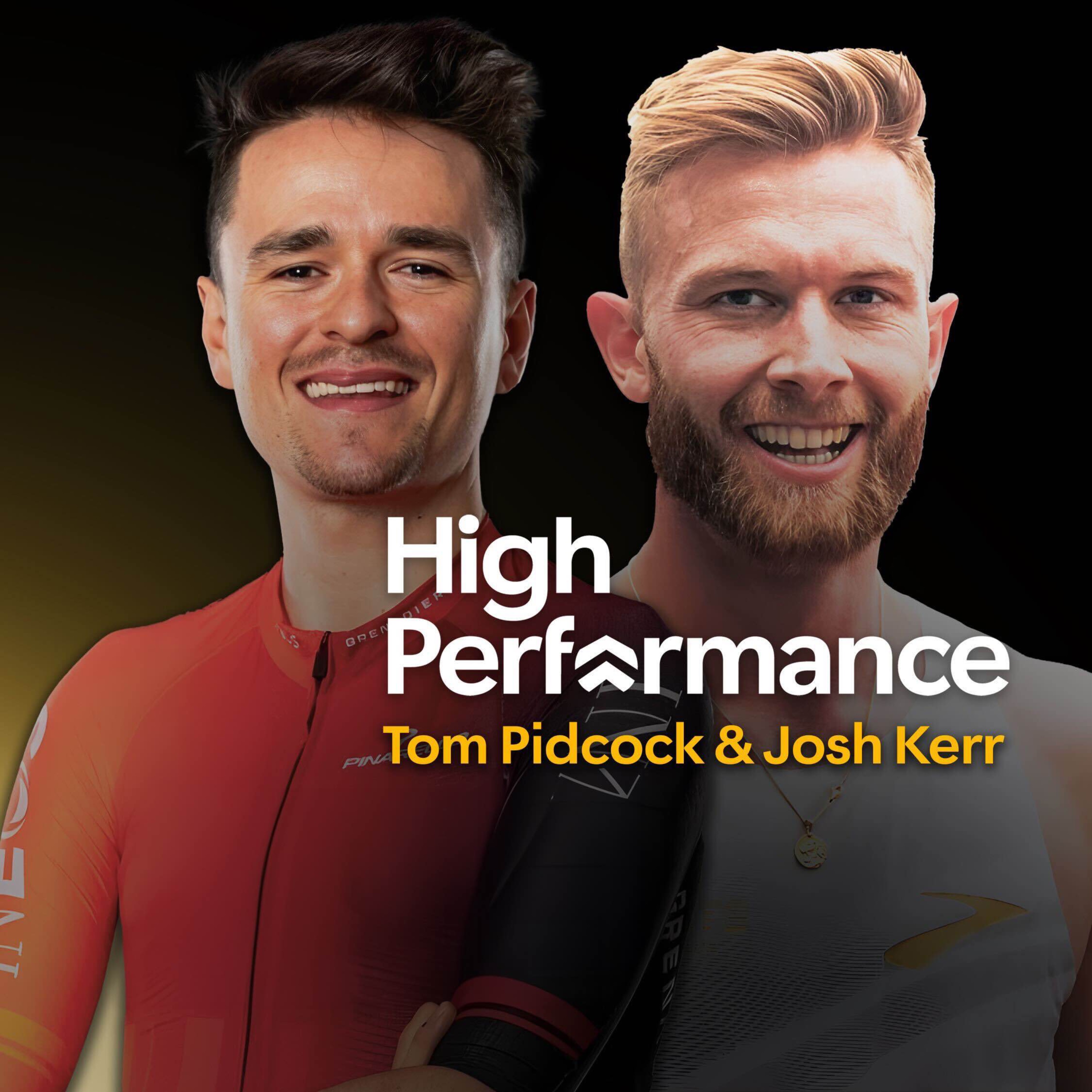
This episode features two remarkable athletes, Tom Pidcock and Josh Kerr, both fresh from their medal wins at the 2024 Olympic Games. The discussion revolves around their experiences, challenges, and mental strategies that contributed to their success.
Written by AI. May contain mistakes.

Get the gist, explore an idea or ask about something said.
 Claude
On The High Performance Podcast, what are the key points of this episode?
Searching your listeningAutomatic transcript. May contain errors.
0:28Watch it early on the High Performance App. UK 1500-meter runners of all time. You've been in this sport since you were nine. You thought your big moment was this one, but I need four more years out of here. That is Josh Kerr and Tom Pidcock, two of the stars of the Paris 2024 Olympic Games. You'll hear more from them in just a moment, but welcome along to the show. You're listening to High Performance. I'm Jay Comfrey, your host, a man who is fascinated with the lives of high-performing people. And for the last five years, alongside my co-host, Damien Hughes, who for a very long time has been a professor of high-performing cultures.
1:04We like to meet the most fascinating people on the planet and just learn from them. We learn from their stories, their successes, their struggles, allowing you and me to explore in our own life, to be challenged at times, but ultimately to try and grow. And I've been attempting to have a summer of a bit of growth. You know, the way the world works. I suppose the world is set up to make us feel like we have to be constantly working. And if we're not working, then we're not being useful. Well, I've tried to take a few weeks off work, which I know is a real luxury. I'm very fortunate to be able to do it.
1:34But it's very interesting, you know, when I'm not on the train to London, when I'm not recording podcast episodes regularly, when I'm not in meetings with the team, my brain very quickly starts to ask me whether I'm actually being very useful. And it is incredible that I think as human beings, we've lost the ability to see sitting and being quiet or reading a book or doing something creative as actually useful. so I've really enjoyed doing that for the last two or three weeks and in that time the high performance team will be delighted and I've come up with loads of thoughts and creative ideas about what high performance can look like for the next few years and it makes me just think once again that we've hardly started you know as I say we've been going for five years and we've spoken so often on this show and it was actually an idea that came to us from Mel Marshall the the coach of Adam Peaty the amazing Olympic swimmer that everyone is aiming for their own Olympics and And my Olympics is different to your own version of your Olympics.
2:30And someone else's is different to mine and yours. So whether it's winning a Champions League final, whether it's just running your first 5k, whether it's going into some high-powered business meeting or just getting off the couch, the truth is that high performance looks different for everyone. And today we're really fortunate. We're about to hear from two athletes who've just competed and just medaled at the 2024 Olympic Games. and I suppose for them, their Olympics is actually the Olympics. So we're very lucky to hear from Tom Pidcock, who shocked the world when in the final of the mountain bike race, he got an early puncture, changed bikes, still managed to close a gap of over 40 seconds, overtook the race leader right at the end in the most remarkable daring manoeuvre to bring home gold for Team GB.
3:15And also Josh Kerr, who so much has been spoken about and written about before these Olympic Games. He ran the most dramatic race in the 1500 metres to bring home the silver. So we'll talk to him about his big rival, about what happened in that race and what his mindset is now after being narrowly beaten by the American runner, Cole Hocker. So we're going to hear from both of them right after a few valuable messages from our partners who allow us to give you this content for free. Stay where you are. We've got some awesome stuff coming right up.
4:12Upwork.com That's U-P-W-O-R-K dot com. Post a job for free and get started today.
4:46Find the shoes that get you at prices that get your budget at DSW stores or DSW.com.
4:55This episode is brought to you by Opera Air, the first browser with mindfulness at its core. Now, most of us spend hours every day online, but how often do we pause to take care of ourselves whilst we're doing it? And that's where Opera Air comes in. It's a lightweight, fast, secure browser built not just for productivity, but for your well-being. With Opera Air, mindfulness is built right in. You'll find free breathing exercises, guided meditations and soundscapes with ambient sounds, lo-fi music and binaural beats, all designed to help you focus, relax and even spark creativity while you browse.
5:33So here we are then slowly edging towards the end of the Paris 2024 Olympic Games. And I think that one of the magic things is to speak to athletes straight after they've either had incredible success or a big heartbreak or a big challenge. Because I think that's when you really get the truth from them. And I'm really pleased to say that in the last couple of days, we've had the chance to catch up with silver medalist Josh Kerr and now double Olympic gold medalist Tom Pidcock. So Tom is the downhill mountain biking champion. And it was an amazing race for him. I don't know whether you saw it. He was booed after overtaking his French rival.
6:09To get to that point, he already had a puncture and he had lots of adversity. And the reason why I wanted to start talking about Tom, and we're going to hear from him in just a moment, is that people believe, or lots of people believe, that high performance is about those glorious moments, those wonderful accolades that you get, the success that you enjoy. But the more conversations we have on this platform, the more we hear from our guests that high performance is about adversity. It's about dealing with the unexpected. and here is what Tom told us about dealing with adversity. My heart sank when I punctured and then, you know, you quickly, okay, there's no point in dwelling on it.
6:47You've got to focus on what I can do to get out of this situation with the best result. So, yeah, first of all, get to the pits, change the wheel and then, yeah, focus on coming back to the front. I didn't care about any other positions. at first I thought yeah I can get bronze here because you know I just opened the race up I'd made a big effort the whole field had made a big effort at this point and when I came back out the pits I was behind people who were kind of you know trying to recover so I was getting held up on the the parts where you can't overtake and there's not many opportunities to overtake so I was you're wasting a lot of energy overtaking and not making the time I could have for the effort that I was putting in.
7:32Initially, I thought, you know, maybe I can still get a medal. Then in the last few laps, it all started kind of coming back to me, the race, and then I believed that I could still win. So there's so much to immediately pick out from what Tom mentioned there. High performance is about small, manageable steps in the right direction, okay? It isn't about taking big leaps in certain directions. And what I loved about Tom was immediately, as soon as there was the challenge, as soon as there was an issue in the race, where he dreamed of winning Olympic gold. He had systems. He already had a plan. You know, we have to remember that in that situation, what is overwhelm going to do for him?
8:09What is panic going to do for him? How is catastrophizing going to benefit him? And it applies as much in my life and your life as it does in a race for an Olympic medal. And we all know that catastrophizing or feeling overwhelmed or panicking in a certain situation is not going to do anything to get us closer to where we want to be it is not going to move us closer to our end goal if anything it's going to move us further away from that and I really love the fact that when you hear Tom talk you know the first thing obviously we know he went for gold but immediately it becomes about well I could still win a bronze medal and then it becomes about overtaking a rival then it becomes about doing the small little things that actually get us to our own version of high performance I remember reading Will Smith's autobiography where he told a story about his dad asked him to build a wall and he said, dad, the wall is too big, I can't possibly build it.
9:00And his dad said, of course the wall's not big because you're not building a wall. You're just laying a single brick and all you need to do is keep on laying a single brick and eventually the wall will be built. And I kind of thought about that actually when I was listening to Tom talk about the way that he dealt with the challenges in his gold medal race. Something else that crops up time and time again is the ability to deal and actually to almost enjoy the struggle because that's also what high performance is you know let's take Lewis Hamilton right he's a really good example Lewis Hamilton has won 30 % of the Grand Prix he's entered so 70 % of the time that he's been a Formula One driver Lewis Hamilton has had to be comfortable with the fact that he isn't winning a race why is that important well it means that when you do get those great moments they mean so much to you look at how Lewis reacted when he won the British Grand Prix this season and for the first time opened up on the fact that he had fears that he would never be back to his best, fears that he would never stand on the top step of the podium again.
9:57And think back to all those moments in your life where you've achieved something great. If you didn't have to struggle to achieve that thing, would it still feel great? You know, we often see teams in the early rounds of football competitions like the FA Cup beating their opponents 7-0 and there's no celebration. They walk off the pitch with no sense of deep joy because they've beaten a lower league football team by seven goals. Yet when they score a last-minute winner against their biggest rivals and they've had to fight and struggle and fear and have issues throughout that game, the joy on their faces, the celebration at the end is huge.
10:31So without the struggle, I don't believe that joy is anything like it would be. If life is too easy, then there is no sense of satisfaction. Here's what Tom told us about enjoying the struggle. It's probably not the wrong word. it's uncomfortable but I guess every athlete they enjoy the suffering because you're getting something out of it it's different if you're if you're struggling and you're not winning or doing achieving what you know you can then I think that's not it's not enjoyable but you you train you work so hard all year that for a reason I guess double olympic gold medalist tom pidcock there uh talking about struggle and the power of embracing struggle um after a brilliant paris and games for him and any of you that listen to this podcast regularly know that i i love to talk about and think about um the learnings that we can take from the stoics and there's a really nice phrase that i wanted to share with you which is that birds weren't given wings just to walk everywhere and you weren't born with resilience and a beautiful mind just to have an easy life and i think that's where we should finish this conversation with tom and about tom with a reminder that you know adversity facing challenges facing unexpected challenges is a common theme that the stoics talked about so much and the reason is because adversity will always be there.
12:00It might not be there today, but there is a very strong chance that at some point in your life, adversity is going to rear its ugly head. And so preparing for that adversity is vital. And how do we do that? We do hard things. We test ourselves to the limits because doing hard things equips you for when the hard times come. Tom, huge congratulations from all of us here on High Performance for what you achieved for Team GB and for yourself in Paris. And for you listening to this episode, to stay exactly where you are. We're going to take a very short break and hear from some of our partners, after which this is coming your way as we speak to Olympic silver medalist, Josh Kerr.
12:39Here's what's still to come. You've been in this sport since you were nine. You thought your big moment was this one, but I need four more years out of here.
12:49If you're still overpaying for wireless, it's time to say yes to saying no. At MinMobile, their favourite word is no. No contracts, no monthly bills, no overages, no hidden fees, no BS. I made the switch because I was tired of those ridiculous bills and sneaky charges from my old provider. With Mint, I'm paying$15 a month and getting the same high-speed data, unlimited talk and text, and coverage on the nation's largest 5G network. Honestly, the quality is just as good, if not better, than what I had before. And the best part? You don't need a new phone. You can keep your current one, bring your number, and all your contacts.
13:24I use Mint Mobile, and you should too. Ready to say yes to saying no? Make the switch at mintmobile.com slash HPP. That's mintmobile.com slash HPP. Upfront payment of$45 required, equivalent to$15 a month. Limited time new customer offer for first three months only. Speeds may slow up a 35 gig on unlimited plan. Taxes and fees extra. See Mint Mobile for details. The market's uncertain. Revenue's tied and hiring on hold. That's why results-driven companies are using Upwork to keep work moving. Go to Upwork.com today and start hiring proven freelance talent fast. No bulky overhead. No rigid long-term contracts.
14:04Just the right expert right when you need them. Work smarter and faster with Upwork. Go to Upwork.com now and find your freelance expert. That's U-P-W-O-R-K.com. Post a job for free and get started today. Come to DSW for the shoes. Stay for the fun. Because let's be honest, if shoe shopping isn't fun, are you even doing it right? So go ahead, try something new. Try something different. Good different. Try something that feels like you. You know, the real you. And then definitely brag about it later. Because at DSW, you've got unlimited freedom to play. With sneakers, boots, and everything in between for every style, mood, and occasion, you'll definitely find shoes that get you at prices that get your budget.
14:46DSW, let us surprise you.
14:55It's so good of Tom to give up time just a few days after he picked up his gold medal in the Olympics to come and speak to us on high performance. But we're now going to hear from a man who also had an incredible Olympic Games. Four years ago, he picked up the bronze. He went into the 1500 metre final, dreaming of gold, and he came so, so close. It's my absolute pleasure to welcome Olympic Games silver medalist Josh Kerr to high performance. Josh, welcome to the show. And listen, I'd love to start as we always do. what do you believe high performance to be? I think high performance is just dedicating your life to something you know being able to live and breathe your sport and putting everything on the line and going out and competing so you know high performance is different to or defined differently to a lot of different people but I think it's kind of has to take over your life a little bit So we're talking just a couple of days after your amazing achievement of you winning Olympic silver in Paris tell us whether it feels like the incredible achievement that you know normal folk like me know it to be you know I think uh you know you fantasize uh you know all different results and you know for me I had pretty clear intentions coming in of what I wanted and I was very vocal of what I wanted um but internally all I wanted was an executing a race that I would be proud of and coming into this championships leaving no stone unturned and I did both of those things it's satisfying to walk away with a medal um it definitely helps uh you know it doesn't sting quite as much but uh yeah i think i'm happy with it but athletes are never content and you know i still have a long career ahead of me so i'm focused on that at the moment and let's talk about your final itself the 1500 meters i mean it was dramatic there was a lot going on would you mind sharing with us what you were saying to yourself during that race yeah i think you know when we get held for about 30-ish minutes before we we come out so you know we're kind of getting shuffled all around the place and you know my my big things were uh my big mantras that day was just a relaxed aggression and so making sure that I can you know keep the heart rate low and and weather the storm a little bit and try and stay relaxed but also when the time comes to strike I'm going to be super aggressive I'm going to throw everything at it so it was a little bit of that and then you You know, I felt like if anyone wanted to go and win that race, they had to take it off of me.
17:22So it was just that, you know, it was my race. And I was, yeah, I was just so excited to be able to go out into these massive opportunities and feel fit and ready to go. And as athletes, you can never take that for granted. And were you aware of the fact that Ingebretsson, who's obviously your great rival, was sort of running a race where he was thinking a lot about you? I'm sure he was. um he just like the the race plan that he chose was i mean it made for one heck of a race but i mean it's a hard way of doing it so you know i could tell with 600 to go that he was starting to run out of a bit of steam and he was looking around a little bit and panicking so you know that means that you've bitten off a little bit more than you can choose so i just had to stay relaxed and make sure that he felt the pressure of of you know me coming up and knowing that i've had a little bit left in the tank, but, you know, it's a very brave way of running that race and, you know, hats off to him for that.
18:17And I saw on the TV coverage, Steve Cram, who of course is a former long distance runner. He said that you and Ingebrigtsen tried to destroy each other. Is that fair? Is that correct? To be honest, I was just trying to, you know, stay close enough to be able to strike in the last 200. So, you know, the only reason it looked like I was, you know, keying off of him is that's kind of what everyone was doing um and so but yes i think he was specifically trying to to destroy me in in the way that he ran that one and the way that people come in is you know everyone obviously has their personal best and things and you think maybe on a good day someone can take you know a second half off their pb and so you know that's probably your range um but i mean cole took about three seconds off his pb so that's kind of threw that the whole thing out the window but um yeah Yeah, I think we were both focused a little bit on each other from that side of things.
19:12But, you know, in all plans and preparations, it was, let's talk through this whole field. And Cole's had a fantastic career so far, so it was not difficult to overlook. But I didn't think he would be that, had that much energy left in the last 100 on 327 plays. Can we talk a little bit about rivalries? Because I think that they can do so much for us. I'd love to know whether that rivalry with Ingebretson you feel has helped you or hindered you over the last few years. I think it's definitely helped. I mean, I love just being honest and, you know, answering questions. And, you know, there's been obviously a lot more hype around our distance and our sport and, you know, more eyeballs on things.
19:54And, you know, I'm way better when the pressure's on than, you know, if I'm going to a meet and I don't really, you know, I've got nothing to lose really. and it's just you know it's just one of those meets it's I don't really get the best out of myself I love the intense atmosphere I love when something's on the line and so it's really helped me dial in my my focus and dial in all everything that I do on a daily basis to get better at running and you talked after the race about you know focusing on your controllables could you just first of all explain what you believe the controllables to be your controllables are mostly your mindset but your you know your sleep your nutrition uh you know your warm-up so executing the day uh for me is you know making sure i get good sleep hydration big you know making sure i'm going through my routines for pre-race uh getting to getting places on time and just kind of having like a buttoned up attitude on the day and then it's just mentality it's making sure that you know you're able to convince yourself that you're good enough to be there you're convincing yourself you're the best in the world and and those are my controllables and you know those are within my control 100 and i have lots of ways to be able to do that as well as possible you know all these different routines that i'll go in you know go into the the day with if it's journaling if it's reading if it's whatever just to relax the mind and then during the race it's you know kind of allowing your brain to switch off and let your body make the decisions because it knows what to do um and that's all within my control what's not within my control is how someone else races and if i get frustrated or you know i'm getting clipped up or you know something's going on and it's allowing to seep into my controllables then i get annoyed with myself so i knew executing was just making sure that i do what i do best which is go through the race day as perfect as i could look i thought generally uh josh you were so insightful your post-race interview I love that you talked about it not being what you wanted ultimately but it was still a step in the right direction how important is it for you to quickly reframe the fact that it wasn't gold but silver is also an incredible achievement and that it sets you up to move forwards yeah I mean the time definitely helped that um because you know I've been going after that British record for six years uh and I've I've wanted it really bad because I felt like that was the last step for me um you know I've had you know I won the world championships I have, you know, medals from, you know, indoors and outdoors and all these things.
22:20So, you know, I felt like having that time would definitely cement me as one of the best UK 1500-meter runners of all time. So that one helped. And then it was just having that reflection. You know, it's difficult when you get, you know, chucked a microphone in your face, you know, 10 minutes after the biggest race of your life. And, you know, obviously there's lots of emotions there. But for me, it was just, I'm always going to find a positive spin on things. I'm not going to get too down on myself. it's a you know it's an Olympic silver medal and you know some people see that as first loser or and I see it's a stepping stone and what about our kind of reaction to silver you know you probably I don't know whether you know this but one of the papers used the word failure when talking about you winning a silver give me sort of an athlete's reaction to that kind of narrative no one's going to be harder on themselves and themselves I think you know it's a lot allowing that stuff to seep in is difficult and you know for me I it's been reasonably quiet just because you know I've I changed my phone weeks ago to my race phone I I've been also like we wrote a social media plan for the I think it was the six weeks coming in and so you know I've been off of pretty much everything that would be able to affect that mentality um and that's that's the tough part is if I if I was posting myself on social media if I was had my normal phone and I had you know I was having reporters you know text me and email me and ask me all these questions it's it's really difficult to switch off and the problem what people need to realize is that everyone's going to have their opinions you know if you go out win olympic gold in in a world record time i'm sure someone will say something negative about you and they'll find it but um it's just it's it's really hard and i don't think that's ever going to change um but it's knowing yourself and knowing that you're going to need to put put things in place to to make sure that doesn't affect you you know there There was actually some research done by the University of Iowa that said that athletes who get a silver medal are not as happy as the athletes who get a bronze medal.
24:16Because if you get a bronze, your psyche is, well, I almost didn't get anything. If you get a gold, obviously you're delighted. If you get a silver, your mindset is, oh, I could have got a gold. So the research says that the least happy person on the podium is the silver medalist. I'd love to get your reaction to that. Yeah, that resonates. I think the bronze medal in 2021 for me was again another stepping stone but it was it was a big moment in my career and you know I was close to the silver actually that day as well but yeah the silver one stings a little bit more because you are that that that little bit closer to to the top but this is the thing with sport and this is why I love it it's like there's no instant gratification what what life has just told me is you've been in this sport since you were nine you thought your big moment was this one but i need four more years out of you and that is it's tough to take but it's also that's my life that's i love my job i love i love running i love track and field i love athletics but um what yeah what i'm told now is that you know i wasn't quite good enough right now but that doesn't stop me from being good enough in four years time and it's a it's a great storyline and to go from bronze to silver to gold and so i'll uh i'll stick with that that positive side of it right now and obviously Simone Biles also came out and said can the media stop asking people that win gold what they're going to do next you know I'd love to know from you how you believe we should be speaking to athletes who've just picked up a medal you know what are the right things for us to be saying or what do you think are the areas that we're just not exploring that we should yeah that I struggled with that a lot last year just because obviously the Olympic Games is humongous and and and um that that I mean as a competition it's just bigger than the world championships of course it is and so i was at the world championships last year you know 10 minutes afterwards i think it was my third question was like wow you're world champion now how does that make you feel like how do you feel going into the olympics next year like do you feel like what are your thoughts on this and this and i was just like this is crazy that 10 minutes after the biggest achievement in my life i'm getting asked what what's next but yeah i mean she's obviously under a lot more scrutiny than than most um when from a media standpoint so I would say we can give her the benefit of the doubt on that one I'm sure she's thought that one through.
26:32Listen I'd love to talk about your preparation ahead of this one am I right in saying that you visited the stadium where you were going to compete at Christmas? Yeah we came here I think it was December 26th through the 30th you know just feel the city out a little bit get our bearings and what I like to I do a lot of visualisation so it was really nice to just bring a lot more context to that and so went over to the stadium um you know saw the practice track and you know was able to to kind of peek into the the actual official track but i mean it was still heavily under construction like it wasn't you know it wasn't as as pretty as it has been over the last couple of weeks but it was just nice to be there and know and just familiarize yourself because i think it's important you know it was a huge moment for me and i wanted to to win my my my one percent battles and if i can bring more context into visualization then it allows me to uh you know to you know to really see it and feel it a bit more would you mind for people that don't understand what visualization is about explain to us kind of what what you did the process you went through yeah there's lots of different ways to do it but i think if you're starting off i think you know i i led the the team um through a visualization during my captain speech for for the championships just a quick one nothing crazy but i think i think it's incredibly powerful to see yourself doing exactly what you want to do i think it's really important to to see it internally before you can actually before it actually happens i think it makes a big difference and just to convince yourself that you're good enough to be there um and so that was that's a good way to start for anyone it's just you know picturing the the perfect race or the perfect moment and you know how that would feel and the emotions that would come up and how it would look and how your body would feel during all that time if it was a perfect scenario and being able to see that perfect scenario over and over again I think is something that you can manifest a little bit but it's just really good to be able to deal with everything through the emotion side emotional side of things and before it happens because it allows you to feel like I've been here before even though you haven't um and so i would say that's a pretty pretty basic one to to start off with and now that you can finally catch your breath and reflect i'd love to know what you've had to sacrifice what is the cost that we don't see to living a life like yours it's just time man time is time is my biggest sacrifice i you know i moved over to the states in 2015 to kind of pursue this dream um you know i was 17 years old went over to the university of new mexico and just left all kind of family members and everything and you know I still live over there and in this last year my my fiancee moved to to Florida for her dermatology residency for the year so I've been away from her all year and I've been away from all family in the UK all all year and that that was the biggest then the hardest thing to do is knowing that Florida is not the best place for me to train and so I can't just go over there and be there full time so i you know obviously visited a couple times but that was that's a big i'm a big family guy and it was just really difficult to know that i have to be in this place to train at this level and uh and sacrifice that time of you know seeing my nephews over in the uk and and see my brother and my parents and my grandparents and uh and then obviously my fiancee living living the other side of the us we couldn't be living we couldn't have been living in kind of more opposite places it was thousands of miles and a couple of time zones but yeah that's that those are my biggest sacrifices this year um and then you know from a diet perspective it's it's been pretty pretty locked down for for a while right listen josh before we let you go we're going to do some quick fire questions what are your three non-negotiable behaviors that really matter to you i think cleanliness you know i think the structured cleanliness is number one for me like you know if you have a messy house it kills me uh you know i'm very much a structured individual with that which means the olympic village is a nightmare for that for an ocd person like that uh get up early that's number two you gotta get up and attack the day um i would say that and then oh number three uh i i think you just gotta be a family family man uh that's that's going to be it's going to be my third non-negotiable is family kind of above everything else the best bit of advice you've ever received i think from a sport perspective the the piece of advice um that i have is you know don't don't run the race don't don't run the race before it's run so you know a lot of people look at results online or you know look at a sheet of paper be like well this is probably going to be the result and that's why we run the race and so for me it was uh it was always that someone has to go and win the race why not me and uh that was you know i feel like i bring that into every every race i'm at doesn't matter if someone's got a better pb or you know they're in great form there's no reason that you can't go out and win so yeah why not me and finally josh your one golden rule to living a high performance life uh i mean it's very cliche but discipline equals freedom in this situation.
31:51I mean, I'm as disciplined as you can get, especially in this build-up when it comes to our sport. And if you want these big moments, if you want to come away from championships with medals, you have to live a structured life. You have to live a disciplined life. And then you're able to have those experiences that you want. And I would say that that discipline behind closed doors, in front of the world, whatever, you've got to get that working. So that discipline is going to bring you those opportunities, I think. Josh, I can't thank you enough for spending time with us, mate. Very best of luck with everything that comes next.
32:27I can't wait to see what's next in your own story. You're a true high performer and I really, really appreciate your time. Thanks, mate. And that brings us to the end of this episode of High Performance. Obviously, no Damien Hughes on this one. He's busy sunning himself in Canada at the moment with his family. And as we talk about so often on this show, high performance isn't just about pushing yourself to the limit all of the time. It's also about taking the breaks and switching off when you need to. And Damien's actually adopted some great advice that we heard on high performance from Shane Parrish of the Farnham Street blog, where he said, have two phones.
33:00So have the phone that you use for work. But when you want to switch off from the world of work, have another phone with you. And no one else has that number apart from a couple of people in your immediate family in case there's an emergency. And you use that phone purely for maps or for booking restaurants or for taking photos. So that's what Damien's done, actually. and that is the reason why I've messaged him quite a few times and heard nothing back this summer. And actually, in some ways, I'm delighted about that because it means he's genuinely switching off and having time with his family.
33:27I can't wait till he's back. We've got some, oh man, we've got some amazing guests lined up to record with in September onwards towards the end of 2024. Winnie and George and the whole team who are responsible for the guests have been working so hard back at base while Damien and I have had a bit of a break. And I wish I could tell you the names. I can't, but please, if you want to be the very first to know who's coming on to High Performance, just hit the follow button. It helps us more than you know. It continues to grow this platform and it means we can bring you more awesome conversations like the one that we've had today with Josh and Tom.
34:00Josh, Tom, thank you both very much for joining us and for you. Thank you so much for listening. Please continue to spread the learnings you're taking from these conversations. And most importantly, remember there is no secret. It's all there for you. so chase world-class basics don't get high on your own supply remain humble curious and empathetic and we'll see you very soon thanks for listening
35:10Thank you. Learn more at capella.edu.
We had the privilege of catching up with two remarkable athletes fresh from their medal success at the 2024 Olympic Games: Mountain Biker Tom Pidcock and Middle-Distance Runner Josh Kerr.
In this episode, Jake takes a moment to reflect on Tom's candid insights into the importance of facing adversity head-on, the challenges he had to overcome to win the Olympic gold medal, and how embracing struggles, rather than avoiding them, was key to his success.
Jake also speaks with Josh Kerr to break down his intense rivalry and what really went down in the unforgettable 2024 Olympic race. Josh opens up about the mindset he adopted after securing the Olympic silver medal, the role of visualisation, and the importance of focusing on what he could control. He also touches on the sacrifices he made to reach this level, offering a candid look into the realities of elite competition.
This episode offers a deep dive into the mental and emotional aspects of high performance, with Tom and Josh sharing valuable lessons on resilience, preparation, and the pursuit of excellence.
🚨 Partners
Huel 👉 Claim your FREE t-shirt HERE: my.huel.com/hpblack
Discover all 154 health benefits at uk.huel.com/benefits
Heights 👉 https://hppod.co/heights
Explore offers and discounts through our other partners:
Hosted on Acast. See acast.com/privacy for more information.


