
 Ask ChatGPT


 The High Performance Podcast
3 May 2024 · 56m
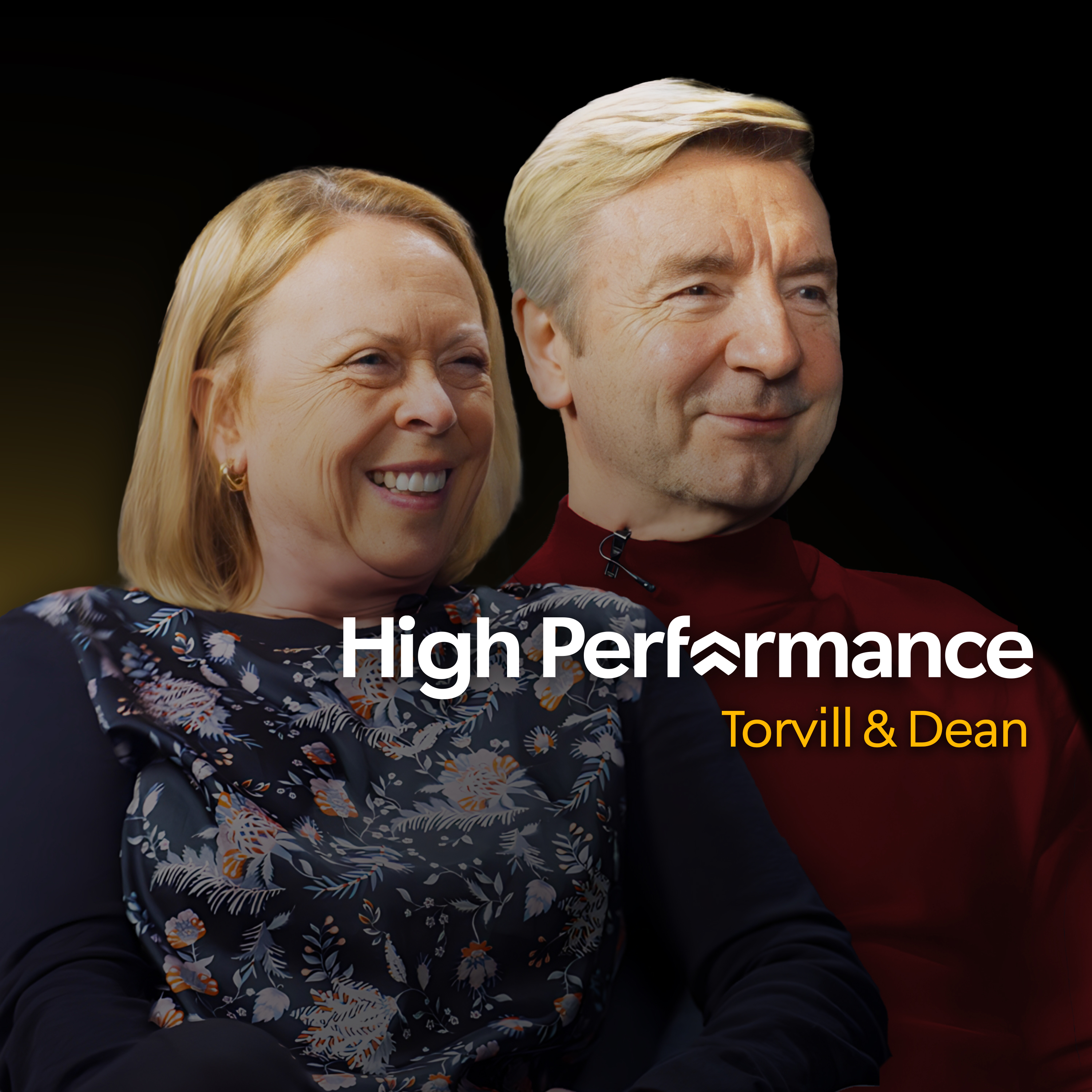
In this episode, hosts Jake Humphrey and Damian Hughes engage in a captivating conversation with legendary ice dancing duo Jayne Torvill and Christopher Dean. Celebrating over 50 years of their illustrious career, they reflect on pivotal moments, challenges, and the essence of their partnership that led them to Olympic glory.
Written by AI. May contain mistakes.

Get the gist, explore an idea or ask about something said.
 Claude
On The High Performance Podcast, what are the key points of this episode?
Searching your listeningAutomatic transcript. May contain errors.
0:28Watch it early on the High Performance App. of the final of the Olympics and you had a cold, that you could do it. You look back and suddenly there's a life gone by.
0:42That is Jane Torvald and Christopher Dean and this is High Performance, the show that unlocks the minds of some of the most fascinating people on the planet. I'm Jay Comfrey and alongside our expert, Damien Hughes, we learn from the stories, struggles and successes of our guests, allowing us all to explore, be challenged and to grow. And today we welcome ice skating royalty to the show. Exactly 40 years on from winning Olympic gold in Sarajevo, Torval and Dean are about to reflect on how they conquered the world, the toll it took, the challenges they faced and why they finally announced their retirement from skating.
1:19Enjoy. And before we get going, a quick word from our brilliant partners who allow us to give you this content for free. Before we get going, just to let you know that you can now enjoy a free trial of High Performance Plus, where you can get early access, ad-free content, exclusive masterclasses and high-performance originals. Just download the High Performance app from the App Store. The market's uncertain. Revenue's tied and hiring on hold. That's why results-driven companies are using Upwork to keep work moving. Go to Upwork.com today and start hiring proven freelance talent fast. No bulky overhead.
2:00No rigid long-term contracts. Just the right expert right when you need them. Work smarter and faster with Upwork. Go to Upwork.com now and find your freelance expert. That's U-P-W-O-R-K dot com. Post a job for free and get started today. At Capella University, learning online doesn't mean learning alone. you'll get support from people who care about your success like your enrollment specialist who gets to know you and the goals you'd like to achieve you'll also get a designated academic coach who's with you throughout your entire program plus career coaches are available to help you navigate your professional goals a different future is closer than you think with Capella University.
2:43Learn more at capella.edu. This episode is brought to you by Opera Air, the first browser with mindfulness at its core. Now, most of us spend hours every day online, but how often do we pause to take care of ourselves whilst we're doing it? And that's where Opera Air comes in. It's a lightweight, fast, secure browser built not just for productivity, but for your wellbeing. With Opera Air, mindfulness is built right in. You'll find free breathing exercises, guided meditations and soundscapes with ambient sounds, lo-fi music and binaural beats, all designed to help you focus, relax and even spark creativity while you browse.
3:27Well, Jane, Christopher, welcome to the show. Thank you. Thank you. So first of all, what does high performance represent to you both? Maybe you'd like to start, Jane. High performance. I think for us, it's getting yourself ready for that performance. And to do that, you've got to train to be ready. So the harder you train, the more you're ready for a high performance. And, you know, over the years, we've loved performing. We still do. But we know that if we're not ready, it's not going to be pleasant. And so we've never put ourselves in that position that we're not ready to do a performance. I think high performance for us today versus when we were competing, it's a different high performance.
4:14You know, I think we've transitioned from that sporting world to an entertainment world now as well. And certainly when we were younger, our life was just focused on the ice every day, what we were doing, being effective when we were on the ice. looking after ourselves off the ice because ultimately you know it all comes down to four minutes of your life at an olympics and if you think of everything that's crammed into those how are 10 years of together comes down to a very small amount at the end of it of success or failure and so it focuses your mind i don't know whether we thought about it in those terms i think that's as older people thinking back to how it was then and how you um how we see it now but at the time i think it was just our life and that's what we did and that's how we we did it we didn't have a a team of people around us or anything um we we were our own sort of team just the two of us really so when i thought about that question what is high performance and i was obviously asking you individually in my head i kind of had this idea that jane might have one version of high performance and Christopher might have another one.
5:29No. The first thing you say is we, the next thing you say is us. So this kind of unity that you've got, can we actually go back to the moment when you realised that you weren't just going to be two people that met, spent a week training together or whatever and went your separate ways, that this, and maybe you can never imagine it would be as long-lasting as this, congratulations on 50 years together. When did you realise there's something special happening here? I don't think we ever, you know, as Chris said, you know, we were in this zone and we were focused and that would be the first ever competition we did together.
6:07First local event, then more regional events and then winning our first British championship. I think we won seven British championships overall, but each one was like a stepping stone. and oh gosh, if we win the British or if we become third in the British even, we'll be on the British team that goes to European Championships. I do think when we hit to be on a national team, that was a, you know, you get a badge that says you're part of the... You get a little uniform as well, don't you? Well, a badge. It was a wealthy organisation, skating at that time, is your badge, you're part of the team.
6:49but it was something special that you were part of the Great Britain skating team so I think if nothing else that was a high point yeah and then I think the next apart from the actual events and the competitions another big moment that we both remember is going to the 1980 Olympics in Lake Placid because there you've got the whole Olympic uniform that was one of the big deals Because they sent us, I think it was a suitcase. Yeah, and it was all inside. Swag. That you just put on and go, that's it now, we've made it, we're part of the team. It's just such a proud moment though, especially if you go into the opening ceremony.
7:27And then you realise, because in our competitions it was only skaters. And then you've got your skiers, bobsled and speed skaters at the Olympics. So you've got this whole range of different sports. And you're saying, oh gosh, this is amazing, this is our British team. Everyone was getting those uniforms, right? Yeah, yeah, yeah. But why you two? Why have you stayed together for 50 years? Why did you skate so beautifully in 1984? How have you done a 40-year skating career? Like, why you two? I think from the very beginning, when we first skated together, we were put together. I think we both loved skating.
8:04It's as simple as that. We just loved the feel of it. We loved working. We loved the discipline of it. and what we got out of it, you know, like when you do a new move and you get it right for the first time, it's so satisfying and it could be one step that you get right and we just had this passion, we both had the same passion just to keep doing it and keep, like we get to a certain level and think, oh we could do that a bit better or we could try this, it'll be more difficult and I think we just kept pushing ourselves and the fact that there's two of us, you know, if one of us didn't feel very well one day it's not like you're going to say i'm not doing it today because you do it for the other person um so i think in that way there was i think over the time we built a mutual respect for each other it's that if you're going i'm going i'm looking after you you're looking after me you don't let the team down no and it's a very small team but that's the respect that we had for each other but also jane um had been a national champion before i was as a pair skater now pair skaters and dancing are different disciplines in figure skating pair skating it's big high lifts dancing it's all about the intricacy and and how you move together as a as a partnership and jane had been a champion at the age of 13 i think you were weren't you I'm speaking for you, but I'll tell the story because it'll be quicker.
9:32So you were 13, and then the partner decided he wanted to go to London and in his way, let's probably get a better partner, which left Jane at the age of 15 a bit old for single skating, but you wanted to carry on. I had had a partner that a coach had come up from London to coach me with my partner because we were... You were junior champions? Primary champions, primary champions, George Jr. And my partner left to go to London to skate with somebody better. So it left the two had-beens on the scrappy. It was hers. And she said, well, let's put you with Jane. And I'm like, she's a single skater, pair skater.
10:19Different discipline. But she had kept up a dance. And one day, the coach, we said, we'll give it a go. We'll give it a go. And it was one of those six o 'clock in the mornings in Nottingham Ice Rink. And old Nottingham Ice Rink is a cold, dank, dark place. Not humid, but freezing. And it wasn't auspicious at all. And the first thing she did, I'll show you. She said, stand in a dance hall. And made a stand like this. And she said, I've got to get something from my dressing room. But we were like, because we were young then, we couldn't look at each other. We were like this all the time. What do you think?
10:56and we were belly to belly and we're 15. Right, so you couldn't make eye contact because it was a bit awkward. Yeah, because she pushed our hips together. She said, you've got to skate close together, which wasn't wrong, but it was just like, whoop. It was a test, I think. Anyway, we stuck it out. Wow. And then after about a week, Janet said, do you think it's going to work? Do you want to stay together? And we said, oh, not sure, we'll let you know. But we actually did enjoy our skating together. We loved it. We didn't want to jinx it, did we? Yeah, we were afraid to say, yes, we want to be partners in case something happened and it didn't work out.
11:34And we've said it many times, but we still haven't agreed to skate together. No, no. Every time she asked, we were like, no. And then she stopped asking because she knew that we were playing games. How nice. See, because there's something really intriguing here about what you're describing because when we're doing the research on this, we were reading, thinking from the lens of our listeners, that most businesses fail for what they say are three reasons. One is that they go bankrupt. The other one is that you decide the effort isn't worth the reward. But the third and most significant one is when there's difference between partners.
12:07So there's a psychologist called David Gage who has gone and studied the relationship of partnerships and tried to make sense of what the great partnerships do. And there's so many things that you're telling us that seem to fit with the research. and I'd be interested in how formal or informal you actually went around discovering some of these yourself in practice. So one of the things he talks about is that you both establish, both partners have to establish a really clear role in the relationship of what your strengths are, what the other's weaknesses are. I think you were the bossy one. I was the bossy one.
12:42Well. Not really. He was. I had a vision of things to do. Yes. And you always would come along. You wouldn't go, no. No, but I think in any kind of dance, the male takes the lead. That was what it was like in those days. And that's why I grew up to do that. Even when I learned to do dances with my coach, you follow the lead of the male. And so that's what I did. But then on the other side of that, when we were creating free dances, as we called it, Chris was the one with all these visions he's the creative one and he would say oh yeah let's try this and I used to say well yeah you've lifted me up onto your shoulder or whatever how are you going to put me down I don't know yet well let's figure it out let's figure that out no let's figure that out before I jump up on your shoulder upside down let's figure out I'm gonna get no I think as we've grown older we realized that that was our role was that I must probably lead forward.
13:48But Jane is always coming with me. It's never that, no, I'm not going to do it. It's never a tug. We're always wanting the same thing. Yeah, that's a great idea, but I think it'll work better if we do it this way. So tell us a little bit about how you would... So you've just described yourself as being the visionary. So how would you go about envisaging what it was you were trying to achieve? Do you want to talk about Bolero? or is that too soon? Okay. So musically, we didn't, each year, you come to the end of one season and the next season's almost upon you. So let's say 1983, the year before the Olympics, we'd won with a routine called Barnum.
14:33And so we're starting over again as champions, possible future Olympic hopefuls. And so we're looking for a piece of music that we feel is unusual in the genre that we're in, figure skating. And we'd been using this piece of music for a warm-up to skate around because it's 80 minutes long if you do the full version. And so it's a nice warm-up on the ice. We stroke, we skate around, skate together. And by the time it's finished, we're ready to then move on to the serious skating side of things. And so when the music for the 1984 came up, one of us, we both claim this. I can't remember. I said, what about Bolero?
15:16And we both looked at each other. And the minute we went, that's really unusual because it starts quiet, crescendos to big, but it's one tempo all the way through. Builds the whole way through. It wasn't this fast, medium-paced, slow, back to fast. It was one, and so in that sense, it was really unique and it would be original to do On the Ice. So the music's the first part of it. Now the music, there was no versions that were four minutes long because the free dance is a four-minute routine. So how do you get an 18-minute piece of Ravel down to four minutes? We found an arranger to do the music.
16:02Bob. Bob. Bob the arranger. Bob the arranger. Anyway, he went down the route and he said, I think I've done it, but I can only get it down to 4 minutes, 28 seconds. Now, in the competition, the music criteria is that it should be 4 minutes, but you've got a 10 second either side, so it could be 3.50 or 4.10. We've got 3.28. So we interpreted the rules. We looked at it and it says, well, when you start to skate. we started on our knees and Jane's Blade touched the ice after 18 seconds at 4 minutes 10 so creatively you had to sit down and think who came up with that idea? to start on your knees?
16:48start on the knees he'd seen something in a musical where a couple were on their knees and sort of doing something similar so he said let's try it on the ice and that's what we did and we had to keep it going for 18 seconds so that when my blade touched the ice, they would start the stopwatch and technically would run for four minutes, 10 seconds. And we've always liked a piece of music with, in our heads, a narrative. For us, it doesn't have to be a story, but it's a story because it gives us intent of what we want to do. And so with Bolero, it was sort of a Romeo and Juliet situation. We come from different families, can't be together, but we can be together in death.
17:32So basically it was a journey in our heads up a volcano, which we then at the end launch ourselves into and live together for eternity. That's why we dived onto the ice at the end. This is nice because, you know, continuing with the theme of David Gage's partnership charter, one of the other defining elements is clear purpose and goals. So when you're starting out with Bolero and you think you're getting the moves together, how did you look at the Olympics? What was it about for you? Was it, because let's be honest, we haven't got a great track record in this country of gold medals at Winter Olympics, right?
18:10So was it just doing the best we can? Was it a gold medal? Was it placing in the top 10 or top three? I think because we'd won our first world championship in 1981 and we were kind of, at that stage, on paper, we could have got a bronze medal, but we won and we were kind of like, whoa, a bit shocked because we knew that we wanted to continue to 84 and we had to then keep doing something different each year to stay at the top. With Bolero, we knew we had to do something different each year, didn't we? And what was unusual with Bolero was it was a classical piece of music and I think that in the past, because it's ice dance, you've always got something with a rhythm and we'd use Mac and Mabel and we'd use Barnum that had lots of big tunes in them but Bolero was something really different but we we kind of as soon as we knew we were going to use that music we believed in it and I think that's part of the of the journey that you've got to believe in what you're doing because if you don't it will show in your performance.
19:13And also going into the Olympics we've been the world championships three previous years so it was our Olympics to lose that was the expectation was the expectation so we you know when you're the leaders in your field you tend to wear this coat of like champions and and we always wanted to lead we always wanted to be adventurous in what we were going to try and do and and I think Bolero for us it was a real departure and it was risky in a certain way wasn't it of taking this classical one piece of music one tune, no changes that's continuous like that. But it's something that we felt that was unique and different and would stand out.
20:01So can I just ask you around, I mean, you've offered two almost contradictory statements in there and I'm interested in where your focus was. So you're the reigning champions and you said it was ours to lose and yet you were willing to take a big risk to win. So where was your focus? Was it on almost defending the status or was it about pushing the boundaries and doing something? We always wanted to be different. Yeah. We always wanted to change ourselves up. And that was a period of time where we, there weren't so many competitions. And so when we did unveil a new routine, it was sort of, we kept it secret as long as we could because we would go off to Germany, a place called Oberstorf in Bavaria.
20:45And that's where we trained because we could train all day. basically there. And then when we would come back to do our first competition, which was the British, it was almost like a premiere, an unveiling. What are they going to do? For the first time, what are they going to do? And also our competitors, they wanted to know what you were doing, didn't they? There was quite a buzz around it within the skating world. I remember we used to, in those days, there was no social media, but we had maybe four or five journalists from like the Express, the Mail, whatever, who always covered the skating.
21:17and I remember one of them, oh, was he from the Express? Anyway, when he... Christopher Hilton. Yeah, when he heard that we were using Bolero, he's like, he said, and he was always a big fan of ours. He was always great. He said, that's a bit boring, isn't it, Bolero? And we said, no, we don't find it boring. But I think he'd heard it. In context of just listening to the music. Just sitting, listening to the music. But when you're doing movement to it and skating, it becomes a different thing. And what we tried to put into it was the connection with each other. Because right from the beginning, our eyes were this close.
21:52How did you learn to trust your instincts, to know that doing something daring was going to end up winning you the gold medal? I think it's the confidence that we got from winning from the first time that people said, actually, you're the best. And there's something I would talk about, that mantle of putting on the champion's coat. I think that gave us... our confidence to then be more creative to to to want to challenge going other ways other areas different directions and then showing showing our audience and the judges you know this is what we can do now this is different no one's done this before why not do something and we i know it's a sport but there is also that creative side i think i don't want to get too lofty but you know artists and writers are always looking to better themselves.
22:44And that's what we were trying to do in our sport. And can I ask, when did you develop the ability to look into each other's eyes? So when you demonstrated there and you said you were 15 and couldn't look at each other. Yeah, that came, didn't it? Because there's really interesting research on this around... What? It's quite an area around synchronicity. That if you sit and stare into somebody's eyes, as the research says, and just sit opposite each other for 15 minutes, your heart rate, your breathing, and your skin starts to synchronise with the other person. So that was obviously a significant moment for you both.
23:19And I'm interested, when did that happen? I think fairly early on, because one of our great judges and mentors was a chap called Courtney Jones. And he would say, you need to have eye contact. It's all about eye contact. Otherwise, no one's going to believe you. And that wasn't necessarily in every routine. You've got to perform to the audience as well. But years ago, they used to have these things called compulsory dances, which like in ballroom was a tango, a waltz, a foxtrot, whatever. And depending on that kind of dance, there were moments when you're in like a waltz hold that you would be looking at each other.
23:56So I think from an early stage that we learned that eye contact was important. You know, when you watch TV or a movie, and when an actor's talking to somebody, and they're really talking into them, to their face, trying to get in their head, it's real, isn't it? And it's believable. And I think that's what we tuned into. We want it to look believable, but we got past that of the physical just looking, but actually believing when we were looking. We're almost, for me sometimes, and I think for Jane, that we're almost talking to each other when we're looking at each other as well. Yeah, over the years, because we've done, as professionals, many shows and performances, if one of us has got a problem, like, I don't know, something's gone wrong, or your knee has gone funny.
24:49I see the twitch, can't you? So we look at each other and you kind of do that. And we know, like, as Chris said, you can talk with your eyes. so yeah and what how hard was it to maintain professionalism in this you know we all watch Strictly Come Dancing they talk about the curse of Strictly and you work for a long time on Dancing on Ice and you see the impact that it can have when two people are very close to each other physically and then mentally so how did you tread this line to keep it platonic to keep it professional I don't know I guess we grew up with it so we didn't I mean yeah I think the focus was the skating.
25:30It wasn't a career then. It was something that we just really wanted to pursue. And then once you start getting success, that became the most important thing in our lives. So I suppose we were very driven in what we wanted to achieve. But we knew that turning professional, the show's got your name on it. This is after competition. After competition. Moved on a long way now. And then you actually get paid for doing what you love to do. But if you're doing a professional show, there's no messing about because you can't be silly and, I don't know, go off and get married in the middle of a season of a show or have an affair with somebody.
26:16Because like Chris said, you've got to stay focused on what you're doing because the next day, you've got to be ready to do a performance. Did it ever cross the line and then you have to have a conversation and say this is... When we were younger, we were sort of for a minute. Yeah. But it didn't last very long. But it was before major competitions. And, you know, when you're kids, when you're teenagers and people just go out on trips and go to competitions and then afterwards have a bit of fun. But I think still, even then, our main focus was the skating and being ready to train the next day and stuff.
26:52I think we just eventually got into that place that we knew that we were the best of friends. And that friendship has, I mean, I think that mutual friendship has got us to this point now, 50 years later. People, quite often we get asked, what's the secret of your friendship, relationship? We never got married. Never got married. Don't sleep with each other. but you also had to push each other to the limit right to get the success you've got and this is something that i love talking to people about because i think we underplay hard work these days and we underplay it often because everyone can work hard and so i think it makes people feel better if they don't talk about hard work right there must be another reason for your success but the truth is that without hard work you wouldn't be sitting here now you definitely wouldn't have had that gold medal and all the other things that have followed what would you like to let our listeners hear about what hard work really looks like to you for us i'm it's repetition waking up every day doing the same thing day in day out when it hurts when it's cold when you don't feel like it when you're sick um we just you know we used to practice if one of us was ill, colds, flu, period pains, we'd still go on and do it because that might happen on that day.
28:22And so it's getting through the adversity, knowing that you can get through it and push through. I think that hits the nail on the head because you've got to know mentally that you can do it. And when we trained in Germany for our competitive years, we trained six hours a day. So we'd have a routine. We'd get up, have breakfast, two hours on one section of competition, lunch or a break, another two hours, and then two hours sort of late afternoon. And that was the routine. And as Chris said, you know, if one of us was carrying a slight injury, you'd still go and train because mentally you had to know that if you woke up on the morning of the final of the Olympics and you had a cold, that you could do it.
29:08so there was no fear of like oh gosh what if I don't feel well tomorrow there was no fear of that because you knew how it felt because we'd done it and also you know going to the ice the practice session it's like you never miss it you never miss a training session for whatever reason
29:34this episode of High Performance is brought to you in association with AG1. Look, we know that taking care of your health isn't always easy, but we should make it as simple as possible. If there's one thing that guests have told us here on High Performance over the years, it's that getting closer to high performance has to be an easy thing to do. Therefore, it encourages you to do it. I believe drinking AG1 every single day with no exceptions gets me closer to my own version of high performance. And it's so simple. A scoop mixed in water at the start of every day. And I promise you everything's better.
30:06My energy, my focus, I just feel stronger. I know that AG1 is delivering my daily dose of vitamins, minerals, and so much more, but it also means I start the day with a powerful, healthy habit. And I think starting the day in the right way actually leads to a day where I keep on making really good decisions. I also love that I realize what I'm doing is really helping me. All the ingredients are sourced for absorption, potency, and nutrient density. Every single batch goes through a rigorous testing process. And AG1 covers my bases with high quality ingredients, vitamins, minerals, adaptogens, antioxidants, and whole food source nutrients.
30:43I just know if I drink it daily, I get a boost and I feel great. So if there's one product that I would recommend to elevate your health, it is AG1. And that is why I've partnered with them for so long. And if you want to take ownership of your health, start with AG1. And thanks to listening to this podcast, you will also get a free one-year supply of vitamin D and five free AG1 travel packs with your first purchase. Just go to drinkag1.com forward slash HPP. That's drinkag1.com slash HPP. If you're still overpaying for wireless, it's time to say yes to saying no. At Mint Mobile, their favorite word is no.
31:22No contracts, no monthly bills, no overages, no hidden fees, No BS. I made the switch because I was tired of those ridiculous bills and sneaky charges from my old provider. With Mint, I'm paying$15 a month and getting the same high-speed data, unlimited talk and text, and coverage on the nation's largest 5G network. Honestly, the quality is just as good, if not better than what I had before. And the best part? You don't need a new phone. You can keep your current one, bring your number, and all your contacts. I use Mint Mobile, and you should too. Ready to say yes to saying no? Make the switch at mintmobile.com slash HPP.
31:58That's mintmobile.com slash HPP. Upfront payment of$45 required, equivalent to$15 a month. Limited time new customer offer for first three months only. Speeds may slow up a 35 gig on unlimited plan. Taxes and fees extra. See Mint Mobile for details.
32:25Proven freelance talent fast. No bulky overhead. No rigid long-term contracts. Just the right expert right when you need them. Work smarter and faster with Upwork. Go to Upwork.com now and find your freelance expert. That's U-P-W-O-R-K.com. Post a job for free and get started today. Dr. India Woods here. As a veterinarian, I demand a lot of my scrubs on the job. That's why I show up in figs. Figs are made for the sometimes crazy situations I find myself in. It doesn't matter if I have to squat, sit, bend, or even chase after one of my patients. FIGS moves with me and keeps me comfortable in the highest pressure situations.
33:03FIGS gives me one less thing to worry about. Get 15 % off your first order by visiting wearfigs.com and use code FIGSRX at checkout. That's wearfigs.com, code FIGSRX.
33:20What was some of that? I was reminded when I was reading your biography, a friend of mine played for Melbourne Storm in the Australian Rugby League. And one of the things that they do when they sign a new player for the first two weeks, they send you out to go and work on roofs of houses or go and work on a building site. And then you have to come and train in the evening. And they do it to reinforce a sense of privilege of being a professional athlete. And I'm wondering whether your own backstory of having to train while still maintaining a normal job in many ways, reinforce that. I think definitely it did, like you say, it makes you appreciate the time that you can go and train because that's the thing you want to do, that's the thing you love doing.
34:05But at the same time, yeah, when we didn't have the commitments of a job, you appreciate it even more. It wasn't like it was always there. You know, we had to work. We decided, Chris was a policeman, so he was doing police training, like a proper career, not knowing what was ahead, really. And I just worked in an insurance company office, which I hated. I don't like sitting at a desk and writing, so I just did it because I needed to earn some money. And then in 1980, we came fifth at the Olympics, and that was the year we thought we had a chance of a bronze medal next year. and so we decided to give up our jobs and use the money that we saved.
34:50We saved enough money just for six months. For the next six months so that at least we could get through that next season and give ourselves, because all our competitors were training full time. So we did that. And so my father, Jane's parents, they all worked all their life and that's what I knew. That's what you did. We were just going to work, work and work. and so when we decided to put our careers on hold it was a huge thing because I've never you know when you're at school your day's organized two weeks later I'm in the police cadets you're organized you're organized you're organized and then we decided that we were going to quit our jobs and suddenly you're in this void of like what's the day when you wake up I mean obviously we would train as much as we can but that allowed us to go to germany but it was a it was a big thing at the time wasn't it to not have a job because you didn't consider skating was a hobby still so naive we we went to the uh dole office to sign on because a lot of the other skaters said we'll just go sign on and and you'll get some money so we went and you know one of the first questions is what sort of employment you're seeking we said we're not we we're just not going to work because we want to skate and he said there you go that was before we got the great that's how naive we were yeah well i'm really interested in what life was like after 1984 you know a former office clerk a former police officer both of you from very normal humble upbringing both of you grafted for years with no money just with pure love for skating and suddenly you're arguably the two most famous people in the country how was that it was kind After the Olympics, we wanted to do our final world championship.
36:39The order of things is Europeans, Olympics, and then the world championships. So instead of coming home amidst all the, you know, what was going on, the fanfare and everything, we went back to Germany, to our little village in Bavaria, and carried on training. So we didn't have any, we didn't come back to the UK to sample any sort of success or what people thought. Well, we didn't want to get distracted because even though the Olympics is the biggest thing, we still wanted to do a world championship to finish on a high. The triple crown sort of thing. So we went back to Germany and carried on our training.
37:19And I think at the Olympics, one thing that surprised us was how much more media was there. I mean, naively, we just, you know, we're used to have four or five English press, but, you know, the world's press were there. And we knew then we definitely didn't want to go back to the UK. We wanted to go to Germany and carry on training. But eventually we did come back to the UK. After the world championships. We couldn't believe how many people had watched. And, you know, because we thought, oh, this was a month or two months ago. So they'll have forgotten about it now. But they certainly hadn't. And we ended up doing a parade around Nottingham on like a Popemobile where you stand and you wave.
38:05But the Nottingham even posted to put it in the paper where the route was going. And we were all a bit embarrassed by it all. Anyway, we got in. We thought no one would be there. And the streets were lined all the way into the city centre. From our houses. And then the square was a wash of people as well. So it was, you know, life afterwards. You don't realise what that four minutes at an Olympics can do. and so can you take us into the waiting time before that four minutes because that's a really stark comment you're saying of like you're four years are built up to it and I'm interested in how do you control the nerves how do you I get very insular I don't talk to anybody or see anybody I don't really talk to people but we were talking about this the other day that at a major competition and certainly at the Olympics you have in the female dressing room you've got a spot where you always put your your things and that's where you sit and put your skates on and sometimes if somebody less senior like lower down the ranking comes in and goes to your spot it's like a big deal and someone i didn't even have to tell people um that they put their bag and my other people did certainly uh karen chris's partner who was on the team as well she moved she famously says that she moved someone's back because she knew that I was going to sit there.
39:25It's superstition at that point. Yeah, it is. So it's all of those regular things. Everything that you do, you repeat. Well, you sit in the same place, you put the same boot on. You put the left boot on first and so on. There's this thing of, I have the guards that cover your blades that they have to be lined up next to each other, facing into the ice. Don't move them. They have to stay like that. Little things that get you to the ice. Chris would always pace. I'd get to the dressing room, he'd get to the dressing room, but then when he got his skates on, he would pace up and down the corridor, whereas I'd sit because in my head I was resting and saving my energy.
40:03Chris had to pace because I don't know why you had to pace. I can't be inactive. The little activity just keeps it ticking over. And did you speak to each other about these routines? We wouldn't speak, actually, once we got to the building, to the arena. Why? I don't know. No need to say anything by that time. In the zone. We knew what we had to do. Yeah. It was just an eye glance. And then it was just a hand squeeze as we... There we go. When you stood there at the barrier just before they announced your name, that's one of those moments of like, this is it. You know, everything. Not that we felt like that, but I think we can watch it now and say, everything depends on this moment when you watch it back.
40:47But we know it went well so you can breathe the sound. And while it was happening, did you know it was going well? Did either of you think, we're going to win the bloody Olympics here? No, that thought wasn't there. The thought was in what we were doing and being in that moment, in that sort of love story that we were trying to tell people. And what I remember about it is that the audience were pretty quiet once we got on and started to kneel. there was kind of a real in the room of I don't know how many thousand people. But the more quiet they were, I think for us it was a good sign because they were drawn along with the story.
41:27The eye contact. Yeah. It wasn't until the end where we heard lots of applause that you kind of go, whew, back in the room. It was like the slow motion where there's lots of action going on in a movie, but then slow-mo it down. And then at the end of it, something goes, poof, and comes back at you. Yeah, yeah. That's what it was like at the end. that we were almost woken up by the applause because it was all slow motion as we were going. I mean, the dance itself had that feel to it, but in our heads, you know, it's like a racing driver. They always say if it's slow, you're driving fast. And in a sense, we were in that same state of flow.
42:02It was just all, we'd done it day in, day out for nine months, ten months, the same, the same. And so here we were. And we always say that what we're doing at these Olympics, in the aesthetics that we're doing, you're not trying to go beyond what you've ever done before. You don't go a bit faster or push a bit harder. And you just stay within them. That's not the day to push the boundary. No, you have to contain it. That's the day that you want it all to come as you know it can happen. So can we ask you in the preceding bit? There's a study that was done back in the 1970s with figure skaters where they found that good and champion figure skaters made similar levels of mistakes, but the difference was how they responded to the mistakes, almost the self-talk and how they processed it.
42:51So you obviously must have made a number of mistakes to be able to deliver for that four minutes on Olympic final day. How would you deal with it with each other? What was the sort of conversations you'd have for mistakes and correcting each other? Generally, a mistake you carry through it, work through the mistake. If you're training and you're doing a run-through of the whole routine. As we're building things up, it's like a piece of wood that's squared that you're wanting to make as smooth as you can. So that routine, you're trying to get as fluid and easy and silky as you can, that everything just, it's almost like Tai Chi.
43:31You almost want, for that routine anyway. Even a fast routine wants to feel like that too. You get to a level, when you first start a routine, you start with little sections because you're building. And once it's complete, there's a certain point in the training several weeks down the line where you say, right, we're going to try and do a run through the whole thing in four minutes, whatever. And four minutes doesn't sound very long, but it is long. It can be long. Depending on the routine. Yeah. And once we've said to each other, right, we're going to run through today. and as Chris said, quite often there's little blips and mistakes but it's that team thing, like I'm not going to stop if I've made a mistake even if it's like a proper trip or something, I'll jump up and carry on and that's how you do it in training and you learn from those mistakes because you think, oh, you kind of analyse it and think, oh, I did that because my weight was too much on the left and I need to be this and so on and then it might be a hold that you miss the hand and you work out why did I miss that hand?
44:33But I think those are the things that along the way, even though they go wrong, it's kind of satisfying because then you figure out what went wrong and how to make it right. And in that, the routine gradually improves. I think that when people operate in an elite space, as you have done for all of your lives, we all assume that they must be just ruthless, hard-nosed, constant focus on the goal. But actually what you've spoken about so much here is actually empathy, understanding that your partner is going to make a mistake, understanding that they may have a physical issue at that moment that is holding them back.
45:07So how do you get the balance right between wanting the very best for you and your partner but accepting failure? I think there is tension at certain points. Yeah. And there has to be that level of tension if it's all too mediocre. Would you give us an insight into one of those? because I think when people think of you two, they think, oh, they met 50 years ago and haven't had a crossword since. But I think it's important to talk about what it looked like and how you dealt with it. Chris has mellowed with age. He's done something for me. Let's be really honest then. What was he like really early on?
45:44He used to get, if we made a mistake early on, whether it was him or me or both of us, he used to get frustrated. And I used to say, oh, let's just do it again because I was the calm, laid-back one. and he used to get uptight. It's the yin and the yang, isn't it? Yeah, definitely. I think we complement it. I would be one to push and Jane would be one to go, we can do it. No, let's just do it again. We'll do it again. And I think because we understood each other, if he was getting tense, I knew why he was tense. Because he wanted to make it better. It wasn't for any... It wasn't getting mad at you.
46:19It wasn't getting mad at me for any unrelated reason. It wasn't a personal thing. It was to get the skating right. Look, you've announced you're retiring. So first of all, congratulations. Thank you. Why now and why retire? Why not skate on? You both look in great shape. You can still do it. 50 years is a nice round number, I think. And it's been a long time. And to do what we want to do in a fashion that we want to do it, I think we're just at that last place where we can still do that. And as we get older, you won't be able to do it. And somebody once said to us a long time ago, leave the stage before the stage leaves you.
47:00And so I think that's the right time. Feels right. I'm getting a camper van. I'm going to go and see England. Oh, yeah? Yeah. I'm not. One of the things we spoke about at the start was this partnership charter that studied great partnerships and how they stayed together. And one of the final factors was having a plan. in which to end the partnership. So how did you reach the topic of retiring? I can't remember really, but I think several years ago in the 90s. 1988. 1998. 1998. We did retire. We were guesting in a show in America and we decided that this was going to be our last performance. Privately, quietly.
47:49Privately. We didn't want to make a big announcement. So we quietly retired. I came home to have a family. You sort of did the same thing. We didn't say anything to anybody, but for us, we knew that this was our last performance and somebody captured this very blurry picture of us hugging after the number. Oh, that's right, yeah, that's really sweet. Which normally we wouldn't do, but it was an occasion for us. Yeah, normally you'd take a bow, but we really hugged at the end. But then someone, a year or so later, I mean, we still were in touch all the time. a year or so later someone said about the idea of dancing on ice didn't they what do you think about teaching celebrities to skate never gonna work because you're like now we're 16 series in over a period of 19 years that this part of our lives lasted longer than our competitive part so it has been you know we would never have thought we were still doing it at this time of our life for this long.
48:52And so it's all, we wouldn't change a thing. Gave us a chance to perform again because initially we were just going to be choreographing once we got the logistics of how it might work, etc. We were just going to be choreographing all the routines for the celebs. And then one of our producers said, can you demonstrate some of the moves on camera so that our viewers know what a three turn is or whatever? And we said, yeah, sure, sure. And then she's, oh can you demonstrate it to music and so we were like they knew what they were doing that's a routine so we kind of what about bolero we thought about it we kind of were a bit excited by the idea of doing that yeah and it had um because we were elstree in the studio our first performance it just felt very different because we were used to performing in big arenas and these people were like you know just there yeah so yeah but we yeah yeah here we are so 50 is you know i i think we always knew and and this time rather than just whimpering out i felt like we we wanted to say thank you in a celebration and and a final goodbye that's a nice place for us to finish actually before our quickfire questions with the word thank you and i know that you know you'll remain together you'll continue with Dancing on Ice even though you won't skate but what would you like to thank the other person for, for what they gave you in your skating career to finish off with?
50:20I think just that we did it together, thanks for being my partner. Thank you for being my partner There's not much more to say than that we're best friends aren't we? Putting up with me Putting up with me We've been together, we've known each other since we were 10 years old and now we're a lot older. And so we've grown up through all those seasons of your life. And to get to this point, it gets a bit emotional, doesn't it? No, I'm all right. No, you're all right. You are a bit emotional. She's very stone-hearted at times. Yeah, I'm called stone-hearted. I can see that made you a bit emotional.
51:01Yeah. What was it? I guess it's all the memories. It's a passage of time. I think, yeah, you look back and suddenly there's a life gone by. You wouldn't change it and it's been happy, but it's like, oh, gosh. All those things. We quite often have these bizarre conversations and Chris will say, do you remember when we had dinner with so-and-so and it'd be somebody famous? And I said, we never had dinner with them. Tell you we have to jog each other's memories. And he'll say, yeah, we did. Because we went to the... I said, really? And then vice versa. He'll say, Sam, it's just like... Then you kind of think of all the things that you've done, never mind the skating or the other lovely things that we've been able to do and be a part of.
51:51Do you not get emotional or do you just not allow yourself to go there? She's not as emotional as I am. No, I do sometimes. That's all I have to put with. I do sometimes. Come on, Jane. What do you get emotional about? Oh, dogs. Well, I think, do you know when I get emotional is when I'm angry, and that's usually what you do with kids. Right. And then I don't like the feeling of being angry, so it makes me cry. And then I'm okay after that. More than, yeah. Amazing. Right, some quickfire questions. The first one, that was it. No, these are quickfire. so we'll we'll take it in turns I'm going to come to you with the first one the three non-negotiable behaviours that you and the people around you should buy into kindness respect and honesty honest that's it yeah kindness honesty and respect that's how well you know each other what would you go for that one too yeah I mean I couldn't think of the honesty one we've grown like this together our roots are so entwined now but I don't know if this is going to be a question, but something for me that I would love to find that I'm getting towards it, and it's contentment.
53:12My dad worked all his life. He was a minor. And I look back at him, and he didn't have much, but he was content. He was happy with his lot. And I think it's something that a lot of people, if you can find it's a wonderful place to be what's the single best piece of advice you've ever received and why? I think for us as a partnership and it was that eye contact that gave us I think that everybody bought into it sounds like contrived but the honesty of a performance that we were doing and so I think honesty in a sense of how we put it out there, but I think in life as well. I think honesty is a good trait.
54:07If you could give one piece of advice to a young Jane or a young Chris, what would it be? The harder you work, the luckier you get. Because some people say, oh, you're so lucky, but you think actually... And the other cliche is fail to prepare, prepared to fail. I mean preparation is everything even today now when I'm working on Dancing on Ice or choreographing something I prepare for it everything in my head you've got to go into situations knowing you didn't come into this interview going oh what are these two you've prepared for it and that's the same in all walks of life I think if you could go back to one moment of your life what would it be and why?
54:50finishing Ballera that moment of sliding on the ice Yeah. You notice he said the finish, not the beginning. Yeah, yeah. But that's the moment of... Well, all the work. It's the peak, isn't it? It's that pinnacle moment that you get to that point and it's there and everything's come together. You don't know what's after it and everything that's gone before it, but that single precise second is that moment and you go, it's almost like that inhale of breath. Yeah. And can I ask you, just briefly, at that moment, was it relief or contentment you felt? It was euphoria. Yeah. I think what we knew in that moment was that we'd skated the best we could and we've talked about all the preparations and everything and we knew in that moment, because you could be unlucky, you could catch a rut or a little hole in the ice and trip over, but we didn't.
55:51That would have been very unlucky. but we knew that we'd given it our best and then whatever the judges made of it, we knew we couldn't have done any better. And finally, your one golden rule that you'd like to leave our audience with for living a high-performance life. Finding the joy. Finding the joy in what you do. Enjoy, being able to enjoy what you do. Well, I think you both have and it's an absolute pleasure for you to share so much with us and thank you. Thank you very much. We've enjoyed it.
56:26Damien. Jake. That conversation reminded me of a poem that Harriet's sister read at our wedding. Go on. By Louis de Bernier, Corelli's Mandolin. Can I read you a bit? Yeah, go on. It says here, love is not breathlessness, it's not excitement, it is not the promulgation of promises of eternal passion. That is being in love, which any fool can do. Love itself is what is left over when being in love has burned away. and this is both an art and a fortunate accident. Those that truly love have roots that have grown towards each other underground and when all the pretty blossoms have fallen from their branches they find they are one tree and not two.
57:05I mean I think it's beautiful and for me, you know, Chris and Jane are the epitome of two individuals whose roots have grown together. Yeah, definitely and science backs that up, Jay. When I was doing the prep for this, I came across a really interesting piece of research from Northeastern University on what they call interpersonal synchronicity. And where are the origins of? We've known this since the 1660s, apparently, that you put two pendulum clocks side by side on a wall, and after about 15 minutes, they will eventually start to swing in tandem with each other. And I think what we found there is, for life or high performance to exist, the ability to look into somebody's eyes, to be close to somebody, to be able to take feedback and give it at the same time, is where you start to then create those two roots that become one.
57:56And as we know, the old saying that two heads are better than one. They're a great example of that. And he got quite emotional, didn't he, Chris, at the end there? Just, I think, reflecting on the fact that it's been a life lived. Yeah, absolutely. You know, again, we're using lots of quotes here, but that old saying of life's got to be lived forward, but can only make sense looking backwards. And I think for them, when they start to reflect on that 50-year journey of him being a police cadet, Jane working in an insurance office, realising that that really wasn't their passion, taking the leap to go and give it a go and pursuing a career as a professional or full-time as it was then.
58:34In a world where there was no other examples of athletes going off to Olympic Games from Britain and doing it, it literally is an exceptional life and we've been exceptionally lucky to hear some of the lessons from it. Thank you, mate. Pleasure, thank you. And that brings us to the end of today's show. Listen, if there's one thing that you can do for us which helps to grow this channel, it's to hit subscribe. Please do that right now. It will take a couple of seconds. And if you do, it allows us to attract even more incredible people to high performance. Remember, remain humble, curious, and empathetic.
59:09And we'll see you next time.
59:19Thank you.
59:49who's with you throughout your entire program. Plus, career coaches are available to help you navigate your professional goals. A different future is closer than you think with Capella University. Learn more at capella.edu. Dr. India Woods here. As a veterinarian, I demand a lot of my scrubs on the job. That's why I show up in FIGS. FIGS are made for the sometimes crazy situations I find myself in. It doesn't matter if I have to squat, sit, bend, or even chase after one of my patients. Figs moves with me and keeps me comfortable in the highest pressure situations. Figs gives me one less thing to worry about.
1:00:25Get 15 % off your first order by visiting wearfigs.com and use code FIGSRX at checkout. That's wearfigs.com, code FIGSRX.
Iconic ice dancing duo Torvill and Dean sit down with Jake and Damian to reflect on their illustrious career spanning over 50 years.
Jayne Torvill and Christopher Dean are a lengendary former British ice skating duo and 1984 Winter Olympics Champions. In this episode, they reflect on their early days, recalling the pivotal moment when they realised their potential as a duo. They highlight how their shared passion for skating and unwavering commitment to improvement bound them together for over five decades.
Delving into their creative process, Torvill and Dean recount the discovery of ‘Bolero’, the routine that would later become iconic for their 1984 Olympic success. They emphasise the dedication and discipline required for success, the challenges they faced, and their commitment to pushing the boundaries of their sport.
Looking back on their illustrious careers, the pair reveal their decision to retire after 50 years on the ice. With wisdom gleaned from a lifetime of skating, they embrace the idea of leaving the stage on their own terms, ready to embark on new adventures.
This conversation explores the insights behind Torvill and Dean’s dynamic partnership, and how they navigated tensions and dealt with failure to become two of Great Britain’s most celebrated Olympians.
-
Sponsors:
Eight Sleep: Click here: https://hppod.co/eightsleep for £200 discount
-
Hosted on Acast. See acast.com/privacy for more information.


