
 Ask ChatGPT


 The High Performance Podcast
11 Nov 2024 · 1h 11m
Hosts: Jake Humphrey, Damian Hughes
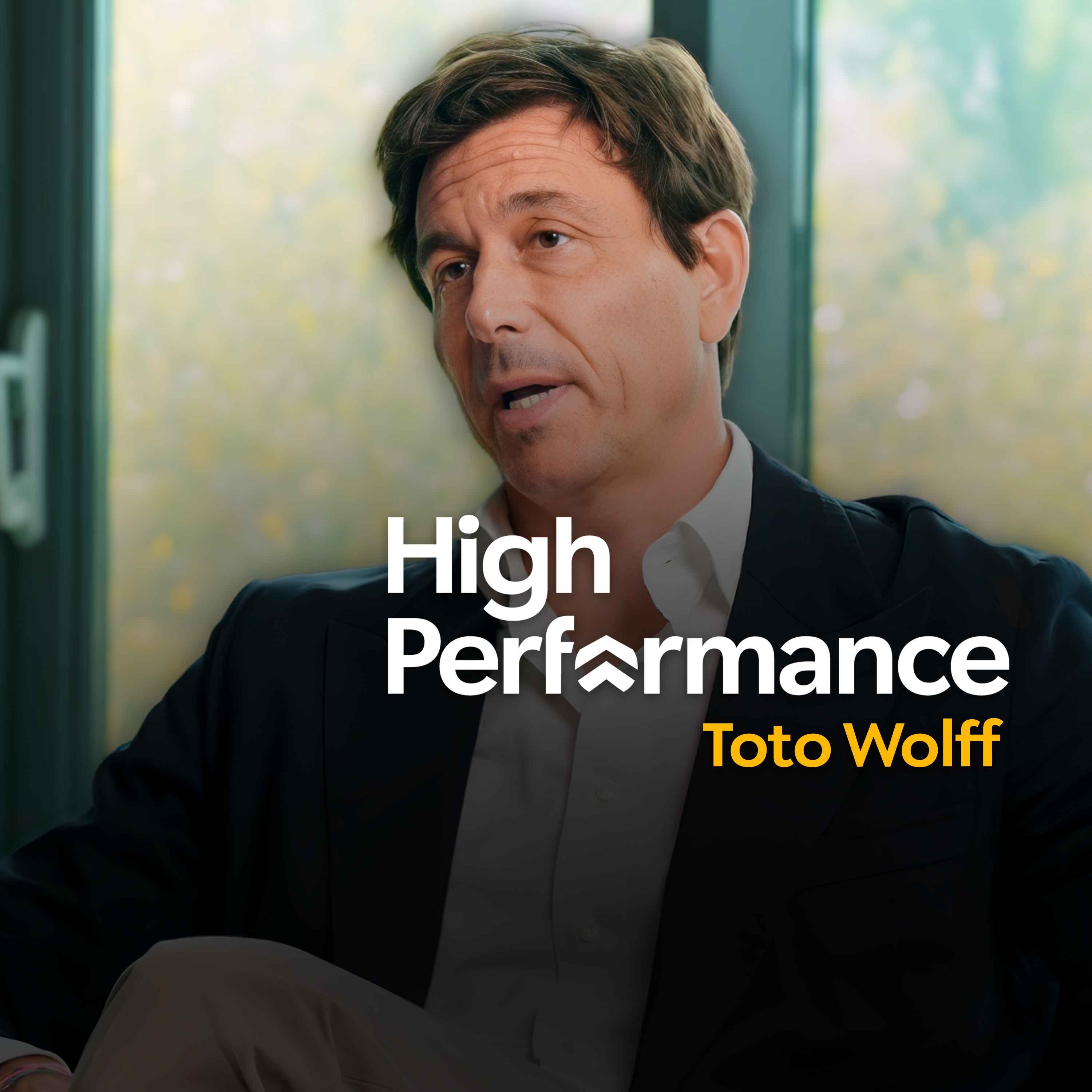
Toto Wolff, CEO and Team Principal of Mercedes-AMG Petronas Formula One Team
In this episode, Toto Wolff returns to the podcast to discuss his personal journey, the challenges of leading a Formula 1 team, and his close relationship with driver Lewis Hamilton. He reflects on his experiences, including a traumatic childhood and the dynamics of the 2021 racing season.
Written by AI. May contain mistakes.

Get the gist, explore an idea or ask about something said.
 Claude
On The High Performance Podcast, what are the key points of this episode?
Searching your listeningAutomatic transcript. May contain errors.
0:00Watch it early on the High Performance App. Available now, Roman Kemp, the broadcaster, opens up a powerful conversation on success and mental health. I had much worse in my life happening, like real drama and trauma. This is not even moving the needle. I heard the bells ringing two weeks before. And then I sent a text to Fred Vasseur saying, you're taking our driver. I had none of that. Only anger. everybody's against me no one wants me to win this championship you lose and you win and you hopefully learn from it but we will prevail we will overcome that is the distinctive voice of the Mercedes Formula 1 team principal Toto Wolff who joins us on today's show this is the second time that Toto's joined us on High Performance sadly Damien couldn't be with me so I was flying solo for this one but I guess in some ways having spent some time working in Formula 1 as a host for the BBC a few years ago, it felt really natural.
1:04For me, it felt like a very comfortable place to be. And I think that you're actually going to hear a man have a conversation about mental health who feels comfortable opening up and talking. But it's not just a conversation about the challenges that Toto's had. You can expect to hear what really happened when Lewis Hamilton turned up out of the blue and told Toto that he was walking away from Mercedes. You'll also hear whether it was a total shock for Toto or whether he'd actually already heard on the Formula One grapevine that Lewis was planning to make a change. You'll also hear about the challenges at Mercedes.
1:37The fact they haven't won the world title for a few years has been difficult for Toto. So what's he learned in those moments of adversity? It was a powerful conversation recorded at Mercedes headquarters and actually it's kind of apt they've brought out a book called Inside Mercedes, the brand new book from the team because that's where we went, Inside Mercedes, as we got inside the head and the heart of their boss, Toto Wolff.
2:04Well, Toto, welcome back to High Performance. Thank you for having me again. So much has changed since you were last on the show. Obviously, one huge thing has changed this season, which is the departure of Lewis Hamilton. And I wanted to start with a quote that I read in your new book, where talking about Lewis leaving, you said, I like the situation. So I heard the bells ringing two weeks before. Did you? Rumors? Yeah, the old man Science called me and said, this is what's happening. Really? Yeah, and then there were a few drivers that rang me up that didn't before, so I thought, okay, there's something going on there, and then I sent a text to Fred Vasseur saying, you're taking our driver?
2:48Question mark, didn't get any response. Very unusual for Fred. He's a good friend. So yeah, I saw it coming, but then obviously when Luis arrived in the house, like he did so many years before and then had a bit of a small talk like we always do about Christmas holidays and all of that. And then I said, well, we are recruiting from Ferrari now. We got this guy and then Lewis was, oh, there's something I need to tell you. And yeah, when he said that, that initial moment was a little bit of, so this is really happening. I can't imagine you anywhere else than Mercedes, but instantly it's like, okay, what are we doing with this?
3:27Yeah. and yeah that is that is always opportunity like I said before so in that two week window before the news was confirmed by Lewis himself did you not want to I would be so tempted just to pick up the phone to him straight away and say hey come on what was happening no I think you know that that was a situation which I wanted to just see how it was how it was happening yeah and and leave it leave it to him and to Fred to tell me that they were doing this So I think one of the interesting things about your role is that people will always look to you to have the answer, right? In a moment like that, the book actually says that Toto, in the hours after Lewis's news, Toto displayed, it says an air of calm assurance.
4:12How do you project an air of calm assurance when something as big as that is happening? And I kind of wonder how you're actually feeling on the inside in that moment. Well, I had much worse in my life happening, like real drama and trauma. this is not even moving the needle. Now, Luz is a friend and will forever be a friend. We've had 12 years in the team together. So that was just an unusual thought of this is ending, but not challenging in whatever way, whichever way. So, no, that wasn't a problem. It's just a new situation. It has risks and opportunities. Risks in the sense of, you know, how do I inform the sponsors as quickly as possible because it was leaking?
5:07And on the other side, what are we doing about next year? So no energy spent trying to persuade him to stay? No. If someone decides to go, then you need to let them go. Yeah. I had a chat with Pep Guardiola a long time ago and he's a friend. I said, what do you do if this and that player leaves? And he said, what do you mean I do? I said, well, do you try to convince them to stay? No. Somebody thinks he can play elsewhere better or earns more, then you just got to let them go. And it is something that I embrace in the same way here. Somebody wants to go, then let's make it as good as possible for each of the parties.
5:51The market's uncertain. revenues tied and hiring on hold that's why results driven companies are using upwork to keep work moving go to upwork.com today and start hiring proven freelance talent fast no bulky overhead no rigid long-term contracts just the right expert right when you need them work smarter and faster with upwork go to upwork.com now and find your freelance expert that's upwork.com Post a job for free and get started today. Your business is one of a kind, so your website should be too. With Wix, it's easy. Almost too easy to create a website that's perfectly yours. Just tell AI what kind of site you want to build or choose from thousands of templates.
6:35Change whatever you want, whenever you want, and get everything you need to start running your business your way. No matter what you sell or what you aspire to be, you can do it all yourself on Wix. Go to Wix.com.
7:18with ambient sounds, lo-fi music, and bonyural beats, all designed to help you focus, relax, and even spark creativity while you browse. So then it becomes about what happens next. How do you make big decisions like Kimi Antonelli replacing Lewis Hamilton? What's the process that you go through so you are confident in your decision-making process? Because of my more difficult upbringing, I don't strive to take decisions. It's actually something that comes quite natural to me. There is an instinctive response, an internal response that I have with myself, and that was literally, that's the opportunity for Kimi.
8:00And on the other side, there was another F2 season to go and lots of testing for Kimi. So you have to, in a way, stand back and say, hold on a minute, that's your instinctive reaction. So that's probably going to happen, but there could be breaking points where you should be rationally and logically acting. And then obviously picking the brains of all the good people that I work with here in Mercedes and also talking to Ola and Markus at Mercedes in Stuttgart and picking their brains is important before coming to a final conclusion. And that decision that was made was with Ola and was also in the room with Gwen, who runs our junior program, James Ellison, Bradley, Lord.
8:42and just to confirm my first initial instinct. It's very interesting. Already a couple of times when we've spoken about things that I would consider to be seismic changes for a Formula One team, which driver do we bring in, a legendary driver is leaving. You said there are things in your past that actually don't even move the dial for you in these moments. Are you happy to talk about those things in the past? Yeah, I'm happy to talk about it Because I think when you are perceived as someone that is successful in that sense, it's important to give hope to people that it doesn't always need to be easy.
9:21Actually, adversity, as tough as it is in these moments, especially for a child, can make you a strong individual. So in the book, the phrase that you use is a fucked up upbringing. Tell us about that. Well, it's a fucked up upbringing, but to nobody else's fault. It was just the circumstances. My father got very ill with a brain cancer when I was very young, six or seven years old, and got operated many, many times until he died when I was 15. So my father wasn't really present, couldn't be present. And, you know, as a young boy, you fall in love with your father. He's your hero. And then you need to have those moments where you hate your father, where you're actually able to revolt in a way.
10:07And I had none of that, only anger. And at the same time, my mother was a doctor and she tried to survive herself. And that's why my sister and I were pretty much on our own. I needed to look after her. But I'm at total peace with that now. And I also said to my mother, you have no fault in that. It was just everybody had to look after themselves. What are your memories then of your dad? My memories of my dad are that he was a very charismatic, intelligent father. He jumped the class because he was so good academically. And he was well-liked. And that's pretty much it. as a father, I was very close to him when we were young.
11:03But then obviously when you go through such a dramatic illness where slowly but surely your personality changes, the many last years, the relationship was pretty bad. But not to his fault and not to mine. I think it was just that as a young man, you then kind of have to distance yourself to not be emotionally dragged into more pain. And how did you do that? Well, it was simply trying to be an adult and run my life myself and for my sister. And what age would you have been at that point when you realized you kind of need to take control? Probably between 10 and 12, somewhere around that. So we often look at traumatic events like that and people will instantly talk about the trauma and the sadness and the upset.
11:55we rarely talk about what that has given you on the good side so what did that give the man sitting in front of me today that has made him into the leader that that we all know i think um overcoming um drama trauma humiliation kind of creates maybe that more motivation right to prove that you are worth. It overcompensates in order to maybe a feeling of feeling inadequate or having been a victim. And I see that with many successful people that there was some kind of event or situations that scarred them and caused pain. Now, having said that, there is also very many successful people that had very happy upbringings.
12:54My wife had wonderful parents and a wonderful family, and she's still, in her own way, doing very well. But maybe more than the terminology of successful or doing very well, I think it's about being a happy adult and having a great, let's say, we're not happy every day, but enjoying what you do, what you work, and being able to rely on your friends and family. so I think the two can go hand in hand but there's many examples that I have witnessed where people went through these negative events and that shaped them and made them who they were who they are listen we've spoken to so many people on this show where the feeling we have at the end is that trauma leads to triumph you know we talk often about post-traumatic stress but there is also a lot of research into the world of post-traumatic growth and that actually for someone that's been through what you went through as a young man it lights a fire in you that people who haven't been through that trauma almost can't get there, right?
13:53And this idea that just because something is hard for you doesn't actually mean that it's bad for you. I actually, I'm sort of sitting here wondering if your dad hadn't passed away when you were young, if you hadn't had to go through that trauma, I kind of wonder whether you'd be here now. Yeah, maybe not. Because for me, the worst of all situations was that I was a poor kid in an environment where there was wealth. I was going to a private school, which we couldn't afford. So there was an instance where my sister and I were called out of class to the headmaster in the early afternoon. And he told us, you got to leave the school.
14:31The fees are not paid. So I had to go back into class to the delight of my friends that were really happy for me saying, you're so lucky you can leave the school. But I took my school back, met my sister, who was 10 basically in the lobby and had to take the tram home 45 minutes and explain to her why we were going home and not finishing the day. And so this financial hardship plus the family situation created a drive in me to be self-responsible, become an adult really quickly, look after my family financially and emotionally different to what I had. So definitely I wouldn't be here if that wouldn't have happened, if I wouldn't have felt that degree of inadequacy in front of my friends and environment.
15:25Do you still have that feeling? No, I think I'm getting over it slowly but surely. I didn't kind of trust the success that I had in my 20s, 30s, 40s. How do you mean? I always stared into an abyss. Tomorrow could be the end of everything. Tomorrow we start losing. Tomorrow I could be losing my money. My marriage could be over. Somebody could fall ill. And that's why I have to keep going. I have to keep going. I have to keep going. And that's gotten a little bit better now after I've become 50. Because now one thing is clear. I'm already over half of my time. I hope so in any case. And so I've gone through the worst, hopefully.
16:09And how much has therapy helped with this ability to not catastrophize like you used to? Speaking to someone professional, my main target wasn't to not catastrophize, because I think that is important for me as a personality. Always seeing the worst case scenario. I'm a glass half empty person. And I think that keeps you on your toes. I've seen many people fail that believe they're the real deal and nothing could possibly harm them and they were walking over water. And that's why I don't want to stop, in a way, thinking about tomorrow could be really bad. Doesn't mean I'm a miserable person all along, but it keeps my skepticism intact.
16:54Talking to someone was more about overcoming past trauma, overcoming emotions that I couldn't really analyze. I've suffered, like Luis said, I've suffered from periods of depression from the age of 18 onwards. Couldn't kind of define what it was. Why was I feeling so dark? And when that got really strong, that I couldn't handle it myself anymore, I started to speak with a psychiatrist and psychologist later on. And that really helped me to analyze why I was feeling that way and how the tools that were given to me, how to utilize these moments of reflection and introspection, but not dragging on with the suffering a lot.
17:42And huge credit to you for talking like this, because I think people who are in the position that you're in often don't want to show what the world sometimes perceives as a weakness. I believe talking like this is an incredible strength, right? But it also provides strength for other people. I fear that sometimes we dance around the truth with these things a little bit. People say, oh, I didn't feel very good. Well, that leaves other people wondering, do I have depression? Do I have mental health problems? You know, how do these things actually feel? So that, for me, this is a huge topic. Yeah.
18:11Because so often I had the feeling that I was alone with that and that would be a hindrance for me ever being successful. As a young kid, I couldn't comprehend why I was feeling bad at times and that kind of passes. But when you grow older, those moments become sadder and last for a longer time. And I distinctively remember that I was invited to a Formula One afterparty in the early 2000s. I must have been 29, 30 years old, and I was doing well with my venture capital company, but I was at that time suffering. My marriage wasn't going very good, and I felt terrible for a prolonged time. And just, would you mind just telling us when you say I felt terrible, what was the feeling?
19:03The feeling is that you can't sleep properly. You're waking up with a sense of darkness that of, it's very difficult to describe that actually in a way of there is no hope for your future. and so the event was I was invited to that after party, Amber Lounge, on a Sunday night in Monaco after the Grand Prix. And obviously I didn't know anybody in Formula One. I was with a friend and I saw all of these people partying. I remember there was Martin Whitmarsh and I think Jensen was there. Drivers, you know, lots of very successful people that were in the media spotlight that apparently had it all. And I stood there and said, I can never achieve that kind of success with what I have.
19:51It will always be my limitation. And I felt if I would have listened to somebody out of that circus who I perceived as having it all, saying I'm suffering too and I had those periods, it would have given me great hope. And now 20 years later, I've overcome, I've passed their successes. Things have gone really well from a sporting side. And I think there may be someone that's looking at me and saying, he hasn't got the limitation that I have. And I realized it's a superpower to have that sensitivity that can drag you very low because you're vulnerable, but it also gives you that superpower of reading a room easy, of understanding somebody else's personality and how that affects your interaction.
20:38Feeling vibes in a much better way and running an organization fundamentally because you care about the individual. so I wouldn't want to miss any of those moments. Correction. I would wish to have some of the superpower that I have without these moments, but that doesn't go. You can't be all there if you haven't got that. But it was, every time I came out, I realized how important it was because you just think more about yourself. Why is it that I'm feeling like this? What is it that I can do to improve my relationships? What is it I need to achieve to make me happy? Is it what I'm doing right now?
21:18Or does it need some kind of change or recalibration? You don't do that if you're down the middle every day. It's just a comfort zone. There will also be people that now watch this going, well, he seems fine now and I'm still in this place, so I'll never achieve what Toto achieves. Very good point. Because there have been people that are in the media that have come out and have said, I suffered from depression and from anxiety. I think it was important that Simone Biles said that. I remember in our environment, Lando spoke about it. Louis, most recently, George said he was speaking to someone.
21:57But then if you're right in the middle of such episode, you see those individuals or you listen to us at the moment, say, well, he seems happy now. The truth is it always ends. even if you can't see light at the end of the tunnel because things are so bad it always ends i didn't believe it would end at this sometimes i had the support of my friends and family susie's been tremendous she kept the system going when i was not capable doing it um it always ends you know this is a phase of your life that can be days weeks months maybe even more than a year. But if you're open-minded about looking after yourself and speaking to somebody else, seeking professional help, not go to the pub and have five beers with a mate who hasn't got an understanding of what's happening.
22:46If you speak to someone, this is going to pass. But it doesn't mean that you're not vulnerable for this to happen again. I think I am. If I would have a family or a life situation that would be really difficult or bad, I could be falling into this again. Now when it comes to Formula One, like you said, doesn't move the dial. Nothing that happens in Formula One or in my professional life would ever trigger such a period because it's just on the scale of what I had as a child or as a teenager, that's nothing. When did you last have a difficult episode? COVID, 2020. When the music stops and you're someone that actually likes to move, that was not good.
23:39Jumping out of the hamster wheel because you want to, you decide, is a conscious decision. The hamster wheel suddenly stopping from 100 to zero. That was very difficult for me in combination of a period where I wasn't sure whether I wanted to continue to be a team principal in Formula One. I've been a venture capitalist and private equity investor for 20 plus years in my life. I really enjoyed doing that. Looking at various businesses, speaking to managers or entrepreneurs and seeing what they could achieve and being part of that. And now I was a one-trick pony in Formula One. And it took me eight or nine months to come to the conclusion that I wanted to do this.
24:21And because I found my niche between the racing and the business side, what I do covers all of that. But it took a long, long time. As someone who's openly spoken about therapy, what was the thing or a moment when a therapist said something to you that almost brought a moment of enlightenment so that was a moment that was my old therapist kenny um who said when i gave the example of somebody else of that person isn't feeling hasn't got the limitations that i have because it wouldn't be so successful he said how do you know are you in his brain would anybody think that of you and it was like oh yeah outside shine doesn't mean inside happiness yeah so even the events of the end of the season in 2021 when people around the world were livid with what was happening the experiences that you've been through meant you felt what?
25:28Angry, not anything like depressed or sad, just angry. Angry of that an individual was able to take an ace championship away from the best driver in the world by a decision. Now you have to put that into context. You know, there's dictators around the world, mad politicians that cause so much pain and so much harm that is in no way comparable to Lewis losing the AIDS title or us as a team. But it was just the anger of that moment, the anger on a person and not emotionally draining. And even Lewis, he learned to manage his emotions very strongly. even Lewis after a few days was in a in an okay space now that's still that thing still goes with us and is with us because of the very unfairness that happened on that particular day but it is not like in our mind all the time it makes us suffer obviously we've just spoken about the fact that your own experiences give you an emotional intelligence and empathy and understanding for others.
26:44Did you not have that for Michael Massey? Did you not put yourself in his position and think, okay, that's a hard place to be? I might have done the same? I really tried to speak to Michael and guide him all along the year and speak to him and say, listen, I've been in this sport for a long time. Listen to the drivers. Don't always be stubborn in your decision making. Don't be arrogant. I tried that for the good of the sport and obviously also for us as a team not to be vulnerable to situations that could be totally detrimental. So in that sense, this is just, you know, what happened is inexcusable.
27:24Now you could say, yeah, the empathy should make me realize how he feels. I realize how he feels. And I know that's not good and bad. But he could have thought about it all year long when people, not only me, try to support in the right way. So sometimes you have to just realize that someone is just doing his own thing or taking his own decisions. So for me, I don't care about it anymore. Now you and I speak about it. We waste three minutes of our time, but he has no relevance. So we're nearly three years on from that day. How often do you think about it? For sure every week. Yeah. There's a moment every week where I think about it.
28:10But I mainly think about it because I think Lewis should have deserved to be the greatest of all times with eight world championship titles. And you can argue all along about that year. I think Max and Lewis were deserving champions. There were instances during the year where Max lost some points that he shouldn't have lost. You look at Silverstone today. You look at the crash in Monza both of them had. So both deserving champions. But on that particular afternoon in Abu Dhabi, it was unfair. Yeah. You obviously have the car in your reception. I wondered when I came in, I saw that and immediately knew this is the car that raced.
28:51It's the very car, isn't it, from the Abu Dhabi Grand Prix. You don't feel tempted to get that car out of reception and put something else in there? It's a special car because it's also a car that turned the situation around after Brazil, where we thought the championship is gone. It was a very good car after the summer. And it's a car that reminds all of us that things could go wrong very quickly, but things could be right also very quickly. It's basically how life goes. And that car is a stark reminder of all the joy and all the pain a situation can bring with it. I'd like to talk about the impact on Lewis because in the book, Bono, his race engineer says, after the British Grand Prix, which Lewis won this season.
29:36He said it was 945 days since Lewis's last win. As time passed, the doubt crept in for Lewis as much as me. In our minds, we started to ask if we were still capable. How aware were you that Lewis was struggling after that race in 2021? Lewis and I speak a lot, we text a lot all along. And I knew that he was in an okay place because he immediately left, spent some time in the Caribbean after that race and, you know, was doing sports and kite surfing. So you said you knew a few days later. What happened a few days after that when you thought actually Lewis is okay here? Well, he went to some friends' place in the Caribbean and they told me he's okay.
30:26And he took his distance. So I was also proud because he's come a long way to cope with difficult moments that he had in the past. And that we had, you know, there were times where he, you know, I was helping him to overcome such situations in the same way the other way around. It's also what made our relationship so strong that we've seen each other on the worst moments. So I knew he was better. And when it comes to doubting, I think we have a similar mindset. that is you're staring in the abyss. Every day you hang on for dear life, you give it all you have, you fight for becoming better, for meeting your own expectations, trying to overcome literally everything.
31:20And when you don't win for such a long time, you start to doubt. And what I did all along is, you know, trying to take the, reducing the doubt by saying, you're the greatest driver in this world that has ever seen. And why should anything be different? The car is not good enough. The car is unpredictable. But I don't see you in any different way than five years ago. And how often would you talk to Lewis about the doubts and the fears and the time it's been since that last win? Regularly. I wouldn't want to say it here in public, but regularly we have those exchanges. And very open. He's a driver or someone that would say to me, You know, I don't think that that was good.
32:03Also in public, he's come out and criticized his own driving at times and said it was unacceptable or it wasn't good enough. That's also showing his strengths to be able to speak about non-performance, to speak about depression, about mental health. You know, if you're strong enough to come out saying, I don't feel good at times or I feel really bad at times and I'm not able to perform, that needs strength. And that shows how strong he is as a driver and as a person. So when you see Lewis coming out and saying, look, I'm not delivering what I know I can, you're almost happy that he's able to get himself to that point and publicly admit that sort of thing.
32:46It takes pressure off the team. You know, he has some devoted fans that will always seek the default of the team and he takes pressure off the team. But he's also very honest and transparent about when somebody gets it wrong. either him or the team's performance or anybody else. And I think that means being authentic and credible. With authentic and credible in mind, there's a lovely line you've used where you've said you want to create a space here where nobody feels humiliated or inadequate. That's in a team that is every single week being tested to its limits. So I'd love to know from you, for the many people listening to this who lead businesses, work in businesses, or even people in their own marriages with their children and their families?
33:31How do we create a space where people aren't humiliated, they aren't inadequate, but we're also still asking them for the very best they can give us? And from the team's, let's say, professional side, what we say is we don't blame the person, we blame the problem. If somebody's making a mistake in whatever function, fundamentally, it's the leader's fault because haven't I invested enough time in developing a person, and giving him the right tools, the right education, the right support. So a good example is when you have a slow pit stop and a mechanic fails to tighten the wheel nut in time. That's not the mechanic's fault at all because it is either the equipment that doesn't work adequately, which was the case for us for many years, or the pit stop training wasn't like it should have been.
34:22It's a problem of the process, not the person. and that's why we need to protect the people because all the world is looking at Formula One, all the fans are looking at Formula One and the initial reaction of any individual is to find somebody who is at fault, the culprit. It's your fault because that is almost like a pressure release valve but that's too easy as a reaction. Much better is to say, what is it that I've done wrong in that situation? What could I have done to prevent such things? And if you're able to look at yourself first and introspect before blaming someone, that's a good step.
35:00The other thing is that I call it tough love. As long as you share objectives with someone and you talk about these objectives and you come to the point of saying, that's how I see what we would like to achieve, you can have opposite perceptions and standpoints and perspectives. So I kind of encourage even difficult discussions where someone say, I believe it is A and you say it's B, because what I can tell you for sure, that person is not 100 % right or 100 % wrong. It can be very nuanced. It can be a 60-40 decision. So I would always encourage to approach such a situation with the feeling of curiosity rather than combat.
35:45because our brain plays little games with us. The emotional part will tell you, this is, I don't like what I hear. I'm going to not listen anymore to the other person's argument. You're just building your own sentence already what you're going to respond. And that is combat, not curiosity. So making sure that you can have a tough conversation, be it in a professional environment or at home, acknowledging that somebody else who is hopefully not an idiot, has a different perspective and to say, why is that person seeing the world like this? Why is that person thinking that I'm wrong? You come to a conclusion that maybe there's a certain truth to it.
36:27And that's what I'm trying to have in my private life and in my professional life. And how different are you as a leader from the one that I spoke to three or four years ago? Because at that time, you were the man that just built a car, won the races, won the title, right? Year after year after year. So I'm very interested in how you've changed your leadership style, what you've learned about leadership, but most importantly, what you've learned about yourself in three difficult seasons. A lot. And I think developing every day and becoming better is something that I really like as a mindset in everything.
37:05Whatever you do, whether it's at your job, in the relationships, in sports just trying to be better How do you do that though? Thinking about it every day what is it that I can improve for me for my life, for my family for my colleagues what is it that I can contribute where did I spot shortcomings in myself or gaps every single day you know when I'm sometimes in trivial situations I'm not looking after myself enough I'm not eating well when I should. I'm going to the gym and I'm not concentrated enough. Or I'm in a meeting and my mind is wandering somewhere else. Like literally every, I dissect the day into everything and try to improve that.
37:52So, and I enjoy doing that. So it's not that I'm just knocking myself down all the time. But I think I learned so much during this time because I went through like a rollercoaster of thoughts of why that was happening. and coming to the conclusion that the team with all its intelligence, know-how, infrastructure, wasn't able to understand why the car was not going fast. That was quite a new realization of mine because I thought if you put a few parameters in place, some pillars, you wouldn't fail. But you probably thought you knew the secret, right? Because it was working every season. Yeah, I think when you...
38:33Sometimes it's good to simplify, to be successful in Formula One you need a set of the best drivers you can't compromise on that you need to have an engine supplier or partner that has all the budgets and the people to play the top of his game you need the infrastructure and the equipment in your Formula One team that means you need to have the financial resources to do this, you need to have the culture and leadership in the team you need to have the competence and management capability of the top layer of management and the creativity and the innovation of the people that are coming up And all of that needs to be budgeted for, and you need to have the fighting funds for that.
39:10And as long as you have all that, you could have blips of non-performance, but eventually things were going to be all right. We had all of that. And still, we weren't successful. We were beaten by someone else. We were beaten by a team that, a formidable team, or formidable teams. and just come to the realization that sometimes things need to change. Organizations that perform maybe don't do anymore. Maybe not all of it, maybe a little bit. What is it that I came short of? Most importantly, as a thought, am I still the same leader that I was before? Did I go from great to good? Good is not good enough in Formula One.
39:56Do I have the same drive and motivation and anger that I had at the beginning of my career and finding answers to all of this. And I did. I did and had to change as a personality because for me, pressure was always a useful tool to operate on myself and then also on everyone around me whilst being empathetic for the person. Pressure didn't yield any results. On the contrary, I upset people that were really doing the outmost and give it the best for us to be successful. And I had to change in that perspective. Would you give us an example of a time when you did that? Unintentionally, you upset people.
40:37Yeah, last year, we had a good race in Austin in terms of performance. We finished second, catching up to Max. We were disqualified for a right height infringement. And I'm still okay with such situation because we had a quick car. So that was good. And then we went to Brazil, expecting that it would go like the year before, where that was the only race we were really good at and we miserably failed. And I was so angry about ourselves and myself. You know, this is my team. It's not that I'm accusing anybody else that I expressed that anger by saying, this car doesn't deserve to win a race. And by saying that, I disrespected all the work from people that they were giving every day in trying to make that car faster.
41:22And I upset someone. and that was a big shake for me. How did you deal with it? I acknowledged, comprehended and promised to do better in the future. If you're still overpaying for wireless, it's time to say yes to saying no. At Mint Mobile, their favorite word is no. No contracts, no monthly bills, no overages, no hidden fees, no BS. I made the switch because I was tired of those ridiculous bills and sneaky charges from my old provider. With Mint, I'm paying$15 a month and getting the same high-speed data, unlimited talk and text, and the coverage on the nation's largest 5G network. Honestly, the quality is just as good, if not better than what I had before.
42:09And the best part? You don't need a new phone. You can keep your current one, bring your number, and all your contacts. I use Mint Mobile, and you should too. Ready to say yes to saying no? Make the switch at mintmobile.com slash HPP. That's mintmobile.com slash HPP. Upfront payment of$45 required, equivalent to$15 a month. Limited time new customer offer for first three months only. Speeds may slow up a 35 gig on unlimited plan. Taxes and fees extra. See Mint Mobile for details.
42:49Tiring proven freelance talent fast. No bulky overhead. No rigid long-term contracts. Just the right expert right when you need them. Work smarter and faster with Upwork. Go to Upwork.com now and find your freelance expert. That's U-P-W-O-R-K.com. Post a job for free and get started today. All right, remember, the machine knows if you're lying. First statement, Carvana will give you a real offer on your car all online. False. True, actually. You can sell your car in minutes. False? That's gotta be... True again. Carvana will pick up your car from your door, or you can drop it off at one of their car vending machines.
43:26Sounds too good to be true, so... true! Finally caught on. Nice job. Honesty isn't just their policy, it's their entire model. Sell your car today, too. Carvana! Pickup fees may apply.
43:44So what have you changed then? Because just doing the same thing again and again and expecting the results to change is never going to be the answer. The Einstein. Correct. And I know a lot of people watch this show because they want to hear some real specific, tangible examples of we did this, we did this, we did this. So would you mind taking us through a few of the things that you have changed to try and find the success that you've had in the past? I believe that where I come from, with my past, I have to be in control of situations. And I believe being a micromanager is not something that you need to be ashamed for.
44:23For me, micromanagement doesn't necessarily mean doing everything, but knowing about most of the stuff. But accepting that people give it all they have, and they are intelligent, and they know, but in that specific situation they fail. And giving them room to sort the situation out, that's something that I learned. Because in the past, I would continue to pressure and pressure and pressure. That is one example. The other one was also keeping my own emotions under control. I'm very passionate about the sport. And what makes me so angry if I don't meet my own expectations? I don't care what anybody else is.
45:03But I feel what I would like to achieve on that particular day or that weekend or throughout the campaign. and falling short is that anger that comes out. Combined with the fact that I believe somebody else is doing us wrong, us in terms of the team, my tribe, that can come to situations that just create too much emotion. And I try to limit that. You know, in the past, I would smash my headphones when I felt that we lost the championship. I don't do this anymore. And I'm capable that after bad qualifying and also after bad race to first get myself in an emotional better state before lashing out.
45:47So what do you say to yourself in those moments after a bad moment on track before you address the team? We see you sometimes sitting there in the garage. Everyone else has gone off to get their work done and you're just sitting. What questions are you asking yourself? So there is this anger on myself, why that has gone wrong, but giving myself time to come down, take a deep breath, that allows you to almost take a step back from the immediate moment and then immediately think of what is it that we could have done differently? what is it that we should be changing going forward? What is it that I need to contribute and give it to the situation?
46:34So immediately my thinking about the future takes over from the current bad situation. I've been doing that for a long time. I just stay in the garage, in good or in bad. I don't go out. I don't go on the podium or anything like this. I've been in Monza because it was just out of my garage and my son wanted to see the podium. but otherwise I need to be for myself in glory and in loss. But I love the line in the book about you need to be an ultimate force to be successful. So how do you balance up this idea of emotional empathy, controlling what you can, not allowing the team to see actually how frustrated you're feeling but to still be an ultimate force?
47:18What does that look like for you, being an ultimate force? I think it's just an internal feeling. Nothing is going to stop me. And it could be difficult at times, but there is nothing. And there's no team that won every single championship forever. It's a sports team. You lose and you win and you hopefully learn from it. But we will prevail. We will overcome. What role has self-doubt played for you in the last three years? It's like, have you thought again about maybe leaving? I think you need to question yourself every day. Am I still great at what I do? Is there somebody else that could be doing a better job?
48:05Which for me would be easy to admit because it's my company. I'm a co-owner of this. So if I find a better team principal, I would be the first one to say, you take over and you do this. Doubting, being insecure about that situation is important because you self-reflect, you try to improve. If you don't doubt yourself, if I would blame it on an engineer or blame it on a steward or, God knows, a risk director, that is the easy way out of things. First, you blame yourself. First, you check your own position. Is it right what I'm thinking? How often does self-doubt creep into each day? Every day.
48:47Every day. Every day there's a moment where I'm thinking, am I really performing to my own expectations here? Should I have, I mean, it starts from the morning. Have I used the morning positively? Have I read, you know, I'm reading the news in the morning for a long time. Did I read the right thing to give me, you know, put me in a good state of mind in order to perform in the morning? Or did I read some trash? like literally again dissecting everything I do is it the right thing that I'm doing? I think this is fascinating because I think that sometimes people wonder whether they can stumble into high performance whether it can just happen but you're talking about ultimate force you're almost forcing high performance into your life with constant questions, constant challenge constant improvement, constant self-doubt is it not exhausting?
49:43I love it I'm more prone to a bore out than a burned out. My worst experiences in my life when I was an adult and I suffered is when I wasn't motivated, when I didn't enjoy what I was doing, when things in the wake didn't excite me. I'm really not good at holidays over more than a week, 10 days. I need to keep myself busy. But I can do that with sports, for example. it's not exciting it's not exhausting it's exciting my wife is the same by the way so I know your wife and I'm I have no doubt it's a that's a high performing couple right there yeah but we are not you know these kind of angry
50:31over motivated annoying people that need to you know be the best at all times and we can laugh about ourselves. We enjoy, we can laugh about each other not being good at something. I decided now finally that I'm not going to do ball sports anymore in my life because again, she humiliated me in pedal. And so I was never good at football, pedal, basketball, volleyball, golf or anything. So I'm not doing that anymore. And she takes the mickey out of me in these situations. So Susie's the winner. Susie is the winner in ball sports. that isn't that god thought you're not being good at both spots and i had the ultimate confirmation can i talk to you about this idea of being a lifelong learner of the ability to adapt how important do you think it is to to constantly adapt and this idea that the best thinking is almost rethinking changing the way that you see the world all the time we adults we sometimes think you know we are like we are these are the strengths and weaknesses that we have i'm good at that and bad at this and we don't believe in self-development we don't believe in the ability to change we can fundamentally change as an adult by experiences or by trying and trying again giving it everything if you really if you're really keen in in developing in a certain area you always can And I don't think that many others think that way.
52:04They think they are the finished product, good or bad. So now that we're with, and I'm sorry to keep talking about it, but it was a seismic moment in your career and the life of this team, 2021. We had Adrian Newey on the podcast recently. And I want to play you a quick clip. And I would like to know how you now reflect on the Red Bull Mercedes relationship from that time. So this is Adrian on high performance. Yeah, I haven't heard that. The Silverstain accident between Lewis and Max. Which I must admit, at the time, I was absolutely incandescent with Lewis because I felt it was a deliberate professional foul.
52:42I think now with the benefit of hindsight and time, then I think there'd been banging wheels all the way around the lap up to that corner. Lewis went for an opportunity which he thought was there, misjudged it, and what happened happened. and we were lucky that Max didn't get badly hurt in that accident. So I understand sort of how it happened now, perhaps better, and I was probably a bit harsh, or I was too harsh on Lewis at the time. So the benefit of hindsight and time, Adrian has changed the kind of view he had of that season. I wonder what you make of that and how you feel. I mean, Adrian reflects very well, and I think his intellect is something that shines.
53:33You always have to be able to recalibrate yourself. I read something that I really liked a while ago. Play hard, forgive quickly, and apologize when you're wrong. And that's the way I tried to live. and Silverstone, the way he described it is in a way how today you can see things. These guys have been banging wheels, not only that first lap, but they've been banging wheels all along. And I think that was a moment where the two decided of not yielding that corner. And it ended up in a situation that it ended up. Thankfully, he wasn't hurt. I said before I could have reacted in a better way because I heard from one of the Red Bull engineers that he was fine in that respect.
54:26You know, that was, you know, tick the box. Max is fine. And we went on to win the race and he didn't score. So that was important to bounce back in the championship. And I felt, you know, the driving at times was not clean. And in retrospect, I should have just picked up the phone and called Yoss and said, is he fine? Now, Yoss clearly would have told me what he was thinking about that situation, but that's fine. But I should have, as a father, called the father of the driver and say, just ask. And I didn't. Now, we cleared the air on that one. And there were many more instances in that particular year that were not to the standards that we all expect from each other.
55:10So that's fine. I suppose what I think is, that was a season that was so intense. I mean, even watching on the sofa with my nine-year-old son, Sebastian, named after Sebastian Vettel, actually, who is loving Formula One, right? We were feeling the emotion of that season and you were right in the heart of it. I wonder how you now reflect on it all these years later with the benefit of hindsight, the intensity of your relationship with Christian, the intensity of the relationship with Max. How do you see that now? This year will be remembered as one of the, let's say, toughest years in Formula One between two drivers, two teams, team principals.
55:47And it ended up in a situation that was overall not great for Formula One. And how do I reflect about it? I tried to learn and make sense, see what we could have done better all along and try to do that. So here's an interesting question. The thing you're most proud of from that season when you thought, yes, and the thing that you're least proud of? The most proud was a moment after DFA decided to disqualify Louis for the sprint race in Brazil for an infringement on the rear wing, which was a lapsus. It wasn't, there wasn't anything to it, but they decided to do that. And we all came back into the garage on that evening.
56:37I remember a friend of mine and the catering girls brought us sandwiches and music was playing and it was many of the mechanics, engineers, the marketing, catering people, Lewis, my friend Gernot and I, and we were there and suddenly I felt so much energy in this team. And it was clear we had to win every single race until the end of the year to win this championship. And that very moment, that's where the lightning striked of power. That is something to have just been part of this is a proud moment. the worst so many bad moments the one on Silverstone is an example that's probably the worst because I didn't empathize enough with her father this podcast is called High Performance when I think of Lewis's driving towards the end of that 2021 season I don't think I've ever seen a driver perform to a higher level than Lewis was delivering at that time there's probably no one else on the planet apart from Lewis that's closer to his world than you.
57:45Would you take us into Lewis's world at that time and really explain to us why you think he was at such a high level and how he got there? Lewis utilizes or uses adversity and channels it into performance. And that was the moment where he thought, everybody's against me. no one wants me to win this championship. And he took it, that was different to the previous years, he took it in a way of embracing it. Not with anger, but saying, rock and roll, now we go. And as you say, the driving was just on a different planet. Max is exceptional and has proven that in the years to come. But in these last five or six races, Lewis was just dominant.
58:38as he was also in the last race in Abu Dhabi. Controlled it all along. What do you think makes him the seven-time, eight-time, you could argue, world champion? What's the magic he has? You know, whatever I say now, it wouldn't give it justice to how good he is in many things. I'd like to use your word magic. Yeah. And that combines all of the skills of the genes, the talent, the nature, nurturing from his father in the early years, hard work ethic, intelligence, social intelligence, no fear attitude, constant development of himself. probably a minute more. I have words for a minute more if I were to think about it.
59:32Because he's a seven-time world champion and won God knows how many races. So in that respect, there hasn't been anybody else like this. I think the other thing that I'd like to mention about Lewis as well is I remember when I first stepped into the paddock in 2009 and he'd had that great 2008 season. And it was the first time I'd met him at a race weekend. And I said to him, are you looking forward to fighting for another title? And his answer straight away, he went, if I've still got it. And I thought, wow. And I don't think people realize that self-doubt sits quite high to the surface for Lewis.
1:00:06And actually, again, is a really valuable tool in his locker, right? Absolutely. What we discussed before, if you doubt, you question, you introspect, you try to improve, keeps you on your toes. That's what makes you better. If you think you're the real deal, then that's why you fail. I've seen it over and over again with people. What's the biggest thing you've learned from him?
1:00:34Constant self-development. Not only in professional function, for him it's the driving, for me it's maybe running the team. But also how he embraced this personal change. There was a moment when we had a really difficult time in 2016. after Nico won the race and the championship, and we didn't talk to each other for a few weeks. And then he came to my home because I said, we have to talk. And we spent many hours and we came out of this discussion. It was before the Christmas party, so strong. That was the foundation of our relationship, friendship and relationship in the years to come. But what I said to him is, we cannot not speak to each other.
1:01:18If there's something that annoys us, you just have to pick up the phone, you have to tell me. And I'll promise to do the same. Because the rule with Suzy is if there's something that makes us angry, we talk about it before we switch the light off in the evening. We don't let it drag into the next day. And a year or two passed and we had a situation that annoyed me and I didn't call him. And he called me and said, remember what you said to me. We have to speak to each other. And I said, you're so absolutely right. So he reminded me of what I said to him. So he just, when he thinks something is really good, a good skill to have or a character trait or mindset, you know, he just becomes that.
1:02:08So he had to remind me actually. And we see you as the leader of the team, but he's the leader on his side of the garage. What's impressed you from the way you've seen him lead the team in that garage? I think I really struggle with the word leader because a leader for me is that you stand above your people, not with them. There's so many leaders in this organization and everybody tries to be the best, him or herself, in the role. I'm trying to contribute best as a team principal. Lewis is a leader as a driver. James Ellison is a leader with his engineers. And so many other people are leaders in the organization.
1:02:47And only if we play good in our position and we share those objectives, we're going to be successful. There's this metaphor that we have is we're not like a bunch of five-year-olds playing football, all running behind the ball, but we let the ball run. We stay where we are in our center of competence. So we're very close now to you standing in the garage in Abu Dhabi, watching Louis say his farewells. I wonder what you will quietly be thinking to yourself in that moment. Louis and I are going through the emotions already since a while. Really? Yeah, yeah. Like what?
1:03:33Like, we need to remind ourselves that this is not the end of our friendship and we're doing it both ways.
1:03:42and when there is these special situations, acknowledging that this is special. So I don't think that it's going to hit just on this single day as the last race. I think we have those moments where we understand that's not going to be in that way anymore in the future. We had a day in Germany with George and Mick Schumacher. We were driving those fantastic Mercedes race cars from the past. the Le Mans winning prototype, the C11. We drove the Le Mans car that flew with Marco Weber. But you kept it on all four wheels, right? Yeah, my driving wasn't fast enough to make it fly. The Group C car, GT3 cars.
1:04:29And overall, we just had so much fun on the whole day. And yeah, in the evening, it was a bit nostalgic saying, And that was probably the best driving day in cars that we had in the last 12 years, probably the last. Amazing. And it's going to be quite a job for you, really, because it's a different leadership, I guess, from the driver, from a young Kimi coming in, rather than a seven-time world champion. There'll be a different feel, I guess, around the team. That's why, actually, I thought you were going to sign Max Verstappen, purely because it would feel similar for people. You've gone from a multiple world champion to another multiple world champion.
1:05:08Yeah, I'm going through the generation now. I think the difficulty at the beginning was that I came, I joined Mercedes, I was a team principal de facto at Williams, but Lewis Hamilton was a superstar. Yeah. And he was more senior in Formula One, not from his age, but from his experience than I was. And in a way, you know, over the years, that has balanced pretty well. We respect each other for what we do. We respect each other's friends. but the next generation of Valtteri was somebody that that I managed when he was very young in 2008 so he was a he was a kid and he grew in the system the same with George yeah I met George 10 years ago when he was 17 so he was our protege he was our kiddo and now is the more senior driver and the same with Kimi I met when he was 11 so it reminds you how old you're getting yourself but that's not a problem I'm actually happy about it the less years struggle I had than there is behind me.
1:06:07But it's, it feels natural now to go to the next generation. Max is a great driver and an interesting personality and God knows what happens in the future. But having Kimi and George in the car, homegrown, real Mercedes juniors that delivered every step of their career that we supported this. I'm very much looking forward to that situation. I'm excited for you. But having spent a little bit of time with Max, I think you and him will make a great duo, by the way. We, you know, we get on very well. Not always in the visibility of the public eye. I've known Jos for a long time. He's my age. We have similar views on racing.
1:06:52And I wouldn't want the year 2021 put any shadow on any, you know, personal relationship that we have. It was bad enough that year, but yeah, the relationships are intact. Good. And I love the learning that you've taken from it. I've got a few quickfire questions for you, if you're happy.
1:07:17First question. How do we be a good person and also remain a fierce competitor? A good person can be a fierce competitor and the other way around. I think as long as you're authentic on who you are, you respect other people, you stay true to your values. For me, it's humility, honesty, integrity. You still can be a fierce competitor and a fighter, a warrior. What's the single biggest thing you've learned about yourself in the last three years? Three years? You've got to change. What's the single biggest skill a leader needs that is often overlooked? You know, talking about skills or yourself makes other people puke.
1:08:11Okay, what's the biggest skill you've seen from members of the team here that you think is too often overlooked because you're so modest? What's the single biggest skill? So many skills. so many interesting personalities that build each other up whilst keeping the pressure the skill is staying true to ourselves here in good and in bad not oscillating too much and for people that have listened to this conversation and still have that fear of seeking therapy or telling people how they're really feeling for the first time what would you say to them it's a superpower your brain your soul cries for help either because there's something to to work on because it caused some trauma or your your mind your soul tells that we got to change something here that's not going right or i'm suffering and if you have pain then you go to the doctor you wouldn't have a sore tooth not go to the dentist so it's the body is giving us signals and try to work on them, try to develop, try to understand why this is happening.
1:09:25Don't ignore it. And there are specialists for that that will accelerate you much more. And I'm always, you know, it's great to have a group of friends that can support you, but they will always have their own bias and perspective of things. Don't touch any drugs or alcohol. It's only making it worse. Going to the pub is not a solution. Speaking to someone will accelerate your healing. Brilliant. Final two questions. What does the morning look like for you to set yourself up for a great day? I'm lucky because I kind of know when I perform best. And that is not the mornings. So for me, I need time for myself.
1:10:03I can stay up very late night. I'm an evening person. But I need my eight hours sleep. I want to read the news in the morning. I don't want to be pressurized by any meetings. So having time for myself, that's important. And sometimes I wake up at 6 o 'clock in the morning. Sometimes I wake up at 8.30. And having the luxury of being able to have me decide when that is. So that's how my day starts best. And you shift your day later, so meetings in the afternoon and things. I don't have any meetings before 10 o 'clock. That's my rule. No back-to-back meetings. There always needs to be some space in there.
1:10:42My phone is always on silent. I don't have a ringtone. I look at it when I have time to look at it, and then I decide whether it is a conversation that I want to have at that very moment. Social media? My wife says that I'm really a victim of it, and aren't we all aware that we shouldn't spend too much time on it? The algorithms are so good, and sometimes the content is good. So I'm between deleting social media and then using Susie's phone to look something up, which annoys her. So then I'm on it again. But you just, the way I look at it is like when we were children looking television. You know, this is just a moment where your brain goes on pause for a while.
1:11:31But I don't let myself drag into this. But the algorithms are really good. They drag you into this. So I'm trying to limit it and I'm not always very good at it. But I know very well that don't spend too much time on it biggest strength greatest weakness of myself someone else should judge come on again a puke moment for everybody strengths resilience weakness
1:12:09I don't know we'll leave it there and the final question that's the beginning of the end that's where you that's in the trailer now yeah final question your your one golden rule my wife would sing oh she'll have a whole list of weaknesses for sure your one golden rule I'm not punctual she says that's really bad I don't respect anybody else's time oh yeah you were a bit late for this yes and I saw you weren't impressed with me not at all final question your one golden rule for living a high performance life I guess the thing you'd like to leave people thinking about when they finish watching this conversation?
1:12:48Hopefully make people realize that they're not feeling adequate or they feel bad that I do so too. And it will all be good. You just have to continue to believe that. That's what I would like people to take from it. That's probably the most important message. and don't take yourself too seriously. Thanks a lot. Thanks. And that's the end of today's show. Toto, can I just thank you so much for trusting High Performance as the place that you wanted to have this conversation. It was vulnerable. It was honest. But underneath all of that, I think it's a reminder for us that you don't have to be a perfect person to be a leader.
1:13:34You don't have to be a bulletproof person to lead others. You can have your own vulnerabilities. your own insecurities, your own self-doubts. And actually, as we just heard, that makes you a better leader. If you love the conversation and you're an F1 fan, Adrian Newey, George Russell, Lando Norris, Fernando Alonso, Christian Horner, there's so many conversations that we've had with Formula 1 people on high performance. We'll continue to do so. And you can check out all of those other episodes as well. Thanks for joining us. And we'll see you soon.
1:14:20Say what you want about AI, but it's here. And it's helping businesses get more done in a day. Wix's website builder is infused with AI so you can stay ahead. Create a beautiful, functional website just by describing your idea. Track how your site appears in AI search results. create custom images on demand, or launch an entire campaign in a matter of minutes. Wix gives you AI wherever you need it. Try it now for free at Wix.com.
We welcome back Toto Wolff, CEO and Team Principal of the Mercedes-AMG Petronas Formula One Team, to High Performance. Filmed at the team’s headquarters, Jake sits down with Toto to uncover the story behind his journey, the challenges of leadership at the top of F1, and the personal experiences that have shaped him into the leader he is today.
In this episode, Toto opens up about his close bond with Lewis Hamilton, from the early days of their partnership to pivotal moments that have tested their relationship, including Hamilton’s departure from Mercedes and the challenges that followed. He also reflects on the intense 2021 season, discussing how Hamilton coped with the pressures and how it shaped Mercedes’ strategy moving forward.
Beyond F1, Toto dives into his own journey, revealing how a challenging upbringing and his father’s illness fostered his resilience and emotional intelligence. He speaks openly about the role of therapy and the importance of empathy in his leadership style, which he’s continually refined to create a culture that values every individual’s best at Mercedes.
This episode offers a rare glimpse into the mindset of a leader navigating the ever-evolving landscape of Formula 1, highlighting the human side of a high-stakes sport and the relentless pursuit of excellence, even in the face of adversity.
Inside Mercedes F1: Life in the Fast Lane is available now: https://www.penguin.co.uk/books/458757/inside-mercedes-f1-by-whyman-matt/9781529916799
🚨 Partners
Huel 👉 Get £25 off the Taster Bundle. Unlock your offer here: http://huel.com/highperformance
Payhawk 👉 See our sponsor, Payhawk in action here: https://hppod.co/Payhawk
Heights 👉 Get 20% off your subscription by using Code: HP20 here: https://hppod.co/Heights
FORA 👉 Claim a free day pass at any Fora workspace and find the perfect home for your business here: https://hppod.co/FORAHP
HP Foundation 👉Do you want to kick-start an evolution that will change the lives of millions of children? Find out more about the High Performance Foundation: https://hppod.co/foundation
HP Corporate Events 👉Click here to book High Performance Events: https://hppod.co/corporate-events
Explore offers and discounts through our other partners:
Hosted on Acast. See acast.com/privacy for more information.


