
 Ask ChatGPT


 The High Performance Podcast
5 Nov 2024 · 54m
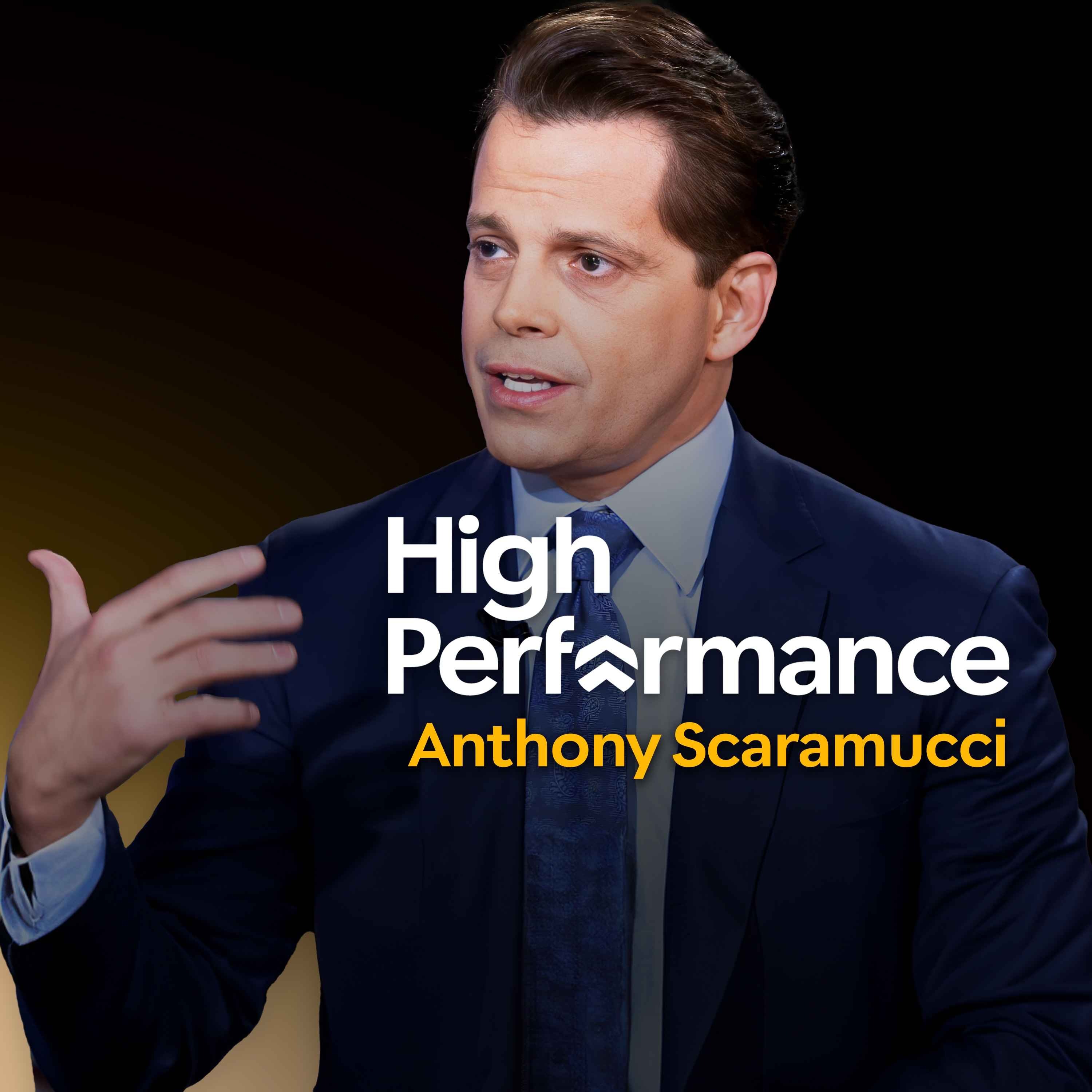
In this episode of The High Performance Podcast, hosts Jake Humphrey and Damian Hughes engage in a deep conversation with Anthony Scaramucci, a businessman and former White House Communications Director. Scaramucci shares insights from his tumultuous experience in politics, his views on Donald Trump, and valuable life lessons drawn from his personal and professional journey.
Written by AI. May contain mistakes.

Get the gist, explore an idea or ask about something said.
 Claude
On The High Performance Podcast, what are the key points of this episode?
Searching your listeningAutomatic transcript. May contain errors.
0:00Watch it early on the High Performance App. Available now, Roman Kemp, the broadcaster, opens up a powerful conversation on success and mental health. The White House is not a fish bowl. It's an aquarium. I went from a crane operator's family to Tufts and Harvard Law School to Goldman Sachs to building two successful businesses. Now I get the chance to work for the American president. I was as white as a ghost when I saw my phone. I'm getting lit up by Donald Trump. He's the president of the United States. If he's coming after me on Twitter, it's very personal. Just watch what I do with this, because it'll be a lesson for you in resilience, it'll be a lesson for you in pulling something together after you have fallen off a horse.
0:50You just heard the voice of Anthony Scaramucci, the former White House communications director and now host of The Rest is Politics US, who joins us today here on High Performance. My name's Jake Humphrey. And like a lot of people, I'm just trying to get the most I can out of my life, which is why I'm keen to use my 20 plus years of experience in broadcasting to pick the brains of some of the most fascinating people in the world to learn a bit about their ideas, their experiences and their mindsets. And I'm Damien Hughes. I've spent my life working in high performance cultures. I've worked with professional sports teams all over the world, including the Scotland Mugby Union and the England national football teams.
1:28So today we're joined by a man who worked his way up from a blue-collar background in Long Island, New York, to a seat at the most powerful table in the world during Donald Trump's term as US President. However, after just 11 days in the job, Anthony was dismissed and had to learn the hard way about how to pick yourself back up and keep pushing forward. It was a fascinating conversation with someone that's been in the room where it happened. He's been close to one of the most talked-about men of our generation and some of the insights he provides into that are both as shocking as they are interesting.
2:00But it's more about the tale of resilience that I took away from this. And I'm sure you're going to find it a captivating lesson. So here we go then. Anthony Scaramucci on High Performance.
2:16Well, Anthony, thank you so much for joining us. It's a great pleasure to be here. Thank you. What is high performance? Well, it's conditioning. High performance is habits. High performance is pushing yourself. I had Kobe Bryant speak at one of my conferences once. It's meticulous perfection at pushing yourself beyond any limit, you know, and it's not giving up under any circumstances. And so no matter what the losses are or the naysayers, you keep pushing. So it's a combination of all those things. And we're going to talk in detail over the next hour or so about the times that you've pushed, the things you've learned, the rewards you've got for it, but also some of the tough stuff.
2:59And I would like to start with these 11 days that you spent as the Director of Communications at the White House. And there's no doubt about it that so much else has happened to you in your life, but that is a defining period. What did you learn, most importantly, about yourself in those 11 days? Well, first of all, thank you for saying it was 11 days. Some people say 10 and it hurts my feelings. You know, that was monumental. At the time, it felt like it was catastrophic. I can remember leaving the White House unceremoniously and then getting destroyed by late night comedians and cable pundits and tabloid news.
3:36I don't know if you're aware of this, but my wife probably hated Donald Trump like almost as much as Melania hates him. I think that's like the highest standard of hatred that you can get with Trump. And so she filed for divorce. And so we had just had a brand new baby. She filed for divorce. I've been fired from the White House. The business that I built over a 16-year period of time was in limbo because I went to go sell the business pursuant to the ethics laws in the United States. Of course, many of the other Trump administration officials elected not to sell their businesses and just brazenly violate those laws.
4:16So it was the trifecta of misery for me. I was about to get a divorce. My business was in limbo and I was blown out of my seat in the White House quite quickly. But it's never fully reported right. And that's fine. And obviously, when you're in politics, you get disfigured and caricatured. And I've heard everything. I was Tony Soprano on the Potomac. I was a Jersey Shore cast member. They go with some racial epithets as well. But the thing about it that I always say to people is I'm so grateful that I did it. I was able to repair my marriage, put my marriage back together. I also went back to my business and rebuilt the business in many ways, transformed that business as a result of my experience.
5:02And then, thankfully, I was given enough of a platform and enough notoriety, especially in 2020, to explain the danger of Donald Trump. And to let people know that some of us were mistaken to go work for him. He's arguably the most un-American presidential candidate in U.S. history. And he's a sort of a different person even than he was in 2016. He's way, way more dangerous. What do you mean by un-American? He doesn't stand for the things that America stands for. You know, America is a flat, decentralized system. We have three separate branches of our government. They're separate but equal branches.
5:42There's institutions of a democracy. It's a republic, not to bore people with ninth grade U.S. social studies, but it's a republican democracy. You have a Senate, which sort of is unequal and nonproportional, but you have the House of Representatives. And then you have your state and local governments have all of these separation of powers. And so the founders of the United States wanted to avoid an aristocracy. They wanted to avoid a monarchy, and they recognized what Lord Acton once said about power, that it corrupts. And absolute power corrupts absolutely. And so they created this flat, decentralized structure.
6:22Trump hates that, disavows the Constitution. He has said publicly that he wants to persecute his enemies using the Department of Justice. He has said publicly that if you disagree with him in the media, he'd like to pull your FCC license. He wants to break down the institutions of the post-World War architecture that America was obviously alongside of the United Kingdom and others building a world, an architecture of peace and prosperity for the world. He wants to dismantle that. He's an acolyte of Vladimir Putin. He praises Vladimir Putin. He praises people like Viktor Orban. He's now, I guess, the North Korean leader.
7:06Kim Il-jung, I guess he thinks he's a fanboy of that guy as well. And so he wants to be in the axis of autocracy and he wants to be the North American Putin. He's also been caught on tape fomenting violence leading up to the January 6th insurrection. You don't have to go by me. You won't get him here. But if you could, go by Mark Meadows. He's white. He's Christian. He's a Southerner. He ran the Freedom Caucus in the House of Representatives. He was the last chief of staff for Donald Trump. He's the chief witness for the prosecution. So un-American in the sense that he doesn't have the values of an American.
7:46He's the antithesis of Abraham Lincoln. Lincoln once said America was the last best hope for mankind because of its multi-ethnic, diverse population. And that America was based on an idea, not a lineage or a bloodline. And Mr. Trump wants to wall off America from the rest of the world. He is an American nativist. And so he's a very, very dangerous guy. And unfortunately, in the United States, because of our divisions and our polarity and propaganda and social media, he has a strong following. And so it's going to be a tough election.
8:29you walk in tired and hungry one bad dinner away from losing it you don't like to cook you don't want more takeout you just want something good that's why there's dish by blue apron pre-made meals with at least 20 grams of protein and no artificial flavors or colors from fridge to fork in five minutes or less. Keep the flavor. Ditch the subscription. Get 20 % off your first two orders with code APRON20. Terms and conditions apply. Visit blueapron.com slash terms for more. The market's uncertain. Revenue's tied and hiring on hold. That's why results-driven companies are using Upwork to keep work moving.
9:08Go to upwork.com today and start hiring proven freelance talent fast. No bulky overhead. No rigid long-term contracts. Just the right expert, right when you need them. Work smarter and faster with Upwork. Go to Upwork.com now and find your freelance expert. That's U-P-W-O-R-K.com. Post a job for free and get started today.
9:33This episode is brought to you by Opera Air, the first browser with mindfulness at its core. Now, most of us spend hours every day online, but how often do we pause to take care of ourselves whilst we're doing it? And that's where Opera Air comes in. It's a lightweight, fast, secure browser built not just for productivity, but for your well-being. With Opera Air, mindfulness is built right in. You'll find free breathing exercises, guided meditations, and soundscapes with ambient sounds, lo-fi music, and binaural beats, all designed to help you focus, relax, and even spark creativity while you browse.
10:10I'm interested in that period after that 11 days where you just described that trifecta of misery because when I was reading your book Hopping Over the Rabbit Hole you recount when you were a younger man when you were sacked at Goldman Sachs and there's that brilliant bit where the guy said fire from Goldman as well yeah but there was that guy that said you're suffering Sarah and I was really intrigued if you'd take us through what SARA meant then and how you utilize that. So, I mean, there's an acronym in dealing with grief and dealing with your anxiety or personal trauma. And the acronym is SARA, right?
10:54So it's S-A-R-A-H, shock, anger, rejection, acceptance, help. I'll go more slowly, but first thing that happens to you when something traumatic happens is you go into shock. You don't believe it or you want to reject it. And then the other thing that happens, you get very angry. You know, it's unfair that this is happening to you. Unfortunately, you're a human being, and so you are plighted with the human condition. You're going to live and die. God bats a thousand. Or as Mel Brooks says, none of us get out of here alive, so might as well enjoy it while you're here. The best of your capability.
11:29But you're going to have the trials and tribulations of being human, but you can sometimes forget that and think that certain things are unfair, right? So you get angry and then you go into denial. You pretend it didn't happen. Shock, anger, rejection. And it's once you transition from the rejection side of this to the denial period, you can get to the acceptance and then eventually to the help. And so the good news for me is I've been through a lot of ups and downs. I grew up in a blue collar neighborhood. My father was a crane operator. My mom was a homemaker. we were resoundingly in the middle class.
12:05I would never dishonor my dad by telling you I grew up poor. I did not grow up poor, but we weren't educated. We were from a family of people that never went to college. And so my brother and I were the first two people to go to college. So, you know, you have these tribulations. My first job interview at Goldman, I was dressed in 100 % polyester. I didn't know better. I think I bought my suit from a discounted rack. It was probably$90, which was a lot of money to me at that time, but apparently not a lot of money for suits back in the 80s. And so I had a polyester shirt. I had a black polyester suit.
12:44I mean, I was fully flammable for my first job interview. I mean, it's all petroleum products. And, you know, I can remember walking into the room and the woman that was interviewing me was like, you're a very smart person, but you're probably the worst dressed person that we've met at the Harvard Law School. and I remember being embarrassed. I remember being very red-faced about it. And so if you're going to go from a blue-collar upbringing to where I am today, have the opportunity to work in the White Owls, build a couple of businesses, you're going to get knocked on the head a few times. Also, you know, I have a reasonably to very strong personality.
13:21So I'm not a corporate guy. I can't be inside of a Goldman Sachs or formerly known as Lehman Brothers or you pick the place, Barclays Bank, first of all, they're not going to accept me. And second of all, I don't have the personality for it. So you have to imagine that I'm working in one of the highest regulated industries in America and I'm building my own business outside of the context of these large banks and making my way. So, you know, I'm going to get bounced a lot and get crushed. So the fire from the White House, I think you mentioned hopping over the rabbit hole. So if you read that book, The Firing from the White House, that's sort of like a manual on how to handle a firing like that.
14:05I can remember, and I write about it in my new book, I remember the first time that my oldest son was parenting me. It was a week after my firing. It was August of 2017. We were walking on the promenade in Santa Monica, California. My son was working out there at the time and he put his arm around me and he was like, hey, dad, are you okay? And he said, I said, what do you mean? Am I okay? Well, I mean, you're getting tabloided. You know, you just got chewed out by Bill Maher, Steve Colbert. You know, they're trying to turn you into this like two dimensional cartoon. Are you okay? And I looked at him.
14:45I said, not only am I okay, just watch what I do with this because it'll be a lesson for you in resilience. and it'll be a lesson for you in pulling something together after you have fallen off a horse. And I think it's very important. You have children? Yeah. You both have children. So I tell people, I have a lot of rich and successful friends, high-performance people that try to pretend that their life is a 45-degree angle. So when they're talking to their children, they're pedantic. They talk down to them. And they're like, you know, my life was perfect. I did everything right. and you're not leaving enough space in the room for your children to fail.
15:25It is way better for your children to see your fallibility, your vulnerability, the acknowledgement of your sins or whatever the potential failures or things that have not gone well for you so that they can have space for themselves. I've watched these billionaires that I'm close to where they've now decided that their lives were pristine. And then if you see a pristine billionaire talk about their pristine life, chances are they're eclipsing a lot of their children and it's having a big emotional impact on them. Your children should see you bleed. If they can see you bleed, they can heal. They can clot and heal.
16:10If they don't see you bleed, then they develop their own phobias. I think that you had a very easy get-out clause right when you got fired. You could have just turned around to the world and gone, well, it's Donald Trump. What did you expect? But you really owned it, like very publicly, admitting that you've made mistakes and failures. Why is that important? Because you could admit them to your children privately and say, look, this is what's happened and give them the chance. But publicly, you could have really blamed someone else or something else. Listen, I got fired. I think some crisis communications consultant met with me, told me, don't go on Colbert.
16:45Don't go on Kimmel. Don't go on Bill Maher. go in the closet and hide. I'm like, I'm not doing that. I went on Kimball, Colbert, and Marr. I went on all those shows. Because I think you have to face what happens to you. I think you have to run towards what's happening to you. I think if you run away from what's happening to you, you can't mature. I also think that the experience made me more psychologically minded. I think that people who have these types of setbacks I think they can embrace people more easily. I probably shouldn't say this, but if you looked at my resume and you just said, okay, he went to Tufts, Harvard Law School, he built a successful business, he was 85th on the Worth Magazine, top 100 most influential people in global finance, and you step back and you look at that picture, it looks like a very, very bright picture, but then you're missing all of the duck paddling that happens underneath the picture.
17:52You see what I mean? You have a great phrase for that and you probably called it sprecitura. Is that right? Sprecitura, sprecitura, yeah, sprecitura. It means that like, it's an Italian expression where you don't let other people see you sweat. And so there's a grace to that. There's a charisma to that. But the flip side of that though is there's also, So I want to relate to the people that can relate to the trials. I don't need to be the guy that, oh, he's at the top. Like I watch some of these like CEOs of these banks. They're so full of it now. You know, the heads are so big and they, you know, they've got so many people telling them how wonderful they are and how perfect their clothing is.
18:35No matter on certain days, they may be naked, but they've being told that they've got this beautiful. I don't want to hang out with those people. I want to hang out with my people, who are my people. They're hardworking, they're blue-collar people. You know, I live two miles from where I grew up. You know, I live right next to my cousins. Some of them are clamming out on Long Island. Some of them are in auto glass. Some of them are cutting deli meat, you know. And, you know, everyone's named Anthony, right, because we're Italians. I mean, nobody gives a shit that I'm in the hedge fund industry or I've made some money.
19:09So to me, those are my people. And before we turn the lights on in here, I said to you, the thing that I've learned is that the power corrupts people if you don't have a grounding wire. But the money also corrupts people. You got to be very careful with the money because I grew up with no money. And so that means my cousins, my brothers, let's say they still don't have money. I'm better than them. I'm no better than them. They're exactly like me. And so I watch these people with money think that they're better than other people. And they're very plaintively not better than other people. Post the White House debacle, what did those same people back in Long Island say to you?
19:58Well, you know, listen, my family is the classic Trump supporter. Okay, so to really understand what happened to the United States, You have to understand what happened to blue-collar America. So blue-collar America was once very aspirational. You know, my dad made a decent amount of money as a crane operator. If you went to his local union today, let's say you took my dad's 1974 wages and you looked at them today in 2024. Same job, assuming that that job even exists now because a lot of things don't exist anymore because of the automation and the globalization. But let's say it's the same job.
20:42The wages are down about 30 % now. So in other words, they haven't kept pace with inflation. I mean, the nominal number's higher, but the purchasing power is way lower. So you knock a guy like my father who worked his ass off and he put us at a nice middle-class house. And listen, we were on a budget, but we weren't in want for anything. but you put that very same man, you have to think of the indignity of this as a worker. You put that very same person on the poverty line, very close to it. They're looking for governmental support now for their family in that situation. So you took blue collar people in America that were once aspirational.
21:23They were economically aspirational. One of their sons or daughters was gonna go live the American dream and you converted those people into economically desperational. And the political leadership and the establishment evacuated those people. You know, these were people that voted for, their grandparents voted for Lyndon Johnson or their great-grandparents voted for Franklin Roosevelt, maybe even Jack Kennedy. But those people got left behind. The Democrats are focused on what bathroom you're going to use, what pronoun you're going to have, all of this like woke nonsense. The Republicans were focused on corporations and tax breaks and in comes Donald Trump representing them.
22:06He's a avatar for their anger, right? So the message from the blue collar people is, hey, this system is not working for me. And so Trump's message is, well, here I am. I'm an orange wrecking ball. I'm an avatar of your anger. Let me smash into these systems. Let me demolish these institutions. But that's not the answer. See, that's not gonna help anybody. But so my family members who embrace and love me unconditionally, totally find that I got fired. Let's move on. And you may remember this. I was loyal to the president for two years after my firing. I'm a big boy. I'm not going to be one of these spoiled babies.
22:46I get fired, blame everybody else, and then break ranks. I didn't break ranks with the president. When the president started attacking me, I was like, okay, I'm a New Yorker. Do I look like Ted Cruz to you guys? I mean, you guys pretty do your research. I look like Ted Cruz. No. Or Marco Rubio. Or one of these guys that has like spines like jelly. Yeah, yeah. So, you know, when I was on the Bill Maher show defending Trump in August of 2019, defending him, a woman turned to me on the panel and she said, well, what about this comment about the squad? These are four women that are in the Congress.
23:23Three of them are African-Americans, one Hispanic-American, where Trump said, go back to the countries that you originally came from. The irony is the three of them are born here. One is a naturalized citizen. I said on live television, I wish he wouldn't talk like that. You can go back to the tape. I said, that's American nativism. It's a tinge of racism in that. They said that to my Italian-American grandmother in the 1920s, the American nativist. go back to the country that you originally came from. He's the American president. He shouldn't talk like that. And so the show ended. Bill Maher said to me, oh, he's going to light you up on Twitter tomorrow.
24:05I said, he's not going to light me up on Twitter tomorrow. I defended him. I gave him tons of money to get elected. He fired me. I've stayed loyal to him. There's no way he's going to light me up. He said, nah, you were seven for eight for him tonight. You got to go 13 for 10 for Donald Trump, which is obviously mathematically impossible. He says, he's going to light you up. So I was at the Beverly Hills Hotel. I was in one of the cabanas by the pool at 3 o 'clock in the afternoon. I'm getting lit up by Donald Trump on Twitter. Now, again, because I'm a brutally honest person, I was as white as a ghost when I saw my phone.
24:41White, white as a ghost. Why? He's the president of the United States. He's got 100 million or 80 million Twitter followers. If he's coming after me on Twitter, it's very personal. And it was intimidating. I'm not going to say otherwise. And so I looked at the thing. I got white as a ghost. And then I did what I've always done in my life. I girded up for the fight. I put the phone down. I went to the bathroom. I washed my face. I literally splashed water on my face and said, well, I got to come back at this son of a bitch. I'm a New Yorker. I'm not going to take that. I think I called him the fattest president since William Howard Taft because I know he hates being so fat.
25:22You know, that obviously lit him up and then he hit me again. And then I hit him back. And then every time I hit him, I was going up by like 50 ,000 Twitter followers. And then he went after my wife. And so he knew that Deirdre and I had problems in our marriage. We almost got divorced and he brought that up. And so he put, it was like breaking the bro code because this is how despicable the guy is, right? He brought up that I said something nasty about her to him in the Oval Office, which, by the way, I probably did. And, of course, I apologize to my wife for it. But who does that, right? I mean, just ridiculous.
26:00And then the fight really started. What do you say to people, though, who go, this guy loved Donald Trump. He was in Donald Trump's inner sanctum. He put a lot of money into Donald Trump to get elected. He's just bummed off that he got fired and now he's coming back at him. Like, you know, you were one of his cheerleaders for so long. So how could you get it that wrong? So you can say anything you want in life. And I guess if you're a flip-flopper in politics, that's like a bad thing apparently. But in business, it's really not a bad thing. So if you've gotten something wrong in your life and you're man or woman enough to admit that you've gotten it wrong, and then you could detail and explain how you got it wrong, and then facts are changing.
26:47Okay, so the volatility of the person is increasing and some of the insanity is more robust and you're willing to admit that. You could do the other thing. You could say, geez, I don't want to look bad. There's a group of cynics out there. They're going to say he's only doing this because he got fired by the guy and this is like a revenge tour. And so why do it? Moreover, I'm a business person. This hurts my business. So I could easily seed into the background. I have a successful business, thank God. And if I stay out of politics, it would probably be more successful. Because once you go into politics, you polarize the business and you probably are reducing the demand for your services because people are very politically twinged.
27:35So yeah, I hear you. And I accept that. I have no problem with people feeling that. but I would just ask people to hear the whole story and understand the whole context of what happened. And then you say to yourself, okay, well, listen, the guy did grow up blue collar. He did travel with Trump to areas of the country that were economically blighted. He did think in 2016, if then candidate Trump won, there would be an opportunity to really help these people. He did know Trump for 15 years. And, you know, Trump was a very moderate guy. He started out as a Democrat. I didn't see him moving in this direction.
28:16You know, he's the guy that attended Elton John's wedding. I didn't see the mania. But I guess what I would say to people, if you've never gotten anything wrong in your life and you've never had a bad judgment or made a mistake, take a stone and fire it at me. But if you have, slow down a little bit and hear the whole story. And by the way, you know, I went to work for him because I thought it was a good thing to do as a loyal Republican. I said, this guy's going to lose some of the stuff he's doing, but I'll be in good stead with the Republican Party for 2020 or 2024. He then won, to the great surprise of himself, me and others.
29:00Trust me, on election night, November the 8th, 2016, Trump was making plans to fly over here to play golf. He didn't think he was going to win. It's very well documented. It's not like I'm making that up. He's admitted that. None of us thought he was going to win. So now he wins. I get put on the transition team. I'm on the executive transition team with 12 other people. And then you want to talk about being a human being and making mistakes. I make the mistakes of pride and ego. And I put my pride and my ego into my decision making. And so my wife is like, don't go work for him. He's crazy. It's going to end up really bad if you go do that.
29:44And I say, no, no, I'm going to go work for him. We're going to help all these blue collar people. This is going to be great. But, you know, that's not really what it was. It was pride and it was ego. And it was, you know, me trying to fit a narrative of myself. Right. I went from a crane operator's family to Tufts and Harvard Law School to Goldman Sachs to building two successful businesses. Now I get the chance to work for the American president. And it was a mistake of pride and ego. If I was more self-aware or if I took my ego out of it, I would say, you know, this is not the right guy to work for.
30:23Why have you been so successful in so many different fields over so many years, do you think? Well, you're flattering me. I mean, I don't know, maybe because I don't think I'm that successful. I also, you know, I grew up with a lot of economic anxiety. You know, somebody said to me, well, when did you know you were going to be an entrepreneur? Well, I was 11. You know, I remember my dad coming home and smashing a few plates and creating a lot of tension in the house. He had gotten his hours cut at work and it required a major tightening, major belt tightening for the family. And I remember going out and getting a paper route.
31:04I quit the baseball team and I went and got a paper route. And then I did something that I think most entrepreneurs would appreciate. I got my manager to give me free papers on a Wednesday. I went to every Irish and Italian and Jewish lady that my mother knew in the apartment buildings by my house. I rang their doorbells and said, you know, Mrs. So-and-so, here's a free paper. And then the next day I rang the doorbell again. I said, okay, so would you like to subscribe for the week or do you just want it on Sundays? And I built this massive paper route. I was making maybe$50,$60 a week at 12 years old.
31:43I was giving 40 of it to my parents. and that drive for self-reliance. And, you know, I love my dad. He passed away last year. He was an incredibly hard worker. But the anxiety that he felt in his job was something I said to myself, okay, I have to try to avoid that. And this is the big irony of life. Okay, so I said to him, I'm going to control my own destiny or somebody else will, right? So I'm going to control my own destiny. So I'm going to have my own business. But then the irony is you are subjected to the whims of the marketplace. You're subjected to the whims of, particularly if you're on Wall Street, the market.
32:24You know, you can't. There's so much of your life that's out of your own control. But when you ask about being successful, it's staying in things. Okay. Fire from Goldman Sachs. No problem. I ended up getting rehired. I don't know if you remember that part of the job. I get rehired into Goldman Sachs. I mean, the woman wanted to, she wanted to cancel my severance check. She said, well, just tell people that you transferred. I said, you're not canceling my severance. I need, I got to get out of the polyester suits. I need the money. And, and then, you know, my first business, you know, we were doing great and then we weren't doing great.
32:59How did we adapt to that? You know, and so all of these different things, I would tell you, you have to will yourself to get through the anxiety, the self-consciousness. You know, I don't think I've ever told anybody this, but I'll share this with you. And honestly, I've never told anybody this. I don't even know why it's coming up in my mind right now. Maybe it's something that you provoked. I was hired to be in the research sales area at Goldman after I got fired. So I'm fired from the investment bank. I sucked at that job. And now they're going to put me in this sales position. I'm 27 years old.
33:37I'm going to talk to 55-year-old portfolio managers on Wall Street. The insecurity that I felt, I can't even describe to you. There was a moment I was in this like little tiny apartment because I had no money. I was paying off my school debt. I was living above a bowling trophy shop, okay? Okay, in Tarrytown, New York. and I had to take the 6.30 train AM into the city from there to be on the desk by 7.30. And I had anxiety about going into the shower. What does a 27-year-old know that he can impart to a 55-year-old Wall Street veteran portfolio manager? The answer is nothing. The answer is nothing.
34:26And so I had this unbelievable anxiety. I didn't even want to go into the shower to shower myself to go down to work because I had already lost a job. I said, I'm going to really suck at this job. I'm going to end up losing this job again. You know, I went to Harvard Law School. What the hell is going on? And I went down to the job and I just pushed myself through it. And then I went to see one of the older sales guys and I'm like, why would anybody want to listen to me? And the guy said to him, relax, you're at Goldman Sachs. Just tell them what the research is. And then once you learn what the research is, you'll be okay.
35:08And this is a big lesson to your podcast listeners or your viewers. You're going to be okay. You could have the moments of self-consciousness. You can have the moments of doubt. You can have the moments of trepidation. But if you push through it, you're going to be okay. You can make it. But you have to believe that you can make it. You have to have the mindset that no matter what is going to happen, the trash talking, the competition, whatever it is that you're worried about, you can see it through. And so I went from having that level of anxiety to where I am today. And I think it's very, very important.
35:51You can't grow up in a blue-collar neighborhood like me. I had no mentor. My dad wasn't on Wall Street. with the pocket square and the pocket watch telling me what to do and what to say. I had to find my way in the dark.
36:10If you're still overpaying for wireless, it's time to say yes to saying no. At Mint Mobile, their favorite word is no. No contracts, no monthly bills, no overages, no hidden fees, no BS. I made the switch because I was tired of those ridiculous bills and sneaky charges from my old provider. With Mint, I'm paying$15 a month and getting the same high-speed data, unlimited talk and text, and coverage on the nation's largest 5G network. Honestly, the quality is just as good, if not better, than what I had before. And the best part? You don't need a new phone. You can keep your current one, bring your number, and all your contacts.
36:45I use Mint Mobile, and you should too. Ready to say yes to saying no? Make the switch at mintmobile.com.hpp. That's mintmobile.com.hpp. Upfront payment of$45 required, equivalent to$15 a month. Limited time new customer offer for first three months only. Speeds may slow up a 35 gig on unlimited plan. Taxes and fees extra. See Mint Mobile for details. You open the fridge, there's nothing there. So what's it going to be? Greasy pizza? Sad drive-thru burgers? Dish by Blue Apron is for nights like that. These are the pre-made meals of your dreams. At least 20 grams of protein. No artificial flavors or colors.
37:27No chopping. No cleanup. No guilt. Keep the flavor. Ditch the subscription. Get 20 % off your first two orders with code APRON20. Terms and conditions apply. Visit blueapron.com slash terms for more. The market's uncertain. Revenue's tight and hiring on hold. That's why results-driven companies are using Upwork to keep work moving. Go to upwork.com today and start hiring proven freelance talent fast. No bulky overhead. No rigid long-term contracts, just the right expert right when you need them. Work smarter and faster with Upwork. Go to Upwork.com now and find your freelance expert. That's U-P-W-O-R-K.com.
38:06Post a job for free and get started today.
38:15Looking at your career, you've almost made quite a reputation from selecting mentors, people that you can pick their brains off and admitting I don't know anything. And there's that great story you tell with Li Ka-Shing where he asked you your opinion in the market and you went, I want to know how you've been successful rather than you ask me. Well, I mean, so I'll take you back to that because that was a big day for me. So Li Ka-Shing is the most successful man in Hong Kong, arguably one of the richest people in the world, richest person in Asia. His nickname is Superman. I'm 35 years old. It's a Sunday morning.
38:54I'm at the Island Shangri-La Hotel in Hong Kong. My old boss from Goldman is calling me. And, you know, I think he said a couple derogatory things, like you little squirt or something like that. I got you the meeting with the old man. And I'm like, okay. So that's Sunday. I put my suit on. And I go to Chung Kong Center to see Mr. Lee. He had just gotten done playing golf. And we sat in his office. And we're having tea. And he turns to me, he says, Anthony, it's nice to meet you. Nice to meet me, right? Okay. And then he says, what do you think of the markets? And I'm like, all right, man, this is going to be a terrible meeting if I'm talking in this meeting.
39:32This is the richest person in Hong Kong. I said, Mr. Lee, come on. I don't know. I mean, markets could go up or down. I said, whatever I say will likely be wrong. If you don't mind, sir, I'm probably never going to meet you again or see you again. You're about to turn 70. I just turned 35. what could you tell me about your life that I could take with me for the next half of my life and that meeting was supposed to last 15 minutes lasted over an hour and he put his tea down and he took me through his story of how he was making plastic flowers on the mainland there was a revolt in Maoist China in the 60s.
40:16It looked like Hong Kong was going to get taken over by the mainland and taken out of British control. And the property prices plummeted. And he took all of his life savings and he mortgaged his business to buy property. And that's 50, 60 years ago today. And he said to me something I'll never forget. I'll share it with you guys. He said, listen, leave money on the table for your partners. That's the lesson of my life. If you leave money on the table for your partners, you will always have partners. You will always find people to do business with you. And he said, you know, the other thing is you'll be happy.
40:57He said, you know who the most miserable people are? I said, who, Mr. Lee? He said, yeah, you're at the negotiating table and you ask for the extra dollar and you get the extra dollar. because maybe you're a good negotiator and the other side gives you the extra dollar. Number one, they're now sore. They don't want to do business with you again. And number two, you walk out the door and you're like, why didn't I ask for$2? You're never going to be happy if you're that guy. But if you're the guy where you know that the process to happiness and contentment is helping the people around you as much as it is helping yourself, okay that's the person that's going to make the most difference so so this is very important lesson because when i got destroyed coming out of the white house i had so many people call me to offer me help i want you to imagine political figures who are complete assholes to their staff complete assholes to their partners do they get that call or they fall from grace obviously as I said, I deserve to be fired.
42:04And you're serving at the discretion of the president. He doesn't want you anymore. You get fired. Be a big boy. But people called me. Okay? And it goes back to that conversation with Lee Cushing. Be nice to people. And be generous. Because if you do that, you're always going to have people in your camp to do business with. I'm interested in your resilience. Yeah. Because I love the idea of encouraging entrepreneurship, but it takes resilience. I also think we have to be really honest that you can be a conformist in life, right? And you won't get criticized. Or you can stand out from the crowd and accept that criticism is going to come your way.
42:42I would just love you to share with us what you've learned about dealing with that criticism, about building that resilience, about keeping going. Okay, so the first thing I would tell you, everybody cares what other people think about them. Everybody. I've had three British prime ministers at my conferences, three American presidents. I've had State Department officials. They care. They read the press clippings and it makes them upset. And if it doesn't make them upset, the mother or their wife is upset about the press clippings. So everybody cares. but what your grandmother said is totally true.
43:25What other people think of you is none of your business. And particularly in an age of social media where the village idiot in the basement with the pimples is now the global village idiot because they have this long-chained anonymous name with a lot of numbers and they can type whatever they want at you to try to make you feel bad, right? And so this is really damaging to our youth. And so you have to condition yourself. You talked about high performance. You have to build the habits of neglect towards that aspect of your personality. So you have to accept. Everybody cares what other people think of them, myself included, because you're a social organism.
44:12But can you build battle armor? Can you build the habits of a heat shield to care less about it? And if you can do that. How do you do it? Okay, so how do you do it? You have to ignore it. You know, when I got to the White House, Kellyanne Conway, I think you guys know who she is. She took my, I have two phones. She took both my phones and she asked me for my password and she went into my Twitter app and she went into my Instagram app and she shut off my notifications. You should never look at those again because you're about to go into the, the White House is not a fish bowl. It's an aquarium, right?
44:55I mean, there's thousands of fish and there's thousands of media people staring at you. Shut off the notifications. Don't read the comment section of what people are saying about you. And you do that and you condition yourself to do that. And then you accept that if you're breaking eggs and making omelets, you are going to create enemies. You know, Mother Teresa had enemies. Jesus had enemies. Moses got upset with people. There's not one biblical literary or figure, you know, picked a person. They all had people that had, people didn't like them. They put Mandela in jail for 27 years. I mean, you know, so I'm not comparing myself to Mandela.
45:41I mean, I'm just giving examples of people that have problems in life as a result of their principles or their ideas. And so once you get that, you got to hang with that. You got to be comfortable with it. And so, yeah, I mean, I could turn on my Twitter feed right now. Half the people hate me, you know, and there's a lot of robots on there that I put out a Trump thing. they call me a midget, tell me it only lasted 10 days in the White House. I always correct those, though. I always say 11. Quite right. Yeah, yeah, don't, don't, don't jip me. Don't steal that 9 % or whatever. Yeah, 9.1 % of my federal career.
46:18Why would you steal that from me, you know? But my point is, is that like, you also have to roll with things, you know? You have to have a sense of humor about yourself and your own life. You know, if you're taking yourself that seriously, you got a problem because you're only here visiting. You see, the reason why the power is so corruptive to the brain is that you're mortal. So when the person has this immense power, they have a hard time dealing with it because it comes with an ending. And so it causes the brain to act really crazy while they have the power. It's almost like they're trying to over consume the power while they're still breathing.
47:01And so they always overreach and they make tremendous mistakes. And this is why Sophocles or Aeschylus or any of the great Greek playwriters about tragedy were trying to explain that to the people that were observing their plays. Hubris, pride, ego. And by the way, I'm not above it. I just admit it to you and it doesn't reflect well on me. I admit to you that, okay, you get a chance to work for the American president. You're going to fly on Air Force One. You're going to read the presidential daily brief. You're going to be part of the presidential motorcade. Okay, you know, when I gave a speech after my departure from the White House, I said to this group of kids, you know, I was getting three or 4 ,000 emails a day while I was the White House communications director.
47:57The day that I got fired, we went from 3 ,000 emails a day to about 50. And I think 49 of them were like Boca Raton timeshare spam. Okay, the point is, is that you are irrelevant. You go from that job, which is relevant. You're not, but the job is. And so people are sycophantically emailing you. Oh, he doesn't have the job anymore. He's a fellow pissant. They stop emailing. you're either comfortable with that and you accept the humanity of that and you accept the frailty of that or you don't. But if you do, you'll care less about what other people think of you. Not that you won't care because everybody cares.
48:40But can you force yourself mentally and create the mindset of caring less? Brilliant. Time for some quickfire questions if you're good for these. Yeah, yeah, sure. Go ahead.
48:52the three non-negotiable behaviors that you and the people around you should buy into well for me it's it's got to be number one is you have to treat everybody with respect and so i have a woman that's worked for me for 20 years she's our receptionist and if someone comes into my office and mistreats her or they look through her treat her like she's a sheet of glass i have no bid for them. Okay. So it goes back to treating waiters and people that have, they can do nothing for you, but you treat them with respect because they're a fellow human being. So kindness has got to be number one for me.
49:31Uh, the second thing for me is effort. Okay. I don't care. I have staff members that have blown deals. They've missed trades. They, they took a risk on something. It exploded in our faces. And I ended up, because I'm the high-profile person, getting the media flack. Don't care. You did it. Effort. You went 100 % at it. Love you for that. So it's got to, effort is non-negotiable. And then the third thing, which I think is super important for me, is that in a family, you know, Chesterton, G.K. Chesterton said that you don't pick your family. okay, and you get a chance to pick your friends, you get a chance to pick your spouse.
50:17So you have family members you dislike. I don't know who they are, but we could talk about it for coffee. So do you and so do I. But you don't pick your family. But when you're in a family, act unconditionally towards your family members. You have to go over the breach and help those people out, especially if you're me. You know, I've paid for college tuitions. I've paid for dentistry, I paid for disability. I'm not going to make the money that I've made and leave my family members behind. You know, that doesn't mean they're getting Mercedes-Benz as though these are needs versus wants. But you have to have an unconditionality.
50:56You have to recognize the good Lord, the universe, whatever you, I mean, you're all seculars here in Europe now. It's funny you got all these empty churches, but I'm still practicing Catholic. You take care of the people that God put you with. Pretty good. You know, it's very important to somebody like me. If you could go back to one moment of your life, what would it be and why? Well, you know, I was very close to my grandmother. And unfortunately, she died when I was young. But I, you know, I guess it's not a moment. But I would have loved to have talked to her as an adult. You know, so I guess that's not the right answer.
51:34So the one moment in my life that I'd like to go back to, because I don't think it's ever going to happen again, is when the Mets won the World Series in 1986. I want to go back to that. Very good. But when you answer the question, I'm thinking of my grandmother. I would love to be able to talk to her as an adult. Because you have that view of your parents or your grandparents when you're a kid, and then you get older, you realize it's just overgrown versions of you. I would love to, because the strength, the strength to leave Italy at age 18 with absolutely no money and no spouse and just, hey, it's not working for me here.
52:13I'm going to board this boat against the wishes of my parents. I'm going to go through the importation or whatever they call the immigration process at Ellis Island. And then I'm going to get to Brooklyn and there's no jobs because I'm Italian. so I'm going to work as a maid and I'm going to work as a laundress and I'm going to build my family. Think about that. Think about that when you're having a bad day, okay, about resilience, you know? Think about that, you know? I would love to talk to her as an adult and say, hey, Nana, how did you pull that off? Yeah. See what I mean? Love that. Your one golden rule that you would like to leave our audience thinking about for them to lead a high-performance life.
52:53I go back to Jackie Robinson so for your viewers who was he he was the first African American baseball player in America so he wouldn't let blacks play in the major leagues he broke the color line for professional sports in 1947 and he said something that is a universal fact you are at your best when you are helping others so take a moment every single day of your life look around you are there simple things or are there large or small things that you can do for somebody else to help them that make you feel good. You're designed to do that biologically. So if you want to be happy in life, you got to be in the situation and the system of helping other people.
53:39And if you do that, you'll be very happy. You may not be the richest, but you'll be happy. You should probably buy some Bitcoin too while we're at it. Okay. I just probably thought I'd throw that out there. Thanks for your time. Hey, I appreciate being on. Thank you.
53:54Damien, Jake. Look, I found that really interesting. You know, the fact that he is so vicious, if you like, about Donald Trump, having been such a supporter for a long time, was something that I was wrestling with coming into the conversation. But then when he says, well, people make mistakes, people learn, people don't realise quite what other people are about. I think that's a good lesson for all of us. You know, we do live in a world where you don't forgive someone. We do live in a world where every time someone makes a U-turn, and it's seen as criticism. Yet we're a show where we invite people on, like Professor Brian Cox, who tells us, be wrong, make mistakes, think like a scientist, have your mind changed.
54:33And I think that that's exactly what's happened with Anthony. You know, he's not perfection, he wouldn't claim to be. But he backed the wrong guy and now realises the error of his ways. Well, well done. Yeah, definitely. I think that ability to question your own assumptions and admit when you're wrong, when the facts change, you change your position, is a sign of strength rather than a weakness that often it gets characterised out in our society. And I think even beyond the politics, I think when you start to look at Anthony's career growing up in Long Island in New York and then finding his way into the world of law, then into the world of finance and building his own cultures and his own businesses, You know, this is a guy that's out there on the edge of his comfort zone all the time, adapting and changing his thought processes as he goes.
55:24And there's a writer called Nicholas Taleb that talks about being anti-fragile, that when things get broken, you come back even stronger than before. And I think he's a great example of being anti-fragile. Yeah, and look, people can say, he says that power and money corrupt, but he's spent his career chasing power and money, right, in politics and in business. Well, that's because he came from the wrong side of the tracks. He came from a world where if you wanted to improve the life of your family, you had to do something different. And he has done something different. There's no doubt about that.
55:54I think he's experienced one of the toughest things you can ever experience, to be fired from the White House very publicly. At the time when his wife is filing for divorce, at the time when he realises that his business might be in serious jeopardy. You know, if he can go there and still come back, then I think there's a lesson for us all that that was one of the toughest days you can ever imagine and he feels stronger for that. It's a good reminder. Yeah, that walk that he said he had with his son when his son was asking him, are you okay, Dad? And he's like, well, actually just watch how I respond.
56:26Don't listen to what I tell you. Watch what I do. I think that's almost a nice reminder to always imagine that somebody is watching us and our example is going to be a lesson for somebody in how we deal with resilience and he's been able to use it well for his own family and we're lucky enough that he came and shared it with us. Absolutely. Thanks a lot, mate. Thank you, mate. And that's it for today. Look, thank you so much for joining us once again for this episode, everyone. We appreciate you being with us. We love the fact that you keep coming back and enjoying episodes of High Performance.
56:57If you can, please leave us a review or hit the follow button. It makes such a difference to us. It means we can continue to invite incredible people to come and have these conversations from myself, from Damien, from the whole team here at High Performance. We'll see you again soon.
57:34at capella university learning online doesn't mean learning alone you'll get support from people who care about your success, like your enrollment specialist who gets to know you and the goals you'd like to achieve. You'll also get a designated academic coach who's with you throughout your entire program. Plus, career coaches are available to help you navigate your professional goals. A different future is closer than you think with Capella University. Learn more at capella.edu.
Anthony Scaramucci is a businessman, former White House Communications Director, and a lively personality known for his outspoken nature. In this episode, he joins Jake and Damian to chat about his brief but intense time in the White House, his career in finance, and the personal lessons he's picked up along the way.
Anthony reflects on the highs and lows of his public life, including his brief 11-day tenure in the Trump administration and the aftermath of his firing. He discusses the challenges of high-stakes politics, his reasons for publicly opposing the former president, and how these events shaped his views on resilience and integrity.
He also shares life lessons on respect, family grounding, and the value of steady effort. Drawing from his entrepreneurial journey, he offers practical advice on handling criticism with humour and perspective, both in business and the public eye.
This episode dives into themes of resilience, integrity, and self-reliance, offering a unique window into the mind of someone who’s experienced the ups and downs of public life.
🚨 Partners
Huel 👉 Get £25 off the Taster Bundle. Unlock your offer here: http://huel.com/highperformance
Heights 👉 https://hppod.co/Heights Get 20% off your subscription by using Code: HP20
FORA 👉 Claim a free day pass at any Fora workspace and find the perfect home for your business here: https://hppod.co/FORAHP
Betterhelp 👉 Be at your best. Consider therapy with our paid partner, BetterHelp. Click https://betterhelp.com/PERFORMANCE for a 10% discount on your first month of therapy.
Explore offers and discounts through our other partners:
Hosted on Acast. See acast.com/privacy for more information.


