
 Ask ChatGPT


 The High Performance Podcast
28 Oct 2024 · 1h 10m
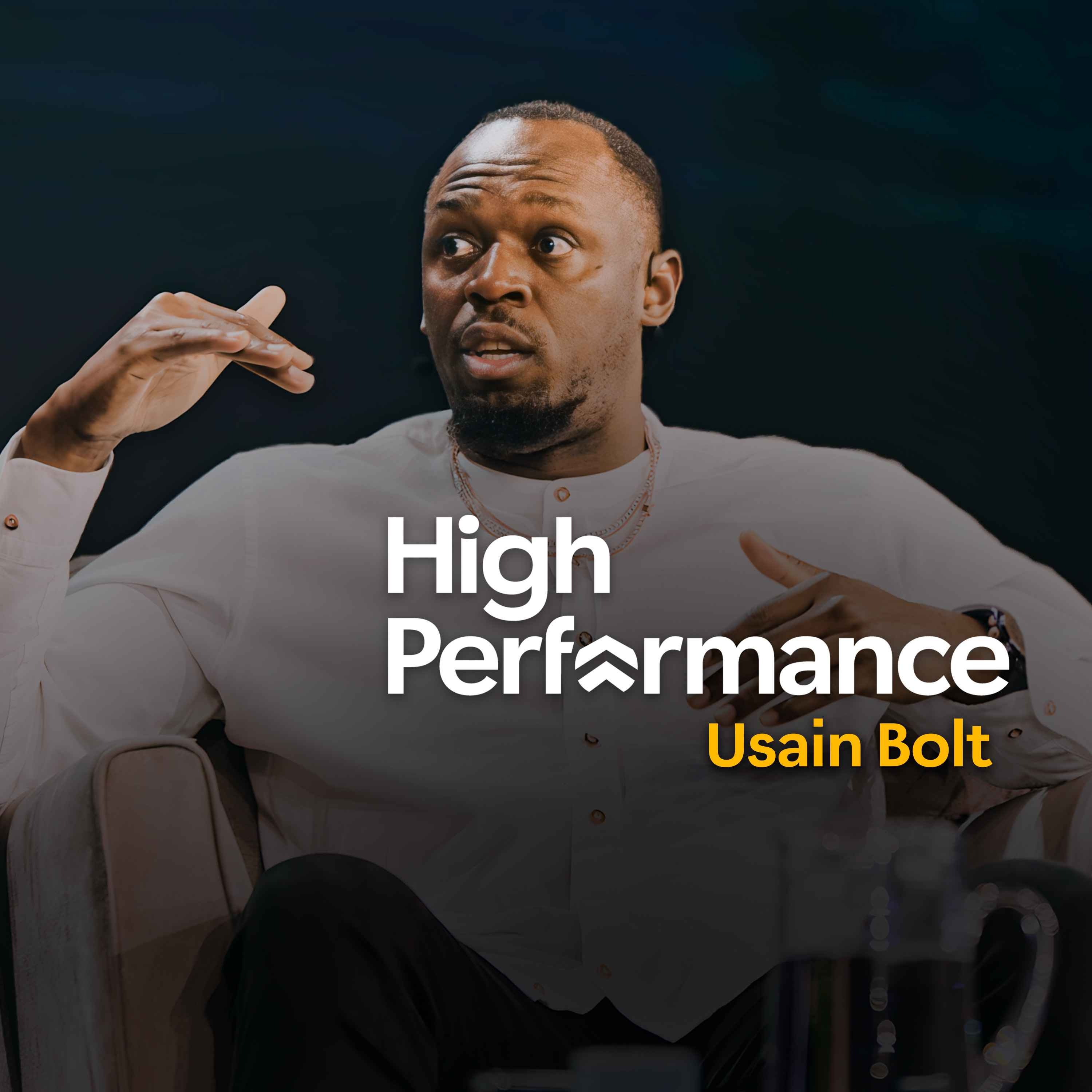
The High Performance Podcast, hosted by Jake Humphrey and Damian Hughes, features in-depth conversations with remarkable guests, focusing on the non-negotiable behaviors that lead to high performance in various fields.
Written by AI. May contain mistakes.

Get the gist, explore an idea or ask about something said.
 Claude
On The High Performance Podcast, what are the key points of this episode?
Searching your listeningAutomatic transcript. May contain errors.
0:28Watch it early on the High Performance App. One time, like nerves to the point where I'm shaking. All that matters is that when we line up and that gun goes, you better be ready. You've just heard the voice of the fastest man to ever walk the planet, Usain Boltz, who joins us today on episode 300 of High Performance. My name's Jay Comfrey. And you know what? Five years ago now, we started this podcast. I met Damien one summer back in 2019. We got together and we said, how about creating something where we just sit down and talk to the most remarkable people on the planet to learn how we can get the most out of our own lives.
1:03And here we are, Damien, five years later, and we get Usain Bolt to celebrate our 300th episode. How about that? Some guests, didn't it, to invite a party. But it's been a real privilege, Jay, to work with you for these five years and to meet 300 incredible guests that have shared so much rich insights, knowledge and experience that our listeners can take away and are playing their own lives on their own journey to high performance. I'll never forget the first recording we ever did down on the south coast of England with Ben Ainsley. A couple of cheap microphones, just you, me and one producer.
1:38And I remember walking out of there thinking, maybe there is a future to this. And here we are with a quarter of a billion downloads of our show later. And it's clear that there is a future. And you know what? I still believe we're right at the very beginning of this journey. And thank you very much, Usain, for giving up your time to come and join us. So today we welcome the world record holder in both the 100 and 200 meters. He won eight gold medals across three Olympic Games during his career. And you can expect to hear in this conversation a man explaining to us why he always knew he was going to be extraordinary.
2:12And I think for the very first time, actually, Usain goes into deep, deep detail about the things that inspired him, the things that sometimes derailed him, the lessons that he had to learn and where he finds himself today. We actually flew out to Florida to record this episode for you live at IFS Unleashed. And what I love about this conversation is the way that Usain emphasises how important it was for him to keep redefining what it means to work hard. He offers us a real candid insight into what he really thinks about some of his closest rivals and his willingness to confront failure and use it as a learning experience to become truly, undisputably, the best in the world.
2:51Big thanks as well to IFS for helping make this possible. IFS are making serious strides with AI. And I know on this show, we talk a lot, don't we, about technology and AI most often in relation to our personal lives. But have you ever thought about the impact AI could have with all those hardcore industries that really power our planet and power our lives like aviation, manufacturing, construction, or energy? But if your business deals with assets or cares about delivering the best-in-class service, check out IFS at ifs.ai but right now check out the most incredible conversation with the fastest man who ever lived as we welcome you to episode 300 of High Performance with Usain Bolt
3:37Ladies and gentlemen please put your hands together and welcome to the stage at IFS Unleashed Usain Bolt
3:55Nice to see you. Take a seat. Just a nice, casual conversation with two and a half thousand friends. How are you? I'm good, I'm good. It's nice to have you with us. So, welcome to IFS Unleashed. Welcome to High Performance. We're having a conversation in an Olympic year. We all enjoyed what happened in Paris a few weeks ago. Did you go? Did you go and watch the action? No. I was supposed to go with my family, but I injured myself. I was playing a charity game football match for soccer for UNICEF, and I ruptured my Achilles, so I actually just started walking OK again. So I didn't get to go, but I watched on TV.
4:40I guess you could have gone, right, if you'd wanted to? Yeah, I didn't want to go on crutches. It's my first time going without and not competing. So it'd be look weird for every time you see me on TV, I'm on crutches like this. So I was like, you know what, let me just stay home. And be honest, you're saying, were you pleased that nobody broke your world records? I wasn't worried. I would say, I can say, but it's going to take a while. But it's always happy that it stays intact. let's talk then about injuries and perception of you you know like for so many years all of us watched you and we saw you walk out at the start of a race and thought oh there's Usain Bolt he's going to win the gold medal yet again is it a strange position for you to be in when you're considering not even going to an Olympics because of the kind of the perception of you being on crutches or hobbling I saw you limping very slightly as you came out today injury is a part of sports in general I think in any sports you go you have to understand that if you push your body because you want to be the best so at times you might overdo it or at times competing you might get injuries so it's a part of the sports but I'm happy it happened to me now when I'm retired because I know a lot of footballers that have gotten this injury and it has ended their career so for me I'm happy that it happened at the end.
6:05And how did you make the decision to eventually walk away from the sport? For me, at the start of my career, I made an end goal where I wanted to. When I started out, I said, this is what I want to achieve. And my biggest goal was to actually win three Olympics back to back. That was my main goal. And that was my target so when I actually got to that target for me it was like a hard road of like 10-12 years of continuous work so for me it was like yes this is it so I had gotten to my goal and that was it for me that's so I knew at this moment if I got where I wanted I would have stopped. I'm very interested in this whole idea of goal setting so what was it about the three Olympics that was the thing for Was it because you'd watched other athletes and were inspired?
7:04I think I wanted to set myself apart from everyone because growing up I watched Michael Johnson. I'm a massive fan of Muhammad Ali. And if you want, I figured if you want to be great or you want to be a legend or you want to stand out, you have to do something that no one has ever done before. And for me, I think Carl Lewis had won 100 metres twice already, back-to-back Olympics. So for me, how could I set myself apart from everyone so people would say, you know what, he has done this. And in years to come, if somebody was to be greater than me, they would have to actually do four Olympics and break world records.
7:49So I tried to set the bar so high that it probably would never be broken. So that was my main goal and I got it. So cheers to me. I love it.
8:25No rigid long-term contracts. Just the right expert, right when you need them. Work smarter and faster with Upwork. Go to Upwork.com now and find your freelance expert. That's U-P-W-O-R-K.com. Post a job for free and get started today. Your sausage McMuffin with egg didn't change. Your receipt did. The sausage McMuffin with egg extra value meal includes a hash brown and a small coffee for just$5. Only at McDonald's for a limited time. Prices and participation may vary. This episode is brought to you by Opera Air, the first browser with mindfulness at its core. Now, most of us spend hours every day online, but how often do we pause to take care of ourselves whilst we're doing it?
9:10And that's where Opera Air comes in. It's a lightweight, fast, secure browser built not just for productivity, but for your well-being. With Opera Air, mindfulness is built right in. You'll find free breathing exercises, guided meditations, and soundscapes with ambient sounds, lo-fi music and binaural beats, all designed to help you focus, relax and even spark creativity while you browse.
9:36So you achieved the incredible, but there's a great quote from Roger Federer who once said that athletes die twice, the second time is when they die for real, the first time is when they retire. And I'm wondering how after you achieved that, did you mentally cope with walking away from the sport? For me, mentally, I was ready to go. But I think after you retire and then you start watching the sport, that's when it becomes a little bit hard. But I was ready to go because I had accomplished. And I saw so many athletes that tried to rekindle their greatness after they retired and you're at home and you're watching and you're itching to go back.
10:19And I must give it up to my coach. My coach actually helped me not to go back because there was once where I was like, coach, I think I should start running again. And he goes, no. He said this to me when I told him that I was going to retire. He said, listen, when you retire, that's it. We're not going to do any comeback tour. This is it. So I remember when we sat down and we were talking and he was like, no, we're not going to do this. it's painful to sit and watch especially because the the male athletes weren't dominating for jamaica and i sit and watch us losing and i was like itching to to go back to to perform for my country so so how long after you retired did you get that feeling two years it was it was two years in i was like you know what i think i can go back into the sports and he was like no and did you do But did you go out on the track and do anything?
11:16Or did you pick up the phone to him first? I was still working out because I would still go to the track to see him and hang out and watch the other athletes compete and train. And so I would be there and I would still have my track shoes on sometimes. So I would still do a small workout. But he was like, no. He told me, he's like, no, I'm not going to allow you to come back because the drive that you had while you were aiming towards your goal is not the same drive. you will come back into the sports with and that will be a problem. Can we talk about drive? I think this is a really interesting thing for us to discuss because it's one thing saying to yourself, I'm going to do three Olympic Games in my career.
11:53It's a very different thing actually making it happen. Yeah, it's true. So when did you first have this understanding that maybe you didn't think like everybody else? You weren't just going to get a job, have a career. I think when I started out, it was, I didn't understand the concept of being great. You know what I mean? Because I was young. When I started out, I was 15 when I won the World Juniors. I was really young. I was really talented. So I didn't have to work as hard. It was just talent. So I was winning and winning and winning. And I remember when I got to the professional level now.
12:29And I felt like it was just going to be easy. And I got onto the stage and I would go to meets and I would lose. and I was like, this is strange, this is new, you know what I mean? So it was something that took me a while to understand and then when I started working with Coach Mills and he kind of sat me down and explained that, listen, everybody who's a professional has talent. So it's who works the hardest on their talent that will be the best and that's when I kind of understood that you can't get to the top with just talent alone. You need work, you need sacrifice. You have to be dedicated.
13:08And it took me time, but I learned along the way and I got better over time. And I'm interested in that mentality to do that because I can imagine having had a linear path of being successful as a junior and going into it, that must have come as a bit of a dent to the ego. Yeah, definitely. For me, because I was beating the seniors when I was 17. I was beating the seniors in Jamaica. I was running faster than all the seniors. in Jamaica. So I was feeling like the man. I was like, yeah, I'm the man. And it was just mainly talent. But when you travel now and then we're on the track circuit with all the Americans and people from England, everywhere in the world, and then you find yourself in fourth position, it kind of dampened your ego a little bit.
13:57But it helped because when you're this high and you kind of get cut down to a lower side, you kind of start asking yourself questions and trying to figure out what am I doing wrong or what I need to do. So for me, it took that and a lot of help from my coach to really get me on the right path and then slowly to the top. Can we talk then about this concept of hard work? I mean, I imagine when he first said it to you, was there a little bit of your head going, well, I'm brilliant at what I do? I think my idea of hard work and my coach's idea of hard work were miles apart you know i mean because moving from just being talented and working hard and then really working hard it's it's totally different because when i started working my coach it was in 2005 was when i really started working with him and for me i was like i'm doing great you know i mean but i would win some but i would lose some And I think in 07 was when it really dawned on me that, listen, you're not working hard enough.
15:06You need to work even harder. What happened then? It was the World Championship in Osaka. And I felt like I was in great shape. I was like, yeah, I'm going to do good. I'm going to win. And I came second. And I was like, why? I went to my coach. I was like, I really tried. I really worked. And he goes, no, you didn't work hard. You didn't go to the gym every day. you missed a few days. And he would tell me like, you missed a couple of days throughout the year and it adds up to a month or it adds up to six weeks. And then you really, I really sat down and really looked back and say, you know what, it's true.
15:43And I was like, you know, let me give a hundred percent to this cause. I really want to be the best. I really want to win. So, you know what, let me really work at this and give my all and listen to exactly what he said. And that was the next year, which is Beijing. So you can see the difference from one year just by working as hard as I needed to. So can you give us an idea then of what Coach Mills defined as hard work? So for those of us outside of the world of athleticism. For me, it's just consistency. I think consistency is everything. I think the problem with me the year before was I would train for two weeks, three weeks, but then I would want to go out and hang out with my friends, so I take a week off.
16:30And in my mind, that wouldn't affect, but it does because you break the pattern and you break the consistency of work. So that was, and then I didn't go to the gym to get stronger. I was very slim. You can see the difference in one year of change. I was very slim, no muscles. So it was all about consistency and strength for me because I didn't understand that they go together. and the next year when I really consistently trained and was always at training I never missed days unless I was sick and some days even when I was sick my coach would say no you'll be fine a little bit of running will help you so it's something that we we worked on short year so what percentage then would you say of in that 08 performance when you first crept into the world's consciousness how much of it was down to your physical gifts and how much of it was down to the mental strength that you had?
17:27I think overall, at the start, for me, I think it was like, strength-wise, it was like 80-20. Because mentally, with me, I connect my physical strength with my mental strength. Because if I'm in good shape, I'm in no worries. I'm not worried because I know how talented I am and I know how good I am. So I know if I'm in good shape, I'm going to win. so it never bothered me mentally I know as long as I go there and I execute I'll be fine so for me it was mostly physical work that I did to catch up to the to the other guys and to surpass them that really mattered so we've asked that question of a lot of athletes Dame Kelly Holmes told us that she thought the success in her career was 80 percent mental 20 percent physical I asked the question of the great Michael Johnson and he went 100 percent and 100 percent so he's a good runner but he's not great at maths right um but but but i do think we can't discount the mental side of this game as well i mean 2004 right was a problem for you yeah for those that don't know just tell us the story of of 04 i was a my first olympics if you didn't follow my career a lot of people did not know that i went to the olympics in you know for in atens and for me I was going to that season okay, and I thought I was ready as always.
18:57Because of my talent, I was like, yeah, I'm doing well because I did well at the Jamaican trials. And then you get to the Olympics and you meet up with all these guys that have been training all year round and been dedicated to their craft. And I didn't even make it out the first round. The top four would have made it to the next round. I came fifth. so I did not make it and for me that was a little bit of a wake-up call to say listen you have a long way to go because if you can't make it out the first round at the Olympics and there's three more rounds that show how far behind I was and I felt like I was really talented at the time.
19:38So the High Performance podcast exists right for absolute truth and honesty and to give people like you a platform that they don't normally have like I've not really heard you talk like this before do you do you have many public conversations like this no i sometimes you you do not talk about no one wants to talk about their failures as much um going on but i over the years i understand that that's what helped me to to get better because if you can be truthful to yourself if it's one thing i've learned if you can be truthful to yourself that's how you get better because a A lot of people like to point fingers at others and say, oh, it's because of him I didn't do so well, it's because it was her.
20:21They try to find different avenues to say, instead of looking at themself and say, you know what? This is on me. I can do better in this area and that area and to be a better person. So that's something that I think helped my career to really kickstart to know that, listen, this is all on me. I didn't do this. I needed to work hard. I felt like it was easy. So it's something that really helped me to get better throughout the years. And look, we are going to talk about the success because there was a lot of it. And it's a great thing to discuss. What surprised me from this conversation is that 2004, you got a kind of a proper slap across the face in Athens, right?
21:01True. Yet it was not until 2007 that the penny dropped that hard work needs to come into the game here. So I'm so interested in why 04 didn't do that for you. No, because I was still young. You have to understand. I was still young and I was still like saying, oh, because I got injured in the season a little bit, you know, you're telling yourself and it comes back to where you start to lie to yourself. And I was saying, you know what? I got injured early in the season. So maybe that's why I didn't make it. So I'll be fine next season. You know what I mean? And then next season comes and it's the same thing.
21:40and then you start saying, maybe it's not. And then you start saying, all right, if I do this amount of work, maybe I'll get better. Then you lose again and you're like, ah. And so you start trying to figure it out. And so it took me time, but it came together at the right time. So yeah, it worked out. And you've spoken about Glenn Mills, who's regarded as one of the greatest coaches in athletics history. Could you share with us just one of the great pieces of advice that he passed on to you? For me, I remember at the start when we started working together, he said something to me and he said, until you, when you figure this out, you will get better.
22:28And he said to me, you have to learn how to lose before you can learn how to win. and it took me two years to actually figure out exactly what he meant by that and that was one of the the biggest things that confused me I was like why would I want to learn how to lose and all he meant is to you have to understand that you will fail but when you fail what do you learn from the failure and that's what it pretty much meant so when I was losing then how do I get better? What do I need to do to get better? So every time I lost, I said, what did I do wrong? What do I need to improve? And that's when over time I started understanding, oh, so when I lose, it gets me better and closer to start to win.
23:18So that was something that really stuck with me. And I tried to explain to people, listen, this is very important. If you can be truthful to yourself when you lose and say, all right, I didn't train hard enough. All right. I didn't do research. I didn't sleep well. So you know, so next time you'll do those things so you can get better and better and better and improve till you get to the top. And can I ask you about your inner circle? Because I can imagine at that time, it's easy to point the finger of blame at other people. How did you decide who was going to be a part of your inner circle to hold you to account?
23:51For me, I would tell you the truth, I was, I kind of locked out with great people. when I started out, I had different masseuses and different coaches. In 05, when I met Glenn Mills, we kind of just clicked and understood each other. It took us a while to really get smoothly, but we got along great. And my manager, which now is my best friend, we grew up together. So that was easy. I got a masseuse the year just before 08. and my agent Ricky Sims I got when I just started tracking field. These were the guys that really were in my corner throughout my whole career. So they started in the struggle and we kind of worked our way to the top.
24:41And it's always important to have a great team. You know, I mean, somebody you can lean on when you make mistakes or when you need motivation because we had one goal and we all were working towards that one goal. So for me, that was a massive deal of having a great team because there's times when you're going to feel down or there's times when I don't want to get out of bed or there's times when I got injured and I was like, oh my God, I'm going through this again. And you need people to pick you up and to remind you what you're working towards or the support team in every way. We'll talk about some of those sort of mental struggles and the true challenge of competing at the top level for a long period of time.
25:20but we've kind of arrived here at 2008 right yeah and I would love to know what your mindset was then you've had the difficult 04 you've had a wake-up call from your coach in 07 and a few months later it feels to us like maybe a different Usain Bolt is taking to the track in Beijing yeah definitely uh I think 08 was one of the years where it was all or nothing for me I kind of just went all in I was like you know what I've never tried this way you know I mean I've never tried working hard and dedication and just focusing on just track and field and just working so for me in 08 I did everything my coach said um and just when you say all or nothing like if that if a way to gone badly what would you have done I think I wouldn't have believed well if somebody says if you're doing something wrong all your life and somebody said you know what everybody's telling me work hard work hard and you get there and you go okay you know what let me try this work hard thing you know i mean and then you work hard and you didn't get it done then it would be an issue so i was like you know what let me do exactly what the coach says and let's see how works out and the moment throughout the whole season i was running very well actually broke the world record before i actually got to the olympics so i could see it before it actually happened so for me it was just excitement I was excited to go to the Olympics because I knew I was in good shape I was running good I was still nervous because this was my first like major thing now and I was in great shape you know I mean so for me I was excited to go and when I got there it was just all excitement.
27:04So you've just said that a word there that surprised me when you said I was still nervous because Jim Lowe one of the world's leading sports psychologists often talks about to get in the zone part of that is being mentally relaxed and and being um quite chilled out and a lot of athletes you were competing against have got a very serious game face on and yet you were going out there smiling responding to the crowd i didn't see that was just my personality i think if you if you follow my career throughout my years when I was 15 when I won in Jamaica. Afterwards, I saluted the crowd. I was vibing.
27:44Next year, I won at World Youth. I was dancing, breakdancing. So it's something that I've always done throughout my career. You know what I mean? So when I got to the senior level, it didn't change. But people were like, what are you doing? Because everybody was serious. I was like, yo, I'm just being myself. Because I remember when I celebrated when I won, people came to me and they were like, oh you're disrespectful and I was like how am I disrespectful did they say that yeah what because you over celebrated yeah because I celebrated before the line and they were like you you're disrespectful so I went to the actual athletes and I was like yo I went to the ones that I knew I was like did you feel disrespected and they were like no if we were winning by that far we would be doing the same thing.
28:30So, it was so brilliant.
28:37That is good. So, can I ask you then about those opponents? Do you feel that such a comprehensive victory in that Olympic final changed the way that they saw you? I definitely think so. I think I really changed the face of track and field. If you watch track and field now, you can see the difference in what I've created by enjoying myself. You can see now everybody's expressing themselves in track and field. And it's much more fun because you see people's personality, you feel like you know them and you can enjoy the sport. So it's something that I'm happy I did because it's good for the sport to just be relaxed.
29:20And that's something that I've always explained to people. You've already done all this work throughout the year. my coach has explained that when you get to the moment, there's nothing else you can do now because you have worked, you have done all the work already. So when you get to the moment, it's all about execution. So there's nothing to worry about. It's either you're ready or you're not ready. That's just it. There's nothing you can do in this moment that's going to change. So that's something that he taught me also, like, listen, when you get to the moment, you'll be fine. Because I find it interesting when I think about what you were like before a race to imagine there was any nerves at all so were there nerves as you walked up to the block I think I think I had to start when my first year I think the Olympics at first 08 Olympics I was nervous because this was my first chance to win yeah Olympic gold medal or to win any medal you know I mean so when I got there I was like I know I'm ready but I'm still nervous like I know I'm in the best shape of my life, but is it going to come together?
30:24No. So when it happened, after that... Did you tell anyone you were nervous? No, I wouldn't tell anybody that. Not even your coach? No. Why not? So I thought you and your coach were so connected. Yeah, but I know my coach. If I tell my coach, coach, you know I'm nervous, he's going to say, what's wrong with you, kid? You know what I mean? I know his mind worked, but I know I was in good shape. but I think it wasn't overly too much nerves. It was just the fact that it was my first time being in the position to actually win. You know what I mean? And Jamaica, everybody was like, oh my God, this would be our first gold medal in the 100-meter sprint.
31:06So it was a big deal. But after I won that race, I think after that, I never really got nervous again. What are your memories of that race? For me, I can, all my championship races, I can walk you through all the races. It goes quickly, but in my mind, it's very slow. Go on, man. Because the gun went, I got a good start. The first five steps, I actually slightly stumbered a little bit. And then my drive phase was good. At the time, my biggest competitor was my fellow and Jamaican, South Apollo. And E always gets a good start. And I remember looking. That's one of my biggest problems running. I always look across and look around.
31:54So I looked 30 meters. I was like, okay, I'm in the race. Came out my transition. I looked again at 50. I was like, I'm doing pretty well. You know what I mean? And at 60, 65, I looked across and I was like, I'm winning. You know what I mean? And I got to 80 and I looked across and I was like, oh my God, I'm going to win. So I kind of progressed through the race and that was when I beat my chest and the rest is history. So when you look back on the beat in the chest, do you regret that? Because you feel like you could have gone even faster. No, no. I feel like for me, it was just a win. It was just that moment.
32:35It was because I had the world record. I was never worried about it. It was just to win this gold medal. That was what really mattered at the time for me. So I was just excited. The emotion just came out. I didn't plan or anything. It was just emotions. You know, when you work hard and you finally got what you wanted, it was just, I didn't know what to do. I was like, oh my God, thank you. And I was just happy. So it was something, it was just all emotion coming out at that time. And after Beijing, you know, you went from, as you've already said, most people didn't even know you competed in 2004 at the Olympics.
33:11to suddenly being arguably one of the most famous people on the planet. And we talk so often about the notoriety and the success and the trappings of fame and all of those things. I'd love to know, though, from you the truth about sudden, almost overnight global fame, the hidden cost, if you like, of that. For me, initially, all right, so at the Olympics, we stayed in a village. So all the athletes in every sport, we stayed in a huge village. And to put it in perspective, when I started out, when I got to the village, I could go to the dining hall. I would have food, chat with my friends. We'd sit.
33:51We'd walk around the village. And the day after the 100 meters, I remember walking into the dining hall. And everybody went. And it was just everybody wanted a picture. Everybody wanted to touch you. And it was like, what's happening? You know what I mean? and it was actually my shot put guys and the distance guys who were actually my security guard and had to get me out of the dining room because I could not stay in there. And it was like, what's happening? You know what I mean? Because this is different. I'm from the country. You know what I mean? I'm from the rural area. I know everybody in Jamaica knew me, but now on a global level, it was just mind-blowing.
34:34And it was, it's fun, but it's not fun. You know what I mean? So it's different aspects that I enjoy, but you, at the time you don't get any peace. You can't go outside with somebody or a group of people wanting to touch you, wanting to talk to you, wanting pictures. So it was hard for me at the start, but I think over the years I kind of got accustomed to it and figured out how to deal with the situation. And what's been the biggest thing that that global recognition has given you? and what's been the biggest thing that it's taken from you? I think one of the biggest things is access. I like, I get to go to all the United games.
35:16Glory, glory, United. So I get access. Not at the moment. Wow.
35:25You just ignore him, you say. Listen, he knows the football team I support. But for me, it was the access. You get to enjoy that. You can call and get to games and restaurants and all this, but your personal life and everything is in the media, and you don't get to enjoy dinner as you want or just to take the kids out. Like I have kids now. You can't just go to the park or any parks. You have to be careful. So those are the things that you have to give and take. And over the years, I've understood, and you kind of learn how to move around and what you can do for what you cannot do. And so I'm kind of used to it now, but at the start it was difficult trying to figure out and maneuver.
36:12And of course, you're also suddenly then dealing with one of the biggest things, I guess, which is expectation for the first time in your career. I'm very interested in how you dealt with that, but also maybe the advice that your coach gave you in this space. I think I kind of learned this on my own. I think because I started very young and Jamaican fans are very demanded yeah yeah yeah and let's just be clear for people here like if you've grown up you know in the UK or something athletics at school level in Jamaica for us it's like it's like being a professional footballer right it's huge yeah so for me I started when I was really young in Jamaica so it would be oh yeah and then I would do so well and it was like boo and then it was again I would win again and go yeah and then lost boo same thing and I kind of figure out that if I do well they're gonna love me if I don't do so well they're not gonna love me so much so I told myself I figure out that I had to do this for myself first because initially I was always put in Jamaica first I always said you know what I need to do this for Jamaica.
37:23I need to do this for Jamaica. I need to perform at a higher level. And I never talked about myself once. You know what I mean? So it was always hard for me growing up when I didn't do well and then I would get the negative energy and they were like, oh, you're not doing so well, you should retire. It was always negative and it would make me feel bad. And it took me a while to figure out, listen, I have to do this to myself first because I wanted it to be great. I wanted to be the best and it took me a while to figure out. Even if I fail, I know that, listen, I did my best. I made a mistake here.
38:02I can adjust it. So over the years, that's what kind of helped me through all the tough times and also having a team that would really be there for me. But it was rough at the start. Dealing with Jamaican fans was crazy.
38:20If you're still overpaying for wireless, it's time to say yes to saying no. At Mint Mobile, their favourite word is no. No contracts, no monthly bills, no overages, no hidden fees, no BS. I made the switch because I was tired of those ridiculous bills and sneaky charges from my old provider. With Mint, I'm paying$15 a month and getting the same high-speed data, unlimited talk and text and the coverage on the nation's largest 5G network. Look, honestly, the quality is just as good, if not better than what I had before. And the best part, you don't need a new phone. You can keep your current one, bring your number and all your contacts.
38:55I use Mint Mobile and you should too. Ready to say yes to saying no? Make the switch at mintmobile.com slash HPP. That's mintmobile.com slash HPP. Upfront payment of$45 required, equivalent to$15 a month. Limited time new customer offer for first three months only. Speeds may slow up a 35 gig on unlimited plan. Taxes and fees extra. See Mint Mobile for details.
39:44That's pcrk.com. Post a job for free and get started today. Airwick Essential Mist Diffuser transforms your space, creating your perfect ambiance with a wide range of inviting fragrances that make your guests go... Airwick Essential Mist Diffuser's easy-to-change refills allow you to choose your perfect fragrance for any occasion, like apple cinnamon medley and pumpkin spice. And if guests start shifting from the table to the couches, no worries it's perfectly portable and cordless airwick essential mist diffuser always inviting
40:24as well as the expectation from jamaica i'm interested in when you go to the next games in london in 2012 you've gone from being the hunter to being the hunter where you've got a target on your back now what did that do for your mentality how did you respond to that i loved it All right, I am different. My biggest thing about me, I live to compete. I want to compete. I want to compete against the best all the time. I remember in 2013, I was training hard. I was working hard. And I was getting, we're going to the World Championships. It was in Russia. And a few of the top athletes started dropping out.
41:06It was injuries, drug issues, and a few other different things. and the fact that everybody wasn't going to be there in the moment, kind of, I was like, I felt I didn't feel that drive again because I knew even if I won, the best in the world wasn't there. So I live to compete. So I don't mind being chased. It was fun for me to prove to you or prove to anybody that, listen, I'm the best because I'm so competitive. Even now that I've retired, I'm still competitive. I won't play again. If I'm not going to lose, I'm not playing you. That's how competitive I am. I have to be sure, like, you know what?
41:51I can beat you. Then I'll do it. But if I'm not sure I'm going to beat you, I might say, no, I'm okay. I'll take a rain check. So which is stronger then, a desire to win or a fear of losing? Wow.
42:08Wow. For me, I think the desire to win. I think you want to win so bad. Like with me, I've always wanted to win, and that's what drives me, my competition. There's this one thing. I remember in 2016, it was coming up to my last Olympics, and my biggest competitor was Justin Gatlin. and throughout the year I was struggling with motivation because I had won everything, you know what I mean? And it was at the end and I was like going to training and the older you get, the harder it gets. And I was like, I was just tired and I was, every day it was work and I got injured and it was double the work.
42:58So for me, it was hard to motivate myself every day. and I remember watching a video that he was on a podcast at the time and they were saying, oh, are you going to win? And he said, yeah, I'm going to win. And they were going to go on a tour around the world with gold medals. And that, for me, did it for me. It light a fire and I was like, yeah, you're not going to win. So it kind of lit a fire. That's how competitive I was. You know what I mean? If I probably didn't see that video, it probably would have been different. But I saw that video and it helped to motivate me to say, all right, you know what?
43:36I need to get to training. I need to do this because there's no way I'm going to allow him to beat me. So that's how competitive I am. And I used to love watching, obviously the race is amazing. It's over quick. I used to love the kind of what I call peacocking before the race, the sort of who can outdo the other runner with, like, can you explain what's going on in those moments as well? For me, it's always fun. For me, I enjoy watching Justin. It's fun for me to see him in his element because he does this thing where he walks back and forth like a crazy person. You know what I mean? He's like...
44:13And he's serious. And I always find it so funny and amusing because that's his way of psyching himself up, though. But for me, it was amusing. So it's something that they do. But for me, I'm just chilled because I always knew if I was prepared, there's no way you're going to beat me. So I was always relaxed and ready and just ready to go. Did you know that some of that behavior you were seeing was entirely for your benefit? It was to try and make you... Yeah, for sure. Yeah. For sure. But there's no way you're going to intimidate me because, again, I was prepared. Yeah. And I think that was back in the days.
44:50Just before my time, these guys were always serious. And that was it. they try to throw off each other. I remember the first time I competed with Justin, he spit across my lane. The first time I met him, we were in, I think it was Zagreb, and we were competing. And we, you know when you warm up and you're running out your blocks? And I was walking back, and he was walking towards me, and he kind of spit across the lane in front of me. And I laughed because I knew what he was trying to do. But for me, it doesn't matter. All that matters is that when we line up and that gun goes, you better be ready.
45:28Because you're not going to intimidate me by spitting across the lane. So for me, but that's just who he was. And that's how he was wired. Because he was in the arrow before me where it was like that. You know what I mean? You would say, yo, you better be ready type of energy to try to intimidate your opponent. But it wouldn't work with me. And I actually think your approach probably intimidated them. Because I remember you'd watch on the telly, Justin walking up and down looking serious. The next thing I see, your fist bumping the kid that's holding the kid. Yeah, I think people said that. People are like, I feel like you're using psychological ways.
46:03And I'm like, no, I'm just being myself. I'm genuinely just enjoying the moment. You know what I mean? And the reason I bump the fist with the kids is because I know they're fans. This is why most people try to volunteer, because they're fans and they want to be close to the action. So I know you can see it on their face sometimes, how nervous they are. or they'd want to say something, you know what I mean? So I always try to interact with them because I know that moment will live with them forever and they will be exciting and it will make them feel good. So I'll try. If I can strike up a conversation, I will.
46:36Or I just give them a fist bump and they can see the happiness on their face. So it's something that I've always done, but it was never to try to psych the athletes out. It was just me being myself and just enjoying the moment because it's the Olympics and it's the World Championship. this is a big moment for athletes. So can you give us an insight into the self-talk that was going on in your head in those moments before a big race? For me, I never talk to myself. I always just try to think, if I'm not standing out in line and you see me looking, I'm trying to think about random things. Anything that can pop into my head, I try to think about it.
47:17You know what I mean? Like probably what I'm going to have for dinner or if I'm going to play a video game or something that happened in the day. I tried to distract myself from the moment because if you get into your head, that's when you make a mistake. I made one mistake in 2011 when I fall started and that was the issue. I was, because I had a bad season and I was worried. I was like, am I going to start well? Am I ready? So the moment you start being in your head and start thinking that's when you make mistakes. So you have to try to clear your head. So for me, I try to think about random stuff and not think about the race.
47:57So at the moment when the starter says, on your marks, if you watch me, you see me take a deep breath. And then I try to clear my mind and listen. So that's it. But when a lot of athletes, they think about it so much, like, okay, I need to swing my arms. I need to get my first step right. I need to get my start right. and then you start confusing yourself and your mind is all over the place and that's how you make mistakes. What about though in 2016? Because you've already told us that when you were just little Usain, you said, I'm going to do it across three Olympics, right? This was now the moment that this childhood dream was going to be realized.
48:37So how did you not get overwhelmed in that moment? No, because I have to tell myself, you know, and this is the moment, you know what I mean? I was a bit nervous then also. I guess the first one or last one because I knew this was the moment. I was like, listen, you give yourself the pep talk. Well, my coach gave me the pep talk before. Not really a big pep talk. My coach is not a pep talk person. You know what I mean? So you would just say, listen, remember to swing your arms, stay upright, all the best champ, and then send you on your way. Sounds like a great coach. Yeah, it's never like a long speech.
49:12It's always just quick things and just send you on. So that's something that was easy for me because I understood. And if you do it all the time, it becomes natural and a part of you. So that's something that I really enjoyed and really was something that I was dedicated to getting. I knew this was the moment. You know what I mean? So I was ready. So what did you say to yourself in that moment, remembering that kid that wanted to do this? I was telling myself, before I went there, I was like, listen, I sat down, when we were in the car room, I was telling myself that this is the moment. That's all I kept saying to myself.
49:47This is the moment. This is the moment. You have to get it done. This is the moment. And then I just went back to being normal because, as I said, the moment you start getting to your head, that's where the problem lies. You know what I mean? And after I won, then the joy came out and then you start feeling good and then you start celebrating. When I went home and that's when I was like, yeah, I did it. You know what I mean? And pumped myself up. But you can't lose yourself in the moment until it's done. So when we say the word high performance, what does that mean to you? For me, high performance is getting to the highest level and working to get to the highest level.
50:27I think my whole life is focused on the performance and the highest performance that I can get to. And for me, that was every year. You had to always be ready and prepare mentally to get to the highest moment. and it was my whole life. You know what I mean? High performance was pretty much my whole life. And that's my focus, and that was my concentration. I remember seeing a quote of yours once that was, I don't think limits. Yeah. I think that plays so nicely to high performance. Can you explain that to us? So for me, I remember it was after the 200 meters. That was when it was how I really thought about it, because in 08, the world record was, it was for Michael Johnson, was very far.
51:15I was running okay. And I remember sitting down with my roommate at the time, Maurice Smith, and we were having a conversation and he's like, are you going to go for the 200 world record? And I go, ah, that's hard to get. And he goes, yo, why not? You know what I mean? You just jogged the world record in 100 meters. Why not go for the 200 meters? and I sat down and we were going back and forth and I was like, you know what, why not try? You know what I mean? Because I limited myself. Because I said to myself, there's no way I'm going to break this 200-meter road record. Because I wasn't running that fast and I was like, there's no way.
51:58But that was me limiting myself. And after that, that was when I was like, you know what, anything is possible, don't think limits. So from then on, I never limit myself. You know what I mean? Never said it cannot be done. You know what I mean? You have to try and try and try and figure out ways to get there. So that's where that coach comes from. So you've got eight Olympic gold medals now, you say. What was the key to the longevity of this? And do you think anyone else could ever come close to doing a three-peat? I think it's possible. You know what I mean? I did it. As the same thing we just talked about, you can't limit yourself to anything.
52:38The moment you limit yourself and say, oh, this is untouchable, that's the moment that you have already lost. You know what I mean? So it is possible if somebody starts at an early age and say, listen, this is my goal. I will beat the Usain Bolt records. I will do four Olympics back to back and work towards and be dedicated, then it is possible. but for me it was talent hard work it was sacrifice it was tough times was teamwork i had a great team around me it was so much things together that actually made this possible because it wasn't an easy road and i've always explained to people i listen i think failure is a part of it you have to fail and you have to go through tough times uh to be stronger you know i in because it only makes you better and it only makes you want to work harder so it's something that i went through it started good but i had scoliosis in my back so it was an issue that always bothers me throughout my career but something that i managed very well and it was just a tough time but as i said i had the right team dedication the hard work the sacrifice and everything just came together with time and it really helped and when you reflect on your career and you think about what you're most proud of obviously people will talk about those eight gold medals because that's how human beings define success if i'm being really honest though i think some i think someone who has scoliosis training every day competing as you did competing on the world stage and not ever from my memory ever using it as a public excuse for a race that went wrong or something that went badly.
54:25So I wonder how you reflect on how you dealt with that. For me, it comes back to not lying to yourself. You know what I mean? I think, yes, I had scoliosis, but it was never, we figured out how can we manage, what do I need to do to make sure I can compete with scoliosis? And the good thing about it, I found a doctor in Möller-Wolfart, was from Germany, that really understood how to help me to manage. And he explained if I did my back exercise, my core exercise, and I saw him on the regular, it wasn't perfect. We still got injured every now and then, but it helped to manage what is necessary. The moment you start using something to say, oh, this is why I'm not doing that, then you're always going to be behind the eight ball i never used i was like you know what yes i have that but i still can compete i still can be the best and i didn't put as i said i didn't put limits on myself you know i mean so i kind of pushed through the hard times and understood that if i worked hard and i managed my scoliosis right then i'll be fine so if i say to you now what are you most proud of from the incredible career that you had what do you say um surprisingly um one of my greatest moments that I love is it was the first time I won in front of my home crowd I think that made such a big impact on my life and helped me to overcome so much when I won at 15 in Jamaica in world juniors I think that's in my career was so big it might not seem big to a lot of people but I was so nervous that that's the one time, like nerves to the point where I'm shaking.
56:16You know what I mean? I put the wrong shoe on the wrong foot because I couldn't focus. I was just so stressed. And I said to myself, if I can win in front of my home crowd, that nervous, that really set the benchmark for me, showing my years to be better. So I feel like winning in front of my home crowd, that was one of my proudest moments and one of my biggest moments that really helped me to navigate the world and to really get better through all time. And you do come from a sport that has been blighted over the years by performance-enhancing drugs. You had the instance of Nesta Carter testing positive where you had to hand back your 4x100 medal.
57:01What do you say to athletes that think those kind of shortcuts are the way to win? I can never understand why, you know what I mean? A lot of people don't want to wait their time, I think, because I personally feel that, yo, I got a talent. God gave me a God-given talent. And I think if you work on your talent and you're really dedicated and figure out how can I get better, and I think a lot of people didn't take the time out to figure out what did I do wrong or what can I do better, you know what I mean? To get to the level. And because that's what I did. Because I struggled throughout the years to get to where I'm at.
57:49But I figured it out. Like, oh, this is what I need to do. This is what's going to get me better. And I think a lot of times that a lot of athletes, the work is so hard because it's not easy. It's very intense, you know what I mean? And as I said, it's full of injuries at times. And some people just don't want to put the work in. So it's tough. And sometimes the mental area that really drives you to go, you know what, let me try this instead of doing the work. Well, look, the fact that you did it, and you did it in the most remarkable way, and you did it clean is something that that young Usain Bolt would be very proud of.
58:28Obviously, you didn't really get a chance to compete at the top level against MJ. and we actually had him on the podcast a few weeks ago. I asked him who would win, Michael Johnson in his prime or Usain Bolt in his prime. What do you think he said? I'm sure he said him, for sure. What do you say? I'm sure. There's no way he's going to beat me.
58:52I remember one of the funniest videos. I remember in 08. I don't remember who he was. I think it was BBC he was broadcasting with. and if you go on the net, you can find his video. And the reaction, they were asking him, oh, what do you think? Is he going to break the record? And he was like, no, I think his mechanics need some work and he needs to work on this. And it take him two more years before he gets to the world record, maybe. And then in the same day, I broke the world record. So it was funny and the reaction is good. And it was good. It was one of my best videos. I watch it every now and then.
59:33Right. You say we've reached the moment in our interview where we run through some quickfire questions. Okay. So what are the three non-negotiable behaviors, the three behaviors that you hold above all others? I think it's very simple. You know what I mean? Hard work is you can't beat it. You know what I mean? And you have to be dedicated to anything you do. That's one thing. You can't just go in it halfway like, oh, okay, I'm going to do it. You have to be fully dedicated and believe. If no matter, if you don't believe that it can be done, you have already been defeated. I think that's one thing I've always respected about Justin competing with him, the belief that he had every race that he was going to win.
1:00:23The moment you come in and don't believe you're going to win, you have already lost and that's one thing my coaches always taught me never going to a race feeling oh this guy's better than me i'm gonna lose the moment you say that you have already lost so those are the three things that really stood with me throughout what advice would you give to a teenage you're saying um do something that you love you know i mean i i think that's very important i think a lot of people might force their kids to do different things or force them to do the sports that they did or the job that they did but allow your kids to do what they love because I think when you do what you love you will pour your all into it and also understand that the road won't be easy you know I mean there will be ups and downs all the time but learn from your mistakes so you can get better and move on and not make that mistake again and just enjoy the journey because I think it's a process but enjoy the journey because learning is a part of the journey and just enjoy and it would be wonderful.
1:01:35Very good. What's your biggest strength? What's your greatest weakness? I think my biggest strength and my biggest weakness are the same thing. I'm very competitive. I think that's one of my biggest strengths in anything because it drives me to always want to do good no matter what I set my mind to. I'm very confident. I want to be the best. I want to do well. But it's also one of my biggest weaknesses because I tend not to focus on certain things. I just said you should enjoy the process. At times, I don't enjoy the process because I'm so focused on just winning and getting there and getting everything done.
1:02:16So I think it's one and the same. What's the single best piece of advice you've ever received and why? Yeah, I explained to you guys earlier about the learning how to lose before you can learn how to win. For me, that is one of the biggest things. but also as simple as it might be, when my dad said, listen, always understand that anything you want in life, you have to work hard for it. And he did not just say that. I watched him when I was growing up, working hard, making sure he provided for my family. So for me, it's very simple, but he proved it to me that hard work and dedication, you can get it done.
1:03:04So those are the two things that really stuck with me throughout my life. And you say that at the end of this absolutely fascinating conversation, what would you leave the people in the room here at IFS Unleashed, but also for the high performance audience thinking about as your one golden rule, if you like, your last message for people to live their own high performance life? No, it's the same advice. I try to give the same advice as I give to the kids, because I get a lot of people texting me and telling me, listen, you're a motivation. Thank you for everything. So for me in life, it's the same thing that I would tell the kids.
1:03:43No matter what area of work or whatever job you do, it's about the dedication that you have and the love that you have for it and understanding that failure doesn't define who you are. is if you give up when you fail. That's when the problem lies. So it's all about just learning and evolving and being a better version of yourself every day. How can I be better? How can I move forward? And then I think over time you will get better and you will do well. Just never give up. That's the key thing. Never give up. If you believe this is what I want, then find a way, ask questions, learn from people.
1:04:26So for me, that's something that is big and I tend to learn now. I'm doing music. So there's a lot for me to learn and I want to be better. So I tend to learn and ask questions. So that's something that should go on. Never give up and you'll be fine. And you know what? I love the fact that you are obviously a lifelong learner. You're looking for new challenges. I know football's a great love of yours because I remember seeing you face down, your final ever race, probably in tears, probably hurting deeply. And I remember before this conversation thinking, what kind of guy are we going to find? Is this going to be someone who's broken, reflecting on the past, wishing they could have those moments all over again?
1:05:03But you seem in such a good place. Yeah, for me, so my last race, I wanted to retire after the Olympics in Rio. But sponsors, fans, everybody was like, it's in London, please come, please come. That year, I lost one of my very close friends to a motorcycle. accident in April. And it really was with me for a while. And I didn't train. I was sad. And it was just drinking and just trying to get past that moment because it was just sudden. So it was hard for me. And I remember going to, because every year before I go to a championship, I go to see my doctor. And he said to me, do not go to the world championships.
1:06:03If you go, if you compete at a level I know you're going to compete, you're going to get injured. Do not go. And I was like, I have to go because everybody bought their tickets. Everybody was there to see me. And he was like, it's going to be, I don't think it doesn't matter. You know what I mean? I'm doing this for them. This is the reason I came back because I wanted to retire. This is the reason I came back. And for me, yes, it was a tough moment, but it's still for me, I don't think it damaged what I've done before because I did for the people. but it's something that I still look and I don't regret, you know what I mean?
1:06:43Because it was a wonderful moment still and it shows, it helps athletes also to see different sides of different people. So it was good. Brilliant. And can I ask you one last question you're saying? You stand on top of the Mount Olympus of 100 metre sprinters. If you had to select your dream 4x100 team from sprinters in history, can you give us the team? Ah, wow. Justin Gatlin wow wow wow wow I think he would be the only person outside I think it would definitely be a safa to start than Justin and Johan Blake and me at anchor so those would be the first the four persons I think would be in my I think you might win gold with that line up easy ladies and gentlemen please put your hands together and thank the incredible Usain Bolt
1:07:46Look, I think before we talk about what we thought of the conversation with Usain I do think it's worth just reflecting for a moment I know we said at the beginning of the episode this was episode 300 but if we rewound the clock to summer 2019 you and I for the first time talking about this concept of high performance and we've written a list at that moment about who would we love to get on I honestly believe that even then, five years ago, Usain is either at the top of that list or he's near the top of that list. And it took five years to finally get him. But my goodness, it was worth the wait, wasn't it?
1:08:16Oh, it's been worth every second of it, Jake. He was an icon, a guy that's changed his industry and changed his sport and being prepared to come on and tell us the mentality, the tools, the tips and techniques that he used to do it. What a privilege. Do you remember actually on stage when he said, I changed the face of athletics? Yeah. And I was thinking, you did, like, you changed an entire sport. And that is actually true high performance. I thought, though, before we kind of discuss what we thought of the conversation, just to give people a bit more colour behind this. So it was a big event for IFS out in the United States, which is where we're recording this conversation, actually, in a gorgeous studio in Miami.
1:08:55We were in Orlando. And you actually flew out with him, didn't you? Yes, he was on my flight. So we went from Manchester. And it was a real contrast, if you like. So it was seeing him off stage, like he was travelling on his own, he looked really tired, and he was trying to pass through an airport discreetly or as discreetly as the world's fastest man can. But he seemed to have his head down, his headphones on, and just wanted to sort of pass by unnoticed. And then the contrast of him walking in front of a stage of 3 ,000 people and seeing the showman, Usain Bolt, the guy that came to entertain, like the way he walked on with either his acrylic and the other shuffle and then the lightning bolt where he explained that he always points to the right and anyone that doesn't is a fraud he said did he?
1:09:42I love that so just the showman it was a real contrast to see the man in the shadows and then the man turning up and performing under the spotlight and I had a nice message actually from the guy that he travelled out with and he sent me a text just to say thanks for making it a meaningful conversation for you saying which actually for me that's kind of the best endorsement we can get when we have an episode of high performance and and it was meaningful i think the thing that i will sort of take away from that conversation is the fact that he's an incredible storyteller every single time he started to go it reminds me of when or when this happened you know those stories about gatlin and his reaction to those and the way that he took us inside his mentality when he was setting the world record for the 100 meters all of those moments you just there's no other way of getting them other than a long-form conversation where you sit down and talk like this.
1:10:31There just is nowhere else you can get that information. I feel so proud that we were the ones that were able to have that conversation with him. I think probably for the first time. Yeah, definitely. And I think part of what we try and do on the podcast is come at it with an air of curiosity, of just explain it and let us step into your world and then try and find, I've allowed our listeners and our viewers to take stuff and go, I could do that as well. I don't have to be competing in the 100 metres final, but that idea of not making excuses, looking in the mirror and being completely honest with yourself, we can all do that.
1:11:04Yeah. And look, we're now 24 hours after the conversation with him and we're sitting, having flown or driven down to Miami and to be sitting here having a coffee, reflecting on the fact we did that a day ago, but also I only realise now how nervous I was about... Were you? Yes, just because I wanted it to be great. Like it's a one-off opportunity. You can't ring Usain Bolt again next week and go, we didn't quite ask the right questions. You didn't quite deliver the right answers. The energy wasn't quite right. Can we go again next week? Like, that doesn't happen. It's a one-off and I'm so proud we were able to do it.
1:11:37So thank you, mate. Oh, thank you, mate. Well, when we reflect back over the five-year journey so far of sat in that cafe just outside of the Team Ineos headquarters in Portsmouth, thinking whether there was an appetite for these kind of interviews five years later to be having one of those interviews with the world's fastest man has been quite a journey and thank you for inviting me to be part of it and thank you for anyone that's listened to at least one of these conversations in that five years and 300 episodes and taken something away from it. It's been a real privilege. Agree with that. And listen, if you're watching this or listening to this and we would love to hear from you, we would love you just to get in touch and tell us which is the one episode out of the last 300 that's resonated with you and you carry with you regularly.
1:12:21So get in touch with us, hit us up on social media. and for now, Damien, enjoy your coffee and thanks a lot, man. Thank you, mate. So there you have it. Episode 300 of High Performance. I look forward to you joining us for episode 1000. Myself and Damien, honestly, can't thank you enough for the fact that you've stuck with us for so many years following the show, helping to grow the show. The only reason why we're still here, still having these conversations and attracting people like Usain is because of you. So do keep spreading the messages that you're taking from these shows and join us again soon for another episode of High Performance.
1:13:19Fall is all about cozy comforts, and with Hero Bread, you can enjoy all your favorites and still hit your health goals. from breakfast bagels and meal-prepped enchiladas to mouth-watering burgers and cheesy noodles. You won't believe Hero Bread's options have 0 to 5 grams net carbs and are high fiber from the taste and texture. And right now, Hero Bread is offering 10 % off your order. Go to Hero.co and use code FALL25 at checkout. That's FALL25 at H-E-R-O dot C-O. All figures are per serving of Hero Bread. Contains 2 to 18 grams of fat per serving. See the product nutrition panels on Hero.co for more information.
1:13:49Your sausage mouffin with egg didn't change. Your receipt did. The sausage and muffin with egg extra value meal includes a hash brown and a small coffee for just$5. Only at McDonald's for a limited time. Prices and participation may vary. At Capella University, learning online doesn't mean learning alone. You'll get support from people who care about your success. Like your enrollment specialist who gets to know you and the goals you'd like to achieve. You'll also get a designated academic coach who's with you throughout your entire program. Plus, career coaches are available to help you navigate your professional goals.
1:14:28A different future is closer than you think with Capella University. Learn more at capella.edu.
This week, Jake and Damian sat down with none other than the fastest man alive, Usain Bolt. As part of a very special live recording at IFS Unleashed 2024, Usain shares candid insights about his remarkable journey from early setbacks to world-record-breaking victories.
In this episode, Usain dives deep into his goal-setting process, revealing the mindset that led him to win three consecutive Olympic gold medals. Drawing inspiration from legends like Michael Johnson and Muhammad Ali, he discusses how he maintained his motivation and transformed early challenges into opportunities for success.
Reflecting on his early career, Usain talks about the immense pressure of representing Jamaica and how he handled the weight of national expectations. He also opens up about his struggles after retirement and the intense pull he felt to return to the track, highlighting the challenges of letting go. Usain recounts his journey from setbacks in 2004 to achieving a world record in 2008, highlighting how those early losses ignited his determination to succeed.
Filled with stories of triumph and lessons learned, this episode offers a rare glimpse into the mindset of a champion, exploring the themes of perseverance and the dedication it takes to achieve greatness.
🚨 Partners
Huel 👉 Get £25 off the Taster Bundle. Unlock your offer here: http://huel.com/highperformance
Heights 👉 Get 20% off your subscription by using Code: HP20 at https://hppod.co/Heights
FORA 👉 Claim a free day pass at any Fora workspace and find the perfect home for your business here: https://hppod.co/FORAHP
HP Foundation 👉 Do you want to kick-start an evolution that will change the lives of millions of children? Find out more about the High Performance Foundation: https://hppod.co/foundation
Explore offers and discounts through our other partners:
https://hppod.co/partners
Hosted on Acast. See acast.com/privacy for more information.


